SSC GD 2025 · Shift 2

SSC GD 11 Feb 2025 Shift 2 – Question Paper

80 questions · 160 marks · 60 minutes · +2 for a correct answer, −0.25 for a wrong one. With answer key and detailed solutions in Hindi and English.

Test Series – airGurukul

Paper pattern

SectionQuestionsMarks
General Intelligence & Reasoning2040
General Knowledge & General Awareness2040
Elementary Mathematics2040
English (attempt English or Hindi)2040
Hindi (attempt English or Hindi)2040

Sample questions from this paper

Q1.
A dice has its faces marked by letters I, S, H, N, A and T. Two positions of the same dice are given below. Which face is opposite to face ' I '?
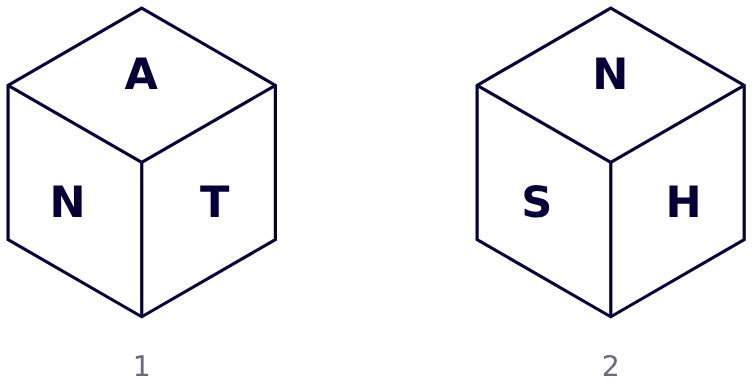
figure
एक पासे के फलकों पर I, S, H, N, A और T अक्षर अंकित हैं। उसी पासे की दो स्थितियाँ नीचे दी गई हैं। फलक ' I ' के विपरीत कौन-सा फलक है?
figure
  1. AS
  2. BT
  3. CN
  4. DA
Show answer

Concept: Faces seen together in any view are adjacent, so they can never be opposite.

  1. In the first view N appears beside A and T.
  2. In the second view N appears beside S and H.
  3. So N is adjacent to A, T, S, H — the only face left for N's opposite is I.

Trick: Find the letter common to both views; whichever single letter never appears with it is its opposite.

Answer: (C) N

अवधारणा: एक ही स्थिति में दिखने वाले फलक आपस में सटे होते हैं, वे विपरीत नहीं हो सकते।

हल:

  1. पहली स्थिति में N के साथ A और T दिख रहे हैं।
  2. दूसरी स्थिति में N के साथ S और H दिख रहे हैं।
  3. N चार अक्षरों (A, T, S, H) से सटा है, अतः N के सामने बचा अक्षर I ही है।

ट्रिक: दोनों स्थितियों में जो अक्षर साझा है, उसके साथ कभी न दिखने वाला अक्षर ही उसका विपरीत फलक है।

उत्तर: (C) N

SSC GDGeneral Intelligence & ReasoningDice – opposite face from two views
Q21.
Article 49 of the Constitution of India deals with which of the following Directive Principles of State Policy?
भारत के संविधान का अनुच्छेद 49 राज्य के नीति-निदेशक तत्वों में से निम्नलिखित में से किससे संबंधित है?
  1. ATo defend the country and render national service when called upon to do soआह्वान किए जाने पर देश की रक्षा करना और राष्ट्रीय सेवा करना
  2. BTo organise village Panchayats as units of self-governmentग्राम पंचायतों को स्वशासन की इकाइयों के रूप में संगठित करना
  3. CTo secure just and humane conditions of work and maternity reliefकाम की न्यायसंगत और मानवोचित दशाओं तथा प्रसूति सहायता का उपबंध करना
  4. DTo protect all monuments of historic interest and national importanceऐतिहासिक रुचि तथा राष्ट्रीय महत्व के सभी स्मारकों का संरक्षण करना
Show answer

Concept: Article 49 (Part IV) asks the State to protect monuments and places of national importance.

  1. Art. 49: the State must save monuments, sites and art objects that Parliament declares nationally important.
  2. Village panchayats = Art. 40; just and humane work conditions & maternity relief = Art. 42.
  3. Defending the country is a Fundamental Duty, Art. 51A(d) — not a DPSP.

Yaad rakhein: 40 – Panchayats, 44 – Uniform Civil Code, 48A – Environment, 49 – Monuments, 50 – Separation of judiciary from executive.

Answer: (D) Protection of monuments of national importance

अवधारणा: अनुच्छेद 49 (भाग IV) राज्य को राष्ट्रीय महत्व के स्मारकों की रक्षा का निर्देश देता है।

हल:

  1. अनु. 49: संसद द्वारा घोषित राष्ट्रीय महत्त्व वाले स्मारक, स्थल और कला-वस्तुएँ बचाना राज्य का दायित्व।
  2. ग्राम पंचायत = अनु. 40; काम की न्यायोचित दशाएँ व प्रसूति सहायता = अनु. 42।
  3. देश की रक्षा करना मौलिक कर्तव्य 51A(d) है, निदेशक तत्व नहीं।

याद रखें: 40 – पंचायत, 44 – समान नागरिक संहिता, 48A – पर्यावरण, 49 – स्मारक, 50 – न्यायपालिका का कार्यपालिका से पृथक्करण।

उत्तर: (D) स्मारकों का संरक्षण

SSC GDGeneral Knowledge & General AwarenessDPSP – Article 49
Q41.
Sanjay and Tannu working separately can do a piece of work in 6 and 20 days, respectively. If they work for an alternate day, Tannu beginning, in how many days will the work be completed?
संजय और तन्नू अलग-अलग कार्य करते हुए किसी कार्य को क्रमशः 6 और 20 दिनों में पूरा कर सकते हैं। यदि वे एकांतर दिनों में कार्य करते हैं और तन्नू कार्य आरंभ करती है, तो कार्य कितने दिनों में पूरा होगा?
  1. A9.5
  2. B10.5
  3. C11.5
  4. D8.5
Show answer

Concept: Take total work = LCM of days; add work in 2-day cycles, then finish the remainder.

  1. Work = LCM(6, 20) = 60 units; Sanjay = 10/day, Tannu = 3/day.
  2. One cycle (Tannu + Sanjay) = 13 units; 4 cycles = 8 days → 52 units.
  3. Left 8 units: day 9 Tannu does 3 → 5 left; day 10 Sanjay needs 5/10 = 0.5 day.
  4. Total = 8 + 1 + 0.5 = 9.5 days.

Trick: Always check who starts — the starter works on the odd day after the full cycles.

Answer: (A) 9.5

अवधारणा: कुल कार्य = दिनों का LCM; 2-दिन के चक्र जोड़ें, फिर बचा काम पूरा करें।

हल:

  1. कार्य = LCM(6, 20) = 60 इकाई; संजय = 10/दिन, तन्नू = 3/दिन।
  2. एक चक्र (तन्नू + संजय) = 13 इकाई; 4 चक्र = 8 दिन → 52 इकाई।
  3. बचे 8: 9वें दिन तन्नू 3 करेगी → 5 बचे; 10वें दिन संजय को 5/10 = 0.5 दिन।
  4. कुल = 8 + 1 + 0.5 = 9.5 दिन।

ट्रिक: शुरुआत कौन करता है, यह ज़रूर देखें — पूरे चक्रों के बाद अगला दिन उसी का होता है।

उत्तर: (A) 9.5

SSC GDElementary MathematicsTime & work – alternate days
Q61.
Select the most appropriate meaning of the underlined word. The explorer encountered an ancient artifact in the cave.
  1. AA form of currency
  2. BA type of insect
  3. CAn object made by humans, usually of historical or cultural significance
  4. DA sudden burst of energy
Show answer

Concept: Artifact = a man-made object, especially one of historical or cultural value.

  1. 'Ancient' and 'cave' suggest a relic from the past — e.g. a pot, tool or ornament.
  2. Currency, insect and burst of energy have no link with the word.

Trick: Arti-fact → 'art' + 'made' (factum): something made by human skill.

Answer: (C) A human-made object of historical/cultural value

अवधारणा: Artifact = मनुष्य द्वारा बनाई गई वस्तु, विशेषकर ऐतिहासिक या सांस्कृतिक महत्व की।

हल:

  1. 'Ancient' और 'cave' से स्पष्ट है कि यह पुराने समय की कोई कलाकृति/औज़ार है।
  2. मुद्रा, कीड़ा या ऊर्जा का विस्फोट — इनका इस शब्द से संबंध नहीं।

ट्रिक: Arti + fact = कौशल से बनी चीज़ (हिंदी: पुरावस्तु/कलाकृति)।

उत्तर: (C) मानव निर्मित, ऐतिहासिक/सांस्कृतिक महत्व की वस्तु

SSC GDEnglishVocabulary – meaning in context
Q81.
‘छेड़ना’ शब्द का निम्न में से किस वाक्य में सही प्रयोग नहीं हुआ है?
  1. Aउसने ऐसी बात कहकर मेरे दिल को छेड़ दिया।
  2. Bउसने सितार के तार छेड़ दिए।
  3. Cतुमने तो मेरे पुराने घाव छेड़ दिए।
  4. Dदाहिना ने युद्ध छेड़ दिया।
Show answer

अवधारणा: ‘छेड़ना’ का प्रयोग तंग करना, हलचल पैदा करना (तार छेड़ना) या कोई काम/प्रसंग आरंभ करना (युद्ध छेड़ना, बात छेड़ना) के अर्थ में होता है।

हल:

  1. विकल्प B, C, D के प्रयोग (सितार के तार, पुराने ज़ख्म, युद्ध) सामान्य और स्वीकृत हैं।
  2. कड़वी बात से मन आहत हो तो ‘दिल दुखाना’ या ‘दिल को ठेस लगना’ कहते हैं; ‘दिल को छेड़ दिया’ यहाँ उपयुक्त नहीं।

ट्रिक: हर विकल्प में ‘छेड़ना’ की जगह उसका अर्थ (आरंभ करना/हलचल करना) रखकर पढ़ें — जहाँ अर्थ न बैठे, वही गलत प्रयोग।

उत्तर: (A) उसने ऐसी बात कहकर मेरे दिल को छेड़ दिया।

SSC GDHindiWord usage – chhedna

See all 100 solutions

More SSC GD papers

Download our app

Study smarter with the airGurukul App

Your complete exam-prep companion - classes, practice, and progress tracking.

Learn anytime, anywhere - live classes, tests, notes, and updates in one place.

GET IT ONGoogle Play

Have a query? We’re here to help

Fill out the form and our team will get back to you as soon as possible.

  • Ask your questions related to admission, courses, fees, or facilities
  • Share your details so our team can contact you easily
  • Get accurate information from our support team
  • Quick and simple form submission process

All fields marked * are required.