Question bank

Q&A: practice questions with answers

Search questions on any topic. Filter by exam category, exam, subject and topic, try the question, then open the answer and explanation.

Courses – airGurukul

20,719 questions found.

Q341.
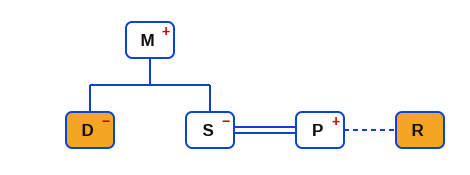
Five students, P, Q, R, S, and T, have different heights. P is taller than Q but shorter than R. S is not the shortest. Only one student is shorter than T. Who among them is the shortest?
पाँच विद्यार्थियों P, Q, R, S और T की लंबाई अलग-अलग है। P, Q से लंबा है लेकिन R से छोटा है। S सबसे छोटा नहीं है। केवल एक विद्यार्थी T से छोटा है। उनमें से सबसे छोटा कौन है?
  1. AP
  2. BR
  3. CQ
  4. DS
Show answer

Concept: Write the chain and use the elimination clues.

  1. R > P > Q, so P and R cannot be shortest.
  2. Only one person is shorter than T ⇒ T is 2nd shortest, not the shortest.
  3. S is not the shortest.
  4. Only Q remains ⇒ Q is the shortest (order: R, S/P…, T, Q).

Short trick: Strike out everyone who is shown taller than somebody (P, R), plus S and T from the clues → Q.

Answer: (C) Q

अवधारणा: श्रृंखला लिखें और संकेतों से हटाएँ।

  1. R > P > Q, अतः P और R सबसे छोटे नहीं।
  2. केवल एक व्यक्ति T से छोटा ⇒ T दूसरा सबसे छोटा।
  3. S सबसे छोटा नहीं।
  4. केवल Q बचता है ⇒ Q सबसे छोटा।

शॉर्ट ट्रिक: जो किसी से लंबे दिखाए गए हैं (P, R) उन्हें और संकेतों से S व T को काटें → Q।

उत्तर: (C) Q
RRB ALP CBT 1General Intelligence and ReasoningRanking – height comparisonRRB ALP CBT 1 2025 · 17 Feb Shift 2 →
Q342.
Each of A, B, C, D, E, F and G play a game on a different day of a week starting from Monday and ending on Sunday of the same week. B plays the game on Wednesday. Only three persons play between B and F. Only one person plays between C and F. A plays immediately before D. G does not play immediately after B. On which day does A play the game?
A, B, C, D, E, F और G में से प्रत्येक एक ही सप्ताह के सोमवार से शुरू होकर रविवार को समाप्त होने वाले अलग-अलग दिन एक खेल खेलता है। B बुधवार को खेल खेलता है। B और F के बीच केवल तीन व्यक्ति खेलते हैं। C और F के बीच केवल एक व्यक्ति खेलता है। A, D से ठीक पहले खेलता है। G, B के ठीक बाद नहीं खेलता है। A किस दिन खेल खेलता है?
  1. ATuesdayमंगलवार
  2. BSundayरविवार
  3. CFridayशुक्रवार
  4. DMondayसोमवार
Show answer

Concept: Fix the definite clue first, then place the pairs.

DayPerson
MonA
TueD
WedB
ThuE
FriC
SatG
SunF
  1. B = Wed; three between B and F ⇒ F = Sun (Wed − 4 is not possible).
  2. One between C and F ⇒ C = Fri.
  3. Free days: Mon, Tue, Thu, Sat. A–D consecutive only on Mon–Tue ⇒ A = Mon, D = Tue.
  4. G not on Thu ⇒ G = Sat, E = Thu.

Short trick: The only consecutive free pair left is Mon–Tue, so A = Monday without placing G and E.

Answer: (D) Monday

अवधारणा: पहले निश्चित संकेत, फिर युग्म रखें।

दिनव्यक्ति
सोमA
मंगलD
बुधB
गुरुE
शुक्रC
शनिG
रविF
  1. B = बुधवार; B और F के बीच तीन ⇒ F = रविवार।
  2. C और F के बीच एक ⇒ C = शुक्रवार।
  3. खाली दिन: सोम, मंगल, गुरु, शनि। A–D लगातार केवल सोम–मंगल ⇒ A = सोमवार, D = मंगलवार।
  4. G गुरुवार नहीं ⇒ G = शनिवार, E = गुरुवार।

शॉर्ट ट्रिक: खाली दिनों में लगातार जोड़ा केवल सोम–मंगल है, अतः A = सोमवार।

उत्तर: (D) सोमवार

RRB ALP CBT 1General Intelligence and ReasoningScheduling – days of a weekRRB ALP CBT 1 2025 · 17 Feb Shift 2 →
Q343.
What will come in place of the question mark (?) in the following equation, if '+' and '÷' are interchanged and '-' and 'x' are interchanged?
312 + 6 x 8 - 21 ÷ 169 = ?
यदि '+' और '÷' को आपस में बदल दिया जाए तथा '-' और 'x' को आपस में बदल दिया जाए, तो निम्नलिखित समीकरण में प्रश्न चिह्न (?) के स्थान पर क्या आएगा?
312 + 6 x 8 - 21 ÷ 169 = ?
  1. A51
  2. B59
  3. C55
  4. D53
Show answer

Concept: Interchange the signs, then follow BODMAS.

  1. After interchange: 312÷6−8×21+169
  2. =52−168+169
  3. =53

Short trick: Unit-digit check: 52 − 168 + 169 → 2 − 8 + 9 = 3 → only 53 ends in 3.

Answer: (D) 53

अवधारणा: चिह्न बदलें, फिर BODMAS लगाएँ।

  1. बदलने के बाद: 312÷6−8×21+169
  2. =52−168+169
  3. =53

शॉर्ट ट्रिक: इकाई अंक जाँच: 2 − 8 + 9 = 3 → केवल 53 का इकाई अंक 3।

उत्तर: (D) 53

RRB ALP CBT 1General Intelligence and ReasoningMathematical operations – sign interchangeRRB ALP CBT 1 2025 · 17 Feb Shift 2 →
Q344.
In a certain code language,
'A # B' means ‘A is the daughter of B’,
'A @ B' means ‘A is the brother of B’,
'A + B' means ‘A is the wife of B’ and
'A - B' means ‘A is the father of B’.
Based on the above, how is D related to R if ‘D # M - S + P @ R’?
एक निश्चित कूट भाषा में,
'A # B' का अर्थ है 'A, B की पुत्री है',
'A @ B' का अर्थ है 'A, B का भाई है',
'A + B' का अर्थ है 'A, B की पत्नी है' और
'A - B' का अर्थ है 'A, B का पिता है'।
उपरोक्त के आधार पर, यदि 'D # M - S + P @ R' है, तो D का R से क्या संबंध है?
  1. ABrother's daughterभाई की पुत्री
  2. BBrother's wife's motherभाई की पत्नी की माता
  3. CBrother's wife's sisterभाई की पत्नी की बहन
  4. DBrother's wifeभाई की पत्नी
Show answer

Concept: Decode each symbol from left to right (+ = male, − = female).

  1. D # M: D is the daughter of M.
  2. M − S: M is the father of S.
  3. S + P: S is the wife of P (S is female).
  4. P @ R: P is the brother of R.
  5. D and S are sisters; S is the wife of R's brother ⇒ D is R's brother's wife's sister.

Short trick: Read the chain backwards from R: R → brother P → his wife S → her sister D.

Answer: (C) Brother's wife's sister

अवधारणा: बाएँ से दाएँ प्रत्येक चिह्न को डिकोड करें (+ = पुरुष, − = स्त्री)।

  1. D # M: D, M की पुत्री है।
  2. M − S: M, S का पिता है।
  3. S + P: S, P की पत्नी है।
  4. P @ R: P, R का भाई है।
  5. D और S बहनें हैं; S, R के भाई की पत्नी ⇒ D, R के भाई की पत्नी की बहन।

शॉर्ट ट्रिक: R से उल्टा पढ़ें: R → भाई P → उसकी पत्नी S → उसकी बहन D।

उत्तर: (C) भाई की पत्नी की बहन

RRB ALP CBT 1General Intelligence and ReasoningCoded blood relationRRB ALP CBT 1 2025 · 17 Feb Shift 2 →
Q345.
A question is followed by two statements numbered (I) and (II). You have to decide whether the data provided in the statements are sufficient to answer the question. Read both the statements and decide the appropriate answer.
Q. Four people – Amit, Bhavesh, Chandan, and Dhiraj – are of different ages. Who is the oldest?
(I) Bhavesh is older than Amit but younger than Dhiraj.
(II) Chandan is younger than Dhiraj but older than Amit.
एक प्रश्न के बाद दो कथन (I) और (II) दिए गए हैं। आपको यह तय करना है कि कथनों में दिए गए आँकड़े प्रश्न का उत्तर देने के लिए पर्याप्त हैं या नहीं। दोनों कथनों को पढ़ें और उपयुक्त उत्तर चुनें।
प्रश्न: चार व्यक्ति – अमित, भावेश, चंदन और धीरज – अलग-अलग आयु के हैं। सबसे बड़ा कौन है?
(I) भावेश, अमित से बड़ा है लेकिन धीरज से छोटा है।
(II) चंदन, धीरज से छोटा है लेकिन अमित से बड़ा है।
  1. AData in both statements I and II together (and not statement I alone or statement II alone) are sufficient to answer the questionकथन I और II दोनों के आँकड़े एक साथ (न कि केवल कथन I या केवल कथन II) प्रश्न का उत्तर देने के लिए पर्याप्त हैं
  2. BData in Statement I alone is sufficient to answer the question while data in Statement II is notकेवल कथन I के आँकड़े प्रश्न का उत्तर देने के लिए पर्याप्त हैं, जबकि कथन II के आँकड़े पर्याप्त नहीं हैं
  3. CData in Statement II alone is sufficient to answer the question while data in Statement I is notकेवल कथन II के आँकड़े प्रश्न का उत्तर देने के लिए पर्याप्त हैं, जबकि कथन I के आँकड़े पर्याप्त नहीं हैं
  4. DData in both statements I and II together are NOT sufficient to answer the questionकथन I और II दोनों के आँकड़े एक साथ भी प्रश्न का उत्तर देने के लिए पर्याप्त नहीं हैं
Show answer

Concept: Check each statement alone, then both together.

  1. (I): Amit < Bhavesh < Dhiraj – Chandan unknown, so the oldest is not fixed.
  2. (II): Amit < Chandan < Dhiraj – Bhavesh unknown.
  3. Together: Dhiraj is older than Bhavesh, Chandan and Amit ⇒ Dhiraj is the oldest.

Short trick: Each statement leaves one person out; the person missing in one appears in the other, so together all four are compared with Dhiraj.

Answer: (A) Both statements together are sufficient

अवधारणा: प्रत्येक कथन अलग से, फिर दोनों साथ जाँचें।

  1. (I): अमित < भावेश < धीरज – चंदन अज्ञात।
  2. (II): अमित < चंदन < धीरज – भावेश अज्ञात।
  3. दोनों साथ: धीरज, भावेश, चंदन और अमित तीनों से बड़ा ⇒ धीरज सबसे बड़ा।

शॉर्ट ट्रिक: हर कथन में एक व्यक्ति छूटा है जो दूसरे कथन में है, अतः दोनों मिलकर ही सभी की तुलना धीरज से करते हैं।

उत्तर: (A) दोनों कथन एक साथ पर्याप्त हैं

RRB ALP CBT 1General Intelligence and ReasoningData sufficiency – rankingRRB ALP CBT 1 2025 · 17 Feb Shift 2 →
Q346.
In a certain code language,
'A # B' means ‘A is the daughter of B’,
'A % B' means ‘A is the father of B’,
'A − B' means ‘A is the son of B’,
'A @ B' means ‘A is the sister of B’.
How is S related to U if ‘S @ M − H # Y % U’?
एक निश्चित कूट भाषा में,
'A # B' का अर्थ है 'A, B की पुत्री है',
'A % B' का अर्थ है 'A, B का पिता है',
'A − B' का अर्थ है 'A, B का पुत्र है',
'A @ B' का अर्थ है 'A, B की बहन है'।
यदि 'S @ M − H # Y % U' है, तो S का U से क्या संबंध है?
  1. ASister's daughterबहन की पुत्री
  2. BBrother's daughterभाई की पुत्री
  3. CDaughterपुत्री
  4. DSisterबहन
Show answer

Concept: Decode left to right (+ = male, − = female).

  1. S @ M: S is the sister of M (S female).
  2. M − H: M is the son of H.
  3. H # Y: H is the daughter of Y (H female).
  4. Y % U: Y is the father of U ⇒ H and U are siblings; H is U's sister.
  5. S is H's daughter ⇒ S is U's sister's daughter.

Short trick: S → (sister of M) → M is H's son → so S is H's daughter; H is U's sister ⇒ sister's daughter (U's gender is not needed).

Answer: (A) Sister's daughter

अवधारणा: बाएँ से दाएँ डिकोड करें (+ = पुरुष, − = स्त्री)।

  1. S @ M: S, M की बहन है।
  2. M − H: M, H का पुत्र है।
  3. H # Y: H, Y की पुत्री है।
  4. Y % U: Y, U का पिता ⇒ H और U भाई-बहन; H, U की बहन है।
  5. S, H की पुत्री ⇒ S, U की बहन की पुत्री।

शॉर्ट ट्रिक: S, M की बहन → M, H का पुत्र → S, H की पुत्री; H, U की बहन ⇒ बहन की पुत्री (U का लिंग जानना आवश्यक नहीं)।

उत्तर: (A) बहन की पुत्री

RRB ALP CBT 1General Intelligence and ReasoningCoded blood relationRRB ALP CBT 1 2025 · 17 Feb Shift 2 →
Q347.
What will come in the place of ‘?’ in the following equation, if ‘+’ and ‘-‘ are interchanged and ‘×’ and ‘÷’ are interchanged?
5 × 39 ÷ 39 + 39 - 5 = ?
यदि '+' और '-' को आपस में बदल दिया जाए तथा '×' और '÷' को आपस में बदल दिया जाए, तो निम्नलिखित समीकरण में '?' के स्थान पर क्या आएगा?
5 × 39 ÷ 39 + 39 - 5 = ?
  1. A-29
  2. B-27
  3. C-31
  4. D-30
Show answer

Concept: Interchange the signs, then follow BODMAS.

  1. After interchange: 5÷39×39−39+5
  2. 5÷39×39=5
  3. 5−39+5=−29

Short trick: ÷39 and ×39 cancel, leaving 5−39+5=−29.

Answer: (A) -29

अवधारणा: चिह्न बदलें, फिर BODMAS लगाएँ।

  1. बदलने के बाद: 5÷39×39−39+5
  2. 5÷39×39=5
  3. 5−39+5=−29

शॉर्ट ट्रिक: ÷39 और ×39 कट जाते हैं: 5−39+5=−29।

उत्तर: (A) -29

RRB ALP CBT 1General Intelligence and ReasoningMathematical operations – sign interchangeRRB ALP CBT 1 2025 · 17 Feb Shift 2 →
Q348.
Read the given statement(s) and conclusions carefully. Assuming that the information given in the statements is true, even if it appears to be at variance with commonly known facts, decide which of the given conclusions logically follow(s) from the statement(s).
Statements:
Some buttons are mangoes.
Some pigs are mangoes.
Conclusions:
(I) Some buttons are pigs.
(II) All mangoes are buttons.
दिए गए कथनों और निष्कर्षों को ध्यानपूर्वक पढ़ें। यह मानते हुए कि कथनों में दी गई जानकारी सत्य है, भले ही वह सामान्य रूप से ज्ञात तथ्यों से भिन्न प्रतीत होती हो, निर्णय लें कि दिए गए निष्कर्षों में से कौन-सा/से निष्कर्ष कथनों का तार्किक रूप से अनुसरण करता/करते है/हैं।
कथन:
कुछ बटन, आम हैं।
कुछ सूअर, आम हैं।
निष्कर्ष:
(I) कुछ बटन, सूअर हैं।
(II) सभी आम, बटन हैं।
  1. ABoth conclusions (I) and (II) follow.निष्कर्ष (I) और (II) दोनों अनुसरण करते हैं।
  2. BNeither conclusion (I) nor (II) follows.न तो निष्कर्ष (I) और न ही (II) अनुसरण करता है।
  3. COnly conclusion (I) follows.केवल निष्कर्ष (I) अनुसरण करता है।
  4. DOnly conclusion (II) follows.केवल निष्कर्ष (II) अनुसरण करता है।
Show answer

Concept: Draw the minimum (least-overlap) Venn diagram.

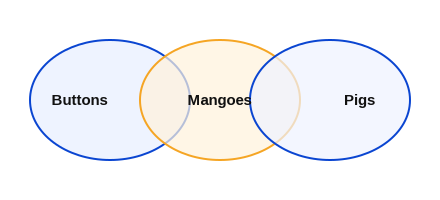
  1. Buttons and Pigs each touch Mangoes, but need not touch each other ⇒ (I) "Some buttons are pigs" is not definite.
  2. Only "some" mangoes are buttons, so (II) "All mangoes are buttons" does not follow.

Short trick: "Some + Some = No conclusion" between the two end terms; and a "some" premise can never give an "all" conclusion.

Answer: (B) Neither conclusion (I) nor (II) follows.

अवधारणा: न्यूनतम (कम से कम ओवरलैप) वेन आरेख बनाएँ।

  1. बटन और सूअर दोनों आम को छूते हैं, पर आपस में छूना आवश्यक नहीं ⇒ (I) निश्चित नहीं।
  2. केवल "कुछ" आम बटन हैं, अतः (II) "सभी आम बटन हैं" अनुसरण नहीं करता।

शॉर्ट ट्रिक: "कुछ + कुछ = कोई निष्कर्ष नहीं"; और "कुछ" वाले कथन से "सभी" वाला निष्कर्ष कभी नहीं निकलता।

उत्तर: (B) न तो निष्कर्ष (I) और न ही (II) अनुसरण करता है।

RRB ALP CBT 1General Intelligence and ReasoningSyllogism – some + someRRB ALP CBT 1 2025 · 17 Feb Shift 2 →
Q349.
NQMI is related to TWSO in a certain way based on the English alphabetical order. In the same way, DHKF is related to JNQL. To which of the following is LOPS related, following the same logic?
अंग्रेज़ी वर्णमाला क्रम के आधार पर NQMI एक निश्चित प्रकार से TWSO से संबंधित है। उसी प्रकार, DHKF, JNQL से संबंधित है। समान तर्क का अनुसरण करते हुए LOPS निम्नलिखित में से किससे संबंधित है?
  1. AQUUX
  2. BRUVY
  3. CRVUY
  4. DQVVX
Show answer

Concept: Compare letter by letter.

  1. N→T, Q→W, M→S, I→O: each +6
  2. D→J, H→N, K→Q, F→L: each +6
  3. L+6 = R, O+6 = U, P+6 = V, S+6 = Y ⇒ RUVY

Short trick: Only the first letter decides between Q… and R…: L+6 = R; then O+6 = U picks RUVY over RVUY.

Answer: (B) RUVY

अवधारणा: अक्षर-दर-अक्षर तुलना करें।

  1. N→T, Q→W, M→S, I→O: प्रत्येक +6
  2. D→J, H→N, K→Q, F→L: प्रत्येक +6
  3. L+6 = R, O+6 = U, P+6 = V, S+6 = Y ⇒ RUVY

शॉर्ट ट्रिक: पहला अक्षर L+6 = R; फिर O+6 = U से RUVY चुनें (RVUY नहीं)।

उत्तर: (B) RUVY

RRB ALP CBT 1General Intelligence and ReasoningLetter analogy – constant shiftRRB ALP CBT 1 2025 · 17 Feb Shift 2 →
Q350.
In a certain code language, ‘book is published ’ is coded as ‘cw ku qr’ and ‘book was interesting’ is coded as ‘ot qr zx’. How is ‘book’ coded in the given language?
एक निश्चित कूट भाषा में, 'book is published' को 'cw ku qr' के रूप में कूटबद्ध किया जाता है और 'book was interesting' को 'ot qr zx' के रूप में कूटबद्ध किया जाता है। दी गई भाषा में 'book' को किस प्रकार कूटबद्ध किया जाता है?
  1. Aot
  2. Bqr
  3. Ccw
  4. Dku
Show answer

Concept: A word common to two sentences has the code common to both codes.

  1. "book" is the only common word.
  2. "qr" is the only common code.
  3. book = qr

Short trick: Common word ↔ common code – just spot the repeated code.

Answer: (B) qr

अवधारणा: दो वाक्यों में उभयनिष्ठ शब्द का कूट दोनों कूटों में उभयनिष्ठ होता है।

  1. "book" एकमात्र उभयनिष्ठ शब्द है।
  2. "qr" एकमात्र उभयनिष्ठ कूट है।
  3. book = qr

शॉर्ट ट्रिक: उभयनिष्ठ शब्द ↔ उभयनिष्ठ कूट – दोहराया गया कूट पहचानें।

उत्तर: (B) qr

RRB ALP CBT 1General Intelligence and ReasoningCoding-decoding – common wordRRB ALP CBT 1 2025 · 17 Feb Shift 2 →
Q351.
Refer to the following letter, symbol series and answer the question that follows. Counting to be done from left to right only.
(Left) K Ω T & R $ S @ B * L % N # P £ D Ω G $ M (Right)
How many such letters are there, each of which is immediately preceded by a symbol and also immediately followed by another symbol?
निम्नलिखित अक्षर, प्रतीक श्रृंखला को देखें और उसके बाद दिए गए प्रश्न का उत्तर दें। गिनती केवल बाएँ से दाएँ की जानी है।
(बाएँ) K Ω T & R $ S @ B * L % N # P £ D Ω G $ M (दाएँ)
ऐसे कितने अक्षर हैं, जिनमें से प्रत्येक के ठीक पहले एक प्रतीक है और ठीक बाद भी एक अन्य प्रतीक है?
  1. AOneएक
  2. BThreeतीन
  3. CMore than threeतीन से अधिक
  4. DTwoदो
Show answer

Concept: Look for symbol–letter–symbol.

  1. Letters and symbols alternate from Ω onwards: Ω T & R $ S @ B * L % N # P £ D Ω G $
  2. T, R, S, B, L, N, P, D, G all qualify ⇒ 9 letters
  3. K (first) and M (last) do not.

Short trick: The series is a perfect alternation, so every inner letter qualifies – clearly more than three.

Answer: (C) More than three

अवधारणा: प्रतीक–अक्षर–प्रतीक खोजें।

  1. Ω से आगे अक्षर और प्रतीक एकांतर क्रम में हैं: Ω T & R $ S @ B * L % N # P £ D Ω G $
  2. T, R, S, B, L, N, P, D, G ⇒ 9 अक्षर
  3. K (पहला) और M (अंतिम) नहीं।

शॉर्ट ट्रिक: श्रृंखला पूर्ण एकांतर है, अतः हर भीतरी अक्षर गिना जाएगा – स्पष्टतः तीन से अधिक।

उत्तर: (C) तीन से अधिक

RRB ALP CBT 1General Intelligence and ReasoningLetter-symbol series – position countingRRB ALP CBT 1 2025 · 17 Feb Shift 2 →
Q352.
What should come in place of the question mark (?) in the given series?
25 29 34 40 47 55 ?
दी गई श्रृंखला में प्रश्न चिह्न (?) के स्थान पर क्या आना चाहिए?
25 29 34 40 47 55 ?
  1. A62
  2. B68
  3. C66
  4. D64
Show answer

Concept: Check the differences.

  1. Differences: 4, 5, 6, 7, 8
  2. Next difference = 9
  3. ? = 55 + 9 = 64

Short trick: Differences increase by 1 each time: +4, +5, +6, … → +9.

Answer: (D) 64

अवधारणा: अंतर देखें।

  1. अंतर: 4, 5, 6, 7, 8
  2. अगला अंतर = 9
  3. ? = 55 + 9 = 64

शॉर्ट ट्रिक: अंतर हर बार 1 बढ़ता है: +4, +5, +6, … → +9।

उत्तर: (D) 64

RRB ALP CBT 1General Intelligence and ReasoningNumber series – increasing differencesRRB ALP CBT 1 2025 · 17 Feb Shift 2 →
Q353.
In a code language, 'SAND' is coded as WDRG and 'BIRD' is coded as FLVG. How will 'FOUR' be coded in the same language?
एक कूट भाषा में, 'SAND' को WDRG के रूप में कूटबद्ध किया जाता है और 'BIRD' को FLVG के रूप में कूटबद्ध किया जाता है। उसी भाषा में 'FOUR' को किस प्रकार कूटबद्ध किया जाएगा?
  1. AJSXV
  2. BJRYU
  3. CIRYW
  4. DISXV
Show answer

Concept: Find the shift for each position.

Word1st2nd3rd4th
SAND → WDRG+4+3+4+3
BIRD → FLVG+4+3+4+3
FOUR → JRYUF+4 = JO+3 = RU+4 = YR+3 = U

Short trick: Pattern +4, +3, +4, +3. Second letter O+3 = R narrows to JRYU / IRYW; first letter F+4 = J → JRYU.

Answer: (B) JRYU

अवधारणा: प्रत्येक स्थान का परिवर्तन ज्ञात करें।

शब्दपहलादूसरातीसराचौथा
SAND → WDRG+4+3+4+3
BIRD → FLVG+4+3+4+3
FOUR → JRYUF+4 = JO+3 = RU+4 = YR+3 = U

शॉर्ट ट्रिक: पैटर्न +4, +3, +4, +3। दूसरा अक्षर O+3 = R और पहला F+4 = J → JRYU।

उत्तर: (B) JRYU

RRB ALP CBT 1General Intelligence and ReasoningCoding-decoding – alternate shiftsRRB ALP CBT 1 2025 · 17 Feb Shift 2 →
Q354.
Seven people, A, B, C, D, E, F and G, are sitting in a row, facing north. No one sits to the right of E. Only three people sit between E and D. Only two people sit between D and A. F sits third to the left of B. G sits to the immediate right of B. How many people sit between B and E?
सात व्यक्ति A, B, C, D, E, F और G एक पंक्ति में उत्तर की ओर मुख करके बैठे हैं। E के दाईं ओर कोई नहीं बैठा है। E और D के बीच केवल तीन व्यक्ति बैठे हैं। D और A के बीच केवल दो व्यक्ति बैठे हैं। F, B के बाएँ से तीसरे स्थान पर बैठा है। G, B के ठीक दाईं ओर बैठा है। B और E के बीच कितने व्यक्ति बैठे हैं?
  1. A3
  2. B2
  3. C1
  4. D4
Show answer

Concept: Facing north: left and right are our own left and right. Number seats 1–7 from the left.

1234567
FCDBGAE
  1. E is at the right end (7); three between E and D ⇒ D = 3.
  2. Two between D and A ⇒ A = 6 (seat 0 does not exist).
  3. B _ _ F pattern: F 3rd to the left of B and G immediately right of B ⇒ only B = 4, G = 5, F = 1 fits.
  4. C = 2. Between B (4) and E (7): G and A ⇒ 2 persons.

Short trick: Between seats p and q there are |p−q|−1 persons: 7−4−1=2.

Answer: (B) 2

अवधारणा: उत्तर की ओर मुख: बायाँ-दायाँ हमारे जैसा ही। बाएँ से स्थान 1–7।

1234567
FCDBGAE
  1. E दाएँ छोर पर (7); E और D के बीच तीन ⇒ D = 3।
  2. D और A के बीच दो ⇒ A = 6।
  3. F, B के बाएँ तीसरा और G, B के ठीक दाएँ ⇒ केवल B = 4, G = 5, F = 1।
  4. C = 2। B (4) और E (7) के बीच: G और A ⇒ 2 व्यक्ति।

शॉर्ट ट्रिक: स्थान p और q के बीच |p−q|−1 व्यक्ति: 7−4−1=2।

उत्तर: (B) 2

RRB ALP CBT 1General Intelligence and ReasoningSeating arrangement – linear (facing north)RRB ALP CBT 1 2025 · 17 Feb Shift 2 →
Q355.
Based on the English alphabetical order, three of the following four letter-cluster pairs are alike in a certain way and thus form a group. Which letter-cluster pair DOES NOT belong to that group?
(Note: The odd one out is not based on the number of consonants/vowels or their position in the letter-cluster.)
अंग्रेज़ी वर्णमाला क्रम के आधार पर, निम्नलिखित चार अक्षर-समूह युग्मों में से तीन किसी निश्चित तरीके से एकसमान हैं और इस प्रकार एक समूह बनाते हैं। कौन-सा अक्षर-समूह युग्म उस समूह से संबंधित नहीं है?
(नोट: असंगत का चयन व्यंजनों/स्वरों की संख्या या अक्षर-समूह में उनके स्थान पर आधारित नहीं है।)
  1. APN - QO
  2. BRP - BJ
  3. CMK - NL
  4. DFD - GE
Show answer

Concept: Find the rule inside each cluster and between clusters.

  1. PN – QO: P−2 = N; P+1 = Q, N+1 = O ✓
  2. MK – NL: M−2 = K; +1 → N, L ✓
  3. FD – GE: F−2 = D; +1 → G, E ✓
  4. RP – BJ: R−2 = P but R → B and P → J do not follow +1 ✗

Short trick: In the three alike pairs the second cluster is just the first cluster shifted +1. RP → SQ would fit, not BJ.

Answer: (B) RP - BJ

अवधारणा: प्रत्येक समूह के भीतर और दोनों समूहों के बीच नियम देखें।

  1. PN – QO: P−2 = N; P+1 = Q, N+1 = O ✓
  2. MK – NL: M−2 = K; +1 → N, L ✓
  3. FD – GE: F−2 = D; +1 → G, E ✓
  4. RP – BJ: R−2 = P लेकिन R → B और P → J में +1 नहीं ✗

शॉर्ट ट्रिक: तीन युग्मों में दूसरा समूह पहले का +1 है। RP के लिए SQ होना चाहिए था, BJ नहीं।

उत्तर: (B) RP - BJ

RRB ALP CBT 1General Intelligence and ReasoningOdd one out – letter-cluster pairsRRB ALP CBT 1 2025 · 17 Feb Shift 2 →
Q356.
Each letter in the word SHOCKED is changed to the letter immediately preceding it in the English alphabetical order and then all the letters thus obtained are arranged in the English alphabetical order. Which of the following letters will be second from the right in the new group of letters thus formed?
शब्द SHOCKED के प्रत्येक अक्षर को अंग्रेज़ी वर्णमाला क्रम में उसके ठीक पहले वाले अक्षर से बदल दिया जाता है और फिर इस प्रकार प्राप्त सभी अक्षरों को अंग्रेज़ी वर्णमाला क्रम में व्यवस्थित किया जाता है। इस प्रकार बने अक्षरों के नए समूह में दाएँ से दूसरा अक्षर निम्नलिखित में से कौन-सा होगा?
  1. AD
  2. BN
  3. CG
  4. DJ
Show answer

Concept: Shift every letter −1, then sort A→Z.

SHOCKED
RGNBJDC
  1. Sorted: B C D G J N R
  2. 2nd from right = N

Short trick: Sorting first and shifting later gives the same result: SHOCKED sorted = C D E H K O S; 2nd from right = O → O−1 = N.

Answer: (B) N

अवधारणा: हर अक्षर −1 करें, फिर A→Z क्रम में लगाएँ।

SHOCKED
RGNBJDC
  1. क्रम में: B C D G J N R
  2. दाएँ से दूसरा = N

शॉर्ट ट्रिक: पहले क्रम लगाएँ फिर −1 करें, परिणाम वही: C D E H K O S; दाएँ से दूसरा O → N।

उत्तर: (B) N

RRB ALP CBT 1General Intelligence and ReasoningLetter arrangement – shift and sortRRB ALP CBT 1 2025 · 17 Feb Shift 2 →
Q357.
Each of Gauri, Hina, Isha, Jack, Kunti, Lali and Mahima has an exam on a different day of a week starting from Monday and ending on Sunday of the same week. Gauri has an exam on Monday. Only three persons have exams between Gauri and Kunti. Hina has exam immediately after Jack and Hina has exam immediately before Isha. Lali does not have an exam on the last day. On which day does Lali have the exam?
गौरी, हिना, ईशा, जैक, कुंती, लाली और महिमा में से प्रत्येक की एक ही सप्ताह के सोमवार से शुरू होकर रविवार को समाप्त होने वाले अलग-अलग दिन परीक्षा है। गौरी की परीक्षा सोमवार को है। गौरी और कुंती के बीच केवल तीन व्यक्तियों की परीक्षाएँ हैं। हिना की परीक्षा जैक के ठीक बाद है और हिना की परीक्षा ईशा के ठीक पहले है। लाली की परीक्षा अंतिम दिन नहीं है। लाली की परीक्षा किस दिन है?
  1. ASundayरविवार
  2. BWednesdayबुधवार
  3. CSaturdayशनिवार
  4. DTuesdayमंगलवार
Show answer

Concept: Place fixed clues, then the block.

DayPerson
MonGauri
TueJack
WedHina
ThuIsha
FriKunti
SatLali
SunMahima
  1. Gauri = Mon; three between Gauri and Kunti ⇒ Kunti = Fri.
  2. Block Jack–Hina–Isha needs 3 consecutive free days ⇒ Tue–Wed–Thu.
  3. Sat and Sun remain; Lali not on Sunday ⇒ Lali = Saturday.

Short trick: After Mon and Fri are taken, the only 3-day gap is Tue–Thu; so Lali gets Sat/Sun and "not last day" gives Saturday.

Answer: (C) Saturday

अवधारणा: पहले निश्चित संकेत, फिर ब्लॉक रखें।

दिनव्यक्ति
सोमगौरी
मंगलजैक
बुधहिना
गुरुईशा
शुक्रकुंती
शनिलाली
रविमहिमा
  1. गौरी = सोमवार; बीच में तीन ⇒ कुंती = शुक्रवार।
  2. जैक–हिना–ईशा ब्लॉक के लिए लगातार 3 खाली दिन ⇒ मंगल–बुध–गुरु।
  3. शनि और रवि बचे; लाली रविवार नहीं ⇒ लाली = शनिवार।

शॉर्ट ट्रिक: सोम और शुक्र भरने के बाद लगातार 3 दिन केवल मंगल–गुरु; लाली को शनि/रवि में से "अंतिम दिन नहीं" → शनिवार।

उत्तर: (C) शनिवार

RRB ALP CBT 1General Intelligence and ReasoningScheduling – days of a weekRRB ALP CBT 1 2025 · 17 Feb Shift 2 →
Q358.
Seven boxes, M, N, O, P, Q, R and S, are kept one over the other but not necessarily in the same order. P is kept third from the bottom. Only one box is kept between P and M but M is not kept in the lowermost position. Only three boxes are kept between M and R. O is kept immediately below Q. Only one box is kept between O and N. Which box is second from the top?
सात बक्से M, N, O, P, Q, R और S एक के ऊपर एक रखे गए हैं, लेकिन आवश्यक नहीं कि इसी क्रम में हों। P नीचे से तीसरे स्थान पर रखा है। P और M के बीच केवल एक बक्सा रखा है लेकिन M सबसे निचले स्थान पर नहीं रखा है। M और R के बीच केवल तीन बक्से रखे हैं। O, Q के ठीक नीचे रखा है। O और N के बीच केवल एक बक्सा रखा है। ऊपर से दूसरा कौन-सा बक्सा है?
  1. AO
  2. BN
  3. CQ
  4. DR
Show answer

Concept: Number positions 1 (bottom) to 7 (top).

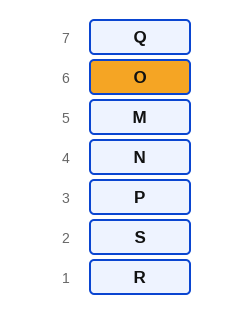
  1. P = 3. One box between P and M, M ≠ 1 ⇒ M = 5.
  2. Three between M and R ⇒ R = 1.
  3. Free slots: 2, 4, 6, 7. O just below Q needs two adjacent free slots ⇒ O = 6, Q = 7; one box between O and N ⇒ N = 4.
  4. S = 2. Second from top = position 6 = O.

Short trick: Free slots after P, M, R: 2, 4, 6, 7. The Q-over-O pair needs two adjacent slots ⇒ 6–7 → O at 6 (second from top).

Answer: (A) O

अवधारणा: स्थान 1 (नीचे) से 7 (ऊपर) तक।

  1. P = 3। P और M के बीच एक, M ≠ 1 ⇒ M = 5।
  2. M और R के बीच तीन ⇒ R = 1।
  3. खाली स्थान: 2, 4, 6, 7। O, Q के ठीक नीचे – लगातार दो खाली स्थान ⇒ O = 6, Q = 7; O और N के बीच एक ⇒ N = 4।
  4. S = 2। ऊपर से दूसरा = स्थान 6 = O।

शॉर्ट ट्रिक: P, M, R के बाद खाली स्थान: 2, 4, 6, 7। Q-O जोड़े के लिए लगातार दो स्थान ⇒ 6–7 → O = 6।

उत्तर: (A) O

RRB ALP CBT 1General Intelligence and ReasoningBox stacking puzzleRRB ALP CBT 1 2025 · 17 Feb Shift 2 →
Q359.
If ‘P’ stands for ‘×’ , ‘Q’ stands for ‘÷’, ‘R’ stands for ‘−’ and ‘S’ stands for ‘+’, then what will come in place of the question mark (?) in the following equation?
70 Q 2 R 5 P 3 S 18 = ?
यदि 'P' का अर्थ '×', 'Q' का अर्थ '÷', 'R' का अर्थ '−' और 'S' का अर्थ '+' है, तो निम्नलिखित समीकरण में प्रश्न चिह्न (?) के स्थान पर क्या आएगा?
70 Q 2 R 5 P 3 S 18 = ?
  1. A48
  2. B38
  3. C21
  4. D54
Show answer

Concept: Replace letters by signs, then BODMAS.

  1. 70÷2−5×3+18
  2. =35−15+18
  3. =38

Short trick: Do ÷ and × first: 35 and 15; then 35 − 15 + 18 = 38.

Answer: (B) 38

अवधारणा: अक्षरों को चिह्नों से बदलें, फिर BODMAS।

  1. 70÷2−5×3+18
  2. =35−15+18
  3. =38

शॉर्ट ट्रिक: पहले ÷ और ×: 35 और 15; फिर 35 − 15 + 18 = 38।

उत्तर: (B) 38

RRB ALP CBT 1General Intelligence and ReasoningMathematical operations – symbol substitutionRRB ALP CBT 1 2025 · 17 Feb Shift 2 →
Q360.
PL 2 is related to LO 15 in a certain way. In the same way, NJ 5 is related to JM 18. To which of the given options is NP 3 related, following the same logic?
PL 2, LO 15 से एक निश्चित प्रकार से संबंधित है। उसी प्रकार, NJ 5, JM 18 से संबंधित है। समान तर्क का अनुसरण करते हुए NP 3 दिए गए विकल्पों में से किससे संबंधित है?
  1. AIT 14
  2. BJT 14
  3. CJS 16
  4. DIS 16
Show answer

Concept: Treat the two letters and the number separately.

Pair1st letter2nd letterNumber
PL 2 → LO 15P−4 = LL+3 = O2+13 = 15
NJ 5 → JM 18N−4 = JJ+3 = M5+13 = 18
NP 3 → JS 16N−4 = JP+3 = S3+13 = 16

Short trick: Number +13 → 16 leaves JS 16 and IS 16; N−4 = J picks JS 16.

Answer: (C) JS 16

अवधारणा: दोनों अक्षरों और संख्या को अलग-अलग देखें।

युग्मपहला अक्षरदूसरा अक्षरसंख्या
PL 2 → LO 15P−4 = LL+3 = O2+13 = 15
NJ 5 → JM 18N−4 = JJ+3 = M5+13 = 18
NP 3 → JS 16N−4 = JP+3 = S3+13 = 16

शॉर्ट ट्रिक: संख्या +13 → 16 से JS 16 और IS 16 बचते हैं; N−4 = J से JS 16।

उत्तर: (C) JS 16

RRB ALP CBT 1General Intelligence and ReasoningAlpha-numeric analogyRRB ALP CBT 1 2025 · 17 Feb Shift 2 →