Question bank

Q&A: practice questions with answers

Search questions on any topic. Filter by exam category, exam, subject and topic, try the question, then open the answer and explanation.

Courses – airGurukul

20,719 questions found.

Q11201.
A train travels three equal distances of 180 km each at speeds of 45 km/hr, 60 km/hr and 90 km/hr, respectively. What is the total time taken to cover all three distances?
एक रेलगाड़ी 180 km की तीन समान दूरियाँ क्रमशः 45 km/hr, 60 km/hr और 90 km/hr की चाल से तय करती है। तीनों दूरियों को तय करने में लिया गया कुल समय कितना है?
  1. A3.5 hours3.5 घंटे
  2. B9 hours9 घंटे
  3. C4.5 hours4.5 घंटे
  4. D7 hours7 घंटे
Show answer

Concept: Time=DistanceSpeed for each part, then add.

  1. 18045=4h
  2. 18060=3h
  3. 18090=2h
  4. Total =4+3+2=9h.

Trick: Never use the average of speeds; add the times of each leg.

Answer: (B) 9 hours

अवधारणा: हर भाग के लिए समय=दूरीचाल, फिर जोड़ें।

  1. 18045=4h
  2. 18060=3h
  3. 18090=2h
  4. कुल =4+3+2=9h।

ट्रिक: चालों का औसत न लें; हर भाग का समय जोड़ें।

उत्तर: (B) 9 घंटे
RRB NTPC Undergraduate CBT 2MathematicsSpeed, Time and DistanceRRB NTPC Undergraduate CBT 2 2024 · 20 Dec Shift 3 →
Q11202.
In what ratio must Rohit, a grocer, mix two varieties of gram flour costing ₹130 and ₹150 per kg, respectively, so as to get a mixture worth ₹145.50 per kg?
एक पंसारी रोहित को क्रमशः ₹130 और ₹150 प्रति kg मूल्य वाले बेसन की दो किस्मों को किस अनुपात में मिलाना चाहिए, ताकि ₹145.50 प्रति kg मूल्य का मिश्रण प्राप्त हो?
  1. A31 : 9
  2. B7 : 31
  3. C9 : 31
  4. D31 : 7
Show answer

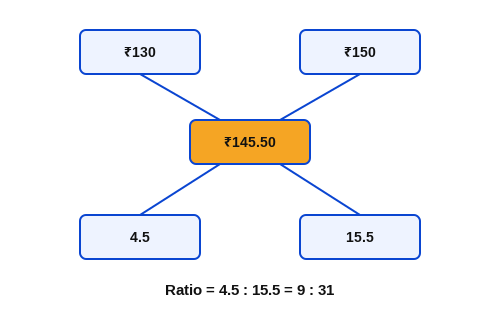
Concept: Alligation: Cheaper : Dearer = (Dearer − Mean) : (Mean − Cheaper).

  1. 150−145.5=4.5
  2. 145.5−130=15.5
  3. Ratio =4.5:15.5=9:31.

Trick: The mean (145.5) is close to 150, so more of the dearer variety → smaller first term.

Answer: (C) 9 : 31

अवधारणा: एलिगेशन: सस्ता : महँगा = (महँगा − औसत) : (औसत − सस्ता)।

  1. 150−145.5=4.5
  2. 145.5−130=15.5
  3. अनुपात =4.5:15.5=9:31।

ट्रिक: औसत (145.5) 150 के पास है, अतः महँगी किस्म अधिक → पहला पद छोटा।

उत्तर: (C) 9 : 31

RRB NTPC Undergraduate CBT 2MathematicsMixture and AlligationRRB NTPC Undergraduate CBT 2 2024 · 20 Dec Shift 3 →
Q11203.
If α:β=15:22 and β:γ=12:13, then what is the value of α:β:γ?
यदि α:β=15:22 और β:γ=12:13 है, तो α:β:γ का मान क्या है?
  1. A90 : 66 : 143
  2. B45 : 66 : 143
  3. C90 : 132 : 143
  4. D90 : 143 : 132
Show answer

Concept: Make the common term (β) equal in both ratios using LCM.

  1. LCM of 22 and 12 =132.
  2. α:β=15:22=90:132 (× 6).
  3. β:γ=12:13=132:143 (× 11).
  4. α:β:γ=90:132:143.

Trick: α:β:γ=(15×12):(22×12):(22×13)=180:264:286=90:132:143.

Answer: (C) 90 : 132 : 143

अवधारणा: उभयनिष्ठ पद (β) को LCM से दोनों अनुपातों में बराबर करें।

  1. 22 और 12 का LCM =132।
  2. α:β=15:22=90:132 (× 6)।
  3. β:γ=12:13=132:143 (× 11)।
  4. α:β:γ=90:132:143।

ट्रिक: α:β:γ=(15×12):(22×12):(22×13)=180:264:286=90:132:143।

उत्तर: (C) 90 : 132 : 143

RRB NTPC Undergraduate CBT 2MathematicsRatio – Combining RatiosRRB NTPC Undergraduate CBT 2 2024 · 20 Dec Shift 3 →
Q11204.
A trader lost 5% by selling a shirt for ₹850. He will gain x% by selling it for ₹1,530. The value of x is:
एक व्यापारी को एक कमीज़ ₹850 में बेचने पर 5% की हानि हुई। उसे ₹1,530 में बेचने पर उसे x% का लाभ होगा। x का मान है:
  1. A81
  2. B71
  3. C86
  4. D61
Show answer

Concept: CP=SP1−loss%; then compare the new SP with CP.

  1. 95% of CP = 850 → CP=8500.95.
  2. New SPCP=1530×0.95850=1453.5850=1.71.
  3. So gain =71%, i.e. x=71.

Trick: 1530850=1.8; 1.8×95%=171% → gain 71%.

Answer: (B) 71

अवधारणा: क्रय मूल्य=विक्रय मूल्य1−हानि%; फिर नए विक्रय मूल्य की तुलना करें।

  1. क्रय मूल्य का 95% = 850 → CP=8500.95।
  2. नया SPCP=1530×0.95850=1453.5850=1.71।
  3. अतः लाभ =71%, अर्थात x=71।

ट्रिक: 1530850=1.8; 1.8×95%=171% → लाभ 71%।

उत्तर: (B) 71

RRB NTPC Undergraduate CBT 2MathematicsProfit and LossRRB NTPC Undergraduate CBT 2 2024 · 20 Dec Shift 3 →
Q11205.
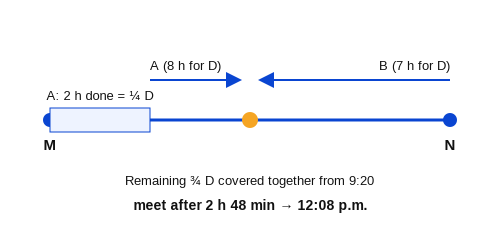
Train A leaves station M at 7:20 a.m. and reaches station N at 3:20 p.m. on the same day. Train B leaves station N at 9:20 a.m. and reaches station M at 4:20 p.m. on the same day. Find the time when Trains A and B meet.
रेलगाड़ी A स्टेशन M से 7:20 a.m. पर चलती है और उसी दिन 3:20 p.m. पर स्टेशन N पहुँचती है। रेलगाड़ी B स्टेशन N से 9:20 a.m. पर चलती है और उसी दिन 4:20 p.m. पर स्टेशन M पहुँचती है। वह समय ज्ञात कीजिए जब रेलगाड़ियाँ A और B मिलती हैं।
  1. A12:08 p.m.
  2. B4:10 p.m.
  3. C1:38 a.m.
  4. D10:57 a.m.
Show answer

Concept: Take distance MN = D. Speed of A =D8 (7:20 a.m.–3:20 p.m.), speed of B =D7 (9:20 a.m.–4:20 p.m.).

  1. By 9:20 a.m. A has run 2 h: 2D8=D4; remaining 3D4.
  2. Relative speed =D8+D7=15D56.
  3. Time =3D4÷15D56=3×564×15=2.8h=2h48min.
  4. 9:20 a.m. + 2 h 48 min = 12:08 p.m.

Trick: Take D = LCM(8, 7) = 56 km: speeds 7 and 8, gap after 2 h = 42 km, 4215=2.8h.

Answer: (A) 12:08 p.m.

अवधारणा: दूरी MN = D मानें। A की चाल =D8 (7:20 a.m.–3:20 p.m.), B की चाल =D7 (9:20 a.m.–4:20 p.m.)।

  1. 9:20 a.m. तक A 2 घंटे चल चुकी: 2D8=D4; शेष 3D4।
  2. सापेक्ष चाल =D8+D7=15D56।
  3. समय =3D4÷15D56=3×564×15=2.8h=2h48min।
  4. 9:20 a.m. + 2 घंटे 48 मिनट = 12:08 p.m.।

ट्रिक: D = LCM(8, 7) = 56 km लें: चालें 7 और 8, 2 घंटे बाद दूरी 42 km, 4215=2.8h।

उत्तर: (A) 12:08 p.m.

RRB NTPC Undergraduate CBT 2MathematicsTrains – Meeting TimeRRB NTPC Undergraduate CBT 2 2024 · 20 Dec Shift 3 →
Q11206.
A shopkeeper offers a trade discount of 15% on the marked price of an item. If the marked price of this product is ₹6500, what is its selling price (in ₹)?
एक दुकानदार किसी वस्तु के अंकित मूल्य पर 15% की व्यापारिक छूट देता है। यदि इस उत्पाद का अंकित मूल्य ₹6500 है, तो इसका विक्रय मूल्य (₹ में) कितना है?
  1. A5200
  2. B5255
  3. C5525
  4. D5552
Show answer

Concept: SP=MP×100−Discount%100

  1. SP=6500×85100
  2. =65×85=5525

Trick: 15% of 6500 = 975; 6500−975=5525.

Answer: (C) ₹5525

अवधारणा: विक्रय मूल्य=अंकित मूल्य×100−बट्टा%100

  1. SP=6500×85100
  2. =65×85=5525

ट्रिक: 6500 का 15% = 975; 6500−975=5525।

उत्तर: (C) ₹5525

RRB NTPC Undergraduate CBT 2MathematicsDiscountRRB NTPC Undergraduate CBT 2 2024 · 20 Dec Shift 3 →
Q11207.
The marked price of an iPad is ₹960. It is sold with two successive discounts of 25% each, followed by an additional 15% discount for cash payment. What is the final selling price (in ₹) after the cash discount?
एक iPad का अंकित मूल्य ₹960 है। इसे 25% की दो क्रमिक छूटों के साथ बेचा जाता है, जिसके बाद नकद भुगतान पर 15% की अतिरिक्त छूट दी जाती है। नकद छूट के बाद अंतिम विक्रय मूल्य (₹ में) कितना है?
  1. A459
  2. B456
  3. C460
  4. D461
Show answer

Concept: Successive discounts multiply: SP=MP×(1−d1)(1−d2)(1−d3).

  1. 960×0.75=720
  2. 720×0.75=540
  3. 540×0.85=459

Trick: 960×34×34=540; 15% of 540 = 81 → 540−81=459.

Answer: (A) 459

अवधारणा: क्रमिक छूटें गुणा होती हैं: SP=MP×(1−d1)(1−d2)(1−d3)।

  1. 960×0.75=720
  2. 720×0.75=540
  3. 540×0.85=459

ट्रिक: 960×34×34=540; 540 का 15% = 81 → 540−81=459।

उत्तर: (A) 459

RRB NTPC Undergraduate CBT 2MathematicsSuccessive DiscountsRRB NTPC Undergraduate CBT 2 2024 · 20 Dec Shift 3 →
Q11208.
In a test with a maximum of 100 marks, B scored 54 and A scored 75. Approximately what percentage of B’s score is A’s score?
अधिकतम 100 अंकों वाली एक परीक्षा में, B ने 54 और A ने 75 अंक प्राप्त किए। A के अंक, B के अंकों का लगभग कितना प्रतिशत है?
  1. A75%
  2. B101.07%
  3. C72%
  4. D138.89%
Show answer

Concept: "A is what % of B" =AB×100.

  1. 7554×100
  2. =750054≈138.89%

Trick: A (75) > B (54), so the answer must exceed 100% – only 101.07% and 138.89%; 7554≈1.39.

Answer: (D) 138.89%

अवधारणा: "A, B का कितना % है" =AB×100।

  1. 7554×100
  2. =750054≈138.89%

ट्रिक: A (75) > B (54), अतः उत्तर 100% से अधिक – केवल 101.07% और 138.89%; 7554≈1.39।

उत्तर: (D) 138.89%

RRB NTPC Undergraduate CBT 2MathematicsPercentageRRB NTPC Undergraduate CBT 2 2024 · 20 Dec Shift 3 →
Q11209.
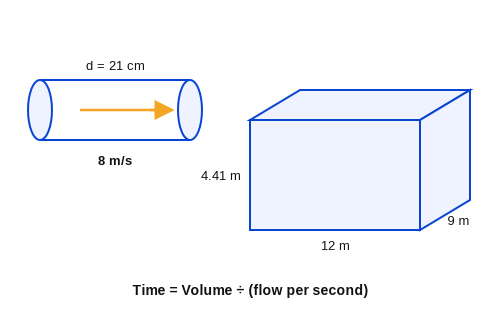
Water flows through a cylindrical pipe of internal diameter 21 cm at the rate of 8 m/s. What time, in minutes, would the pipe take to fill an empty rectangular tank of dimensions 12 m × 9 m × 4.41 m?
(Rounded up to one decimal place) (Use π=227)
21 cm आंतरिक व्यास वाले एक बेलनाकार पाइप से 8 m/s की दर से पानी बहता है। 12 m × 9 m × 4.41 m विमाओं वाली एक खाली आयताकार टंकी को भरने में पाइप कितना समय (मिनट में) लेगा?
(एक दशमलव स्थान तक पूर्णांकित) (π=227 का प्रयोग कीजिए)
  1. A28.6 minutes28.6 मिनट
  2. B30 minutes30 मिनट
  3. C36.8 minutes36.8 मिनट
  4. D27.5 minutes27.5 मिनट
Show answer

Concept: Water per second = (cross-section area of pipe) × speed. Time = tank volume ÷ water per second.

  1. r=10.5cm=0.105m; area =227×0.1052=0.03465m2.
  2. Flow =0.03465×8=0.2772m3/s.
  3. Tank volume =12×9×4.41=476.28m3.
  4. Time =476.280.2772≈1718.2s=1718.260≈28.6min.

Trick: Convert cm to m first; per-minute flow =0.2772×60=16.632m3, and 476.2816.632≈28.6.

Answer: (A) 28.6 minutes

अवधारणा: प्रति सेकंड पानी = (पाइप का अनुप्रस्थ क्षेत्रफल) × चाल। समय = टंकी का आयतन ÷ प्रति सेकंड पानी।

  1. r=10.5cm=0.105m; क्षेत्रफल =227×0.1052=0.03465m2।
  2. प्रवाह =0.03465×8=0.2772m3/s।
  3. टंकी का आयतन =12×9×4.41=476.28m3।
  4. समय =476.280.2772≈1718.2s=1718.260≈28.6min।

ट्रिक: पहले cm को m में बदलें; प्रति मिनट प्रवाह =0.2772×60=16.632m3, और 476.2816.632≈28.6।

उत्तर: (A) 28.6 मिनट

RRB NTPC Undergraduate CBT 2MathematicsMensuration – Flow Through PipeRRB NTPC Undergraduate CBT 2 2024 · 20 Dec Shift 3 →
Q11210.
Mukund deposited ₹57,000 in a bank. With annual compounding, how much compound interest (in ₹) will he earn in 2 years if the interest rate is 10% per annum in the first year and increases by 3% per annum in the second year?
मुकुंद ने एक बैंक में ₹57,000 जमा किए। वार्षिक चक्रवृद्धि के साथ, यदि ब्याज दर पहले वर्ष में 10% वार्षिक है और दूसरे वर्ष में 3% वार्षिक बढ़ जाती है, तो उसे 2 वर्षों में कितना चक्रवृद्धि ब्याज (₹ में) प्राप्त होगा?
  1. A14,101
  2. B13,651
  3. C13,501
  4. D13,851
Show answer

Concept: With different yearly rates, A=P(1+r1100)(1+r2100). Here r1=10%, r2=10+3=13%.

  1. After year 1: 57000×1.10=62700.
  2. After year 2: 62700×1.13=70851.
  3. CI=70851−57000=13851.

Trick: Effective rate =10+13+10×13100=24.3%; 24.3% of 57000 = 13851.

Answer: (D) ₹13,851

अवधारणा: अलग-अलग वार्षिक दरों पर A=P(1+r1100)(1+r2100)। यहाँ r1=10%, r2=10+3=13%।

  1. पहले वर्ष बाद: 57000×1.10=62700।
  2. दूसरे वर्ष बाद: 62700×1.13=70851।
  3. CI=70851−57000=13851।

ट्रिक: प्रभावी दर =10+13+10×13100=24.3%; 57000 का 24.3% = 13851।

उत्तर: (D) ₹13,851

RRB NTPC Undergraduate CBT 2MathematicsCompound Interest – Varying RatesRRB NTPC Undergraduate CBT 2 2024 · 20 Dec Shift 3 →
Q11211.
What should come in place of the question mark (?) in the given series based on the English alphabetical order?
EDG, CBE, AZC, YXA, WVY, ?
अंग्रेज़ी वर्णमाला क्रम के आधार पर दी गई श्रृंखला में प्रश्न चिह्न (?) के स्थान पर क्या आना चाहिए?
EDG, CBE, AZC, YXA, WVY, ?
  1. AVTU
  2. BVSW
  3. CUTW
  4. DUSW
Show answer

Concept: Treat each letter position as a separate series.

  1. 1st letters: E, C, A, Y, W → each −2 → U.
  2. 2nd letters: D, B, Z, X, V → each −2 → T.
  3. 3rd letters: G, E, C, A, Y → each −2 → W.

Trick: All three positions move back by 2 (wrapping A → Y).

Answer: (C) UTW

अवधारणा: प्रत्येक स्थान के अक्षरों को अलग श्रृंखला मानें।

  1. पहले अक्षर: E, C, A, Y, W → हर बार −2 → U।
  2. दूसरे अक्षर: D, B, Z, X, V → हर बार −2 → T।
  3. तीसरे अक्षर: G, E, C, A, Y → हर बार −2 → W।

ट्रिक: तीनों स्थान 2 पीछे जाते हैं (A के बाद Y)।

उत्तर: (C) UTW

RRB NTPC Undergraduate CBT 2General Intelligence and ReasoningLetter seriesRRB NTPC Undergraduate CBT 2 2024 · 20 Dec Shift 3 →
Q11212.
What should come in place of the question mark (?) in the given series?
16, 26, 39, 55, 74, ?
दी गई श्रृंखला में प्रश्न चिह्न (?) के स्थान पर क्या आना चाहिए?
16, 26, 39, 55, 74, ?
  1. A103
  2. B96
  3. C90
  4. D100
Show answer

Concept: Check the differences between consecutive terms.

  1. Differences: 10,13,16,19 – increasing by 3.
  2. Next difference =22.
  3. 74+22=96.

Trick: Second difference constant (+3) → quadratic-type series.

Answer: (B) 96

अवधारणा: क्रमागत पदों का अंतर देखें।

  1. अंतर: 10,13,16,19 – हर बार 3 बढ़ रहा है।
  2. अगला अंतर =22।
  3. 74+22=96।

ट्रिक: दूसरा अंतर स्थिर (+3) है।

उत्तर: (B) 96

RRB NTPC Undergraduate CBT 2General Intelligence and ReasoningNumber seriesRRB NTPC Undergraduate CBT 2 2024 · 20 Dec Shift 3 →
Q11213.
EFHE is related to IJLI in a certain way based on the English alphabetical order. In the same way, IJLI is related to MNPM. To which of the given options is PQSP related, following the same logic?
अंग्रेज़ी वर्णमाला क्रम के आधार पर EFHE एक निश्चित प्रकार से IJLI से संबंधित है। उसी प्रकार, IJLI, MNPM से संबंधित है। समान तर्क का अनुसरण करते हुए, PQSP दिए गए विकल्पों में से किससे संबंधित है?
  1. ATVVY
  2. BTTVT
  3. CTUWT
  4. DTUVT
Show answer

Concept: Compare each letter with the corresponding letter of the next term.

  1. EFHE → IJLI: E+4=I, F+4=J, H+4=L, E+4=I.
  2. IJLI → MNPM: again +4 to each letter.
  3. PQSP: P+4=T, Q+4=U, S+4=W, P+4=T → TUWT.

Trick: Pattern of the cluster (1st = 4th, gaps 1,2) is kept, so check option shape first: only TUWT fits.

Answer: (C) TUWT

अवधारणा: हर अक्षर की तुलना अगले पद के संगत अक्षर से करें।

  1. EFHE → IJLI: E+4=I, F+4=J, H+4=L, E+4=I।
  2. IJLI → MNPM: फिर हर अक्षर में +4।
  3. PQSP: P+4=T, Q+4=U, S+4=W, P+4=T → TUWT।

ट्रिक: समूह की बनावट (पहला = चौथा, अंतर 1,2) बनी रहती है – केवल TUWT में।

उत्तर: (C) TUWT

RRB NTPC Undergraduate CBT 2General Intelligence and ReasoningLetter analogyRRB NTPC Undergraduate CBT 2 2024 · 20 Dec Shift 3 →
Q11214.
In a certain code language, 'pull bush map' is coded as 'hn ha lv' and 'kite input pull' is coded as 'ha of bq'. How is 'pull' coded in the given language?
एक निश्चित कूट भाषा में, 'pull bush map' को 'hn ha lv' लिखा जाता है और 'kite input pull' को 'ha of bq' लिखा जाता है। दी गई भाषा में 'pull' को किस प्रकार लिखा जाता है?
  1. Ahn
  2. Blv
  3. Cof
  4. Dha
Show answer

Concept: A word common to two sentences gets the code common to both.

  1. 'pull bush map' → 'hn ha lv'.
  2. 'kite input pull' → 'ha of bq'.
  3. Common word: pull; common code: ha.

Trick: Common word ↔ common code.

Answer: (D) ha

अवधारणा: दो वाक्यों में उभयनिष्ठ शब्द का कोड भी उभयनिष्ठ होगा।

  1. 'pull bush map' → 'hn ha lv'।
  2. 'kite input pull' → 'ha of bq'।
  3. उभयनिष्ठ शब्द: pull; उभयनिष्ठ कोड: ha।

ट्रिक: उभयनिष्ठ शब्द ↔ उभयनिष्ठ कोड।

उत्तर: (D) ha

RRB NTPC Undergraduate CBT 2General Intelligence and ReasoningCoding–decodingRRB NTPC Undergraduate CBT 2 2024 · 20 Dec Shift 3 →
Q11215.
Based on the English alphabetical order, three of the following four letter-clusters are alike in a certain way and thus form a group. Which letter-cluster DOES NOT belong to that group? (Note: The odd one out is not based on the number of consonants/vowels or their position in the letter-cluster.)
अंग्रेज़ी वर्णमाला क्रम के आधार पर, निम्नलिखित चार अक्षर-समूहों में से तीन किसी निश्चित प्रकार से एकसमान हैं और इस प्रकार एक समूह बनाते हैं। कौन-सा अक्षर-समूह उस समूह से संबंधित नहीं है? (ध्यान दें: असंगत का निर्धारण व्यंजनों/स्वरों की संख्या या अक्षर-समूह में उनकी स्थिति के आधार पर नहीं है।)
  1. AGED
  2. BZXW
  3. CSQO
  4. DKIH
Show answer

Concept: Find the gap between consecutive letters in each cluster.

  1. GED: G−2=E, E−1=D.
  2. ZXW: −2, −1. KIH: −2, −1.
  3. SQO: S−2=Q, Q−2=O → pattern −2,−2 – different.

Trick: Write the gaps under each option; the one with a different pair is odd.

Answer: (C) SQO

अवधारणा: हर समूह में क्रमागत अक्षरों का अंतर देखें।

  1. GED: G−2=E, E−1=D।
  2. ZXW: −2, −1। KIH: −2, −1।
  3. SQO: S−2=Q, Q−2=O → −2,−2 – भिन्न।

ट्रिक: हर विकल्प के नीचे अंतर लिखें; जिसका जोड़ा भिन्न हो वही विषम।

उत्तर: (C) SQO

RRB NTPC Undergraduate CBT 2General Intelligence and ReasoningOdd one out – lettersRRB NTPC Undergraduate CBT 2 2024 · 20 Dec Shift 3 →
Q11216.
If ‘I’ stands for ‘+’, ‘J’ stands for ‘×’, ‘K’ stands for ‘÷’ and ‘L’ stands for ‘−’, then what will come in place of the question mark (?) in the following equation?
174 K 6 J 12 I 63 L 15 K 5 I 29 J 4 K 2 L 11 = ?
यदि 'I' का अर्थ '+', 'J' का अर्थ '×', 'K' का अर्थ '÷' और 'L' का अर्थ '−' है, तो निम्नलिखित समीकरण में प्रश्न चिह्न (?) के स्थान पर क्या आएगा?
174 K 6 J 12 I 63 L 15 K 5 I 29 J 4 K 2 L 11 = ?
  1. A491
  2. B455
  3. C513
  4. D574
Show answer

Concept: Replace letters by signs and apply BODMAS.

  1. Expression: 174÷6×12+63−15÷5+29×4÷2−11.
  2. 174÷6×12=29×12=348; 15÷5=3; 29×4÷2=58.
  3. 348+63−3+58−11=455.

Trick: Do ÷ and × left to right before any + or −.

Answer: (B) 455

अवधारणा: अक्षरों को चिह्नों से बदलें और BODMAS लगाएँ।

  1. व्यंजक: 174÷6×12+63−15÷5+29×4÷2−11।
  2. 174÷6×12=348; 15÷5=3; 29×4÷2=58।
  3. 348+63−3+58−11=455।

ट्रिक: + या − से पहले ÷ और × बाएँ से दाएँ करें।

उत्तर: (B) 455

RRB NTPC Undergraduate CBT 2General Intelligence and ReasoningMathematical operationsRRB NTPC Undergraduate CBT 2 2024 · 20 Dec Shift 3 →
Q11217.
Read the given statements and conclusions carefully. Assuming that the information given in the statements is true, even if it appears to be at variance with commonly known facts, decide which of the given conclusion(s) logically follow(s) from the statements.
Statements:
Some kings are drills.
All clamps are drills.
Conclusions:
(I) Some kings are clamps.
(II) All drills are clamps.
कथन और निष्कर्षों को ध्यानपूर्वक पढ़िए। यह मानते हुए कि कथनों में दी गई जानकारी सत्य है, भले ही वह सामान्यतः ज्ञात तथ्यों से भिन्न प्रतीत होती हो, निर्णय कीजिए कि दिए गए निष्कर्षों में से कौन-सा/कौन-से निष्कर्ष तार्किक रूप से कथनों का अनुसरण करता है/करते हैं।
कथन:
कुछ राजा, ड्रिल हैं।
सभी क्लैंप, ड्रिल हैं।
निष्कर्ष:
(I) कुछ राजा, क्लैंप हैं।
(II) सभी ड्रिल, क्लैंप हैं।
  1. AOnly conclusion (II) follows.केवल निष्कर्ष (II) अनुसरण करता है।
  2. BBoth conclusions (I) and (II) follow.निष्कर्ष (I) और (II) दोनों अनुसरण करते हैं।
  3. COnly conclusion (I) follows.केवल निष्कर्ष (I) अनुसरण करता है।
  4. DNeither conclusion (I) nor (II) follows.न तो निष्कर्ष (I) और न ही (II) अनुसरण करता है।
Show answer

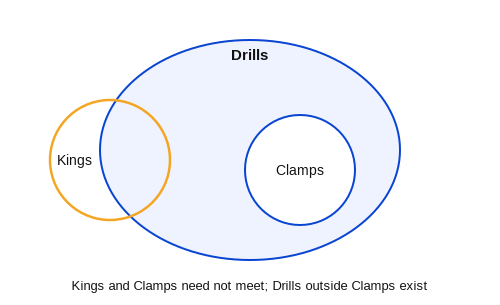
Concept: Draw the least-overlap Venn diagram; a conclusion follows only if it is true in every possible diagram.

  1. All clamps are drills → Clamps circle inside Drills.
  2. Some kings are drills → Kings touches Drills, but can stay away from Clamps. So (I) 'Some kings are clamps' is not certain.
  3. 'All clamps are drills' cannot be reversed to 'All drills are clamps' → (II) does not follow.

Trick: 'All A are B' never gives 'All B are A'.

Answer: (D) Neither conclusion (I) nor (II) follows.

अवधारणा: न्यूनतम ओवरलैप वाला वेन आरेख बनाएँ; निष्कर्ष तभी सही है जब वह हर संभव आरेख में सत्य हो।

  1. सभी क्लैंप ड्रिल हैं → Clamps वृत्त Drills के अंदर।
  2. कुछ किंग ड्रिल हैं → Kings, Drills को छूता है पर Clamps से दूर रह सकता है। अतः (I) निश्चित नहीं।
  3. 'सभी क्लैंप ड्रिल हैं' को उलटकर 'सभी ड्रिल क्लैंप हैं' नहीं कह सकते → (II) अनुसरण नहीं करता।

ट्रिक: 'सभी A, B हैं' से कभी 'सभी B, A हैं' नहीं निकलता।

उत्तर: (D) न तो निष्कर्ष (I) और न ही (II) अनुसरण करता है।

RRB NTPC Undergraduate CBT 2General Intelligence and ReasoningSyllogismRRB NTPC Undergraduate CBT 2 2024 · 20 Dec Shift 3 →
Q11218.
What will come in the place of the question mark (?) in the following equation, if ‘+’ and ‘−’ are interchanged and ‘×’ and ‘÷’ are interchanged?
692 − 438 ÷ 1488 × 372 + 257 ÷ 621 × 69 = ?
यदि '+' और '−' को आपस में बदल दिया जाए तथा '×' और '÷' को आपस में बदल दिया जाए, तो निम्नलिखित समीकरण में प्रश्न चिह्न (?) के स्थान पर क्या आएगा?
692 − 438 ÷ 1488 × 372 + 257 ÷ 621 × 69 = ?
  1. A113
  2. B131
  3. C313
  4. D311
Show answer

Concept: Swap + ↔ − and × ↔ ÷, then apply BODMAS.

  1. New expression: 692+438×1488÷372−257×621÷69.
  2. 1488÷372=4⇒438×4=1752.
  3. 621÷69=9⇒257×9=2313.
  4. 692+1752−2313=131.

Trick: Look for exact divisions (1488=4×372, 621=9×69) – they confirm the swap is right.

Answer: (B) 131

अवधारणा: + ↔ − और × ↔ ÷ बदलें, फिर BODMAS लगाएँ।

  1. नया व्यंजक: 692+438×1488÷372−257×621÷69।
  2. 1488÷372=4⇒438×4=1752।
  3. 621÷69=9⇒257×9=2313।
  4. 692+1752−2313=131।

ट्रिक: पूर्ण भाग (1488=4×372, 621=9×69) बताता है कि बदलाव सही है।

उत्तर: (B) 131

RRB NTPC Undergraduate CBT 2General Intelligence and ReasoningInterchange of signsRRB NTPC Undergraduate CBT 2 2024 · 20 Dec Shift 3 →
Q11219.
Each vowel in the word COURAGE is changed to the letter immediately following it in the English alphabetical order, and each consonant is changed to the letter immediately preceding it in the English alphabetical order. Which of the following letters will be fifth from the right in the new group of letters thus formed?
शब्द COURAGE के प्रत्येक स्वर को अंग्रेज़ी वर्णमाला क्रम में उसके ठीक बाद वाले अक्षर से बदल दिया जाता है, और प्रत्येक व्यंजन को अंग्रेज़ी वर्णमाला क्रम में उसके ठीक पहले वाले अक्षर से बदल दिया जाता है। इस प्रकार बने अक्षरों के नए समूह में दाएँ से पाँचवाँ अक्षर निम्नलिखित में से कौन-सा होगा?
  1. AT
  2. BU
  3. CV
  4. DA
Show answer

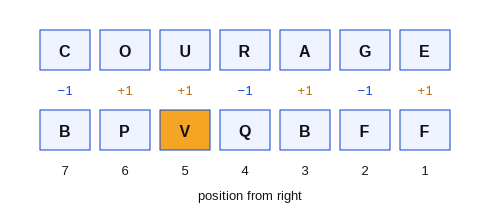
Concept: Vowels move +1, consonants move −1; then count from the right.

  1. C→B, O→P, U→V, R→Q, A→B, G→F, E→F.
  2. New group: B P V Q B F F.
  3. 5th from right = (7−5+1)= 3rd from left = V.

Trick: Position from right =n−k+1 from left.

Answer: (C) V

अवधारणा: स्वर +1, व्यंजन −1; फिर दाएँ से गिनें।

  1. C→B, O→P, U→V, R→Q, A→B, G→F, E→F।
  2. नया समूह: B P V Q B F F।
  3. दाएँ से 5वाँ = बाएँ से (7−5+1)=3रा = V।

ट्रिक: दाएँ से kवाँ = बाएँ से n−k+1वाँ।

उत्तर: (C) V

RRB NTPC Undergraduate CBT 2General Intelligence and ReasoningLetter coding – positionRRB NTPC Undergraduate CBT 2 2024 · 20 Dec Shift 3 →
Q11220.
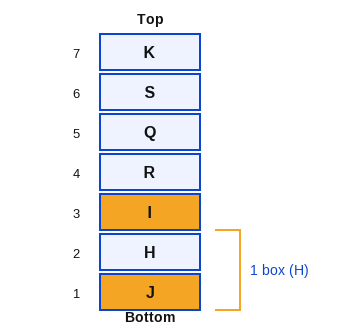
Seven boxes H, I, J, K, Q, R and S are kept one over the other but not necessarily in the same order. H is kept second from the bottom. Only three boxes are kept between H and S. J is kept at one of the positions below H. Only Q is kept between S and R. K is kept at one of the positions above S.
How many boxes are kept between I and J?
सात बक्से H, I, J, K, Q, R और S एक के ऊपर एक रखे गए हैं, लेकिन यह आवश्यक नहीं है कि इसी क्रम में हों। H को नीचे से दूसरे स्थान पर रखा गया है। H और S के बीच केवल तीन बक्से रखे गए हैं। J को H से नीचे के स्थानों में से किसी एक पर रखा गया है। S और R के बीच केवल Q रखा गया है। K को S से ऊपर के स्थानों में से किसी एक पर रखा गया है।
I और J के बीच कितने बक्से रखे गए हैं?
  1. AThreeतीन
  2. BOneएक
  3. CFourचार
  4. DTwoदो
Show answer

Concept: Number positions 1 (bottom) to 7 (top) and place the fixed clues first.

  1. H = 2. Three boxes between H and S → S = 6. J below H → J = 1.
  2. Only Q between S and R → R = 4 (8 is impossible), Q = 5.
  3. K above S → K = 7; remaining I = 3.
  4. Between I (3) and J (1): only H → one box.

Trick: Fix definite positions first (H, then S, J); 'only one between' clues then close at once.

Answer: (B) One

अवधारणा: स्थान 1 (नीचे) से 7 (ऊपर) तक मानें और निश्चित सूचनाएँ पहले रखें।

  1. H = 2। H और S के बीच तीन डिब्बे → S = 6। J, H से नीचे → J = 1।
  2. S और R के बीच केवल Q → R = 4 (8 संभव नहीं), Q = 5।
  3. K, S से ऊपर → K = 7; बचा I = 3।
  4. I (3) और J (1) के बीच केवल H → एक डिब्बा।

ट्रिक: पहले निश्चित स्थान (H, फिर S, J) भरें; बाकी अपने आप बैठ जाते हैं।

उत्तर: (B) एक

RRB NTPC Undergraduate CBT 2General Intelligence and ReasoningBox arrangementRRB NTPC Undergraduate CBT 2 2024 · 20 Dec Shift 3 →