Question bank

Q&A: practice questions with answers

Search questions on any topic. Filter by exam category, exam, subject and topic, try the question, then open the answer and explanation.

Courses – airGurukul

7,077 questions found.

Q4661.
Which of the following letter-number clusters will replace the question mark (?) in the given series to make it logically complete?
OKI 4, QLG 8, SME 12, UNC 16, ?
दी गई श्रृंखला को तार्किक रूप से पूर्ण करने के लिए निम्नलिखित में से कौन-सा अक्षर-संख्या समूह प्रश्न चिह्न (?) को प्रतिस्थापित करेगा?
OKI 4, QLG 8, SME 12, UNC 16, ?
  1. AWOA 24
  2. BWOA 20
  3. CWOV 20
  4. DVOW 16
Show answer

Concept: Track each letter position and the number separately.

  1. 1st letter +2: O → Q → S → U → W
  2. 2nd letter +1: K → L → M → N → O
  3. 3rd letter −2: I → G → E → C → A
  4. Number +4: 4,8,12,16,20

Trick: Split the cluster into columns and find each column’s step.

Answer: (B) WOA 20

अवधारणा: हर अक्षर की स्थिति और संख्या को अलग-अलग देखें।

  1. पहला अक्षर +2: O → Q → S → U → W
  2. दूसरा अक्षर +1: K → L → M → N → O
  3. तीसरा अक्षर −2: I → G → E → C → A
  4. संख्या +4: 4,8,12,16,20

ट्रिक: क्लस्टर को कॉलम में बाँटकर हर कॉलम का अंतर निकालें।

उत्तर: (B) WOA 20
RRB NTPC Graduate CBT 1General Intelligence and ReasoningLetter-number seriesRRB NTPC Graduate CBT 1 2024 · 5 Jun Shift 1 →
Q4662.
Which of the following letter-clusters should replace # and % so that the pattern and relationship followed between the letter-cluster pair on the left side of :: is the same as that on the right side of ::?
# : LHM :: OKP : %
निम्नलिखित में से कौन-से अक्षर-समूह # और % को प्रतिस्थापित करें ताकि :: के बाईं ओर के अक्षर-समूह युग्म के बीच का पैटर्न और संबंध वही हो जो :: के दाईं ओर है?
# : LHM :: OKP : %
  1. A# = FDH, % = NHU
  2. B# = UPS, % = RPV
  3. C# = DCV, % = NHY
  4. D# = GCH, % = TPU
Show answer

Concept: Find the rule from the complete pair and test the options.

  1. Try (D): G +5 = L, C +5 = H, H +5 = M → GCH : LHM (each letter +5).
  2. Apply +5 to OKP: O → T, K → P, P → U → TPU.
  3. Other options fail on the first pair (e.g. FDH +5 = KIM, not LHM).

Trick: When # is on the left, test options by moving each letter by the same step to the given cluster.

Answer: (D) # = GCH, % = TPU

अवधारणा: पूरे युग्म से नियम खोजें और विकल्प जाँचें।

  1. (D) लें: G +5 = L, C +5 = H, H +5 = M → GCH : LHM (हर अक्षर +5)।
  2. OKP पर +5: O → T, K → P, P → U → TPU।
  3. अन्य विकल्प पहले युग्म पर ही असफल (जैसे FDH +5 = KIM, LHM नहीं)।

ट्रिक: विकल्पों में हर अक्षर को समान अंतर से आगे बढ़ाकर दिए क्लस्टर से मिलाएँ।

उत्तर: (D) # = GCH, % = TPU

RRB NTPC Graduate CBT 1General Intelligence and ReasoningLetter analogyRRB NTPC Graduate CBT 1 2024 · 5 Jun Shift 1 →
Q4663.
Seven people, N, O, P, Q, R, S and T, are sitting in a straight line facing north. T is sitting at one of the ends of the line. Only two people are sitting to the left of R. P is sitting to the immediate right of R and immediate left of S. Q is sitting to the immediate left of O. Q does not sit at an extreme end of the line. How many people are sitting between O and N?
सात व्यक्ति, N, O, P, Q, R, S और T, उत्तर की ओर मुख करके एक सीधी पंक्ति में बैठे हैं। T पंक्ति के किसी एक छोर पर बैठा है। R के बाईं ओर केवल दो व्यक्ति बैठे हैं। P, R के ठीक दाईं ओर और S के ठीक बाईं ओर बैठा है। Q, O के ठीक बाईं ओर बैठा है। Q पंक्ति के किसी अंतिम छोर पर नहीं बैठा है। O और N के बीच कितने व्यक्ति बैठे हैं?
  1. ATwoदो
  2. BZeroशून्य
  3. CFourचार
  4. DOneएक
Show answer

Concept: Facing north, left = west end. Number seats 1–7 from the left.

  1. Two people to the left of R → R at 3; P at 4, S at 5.
  2. Q–O are adjacent (Q left of O) and Q is not at an end → only seats 6–7 work: Q = 6, O = 7.
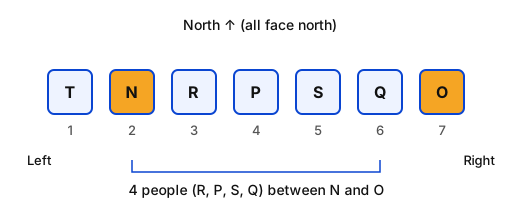
  3. T is at an end → T = 1; N = 2. Final: T N R P S Q O.
  4. Between N (2) and O (7): R, P, S, Q → four people.

Trick: Fix the person with an exact position (R) first, then place the pairs.

Answer: (C) Four

अवधारणा: उत्तर की ओर मुख होने पर बायाँ = पश्चिमी छोर। बाएँ से सीट 1–7 मानें।

  1. R के बाएँ दो लोग → R = 3; P = 4, S = 5।
  2. Q–O पास-पास (Q, O के बाएँ) और Q छोर पर नहीं → केवल 6–7: Q = 6, O = 7।
  3. T छोर पर → T = 1; N = 2। अंतिम क्रम: T N R P S Q O।
  4. N (2) और O (7) के बीच: R, P, S, Q → चार लोग।

ट्रिक: पहले निश्चित स्थान वाले व्यक्ति (R) को बैठाएँ, फिर जोड़ियाँ।

उत्तर: (C) Four

RRB NTPC Graduate CBT 1General Intelligence and ReasoningLinear seating arrangementRRB NTPC Graduate CBT 1 2024 · 5 Jun Shift 1 →
Q4664.
What will come in place of the question mark (?) in the following equation if '+' and '–' are interchanged and '×' and '÷' are interchanged?
1125 × 45 ÷ 39 – 17 + 19 = ?
यदि '+' और '–' को आपस में बदल दिया जाए तथा '×' और '÷' को आपस में बदल दिया जाए, तो निम्नलिखित समीकरण में प्रश्न चिह्न (?) के स्थान पर क्या आएगा?
1125 × 45 ÷ 39 – 17 + 19 = ?
  1. A992
  2. B973
  3. C379
  4. D975
Show answer

Concept: Interchange the signs first, then solve using BODMAS.

  1. After interchange: 1125÷45×39+17−19
  2. 1125÷45=25; 25×39=975
  3. 975+17−19=973

Trick: Rewrite the whole expression with new signs before calculating.

Answer: (B) 973

अवधारणा: पहले चिह्न बदलें, फिर BODMAS से हल करें।

  1. बदलने के बाद: 1125÷45×39+17−19
  2. 1125÷45=25; 25×39=975
  3. 975+17−19=973

ट्रिक: गणना से पहले पूरा व्यंजक नए चिह्नों के साथ लिख लें।

उत्तर: (B) 973

RRB NTPC Graduate CBT 1General Intelligence and ReasoningMathematical operationsRRB NTPC Graduate CBT 1 2024 · 5 Jun Shift 1 →
Q4665.
This question is based on the five, three-digit numbers given below.
(Left) 614 457 249 625 150 (Right)
(Example: 697 – First digit = 6, second digit = 9 and third digit = 7)
(NOTE: All operations to be done from left to right.)
What will be the resultant if the second digit of the highest number is subtracted from the second digit of the lowest number?
यह प्रश्न नीचे दी गई तीन अंकों वाली पाँच संख्याओं पर आधारित है।
(बाएँ) 614 457 249 625 150 (दाएँ)
(उदाहरण: 697 – पहला अंक = 6, दूसरा अंक = 9 और तीसरा अंक = 7)
(ध्यान दें: सभी संक्रियाएँ बाएँ से दाएँ की जानी हैं।)
यदि सबसे बड़ी संख्या के दूसरे अंक को सबसे छोटी संख्या के दूसरे अंक में से घटाया जाए, तो परिणाम क्या होगा?
  1. A4
  2. B3
  3. C6
  4. D2
Show answer

Concept: Pick the highest and lowest numbers, then their second digits.

  1. Numbers: 614, 457, 249, 625, 150. Highest = 625 (second digit 2); lowest = 150 (second digit 5).
  2. "2 subtracted from 5": 5−2=3

Trick: "A subtracted from B" means B − A – read the order carefully.

Answer: (B) 3

अवधारणा: सबसे बड़ी और सबसे छोटी संख्या चुनकर उनके दूसरे अंक लें।

  1. संख्याएँ: 614, 457, 249, 625, 150। सबसे बड़ी = 625 (दूसरा अंक 2); सबसे छोटी = 150 (दूसरा अंक 5)।
  2. "5 में से 2 घटाएँ": 5−2=3

ट्रिक: "A को B से घटाया" = B − A – क्रम ध्यान से पढ़ें।

उत्तर: (B) 3

RRB NTPC Graduate CBT 1General Intelligence and ReasoningNumber puzzle (digits)RRB NTPC Graduate CBT 1 2024 · 5 Jun Shift 1 →
Q4666.
A group of numbers and symbols is coded using letter codes as per the codes given below and the conditions that follow. Study the given codes and conditions and answer the question that follows.
Note: If none of the conditions apply, then codes for the respective number/symbol are to be followed directly as given in the table.
Number/Symbol2@95$&3%#7+486
CodeTFAJLEWQDPRBUS
Conditions:
If the first element is a symbol and the last a number, the codes for these two (the first and the last elements) are to be interchanged.
If the first element is an odd number and the last an even number, the first and last elements are to be coded as ©.
If both second and third elements are perfect squares, the third element is to be coded as the code for the second element.
What will be the code for the following group?
7 2 4 @ 5
संख्याओं और प्रतीकों के एक समूह को नीचे दिए गए कूटों और उसके बाद दी गई शर्तों के अनुसार अक्षर कूटों का प्रयोग करके कूटबद्ध किया जाता है। दिए गए कूटों और शर्तों का अध्ययन कीजिए और आगे दिए गए प्रश्न का उत्तर दीजिए।
ध्यान दें: यदि कोई भी शर्त लागू नहीं होती है, तो संबंधित संख्या/प्रतीक के लिए तालिका में दिए गए कूटों का सीधे अनुसरण किया जाना है।
संख्या/प्रतीक2@95$&3%#7+486
कूटTFAJLEWQDPRBUS
शर्तें:
यदि पहला तत्व एक प्रतीक है और अंतिम तत्व एक संख्या है, तो इन दोनों (पहले और अंतिम तत्वों) के कूटों को आपस में बदल दिया जाना है।
यदि पहला तत्व एक विषम संख्या है और अंतिम तत्व एक सम संख्या है, तो पहले और अंतिम तत्वों को © के रूप में कूटबद्ध किया जाना है।
यदि दूसरा और तीसरा दोनों तत्व पूर्ण वर्ग हैं, तो तीसरे तत्व को दूसरे तत्व के कूट के रूप में कूटबद्ध किया जाना है।
निम्नलिखित समूह के लिए कूट क्या होगा?
7 2 4 @ 5
  1. APBBFJ
  2. BJTBFP
  3. CJBBFP
  4. DPTBFJ
Show answer

Concept: Check all three conditions; if none applies, code directly from the table.

  1. Group: 7 2 4 @ 5. First = 7 (number), so (i) fails; last = 5 is odd, so (ii) fails.
  2. Second = 2 is not a perfect square, so (iii) fails.
  3. Direct codes: 7 = P, 2 = T, 4 = B, @ = F, 5 = J → PTBFJ.

Trick: Options B/D differ only by condition use – check each condition strictly.

Answer: (D) PTBFJ

अवधारणा: तीनों शर्तें जाँचें; कोई लागू न हो तो तालिका से सीधे कोड लें।

  1. समूह: 7 2 4 @ 5। पहला = 7 (संख्या), अतः (i) नहीं; अंतिम = 5 विषम, अतः (ii) नहीं।
  2. दूसरा = 2 पूर्ण वर्ग नहीं, अतः (iii) नहीं।
  3. सीधे कोड: 7 = P, 2 = T, 4 = B, @ = F, 5 = J → PTBFJ।

ट्रिक: हर शर्त को सख्ती से जाँचें – विकल्प इन्हीं से भ्रमित करते हैं।

उत्तर: (D) PTBFJ

RRB NTPC Graduate CBT 1General Intelligence and ReasoningCoding-decoding (conditions)RRB NTPC Graduate CBT 1 2024 · 5 Jun Shift 1 →
Q4667.
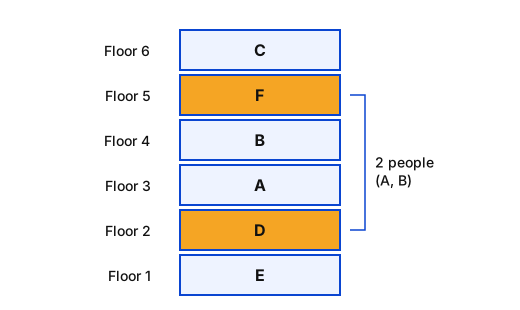
A, B, C, D, E and F live on six different floors of the same building. The lowermost floor in the building is numbered 1, the floor above it, number 2 and so on till the topmost floor is numbered 6.
A lives on a floor which is a prime number. The product of floors on which A and E live is 3. Only 2 people live above B. F lives immediately below C.
How many people live between D and F?
A, B, C, D, E और F एक ही इमारत की छह अलग-अलग मंज़िलों पर रहते हैं। इमारत की सबसे निचली मंज़िल की संख्या 1 है, उसके ऊपर वाली मंज़िल की संख्या 2 है और इसी प्रकार सबसे ऊपरी मंज़िल की संख्या 6 है।
A एक ऐसी मंज़िल पर रहता है जिसकी संख्या एक अभाज्य संख्या है। A और E जिन मंज़िलों पर रहते हैं, उनका गुणनफल 3 है। B के ऊपर केवल 2 व्यक्ति रहते हैं। F, C के ठीक नीचे रहता है।
D और F के बीच कितने व्यक्ति रहते हैं?
  1. AThreeतीन
  2. BFourचार
  3. COneएक
  4. DTwoदो
Show answer

Concept: Use the fixed clues (product, "only 2 above") first.

  1. A’s floor is prime and A×E=3 → A = 3, E = 1.
  2. Only 2 people above B → B = 4.
  3. Left floors 2, 5, 6; F immediately below C → F = 5, C = 6; so D = 2.
  4. Between D (2) and F (5): A and B → two people.

Trick: A product equal to a prime fixes the floors as 1 and that prime.

Answer: (D) Two

अवधारणा: पहले निश्चित संकेत (गुणनफल, "केवल 2 ऊपर") लगाएँ।

  1. A की मंज़िल अभाज्य और A×E=3 → A = 3, E = 1।
  2. B के ऊपर केवल 2 लोग → B = 4।
  3. बची मंज़िलें 2, 5, 6; F, C के ठीक नीचे → F = 5, C = 6; अतः D = 2।
  4. D (2) और F (5) के बीच: A और B → दो लोग।

ट्रिक: गुणनफल अभाज्य हो तो मंज़िलें 1 और वही अभाज्य संख्या।

उत्तर: (D) Two

RRB NTPC Graduate CBT 1General Intelligence and ReasoningFloor puzzleRRB NTPC Graduate CBT 1 2024 · 5 Jun Shift 1 →
Q4668.
This question is based on the five, three-digit numbers given below.
(Left) 401 418 733 283 902 (Right)
(Example: 697 – First digit = 6, second digit = 9 and third digit = 7)
(NOTE: All operations to be done from left to right.)
What will be the resultant if the second digit of the highest number is added to the third digit of the lowest number?
यह प्रश्न नीचे दी गई तीन अंकों वाली पाँच संख्याओं पर आधारित है।
(बाएँ) 401 418 733 283 902 (दाएँ)
(उदाहरण: 697 – पहला अंक = 6, दूसरा अंक = 9 और तीसरा अंक = 7)
(ध्यान दें: सभी संक्रियाएँ बाएँ से दाएँ की जानी हैं।)
यदि सबसे बड़ी संख्या के दूसरे अंक को सबसे छोटी संख्या के तीसरे अंक में जोड़ा जाए, तो परिणाम क्या होगा?
  1. A3
  2. B6
  3. C4
  4. D2
Show answer

Concept: Identify the highest and lowest numbers, then pick the required digits.

  1. Numbers: 401, 418, 733, 283, 902. Highest = 902 (second digit 0); lowest = 283 (third digit 3).
  2. 0+3=3

Trick: Compare hundreds digits first to spot the highest/lowest instantly.

Answer: (A) 3

अवधारणा: सबसे बड़ी और सबसे छोटी संख्या पहचानकर आवश्यक अंक लें।

  1. संख्याएँ: 401, 418, 733, 283, 902। सबसे बड़ी = 902 (दूसरा अंक 0); सबसे छोटी = 283 (तीसरा अंक 3)।
  2. 0+3=3

ट्रिक: सैकड़े का अंक देखकर तुरंत सबसे बड़ी/छोटी संख्या पहचानें।

उत्तर: (A) 3

RRB NTPC Graduate CBT 1General Intelligence and ReasoningNumber puzzle (digits)RRB NTPC Graduate CBT 1 2024 · 5 Jun Shift 1 →
Q4669.
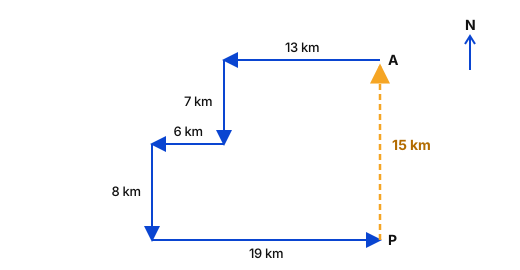
Fardeen starts from point A and drives 13 km towards west. He then takes a left turn, drives 7 km, turns right and drives 6 km. He then takes a left turn and drives 8 km. He takes a final left turn, drives 19 km and stops at point P. How far (shortest distance) and towards which direction should he drive in order to reach point A again (all turns are 90 degrees turns only unless specified)?
फ़रदीन बिंदु A से चलना शुरू करता है और पश्चिम की ओर 13 km गाड़ी चलाता है। फिर वह बाएँ मुड़ता है, 7 km गाड़ी चलाता है, दाएँ मुड़ता है और 6 km गाड़ी चलाता है। फिर वह बाएँ मुड़ता है और 8 km गाड़ी चलाता है। वह अंतिम बार बाएँ मुड़ता है, 19 km गाड़ी चलाता है और बिंदु P पर रुक जाता है। पुनः बिंदु A पर पहुँचने के लिए उसे कितनी दूरी (न्यूनतम दूरी) और किस दिशा में गाड़ी चलानी चाहिए (जब तक निर्दिष्ट न किया जाए, सभी मोड़ केवल 90 डिग्री के मोड़ हैं)?
  1. A10 km north10 km उत्तर
  2. B15 km south15 km दक्षिण
  3. C12 km south12 km दक्षिण
  4. D15 km north15 km उत्तर
Show answer

Concept: Track the net east–west and north–south movement.

  1. West 13 → left (south) 7 → right (west) 6 → left (south) 8 → left (east) 19.
  2. East–west: −13−6+19=0 → P is directly in line with A.
  3. North–south: 7+8=15 km south of A.
  4. To return, drive 15 km north.

Trick: If the east and west totals cancel, the answer is just the vertical sum.

Answer: (D) 15 km north

अवधारणा: पूर्व–पश्चिम और उत्तर–दक्षिण की कुल गति अलग-अलग जोड़ें।

  1. पश्चिम 13 → बाएँ (दक्षिण) 7 → दाएँ (पश्चिम) 6 → बाएँ (दक्षिण) 8 → बाएँ (पूर्व) 19।
  2. पूर्व–पश्चिम: −13−6+19=0 → P ठीक A की सीध में है।
  3. उत्तर–दक्षिण: 7+8=15 km, A के दक्षिण में।
  4. वापस जाने के लिए 15 km उत्तर चलना होगा।

ट्रिक: पूर्व और पश्चिम बराबर हों तो उत्तर सिर्फ़ ऊर्ध्वाधर योग है।

उत्तर: (D) 15 km north

RRB NTPC Graduate CBT 1General Intelligence and ReasoningDirection and distanceRRB NTPC Graduate CBT 1 2024 · 5 Jun Shift 1 →
Q4670.
Select the number from among the given options that can replace the question mark (?) in the following series.
105 97 89 81 73 ?
दिए गए विकल्पों में से उस संख्या का चयन कीजिए जो निम्नलिखित श्रृंखला में प्रश्न चिह्न (?) को प्रतिस्थापित कर सकती है।
105 97 89 81 73 ?
  1. A65
  2. B58
  3. C60
  4. D70
Show answer

Concept: Check the common difference.

  1. 105−8=97,97−8=89,89−8=81,81−8=73
  2. Next: 73−8=65

Trick: Constant difference → arithmetic progression.

Answer: (A) 65

अवधारणा: सार्व अंतर जाँचें।

  1. 105−8=97,97−8=89,89−8=81,81−8=73
  2. अगला: 73−8=65

ट्रिक: अंतर स्थिर हो तो समांतर श्रेणी।

उत्तर: (A) 65

RRB NTPC Graduate CBT 1General Intelligence and ReasoningNumber seriesRRB NTPC Graduate CBT 1 2024 · 5 Jun Shift 1 →
Q4671.
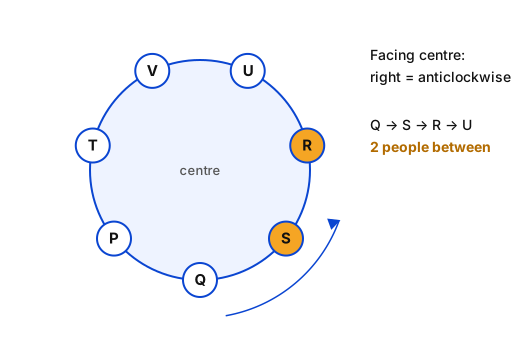
P, Q, R, S, T, U and V are sitting around a circular table facing the centre. Only two people sit between T and S when counted from the right of T. Only three people sit between V and Q when counted from the right of Q. S sits to the immediate right of Q. U sits to the immediate right of R. How many people sit between Q and U when counted from the right of Q?
P, Q, R, S, T, U और V एक वृत्ताकार मेज़ के चारों ओर केंद्र की ओर मुख करके बैठे हैं। T के दाईं ओर से गिनने पर T और S के बीच केवल दो व्यक्ति बैठे हैं। Q के दाईं ओर से गिनने पर V और Q के बीच केवल तीन व्यक्ति बैठे हैं। S, Q के ठीक दाईं ओर बैठा है। U, R के ठीक दाईं ओर बैठा है। Q के दाईं ओर से गिनने पर Q और U के बीच कितने व्यक्ति बैठे हैं?
  1. A1
  2. B3
  3. C4
  4. D2
Show answer

Concept: Facing the centre, "to the right" means moving anticlockwise. Number seats 0–6 in that direction.

  1. Q = 0. S is immediate right of Q → S = 1.
  2. Three between V and Q from Q’s right → V = 4. Two between T and S from T’s right → T = S − 3 = 5.
  3. Left seats 2, 3, 6 with U immediately right of R → R = 2, U = 3, P = 6.
  4. From Q to the right: S, R, then U → two people between.

Trick: Place the person with most links (Q) first; turn every clue into "+k seats to the right".

Answer: (D) 2

अवधारणा: केंद्र की ओर मुख होने पर "दाएँ" = वामावर्त (anticlockwise) दिशा। इसी दिशा में सीट 0–6 मानें।

  1. Q = 0। S, Q के ठीक दाएँ → S = 1।
  2. Q के दाएँ से V और Q के बीच तीन → V = 4। T के दाएँ से T और S के बीच दो → T = S − 3 = 5।
  3. बची सीटें 2, 3, 6; U, R के ठीक दाएँ → R = 2, U = 3, P = 6।
  4. Q से दाएँ: S, R, फिर U → बीच में दो लोग।

ट्रिक: सबसे ज़्यादा संकेतों वाले व्यक्ति (Q) को पहले रखें; हर संकेत को "दाएँ +k सीट" में बदलें।

उत्तर: (D) 2

RRB NTPC Graduate CBT 1General Intelligence and ReasoningCircular seating arrangementRRB NTPC Graduate CBT 1 2024 · 5 Jun Shift 1 →
Q4672.
In a certain code language,
A + B means ‘A is the mother of B’
A – B means ‘A is the brother of B’
A × B means ‘A is the wife of B’ and
A ÷ B means ‘A is the father of B’.
How is M related to Q if ‘M + N × O ÷ P – Q’?
एक निश्चित कूट भाषा में,
A + B का अर्थ है ‘A, B की माता है’
A – B का अर्थ है ‘A, B का भाई है’
A × B का अर्थ है ‘A, B की पत्नी है’ और
A ÷ B का अर्थ है ‘A, B का पिता है’।
यदि ‘M + N × O ÷ P – Q’ है, तो M का Q से क्या संबंध है?
  1. AFather's sisterपिता की बहन
  2. BMother's motherमाता की माता
  3. C​Father's motherपिता की माता
  4. DMother's sisterमाता की बहन
Show answer

Concept: Decode each symbol and build the family tree step by step.

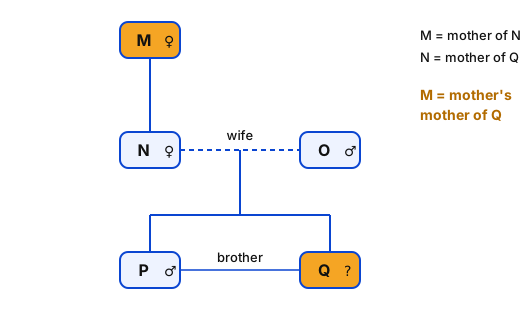
  1. M + N: M is the mother of N. N × O: N is the wife of O.
  2. O ÷ P: O is the father of P, so N is P’s mother. P – Q: P is the brother of Q, so N is also Q’s mother.
  3. M is the mother of N, who is Q’s mother → M is Q’s mother’s mother.

Trick: Mark gender as you decode: +, × give females; ÷, – give males.

Answer: (B) Mother's mother

अवधारणा: हर चिह्न का अर्थ निकालकर परिवार-वृक्ष बनाएँ।

  1. M + N: M, N की माँ है। N × O: N, O की पत्नी है।
  2. O ÷ P: O, P का पिता है, अतः N, P की माँ। P – Q: P, Q का भाई है, अतः N, Q की भी माँ।
  3. M, N की माँ है और N, Q की माँ → M, Q की नानी (माँ की माँ) है।

ट्रिक: डिकोड करते समय लिंग लिखें: +, × से स्त्री; ÷, – से पुरुष।

उत्तर: (B) Mother's mother

RRB NTPC Graduate CBT 1General Intelligence and ReasoningCoded blood relationsRRB NTPC Graduate CBT 1 2024 · 5 Jun Shift 1 →
Q4673.
What should come in place of the question mark (?) in the given series based on the English alphabetical order?
XBF UYC RVZ OSW ?
अंग्रेज़ी वर्णमाला क्रम के आधार पर दी गई श्रृंखला में प्रश्न चिह्न (?) के स्थान पर क्या आना चाहिए?
XBF UYC RVZ OSW ?
  1. ATPL
  2. BTLP
  3. CLTP
  4. DLPT
Show answer

Concept: Track each letter position separately.

  1. 1st letter −3: X → U → R → O → L
  2. 2nd letter −3: B → Y → V → S → P
  3. 3rd letter −3: F → C → Z → W → T

Trick: All three columns move back 3 – a wrap-around (B → Y, C → Z) is the only catch.

Answer: (D) LPT

अवधारणा: हर अक्षर की स्थिति अलग-अलग देखें।

  1. पहला अक्षर −3: X → U → R → O → L
  2. दूसरा अक्षर −3: B → Y → V → S → P
  3. तीसरा अक्षर −3: F → C → Z → W → T

ट्रिक: तीनों कॉलम 3 पीछे – बस B → Y, C → Z का घुमाव ध्यान रखें।

उत्तर: (D) LPT

RRB NTPC Graduate CBT 1General Intelligence and ReasoningLetter seriesRRB NTPC Graduate CBT 1 2024 · 5 Jun Shift 1 →
Q4674.
FARM is related to CXOJ in a certain way based on the English alphabetical order. In the same way, FRESH is related to COBPE. To which of the given options is RICH related, following the same logic?
अंग्रेज़ी वर्णमाला क्रम के आधार पर FARM एक निश्चित प्रकार से CXOJ से संबंधित है। इसी प्रकार, FRESH, COBPE से संबंधित है। समान तर्क का अनुसरण करते हुए, RICH दिए गए विकल्पों में से किससे संबंधित है?
  1. AOEZF
  2. BOFZE
  3. COFZF
  4. DOEZE
Show answer

Concept: Compare each letter with its code.

  1. FARM → CXOJ: F−3 = C, A−3 = X, R−3 = O, M−3 = J. FRESH → COBPE also follows −3.
  2. RICH: R−3 = O, I−3 = F, C−3 = Z, H−3 = E → OFZE.

Trick: Backward shift past A wraps round: A − 3 = X, C − 3 = Z.

Answer: (B) OFZE

अवधारणा: हर अक्षर की तुलना उसके कोड से करें।

  1. FARM → CXOJ: F−3 = C, A−3 = X, R−3 = O, M−3 = J। FRESH → COBPE भी −3।
  2. RICH: R−3 = O, I−3 = F, C−3 = Z, H−3 = E → OFZE।

ट्रिक: A से पीछे जाने पर घूम जाएँ: A − 3 = X, C − 3 = Z।

उत्तर: (B) OFZE

RRB NTPC Graduate CBT 1General Intelligence and ReasoningCoding-decodingRRB NTPC Graduate CBT 1 2024 · 5 Jun Shift 1 →
Q4675.
67 is related to 74 following a certain logic. Following the same logic, 13 is related to 20. To which of the following is 52 related, following the same logic?
(NOTE: Operations should be performed on the whole numbers, without breaking down the numbers into their constituent digits. E.g. 13 – Operations on 13 such as
adding/subtracting/multiplying to 13 can be performed. Breaking down 13 into 1 and 3 and then performing mathematical operations on 1 and 3 is not allowed.)
एक निश्चित तर्क का अनुसरण करते हुए 67, 74 से संबंधित है। उसी तर्क का अनुसरण करते हुए, 13, 20 से संबंधित है। उसी तर्क का अनुसरण करते हुए, 52 निम्नलिखित में से किससे संबंधित है?
(ध्यान दें: संक्रियाएँ संख्याओं को उनके घटक अंकों में विभाजित किए बिना पूर्ण संख्याओं पर की जानी चाहिए। उदाहरण के लिए 13 – 13 पर संक्रियाएँ जैसे 13 में
जोड़ना/घटाना/गुणा करना आदि किया जा सकता है। 13 को 1 और 3 में विभाजित करना और फिर 1 और 3 पर गणितीय संक्रियाएँ करना वर्जित है।)
  1. A63
  2. B57
  3. C59
  4. D61
Show answer

Concept: Find one operation that works for both given pairs.

  1. 67+7=74 and 13+7=20 → rule: add 7
  2. 52+7=59

Trick: Same difference in both pairs → simple addition rule.

Answer: (C) 59

अवधारणा: ऐसी संक्रिया खोजें जो दोनों युग्मों पर लागू हो।

  1. 67+7=74 और 13+7=20 → नियम: 7 जोड़ें
  2. 52+7=59

ट्रिक: दोनों युग्मों में समान अंतर → सीधा जोड़ का नियम।

उत्तर: (C) 59

RRB NTPC Graduate CBT 1General Intelligence and ReasoningNumber analogyRRB NTPC Graduate CBT 1 2024 · 5 Jun Shift 1 →
Q4676.
A group of numbers/symbols is coded using letter codes as per the codes given below and the conditions that follow. If none of the conditions apply, then codes for the respective number/symbol to be followed directly as given in the table.
Number/Symbol89@&572%13∆46
CodeLCZMDWAPRTFBK
Conditions:
(i) If the first element is a symbol and the last a number, the codes for these two (the first and the last elements) are to be interchanged.
(ii) If the first element is an odd number and the last an even number, the first and last elements are to be coded as ©.
(iii) If both the second and third elements are perfect squares, the third element is to be coded as the code for the second element.
What will be the code for the following group?
7 2 @ 1 3 &
संख्याओं/प्रतीकों के एक समूह को नीचे दिए गए कूटों और उसके बाद दी गई शर्तों के अनुसार अक्षर कूटों का प्रयोग करके कूटबद्ध किया जाता है। यदि कोई भी शर्त लागू नहीं होती है, तो संबंधित संख्या/प्रतीक के लिए तालिका में दिए गए कूटों का सीधे अनुसरण किया जाना है।
संख्या/प्रतीक89@&572%13∆46
कूटLCZMDWAPRTFBK
शर्तें:
(i) यदि पहला तत्व एक प्रतीक है और अंतिम तत्व एक संख्या है, तो इन दोनों (पहले और अंतिम तत्वों) के कूटों को आपस में बदल दिया जाना है।
(ii) यदि पहला तत्व एक विषम संख्या है और अंतिम तत्व एक सम संख्या है, तो पहले और अंतिम तत्वों को © के रूप में कूटबद्ध किया जाना है।
(iii) यदि दूसरा और तीसरा दोनों तत्व पूर्ण वर्ग हैं, तो तीसरे तत्व को दूसरे तत्व के कूट के रूप में कूटबद्ध किया जाना है।
निम्नलिखित समूह के लिए कूट क्या होगा?
7 2 @ 1 3 &
  1. AW A Z R T M
  2. BW A R Z T M
  3. CM A Z T R W
  4. DM A Z R T W
Show answer

Concept: Check the three conditions; if none applies, code directly from the table.

  1. Group: 7 2 @ 1 3 &. First = 7 is a number → (i) fails; last = & is a symbol, not even → (ii) fails.
  2. Second = 2 is not a perfect square → (iii) fails.
  3. Direct codes: 7 = W, 2 = A, @ = Z, 1 = R, 3 = T, & = M.

Trick: Reversed options (M…W) appear to tempt you into applying condition (i) wrongly.

Answer: (A) W A Z R T M

अवधारणा: तीनों शर्तें जाँचें; कोई लागू न हो तो तालिका से सीधे कोड लें।

  1. समूह: 7 2 @ 1 3 &। पहला = 7 संख्या → (i) नहीं; अंतिम = & प्रतीक है, सम संख्या नहीं → (ii) नहीं।
  2. दूसरा = 2 पूर्ण वर्ग नहीं → (iii) नहीं।
  3. सीधे कोड: 7 = W, 2 = A, @ = Z, 1 = R, 3 = T, & = M।

ट्रिक: उलटे विकल्प (M…W) शर्त (i) गलत लगाने का जाल हैं।

उत्तर: (A) W A Z R T M

RRB NTPC Graduate CBT 1General Intelligence and ReasoningCoding-decoding (conditions)RRB NTPC Graduate CBT 1 2024 · 5 Jun Shift 1 →
Q4677.
Based on the English alphabetical order, three of the following four letter-clusters are alike in a certain way and thus form a group. Which letter-cluster DOES NOT belong to that group?
(Note: The odd one out is not based on the number of consonants/vowels or their position in the letter-cluster.)
अंग्रेज़ी वर्णमाला क्रम के आधार पर, निम्नलिखित चार अक्षर-समूहों में से तीन किसी निश्चित प्रकार से एकसमान हैं और इस प्रकार एक समूह बनाते हैं। कौन-सा अक्षर-समूह उस समूह से संबंधित नहीं है?
(ध्यान दें: असंगत अक्षर-समूह, उस अक्षर-समूह में व्यंजनों/स्वरों की संख्या या उनके स्थान पर आधारित नहीं है।)
  1. APOR
  2. BSQU
  3. CLJN
  4. DECG
Show answer

Concept: Check the alphabetical gaps between consecutive letters.

  1. SQU: S −2 = Q, Q +4 = U. LJN: L −2 = J, J +4 = N. ECG: E −2 = C, C +4 = G.
  2. POR: P −1 = O, O +3 = R – a different pattern.

Trick: Write the gaps (−2, +4) under each cluster; the one that breaks it is odd.

Answer: (A) POR

अवधारणा: क्रमागत अक्षरों के बीच वर्णमाला-अंतर देखें।

  1. SQU: S −2 = Q, Q +4 = U। LJN: L −2 = J, J +4 = N। ECG: E −2 = C, C +4 = G।
  2. POR: P −1 = O, O +3 = R – अलग पैटर्न।

ट्रिक: हर समूह के नीचे अंतर (−2, +4) लिखें; जो अलग हो वही विषम।

उत्तर: (A) POR

RRB NTPC Graduate CBT 1General Intelligence and ReasoningOdd one out (letters)RRB NTPC Graduate CBT 1 2024 · 5 Jun Shift 1 →
Q4678.
Which of the following countries emerged as mixed team Squash World Cup
champions in December 2025 following a dominant 3–0 triumph over top-seeded Hong Kong?
निम्नलिखित में से किस देश ने दिसंबर 2025 में शीर्ष वरीयता प्राप्त हांगकांग पर 3–0 की निर्णायक जीत के साथ मिश्रित टीम स्क्वैश विश्व कप
का खिताब जीता?
  1. AEnglandइंग्लैंड
  2. BAustraliaऑस्ट्रेलिया
  3. CEgyptमिस्र
  4. DIndiaभारत
Show answer

Concept: The SDAT–WSF Squash World Cup 2025 (mixed team event) was held in Chennai in December 2025.

  1. India, playing at home, beat top-seeded Hong Kong 3–0 in the final to become champions for the first time.
  2. Egypt and England, the usual powerhouses, did not reach the final.

Yaad rakhein: Squash World Cup 2025 → Chennai → India champion (beat Hong Kong 3–0).

Answer: (D) India

अवधारणा: SDAT–WSF स्क्वैश विश्व कप 2025 (मिश्रित टीम स्पर्धा) दिसंबर 2025 में चेन्नई में हुआ।

  1. घरेलू मैदान पर भारत ने फाइनल में शीर्ष वरीय हांगकांग को 3–0 से हराकर पहली बार खिताब जीता।
  2. मिस्र और इंग्लैंड जैसी मजबूत टीमें फाइनल तक नहीं पहुँचीं।

याद रखें: स्क्वैश विश्व कप 2025 → चेन्नई → भारत चैंपियन (हांगकांग को 3–0)।

उत्तर: (D) India

RRB NTPC Graduate CBT 1General AwarenessCurrent Affairs – SportsRRB NTPC Graduate CBT 1 2025 · 27 Mar Shift 3 →
Q4679.
Which of the following ministers was the Commander of the entire military under the king during the Mughal rule?
मुगल शासन के दौरान निम्नलिखित में से कौन-सा मंत्री राजा के अधीन संपूर्ण सेना का सेनापति होता था?
  1. AMir Samanमीर सामान
  2. BMir Bakshiमीर बख्शी
  3. CDiwan-i-Inshaदीवान-ए-इंशा
  4. DSadr-us-Sudurसद्र-उस-सुदूर
Show answer

Concept: Central Mughal ministers had fixed departments.

  1. Mir Bakshi – head of the military department: recruitment, mansab records, salaries and command of the army under the emperor.
  2. Mir Saman – imperial household/karkhanas; Diwan-i-Insha – royal correspondence; Sadr-us-Sudur – religious and charitable affairs.

Yaad rakhein: Bakshi = "pay-master" of soldiers → army chief under the king.

Answer: (B) Mir Bakshi

अवधारणा: मुगल केंद्रीय मंत्रियों के विभाग निश्चित थे।

  1. मीर बख्शी – सैन्य विभाग का प्रमुख: भर्ती, मनसब अभिलेख, वेतन और बादशाह के अधीन सेना की कमान।
  2. मीर सामान – शाही घराना/कारखाने; दीवान-ए-इंशा – शाही पत्राचार; सद्र-उस-सुदूर – धार्मिक व दान कार्य।

याद रखें: बख्शी = सैनिकों का "वेतन देने वाला" → बादशाह के अधीन सेनापति।

उत्तर: (B) Mir Bakshi

RRB NTPC Graduate CBT 1General AwarenessMughal AdministrationRRB NTPC Graduate CBT 1 2025 · 27 Mar Shift 3 →
Q4680.
Which climatic factor plays the most significant role in shaping the distribution of natural vegetation across India?
भारत में प्राकृतिक वनस्पति के वितरण को निर्धारित करने में कौन-सा जलवायवीय कारक सबसे महत्वपूर्ण भूमिका निभाता है?
  1. AAnnual precipitation (>250 cm)वार्षिक वर्षण (>250 cm)
  2. BAltitudinal gradientऊँचाई की प्रवणता
  3. CSoil nutrient qualityमृदा के पोषक तत्वों की गुणवत्ता
  4. DMean annual temperature variationsऔसत वार्षिक तापमान में विविधताएँ
Show answer

Concept: In India the type of natural vegetation is decided mainly by rainfall.

  1. Tropical evergreen forests grow where rainfall exceeds about 200–250 cm; deciduous forests in 70–200 cm; thorn forests below 70 cm.
  2. Temperature and altitude matter only in mountains; soil nutrients play a minor role.

Yaad rakhein: Vegetation belts of India follow the rainfall map – more rain, denser forest.

Answer: (A) Annual precipitation (>250 cm)

अवधारणा: भारत में प्राकृतिक वनस्पति का प्रकार मुख्यतः वर्षा से तय होता है।

  1. उष्णकटिबंधीय सदाबहार वन लगभग 200–250 cm से अधिक वर्षा में; पर्णपाती वन 70–200 cm; कँटीले वन 70 cm से कम में।
  2. तापमान व ऊँचाई केवल पर्वतीय क्षेत्रों में प्रभावी; मृदा पोषक तत्वों की भूमिका गौण है।

याद रखें: भारत की वनस्पति पेटियाँ वर्षा मानचित्र का अनुसरण करती हैं – जितनी अधिक वर्षा, उतना घना वन।

उत्तर: (A) Annual precipitation (>250 cm)

RRB NTPC Graduate CBT 1General AwarenessNatural Vegetation of IndiaRRB NTPC Graduate CBT 1 2025 · 27 Mar Shift 3 →