Question bank

Q&A: practice questions with answers

Search questions on any topic. Filter by exam category, exam, subject and topic, try the question, then open the answer and explanation.

Courses – airGurukul

7,077 questions found.

Q5101.
Which of the following statements best represents system software?
निम्नलिखित में से कौन-सा कथन सिस्टम सॉफ़्टवेयर (system software) को सबसे अच्छी तरह दर्शाता है?
  1. ASoftware used for preparing presentationsप्रस्तुतियाँ (presentations) तैयार करने के लिए प्रयुक्त सॉफ़्टवेयर
  2. BSoftware that controls all internal computer functionsसॉफ़्टवेयर जो कंप्यूटर के सभी आंतरिक कार्यों को नियंत्रित करता है
  3. CSoftware used to play gamesगेम खेलने के लिए प्रयुक्त सॉफ़्टवेयर
  4. DSoftware used to design custom projectsकस्टम परियोजनाएँ डिज़ाइन करने के लिए प्रयुक्त सॉफ़्टवेयर
Show answer

Concept: Software is of two kinds: system software (runs and manages the computer itself) and application software (does user tasks).

  1. System software – operating system, device drivers, utilities – controls all internal functions: memory, CPU, input/output.
  2. Presentations, games and design tools are application software, not system software.

Yaad rakhein: System software = for the machine; application software = for the user's work.

Answer: (B) Software that controls all internal computer functions

अवधारणा: सॉफ्टवेयर दो प्रकार के होते हैं: सिस्टम सॉफ्टवेयर (कंप्यूटर को चलाता/संभालता है) और एप्लिकेशन सॉफ्टवेयर (उपयोगकर्ता के काम करता है)।

  1. सिस्टम सॉफ्टवेयर – ऑपरेटिंग सिस्टम, ड्राइवर, यूटिलिटी – मेमोरी, CPU, इनपुट/आउटपुट जैसे सभी आंतरिक कार्य नियंत्रित करता है।
  2. प्रेज़ेंटेशन, गेम और डिज़ाइन टूल एप्लिकेशन सॉफ्टवेयर हैं।

याद रखें: सिस्टम सॉफ्टवेयर = मशीन के लिए; एप्लिकेशन = उपयोगकर्ता के काम के लिए।

उत्तर: (B) वह सॉफ्टवेयर जो कंप्यूटर के सभी आंतरिक कार्यों को नियंत्रित करता है
RRB NTPC Graduate CBT 1General AwarenessSystem softwareRRB NTPC Graduate CBT 1 2025 · 25 Mar Shift 2 →
Q5102.
During which nationwide event, observed in 2025, did the Union Minister of Science and Technology emphasize inclusive participation in India’s biotechnology mission and the goal of achieving a $300 billion bioeconomy by 2030?
2025 में आयोजित किस राष्ट्रव्यापी कार्यक्रम के दौरान केंद्रीय विज्ञान और प्रौद्योगिकी मंत्री ने भारत के जैव प्रौद्योगिकी मिशन में समावेशी भागीदारी और 2030 तक 300 बिलियन डॉलर की जैव-अर्थव्यवस्था प्राप्त करने के लक्ष्य पर बल दिया?
  1. AIndia Bioeconomy Vision 2030 Outreach Eventइंडिया बायोइकोनॉमी विज़न 2030 आउटरीच इवेंट
  2. BWorld Bioproduct Day – The BioE3 Wayवर्ल्ड बायोप्रोडक्ट डे – द BioE3 वे
  3. CGlobal Biotech Innovation and Sustainability Summitग्लोबल बायोटेक इनोवेशन एंड सस्टेनेबिलिटी समिट
  4. DNational Biotechnology Awareness Week Programmeनेशनल बायोटेक्नोलॉजी अवेयरनेस वीक प्रोग्राम
Show answer

Concept: India's bioeconomy target is USD 300 billion by 2030, pursued through the BioE3 Policy.

  1. On World Bioproduct Day (7 July 2025) the Department of Biotechnology held a nationwide event titled "World Bioproduct Day – The BioE3 Way" across many cities.
  2. Union Minister Dr Jitendra Singh stressed inclusive participation of students, start-ups and industry in the biotech mission and the $300 billion bioeconomy goal by 2030.

Yaad rakhein: Bioeconomy: ~$10 bn (2014) → $165 bn (2024) → target $300 bn (2030).

Answer: (B) World Bioproduct Day – The BioE3 Way

अवधारणा: भारत का लक्ष्य 2030 तक 300 अरब डॉलर की जैव-अर्थव्यवस्था (bioeconomy) है, जिसे BioE3 नीति से पाना है।

  1. विश्व जैव-उत्पाद दिवस (7 जुलाई 2025) पर जैव-प्रौद्योगिकी विभाग ने देशभर में "World Bioproduct Day – The BioE3 Way" कार्यक्रम आयोजित किया।
  2. केंद्रीय मंत्री डॉ. जितेंद्र सिंह ने छात्रों, स्टार्टअप और उद्योग की समावेशी भागीदारी और 2030 तक $300 अरब के लक्ष्य पर ज़ोर दिया।

याद रखें: जैव-अर्थव्यवस्था: ~$10 अरब (2014) → $165 अरब (2024) → लक्ष्य $300 अरब (2030)।

उत्तर: (B) World Bioproduct Day – The BioE3 Way

RRB NTPC Graduate CBT 1General AwarenessBioeconomy – BioE3RRB NTPC Graduate CBT 1 2025 · 25 Mar Shift 2 →
Q5103.
Which centrally sponsored scheme aims to create community infrastructure in Minority Concentration Areas (MCAs) to address development deficits, as stated by Minister of MINORITY AFFAIRS in July 2025?
जुलाई 2025 में अल्पसंख्यक कार्य मंत्री द्वारा बताए अनुसार, कौन-सी केंद्र प्रायोजित योजना विकास की कमियों को दूर करने के लिए अल्पसंख्यक बहुल क्षेत्रों (MCAs) में सामुदायिक अवसंरचना के निर्माण का लक्ष्य रखती है?
  1. APradhan Mantri Jan Vikas Karyakram (PMJVK)प्रधानमंत्री जन विकास कार्यक्रम (PMJVK)
  2. BPradhan Mantri Virasat Ka Samvardhan (PM VIKAS)प्रधानमंत्री विरासत का संवर्धन (PM VIKAS)
  3. CPadho Pardeshपढ़ो परदेश
  4. DSeekho Aur Kamaoसीखो और कमाओ
Show answer

Concept: PMJVK is the Ministry of Minority Affairs' area-development scheme.

  1. Pradhan Mantri Jan Vikas Karyakram (PMJVK), a centrally sponsored scheme (restructured MsDP, 2018), builds community infrastructure – schools, hostels, health centres, skill centres – in Minority Concentration Areas to reduce development deficits.
  2. PM VIKAS is a skilling/livelihood scheme; Padho Pardesh (education loan interest subsidy) and Seekho Aur Kamao (skill training) are individual-beneficiary schemes.

Yaad rakhein: "Jan Vikas" = area/infrastructure; "Seekho aur Kamao" = skills.

Answer: (A) Pradhan Mantri Jan Vikas Karyakram (PMJVK)

अवधारणा: PMJVK अल्पसंख्यक कार्य मंत्रालय की क्षेत्र-विकास योजना है।

  1. प्रधानमंत्री जन विकास कार्यक्रम (PMJVK), केंद्र प्रायोजित योजना (2018 में MsDP का पुनर्गठन), अल्पसंख्यक बहुल क्षेत्रों (MCAs) में स्कूल, छात्रावास, स्वास्थ्य केंद्र, कौशल केंद्र जैसा सामुदायिक ढाँचा बनाती है।
  2. PM VIKAS कौशल/आजीविका योजना है; पढ़ो परदेस (शिक्षा ऋण ब्याज सब्सिडी) और सीखो और कमाओ (कौशल प्रशिक्षण) व्यक्तिगत लाभार्थी योजनाएँ हैं।

याद रखें: "जन विकास" = क्षेत्र/ढाँचा; "सीखो और कमाओ" = कौशल।

उत्तर: (A) प्रधानमंत्री जन विकास कार्यक्रम (PMJVK)

RRB NTPC Graduate CBT 1General AwarenessMinority welfare schemesRRB NTPC Graduate CBT 1 2025 · 25 Mar Shift 2 →
Q5104.
Which irrigation method delivers water directly to roots using emitters for optimal moisture control and efficiency?
कौन-सी सिंचाई विधि इष्टतम नमी नियंत्रण और दक्षता के लिए उत्सर्जकों (emitters) का उपयोग करके पानी को सीधे जड़ों तक पहुँचाती है?
  1. ADripड्रिप (बूँद-बूँद)
  2. BSprinklerफुहारा (स्प्रिंकलर)
  3. CFloodबाढ़ (फ्लड)
  4. DOverheadओवरहेड
Show answer

Concept: Micro-irrigation delivers water in small, controlled quantities near the plant.

  1. Drip irrigation uses pipes with emitters (drippers) that release water drop by drop directly at the root zone – highest water-use efficiency (80–90%).
  2. Sprinkler/overhead systems spray water in the air like rain; flood irrigation covers the whole field.

Yaad rakhein: Emitters/drippers = Drip; nozzles = Sprinkler.

Answer: (A) Drip

अवधारणा: सूक्ष्म सिंचाई में पानी कम मात्रा में, नियंत्रित रूप से पौधे के पास दिया जाता है।

  1. ड्रिप (टपक) सिंचाई में पाइपों पर लगे एमिटर (dripper) बूँद-बूँद पानी सीधे जड़ों तक पहुँचाते हैं – जल-उपयोग दक्षता सबसे अधिक (80–90%)।
  2. स्प्रिंकलर/ओवरहेड में पानी बारिश की तरह छिड़का जाता है; फ्लड (बाढ़) सिंचाई में पूरा खेत भर दिया जाता है।

याद रखें: एमिटर/ड्रिपर = ड्रिप; नोज़ल = स्प्रिंकलर।

उत्तर: (A) ड्रिप

RRB NTPC Graduate CBT 1General AwarenessIrrigation methodsRRB NTPC Graduate CBT 1 2025 · 25 Mar Shift 2 →
Q5105.
Who made history in November 2025 as the first Muslim and South Asian American elected Lieutenant Governor of Virginia?
नवंबर 2025 में वर्जीनिया के लेफ्टिनेंट गवर्नर के रूप में निर्वाचित पहले मुस्लिम और दक्षिण एशियाई अमेरिकी बनकर किसने इतिहास रचा?
  1. ASuhas Subramanyamसुहास सुब्रमण्यम
  2. BGhazala Hashmiग़ज़ाला हाशमी
  3. CZeeshan Siddiquiज़ीशान सिद्दीकी
  4. DPramila Jayapalप्रमिला जयपाल
Show answer

Concept: The November 2025 US state elections produced several historic firsts.

  1. Ghazala Hashmi, a Democrat state senator of Indian origin (born in Hyderabad), was elected Lieutenant Governor of Virginia – the first Muslim and first South Asian American to win a statewide office in Virginia.
  2. Suhas Subramanyam and Pramila Jayapal are members of the US House of Representatives, not Virginia officials.

Yaad rakhein: Virginia 2025: Governor Abigail Spanberger, Lt Governor Ghazala Hashmi.

Answer: (B) Ghazala Hashmi

अवधारणा: नवंबर 2025 के अमेरिकी राज्य चुनावों में कई ऐतिहासिक 'पहली बार' हुए।

  1. ग़ज़ाला हाशमी, भारतीय मूल (हैदराबाद में जन्मी) की डेमोक्रेट राज्य सीनेटर, वर्जीनिया की लेफ्टिनेंट गवर्नर चुनी गईं – राज्यव्यापी पद जीतने वाली पहली मुस्लिम और पहली दक्षिण एशियाई अमेरिकी।
  2. सुहास सुब्रमण्यम और प्रमिला जयपाल अमेरिकी प्रतिनिधि सभा के सदस्य हैं, वर्जीनिया के पदाधिकारी नहीं।

याद रखें: वर्जीनिया 2025: गवर्नर एबिगेल स्पैनबर्गर, लेफ्टिनेंट गवर्नर ग़ज़ाला हाशमी।

उत्तर: (B) ग़ज़ाला हाशमी

RRB NTPC Graduate CBT 1General AwarenessPersons in news – USA elections 2025RRB NTPC Graduate CBT 1 2025 · 25 Mar Shift 2 →
Q5106.
Which of the following countries is India’s nearest neighbour in the northwest?
निम्नलिखित में से कौन-सा देश उत्तर-पश्चिम में भारत का निकटतम पड़ोसी है?
  1. APakistanपाकिस्तान
  2. BNepalनेपाल
  3. CBhutanभूटान
  4. DChinaचीन
Show answer

Concept: India shares land borders with seven countries in different directions.

  1. Pakistan lies to the north-west of India, bordering Gujarat, Rajasthan, Punjab and J&K/Ladakh (Afghanistan touches only the far north-west tip).
  2. Nepal and Bhutan are to the north; China lies to the north and north-east.

Yaad rakhein: NW – Pakistan; N – Nepal, Bhutan, China; E – Bangladesh, Myanmar.

Answer: (A) Pakistan

अवधारणा: भारत की स्थलीय सीमा सात देशों से अलग-अलग दिशाओं में मिलती है।

  1. पाकिस्तान भारत के उत्तर-पश्चिम में है – गुजरात, राजस्थान, पंजाब और जम्मू-कश्मीर/लद्दाख से सटा (अफ़ग़ानिस्तान केवल सुदूर उत्तर-पश्चिमी सिरे को छूता है)।
  2. नेपाल और भूटान उत्तर में; चीन उत्तर और उत्तर-पूर्व में है।

याद रखें: उत्तर-पश्चिम – पाकिस्तान; उत्तर – नेपाल, भूटान, चीन; पूर्व – बांग्लादेश, म्यांमार।

उत्तर: (A) पाकिस्तान

RRB NTPC Graduate CBT 1General AwarenessIndia – neighbouring countriesRRB NTPC Graduate CBT 1 2025 · 25 Mar Shift 2 →
Q5107.
India’s National Clean Air Programme (NCAP) originally aimed to reduce particulate pollution by what percentage by 2024–25 compared to the 2017–18 baseline?
भारत के राष्ट्रीय स्वच्छ वायु कार्यक्रम (NCAP) का मूल लक्ष्य 2017–18 के आधार वर्ष की तुलना में 2024–25 तक कणिका प्रदूषण (particulate pollution) को कितने प्रतिशत कम करना था?
  1. A10–15%
  2. B60–70%
  3. C40–50%
  4. D20–30%
Show answer

Concept: NCAP, launched in January 2019 by MoEFCC, is India's first national framework for air-quality management in 131 non-attainment cities.

  1. Original target: reduce PM2.5 and PM10 concentrations by 20–30% by 2024 against the 2017 baseline.
  2. In 2022 the target was revised upward to a 40% reduction by 2025–26 – that is the tempting option (C), but the question asks about the original aim.

Yaad rakhein: NCAP: original 20–30% (by 2024) → revised 40% (by 2026).

Answer: (D) 20–30%

अवधारणा: NCAP, जनवरी 2019 में MoEFCC द्वारा शुरू, 131 गैर-प्राप्ति (non-attainment) शहरों के लिए भारत का पहला राष्ट्रीय वायु-गुणवत्ता ढाँचा है।

  1. मूल लक्ष्य: 2017 के आधार की तुलना में PM2.5 और PM10 में 2024 तक 20–30% कमी।
  2. 2022 में लक्ष्य बढ़ाकर 2025–26 तक 40% कमी किया गया – यही विकल्प (C) भ्रमित करता है, पर प्रश्न मूल लक्ष्य पूछ रहा है।

याद रखें: NCAP: मूल 20–30% (2024 तक) → संशोधित 40% (2026 तक)।

उत्तर: (D) 20–30%

RRB NTPC Graduate CBT 1General AwarenessNational Clean Air ProgrammeRRB NTPC Graduate CBT 1 2025 · 25 Mar Shift 2 →
Q5108.
Which amendment to the Indian constitution provided a special status to the Union Territory of Delhi, and redesignated it the National Capital Territory of Delhi?
भारतीय संविधान के किस संशोधन ने दिल्ली केंद्र-शासित प्रदेश को विशेष दर्जा प्रदान किया और इसे राष्ट्रीय राजधानी क्षेत्र दिल्ली के रूप में पुनः नामित किया?
  1. A69th Constitutional Amendment69वाँ संविधान संशोधन
  2. B68th Constitutional Amendment68वाँ संविधान संशोधन
  3. C70th Constitutional Amendment70वाँ संविधान संशोधन
  4. D71st Constitutional Amendment71वाँ संविधान संशोधन
Show answer

Concept: Articles 239AA and 239AB give Delhi a special status among Union Territories.

  1. The 69th Constitutional Amendment Act, 1991 renamed the UT of Delhi as the National Capital Territory of Delhi and provided it a Legislative Assembly and Council of Ministers.
  2. The 68th (1991) extended President's rule in Punjab; the 70th dealt with Delhi/Puducherry MLAs voting in the Presidential election; the 71st added Konkani, Manipuri, Nepali to the Eighth Schedule.

Yaad rakhein: 69th = NCT Delhi (1991); 70th = Delhi & Puducherry MLAs in Presidential election.

Answer: (A) 69th Constitutional Amendment

अवधारणा: अनुच्छेद 239AA और 239AB दिल्ली को केंद्र शासित प्रदेशों में विशेष दर्जा देते हैं।

  1. 69वाँ संविधान संशोधन अधिनियम, 1991 ने दिल्ली UT का नाम राष्ट्रीय राजधानी क्षेत्र दिल्ली किया और उसे विधानसभा व मंत्रिपरिषद दी।
  2. 68वाँ (1991) पंजाब में राष्ट्रपति शासन विस्तार; 70वाँ दिल्ली/पुदुचेरी विधायकों का राष्ट्रपति चुनाव में मत; 71वाँ कोंकणी, मणिपुरी, नेपाली को आठवीं अनुसूची में।

याद रखें: 69वाँ = NCT दिल्ली (1991); 70वाँ = दिल्ली व पुदुचेरी विधायक राष्ट्रपति चुनाव में।

उत्तर: (A) 69वाँ संविधान संशोधन

RRB NTPC Graduate CBT 1General AwarenessConstitutional amendments – DelhiRRB NTPC Graduate CBT 1 2025 · 25 Mar Shift 2 →
Q5109.
Which 16th-century CE heritage site near Agra was commissioned by Emperor Akbar as a planned capital city?
आगरा के निकट स्थित 16वीं शताब्दी ईस्वी के किस विरासत स्थल को सम्राट अकबर ने एक नियोजित राजधानी नगर के रूप में बनवाया था?
  1. AAkbar’s Tombअकबर का मकबरा
  2. BFatehpur Sikriफतेहपुर सीकरी
  3. CAgra Fortआगरा का किला
  4. DTaj Mahalताजमहल
Show answer

Concept: Akbar built a new planned capital near Agra in honour of Sufi saint Salim Chishti.

  1. Fatehpur Sikri (built 1571–1585) served as the Mughal capital for about 14 years; it has Buland Darwaza, Jama Masjid, Panch Mahal and Diwan-i-Khas, and is a UNESCO World Heritage Site (1986).
  2. Agra Fort was rebuilt by Akbar but is a fort, not a capital city; Taj Mahal (Shah Jahan) and Akbar's Tomb at Sikandra (Jahangir) are 17th-century monuments.

Yaad rakhein: Fatehpur Sikri = Akbar's "City of Victory", abandoned due to water shortage.

Answer: (B) Fatehpur Sikri

अवधारणा: अकबर ने सूफ़ी संत सलीम चिश्ती के सम्मान में आगरा के पास नई नियोजित राजधानी बनवाई।

  1. फ़तेहपुर सीकरी (1571–1585) लगभग 14 वर्ष मुगल राजधानी रही; यहाँ बुलंद दरवाज़ा, जामा मस्जिद, पंच महल, दीवान-ए-ख़ास हैं; UNESCO विश्व धरोहर (1986)।
  2. आगरा किला अकबर ने पुनर्निर्मित किया पर वह किला है, राजधानी नगर नहीं; ताजमहल (शाहजहाँ) और सिकंदरा का अकबर का मकबरा (जहाँगीर) 17वीं सदी के हैं।

याद रखें: फ़तेहपुर सीकरी = अकबर का "विजय नगर", पानी की कमी से छोड़ा गया।

उत्तर: (B) फ़तेहपुर सीकरी

RRB NTPC Graduate CBT 1General AwarenessMughal architectureRRB NTPC Graduate CBT 1 2025 · 25 Mar Shift 2 →
Q5110.
The primary objective of monetary policy is _____________.
मौद्रिक नीति का प्राथमिक उद्देश्य _____________ है।
  1. ATo maintain price stabilityमूल्य स्थिरता बनाए रखना
  2. BTo maximize employmentरोज़गार को अधिकतम करना
  3. CTo evade taxesकरों की चोरी करना
  4. DTo fund electionsचुनावों के लिए धन जुटाना
Show answer

Concept: Monetary policy is the RBI's control of money supply and interest rates.

  1. Under the RBI Act (amended 2016), the primary objective is price stability – inflation target 4% (±2%) – while keeping in mind the objective of growth.
  2. Employment is a broader goal of fiscal/economic policy; tax evasion and funding elections are not objectives of any policy.

Yaad rakhein: Monetary policy = RBI = price stability; fiscal policy = Government = taxes and spending.

Answer: (A) To maintain price stability

अवधारणा: मौद्रिक नीति RBI द्वारा मुद्रा आपूर्ति और ब्याज दरों का नियंत्रण है।

  1. RBI अधिनियम (2016 संशोधन) के अनुसार प्राथमिक उद्देश्य मूल्य स्थिरता है – मुद्रास्फीति लक्ष्य 4% (±2%) – साथ में वृद्धि का ध्यान।
  2. रोज़गार राजकोषीय/आर्थिक नीति का व्यापक लक्ष्य है; कर चोरी और चुनाव वित्त किसी नीति के उद्देश्य नहीं।

याद रखें: मौद्रिक नीति = RBI = मूल्य स्थिरता; राजकोषीय नीति = सरकार = कर और व्यय।

उत्तर: (A) मूल्य स्थिरता बनाए रखना

RRB NTPC Graduate CBT 1General AwarenessMonetary policyRRB NTPC Graduate CBT 1 2025 · 25 Mar Shift 2 →
Q5111.
The energy stored in human liver and muscle tissues is mainly in the form of which carbohydrate?
मानव यकृत और पेशी ऊतकों में संचित ऊर्जा मुख्यतः किस कार्बोहाइड्रेट के रूप में होती है?
  1. AGlycogenग्लाइकोजन
  2. BStarchस्टार्च
  3. CSucroseसुक्रोज़
  4. DCelluloseसेलुलोज़
Show answer

Concept: Animals store glucose as a branched polysaccharide.

  1. Glycogen ("animal starch") is stored in the liver and skeletal muscles and is broken down to glucose when energy is needed.
  2. Starch is the storage carbohydrate of plants; cellulose is the plant cell-wall material; sucrose is table sugar.

Yaad rakhein: Plants store starch, animals store glycogen.

Answer: (A) Glycogen

अवधारणा: जंतु ग्लूकोज़ को एक शाखित पॉलीसैकेराइड के रूप में संचित करते हैं।

  1. ग्लाइकोजन ("animal starch") यकृत और कंकाल पेशियों में संचित रहता है और ज़रूरत पर ग्लूकोज़ में टूटता है।
  2. स्टार्च पौधों का संचित कार्बोहाइड्रेट है; सेल्यूलोज़ पादप कोशिका-भित्ति का पदार्थ; सुक्रोज़ साधारण चीनी।

याद रखें: पौधे स्टार्च, जंतु ग्लाइकोजन संचित करते हैं।

उत्तर: (A) ग्लाइकोजन

RRB NTPC Graduate CBT 1General AwarenessBiomolecules – carbohydratesRRB NTPC Graduate CBT 1 2025 · 25 Mar Shift 2 →
Q5112.
In December 2025, which country officially transferred the BRICS presidency to India during the concluding session of the 4th BRICS Sherpas Meeting?
दिसंबर 2025 में, चौथी BRICS शेरपा बैठक के समापन सत्र के दौरान किस देश ने आधिकारिक रूप से BRICS की अध्यक्षता भारत को हस्तांतरित की?
  1. ABrazilब्राज़ील
  2. BChinaचीन
  3. CRussiaरूस
  4. DSouth Africaदक्षिण अफ्रीका
Show answer

Concept: The BRICS chairship rotates annually among members; India holds it for 2026.

  1. Brazil chaired BRICS in 2025 (17th Summit, Rio de Janeiro, July 2025).
  2. In December 2025, at the concluding session of the 4th BRICS Sherpas Meeting, Brazil formally handed over the presidency to India for 2026.

Yaad rakhein: BRICS chairs: Russia 2024 → Brazil 2025 → India 2026.

Answer: (A) Brazil

अवधारणा: BRICS की अध्यक्षता हर वर्ष सदस्यों में बारी-बारी बदलती है; 2026 में भारत के पास है।

  1. ब्राज़ील ने 2025 में BRICS की अध्यक्षता की (17वाँ शिखर सम्मेलन, रियो डी जनेरियो, जुलाई 2025)।
  2. दिसंबर 2025 में चौथी BRICS शेरपा बैठक के समापन सत्र में ब्राज़ील ने औपचारिक रूप से 2026 की अध्यक्षता भारत को सौंपी।

याद रखें: BRICS अध्यक्ष: रूस 2024 → ब्राज़ील 2025 → भारत 2026।

उत्तर: (A) ब्राज़ील

RRB NTPC Graduate CBT 1General AwarenessBRICS presidency 2026RRB NTPC Graduate CBT 1 2025 · 25 Mar Shift 2 →
Q5113.
Which of the following programmes aims to increase soil fertility and thereby helps in production of healthy food through organic practices without the use of agro- chemicals?
निम्नलिखित में से कौन-सा कार्यक्रम मृदा की उर्वरता बढ़ाने का लक्ष्य रखता है और इस प्रकार कृषि-रसायनों के उपयोग के बिना जैविक पद्धतियों के माध्यम से स्वस्थ भोजन के उत्पादन में सहायता करता है?
  1. AParamparagat Krishi Vikas Yojanaपरंपरागत कृषि विकास योजना
  2. BPradhan Mantri Fasal Bima Yojanaप्रधानमंत्री फसल बीमा योजना
  3. CPradhan Mantri Kisan MaanDhan Yojanaप्रधानमंत्री किसान मानधन योजना
  4. DRastriya Krishi Vikas Yojanaराष्ट्रीय कृषि विकास योजना
Show answer

Concept: PKVY is the flagship organic-farming scheme of the Government of India.

  1. Paramparagat Krishi Vikas Yojana (PKVY), launched in 2015 under the National Mission for Sustainable Agriculture, promotes cluster-based organic farming with PGS certification, improving soil health and producing chemical-free food.
  2. PMFBY is crop insurance, PM Kisan Maandhan is a farmers' pension scheme and RKVY is a general agriculture-development fund.

Yaad rakhein: "Paramparagat" (traditional) = organic farming; PKVY clusters of 20 ha, ₹31,500/ha over 3 years.

Answer: (A) Paramparagat Krishi Vikas Yojana

अवधारणा: PKVY भारत सरकार की प्रमुख जैविक खेती योजना है।

  1. परंपरागत कृषि विकास योजना (PKVY), 2015 में सतत कृषि राष्ट्रीय मिशन के अंतर्गत शुरू, क्लस्टर आधारित जैविक खेती और PGS प्रमाणन को बढ़ावा देती है – मिट्टी की उर्वरता बढ़ती है और रसायन-मुक्त भोजन मिलता है।
  2. PMFBY फसल बीमा, PM किसान मानधन पेंशन योजना और RKVY सामान्य कृषि-विकास निधि है।

याद रखें: "परंपरागत" = जैविक खेती; PKVY में 20 हेक्टेयर के क्लस्टर, 3 वर्ष में ₹31,500/हेक्टेयर।

उत्तर: (A) परंपरागत कृषि विकास योजना

RRB NTPC Graduate CBT 1General AwarenessOrganic farming schemesRRB NTPC Graduate CBT 1 2025 · 25 Mar Shift 2 →
Q5114.
Which of the following characteristics represents the ability of a computer to work continuously without fatigue?
निम्नलिखित में से कौन-सी विशेषता कंप्यूटर की बिना थकान के निरंतर कार्य करने की क्षमता को दर्शाती है?
  1. ASpeedगति (Speed)
  2. BAccuracyसटीकता (Accuracy)
  3. CDiligenceपरिश्रमशीलता (Diligence)
  4. DVersatilityबहुमुखी प्रतिभा (Versatility)
Show answer

Concept: Basic characteristics of a computer: speed, accuracy, diligence, versatility, storage, automation.

  1. Diligence means a computer can work for hours without tiredness, boredom or loss of concentration, giving the same accuracy throughout.
  2. Speed is fast processing, accuracy is error-free results, versatility is doing many kinds of tasks.

Yaad rakhein: Diligence = no fatigue; Versatility = many tasks.

Answer: (C) Diligence

अवधारणा: कंप्यूटर की मूल विशेषताएँ: गति, शुद्धता, परिश्रमशीलता (diligence), बहुमुखता, भंडारण, स्वचालन।

  1. Diligence का अर्थ है कंप्यूटर घंटों बिना थके, बिना ऊबे, समान शुद्धता से काम कर सकता है।
  2. Speed तेज़ प्रसंस्करण, Accuracy त्रुटि-रहित परिणाम, Versatility अनेक प्रकार के काम करना।

याद रखें: Diligence = थकान नहीं; Versatility = अनेक काम।

उत्तर: (C) Diligence (परिश्रमशीलता)

RRB NTPC Graduate CBT 1General AwarenessCharacteristics of a computerRRB NTPC Graduate CBT 1 2025 · 25 Mar Shift 2 →
Q5115.
What is the primary function of the Alt + Tab keyboard shortcut in Windows?
Windows में Alt + Tab कीबोर्ड शॉर्टकट का प्राथमिक कार्य क्या है?
  1. ATo minimize all open applicationsसभी खुले एप्लिकेशन को मिनिमाइज़ करना
  2. BTo close the currently active windowवर्तमान में सक्रिय विंडो को बंद करना
  3. CTo open Task ManagerTask Manager खोलना
  4. DTo switch between open windowsखुली विंडो के बीच स्विच करना
Show answer

Concept: Windows provides keyboard shortcuts for quick window management.

  1. Alt + Tab shows the open windows and lets you switch between them (keep Alt pressed, tap Tab to move).
  2. Alt + F4 closes the active window; Windows + D minimises all; Ctrl + Shift + Esc opens Task Manager.

Yaad rakhein: Alt+Tab = switch, Alt+F4 = close, Win+D = desktop.

Answer: (D) To switch between open windows

अवधारणा: विंडोज़ में विंडो प्रबंधन के लिए कीबोर्ड शॉर्टकट होते हैं।

  1. Alt + Tab खुली हुई विंडो दिखाता है और उनके बीच स्विच करने देता है (Alt दबाए रखें, Tab से आगे बढ़ें)।
  2. Alt + F4 सक्रिय विंडो बंद करता है; Windows + D सब मिनिमाइज़; Ctrl + Shift + Esc टास्क मैनेजर।

याद रखें: Alt+Tab = स्विच, Alt+F4 = बंद, Win+D = डेस्कटॉप।

उत्तर: (D) खुली विंडो के बीच स्विच करना

RRB NTPC Graduate CBT 1General AwarenessWindows keyboard shortcutsRRB NTPC Graduate CBT 1 2025 · 25 Mar Shift 2 →
Q5116.
As per Census of India 2011, which union territory of India recorded the highest population growth rate?
भारत की जनगणना 2011 के अनुसार, भारत के किस केंद्र-शासित प्रदेश में सबसे अधिक जनसंख्या वृद्धि दर दर्ज की गई?
  1. ADadra and Nagar Haveliदादरा और नगर हवेली
  2. BPuducherryपुडुचेरी
  3. CAndaman and Nicobar Islandsअंडमान और निकोबार द्वीपसमूह
  4. DDaman and Diuदमन और दीव
Show answer

Concept: Census 2011 recorded decadal growth (2001–2011) for every state and UT.

  1. Dadra and Nagar Haveli had the highest growth of all states/UTs: 55.9%, followed by Daman and Diu (53.8%) – both driven by industrial migration.
  2. Puducherry (28.1%) and Andaman & Nicobar (6.9%) grew far less; Nagaland was the only one with negative growth (−0.6%).

Yaad rakhein: Highest growth: DNH (UT) 55.9%, Meghalaya (state) 27.9%; lowest: Nagaland.

Answer: (A) Dadra and Nagar Haveli

अवधारणा: जनगणना 2011 में हर राज्य/UT की दशकीय वृद्धि (2001–2011) दर्ज हुई।

  1. दादरा और नगर हवेली की वृद्धि सबसे अधिक रही: 55.9%, फिर दमन और दीव (53.8%) – दोनों औद्योगिक प्रवास के कारण।
  2. पुदुचेरी (28.1%) और अंडमान-निकोबार (6.9%) काफ़ी कम; नागालैंड एकमात्र ऋणात्मक वृद्धि (−0.6%) वाला।

याद रखें: सर्वाधिक वृद्धि: DNH (UT) 55.9%, मेघालय (राज्य) 27.9%; न्यूनतम: नागालैंड।

उत्तर: (A) दादरा और नगर हवेली

RRB NTPC Graduate CBT 1General AwarenessCensus 2011 – population growthRRB NTPC Graduate CBT 1 2025 · 25 Mar Shift 2 →
Q5117.
Which technique was primarily used to produce flake tools in India during the Middle Palaeolithic culture?
मध्य पुरापाषाण संस्कृति के दौरान भारत में फ्लेक (flake) उपकरण बनाने के लिए मुख्यतः किस तकनीक का उपयोग किया जाता था?
  1. ALevallois techniqueलेवलॉइस (Levallois) तकनीक
  2. BPercussion methodप्रहार (Percussion) विधि
  3. CBlade-tool technologyब्लेड-उपकरण प्रौद्योगिकी
  4. DPressure flakingदाब शल्कन (Pressure flaking)
Show answer

Concept: The Middle Palaeolithic (about 1,00,000–40,000 years ago) in India is a flake-tool culture.

  1. Flakes were struck from specially prepared cores using the Levallois technique (prepared-core technique), giving scrapers, points and borers – typical of Nevasa (Maharashtra) sites.
  2. Blade-tool technology marks the Upper Palaeolithic; pressure flaking is associated with later microliths; simple percussion is the general Lower Palaeolithic method.

Yaad rakhein: Lower = hand-axes/cores; Middle = flakes (Levallois); Upper = blades & burins.

Answer: (A) Levallois technique

अवधारणा: भारत में मध्य पुरापाषाण काल (लगभग 1,00,000–40,000 वर्ष पूर्व) फ्लेक (शल्क) उपकरण संस्कृति है।

  1. विशेष रूप से तैयार कोर से लेवलॉय तकनीक (prepared-core technique) द्वारा फ्लेक निकाले जाते थे – खुरचनी, नोक, बेधक; नेवासा (महाराष्ट्र) जैसे स्थल।
  2. ब्लेड तकनीक उच्च पुरापाषाण की पहचान है; दाब-शल्कन (pressure flaking) बाद के सूक्ष्म-पाषाणों से जुड़ा; साधारण प्रहार निम्न पुरापाषाण की सामान्य विधि।

याद रखें: निम्न = हस्त-कुठार/कोर; मध्य = फ्लेक (लेवलॉय); उच्च = ब्लेड और ब्यूरिन।

उत्तर: (A) लेवलॉय तकनीक

RRB NTPC Graduate CBT 1General AwarenessPrehistoric India – Palaeolithic toolsRRB NTPC Graduate CBT 1 2025 · 25 Mar Shift 2 →
Q5118.
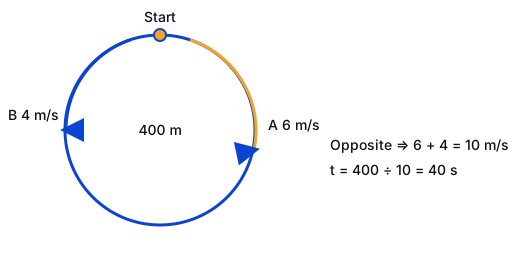
Two people, A and B, start running from the same point on a circular track of length 400 meters, but in opposite directions. A runs at 6 m/s and B at 4 m/s. In how many seconds will they meet for the first time?
दो व्यक्ति, A और B, 400 मीटर लंबे एक वृत्ताकार ट्रैक पर एक ही बिंदु से विपरीत दिशाओं में दौड़ना शुरू करते हैं। A 6 m/s की गति से और B 4 m/s की गति से दौड़ता है। वे पहली बार कितने सेकंड में मिलेंगे?
  1. A50 seconds50 सेकंड
  2. B40 seconds40 सेकंड
  3. C20 seconds20 सेकंड
  4. D30 seconds30 सेकंड
Show answer

Concept: On a circular track, runners moving in opposite directions first meet when together they cover one full lap; relative speed = sum of speeds.

  1. Relative speed =6+4=10m/s.
  2. Time for first meeting =40010=40 s.

Trick: Opposite directions → add speeds; same direction → subtract speeds, and divide the track length by it.

Answer: (B) 40 seconds

अवधारणा: वृत्ताकार ट्रैक पर विपरीत दिशा में दौड़ने वाले पहली बार तब मिलते हैं जब दोनों मिलकर एक पूरा चक्कर (lap) तय कर लें; सापेक्ष चाल = चालों का योग।

  1. सापेक्ष चाल =6+4=10m/s
  2. पहली बार मिलने का समय =40010=40 सेकंड।

ट्रिक: विपरीत दिशा → चालें जोड़ें; समान दिशा → घटाएँ, फिर ट्रैक की लंबाई को उससे भाग दें।

उत्तर: (B) 40 सेकंड

RRB NTPC Graduate CBT 1MathematicsCircular TrackRRB NTPC Graduate CBT 1 2025 · 25 Mar Shift 2 →
Q5119.
At what rate per annum will a sum of money become five times itself in 11 years under simple interest?
साधारण ब्याज पर कोई धनराशि 11 वर्षों में स्वयं की पाँच गुनी किस वार्षिक दर पर हो जाएगी?
  1. A34411%
  2. B72811%
  3. C38811%
  4. D36411%
Show answer

Concept: Under simple interest, if a sum becomes n times, then SI=(n−1)P and R=(n−1)×100T.

  1. Five times ⇒ SI=4P in 11 years.
  2. R=4×10011=40011=36411% per annum.

Trick: "n times in T years" ⇒ R×T=(n−1)×100.

Answer: (D) 36411%

अवधारणा: साधारण ब्याज में यदि धन n गुना हो जाए तो SI=(n−1)P और R=(n−1)×100T।

  1. पाँच गुना ⇒ 11 वर्षों में SI=4P।
  2. R=4×10011=40011=36411% वार्षिक।

ट्रिक: "T वर्ष में n गुना" ⇒ R×T=(n−1)×100।

उत्तर: (D) 36411%

RRB NTPC Graduate CBT 1MathematicsSimple InterestRRB NTPC Graduate CBT 1 2025 · 25 Mar Shift 2 →
Q5120.
Solve the following system of equations:
x+2y+4z=14
x+2y+z=7
2x+y+2z=2
निम्नलिखित समीकरण निकाय को हल कीजिए:
x+2y+4z=14
x+2y+z=7
2x+y+2z=2
  1. Ax=−103, y=3, z=73
  2. Bx=−113, y=3, z=73
  3. Cx=−103, y=4, z=83
  4. Dx=−103, y=4, z=73
Show answer

Concept: Eliminate one variable by subtracting equations that share the same coefficients.

  1. (1) − (2): 3z=7⇒z=73.
  2. From (2): x+2y=7−73=143; from (3): 2x+y=2−143=−83.
  3. 2(x+2y)−(2x+y)=3y=283+83=12⇒y=4.
  4. x=143−8=−103.

Trick: Equations (1) and (2) differ only in z – subtract them first and z falls out instantly.

Answer: (D) x=−103, y=4, z=73

अवधारणा: समान गुणांक वाले समीकरणों को घटाकर एक चर हटाएँ।

  1. (1) − (2): 3z=7⇒z=73।
  2. (2) से: x+2y=7−73=143; (3) से: 2x+y=2−143=−83।
  3. 2(x+2y)−(2x+y)=3y=283+83=12⇒y=4।
  4. x=143−8=−103।

ट्रिक: समीकरण (1) और (2) में केवल z का गुणांक अलग है – पहले इन्हें घटाएँ, z तुरंत मिल जाता है।

उत्तर: (D) x=−103, y=4, z=73

RRB NTPC Graduate CBT 1MathematicsLinear Equations in Three VariablesRRB NTPC Graduate CBT 1 2025 · 25 Mar Shift 2 →