Question bank

Q&A: practice questions with answers

Search questions on any topic. Filter by exam category, exam, subject and topic, try the question, then open the answer and explanation.

Courses – airGurukul

7,077 questions found.

Q5161.
WELD is related to YHPI in a certain way based on the English alphabetical order. In the same way, AKTN is related to CNXS. To which of the following is EQBX related, following the same logic?
अंग्रेज़ी वर्णमाला क्रम के आधार पर WELD एक निश्चित प्रकार से YHPI से संबंधित है। उसी प्रकार, AKTN, CNXS से संबंधित है। उसी तर्क का अनुसरण करते हुए, EQBX निम्नलिखित में से किससे संबंधित है?
  1. AFUDB
  2. BHSED
  3. CGUED
  4. DGTFC
Show answer

Concept: Find the shift applied to each letter position in the given pairs.

  1. WELD → YHPI: W+2=Y, E+3=H, L+4=P, D+5=I. AKTN → CNXS: +2, +3, +4, +5 as well.
  2. EQBX: E+2=G, Q+3=T, B+4=F, X+5=C (X→Y→Z→A→B→C).
  3. Result: GTFC.

Trick: Pattern +2, +3, +4, +5; remember the wrap-around after Z.

Answer: (D) GTFC

अवधारणा: दी गई जोड़ियों में हर अक्षर-स्थान पर लगा शिफ्ट पहचानें।

  1. WELD → YHPI: W+2=Y, E+3=H, L+4=P, D+5=I। AKTN → CNXS में भी +2, +3, +4, +5।
  2. EQBX: E+2=G, Q+3=T, B+4=F, X+5=C (X→Y→Z→A→B→C)।
  3. परिणाम: GTFC।

ट्रिक: पैटर्न +2, +3, +4, +5; Z के बाद A से फिर गिनना याद रखें।

उत्तर: (D) GTFC
RRB NTPC Graduate CBT 1General Intelligence and ReasoningLetter AnalogyRRB NTPC Graduate CBT 1 2025 · 25 Mar Shift 2 →
Q5162.
Which of the following letter-clusters should replace # and % so that the pattern and relationship followed between the letter-cluster pair on the left side of :: is the same as that on the right side of :: ?
# : NXF :: JTB : %
निम्नलिखित में से किन अक्षर-समूहों को # और % के स्थान पर रखा जाना चाहिए ताकि :: के बाईं ओर के अक्षर-समूह युग्म के बीच का पैटर्न और संबंध :: के दाईं ओर के युग्म के समान हो?
# : NXF :: JTB : %
  1. A# = CMU % = UEN
  2. B# = CNU % = UEM
  3. C# = DMU % = UEM
  4. D# = CMU % = UEM
Show answer

Concept: The same rule must turn # into NXF and JTB into %. Test the options for a uniform letter shift.

  1. Option D: CMU → NXF: C+11=N, M+11=X, U+11=F (U→F wraps past Z). ✓
  2. Apply +11 to JTB: J+11=U, T+11=E, B+11=M ⇒ UEM. ✓
  3. Other options break the uniform +11 (e.g. CNU gives NYF; UEN needs B+12).

Trick: Check the known half (JTB → UEM or UEN) first; +11 on B gives M, which eliminates options A and C instantly.

Answer: (D) # = CMU, % = UEM

अवधारणा: एक ही नियम से # → NXF और JTB → % बनना चाहिए। विकल्पों में समान अक्षर-शिफ्ट जाँचें।

  1. विकल्प D: CMU → NXF: C+11=N, M+11=X, U+11=F (U→F में Z के बाद A से)। ✓
  2. JTB पर +11: J+11=U, T+11=E, B+11=M ⇒ UEM। ✓
  3. अन्य विकल्पों में +11 टूटता है (जैसे CNU से NYF बनता; UEN के लिए B+12 चाहिए)।

ट्रिक: पहले ज्ञात आधा (JTB → UEM या UEN) जाँचें; B+11=M से विकल्प A और C तुरंत कट जाते हैं।

उत्तर: (D) # = CMU, % = UEM

RRB NTPC Graduate CBT 1General Intelligence and ReasoningLetter Cluster AnalogyRRB NTPC Graduate CBT 1 2025 · 25 Mar Shift 2 →
Q5163.
Refer to the following letter and symbol series and answer the question that follows. Counting to be done from left to right only.
(Left) S * & € L £ O & £ £ S # T * © M @ Y T $ L £ (Right)
How many such letters are there each of which is immediately preceded by a symbol and also immediately followed by a symbol?
निम्नलिखित अक्षर और प्रतीक शृंखला को देखिए और उसके बाद दिए गए प्रश्न का उत्तर दीजिए। गिनती केवल बाएँ से दाएँ की जानी है।
(बाएँ) S * & € L £ O & £ £ S # T * © M @ Y T $ L £ (दाएँ)
ऐसे कितने अक्षर हैं, जिनमें से प्रत्येक के ठीक पहले एक प्रतीक है और ठीक बाद भी एक प्रतीक है?
  1. A6
  2. B7
  3. C5
  4. D8
Show answer

Concept: We need letters with a symbol immediately before and after them.

  1. Letters and neighbours: S(start) ✗, L (€, £) ✓, O (£, &) ✓, S (£, #) ✓, T (#, *) ✓, M (©, @) ✓, Y (@, T) ✗, T (Y, $) ✗, L ($, £) ✓.
  2. Count =6.

Trick: Letters standing next to another letter (Y T) or at the ends are rejected at once – check only isolated letters.

Answer: (A) 6

अवधारणा: ऐसे अक्षर चाहिए जिनके ठीक पहले और ठीक बाद प्रतीक हो।

  1. अक्षर और पड़ोसी: S(शुरू) ✗, L (€, £) ✓, O (£, &) ✓, S (£, #) ✓, T (#, *) ✓, M (©, @) ✓, Y (@, T) ✗, T (Y, $) ✗, L ($, £) ✓।
  2. गिनती =6।

ट्रिक: जो अक्षर किसी दूसरे अक्षर से सटे हैं (Y T) या सिरों पर हैं, वे तुरंत कट जाते हैं – केवल अकेले अक्षर जाँचें।

उत्तर: (A) 6

RRB NTPC Graduate CBT 1General Intelligence and ReasoningLetter-Symbol SeriesRRB NTPC Graduate CBT 1 2025 · 25 Mar Shift 2 →
Q5164.
Each of the digits in the number 7834126 is arranged in ascending order from left to right. The position of how many digits will remain unchanged as compared to that in the original number?
संख्या 7834126 के प्रत्येक अंक को बाएँ से दाएँ आरोही क्रम में व्यवस्थित किया जाता है। मूल संख्या की तुलना में कितने अंकों की स्थिति अपरिवर्तित रहेगी?
  1. AOneएक
  2. BTwoदो
  3. CNoneकोई नहीं
  4. DThreeतीन
Show answer

Concept: Write the ascending order below the original and compare position by position.

  1. Original: 7 8 3 4 1 2 6; ascending: 1 2 3 4 6 7 8.
  2. Matches: 3rd place (3 = 3) and 4th place (4 = 4).
  3. Two digits keep their positions.

Trick: Align the two rows and tick identical columns – do not count by memory.

Answer: (B) Two

अवधारणा: आरोही क्रम को मूल संख्या के नीचे लिखकर स्थान-दर-स्थान तुलना करें।

  1. मूल: 7 8 3 4 1 2 6; आरोही: 1 2 3 4 6 7 8।
  2. समान: तीसरा स्थान (3 = 3) और चौथा स्थान (4 = 4)।
  3. दो अंकों की स्थिति अपरिवर्तित।

ट्रिक: दोनों पंक्तियाँ सीध में लिखें और समान स्तंभों पर टिक लगाएँ – याददाश्त से न गिनें।

उत्तर: (B) दो

RRB NTPC Graduate CBT 1General Intelligence and ReasoningDigit ArrangementRRB NTPC Graduate CBT 1 2025 · 25 Mar Shift 2 →
Q5165.
Read the given statements and conclusions carefully. Assuming that the information given in the statements is true, even if it appears to be at variance with commonly known facts, decide which of the given conclusions logically follow(s) from the statements.
Statements:
Some cows are goats.
Some goats are dogs.
All dogs are tigers.
Conclusions:
(I) All dogs are cows.
(II) Some tigers are goats.
दिए गए कथनों और निष्कर्षों को ध्यानपूर्वक पढ़िए। यह मानते हुए कि कथनों में दी गई जानकारी सत्य है, भले ही वह सामान्यतः ज्ञात तथ्यों से भिन्न प्रतीत होती हो, निर्णय कीजिए कि दिए गए निष्कर्षों में से कौन-सा/से कथनों से तार्किक रूप से अनुसरण करता/करते है/हैं।
कथन:
कुछ गायें, बकरियाँ हैं।
कुछ बकरियाँ, कुत्ते हैं।
सभी कुत्ते, बाघ हैं।
निष्कर्ष:
(I) सभी कुत्ते, गायें हैं।
(II) कुछ बाघ, बकरियाँ हैं।
  1. AOnly conclusion (I) followsकेवल निष्कर्ष (I) अनुसरण करता है
  2. BNeither conclusion (I) nor (II) followsन तो निष्कर्ष (I) और न ही (II) अनुसरण करता है
  3. COnly conclusion (II) followsकेवल निष्कर्ष (II) अनुसरण करता है
  4. DBoth conclusions (I) and (II) followनिष्कर्ष (I) और (II) दोनों अनुसरण करते हैं
Show answer

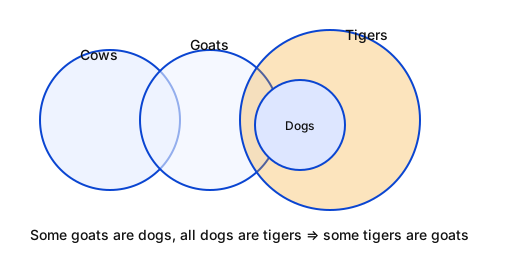
Concept: Draw the Venn diagram; "some" statements give only overlaps, "all" puts one set inside another.

  1. Goats overlap dogs, and every dog is a tiger ⇒ the goat-dog part lies inside tigers ⇒ some tigers are goats. Conclusion II follows.
  2. "All dogs are cows" is not forced – dogs need not touch cows at all. Conclusion I does not follow.

Trick: Some A are B + All B are C ⇒ Some A are C (and its converse Some C are A) always holds.

Answer: (C) Only conclusion (II) follows

अवधारणा: वेन आरेख बनाएँ; "कुछ" कथन केवल ओवरलैप देते हैं, "सभी" एक समूह को दूसरे के अंदर रखता है।

  1. Goats और dogs में ओवरलैप है, और हर dog tiger है ⇒ goat-dog वाला भाग tigers के अंदर ⇒ कुछ tigers goats हैं। निष्कर्ष II सही।
  2. "सभी dogs cows हैं" ज़रूरी नहीं – dogs का cows से कोई संबंध न भी हो। निष्कर्ष I नहीं निकलता।

ट्रिक: Some A are B + All B are C ⇒ Some A are C (और इसका विलोम Some C are A) सदैव सत्य।

उत्तर: (C) केवल निष्कर्ष (II)

RRB NTPC Graduate CBT 1General Intelligence and ReasoningSyllogismRRB NTPC Graduate CBT 1 2025 · 25 Mar Shift 2 →
Q5166.
Below are given two sets of numbers. In each set of numbers, a certain mathematical operation on the first number results in the second number. Similarly, certain
mathematical operations on the second number results in the third number and so on. Which of the given options follows the same set of operations as in question? (NOTE – A two/three-digit number cannot be broken into individual digits for operations, e.g., if 37 is followed by 10, the operation cannot be 3+7 as a two-digit number cannot be broken into individual digits.)
12 – 24 – 44 – 74; 18 – 36 – 56 – 86
नीचे संख्याओं के दो समुच्चय दिए गए हैं। संख्याओं के प्रत्येक समुच्चय में, पहली संख्या पर एक निश्चित गणितीय संक्रिया करने से दूसरी संख्या प्राप्त होती है। इसी प्रकार, दूसरी संख्या पर निश्चित
गणितीय संक्रियाएँ करने से तीसरी संख्या प्राप्त होती है, और इसी प्रकार आगे। दिए गए विकल्पों में से कौन-सा प्रश्न के समान संक्रियाओं के समुच्चय का अनुसरण करता है? (नोट – संक्रियाओं के लिए दो/तीन-अंकीय संख्या को उसके अलग-अलग अंकों में विभाजित नहीं किया जा सकता, उदाहरण के लिए, यदि 37 के बाद 10 आता है, तो संक्रिया 3+7 नहीं हो सकती, क्योंकि दो-अंकीय संख्या को अलग-अलग अंकों में विभाजित नहीं किया जा सकता।)
12 – 24 – 44 – 74; 18 – 36 – 56 – 86
  1. A17 – 34 – 44 – 74
  2. B10 – 20 – 40 – 80
  3. C8 – 24 – 44 – 74
  4. D15 – 30 – 50 – 80
Show answer

Concept: Find the chain of operations in the given sets and apply the same chain to each option.

  1. 12→×224→+2044→+3074 and 18→×236→+2056→+3086.
  2. Rule: ×2, +20, +30.
  3. Option (D): 15×2=30, 30+20=50, 50+30=80 ✓. (A) 17×2=34 but 34+20=54≠44; (B) 20+20=40 but 40+30=70≠80; (C) 8×2=16≠24.

Trick: Check the first step (×2) – it alone eliminates (C); then check the last step.

Answer: (D) 15 – 30 – 50 – 80

अवधारणा: दिए गए समूहों में संक्रियाओं की शृंखला पहचानें और हर विकल्प पर वही लागू करें।

  1. 12→×224→+2044→+3074 तथा 18→×236→+2056→+3086।
  2. नियम: ×2, +20, +30।
  3. विकल्प (D): 15×2=30, 30+20=50, 50+30=80 ✓। (A) में 34+20=54≠44; (B) में 40+30=70≠80; (C) में 8×2=16≠24।

ट्रिक: पहला चरण (×2) जाँचते ही (C) कट जाता है; फिर अंतिम चरण देखें।

उत्तर: (D) 15 – 30 – 50 – 80

RRB NTPC Graduate CBT 1General Intelligence and ReasoningNumber series (operations)RRB NTPC Graduate CBT 1 2025 · 25 Mar Shift 2 →
Q5167.
Which of the following letter-number clusters will replace the question mark (?) in the given series to make it logically complete?
LJL 62 IGI 54 FDF 46 CAC 38 ?
निम्नलिखित में से कौन-सा अक्षर-संख्या समूह दी गई शृंखला में प्रश्नचिह्न (?) के स्थान पर आकर उसे तार्किक रूप से पूर्ण करेगा?
LJL 62 IGI 54 FDF 46 CAC 38 ?
  1. AZXZ 30
  2. BZYY 30
  3. CZWY 29
  4. DZHQ 29
Show answer

Concept: Treat the letters and the number as two separate series.

  1. Letters: L(12) J(10) L(12) → I(9) G(7) I(9) → F(6) D(4) F(6) → C(3) A(1) C(3): every letter moves back by 3.
  2. Next: C − 3 = Z(26), A − 3 = X(24), C − 3 = Z → ZXZ.
  3. Numbers: 62, 54, 46, 38 decrease by 8 → 38 − 8 = 30.

Trick: Going below A wraps around: A−1 = Z, A−2 = Y, A−3 = X.

Answer: (A) ZXZ 30

अवधारणा: अक्षरों और संख्या को दो अलग श्रृंखलाओं की तरह देखें।

  1. अक्षर: L(12) J(10) L(12) → I(9) G(7) I(9) → F(6) D(4) F(6) → C(3) A(1) C(3): हर अक्षर 3 पीछे जाता है।
  2. अगला: C − 3 = Z(26), A − 3 = X(24), C − 3 = Z → ZXZ।
  3. संख्याएँ: 62, 54, 46, 38 में हर बार 8 घटता है → 38 − 8 = 30।

ट्रिक: A से पीछे जाने पर घूमकर Z पर आते हैं: A−1 = Z, A−2 = Y, A−3 = X।

उत्तर: (A) ZXZ 30

RRB NTPC Graduate CBT 1General Intelligence and ReasoningLetter-number seriesRRB NTPC Graduate CBT 1 2025 · 25 Mar Shift 2 →
Q5168.
In a certain code language, ' OENI' is coded as '79' and 'WASR' is coded as '61' . What is the code for 'QJTD' in the given code language?
एक निश्चित कूट भाषा में, 'OENI' को '79' के रूप में और 'WASR' को '61' के रूप में कूटबद्ध किया जाता है। उसी कूट भाषा में 'QJTD' का कूट क्या है?
  1. A78
  2. B62
  3. C66
  4. D71
Show answer

Concept: Use the opposite-letter (reverse) values: A = 26, B = 25, …, Z = 1. Code = sum of reverse values + 14.

  1. OENI: O = 12, E = 22, N = 13, I = 18 → sum 65; 65+14=79 ✓.
  2. WASR: W = 4, A = 26, S = 8, R = 9 → sum 47; 47+14=61 ✓.
  3. QJTD: Q = 10, J = 17, T = 7, D = 23 → sum 57; 57+14=71.

Trick: Reverse value = 27 − forward value. Equivalently, code = 122 − (sum of forward values): 122−51=71.

Answer: (D) 71

अवधारणा: विपरीत (reverse) अक्षर मान लें: A = 26, B = 25, …, Z = 1। कोड = विपरीत मानों का योग + 14।

  1. OENI: O = 12, E = 22, N = 13, I = 18 → योग 65; 65+14=79 ✓।
  2. WASR: W = 4, A = 26, S = 8, R = 9 → योग 47; 47+14=61 ✓।
  3. QJTD: Q = 10, J = 17, T = 7, D = 23 → योग 57; 57+14=71।

ट्रिक: विपरीत मान = 27 − सीधा मान। यानी कोड = 122 − (सीधे मानों का योग): 122−51=71।

उत्तर: (D) 71

RRB NTPC Graduate CBT 1General Intelligence and ReasoningCoding–decoding (letter values)RRB NTPC Graduate CBT 1 2025 · 25 Mar Shift 2 →
Q5169.
In a certain code language, ‘TOUR’ is coded as ‘3894’ and ‘AUTO’ is coded as ‘5489’. What is the code for ‘A’ in the given code language?
एक निश्चित कूट भाषा में, ‘TOUR’ को ‘3894’ के रूप में और ‘AUTO’ को ‘5489’ के रूप में कूटबद्ध किया जाता है। उसी कूट भाषा में ‘A’ का कूट क्या है?
  1. A9
  2. B8
  3. C4
  4. D5
Show answer

Concept: Compare the two words: letters common to both get the common digits; the leftover letter gets the leftover digit.

  1. TOUR → 3 8 9 4 and AUTO → 5 4 8 9.
  2. Common letters T, O, U ↔ common digits 8, 9, 4.
  3. The only extra letter in AUTO is A, and the only extra digit is 5 → A = 5.

Trick: Don't try to match letter order – just remove the common digits and see what remains.

Answer: (D) 5

अवधारणा: दोनों शब्दों की तुलना करें: समान अक्षरों को समान अंक मिलते हैं; बचा हुआ अक्षर = बचा हुआ अंक।

  1. TOUR → 3 8 9 4 और AUTO → 5 4 8 9।
  2. समान अक्षर T, O, U ↔ समान अंक 8, 9, 4।
  3. AUTO में अतिरिक्त अक्षर A और अतिरिक्त अंक 5 → A = 5।

ट्रिक: अक्षरों का क्रम मिलाने की ज़रूरत नहीं – समान अंक हटाएँ, जो बचे वही उत्तर।

उत्तर: (D) 5

RRB NTPC Graduate CBT 1General Intelligence and ReasoningCoding–decoding (common letters)RRB NTPC Graduate CBT 1 2025 · 25 Mar Shift 2 →
Q5170.
9 is related to 82 following a certain logic. Following the same logic, 17 is related to 290. To which of the following is 33 related, following the same logic?
(NOTE: Operations should be performed on the whole numbers, without breaking down the numbers into their constituent digits. E.g. 13 – Operations on 13 such as
adding/subtracting/multiplying etc. to 13, can be performed. Breaking down 13 into 1 and 3 and then performing mathematical operations on 1 and 3 is not allowed.)
एक निश्चित तर्क के अनुसार 9, 82 से संबंधित है। उसी तर्क के अनुसार 17, 290 से संबंधित है। उसी तर्क का अनुसरण करते हुए, 33 निम्नलिखित में से किससे संबंधित है?
(नोट: संक्रियाएँ संख्याओं को उनके घटक अंकों में विभाजित किए बिना पूर्ण संख्याओं पर की जानी चाहिए। उदाहरण के लिए, 13 – 13 पर संक्रियाएँ, जैसे 13 में
जोड़ना/घटाना/गुणा करना आदि, की जा सकती हैं। 13 को 1 और 3 में विभाजित करके फिर 1 और 3 पर गणितीय संक्रियाएँ करने की अनुमति नहीं है।)
  1. A1090
  2. B1070
  3. C1080
  4. D1060
Show answer

Concept: Test square-based relations when the second number is much larger than the first.

  1. 9→92+1=81+1=82 ✓.
  2. 17→172+1=289+1=290 ✓.
  3. 33→332+1=1089+1=1090.

Trick: 332=(30+3)2=900+180+9=1089.

Answer: (A) 1090

अवधारणा: जब दूसरी संख्या पहली से बहुत बड़ी हो तो वर्ग-आधारित संबंध जाँचें।

  1. 9→92+1=82 ✓।
  2. 17→172+1=290 ✓।
  3. 33→332+1=1089+1=1090।

ट्रिक: 332=(30+3)2=900+180+9=1089।

उत्तर: (A) 1090

RRB NTPC Graduate CBT 1General Intelligence and ReasoningNumber analogyRRB NTPC Graduate CBT 1 2025 · 25 Mar Shift 2 →
Q5171.
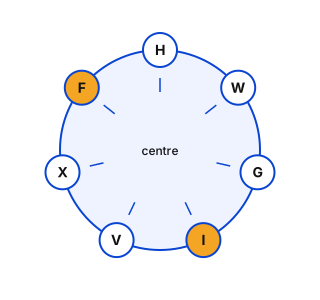
Seven people F, G, H, I, V, W, and X are sitting around a circular table facing the centre of the table. V sits fourth to the left of H. H sits to the immediate right of W. Only three people sit between W and X. G sits to the immediate right of I. How many people sit between F and I when counted from the left of I?
सात व्यक्ति F, G, H, I, V, W और X एक वृत्ताकार मेज़ के चारों ओर मेज़ के केंद्र की ओर मुख करके बैठे हैं। V, H के बाएँ चौथे स्थान पर बैठा है। H, W के ठीक दाएँ बैठा है। W और X के बीच केवल तीन व्यक्ति बैठे हैं। G, I के ठीक दाएँ बैठा है। I के बाएँ से गिनने पर F और I के बीच कितने व्यक्ति बैठे हैं?
  1. AOneएक
  2. BTwoदो
  3. CZeroशून्य
  4. DThreeतीन
Show answer

Concept: Facing the centre, a person's left is clockwise and right is anticlockwise. Fix one person and place the rest.

  1. Fix H. V is 4th to the left (clockwise) of H. H is to the immediate right of W, so W is immediately clockwise of H.
  2. Three people between W and X: going clockwise from W past V we reach X (the other direction lands on V, not allowed).
  3. G sits to the immediate right (anticlockwise) of I: the only fit is I next to G between W and V, leaving F in the last seat (between X and H).
  4. Counting from the left (clockwise) of I: V, X, then F – two people sit between F and I.

Trick: Facing centre → left = clockwise. Place the "immediate" clues first; they fix seats quickly.

Answer: (B) Two

अवधारणा: केंद्र की ओर मुख होने पर व्यक्ति का बायाँ = दक्षिणावर्त (clockwise), दायाँ = वामावर्त। एक व्यक्ति को स्थिर रखकर बाकी बैठाएँ।

  1. H को स्थिर रखें। V, H के बाएँ (दक्षिणावर्त) चौथा है। H, W के तुरंत दाएँ है, अतः W, H के तुरंत दक्षिणावर्त है।
  2. W और X के बीच तीन लोग: W से दक्षिणावर्त V के पार X बैठता है (दूसरी दिशा में V आता है, जो संभव नहीं)।
  3. G, I के तुरंत दाएँ (वामावर्त) है: एकमात्र स्थिति – W और V के बीच G फिर I; अंतिम सीट (X और H के बीच) F की।
  4. I के बाएँ (दक्षिणावर्त) से गिनें: V, X, फिर F – F और I के बीच दो लोग।

ट्रिक: केंद्र की ओर मुख → बायाँ = दक्षिणावर्त। पहले "तुरंत" वाले संकेत लगाएँ।

उत्तर: (B) दो

RRB NTPC Graduate CBT 1General Intelligence and ReasoningCircular seating arrangementRRB NTPC Graduate CBT 1 2025 · 25 Mar Shift 2 →
Q5172.
Based on the English alphabetical order, three of the following four are alike in a certain way and thus form a group. Which is the one that does not belong to that group? (Note: The odd one out is not based on the number of consonants/vowels or their position in the letter cluster.)
अंग्रेज़ी वर्णमाला क्रम के आधार पर, निम्नलिखित चार में से तीन एक निश्चित प्रकार से समान हैं और इस प्रकार एक समूह बनाते हैं। वह कौन-सा है जो उस समूह से संबंधित नहीं है? (नोट: असंगत का चयन व्यंजनों/स्वरों की संख्या या अक्षर-समूह में उनकी स्थिति पर आधारित नहीं है।)
  1. ANQU
  2. BDGK
  3. CPSW
  4. DJMP
Show answer

Concept: Check the gaps between consecutive letters in each cluster.

  1. NQU: N(14) → Q(17) → U(21): gaps +3,+4.
  2. DGK: 4 → 7 → 11: +3,+4. PSW: 16 → 19 → 23: +3,+4.
  3. JMP: 10 → 13 → 16: +3,+3 – different pattern.

Trick: Write the positions and subtract; the odd one usually breaks only the last gap.

Answer: (D) JMP

अवधारणा: हर समूह में क्रमागत अक्षरों के बीच अंतर जाँचें।

  1. NQU: 14 → 17 → 21: अंतर +3,+4।
  2. DGK: 4 → 7 → 11: +3,+4। PSW: 16 → 19 → 23: +3,+4।
  3. JMP: 10 → 13 → 16: +3,+3 – अलग पैटर्न।

ट्रिक: स्थान लिखकर घटाएँ; विषम समूह प्रायः अंतिम अंतर में ही अलग होता है।

उत्तर: (D) JMP

RRB NTPC Graduate CBT 1General Intelligence and ReasoningLetter cluster – odd one outRRB NTPC Graduate CBT 1 2025 · 25 Mar Shift 2 →
Q5173.
What should come in place of the question mark (?) in the given series?
35 36 40 49 65 ?
दी गई शृंखला में प्रश्नचिह्न (?) के स्थान पर क्या आना चाहिए?
35 36 40 49 65 ?
  1. A92
  2. B90
  3. C81
  4. D89
Show answer

Concept: Look at the differences between consecutive terms.

  1. 36−35=1, 40−36=4, 49−40=9, 65−49=16.
  2. Differences are perfect squares 12,22,32,42; next is 52=25.
  3. 65+25=90.

Trick: Differences 1, 4, 9, 16 → squares; the next term always adds the next square.

Answer: (B) 90

अवधारणा: क्रमागत पदों के अंतर देखें।

  1. 36−35=1, 40−36=4, 49−40=9, 65−49=16।
  2. अंतर पूर्ण वर्ग 12,22,32,42 हैं; अगला 52=25।
  3. 65+25=90।

ट्रिक: अंतर 1, 4, 9, 16 → वर्ग; अगला पद अगला वर्ग जोड़कर मिलता है।

उत्तर: (B) 90

RRB NTPC Graduate CBT 1General Intelligence and ReasoningNumber seriesRRB NTPC Graduate CBT 1 2025 · 25 Mar Shift 2 →
Q5174.
72 is related to 22 following a certain logic. Following the same logic,132 is related to 37. To which of the following is 108 related, following the same logic?
(NOTE : Operations should be performed on the whole numbers, without breaking down the numbers into its constituent digits. E.g. 13 – Operations on 13 such as adding /deleting /multiplying etc. to 13 can be performed. Breaking down 13 into 1 and 3 and then performing mathematical operations on 1 and 3 is not allowed.)
एक निश्चित तर्क के अनुसार 72, 22 से संबंधित है। उसी तर्क के अनुसार 132, 37 से संबंधित है। उसी तर्क का अनुसरण करते हुए, 108 निम्नलिखित में से किससे संबंधित है?
(नोट: संक्रियाएँ संख्याओं को उनके घटक अंकों में विभाजित किए बिना पूर्ण संख्याओं पर की जानी चाहिए। उदाहरण के लिए, 13 – 13 पर संक्रियाएँ, जैसे 13 में जोड़ना/घटाना/गुणा करना आदि, की जा सकती हैं। 13 को 1 और 3 में विभाजित करके फिर 1 और 3 पर गणितीय संक्रियाएँ करने की अनुमति नहीं है।)
  1. A31
  2. B42
  3. C38
  4. D28
Show answer

Concept: Try division followed by addition when the second number is much smaller.

  1. 72÷4=18, 18+4=22 ✓.
  2. 132÷4=33, 33+4=37 ✓.
  3. 108÷4=27, 27+4=31.

Trick: Rule n4+4; both examples confirm it, so apply it directly.

Answer: (A) 31

अवधारणा: जब दूसरी संख्या काफ़ी छोटी हो तो भाग के बाद जोड़ आज़माएँ।

  1. 72÷4=18, 18+4=22 ✓।
  2. 132÷4=33, 33+4=37 ✓।
  3. 108÷4=27, 27+4=31।

ट्रिक: नियम n4+4; दोनों उदाहरण इसकी पुष्टि करते हैं।

उत्तर: (A) 31

RRB NTPC Graduate CBT 1General Intelligence and ReasoningNumber analogyRRB NTPC Graduate CBT 1 2025 · 25 Mar Shift 2 →
Q5175.
If ‘A’ stands for ‘÷’, ‘B’ stands for ‘×’, ‘C’ stands for ‘+’ and ‘D’ stands for ‘−’, then what will come in place of the question mark (?) in the following equation?
60 A 6 C 3 B 5 D 8 = ?
यदि ‘A’ का अर्थ ‘÷’, ‘B’ का अर्थ ‘×’, ‘C’ का अर्थ ‘+’ और ‘D’ का अर्थ ‘−’ है, तो निम्नलिखित समीकरण में प्रश्नचिह्न (?) के स्थान पर क्या आएगा?
60 A 6 C 3 B 5 D 8 = ?
  1. A16
  2. B14
  3. C15
  4. D17
Show answer

Concept: Replace the letters by the given operators, then apply BODMAS.

  1. 60 A 6 C 3 B 5 D 8⇒60÷6+3×5−8.
  2. 60÷6=10; 3×5=15.
  3. 10+15−8=17.

Trick: Write the real symbols first on paper; most mistakes happen while substituting.

Answer: (D) 17

अवधारणा: अक्षरों की जगह दिए गए चिह्न रखें, फिर BODMAS लगाएँ।

  1. 60 A 6 C 3 B 5 D 8⇒60÷6+3×5−8।
  2. 60÷6=10; 3×5=15।
  3. 10+15−8=17।

ट्रिक: पहले असली चिह्न लिख लें; अधिकतर ग़लतियाँ प्रतिस्थापन में होती हैं।

उत्तर: (D) 17

RRB NTPC Graduate CBT 1General Intelligence and ReasoningMathematical operations (symbol substitution)RRB NTPC Graduate CBT 1 2025 · 25 Mar Shift 2 →
Q5176.
Which of the following letter-number clusters will replace the question mark “?” in the given series to make it logically complete?
JVO 5, HTM 11, FRK 17, DPI 23, ?
निम्नलिखित में से कौन-सा अक्षर-संख्या समूह दी गई शृंखला में प्रश्नचिह्न “?” के स्थान पर आकर उसे तार्किक रूप से पूर्ण करेगा?
JVO 5, HTM 11, FRK 17, DPI 23, ?
  1. ABOG 29
  2. BBME 27
  3. CBNG 29
  4. DAMF 30
Show answer

Concept: Track each letter position and the number separately.

  1. 1st letters J(10), H(8), F(6), D(4) → B(2); 2nd letters V(22), T(20), R(18), P(16) → N(14); 3rd letters O(15), M(13), K(11), I(9) → G(7).
  2. Each letter moves back by 2 → BNG.
  3. Numbers 5, 11, 17, 23 increase by 6 → 29.

Trick: Check the number first (29) – it leaves only (A) and (C); then the middle letter N decides.

Answer: (C) BNG 29

अवधारणा: हर अक्षर-स्थान और संख्या को अलग-अलग देखें।

  1. पहले अक्षर J(10), H(8), F(6), D(4) → B(2); दूसरे V(22), T(20), R(18), P(16) → N(14); तीसरे O(15), M(13), K(11), I(9) → G(7)।
  2. हर अक्षर 2 पीछे → BNG।
  3. संख्याएँ 5, 11, 17, 23 में हर बार 6 बढ़ता है → 29।

ट्रिक: पहले संख्या (29) जाँचें – केवल (A) और (C) बचते हैं; फिर बीच का अक्षर N तय करता है।

उत्तर: (C) BNG 29

RRB NTPC Graduate CBT 1General Intelligence and ReasoningLetter-number seriesRRB NTPC Graduate CBT 1 2025 · 25 Mar Shift 2 →
Q5177.
Which of the following letter-clusters should replace # and % so that the pattern and relationship followed between the letter-cluster pair on the left side of :: is the same as that on the right side of :: ?
# : BYU :: GDZ : %
निम्नलिखित में से किन अक्षर-समूहों को # और % के स्थान पर रखा जाना चाहिए ताकि :: के बाईं ओर के अक्षर-समूह युग्म के बीच का पैटर्न और संबंध :: के दाईं ओर के युग्म के समान हो?
# : BYU :: GDZ : %
  1. A# = JIE , % = YVR
  2. B# = JGC , % = YUS
  3. C# = JGB , % = XUQ
  4. D# = JGC , % = YVR
Show answer

Concept: Find the shift that converts the known clusters, test it on the options.

  1. Try option (D): JGC → BYU: J(10) − 8 = 2 = B; G(7) − 8 = −1 → wraps to 25 = Y; C(3) − 8 = −5 → 21 = U ✓. So # = JGC with rule "each letter − 8".
  2. Apply to GDZ: G(7) − 8 → Y(25); D(4) − 8 → V(22); Z(26) − 8 = 18 = R → YVR.
  3. Option (B) has JGC but YUS; (A) has JIE (I − 8 = A, not Y). Only (D) satisfies both.

Trick: Z − 8 = R is the quickest check – only (A) and (D) end in R, and (A) fails on the first cluster.

Answer: (D) # = JGC, % = YVR

अवधारणा: ज्ञात समूहों को बदलने वाला शिफ्ट खोजें और विकल्पों पर जाँचें।

  1. विकल्प (D): JGC → BYU: J(10) − 8 = 2 = B; G(7) − 8 = −1 → घूमकर 25 = Y; C(3) − 8 = −5 → 21 = U ✓। अतः # = JGC, नियम "हर अक्षर − 8"।
  2. GDZ पर लागू: G → Y(25); D → V(22); Z(26) − 8 = 18 = R → YVR।
  3. (B) में JGC तो है पर YUS ग़लत; (A) में JIE (I − 8 = A, Y नहीं)। केवल (D) दोनों में सही।

ट्रिक: Z − 8 = R सबसे तेज़ जाँच – केवल (A) और (D) R पर ख़त्म होते हैं, और (A) पहले समूह में फेल।

उत्तर: (D) # = JGC, % = YVR

RRB NTPC Graduate CBT 1General Intelligence and ReasoningLetter cluster analogyRRB NTPC Graduate CBT 1 2025 · 25 Mar Shift 2 →
Q5178.
Which of the following is NOT an impact of globalisation on Indian economy?
निम्नलिखित में से कौन-सा भारतीय अर्थव्यवस्था पर वैश्वीकरण का प्रभाव नहीं है?
  1. AForeign direct investment (FDI) has been liberalisedप्रत्यक्ष विदेशी निवेश (FDI) को उदार बनाया गया
  2. BForeign institutional investments are made more restrictive for stability of the economyअर्थव्यवस्था की स्थिरता के लिए विदेशी संस्थागत निवेश को और अधिक प्रतिबंधात्मक बनाया गया
  3. CTwo stage devaluation of the rupee by about twenty percent in July, 1991जुलाई 1991 में रुपये का लगभग बीस प्रतिशत का दो-चरणीय अवमूल्यन
  4. DIntroduction of a system of partial convertibility of the rupeeरुपये की आंशिक परिवर्तनीयता की प्रणाली की शुरुआत
Show answer

Concept: The 1991 reforms opened the Indian economy: FDI/FII were liberalised, the rupee was devalued and made partially convertible.

  1. July 1991: rupee devalued in two steps by about 20%; 1992: partial convertibility (LERMS).
  2. FDI limits were raised and Foreign Institutional Investors (FIIs) were allowed to invest in Indian markets from 1992 – they were liberalised, not restricted.
  3. So option (B) states the opposite of what happened.

Yaad rakhein: LPG reforms = Liberalisation, Privatisation, Globalisation – every step opened doors, none closed them.

Answer: (B) Foreign institutional investments are made more restrictive for stability of the economy

अवधारणा: 1991 के सुधारों ने भारतीय अर्थव्यवस्था को खोला: FDI/FII उदार किए गए, रुपये का अवमूल्यन हुआ और आंशिक परिवर्तनीयता (partial convertibility) लागू हुई।

  1. जुलाई 1991: रुपये का दो चरणों में लगभग 20% अवमूल्यन; 1992: आंशिक परिवर्तनीयता (LERMS)।
  2. FDI सीमाएँ बढ़ाई गईं और विदेशी संस्थागत निवेशकों (FII) को 1992 से भारतीय बाज़ार में निवेश की अनुमति दी गई – यानी उदारीकरण, प्रतिबंध नहीं।
  3. इसलिए विकल्प (B) वास्तविकता के विपरीत है।

याद रखें: LPG सुधार = उदारीकरण, निजीकरण, वैश्वीकरण – हर कदम ने दरवाज़े खोले, बंद नहीं किए।

उत्तर: (B) अर्थव्यवस्था की स्थिरता के लिए विदेशी संस्थागत निवेश को अधिक प्रतिबंधित किया गया

RRB NTPC Graduate CBT 1General AwarenessGlobalisation & 1991 reformsRRB NTPC Graduate CBT 1 2025 · 25 Mar Shift 1 →
Q5179.
Who was the first Portuguese Governor to implement the "Blue Water Policy" in India?
भारत में "ब्लू वाटर पॉलिसी" (Blue Water Policy) लागू करने वाला पहला पुर्तगाली गवर्नर कौन था?
  1. AAlfonso de Albuquerqueअल्फांसो डी अल्बुकर्क
  2. BVasco da Gamaवास्को डी गामा
  3. CFrancisco de Almeidaफ्रांसिस्को डी अल्मेडा
  4. DPedro Álvares Cabralपेड्रो अल्वारेस कैब्राल
Show answer

Concept: The "Blue Water Policy" (Cartaz system) meant controlling the Indian Ocean through naval power instead of building forts on land.

  1. Francisco de Almeida, the first Portuguese Viceroy/Governor in India (1505–09), introduced it.
  2. Albuquerque (1509–15) reversed it – he captured Goa (1510) and built land bases; Vasco da Gama was an explorer, Cabral reached Brazil.

Yaad rakhein: Almeida = Aqua (water) policy; Albuquerque = land (Goa).

Answer: (C) Francisco de Almeida

अवधारणा: "ब्लू वाटर पॉलिसी" (कार्टाज़ प्रणाली) का अर्थ था ज़मीन पर किले बनाने के बजाय नौसैनिक शक्ति से हिंद महासागर पर नियंत्रण।

  1. भारत में प्रथम पुर्तगाली वायसराय/गवर्नर फ्रांसिस्को डी अल्मेडा (1505–09) ने इसे लागू किया।
  2. अल्बुकर्क (1509–15) ने इसे पलटा – गोवा (1510) जीता और भूमि-आधार बनाए; वास्को डी गामा खोजकर्ता थे, कैब्राल ब्राज़ील पहुँचे।

याद रखें: अल्मेडा = अक्वा (जल) नीति; अल्बुकर्क = ज़मीन (गोवा)।

उत्तर: (C) फ्रांसिस्को डी अल्मेडा

RRB NTPC Graduate CBT 1General AwarenessPortuguese in IndiaRRB NTPC Graduate CBT 1 2025 · 25 Mar Shift 1 →
Q5180.
During 1991–92 to 1998–99, which industrial sector showed a clear decline in the average annual growth according to the Index of Industrial Production (IIP)?
1991–92 से 1998–99 के दौरान, औद्योगिक उत्पादन सूचकांक (IIP) के अनुसार किस औद्योगिक क्षेत्र की औसत वार्षिक वृद्धि में स्पष्ट गिरावट दिखी?
  1. AMining and Quarryingखनन और उत्खनन
  2. BElectricity and Utilitiesविद्युत और उपयोगिता सेवाएँ
  3. CBasic and Capital Goodsआधारभूत और पूँजीगत वस्तुएँ
  4. DManufacturing and Engineeringविनिर्माण और इंजीनियरिंग
Show answer

Concept: The IIP groups industries by use: basic goods, capital goods, intermediate goods and consumer goods.

  1. Between 1991–92 and 1998–99 the average annual growth of basic and capital goods fell clearly compared with the 1980s, as public investment and infrastructure spending slowed.
  2. Consumer goods (especially durables) grew fast in the same period; mining and electricity did not show a comparable fall.

Yaad rakhein: Post-reform 1990s = consumer-goods boom, capital-goods slowdown.

Answer: (C) Basic and Capital Goods

अवधारणा: IIP उद्योगों को उपयोग के आधार पर बाँटता है: आधारभूत (basic), पूँजीगत (capital), मध्यवर्ती और उपभोक्ता वस्तुएँ।

  1. 1991–92 से 1998–99 के बीच आधारभूत और पूँजीगत वस्तुओं की औसत वार्षिक वृद्धि 1980 के दशक की तुलना में स्पष्ट रूप से गिरी, क्योंकि सार्वजनिक निवेश और अवसंरचना व्यय धीमा पड़ा।
  2. इसी अवधि में उपभोक्ता वस्तुएँ (विशेषकर टिकाऊ) तेज़ी से बढ़ीं; खनन और बिजली में ऐसी गिरावट नहीं दिखी।

याद रखें: सुधार-पश्चात 1990 का दशक = उपभोक्ता वस्तुओं में उछाल, पूँजीगत वस्तुओं में मंदी।

उत्तर: (C) आधारभूत और पूँजीगत वस्तुएँ

RRB NTPC Graduate CBT 1General AwarenessIndustrial growth (IIP) after 1991RRB NTPC Graduate CBT 1 2025 · 25 Mar Shift 1 →