Question bank

Q&A: practice questions with answers

Search questions on any topic. Filter by exam category, exam, subject and topic, try the question, then open the answer and explanation.

Courses – airGurukul

7,077 questions found.

Q5261.
Which of the following letter-number clusters will replace the question mark (?) in the given series to make it logically complete?
WTW 84 XUX 93 YVY 102 ZWZ 111 ?
दी गई श्रेणी को तार्किक रूप से पूर्ण करने के लिए निम्नलिखित में से कौन-सा अक्षर-संख्या समूह प्रश्नचिह्न (?) के स्थान पर आएगा?
WTW 84 XUX 93 YVY 102 ZWZ 111 ?
  1. AAXA 120
  2. BAJT 119
  3. CAYZ 120
  4. DAWZ 119
Show answer

Concept: Treat the letters and the numbers as two separate patterns.

  1. Letters: WTW → XUX → YVY → ZWZ: each letter moves +1. After Z comes A, after W comes X ⇒ AXA.
  2. Numbers: 84, 93, 102, 111 increase by 9 ⇒ 111+9=120.

Trick: The alphabet is cyclic – Z + 1 = A.

Answer: (A) AXA 120

अवधारणा: अक्षरों और संख्याओं को दो अलग पैटर्न मानें।

  1. अक्षर: WTW → XUX → YVY → ZWZ: हर अक्षर +1। Z के बाद A, W के बाद X ⇒ AXA।
  2. संख्याएँ: 84, 93, 102, 111 में 9 की वृद्धि ⇒ 111+9=120।

ट्रिक: वर्णमाला चक्रीय है – Z + 1 = A।

उत्तर: (A) AXA 120
RRB NTPC Graduate CBT 1General Intelligence and ReasoningLetter–number seriesRRB NTPC Graduate CBT 1 2025 · 25 Mar Shift 1 →
Q5262.
Based on the English alphabetical order, three of the following four letter cluster pairs are alike in a certain way and thus form a group. Which is the one that does not belong to that group? (Note: The odd man out is not based on the number of
consonants/vowels or their position in the letter cluster)
अंग्रेज़ी वर्णमाला क्रम के आधार पर, निम्नलिखित चार अक्षर-समूह युग्मों में से तीन एक निश्चित प्रकार से समान हैं और इस प्रकार एक समूह बनाते हैं। वह कौन-सा है जो उस समूह से संबंधित नहीं है? (नोट: असंगत युग्म व्यंजनों/स्वरों की संख्या या अक्षर-समूह में उनकी
स्थिति पर आधारित नहीं है)
  1. AMN-PQ
  2. BDE-FG
  3. CST-VW
  4. DGH-JK
Show answer

Concept: Check the gap between the last letter of the first cluster and the first letter of the second.

  1. MN–PQ: N→P skips one letter (O). ST–VW: T→V skips U. GH–JK: H→J skips I.
  2. DE–FG: E→F skips nothing – the pattern breaks.

Trick: Each cluster is two consecutive letters; focus only on the jump across the dash.

Answer: (B) DE-FG

अवधारणा: पहले समूह के अंतिम अक्षर और दूसरे समूह के पहले अक्षर के बीच का अंतराल जाँचें।

  1. MN–PQ: N→P में एक अक्षर (O) छूटता है। ST–VW: T→V में U छूटता है। GH–JK: H→J में I छूटता है।
  2. DE–FG: E→F में कुछ नहीं छूटता – पैटर्न टूटता है।

ट्रिक: हर समूह दो क्रमागत अक्षर है; केवल डैश के पार की छलाँग देखें।

उत्तर: (B) DE-FG

RRB NTPC Graduate CBT 1General Intelligence and ReasoningOdd one out – letter pairsRRB NTPC Graduate CBT 1 2025 · 25 Mar Shift 1 →
Q5263.
Select the set in which the numbers are related in the same way as are the numbers of the given sets.
(NOTE: Operations should be performed on the whole numbers, without breaking down the numbers into their constituent digits. E.g. 13 – Operations on 13 such as adding/subtracting/multiplying to 13 can be performed. Breaking down 13 into 1 and 3 and then performing mathematical operations on 1 and 3 is not allowed.)
(16, 6, 111)
(9, 14, 141)
उस समुच्चय का चयन कीजिए जिसमें संख्याएँ उसी प्रकार संबंधित हैं जिस प्रकार दिए गए समुच्चयों की संख्याएँ संबंधित हैं।
(नोट: संक्रियाएँ पूर्ण संख्याओं पर की जानी चाहिए, संख्याओं को उनके घटक अंकों में विभाजित किए बिना। उदाहरण के लिए 13 – 13 पर संक्रियाएँ जैसे 13 में जोड़ना/घटाना/गुणा करना किया जा सकता है। 13 को 1 और 3 में विभाजित करके फिर 1 और 3 पर गणितीय संक्रियाएँ करने की अनुमति नहीं है।)
(16, 6, 111)
(9, 14, 141)
  1. A(17, 8, 146)
  2. B(13, 10, 145)
  3. C(15, 12, 200)
  4. D(12, 8, 96)
Show answer

Concept: Find one rule linking the first two numbers to the third in both given sets.

  1. (16,6,111): 16×6+15=96+15=111. (9,14,141): 9×14+15=126+15=141. Rule: a×b+15=c.
  2. Option (B): 13×10+15=145 ✓.
  3. Others: 17×8+15=151≠146; 15×12+15=195≠200; 12×8+15=111≠96.

Trick: When the third number is a little more than the product, try "product + constant" first.

Answer: (B) (13, 10, 145)

अवधारणा: दोनों दिए गए सेटों में पहली दो संख्याओं को तीसरी से जोड़ने वाला एक नियम खोजें।

  1. (16,6,111): 16×6+15=96+15=111। (9,14,141): 9×14+15=126+15=141। नियम: a×b+15=c।
  2. विकल्प (B): 13×10+15=145 ✓।
  3. बाकी: 17×8+15=151≠146; 15×12+15=195≠200; 12×8+15=111≠96।

ट्रिक: जब तीसरी संख्या गुणनफल से थोड़ी अधिक हो, तो पहले "गुणनफल + स्थिरांक" आज़माएँ।

उत्तर: (B) (13, 10, 145)

RRB NTPC Graduate CBT 1General Intelligence and ReasoningNumber triplet analogyRRB NTPC Graduate CBT 1 2025 · 25 Mar Shift 1 →
Q5264.
In a certain code language,
A + B means ‘A is the daughter of B’
A – B means ‘A is the brother of B’
A x B means ‘A is the wife of B’
A ÷ B means ‘A is the father of B’
Based on the above, how is D related to J if ‘D + F ÷ G x H – J’?
एक निश्चित कूट भाषा में,
A + B का अर्थ है ‘A, B की पुत्री है’
A – B का अर्थ है ‘A, B का भाई है’
A x B का अर्थ है ‘A, B की पत्नी है’
A ÷ B का अर्थ है ‘A, B का पिता है’
उपर्युक्त के आधार पर, यदि ‘D + F ÷ G x H – J’ है, तो D, J से किस प्रकार संबंधित है?
  1. ABrother's wife's motherभाई की पत्नी की माँ
  2. BWife's sisterपत्नी की बहन
  3. CWife's motherपत्नी की माँ
  4. DBrother's wife's sisterभाई की पत्नी की बहन
Show answer

Concept: Decode from left to right and build a family tree, marking gender where known.

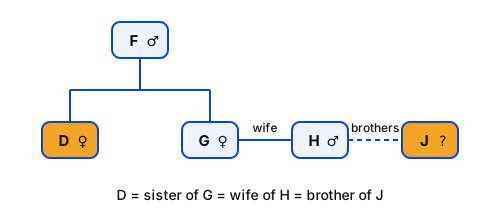
  1. D + F: D is F's daughter. F ÷ G: F is G's father ⇒ D and G are siblings, D female.
  2. G × H: G is H's wife. H – J: H is J's brother.
  3. From J: H is brother; H's wife is G; G's sister is D ⇒ D is J's brother's wife's sister.

Trick: J's gender is unknown, so "wife's sister" (B) cannot be concluded – pick the relation that uses only given facts.

Answer: (D) Brother's wife's sister

अवधारणा: बाएँ से दाएँ डिकोड करें और जहाँ ज्ञात हो, लिंग अंकित करते हुए वंश-वृक्ष बनाएँ।

  1. D + F: D, F की बेटी। F ÷ G: F, G का पिता ⇒ D और G भाई-बहन, D स्त्री।
  2. G × H: G, H की पत्नी। H – J: H, J का भाई।
  3. J की ओर से: H भाई; H की पत्नी G; G की बहन D ⇒ D, J के भाई की पत्नी की बहन।

ट्रिक: J का लिंग अज्ञात है, इसलिए "पत्नी की बहन" (B) निष्कर्ष नहीं निकल सकता – वही संबंध चुनें जो केवल दिए गए तथ्यों पर टिका हो।

उत्तर: (D) भाई की पत्नी की बहन

RRB NTPC Graduate CBT 1General Intelligence and ReasoningBlood relations (coded)RRB NTPC Graduate CBT 1 2025 · 25 Mar Shift 1 →
Q5265.
KD 15 is related to PI 12 in a certain way. In the same way, NG 20 is related to SL 17. To which of the following is QJ 26 related, following the same logic?
KD 15, PI 12 से एक निश्चित प्रकार से संबंधित है। उसी प्रकार, NG 20, SL 17 से संबंधित है। उसी तर्क का अनुसरण करते हुए, QJ 26 निम्नलिखित में से किससे संबंधित है?
  1. AVM 23
  2. BVN 24
  3. CUO 24
  4. DVO 23
Show answer

Concept: Treat letters and the number separately: find the shift applied to each letter and the change in the number.

  1. KD 15 → PI 12: K(11)+5 = P(16), D(4)+5 = I(9), 15 − 3 = 12.
  2. Check: NG 20 → SL 17: N+5 = S, G+5 = L, 20 − 3 = 17 ✓.
  3. QJ 26 → Q(17)+5 = V(22), J(10)+5 = O(15), 26 − 3 = 23 → VO 23.

Trick: Write A=1…Z=26 once on the rough sheet; +5 on both letters and −3 on the number is the fixed rule.

Answer: (D) VO 23

अवधारणा: अक्षरों और संख्या को अलग-अलग देखें: प्रत्येक अक्षर पर लगा शिफ्ट और संख्या में बदलाव ज्ञात करें।

  1. KD 15 → PI 12: K(11)+5 = P(16), D(4)+5 = I(9), 15 − 3 = 12।
  2. जाँच: NG 20 → SL 17: N+5 = S, G+5 = L, 20 − 3 = 17 ✓।
  3. QJ 26 → Q(17)+5 = V(22), J(10)+5 = O(15), 26 − 3 = 23 → VO 23।

ट्रिक: रफ शीट पर A=1…Z=26 एक बार लिख लें; दोनों अक्षरों पर +5 और संख्या पर −3 का नियम है।

उत्तर: (D) VO 23

RRB NTPC Graduate CBT 1General Intelligence and ReasoningLetter-Number AnalogyRRB NTPC Graduate CBT 1 2025 · 25 Mar Shift 1 →
Q5266.
COLD is related to GQHB in a certain way based on the English alphabetical order. In the same way, KSDZ is related to OUZX. To which of the following is SWVV related, following the same logic?
अंग्रेज़ी वर्णमाला क्रम के आधार पर COLD, GQHB से एक निश्चित प्रकार से संबंधित है। उसी प्रकार, KSDZ, OUZX से संबंधित है। उसी तर्क का अनुसरण करते हुए, SWVV निम्नलिखित में से किससे संबंधित है?
  1. AXZSU
  2. BUYSS
  3. CVXQS
  4. DWYRT
Show answer

Concept: Find the position-wise shift of each letter from the first pair and apply the same pattern.

  1. COLD → GQHB: C+4 = G, O+2 = Q, L−4 = H, D−2 = B. Pattern: +4, +2, −4, −2.
  2. Check KSDZ → OUZX: K+4 = O, S+2 = U, D−4 = Z (wrap back), Z−2 = X ✓.
  3. SWVV: S+4 = W, W+2 = Y, V−4 = R, V−2 = T → WYRT.

Trick: First two letters move forward, last two move backward by the same amounts (4, 2).

Answer: (D) WYRT

अवधारणा: पहले जोड़े से प्रत्येक अक्षर का स्थान-वार शिफ्ट निकालें और वही पैटर्न लगाएँ।

  1. COLD → GQHB: C+4 = G, O+2 = Q, L−4 = H, D−2 = B। पैटर्न: +4, +2, −4, −2।
  2. जाँच KSDZ → OUZX: K+4 = O, S+2 = U, D−4 = Z (पीछे घूमकर), Z−2 = X ✓।
  3. SWVV: S+4 = W, W+2 = Y, V−4 = R, V−2 = T → WYRT।

ट्रिक: पहले दो अक्षर आगे, अंतिम दो उतने ही (4, 2) पीछे।

उत्तर: (D) WYRT

RRB NTPC Graduate CBT 1General Intelligence and ReasoningLetter Cluster AnalogyRRB NTPC Graduate CBT 1 2025 · 25 Mar Shift 1 →
Q5267.
Read the given statements and conclusions carefully. Assuming that the information given in the statements is true, even if it appears to be at variance with commonly known facts, decide which of the given conclusions logically follow(s) from the statements.
Statements:
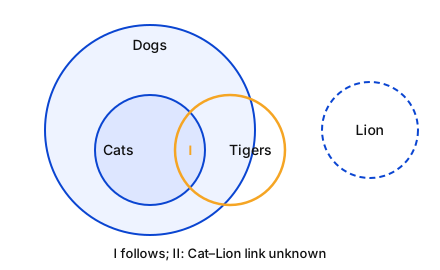
All cats are dogs. Some cats are tigers. No tiger is a lion.
Conclusions:
(I) Some dogs are tigers.
(II) No cat is a lion.
दिए गए कथनों और निष्कर्षों को ध्यानपूर्वक पढ़िए। यह मानते हुए कि कथनों में दी गई जानकारी सत्य है, चाहे वह सामान्यतः ज्ञात तथ्यों से भिन्न प्रतीत होती हो, निर्णय कीजिए कि दिए गए निष्कर्षों में से कौन-सा/कौन-से कथनों का तार्किक रूप से अनुसरण करता है/करते हैं।
कथन:
सभी बिल्लियाँ कुत्ते हैं। कुछ बिल्लियाँ बाघ हैं। कोई बाघ शेर नहीं है।
निष्कर्ष:
(I) कुछ कुत्ते बाघ हैं।
(II) कोई बिल्ली शेर नहीं है।
  1. ABoth conclusions (I) and (II) followनिष्कर्ष (I) और (II) दोनों अनुसरण करते हैं
  2. BOnly conclusion (II) followsकेवल निष्कर्ष (II) अनुसरण करता है
  3. COnly conclusion (I) followsकेवल निष्कर्ष (I) अनुसरण करता है
  4. DNeither conclusion (I) nor (II) followsन तो निष्कर्ष (I) और न ही (II) अनुसरण करता है
Show answer

Concept: Draw the Venn diagram from the statements; a conclusion follows only if it is true in every possible diagram.

  1. All cats are dogs + some cats are tigers: the cats that are tigers are also dogs, so some dogs are tigers – (I) follows.
  2. No tiger is a lion tells us nothing about cats that are not tigers; a cat could still be a lion, so 'No cat is a lion' is not certain – (II) does not follow.

Trick: A negative conclusion needs a direct negative link; Cat–Lion are connected only through the 'some' statement, so it cannot be proved.

Answer: (C) Only conclusion (I) follows

अवधारणा: कथनों से वेन आरेख बनाएँ; निष्कर्ष तभी सही है जब वह हर संभव आरेख में सत्य हो।

  1. सभी cats, dogs हैं + कुछ cats, tigers हैं: जो cats tigers हैं वे dogs भी हैं, अतः कुछ dogs, tigers हैं – (I) सही।
  2. 'कोई tiger, lion नहीं' उन cats के बारे में कुछ नहीं कहता जो tiger नहीं हैं; कोई cat, lion हो सकती है, अतः 'कोई cat, lion नहीं' निश्चित नहीं – (II) नहीं निकलता।

ट्रिक: नकारात्मक निष्कर्ष के लिए सीधा नकारात्मक संबंध चाहिए; Cat–Lion केवल 'कुछ' वाले कथन से जुड़े हैं, इसलिए सिद्ध नहीं होता।

उत्तर: (C) केवल निष्कर्ष (I) अनुसरण करता है

RRB NTPC Graduate CBT 1General Intelligence and ReasoningSyllogismRRB NTPC Graduate CBT 1 2025 · 25 Mar Shift 1 →
Q5268.
Select the set in which the numbers are related in the same way as are the numbers of the following sets.
(NOTE : Operations should be performed on the whole numbers, without breaking down the numbers into its constituent digits. E.g. 13 – Operations on 13 such as adding/subtracting/multiplying etc. to 13 can be performed. Breaking down 13 into 1 and 3 and then performing mathematical operations on 1 and 3 is not allowed.) (79, 235, 32)
(87, 225, 42)
उस समुच्चय का चयन कीजिए जिसमें संख्याएँ उसी प्रकार संबंधित हैं जिस प्रकार निम्नलिखित समुच्चयों की संख्याएँ संबंधित हैं।
(नोट : संक्रियाएँ पूर्ण संख्याओं पर की जानी चाहिए, संख्याओं को उनके घटक अंकों में विभाजित किए बिना। उदाहरण के लिए 13 – 13 पर संक्रियाएँ जैसे 13 में जोड़ना/घटाना/गुणा करना आदि किया जा सकता है। 13 को 1 और 3 में विभाजित करके फिर 1 और 3 पर गणितीय संक्रियाएँ करने की अनुमति नहीं है।) (79, 235, 32)
(87, 225, 42)
  1. A(77, 235,32)
  2. B(88, 280, 34)
  3. C(83, 290, 45)
  4. D(93, 185, 56)
Show answer

Concept: Find one operation linking the three numbers in both given sets, then test the options.

  1. (79, 235, 32): (79−32)×5=47×5=235 ✓.
  2. (87, 225, 42): (87−42)×5=45×5=225 ✓. Rule: middle = (first − third) × 5.
  3. (93, 185, 56): (93−56)×5=37×5=185 ✓. Others fail: (77−32)×5 = 225, (88−34)×5 = 270, (83−45)×5 = 190.

Trick: Middle number ends in 5 in every set – a strong hint that it is a multiple of 5 of something.

Answer: (D) (93, 185, 56)

अवधारणा: दोनों दिए गए समूहों में तीनों संख्याओं को जोड़ने वाली एक संक्रिया खोजें, फिर विकल्प जाँचें।

  1. (79, 235, 32): (79−32)×5=47×5=235 ✓।
  2. (87, 225, 42): (87−42)×5=45×5=225 ✓। नियम: बीच की संख्या = (पहली − तीसरी) × 5।
  3. (93, 185, 56): (93−56)×5=37×5=185 ✓। बाकी असफल: (77−32)×5 = 225, (88−34)×5 = 270, (83−45)×5 = 190।

ट्रिक: हर समूह में बीच की संख्या 5 पर खत्म होती है – यह 5 के गुणज का संकेत है।

उत्तर: (D) (93, 185, 56)

RRB NTPC Graduate CBT 1General Intelligence and ReasoningNumber Set AnalogyRRB NTPC Graduate CBT 1 2025 · 25 Mar Shift 1 →
Q5269.
In a certain code language,
A + B means ‘A is the mother of B’
A – B means ‘A is the brother of B’
A x B means ‘A is the wife of B’
A % B means ‘A is the father of B’
A # B means ‘A is the daughter of B’
Based on the above, how is L related to E if ‘L # N – C # V x E’?
एक निश्चित कूट भाषा में,
A + B का अर्थ है ‘A, B की माँ है’
A – B का अर्थ है ‘A, B का भाई है’
A x B का अर्थ है ‘A, B की पत्नी है’
A % B का अर्थ है ‘A, B का पिता है’
A # B का अर्थ है ‘A, B की पुत्री है’
उपर्युक्त के आधार पर, यदि ‘L # N – C # V x E’ है, तो L, E से किस प्रकार संबंधित है?
  1. ASon’s daughterपुत्र की पुत्री
  2. BDaughter’s sonपुत्री का पुत्र
  3. CBrother’s daughterभाई की पुत्री
  4. DFather’s motherपिता की माँ
Show answer

Concept: Decode each symbol from right to left and build the family tree, marking gender wherever a symbol reveals it.

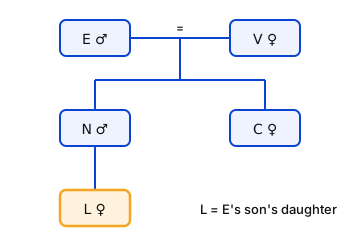
  1. V x E: V is the wife of E → E is male, V female.
  2. C # V: C is the daughter of V → C is a child of E and V.
  3. N − C: N is the brother of C → N is E's son.
  4. L # N: L is the daughter of N → L is the daughter of E's son.

Trick: Start from the person asked about (E), then climb down the chain: son (N) → daughter (L).

Answer: (A) Son's daughter

अवधारणा: हर प्रतीक को डिकोड कर वंश-वृक्ष बनाएँ, जहाँ प्रतीक लिंग बताए वहाँ उसे अंकित करें।

  1. V x E: V, E की पत्नी → E पुरुष, V महिला।
  2. C # V: C, V की पुत्री → C, E और V की संतान।
  3. N − C: N, C का भाई → N, E का पुत्र।
  4. L # N: L, N की पुत्री → L, E के पुत्र की पुत्री।

ट्रिक: जिसके बारे में पूछा है (E) उससे शुरू करें, फिर श्रृंखला में नीचे उतरें: पुत्र (N) → पुत्री (L)।

उत्तर: (A) पुत्र की पुत्री

RRB NTPC Graduate CBT 1General Intelligence and ReasoningBlood Relations – CodedRRB NTPC Graduate CBT 1 2025 · 25 Mar Shift 1 →
Q5270.
S, T, U, V, E, F and G are sitting around a circular table facing the centre.
Only two people sit between E and F when counted from the right of E. Only two people sit between F and T. Only three people sit between E and U. S sits to the immediate left of V. Who sits third to the left of G?
S, T, U, V, E, F और G एक वृत्ताकार मेज़ के चारों ओर केंद्र की ओर मुख करके बैठे हैं।
E के दाएँ से गिनने पर E और F के बीच केवल दो व्यक्ति बैठे हैं। F और T के बीच केवल दो व्यक्ति बैठे हैं। E और U के बीच केवल तीन व्यक्ति बैठे हैं। S, V के ठीक बाएँ बैठा है। G के बाएँ तीसरे स्थान पर कौन बैठा है?
  1. AF
  2. BS
  3. CV
  4. DU
Show answer

Concept: Facing the centre, 'left' means clockwise and 'right' means anticlockwise. Fix one person and place the rest.

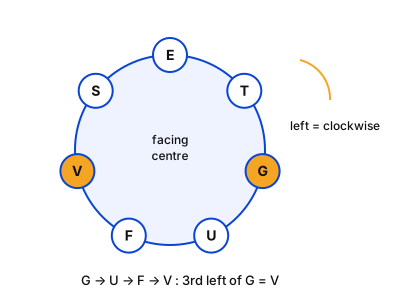
  1. Fix E at the top. Two people between E and F counted from E's right (anticlockwise) → F is 3rd anticlockwise from E.
  2. Two between F and T → T must be 3rd clockwise from E (the only spot that also leaves three between E and U, giving U two clockwise seats before F).
  3. Clockwise order: E, T, G, U, F, V, S – here S is immediately left (clockwise) of V ✓, and G fills the remaining seat.
  4. Third to the left of G (clockwise): U, F, V.

Trick: In a 7-seat circle, 'only two between' is the same from either side (2 and 3), so check both gaps quickly.

Answer: (C) V

अवधारणा: केंद्र की ओर मुख होने पर 'बायाँ' = दक्षिणावर्त (clockwise) और 'दायाँ' = वामावर्त। एक व्यक्ति को स्थिर रखकर बाकी बैठाएँ।

  1. E को ऊपर रखें। E के दाएँ (वामावर्त) से गिनने पर E और F के बीच दो → F, E से वामावर्त तीसरा।
  2. F और T के बीच दो → T, E से दक्षिणावर्त तीसरा (यही स्थान E और U के बीच तीन छोड़ता है, U, F से दो सीट पहले)।
  3. दक्षिणावर्त क्रम: E, T, G, U, F, V, S – यहाँ S, V के तुरंत बाएँ (दक्षिणावर्त) ✓, बची सीट पर G।
  4. G के बाएँ तीसरा (दक्षिणावर्त): U, F, V।

ट्रिक: 7 सीटों के वृत्त में 'केवल दो के बीच' दोनों ओर से (2 और 3) संभव है, दोनों अंतराल तुरंत जाँचें।

उत्तर: (C) V

RRB NTPC Graduate CBT 1General Intelligence and ReasoningCircular SeatingRRB NTPC Graduate CBT 1 2025 · 25 Mar Shift 1 →
Q5271.
If ‘A’ stands for ‘÷’, ‘B’ stands for ‘×’, ‘C’ stands for ‘+’ and ‘D’ stands for ‘−’, then what will come in place of the question mark (?) in the following equation?
10 C 20 A 2 D 3 B 5 = ?
यदि ‘A’ का अर्थ ‘÷’, ‘B’ का अर्थ ‘×’, ‘C’ का अर्थ ‘+’ और ‘D’ का अर्थ ‘−’ है, तो निम्नलिखित समीकरण में प्रश्नचिह्न (?) के स्थान पर क्या आएगा?
10 C 20 A 2 D 3 B 5 = ?
  1. A4
  2. B3
  3. C5
  4. D6
Show answer

Concept: Replace the letters by the given operators, then apply BODMAS.

  1. 10 C 20 A 2 D 3 B 5 → 10+20÷2−3×5.
  2. Division and multiplication first: 20÷2=10, 3×5=15.
  3. 10+10−15=5.

Trick: Write the substituted expression fully before solving; most errors come from doing it in the head.

Answer: (C) 5

अवधारणा: अक्षरों की जगह दिए गए चिह्न रखें, फिर BODMAS लगाएँ।

  1. 10 C 20 A 2 D 3 B 5 → 10+20÷2−3×5।
  2. पहले भाग और गुणा: 20÷2=10, 3×5=15।
  3. 10+10−15=5।

ट्रिक: हल करने से पहले पूरा व्यंजक लिख लें; ज़्यादातर गलतियाँ मन में करने से होती हैं।

उत्तर: (C) 5

RRB NTPC Graduate CBT 1General Intelligence and ReasoningMathematical OperationsRRB NTPC Graduate CBT 1 2025 · 25 Mar Shift 1 →
Q5272.
In this question, a question is followed by two statements numbered (I) and (II). You have to decide whether the data provided in the statements are sufficient to answer the question. Read both the statements and decide the appropriate answer.
Q. Five people – Pallavi, Shreya, Monika, Ritu, and Alka – are sitting in a straight line facing north.
Who is sitting at the extreme left end?
(I) Shreya sits immediately to the right of Pallavi.
(II) Monika sits immediately to the right of Shreya, and Ritu is not at any end.
इस प्रश्न में, एक प्रश्न के बाद (I) और (II) क्रमांकित दो कथन दिए गए हैं। आपको यह निर्णय करना है कि कथनों में दिए गए डेटा प्रश्न का उत्तर देने के लिए पर्याप्त हैं या नहीं। दोनों कथनों को पढ़िए और उपयुक्त उत्तर का निर्णय कीजिए।
प्रश्न. पाँच व्यक्ति – पल्लवी, श्रेया, मोनिका, रितु और अलका – एक सीधी पंक्ति में उत्तर की ओर मुख करके बैठे हैं।
सबसे बाएँ छोर पर कौन बैठा है?
(I) श्रेया, पल्लवी के ठीक दाएँ बैठी है।
(II) मोनिका, श्रेया के ठीक दाएँ बैठी है, और रितु किसी भी छोर पर नहीं है।
  1. AData in Statement I alone is sufficient to answer the question while data in Statement II is notकथन I के डेटा अकेले प्रश्न का उत्तर देने के लिए पर्याप्त हैं, जबकि कथन II के डेटा पर्याप्त नहीं हैं
  2. BBoth statements I and II together (and not statement I alone or statement II alone) are sufficient to answer the questionकथन I और II दोनों मिलकर (और न कि केवल कथन I या केवल कथन II) प्रश्न का उत्तर देने के लिए पर्याप्त हैं
  3. CData in Statement II alone is sufficient to answer the question while data in Statement I is notकथन II के डेटा अकेले प्रश्न का उत्तर देने के लिए पर्याप्त हैं, जबकि कथन I के डेटा पर्याप्त नहीं हैं
  4. DBoth statements I and II together are NOT sufficient to answer the questionकथन I और II दोनों मिलकर भी प्रश्न का उत्तर देने के लिए पर्याप्त नहीं हैं
Show answer

Concept: Test each statement alone, then both together; data are sufficient only if exactly one arrangement (or one answer) remains.

  1. Statement I alone: only 'Pallavi–Shreya' adjacent is known; the left end can be anyone – not sufficient.
  2. Statement II alone: 'Shreya–Monika' adjacent and Ritu not at an end – still many arrangements – not sufficient.
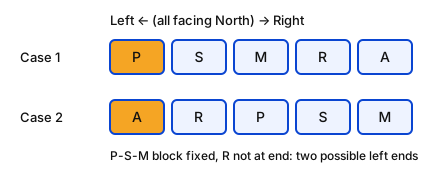
  3. Both together: the block P–S–M is fixed and Ritu cannot be at an end. Two arrangements survive: P S M R A (left end Pallavi) and A R P S M (left end Alka).
  4. Since the left-end person differs, even both statements together cannot answer the question.

Trick: In data sufficiency, always try to build two different valid arrangements – if you can, the data are not sufficient.

Answer: (D) Both statements I and II together are NOT sufficient to answer the question

अवधारणा: हर कथन को अकेले, फिर दोनों को साथ जाँचें; आँकड़े तभी पर्याप्त हैं जब ठीक एक व्यवस्था (या एक उत्तर) बचे।

  1. कथन I अकेले: केवल 'पल्लवी–श्रेया' सटे हैं; बायाँ छोर कोई भी हो सकता है – अपर्याप्त।
  2. कथन II अकेले: 'श्रेया–मोनिका' सटे और रितु छोर पर नहीं – फिर भी कई व्यवस्थाएँ – अपर्याप्त।
  3. दोनों साथ: P–S–M ब्लॉक तय और रितु छोर पर नहीं। दो व्यवस्थाएँ बचती हैं: P S M R A (बायाँ छोर पल्लवी) और A R P S M (बायाँ छोर अल्का)।
  4. बाएँ छोर का व्यक्ति अलग-अलग है, अतः दोनों कथन मिलकर भी उत्तर नहीं दे सकते।

ट्रिक: Data sufficiency में हमेशा दो अलग वैध व्यवस्थाएँ बनाने की कोशिश करें – बन जाएँ तो आँकड़े अपर्याप्त हैं।

उत्तर: (D) कथन I और II दोनों मिलकर भी प्रश्न का उत्तर देने के लिए पर्याप्त नहीं हैं

RRB NTPC Graduate CBT 1General Intelligence and ReasoningData Sufficiency – Linear SeatingRRB NTPC Graduate CBT 1 2025 · 25 Mar Shift 1 →
Q5273.
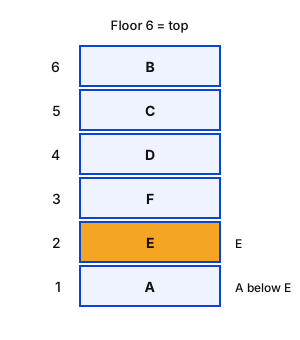
A, B, C, D, E and F live on six different floors of the same building. The lowermost floor in the building is numbered 1, the floor above it is numbered 2, and so on till the topmost floor is numbered 6.
Only four people live below C. Only three people live above F. A lives immediately below E. D does not live above B.
How many people live below E?
A, B, C, D, E और F एक ही भवन की छह अलग-अलग मंज़िलों पर रहते हैं। भवन की सबसे निचली मंज़िल की संख्या 1 है, उसके ऊपर की मंज़िल की संख्या 2 है, और इसी प्रकार सबसे ऊपरी मंज़िल की संख्या 6 है।
C के नीचे केवल चार व्यक्ति रहते हैं। F के ऊपर केवल तीन व्यक्ति रहते हैं। A, E के ठीक नीचे रहता है। D, B के ऊपर नहीं रहता है।
E के नीचे कितने व्यक्ति रहते हैं?
  1. ATwoदो
  2. BThreeतीन
  3. COneएक
  4. DFourचार
Show answer

Concept: Place the people with exact counts first ('only four below', 'only three above'), then fit the remaining pairs.

  1. Only four below C → C on floor 5. Only three above F → F on floor 3.
  2. Free floors: 1, 2, 4, 6. A immediately below E → the only adjacent free pair is (1, 2): A = 1, E = 2.
  3. B and D take 4 and 6; D does not live above B → D = 4, B = 6.
  4. Below E (floor 2) there is only A → one person.

Trick: 'Only n below/above' fixes a floor instantly; 'immediately below' then needs two consecutive empty floors.

Answer: (C) One

अवधारणा: पहले सटीक गिनती वाले लोगों को रखें ('केवल चार नीचे', 'केवल तीन ऊपर'), फिर बचे जोड़े बैठाएँ।

  1. C के नीचे केवल चार → C मंज़िल 5 पर। F के ऊपर केवल तीन → F मंज़िल 3 पर।
  2. खाली मंज़िलें: 1, 2, 4, 6। A, E के ठीक नीचे → एकमात्र सटी खाली जोड़ी (1, 2): A = 1, E = 2।
  3. B और D को 4 और 6; D, B के ऊपर नहीं → D = 4, B = 6।
  4. E (मंज़िल 2) के नीचे केवल A → एक व्यक्ति।

ट्रिक: 'केवल n नीचे/ऊपर' तुरंत मंज़िल तय करता है; 'ठीक नीचे' के लिए दो लगातार खाली मंज़िलें चाहिए।

उत्तर: (C) एक

RRB NTPC Graduate CBT 1General Intelligence and ReasoningFloor PuzzleRRB NTPC Graduate CBT 1 2025 · 25 Mar Shift 1 →
Q5274.
Based on the English alphabetical order, three of the following four letter cluster pairs are alike in a certain way and thus form a group. Which is the one that does not belong to that group?
(Note: The odd one out is not based on the number of consonants/vowels or their position in the letter cluster)
अंग्रेज़ी वर्णमाला क्रम के आधार पर, निम्नलिखित चार अक्षर-समूह युग्मों में से तीन एक निश्चित प्रकार से समान हैं और इस प्रकार एक समूह बनाते हैं। वह कौन-सा है जो उस समूह से संबंधित नहीं है?
(नोट: असंगत युग्म व्यंजनों/स्वरों की संख्या या अक्षर-समूह में उनकी स्थिति पर आधारित नहीं है)
  1. AAE-DH
  2. BNR-OU
  3. CFJ-IM
  4. DCG-FJ
Show answer

Concept: Find the gap inside each cluster and the shift from the first cluster to the second; the odd pair breaks the pattern.

  1. AE-DH: A→E +4; A→D +3, E→H +3.
  2. FJ-IM: F→J +4; F→I +3, J→M +3. CG-FJ: C→G +4; C→F +3, G→J +3.
  3. NR-OU: N→R +4 but N→O +1 and R→U +3 – the shift is not uniform, so it is the odd one.

Trick: Check the first letters of each pair: A→D, F→I, C→F are all +3; only N→O is +1.

Answer: (B) NR-OU

अवधारणा: हर समूह के भीतर का अंतर और पहले से दूसरे समूह तक का शिफ्ट देखें; विषम जोड़ा पैटर्न तोड़ता है।

  1. AE-DH: A→E +4; A→D +3, E→H +3।
  2. FJ-IM: F→J +4; F→I +3, J→M +3। CG-FJ: C→G +4; C→F +3, G→J +3।
  3. NR-OU: N→R +4 पर N→O +1 और R→U +3 – शिफ्ट एकसमान नहीं, अतः यही विषम है।

ट्रिक: हर जोड़े के पहले अक्षर देखें: A→D, F→I, C→F सब +3; केवल N→O +1।

उत्तर: (B) NR-OU

RRB NTPC Graduate CBT 1General Intelligence and ReasoningLetter Cluster ClassificationRRB NTPC Graduate CBT 1 2025 · 25 Mar Shift 1 →
Q5275.
Refer to the following letter, symbol series and answer the question. Counting to be done from left to right only
(Left) @ L € F J £ E # N K # * R P * D # X T * G N (Right)
How many such letters are there each of which is immediately preceded by a letter and also immediately followed by a symbol?
निम्नलिखित अक्षर, प्रतीक श्रेणी को देखिए और प्रश्न का उत्तर दीजिए। गिनती केवल बाएँ से दाएँ की जानी है
(बाएँ) @ L € F J £ E # N K # * R P * D # X T * G N (दाएँ)
ऐसे कितने अक्षर हैं, जिनमें से प्रत्येक के ठीक पहले एक अक्षर है और ठीक बाद एक प्रतीक भी है?
  1. A6
  2. B3
  3. C5
  4. D4
Show answer

Concept: We need the pattern Letter – Letter – Symbol; scan left to right and look at each letter's neighbours.

  1. Series: @ L € F J £ E # N K # * R P * D # X T * G N.
  2. F J £ → J ✓; N K # → K ✓; R P * → P ✓; X T * → T ✓.
  3. Other letters fail: L (symbol before), E (symbol before), D (symbol before), G/N (no symbol after).

Trick: Underline every symbol first, then check only the letter just before each symbol – does a letter come before that one too?

Answer: (D) 4

अवधारणा: पैटर्न अक्षर – अक्षर – प्रतीक चाहिए; बाएँ से दाएँ हर अक्षर के पड़ोसी देखें।

  1. श्रृंखला: @ L € F J £ E # N K # * R P * D # X T * G N।
  2. F J £ → J ✓; N K # → K ✓; R P * → P ✓; X T * → T ✓।
  3. बाकी अक्षर असफल: L, E, D (पहले प्रतीक), G/N (बाद में प्रतीक नहीं)।

ट्रिक: पहले हर प्रतीक को रेखांकित करें, फिर उससे ठीक पहले वाले अक्षर को देखें – क्या उसके पहले भी अक्षर है?

उत्तर: (D) 4

RRB NTPC Graduate CBT 1General Intelligence and ReasoningLetter-Symbol SeriesRRB NTPC Graduate CBT 1 2025 · 25 Mar Shift 1 →
Q5276.
Which of the following letter-number clusters will replace the question mark “?” in the given series to make it logically complete?
ERW 7, CPU 15, ANS 23, YLQ 31, ?
दी गई श्रेणी को तार्किक रूप से पूर्ण करने के लिए निम्नलिखित में से कौन-सा अक्षर-संख्या समूह प्रश्नचिह्न “?” के स्थान पर आएगा?
ERW 7, CPU 15, ANS 23, YLQ 31, ?
  1. AWIM 38
  2. BVIN 39
  3. CWJO 39
  4. DXJN 40
Show answer

Concept: Track each letter position and the number separately.

  1. First letters: E → C → A → Y → ? each −2 (wrapping after A) → W.
  2. Second: R → P → N → L → J (−2); third: W → U → S → Q → O (−2).
  3. Numbers: 7, 15, 23, 31 (+8) → 39. Term = WJO 39.

Trick: Every letter steps back by 2 – A steps back to Y via Z.

Answer: (C) WJO 39

अवधारणा: हर अक्षर स्थान और संख्या को अलग-अलग ट्रैक करें।

  1. पहले अक्षर: E → C → A → Y → ? हर बार −2 (A के बाद पीछे घूमकर) → W।
  2. दूसरे: R → P → N → L → J (−2); तीसरे: W → U → S → Q → O (−2)।
  3. संख्याएँ: 7, 15, 23, 31 (+8) → 39। पद = WJO 39।

ट्रिक: हर अक्षर 2 पीछे जाता है – A से Z होते हुए Y।

उत्तर: (C) WJO 39

RRB NTPC Graduate CBT 1General Intelligence and ReasoningLetter-Number SeriesRRB NTPC Graduate CBT 1 2025 · 25 Mar Shift 1 →
Q5277.
Refer to the following letter, symbol series and answer the question. Counting to be done from left to right only
(Left) £ D € U B & @ % © K C # T $ @ A # E D % * C (Right)
How many such symbols are there each of which is immediately preceded by a letter and also immediately followed by a letter?
निम्नलिखित अक्षर, प्रतीक श्रेणी को देखिए और प्रश्न का उत्तर दीजिए। गिनती केवल बाएँ से दाएँ की जानी है
(बाएँ) £ D € U B & @ % © K C # T $ @ A # E D % * C (दाएँ)
ऐसे कितने प्रतीक हैं, जिनमें से प्रत्येक के ठीक पहले एक अक्षर है और ठीक बाद एक अक्षर भी है?
  1. A5
  2. B4
  3. C3
  4. D2
Show answer

Concept: We need the pattern Letter – Symbol – Letter; check the neighbours of every symbol.

  1. Series: £ D € U B & @ % © K C # T $ @ A # E D % * C.
  2. D € U ✓; C # T ✓; A # E ✓.
  3. Others fail: £ (nothing before), & @ % © (symbols on at least one side), $ @ (adjacent symbols), % * (adjacent symbols).

Trick: Symbols that come in a run (& @ % ©, $ @, % *) can never qualify – only isolated symbols need checking.

Answer: (C) 3

अवधारणा: पैटर्न अक्षर – प्रतीक – अक्षर चाहिए; हर प्रतीक के पड़ोसी जाँचें।

  1. श्रृंखला: £ D € U B & @ % © K C # T $ @ A # E D % * C।
  2. D € U ✓; C # T ✓; A # E ✓।
  3. बाकी असफल: £ (पहले कुछ नहीं), & @ % © (कम से कम एक ओर प्रतीक), $ @ (सटे प्रतीक), % * (सटे प्रतीक)।

ट्रिक: जो प्रतीक झुंड में आएँ (& @ % ©, $ @, % *) वे कभी योग्य नहीं – केवल अकेले प्रतीक जाँचें।

उत्तर: (C) 3

RRB NTPC Graduate CBT 1General Intelligence and ReasoningLetter-Symbol SeriesRRB NTPC Graduate CBT 1 2025 · 25 Mar Shift 1 →
Q5278.
Which of the following Acts was enacted by the British Parliament to regulate the administration of the British East India Company’s territories in India, particularly in Bengal?
निम्नलिखित में से कौन-सा अधिनियम ब्रिटिश संसद द्वारा भारत में, विशेष रूप से बंगाल में, ब्रिटिश ईस्ट इंडिया कंपनी के क्षेत्रों के प्रशासन को नियमित करने के लिए पारित किया गया था?
  1. ACharter Act, 1813चार्टर एक्ट, 1813
  2. BGovernment of India Act, 1858भारत सरकार अधिनियम, 1858
  3. CRegulating Act, 1773रेग्युलेटिंग एक्ट, 1773
  4. DPitt’s India Act, 1784पिट्स इंडिया एक्ट, 1784
Show answer

Concept: The Regulating Act, 1773 was the first step taken by the British Parliament to control and regulate the affairs of the East India Company in India.

  1. It made the Governor of Bengal the Governor-General of Bengal (Warren Hastings) with a council of four, and placed Bombay and Madras under Bengal's supervision.
  2. It set up the Supreme Court at Calcutta (1774).
  3. Pitt's India Act (1784) came later and created the Board of Control; the Act of 1858 transferred power to the Crown.

Yaad rakhein: 1773 = Regulating, 1784 = Pitt's, 1813, 1833, 1853 = Charter Acts, 1858 = Crown rule.

Answer: (C) Regulating Act, 1773

अवधारणा: रेगुलेटिंग एक्ट, 1773 ब्रिटिश संसद का पहला कदम था जिससे भारत में ईस्ट इंडिया कंपनी के प्रशासन को नियंत्रित और नियमित किया गया।

  1. इसने बंगाल के गवर्नर को बंगाल का गवर्नर-जनरल (वॉरेन हेस्टिंग्स) बनाया, चार सदस्यों की परिषद दी और बॉम्बे-मद्रास को बंगाल के अधीन किया।
  2. इसी से 1774 में कलकत्ता में सुप्रीम कोर्ट बना।
  3. पिट्स इंडिया एक्ट (1784) बाद में आया और बोर्ड ऑफ कंट्रोल बनाया; 1858 के एक्ट से सत्ता क्राउन को गई।

याद रखें: 1773 = रेगुलेटिंग, 1784 = पिट्स, 1813, 1833, 1853 = चार्टर एक्ट, 1858 = क्राउन शासन।

उत्तर: (C) Regulating Act, 1773

RRB NTPC Graduate CBT 1General AwarenessRegulating Act 1773RRB NTPC Graduate CBT 1 2025 · 24 Mar Shift 3 →
Q5279.
Who was the chief guest at the inauguration of the 58th Inter-IIT Sports Meet at IIT Hyderabad?
IIT हैदराबाद में 58वें अंतर-IIT खेल समारोह (Inter-IIT Sports Meet) के उद्घाटन में मुख्य अतिथि कौन थे?
  1. APullela Gopichandपुलेला गोपीचंद
  2. BProf B S Murtyप्रो. बी. एस. मूर्ति
  3. CBVR Mohan Reddyबीवीआर मोहन रेड्डी
  4. DSaina Nehwalसाइना नेहवाल
Show answer

Concept: The 58th Inter-IIT Sports Meet (December 2025) was hosted by IIT Hyderabad.

  1. Badminton star and Olympic medallist Saina Nehwal was the chief guest at its inauguration ceremony.
  2. Prof. B. S. Murty is the Director of IIT Hyderabad (host), and BVR Mohan Reddy is Chairman of its Board – they are not the chief guest.

Yaad rakhein: Inter-IIT Sports Meet 2025 (58th) → IIT Hyderabad → Saina Nehwal.

Answer: (D) Saina Nehwal

अवधारणा: 58वाँ इंटर-IIT स्पोर्ट्स मीट (दिसंबर 2025) IIT हैदराबाद में आयोजित हुआ।

  1. इसके उद्घाटन समारोह की मुख्य अतिथि बैडमिंटन स्टार और ओलंपिक पदक विजेता साइना नेहवाल थीं।
  2. प्रो. बी. एस. मूर्ति IIT हैदराबाद के निदेशक (मेज़बान) और BVR मोहन रेड्डी बोर्ड के चेयरमैन हैं – वे मुख्य अतिथि नहीं थे।

याद रखें: इंटर-IIT स्पोर्ट्स मीट 2025 (58वाँ) → IIT हैदराबाद → साइना नेहवाल।

उत्तर: (D) Saina Nehwal

RRB NTPC Graduate CBT 1General AwarenessCurrent affairs – SportsRRB NTPC Graduate CBT 1 2025 · 24 Mar Shift 3 →
Q5280.
According to the World Health Organization (WHO) in 2025, which pollutant was identified as the primary cause of increased respiratory illnesses due to air pollution?
विश्व स्वास्थ्य संगठन (WHO) के अनुसार 2025 में, वायु प्रदूषण के कारण बढ़ती श्वसन संबंधी बीमारियों का प्राथमिक कारण किस प्रदूषक को माना गया?
  1. ACarbon monoxide (CO)कार्बन मोनोऑक्साइड (CO)
  2. BSulphur dioxide (SO\u2082)सल्फर डाइऑक्साइड (SO₂)
  3. CParticulate matter (PM2.5)कणिकीय पदार्थ (Particulate matter) (PM2.5)
  4. DOzone (O\u2083)ओज़ोन (O₃)
Show answer

Concept: Fine particulate matter (PM2.5) is the pollutant most strongly linked to respiratory and cardiovascular disease.

  1. PM2.5 particles (diameter ≤ 2.5 micrometres) penetrate deep into the lungs and even the bloodstream.
  2. WHO's air-quality guideline for PM2.5 is only 5 µg/m³ (annual), and its 2025 reports again identified PM2.5 as the primary driver of air-pollution-related respiratory illness.
  3. CO, SO2 and O3 are harmful but are not the leading cause.

Yaad rakhein: "Smaller the particle, deeper it goes" – PM2.5 is the deadliest pollutant.

Answer: (C) Particulate matter (PM2.5)

अवधारणा: सूक्ष्म कणिकीय पदार्थ (PM2.5) श्वसन और हृदय रोगों से सबसे अधिक जुड़ा प्रदूषक है।

  1. PM2.5 कण (व्यास ≤ 2.5 माइक्रोमीटर) फेफड़ों की गहराई और यहाँ तक कि रक्त में पहुँच जाते हैं।
  2. WHO की PM2.5 गाइडलाइन केवल 5 µg/m³ (वार्षिक) है और 2025 की रिपोर्टों में फिर PM2.5 को वायु-प्रदूषण जनित श्वसन रोगों का मुख्य कारण बताया गया।
  3. CO, SO2 और O3 हानिकारक हैं पर प्रमुख कारण नहीं।

याद रखें: "कण जितना छोटा, उतना गहरा जाता है" – PM2.5 सबसे घातक प्रदूषक।

उत्तर: (C) Particulate matter (PM2.5)

RRB NTPC Graduate CBT 1General AwarenessAir pollution – PM2.5RRB NTPC Graduate CBT 1 2025 · 24 Mar Shift 3 →