Question bank

Q&A: practice questions with answers

Search questions on any topic. Filter by exam category, exam, subject and topic, try the question, then open the answer and explanation.

Courses – airGurukul

7,077 questions found.

Q5461.
Which of the given letter-number clusters will replace the question mark (?) in the following series to make it logically complete?
HKS 13 NQY18 TWE 23 ZCK 28 ?
दिए गए अक्षर-संख्या समूहों में से कौन-सा निम्नलिखित श्रेणी में प्रश्नचिह्न (?) के स्थान पर आकर इसे तार्किक रूप से पूर्ण करेगा?
HKS 13 NQY18 TWE 23 ZCK 28 ?
  1. ALFT 36
  2. BFIQ 33
  3. CKSR 38
  4. DBSO 35
Show answer

Concept: Treat letters and numbers separately and find the step for each.

  1. Letters: H→N→T→Z, K→Q→W→C, S→Y→E→K; every letter moves +6.
  2. Numbers: 13, 18, 23, 28 move +5.
  3. Next: Z+6=F, C+6=I, K+6=Q and 28+5=33 → FIQ 33.

Trick: Check only the first letter and the number: Z+6=F and 33 already pick option B.

Answer: (B) FIQ 33

अवधारणा: अक्षरों और संख्याओं को अलग-अलग देखकर हर एक का अंतर निकालें।

  1. अक्षर: H→N→T→Z, K→Q→W→C, S→Y→E→K; हर अक्षर +6 बढ़ता है।
  2. संख्याएँ: 13, 18, 23, 28 में +5।
  3. अगला: Z+6=F, C+6=I, K+6=Q और 28+5=33 → FIQ 33।

ट्रिक: केवल पहला अक्षर और संख्या जाँचें: Z+6=F और 33 से विकल्प B तय हो जाता है।

उत्तर: (B) FIQ 33
RRB NTPC Graduate CBT 1General Intelligence and ReasoningAlphanumeric SeriesRRB NTPC Graduate CBT 1 2025 · 24 Mar Shift 2 →
Q5462.
Which of the following letter-number clusters will replace the question mark “?” in the given series to make it logically complete?
YIV 11, VGU 15, SET 19, PCS 23, ?
निम्नलिखित अक्षर-संख्या समूहों में से कौन-सा दी गई श्रेणी में प्रश्नचिह्न “?” के स्थान पर आकर इसे तार्किक रूप से पूर्ण करेगा?
YIV 11, VGU 15, SET 19, PCS 23, ?
  1. ANAQ 29
  2. BMYN 25
  3. CMAR 27
  4. DMZP 27
Show answer

Concept: Each letter position of the cluster follows its own step; the number follows a separate step.

  1. 1st letters Y→V→S→P: −3 each time; 2nd letters I→G→E→C: −2; 3rd letters V→U→T→S: −1.
  2. Numbers 11, 15, 19, 23: +4.
  3. Next: P−3=M, C−2=A, S−1=R, 23+4=27 → MAR 27.

Trick: Steps −3,−2,−1 stay the same in every term; the middle letter A (C−2) rules out options B and D.

Answer: (C) MAR 27

अवधारणा: समूह के हर अक्षर-स्थान का अपना अंतर होता है; संख्या का अलग अंतर।

  1. पहले अक्षर Y→V→S→P: हर बार −3; दूसरे I→G→E→C: −2; तीसरे V→U→T→S: −1।
  2. संख्याएँ 11, 15, 19, 23: +4।
  3. अगला: P−3=M, C−2=A, S−1=R, 23+4=27 → MAR 27।

ट्रिक: अंतर −3,−2,−1 हर पद में समान रहते हैं; बीच का अक्षर A (C−2) विकल्प B और D को हटा देता है।

उत्तर: (C) MAR 27

RRB NTPC Graduate CBT 1General Intelligence and ReasoningAlphanumeric SeriesRRB NTPC Graduate CBT 1 2025 · 24 Mar Shift 2 →
Q5463.
In a certain code language,
M + K means ‘ M is the brother of K',
M % K means ‘ M is the mother of K',
M $ K means ‘ M is the father of K', and
M - K means ‘ M is the sister of K'.
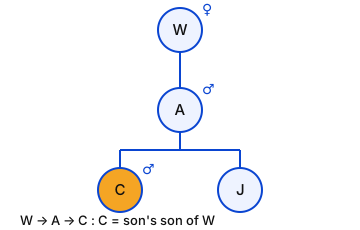
Based on the above, how is C related to W if ‘ W % A $ C + J'?
एक निश्चित कूट भाषा में,
M + K का अर्थ है 'M, K का भाई है',
M % K का अर्थ है 'M, K की माता है',
M $ K का अर्थ है 'M, K का पिता है', और
M - K का अर्थ है 'M, K की बहन है'।
उपर्युक्त के आधार पर, यदि 'W % A $ C + J' है, तो C, W से किस प्रकार संबंधित है?
  1. ABrother's sonभाई का पुत्र
  2. BSonपुत्र
  3. CBrotherभाई
  4. DSon's sonपुत्र का पुत्र
Show answer

Concept: Decode each symbol from left to right and build the family tree.

  1. W % A: W is the mother of A.
  2. A $ C: A is the father of C, so C is a son of A (C is male because C + J means C is J's brother).
  3. C + J: C is the brother of J. So C is the son of W's son → W's grandson (son's son).

Trick: Two downward steps from W (mother → father → child) always mean grandchild; "brother" fixes C as male, so son's son.

Answer: (D) Son's son

अवधारणा: हर प्रतीक को बाएँ से दाएँ डिकोड करके वंश-वृक्ष (family tree) बनाएँ।

  1. W % A: W, A की माँ है।
  2. A $ C: A, C का पिता है, अतः C, A का पुत्र है (C पुरुष है क्योंकि C + J का अर्थ C, J का भाई है)।
  3. C + J: C, J का भाई है। अतः C, W के पुत्र का पुत्र है → पोता (son's son)।

ट्रिक: W से नीचे दो पीढ़ी (माँ → पिता → संतान) = पोता/पोती; "भाई" से C पुरुष सिद्ध, अतः पोता।

उत्तर: (D) Son's son

RRB NTPC Graduate CBT 1General Intelligence and ReasoningBlood Relations (Coded)RRB NTPC Graduate CBT 1 2025 · 24 Mar Shift 2 →
Q5464.
107 is related to 158 following a certain logic. Following the same logic, 122 is related to 173. To which of the following is 154 related, following the same logic?
(NOTE : Operations should be performed on the whole numbers, without breaking down the numbers into its constituent digits. E.g. 13 – Operations on 13 such as adding /subtracting /multiplying etc. to 13 can be performed. Breaking down 13 into 1 and 3 and then performing mathematical operations on 1 and 3 is not allowed.)
107, एक निश्चित तर्क के अनुसार 158 से संबंधित है। उसी तर्क के अनुसार, 122, 173 से संबंधित है। उसी तर्क के अनुसार, 154 निम्नलिखित में से किससे संबंधित है?
(नोट: संक्रियाएँ पूर्ण संख्याओं पर की जानी चाहिए, संख्याओं को उनके घटक अंकों में तोड़े बिना। उदाहरण के लिए 13 – 13 पर संक्रियाएँ जैसे 13 में जोड़ना/घटाना/गुणा करना आदि की जा सकती हैं। 13 को 1 और 3 में तोड़कर फिर 1 और 3 पर गणितीय संक्रियाएँ करने की अनुमति नहीं है।)
  1. A205
  2. B218
  3. C198
  4. D213
Show answer

Concept: Find one operation that converts the first number into the second in both given pairs.

  1. 158−107=51 and 173−122=51; the rule is "add 51".
  2. 154+51=205.

Trick: When both pairs have the same difference, the rule is simply addition; no multiplication check needed.

Answer: (A) 205

अवधारणा: ऐसी एक संक्रिया खोजें जो दोनों दिए गए युग्मों में पहली संख्या को दूसरी में बदल दे।

  1. 158−107=51 और 173−122=51; नियम है "51 जोड़ो"।
  2. 154+51=205।

ट्रिक: जब दोनों युग्मों का अंतर समान हो, तो नियम सीधा जोड़ है; गुणा जाँचने की ज़रूरत नहीं।

उत्तर: (A) 205

RRB NTPC Graduate CBT 1General Intelligence and ReasoningNumber AnalogyRRB NTPC Graduate CBT 1 2025 · 24 Mar Shift 2 →
Q5465.
In this question, a question is followed by two statements numbered (I) and (II). You have to decide whether the data provided in the statements are sufficient to answer the question. Read both the statements and decide the appropriate answer.
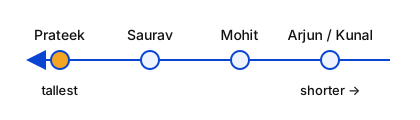
Q. Arjun, Kunal, Mohit, Prateek, and Saurav, each have different height. Who is the tallest?
(I) Mohit is taller than Arjun and Kunal but shorter than Prateek.
(II) Saurav is taller than Mohit but shorter than Prateek.
इस प्रश्न में, एक प्रश्न के बाद (I) और (II) क्रमांकित दो कथन दिए गए हैं। आपको यह निर्णय करना है कि कथनों में दिए गए आँकड़े प्रश्न का उत्तर देने के लिए पर्याप्त हैं या नहीं। दोनों कथनों को पढ़िए और उचित उत्तर का निर्णय कीजिए।
प्रश्न: अर्जुन, कुणाल, मोहित, प्रतीक और सौरव, प्रत्येक की लंबाई भिन्न है। सबसे लंबा कौन है?
(I) मोहित, अर्जुन और कुणाल से लंबा है लेकिन प्रतीक से छोटा है।
(II) सौरव, मोहित से लंबा है लेकिन प्रतीक से छोटा है।
  1. AData in Statement I alone is sufficient to answer the question while data in Statement II is notकथन I के आँकड़े अकेले प्रश्न का उत्तर देने के लिए पर्याप्त हैं, जबकि कथन II के आँकड़े पर्याप्त नहीं हैं
  2. BBoth statements I and II together are NOT sufficient to answer the questionकथन I और II दोनों मिलाकर भी प्रश्न का उत्तर देने के लिए पर्याप्त नहीं हैं
  3. CBoth statements I and II together (and not statement I alone or statement II alone) are sufficient to answer the questionकथन I और II दोनों मिलाकर (और न कि कथन I अकेले या कथन II अकेले) प्रश्न का उत्तर देने के लिए पर्याप्त हैं
  4. DData in Statement II alone is sufficient to answer the question while data in Statement I is notकथन II के आँकड़े अकेले प्रश्न का उत्तर देने के लिए पर्याप्त हैं, जबकि कथन I के आँकड़े पर्याप्त नहीं हैं
Show answer

Concept: Check each statement alone, then together, for whether the tallest person is fixed.

  1. Statement I: Prateek > Mohit > Arjun, Kunal. Saurav's position is unknown, so not sufficient alone.
  2. Statement II: Prateek > Saurav > Mohit. Arjun and Kunal are unknown, so not sufficient alone.
  3. Together: Prateek > Saurav > Mohit > Arjun, Kunal → Prateek is tallest.

Trick: In "who is tallest" questions, a statement fails if even one person is missing from it.

Answer: (C) Both statements I and II together are sufficient

अवधारणा: पहले हर कथन अकेले, फिर दोनों मिलाकर जाँचें कि सबसे लंबा व्यक्ति तय होता है या नहीं।

  1. कथन I: Prateek > Mohit > Arjun, Kunal। Saurav का स्थान अज्ञात, अतः अकेले पर्याप्त नहीं।
  2. कथन II: Prateek > Saurav > Mohit। Arjun और Kunal अज्ञात, अतः अकेले पर्याप्त नहीं।
  3. दोनों मिलाकर: Prateek > Saurav > Mohit > Arjun, Kunal → Prateek सबसे लंबा।

ट्रिक: "सबसे लंबा कौन" प्रश्न में यदि कथन में एक भी व्यक्ति छूट जाए तो वह कथन अकेले पर्याप्त नहीं होता।

उत्तर: (C) दोनों कथन I और II मिलाकर पर्याप्त हैं

RRB NTPC Graduate CBT 1General Intelligence and ReasoningData Sufficiency – OrderingRRB NTPC Graduate CBT 1 2025 · 24 Mar Shift 2 →
Q5466.
Refer to the following letter and symbol series and answer the question that follows. Counting to be done from left to right only.
(Left) M K L $ F % G & # @ S ! S + ? K > H V G (Right)
If all the letters are dropped from the series, which of the following will be seventh from the right?
निम्नलिखित अक्षर और प्रतीक श्रेणी को देखिए और उसके बाद आने वाले प्रश्न का उत्तर दीजिए। गिनती केवल बाएँ से दाएँ की जानी है।
(बाएँ) M K L $ F % G & # @ S ! S + ? K > H V G (दाएँ)
यदि श्रेणी से सभी अक्षर हटा दिए जाएँ, तो निम्नलिखित में से कौन-सा दाएँ से सातवाँ होगा?
  1. A#
  2. B@
  3. C&
  4. D+
Show answer

Concept: Remove the dropped elements, rewrite the series, then count from the required end.

  1. Series without letters: $ % & # @ ! + ? > (9 symbols).
  2. From the right: >(1), ?(2), +(3), !(4), @(5), #(6), &(7).

Trick: 7th from right of 9 items = 3rd from left → &.

Answer: (C) &

अवधारणा: हटाए जाने वाले तत्व निकालकर श्रृंखला दोबारा लिखें, फिर माँगे गए सिरे से गिनें।

  1. अक्षर हटाने पर: $ % & # @ ! + ? > (9 प्रतीक)।
  2. दाएँ से: >(1), ?(2), +(3), !(4), @(5), #(6), &(7)।

ट्रिक: 9 में से दाएँ से 7वाँ = बाएँ से 3रा → &।

उत्तर: (C) &

RRB NTPC Graduate CBT 1General Intelligence and ReasoningSymbol SeriesRRB NTPC Graduate CBT 1 2025 · 24 Mar Shift 2 →
Q5467.
Which of the following letter-clusters should replace # and % so that the pattern and relationship followed between the letter-cluster pair on the left side of :: is the same as that on the right side of :: ?
# : JOP :: YDE : %
निम्नलिखित में से किन अक्षर-समूहों को # और % के स्थान पर रखा जाना चाहिए ताकि :: के बाईं ओर के अक्षर-समूह युग्म के बीच का पैटर्न और संबंध :: के दाईं ओर के युग्म के समान हो?
# : JOP :: YDE : %
  1. A# = OTL % = TPZ
  2. B# = OTT % = TTZ
  3. C# = OTU % = TYZ
  4. D# = TOU % = TZY
Show answer

Concept: The same letter-shift must map # to JOP and YDE to %.

  1. Try option C: OTU → JOP: O−5=J, T−5=O, U−5=P. Rule: each letter −5.
  2. Apply to YDE: Y−5=T, D−5=Y, E−5=Z → TYZ, which matches % in option C.
  3. Other options break the uniform shift (e.g. option A: L+4=P, not −5).

Trick: Work backwards from the known cluster: JOP +5 = OTU; only option C starts with OTU.

Answer: (C) # = OTU, % = TYZ

अवधारणा: वही अक्षर-बदलाव # को JOP और YDE को % में बदलना चाहिए।

  1. विकल्प C लें: OTU → JOP: O−5=J, T−5=O, U−5=P। नियम: हर अक्षर −5।
  2. YDE पर लगाएँ: Y−5=T, D−5=Y, E−5=Z → TYZ, जो विकल्प C के % से मेल खाता है।
  3. बाकी विकल्पों में समान बदलाव टूट जाता है (जैसे विकल्प A में L+4=P, −5 नहीं)।

ट्रिक: ज्ञात समूह से उल्टा चलें: JOP +5 = OTU; केवल विकल्प C में OTU है।

उत्तर: (C) # = OTU, % = TYZ

RRB NTPC Graduate CBT 1General Intelligence and ReasoningLetter-Cluster AnalogyRRB NTPC Graduate CBT 1 2025 · 24 Mar Shift 2 →
Q5468.
Which of the following letter-clusters should replace # and % so that the pattern and relationship followed between the letter-cluster pair on the left side of :: is the same as that on the right side of :: ?
# : PZH :: MWE : %
निम्नलिखित में से किन अक्षर-समूहों को # और % के स्थान पर रखा जाना चाहिए ताकि :: के बाईं ओर के अक्षर-समूह युग्म के बीच का पैटर्न और संबंध :: के दाईं ओर के युग्म के समान हो?
# : PZH :: MWE : %
  1. A# = FPX % = WGO
  2. B# = YPX % = WGO
  3. C# = FPX % = WGP
  4. D# = FPX % = WHO
Show answer

Concept: Find the uniform shift that turns # into PZH and apply it to MWE.

  1. Option A: FPX → PZH: F(6)+10=P(16), P(16)+10=Z(26), X(24)+10=34→34−26=8=H. Rule: +10.
  2. MWE +10: M(13)→W(23), W(23)→33−26=7=G, E(5)→O(15) → WGO.
  3. Option B uses Y as first letter (Y+10=I, not P); C and D change WGO.

Trick: Compute % first (MWE+10=WGO); then only A and B remain, and F+10=P picks A.

Answer: (A) # = FPX, % = WGO

अवधारणा: वह समान बदलाव खोजें जो # को PZH बनाता है और उसे MWE पर लगाएँ।

  1. विकल्प A: FPX → PZH: F(6)+10=P(16), P(16)+10=Z(26), X(24)+10=34→34−26=8=H। नियम: +10।
  2. MWE +10: M(13)→W(23), W(23)→33−26=7=G, E(5)→O(15) → WGO।
  3. विकल्प B में पहला अक्षर Y है (Y+10=I, P नहीं); C और D में WGO बदल गया है।

ट्रिक: पहले % निकालें (MWE+10=WGO); फिर A और B बचते हैं, और F+10=P से A चुनें।

उत्तर: (A) # = FPX, % = WGO

RRB NTPC Graduate CBT 1General Intelligence and ReasoningLetter-Cluster AnalogyRRB NTPC Graduate CBT 1 2025 · 24 Mar Shift 2 →
Q5469.
In a certain code language, ‘OMIT’ is coded as ‘4295’ and ‘TIME’ is coded as ‘2458’. What is the code for ‘E’ in the given code language?
एक निश्चित कूट भाषा में, 'OMIT' को '4295' के रूप में कूटबद्ध किया जाता है और 'TIME' को '2458' के रूप में कूटबद्ध किया जाता है। दी गई कूट भाषा में 'E' का कूट क्या है?
  1. A4
  2. B8
  3. C5
  4. D2
Show answer

Concept: Letters common to both words get the digits common to both codes; the leftover letter gets the leftover digit.

  1. OMIT → 4295 and TIME → 2458 share the letters T, I, M and the digits 4, 2, 5.
  2. In OMIT the extra letter O takes the extra digit 9; in TIME the extra letter E takes the extra digit 8.

Trick: Cancel common letters and common digits; what remains in TIME is E ↔ 8.

Answer: (B) 8

अवधारणा: दोनों शब्दों में साझा अक्षरों को साझा अंक मिलते हैं; बचा हुआ अक्षर बचा हुआ अंक लेता है।

  1. OMIT → 4295 और TIME → 2458 में अक्षर T, I, M और अंक 4, 2, 5 साझा हैं।
  2. OMIT में अतिरिक्त अक्षर O को अतिरिक्त अंक 9 मिलता है; TIME में अतिरिक्त अक्षर E को अतिरिक्त अंक 8।

ट्रिक: साझा अक्षर और साझा अंक काट दें; TIME में बचता है E ↔ 8।

उत्तर: (B) 8

RRB NTPC Graduate CBT 1General Intelligence and ReasoningCoding-Decoding (Word to Number)RRB NTPC Graduate CBT 1 2025 · 24 Mar Shift 2 →
Q5470.
51 is related to 253 following a certain logic. Following the same logic, 38 is related to 188. To which of the following is 32 related, following the same logic?
(NOTE: Operations should be performed on the whole numbers, without breaking down the numbers into their constituent digits. E.g. 13 – Operations on 13 such as adding /subtracting /multiplying, etc. to 13 can be performed. Breaking down 13 into 1 and 3 and then performing mathematical operations on 1 and 3 is not allowed.)
51, एक निश्चित तर्क के अनुसार 253 से संबंधित है। उसी तर्क के अनुसार, 38, 188 से संबंधित है। उसी तर्क के अनुसार, 32 निम्नलिखित में से किससे संबंधित है?
(नोट: संक्रियाएँ पूर्ण संख्याओं पर की जानी चाहिए, संख्याओं को उनके घटक अंकों में तोड़े बिना। उदाहरण के लिए 13 – 13 पर संक्रियाएँ जैसे 13 में जोड़ना/घटाना/गुणा करना आदि की जा सकती हैं। 13 को 1 और 3 में तोड़कर फिर 1 और 3 पर गणितीय संक्रियाएँ करने की अनुमति नहीं है।)
  1. A156
  2. B158
  3. C152
  4. D154
Show answer

Concept: Test "multiply then add/subtract" when the second number is roughly a fixed multiple of the first.

  1. 51×5=255, 255−2=253 ✓; 38×5=190, 190−2=188 ✓. Rule: ×5−2.
  2. 32×5−2=160−2=158.

Trick: 253÷51≈5 and 188÷38≈5 – the ratio tells you the multiplier at once.

Answer: (B) 158

अवधारणा: जब दूसरी संख्या पहली का लगभग एक निश्चित गुणज हो तो "गुणा फिर जोड़/घटा" जाँचें।

  1. 51×5=255, 255−2=253 ✓; 38×5=190, 190−2=188 ✓। नियम: ×5−2।
  2. 32×5−2=160−2=158।

ट्रिक: 253÷51≈5 और 188÷38≈5 – अनुपात तुरंत गुणक बता देता है।

उत्तर: (B) 158

RRB NTPC Graduate CBT 1General Intelligence and ReasoningNumber AnalogyRRB NTPC Graduate CBT 1 2025 · 24 Mar Shift 2 →
Q5471.
Read the given statements and conclusions carefully. Assuming that the information given in the statements is true, even if it appears to be at variance with commonly known facts, decide which of the given conclusions logically follow(s) from the statements.
Statements:
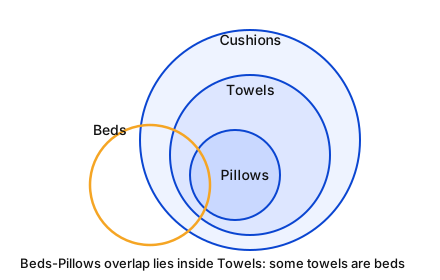
Some beds are pillows.
All pillows are towels.
All towels are cushions.
Conclusions:
(I) All cushions are pillows.
(II) Some towels are beds.
दिए गए कथनों और निष्कर्षों को ध्यानपूर्वक पढ़िए। यह मानते हुए कि कथनों में दी गई जानकारी सत्य है, भले ही वह सामान्यतः ज्ञात तथ्यों से भिन्न प्रतीत होती हो, निर्णय कीजिए कि दिए गए निष्कर्षों में से कौन-सा/कौन-से कथनों का तार्किक रूप से अनुसरण करता है/करते हैं।
कथन:
कुछ बिस्तर तकिए हैं।
सभी तकिए तौलिए हैं।
सभी तौलिए गद्दियाँ हैं।
निष्कर्ष:
(I) सभी गद्दियाँ तकिए हैं।
(II) कुछ तौलिए बिस्तर हैं।
  1. AOnly conclusion (II) followsकेवल निष्कर्ष (II) अनुसरण करता है
  2. BNeither conclusion (I) nor (II) followsन तो निष्कर्ष (I) और न ही (II) अनुसरण करता है
  3. CBoth conclusions (I) and (II) followनिष्कर्ष (I) और (II) दोनों अनुसरण करते हैं
  4. DOnly conclusion (I) followsकेवल निष्कर्ष (I) अनुसरण करता है
Show answer

Concept: Draw the sets: pillows inside towels, towels inside cushions, beds overlapping pillows.

  1. Conclusion I "All cushions are pillows": cushions is the biggest set; it can contain things that are not pillows → does not follow.
  2. Conclusion II "Some towels are beds": the beds that are pillows are also towels, so some towels are definitely beds → follows.

Trick: Some A are B + All B are C ⇒ Some A are C (and its converse Some C are A). "All C are B" is never a valid reverse of "All B are C".

Answer: (A) Only conclusion (II) follows

अवधारणा: समुच्चय बनाएँ: pillows, towels के अंदर; towels, cushions के अंदर; beds, pillows को काटता हुआ।

  1. निष्कर्ष I "सभी cushions, pillows हैं": cushions सबसे बड़ा समुच्चय है; इसमें ऐसी चीज़ें हो सकती हैं जो pillows नहीं हैं → अनुसरण नहीं करता।
  2. निष्कर्ष II "कुछ towels, beds हैं": जो beds pillows हैं वे towels भी हैं, अतः कुछ towels निश्चित रूप से beds हैं → अनुसरण करता है।

ट्रिक: Some A are B + All B are C ⇒ Some A are C (और इसका विलोम Some C are A)। "All B are C" का उल्टा "All C are B" कभी वैध नहीं।

उत्तर: (A) केवल निष्कर्ष (II) अनुसरण करता है

RRB NTPC Graduate CBT 1General Intelligence and ReasoningSyllogismRRB NTPC Graduate CBT 1 2025 · 24 Mar Shift 2 →
Q5472.
Refer to the following letter, number and symbol series and answer the question. (All numbers are single digit numbers only)
(Left) E % Y & T 2 K 4 # 5 C * 6 S D $ 3 7 R @ G (Right)
If all the numbers are dropped from the series, which of the following will be seventh from the right?
निम्नलिखित अक्षर, संख्या और प्रतीक श्रेणी को देखिए और प्रश्न का उत्तर दीजिए। (सभी संख्याएँ केवल एक-अंकीय संख्याएँ हैं)
(बाएँ) E % Y & T 2 K 4 # 5 C * 6 S D $ 3 7 R @ G (दाएँ)
यदि श्रेणी से सभी संख्याएँ हटा दी जाएँ, तो निम्नलिखित में से कौन-सा दाएँ से सातवाँ होगा?
  1. AS
  2. B*
  3. CK
  4. DC
Show answer

Concept: Drop the numbers, rewrite the remaining series and count from the right.

  1. Without numbers: E % Y & T K # C * S D $ R @ G (15 elements).
  2. From the right: G(1), @(2), R(3), $(4), D(5), S(6), *(7).

Trick: 7th from right of 15 = 9th from left; counting E % Y & T K # C * gives * as well.

Answer: (B) *

अवधारणा: संख्याएँ हटाकर शेष श्रृंखला लिखें और दाएँ से गिनें।

  1. संख्याओं के बिना: E % Y & T K # C * S D $ R @ G (15 तत्व)।
  2. दाएँ से: G(1), @(2), R(3), $(4), D(5), S(6), *(7)।

ट्रिक: 15 में दाएँ से 7वाँ = बाएँ से 9वाँ; E % Y & T K # C * गिनने पर भी * ही मिलता है।

उत्तर: (B) *

RRB NTPC Graduate CBT 1General Intelligence and ReasoningSymbol SeriesRRB NTPC Graduate CBT 1 2025 · 24 Mar Shift 2 →
Q5473.
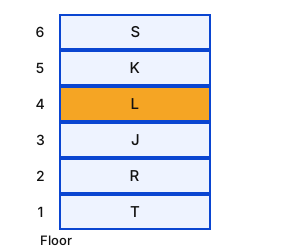
J, K, L, R, S and T live on six different floors of the same building. The lowermost floor in the building is numbered 1, the floor above it is numbered 2 and so on till the topmost floor is numbered 6. Only three people live between R and S, where R lives below S. J lives on an odd numbered floor and immediately above R. L lives on one of the floors below K and on one of the floors above T. Who lives on floor number 4?
J, K, L, R, S और T एक ही भवन की छह अलग-अलग मंज़िलों पर रहते हैं। भवन की सबसे निचली मंज़िल की संख्या 1 है, उसके ऊपर की मंज़िल की संख्या 2 है और इसी प्रकार सबसे ऊपरी मंज़िल तक, जिसकी संख्या 6 है। R और S के बीच केवल तीन व्यक्ति रहते हैं, जहाँ R, S के नीचे रहता है। J एक विषम संख्या वाली मंज़िल पर और R के ठीक ऊपर रहता है। L, K के नीचे की किसी एक मंज़िल पर और T के ऊपर की किसी एक मंज़िल पर रहता है। मंज़िल संख्या 4 पर कौन रहता है?
  1. AT
  2. BR
  3. CL
  4. DJ
Show answer

Concept: Fix the most restrictive pair first (R and S with three floors between), then use the odd/even clue.

  1. Three people between R and S with R below S: (R, S) = (1, 5) or (2, 6).
  2. J is immediately above R on an odd floor → R must be even → R = 2, J = 3, S = 6.
  3. Remaining floors 1, 4, 5 for T, L, K with T < L < K → T = 1, L = 4, K = 5. Floor 4 → L.

Trick: "Immediately above on an odd floor" forces the lower person onto an even floor; that single clue kills the (1, 5) case.

Answer: (C) L

अवधारणा: सबसे कड़ी शर्त (R और S के बीच तीन मंज़िल) पहले लगाएँ, फिर सम/विषम संकेत का उपयोग करें।

  1. R और S के बीच तीन लोग, R नीचे: (R, S) = (1, 5) या (2, 6)।
  2. J, R के ठीक ऊपर विषम मंज़िल पर → R सम होना चाहिए → R = 2, J = 3, S = 6।
  3. शेष मंज़िल 1, 4, 5 पर T, L, K, जहाँ T < L < K → T = 1, L = 4, K = 5। मंज़िल 4 → L।

ट्रिक: "ठीक ऊपर, विषम मंज़िल पर" का मतलब नीचे वाला सम मंज़िल पर है; यही एक संकेत (1, 5) वाली स्थिति हटा देता है।

उत्तर: (C) L

RRB NTPC Graduate CBT 1General Intelligence and ReasoningFloor PuzzleRRB NTPC Graduate CBT 1 2025 · 24 Mar Shift 2 →
Q5474.
Select the set in which the numbers are related in the same way as are the numbers of the following sets.
(NOTE : Operations should be performed on the whole numbers, without breaking down the numbers into their constituent digits. E.g. 13 – Operations on 13 such as adding / subtracting / multiplying etc. to 13 can be performed. Breaking down 13 into 1 and 3 and then performing mathematical operations on 1 and 3 is not allowed.)
(34, 1088, 16)
(21, 420, 10)
उस समुच्चय का चयन कीजिए जिसमें संख्याएँ उसी प्रकार संबंधित हैं जिस प्रकार निम्नलिखित समुच्चयों की संख्याएँ संबंधित हैं।
(नोट: संक्रियाएँ पूर्ण संख्याओं पर की जानी चाहिए, संख्याओं को उनके घटक अंकों में तोड़े बिना। उदाहरण के लिए 13 – 13 पर संक्रियाएँ जैसे 13 में जोड़ना/घटाना/गुणा करना आदि की जा सकती हैं। 13 को 1 और 3 में तोड़कर फिर 1 और 3 पर गणितीय संक्रियाएँ करने की अनुमति नहीं है।)
(34, 1088, 16)
(21, 420, 10)
  1. A(28, 224, 4)
  2. B(8, 279, 17)
  3. C(4, 79, 9)
  4. D(23, 513, 11)
Show answer

Concept: Relate the middle number to the two outer numbers of each set.

  1. (34,1088,16): 34×16=544, 544×2=1088. (21,420,10): 21×10×2=420. Rule: middle = first × third ×2.
  2. Option A: 28×4×2=224 ✓.
  3. B: 8×17×2=272≠279; C: 4×9×2=72≠79; D: 23×11×2=506≠513.

Trick: Wrong options are all exactly 7 more than 2×product – spot the +7 and reject them.

Answer: (A) (28, 224, 4)

अवधारणा: हर समुच्चय में बीच की संख्या को दोनों बाहरी संख्याओं से जोड़ें।

  1. (34,1088,16): 34×16=544, 544×2=1088। (21,420,10): 21×10×2=420। नियम: बीच = पहली × तीसरी ×2।
  2. विकल्प A: 28×4×2=224 ✓।
  3. B: 8×17×2=272≠279; C: 4×9×2=72≠79; D: 23×11×2=506≠513।

ट्रिक: गलत विकल्प सभी 2×गुणनफल से ठीक 7 अधिक हैं – यह +7 देखकर उन्हें हटा दें।

उत्तर: (A) (28, 224, 4)

RRB NTPC Graduate CBT 1General Intelligence and ReasoningNumber Set AnalogyRRB NTPC Graduate CBT 1 2025 · 24 Mar Shift 2 →
Q5475.
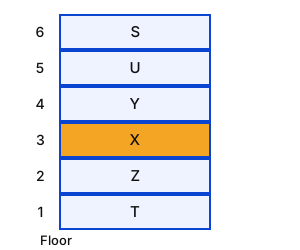
X, Y, Z, S, T and U live on six different floors of the same building. The lowermost floor in the building is numbered 1, the floor above it, number 2 and so on till the topmost floor is numbered 6. Only two people live between T and Y. Only S lives above U. Z lives on an even numbered floor. T lives on the lowermost floor. How many people live between X and T?
X, Y, Z, S, T और U एक ही भवन की छह अलग-अलग मंज़िलों पर रहते हैं। भवन की सबसे निचली मंज़िल की संख्या 1 है, उसके ऊपर की मंज़िल की संख्या 2 है और इसी प्रकार सबसे ऊपरी मंज़िल तक, जिसकी संख्या 6 है। T और Y के बीच केवल दो व्यक्ति रहते हैं। U के ऊपर केवल S रहता है। Z एक सम संख्या वाली मंज़िल पर रहता है। T सबसे निचली मंज़िल पर रहता है। X और T के बीच कितने व्यक्ति रहते हैं?
  1. AOneएक
  2. BThreeतीन
  3. CTwoदो
  4. DFourचार
Show answer

Concept: Start from the definite clue (T on floor 1) and place the rest.

  1. T = 1. Two people between T and Y → Y = 4.
  2. Only S lives above U → U = 5, S = 6.
  3. Z is on an even floor; only floor 2 is left among even floors → Z = 2, so X = 3.
  4. Between X (3) and T (1) there is one person, Z.

Trick: "Only S lives above U" always means U is second from top and S is on top.

Answer: (A) One

अवधारणा: निश्चित संकेत (T मंज़िल 1 पर) से शुरू करके बाकी को रखें।

  1. T = 1। T और Y के बीच दो लोग → Y = 4।
  2. U के ऊपर केवल S → U = 5, S = 6।
  3. Z सम मंज़िल पर; सम मंज़िलों में केवल 2 बची → Z = 2, अतः X = 3।
  4. X (3) और T (1) के बीच एक व्यक्ति, Z।

ट्रिक: "U के ऊपर केवल S रहता है" का अर्थ हमेशा U ऊपर से दूसरी और S सबसे ऊपर।

उत्तर: (A) One

RRB NTPC Graduate CBT 1General Intelligence and ReasoningFloor PuzzleRRB NTPC Graduate CBT 1 2025 · 24 Mar Shift 2 →
Q5476.
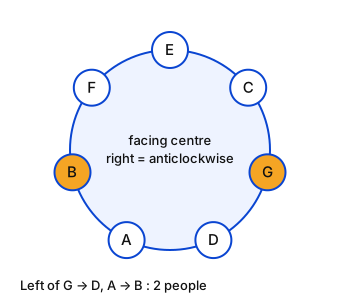
A, B, C, D, E, F and G sit around a circular table, facing the centre.
Only two people sit between G and F when counted from the right of G. Only three people sit between D and E when counted from the right of E. F sits to the immediate right of E. A sits to the immediate right of B.
How many people sit between B and G when counted from the left of G?
A, B, C, D, E, F और G एक वृत्ताकार मेज़ के चारों ओर केंद्र की ओर मुख करके बैठे हैं।
G के दाएँ से गिनने पर G और F के बीच केवल दो व्यक्ति बैठे हैं। E के दाएँ से गिनने पर D और E के बीच केवल तीन व्यक्ति बैठे हैं। F, E के ठीक दाएँ बैठा है। A, B के ठीक दाएँ बैठा है।
G के बाएँ से गिनने पर B और G के बीच कितने व्यक्ति बैठे हैं?
  1. A4
  2. B2
  3. C1
  4. D3
Show answer

Concept: When everyone faces the centre, "right" means anticlockwise and "left" means clockwise.

  1. Place E; F is immediate right (anticlockwise) of E. Three between D and E from the right of E: E → F → B/A/? … counting anticlockwise, D is the 4th seat from E.
  2. Two between G and F from the right of G: G is 3 seats clockwise from F, i.e. G sits two seats clockwise of E.
  3. Remaining three seats between F and D (anticlockwise) take B, A, with A immediate right of B; the seat between E and G goes to C. Order clockwise: E, C, G, D, A, B, F.
  4. From the left of G (clockwise): D, A, then B → 2 people.

Trick: Fix the direction rule first (right = anticlockwise) and place the pair with the most clues (E, F, D) before anything else.

Answer: (B) 2

अवधारणा: जब सभी केंद्र की ओर मुख किए हों, "दाएँ" = वामावर्त (anticlockwise) और "बाएँ" = दक्षिणावर्त (clockwise)।

  1. E रखें; F, E के ठीक दाएँ (वामावर्त)। E के दाएँ से D और E के बीच तीन लोग: वामावर्त गिनने पर D, E से चौथी सीट पर।
  2. G के दाएँ से G और F के बीच दो लोग: G, F से 3 सीट दक्षिणावर्त, यानी E से दो सीट दक्षिणावर्त।
  3. F और D के बीच (वामावर्त) बची तीन सीटों में B, A (A, B के ठीक दाएँ); E और G के बीच की सीट C को। दक्षिणावर्त क्रम: E, C, G, D, A, B, F।
  4. G के बाएँ से (दक्षिणावर्त): D, A, फिर B → 2 लोग।

ट्रिक: पहले दिशा नियम तय करें (दाएँ = वामावर्त) और सबसे अधिक संकेत वाले समूह (E, F, D) को सबसे पहले रखें।

उत्तर: (B) 2

RRB NTPC Graduate CBT 1General Intelligence and ReasoningCircular Seating ArrangementRRB NTPC Graduate CBT 1 2025 · 24 Mar Shift 2 →
Q5477.
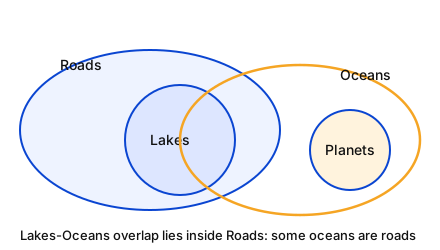
Read the given statements and conclusions carefully. You have to take the given statements to be true even if they seem to be at variance from commonly known facts. You have to decide which conclusion/s logically follow/s from the given statements. Statements: Some lakes are oceans. All planets are oceans. All lakes are roads. Conclusion (I): Some oceans are roads.
Conclusion (II): Some planets are lakes.
दिए गए कथनों और निष्कर्षों को ध्यानपूर्वक पढ़िए। आपको दिए गए कथनों को सत्य मानना है, भले ही वे सामान्यतः ज्ञात तथ्यों से भिन्न प्रतीत होते हों। आपको यह निर्णय करना है कि दिए गए कथनों से कौन-सा/कौन-से निष्कर्ष तार्किक रूप से अनुसरण करता है/करते हैं। कथन: कुछ झीलें महासागर हैं। सभी ग्रह महासागर हैं। सभी झीलें सड़कें हैं। निष्कर्ष (I): कुछ महासागर सड़कें हैं।
निष्कर्ष (II): कुछ ग्रह झीलें हैं।
  1. AOnly conclusion (I) followsकेवल निष्कर्ष (I) अनुसरण करता है
  2. BNeither conclusion (I) nor (II) followsन तो निष्कर्ष (I) और न ही (II) अनुसरण करता है
  3. COnly conclusion (II) followsकेवल निष्कर्ष (II) अनुसरण करता है
  4. DBoth conclusions (I) and (II) followनिष्कर्ष (I) और (II) दोनों अनुसरण करते हैं
Show answer

Concept: Draw lakes inside roads, lakes overlapping oceans, and planets inside oceans.

  1. Conclusion I "Some oceans are roads": the lakes that are oceans are also roads (all lakes are roads) → follows.
  2. Conclusion II "Some planets are lakes": planets and lakes are both inside oceans but need not touch each other → does not follow.

Trick: Some A are B + All A are C ⇒ Some B are C. Two subsets of the same set (planets, lakes in oceans) give no definite relation.

Answer: (A) Only conclusion (I) follows

अवधारणा: lakes को roads के अंदर, lakes को oceans से काटता हुआ, और planets को oceans के अंदर बनाएँ।

  1. निष्कर्ष I "कुछ oceans, roads हैं": जो lakes oceans हैं वे roads भी हैं (सभी lakes roads हैं) → अनुसरण करता है।
  2. निष्कर्ष II "कुछ planets, lakes हैं": planets और lakes दोनों oceans के अंदर हैं पर उनका एक-दूसरे को छूना ज़रूरी नहीं → अनुसरण नहीं करता।

ट्रिक: Some A are B + All A are C ⇒ Some B are C। एक ही समुच्चय के दो उपसमुच्चय (oceans में planets, lakes) कोई निश्चित संबंध नहीं देते।

उत्तर: (A) केवल निष्कर्ष (I) अनुसरण करता है

RRB NTPC Graduate CBT 1General Intelligence and ReasoningSyllogismRRB NTPC Graduate CBT 1 2025 · 24 Mar Shift 2 →
Q5478.
Which of the following is the most significant source of nutrient pollution leading to eutrophication in freshwater bodies?
निम्नलिखित में से कौन-सा स्रोत मीठे जल के निकायों में सुपोषण (eutrophication) का कारण बनने वाले पोषक प्रदूषण का सबसे महत्वपूर्ण स्रोत है?
  1. AIndustrial effluentsऔद्योगिक बहिःस्राव
  2. BAgricultural runoffकृषि अपवाह
  3. CSewage dischargeमल-जल निस्सारण
  4. DUrban stormwaterशहरी वर्षा-जल अपवाह
Show answer

Concept: Eutrophication is the over-enrichment of a water body with nutrients (mainly nitrogen and phosphorus) which causes algal blooms and oxygen depletion.

  1. The largest single source of these nutrients is agricultural runoff – fertilisers and animal manure washed from fields into rivers and lakes.
  2. Sewage, industrial effluents and urban stormwater also add nutrients, but worldwide their share is much smaller than the diffuse (non-point) runoff from farmland.

Yaad rakhein: Fertiliser = N + P → runoff → algal bloom → dead zone. Agriculture is the "non-point" culprit.

Answer: (B) Agricultural runoff

अवधारणा: सुपोषण (eutrophication) में जल-निकाय में पोषक तत्वों (मुख्यतः नाइट्रोजन और फॉस्फोरस) की अधिकता से शैवाल प्रस्फुटन (algal bloom) और ऑक्सीजन की कमी होती है।

  1. इन पोषक तत्वों का सबसे बड़ा स्रोत कृषि अपवाह (agricultural runoff) है – खेतों से बहकर आने वाले उर्वरक और पशु-खाद।
  2. सीवेज, औद्योगिक अपशिष्ट और शहरी वर्षा-जल भी पोषक तत्व जोड़ते हैं, पर विश्व स्तर पर इनका हिस्सा खेतों के फैले हुए (non-point) अपवाह से काफी कम है।

याद रखें: उर्वरक = N + P → अपवाह → शैवाल प्रस्फुटन → मृत क्षेत्र। कृषि ही "non-point" स्रोत है।

उत्तर: (B) Agricultural runoff (कृषि अपवाह)

RRB NTPC Graduate CBT 1General AwarenessEutrophicationRRB NTPC Graduate CBT 1 2025 · 24 Mar Shift 1 →
Q5479.
Which award is recognized as the highest honour in Indian cinema, presented to Mohanlal in September 2025?
किस पुरस्कार को भारतीय सिनेमा का सर्वोच्च सम्मान माना जाता है, जो सितंबर 2025 में मोहनलाल को प्रदान किया गया?
  1. ANational Award for Best Actorसर्वश्रेष्ठ अभिनेता का राष्ट्रीय पुरस्कार
  2. BPadma Bhushanपद्म भूषण
  3. CDadasaheb Phalke Awardदादासाहेब फाल्के पुरस्कार
  4. DFilmfare Lifetime Achievement Awardफिल्मफेयर लाइफटाइम अचीवमेंट पुरस्कार
Show answer

Concept: The Dadasaheb Phalke Award, given by the Government of India at the National Film Awards, is the country's highest honour in cinema.

  1. Malayalam superstar Mohanlal received the Dadasaheb Phalke Award (for the year 2023) from the President at the 71st National Film Awards ceremony on 23 September 2025.
  2. Padma Bhushan is a civilian honour, not a cinema award; the Best Actor National Award and Filmfare awards rank below the Phalke award.

Yaad rakhein: Phalke = "Father of Indian cinema" → award named after him = highest film honour (first winner Devika Rani, 1969).

Answer: (C) Dadasaheb Phalke Award

अवधारणा: दादासाहेब फाल्के पुरस्कार, जो भारत सरकार राष्ट्रीय फिल्म पुरस्कार समारोह में देती है, भारतीय सिनेमा का सर्वोच्च सम्मान है।

  1. मलयालम सुपरस्टार मोहनलाल को 23 सितंबर 2025 को 71वें राष्ट्रीय फिल्म पुरस्कार समारोह में राष्ट्रपति द्वारा दादासाहेब फाल्के पुरस्कार (वर्ष 2023 के लिए) प्रदान किया गया।
  2. पद्म भूषण एक नागरिक सम्मान है, सिनेमा पुरस्कार नहीं; सर्वश्रेष्ठ अभिनेता का राष्ट्रीय पुरस्कार और फिल्मफेयर पुरस्कार फाल्के पुरस्कार से नीचे हैं।

याद रखें: फाल्के = "भारतीय सिनेमा के जनक" → उनके नाम का पुरस्कार = सर्वोच्च फिल्म सम्मान (पहली विजेता देविका रानी, 1969)।

उत्तर: (C) Dadasaheb Phalke Award (दादासाहेब फाल्के पुरस्कार)

RRB NTPC Graduate CBT 1General AwarenessAwards – CinemaRRB NTPC Graduate CBT 1 2025 · 24 Mar Shift 1 →
Q5480.
Which of the following processes is/are primarily responsible for the formation of fold mountains such as the Himalayas?
निम्नलिखित में से कौन-सी प्रक्रिया(एँ) हिमालय जैसे वलित पर्वतों के निर्माण के लिए मुख्य रूप से उत्तरदायी है/हैं?
  1. AWind depositionपवन निक्षेपण
  2. BErosion by riversनदियों द्वारा अपरदन
  3. CPlate collisionप्लेटों की टक्कर
  4. DVolcanic eruptionsज्वालामुखी विस्फोट
Show answer

Concept: Fold mountains form when two tectonic plates converge and the sedimentary layers between them are squeezed and folded upwards.

  1. The Himalayas rose when the Indian Plate collided with the Eurasian Plate (about 50 million years ago), folding the sediments of the Tethys Sea.
  2. Volcanic eruptions build volcanic mountains (e.g. Fuji), while wind deposition and river erosion are surface processes – they shape, not create, fold mountains.

Yaad rakhein: Collision → Fold (Himalaya, Alps, Andes); Faulting → Block (Vosges, Vindhya); Eruption → Volcanic.

Answer: (C) Plate collision

अवधारणा: वलित पर्वत (fold mountains) तब बनते हैं जब दो टेक्टोनिक प्लेटें आपस में टकराती हैं और बीच की अवसादी परतें दबकर ऊपर की ओर मुड़ जाती हैं।

  1. हिमालय भारतीय प्लेट के यूरेशियन प्लेट से टकराने (लगभग 5 करोड़ वर्ष पहले) से टेथिस सागर के अवसादों के वलन से बना।
  2. ज्वालामुखी विस्फोट से ज्वालामुखी पर्वत (जैसे फ़ूजी) बनते हैं; पवन निक्षेपण और नदी अपरदन सतही प्रक्रियाएँ हैं – ये पर्वतों को आकार देती हैं, बनाती नहीं।

याद रखें: टक्कर → वलित (हिमालय, आल्प्स, एंडीज़); भ्रंश → ब्लॉक (वॉस्जेस, विंध्य); विस्फोट → ज्वालामुखी।

उत्तर: (C) Plate collision (प्लेट टक्कर)

RRB NTPC Graduate CBT 1General AwarenessFold MountainsRRB NTPC Graduate CBT 1 2025 · 24 Mar Shift 1 →