Question bank

Q&A: practice questions with answers

Search questions on any topic. Filter by exam category, exam, subject and topic, try the question, then open the answer and explanation.

Courses – airGurukul

7,077 questions found.

Q5541.
Girish scored 424 marks in an examination and was 13 marks short of 19% of the maximum marks. In the same examination, his friend scored 529 marks. What is the percentage of marks scored by his friend?
गिरीश ने एक परीक्षा में 424 अंक प्राप्त किए और वह अधिकतम अंकों के 19% से 13 अंक कम रहा। उसी परीक्षा में, उसके मित्र ने 529 अंक प्राप्त किए। उसके मित्र द्वारा प्राप्त अंकों का प्रतिशत क्या है?
  1. A26%
  2. B22%
  3. C23%
  4. D25%
Show answer

Concept: First find the maximum marks from Girish's data, then convert the friend's marks to a percentage.

  1. 19% of maximum =424+13=437.
  2. Maximum marks =43719×100=23×100=2300.
  3. Friend's percentage =5292300×100=23%.

Trick: 437=19×23 and 529=232 – once max =2300, 529 is 23% by inspection.

Answer: (C) 23%

अवधारणा: पहले गिरीश के आँकड़ों से अधिकतम अंक निकालिए, फिर मित्र के अंकों को प्रतिशत में बदलिए।

  1. अधिकतम का 19%=424+13=437।
  2. अधिकतम अंक =43719×100=23×100=2300।
  3. मित्र का प्रतिशत =5292300×100=23%।

ट्रिक: 437=19×23 और 529=232 – अधिकतम =2300 मिलते ही 529 सीधे 23% दिखता है।

उत्तर: (C) 23%

RRB NTPC Graduate CBT 1MathematicsPercentageRRB NTPC Graduate CBT 1 2025 · 24 Mar Shift 1 →
Q5542.
Two numbers A and B are such that the sum of 10% of A and 20% of B is equal to three- fourths the sum of 20% of A and 10% of B. Find the ratio of A to B.
दो संख्याएँ A और B ऐसी हैं कि A के 10% और B के 20% का योग, A के 20% और B के 10% के योग के तीन-चौथाई के बराबर है। A और B का अनुपात ज्ञात कीजिए।
  1. A2 : 5
  2. B5 : 3
  3. C5 : 2
  4. D3 : 5
Show answer

Concept: Translate the sentence into an equation and collect A and B terms.

  1. 10A100+20B100=34(20A100+10B100).
  2. Multiply by 100 and by 4: 40A+80B=60A+30B.
  3. 50B=20A⇒AB=5020=52, i.e. A:B=5:2.

Trick: Work with A+2B=34(2A+B) (cancel the 10%) → 4A+8B=6A+3B → 5B=2A.

Answer: (C) 5 : 2

अवधारणा: वाक्य को समीकरण में बदलिए और A व B के पद एक ओर कीजिए।

  1. 10A100+20B100=34(20A100+10B100)।
  2. 100 और 4 से गुणा करें: 40A+80B=60A+30B।
  3. 50B=20A⇒AB=5020=52, अर्थात A:B=5:2।

ट्रिक: 10% काटकर A+2B=34(2A+B) लें → 4A+8B=6A+3B → 5B=2A।

उत्तर: (C) 5 : 2

RRB NTPC Graduate CBT 1MathematicsPercentage – ratio of two numbersRRB NTPC Graduate CBT 1 2025 · 24 Mar Shift 1 →
Q5543.
P, Q and R, each working alone, can complete a piece of work in, respectively, 10 days, 15 days and 25 days. If P works on all days, Q works on every odd-numbered day and R works on every even-numbered day, then in how many days will the whole work be completed?
P, Q और R, प्रत्येक अकेले कार्य करते हुए, किसी कार्य को क्रमशः 10 दिन, 15 दिन और 25 दिन में पूरा कर सकते हैं। यदि P सभी दिनों में कार्य करता है, Q प्रत्येक विषम संख्या वाले दिन कार्य करता है और R प्रत्येक सम संख्या वाले दिन कार्य करता है, तो पूरा कार्य कितने दिनों में पूरा होगा?
  1. A101125
  2. B12325
  3. C8925
  4. D61225
Show answer

Concept: Take total work =LCM(10,15,25)=150 units; work in units/day, then use 2-day cycles.

  1. P =15, Q =10, R =6 units/day.
  2. Odd day (P+Q) =25 units; even day (P+R) =21 units; one 2-day cycle =46 units.
  3. 3 cycles (6 days) =138 units; remaining =12 units.
  4. Day 7 is odd (25 units/day): time =1225 day. Total =61225 days.

Trick: Always stop the cycle count just below the total (138 < 150), then check which worker-pair is on duty for the leftover.

Answer: (D) 61225

अवधारणा: कुल कार्य =LCM(10,15,25)=150 इकाई लीजिए; इकाई/दिन में काम निकालकर 2-दिन के चक्र बनाइए।

  1. P =15, Q =10, R =6 इकाई/दिन।
  2. विषम दिन (P+Q) =25 इकाई; सम दिन (P+R) =21 इकाई; एक 2-दिन चक्र =46 इकाई।
  3. 3 चक्र (6 दिन) =138 इकाई; शेष =12 इकाई।
  4. 7वाँ दिन विषम (25 इकाई/दिन): समय =1225 दिन। कुल =61225 दिन।

ट्रिक: चक्र गिनती कुल से ठीक नीचे (138 < 150) रोकिए, फिर देखिए शेष काम के दिन कौन-सी जोड़ी काम पर है।

उत्तर: (D) 61225

RRB NTPC Graduate CBT 1MathematicsTime and work – alternate daysRRB NTPC Graduate CBT 1 2025 · 24 Mar Shift 1 →
Q5544.
Evaluate: 16 + 20 ÷ 4 - 2 × 3
मान ज्ञात कीजिए: 16 + 20 ÷ 4 - 2 × 3
  1. A18
  2. B17
  3. C14
  4. D15
Show answer

Concept: Division and multiplication first (left to right), then addition and subtraction.

  1. 20÷4=5; 2×3=6.
  2. 16+5−6=15.

Trick: Doing 16+20=36 first gives wrong answers – circle the ÷ and × parts before touching +/−.

Answer: (D) 15

अवधारणा: पहले भाग और गुणा (बाएँ से दाएँ), फिर जोड़ और घटाव।

  1. 20÷4=5; 2×3=6।
  2. 16+5−6=15।

ट्रिक: पहले 16+20=36 करने से गलत उत्तर आता है – +/− छूने से पहले ÷ और × वाले भागों पर घेरा लगाइए।

उत्तर: (D) 15

RRB NTPC Graduate CBT 1MathematicsSimplification – BODMASRRB NTPC Graduate CBT 1 2025 · 24 Mar Shift 1 →
Q5545.
Two trains move in opposite directions at 90 km/hr and 70 km/hr. One train is 480 m long. If they cross each other in 27 seconds, find the length of the other train (in metres).
दो ट्रेनें विपरीत दिशाओं में 90 km/hr और 70 km/hr की चाल से चलती हैं। एक ट्रेन 480 m लंबी है। यदि वे एक-दूसरे को 27 सेकंड में पार करती हैं, तो दूसरी ट्रेन की लंबाई (मीटर में) ज्ञात कीजिए।
  1. A735
  2. B725
  3. C730
  4. D720
Show answer

Concept: Opposite directions → relative speed = sum of speeds; distance covered while crossing = sum of lengths.

  1. Relative speed =90+70=160km/h=160×518=4009m/s.
  2. Sum of lengths =4009×27=1200 m.
  3. Other train =1200−480=720 m.

Trick: 160km/h×27s: 160×27=4320, ×518=1200. Keep 518 for the end to avoid fractions.

Answer: (D) 720

अवधारणा: विपरीत दिशा → सापेक्ष चाल = चालों का योग; पार करते समय तय दूरी = लंबाइयों का योग।

  1. सापेक्ष चाल =90+70=160km/h=160×518=4009m/s।
  2. लंबाइयों का योग =4009×27=1200 m।
  3. दूसरी रेलगाड़ी =1200−480=720 m।

ट्रिक: 160km/h×27s: 160×27=4320, ×518=1200। भिन्न से बचने के लिए 518 अंत में लगाइए।

उत्तर: (D) 720

RRB NTPC Graduate CBT 1MathematicsTrains – opposite directionsRRB NTPC Graduate CBT 1 2025 · 24 Mar Shift 1 →
Q5546.
What should come in place of ‘?’ in the given series?
13 15 18 23 30 ?
दी गई श्रेणी में ‘?’ के स्थान पर क्या आना चाहिए?
13 15 18 23 30 ?
  1. A38
  2. B33
  3. C41
  4. D36
Show answer

Concept: Look at the differences – here they are consecutive prime numbers.

  1. 15−13=2, 18−15=3, 23−18=5, 30−23=7.
  2. Differences 2,3,5,7 → next prime 11.
  3. ?=30+11=41.

Trick: If the differences are not squares or an AP, test primes 2,3,5,7,11,13 – a favourite RRB pattern.

Answer: (C) 41

अवधारणा: अंतर देखिए – यहाँ वे क्रमागत अभाज्य संख्याएँ हैं।

  1. 15−13=2, 18−15=3, 23−18=5, 30−23=7।
  2. अंतर 2,3,5,7 → अगला अभाज्य 11।
  3. ?=30+11=41।

ट्रिक: अंतर वर्ग या AP न हों तो अभाज्य 2,3,5,7,11,13 जाँचिए – RRB का पसंदीदा पैटर्न।

उत्तर: (C) 41

RRB NTPC Graduate CBT 1MathematicsNumber seriesRRB NTPC Graduate CBT 1 2025 · 24 Mar Shift 1 →
Q5547.
Two taps can fill a cistern in 2 hours and 57 hours respectively. A third tap can empty it in 57 hours. How long (in hours) will it take to fill half of the empty cistern, if all of them are opened together?
दो नल एक टंकी को क्रमशः 2 घंटे और 57 घंटे में भर सकते हैं। एक तीसरा नल इसे 57 घंटे में खाली कर सकता है। यदि इन सभी को एक साथ खोल दिया जाए, तो खाली टंकी का आधा भाग भरने में कितना समय (घंटों में) लगेगा?
  1. A3
  2. B4
  3. C1
  4. D2
Show answer

Concept: Add filling rates and subtract the emptying rate (work per hour).

  1. Net rate =12+157−157=12 of the cistern per hour.
  2. Full cistern takes 2 hours; half the cistern takes 12×2=1 hour.

Trick: The 57-hour inlet and 57-hour outlet cancel exactly – only the 2-hour tap matters. Read numbers before calculating.

Answer: (C) 1

अवधारणा: भरने की दरें जोड़िए और खाली करने की दर घटाइए (प्रति घंटा कार्य)।

  1. शुद्ध दर =12+157−157=12 टंकी प्रति घंटा।
  2. पूरी टंकी 2 घंटे में; आधी टंकी 12×2=1 घंटे में।

ट्रिक: 57 घंटे वाला इनलेट और 57 घंटे वाला आउटलेट एक-दूसरे को काट देते हैं – केवल 2 घंटे वाला नल मायने रखता है। गणना से पहले संख्याएँ पढ़िए।

उत्तर: (C) 1

RRB NTPC Graduate CBT 1MathematicsPipes and cisternsRRB NTPC Graduate CBT 1 2025 · 24 Mar Shift 1 →
Q5548.
A and B invest in a business in the ratio 3 : 2. If they earn a total profit of ₹25,000, then how much profit does B receive?
A और B एक व्यापार में 3 : 2 के अनुपात में निवेश करते हैं। यदि वे कुल ₹25,000 का लाभ अर्जित करते हैं, तो B को कितना लाभ प्राप्त होता है?
  1. A₹12,000
  2. B₹5,000
  3. C₹10,000
  4. D₹15,000
Show answer

Concept: With equal time periods, profit is shared in the ratio of investments.

  1. Profit ratio A : B =3:2; total parts =5.
  2. B's share =25×25000=10000.

Trick: Each part =25000÷5=5000 → A gets 3 parts (₹15,000), B gets 2 parts (₹10,000). Don't pick A's share by mistake.

Answer: (C) ₹10,000

अवधारणा: समान अवधि होने पर लाभ निवेश के अनुपात में बँटता है।

  1. लाभ अनुपात A : B =3:2; कुल भाग =5।
  2. B का हिस्सा =25×25000=10000।

ट्रिक: एक भाग =25000÷5=5000 → A को 3 भाग (₹15,000), B को 2 भाग (₹10,000)। गलती से A का हिस्सा न चुनें।

उत्तर: (C) ₹10,000

RRB NTPC Graduate CBT 1MathematicsPartnershipRRB NTPC Graduate CBT 1 2025 · 24 Mar Shift 1 →
Q5549.
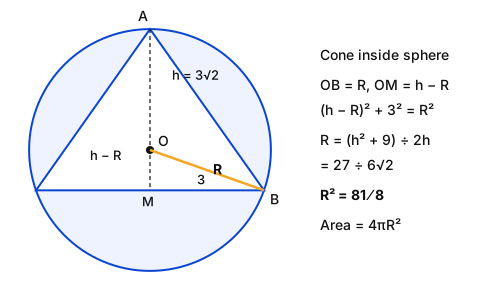
A sphere inscribes a cone of radius 3 cm and height 32 cm. Find the surface area (in cm2) of the sphere. [Use π=227]
एक गोला, 3 cm त्रिज्या और 32 cm ऊँचाई वाले एक शंकु के अंतर्गत है (शंकु में अंतर्लिखित है)। गोले का पृष्ठीय क्षेत्रफल (cm2 में) ज्ञात कीजिए। [π=227 का प्रयोग कीजिए]
  1. A1417
  2. B12727
  3. C4213
  4. D8623
Show answer

Concept: The sphere encloses the cone: the apex and the rim of the base lie on the sphere. In the cross-section, the sphere's centre O is on the axis and OB=R.

  1. Radius r=3, height h=32. Centre O is at distance h−R from the base centre M.
  2. In right triangle OMB: (h−R)2+r2=R2⇒h2−2hR+r2=0.
  3. R=h2+r22h=18+962=2762=922, so R2=818.
  4. Surface area =4πR2=4×227×818=8917=12727cm2.

Trick: For a cone (or cylinder) inside a sphere: R=h2+r22h. Here R≈3.18>3 confirms the sphere is the outer solid.

Answer: (B) 12727

अवधारणा: गोला शंकु को घेरे हुए है: शीर्ष और आधार का किनारा गोले पर हैं। अनुप्रस्थ काट में गोले का केंद्र O अक्ष पर है और OB=R।

  1. त्रिज्या r=3, ऊँचाई h=32। केंद्र O आधार-केंद्र M से h−R दूरी पर।
  2. समकोण त्रिभुज OMB में: (h−R)2+r2=R2⇒h2−2hR+r2=0।
  3. R=h2+r22h=18+962=2762=922, अतः R2=818।
  4. पृष्ठीय क्षेत्रफल =4πR2=4×227×818=8917=12727cm2।

ट्रिक: गोले के अंदर शंकु (या बेलन) के लिए: R=h2+r22h। यहाँ R≈3.18>3 पुष्टि करता है कि गोला बाहरी ठोस है।

उत्तर: (B) 12727

RRB NTPC Graduate CBT 1MathematicsMensuration – cone in a sphereRRB NTPC Graduate CBT 1 2025 · 24 Mar Shift 1 →
Q5550.
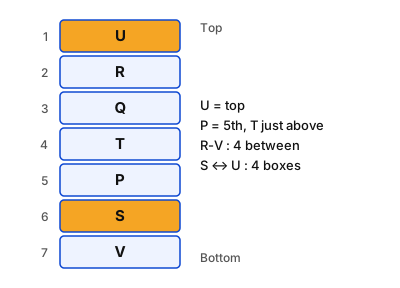
Seven boxes P, Q, R, S, T, U and V are kept one over the other but not necessarily in the same order.
No box is kept above U. Only three boxes are kept between U and P. Only one box is kept between R and T. T is kept immediately above P. Only four boxes are kept between R and V. Q is kept at some place above S.
How many boxes are kept between S and U?
सात बक्से P, Q, R, S, T, U और V एक के ऊपर एक रखे गए हैं, परंतु आवश्यक नहीं कि इसी क्रम में हों।
U के ऊपर कोई बक्सा नहीं रखा है। U और P के बीच केवल तीन बक्से रखे हैं। R और T के बीच केवल एक बक्सा रखा है। T, P के ठीक ऊपर रखा है। R और V के बीच केवल चार बक्से रखे हैं। Q, S के ऊपर किसी स्थान पर रखा है।
S और U के बीच कितने बक्से रखे हैं?
  1. A3
  2. B2
  3. C4
  4. D1
Show answer

Concept: Fix the box whose position is certain (U at the top), then place the others by counting gaps.

  1. No box above U → U is at position 1 (top). Three boxes between U and P → P is 5th.
  2. T is immediately above P → T is 4th. One box between R and T → R is 2nd or 6th.
  3. Four boxes between R and V → R = 2nd, V = 7th (R = 6th would need V at position 1, which is U).
  4. Q is above S, so Q = 3rd and S = 6th. Final stack (top to bottom): U, R, Q, T, P, S, V.
  5. Between S (6th) and U (1st) lie R, Q, T, P → 4 boxes.

Trick: "Only n boxes between X and Y" means the positions differ by n + 1; start from the box with a fixed end position.

Answer: (C) 4

अवधारणा: जिस बॉक्स की स्थिति निश्चित हो (U सबसे ऊपर) उसे पहले रखें, फिर बीच के बॉक्स गिनकर बाकी रखें।

  1. U के ऊपर कोई बॉक्स नहीं → U स्थान 1 (सबसे ऊपर)। U और P के बीच तीन बॉक्स → P 5वाँ।
  2. T, P के ठीक ऊपर → T 4था। R और T के बीच एक बॉक्स → R 2रा या 6ठा।
  3. R और V के बीच चार बॉक्स → R = 2रा, V = 7वाँ (R = 6ठा होने पर V को स्थान 1 चाहिए, जो U का है)।
  4. Q, S से ऊपर है, अतः Q = 3रा, S = 6ठा। अंतिम क्रम (ऊपर से नीचे): U, R, Q, T, P, S, V।
  5. S (6ठा) और U (1ला) के बीच R, Q, T, P → 4 बॉक्स।

ट्रिक: "X और Y के बीच केवल n बॉक्स" का अर्थ है स्थानों का अंतर n + 1; जिस बॉक्स का सिरा तय हो, वहीं से शुरू करें।

उत्तर: (C) 4

RRB NTPC Graduate CBT 1General Intelligence and ReasoningBox ArrangementRRB NTPC Graduate CBT 1 2025 · 24 Mar Shift 1 →
Q5551.
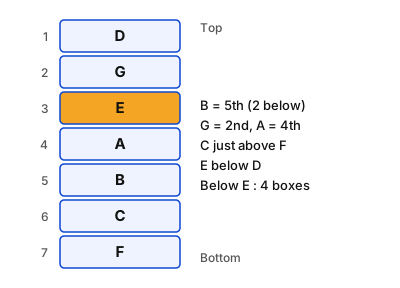
Seven boxes, A, B, C, D, E, F and G, are kept one over the other but not necessarily in the same order.
Only two boxes are kept below B. Only one box is kept above G. Only one box is kept between G and A. C is kept immediately above F. E is kept at some place below D. How many boxes are kept below E?
सात बक्से, A, B, C, D, E, F और G, एक के ऊपर एक रखे गए हैं, परंतु आवश्यक नहीं कि इसी क्रम में हों।
B के नीचे केवल दो बक्से रखे हैं। G के ऊपर केवल एक बक्सा रखा है। G और A के बीच केवल एक बक्सा रखा है। C, F के ठीक ऊपर रखा है। E, D के नीचे किसी स्थान पर रखा है। E के नीचे कितने बक्से रखे हैं?
  1. A5
  2. B2
  3. C4
  4. D3
Show answer

Concept: Count positions from the top (1 = top, 7 = bottom) and fill the fixed boxes first.

  1. Two boxes below B → B is 5th. One box above G → G is 2nd.
  2. One box between G and A → A is 4th (position 0 does not exist).
  3. Vacant places: 1, 3, 6, 7. C immediately above F needs two consecutive places → C = 6th, F = 7th.
  4. D and E take 1 and 3; E is below D → D = 1st, E = 3rd. Stack: D, G, E, A, B, C, F.
  5. Below E are A, B, C, F → 4 boxes.

Trick: After fixing the definite boxes, look for the only pair of adjacent empty slots – that is where the "immediately above" pair goes.

Answer: (C) 4

अवधारणा: ऊपर से स्थान गिनें (1 = सबसे ऊपर, 7 = सबसे नीचे) और पहले निश्चित बॉक्स भरें।

  1. B के नीचे दो बॉक्स → B 5वाँ। G के ऊपर एक बॉक्स → G 2रा।
  2. G और A के बीच एक बॉक्स → A 4था (स्थान 0 संभव नहीं)।
  3. खाली स्थान: 1, 3, 6, 7। C, F के ठीक ऊपर – इसके लिए दो लगातार स्थान चाहिए → C = 6ठा, F = 7वाँ।
  4. D और E स्थान 1 और 3 पर; E, D से नीचे → D = 1ला, E = 3रा। क्रम: D, G, E, A, B, C, F।
  5. E के नीचे A, B, C, F → 4 बॉक्स।

ट्रिक: निश्चित बॉक्स रखने के बाद लगातार दो खाली स्थानों की इकलौती जोड़ी ढूँढें – "ठीक ऊपर" वाली जोड़ी वहीं जाएगी।

उत्तर: (C) 4

RRB NTPC Graduate CBT 1General Intelligence and ReasoningBox ArrangementRRB NTPC Graduate CBT 1 2025 · 24 Mar Shift 1 →
Q5552.
​Read the given statements and conclusions carefully. Assuming that the information given in the statements is true, even if it appears to be at variance with commonly known facts, decide which of the given conclusions logically follow(s) from the statements.
Statements:
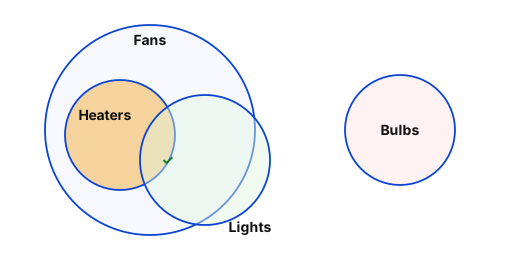
All heaters are fans. Some heaters are lights. No heater is a bulb.
Conclusions:
(I) Some fans are lights.
(II) No bulb is a heater.
दिए गए कथनों और निष्कर्षों को ध्यानपूर्वक पढ़िए। यह मानते हुए कि कथनों में दी गई जानकारी सत्य है, भले ही वह सामान्यतः ज्ञात तथ्यों से भिन्न प्रतीत होती हो, निर्धारित कीजिए कि दिए गए निष्कर्षों में से कौन-सा/कौन-से निष्कर्ष कथनों का तार्किक रूप से अनुसरण करता है/करते हैं।
कथन:
सभी हीटर, फैन हैं। कुछ हीटर, लाइट हैं। कोई हीटर, बल्ब नहीं है।
निष्कर्ष:
(I) कुछ फैन, लाइट हैं।
(II) कोई बल्ब, हीटर नहीं है।
  1. ANeither conclusion (I) nor (II) followsन तो निष्कर्ष (I) और न ही (II) अनुसरण करता है
  2. BOnly conclusion (I) followsकेवल निष्कर्ष (I) अनुसरण करता है
  3. CBoth conclusions (I) and (II) followनिष्कर्ष (I) और (II) दोनों अनुसरण करते हैं
  4. DOnly conclusion (II) followsकेवल निष्कर्ष (II) अनुसरण करता है
Show answer

Concept: Draw the Venn diagram: "All heaters are fans" puts the Heater circle inside Fans; "Some heaters are lights" makes Lights overlap Heaters; "No heater is a bulb" keeps Bulbs apart from Heaters.

  1. Conclusion I: the heaters that are lights lie inside Fans too, so some fans are definitely lights → follows.
  2. Conclusion II: "No heater is a bulb" can always be reversed to "No bulb is a heater" → follows.

Yaad rakhein: All A are B + Some A are C ⇒ Some B are C (definite). "No A is B" ⇔ "No B is A".

Answer: (C) Both conclusions (I) and (II) follow

अवधारणा: वेन आरेख बनाएँ: "सभी heaters, fans हैं" → Heater का वृत्त Fans के अंदर; "कुछ heaters, lights हैं" → Lights, Heaters को काटता है; "कोई heater, bulb नहीं" → Bulbs, Heaters से अलग।

  1. निष्कर्ष I: जो heaters, lights हैं वे Fans के अंदर भी हैं, अतः कुछ fans निश्चित रूप से lights हैं → अनुसरण करता है।
  2. निष्कर्ष II: "कोई heater, bulb नहीं" को सदैव उलटा जा सकता है – "कोई bulb, heater नहीं" → अनुसरण करता है।

याद रखें: All A are B + Some A are C ⇒ Some B are C (निश्चित)। "No A is B" ⇔ "No B is A"।

उत्तर: (C) दोनों निष्कर्ष (I) और (II) अनुसरण करते हैं

RRB NTPC Graduate CBT 1General Intelligence and ReasoningSyllogismRRB NTPC Graduate CBT 1 2025 · 24 Mar Shift 1 →
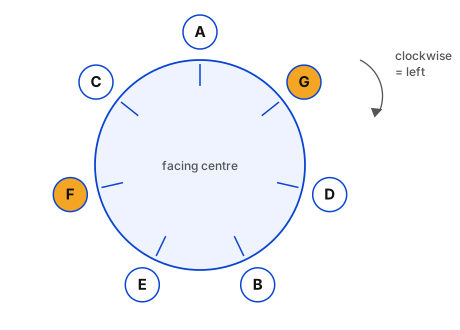
Q5553.
A, B, C, D, E, F and G are sitting around a circular table facing the centre. Only one person sits between G and C when counted from the left of C. E sits third to the right of A. F sits third to the left of D. E sits to the
immediate right of F. B is not an immediate neighbour of F. Who sits third to the right of G?
A, B, C, D, E, F और G एक वृत्ताकार मेज़ के चारों ओर केंद्र की ओर मुख करके बैठे हैं। C के बाईं ओर से गिनने पर G और C के बीच केवल एक व्यक्ति बैठा है। E, A के दाईं ओर तीसरे स्थान पर बैठा है। F, D के बाईं ओर तीसरे स्थान पर बैठा है। E, F के
ठीक दाईं ओर बैठा है। B, F का निकटतम पड़ोसी नहीं है। G के दाईं ओर तीसरे स्थान पर कौन बैठा है?
  1. AF
  2. BB
  3. CD
  4. DE
Show answer

Concept: For people facing the centre, "left" is clockwise and "right" is anticlockwise. Start with the pair whose relative position is fixed.

  1. E is immediately right of F, and F is third to the left of D → going clockwise: D … F with two seats between, E just anticlockwise of F.
  2. E is third to the right of A → A is third to the left (clockwise) of E; this places A two seats clockwise after F.
  3. Only one person between G and C counting from the left of C → G is 2nd clockwise from C. The only arrangement that fits all this (clockwise): A, G, D, B, E, F, C.
  4. Check: B's neighbours are D and E, not F ✓. Third to the right (anticlockwise) of G: A, C, F → F.

Trick: Facing centre → right = anticlockwise. Put the two "immediate" clues on the circle first, then test the "third to…" clues.

Answer: (A) F

अवधारणा: केंद्र की ओर मुख वाले लोगों के लिए "बायाँ" = दक्षिणावर्त (clockwise) और "दायाँ" = वामावर्त। जिस जोड़ी की सापेक्ष स्थिति तय हो, उससे शुरू करें।

  1. E, F के ठीक दाएँ है और F, D के बाएँ तीसरा → दक्षिणावर्त: D … F के बीच दो सीटें, E, F से ठीक वामावर्त।
  2. E, A के दाएँ तीसरा → A, E के बाएँ (दक्षिणावर्त) तीसरा; इससे A, F के बाद दो सीट दक्षिणावर्त आता है।
  3. C के बाएँ से गिनने पर G और C के बीच केवल एक व्यक्ति → G, C से दक्षिणावर्त दूसरा। सभी शर्तें पूरी करने वाला एकमात्र क्रम (दक्षिणावर्त): A, G, D, B, E, F, C।
  4. जाँच: B के पड़ोसी D और E हैं, F नहीं ✓। G के दाएँ (वामावर्त) तीसरा: A, C, F → F।

ट्रिक: केंद्र की ओर मुख → दायाँ = वामावर्त। पहले "ठीक बगल" वाले संकेत वृत्त पर रखें, फिर "तीसरा…" वाले संकेत जाँचें।

उत्तर: (A) F

RRB NTPC Graduate CBT 1General Intelligence and ReasoningCircular SeatingRRB NTPC Graduate CBT 1 2025 · 24 Mar Shift 1 →
Q5554.
Which of the following letter-clusters should replace # and % so that the pattern and relationship followed between the letter-cluster pair on the left side of :: is the same as that on the right side of :: ?
# : ZVT :: JFD : %
निम्नलिखित में से किन अक्षर-समूहों को # और % के स्थान पर रखा जाना चाहिए ताकि :: के बाईं ओर के अक्षर-समूह युग्म के बीच जो पैटर्न और संबंध है, वही :: के दाईं ओर भी हो?
# : ZVT :: JFD : %
  1. A# = WTR , % = LKH
  2. B# = XSR , % = LJG
  3. C# = XUR , % = MJL
  4. D# = WSQ , % = MIG
Show answer

Concept: Both unknowns must follow one rule; test each option's # against ZVT and apply the same rule to JFD.

  1. Option (D): # = WSQ. W + 3 = Z, S + 3 = V, Q + 3 = T → each letter moves +3 to give ZVT ✓.
  2. Apply +3 to JFD: J + 3 = M, F + 3 = I, D + 3 = G → MIG, which matches % in option (D).
  3. Other options fail: e.g. (A) WTR → +3, +2, +2 (not uniform); (B) XSR → +2, +3, +2.

Trick: Write place values (W=23, S=19, Q=17 → Z=26, V=22, T=20); a constant gap confirms the rule instantly.

Answer: (D) # = WSQ, % = MIG

अवधारणा: दोनों अज्ञात एक ही नियम से बनने चाहिए; हर विकल्प के # को ZVT से जाँचें और वही नियम JFD पर लगाएँ।

  1. विकल्प (D): # = WSQ। W + 3 = Z, S + 3 = V, Q + 3 = T → हर अक्षर +3 से ZVT बनता है ✓।
  2. JFD पर +3: J + 3 = M, F + 3 = I, D + 3 = G → MIG, जो विकल्प (D) के % से मेल खाता है।
  3. बाकी विकल्प असफल: जैसे (A) WTR → +3, +2, +2 (एकसमान नहीं); (B) XSR → +2, +3, +2।

ट्रिक: स्थान-मान लिखें (W=23, S=19, Q=17 → Z=26, V=22, T=20); समान अंतर से नियम तुरंत पक्का हो जाता है।

उत्तर: (D) # = WSQ, % = MIG

RRB NTPC Graduate CBT 1General Intelligence and ReasoningLetter AnalogyRRB NTPC Graduate CBT 1 2025 · 24 Mar Shift 1 →
Q5555.
Which of the following letter-clusters should replace # and % so that the pattern and relationship followed between the letter-cluster pair on the left side of :: is the same as that on the right side of :: ?
# : NXF :: KUC : %
निम्नलिखित में से किन अक्षर-समूहों को # और % के स्थान पर रखा जाना चाहिए ताकि :: के बाईं ओर के अक्षर-समूह युग्म के बीच जो पैटर्न और संबंध है, वही :: के दाईं ओर भी हो?
# : NXF :: KUC : %
  1. A# = FIX % = SCK
  2. B# = FPX % = SCO
  3. C# = FPX % = SCK
  4. D# = EPX % = SCK
Show answer

Concept: Find the shift that converts # into NXF, then apply the same shift to KUC (the alphabet wraps after Z).

  1. Try # = FPX (options B, C): F + 8 = N, P + 8 = X, X + 8 → 24 + 8 = 32 → 32 − 26 = 6 = F ✓. So the rule is +8 on each letter.
  2. KUC + 8: K(11) + 8 = S(19); U(21) + 8 = 29 → 3 = C; C(3) + 8 = K(11) → SCK.
  3. Option (B) gives SCO (wrong third letter); option (D) EPX gives E + 8 = M ≠ N. Only (C) satisfies both.

Trick: When a sum crosses 26, subtract 26 (U + 8 = 29 → C). Check all three letters – the last letter usually separates the options.

Answer: (C) # = FPX, % = SCK

अवधारणा: वह शिफ्ट निकालें जो # को NXF बनाती है, फिर वही शिफ्ट KUC पर लगाएँ (Z के बाद वर्णमाला A से दोबारा शुरू)।

  1. # = FPX (विकल्प B, C) जाँचें: F + 8 = N, P + 8 = X, X + 8 → 24 + 8 = 32 → 32 − 26 = 6 = F ✓। अतः नियम हर अक्षर पर +8।
  2. KUC + 8: K(11) + 8 = S(19); U(21) + 8 = 29 → 3 = C; C(3) + 8 = K(11) → SCK।
  3. विकल्प (B) में SCO (तीसरा अक्षर गलत); विकल्प (D) EPX में E + 8 = M ≠ N। केवल (C) दोनों शर्तें पूरी करता है।

ट्रिक: योग 26 से बड़ा हो तो 26 घटाएँ (U + 8 = 29 → C)। तीनों अक्षर जाँचें – प्रायः अंतिम अक्षर ही विकल्पों को अलग करता है।

उत्तर: (C) # = FPX, % = SCK

RRB NTPC Graduate CBT 1General Intelligence and ReasoningLetter AnalogyRRB NTPC Graduate CBT 1 2025 · 24 Mar Shift 1 →
Q5556.
Which of the following letter-number clusters will replace the question mark (?) in the given series to make it logically complete?
OQR 42 TVW 35 YAB 28 DFG 21 ?
निम्नलिखित में से कौन-सा अक्षर-संख्या समूह दी गई श्रेणी में प्रश्नचिह्न (?) के स्थान पर आकर उसे तार्किक रूप से पूर्ण करेगा?
OQR 42 TVW 35 YAB 28 DFG 21 ?
  1. AIKL 14
  2. BILK 14
  3. CIJK 13
  4. DIQZ 13
Show answer

Concept: Treat the letters and the numbers as two separate series.

  1. Within each cluster: O(15), Q(17), R(18) → +2, +1. Same inside TVW, YAB, DFG.
  2. First letters: O → T → Y → D → ? each +5 → D(4) + 5 = I(9). Cluster: I, I+2 = K, K+1 = L → IKL.
  3. Numbers: 42, 35, 28, 21 → −7 each → 14.

Trick: Check the first letters of consecutive clusters first – a constant jump (+5) plus a constant number step (−7) pins the answer.

Answer: (A) IKL 14

अवधारणा: अक्षरों और संख्याओं को दो अलग श्रृंखलाओं की तरह देखें।

  1. हर समूह के भीतर: O(15), Q(17), R(18) → +2, +1। TVW, YAB, DFG में भी यही।
  2. पहले अक्षर: O → T → Y → D → ? हर बार +5 → D(4) + 5 = I(9)। समूह: I, I+2 = K, K+1 = L → IKL।
  3. संख्याएँ: 42, 35, 28, 21 → हर बार −7 → 14।

ट्रिक: पहले लगातार समूहों के पहले अक्षर जाँचें – स्थिर छलाँग (+5) और स्थिर संख्या-अंतर (−7) से उत्तर तय हो जाता है।

उत्तर: (A) IKL 14

RRB NTPC Graduate CBT 1General Intelligence and ReasoningLetter-Number SeriesRRB NTPC Graduate CBT 1 2025 · 24 Mar Shift 1 →
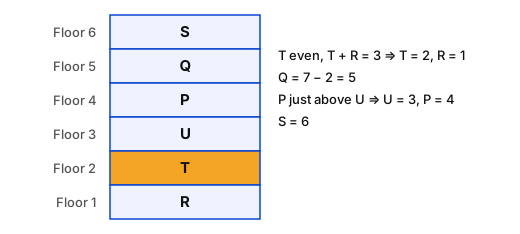
Q5557.
P, Q, R, S, T and U live on six different floors of the same building. The lowermost floor in the building is numbered 1, the floor above it is numbered 2 and so on till the topmost floor is numbered 6. T lives on an even numbered floor but not 6. The sum of the floors on which Q and T live is 7. P lives immediately above U. The sum of the floors on which T and R live is 3. How many people live below T?
P, Q, R, S, T और U एक ही भवन की छह अलग-अलग मंज़िलों पर रहते हैं। भवन की सबसे निचली मंज़िल की संख्या 1 है, उसके ऊपर की मंज़िल की संख्या 2 है और इसी प्रकार सबसे ऊपरी मंज़िल की संख्या 6 है। T एक सम संख्या वाली मंज़िल पर रहता है, परंतु 6 पर नहीं। Q और T जिन मंज़िलों पर रहते हैं, उनकी संख्याओं का योग 7 है। P, U के ठीक ऊपर रहता है। T और R जिन मंज़िलों पर रहते हैं, उनकी संख्याओं का योग 3 है। T के नीचे कितने लोग रहते हैं?
  1. A1
  2. B4
  3. C3
  4. D2
Show answer

Concept: Use the numeric clues (sums) first – they fix floors exactly.

  1. T is even but not 6 → T = 2 or 4. T + R = 3 → only T = 2, R = 1 works.
  2. Q + T = 7 → Q = 5.
  3. Free floors: 3, 4, 6. P immediately above U → U = 3, P = 4; S = 6.
  4. Below T (floor 2) there is only R → 1 person.

Trick: "Sum = 3" with floors ≥ 1 forces the pair {1, 2} – such tiny sums are the fastest entry point.

Answer: (A) 1

अवधारणा: पहले संख्यात्मक संकेत (योग) प्रयोग करें – ये मंज़िलें ठीक-ठीक तय कर देते हैं।

  1. T सम है पर 6 नहीं → T = 2 या 4। T + R = 3 → केवल T = 2, R = 1 संभव।
  2. Q + T = 7 → Q = 5।
  3. खाली मंज़िलें: 3, 4, 6। P, U के ठीक ऊपर → U = 3, P = 4; S = 6।
  4. T (मंज़िल 2) के नीचे केवल R → 1 व्यक्ति।

ट्रिक: मंज़िल ≥ 1 होने पर "योग = 3" जोड़ी {1, 2} को बाध्य करता है – ऐसे छोटे योग सबसे तेज़ शुरुआत देते हैं।

उत्तर: (A) 1

RRB NTPC Graduate CBT 1General Intelligence and ReasoningFloor PuzzleRRB NTPC Graduate CBT 1 2025 · 24 Mar Shift 1 →
Q5558.
Based on the English alphabetical order, three of the following four letter-cluster pairs are alike in a certain way and thus form a group. Which letter-cluster pair DOES NOT belong to that group?
(Note: The odd one out is not based on the number of consonants/vowels or their position in the letter-cluster.)
अंग्रेज़ी वर्णमाला क्रम के आधार पर, निम्नलिखित चार अक्षर-समूह युग्मों में से तीन किसी निश्चित प्रकार से एक समान हैं और इस प्रकार एक समूह बनाते हैं। कौन-सा अक्षर-समूह युग्म उस समूह से संबंधित नहीं है?
(नोट: असंगत युग्म व्यंजनों/स्वरों की संख्या या अक्षर-समूह में उनकी स्थिति पर आधारित नहीं है।)
  1. AIG−HF
  2. BSQ−RP
  3. CHF−GE
  4. DAY−YZ
Show answer

Concept: Write place values and compare the pattern inside and between the two clusters of each pair.

  1. IG−HF: I(9) → G(7) = −2; H(8) → F(6) = −2; and I → H = −1.
  2. SQ−RP: −2, −2, and S → R = −1. HF−GE: −2, −2, and H → G = −1. Same pattern.
  3. AY−YZ: A(1) → Y(25) is −2 only cyclically, but Y → Z = +1 and A → Y = −2 – the pattern breaks.

Trick: In each "normal" pair the second cluster is the first one shifted back by 1 (IG → HF, SQ → RP, HF → GE); AY → YZ does not fit.

Answer: (D) AY−YZ

अवधारणा: स्थान-मान लिखें और हर जोड़ी के दोनों समूहों के भीतर व बीच का पैटर्न मिलाएँ।

  1. IG−HF: I(9) → G(7) = −2; H(8) → F(6) = −2; तथा I → H = −1।
  2. SQ−RP: −2, −2, और S → R = −1। HF−GE: −2, −2, और H → G = −1। समान पैटर्न।
  3. AY−YZ: A(1) → Y(25) केवल चक्रीय रूप से −2 है, पर Y → Z = +1 और A → Y = −2 – पैटर्न टूट जाता है।

ट्रिक: हर "सामान्य" जोड़ी में दूसरा समूह पहले समूह को 1 पीछे खिसकाकर बना है (IG → HF, SQ → RP, HF → GE); AY → YZ इसमें फिट नहीं।

उत्तर: (D) AY−YZ

RRB NTPC Graduate CBT 1General Intelligence and ReasoningOdd One Out – LettersRRB NTPC Graduate CBT 1 2025 · 24 Mar Shift 1 →
Q5559.
If 1 is added to each odd digit and 2 is subtracted from each even digit in the number 8674153, what will be the difference between the highest and lowest digits in the number thus formed?
यदि संख्या 8674153 में प्रत्येक विषम अंक में 1 जोड़ा जाए और प्रत्येक सम अंक से 2 घटाया जाए, तो इस प्रकार बनी संख्या में सबसे बड़े और सबसे छोटे अंक के बीच का अंतर क्या होगा?
  1. A5
  2. B4
  3. C6
  4. D7
Show answer

Concept: Apply the rule digit by digit: odd digit → +1, even digit → −2.

  1. 8674153: 8 → 6, 6 → 4, 7 → 8, 4 → 2, 1 → 2, 5 → 6, 3 → 4.
  2. New number =6482264.
  3. Highest digit 8, lowest digit 2 → difference =8−2=6.

Trick: After the change, every digit becomes even; just spot the max (8) and min (2).

Answer: (C) 6

अवधारणा: नियम हर अंक पर लगाएँ: विषम अंक → +1, सम अंक → −2।

  1. 8674153: 8 → 6, 6 → 4, 7 → 8, 4 → 2, 1 → 2, 5 → 6, 3 → 4।
  2. नई संख्या =6482264।
  3. सबसे बड़ा अंक 8, सबसे छोटा 2 → अंतर =8−2=6।

ट्रिक: बदलाव के बाद हर अंक सम हो जाता है; बस अधिकतम (8) और न्यूनतम (2) पहचानें।

उत्तर: (C) 6

RRB NTPC Graduate CBT 1General Intelligence and ReasoningNumber OperationsRRB NTPC Graduate CBT 1 2025 · 24 Mar Shift 1 →
Q5560.
In a certain code language, ‘window is open’ is coded as ‘fq ul pt’ and ‘clean the window’ is coded as ‘zd fq wp’. How is ‘window’ coded in that language?
एक निश्चित कूट भाषा में, ‘window is open’ को ‘fq ul pt’ के रूप में कूटबद्ध किया जाता है और ‘clean the window’ को ‘zd fq wp’ के रूप में कूटबद्ध किया जाता है। उस भाषा में ‘window’ को किस प्रकार कूटबद्ध किया जाता है?
  1. Afq
  2. Bul
  3. Cwp
  4. Dpt
Show answer

Concept: A word common to two sentences has the code common to both coded sentences.

  1. 'window is open' → fq ul pt; 'clean the window' → zd fq wp.
  2. The only common word is 'window' and the only common code is 'fq'.
  3. So 'window' = fq.

Trick: Match common words with common codes first – it needs no decoding of the other words.

Answer: (A) fq

अवधारणा: दो वाक्यों में उभयनिष्ठ शब्द का कोड दोनों कोडित वाक्यों में भी उभयनिष्ठ होता है।

  1. 'window is open' → fq ul pt; 'clean the window' → zd fq wp।
  2. एकमात्र उभयनिष्ठ शब्द 'window' और एकमात्र उभयनिष्ठ कोड 'fq'।
  3. अतः 'window' = fq।

ट्रिक: पहले उभयनिष्ठ शब्दों को उभयनिष्ठ कोड से मिलाएँ – बाकी शब्दों को डिकोड करने की ज़रूरत नहीं।

उत्तर: (A) fq

RRB NTPC Graduate CBT 1General Intelligence and ReasoningCoding – Common WordRRB NTPC Graduate CBT 1 2025 · 24 Mar Shift 1 →