Question bank

Q&A: practice questions with answers

Search questions on any topic. Filter by exam category, exam, subject and topic, try the question, then open the answer and explanation.

Courses – airGurukul

7,077 questions found.

Q5561.
Refer to the following letter, symbol series and answer the question. Counting to be done from left to right only
(Left) % V € L X @ £ & Y M P # N % € Z % P * © M $ (Right)
How many such letters are there each of which is immediately preceded by a symbol and also immediately followed by a symbol?
निम्नलिखित अक्षर और प्रतीक श्रेणी को देखिए और प्रश्न का उत्तर दीजिए। गिनती केवल बाएँ से दाएँ की जानी है।
(बाएँ) % V € L X @ £ & Y M P # N % € Z % P * © M $ (दाएँ)
ऐसे कितने अक्षर हैं, जिनमें से प्रत्येक के ठीक पहले एक प्रतीक है और ठीक बाद भी एक प्रतीक है?
  1. A7
  2. B5
  3. C4
  4. D6
Show answer

Concept: Check each letter: is the element just before it a symbol AND the element just after it a symbol?

  1. Series: % V € L X @ £ & Y M P # N % € Z % P * © M $
  2. Qualifying letters: V (% V €), N (# N %), Z (€ Z %), P (% P *), M (© M $).
  3. L (€ L X), Y (& Y M) and the first P (M P #) fail because one neighbour is a letter. Total = 5.

Trick: Underline every "symbol–letter–symbol" triplet while reading left to right once; do not count letters at a letter boundary.

Answer: (B) 5

अवधारणा: हर अक्षर जाँचें: क्या उसके ठीक पहले का तत्व प्रतीक है और ठीक बाद का तत्व भी प्रतीक है?

  1. श्रृंखला: % V € L X @ £ & Y M P # N % € Z % P * © M $
  2. योग्य अक्षर: V (% V €), N (# N %), Z (€ Z %), P (% P *), M (© M $)।
  3. L (€ L X), Y (& Y M) और पहला P (M P #) असफल क्योंकि एक पड़ोसी अक्षर है। कुल = 5।

ट्रिक: बाएँ से दाएँ एक बार पढ़ते हुए हर "प्रतीक–अक्षर–प्रतीक" त्रिक को रेखांकित करें; जिस अक्षर के बगल में अक्षर हो उसे न गिनें।

उत्तर: (B) 5
RRB NTPC Graduate CBT 1General Intelligence and ReasoningLetter-Symbol SeriesRRB NTPC Graduate CBT 1 2025 · 24 Mar Shift 1 →
Q5562.
Which of the following letter-number clusters will replace the question mark (?) in the given series to make it logically complete?
JIM 36 NMQ 24 RQU 12 VUY 0 ?
निम्नलिखित में से कौन-सा अक्षर-संख्या समूह दी गई श्रेणी में प्रश्नचिह्न (?) के स्थान पर आकर उसे तार्किक रूप से पूर्ण करेगा?
JIM 36 NMQ 24 RQU 12 VUY 0 ?
  1. AZYC -12
  2. BZHQ -13
  3. CZZB -12
  4. DZXB -13
Show answer

Concept: Separate the letter pattern from the number pattern.

  1. Inside a cluster: J(10), I(9), M(13) → −1, +4. Same for NMQ, RQU, VUY.
  2. First letters: J → N → R → V → ? each +4 → V(22) + 4 = Z(26). Cluster: Z, Z−1 = Y, Y+4 = C (25 + 4 = 29 → 3) → ZYC.
  3. Numbers: 36, 24, 12, 0 → −12 each → −12.

Trick: Numbers can go negative in such series – do not stop at 0; 0 − 12 = −12.

Answer: (A) ZYC −12

अवधारणा: अक्षर पैटर्न और संख्या पैटर्न को अलग-अलग देखें।

  1. समूह के भीतर: J(10), I(9), M(13) → −1, +4। NMQ, RQU, VUY में भी यही।
  2. पहले अक्षर: J → N → R → V → ? हर बार +4 → V(22) + 4 = Z(26)। समूह: Z, Z−1 = Y, Y+4 = C (25 + 4 = 29 → 3) → ZYC।
  3. संख्याएँ: 36, 24, 12, 0 → हर बार −12 → −12।

ट्रिक: ऐसी श्रृंखलाओं में संख्याएँ ऋणात्मक भी हो सकती हैं – 0 पर न रुकें; 0 − 12 = −12।

उत्तर: (A) ZYC −12

RRB NTPC Graduate CBT 1General Intelligence and ReasoningLetter-Number SeriesRRB NTPC Graduate CBT 1 2025 · 24 Mar Shift 1 →
Q5563.
If ‘A’ stands for ‘÷’, ‘B’ stands for ‘×’, ‘C’ stands for ‘+’ and ‘D’ stands for ‘−’, then what will come in place of the question mark (?) in the following equation?
15 A 5 C 6 B 8 D 1 = ?
यदि ‘A’ का अर्थ ‘÷’, ‘B’ का अर्थ ‘×’, ‘C’ का अर्थ ‘+’ और ‘D’ का अर्थ ‘−’ है, तो निम्नलिखित समीकरण में प्रश्नचिह्न (?) के स्थान पर क्या आएगा?
15 A 5 C 6 B 8 D 1 = ?
  1. A50
  2. B47
  3. C49
  4. D48
Show answer

Concept: Replace the letters by the given operators and then apply BODMAS.

  1. 15 A 5 C 6 B 8 D 1 → 15÷5+6×8−1.
  2. Division and multiplication first: 3+48−1.
  3. =50.

Trick: Write the substituted expression fully before calculating; most errors come from doing + before ×.

Answer: (A) 50

अवधारणा: अक्षरों की जगह दिए गए चिह्न रखें और फिर BODMAS लगाएँ।

  1. 15 A 5 C 6 B 8 D 1 → 15÷5+6×8−1।
  2. पहले भाग और गुणा: 3+48−1।
  3. =50।

ट्रिक: गणना से पहले पूरा व्यंजक बदलकर लिखें; अधिकांश गलतियाँ × से पहले + करने से होती हैं।

उत्तर: (A) 50

RRB NTPC Graduate CBT 1General Intelligence and ReasoningMathematical OperationsRRB NTPC Graduate CBT 1 2025 · 24 Mar Shift 1 →
Q5564.
Based on the English alphabetical order, three of the following four letter-cluster pairs are alike in a certain way and thus form a group. Which letter-cluster pair DOES NOT belong to that group?
(Note: The odd one out is not based on the number of consonants/vowels or their position in the letter-cluster.)
अंग्रेज़ी वर्णमाला क्रम के आधार पर, निम्नलिखित चार अक्षर-समूह युग्मों में से तीन किसी निश्चित प्रकार से एक समान हैं और इस प्रकार एक समूह बनाते हैं। कौन-सा अक्षर-समूह युग्म उस समूह से संबंधित नहीं है?
(नोट: असंगत युग्म व्यंजनों/स्वरों की संख्या या अक्षर-समूह में उनकी स्थिति पर आधारित नहीं है।)
  1. ABC−EF
  2. BEF−HI
  3. CTU−WX
  4. DQR−SW
Show answer

Concept: Compare the gap inside each cluster and the gap between the two clusters.

  1. BC−EF: B → C = +1; B → E = +3 (second cluster = first cluster + 3).
  2. EF−HI: +1 inside, E → H = +3. TU−WX: +1 inside, T → W = +3. Same rule.
  3. QR−SW: Q → R = +1 but S → W = +4, and Q → S = +2 – the rule is broken.

Trick: Consecutive-letter pairs (BC, EF, TU) with a +3 shift; SW is not even a consecutive pair – spot it at once.

Answer: (D) QR−SW

अवधारणा: हर समूह के भीतर का अंतर और दोनों समूहों के बीच का अंतर मिलाएँ।

  1. BC−EF: B → C = +1; B → E = +3 (दूसरा समूह = पहला समूह + 3)।
  2. EF−HI: भीतर +1, E → H = +3। TU−WX: भीतर +1, T → W = +3। समान नियम।
  3. QR−SW: Q → R = +1 पर S → W = +4, और Q → S = +2 – नियम टूट जाता है।

ट्रिक: लगातार अक्षरों की जोड़ियाँ (BC, EF, TU) +3 शिफ्ट के साथ; SW तो लगातार जोड़ी भी नहीं – तुरंत पहचानें।

उत्तर: (D) QR−SW

RRB NTPC Graduate CBT 1General Intelligence and ReasoningOdd One Out – LettersRRB NTPC Graduate CBT 1 2025 · 24 Mar Shift 1 →
Q5565.
Read the given statements and conclusions carefully. You have to take the given statements to be true even if they seem to be at variance from commonly known facts. You have to decide which conclusion/s logically follow/s from the given statements. Statements:
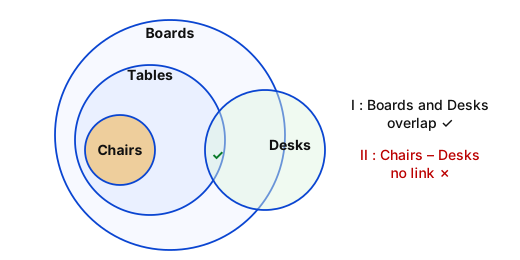
All chairs are tables. All tables are boards. Some tables are desks.
Conclusions:
(I) Some boards are desks.
(II) Some chairs are desks.
दिए गए कथनों और निष्कर्षों को ध्यानपूर्वक पढ़िए। आपको दिए गए कथनों को सत्य मानना है, भले ही वे सामान्यतः ज्ञात तथ्यों से भिन्न प्रतीत होते हों। आपको यह निर्धारित करना है कि दिए गए कथनों से कौन-सा/कौन-से निष्कर्ष तार्किक रूप से अनुसरण करता है/करते हैं। कथन:
सभी कुर्सियाँ, मेज़ हैं। सभी मेज़, बोर्ड हैं। कुछ मेज़, डेस्क हैं।
निष्कर्ष:
(I) कुछ बोर्ड, डेस्क हैं।
(II) कुछ कुर्सियाँ, डेस्क हैं।
  1. ABoth conclusions I and II follow.निष्कर्ष I और II दोनों अनुसरण करते हैं।
  2. BOnly conclusion II follows.केवल निष्कर्ष II अनुसरण करता है।
  3. COnly conclusion I follows.केवल निष्कर्ष I अनुसरण करता है।
  4. DNeither conclusion I nor II follows.न तो निष्कर्ष I और न ही II अनुसरण करता है।
Show answer

Concept: Draw Chairs inside Tables, Tables inside Boards, and let Desks overlap Tables (because "some tables are desks").

  1. Conclusion I: the tables that are desks are also boards → "Some boards are desks" definitely follows.
  2. Conclusion II: the Desks circle may overlap Tables without touching Chairs → "Some chairs are desks" is only possible, not certain → does not follow.

Yaad rakhein: All A are B + Some A are C ⇒ Some B are C ✓; but Some A are C + All D are A ⇒ nothing definite about D and C.

Answer: (C) Only conclusion I follows.

अवधारणा: Chairs को Tables के अंदर, Tables को Boards के अंदर बनाएँ और Desks को Tables से काटता हुआ दिखाएँ ("कुछ tables, desks हैं")।

  1. निष्कर्ष I: जो tables, desks हैं वे boards भी हैं → "कुछ boards, desks हैं" निश्चित रूप से अनुसरण करता है।
  2. निष्कर्ष II: Desks का वृत्त Tables को काटते हुए भी Chairs को छुए बिना रह सकता है → "कुछ chairs, desks हैं" केवल संभव है, निश्चित नहीं → अनुसरण नहीं करता।

याद रखें: All A are B + Some A are C ⇒ Some B are C ✓; पर Some A are C + All D are A ⇒ D और C के बारे में कुछ निश्चित नहीं।

उत्तर: (C) केवल निष्कर्ष I अनुसरण करता है।

RRB NTPC Graduate CBT 1General Intelligence and ReasoningSyllogismRRB NTPC Graduate CBT 1 2025 · 24 Mar Shift 1 →
Q5566.
In a certain code language,
A + B means ‘A is the son of B’
A – B means ‘A is the brother of B’
A x B means ‘A is the wife of B’
A ÷ B means ‘A is the father of B’
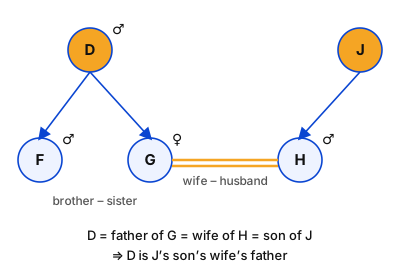
Based on the above, how is D related to J if ‘D ÷ F – G x H + J’?
एक निश्चित कूट भाषा में,
A + B का अर्थ है ‘A, B का पुत्र है’
A – B का अर्थ है ‘A, B का भाई है’
A x B का अर्थ है ‘A, B की पत्नी है’
A ÷ B का अर्थ है ‘A, B का पिता है’
उपर्युक्त के आधार पर, यदि ‘D ÷ F – G x H + J’ है, तो D, J से किस प्रकार संबंधित है?
  1. AWife's fatherपत्नी का पिता
  2. BSon's wife's fatherपुत्र की पत्नी का पिता
  3. CWife's brotherपत्नी का भाई
  4. DSon's wife's brotherपुत्र की पत्नी का भाई
Show answer

Concept: Decode the chain from left to right and build the family tree.

  1. D ÷ F → D is the father of F. F − G → F is the brother of G, so G is also D's child.
  2. G × H → G is the wife of H (G is female). H + J → H is the son of J.
  3. So D is the father of G, who is the wife of J's son H → D is the father of J's son's wife.

Trick: Read from J backwards: J → son H → wife G → father D. The parents of a married couple are "samdhi" – no shorter English term, so the full chain is the answer.

Answer: (B) Son's wife's father

अवधारणा: शृंखला को बाएँ से दाएँ डिकोड करें और वंश-वृक्ष बनाएँ।

  1. D ÷ F → D, F का पिता। F − G → F, G का भाई, अतः G भी D की संतान।
  2. G × H → G, H की पत्नी (G महिला)। H + J → H, J का पुत्र।
  3. अतः D, G का पिता है, जो J के पुत्र H की पत्नी है → D, J के पुत्र की पत्नी (बहू) का पिता यानी समधी है।

ट्रिक: J से उल्टा पढ़ें: J → पुत्र H → पत्नी G → पिता D। बहू का पिता = समधी; विकल्पों में यही "Son's wife's father" है।

उत्तर: (B) Son's wife's father (पुत्र की पत्नी का पिता)

RRB NTPC Graduate CBT 1General Intelligence and ReasoningBlood RelationsRRB NTPC Graduate CBT 1 2025 · 24 Mar Shift 1 →
Q5567.
This question is based on the five, three-digit numbers given below.
(Left) 237 732 273 854 798 (Right)
(Example- 697 – First digit = 6, second digit = 9 and third digit = 7)
(NOTE: All operations to be done from left to right.)
What will be the resultant if the second digit of the highest number is added to the second digit of the lowest number?
यह प्रश्न नीचे दी गई पाँच, तीन अंकों की संख्याओं पर आधारित है।
(बाएँ) 237 732 273 854 798 (दाएँ)
(उदाहरण- 697 – पहला अंक = 6, दूसरा अंक = 9 और तीसरा अंक = 7)
(नोट: सभी संक्रियाएँ बाएँ से दाएँ की जानी हैं।)
यदि सबसे बड़ी संख्या के दूसरे अंक को सबसे छोटी संख्या के दूसरे अंक में जोड़ा जाए, तो परिणाम क्या होगा?
  1. A14
  2. B8
  3. C11
  4. D12
Show answer

Concept: First locate the highest and lowest numbers, then pick the digit asked for.

  1. Numbers: 237, 732, 273, 854, 798. Highest =854, lowest =237.
  2. Second digit of 854 =5; second digit of 237 =3.
  3. Required sum =5+3=8.

Trick: Compare only the first digits to spot highest (8…) and lowest (2…); between 237 and 273 the second digit 3 < 7 decides.

Answer: (B) 8

अवधारणा: पहले सबसे बड़ी और सबसे छोटी संख्या पहचानिए, फिर पूछा गया अंक लीजिए।

  1. संख्याएँ: 237, 732, 273, 854, 798। सबसे बड़ी =854, सबसे छोटी =237।
  2. 854 का दूसरा अंक =5; 237 का दूसरा अंक =3।
  3. अभीष्ट योग =5+3=8।

ट्रिक: सबसे बड़ी (8…) और सबसे छोटी (2…) पहचानने के लिए केवल पहला अंक देखें; 237 और 273 में दूसरा अंक 3 < 7 निर्णय करता है।

उत्तर: (B) 8

RRB NTPC Graduate CBT 1General Intelligence and ReasoningNumber-based operationsRRB NTPC Graduate CBT 1 2025 · 24 Mar Shift 1 →
Q5568.
In a certain code language, ‘TOUR’ is coded as ‘2374’ and ‘RIOT’ is coded as ‘7634’. What is the code for ‘I’ in the given code language?
एक निश्चित कूट भाषा में, ‘TOUR’ को ‘2374’ के रूप में और ‘RIOT’ को ‘7634’ के रूप में कूटबद्ध किया जाता है। दी गई कूट भाषा में ‘I’ का कूट क्या है?
  1. A4
  2. B3
  3. C6
  4. D7
Show answer

Concept: In letter-to-digit coding, letters common to two words share the common digits; the leftover letter gets the leftover digit.

  1. TOUR → 2 3 7 4 and RIOT → 7 6 3 4.
  2. Common letters T, O, R ↔ common digits 7, 3, 4.
  3. Leftover in RIOT is I; leftover digit is 6. So I =6 (and U =2).

Trick: Cancel the common letters and common digits – whatever remains on each side pairs up directly.

Answer: (C) 6

अवधारणा: अक्षर-से-अंक कोडिंग में दो शब्दों के उभयनिष्ठ अक्षर उभयनिष्ठ अंकों से जुड़ते हैं; बचा अक्षर बचे अंक को लेता है।

  1. TOUR → 2 3 7 4 और RIOT → 7 6 3 4।
  2. उभयनिष्ठ अक्षर T, O, R ↔ उभयनिष्ठ अंक 7, 3, 4।
  3. RIOT में बचा अक्षर I, बचा अंक 6। अतः I =6 (और U =2)।

ट्रिक: उभयनिष्ठ अक्षर और अंक काट दें – दोनों ओर जो बचे, वही सीधे जोड़ी बनाते हैं।

उत्तर: (C) 6

RRB NTPC Graduate CBT 1General Intelligence and ReasoningCoding-decoding (common letters)RRB NTPC Graduate CBT 1 2025 · 24 Mar Shift 1 →
Q5569.
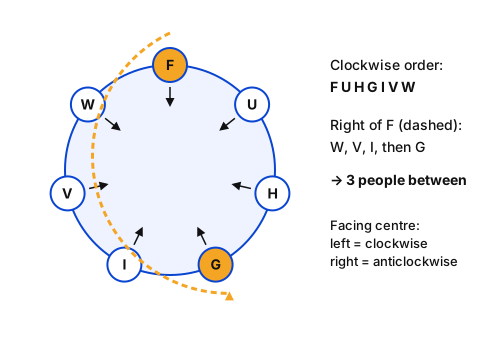
Seven people F, G, H, I, U, V, and W are sitting around a circular table facing the centre of the table. H sits third to the left of W. V sits second to the left of G. U sits third to the right of I. U sits to the immediate right of H. F is not an immediate neighbour of H. How many people sit between F and G when counted from the right of F?
सात व्यक्ति F, G, H, I, U, V और W एक वृत्ताकार मेज़ के चारों ओर मेज़ के केंद्र की ओर मुख करके बैठे हैं। H, W के बाईं ओर तीसरे स्थान पर बैठा है। V, G के बाईं ओर दूसरे स्थान पर बैठा है। U, I के दाईं ओर तीसरे स्थान पर बैठा है। U, H के ठीक दाईं ओर बैठा है। F, H का निकटतम पड़ोसी नहीं है। F के दाईं ओर से गिनने पर F और G के बीच कितने व्यक्ति बैठे हैं?
  1. AThreeतीन
  2. BTwoदो
  3. CFourचार
  4. DOneएक
Show answer

Concept: Facing the centre, "left" means clockwise and "right" means anticlockwise. Start with the pair of clues sharing a person (H, U, W) and build outward.

  1. Fix H. U is immediate right of H; W is 3rd to the right of H (H is 3rd left of W).
  2. U is 3rd right of I → I is 3rd left of U → I sits 2nd left of H. V is 2nd left of G → G immediate left of H, V next to I (left side).
  3. Clockwise order: F, U, H, G, I, V, W. F takes the last seat and is indeed not next to H.
  4. From F towards the right (anticlockwise): W, V, I, then G → three people between F and G.

Trick: Draw a 7-point circle and write "L = clockwise" at the top before reading clues – most errors come from flipping left/right.

Answer: (A) Three

अवधारणा: केंद्र की ओर मुख होने पर "बाएँ" = दक्षिणावर्त (clockwise) और "दाएँ" = वामावर्त। जिन सुरागों में साझा व्यक्ति (H, U, W) हो, उनसे शुरू कीजिए।

  1. H को स्थिर करें। U, H के तुरंत दाएँ; W, H के दाएँ तीसरे स्थान पर (H, W के बाएँ तीसरा)।
  2. U, I के दाएँ तीसरा → I, U के बाएँ तीसरा → I, H के बाएँ दूसरा। V, G के बाएँ दूसरा → G, H के तुरंत बाएँ और V, I के पास।
  3. दक्षिणावर्त क्रम: F, U, H, G, I, V, W। F अंतिम सीट पर और वास्तव में H का पड़ोसी नहीं।
  4. F से दाएँ (वामावर्त) चलें: W, V, I, फिर G → F और G के बीच तीन लोग।

ट्रिक: 7 बिंदुओं का वृत्त बनाकर ऊपर "L = clockwise" लिख लें – ज़्यादातर गलतियाँ बाएँ/दाएँ उलटने से होती हैं।

उत्तर: (A) Three

RRB NTPC Graduate CBT 1General Intelligence and ReasoningCircular seating arrangementRRB NTPC Graduate CBT 1 2025 · 24 Mar Shift 1 →
Q5570.
Refer to the following number and symbol series and answer the question. Counting to be done from left to right only. (All numbers are single-digit numbers only.)
(Left) 3 6 2 £ 4 9 + 7 ~ 1 # % $ 5 ? & = * Ω 8 @ (Right)
How many such symbols are there, each of which is immediately preceded by an odd number but not immediately followed by an even number?
निम्नलिखित संख्या और प्रतीक श्रेणी को देखिए और प्रश्न का उत्तर दीजिए। गिनती केवल बाएँ से दाएँ की जानी है। (सभी संख्याएँ केवल एक अंक वाली संख्याएँ हैं।)
(बाएँ) 3 6 2 £ 4 9 + 7 ~ 1 # % $ 5 ? & = * Ω 8 @ (दाएँ)
ऐसे कितने प्रतीक हैं, जिनमें से प्रत्येक के ठीक पहले एक विषम संख्या है, परंतु ठीक बाद कोई सम संख्या नहीं है?
  1. AOneएक
  2. BTwoदो
  3. CFourचार
  4. DThreeतीन
Show answer

Concept: Check every symbol: left neighbour must be an odd number; right neighbour must NOT be an even number (a symbol or an odd number is fine).

  1. Series: 3 6 2 £ 4 9 + 7 ~ 1 # % $ 5 ? & = * Ω 8 @.
  2. £: left 2 (even) ✗. +: left 9, right 7 ✓. ~: left 7, right 1 ✓. #: left 1, right % ✓.
  3. %, $: left is a symbol ✗. ?: left 5, right & ✓. &, =, *, Ω: left symbols ✗. @: left 8 (even) ✗.
  4. Qualifying symbols: +, ~, #, ? → four.

Trick: Underline only the odd numbers first (3, 9, 7, 1, 5); only the symbols immediately after them need checking.

Answer: (C) Four

अवधारणा: हर प्रतीक जाँचिए: बायाँ पड़ोसी विषम संख्या हो; दायाँ पड़ोसी सम संख्या न हो (प्रतीक या विषम संख्या चलेगा)।

  1. श्रृंखला: 3 6 2 £ 4 9 + 7 ~ 1 # % $ 5 ? & = * Ω 8 @।
  2. £: बाएँ 2 (सम) ✗। +: बाएँ 9, दाएँ 7 ✓। ~: बाएँ 7, दाएँ 1 ✓। #: बाएँ 1, दाएँ % ✓।
  3. %, $: बाएँ प्रतीक ✗। ?: बाएँ 5, दाएँ & ✓। &, =, *, Ω: बाएँ प्रतीक ✗। @: बाएँ 8 (सम) ✗।
  4. योग्य प्रतीक: +, ~, #, ? → चार।

ट्रिक: पहले केवल विषम संख्याएँ (3, 9, 7, 1, 5) रेखांकित करें; केवल उनके ठीक बाद वाले प्रतीक जाँचने हैं।

उत्तर: (C) Four

RRB NTPC Graduate CBT 1General Intelligence and ReasoningNumber–symbol seriesRRB NTPC Graduate CBT 1 2025 · 24 Mar Shift 1 →
Q5571.
12 is related to 86 following a certain logic. Following the same logic, 17 is related to 116. To which of the following is 21 related, following the same logic?
(NOTE: Operations should be performed on the whole numbers, without breaking down the numbers into their constituent digits. E.g. 13 – Operations on 13 such as adding/ subtracting /multiplying to 13 can be performed. Breaking down 13 into 1 and 3 and then performing mathematical operations on 1 and 3 is not allowed.)
एक निश्चित तर्क के आधार पर 12, 86 से संबंधित है। उसी तर्क के आधार पर, 17, 116 से संबंधित है। उसी तर्क के आधार पर, 21 निम्नलिखित में से किससे संबंधित है?
(नोट: संक्रियाएँ पूर्ण संख्याओं पर की जानी चाहिए, संख्याओं को उनके घटक अंकों में तोड़े बिना। उदाहरण के लिए, 13 – 13 पर संक्रियाएँ, जैसे 13 में जोड़ना/घटाना/गुणा करना, की जा सकती हैं। 13 को 1 और 3 में तोड़कर फिर 1 और 3 पर गणितीय संक्रियाएँ करना अनुमत नहीं है।)
  1. A146
  2. B152
  3. C158
  4. D140
Show answer

Concept: Find one rule (multiply, then add) that converts both given pairs; apply it to the new number.

  1. 12→86: 12×6=72, 72+14=86 ✓.
  2. 17→116: 17×6=102, 102+14=116 ✓.
  3. 21→21×6+14=126+14=140.

Trick: Difference of outputs 116−86=30 for input difference 17−12=5 → multiplier =30÷5=6. Then adjust the constant.

Answer: (D) 140

अवधारणा: एक नियम (गुणा, फिर जोड़) खोजिए जो दोनों दिए गए युग्मों पर लागू हो; उसे नई संख्या पर लगाइए।

  1. 12→86: 12×6=72, 72+14=86 ✓।
  2. 17→116: 17×6=102, 102+14=116 ✓।
  3. 21→21×6+14=126+14=140।

ट्रिक: आउटपुट का अंतर 116−86=30, इनपुट का अंतर 17−12=5 → गुणक =30÷5=6। फिर स्थिरांक ठीक करें।

उत्तर: (D) 140

RRB NTPC Graduate CBT 1General Intelligence and ReasoningNumber analogyRRB NTPC Graduate CBT 1 2025 · 24 Mar Shift 1 →
Q5572.
In the following number-pairs, the second number is obtained by applying certain mathematical operations to the first number. Select the set in which the numbers are related in the same way as are the numbers of the following sets.
(NOTE : Operations should be performed on the whole numbers, without breaking down the numbers into its constituent digits. E.g. 13 – Operations on 13 such as adding / subtracting /multiplying etc. to 13 can be performed. Breaking down 13 into 1 and 3 and then performing mathematical operations on 1 and 3 is not allowed)
15, 73
19, 93
निम्नलिखित संख्या-युग्मों में, दूसरी संख्या पहली संख्या पर कुछ निश्चित गणितीय संक्रियाएँ करके प्राप्त की गई है। उस समुच्चय का चयन कीजिए जिसमें संख्याएँ उसी प्रकार संबंधित हैं जिस प्रकार निम्नलिखित समुच्चयों की संख्याएँ संबंधित हैं।
(नोट : संक्रियाएँ पूर्ण संख्याओं पर की जानी चाहिए, संख्याओं को उनके घटक अंकों में तोड़े बिना। उदाहरण के लिए, 13 – 13 पर संक्रियाएँ, जैसे 13 में जोड़ना / घटाना / गुणा करना आदि, की जा सकती हैं। 13 को 1 और 3 में तोड़कर फिर 1 और 3 पर गणितीय संक्रियाएँ करना अनुमत नहीं है)
15, 73
19, 93
  1. A22, 113
  2. B23, 114
  3. C23, 113
  4. D22, 114
Show answer

Concept: Find the rule linking both given pairs and test the options with it.

  1. 15→73: 15×5−2=73 ✓; 19→93: 19×5−2=93 ✓.
  2. Option C: 23×5−2=113 ✓.
  3. Others: 22×5−2=108 (not 113 or 114), 23×5−2≠114.

Trick: Output difference 93−73=20 for input difference 4 → multiplier 5; then 75−73=2 gives "−2".

Answer: (C) 23, 113

अवधारणा: दोनों दिए गए युग्मों को जोड़ने वाला नियम खोजिए और विकल्पों पर जाँचिए।

  1. 15→73: 15×5−2=73 ✓; 19→93: 19×5−2=93 ✓।
  2. विकल्प C: 23×5−2=113 ✓।
  3. अन्य: 22×5−2=108 (113 या 114 नहीं), 23×5−2≠114।

ट्रिक: आउटपुट अंतर 93−73=20, इनपुट अंतर 4 → गुणक 5; फिर 75−73=2 से "−2"।

उत्तर: (C) 23, 113

RRB NTPC Graduate CBT 1General Intelligence and ReasoningNumber pair analogyRRB NTPC Graduate CBT 1 2025 · 24 Mar Shift 1 →
Q5573.
In a certain code language,
A + B means ‘A is the wife of B’
A - B means ‘A is the mother of B’
A × B means ‘A is the father of B’
A ÷ B means ‘A is the husband of B’
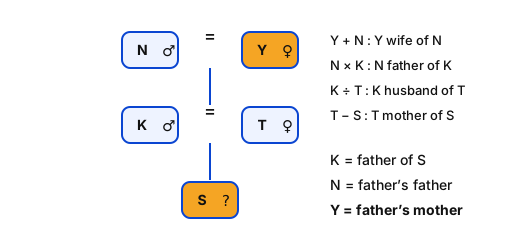
Based on the above, how is Y related to S if ‘Y + N × K ÷ T - S’?
एक निश्चित कूट भाषा में,
A + B का अर्थ है ‘A, B की पत्नी है’
A - B का अर्थ है ‘A, B की माता है’
A × B का अर्थ है ‘A, B का पिता है’
A ÷ B का अर्थ है ‘A, B का पति है’
उपर्युक्त के आधार पर, यदि ‘Y + N × K ÷ T - S’ है, तो Y, S से किस प्रकार संबंधित है?
  1. AFather’s sisterपिता की बहन
  2. BMotherमाता
  3. CFather’s motherपिता की माता
  4. DSisterबहन
Show answer

Concept: Decode the chain symbol by symbol and draw a family tree, marking gender from the relation words (wife/mother = female, father/husband = male).

  1. Y + N: Y is the wife of N. N × K: N is the father of K.
  2. K ÷ T: K is the husband of T. T − S: T is the mother of S → K is the father of S.
  3. N is the father of S's father; Y, N's wife, is the mother of S's father.
  4. So Y is S's father's mother (paternal grandmother).

Trick: Start from the person asked about (S) and climb up: S → father K → father's father N → his wife Y.

Answer: (C) Father's mother

अवधारणा: श्रृंखला को प्रतीक-दर-प्रतीक डिकोड करके वंश-वृक्ष बनाइए; संबंध शब्दों से लिंग चिह्नित कीजिए (wife/mother = स्त्री, father/husband = पुरुष)।

  1. Y + N: Y, N की पत्नी। N × K: N, K का पिता।
  2. K ÷ T: K, T का पति। T − S: T, S की माँ → K, S का पिता।
  3. N, S के पिता का पिता; N की पत्नी Y, S के पिता की माँ।
  4. अतः Y, S के पिता की माँ (दादी) है।

ट्रिक: जिसके बारे में पूछा है (S) उससे ऊपर चढ़ें: S → पिता K → पिता का पिता N → उसकी पत्नी Y।

उत्तर: (C) Father's mother

RRB NTPC Graduate CBT 1General Intelligence and ReasoningBlood relations (coded)RRB NTPC Graduate CBT 1 2025 · 24 Mar Shift 1 →
Q5574.
HM 14 is related to EJ 16 in a certain way. In the same way, RW 22 is related to OT 24. To which of the following is SX 27 related, following the same logic?
HM 14, EJ 16 से एक निश्चित प्रकार से संबंधित है। उसी प्रकार, RW 22, OT 24 से संबंधित है। उसी तर्क के आधार पर, SX 27 निम्नलिखित में से किससे संबंधित है?
  1. APU 29
  2. BQU 28
  3. CPV 29
  4. DQV 29
Show answer

Concept: Treat the letters and the number separately: find the shift applied to each letter and the change in the number.

  1. HM 14 → EJ 16: H −3= E, M −3= J, 14+2=16.
  2. RW 22 → OT 24: R −3= O, W −3= T, 22+2=24 ✓ same rule.
  3. SX 27 → S −3= P, X −3= U, 27+2=29 → PU 29.

Trick: Use letter positions: S =19→16= P, X =24→21= U. Write A–Z with numbers at the top of your rough sheet.

Answer: (A) PU 29

अवधारणा: अक्षरों और संख्या को अलग-अलग देखिए: हर अक्षर पर लगा शिफ्ट और संख्या में परिवर्तन खोजिए।

  1. HM 14 → EJ 16: H −3= E, M −3= J, 14+2=16।
  2. RW 22 → OT 24: R −3= O, W −3= T, 22+2=24 ✓ वही नियम।
  3. SX 27 → S −3= P, X −3= U, 27+2=29 → PU 29।

ट्रिक: अक्षर स्थान प्रयोग करें: S =19→16= P, X =24→21= U। रफ शीट के ऊपर A–Z संख्याओं सहित लिख लें।

उत्तर: (A) PU 29

RRB NTPC Graduate CBT 1General Intelligence and ReasoningLetter–number analogyRRB NTPC Graduate CBT 1 2025 · 24 Mar Shift 1 →
Q5575.
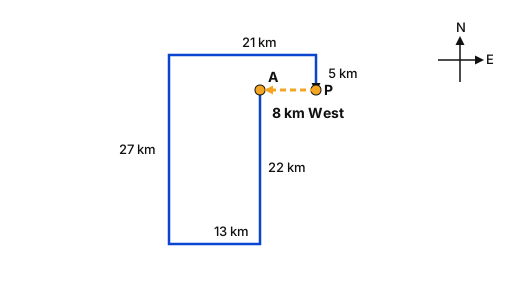
Lagan starts from Point A and drives 22 km towards South. He then takes a right turn, drives 13 km, turns right and drives 27 km. He then takes a right turn and drives 21 km. He takes a final right turn, drives 5 km and stops at Point P. How far (shortest distance) and towards which direction should he drive in order to reach Point A again? (All turns are 90 degrees turns only unless specified)
लगन बिंदु A से चलना प्रारंभ करता है और दक्षिण की ओर 22 km गाड़ी चलाता है। फिर वह दाएँ मुड़ता है, 13 km गाड़ी चलाता है, दाएँ मुड़ता है और 27 km गाड़ी चलाता है। फिर वह दाएँ मुड़ता है और 21 km गाड़ी चलाता है। वह अंतिम बार दाएँ मुड़ता है, 5 km गाड़ी चलाता है और बिंदु P पर रुक जाता है। बिंदु A पर पुनः पहुँचने के लिए उसे कितनी दूर (न्यूनतम दूरी) और किस दिशा में गाड़ी चलानी चाहिए? (जब तक अन्यथा निर्दिष्ट न हो, सभी मोड़ केवल 90 डिग्री के मोड़ हैं)
  1. A8 km to the east8 km पूर्व की ओर
  2. B8 km to the west8 km पश्चिम की ओर
  3. C7 km to the west7 km पश्चिम की ओर
  4. D7 km to the east7 km पूर्व की ओर
Show answer

Concept: Track the heading after each right turn (S → W → N → E → S) and add up the net north–south and east–west displacements.

  1. 22 km South; right turn → 13 km West; right → 27 km North; right → 21 km East; right → 5 km South.
  2. North–south: 22−27+5=0 → P is level with A.
  3. East–west: 21−13=8 km East → P is 8 km east of A.
  4. To return to A he must drive 8 km towards the West.

Trick: Facing South, "right" is West. Write the compass once and rotate it mentally with each turn.

Answer: (B) 8 km to the west

अवधारणा: हर दाएँ मोड़ के बाद दिशा (S → W → N → E → S) ट्रैक कीजिए और उत्तर–दक्षिण व पूर्व–पश्चिम के शुद्ध विस्थापन जोड़िए।

  1. 22 km दक्षिण; दाएँ → 13 km पश्चिम; दाएँ → 27 km उत्तर; दाएँ → 21 km पूर्व; दाएँ → 5 km दक्षिण।
  2. उत्तर–दक्षिण: 22−27+5=0 → P, A की सीध में।
  3. पूर्व–पश्चिम: 21−13=8 km पूर्व → P, A से 8 km पूर्व में।
  4. A पर लौटने के लिए उसे 8 km पश्चिम की ओर चलना होगा।

ट्रिक: दक्षिण की ओर मुख हो तो "दाएँ" = पश्चिम। कम्पास एक बार बनाकर हर मोड़ पर मन में घुमाइए।

उत्तर: (B) 8 km to the west

RRB NTPC Graduate CBT 1General Intelligence and ReasoningDirection and distanceRRB NTPC Graduate CBT 1 2025 · 24 Mar Shift 1 →
Q5576.
23 is related to 139 following a certain logic. Following the same logic, 28 is related to 169. To which of the following is 25 related, following the same logic?
(NOTE: Operations should be performed on the whole numbers, without breaking down the numbers into its constituent digits. E.g., 13 – Operations on 13 such as
adding/subtracting/multiplying etc. to 13 can be performed. Breaking down 13 into 1 and 3 and then performing mathematical operations on 1 and 3 is not allowed.)
एक निश्चित तर्क के आधार पर 23, 139 से संबंधित है। उसी तर्क के आधार पर, 28, 169 से संबंधित है। उसी तर्क के आधार पर, 25 निम्नलिखित में से किससे संबंधित है?
(नोट: संक्रियाएँ पूर्ण संख्याओं पर की जानी चाहिए, संख्याओं को उनके घटक अंकों में तोड़े बिना। उदाहरण के लिए, 13 – 13 पर संक्रियाएँ, जैसे
13 में जोड़ना/घटाना/गुणा करना आदि, की जा सकती हैं। 13 को 1 और 3 में तोड़कर फिर 1 और 3 पर गणितीय संक्रियाएँ करना अनुमत नहीं है।)
  1. A151
  2. B146
  3. C155
  4. D141
Show answer

Concept: Find a "multiply then add" rule that fits both pairs; verify before applying.

  1. 23→139: 23×6=138, 138+1=139 ✓.
  2. 28→169: 28×6=168, 168+1=169 ✓.
  3. 25→25×6+1=151.

Trick: Output difference 169−139=30 for input difference 5 → multiplier 6. The constant is then 139−138=1.

Answer: (A) 151

अवधारणा: "गुणा फिर जोड़" वाला नियम खोजिए जो दोनों युग्मों पर खरा उतरे; लगाने से पहले जाँचिए।

  1. 23→139: 23×6=138, 138+1=139 ✓।
  2. 28→169: 28×6=168, 168+1=169 ✓।
  3. 25→25×6+1=151।

ट्रिक: आउटपुट अंतर 169−139=30, इनपुट अंतर 5 → गुणक 6। स्थिरांक 139−138=1।

उत्तर: (A) 151

RRB NTPC Graduate CBT 1General Intelligence and ReasoningNumber analogyRRB NTPC Graduate CBT 1 2025 · 24 Mar Shift 1 →
Q5577.
In this question, a question is followed by two statements numbered (I) and (II). You have to decide whether the data provided in the statements are sufficient to answer the question. Read both the statements and decide the appropriate answer.
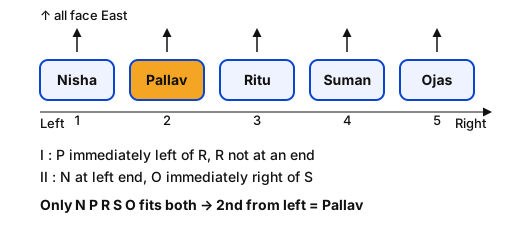
Q. Five people – Nisha, Ojas, Pallav, Ritu, and Suman – are standing in a straight line facing east.
Who is standing second from the left end?
(I) Pallav is standing immediately to the left of Ritu, and Ritu is not standing at either ends.
(II) Nisha is standing at the extreme left end, and Ojas is standing immediately to the right of Suman.
इस प्रश्न में, एक प्रश्न के बाद (I) और (II) संख्या वाले दो कथन दिए गए हैं। आपको यह निर्धारित करना है कि कथनों में दिए गए डेटा प्रश्न का उत्तर देने के लिए पर्याप्त हैं या नहीं। दोनों कथनों को पढ़िए और उपयुक्त उत्तर का निर्धारण कीजिए।
प्रश्न. पाँच व्यक्ति – निशा, ओजस, पल्लव, रितु और सुमन – पूर्व की ओर मुख करके एक सीधी पंक्ति में खड़े हैं।
बाएँ छोर से दूसरे स्थान पर कौन खड़ा है?
(I) पल्लव, रितु के ठीक बाईं ओर खड़ा है, और रितु किसी भी छोर पर खड़ी नहीं है।
(II) निशा सबसे बाएँ छोर पर खड़ी है, और ओजस, सुमन के ठीक दाईं ओर खड़ा है।
  1. ABoth statements I and II together are NOT sufficient to answer the questionकथन I और II दोनों मिलकर भी प्रश्न का उत्तर देने के लिए पर्याप्त नहीं हैं
  2. BData in Statement II alone is sufficient to answer the question while data in Statement I is notकथन II के डेटा अकेले प्रश्न का उत्तर देने के लिए पर्याप्त हैं, जबकि कथन I के डेटा पर्याप्त नहीं हैं
  3. CBoth statements I and II together (and not statement I alone or statement II alone) are sufficient to answer the questionकथन I और II दोनों मिलकर (न कि अकेले कथन I या अकेले कथन II) प्रश्न का उत्तर देने के लिए पर्याप्त हैं
  4. DData in Statement I alone is sufficient to answer the question while data in Statement II is notकथन I के डेटा अकेले प्रश्न का उत्तर देने के लिए पर्याप्त हैं, जबकि कथन II के डेटा पर्याप्त नहीं हैं
Show answer

Concept: Test each statement alone; if neither fixes the answer, combine them and see whether exactly one arrangement survives.

  1. Statement I alone: Pallav–Ritu adjacent with Ritu at position 2, 3 or 4 → second place could be Pallav, Ritu or someone else. Not sufficient.
  2. Statement II alone: Nisha at 1, Suman–Ojas adjacent → second place could be Suman, Pallav or Ritu. Not sufficient.
  3. Together: positions 2–5 hold the blocks PR and SO. Order SO PR puts Ritu at the end (not allowed), so only N P R S O works → second from left is Pallav.

Trick: In data-sufficiency you never need the actual name – stop as soon as you know the answer is unique (or not).

Answer: (C) Both statements I and II together (and not statement I alone or statement II alone) are sufficient to answer the question

अवधारणा: हर कथन अकेले जाँचिए; यदि कोई भी उत्तर तय न करे, तो दोनों मिलाकर देखिए कि ठीक एक व्यवस्था बचती है या नहीं।

  1. कथन I अकेले: पल्लव–ऋतु साथ, ऋतु स्थान 2, 3 या 4 पर → दूसरे स्थान पर पल्लव, ऋतु या कोई और हो सकता है। अपर्याप्त।
  2. कथन II अकेले: निशा 1 पर, सुमन–ओजस साथ → दूसरे स्थान पर सुमन, पल्लव या ऋतु संभव। अपर्याप्त।
  3. दोनों मिलाकर: स्थान 2–5 में ब्लॉक PR और SO। क्रम SO PR में ऋतु अंतिम छोर पर (अनुमत नहीं), अतः केवल N P R S O संभव → बाएँ से दूसरा पल्लव।

ट्रिक: आँकड़ा पर्याप्तता में वास्तविक नाम की ज़रूरत नहीं – जैसे ही पता चले कि उत्तर अद्वितीय है (या नहीं), रुक जाइए।

उत्तर: (C) Both statements I and II together (and not statement I alone or statement II alone) are sufficient to answer the question

RRB NTPC Graduate CBT 1General Intelligence and ReasoningData sufficiency – linear arrangementRRB NTPC Graduate CBT 1 2025 · 24 Mar Shift 1 →
Q5578.
In accordance with Article 84 of the Constitution of India, which of the following is the minimum age a person must meet to qualify for membership of the House of the People?
भारत के संविधान के अनुच्छेद 84 के अनुसार, लोक सभा की सदस्यता के लिए अर्हता प्राप्त करने हेतु किसी व्यक्ति की न्यूनतम आयु निम्नलिखित में से कौन-सी होनी चाहिए?
  1. ATwenty-one yearsइक्कीस वर्ष
  2. BTwenty-five yearsपच्चीस वर्ष
  3. CThirty yearsतीस वर्ष
  4. DEighteen yearsअठारह वर्ष
Show answer

Concept: Article 84 lays down the qualifications for membership of Parliament.

  1. Art. 84(b): minimum age 25 years for the Lok Sabha (House of the People) and 30 years for the Rajya Sabha.
  2. Also required: Indian citizenship and an oath under the Third Schedule.
  3. Thirty years is the Rajya Sabha limit; 18 years is only the voting age.

Yaad rakhein: Lok Sabha / Vidhan Sabha – 25; Rajya Sabha / Vidhan Parishad – 30; President – 35.

Answer: (B) Twenty-five years

अवधारणा: अनुच्छेद 84 संसद की सदस्यता की योग्यताएँ बताता है।

  1. अनु. 84(b): लोकसभा के लिए न्यूनतम आयु 25 वर्ष, राज्यसभा के लिए 30 वर्ष।
  2. साथ ही भारत की नागरिकता और तीसरी अनुसूची के अनुसार शपथ आवश्यक।
  3. 30 वर्ष राज्यसभा की सीमा है; 18 वर्ष केवल मतदान की आयु है।

याद रखें: लोकसभा / विधानसभा – 25; राज्यसभा / विधान परिषद – 30; राष्ट्रपति – 35।

उत्तर: (B) पच्चीस वर्ष

RRB NTPC Graduate CBT 1General AwarenessParliament – QualificationsRRB NTPC Graduate CBT 1 2025 · 22 Mar Shift 3 →
Q5579.
Which facility, inaugurated in 2025 by the ISRO Chairman, became India’s first private- sector navigation innovation hub aimed at strengthening self-reliance in advanced navigation systems?
2025 में ISRO अध्यक्ष द्वारा उद्घाटित कौन-सी सुविधा भारत का पहला निजी क्षेत्र का नौवहन (navigation) नवाचार केंद्र बनी, जिसका उद्देश्य उन्नत नौवहन प्रणालियों में आत्मनिर्भरता को मज़बूत करना है?
  1. AIndian Navigation Research and Innovation Centre
  2. BNational Hub for Advanced Satellite Navigation
  3. CAnanth Centre of Excellence for Navigation
  4. DCentre for Indigenous Navigation Technologies
Show answer

Concept: India is pushing self-reliance in satellite navigation (NavIC) through private-sector participation.

  1. In 2025 ISRO Chairman V. Narayanan inaugurated the Ananth Centre of Excellence for Navigation at Ananth Technologies, Hyderabad.
  2. It is described as India's first private-sector navigation innovation hub, meant to develop indigenous navigation receivers and systems.
  3. The other names are not real facilities.

Yaad rakhein: Ananth Technologies (Hyderabad) – private space firm; “Ananth Centre of Excellence for Navigation” – first private navigation hub.

Answer: (C) Ananth Centre of Excellence for Navigation

अवधारणा: भारत निजी क्षेत्र की भागीदारी से उपग्रह नेविगेशन (NavIC) में आत्मनिर्भरता बढ़ा रहा है।

  1. 2025 में ISRO अध्यक्ष वी. नारायणन ने हैदराबाद में Ananth Technologies के Ananth Centre of Excellence for Navigation का उद्घाटन किया।
  2. यह भारत का पहला निजी क्षेत्र का नेविगेशन इनोवेशन हब है, जो स्वदेशी नेविगेशन रिसीवर व प्रणालियाँ विकसित करेगा।
  3. बाकी नाम वास्तविक संस्थान नहीं हैं।

याद रखें: Ananth Technologies (हैदराबाद) – निजी अंतरिक्ष कंपनी; “Ananth Centre of Excellence for Navigation” – पहला निजी नेविगेशन हब।

उत्तर: (C) Ananth Centre of Excellence for Navigation

RRB NTPC Graduate CBT 1General AwarenessCurrent Affairs – SpaceRRB NTPC Graduate CBT 1 2025 · 22 Mar Shift 3 →
Q5580.
Which of the following pairs of leaders were closely associated with the signing of the Lucknow Pact of 1916?
निम्नलिखित में से नेताओं की कौन-सी जोड़ी 1916 के लखनऊ समझौते (Lucknow Pact) पर हस्ताक्षर से निकटता से जुड़ी थी?
  1. ADadabhai Naoroji and Surendranath Banerjeeदादाभाई नौरोजी और सुरेंद्रनाथ बनर्जी
  2. BLala Lajpat Rai and Bipin Chandra Palलाला लाजपत राय और बिपिन चंद्र पाल
  3. CGopal Krishna Gokhale and Annie Besantगोपाल कृष्ण गोखले और एनी बेसेंट
  4. DBal Gangadhar Tilak and Muhammad Ali Jinnahबाल गंगाधर तिलक और मुहम्मद अली जिन्ना
Show answer

Concept: The Lucknow Pact (December 1916) was an agreement between the Congress and the Muslim League for joint constitutional demands.

  1. Bal Gangadhar Tilak led the Congress side and Muhammad Ali Jinnah the League side; Jinnah was hailed as the “ambassador of Hindu–Muslim unity”.
  2. The same session also reunited the Moderates and Extremists in the Congress.
  3. Congress accepted separate electorates for Muslims in this pact.

Yaad rakhein: 1916 Lucknow = Tilak + Jinnah; 1916 also = Home Rule Leagues of Tilak and Annie Besant.

Answer: (D) Bal Gangadhar Tilak and Muhammad Ali Jinnah

अवधारणा: लखनऊ समझौता (दिसंबर 1916) कांग्रेस और मुस्लिम लीग के बीच संयुक्त संवैधानिक माँगों का समझौता था।

  1. कांग्रेस की ओर से बाल गंगाधर तिलक और लीग की ओर से मुहम्मद अली जिन्ना मुख्य भूमिका में थे; जिन्ना को “हिंदू-मुस्लिम एकता का दूत” कहा गया।
  2. इसी अधिवेशन में कांग्रेस के नरम और गरम दल भी फिर एक हुए।
  3. इसमें कांग्रेस ने मुसलमानों के लिए पृथक निर्वाचन मंडल स्वीकार किया।

याद रखें: 1916 लखनऊ = तिलक + जिन्ना; 1916 = तिलक और एनी बेसेंट की होम रूल लीग भी।

उत्तर: (D) बाल गंगाधर तिलक और मुहम्मद अली जिन्ना

RRB NTPC Graduate CBT 1General AwarenessModern History – Lucknow PactRRB NTPC Graduate CBT 1 2025 · 22 Mar Shift 3 →