Question bank

Q&A: practice questions with answers

Search questions on any topic. Filter by exam category, exam, subject and topic, try the question, then open the answer and explanation.

Courses – airGurukul

7,077 questions found.

Q5761.
S is married to R. S is the father of Q. Q has a sister named K and a brother named M. How is K related to R?
S का विवाह R से हुआ है। S, Q का पिता है। Q की एक बहन K और एक भाई M है। K, R से किस प्रकार संबंधित है?
  1. ASonपुत्र
  2. BHusbandपति
  3. CDaughterपुत्री
  4. DWifeपत्नी
Show answer

Concept: Draw the family tree from the couple downwards.
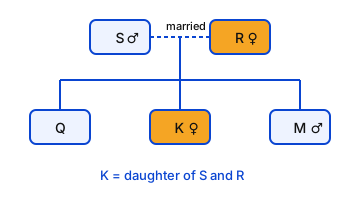
  1. S is married to R and S is the father of Q → S is male, R is Q's mother.
  2. K is Q's sister → K is a daughter of S and R.
  3. So K is R's daughter.

Trick: "Sister of a child" = daughter of the parents; the gender word "sister" fixes K as female.

Answer: (C) Daughter

अवधारणा: दंपति से नीचे की ओर वंश-वृक्ष बनाएँ।

  1. S का विवाह R से और S, Q का पिता → S पुरुष, R, Q की माँ।
  2. K, Q की बहन → K, S और R की पुत्री।
  3. अतः K, R की पुत्री है।

ट्रिक: "बच्चे की बहन" = माता-पिता की पुत्री; "बहन" शब्द K को स्त्री तय करता है।

उत्तर: (C) पुत्री (Daughter)
RRB NTPC Graduate CBT 1General Intelligence and ReasoningBlood RelationsRRB NTPC Graduate CBT 1 2025 · 22 Mar Shift 2 →
Q5762.
17 is related to 68 following a certain logic. Following the same logic, 24 is related to 96. To which of the following is 21 related, following the same logic?
(NOTE: Operations should be performed on the whole numbers, without breaking down the numbers into their constituent digits. E.g. 13 – Operations on 13 such as adding/ subtracting /multiplying to 13 can be performed. Breaking down 13 into 1 and 3 and then performing mathematical operations on 1 and 3 is not allowed.)
17 एक निश्चित तर्क के अनुसार 68 से संबंधित है। उसी तर्क के अनुसार, 24, 96 से संबंधित है। उसी तर्क के अनुसार, 21 निम्नलिखित में से किससे संबंधित है?
(नोट: संक्रियाएँ संख्याओं को उनके घटक अंकों में विभाजित किए बिना पूर्ण संख्याओं पर की जानी चाहिए। उदाहरण के लिए 13 – 13 पर संक्रियाएँ जैसे 13 में जोड़ना/घटाना/गुणा करना की जा सकती हैं। 13 को 1 और 3 में विभाजित करके फिर 1 और 3 पर गणितीय संक्रियाएँ करने की अनुमति नहीं है।)
  1. A89
  2. B84
  3. C77
  4. D72
Show answer

Concept: Find one operation that works for both given pairs.

  1. 17×4=68 and 24×4=96 → rule: multiply by 4.
  2. 21×4=84.

Trick: Check the ratio second ÷ first: 68÷17=4, 96÷24=4 – constant, so it's a pure multiple.

Answer: (B) 84

अवधारणा: दोनों दिए गए युग्मों पर चलने वाली एक संक्रिया खोजें।

  1. 17×4=68 और 24×4=96 → नियम: 4 से गुणा।
  2. 21×4=84।

ट्रिक: दूसरा ÷ पहला देखें: 68÷17=4, 96÷24=4 – स्थिर, अतः शुद्ध गुणज।

उत्तर: (B) 84

RRB NTPC Graduate CBT 1General Intelligence and ReasoningNumber AnalogyRRB NTPC Graduate CBT 1 2025 · 22 Mar Shift 2 →
Q5763.
What should come in place of ‘?’ in the given series?
95 70 54 45 41 ?
दी गई श्रृंखला में ‘?’ के स्थान पर क्या आना चाहिए?
95 70 54 45 41 ?
  1. A40
  2. B44
  3. C42
  4. D38
Show answer

Concept: Look at the differences – they are perfect squares.

  1. 95−70=25, 70−54=16, 54−45=9, 45−41=4.
  2. Differences 52,42,32,22 → next 12=1 → 41−1=40.

Trick: Decreasing series with differences 25,16,9,4,1 – squares counting down.

Answer: (A) 40

अवधारणा: अंतर देखें – वे पूर्ण वर्ग हैं।

  1. 95−70=25, 70−54=16, 54−45=9, 45−41=4।
  2. अंतर 52,42,32,22 → अगला 12=1 → 41−1=40।

ट्रिक: घटती शृंखला, अंतर 25,16,9,4,1 – उल्टे क्रम में वर्ग।

उत्तर: (A) 40

RRB NTPC Graduate CBT 1General Intelligence and ReasoningNumber SeriesRRB NTPC Graduate CBT 1 2025 · 22 Mar Shift 2 →
Q5764.
Select the pair which follows the same pattern as that followed by the two set of pairs given below. Both pairs follow the same pattern.
UND : SSB
QXZ : OCX
उस युग्म का चयन कीजिए जो नीचे दिए गए युग्मों के दो समुच्चयों द्वारा अनुसरण किए गए पैटर्न के समान पैटर्न का अनुसरण करता है। दोनों युग्म समान पैटर्न का अनुसरण करते हैं।
UND : SSB
QXZ : OCX
  1. AMHV : KMT
  2. BWRK : SWG
  3. CTBE : QFB
  4. DZQV : VTR
Show answer

Concept: Compare position numbers of corresponding letters in each pair and find the fixed shift pattern.

  1. UND → SSB: U(21)−2 = S(19), N(14)+5 = S(19), D(4)−2 = B(2). Pattern: −2, +5, −2.
  2. QXZ → OCX: Q(17)−2 = O, X(24)+5 = 29 → 3 = C, Z(26)−2 = X. Same pattern confirmed.
  3. Apply to MHV: M(13)−2 = K, H(8)+5 = M, V(22)−2 = T → KMT. Other options break the pattern (e.g. WRK → SWG has −4, +5, −4).

Trick: Write the letter numbers quickly (EJOTY: E=5, J=10, O=15, T=20, Y=25) and test only the first letter of each option first – it eliminates most options.

Answer: (A) MHV : KMT

अवधारणा: प्रत्येक युग्म में संगत अक्षरों की स्थिति-संख्याओं की तुलना करके निश्चित अंतर का पैटर्न खोजें।

  1. UND → SSB: U(21)−2 = S(19), N(14)+5 = S(19), D(4)−2 = B(2)। पैटर्न: −2, +5, −2।
  2. QXZ → OCX: Q(17)−2 = O, X(24)+5 = 29 → 3 = C, Z(26)−2 = X। वही पैटर्न।
  3. MHV पर लागू करें: M(13)−2 = K, H(8)+5 = M, V(22)−2 = T → KMT। बाकी विकल्प पैटर्न तोड़ते हैं (जैसे WRK → SWG में −4, +5, −4)।

ट्रिक: अक्षर-संख्याएँ तुरंत लिखें (EJOTY: E=5, J=10, O=15, T=20, Y=25) और पहले केवल हर विकल्प का पहला अक्षर जाँचें – ज़्यादातर विकल्प वहीं कट जाते हैं।

उत्तर: (A) MHV : KMT

RRB NTPC Graduate CBT 1General Intelligence and ReasoningLetter AnalogyRRB NTPC Graduate CBT 1 2025 · 22 Mar Shift 2 →
Q5765.
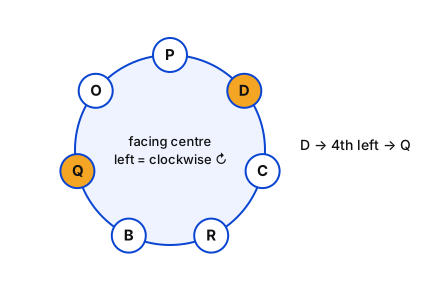
Seven people B, C, D, O, P, Q and R are sitting around a circular table facing the center of the table. Only two people sit between R and P when counted from the left of P. Only three people sit between C and O when counted from the left of C. P sits to the immediate right of O. B sits to the immediate right of Q. Who sits fourth to the left of D?
सात व्यक्ति B, C, D, O, P, Q और R एक वृत्ताकार मेज़ के चारों ओर मेज़ के केंद्र की ओर मुख करके बैठे हैं। P के बाएँ से गिनने पर R और P के बीच केवल दो व्यक्ति बैठे हैं। C के बाएँ से गिनने पर C और O के बीच केवल तीन व्यक्ति बैठे हैं। P, O के ठीक दाएँ बैठा है। B, Q के ठीक दाएँ बैठा है। D के बाएँ चौथे स्थान पर कौन बैठा है?
  1. AP
  2. BQ
  3. CB
  4. DO
Show answer

Concept: When people face the centre, "left" means clockwise and "right" means anticlockwise. Fix one person and place the others step by step.

  1. Fix P. O is to the immediate right of P. Counting from P's left (clockwise), two people sit between P and R → R is the 3rd seat clockwise from P.
  2. From C's left, three people sit between C and O → C is 4 seats anticlockwise from O, i.e. the 2nd seat clockwise from P.
  3. Remaining seats (clockwise from P): 1st, 4th and 5th for B, Q, D. B is to the immediate right of Q → Q in 5th, B in 4th; so D takes the 1st seat.
  4. Order clockwise: P, D, C, R, B, Q, O. Fourth to the left (clockwise) of D: C, R, B, Q.

Trick: Facing centre → left = clockwise. Place the "immediate" clues last; they slot the leftover people in one shot.

Answer: (B) Q

अवधारणा: केंद्र की ओर मुख होने पर "बाएँ" का अर्थ दक्षिणावर्त (clockwise) और "दाएँ" का अर्थ वामावर्त (anticlockwise) होता है। एक व्यक्ति को स्थिर करके बाकी को क्रम से बैठाएँ।

  1. P को स्थिर करें। O, P के ठीक दाएँ है। P के बाएँ से गिनने पर P और R के बीच दो लोग → R, P से दक्षिणावर्त 3री सीट पर।
  2. C के बाएँ से गिनने पर C और O के बीच तीन लोग → C, O से 4 सीट वामावर्त, यानी P से दक्षिणावर्त 2री सीट।
  3. बची सीटें (P से दक्षिणावर्त): 1ली, 4थी, 5वीं – B, Q, D के लिए। B, Q के ठीक दाएँ → Q 5वीं, B 4थी; अतः D 1ली सीट पर।
  4. दक्षिणावर्त क्रम: P, D, C, R, B, Q, O। D के बाएँ (दक्षिणावर्त) चौथा: C, R, B, Q।

ट्रिक: केंद्र की ओर मुख → बाएँ = दक्षिणावर्त। "ठीक बगल" वाले संकेत अंत में लगाएँ; बचे लोग एक बार में फिट हो जाते हैं।

उत्तर: (B) Q

RRB NTPC Graduate CBT 1General Intelligence and ReasoningCircular Seating ArrangementRRB NTPC Graduate CBT 1 2025 · 22 Mar Shift 2 →
Q5766.
Which of the given letter-number clusters will replace the question mark (?) in the following series to make it logically complete?
QBL 8 EPZ 16 SDN 24 GRB 32 ?
दिए गए अक्षर-संख्या समूहों में से कौन-सा निम्नलिखित श्रृंखला में प्रश्नचिह्न (?) के स्थान पर आकर इसे तार्किक रूप से पूर्ण करेगा?
QBL 8 EPZ 16 SDN 24 GRB 32 ?
  1. ACNE 41
  2. BMSY 42
  3. CKDU 42
  4. DUFP 40
Show answer

Concept: Treat each letter position and the number as separate series and find the constant jump.

  1. 1st letters: Q(17) → E(5) → S(19) → G(7): each +14 (mod 26). Next: G+14 = 21 = U.
  2. 2nd letters: B → P → D → R: +14. Next: R(18)+14 = 32 → 6 = F. 3rd letters: L → Z → N → B: +14. Next: B(2)+14 = P.
  3. Numbers: 8, 16, 24, 32 → +8 → 40. So the term is UFP 40.

Trick: +14 in a 26-letter alphabet is the same as −12; also note the first letters alternate odd/even positions (17, 5, 19, 7, 21).

Answer: (D) UFP 40

अवधारणा: हर अक्षर-स्थान और संख्या को अलग श्रृंखला मानकर स्थिर अंतर खोजें।

  1. पहले अक्षर: Q(17) → E(5) → S(19) → G(7): हर बार +14 (26 के चक्र में)। अगला: G+14 = 21 = U।
  2. दूसरे अक्षर: B → P → D → R: +14। अगला: R(18)+14 = 32 → 6 = F। तीसरे अक्षर: L → Z → N → B: +14। अगला: B(2)+14 = P।
  3. संख्याएँ: 8, 16, 24, 32 → +8 → 40। अतः पद UFP 40।

ट्रिक: 26 अक्षरों में +14 वही है जो −12; पहले अक्षरों की स्थितियाँ भी विषम/सम बारी-बारी हैं (17, 5, 19, 7, 21)।

उत्तर: (D) UFP 40

RRB NTPC Graduate CBT 1General Intelligence and ReasoningLetter-Number SeriesRRB NTPC Graduate CBT 1 2025 · 22 Mar Shift 2 →
Q5767.
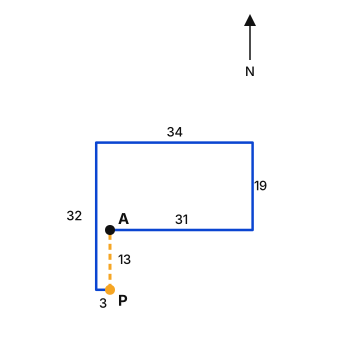
Vishu starts from Point A and drives 31 km towards East. He then takes a left turn, drives 19 km, turns left and drives 34 km. He then takes a left turn and drives 32 km. He takes a final left turn, drives 3 km and stops at Point P. How far (shortest distance) and towards which direction should he drive in order to reach Point A again? (All turns are 90 degrees turns only unless specified)
विशु बिंदु A से शुरू करके पूर्व की ओर 31 km गाड़ी चलाता है। फिर वह बाएँ मुड़ता है, 19 km गाड़ी चलाता है, बाएँ मुड़ता है और 34 km गाड़ी चलाता है। फिर वह बाएँ मुड़ता है और 32 km गाड़ी चलाता है। वह अंतिम बार बाएँ मुड़ता है, 3 km गाड़ी चलाता है और बिंदु P पर रुकता है। बिंदु A पर पुनः पहुँचने के लिए उसे कितनी दूर (न्यूनतम दूरी) और किस दिशा में गाड़ी चलानी चाहिए? (जब तक अन्यथा निर्दिष्ट न हो, सभी मोड़ केवल 90 डिग्री के मोड़ हैं)
  1. A12 km to the South12 km दक्षिण की ओर
  2. B13 km to the South13 km दक्षिण की ओर
  3. C12 km to the North12 km उत्तर की ओर
  4. D13 km to the North13 km उत्तर की ओर
Show answer

Concept: Put A at the origin; East = +x, North = +y. Each left turn rotates the heading anticlockwise: E → N → W → S → E.

  1. East 31: (31,0). Left → North 19: (31,19). Left → West 34: (−3,19).
  2. Left → South 32: (−3,−13). Left → East 3: (0,−13) = P.
  3. P is directly below A on the same vertical line, 13 km to the South. So Vishu must drive 13 km North to reach A.

Trick: Net East–West =31−34+3=0 and net North–South =19−32=−13. Zero horizontal shift means the answer is a pure North/South distance – no Pythagoras needed.

Answer: (D) 13 km to the North

अवधारणा: A को मूलबिंदु मानें; पूर्व = +x, उत्तर = +y। हर बायाँ मोड़ दिशा को वामावर्त घुमाता है: E → N → W → S → E।

  1. पूर्व 31: (31,0)। बाएँ → उत्तर 19: (31,19)। बाएँ → पश्चिम 34: (−3,19)।
  2. बाएँ → दक्षिण 32: (−3,−13)। बाएँ → पूर्व 3: (0,−13) = P।
  3. P, A के ठीक नीचे उसी ऊर्ध्वाधर रेखा पर 13 km दक्षिण में है। अतः विशु को A पहुँचने के लिए 13 km उत्तर चलना होगा।

ट्रिक: शुद्ध पूर्व–पश्चिम =31−34+3=0 और शुद्ध उत्तर–दक्षिण =19−32=−13। क्षैतिज विस्थापन शून्य होने से उत्तर सीधी उत्तर/दक्षिण दूरी है – पाइथागोरस की ज़रूरत नहीं।

उत्तर: (D) 13 km to the North

RRB NTPC Graduate CBT 1General Intelligence and ReasoningDirection & DistanceRRB NTPC Graduate CBT 1 2025 · 22 Mar Shift 2 →
Q5768.
RAFI is related to TELQ in a certain way based on the English alphabetical order. In the same way, NEGL is related to PIMT. To which of the following is JRTB related, following the same logic?
अंग्रेज़ी वर्णमाला क्रम के आधार पर RAFI एक निश्चित प्रकार से TELQ से संबंधित है। उसी प्रकार, NEGL, PIMT से संबंधित है। उसी तर्क के अनुसार, JRTB निम्नलिखित में से किससे संबंधित है?
  1. ALVZI
  2. BLVZJ
  3. CKTWE
  4. DZLKT
Show answer

Concept: Find the shift applied to each letter position in the given pairs and apply the same to the new word.

  1. RAFI → TELQ: R+2 = T, A+4 = E, F+6 = L, I+8 = Q. Shifts: +2, +4, +6, +8.
  2. NEGL → PIMT: N+2 = P, E+4 = I, G+6 = M, L+8 = T ✓
  3. JRTB: J(10)+2 = L, R(18)+4 = V, T(20)+6 = Z, B(2)+8 = J → LVZJ.

Trick: The last letter decides between options A and B: B+8 = J (not I). Always verify the final letter carefully.

Answer: (B) LVZJ

अवधारणा: दिए गए युग्मों में हर अक्षर-स्थान पर लगा अंतर खोजें और नए शब्द पर वही लगाएँ।

  1. RAFI → TELQ: R+2 = T, A+4 = E, F+6 = L, I+8 = Q। अंतर: +2, +4, +6, +8।
  2. NEGL → PIMT: N+2 = P, E+4 = I, G+6 = M, L+8 = T ✓
  3. JRTB: J(10)+2 = L, R(18)+4 = V, T(20)+6 = Z, B(2)+8 = J → LVZJ।

ट्रिक: अंतिम अक्षर विकल्प A और B में फ़र्क करता है: B+8 = J (I नहीं)। अंतिम अक्षर हमेशा ध्यान से जाँचें।

उत्तर: (B) LVZJ

RRB NTPC Graduate CBT 1General Intelligence and ReasoningLetter Coding – AnalogyRRB NTPC Graduate CBT 1 2025 · 22 Mar Shift 2 →
Q5769.
Read the given statements and conclusions carefully. Assuming that the information given in the statements is true, even if it appears to be at variance with commonly known facts, decide which of the given conclusion(s) logically follow(s) from the statement.
Statements:
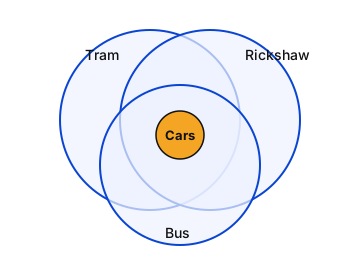
All cars are tram. All cars are rickshaw. All cars are bus.
Conclusions:
(I) All trams are bus.
(II) Some buses are rickshaws.
दिए गए कथनों और निष्कर्षों को ध्यानपूर्वक पढ़िए। कथनों में दी गई जानकारी को सत्य मानते हुए, भले ही वह सामान्यतः ज्ञात तथ्यों से भिन्न प्रतीत होती हो, निर्णय लीजिए कि दिए गए निष्कर्षों में से कौन-सा/से कथनों का तार्किक रूप से अनुसरण करता है/करते हैं।
कथन:
सभी कारें ट्राम हैं। सभी कारें रिक्शा हैं। सभी कारें बस हैं।
निष्कर्ष:
(I) सभी ट्राम बस हैं।
(II) कुछ बसें रिक्शा हैं।
  1. AOnly conclusion (II) follows.केवल निष्कर्ष (II) अनुसरण करता है।
  2. BOnly conclusion (I) follows.केवल निष्कर्ष (I) अनुसरण करता है।
  3. CNeither conclusion (I) nor (II) follows.न तो निष्कर्ष (I) और न ही (II) अनुसरण करता है।
  4. DBoth conclusions (I) and (II) follow.निष्कर्ष (I) और (II) दोनों अनुसरण करते हैं।
Show answer

Concept: Draw the minimal Venn diagram: "All cars are X" means the Cars set lies inside X. Three statements put Cars inside Tram, Rickshaw and Bus simultaneously.

  1. Conclusion I "All trams are bus": Tram need not lie inside Bus – only the Cars part is common. Does not follow.
  2. Conclusion II "Some buses are rickshaws": every car is both a bus and a rickshaw, so Bus and Rickshaw definitely overlap. Follows.

Trick: From "All A are B" and "All A are C" you can always conclude "Some B are C" (and "Some C are B"), never "All B are C".

Answer: (A) Only conclusion (II) follows.

अवधारणा: न्यूनतम वेन आरेख बनाएँ: "All cars are X" का अर्थ Cars समुच्चय X के भीतर है। तीनों कथन Cars को एक साथ Tram, Rickshaw और Bus के अंदर रखते हैं।

  1. निष्कर्ष I "All trams are bus": Tram का Bus के भीतर होना ज़रूरी नहीं – केवल Cars वाला हिस्सा साझा है। अनुसरण नहीं करता।
  2. निष्कर्ष II "Some buses are rickshaws": हर कार बस भी है और रिक्शा भी, अतः Bus और Rickshaw निश्चित रूप से ओवरलैप करते हैं। अनुसरण करता है।

ट्रिक: "All A are B" और "All A are C" से हमेशा "Some B are C" (और "Some C are B") निकलता है, कभी "All B are C" नहीं।

उत्तर: (A) Only conclusion (II) follows.

RRB NTPC Graduate CBT 1General Intelligence and ReasoningSyllogismRRB NTPC Graduate CBT 1 2025 · 22 Mar Shift 2 →
Q5770.
Refer to the following letter, symbol series and answer the question. Counting to be done from left to right only.
(Left) # F * G W # C # Y R & @ W Z @ L & L N % # W (Right)
How many such letters are there, each of which is immediately preceded by a symbol and also immediately followed by a symbol?
निम्नलिखित अक्षर, प्रतीक श्रृंखला को देखिए और प्रश्न का उत्तर दीजिए। गिनती केवल बाएँ से दाएँ की जानी है।
(बाएँ) # F * G W # C # Y R & @ W Z @ L & L N % # W (दाएँ)
ऐसे कितने अक्षर हैं, जिनमें से प्रत्येक के ठीक पहले एक प्रतीक है और ठीक बाद भी एक प्रतीक है?
  1. A5
  2. B2
  3. C3
  4. D4
Show answer

Concept: Scan the series element by element and check both neighbours of every letter: we need symbol–letter–symbol triplets.

  1. Series: # F * G W # C # Y R & @ W Z @ L & L N % # W
  2. Triplets found: # F *, # C #, @ L &.
  3. Near-misses: * G W (letter after), # Y R, @ W Z, & L N (letter after), # W (nothing after). Total = 3.

Trick: Underline every symbol first; then look only at single letters sandwiched between two underlines.

Answer: (C) 3

अवधारणा: श्रृंखला को एक-एक तत्व देखें और हर अक्षर के दोनों पड़ोसी जाँचें: हमें प्रतीक–अक्षर–प्रतीक त्रिक चाहिए।

  1. श्रृंखला: # F * G W # C # Y R & @ W Z @ L & L N % # W
  2. मिले त्रिक: # F *, # C #, @ L &।
  3. लगभग-सही पर गलत: * G W (बाद में अक्षर), # Y R, @ W Z, & L N (बाद में अक्षर), # W (बाद में कुछ नहीं)। कुल = 3।

ट्रिक: पहले हर प्रतीक को रेखांकित करें; फिर केवल दो रेखांकनों के बीच अकेले फँसे अक्षर गिनें।

उत्तर: (C) 3

RRB NTPC Graduate CBT 1General Intelligence and ReasoningLetter-Symbol SeriesRRB NTPC Graduate CBT 1 2025 · 22 Mar Shift 2 →
Q5771.
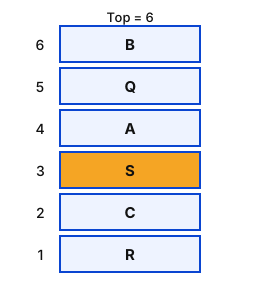
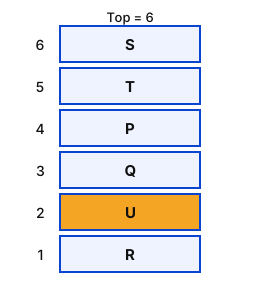
A, B, C, Q, R and S live on six different floors of the same building. The lowermost floor in the building is numbered 1, the floor above it is numbered 2 and so on, till the topmost floor, which is numbered 6. Q lives on the floor numbered 5. B lives on a floor above Q. Only R lives below C. A lives on an even-numbered floor. How many people live below S?
A, B, C, Q, R और S एक ही इमारत की छह अलग-अलग मंज़िलों पर रहते हैं। इमारत की सबसे निचली मंज़िल की संख्या 1 है, उसके ऊपर की मंज़िल की संख्या 2 है और इसी प्रकार सबसे ऊपरी मंज़िल तक, जिसकी संख्या 6 है। Q मंज़िल संख्या 5 पर रहता है। B, Q से ऊपर की किसी मंज़िल पर रहता है। C के नीचे केवल R रहता है। A एक सम-संख्या वाली मंज़िल पर रहता है। S के नीचे कितने व्यक्ति रहते हैं?
  1. AFourचार
  2. BTwoदो
  3. CThreeतीन
  4. DOneएक
Show answer

Concept: Fix the definite positions first, then use "only one below" type clues, and finally parity (even/odd) clues.

  1. Q = floor 5. B lives above Q → B = floor 6.
  2. Only R lives below C → R = floor 1, C = floor 2.
  3. A lives on an even floor; 2 and 6 are taken → A = floor 4. The remaining floor 3 goes to S.
  4. People below S (floor 3): R and C → two.

Trick: Build the stack bottom-up: R, C, S, A, Q, B. "Only X lives below Y" pins Y to floor 2 instantly.

Answer: (B) Two

अवधारणा: पहले निश्चित स्थितियाँ भरें, फिर "केवल एक नीचे" जैसे संकेत, और अंत में सम/विषम संकेत लगाएँ।

  1. Q = मंज़िल 5। B, Q के ऊपर → B = मंज़िल 6।
  2. C के नीचे केवल R → R = मंज़िल 1, C = मंज़िल 2।
  3. A सम मंज़िल पर; 2 और 6 भरी हैं → A = मंज़िल 4। बची मंज़िल 3 पर S।
  4. S (मंज़िल 3) के नीचे: R और C → दो।

ट्रिक: ढेर नीचे से ऊपर बनाएँ: R, C, S, A, Q, B। "Y के नीचे केवल X" Y को तुरंत मंज़िल 2 पर तय कर देता है।

उत्तर: (B) Two

RRB NTPC Graduate CBT 1General Intelligence and ReasoningFloor PuzzleRRB NTPC Graduate CBT 1 2025 · 22 Mar Shift 2 →
Q5772.
Which of the following letter-number clusters will replace the question mark “?” in the given series to make it logically complete?
ZOB 6, ETG 10, JYL 14, ODQ 18, ?
निम्नलिखित में से कौन-सा अक्षर-संख्या समूह दी गई श्रृंखला में प्रश्नचिह्न “?” के स्थान पर आकर इसे तार्किक रूप से पूर्ण करेगा?
ZOB 6, ETG 10, JYL 14, ODQ 18, ?
  1. AUJW 22
  2. BTHU 22
  3. CRHV 24
  4. DTIV 22
Show answer

Concept: Check each letter position and the number separately for a constant step.

  1. 1st letters: Z → E → J → O: +5 each (Z=26 → 31−26 = 5 = E). Next: O(15)+5 = T.
  2. 2nd letters: O → T → Y → D: +5. Next: D(4)+5 = I. 3rd letters: B → G → L → Q: +5. Next: Q(17)+5 = V.
  3. Numbers: 6, 10, 14, 18 → +4 → 22. Term = TIV 22.

Trick: Within each cluster the letters themselves differ by +15 and +13 (Z,O,B), but across terms every letter simply moves +5 – test across terms first.

Answer: (D) TIV 22

अवधारणा: हर अक्षर-स्थान और संख्या को अलग-अलग स्थिर अंतर के लिए जाँचें।

  1. पहले अक्षर: Z → E → J → O: हर बार +5 (Z=26 → 31−26 = 5 = E)। अगला: O(15)+5 = T।
  2. दूसरे अक्षर: O → T → Y → D: +5। अगला: D(4)+5 = I। तीसरे अक्षर: B → G → L → Q: +5। अगला: Q(17)+5 = V।
  3. संख्याएँ: 6, 10, 14, 18 → +4 → 22। पद = TIV 22।

ट्रिक: एक पद के भीतर अक्षर +15, +13 से बढ़ते हैं (Z,O,B), पर पदों के बीच हर अक्षर बस +5 चलता है – पहले पदों के बीच जाँचें।

उत्तर: (D) TIV 22

RRB NTPC Graduate CBT 1General Intelligence and ReasoningLetter-Number SeriesRRB NTPC Graduate CBT 1 2025 · 22 Mar Shift 2 →
Q5773.
Which of the following letter-clusters should replace # and % so that the pattern and relationship followed between the letter-cluster pair on the left side of :: is the same as that on the right side of :: ?
# : MNI :: UVQ : %
निम्नलिखित में से कौन-से अक्षर-समूह # और % के स्थान पर आने चाहिए ताकि :: के बाईं ओर के अक्षर-समूह युग्म के बीच का पैटर्न और संबंध :: के दाईं ओर के युग्म के समान हो?
# : MNI :: UVQ : %
  1. A# = OPN % = PBW
  2. B# = RUN % = IOL
  3. C# = RSN % = PQL
  4. D# = RJH % = IQL
Show answer

Concept: Both sides of :: must follow the same rule. Test each option's rule on the pair where the full answer is given, then confirm on the other side.

  1. Option C: RSN : MNI → R−5 = M, S−5 = N, N−5 = I (each letter −5).
  2. Apply −5 to UVQ: U(21)−5 = P, V(22)−5 = Q, Q(17)−5 = L → PQL, which matches option C's % = PQL.
  3. Option A: OPN → MNI gives −2, −2, −5 (irregular); B and D give no consistent rule for both sides.

Trick: The left and right pairs must share ONE rule. Check option by option – here only "−5 to every letter" works on both sides.

Answer: (C) # = RSN % = PQL

अवधारणा: :: के दोनों ओर एक ही नियम लागू होना चाहिए। हर विकल्प का नियम उस युग्म पर जाँचें जहाँ पूरा उत्तर दिया है, फिर दूसरी ओर पुष्टि करें।

  1. विकल्प C: RSN : MNI → R−5 = M, S−5 = N, N−5 = I (हर अक्षर −5)।
  2. UVQ पर −5 लगाएँ: U(21)−5 = P, V(22)−5 = Q, Q(17)−5 = L → PQL, जो विकल्प C के % = PQL से मेल खाता है।
  3. विकल्प A: OPN → MNI में −2, −2, −5 (अनियमित); B और D में दोनों ओर कोई एक नियम नहीं बनता।

ट्रिक: बाएँ और दाएँ युग्म में एक ही नियम होना चाहिए। विकल्प-दर-विकल्प जाँचें – यहाँ केवल "हर अक्षर −5" दोनों ओर काम करता है।

उत्तर: (C) # = RSN % = PQL

RRB NTPC Graduate CBT 1General Intelligence and ReasoningLetter-Cluster AnalogyRRB NTPC Graduate CBT 1 2025 · 22 Mar Shift 2 →
Q5774.
​In a certain code language,
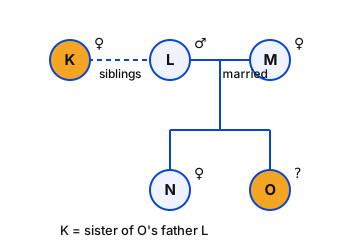
A + B means ‘A is the sister of B’,
A – B means ‘A is the husband of B’,
A × B means ‘A is the mother of B’ and
A ÷ B means ‘A is the brother of B’.
Based on the above, how is K related to O if ‘K + L − M × N + O’?
एक निश्चित कूट भाषा में,
A + B का अर्थ है ‘A, B की बहन है’,
A – B का अर्थ है ‘A, B का पति है’,
A × B का अर्थ है ‘A, B की माता है’ और
A ÷ B का अर्थ है ‘A, B का भाई है’।
उपर्युक्त के आधार पर, यदि ‘K + L − M × N + O’ है, तो K, O से किस प्रकार संबंधित है?
  1. AMother's sisterमाता की बहन
  2. BFather's motherपिता की माता
  3. CMother's motherमाता की माता
  4. DFather's sisterपिता की बहन
Show answer

Concept: Decode left to right and draw a family tree; each symbol gives the relation of the letter before it to the letter after it.

  1. K + L: K is the sister of L. L − M: L is the husband of M (so L is male).
  2. M × N: M is the mother of N. N + O: N is the sister of O.
  3. Hence M is O's mother and L is O's father; K, being L's sister, is O's father's sister (bua).

Trick: Husband of the mother = father. Then "sister of the father" – do not slip into "mother's sister" (that would need K to be M's sister).

Answer: (D) Father's sister

अवधारणा: बाएँ से दाएँ कूट खोलें और वंश-वृक्ष बनाएँ; हर प्रतीक अपने पहले वाले अक्षर का बाद वाले अक्षर से संबंध बताता है।

  1. K + L: K, L की बहन है। L − M: L, M का पति है (अतः L पुरुष)।
  2. M × N: M, N की माँ है। N + O: N, O की बहन है।
  3. अतः M, O की माँ और L, O का पिता; K, L की बहन होने से O की पिता की बहन (बुआ) है।

ट्रिक: माँ का पति = पिता। फिर "पिता की बहन" – "माँ की बहन" में न फिसलें (उसके लिए K को M की बहन होना चाहिए)।

उत्तर: (D) Father's sister

RRB NTPC Graduate CBT 1General Intelligence and ReasoningBlood Relations – CodedRRB NTPC Graduate CBT 1 2025 · 22 Mar Shift 2 →
Q5775.
P, Q, R, S, T and U live on six different floors of the same building. The lowermost floor in the building is numbered 1, the floor above it is numbered 2 and so on till the topmost floor is numbered 6. Q lives on floor which is a prime number. The product of the floors on which Q and R live is 3. Only 2 people live above P. T lives immediately below S. How many people live below U?
P, Q, R, S, T और U एक ही इमारत की छह अलग-अलग मंज़िलों पर रहते हैं। इमारत की सबसे निचली मंज़िल की संख्या 1 है, उसके ऊपर की मंज़िल की संख्या 2 है और इसी प्रकार सबसे ऊपरी मंज़िल तक, जिसकी संख्या 6 है। Q उस मंज़िल पर रहता है जिसकी संख्या एक अभाज्य संख्या है। Q और R जिन मंज़िलों पर रहते हैं, उनकी संख्याओं का गुणनफल 3 है। P के ऊपर केवल 2 व्यक्ति रहते हैं। T, S के ठीक नीचे रहता है। U के नीचे कितने व्यक्ति रहते हैं?
  1. A3
  2. B4
  3. C2
  4. D1
Show answer

Concept: Use number-property clues (prime, product) to pin exact floors, then place the rest with "above/below" clues.

  1. Product of Q's and R's floors is 3, and Q is on a prime floor → Q = 3, R = 1.
  2. Only 2 people above P → P = floor 4.
  3. T is immediately below S; free floors are 2, 5, 6 → S = 6, T = 5. U gets floor 2.
  4. Below U (floor 2) lives only R → one person.

Trick: Stack bottom-up: R, U, Q, P, T, S. "Only 2 above" in a 6-floor building always means floor 4.

Answer: (D) 1

अवधारणा: संख्या-गुण संकेतों (अभाज्य, गुणनफल) से सटीक मंज़िलें तय करें, फिर "ऊपर/नीचे" संकेतों से बाकी बैठाएँ।

  1. Q और R की मंज़िलों का गुणनफल 3 और Q अभाज्य मंज़िल पर → Q = 3, R = 1।
  2. P के ऊपर केवल 2 लोग → P = मंज़िल 4।
  3. T, S के ठीक नीचे; खाली मंज़िलें 2, 5, 6 → S = 6, T = 5। U को मंज़िल 2।
  4. U (मंज़िल 2) के नीचे केवल R → एक व्यक्ति।

ट्रिक: ढेर नीचे से ऊपर: R, U, Q, P, T, S। 6 मंज़िलों में "ऊपर केवल 2" का अर्थ हमेशा मंज़िल 4।

उत्तर: (D) 1

RRB NTPC Graduate CBT 1General Intelligence and ReasoningFloor PuzzleRRB NTPC Graduate CBT 1 2025 · 22 Mar Shift 2 →
Q5776.
Refer to the following letter, symbol series and answer the question.
(Left) L U £ P $ D A Ω F % * N Q & R # Y @ C K * & M (Right)
If all the letters are dropped from the series, which of the following will be seventh from the right?
निम्नलिखित अक्षर, प्रतीक श्रृंखला को देखिए और प्रश्न का उत्तर दीजिए।
(बाएँ) L U £ P $ D A Ω F % * N Q & R # Y @ C K * & M (दाएँ)
यदि श्रृंखला से सभी अक्षर हटा दिए जाएँ, तो निम्नलिखित में से कौन-सा दाएँ से सातवाँ होगा?
  1. A@
  2. B%
  3. C$
  4. DΩ
Show answer

Concept: Drop all letters, write the remaining symbols in order, then count from the right.

  1. Symbols in order: £, $, Ω, %, *, &, #, @, *, & (10 symbols).
  2. From the right: 1st &, 2nd *, 3rd @, 4th #, 5th &, 6th *, 7th %.

Trick: "n-th from the right" in a list of N items is the (N−n+1)-th from the left: 10−7+1=4th → %.

Answer: (B) %

अवधारणा: सभी अक्षर हटाएँ, बचे प्रतीक क्रम से लिखें, फिर दाएँ से गिनें।

  1. क्रम में प्रतीक: £, $, Ω, %, *, &, #, @, *, & (10 प्रतीक)।
  2. दाएँ से: 1ला &, 2रा *, 3रा @, 4था #, 5वाँ &, 6ठा *, 7वाँ %।

ट्रिक: N वस्तुओं में "दाएँ से nवाँ" = बाएँ से (N−n+1)वाँ: 10−7+1=4था → %।

उत्तर: (B) %

RRB NTPC Graduate CBT 1General Intelligence and ReasoningLetter-Symbol SeriesRRB NTPC Graduate CBT 1 2025 · 22 Mar Shift 2 →
Q5777.
8 is related to 41 following a certain logic. Following the same logic, 81 is related to 406. To which of the following is 13 related, following the same logic?
(NOTE: Operations should be performed on the whole numbers, without breaking down the numbers into their constituent digits. E.g. 13 – Operations on 13 such as
adding/subtracting/multiplying etc. to 13, can be performed. Breaking down 13 into 1 and 3 and then performing mathematical operations on 1 and 3 is not allowed.)
8 एक निश्चित तर्क के अनुसार 41 से संबंधित है। उसी तर्क के अनुसार, 81, 406 से संबंधित है। उसी तर्क के अनुसार, 13 निम्नलिखित में से किससे संबंधित है?
(नोट: संक्रियाएँ संख्याओं को उनके घटक अंकों में विभाजित किए बिना पूर्ण संख्याओं पर की जानी चाहिए। उदाहरण के लिए 13 – 13 पर संक्रियाएँ जैसे
13 में जोड़ना/घटाना/गुणा करना आदि की जा सकती हैं। 13 को 1 और 3 में विभाजित करके फिर 1 और 3 पर गणितीय संक्रियाएँ करने की अनुमति नहीं है।)
  1. A64
  2. B66
  3. C68
  4. D62
Show answer

Concept: Find one operation on the whole number that turns the first number into the second, and confirm it on the second pair.

  1. 8→41: 8×5+1=41.
  2. 81→406: 81×5+1=406 ✓ (same rule).
  3. 13→13×5+1=66.

Trick: When the second number is roughly 5 times the first, try 5n±k first; the pair (81,406) settles k=+1.

Answer: (B) 66

अवधारणा: पूरी संख्या पर ऐसी एक संक्रिया खोजें जो पहली संख्या को दूसरी में बदले, और दूसरे युग्म पर पुष्टि करें।

  1. 8→41: 8×5+1=41।
  2. 81→406: 81×5+1=406 ✓ (वही नियम)।
  3. 13→13×5+1=66।

ट्रिक: जब दूसरी संख्या पहली की लगभग 5 गुनी हो, पहले 5n±k आज़माएँ; युग्म (81,406) से k=+1 तय होता है।

उत्तर: (B) 66

RRB NTPC Graduate CBT 1General Intelligence and ReasoningNumber AnalogyRRB NTPC Graduate CBT 1 2025 · 22 Mar Shift 2 →
Q5778.
What is the inflation target set by the Government of India under the Monetary Policy Committee framework until April 2026?
मौद्रिक नीति समिति (Monetary Policy Committee) ढाँचे के अंतर्गत भारत सरकार द्वारा अप्रैल 2026 तक के लिए निर्धारित मुद्रास्फीति लक्ष्य क्या है?
  1. A4% with a tolerance of ±2%±2% की सहनशीलता (tolerance) के साथ 4%
  2. B3% with a tolerance of ±1%±1% की सहनशीलता के साथ 3%
  3. C5% with a tolerance of ±2%±2% की सहनशीलता के साथ 5%
  4. D6% with no specified toleranceबिना किसी निर्दिष्ट सहनशीलता के 6%
Show answer

Concept: Under the flexible inflation-targeting framework (RBI Act amendment, 2016), the Government, in consultation with RBI, fixes the CPI inflation target every five years.

  1. Target for 2016–21 and again for April 2021 – March 2026: 4% CPI inflation.
  2. Tolerance band: ±2%, i.e. 2% to 6%. The Monetary Policy Committee (MPC) sets the repo rate to keep inflation in this band.
  3. If inflation stays outside 2–6% for three consecutive quarters, RBI must explain the failure to the Government.

Yaad rakhein: "4 ± 2" – target 4%, band 2% to 6%; MPC has 6 members, Governor has the casting vote.

Answer: (A) 4% with a tolerance of ±2%

अवधारणा: लचीले मुद्रास्फीति-लक्ष्यीकरण ढांचे (RBI Act संशोधन, 2016) के तहत सरकार RBI से परामर्श कर हर पाँच वर्ष में CPI मुद्रास्फीति लक्ष्य तय करती है।

  1. 2016–21 तथा फिर अप्रैल 2021 – मार्च 2026 के लिए लक्ष्य: 4% CPI मुद्रास्फीति।
  2. सहनशीलता सीमा (tolerance band): ±2%, अर्थात 2% से 6%। मौद्रिक नीति समिति (MPC) रेपो दर इसी सीमा में रखने के लिए तय करती है।
  3. यदि मुद्रास्फीति लगातार तीन तिमाहियों तक 2–6% से बाहर रहे तो RBI को सरकार को कारण बताना पड़ता है।

याद रखें: "4 ± 2" – लक्ष्य 4%, सीमा 2% से 6%; MPC में 6 सदस्य, गवर्नर का निर्णायक मत।

उत्तर: (A) 4% with a tolerance of ±2%

RRB NTPC Graduate CBT 1General AwarenessMonetary Policy – Inflation TargetRRB NTPC Graduate CBT 1 2025 · 22 Mar Shift 1 →
Q5779.
Thermal pollution primarily results from which action related to industrial processes?
तापीय प्रदूषण (thermal pollution) मुख्य रूप से औद्योगिक प्रक्रियाओं से संबंधित किस क्रिया के परिणामस्वरूप होता है?
  1. AAddition of detergentsअपमार्जकों (detergents) का मिलाया जाना
  2. BRelease of heavy metalsभारी धातुओं का उत्सर्जन
  3. CUse of water as a coolantशीतलक (coolant) के रूप में जल का उपयोग
  4. DSuspended solid accumulationनिलंबित ठोस पदार्थों का संचय
Show answer

Concept: Thermal pollution is the degradation of water quality by a rise in its temperature.

  1. Thermal and nuclear power plants, steel plants and refineries draw river/lake water as a coolant and discharge it back hot.
  2. Warm water holds less dissolved oxygen and disturbs aquatic life – this is thermal pollution.
  3. Detergents, heavy metals and suspended solids are chemical/physical pollutants, not thermal.

Yaad rakhein: "Thermal" = heat; the only option involving heat exchange is water used as a coolant.

Answer: (C) Use of water as a coolant

अवधारणा: तापीय प्रदूषण (thermal pollution) = जल के तापमान में वृद्धि से उसकी गुणवत्ता का बिगड़ना।

  1. तापीय व परमाणु बिजलीघर, इस्पात संयंत्र और रिफाइनरियाँ नदी/झील का पानी शीतलक (coolant) के रूप में लेते हैं और गर्म करके वापस छोड़ते हैं।
  2. गर्म पानी में घुलित ऑक्सीजन कम होती है और जलीय जीवन प्रभावित होता है – यही तापीय प्रदूषण है।
  3. डिटर्जेंट, भारी धातुएँ और निलंबित ठोस रासायनिक/भौतिक प्रदूषक हैं, तापीय नहीं।

याद रखें: "Thermal" = ऊष्मा; ऊष्मा से जुड़ा एकमात्र विकल्प coolant के रूप में पानी का उपयोग है।

उत्तर: (C) Use of water as a coolant

RRB NTPC Graduate CBT 1General AwarenessEnvironmental PollutionRRB NTPC Graduate CBT 1 2025 · 22 Mar Shift 1 →
Q5780.
What was the Diwan-i-Riyasat under Alauddin Khilji?
अलाउद्दीन खिलजी के शासनकाल में दीवान-ए-रियासत क्या था?
  1. ADepartment of religious endowmentsधार्मिक दान-संपदा का विभाग
  2. BDepartment of agricultureकृषि विभाग
  3. CDepartment controlling markets and pricesबाज़ारों और कीमतों को नियंत्रित करने वाला विभाग
  4. DDepartment of royal correspondenceशाही पत्र-व्यवहार का विभाग
Show answer

Concept: Alauddin Khilji (1296–1316) introduced strict market control to keep prices low for his large army.

  1. Diwan-i-Riyasat was the department of market control and prices, headed by the Rais-i-Riyasat; the Shahna-i-Mandi supervised individual markets.
  2. Fixed prices for grain, cloth, horses and slaves were enforced with heavy punishment for cheating.
  3. Other departments: Diwan-i-Mustakhraj (arrears of revenue), Diwan-i-Insha (royal correspondence), Diwan-i-Arz (army).

Yaad rakhein: Alauddin = market reforms → Riyasat (market), Mustakhraj (revenue arrears), Arz (army, dagh and chehra).

Answer: (C) Department controlling markets and prices

अवधारणा: अलाउद्दीन खिलजी (1296–1316) ने अपनी विशाल सेना के लिए कीमतें कम रखने हेतु कठोर बाज़ार नियंत्रण लागू किया।

  1. दीवान-ए-रियासत बाज़ार और मूल्य नियंत्रण विभाग था, जिसका प्रमुख रईस-ए-रियासत होता था; शहना-ए-मंडी अलग-अलग बाज़ारों की निगरानी करता था।
  2. अनाज, कपड़ा, घोड़े और दासों के दाम तय थे; बेईमानी पर कठोर दंड।
  3. अन्य विभाग: दीवान-ए-मुस्तखराज (राजस्व बकाया), दीवान-ए-इंशा (शाही पत्राचार), दीवान-ए-अर्ज (सेना)।

याद रखें: अलाउद्दीन = बाज़ार सुधार → रियासत (बाज़ार), मुस्तखराज (बकाया), अर्ज (सेना, दाग व चेहरा)।

उत्तर: (C) Department controlling markets and prices

RRB NTPC Graduate CBT 1General AwarenessDelhi Sultanate – Alauddin KhiljiRRB NTPC Graduate CBT 1 2025 · 22 Mar Shift 1 →