Question bank

Q&A: practice questions with answers

Search questions on any topic. Filter by exam category, exam, subject and topic, try the question, then open the answer and explanation.

Courses – airGurukul

7,077 questions found.

Q5841.
Evaluate: 16 + 18 ÷ 6 - 3 × 3
मान ज्ञात कीजिए: 16 + 18 ÷ 6 - 3 × 3
  1. A13
  2. B9
  3. C10
  4. D12
Show answer

Concept: Division and multiplication before addition and subtraction.

  1. 18÷6=3, 3×3=9.
  2. 16+3−9=10.

Trick: Underline every ÷ and × pair first, solve them, then move left to right with + and −.

Answer: (C) 10

अवधारणा: भाग और गुणा पहले, फिर जोड़ और घटाव।

  1. 18÷6=3, 3×3=9.
  2. 16+3−9=10.

ट्रिक: पहले हर ÷ और × जोड़े को रेखांकित कर हल करें, फिर बाएँ से दाएँ + और − करें।

उत्तर: (C) 10
RRB NTPC Graduate CBT 1MathematicsBODMASRRB NTPC Graduate CBT 1 2025 · 22 Mar Shift 1 →
Q5842.
P sells an item to Q at 77% profit. Q sells the same item to R at 50% loss. If R paid ₹ 2655 for the item, then at what price (in ₹) is the item purchased by P?
P एक वस्तु Q को 77% लाभ पर बेचता है। Q वही वस्तु R को 50% हानि पर बेचता है। यदि R ने उस वस्तु के लिए ₹ 2655 का भुगतान किया, तो P ने वह वस्तु किस मूल्य (₹ में) पर खरीदी थी?
  1. A3000
  2. B3001
  3. C3002
  4. D3003
Show answer

Concept: Work backwards: each selling price = cost price × multiplier.

  1. R paid ₹2655 = Q’s SP =CPQ×0.5⇒CPQ=5310.
  2. Q’s CP = P’s SP =CPP×1.77⇒CPP=53101.77=3000.

Trick: Final price =CPP×177100×50100=CPP×0.885; 26550.885=3000.

Answer: (A) 3000

अवधारणा: उल्टा चलें: हर विक्रय मूल्य = क्रय मूल्य × गुणक।

  1. R ने ₹2655 दिए = Q का SP =CPQ×0.5⇒CPQ=5310.
  2. Q का CP = P का SP =CPP×1.77⇒CPP=53101.77=3000.

ट्रिक: अंतिम मूल्य =CPP×177100×50100=CPP×0.885; 26550.885=3000.

उत्तर: (A) 3000

RRB NTPC Graduate CBT 1MathematicsSuccessive profit and lossRRB NTPC Graduate CBT 1 2025 · 22 Mar Shift 1 →
Q5843.
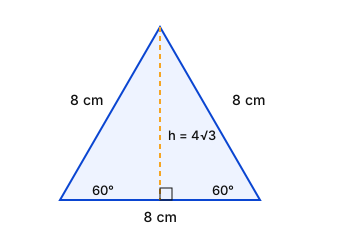
Find the area of an equilateral triangle with side 8 cm (correct to 2 decimal places).
8 cm भुजा वाले एक समबाहु त्रिभुज का क्षेत्रफल ज्ञात कीजिए (2 दशमलव स्थानों तक सही)।
  1. A29.91 sq. cm.29.91 वर्ग cm
  2. B27.71 sq. cm.27.71 वर्ग cm
  3. C26.61 sq. cm.26.61 वर्ग cm
  4. D24.41 sq. cm.24.41 वर्ग cm
Show answer

Concept: Area of an equilateral triangle =34a2.

  1. a=8⇒Area=34×64=163.
  2. 3≈1.732⇒16×1.732=27.712.
  3. Correct to 2 decimals: 27.71cm2.

Trick: Memorise 3=1.732; 163=27.71, 253=43.30 appear often.

Answer: (B) 27.71 sq. cm.

अवधारणा: समबाहु त्रिभुज का क्षेत्रफल =34a2.

  1. a=8⇒क्षेत्रफल=34×64=163.
  2. 3≈1.732⇒16×1.732=27.712.
  3. दो दशमलव तक: 27.71cm2.

ट्रिक: 3=1.732 याद रखें; 163=27.71, 253=43.30 बार-बार आते हैं।

उत्तर: (B) 27.71 sq. cm.

RRB NTPC Graduate CBT 1MathematicsArea of equilateral triangleRRB NTPC Graduate CBT 1 2025 · 22 Mar Shift 1 →
Q5844.
Find the value of y, satisfying 19×7×630÷2025=y+517
y का वह मान ज्ञात कीजिए, जो 19×7×630÷2025=y+517 को संतुष्ट करता है
  1. A1345
  2. B1348
  3. C1340
  4. D1335
Show answer

Concept: Simplify the square root first, then work left to right with × and ÷.

  1. 2025=45.
  2. 19×7×630÷45=19×7×14=1862.
  3. y=1862−517=1345.

Trick: Cancel before multiplying: 63045=14, then 133×14=1862.

Answer: (A) 1345

अवधारणा: पहले वर्गमूल सरल करें, फिर बाएँ से दाएँ × और ÷ करें।

  1. 2025=45.
  2. 19×7×630÷45=19×7×14=1862.
  3. y=1862−517=1345.

ट्रिक: गुणा से पहले काटें: 63045=14, फिर 133×14=1862.

उत्तर: (A) 1345

RRB NTPC Graduate CBT 1MathematicsSimplificationRRB NTPC Graduate CBT 1 2025 · 22 Mar Shift 1 →
Q5845.
Amit invested equal amounts at simple interest and compound interest, compounded annually, for 2 years at the same rate of 4% per annum. In the end, he noticed a difference of ₹52 between the two interests earned. What was the amount (in ₹) invested in each case?
अमित ने समान धनराशियाँ साधारण ब्याज और वार्षिक रूप से संयोजित चक्रवृद्धि ब्याज पर 2 वर्षों के लिए 4% वार्षिक की समान दर से निवेश कीं। अंत में उसने देखा कि अर्जित दोनों ब्याजों के बीच ₹52 का अंतर है। प्रत्येक स्थिति में निवेश की गई राशि (₹ में) क्या थी?
  1. A31600
  2. B32500
  3. C31750
  4. D32850
Show answer

Concept: For 2 years, CI−SI=P(r100)2.

  1. P×(4100)2=P×1610000=52.
  2. P=52×1000016=32500.

Trick: Difference for 2 years = SI on the first year’s interest: 4% of 4% of P = 0.16% of P.

Answer: (B) 32500

अवधारणा: 2 वर्षों के लिए CI−SI=P(r100)2.

  1. P×(4100)2=P×1610000=52.
  2. P=52×1000016=32500.

ट्रिक: 2 वर्ष का अंतर = पहले वर्ष के ब्याज पर ब्याज: P का 4% का 4% = P का 0.16%.

उत्तर: (B) 32500

RRB NTPC Graduate CBT 1MathematicsCI – SI difference (2 years)RRB NTPC Graduate CBT 1 2025 · 22 Mar Shift 1 →
Q5846.
By selling an article at 310 of its marked price, Hitesh incurs a loss of 16%. If he sells it at 69% of its marked price, then the profit percentage is
किसी वस्तु को उसके अंकित मूल्य के 310 पर बेचने से हितेश को 16% की हानि होती है। यदि वह इसे अंकित मूल्य के 69% पर बेचता है, तो लाभ प्रतिशत है
  1. A95.7%
  2. B93.8%
  3. C94.8%
  4. D93.2%
Show answer

Concept: Express CP in terms of MP from the first sale, then compare with the second SP.

  1. Let MP =100. First SP =30; loss 16%⇒CP=300.84=2507.
  2. Second SP =69. Profit =69−2507=2337.
  3. Profit%=233/7250/7×100=233250×100=93.2%.

Trick: New SP is 6930=2.3 times the old SP, so new multiplier =0.84×2.3=1.932⇒93.2% profit.

Answer: (D) 93.2%

अवधारणा: पहली बिक्री से CP को MP के रूप में निकालें, फिर दूसरे SP से तुलना करें।

  1. MP =100 मानें। पहला SP =30; हानि 16%⇒CP=300.84=2507.
  2. दूसरा SP =69. लाभ =69−2507=2337.
  3. लाभ%=233250×100=93.2%.

ट्रिक: नया SP पुराने का 6930=2.3 गुना है, अतः नया गुणक =0.84×2.3=1.932⇒93.2% लाभ।

उत्तर: (D) 93.2%

RRB NTPC Graduate CBT 1MathematicsProfit & loss – marked priceRRB NTPC Graduate CBT 1 2025 · 22 Mar Shift 1 →
Q5847.
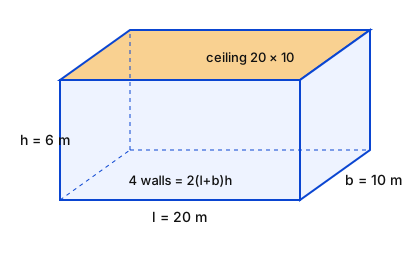
The length, breadth and height of a room are 20m, 10m and 6m, respectively. If the rate of painting the four walls and the ceiling of the room is ₹15/square metre, then find the total cost.
एक कमरे की लंबाई, चौड़ाई और ऊँचाई क्रमशः 20m, 10m और 6m है। यदि कमरे की चार दीवारों और छत की पुताई की दर ₹15/वर्ग मीटर है, तो कुल लागत ज्ञात कीजिए।
  1. A₹6500
  2. B₹8400
  3. C₹7200
  4. D₹9200
Show answer

Concept: Area of 4 walls =2(l+b)h; ceiling =l×b.

  1. Walls =2(20+10)×6=360m2.
  2. Ceiling =20×10=200m2.
  3. Total =560m2; cost =560×15= ₹8400.

Trick: ‘Four walls and ceiling’ = total surface area minus floor: 2(lb+bh+hl)−lb=lb+2h(l+b).

Answer: (B) ₹8400

अवधारणा: 4 दीवारों का क्षेत्रफल =2(l+b)h; छत =l×b.

  1. दीवारें =2(20+10)×6=360m2.
  2. छत =20×10=200m2.
  3. कुल =560m2; लागत =560×15= ₹8400.

ट्रिक: ‘चार दीवारें और छत’ = कुल पृष्ठीय क्षेत्रफल − फर्श: 2(lb+bh+hl)−lb=lb+2h(l+b).

उत्तर: (B) ₹8400

RRB NTPC Graduate CBT 1MathematicsMensuration – painting walls & ceilingRRB NTPC Graduate CBT 1 2025 · 22 Mar Shift 1 →
Q5848.
If ‘A’ stands for ‘÷’, ‘B’ stands for ‘×’, ‘C’ stands for ‘+’ and ‘D’ stands for ‘−’, then what will come in place of the question mark (?) in the following equation?
13 B 2 C 6 D 8 A 4 = ?
यदि ‘A’ का अर्थ ‘÷’, ‘B’ का अर्थ ‘×’, ‘C’ का अर्थ ‘+’ और ‘D’ का अर्थ ‘−’ है, तो निम्नलिखित समीकरण में प्रश्नचिह्न (?) के स्थान पर क्या आएगा?
13 B 2 C 6 D 8 A 4 = ?
  1. A29
  2. B27
  3. C30
  4. D28
Show answer

Concept: Replace each letter by its symbol and then apply BODMAS (÷ and × before + and −).

  1. 13 B 2 C 6 D 8 A 4 becomes 13×2+6−8÷4.
  2. Division first: 8÷4=2; multiplication: 13×2=26.
  3. 26+6−2=30.

Trick: Write the decoded expression fully before calculating – most mistakes come from solving left-to-right instead of BODMAS.

Answer: (C) 30

अवधारणा: हर अक्षर को उसके चिह्न से बदलें और फिर BODMAS लगाएँ (÷ और × पहले, + और − बाद में)।

  1. 13 B 2 C 6 D 8 A 4 बनता है 13×2+6−8÷4।
  2. पहले भाग: 8÷4=2; गुणा: 13×2=26।
  3. 26+6−2=30।

ट्रिक: पहले पूरा decoded व्यंजक लिखें, फिर हल करें – अधिकतर गलती बाएँ-से-दाएँ हल करने से होती है, BODMAS से नहीं।

उत्तर: (C) 30

RRB NTPC Graduate CBT 1General Intelligence and ReasoningMathematical OperationsRRB NTPC Graduate CBT 1 2025 · 22 Mar Shift 1 →
Q5849.
Based on the English alphabetical order, three of the following four letter-cluster pairs are alike in a certain way and thus form a group. Which letter-cluster pair DOES NOT belong to that group?
(Note: The odd one out is not based on the number of consonants/vowels or their position in the letter-cluster.)
अंग्रेज़ी वर्णमाला क्रम के आधार पर, निम्नलिखित चार अक्षर-समूह युग्मों में से तीन एक निश्चित प्रकार से समान हैं और इस प्रकार एक समूह बनाते हैं। कौन-सा अक्षर-समूह युग्म उस समूह से संबंधित नहीं है?
(नोट: असंगत युग्म व्यंजनों/स्वरों की संख्या या अक्षर-समूह में उनकी स्थिति पर आधारित नहीं है।)
  1. AZC−AD
  2. BOR−OU
  3. CDG−EH
  4. DRU−SV
Show answer

Concept: Compare the two letters of each pair position-wise using alphabet positions.

  1. ZC−AD: Z→A (+1, cyclic), C→D (+1).
  2. DG−EH: D→E (+1), G→H (+1). RU−SV: R→S (+1), U→V (+1).
  3. OR−OU: O→O (0), R→U (+3) – breaks the +1,+1 pattern.

Trick: Z→A counts as +1 (alphabet wraps around) – don't pick ZC−AD as odd just because it crosses Z.

Answer: (B) OR−OU

अवधारणा: प्रत्येक जोड़े के अक्षरों की स्थिति-वार तुलना वर्णमाला क्रमांक से करें।

  1. ZC−AD: Z→A (+1, चक्रीय), C→D (+1)।
  2. DG−EH: D→E (+1), G→H (+1)। RU−SV: R→S (+1), U→V (+1)।
  3. OR−OU: O→O (0), R→U (+3) – +1,+1 पैटर्न टूटता है।

ट्रिक: Z→A को +1 ही गिनें (वर्णमाला घूमकर A पर आती है) – Z पार करने भर से ZC−AD को विषम न मानें।

उत्तर: (B) OR−OU

RRB NTPC Graduate CBT 1General Intelligence and ReasoningLetter Cluster ClassificationRRB NTPC Graduate CBT 1 2025 · 22 Mar Shift 1 →
Q5850.
This question is based on the five, three-digit numbers given below. (Left) 442 405 297 384 316 (Right)
(Example- 697 – First digit = 6, second digit = 9 and third digit = 7) NOTE - All operations to be done from left to right.
What will be the resultant if third digit of the highest number is added to the second digit of lowest number ?
यह प्रश्न नीचे दी गई पाँच, तीन-अंकीय संख्याओं पर आधारित है। (बाएँ) 442 405 297 384 316 (दाएँ)
(उदाहरण- 697 – पहला अंक = 6, दूसरा अंक = 9 और तीसरा अंक = 7) नोट - सभी संक्रियाएँ बाएँ से दाएँ की जानी हैं।
यदि सबसे बड़ी संख्या के तीसरे अंक को सबसे छोटी संख्या के दूसरे अंक में जोड़ा जाए, तो परिणाम क्या होगा?
  1. A12
  2. B11
  3. C10
  4. D9
Show answer

Concept: Identify the required numbers first, then pick the asked digits.

  1. Numbers: 442, 405, 297, 384, 316. Highest = 442, lowest = 297.
  2. Third digit of 442 = 2; second digit of 297 = 9.
  3. Sum =2+9=11.

Trick: Underline the highest and lowest numbers as soon as you read the list – it saves re-scanning for every sub-question of this set.

Answer: (B) 11

अवधारणा: पहले अपेक्षित संख्याएँ पहचानें, फिर पूछे गए अंक चुनें।

  1. संख्याएँ: 442, 405, 297, 384, 316। सबसे बड़ी = 442, सबसे छोटी = 297।
  2. 442 का तीसरा अंक = 2; 297 का दूसरा अंक = 9।
  3. योग =2+9=11।

ट्रिक: सूची पढ़ते ही सबसे बड़ी और छोटी संख्या पर निशान लगा लें – इस सेट के हर प्रश्न में दोबारा खोजने से बचेंगे।

उत्तर: (B) 11

RRB NTPC Graduate CBT 1General Intelligence and ReasoningNumber Based OperationsRRB NTPC Graduate CBT 1 2025 · 22 Mar Shift 1 →
Q5851.
22 is related to 60 following a certain logic. Following the same logic, 27 is related to 75. To which of the following is 33 related, following the same logic?
(NOTE: Operations should be performed on the whole numbers, without breaking down the numbers into their constituent digits. E.g. 13 – Operations on 13 such as adding/ subtracting /multiplying to 13 can be performed. Breaking down 13 into 1 and 3 and then performing mathematical operations on 1 and 3 is not allowed.)
22, एक निश्चित तर्क के अनुसार 60 से संबंधित है। उसी तर्क के अनुसार, 27, 75 से संबंधित है। उसी तर्क के अनुसार, 33 निम्नलिखित में से किससे संबंधित है?
(नोट: संक्रियाएँ पूर्ण संख्याओं पर की जानी चाहिए, संख्याओं को उनके घटक अंकों में तोड़े बिना। उदाहरण के लिए 13 – 13 पर संक्रियाएँ जैसे 13 में जोड़ना/घटाना/गुणा करना की जा सकती हैं। 13 को 1 और 3 में तोड़कर फिर 1 और 3 पर गणितीय संक्रियाएँ करने की अनुमति नहीं है।)
  1. A86
  2. B97
  3. C103
  4. D93
Show answer

Concept: Find one operation on the whole number that works for both given pairs.

  1. 22×3−6=66−6=60 ✓
  2. 27×3−6=81−6=75 ✓
  3. 33×3−6=99−6=93.

Trick: The second number is a little less than 3× the first (66→60, 81→75, both −6) – test "×3 then −6" immediately.

Answer: (D) 93

अवधारणा: पूरी संख्या पर ऐसी एक संक्रिया खोजें जो दोनों दिए गए जोड़ों पर लागू हो।

  1. 22×3−6=66−6=60 ✓
  2. 27×3−6=81−6=75 ✓
  3. 33×3−6=99−6=93।

ट्रिक: दूसरी संख्या पहली के 3 गुने से थोड़ी कम है (66→60, 81→75, दोनों में −6) – तुरंत "×3 फिर −6" जाँचें।

उत्तर: (D) 93

RRB NTPC Graduate CBT 1General Intelligence and ReasoningNumber AnalogyRRB NTPC Graduate CBT 1 2025 · 22 Mar Shift 1 →
Q5852.
Read the given statements and conclusions carefully. Assuming that the information given in the statements is true, even if it appears to be at variance with commonly known facts, decide which of the given conclusions logically follow(s) from the statements.
Statements:
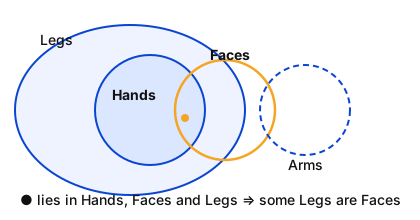
All hands are legs. Some hands are faces. Some faces are arms.
Conclusions:
(I) Some legs are faces.
(II) Some hands are arms.
दिए गए कथनों और निष्कर्षों को ध्यानपूर्वक पढ़िए। कथनों में दी गई जानकारी को सत्य मानते हुए, भले ही वह सामान्यतः ज्ञात तथ्यों से भिन्न प्रतीत होती हो, निर्णय कीजिए कि दिए गए निष्कर्षों में से कौन-सा/कौन-से निष्कर्ष कथनों का तार्किक रूप से अनुसरण करता है/करते हैं।
कथन:
सभी हाथ, टाँगें हैं। कुछ हाथ, चेहरे हैं। कुछ चेहरे, बाँहें हैं।
निष्कर्ष:
(I) कुछ टाँगें, चेहरे हैं।
(II) कुछ हाथ, बाँहें हैं।
  1. ABoth conclusions (I) and (II) followनिष्कर्ष (I) और (II) दोनों अनुसरण करते हैं
  2. BOnly conclusion (I) followsकेवल निष्कर्ष (I) अनुसरण करता है
  3. COnly conclusion (II) followsकेवल निष्कर्ष (II) अनुसरण करता है
  4. DNeither conclusion (I) nor (II) followsन तो निष्कर्ष (I) और न ही (II) अनुसरण करता है
Show answer

Concept: Draw the Venn diagram with the minimum overlap allowed by the statements and test each conclusion.

  1. All hands are legs → the "hands" circle lies inside "legs". Some hands are faces → the hands–faces overlap is non-empty, and it also lies inside legs. So some legs are faces – conclusion (I) follows.
  2. Some faces are arms – the arms can overlap faces outside hands, so "some hands are arms" is not necessary. Conclusion (II) does not follow.

Trick: Two "Some" statements in a chain (Some hands are faces, Some faces are arms) never give a definite conclusion between the end terms.

Answer: (B) Only conclusion (I) follows

अवधारणा: कथनों के अनुसार न्यूनतम ओवरलैप वाला वेन आरेख बनाएँ और हर निष्कर्ष जाँचें।

  1. All hands are legs → "hands" वृत्त "legs" के अंदर। Some hands are faces → hands–faces का ओवरलैप खाली नहीं है और वह legs के अंदर है। अतः some legs are faces – निष्कर्ष (I) सही।
  2. Some faces are arms – arms, faces से hands के बाहर भी मिल सकते हैं, इसलिए "some hands are arms" निश्चित नहीं। निष्कर्ष (II) नहीं निकलता।

ट्रिक: श्रृंखला में दो "Some" कथन (Some hands are faces, Some faces are arms) सिरे के पदों के बीच कभी निश्चित निष्कर्ष नहीं देते।

उत्तर: (B) Only conclusion (I) follows

RRB NTPC Graduate CBT 1General Intelligence and ReasoningSyllogismRRB NTPC Graduate CBT 1 2025 · 22 Mar Shift 1 →
Q5853.
Which of the following letter-number clusters will replace the question mark (?) in the given series to make it logically complete?
DHG 42 CGF 38 BFE 34 AED 30 ?
निम्नलिखित में से कौन-सा अक्षर-संख्या समूह दी गई शृंखला में प्रश्नचिह्न (?) के स्थान पर आकर उसे तार्किक रूप से पूर्ण करेगा?
DHG 42 CGF 38 BFE 34 AED 30 ?
  1. AZDC 26
  2. BZDI 25
  3. CZEB 26
  4. DZCB 25
Show answer

Concept: Treat letters and numbers as separate series.

  1. Letters: DHG → CGF → BFE → AED – every letter moves back by 1. Next: A→Z, E→D, D→C = ZDC.
  2. Numbers: 42, 38, 34, 30 – decreasing by 4. Next =26.
  3. Combined: ZDC 26.

Trick: A −1 = Z (cyclic). Only option (A) starts with ZD and has 26.

Answer: (A) ZDC 26

अवधारणा: अक्षरों और संख्याओं को अलग-अलग श्रृंखला मानें।

  1. अक्षर: DHG → CGF → BFE → AED – हर अक्षर 1 पीछे। अगला: A→Z, E→D, D→C = ZDC।
  2. संख्याएँ: 42, 38, 34, 30 – हर बार 4 कम। अगली =26।
  3. मिलाकर: ZDC 26।

ट्रिक: A −1 = Z (चक्रीय)। केवल विकल्प (A) में ZD से शुरुआत और 26 है।

उत्तर: (A) ZDC 26

RRB NTPC Graduate CBT 1General Intelligence and ReasoningLetter-Number SeriesRRB NTPC Graduate CBT 1 2025 · 22 Mar Shift 1 →
Q5854.
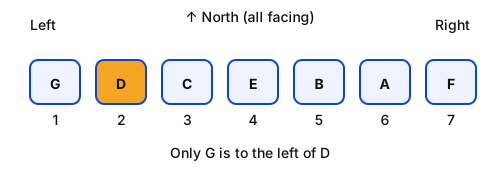
Seven people, A, B, C, D, E, F and G, are sitting in a row, facing north.
Only two people sit to the left of C. Only three people sit between C and F. B sits second to the right of C. Only two people sit between B and D. E sits at some place to the right of G but at some place to the left of A.
How many people sit to the left of D?
सात व्यक्ति, A, B, C, D, E, F और G, एक पंक्ति में उत्तर की ओर मुख करके बैठे हैं।
C के बाईं ओर केवल दो व्यक्ति बैठे हैं। C और F के बीच केवल तीन व्यक्ति बैठे हैं। B, C के दाईं ओर दूसरे स्थान पर बैठा है। B और D के बीच केवल दो व्यक्ति बैठे हैं। E, G के दाईं ओर किसी स्थान पर परंतु A के बाईं ओर किसी स्थान पर बैठा है।
D के बाईं ओर कितने व्यक्ति बैठे हैं?
  1. A1
  2. B3
  3. C4
  4. D2
Show answer

Concept: Number the 7 seats 1–7 from left to right (all face north, so left/right are the usual).

  1. Only two people left of C → C at seat 3. Three between C and F → F at seat 7.
  2. B second to the right of C → B at seat 5. Two between B and D → D at seat 2 (seat 8 does not exist).
  3. Seats 1, 4, 6 remain for G, E, A with G left of E left of A → G 1, E 4, A 6.
  4. Left of D (seat 2): only G → 1 person.

Trick: Start with the clue that fixes a seat ("only two to the left of C") – it anchors the whole row.

Answer: (A) 1

अवधारणा: 7 सीटों को बाएँ से दाएँ 1–7 क्रमांक दें (सभी उत्तर की ओर, इसलिए बाएँ/दाएँ सामान्य)।

  1. C के बाएँ केवल दो → C सीट 3 पर। C और F के बीच तीन → F सीट 7 पर।
  2. B, C के दाएँ दूसरा → B सीट 5 पर। B और D के बीच दो → D सीट 2 पर (सीट 8 नहीं है)।
  3. सीट 1, 4, 6 बची G, E, A के लिए; G, E के बाएँ और E, A के बाएँ → G 1, E 4, A 6।
  4. D (सीट 2) के बाएँ: केवल G → 1 व्यक्ति।

ट्रिक: उस सूचना से शुरू करें जो सीट तय कर दे ("C के बाएँ केवल दो") – इससे पूरी पंक्ति जम जाती है।

उत्तर: (A) 1

RRB NTPC Graduate CBT 1General Intelligence and ReasoningLinear Seating ArrangementRRB NTPC Graduate CBT 1 2025 · 22 Mar Shift 1 →
Q5855.
Which of the given letter-number clusters will replace the question mark (?) in the following series to make it logically complete?
NVA 7 KSX 14 HPU 21 EMR 28 ?
दिए गए अक्षर-संख्या समूहों में से कौन-सा निम्नलिखित शृंखला में प्रश्नचिह्न (?) के स्थान पर आकर उसे तार्किक रूप से पूर्ण करेगा?
NVA 7 KSX 14 HPU 21 EMR 28 ?
  1. ALST 40
  2. BWPF 37
  3. CBJO 35
  4. DNDP 35
Show answer

Concept: Handle letters and numbers separately.

  1. Letters: N(14)→K(11)→H(8)→E(5): each −3 → next B(2). V→S→P→M: −3 → J. A→X→U→R: −3 → O. Cluster = BJO.
  2. Numbers: 7, 14, 21, 28 → +7 → 35.
  3. Answer: BJO 35.

Trick: Check only the first letter and the number first: E −3 = B and 28 + 7 = 35 → option (C) is the only match.

Answer: (C) BJO 35

अवधारणा: अक्षरों और संख्याओं को अलग-अलग देखें।

  1. अक्षर: N(14)→K(11)→H(8)→E(5): हर बार −3 → अगला B(2)। V→S→P→M: −3 → J। A→X→U→R: −3 → O। समूह = BJO।
  2. संख्याएँ: 7, 14, 21, 28 → +7 → 35।
  3. उत्तर: BJO 35।

ट्रिक: पहले केवल पहला अक्षर और संख्या जाँचें: E −3 = B और 28 + 7 = 35 → केवल विकल्प (C) मेल खाता है।

उत्तर: (C) BJO 35

RRB NTPC Graduate CBT 1General Intelligence and ReasoningLetter-Number SeriesRRB NTPC Graduate CBT 1 2025 · 22 Mar Shift 1 →
Q5856.
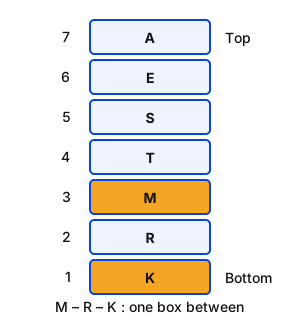
Seven boxes M, A, R, K, E, T and S are kept one over the other but not necessarily in the same order. Only S is kept between E and T. Only K is kept below R. Only A is kept above E. How many boxes are kept between M and K?
सात बक्से M, A, R, K, E, T और S एक के ऊपर एक रखे गए हैं, परंतु आवश्यक नहीं कि इसी क्रम में हों। E और T के बीच केवल S रखा है। R के नीचे केवल K रखा है। E के ऊपर केवल A रखा है। M और K के बीच कितने बक्से रखे हैं?
  1. ATwoदो
  2. BZeroशून्य
  3. COneएक
  4. DThreeतीन
Show answer

Concept: Number positions 1 (bottom) to 7 (top) and place the fixed blocks first.

  1. Only K below R → K at 1, R at 2.
  2. Only A above E → E at 6, A at 7.
  3. Only S between E and T → S at 5, T at 4.
  4. Remaining M at 3. Between M (3) and K (1): only R → one box.

Trick: "Only X below/above Y" fixes Y at the second position from that end – use such clues first.

Answer: (C) One

अवधारणा: स्थान 1 (नीचे) से 7 (ऊपर) क्रमांकित करें और पहले निश्चित ब्लॉक रखें।

  1. R के नीचे केवल K → K स्थान 1, R स्थान 2।
  2. E के ऊपर केवल A → E स्थान 6, A स्थान 7।
  3. E और T के बीच केवल S → S स्थान 5, T स्थान 4।
  4. बचा M स्थान 3 पर। M (3) और K (1) के बीच: केवल R → एक बक्सा।

ट्रिक: "Y के नीचे/ऊपर केवल X" Y को उस सिरे से दूसरे स्थान पर तय कर देता है – ऐसे सुराग पहले लगाएँ।

उत्तर: (C) One

RRB NTPC Graduate CBT 1General Intelligence and ReasoningBox Arrangement (Stacking)RRB NTPC Graduate CBT 1 2025 · 22 Mar Shift 1 →
Q5857.
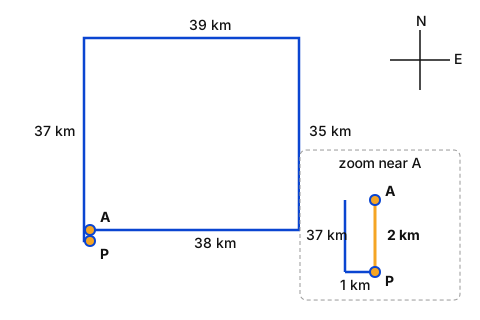
Dhruv starts from Point A and drives 38 km towards the East. He then takes a left turn, drives 35 km, turns left and drives 39 km. He then takes a left turn and drives 37 km. He takes a final left turn, drives 1 km and stops at Point P. How far (shortest distance) and towards which direction should he drive in order to reach Point A again? (All turns are 90-degree turns only unless specified.)
ध्रुव बिंदु A से चलना शुरू करता है और पूर्व की ओर 38 km गाड़ी चलाता है। फिर वह बाएँ मुड़ता है, 35 km गाड़ी चलाता है, बाएँ मुड़ता है और 39 km गाड़ी चलाता है। फिर वह बाएँ मुड़ता है और 37 km गाड़ी चलाता है। अंत में वह बाएँ मुड़ता है, 1 km गाड़ी चलाता है और बिंदु P पर रुक जाता है। पुनः बिंदु A पर पहुँचने के लिए उसे कितनी दूर (न्यूनतम दूरी) और किस दिशा में गाड़ी चलानी चाहिए? (जब तक अन्यथा निर्दिष्ट न हो, सभी मोड़ केवल 90-डिग्री के मोड़ हैं।)
  1. A4 km to the Northउत्तर की ओर 4 km
  2. B3 km to the Northउत्तर की ओर 3 km
  3. C1 km to the Northउत्तर की ओर 1 km
  4. D2 km to the Northउत्तर की ओर 2 km
Show answer

Concept: Put A at the origin, East = +x, North = +y, and track the position after each leg (every left turn rotates the direction anticlockwise).

  1. East 38 → (38, 0); left = North 35 → (38, 35); left = West 39 → (−1, 35).
  2. Left = South 37 → (−1, −2); left = East 1 → P = (0, −2).
  3. P is directly 2 km south of A, so he must drive 2 km to the North.

Trick: Net East–West: 38−39+1=0; net North–South: 35−37=−2 → 2 km south of A.

Answer: (D) 2 km to the North

अवधारणा: A को मूल बिंदु मानें, पूर्व = +x, उत्तर = +y, और हर चरण के बाद स्थिति लिखें (हर बायाँ मोड़ दिशा को वामावर्त घुमाता है)।

  1. पूर्व 38 → (38, 0); बाएँ = उत्तर 35 → (38, 35); बाएँ = पश्चिम 39 → (−1, 35)।
  2. बाएँ = दक्षिण 37 → (−1, −2); बाएँ = पूर्व 1 → P = (0, −2)।
  3. P, A से ठीक 2 km दक्षिण में है, अतः उसे 2 km उत्तर चलना होगा।

ट्रिक: शुद्ध पूर्व–पश्चिम: 38−39+1=0; शुद्ध उत्तर–दक्षिण: 35−37=−2 → A से 2 km दक्षिण।

उत्तर: (D) 2 km to the North

RRB NTPC Graduate CBT 1General Intelligence and ReasoningDirection and DistanceRRB NTPC Graduate CBT 1 2025 · 22 Mar Shift 1 →
Q5858.
What should come in place of ‘?’ in the given series?
111 110 106 97 81 ?
दी गई शृंखला में ‘?’ के स्थान पर क्या आना चाहिए?
111 110 106 97 81 ?
  1. A56
  2. B74
  3. C57
  4. D73
Show answer

Concept: Look at the differences between consecutive terms.

  1. 111→110: −1; 110→106: −4; 106→97: −9; 97→81: −16.
  2. Differences are 12,22,32,42 → next difference 52=25.
  3. 81−25=56.

Trick: Differences 1, 4, 9, 16 → perfect squares; subtract 25 next.

Answer: (A) 56

अवधारणा: क्रमागत पदों के अंतर देखें।

  1. 111→110: −1; 110→106: −4; 106→97: −9; 97→81: −16।
  2. अंतर 12,22,32,42 → अगला अंतर 52=25।
  3. 81−25=56।

ट्रिक: अंतर 1, 4, 9, 16 → पूर्ण वर्ग; अगला 25 घटाएँ।

उत्तर: (A) 56

RRB NTPC Graduate CBT 1General Intelligence and ReasoningNumber SeriesRRB NTPC Graduate CBT 1 2025 · 22 Mar Shift 1 →
Q5859.
Which of the following letter-clusters should replace # and % so that the pattern and relationship followed between the letter-cluster pair on the left side of :: is the same as that on the right side of :: ?
# : POM :: LKI : %
निम्नलिखित में से कौन-से अक्षर-समूह # और % के स्थान पर आने चाहिए ताकि :: के बाईं ओर के अक्षर-समूह युग्म के बीच का पैटर्न और संबंध :: के दाईं ओर के युग्म के समान हो?
# : POM :: LKI : %
  1. A# = TJQ , % = HFL
  2. B# = SRP , % = GFE
  3. C# = RTP , % = GFM
  4. D# = TSQ , % = HGE
Show answer

Concept: The same letter shift must relate # to POM and LKI to %.

  1. Test option (D): TSQ → POM: T(20)→P(16), S(19)→O(15), Q(17)→M(13) – each −4.
  2. LKI → HGE: L(12)→H(8), K(11)→G(7), I(9)→E(5) – each −4 ✓.
  3. Other options: SRP→POM is −3,−3,−3 but GFE from LKI is −5,−5,−4; TJQ, RTP do not give a uniform shift.

Trick: Use the fully known pair LKI : % first – only HGE (option D) is a uniform −4 from LKI; then confirm # = TSQ.

Answer: (D) # = TSQ , % = HGE

अवधारणा: # से POM और LKI से % तक एक ही अक्षर-शिफ्ट होना चाहिए।

  1. विकल्प (D) जाँचें: TSQ → POM: T(20)→P(16), S(19)→O(15), Q(17)→M(13) – हर अक्षर −4।
  2. LKI → HGE: L(12)→H(8), K(11)→G(7), I(9)→E(5) – हर अक्षर −4 ✓।
  3. अन्य विकल्प: SRP→POM −3,−3,−3 है पर LKI से GFE −5,−5,−4; TJQ, RTP में समान शिफ्ट नहीं।

ट्रिक: पहले LKI : % जोड़ा देखें – LKI से समान −4 केवल HGE (विकल्प D) है; फिर # = TSQ की पुष्टि करें।

उत्तर: (D) # = TSQ , % = HGE

RRB NTPC Graduate CBT 1General Intelligence and ReasoningLetter Cluster AnalogyRRB NTPC Graduate CBT 1 2025 · 22 Mar Shift 1 →
Q5860.
23 is related to 139 following a certain logic. Following the same logic, 28 is related to 169. To which of the following is 25 related, following the same logic?
(NOTE: Operations should be performed on the whole numbers, without breaking down the numbers into their constituent digits. E.g. 13 – Operations on 13 such as adding /subtracting /multiplying, etc. to 13 can be performed. Breaking down 13 into 1 and 3 and then performing mathematical operations on 1 and 3 is not allowed.)
23, एक निश्चित तर्क के अनुसार 139 से संबंधित है। उसी तर्क के अनुसार, 28, 169 से संबंधित है। उसी तर्क के अनुसार, 25 निम्नलिखित में से किससे संबंधित है?
(नोट: संक्रियाएँ पूर्ण संख्याओं पर की जानी चाहिए, संख्याओं को उनके घटक अंकों में तोड़े बिना। उदाहरण के लिए 13 – 13 पर संक्रियाएँ जैसे 13 में जोड़ना/घटाना/गुणा करना आदि की जा सकती हैं। 13 को 1 और 3 में तोड़कर फिर 1 और 3 पर गणितीय संक्रियाएँ करने की अनुमति नहीं है।)
  1. A151
  2. B146
  3. C155
  4. D141
Show answer

Concept: Find one rule on the whole number that fits both pairs.

  1. 23×6+1=138+1=139 ✓
  2. 28×6+1=168+1=169 ✓
  3. 25×6+1=150+1=151.

Trick: 139÷23≈6.04 and 169÷28≈6.04 – both just above 6, so try "×6 + 1".

Answer: (A) 151

अवधारणा: पूरी संख्या पर ऐसा एक नियम खोजें जो दोनों जोड़ों पर लागू हो।

  1. 23×6+1=138+1=139 ✓
  2. 28×6+1=168+1=169 ✓
  3. 25×6+1=150+1=151।

ट्रिक: 139÷23≈6.04 और 169÷28≈6.04 – दोनों 6 से थोड़ा ऊपर, अतः "×6 + 1" आज़माएँ।

उत्तर: (A) 151

RRB NTPC Graduate CBT 1General Intelligence and ReasoningNumber AnalogyRRB NTPC Graduate CBT 1 2025 · 22 Mar Shift 1 →