Question bank

Q&A: practice questions with answers

Search questions on any topic. Filter by exam category, exam, subject and topic, try the question, then open the answer and explanation.

Courses – airGurukul

7,077 questions found.

Q5961.
Refer to the following letter and symbol series and answer the question that follows. Counting to be done from left to right only.
(Left) J M L * J % G $ F # @ W D @ # ? + B H N % (Right)
If all the letters are dropped from the series, which of the following will be seventh from the right?
निम्नलिखित अक्षर और प्रतीक शृंखला को देखिए और उसके बाद दिए गए प्रश्न का उत्तर दीजिए। गिनती केवल बाएँ से दाएँ की ओर की जानी है।
(बाएँ) J M L * J % G $ F # @ W D @ # ? + B H N % (दाएँ)
यदि शृंखला से सभी अक्षर हटा दिए जाएँ, तो निम्नलिखित में से कौन-सा दाएँ से सातवाँ होगा?
  1. A@
  2. B%
  3. C+
  4. D#
Show answer

Concept: Delete the stated elements, rewrite the shortened series, then count from the required end.

  1. Series: J M L * J % G $ F # @ W D @ # ? + B H N %. Removing all letters leaves: * % $ # @ @ # ? + % (10 symbols).
  2. From the right: % (1), + (2), ? (3), # (4), @ (5), @ (6), # (7). Seventh from the right is #.

Trick: Seventh from the right of 10 items = 4th from the left: *, %, $, # → #.

Answer: (D) #

अवधारणा: बताए गए तत्व हटाकर छोटी श्रृंखला लिखें, फिर अभीष्ट सिरे से गिनें।

  1. श्रृंखला: J M L * J % G $ F # @ W D @ # ? + B H N %। सभी अक्षर हटाने पर: * % $ # @ @ # ? + % (10 प्रतीक)।
  2. दाएँ से: % (1), + (2), ? (3), # (4), @ (5), @ (6), # (7)। दाएँ से सातवाँ # है।

ट्रिक: 10 में दाएँ से सातवाँ = बाएँ से चौथा: *, %, $, # → #।

उत्तर: (D) #
RRB NTPC Graduate CBT 1General Intelligence and ReasoningLetter-Symbol SeriesRRB NTPC Graduate CBT 1 2025 · 19 Mar Shift 3 →
Q5962.
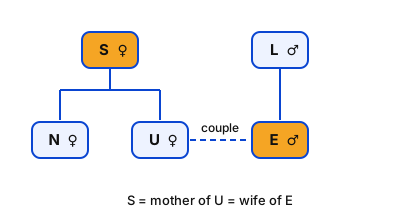
S is the mother of N. N is the sister of U. L is the father of E. E is the husband of U. How is S related to E?
S, N की माता है। N, U की बहन है। L, E का पिता है। E, U का पति है। S, E से किस प्रकार संबंधित है?
  1. AWife's sisterपत्नी की बहन
  2. BSisterबहन
  3. CWife's Motherपत्नी की माता
  4. DMotherमाता
Show answer

Concept: Draw the family tree generation-wise; a mother of one sibling is the mother of all siblings.

  1. S is the mother of N; N is the sister of U → S is also the mother of U.
  2. E is the husband of U → U is E's wife. So S is the mother of E's wife.
  3. L (father of E) is extra information.

Trick: Mother of my wife = Wife's mother (mother-in-law).

Answer: (C) Wife's Mother

अवधारणा: वंश-वृक्ष पीढ़ी-वार बनाएँ; एक भाई-बहन की माँ सभी भाई-बहनों की माँ है।

  1. S, N की माँ है; N, U की बहन है → S, U की भी माँ है।
  2. E, U का पति है → U, E की पत्नी है। अतः S, E की पत्नी की माँ है।
  3. L (E का पिता) अतिरिक्त सूचना है।

ट्रिक: पत्नी की माँ = सास (Wife's mother)।

उत्तर: (C) पत्नी की माँ (Wife's Mother)

RRB NTPC Graduate CBT 1General Intelligence and ReasoningBlood RelationsRRB NTPC Graduate CBT 1 2025 · 19 Mar Shift 3 →
Q5963.
In a certain code language,
A + B means ‘A is the daughter of B’
A – B means ‘A is the brother of B’
A x B means ‘A is the wife of B’
A ÷ B means ‘A is the father of B’
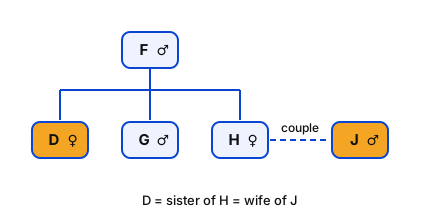
Based on the above, how is D related to J if ‘D + F ÷ G – H x J’?
एक निश्चित कूट भाषा में,
A + B का अर्थ है ‘A, B की पुत्री है’
A – B का अर्थ है ‘A, B का भाई है’
A x B का अर्थ है ‘A, B की पत्नी है’
A ÷ B का अर्थ है ‘A, B का पिता है’
उपर्युक्त के आधार पर, यदि ‘D + F ÷ G – H x J’ है, तो D, J से किस प्रकार संबंधित है?
  1. ASisterबहन
  2. BWife's motherपत्नी की माता
  3. CWife's sisterपत्नी की बहन
  4. DMotherमाता
Show answer

Concept: Decode symbol by symbol from left to right and build the tree.

  1. D + F: D is the daughter of F. F ÷ G: F is the father of G. So D and G are siblings (children of F).
  2. G − H: G is the brother of H → H is also F's child, i.e. D's sister.
  3. H × J: H is the wife of J. So D is the sister of J's wife.

Trick: Gender of D is fixed by "+" (daughter) – that decides "sister", not "brother".

Answer: (C) Wife's sister

अवधारणा: बाएँ से दाएँ प्रतीक-दर-प्रतीक decode करें और वृक्ष बनाएँ।

  1. D + F: D, F की पुत्री है। F ÷ G: F, G का पिता है। अतः D और G भाई-बहन (F की संतान)।
  2. G − H: G, H का भाई है → H भी F की संतान, अर्थात D की बहन।
  3. H × J: H, J की पत्नी है। अतः D, J की पत्नी की बहन है।

ट्रिक: D का लिंग "+" (पुत्री) से तय है – इसलिए "बहन", भाई नहीं।

उत्तर: (C) पत्नी की बहन (Wife's sister)

RRB NTPC Graduate CBT 1General Intelligence and ReasoningCoded Blood RelationsRRB NTPC Graduate CBT 1 2025 · 19 Mar Shift 3 →
Q5964.
If 1 is added to each odd digit and 2 is subtracted from each even digit in the number 5714623, what will be the sum of the digits that are second from the left and second from the right?
यदि संख्या 5714623 में प्रत्येक विषम अंक में 1 जोड़ा जाए और प्रत्येक सम अंक में से 2 घटाया जाए, तो बाएँ से दूसरे और दाएँ से दूसरे अंकों का योग क्या होगा?
  1. A8
  2. B7
  3. C6
  4. D9
Show answer

Concept: Apply the rule digit by digit, then pick the required positions from the new number.

  1. 5714623: odd digits +1 → 5→6, 7→8, 1→2, 3→4; even digits −2 → 4→2, 6→4, 2→0.
  2. New number: 6 8 2 2 4 0 4.
  3. Second from left = 8, second from right = 0. Sum =8+0=8.

Trick: Write the new number underneath the old one so positions never get mixed up.

Answer: (A) 8

अवधारणा: नियम अंक-दर-अंक लगाएँ, फिर नई संख्या से अभीष्ट स्थान चुनें।

  1. 5714623: विषम अंक +1 → 5→6, 7→8, 1→2, 3→4; सम अंक −2 → 4→2, 6→4, 2→0।
  2. नई संख्या: 6 8 2 2 4 0 4।
  3. बाएँ से दूसरा = 8, दाएँ से दूसरा = 0। योग =8+0=8।

ट्रिक: नई संख्या पुरानी के ठीक नीचे लिखें ताकि स्थान न गड़बड़ाएँ।

उत्तर: (A) 8

RRB NTPC Graduate CBT 1General Intelligence and ReasoningNumber OperationsRRB NTPC Graduate CBT 1 2025 · 19 Mar Shift 3 →
Q5965.
Select the set in which the numbers are related in the same way as are the numbers of the following sets.
(NOTE : Operations should be performed on the whole numbers, without breaking down the numbers into their constituent digits. E.g. 13 – Operations on 13 such as adding / subtracting / multiplying etc. to 13 can be performed. Breaking down 13 into 1 and 3 and then performing mathematical operations on 1 and 3 is not allowed.)
(40, 122, 4)
(30, 101, 13)
उस समुच्चय का चयन कीजिए जिसमें संख्याएँ उसी प्रकार संबंधित हैं जिस प्रकार निम्नलिखित समुच्चयों की संख्याएँ संबंधित हैं।
(नोट: संक्रियाएँ पूर्ण संख्याओं पर की जानी चाहिए, संख्याओं को उनके घटक अंकों में तोड़े बिना। उदाहरण के लिए 13 – 13 पर संक्रियाएँ जैसे 13 में जोड़ना/घटाना/गुणा करना आदि की जा सकती हैं। 13 को 1 और 3 में तोड़कर फिर 1 और 3 पर गणितीय संक्रियाएँ करने की अनुमति नहीं है।)
(40, 122, 4)
(30, 101, 13)
  1. A(2, 26, 17)
  2. B(10, 50, 17)
  3. C(10, 51, 18)
  4. D(37, 120, 11)
Show answer

Concept: Find one relation among the three numbers that holds for both given sets, then test the options.

  1. (40, 122, 4): 3×40+4−2=122 ✓. (30, 101, 13): 3×30+13−2=101 ✓. Rule: middle =3×first+third−2.
  2. (37, 120, 11): 3×37+11−2=111+9=120 ✓.
  3. Others fail: (2, 26, 17) → 21; (10, 50, 17) → 45; (10, 51, 18) → 46.

Trick: Middle number is slightly above 3 × first – start from 3a and see how the third number fixes the gap.

Answer: (D) (37, 120, 11)

अवधारणा: तीनों संख्याओं में ऐसा संबंध ढूँढें जो दोनों दिए समुच्चयों में चले, फिर विकल्प जाँचें।

  1. (40, 122, 4): 3×40+4−2=122 ✓। (30, 101, 13): 3×30+13−2=101 ✓। नियम: बीच =3×पहला+तीसरा−2।
  2. (37, 120, 11): 3×37+11−2=111+9=120 ✓।
  3. अन्य असफल: (2, 26, 17) → 21; (10, 50, 17) → 45; (10, 51, 18) → 46।

ट्रिक: बीच की संख्या 3 × पहली से थोड़ी ऊपर है – 3a से शुरू कर देखें तीसरी संख्या अंतर कैसे भरती है।

उत्तर: (D) (37, 120, 11)

RRB NTPC Graduate CBT 1General Intelligence and ReasoningNumber Set AnalogyRRB NTPC Graduate CBT 1 2025 · 19 Mar Shift 3 →
Q5966.
Select the set in which the numbers are related in the same way as are the numbers of the following sets.
(NOTE: Operations should be performed on the whole numbers, without breaking down the numbers into their constituent digits. E.g. 13 – Operations on 13 such as
adding/subtracting/multiplying to 13 can be performed. Breaking down 13 into 1 and 3 and then performing mathematical operations on 1 and 3 is not allowed.)
(15, 7, 100)
(25, 8, 195)
उस समुच्चय का चयन कीजिए जिसमें संख्याएँ उसी प्रकार संबंधित हैं जिस प्रकार निम्नलिखित समुच्चयों की संख्याएँ संबंधित हैं।
(नोट: संक्रियाएँ पूर्ण संख्याओं पर की जानी चाहिए, संख्याओं को उनके घटक अंकों में तोड़े बिना। उदाहरण के लिए 13 – 13 पर संक्रियाएँ जैसे
13 में जोड़ना/घटाना/गुणा करना की जा सकती हैं। 13 को 1 और 3 में तोड़कर फिर 1 और 3 पर गणितीय संक्रियाएँ करने की अनुमति नहीं है।)
(15, 7, 100)
(25, 8, 195)
  1. A(23, 6, 133)
  2. B(26, 4, 104)
  3. C(21, 11, 236)
  4. D(18, 10, 185)
Show answer

Concept: Look for a relation such as product, sum or difference that links the three numbers in both given sets.

  1. (15, 7, 100): 15×7−5=105−5=100 ✓. (25, 8, 195): 25×8−5=200−5=195 ✓. Rule: third =first×second−5.
  2. (23, 6, 133): 23×6−5=138−5=133 ✓.
  3. Others: 26×4−5=99≠104; 21×11−5=226≠236; 18×10−5=175≠185.

Trick: When the third number is close to the product of the first two, check product ± constant.

Answer: (A) (23, 6, 133)

अवधारणा: ऐसा संबंध (गुणनफल, योग या अंतर) ढूँढें जो दोनों दिए समुच्चयों की तीनों संख्याओं को जोड़े।

  1. (15, 7, 100): 15×7−5=105−5=100 ✓। (25, 8, 195): 25×8−5=200−5=195 ✓। नियम: तीसरा =पहला×दूसरा−5।
  2. (23, 6, 133): 23×6−5=138−5=133 ✓।
  3. अन्य: 26×4−5=99≠104; 21×11−5=226≠236; 18×10−5=175≠185।

ट्रिक: जब तीसरी संख्या पहली दो के गुणनफल के पास हो, तो गुणनफल ± स्थिरांक जाँचें।

उत्तर: (A) (23, 6, 133)

RRB NTPC Graduate CBT 1General Intelligence and ReasoningNumber Set AnalogyRRB NTPC Graduate CBT 1 2025 · 19 Mar Shift 3 →
Q5967.
Based on the English alphabetical order, three of the following four letter-cluster pairs are alike in a certain way and thus form a group. Which letter-cluster pair DOES NOT belong to that group?
(Note: The odd one out is not based on the number of consonants/vowels or their position in the letter-cluster.)
अंग्रेज़ी वर्णमाला क्रम के आधार पर, निम्नलिखित चार अक्षर-समूह युग्मों में से तीन किसी निश्चित प्रकार से एक समान हैं और इस प्रकार एक समूह बनाते हैं। कौन-सा अक्षर-समूह युग्म उस समूह से संबंधित नहीं है?
(नोट: असंगत विकल्प व्यंजनों/स्वरों की संख्या या अक्षर-समूह में उनकी स्थिति पर आधारित नहीं है।)
  1. AJM−OR
  2. BPS−UX
  3. CLO−PV
  4. DNQ−SV
Show answer

Concept: Compare the gaps inside each pair and between the two clusters.

  1. JM−OR: J→M +3, M→O +2, O→R +3. PS−UX: +3, +2, +3. NQ−SV: +3, +2, +3.
  2. LO−PV: L→O +3, O→P +1, P→V +6 – different pattern, so it is the odd one.

Trick: Check the gap between the two clusters (2nd letter → 3rd letter): three pairs have +2, LO−PV has +1.

Answer: (C) LO−PV

अवधारणा: हर युग्म के भीतर और दोनों clusters के बीच के अंतर की तुलना करें।

  1. JM−OR: J→M +3, M→O +2, O→R +3। PS−UX: +3, +2, +3। NQ−SV: +3, +2, +3।
  2. LO−PV: L→O +3, O→P +1, P→V +6 – अलग पैटर्न, अतः विषम।

ट्रिक: दोनों clusters के बीच का अंतर (दूसरा → तीसरा अक्षर) देखें: तीन में +2, LO−PV में +1।

उत्तर: (C) LO−PV

RRB NTPC Graduate CBT 1General Intelligence and ReasoningOdd One Out – Letter PairsRRB NTPC Graduate CBT 1 2025 · 19 Mar Shift 3 →
Q5968.
Read the given statements and conclusions carefully. Assuming that the information given in the statements is true, even if it appears to be at variance with commonly known facts, decide which of the given conclusion(s) logically follow(s) from the statements.
Statements:
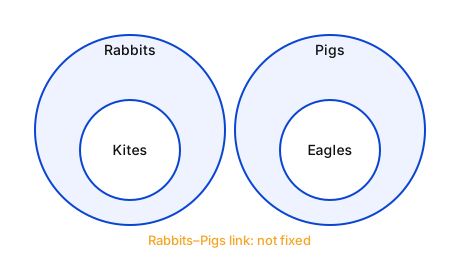
All kites are rabbits. No kite is an eagle. All eagles are pigs.
Conclusions:
(I) No pig is a rabbit.
(II) Some pigs are kites.
दिए गए कथनों और निष्कर्षों को ध्यानपूर्वक पढ़िए। यह मानते हुए कि कथनों में दी गई जानकारी सत्य है, भले ही वह सामान्यतः ज्ञात तथ्यों से भिन्न प्रतीत होती हो, निर्णय कीजिए कि दिए गए निष्कर्षों में से कौन-सा/कौन-से कथनों का तार्किक रूप से अनुसरण करता है/करते हैं।
कथन:
सभी पतंगें, खरगोश हैं। कोई पतंग, चील नहीं है। सभी चीलें, सूअर हैं।
निष्कर्ष:
(I) कोई सूअर, खरगोश नहीं है।
(II) कुछ सूअर, पतंगें हैं।
  1. ANeither conclusion (I) nor (II) follows.न तो निष्कर्ष (I) और न ही (II) अनुसरण करता है।
  2. BOnly conclusion (I) follows.केवल निष्कर्ष (I) अनुसरण करता है।
  3. COnly conclusion (II) follows.केवल निष्कर्ष (II) अनुसरण करता है।
  4. DBoth conclusions (I) and (II) follow.निष्कर्ष (I) और (II) दोनों अनुसरण करते हैं।
Show answer

Concept: A conclusion follows only if it is true in every Venn diagram consistent with the statements.

  1. Kites lie inside rabbits; eagles lie inside pigs; kites and eagles are disjoint. Nothing links rabbits with pigs.
  2. (I) No pig is a rabbit: pigs and rabbits may overlap (a rabbit that is not a kite could be a pig) → not definite.
  3. (II) Some pigs are kites: kites are outside eagles, but pigs other than eagles may or may not include kites → not definite.
  4. Neither follows (they are not a complementary either/or pair, since both can be false together).

Trick: Two "No"/negative links through a middle term never give a definite positive or negative relation between the end terms.

Answer: (A) Neither conclusion (I) nor (II) follows.

अवधारणा: निष्कर्ष तभी मान्य है जब वह कथनों के अनुरूप हर Venn आरेख में सत्य हो।

  1. Kites, rabbits के अंदर; eagles, pigs के अंदर; kites और eagles अलग-अलग। Rabbits और pigs के बीच कोई संबंध नहीं दिया।
  2. (I) कोई pig, rabbit नहीं: pigs और rabbits overlap कर सकते हैं (जो rabbit kite नहीं, वह pig हो सकता है) → निश्चित नहीं।
  3. (II) कुछ pigs, kites हैं: kites, eagles के बाहर हैं, पर eagles के अलावा pigs में kites हों या न हों → निश्चित नहीं।
  4. कोई अनुसरण नहीं करता (ये either/or युग्म भी नहीं, क्योंकि दोनों एक साथ असत्य हो सकते हैं)।

ट्रिक: मध्य पद से दो नकारात्मक कड़ियाँ कभी अंतिम पदों में निश्चित संबंध नहीं देतीं।

उत्तर: (A) न निष्कर्ष (I) न (II) अनुसरण करता है।

RRB NTPC Graduate CBT 1General Intelligence and ReasoningSyllogismRRB NTPC Graduate CBT 1 2025 · 19 Mar Shift 3 →
Q5969.
Below are given two sets of numbers. In each set of numbers, a certain mathematical operation on the first number results in the second number. Similarly, certain
mathematical operations on the second number result in the third number and so on. Which of the given options follows the same set of operations as in question? (NOTE – A two/three-digit number cannot be broken into individual digits for operations, e.g., if 37 is followed by 10, the operation cannot be 3+7 as a two-digit number cannot be broken into individual digits.)
8 – 18 – 36 – 56; 12 – 22 – 44 – 64
नीचे संख्याओं के दो समुच्चय दिए गए हैं। संख्याओं के प्रत्येक समुच्चय में, पहली संख्या पर एक निश्चित गणितीय संक्रिया करने से दूसरी संख्या प्राप्त होती है। इसी प्रकार, दूसरी संख्या पर कुछ निश्चित
गणितीय संक्रियाएँ करने से तीसरी संख्या प्राप्त होती है, और इसी तरह आगे। दिए गए विकल्पों में से कौन-सा प्रश्न में दी गई संक्रियाओं के समान समुच्चय का अनुसरण करता है? (नोट – संक्रियाओं के लिए दो/तीन अंकों की संख्या को अलग-अलग अंकों में नहीं तोड़ा जा सकता, उदाहरण के लिए, यदि 37 के बाद 10 आता है, तो संक्रिया 3+7 नहीं हो सकती क्योंकि दो अंकों की संख्या को अलग-अलग अंकों में नहीं तोड़ा जा सकता।)
8 – 18 – 36 – 56; 12 – 22 – 44 – 64
  1. A15 – 25 – 50 – 80
  2. B20 – 30 – 60 – 80
  3. C10 – 20 – 40 – 80
  4. D17 – 27 – 44 – 54
Show answer

Concept: Find the chain of operations in the given sets and apply the same chain to each option.

  1. 8→+1018→×236→+2056 and 12→+1022→×244→+2064.
  2. Option (B): 20+10=30, 30×2=60, 60+20=80 ✓.
  3. (A) 25×2=50 but 50+20=70≠80; (C) 10+10=20, 20×2=40, 40+20=60≠80; (D) 27×2=54≠44.

Trick: Check the first step (+10) on all options first — only (B) and (C) survive, then test the last step.

Answer: (B) 20 – 30 – 60 – 80

अवधारणा: दिए गए सेट में संक्रियाओं की श्रृंखला पहचानें और वही श्रृंखला हर विकल्प पर लगाएँ।

  1. 8→+1018→×236→+2056 और 12→+1022→×244→+2064।
  2. विकल्प (B): 20+10=30, 30×2=60, 60+20=80 ✓।
  3. (A) 50+20=70≠80; (C) 10+10=20, 20×2=40, 40+20=60≠80; (D) 27×2=54≠44।

ट्रिक: पहले सभी विकल्पों पर पहला चरण (+10) जाँचें — केवल (B) और (C) बचते हैं, फिर अंतिम चरण जाँचें।

उत्तर: (B) 20 – 30 – 60 – 80

RRB NTPC Graduate CBT 1General Intelligence and ReasoningNumber operation seriesRRB NTPC Graduate CBT 1 2025 · 19 Mar Shift 3 →
Q5970.
In this question, a question is followed by two statements numbered (I) and (II). You have to decide whether the data provided in the statements are sufficient to answer the question. Read both the statements and decide the appropriate answer.
Q. Kunal, Mohit, Rohan, Sandeep, and Tarun - each have different age. Who is the oldest?
(I) Mohit is older than Kunal but younger than Sandeep.
(II) Tarun is younger than Sandeep but older than Mohit.
इस प्रश्न में, एक प्रश्न के बाद (I) और (II) क्रमांकित दो कथन दिए गए हैं। आपको यह निर्णय करना है कि कथनों में दिए गए आँकड़े प्रश्न का उत्तर देने के लिए पर्याप्त हैं या नहीं। दोनों कथनों को पढ़िए और उपयुक्त उत्तर का निर्णय कीजिए।
प्रश्न: कुणाल, मोहित, रोहन, संदीप और तरुण - प्रत्येक की आयु अलग-अलग है। सबसे बड़ा कौन है?
(I) मोहित, कुणाल से बड़ा है परंतु संदीप से छोटा है।
(II) तरुण, संदीप से छोटा है परंतु मोहित से बड़ा है।
  1. AData in Statement I alone is sufficient to answer the question while data in Statement II is notकथन I के आँकड़े अकेले प्रश्न का उत्तर देने के लिए पर्याप्त हैं, जबकि कथन II के आँकड़े पर्याप्त नहीं हैं
  2. BBoth statements I and II together are NOT sufficient to answer the questionकथन I और II दोनों मिलकर भी प्रश्न का उत्तर देने के लिए पर्याप्त नहीं हैं
  3. CData in Statement II alone is sufficient to answer the question while data in Statement I is notकथन II के आँकड़े अकेले प्रश्न का उत्तर देने के लिए पर्याप्त हैं, जबकि कथन I के आँकड़े पर्याप्त नहीं हैं
  4. DBoth statements I and II together (and not statement I alone or statement II alone) are sufficient to answer the questionकथन I और II दोनों मिलकर (न कि अकेले कथन I या अकेले कथन II) प्रश्न का उत्तर देने के लिए पर्याप्त हैं
Show answer

Concept: To name the oldest of five, every person must be placed below someone, or one person above all four.

  1. (I): Sandeep > Mohit > Kunal. Rohan and Tarun unknown — not sufficient.
  2. (II): Sandeep > Tarun > Mohit. Kunal and Rohan unknown — not sufficient.
  3. Together: Sandeep > Tarun > Mohit > Kunal, but Rohan is never mentioned — he could be older than Sandeep. Not sufficient even together.

Trick: In such questions look for the person missing from both statements (Rohan) — if he is absent, the answer cannot be fixed.

Answer: (B) Both statements I and II together are NOT sufficient

अवधारणा: पाँच में सबसे बड़ा बताने के लिए हर व्यक्ति की स्थिति तय होनी चाहिए।

  1. (I): संदीप > मोहित > कुणाल। रोहन और तरुण अज्ञात — अपर्याप्त।
  2. (II): संदीप > तरुण > मोहित। कुणाल और रोहन अज्ञात — अपर्याप्त।
  3. दोनों मिलाकर: संदीप > तरुण > मोहित > कुणाल, पर रोहन का कहीं उल्लेख नहीं — वह संदीप से बड़ा भी हो सकता है। साथ में भी अपर्याप्त।

ट्रिक: ऐसे प्रश्नों में देखें कि कौन-सा नाम दोनों कथनों में नहीं है (रोहन) — वह गायब है तो उत्तर तय नहीं हो सकता।

उत्तर: (B) दोनों कथन I और II मिलकर भी पर्याप्त नहीं हैं

RRB NTPC Graduate CBT 1General Intelligence and ReasoningData sufficiency – orderingRRB NTPC Graduate CBT 1 2025 · 19 Mar Shift 3 →
Q5971.
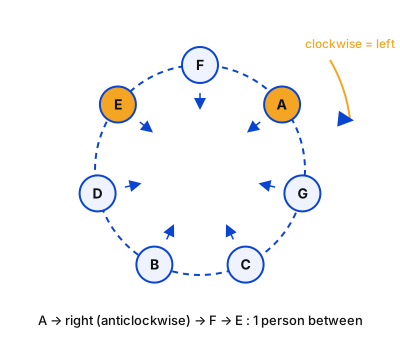
A, B, C, D, E, F and G are sitting around a circular table facing the centre. Only two people sit between F and B when counted from the right of F. Only two people sit between B and A when counted from the left of A. Only three people sit between F and C when counted from the right of F. E sits to the immediate left of D. How many people sit between A and E when counted from the right of A?
A, B, C, D, E, F और G एक वृत्ताकार मेज के चारों ओर केंद्र की ओर मुख करके बैठे हैं। F के दाईं ओर से गिनने पर F और B के बीच केवल दो व्यक्ति बैठे हैं। A के बाईं ओर से गिनने पर B और A के बीच केवल दो व्यक्ति बैठे हैं। F के दाईं ओर से गिनने पर F और C के बीच केवल तीन व्यक्ति बैठे हैं। E, D के ठीक बाईं ओर बैठा है। A के दाईं ओर से गिनने पर A और E के बीच कितने व्यक्ति बैठे हैं?
  1. A4
  2. B1
  3. C2
  4. D3
Show answer

Concept: Facing the centre, a person's right is anticlockwise and left is clockwise.

  1. Fix F. Two people between F and B from F's right (anticlockwise) ⇒ B is 3rd anticlockwise from F.
  2. Two between B and A from A's left (clockwise) ⇒ B is 3rd clockwise from A, so A sits to the immediate left (clockwise) of F.
  3. Three between F and C from F's right ⇒ C is 4th anticlockwise from F. Remaining two adjacent seats beside B go to D and E with E on D's immediate left; G takes the seat between A and C.
  4. Clockwise order: F, A, G, C, B, D, E. From A's right (anticlockwise): F, then E — only 1 person between A and E.

Trick: Translate every clue into "k seats clockwise/anticlockwise" before drawing; mistakes usually come from the direction, not the count.

Answer: (B) 1

अवधारणा: केंद्र की ओर मुख होने पर व्यक्ति का दायाँ = वामावर्त (anticlockwise) और बायाँ = दक्षिणावर्त (clockwise)।

  1. F को स्थिर करें। F के दाएँ से F और B के बीच दो लोग ⇒ B, F से तीसरा वामावर्त।
  2. A के बाएँ से B और A के बीच दो लोग ⇒ B, A से तीसरा दक्षिणावर्त, अतः A, F के तुरंत बाएँ।
  3. F के दाएँ से F और C के बीच तीन ⇒ C, F से चौथा वामावर्त। B के पास बची दो सीटें D और E की (E, D के तुरंत बाएँ); A और C के बीच G।
  4. दक्षिणावर्त क्रम: F, A, G, C, B, D, E। A के दाएँ (वामावर्त) से: F, फिर E — A और E के बीच केवल 1 व्यक्ति।

ट्रिक: हर सूत्र को "k सीट clockwise/anticlockwise" में बदलकर ही चित्र बनाएँ; गलती गिनती में नहीं, दिशा में होती है।

उत्तर: (B) 1

RRB NTPC Graduate CBT 1General Intelligence and ReasoningCircular seating arrangementRRB NTPC Graduate CBT 1 2025 · 19 Mar Shift 3 →
Q5972.
Refer to the following letter, number and symbol series and answer the question that follows. All numbers are single digit numbers only.
(Left) D T £ © 3 6 Z % U $ 8 2 7 P * @ 3 J V © H N (Right)
​If all the numbers are dropped from the series, which of the following will be fifth from the left?
निम्नलिखित अक्षर, संख्या और प्रतीक शृंखला को देखिए और उसके बाद दिए गए प्रश्न का उत्तर दीजिए। सभी संख्याएँ केवल एक-अंकीय संख्याएँ हैं।
(बाएँ) D T £ © 3 6 Z % U $ 8 2 7 P * @ 3 J V © H N (दाएँ)
यदि शृंखला से सभी संख्याएँ हटा दी जाएँ, तो निम्नलिखित में से कौन-सा बाएँ से पाँचवाँ होगा?
  1. A©
  2. B£
  3. C%
  4. DZ
Show answer

Concept: Remove the stated elements and count afresh in the new series.

  1. Original: D T £ © 3 6 Z % U $ 8 2 7 P * @ 3 J V © H N.
  2. Dropping numbers (3, 6, 8, 2, 7, 3): D T £ © Z % U $ P * @ J V © H N.
  3. Fifth from the left: D(1) T(2) £(3) ©(4) Z(5).

Trick: Only the first four elements before Z are non-numbers, so dropping the 3 and 6 pushes Z to the 5th place.

Answer: (D) Z

अवधारणा: बताए गए तत्व हटाकर नई श्रृंखला में दोबारा गिनें।

  1. मूल: D T £ © 3 6 Z % U $ 8 2 7 P * @ 3 J V © H N।
  2. संख्याएँ (3, 6, 8, 2, 7, 3) हटाने पर: D T £ © Z % U $ P * @ J V © H N।
  3. बाएँ से पाँचवाँ: D(1) T(2) £(3) ©(4) Z(5)।

ट्रिक: Z से पहले केवल चार गैर-संख्या तत्व हैं, इसलिए 3 और 6 हटते ही Z पाँचवें स्थान पर आ जाता है।

उत्तर: (D) Z

RRB NTPC Graduate CBT 1General Intelligence and ReasoningAlphanumeric seriesRRB NTPC Graduate CBT 1 2025 · 19 Mar Shift 3 →
Q5973.
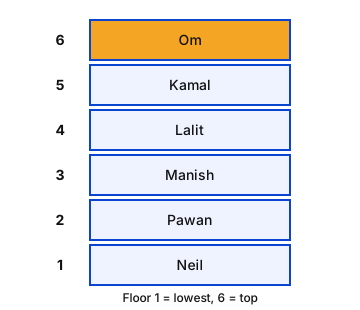
Kamal, Lalit, Manish, Neil, Om and Pawan live on six different floors of the same building. The lowermost floor in the building is numbered 1, the floor above it is numbered 2 and so on till the topmost floor, which is numbered 6. Lalit lives on an even-numbered floor. Lalit lives on a floor immediately below Kamal's floor and immediately above Manish's floor. Pawan lives on a floor immediately above Neil's floor. Pawan lives on an even-numbered floor. Om does not live on floor number 4. On which floor does Om live?
कमल, ललित, मनीष, नील, ओम और पवन एक ही इमारत की छह अलग-अलग मंजिलों पर रहते हैं। इमारत की सबसे निचली मंजिल की संख्या 1 है, उसके ऊपर की मंजिल की संख्या 2 है और इसी प्रकार सबसे ऊपरी मंजिल तक, जिसकी संख्या 6 है। ललित एक सम-संख्या वाली मंजिल पर रहता है। ललित, कमल की मंजिल के ठीक नीचे और मनीष की मंजिल के ठीक ऊपर वाली मंजिल पर रहता है। पवन, नील की मंजिल के ठीक ऊपर वाली मंजिल पर रहता है। पवन एक सम-संख्या वाली मंजिल पर रहता है। ओम मंजिल संख्या 4 पर नहीं रहता है। ओम किस मंजिल पर रहता है?
  1. A2ndदूसरी
  2. B5thपाँचवीं
  3. C3rdतीसरी
  4. D6thछठी
Show answer

Concept: Start with the most restrictive block (three consecutive people) and test the even-floor condition.

  1. Manish–Lalit–Kamal are consecutive (bottom to top) with Lalit on an even floor: either floors 1-2-3 or 3-4-5.
  2. Case 1-2-3: Neil–Pawan must then be 5-6 (Pawan even), leaving Om on floor 4 — not allowed.
  3. Case 3-4-5: Neil–Pawan on 1-2 (Pawan even, floor 2); Om gets floor 6 ✓.

Trick: The "Om does not live on floor 4" clue exists only to kill one case — whichever case gives Om floor 4 is wrong.

Answer: (D) 6th

अवधारणा: सबसे बंधे हुए ब्लॉक (तीन लगातार लोग) से शुरू करें और सम-मंज़िल शर्त जाँचें।

  1. मनीष–ललित–कमल लगातार (नीचे से ऊपर) और ललित सम मंज़िल पर: या तो 1-2-3 या 3-4-5।
  2. स्थिति 1-2-3: नील–पवन तब 5-6 पर (पवन सम), ओम मंज़िल 4 पर — निषिद्ध।
  3. स्थिति 3-4-5: नील–पवन 1-2 पर (पवन मंज़िल 2); ओम मंज़िल 6 ✓।

ट्रिक: "ओम मंज़िल 4 पर नहीं" सूत्र केवल एक स्थिति काटने के लिए है — जिस स्थिति में ओम 4 पर आए, वह गलत।

उत्तर: (D) 6वीं

RRB NTPC Graduate CBT 1General Intelligence and ReasoningFloor puzzleRRB NTPC Graduate CBT 1 2025 · 19 Mar Shift 3 →
Q5974.
GJHA is related to JNLD in a certain way based on the English alphabetical order. In the same way, KMEL is related to NQIO. To which of the following is NROT related, following the same logic?
अंग्रेज़ी वर्णमाला क्रम के आधार पर GJHA, JNLD से एक निश्चित प्रकार से संबंधित है। उसी प्रकार, KMEL, NQIO से संबंधित है। समान तर्क का अनुसरण करते हुए, NROT निम्नलिखित में से किससे संबंधित है?
  1. AQWZT
  2. BSWVQ
  3. CQWTT
  4. DQVSW
Show answer

Concept: Compare letter positions pair-wise to find the shift pattern.

  1. GJHA → JNLD: G+3=J, J+4=N, H+4=L, A+3=D ⇒ pattern +3,+4,+4,+3.
  2. KMEL → NQIO: K+3=N, M+4=Q, E+4=I, L+3=O ✓ same pattern.
  3. NROT: N+3=Q, R+4=V, O+4=S, T+3=W ⇒ QVSW.

Trick: First and last letters shift +3, middle two shift +4 — check only the first letter (N→Q) to eliminate (B).

Answer: (D) QVSW

अवधारणा: अक्षरों की स्थिति जोड़ी-वार तुलना कर शिफ़्ट पैटर्न निकालें।

  1. GJHA → JNLD: G+3=J, J+4=N, H+4=L, A+3=D ⇒ पैटर्न +3,+4,+4,+3।
  2. KMEL → NQIO: K+3=N, M+4=Q, E+4=I, L+3=O ✓।
  3. NROT: N+3=Q, R+4=V, O+4=S, T+3=W ⇒ QVSW।

ट्रिक: पहला-अंतिम अक्षर +3, बीच के दो +4 — केवल पहला अक्षर (N→Q) देखकर (B) हटाएँ।

उत्तर: (D) QVSW

RRB NTPC Graduate CBT 1General Intelligence and ReasoningLetter coding analogyRRB NTPC Graduate CBT 1 2025 · 19 Mar Shift 3 →
Q5975.
What should come in place of ‘?’ in the given series?
9 11 14 19 26 ?
दी गई शृंखला में ‘?’ के स्थान पर क्या आना चाहिए?
9 11 14 19 26 ?
  1. A35
  2. B37
  3. C39
  4. D41
Show answer

Concept: Check the differences between consecutive terms.

  1. 11−9=2, 14−11=3, 19−14=5, 26−19=7 — consecutive primes.
  2. Next prime is 11 ⇒ 26+11=37.

Trick: Differences 2, 3, 5, 7, 11, 13… is a very common pattern — test it whenever differences are not constant.

Answer: (B) 37

अवधारणा: लगातार पदों के अंतर जाँचें।

  1. 11−9=2, 14−11=3, 19−14=5, 26−19=7 — क्रमागत अभाज्य संख्याएँ।
  2. अगली अभाज्य 11 ⇒ 26+11=37।

ट्रिक: अंतर 2, 3, 5, 7, 11, 13… बहुत आम पैटर्न है — अंतर स्थिर न हों तो इसे ज़रूर जाँचें।

उत्तर: (B) 37

RRB NTPC Graduate CBT 1General Intelligence and ReasoningNumber series – prime differencesRRB NTPC Graduate CBT 1 2025 · 19 Mar Shift 3 →
Q5976.
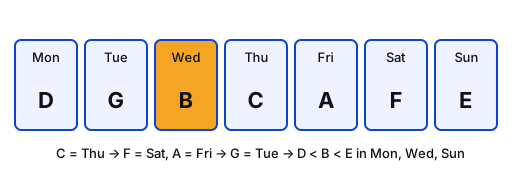
Seven friends – A, B, C, D, E, F and G – each have a meeting on a different day of the week, starting from Monday to Sunday. C has a meeting on Thursday.
Only one person has a meeting between C and F. A’s meeting is immediately before F’s, but not on a Monday. Only two persons have meetings between A and G. B’s meeting is before E’s but after D’s. On which day does B have the meeting?
सात मित्रों – A, B, C, D, E, F और G – में से प्रत्येक की बैठक सप्ताह के सोमवार से रविवार तक के अलग-अलग दिन है। C की बैठक गुरुवार को है।
C और F के बीच केवल एक व्यक्ति की बैठक है। A की बैठक F की बैठक के ठीक पहले है, परंतु सोमवार को नहीं। A और G के बीच केवल दो व्यक्तियों की बैठकें हैं। B की बैठक E से पहले परंतु D के बाद है। B की बैठक किस दिन है?
  1. AFridayशुक्रवार
  2. BWednesdayबुधवार
  3. CTuesdayमंगलवार
  4. DMondayसोमवार
Show answer

Concept: Fix the definite clue (C = Thursday) and branch on the others.

  1. One person between C and F ⇒ F is Tuesday or Saturday. A is immediately before F but not Monday ⇒ F = Saturday, A = Friday.
  2. Two persons between A and G ⇒ G = Tuesday (Sunday side has no room).
  3. Monday, Wednesday, Sunday remain for D, B, E with D before B before E ⇒ D = Mon, B = Wed, E = Sun.

Trick: "Immediately before, but not Monday" is the clue that kills the Tuesday branch — look for such eliminators first.

Answer: (B) Wednesday

अवधारणा: निश्चित सूत्र (C = गुरुवार) से शुरू कर बाकी पर शाखाएँ बनाएँ।

  1. C और F के बीच एक व्यक्ति ⇒ F मंगलवार या शनिवार। A, F से ठीक पहले पर सोमवार नहीं ⇒ F = शनिवार, A = शुक्रवार।
  2. A और G के बीच दो व्यक्ति ⇒ G = मंगलवार (रविवार की ओर जगह नहीं)।
  3. सोम, बुध, रवि बचे D, B, E के लिए, D < B < E ⇒ D = सोम, B = बुध, E = रवि।

ट्रिक: "ठीक पहले, पर सोमवार नहीं" वाला सूत्र मंगलवार वाली शाखा काट देता है — ऐसे निष्कासक सूत्र पहले खोजें।

उत्तर: (B) बुधवार

RRB NTPC Graduate CBT 1General Intelligence and ReasoningDay-wise scheduling puzzleRRB NTPC Graduate CBT 1 2025 · 19 Mar Shift 3 →
Q5977.
Refer to the following number and symbol series and answer the question. Counting to be done from left to right only. (All numbers are single-digit numbers only.)
(Left) Ω % + # 3 ? = £ 1 4 9 2 6 5 @ 7 & $ ~ * 8 (Right)
How many such symbols are there, each of which is immediately preceded by a number and also immediately followed by another number?
निम्नलिखित संख्या और प्रतीक शृंखला को देखिए और प्रश्न का उत्तर दीजिए। गिनती केवल बाएँ से दाएँ की ओर की जानी है। (सभी संख्याएँ केवल एक-अंकीय संख्याएँ हैं।)
(बाएँ) Ω % + # 3 ? = £ 1 4 9 2 6 5 @ 7 & $ ~ * 8 (दाएँ)
ऐसे कितने प्रतीक हैं, जिनमें से प्रत्येक के ठीक पहले एक संख्या है और ठीक बाद में भी एक अन्य संख्या है?
  1. AThreeतीन
  2. BFourचार
  3. COneएक
  4. DTwoदो
Show answer

Concept: Look for the pattern "number – symbol – number" moving left to right.

  1. Series: Ω % + # 3 ? = £ 1 4 9 2 6 5 @ 7 & $ ~ * 8.
  2. Symbols with a number before them: ? (after 3), @ (after 5), & (after 7). Only @ is also followed by a number (7); ? is followed by =, & by $.
  3. Count = 1.

Trick: Scan only the symbols that sit between two numbers — underline each number first, then check its neighbours.

Answer: (C) One

अवधारणा: बाएँ से दाएँ "संख्या – प्रतीक – संख्या" पैटर्न खोजें।

  1. श्रृंखला: Ω % + # 3 ? = £ 1 4 9 2 6 5 @ 7 & $ ~ * 8।
  2. जिन प्रतीकों से पहले संख्या है: ? (3 के बाद), @ (5 के बाद), & (7 के बाद)। इनमें केवल @ के बाद भी संख्या (7) है; ? के बाद =, & के बाद $।
  3. गिनती = 1।

ट्रिक: पहले हर संख्या को रेखांकित करें, फिर केवल उनके पड़ोसी प्रतीक जाँचें।

उत्तर: (C) One (एक)

RRB NTPC Graduate CBT 1General Intelligence and ReasoningNumber-symbol series countingRRB NTPC Graduate CBT 1 2025 · 19 Mar Shift 3 →
Q5978.
The e/m ratio for electron was determined by:
इलेक्ट्रॉन के लिए e/m अनुपात किसने निर्धारित किया था?
  1. AAlbert Einsteinअल्बर्ट आइंस्टीन
  2. BNiels Bohrनील्स बोर
  3. CIssac Newtonआइज़क न्यूटन
  4. DJ.J. Thomsonजे.जे. थॉमसन
Show answer

Concept: The charge-to-mass ratio (e/m) of the electron was measured in cathode-ray experiments.

  1. J.J. Thomson (1897) deflected cathode rays with electric and magnetic fields and found e/m≈1.76×1011C/kg – the discovery of the electron.
  2. The charge e alone was later measured by Millikan (oil-drop experiment); Bohr gave the atomic model, Einstein the photoelectric explanation.

Yaad rakhein: Thomson →e/m (and "plum-pudding" model); Millikan →e.

Answer: (D) J.J. Thomson

अवधारणा: इलेक्ट्रॉन का आवेश-द्रव्यमान अनुपात (e/m) कैथोड-किरण प्रयोगों से मापा गया था।

  1. J.J. Thomson (1897) ने कैथोड किरणों को विद्युत व चुंबकीय क्षेत्र से विचलित कर e/m≈1.76×1011C/kg ज्ञात किया – यही इलेक्ट्रॉन की खोज थी।
  2. केवल आवेश e बाद में Millikan (तेल-बूँद प्रयोग) ने मापा; Bohr ने परमाणु मॉडल और Einstein ने प्रकाश-विद्युत प्रभाव समझाया।

याद रखें: Thomson →e/m (और plum-pudding मॉडल); Millikan →e।

उत्तर: (D) J.J. Thomson

RRB NTPC Graduate CBT 1General AwarenessPhysics – Discovery of ElectronRRB NTPC Graduate CBT 1 2025 · 19 Mar Shift 2 →
Q5979.
In which year did India officially join the Shanghai Cooperation Organization (SCO) as a full member?
भारत किस वर्ष आधिकारिक रूप से शंघाई सहयोग संगठन (SCO) का पूर्ण सदस्य बना?
  1. A2008
  2. B2012
  3. C2017
  4. D2021
Show answer

Concept: India's membership status in the Shanghai Cooperation Organization.

  1. India (with Pakistan) became a full member of the SCO at the Astana Summit on 9 June 2017.
  2. India was an observer from 2005; the SCO itself was founded in 2001 (HQ Beijing). India chaired the SCO in 2023.

Yaad rakhein: SCO 2001 born → India observer 2005 → full member 2017 (Astana).

Answer: (C) 2017

अवधारणा: शंघाई सहयोग संगठन (SCO) में भारत की सदस्यता।

  1. भारत (पाकिस्तान के साथ) 9 जून 2017 को अस्ताना शिखर सम्मेलन में SCO का पूर्ण सदस्य बना।
  2. भारत 2005 से पर्यवेक्षक था; SCO की स्थापना 2001 में हुई (मुख्यालय बीजिंग)। 2023 में भारत ने SCO की अध्यक्षता की।

याद रखें: SCO 2001 → भारत पर्यवेक्षक 2005 → पूर्ण सदस्य 2017 (अस्ताना)।

उत्तर: (C) 2017

RRB NTPC Graduate CBT 1General AwarenessInternational Organisations – SCORRB NTPC Graduate CBT 1 2025 · 19 Mar Shift 2 →
Q5980.
What type of agriculture is still widely practiced in India despite modern agricultural changes?
आधुनिक कृषि परिवर्तनों के बावजूद भारत में किस प्रकार की कृषि अब भी व्यापक रूप से की जाती है?
  1. ASubsistence Agricultureनिर्वाह कृषि (Subsistence Agriculture)
  2. BOrganic Agricultureजैविक कृषि
  3. CCommercial Agricultureवाणिज्यिक कृषि
  4. DPlantation Agricultureरोपण कृषि
Show answer

Concept: Types of farming in India by purpose and scale.

  1. Subsistence agriculture – growing crops mainly for the family's own consumption on small holdings with low inputs – is still the most widespread form in India.
  2. Commercial and plantation farming are market-oriented and limited to specific regions/crops (tea, coffee, rubber); organic farming is still a small share.

Yaad rakhein: Small holdings + family labour + own consumption = subsistence farming (NCERT Class 10, Agriculture).

Answer: (A) Subsistence Agriculture

अवधारणा: उद्देश्य और पैमाने के आधार पर भारत में खेती के प्रकार।

  1. निर्वाह कृषि (Subsistence agriculture) – छोटी जोतों पर, कम साधनों से, मुख्यतः परिवार के उपभोग के लिए खेती – आज भी भारत में सबसे व्यापक है।
  2. वाणिज्यिक व बागानी खेती बाज़ार-उन्मुख और कुछ क्षेत्रों/फसलों (चाय, कॉफ़ी, रबर) तक सीमित है; जैविक खेती का हिस्सा अभी छोटा है।

याद रखें: छोटी जोत + पारिवारिक श्रम + स्वयं का उपभोग = निर्वाह कृषि (NCERT कक्षा 10, कृषि)।

उत्तर: (A) Subsistence Agriculture (निर्वाह कृषि)

RRB NTPC Graduate CBT 1General AwarenessIndian AgricultureRRB NTPC Graduate CBT 1 2025 · 19 Mar Shift 2 →