Question bank

Q&A: practice questions with answers

Search questions on any topic. Filter by exam category, exam, subject and topic, try the question, then open the answer and explanation.

Courses – airGurukul

7,077 questions found.

Q1281.
A group of numbers and symbols is coded using letter codes as per the codes given below and the conditions that follow. Study the given codes and conditions and answer the question that follows.
Note: If none of the conditions apply, then codes for the respective number/symbol are to be followed directly as given in the table.
Number/Symbol4@7#3&8*2^9
CodeHAJBKCLDMEN
Conditions:
(i) If the first element is a number and the last a symbol, the codes for these two (the first and the last elements) are to be interchanged.
(ii) If the first element is an even number and the last an odd number, the first and last elements are to be coded as $.
(iii) If both the second and third elements are perfect cubes, then the code of the second element will be the code of the third element.
What will be the code for the following group?
348@
संख्याओं और प्रतीकों के एक समूह को नीचे दिए गए कूटों और उसके बाद दी गई शर्तों के अनुसार अक्षर कूटों का उपयोग करके कूटबद्ध किया जाता है। दिए गए कूटों और शर्तों का अध्ययन कीजिए और आगे दिए गए प्रश्न का उत्तर दीजिए।
नोट: यदि कोई भी शर्त लागू नहीं होती है, तो संबंधित संख्या/प्रतीक के लिए तालिका में दिए गए कूटों का सीधे अनुसरण किया जाना है।
संख्या/प्रतीक4@7#3&8*2^9
कूटHAJBKCLDMEN
शर्तें:
(i) यदि पहला तत्व एक संख्या है और अंतिम तत्व एक प्रतीक है, तो इन दोनों (पहले और अंतिम तत्वों) के कूट आपस में बदल दिए जाने हैं।
(ii) यदि पहला तत्व एक सम संख्या है और अंतिम तत्व एक विषम संख्या है, तो पहले और अंतिम तत्वों को $ के रूप में कूटबद्ध किया जाना है।
(iii) यदि दूसरा और तीसरा दोनों तत्व पूर्ण घन हैं, तो दूसरे तत्व का कूट तीसरे तत्व का कूट होगा।
निम्नलिखित समूह के लिए कूट क्या होगा?
348@
  1. AKHLA
  2. BKLHA
  3. CALHK
  4. DAHLK
Show answer

Concept: Write the direct codes, then test each condition on the group 348@.

  1. Direct codes: 3 = K, 4 = H, 8 = L, @ = A → K H L A.
  2. First element 3 is a number and last element @ is a symbol → condition (i) applies: interchange the first and last codes.
  3. Condition (ii) fails (last is not an odd number); (iii) fails (4 is not a perfect cube). Result: A H L K.

Trick: Check the first/last element type first – it decides (i) or (ii) at once.

Answer: (D) AHLK

अवधारणा: पहले सीधे कूट लिखें, फिर समूह 348@ पर हर शर्त जाँचें।

  1. सीधे कूट: 3 = K, 4 = H, 8 = L, @ = A → K H L A।
  2. पहला 3 संख्या है और अंतिम @ प्रतीक है → शर्त (i): पहले और अंतिम कूट आपस में बदलें।
  3. शर्त (ii) लागू नहीं (अंतिम विषम संख्या नहीं); (iii) भी नहीं (4 पूर्ण घन नहीं)। परिणाम: A H L K।

ट्रिक: सबसे पहले पहला/अंतिम तत्व संख्या है या प्रतीक — यही (i) या (ii) तय कर देता है।

उत्तर: (D) AHLK
RRB NTPC Graduate CBT 1General Intelligence and ReasoningCoding with conditionsRRB NTPC Graduate CBT 1 2024 · 19 Jun Shift 3 →
Q1282.
Each of the digits in the number 7234169 is arranged in ascending order from left to right. The position(s) of how many digits will remain unchanged as compared to that in the original number?
संख्या 7234169 के प्रत्येक अंक को बाएँ से दाएँ आरोही क्रम में व्यवस्थित किया जाता है। मूल संख्या की तुलना में कितने अंकों का/के स्थान अपरिवर्तित रहेगा/रहेंगे?
  1. A2
  2. B1
  3. C4
  4. D3
Show answer

Concept: Arrange the digits in ascending order and compare place by place.

  1. Original: 7 2 3 4 1 6 9
  2. Ascending: 1 2 3 4 6 7 9
  3. Same place: 2 (2nd), 3 (3rd), 4 (4th) and 9 (7th) → 4 digits.

Trick: Write both numbers one under the other and tick matching columns.

Answer: (C) 4

अवधारणा: अंकों को आरोही क्रम में लगाकर स्थान-दर-स्थान तुलना करें।

  1. मूल: 7 2 3 4 1 6 9
  2. आरोही: 1 2 3 4 6 7 9
  3. अपरिवर्तित: 2, 3, 4 और 9 → 4 अंक।

ट्रिक: दोनों संख्याएँ एक-दूसरे के नीचे लिखकर मेल खाते स्तंभ गिनें।

उत्तर: (C) 4

RRB NTPC Graduate CBT 1General Intelligence and ReasoningDigit arrangementRRB NTPC Graduate CBT 1 2024 · 19 Jun Shift 3 →
Q1283.
This question is based on the five, three-digit numbers given below.
(Left) 307 485 194 237 937 (Right)
(Example: 697 – First digit = 6, second digit = 9 and third digit = 7)
(Note: All operations to be done from left to right.)
What will be the resultant if the third digit of the highest number is subtracted from the first digit of the lowest number?
यह प्रश्न नीचे दी गई तीन अंकों वाली पाँच संख्याओं पर आधारित है।
(बाएँ) 307 485 194 237 937 (दाएँ)
(उदाहरण: 697 – पहला अंक = 6, दूसरा अंक = 9 और तीसरा अंक = 7)
(नोट: सभी संक्रियाएँ बाएँ से दाएँ की जानी हैं।)
यदि सबसे बड़ी संख्या के तीसरे अंक को सबसे छोटी संख्या के पहले अंक में से घटाया जाए, तो परिणाम क्या होगा?
  1. A−7
  2. B−3
  3. C−6
  4. D−5
Show answer

Concept: Identify the highest and lowest numbers, pick the asked digits, then subtract in the stated order.

  1. Numbers: 307, 485, 194, 237, 937. Highest =937, lowest =194.
  2. Third digit of highest =7; first digit of lowest =1.
  3. Third digit subtracted from first digit: 1−7=−6.

Trick: "A subtracted from B" means B−A – read the order carefully.

Answer: (C) −6

अवधारणा: सबसे बड़ी और सबसे छोटी संख्या पहचानें, अंक चुनें और क्रम से घटाएँ।

  1. सबसे बड़ी =937, सबसे छोटी =194।
  2. सबसे बड़ी का तीसरा अंक =7; सबसे छोटी का पहला अंक =1।
  3. 1−7=−6।

ट्रिक: "A को B में से घटाना" का अर्थ B−A है — क्रम ध्यान से पढ़ें।

उत्तर: (C) −6

RRB NTPC Graduate CBT 1General Intelligence and ReasoningNumber operationsRRB NTPC Graduate CBT 1 2024 · 19 Jun Shift 3 →
Q1284.
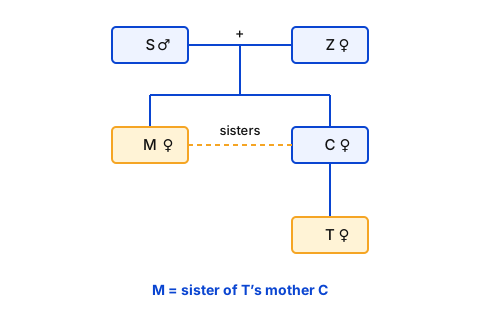
Z is the wife of S. M and C are daughters of S. T is the daughter of C. How is M related to T?
Z, S की पत्नी है। M और C, S की पुत्रियाँ हैं। T, C की पुत्री है। M, T से किस प्रकार संबंधित है?
  1. AMother's sisterमाँ की बहन
  2. BMother's motherमाँ की माँ
  3. CBother's wifeभाई की पत्नी
  4. DMotherमाँ
Show answer

Concept: Draw the family tree from the statements.

  1. Z is the wife of S, so S and Z are a couple.
  2. M and C are daughters of S → M and C are sisters.
  3. T is the daughter of C → C is T’s mother, so M is T’s mother’s sister (maternal aunt).

Trick: Sister of the mother = mausi = "Mother’s sister".

Answer: (A) Mother's sister

अवधारणा: कथनों से परिवार वृक्ष बनाएँ।

  1. Z, S की पत्नी है → S और Z दंपति।
  2. M और C, S की बेटियाँ → M और C बहनें।
  3. T, C की बेटी है → C, T की माँ; अतः M, T की माँ की बहन (मौसी) है।

ट्रिक: माँ की बहन = मौसी।

उत्तर: (A) माँ की बहन (Mother's sister)

RRB NTPC Graduate CBT 1General Intelligence and ReasoningBlood relationRRB NTPC Graduate CBT 1 2024 · 19 Jun Shift 3 →
Q1285.
NKGO is related to LIEM in a certain way based on the English alphabetical order. In the same way, QNJR is related to OLHP. To which of the given options is TQMU related, following the same logic?
अंग्रेज़ी वर्णमाला क्रम के आधार पर NKGO एक निश्चित प्रकार से LIEM से संबंधित है। उसी प्रकार, QNJR, OLHP से संबंधित है। समान तर्क का अनुसरण करते हुए, TQMU दिए गए विकल्पों में से किससे संबंधित है?
  1. AORSK
  2. BROSK
  3. CROKS
  4. DORKS
Show answer

Concept: Find the shift applied to each letter of the first pair.

  1. N→L, K→I, G→E, O→M: each letter moves −2.
  2. Check: Q→O, N→L, J→H, R→P ✔ (−2 each).
  3. T→R, Q→O, M→K, U→S → ROKS.

Trick: Same shift on every position → just subtract 2 from each letter.

Answer: (C) ROKS

अवधारणा: पहले जोड़े में हर अक्षर पर लगा अंतर ज्ञात करें।

  1. N→L, K→I, G→E, O→M: हर अक्षर −2।
  2. जाँच: QNJR → OLHP ✔।
  3. TQMU → R O K S।

ट्रिक: हर स्थान पर समान अंतर → हर अक्षर से 2 घटाएँ।

उत्तर: (C) ROKS

RRB NTPC Graduate CBT 1General Intelligence and ReasoningLetter analogyRRB NTPC Graduate CBT 1 2024 · 19 Jun Shift 3 →
Q1286.
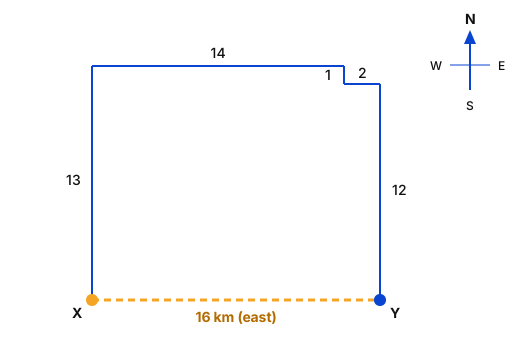
Mr. Z starts from Point Y and drives 12 km towards the north. He then takes a left turn, drives 2 km, turns right and drives 1 km. He then takes a left turn and drives 14 km. He takes a final left turn, drives 13 km and stops at Point X. How far (shortest distance) and towards which direction should he drive in order to reach Point Y again? (All turns are 90-degree turns only unless specified.)
श्री Z बिंदु Y से चलना शुरू करते हैं और उत्तर की ओर 12 km गाड़ी चलाते हैं। फिर वे बाएँ मुड़ते हैं, 2 km गाड़ी चलाते हैं, दाएँ मुड़ते हैं और 1 km गाड़ी चलाते हैं। फिर वे बाएँ मुड़ते हैं और 14 km गाड़ी चलाते हैं। वे अंतिम बार बाएँ मुड़ते हैं, 13 km गाड़ी चलाते हैं और बिंदु X पर रुक जाते हैं। पुनः बिंदु Y तक पहुँचने के लिए उन्हें कितनी दूरी (न्यूनतम दूरी) और किस दिशा में गाड़ी चलानी चाहिए? (जब तक निर्दिष्ट न हो, सभी मोड़ केवल 90 डिग्री के हैं।)
  1. A14 km towards the westपश्चिम की ओर 14 km
  2. B13 km towards the northउत्तर की ओर 13 km
  3. C11 km towards the southदक्षिण की ओर 11 km
  4. D16 km towards the eastपूर्व की ओर 16 km
Show answer

Concept: Track the coordinates of each leg starting from Y at (0, 0).

  1. 12 km north → (0, 12); left = west 2 km → (−2, 12).
  2. Right = north 1 km → (−2, 13); left = west 14 km → (−16, 13).
  3. Left = south 13 km → X (−16, 0): X is on the same line as Y, 16 km to its west.
  4. So he must drive 16 km towards the east.

Trick: North total 12+1=13 cancels south 13; only the west moves 2+14=16 remain.

Answer: (D) 16 km towards the east

अवधारणा: Y को (0, 0) मानकर हर चरण के निर्देशांक लिखें।

  1. उत्तर 12 km → (0, 12); बाएँ = पश्चिम 2 km → (−2, 12)।
  2. दाएँ = उत्तर 1 km → (−2, 13); बाएँ = पश्चिम 14 km → (−16, 13)।
  3. बाएँ = दक्षिण 13 km → X (−16, 0): X, Y से ठीक 16 km पश्चिम में।
  4. अतः 16 km पूर्व की ओर जाना होगा।

ट्रिक: उत्तर 12+1=13 और दक्षिण 13 कट जाते हैं; केवल पश्चिम 2+14=16 बचता है।

उत्तर: (D) 16 km पूर्व की ओर

RRB NTPC Graduate CBT 1General Intelligence and ReasoningDirection and distanceRRB NTPC Graduate CBT 1 2024 · 19 Jun Shift 3 →
Q1287.
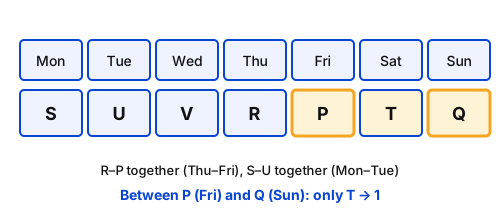
Each of P, Q, R, S, T, U and V has an exam on a different day of a week starting from Monday and ending on Sunday of the same week. V has the exam on Wednesday. Only one person has the exam after T. P has the exam immediately after R, but not on Tuesday. S has the exam immediately before U.
How many people have exams between P and Q?
P, Q, R, S, T, U और V में से प्रत्येक की परीक्षा एक ही सप्ताह के सोमवार से प्रारंभ होकर रविवार को समाप्त होने वाले सप्ताह के एक अलग दिन है। V की परीक्षा बुधवार को है। T के बाद केवल एक व्यक्ति की परीक्षा है। P की परीक्षा R के ठीक बाद है, परंतु मंगलवार को नहीं। S की परीक्षा U के ठीक पहले है।
P और Q के बीच कितने लोगों की परीक्षाएँ हैं?
  1. ATwoदो
  2. BThreeतीन
  3. COneएक
  4. DFourचार
Show answer

Concept: Fix the definite clues first, then place the pairs of consecutive days.

  1. V = Wednesday; only one exam after T → T = Saturday.
  2. Free days: Mon, Tue, Thu, Fri, Sun. R–P must be consecutive with P not on Tuesday → R = Thu, P = Fri.
  3. S–U consecutive → S = Mon, U = Tue; Q = Sun.
  4. Between P (Fri) and Q (Sun): only T → one person.

Trick: Place "block" clues (two consecutive days) in the only gaps big enough for them.

Answer: (C) One

अवधारणा: पहले निश्चित सूचनाएँ रखें, फिर लगातार दिनों वाले जोड़े।

  1. V = बुधवार; T के बाद केवल एक → T = शनिवार।
  2. खाली: सोम, मंगल, गुरु, शुक्र, रवि। R–P लगातार, P मंगल नहीं → R = गुरु, P = शुक्र।
  3. S–U लगातार → S = सोम, U = मंगल; Q = रवि।
  4. P (शुक्र) और Q (रवि) के बीच केवल T → एक।

ट्रिक: "जोड़ी" वाली सूचना को उसी खाली जगह रखें जहाँ दो लगातार दिन मिलें।

उत्तर: (C) एक

RRB NTPC Graduate CBT 1General Intelligence and ReasoningScheduling puzzleRRB NTPC Graduate CBT 1 2024 · 19 Jun Shift 3 →
Q1288.
If 1 is added to each odd digit and 2 is subtracted from each even digit in the number 1845637, what will be the sum of the digits that are second from the left and second from the right?
यदि संख्या 1845637 में प्रत्येक विषम अंक में 1 जोड़ा जाए और प्रत्येक सम अंक में से 2 घटाया जाए, तो बाएँ से दूसरे और दाएँ से दूसरे अंकों का योग क्या होगा?
  1. A6
  2. B10
  3. C12
  4. D8
Show answer

Concept: Change each digit as instructed and then read the required positions.

  1. 1845637 → 1+1, 8−2, 4−2, 5+1, 6−2, 3+1, 7+1 = 2 6 2 6 4 4 8.
  2. Second from left = 6; second from right = 4.
  3. Sum =6+4=10.

Trick: Only the two required digits matter: 8 → 6 and 3 → 4.

Answer: (B) 10

अवधारणा: हर अंक बदलें और माँगे गए स्थान पढ़ें।

  1. 1845637 → 2 6 2 6 4 4 8।
  2. बाएँ से दूसरा = 6; दाएँ से दूसरा = 4।
  3. योग =10।

ट्रिक: केवल दो अंक बदलें: 8 → 6, 3 → 4।

उत्तर: (B) 10

RRB NTPC Graduate CBT 1General Intelligence and ReasoningDigit operationsRRB NTPC Graduate CBT 1 2024 · 19 Jun Shift 3 →
Q1289.
UQNV is related to SOLT in a certain way based on the English alphabetical order. In the same way, XTQY is related to VROW. To which of the given options is RNKS related, following the same logic?
अंग्रेज़ी वर्णमाला क्रम के आधार पर UQNV एक निश्चित प्रकार से SOLT से संबंधित है। उसी प्रकार, XTQY, VROW से संबंधित है। समान तर्क का अनुसरण करते हुए, RNKS दिए गए विकल्पों में से किससे संबंधित है?
  1. APLIQ
  2. BPLQI
  3. CLPIQ
  4. DLPQI
Show answer

Concept: Find the shift for each letter of the example pair.

  1. U→S, Q→O, N→L, V→T: each −2.
  2. Check: XTQY → VROW ✔.
  3. R→P, N→L, K→I, S→Q → PLIQ.

Trick: Uniform −2 shift: subtract 2 from every letter.

Answer: (A) PLIQ

अवधारणा: उदाहरण में हर अक्षर का अंतर ज्ञात करें।

  1. U→S, Q→O, N→L, V→T: हर अक्षर −2।
  2. जाँच: XTQY → VROW ✔।
  3. RNKS → P L I Q।

ट्रिक: हर अक्षर से 2 घटाएँ।

उत्तर: (A) PLIQ

RRB NTPC Graduate CBT 1General Intelligence and ReasoningLetter analogyRRB NTPC Graduate CBT 1 2024 · 19 Jun Shift 3 →
Q1290.
What should come in place of the question mark (?) in the given series?
277, 254, 221, ?, 125, 62
दी गई श्रृंखला में प्रश्न चिह्न (?) के स्थान पर क्या आना चाहिए?
277, 254, 221, ?, 125, 62
  1. A188
  2. B158
  3. C178
  4. D168
Show answer

Concept: Check the differences between consecutive terms.

  1. 277−254=23, 254−221=33 → differences increase by 10.
  2. Next difference 43: 221−43=178.
  3. Check: 178−53=125, 125−63=62 ✔.

Trick: Differences 23,33,43,53,63 – an arithmetic pattern.

Answer: (C) 178

अवधारणा: क्रमागत पदों का अंतर देखें।

  1. 277−254=23, 254−221=33 → अंतर 10 से बढ़ रहा है।
  2. अगला अंतर 43: 221−43=178।
  3. जाँच: 178−53=125, 125−63=62 ✔।

ट्रिक: अंतर 23,33,43,53,63।

उत्तर: (C) 178

RRB NTPC Graduate CBT 1General Intelligence and ReasoningNumber seriesRRB NTPC Graduate CBT 1 2024 · 19 Jun Shift 3 →
Q1291.
In a certain code language, ‘CURE’ is coded as ‘3527’ and ‘EATS’ is coded as ‘1246’. What is the code for ‘E’ in the given code language?
एक निश्चित कूट भाषा में, 'CURE' को '3527' के रूप में और 'EATS' को '1246' के रूप में कूटबद्ध किया जाता है। दी गई कूट भाषा में 'E' के लिए कूट क्या है?
  1. A1
  2. B2
  3. C6
  4. D7
Show answer

Concept: A letter common to both words must have the digit common to both codes.

  1. CURE → 3527; EATS → 1246.
  2. Common letter: E. Common digit: 2.
  3. So E = 2.

Trick: Common letter ↔ common digit.

Answer: (B) 2

अवधारणा: दोनों शब्दों में समान अक्षर का कूट दोनों कोडों में समान अंक होगा।

  1. CURE → 3527; EATS → 1246।
  2. समान अक्षर: E; समान अंक: 2।
  3. अतः E = 2।

ट्रिक: समान अक्षर ↔ समान अंक।

उत्तर: (B) 2

RRB NTPC Graduate CBT 1General Intelligence and ReasoningCoding–decodingRRB NTPC Graduate CBT 1 2024 · 19 Jun Shift 3 →
Q1292.
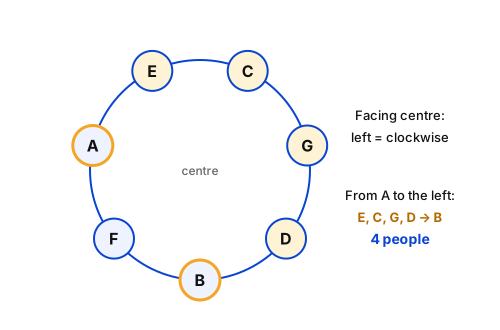
A, B, C, D, E, F, and G are sitting around a circular table facing the centre.
D sits to the immediate right of B. Only three people sit between D and E when counted from the left of D. Only three people sit between B and C. F sits to the immediate right of A.
How many people sit between A and B when counted from the left of A?
A, B, C, D, E, F और G एक वृत्ताकार मेज़ के चारों ओर केंद्र की ओर मुख करके बैठे हैं।
D, B के ठीक दाएँ बैठा है। D के बाएँ से गिनने पर D और E के बीच केवल तीन व्यक्ति बैठे हैं। B और C के बीच केवल तीन व्यक्ति बैठे हैं। F, A के ठीक दाएँ बैठा है।
A के बाएँ से गिनने पर A और B के बीच कितने व्यक्ति बैठे हैं?
  1. AOneएक
  2. BTwoदो
  3. CThreeतीन
  4. DFourचार
Show answer

Concept: For people facing the centre, moving to the left means moving clockwise and to the right means anticlockwise.

  1. Place B; D is to B’s immediate right.
  2. Going left from D, three people are skipped, so E is the 4th seat from D; C is placed with three people between B and C (the other side is taken by E).
  3. F is immediately right of A: the only free adjacent pair gives F next to B and A next to F; G takes the last seat.
  4. Order (clockwise): B, F, A, E, C, G, D. Left of A: E, C, G, D then B → four people.

Trick: Draw the circle first and fix one person; for "facing centre", left = clockwise.

Answer: (D) Four

अवधारणा: केंद्र की ओर मुख होने पर बायाँ = दक्षिणावर्त (clockwise), दायाँ = वामावर्त।

  1. B रखें; D, B के ठीक दाएँ।
  2. D के बाएँ से तीन व्यक्ति छोड़कर E; B और C के बीच तीन व्यक्ति (दूसरी ओर E है) → C तय।
  3. F, A के ठीक दाएँ: एकमात्र खाली जोड़ी → F, B के पास और A, F के पास; G अंतिम सीट।
  4. क्रम (दक्षिणावर्त): B, F, A, E, C, G, D। A के बाएँ से: E, C, G, D फिर B → चार।

ट्रिक: पहले वृत्त बनाकर एक व्यक्ति स्थिर करें; केंद्र की ओर मुख = बायाँ दक्षिणावर्त।

उत्तर: (D) चार

RRB NTPC Graduate CBT 1General Intelligence and ReasoningCircular seatingRRB NTPC Graduate CBT 1 2024 · 19 Jun Shift 3 →
Q1293.
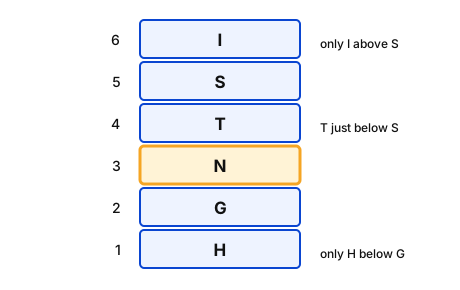
N, I, G, H, T and S live on six different floors of the same building. The lowermost floor in the building is numbered 1, the floor above it, number 2 and so on till the topmost floor is numbered 6. Only H lives below G. Only I lives above S. T lives immediately below S. Who lives on floor numbered 3?
N, I, G, H, T और S एक ही इमारत की छह अलग-अलग मंज़िलों पर रहते हैं। इमारत की सबसे निचली मंज़िल की संख्या 1 है, उसके ऊपर की मंज़िल की संख्या 2 है और इसी प्रकार सबसे ऊपरी मंज़िल की संख्या 6 है। G के नीचे केवल H रहता है। S के ऊपर केवल I रहता है। T, S के ठीक नीचे रहता है। मंज़िल संख्या 3 पर कौन रहता है?
  1. AT
  2. BN
  3. CH
  4. DS
Show answer

Concept: Use the "only" clues to fix the extreme floors.

  1. Only H lives below G → H = 1, G = 2.
  2. Only I lives above S → I = 6, S = 5.
  3. T immediately below S → T = 4; remaining N = 3.

Trick: "Only X below Y" puts Y on floor 2 and X on floor 1.

Answer: (B) N

अवधारणा: "केवल" वाली सूचनाओं से किनारे की मंज़िलें तय करें।

  1. केवल H, G के नीचे → H = 1, G = 2।
  2. केवल I, S के ऊपर → I = 6, S = 5।
  3. T, S के ठीक नीचे → T = 4; शेष N = 3।

ट्रिक: "केवल X, Y के नीचे" → Y मंज़िल 2, X मंज़िल 1।

उत्तर: (B) N

RRB NTPC Graduate CBT 1General Intelligence and ReasoningFloor puzzleRRB NTPC Graduate CBT 1 2024 · 19 Jun Shift 3 →
Q1294.
Based on the English alphabetical order, three of the following four letter-clusters are alike in a certain way and thus form a group. Which letter-cluster DOES NOT belong to that group?
(Note: The odd one out is not based on the number of consonants/vowels or their position in the letter-cluster.)
अंग्रेज़ी वर्णमाला क्रम के आधार पर, निम्नलिखित चार अक्षर-समूहों में से तीन किसी निश्चित प्रकार से समान हैं और इस प्रकार एक समूह बनाते हैं। कौन-सा अक्षर-समूह उस समूह से संबंधित नहीं है?
(नोट: असंगत अक्षर-समूह, उस अक्षर-समूह में व्यंजनों/स्वरों की संख्या या उनके स्थान पर आधारित नहीं है।)
  1. ABURM
  2. BQJGB
  3. CHAXS
  4. DTMJF
Show answer

Concept: Find the position differences between consecutive letters (counting backward, wrapping Z→A).

  1. QJGB: Q→J −7, J→G −3, G→B −5.
  2. HAXS: H→A −7, A→X −3 (wrap), X→S −5. BURM: B→U −7 (wrap), U→R −3, R→M −5.
  3. TMJF: T→M −7, M→J −3, J→F −4 ✘ → odd one.

Trick: Treat the alphabet as a circle; check every gap, the odd one breaks only one gap.

Answer: (D) TMJF

अवधारणा: क्रमागत अक्षरों का स्थानीय अंतर (पीछे की ओर, Z→A चक्रीय) देखें।

  1. QJGB: −7, −3, −5।
  2. HAXS: −7, −3, −5; BURM: −7, −3, −5।
  3. TMJF: −7, −3, −4 ✘ → भिन्न।

ट्रिक: वर्णमाला को चक्र मानें; विषम समूह में केवल एक अंतर बदलता है।

उत्तर: (D) TMJF

RRB NTPC Graduate CBT 1General Intelligence and ReasoningOdd one out – lettersRRB NTPC Graduate CBT 1 2024 · 19 Jun Shift 3 →
Q1295.
Based on the English alphabetical order, three of the following four letter-cluster pairs are alike in a certain way and thus form a group. Which letter-cluster pair DOES NOT belong to that group?
(Note: The odd one out is not based on the number of consonants/vowels or their position in the letter-cluster.)
अंग्रेज़ी वर्णमाला क्रम के आधार पर, निम्नलिखित चार अक्षर-समूह युग्मों में से तीन किसी निश्चित प्रकार से समान हैं और इस प्रकार एक समूह बनाते हैं। कौन-सा अक्षर-समूह युग्म उस समूह से संबंधित नहीं है?
(नोट: असंगत अक्षर-समूह युग्म, अक्षर-समूह में व्यंजनों/स्वरों की संख्या या उनके स्थान पर आधारित नहीं है।)
  1. AUP – CW
  2. BJE – RL
  3. CBW – JD
  4. DDY – LE
Show answer

Concept: Compare letter positions across the pair (with wrap-around after Z).

  1. UP – CW: U→C +8, P→W +7. JE – RL: J→R +8, E→L +7.
  2. BW – JD: B→J +8, W→D +7 (wrap).
  3. DY – LE: D→L +8 but Y→E +6 ✘ → odd one.

Trick: Check first-letter and second-letter shifts separately; the odd pair breaks one of them.

Answer: (D) DY – LE

अवधारणा: युग्म में अक्षरों के स्थानों की तुलना करें (Z के बाद A से फिर गिनें)।

  1. UP – CW: +8, +7; JE – RL: +8, +7।
  2. BW – JD: +8, +7 (चक्रीय)।
  3. DY – LE: +8 पर Y→E +6 ✘ → भिन्न।

ट्रिक: पहले और दूसरे अक्षर का अंतर अलग-अलग जाँचें।

उत्तर: (D) DY – LE

RRB NTPC Graduate CBT 1General Intelligence and ReasoningOdd one out – letter pairsRRB NTPC Graduate CBT 1 2024 · 19 Jun Shift 3 →
Q1296.
Deficiency of which nutrient is most directly linked to reduced oxygen-carrying capacity of blood?
किस पोषक तत्व की कमी का रक्त की ऑक्सीजन-वहन क्षमता में कमी से सर्वाधिक प्रत्यक्ष संबंध है?
  1. AIodineआयोडीन
  2. BVitamin Aविटामिन A
  3. CCalciumकैल्शियम
  4. DIronआयरन (लौह)
Show answer

Concept: Oxygen in blood is carried by haemoglobin in red blood cells, and iron is the core of haemoglobin.

  1. Iron deficiency → less haemoglobin → anaemia, i.e. reduced oxygen-carrying capacity (tiredness, pale skin).
  2. Iodine deficiency causes goitre; Vitamin A deficiency causes night blindness; calcium deficiency affects bones and teeth.

Yaad rakhein: Iron → Haemoglobin → Oxygen; its deficiency = Anaemia.

Answer: (D) Iron

अवधारणा: रक्त में ऑक्सीजन लाल रक्त कोशिकाओं के हीमोग्लोबिन द्वारा ले जाई जाती है और हीमोग्लोबिन का मुख्य घटक आयरन (लोहा) है।

  1. आयरन की कमी → हीमोग्लोबिन कम → एनीमिया (रक्ताल्पता), यानी ऑक्सीजन वहन क्षमता घटती है।
  2. आयोडीन की कमी से घेंघा, विटामिन A की कमी से रतौंधी, कैल्शियम की कमी से हड्डियाँ कमजोर होती हैं।

याद रखें: आयरन → हीमोग्लोबिन → ऑक्सीजन; कमी = एनीमिया।

उत्तर: (D) आयरन (Iron)

RRB NTPC Graduate CBT 1General AwarenessNutrition – MineralsRRB NTPC Graduate CBT 1 2024 · 19 Jun Shift 2 →
Q1297.
A sound wave with a period of 0.01 seconds has a frequency of:
0.01 सेकंड आवर्तकाल वाली एक ध्वनि तरंग की आवृत्ति कितनी होगी?
  1. A1000 Hz
  2. B10 Hz
  3. C0.1 Hz
  4. D100 Hz
Show answer

Concept: Frequency is the reciprocal of time period: f=1T.

  1. T=0.01s.
  2. f=10.01=100Hz.

Trick: T=10−ns⇒f=10nHz.

Answer: (D) 100 Hz

अवधारणा: आवृत्ति, आवर्तकाल का व्युत्क्रम है: f=1T।

  1. T=0.01s।
  2. f=10.01=100Hz।

ट्रिक: T=10−ns⇒f=10nHz।

उत्तर: (D) 100 Hz

RRB NTPC Graduate CBT 1General AwarenessSound WavesRRB NTPC Graduate CBT 1 2024 · 19 Jun Shift 2 →
Q1298.
When appointing judges to the Supreme Court, the President must consult which of the following?
सर्वोच्च न्यायालय में न्यायाधीशों की नियुक्ति करते समय राष्ट्रपति को निम्नलिखित में से किससे परामर्श करना अनिवार्य है?
  1. AThe Union Public Service Commissionसंघ लोक सेवा आयोग
  2. BThe Chief Justice of Indiaभारत के मुख्य न्यायाधीश
  3. CThe Law Minister exclusivelyकेवल विधि मंत्री
  4. DThe Prime Minister onlyकेवल प्रधानमंत्री
Show answer

Concept: Article 124(2) says Supreme Court judges are appointed by the President after consultation with judges of the Supreme Court and High Courts as needed.

  1. For appointing any judge other than the Chief Justice, consulting the Chief Justice of India is always mandatory.
  2. In practice this works through the collegium headed by the CJI; UPSC or the Law Minister have no constitutional role here.

Yaad rakhein: Article 124(2) – CJI consultation is compulsory (collegium system).

Answer: (B) The Chief Justice of India

अवधारणा: अनुच्छेद 124(2) के अनुसार राष्ट्रपति, सर्वोच्च न्यायालय व उच्च न्यायालयों के न्यायाधीशों से परामर्श के बाद सुप्रीम कोर्ट के न्यायाधीश नियुक्त करते हैं।

  1. मुख्य न्यायाधीश के अलावा किसी भी न्यायाधीश की नियुक्ति में भारत के मुख्य न्यायाधीश (CJI) से परामर्श अनिवार्य है।
  2. व्यवहार में यह CJI की अध्यक्षता वाले कॉलेजियम से होता है; UPSC या विधि मंत्री की कोई संवैधानिक भूमिका नहीं।

याद रखें: अनुच्छेद 124(2) – CJI से परामर्श अनिवार्य (कॉलेजियम प्रणाली)।

उत्तर: (B) भारत के मुख्य न्यायाधीश

RRB NTPC Graduate CBT 1General AwarenessJudiciary – Appointment of JudgesRRB NTPC Graduate CBT 1 2024 · 19 Jun Shift 2 →
Q1299.
Who among the following has been appointed as the Chairperson of National
Commission for Women (NCW), in October 2024?
अक्टूबर 2024 में निम्नलिखित में से किसे राष्ट्रीय महिला आयोग (NCW) का
अध्यक्ष नियुक्त किया गया है?
  1. AArti Sarinआरती सरीन
  2. BVijaya Kishore Rahatkarविजया किशोर रहाटकर
  3. CAnju Rathi Ranaअंजू राठी राणा
  4. DAmit Kumarअमित कुमार
Show answer

Concept: The National Commission for Women (NCW) is a statutory body set up in 1992 under the NCW Act, 1990.

  1. In October 2024, the Centre appointed Vijaya Kishore Rahatkar, former Mayor of Aurangabad and ex-chairperson of the Maharashtra State Commission for Women, as NCW Chairperson for three years.
  2. She succeeded Rekha Sharma.

Yaad rakhein: NCW Chairperson (Oct 2024) – Vijaya Rahatkar; first NCW chief – Jayanti Patnaik.

Answer: (B) Vijaya Kishore Rahatkar

अवधारणा: राष्ट्रीय महिला आयोग (NCW) NCW अधिनियम, 1990 के तहत 1992 में गठित एक वैधानिक निकाय है।

  1. अक्टूबर 2024 में केंद्र ने विजया किशोर रहाटकर (औरंगाबाद की पूर्व महापौर, महाराष्ट्र राज्य महिला आयोग की पूर्व अध्यक्ष) को तीन वर्ष के लिए NCW अध्यक्ष नियुक्त किया।
  2. उन्होंने रेखा शर्मा का स्थान लिया।

याद रखें: NCW अध्यक्ष (अक्टूबर 2024) – विजया रहाटकर; पहली अध्यक्ष – जयंती पटनायक।

उत्तर: (B) विजया किशोर रहाटकर

RRB NTPC Graduate CBT 1General AwarenessCurrent Affairs – AppointmentsRRB NTPC Graduate CBT 1 2024 · 19 Jun Shift 2 →
Q1300.
What is the dual role of the highest judicial officer in a district?
किसी जिले के सर्वोच्च न्यायिक अधिकारी की दोहरी भूमिका क्या होती है?
  1. ADistrict Judge for civil cases and Sessions Judge for criminal casesदीवानी मामलों के लिए जिला न्यायाधीश और आपराधिक मामलों के लिए सत्र न्यायाधीश
  2. BChief Judicial Magistrate for civil cases and Munsiff for criminal casesदीवानी मामलों के लिए मुख्य न्यायिक मजिस्ट्रेट और आपराधिक मामलों के लिए मुंसिफ
  3. CSubordinate Judge for civil cases and Metropolitan Magistrate for criminal casesदीवानी मामलों के लिए अधीनस्थ न्यायाधीश और आपराधिक मामलों के लिए महानगर मजिस्ट्रेट
  4. DNyaya Panchayat head for civil cases and Gram Kutchery head for criminal casesदीवानी मामलों के लिए न्याय पंचायत प्रमुख और आपराधिक मामलों के लिए ग्राम कचहरी प्रमुख
Show answer

Concept: The district court is the highest court in a district.

  1. The same officer is called the District Judge when hearing civil cases.
  2. When hearing criminal cases, he is called the Sessions Judge (can award even death sentence, subject to High Court confirmation).

Yaad rakhein: Civil → District Judge; Criminal → Sessions Judge.

Answer: (A) District Judge for civil cases and Sessions Judge for criminal cases

अवधारणा: जिला न्यायालय किसी जिले का सर्वोच्च न्यायालय होता है।

  1. वही अधिकारी दीवानी (civil) मामलों में जिला न्यायाधीश कहलाता है।
  2. फौजदारी (criminal) मामलों में वह सत्र न्यायाधीश (Sessions Judge) कहलाता है।

याद रखें: दीवानी → जिला न्यायाधीश; फौजदारी → सत्र न्यायाधीश।

उत्तर: (A) दीवानी मामलों के लिए जिला न्यायाधीश और फौजदारी मामलों के लिए सत्र न्यायाधीश

RRB NTPC Graduate CBT 1General AwarenessJudiciary – Subordinate CourtsRRB NTPC Graduate CBT 1 2024 · 19 Jun Shift 2 →