Question bank

Q&A: practice questions with answers

Search questions on any topic. Filter by exam category, exam, subject and topic, try the question, then open the answer and explanation.

Courses – airGurukul

120 questions found.

Q81.
Sushant and Varun are running on a circular track of 400 metres. Sushant completes one round in 100 seconds, and Varun completes one round in 80 seconds. They start simultaneously from the same point and run in opposite directions. How many times do they meet before they both return together to the starting point again?
सुशांत और वरुण 400 मीटर के एक वृत्ताकार ट्रैक पर दौड़ रहे हैं। सुशांत एक चक्कर 100 सेकंड में और वरुण एक चक्कर 80 सेकंड में पूरा करता है। वे एक ही बिंदु से एक साथ दौड़ना शुरू करते हैं और विपरीत दिशाओं में दौड़ते हैं। दोनों के एक साथ पुनः प्रारंभिक बिंदु पर लौटने से पहले वे कितनी बार मिलते हैं?
  1. A9
  2. B8
  3. C12
  4. D10
Show answer

Concept: Opposite directions: first meeting time =Lv1+v2; both at the start together after LCM of their lap times.

  1. Speeds: 400100=4 m/s and 40080=5 m/s; relative speed =9 m/s.
  2. They meet every 4009 s; both return to the start at LCM(100, 80) =400 s.
  3. Meetings in 400 s =400400/9=9, but the 9th meeting is at the starting point itself, so 8 meetings occur before it.

Trick: Opposite directions, lap ratio 4:5 ⇒ meetings per cycle =4+5=9; subtract 1 for the meeting at the start.

Answer: (B) 8

अवधारणा: विपरीत दिशा: पहली मुलाकात =Lv1+v2; दोनों प्रारंभ बिंदु पर साथ LCM(चक्कर समय) के बाद।

  1. चाल: 400100=4 m/s और 40080=5 m/s; सापेक्ष चाल =9 m/s।
  2. हर 4009 s पर मिलते हैं; दोनों प्रारंभ बिंदु पर LCM(100, 80) =400 s पर।
  3. 400 s में मुलाकातें =400400/9=9, पर 9वीं मुलाकात प्रारंभ बिंदु पर ही है, अतः उससे पहले 8 मुलाकातें।

ट्रिक: विपरीत दिशा, चक्कर अनुपात 4:5 ⇒ प्रति चक्र मुलाकातें =4+5=9; प्रारंभ बिंदु वाली 1 घटाएँ।

उत्तर: (B) 8
RRB NTPC Graduate CBT 2MathematicsCircular Motion – MeetingsRRB NTPC Graduate CBT 2 2025 · 10 Jul Shift 1 →
Q82.
In a linear race of 750 meters, X can beat Y by 10 meters. In a race of 444 meters, Y can beat Z by 6 meters. In a race of 150 meters, X will beat Z by how many meters?
750 मीटर की एक सीधी दौड़ में, X, Y को 10 मीटर से हरा सकता है। 444 मीटर की दौड़ में, Y, Z को 6 मीटर से हरा सकता है। 150 मीटर की दौड़ में X, Z को कितने मीटर से हराएगा?
  1. A3
  2. B4
  3. C2
  4. D6
Show answer

Concept: “X beats Y by d m in an L m race” ⇒ when X runs L, Y runs L−d; speed ratio =L:(L−d).

  1. X : Y =750:740=75:74.
  2. Y : Z =444:438=74:73.
  3. X : Z =75:73. When X runs 150 m, Z runs 150×7375=146 m ⇒ X beats Z by 4 m.

Trick: The ratios chain neatly through 74, giving X : Z =75:73 – a 2 m gap per 75 m, so 4 m per 150 m.

Answer: (B) 4

अवधारणा: “L m की दौड़ में X, Y को d m से हराता है” ⇒ X के L चलने पर Y, L−d चलता है; चाल अनुपात =L:(L−d)।

  1. X : Y =750:740=75:74।
  2. Y : Z =444:438=74:73।
  3. X : Z =75:73। X के 150 m चलने पर Z =150×7375=146 m ⇒ X, Z को 4 m से हराता है।

ट्रिक: अनुपात 74 से सीधे जुड़ जाते हैं, X : Z =75:73 – हर 75 m पर 2 m का अंतर, अतः 150 m पर 4 m।

उत्तर: (B) 4

RRB NTPC Graduate CBT 2MathematicsRacesRRB NTPC Graduate CBT 2 2025 · 10 Jul Shift 1 →
Q83.
A and B complete a work in 35 days. If A alone can do it in 60 days, then B alone can do one-third of the same work in ______________days.
A और B एक कार्य को 35 दिनों में पूरा करते हैं। यदि A अकेला इसे 60 दिनों में कर सकता है, तो B अकेला उसी कार्य का एक-तिहाई भाग ______________ दिनों में करेगा।
  1. A28
  2. B84
  3. C36
  4. D42
Show answer

Concept: B's one-day work =1together−1A.

  1. 135−160=12−7420=5420=184 ⇒ B alone takes 84 days.
  2. One-third of the work: 843=28 days.

Trick: B alone =35×6060−35=210025=84; then divide by 3.

Answer: (A) 28

अवधारणा: B का एक दिन का कार्य =1साथ−1A।

  1. 135−160=12−7420=5420=184 ⇒ B अकेले 84 दिन।
  2. एक-तिहाई कार्य: 843=28 दिन।

ट्रिक: B अकेले =35×6060−35=210025=84; फिर 3 से भाग दें।

उत्तर: (A) 28

RRB NTPC Graduate CBT 2MathematicsTime and WorkRRB NTPC Graduate CBT 2 2025 · 10 Jul Shift 1 →
Q84.
The ratio of Rahul’s age to his son’s age is 7 : 2. If Rahul is 49 years old, what is his son’s age?
राहुल की आयु और उसके पुत्र की आयु का अनुपात 7 : 2 है। यदि राहुल 49 वर्ष का है, तो उसके पुत्र की आयु कितनी है?
  1. A14 years14 वर्ष
  2. B12 years12 वर्ष
  3. C15 years15 वर्ष
  4. D13 years13 वर्ष
Show answer

Concept: If the ratio is 7:2, the ages are 7k and 2k.

  1. 7k=49⇒k=7.
  2. Son's age =2k=14 years.

Trick: 49÷7=7 per ratio unit; son =2×7=14.

Answer: (A) 14 years

अवधारणा: अनुपात 7:2 हो तो आयु 7k और 2k।

  1. 7k=49⇒k=7।
  2. पुत्र की आयु =2k=14 वर्ष।

ट्रिक: 49÷7=7 प्रति इकाई; पुत्र =2×7=14।

उत्तर: (A) 14 years

RRB NTPC Graduate CBT 2MathematicsRatio – AgesRRB NTPC Graduate CBT 2 2025 · 10 Jul Shift 1 →
Q85.
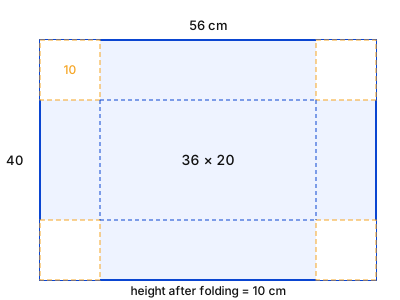
A metallic sheet is of the rectangular shape with length 56 cm and width 40 cm. From each corner, a square of 10 cm is cut-off. A closed box is made of the remaining sheet. How many match boxes of length 4.0 cm breadth 2.0 cm and height 1.5 cm it can accommodate?
एक धातु की चादर आयताकार आकार की है, जिसकी लंबाई 56 cm और चौड़ाई 40 cm है। प्रत्येक कोने से 10 cm का एक वर्ग काट दिया जाता है। शेष चादर से एक बंद बक्सा बनाया जाता है। इसमें 4.0 cm लंबाई, 2.0 cm चौड़ाई और 1.5 cm ऊँचाई वाली कितनी माचिस की डिब्बियाँ समा सकती हैं?
  1. A620 boxes620 डिब्बियाँ
  2. B600 boxes600 डिब्बियाँ
  3. C610 boxes610 डिब्बियाँ
  4. D550 boxes550 डिब्बियाँ
Show answer

Concept: Cutting squares of side a from the corners and folding gives a box of (l−2a)×(b−2a)×a; number of small boxes =volume of big boxvolume of one small box.

  1. Box dimensions: (56−20)×(40−20)×10=36×20×10 ⇒ volume =7200 cm³.
  2. Match box volume =4×2×1.5=12 cm³.
  3. Number =720012=600.

Trick: Subtract twice the cut side from both length and breadth; the cut side becomes the height.

Answer: (B) 600 boxes

अवधारणा: कोनों से a भुजा के वर्ग काटकर मोड़ने पर बॉक्स (l−2a)×(b−2a)×a बनता है; छोटे बॉक्सों की संख्या =बड़े बॉक्स का आयतनएक छोटे बॉक्स का आयतन।

  1. बॉक्स की विमाएँ: (56−20)×(40−20)×10=36×20×10 ⇒ आयतन =7200 cm³।
  2. माचिस की डिब्बी का आयतन =4×2×1.5=12 cm³।
  3. संख्या =720012=600।

ट्रिक: लंबाई और चौड़ाई दोनों से कटी भुजा का दोगुना घटाएँ; कटी भुजा ही ऊँचाई बन जाती है।

उत्तर: (B) 600 boxes

RRB NTPC Graduate CBT 2MathematicsMensuration – Open Box from SheetRRB NTPC Graduate CBT 2 2025 · 10 Jul Shift 1 →
Q86.
In the following triads, each group of letters is related to the subsequent one following a certain logic. Select from the given options, the one which follows the same logic. BARS - ARBS - SRAB
FLAM - LAFM - MALF
निम्नलिखित त्रिकों (triads) में, अक्षरों का प्रत्येक समूह एक निश्चित तर्क के अनुसार अगले समूह से संबंधित है। दिए गए विकल्पों में से उसका चयन कीजिए, जो समान तर्क का पालन करता है। BARS - ARBS - SRAB
FLAM - LAFM - MALF
  1. AKEAT - EAKT - TAEK
  2. BBALK - ABLK - KALB
  3. CMIND - INMD - INDM
  4. DWAST - WSAT - TSAW
Show answer

Concept: Track the position of each letter through the three steps.

  1. BARS → ARBS: the first three letters shift one place left (B A R → A R B), the 4th letter stays.
  2. ARBS → SRAB: the last letter jumps to the front, the 2nd stays, and the old 1st and 3rd swap (A R B S → S R A B). FLAM → LAFM → MALF follows the same rule.
  3. Apply to KEAT: K E A → E A K gives EAKT ✓; then E A K T → T A E K ✓.
  4. BALK → ABLK fails at step 1 (should be ALBK); MIND and WAST also break the rule.

Trick: Write positions as numbers: step 1 = 2-3-1-4, step 2 = 4-2-1-3. Test only step 1 first – it kills most options.

Answer: (A) KEAT - EAKT - TAEK

अवधारणा: तीनों चरणों में हर अक्षर की स्थिति (position) देखें।

  1. BARS → ARBS: पहले तीन अक्षर एक स्थान बाएँ खिसकते हैं (B A R → A R B), चौथा अक्षर वहीं रहता है।
  2. ARBS → SRAB: अंतिम अक्षर आगे आ जाता है, दूसरा वहीं रहता है, पुराने पहले और तीसरे की अदला-बदली (A R B S → S R A B)। FLAM → LAFM → MALF भी यही नियम मानता है।
  3. KEAT पर लगाएँ: K E A → E A K से EAKT ✓; फिर E A K T → T A E K ✓।
  4. BALK → ABLK पहले ही चरण में गलत (ALBK होना चाहिए); MIND और WAST भी नियम तोड़ते हैं।

ट्रिक: स्थितियों को संख्या में लिखें: चरण 1 = 2-3-1-4, चरण 2 = 4-2-1-3। पहले केवल चरण 1 जाँचें – अधिकांश विकल्प वहीं कट जाते हैं।

उत्तर: (A) KEAT - EAKT - TAEK

RRB NTPC Graduate CBT 2General Intelligence and ReasoningLetter-cluster analogyRRB NTPC Graduate CBT 2 2025 · 10 Jul Shift 1 →
Q87.
In this question, a question is followed by two statements numbered (I) and (II). You have to decide whether the data provided in the statements are sufficient to answer the question. Read both the statements and decide the appropriate answer.
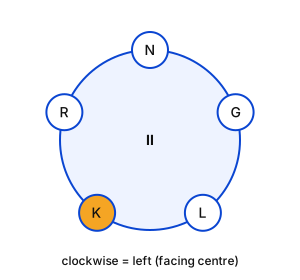
Five, girls, Gauri, Ragini, Navya, Kajal and Lovely, are sitting around a circular table facing towards the centre. Who sits to the immediate left of Lovely?
(I) Gauri is sitting immediately to the right of Lovely. Ragini is sitting immediately to the left of Kajal.
(II) Navya is sitting second to the left of Kajal. Gauri is an immediate neighbour of both Navya and Lovely.
इस प्रश्न में, एक प्रश्न के बाद (I) और (II) क्रमांकित दो कथन दिए गए हैं। आपको यह तय करना है कि कथनों में दिए गए आँकड़े प्रश्न का उत्तर देने के लिए पर्याप्त हैं या नहीं। दोनों कथनों को पढ़िए और उपयुक्त उत्तर तय कीजिए।
पाँच लड़कियाँ, गौरी, रागिनी, नव्या, काजल और लवली, एक वृत्ताकार मेज़ के चारों ओर केंद्र की ओर मुख करके बैठी हैं। लवली के ठीक बाएँ कौन बैठी है?
(I) गौरी, लवली के ठीक दाएँ बैठी है। रागिनी, काजल के ठीक बाएँ बैठी है।
(II) नव्या, काजल के बाएँ से दूसरे स्थान पर बैठी है। गौरी, नव्या और लवली दोनों की निकटतम पड़ोसी है।
  1. ABoth statements I and II together are NOT sufficient to answer the questionकथन I और II दोनों मिलकर भी प्रश्न का उत्तर देने के लिए पर्याप्त नहीं हैं
  2. BData in Statement I alone is sufficient to answer the question while data in statement II is notकथन I के आँकड़े अकेले प्रश्न का उत्तर देने के लिए पर्याप्त हैं, जबकि कथन II के आँकड़े पर्याप्त नहीं हैं
  3. CData in Statement II alone is sufficient to answer the question while data in statement I is notकथन II के आँकड़े अकेले प्रश्न का उत्तर देने के लिए पर्याप्त हैं, जबकि कथन I के आँकड़े पर्याप्त नहीं हैं
  4. DBoth statements I and II together (and not statement I alone or statement II alone) are sufficient to answer the questionकथन I और II दोनों मिलकर (न कि केवल कथन I या केवल कथन II) प्रश्न का उत्तर देने के लिए पर्याप्त हैं
Show answer

Concept: Facing the centre, "immediate left" is the next seat clockwise and "immediate right" the next seat anticlockwise. Fix one person and place the rest.

  1. Statement I: Gauri is on Lovely's right, and Ragini–Kajal sit together. The remaining three seats take Ragini, Kajal and Navya, so Lovely's left neighbour could be Kajal or Navya – not sufficient.
  2. Statement II: put Kajal at a seat; Navya is 2nd to her left. Gauri must touch both Navya and Lovely: the only free seat next to Navya that also has a free neighbour fixes Gauri, then Lovely. Ragini takes the last seat.
  3. This gives the order (clockwise) Navya, Gauri, Lovely, Kajal, Ragini – the immediate left of Lovely is Kajal. Statement II alone is sufficient.

Trick: In data sufficiency, as soon as one statement leaves two possibilities, mark it "not sufficient" and move on; do not try to combine unless both fail.

Answer: (C) Data in Statement II alone is sufficient to answer the question while data in statement I is not

अवधारणा: केंद्र की ओर मुख होने पर "तुरंत बाएँ" = घड़ी की दिशा में अगली सीट और "तुरंत दाएँ" = घड़ी की विपरीत दिशा में अगली सीट। एक व्यक्ति को स्थिर रखकर बाकी को बैठाएँ।

  1. कथन I: गौरी, लवली के दाएँ है और रागिनी–काजल साथ हैं। बची तीन सीटों पर रागिनी, काजल, नव्या – लवली के बाएँ काजल या नव्या दोनों संभव – अपर्याप्त।
  2. कथन II: काजल को एक सीट दें; नव्या उसके बाएँ दूसरी। गौरी को नव्या और लवली दोनों से सटना है: नव्या के पास की वह खाली सीट जिसका पड़ोसी भी खाली हो, गौरी तय करती है, फिर लवली। अंतिम सीट रागिनी की।
  3. क्रम (घड़ी की दिशा में): नव्या, गौरी, लवली, काजल, रागिनी – लवली के तुरंत बाएँ काजल है। कथन II अकेला पर्याप्त है।

ट्रिक: डेटा पर्याप्तता में जैसे ही किसी कथन से दो संभावनाएँ बचें, उसे "अपर्याप्त" मानकर आगे बढ़ें; दोनों फेल हों तभी मिलाकर देखें।

उत्तर: (C) Data in Statement II alone is sufficient to answer the question while data in statement I is not

RRB NTPC Graduate CBT 2General Intelligence and ReasoningData sufficiency – circular seatingRRB NTPC Graduate CBT 2 2025 · 10 Jul Shift 1 →
Q88.
Refer to the following letter, number, symbol series and answer the question. Counting to be done from left to right only. (All numbers are single-digit numbers only.)
(Left) S R E S 2 U ^ $ + X B 7 N M 7 4 C Z 5 @ U 4 D / (Right)
How many such numbers are there, each of which is immediately preceded by a letter and also immediately followed by a symbol?
निम्नलिखित अक्षर, संख्या, प्रतीक शृंखला को देखिए और प्रश्न का उत्तर दीजिए। गणना केवल बाएँ से दाएँ की ओर की जानी है। (सभी संख्याएँ केवल एक-अंकीय संख्याएँ हैं।)
(बाएँ) S R E S 2 U ^ $ + X B 7 N M 7 4 C Z 5 @ U 4 D / (दाएँ)
ऐसी कितनी संख्याएँ हैं, जिनमें से प्रत्येक के ठीक पहले एक अक्षर है और ठीक बाद एक प्रतीक है?
  1. AOneएक
  2. BNoneकोई नहीं
  3. CTwoदो
  4. DThreeतीन
Show answer

Concept: Check each number's left neighbour (must be a letter) and right neighbour (must be a symbol).

  1. Numbers in the series: 2, 7, 7, 4, 5, 4.
  2. 2 → S, U (letter, letter) ✗; 7 → B, N ✗; 7 → M, 4 ✗; 4 → 7, C ✗.
  3. 5 → Z (letter) and @ (symbol) ✓; last 4 → U, D ✗.
  4. Only one such number: 5.

Trick: Underline only the numbers first, then glance at both sides of each – never scan the whole string blindly.

Answer: (A) One

अवधारणा: हर संख्या के बाएँ पड़ोसी (अक्षर होना चाहिए) और दाएँ पड़ोसी (प्रतीक होना चाहिए) की जाँच करें।

  1. श्रृंखला में संख्याएँ: 2, 7, 7, 4, 5, 4।
  2. 2 → S, U (अक्षर, अक्षर) ✗; 7 → B, N ✗; 7 → M, 4 ✗; 4 → 7, C ✗।
  3. 5 → Z (अक्षर) और @ (प्रतीक) ✓; अंतिम 4 → U, D ✗।
  4. ऐसी केवल एक संख्या: 5।

ट्रिक: पहले केवल संख्याओं को रेखांकित करें, फिर हर एक के दोनों ओर देखें – पूरी स्ट्रिंग को यूँ ही न पढ़ें।

उत्तर: (A) One

RRB NTPC Graduate CBT 2General Intelligence and ReasoningAlphanumeric seriesRRB NTPC Graduate CBT 2 2025 · 10 Jul Shift 1 →
Q89.
Select the triad which follows the same pattern as that followed by the two triads given below. Both triads follow the same pattern.
CF – GI – KL
MP - QS – UV
उस त्रिक (triad) का चयन कीजिए, जो नीचे दिए गए दो त्रिकों द्वारा अनुसरण किए गए पैटर्न का ही अनुसरण करता है। दोनों त्रिक समान पैटर्न का अनुसरण करते हैं।
CF – GI – KL
MP - QS – UV
  1. ARM – QT – PR
  2. BBF – EI – HL
  3. CPL – RN – TP
  4. DOR – SU – WX
Show answer

Concept: Compare first letters across the triad and second letters across the triad separately.

  1. CF – GI – KL: first letters C → G → K (+4, +4); second letters F → I → L (+3, +3).
  2. MP – QS – UV: M → Q → U (+4, +4); P → S → V (+3, +3). Same pattern.
  3. OR – SU – WX: O → S → W (+4, +4) and R → U → X (+3, +3) ✓.
  4. RM–QT–PR goes backwards, BF–EI–HL uses +3/+3, PL–RN–TP uses +2/+2.

Trick: In two-letter triads, always separate "first-letter chain" and "second-letter chain" – the gaps are usually different for the two.

Answer: (D) OR – SU – WX

अवधारणा: त्रिक में पहले अक्षरों की श्रृंखला और दूसरे अक्षरों की श्रृंखला अलग-अलग देखें।

  1. CF – GI – KL: पहले अक्षर C → G → K (+4, +4); दूसरे अक्षर F → I → L (+3, +3)।
  2. MP – QS – UV: M → Q → U (+4, +4); P → S → V (+3, +3)। वही पैटर्न।
  3. OR – SU – WX: O → S → W (+4, +4) और R → U → X (+3, +3) ✓।
  4. RM–QT–PR उल्टा चलता है, BF–EI–HL में +3/+3, PL–RN–TP में +2/+2।

ट्रिक: दो-अक्षरी त्रिकों में हमेशा "पहले अक्षर की चेन" और "दूसरे अक्षर की चेन" अलग करें – दोनों के अंतर प्रायः अलग होते हैं।

उत्तर: (D) OR – SU – WX

RRB NTPC Graduate CBT 2General Intelligence and ReasoningLetter-pair triadsRRB NTPC Graduate CBT 2 2025 · 10 Jul Shift 1 →
Q90.
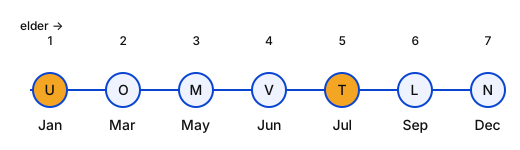
Each of V, U, T, O, N, M and L was born in a different month viz. January, March, May, June, July, September and December of the same year, starting from January and ending in December.
Only two people are elder than M. Only two people were born between L and M. Only U is elder than O. T is elder than N but younger than V.
How many people were born between T and U?
V, U, T, O, N, M और L में से प्रत्येक का जन्म एक ही वर्ष के अलग-अलग महीनों अर्थात् जनवरी, मार्च, मई, जून, जुलाई, सितंबर और दिसंबर में हुआ था, जो जनवरी से शुरू होकर दिसंबर में समाप्त होते हैं।
M से बड़े केवल दो व्यक्ति हैं। L और M के बीच केवल दो व्यक्तियों का जन्म हुआ। O से बड़ा केवल U है। T, N से बड़ा है लेकिन V से छोटा है।
T और U के बीच कितने व्यक्तियों का जन्म हुआ?
  1. AOneएक
  2. BThreeतीन
  3. CFourचार
  4. DTwoदो
Show answer

Concept: Elder = born earlier. Arrange the 7 months as positions 1 (Jan) to 7 (Dec) and fill the fixed people first.

  1. "Only two elder than M" → M is 3rd (May). "Only two between L and M" → L is 6th (Sep) (position 0 does not exist).
  2. "Only U is elder than O" → U 1st (Jan), O 2nd (Mar).
  3. Remaining V, T, N in positions 4, 5, 7 with V elder than T elder than N → V Jun, T Jul, N Dec.
  4. Between T (5th) and U (1st) sit O, M, V → three people.

Trick: "Only two are elder than X" pins X to the 3rd slot instantly; start every ranking puzzle with such absolute clues.

Answer: (B) Three

अवधारणा: बड़ा (elder) = पहले जन्मा। 7 महीनों को स्थिति 1 (Jan) से 7 (Dec) मानें और पहले निश्चित लोगों को रखें।

  1. "M से केवल दो बड़े" → M तीसरा (May)। "L और M के बीच केवल दो" → L छठा (Sep) (स्थिति 0 नहीं होती)।
  2. "केवल U, O से बड़ा" → U पहला (Jan), O दूसरा (Mar)।
  3. शेष V, T, N स्थिति 4, 5, 7 पर; V, T से बड़ा और T, N से बड़ा → V Jun, T Jul, N Dec।
  4. T (5वाँ) और U (1ला) के बीच O, M, V → तीन लोग।

ट्रिक: "X से केवल दो बड़े" X को तुरंत तीसरे स्थान पर तय कर देता है; हर रैंकिंग पहेली ऐसे निश्चित संकेतों से शुरू करें।

उत्तर: (B) Three

RRB NTPC Graduate CBT 2General Intelligence and ReasoningOrder & ranking – monthsRRB NTPC Graduate CBT 2 2025 · 10 Jul Shift 1 →
Q91.
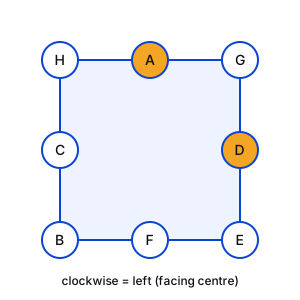
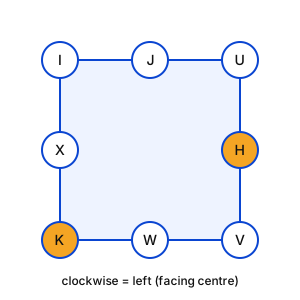
A, B, C, D, E, F, G and H are sitting around a square table facing the centre of the table. Some of them are sitting at the corners while some are sitting at the exact centre of the sides. B is seated second to the right of H. B is not seated at the centre of any side. F is the immediate neighbour of E and B. D is seated third to the left of H. G is seated in a corner. C is seated second to the right of A. How many people are seated between D and A when counted from the left of D?
A, B, C, D, E, F, G और H एक वर्गाकार मेज़ के चारों ओर मेज़ के केंद्र की ओर मुख करके बैठे हैं। उनमें से कुछ कोनों पर बैठे हैं जबकि कुछ भुजाओं के ठीक मध्य में बैठे हैं। B, H के दाएँ से दूसरे स्थान पर बैठा है। B किसी भी भुजा के मध्य में नहीं बैठा है। F, E और B का निकटतम पड़ोसी है। D, H के बाएँ से तीसरे स्थान पर बैठा है। G एक कोने पर बैठा है। C, A के दाएँ से दूसरे स्थान पर बैठा है। D के बाएँ से गिनने पर D और A के बीच कितने व्यक्ति बैठे हैं?
  1. AFiveपाँच
  2. BFourचार
  3. COneएक
  4. DThreeतीन
Show answer

Concept: Number the 8 seats 1–8 clockwise (corners odd, mid-sides even). Facing the centre: right = anticlockwise, left = clockwise.

  1. H at 1. B 2nd to the right → seat 7 (a corner, as required). D 3rd to the left of H → seat 4 (mid-side). G is at a corner → 3 or 5.
  2. F touches both E and B: F at 6 with E at 5 (F at 8 would need E at 7 or 1, occupied). So G = 3.
  3. A and C fill seats 2 and 8 with C 2nd to the right of A → A = 2, C = 8.
  4. From D (4) going left (clockwise) to A (2): E, F, B, C, H → five people.

Trick: "Not at the centre of a side" tells you the parity of all corner seats at once – fix corners/mid-sides before placing anyone else.

Answer: (A) Five

अवधारणा: 8 सीटों को घड़ी की दिशा में 1–8 नंबर दें (कोने विषम, भुजा-मध्य सम)। केंद्र की ओर मुख: दाएँ = घड़ी की विपरीत दिशा, बाएँ = घड़ी की दिशा।

  1. H सीट 1 पर। B दाएँ दूसरा → सीट 7 (कोना, जैसा चाहिए)। D, H के बाएँ तीसरा → सीट 4 (भुजा-मध्य)। G कोने पर → 3 या 5।
  2. F, E और B दोनों से सटा: F सीट 6 पर और E सीट 5 पर (F सीट 8 पर हो तो E को 7 या 1 चाहिए, जो भरे हैं)। अतः G = 3।
  3. A और C सीट 2 और 8 पर; C, A के दाएँ दूसरा → A = 2, C = 8।
  4. D (4) से बाएँ (घड़ी की दिशा) A (2) तक: E, F, B, C, H → पाँच लोग।

ट्रिक: "भुजा के मध्य में नहीं" एक ही बार में सभी कोनों की सम/विषम स्थिति बता देता है – किसी और को बैठाने से पहले कोने/मध्य तय करें।

उत्तर: (A) Five

RRB NTPC Graduate CBT 2General Intelligence and ReasoningSquare-table seatingRRB NTPC Graduate CBT 2 2025 · 10 Jul Shift 1 →
Q92.
What will come in the place of the question mark (?) in the following equation if ‘+’ and ‘−’ are interchanged and ‘×’ and ‘÷’ are interchanged?
35 + 10 × 2 − 15 ÷ 3 = ?
यदि ‘+’ और ‘−’ को आपस में बदल दिया जाए तथा ‘×’ और ‘÷’ को आपस में बदल दिया जाए, तो निम्नलिखित समीकरण में प्रश्नचिह्न (?) के स्थान पर क्या आएगा?
35 + 10 × 2 − 15 ÷ 3 = ?
  1. A75
  2. B74
  3. C77
  4. D76
Show answer

Concept: Replace the signs as told, then apply BODMAS (÷ and × before + and −).

  1. 35 + 10 × 2 − 15 ÷ 3 becomes 35−10÷2+15×3.
  2. 10÷2=5, 15×3=45.
  3. 35−5+45=75.

Trick: Rewrite the whole expression with new signs first, then solve – never swap "in your head" midway.

Answer: (A) 75

अवधारणा: दिए अनुसार चिह्न बदलें, फिर BODMAS लगाएँ (÷ और × पहले, + और − बाद में)।

  1. 35 + 10 × 2 − 15 ÷ 3 बनता है 35−10÷2+15×3।
  2. 10÷2=5, 15×3=45।
  3. 35−5+45=75।

ट्रिक: पहले पूरा व्यंजक नए चिह्नों से लिखें, फिर हल करें – बीच में "मन में" बदलने की गलती न करें।

उत्तर: (A) 75

RRB NTPC Graduate CBT 2General Intelligence and ReasoningMathematical operations – interchangeRRB NTPC Graduate CBT 2 2025 · 10 Jul Shift 1 →
Q93.
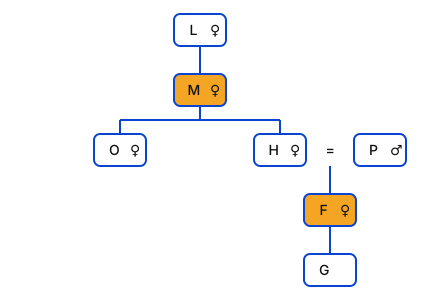
L is the mother of M. M is the mother of O. O is the sister of H. H is the wife of P. P is the father of F. F is the mother of G. How is M related to F?
L, M की माता है। M, O की माता है। O, H की बहन है। H, P की पत्नी है। P, F का पिता है। F, G की माता है। M, F से किस प्रकार संबंधित है?
  1. AMother’s sisterमाता की बहन
  2. BFather’s sisterपिता की बहन
  3. CMother’s motherमाता की माता
  4. DSister's daughterबहन की पुत्री
Show answer

Concept: Draw the tree generation by generation; a woman's husband's children are her own children unless stated otherwise.

  1. L → M → O; O is the sister of H, so H is also M's daughter.
  2. H is the wife of P, and P is the father of F → F is the child of H and P. F is a mother, so F is female.
  3. M is the mother of H, and H is the mother of F → M is F's mother's mother (maternal grandmother).

Trick: Always travel through the female line when the question says "mother": M → H → F gives the answer in two hops.

Answer: (C) Mother’s mother

अवधारणा: पीढ़ी-दर-पीढ़ी वंश-वृक्ष बनाएँ; किसी महिला के पति की संतान उसकी अपनी संतान मानी जाती है, जब तक अन्यथा न कहा जाए।

  1. L → M → O; O, H की बहन है, अतः H भी M की बेटी है।
  2. H, P की पत्नी और P, F का पिता → F, H और P की संतान। F एक माँ है, अतः F महिला।
  3. M, H की माँ और H, F की माँ → M, F की माँ की माँ (नानी) है।

ट्रिक: जब प्रश्न में "माँ" हो तो स्त्री-रेखा से चलें: M → H → F दो कदम में उत्तर दे देता है।

उत्तर: (C) Mother’s mother

RRB NTPC Graduate CBT 2General Intelligence and ReasoningBlood relationsRRB NTPC Graduate CBT 2 2025 · 10 Jul Shift 1 →
Q94.
What will come in the place of ‘?’ in the following equation if ‘+’ and ‘–‘ are interchanged and ‘x’ and ‘÷’ are interchanged?
81 x 9 – 14 ÷ 2 + (60 x 6) ÷ 3 – 49 + 15 = ?
यदि ‘+’ और ‘–’ को आपस में बदल दिया जाए तथा ‘x’ और ‘÷’ को आपस में बदल दिया जाए, तो निम्नलिखित समीकरण में ‘?’ के स्थान पर क्या आएगा?
81 x 9 – 14 ÷ 2 + (60 x 6) ÷ 3 – 49 + 15 = ?
  1. A56
  2. B41
  3. C64
  4. D32
Show answer

Concept: Swap + with − and × with ÷, then solve by BODMAS (brackets first).

  1. New expression: 81÷9+14×2−(60÷6)×3+49−15.
  2. Bracket: 60÷6=10; then 81÷9=9, 14×2=28, 10×3=30.
  3. 9+28−30+49−15=41.

Trick: Add all positives (9+28+49=86) and all negatives (30+15=45) separately, then subtract: 86−45=41.

Answer: (B) 41

अवधारणा: + को − से और × को ÷ से बदलें, फिर BODMAS से हल करें (कोष्ठक पहले)।

  1. नया व्यंजक: 81÷9+14×2−(60÷6)×3+49−15।
  2. कोष्ठक: 60÷6=10; फिर 81÷9=9, 14×2=28, 10×3=30।
  3. 9+28−30+49−15=41।

ट्रिक: सभी धनात्मक (9+28+49=86) और सभी ऋणात्मक (30+15=45) अलग जोड़ें, फिर घटाएँ: 86−45=41।

उत्तर: (B) 41

RRB NTPC Graduate CBT 2General Intelligence and ReasoningMathematical operations – interchangeRRB NTPC Graduate CBT 2 2025 · 10 Jul Shift 1 →
Q95.
A question is given, followed by two statements labelled I and II. Identify which of the statements is/are sufficient to answer the question.
Among H, I, J, K, and L, who is the tallest?
(I) J is taller than H and I but shorter than K.
(II) L is shorter than K but taller than J.
एक प्रश्न दिया गया है, जिसके बाद I और II नामक दो कथन दिए गए हैं। पहचानिए कि कौन-सा/से कथन प्रश्न का उत्तर देने के लिए पर्याप्त है/हैं।
H, I, J, K और L में से सबसे लंबा कौन है?
(I) J, H और I से लंबा है लेकिन K से छोटा है।
(II) L, K से छोटा है लेकिन J से लंबा है।
  1. ABoth statements I and II together are not sufficient to answer the questionकथन I और II दोनों मिलकर भी प्रश्न का उत्तर देने के लिए पर्याप्त नहीं हैं
  2. BData in Statement I alone is sufficient to answer the question while data in Statement II is notकथन I के आँकड़े अकेले प्रश्न का उत्तर देने के लिए पर्याप्त हैं, जबकि कथन II के आँकड़े पर्याप्त नहीं हैं
  3. CBoth statements I and II together (and not statement I alone or statement II alone) are sufficient to answer the questionकथन I और II दोनों मिलकर (न कि केवल कथन I या केवल कथन II) प्रश्न का उत्तर देने के लिए पर्याप्त हैं
  4. DData in Statement II alone is sufficient to answer the question while data in Statement I is notकथन II के आँकड़े अकेले प्रश्न का उत्तर देने के लिए पर्याप्त हैं, जबकि कथन I के आँकड़े पर्याप्त नहीं हैं
Show answer

Concept: To name the tallest, every one of the five must be shown shorter than one person.

  1. Statement I: K > J > H, I. L is not mentioned, so L could be taller than K – not sufficient.
  2. Statement II: K > L > J. H and I are not mentioned – not sufficient.
  3. Together: K > J > H, I and K > L → K is taller than all four → K is the tallest. Both statements are needed.

Trick: For "who is tallest/shortest" count the unplaced names; one missing name means "not sufficient".

Answer: (C) Both statements I and II together (and not statement I alone or statement II alone) are sufficient to answer the question

अवधारणा: सबसे लंबा बताने के लिए पाँचों में से हर व्यक्ति किसी एक से छोटा सिद्ध होना चाहिए।

  1. कथन I: K > J > H, I। L का उल्लेख नहीं, L, K से लंबा हो सकता है – अपर्याप्त।
  2. कथन II: K > L > J। H और I का उल्लेख नहीं – अपर्याप्त।
  3. दोनों मिलाकर: K > J > H, I और K > L → K चारों से लंबा → K सबसे लंबा। दोनों कथन आवश्यक।

ट्रिक: "सबसे लंबा/छोटा कौन" में बिना रखे नाम गिनें; एक भी नाम छूटे तो "अपर्याप्त"।

उत्तर: (C) Both statements I and II together (and not statement I alone or statement II alone) are sufficient to answer the question

RRB NTPC Graduate CBT 2General Intelligence and ReasoningData sufficiency – rankingRRB NTPC Graduate CBT 2 2025 · 10 Jul Shift 1 →
Q96.
Based on the alphabetical order, three of the following four are alike in a certain way and thus form a group. Which is the one that does not belong to that group?
(Note: The odd man out is not based on the number of consonants/vowels or their position in the letter cluster.)
अंग्रेज़ी वर्णमाला क्रम के आधार पर, निम्नलिखित चार में से तीन एक निश्चित प्रकार से समान हैं और इस प्रकार एक समूह बनाते हैं। वह कौन-सा है, जो उस समूह से संबंधित नहीं है?
(नोट: असंगत का निर्धारण व्यंजनों/स्वरों की संख्या या अक्षर-समूह में उनकी स्थिति के आधार पर नहीं किया गया है।)
  1. ARUP
  2. BORM
  3. CGJE
  4. DLMK
Show answer

Concept: Convert letters to their alphabet numbers and look at the gaps between consecutive letters.

  1. RUP: 18, 21, 16 → +3, −5.
  2. ORM: 15, 18, 13 → +3, −5. GJE: 7, 10, 5 → +3, −5.
  3. LMK: 12, 13, 11 → +1, −2 – different pattern.

Trick: In three-letter clusters, write the two gaps (with sign) under each option; the odd one shows a different pair.

Answer: (D) LMK

अवधारणा: अक्षरों को उनके वर्णमाला क्रमांक में बदलें और क्रमागत अक्षरों के अंतर देखें।

  1. RUP: 18, 21, 16 → +3, −5।
  2. ORM: 15, 18, 13 → +3, −5। GJE: 7, 10, 5 → +3, −5।
  3. LMK: 12, 13, 11 → +1, −2 – अलग पैटर्न।

ट्रिक: तीन-अक्षरी समूहों में हर विकल्प के नीचे दोनों अंतर (चिह्न सहित) लिखें; विषम विकल्प अलग जोड़ी दिखाता है।

उत्तर: (D) LMK

RRB NTPC Graduate CBT 2General Intelligence and ReasoningOdd one out – letter clustersRRB NTPC Graduate CBT 2 2025 · 10 Jul Shift 1 →
Q97.
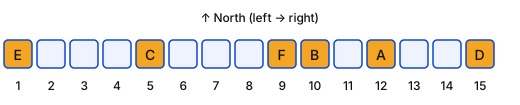
A certain number of people are sitting in a row, facing north. E sits at the extreme left end of the row. Exactly seven people sit between E and F. A sits third to right of F. Exactly four people sit between C and B. C sits exactly in between E and F. Exactly four people sit between B and D. D sits at one of the extreme ends. What is the total number of people seated in the row?
कुछ व्यक्ति एक पंक्ति में उत्तर की ओर मुख करके बैठे हैं। E पंक्ति के सबसे बाएँ छोर पर बैठा है। E और F के बीच ठीक सात व्यक्ति बैठे हैं। A, F के दाएँ से तीसरे स्थान पर बैठा है। C और B के बीच ठीक चार व्यक्ति बैठे हैं। C, E और F के ठीक बीच में बैठा है। B और D के बीच ठीक चार व्यक्ति बैठे हैं। D किसी एक छोर पर बैठा है। पंक्ति में बैठे व्यक्तियों की कुल संख्या कितनी है?
  1. A8
  2. B12
  3. C15
  4. D10
Show answer

Concept: Number seats from the left end (position 1) and place people one clue at a time; the last position fixed by "extreme end" gives the total.

  1. E = 1. Seven between E and F → F = 9. A is 3rd to the right of F → A = 12.
  2. C is exactly between E and F → C = 5. Four between C and B → B = 10 (B = 0 impossible).
  3. Four between B and D → D = 15 (D = 5 is taken by C). D is at an extreme end, so the row ends at 15.

Trick: When the total is unknown, never guess it – anchor at the given end and let the farthest person define the length.

Answer: (C) 15

अवधारणा: बाएँ छोर से सीटों को नंबर दें (स्थिति 1) और एक-एक संकेत से लोगों को रखें; "छोर" से तय अंतिम स्थिति ही कुल संख्या है।

  1. E = 1। E और F के बीच सात → F = 9। A, F के दाएँ तीसरा → A = 12।
  2. C ठीक E और F के बीच → C = 5। C और B के बीच चार → B = 10 (B = 0 असंभव)।
  3. B और D के बीच चार → D = 15 (D = 5 पर C है)। D छोर पर है, अतः पंक्ति 15 पर समाप्त।

ट्रिक: कुल संख्या अज्ञात हो तो अनुमान न लगाएँ – दिए गए छोर से शुरू करें, सबसे दूर का व्यक्ति लंबाई तय करेगा।

उत्तर: (C) 15

RRB NTPC Graduate CBT 2General Intelligence and ReasoningLinear seating – unknown countRRB NTPC Graduate CBT 2 2025 · 10 Jul Shift 1 →
Q98.
H, I, J, K, U, V, W and X are sitting around a square table facing the centre of the table. Four of them are sitting at the corners while four are sitting at the exact centre of the sides.
Only three people sit between J and W. J does not sit at any of the corners. I sits third to the left of W. H sits second to the left of J. V is an immediate neighbour of both W and H. U is an immediate neighbor of J. X sits second to the left of W.
How many people sit between K and H when counted from the left of K?
H, I, J, K, U, V, W और X एक वर्गाकार मेज़ के चारों ओर मेज़ के केंद्र की ओर मुख करके बैठे हैं। उनमें से चार कोनों पर बैठे हैं जबकि चार भुजाओं के ठीक मध्य में बैठे हैं।
J और W के बीच केवल तीन व्यक्ति बैठे हैं। J किसी भी कोने पर नहीं बैठा है। I, W के बाएँ से तीसरे स्थान पर बैठा है। H, J के बाएँ से दूसरे स्थान पर बैठा है। V, W और H दोनों का निकटतम पड़ोसी है। U, J का निकटतम पड़ोसी है। X, W के बाएँ से दूसरे स्थान पर बैठा है।
K के बाएँ से गिनने पर K और H के बीच कितने व्यक्ति बैठे हैं?
  1. AOneएक
  2. BThreeतीन
  3. CFourचार
  4. DTwoदो
Show answer

Concept: Number seats 1–8 clockwise. Facing the centre: left = clockwise, right = anticlockwise. "Only three between J and W" means they sit opposite each other.

  1. Put J at a mid-side seat (seat 2) → W opposite at seat 6. I is 3rd to the left of W → seat 1. H is 2nd to the left of J → seat 4.
  2. V touches both W (6) and H (4) → seat 5. U touches J → seat 3 (seat 1 is I). X is 2nd to the left of W → seat 8. K gets seat 7.
  3. From K (7) counting leftwards (clockwise) to H (4): X, I, J, U → four people.

Trick: "Only three between A and B" in an 8-seat circle always means A and B are face to face – place that pair first.

Answer: (C) Four

अवधारणा: सीटों को घड़ी की दिशा में 1–8 नंबर दें। केंद्र की ओर मुख: बाएँ = घड़ी की दिशा, दाएँ = विपरीत। "J और W के बीच केवल तीन" का अर्थ वे आमने-सामने हैं।

  1. J को भुजा-मध्य सीट (सीट 2) पर रखें → W सामने सीट 6 पर। I, W के बाएँ तीसरा → सीट 1। H, J के बाएँ दूसरा → सीट 4।
  2. V, W (6) और H (4) दोनों से सटा → सीट 5। U, J से सटा → सीट 3 (सीट 1 पर I)। X, W के बाएँ दूसरा → सीट 8। K को सीट 7।
  3. K (7) से बाएँ (घड़ी की दिशा) H (4) तक: X, I, J, U → चार लोग।

ट्रिक: 8 सीटों के वृत्त में "A और B के बीच केवल तीन" का मतलब हमेशा आमने-सामने – इस जोड़ी को सबसे पहले रखें।

उत्तर: (C) Four

RRB NTPC Graduate CBT 2General Intelligence and ReasoningSquare-table seatingRRB NTPC Graduate CBT 2 2025 · 10 Jul Shift 1 →
Q99.
If 'A' stands for '÷', 'B' stands for '×', 'C' stands for '+' and 'D' stands for '−', what will come in place of '?' in the following equation?
24 C 16 D 8 A 4 B 2 = ?
यदि 'A' का अर्थ '÷', 'B' का अर्थ '×', 'C' का अर्थ '+' और 'D' का अर्थ '−' है, तो निम्नलिखित समीकरण में '?' के स्थान पर क्या आएगा?
24 C 16 D 8 A 4 B 2 = ?
  1. A40
  2. B32
  3. C36
  4. D28
Show answer

Concept: Substitute the letters by their operators, then apply BODMAS.

  1. 24 C 16 D 8 A 4 B 2 → 24+16−8÷4×2.
  2. 8÷4=2, then 2×2=4 (÷ and × left to right).
  3. 24+16−4=36.

Trick: Write the decoded expression on paper before computing; most errors come from mixing D (−) and A (÷).

Answer: (C) 36

अवधारणा: अक्षरों की जगह उनके संकारक रखें, फिर BODMAS लगाएँ।

  1. 24 C 16 D 8 A 4 B 2 → 24+16−8÷4×2।
  2. 8÷4=2, फिर 2×2=4 (÷ और × बाएँ से दाएँ)।
  3. 24+16−4=36।

ट्रिक: गणना से पहले डिकोड किया व्यंजक कागज़ पर लिखें; अधिकांश गलतियाँ D (−) और A (÷) के मिलने से होती हैं।

उत्तर: (C) 36

RRB NTPC Graduate CBT 2General Intelligence and ReasoningCoded operationsRRB NTPC Graduate CBT 2 2025 · 10 Jul Shift 1 →
Q100.
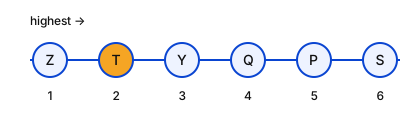
P, Q, S, T, Y and Z each scored different marks.
Only two people have scored more than Y. Only S has scored less than P. T has scored more than Q but less than Z.
How many people have scored more than T?
P, Q, S, T, Y और Z में से प्रत्येक ने अलग-अलग अंक प्राप्त किए।
Y से अधिक अंक केवल दो व्यक्तियों ने प्राप्त किए हैं। P से कम अंक केवल S ने प्राप्त किए हैं। T ने Q से अधिक लेकिन Z से कम अंक प्राप्त किए हैं।
T से अधिक अंक कितने व्यक्तियों ने प्राप्त किए हैं?
  1. ATwoदो
  2. BThreeतीन
  3. COneएक
  4. DFourचार
Show answer

Concept: Rank the six from highest (1) to lowest (6) using the absolute clues first.

  1. "Only two scored more than Y" → Y is 3rd. "Only S scored less than P" → P 5th, S 6th.
  2. Z, T, Q remain for ranks 1, 2, 4 with Z > T > Q → Z 1st, T 2nd, Q 4th.
  3. Only Z scored more than T → one person.

Trick: Count the slots: once Y, P, S are fixed, only three slots remain and the chain Z > T > Q drops straight into them.

Answer: (C) One

अवधारणा: छह लोगों को सबसे अधिक (1) से सबसे कम (6) तक रैंक दें, पहले निश्चित संकेत लगाएँ।

  1. "Y से अधिक केवल दो" → Y तीसरा। "P से कम केवल S" → P पाँचवाँ, S छठा।
  2. Z, T, Q के लिए रैंक 1, 2, 4 बचे; Z > T > Q → Z पहला, T दूसरा, Q चौथा।
  3. T से अधिक केवल Z → एक व्यक्ति।

ट्रिक: स्थान गिनें: Y, P, S तय होते ही केवल तीन स्थान बचते हैं और श्रृंखला Z > T > Q सीधे उनमें बैठ जाती है।

उत्तर: (C) One

RRB NTPC Graduate CBT 2General Intelligence and ReasoningOrder & ranking – marksRRB NTPC Graduate CBT 2 2025 · 10 Jul Shift 1 →