Question bank

Q&A: practice questions with answers

Search questions on any topic. Filter by exam category, exam, subject and topic, try the question, then open the answer and explanation.

Courses – airGurukul

8,495 questions found.

Q2441.
Salil got an increase of 4% in his sales amount in the first year and 24% in the second year; also with this, his current sales are ₹1,61,200, what was his sales (in ₹) two years ago?
सलिल की बिक्री राशि में पहले वर्ष में 4% और दूसरे वर्ष में 24% की वृद्धि हुई; इसके साथ उसकी वर्तमान बिक्री ₹1,61,200 है, तो दो वर्ष पहले उसकी बिक्री (₹ में) कितनी थी?
  1. A₹1,05,000
  2. B₹1,30,000
  3. C₹1,25,000
  4. D₹1,55,000
Show answer

Concept: Successive increases multiply: New=Old×(1+a100)(1+b100).

  1. x×104100×124100=161200
  2. x×1.2896=161200
  3. x=1612001.2896=125000

Trick: Check option (C): 125000×1.04=130000, 130000×1.24=161200 ✓.

Answer: (C) ₹1,25,000

अवधारणा: क्रमिक वृद्धि गुणा होती है: नया=पुराना×(1+a100)(1+b100)।

  1. x×104100×124100=161200
  2. x×1.2896=161200
  3. x=1612001.2896=125000

ट्रिक: विकल्प (C) जाँचें: 125000×1.04=130000, 130000×1.24=161200 ✓।

उत्तर: (C) ₹1,25,000

RRB NTPC Undergraduate CBT 1MathematicsSuccessive percentage increaseRRB NTPC Undergraduate CBT 1 2024 · 13 Aug Shift 2 →
Q2442.
Evaluate: (−9) − (−60) ÷ (−12) + (−2) × 8
मान ज्ञात कीजिए: (−9) − (−60) ÷ (−12) + (−2) × 8
  1. A−30
  2. B−32
  3. C−29
  4. D−33
Show answer

Concept: Apply BODMAS: division and multiplication first, then subtraction/addition; mind the signs.

  1. (−60)÷(−12)=5
  2. (−2)×8=−16
  3. (−9)−5+(−16)=−9−5−16=−30

Trick: Negative ÷ negative = positive; then just add all the negatives.

Answer: (A) −30

अवधारणा: BODMAS लगाएँ: पहले भाग व गुणा, फिर घटाव/जोड़; चिह्नों पर ध्यान दें।

  1. (−60)÷(−12)=5
  2. (−2)×8=−16
  3. (−9)−5+(−16)=−9−5−16=−30

ट्रिक: ऋण ÷ ऋण = धन; फिर सभी ऋण संख्याएँ जोड़ दें।

उत्तर: (A) −30

RRB NTPC Undergraduate CBT 1MathematicsSimplification – BODMAS with integersRRB NTPC Undergraduate CBT 1 2024 · 13 Aug Shift 2 →
Q2443.
Anjani can do a certain piece of work in 30 days. Anjani and Khushbu can together do the same work in 16 days, and Anjani, Khushbu and Sushmita can do the same work together in 15 days. In how many days can Anjani and Sushmita do the same work?
अंजनी किसी कार्य को 30 दिनों में कर सकती है। अंजनी और खुशबू मिलकर उसी कार्य को 16 दिनों में कर सकती हैं, और अंजनी, खुशबू और सुष्मिता मिलकर उसी कार्य को 15 दिनों में कर सकती हैं। अंजनी और सुष्मिता मिलकर उसी कार्य को कितने दिनों में कर सकती हैं?
  1. A854
  2. B803
  3. C735
  4. D813
Show answer

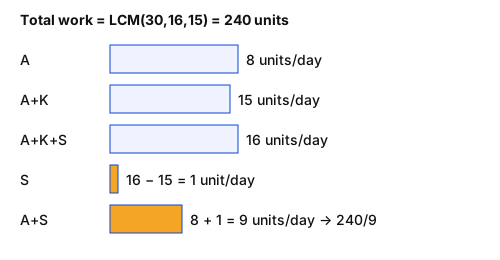
Concept: Take total work = LCM of the days, then find each person's units per day.

  1. Total work =LCM(30,16,15)=240 units.
  2. Anjani =24030=8; A + K =24016=15; A + K + S =24015=16 units/day.
  3. Sushmita =16−15=1 unit/day.
  4. Anjani + Sushmita =8+1=9 units/day → time =2409=803 days.

Trick: S alone = (A+K+S) − (A+K); no need to find Khushbu.

Answer: (B) 803

अवधारणा: कुल कार्य = दिनों का LCM मानें, फिर हर व्यक्ति की प्रतिदिन इकाइयाँ निकालें।

  1. कुल कार्य =LCM(30,16,15)=240 इकाई।
  2. अंजनी =24030=8; A + K =24016=15; A + K + S =24015=16 इकाई/दिन।
  3. सुष्मिता =16−15=1 इकाई/दिन।
  4. अंजनी + सुष्मिता =8+1=9 इकाई/दिन → समय =2409=803 दिन।

ट्रिक: S अकेले = (A+K+S) − (A+K); खुशबू का अलग मान निकालने की ज़रूरत नहीं।

उत्तर: (B) 803

RRB NTPC Undergraduate CBT 1MathematicsTime and workRRB NTPC Undergraduate CBT 1 2024 · 13 Aug Shift 2 →
Q2444.
Vihaan has to reach Chennai which is 886 km away in 17 hours. His starting speed for 8 hours was 53 km/hr. For the next 150 km his speed was 50 km/hr. By what speed he must travel now so as to reach Chennai in the decided time of 17 hours?
विहान को 886 km दूर स्थित चेन्नई 17 घंटे में पहुँचना है। प्रारंभिक 8 घंटों के लिए उसकी चाल 53 km/hr थी। अगले 150 km के लिए उसकी चाल 50 km/hr थी। अब उसे किस चाल से यात्रा करनी चाहिए ताकि वह 17 घंटे के निर्धारित समय में चेन्नई पहुँच जाए?
  1. A52 km/hr
  2. B56 km/hr
  3. C57 km/hr
  4. D51 km/hr
Show answer

Concept: Required speed = remaining distance ÷ remaining time.

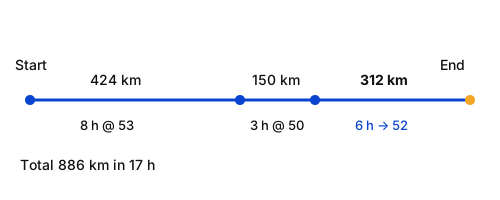
  1. First part: 53×8=424km in 8 h.
  2. Next part: 150km at 50km/h → 3 h.
  3. Covered =574km in 11 h; remaining =886−574=312km in 17−11=6 h.
  4. Speed =3126=52km/h

Trick: Draw the journey as a line, write distance and time under each part.

Answer: (A) 52km/h

अवधारणा: आवश्यक चाल = शेष दूरी ÷ शेष समय।

  1. पहला भाग: 53×8=424km, 8 घंटे में।
  2. अगला भाग: 150km, 50km/h से → 3 घंटे।
  3. तय दूरी =574km, 11 घंटे में; शेष =886−574=312km, 17−11=6 घंटे में।
  4. चाल =3126=52km/h

ट्रिक: यात्रा को एक रेखा पर बनाकर हर भाग की दूरी व समय लिखें।

उत्तर: (A) 52km/h

RRB NTPC Undergraduate CBT 1MathematicsSpeed, distance and timeRRB NTPC Undergraduate CBT 1 2024 · 13 Aug Shift 2 →
Q2445.
A sum of money triples itself at a certain rate of compound interest in 5 years. In how many years will it amount to 9 times of itself?
कोई धनराशि चक्रवृद्धि ब्याज की एक निश्चित दर पर 5 वर्षों में स्वयं की तीन गुनी हो जाती है। कितने वर्षों में यह स्वयं की 9 गुनी हो जाएगी?
  1. A11 years11 वर्ष
  2. B7 years7 वर्ष
  3. C10 years10 वर्ष
  4. D19 years19 वर्ष
Show answer

Concept: Under compound interest, if P becomes kP in t years, it becomes knP in nt years.

  1. 3P in 5 years.
  2. 9P=32P → time =2×5=10 years.

Trick: Powers of the multiple ↔ multiples of the time: 3→5, 9→10, 27→15.

Answer: (C) 10 years

अवधारणा: चक्रवृद्धि ब्याज में यदि P, t वर्षों में kP हो जाए, तो nt वर्षों में knP हो जाता है।

  1. 5 वर्ष में 3P।
  2. 9P=32P → समय =2×5=10 वर्ष।

ट्रिक: गुणज की घात ↔ समय का गुणज: 3→5, 9→10, 27→15।

उत्तर: (C) 10 वर्ष

RRB NTPC Undergraduate CBT 1MathematicsCompound interest – multiplesRRB NTPC Undergraduate CBT 1 2024 · 13 Aug Shift 2 →
Q2446.
A shopkeeper lists the price of a fan at 36% above its cost price and offers a 25% discount on its list price. If he earns a profit of ₹171, then what is the list price (in ₹) of the fan?
एक दुकानदार एक पंखे का सूची मूल्य उसके क्रय मूल्य से 36% अधिक अंकित करता है और सूची मूल्य पर 25% की छूट देता है। यदि वह ₹171 का लाभ अर्जित करता है, तो पंखे का सूची मूल्य (₹ में) क्या है?
  1. A11,406
  2. B11,547
  3. C11,628
  4. D11,598
Show answer

Concept: Let CP =100; find SP after mark-up and discount.

  1. Marked price =136; SP =136×75100=102.
  2. Profit =102−100=2 units = ₹171 → 1 unit = ₹85.5.
  3. List price =136×85.5=11628

Trick: Net effect =36−25−36×25100=+2% profit.

Answer: (C) ₹11,628

अवधारणा: माना क्रय मूल्य =100; अंकन और छूट के बाद विक्रय मूल्य निकालें।

  1. अंकित मूल्य =136; विक्रय मूल्य =136×75100=102।
  2. लाभ =102−100=2 इकाई = ₹171 → 1 इकाई = ₹85.5।
  3. अंकित मूल्य =136×85.5=11628

ट्रिक: शुद्ध प्रभाव =36−25−36×25100=+2% लाभ।

उत्तर: (C) ₹11,628

RRB NTPC Undergraduate CBT 1MathematicsProfit, loss and discountRRB NTPC Undergraduate CBT 1 2024 · 13 Aug Shift 2 →
Q2447.
Which of the following numbers divides 78,89,73,289?
निम्नलिखित में से कौन-सी संख्या 78,89,73,289 को विभाजित करती है?
  1. A18
  2. B12
  3. C7
  4. D13
Show answer

Concept: For 7 and 13: make 3-digit groups from the right and take the alternating sum; the number is divisible if this sum is.

  1. Groups: 788|973|289 → 289−973+788=104.
  2. 104=8×13 → divisible by 13; 104÷7 leaves remainder 6 → not by 7.
  3. Last two digits 89 are not divisible by 4 → not by 12; the number is odd → not by 18.

Trick: 1001=7×11×13, so one alternating 3-digit sum tests 7, 11 and 13 together.

Answer: (D) 13

अवधारणा: 7 और 13 के लिए: दाएँ से 3-3 अंकों के समूह बनाकर एकांतर योग लें; यदि यह विभाज्य है तो संख्या भी।

  1. समूह: 788|973|289 → 289−973+788=104।
  2. 104=8×13 → 13 से विभाज्य; 104÷7 में शेष 6 → 7 से नहीं।
  3. अंतिम दो अंक 89, 4 से विभाज्य नहीं → 12 से नहीं; संख्या विषम → 18 से नहीं।

ट्रिक: 1001=7×11×13, अतः एक ही एकांतर योग से 7, 11 व 13 तीनों जाँचें।

उत्तर: (D) 13

RRB NTPC Undergraduate CBT 1MathematicsDivisibility rulesRRB NTPC Undergraduate CBT 1 2024 · 13 Aug Shift 2 →
Q2448.
₹15,500 were divided among A, B and C, such that 7 times the share of A = 4 times the share of B = 2 times the share of C. Find the share of A.
₹15,500 को A, B और C में इस प्रकार बाँटा गया कि A के हिस्से का 7 गुना = B के हिस्से का 4 गुना = C के हिस्से का 2 गुना। A का हिस्सा ज्ञात कीजिए।
  1. A₹2,580
  2. B₹2,542
  3. C₹2,480
  4. D₹2,479
Show answer

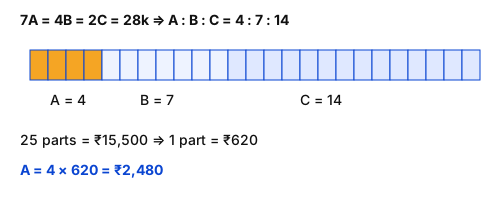
Concept: If 7A=4B=2C=k, then A:B:C=17:14:12.

  1. Multiply by LCM 28: A:B:C=4:7:14.
  2. Total parts =4+7+14=25 → 1 part =1550025=620.
  3. Share of A =4×620=2480

Trick: Coefficients 7, 4, 2 → shares in ratio of LCM ÷ coefficient: 287:284:282.

Answer: (C) ₹2,480

अवधारणा: यदि 7A=4B=2C=k, तो A:B:C=17:14:12।

  1. LCM 28 से गुणा: A:B:C=4:7:14।
  2. कुल भाग =4+7+14=25 → 1 भाग =1550025=620।
  3. A का हिस्सा =4×620=2480

ट्रिक: गुणांक 7, 4, 2 → हिस्से LCM ÷ गुणांक के अनुपात में: 287:284:282।

उत्तर: (C) ₹2,480

RRB NTPC Undergraduate CBT 1MathematicsRatio and proportion – division of a sumRRB NTPC Undergraduate CBT 1 2024 · 13 Aug Shift 2 →
Q2449.
Simplify the following.
9×(19×(42))÷14+13−86
निम्नलिखित को सरल कीजिए।
9×(19×(42))÷14+13−86
  1. A8567
  2. B8527
  3. C8537
  4. D8577
Show answer

Concept: Solve brackets first, then powers, then ×/÷ from left to right, then +/−.

  1. 42=16, so 19×16=304.
  2. 9×304=2736 and 2736÷14=13687.
  3. 13−86=−73=−5117.
  4. 13687−5117=8577.

Trick: Since 14=2×7, the answer must have denominator 7; only the numerator needs care: 1368−511=857.

Answer: (D) 8577

अवधारणा: पहले कोष्ठक, फिर घात, फिर बाएँ से दाएँ ×/÷ और अंत में +/− (BODMAS)।

  1. 42=16, अतः 19×16=304।
  2. 9×304=2736 तथा 2736÷14=13687।
  3. 13−86=−73=−5117।
  4. 13687−5117=8577।

ट्रिक: 14=2×7 है, इसलिए हर (denominator) 7 ही रहेगा; केवल अंश देखें: 1368−511=857।

उत्तर: (D) 8577

RRB NTPC Undergraduate CBT 1MathematicsSimplification (BODMAS)RRB NTPC Undergraduate CBT 1 2024 · 13 Aug Shift 2 →
Q2450.
A person purchased a gift article for ₹1,800 after getting 20% discount. Find the marked price of the gift article.
एक व्यक्ति ने 20% छूट प्राप्त करने के बाद एक उपहार वस्तु ₹1,800 में खरीदी। उपहार वस्तु का अंकित मूल्य ज्ञात कीजिए।
  1. A₹2,500
  2. B₹2,250
  3. C₹2,800
  4. D₹2,150
Show answer

Concept: SP=MP×100−Discount%100.

  1. After 20% discount, SP =80% of MP.
  2. 0.8×MP=1800.
  3. MP=18000.8=2250.

Trick: 80%→1800, so 10%→225 and 100%→2250.

Answer: (B) ₹2,250

अवधारणा: विक्रय मूल्य=अंकित मूल्य×100−छूट%100।

  1. 20% छूट के बाद विक्रय मूल्य = अंकित मूल्य का 80%।
  2. 0.8×MP=1800।
  3. MP=18000.8=2250।

ट्रिक: 80%→1800, तो 10%→225 और 100%→2250।

उत्तर: (B) ₹2,250

RRB NTPC Undergraduate CBT 1MathematicsDiscountRRB NTPC Undergraduate CBT 1 2024 · 13 Aug Shift 2 →
Q2451.
Which of the following numbers divide 342165?
निम्नलिखित में से कौन-सी संख्या 342165 को विभाजित करती है?
  1. A2
  2. B3
  3. C7
  4. D4
Show answer

Concept: Use divisibility tests: 2 (last digit even), 3 (digit sum divisible by 3), 4 (last two digits divisible by 4).

  1. Last digit is 5 (odd) → not divisible by 2 or 4.
  2. Digit sum =3+4+2+1+6+5=21, divisible by 3 → 342165 is divisible by 3.
  3. 7×48880=342160, remainder 5 → not divisible by 7.

Trick: An odd number can never be divisible by 2 or 4 – strike those out first.

Answer: (B) 3

अवधारणा: विभाज्यता नियम: 2 (अंतिम अंक सम), 3 (अंकों का योग 3 से विभाज्य), 4 (अंतिम दो अंक 4 से विभाज्य)।

  1. अंतिम अंक 5 (विषम) → 2 या 4 से विभाज्य नहीं।
  2. अंकों का योग =3+4+2+1+6+5=21, जो 3 से विभाज्य है → संख्या 3 से विभाज्य।
  3. 7×48880=342160, शेषफल 5 → 7 से विभाज्य नहीं।

ट्रिक: विषम संख्या कभी 2 या 4 से विभाज्य नहीं होती – इन्हें पहले हटा दें।

उत्तर: (B) 3

RRB NTPC Undergraduate CBT 1MathematicsDivisibility rulesRRB NTPC Undergraduate CBT 1 2024 · 13 Aug Shift 2 →
Q2452.
The LCM of the numbers 3.8 and 0.052 is:
संख्याओं 3.8 और 0.052 का LCM (लघुत्तम समापवर्त्य) है:
  1. A49.4
  2. B0.494
  3. C4.94
  4. D494
Show answer

Concept: Make equal decimal places, find LCM of the whole numbers, then put back the decimal places.

  1. 3.8=3.800 and 0.052 → both have 3 decimal places: 3800 and 52.
  2. 3800=23×52×19, 52=22×13.
  3. LCM =23×52×19×13=49400.
  4. Put back 3 decimal places: 49.400=49.4.

Trick: The LCM must be a multiple of 3.8: 3.8×13=49.4 ✓ and 49.4÷0.052=950 ✓.

Answer: (A) 49.4

अवधारणा: दशमलव स्थान बराबर करें, पूर्ण संख्याओं का LCM निकालें, फिर उतने दशमलव स्थान वापस लगाएँ।

  1. 3.8=3.800 तथा 0.052 → दोनों में 3 दशमलव स्थान: 3800 और 52।
  2. 3800=23×52×19, 52=22×13।
  3. LCM =23×52×19×13=49400।
  4. 3 दशमलव स्थान वापस: 49.400=49.4।

ट्रिक: LCM, 3.8 का गुणज होना चाहिए: 3.8×13=49.4 ✓ तथा 49.4÷0.052=950 ✓।

उत्तर: (A) 49.4

RRB NTPC Undergraduate CBT 1MathematicsLCM of decimalsRRB NTPC Undergraduate CBT 1 2024 · 13 Aug Shift 2 →
Q2453.
Sapna invested ₹20,300 on simple interest, partly at 10% per annum and partly at 4% per annum. If she earns equal interests from the two investments after 4 years, then find the sum invested at 10% per annum (in ₹).
सपना ने ₹20,300 साधारण ब्याज पर निवेश किए, कुछ भाग 10% वार्षिक दर पर और कुछ भाग 4% वार्षिक दर पर। यदि 4 वर्ष बाद उसे दोनों निवेशों से समान ब्याज प्राप्त होता है, तो 10% वार्षिक दर पर निवेश की गई राशि (₹ में) ज्ञात कीजिए।
  1. A5,801
  2. B5,800
  3. C5,799
  4. D5,797
Show answer

Concept: SI=P×R×T100; equal interest for the same time means P1R1=P2R2.

  1. Let the sum at 10% be x; the rest 20300−x is at 4%.
  2. x×10×4100=(20300−x)×4×4100 → 10x=4(20300−x).
  3. 14x=81200 → x=5800.

Trick: Sums are in inverse ratio of rates: 10:4 → sums =4:10=2:5; 27×20300=5800.

Answer: (B) 5,800

अवधारणा: SI=P×R×T100; समान समय में समान ब्याज हो तो P1R1=P2R2।

  1. 10% पर राशि =x, शेष 20300−x पर 4% ब्याज।
  2. x×10×4100=(20300−x)×4×4100 → 10x=4(20300−x)।
  3. 14x=81200 → x=5800।

ट्रिक: राशियाँ दरों के व्युत्क्रम अनुपात में: दर 10:4 → राशि 2:5; 27×20300=5800।

उत्तर: (B) 5,800

RRB NTPC Undergraduate CBT 1MathematicsSimple interestRRB NTPC Undergraduate CBT 1 2024 · 13 Aug Shift 2 →
Q2454.
Find the mean proportional of 98 and 18.
98 और 18 का मध्यानुपाती ज्ञात कीजिए।
  1. A39
  2. B45
  3. C42
  4. D44
Show answer

Concept: Mean proportional of a and b =ab.

  1. 98×18=1764.
  2. 98×18=(2×49)×(2×9)=4×49×9.
  3. 4×49×9=2×7×3=42.

Trick: Pair the factors: 22×72×32=42 – no long multiplication needed.

Answer: (C) 42

अवधारणा: a और b का मध्यानुपाती =ab।

  1. 98×18=1764।
  2. 98×18=4×49×9।
  3. 4×49×9=2×7×3=42।

ट्रिक: गुणनखंडों के जोड़े बनाएँ: 22×72×32=42।

उत्तर: (C) 42

RRB NTPC Undergraduate CBT 1MathematicsMean proportionalRRB NTPC Undergraduate CBT 1 2024 · 13 Aug Shift 2 →
Q2455.
A dealer runs a scheme offering 'buy 5 items and get 2 items free'. Each item is priced at ₹250. What is the total discount amount for a customer buying under this scheme?
एक डीलर '5 वस्तुएँ खरीदें और 2 वस्तुएँ मुफ़्त पाएँ' की योजना चलाता है। प्रत्येक वस्तु का मूल्य ₹250 है। इस योजना के अंतर्गत खरीदारी करने वाले ग्राहक के लिए कुल छूट राशि कितनी है?
  1. A₹500
  2. B₹700
  3. C₹750
  4. D₹600
Show answer

Concept: In 'buy x get y free', the customer receives x+y items but pays for only x; discount = value of free items.

  1. Customer gets 5+2=7 items, pays for 5.
  2. Free items =2, each worth ₹250.
  3. Discount =2×250=500 rupees.

Yaad rakhein: Discount % in such a scheme =yx+y×100=27×100≈28.6%.

Answer: (A) ₹500

अवधारणा: 'x खरीदें, y मुफ़्त' में ग्राहक को x+y वस्तुएँ मिलती हैं पर भुगतान केवल x का; छूट = मुफ़्त वस्तुओं का मूल्य।

  1. ग्राहक को 5+2=7 वस्तुएँ मिलीं, भुगतान 5 का।
  2. मुफ़्त वस्तुएँ =2, प्रत्येक ₹250 की।
  3. छूट =2×250=500 रुपये।

याद रखें: ऐसी योजना में छूट % =yx+y×100=27×100≈28.6%।

उत्तर: (A) ₹500

RRB NTPC Undergraduate CBT 1MathematicsDiscount schemesRRB NTPC Undergraduate CBT 1 2024 · 13 Aug Shift 2 →
Q2456.
A can lay railway track between two given stations in 21 days and B can do the same job in 15 days. With the help of C, they did the job in 2 days only. Then, C alone can do the job in
A दो दिए गए स्टेशनों के बीच रेलवे ट्रैक 21 दिनों में बिछा सकता है और B वही कार्य 15 दिनों में कर सकता है। C की सहायता से, उन्होंने वह कार्य केवल 2 दिनों में कर दिया। तो, C अकेला उस कार्य को कितने दिनों में कर सकता है?
  1. A81627 days81627 दिन
  2. B21627 days21627 दिन
  3. C101627 days101627 दिन
  4. D121627 days121627 दिन
Show answer

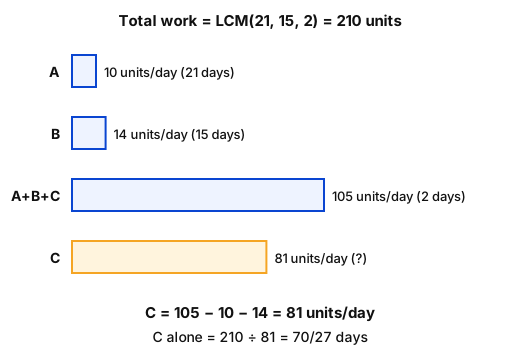
Concept: Take total work = LCM of the days; each person's efficiency = work ÷ days.

  1. Total work =LCM(21,15,2)=210 units.
  2. A =21021=10, B =21015=14, A+B+C =2102=105 units/day.
  3. C =105−10−14=81 units/day.
  4. C alone =21081=7027=21627 days.

Trick: 1C=12−121−115=2770; C must be faster than both, so the answer is below 15 – only 21627 fits.

Answer: (B) 21627 days

अवधारणा: कुल कार्य = दिनों का LCM मानें; दक्षता = कार्य ÷ दिन।

  1. कुल कार्य =LCM(21,15,2)=210 इकाई।
  2. A =10, B =14, A+B+C =2102=105 इकाई/दिन।
  3. C =105−10−14=81 इकाई/दिन।
  4. C अकेला =21081=7027=21627 दिन।

ट्रिक: 1C=12−121−115=2770; तीनों मिलकर 2 दिन में करते हैं, अतः C का समय बहुत कम होगा – केवल 21627 उपयुक्त।

उत्तर: (B) 21627 दिन

RRB NTPC Undergraduate CBT 1MathematicsTime and workRRB NTPC Undergraduate CBT 1 2024 · 13 Aug Shift 2 →
Q2457.
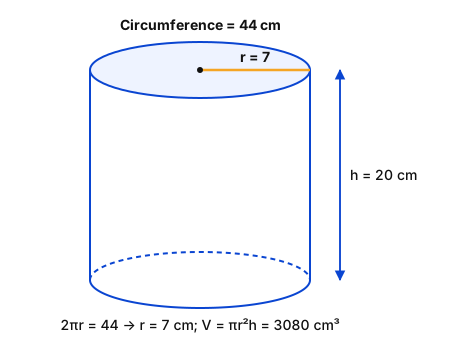
The volume of a right circular cylinder whose height is 20 cm and circumference of the base is 44 cm is:
(Take π=227)
एक लंब वृत्तीय बेलन का आयतन, जिसकी ऊँचाई 20 cm है और आधार की परिधि 44 cm है, कितना है?
(π=227 लीजिए)
  1. A3080 cu.cm3080 घन सेमी
  2. B7623 cu. cm7623 घन सेमी
  3. C1936 cu. cm1936 घन सेमी
  4. D5082 cu.cm5082 घन सेमी
Show answer

Concept: Circumference =2πr; volume of cylinder =πr2h.

  1. 2×227×r=44 → r=7cm.
  2. V=227×72×20.
  3. V=22×7×20=3080cm3.

Trick: Circumference 44 always gives r=7 with π=227; base area =154, so V=154×20=3080.

Answer: (A) 3080 cu. cm

अवधारणा: परिधि =2πr; बेलन का आयतन =πr2h।

  1. 2×227×r=44 → r=7cm।
  2. V=227×72×20।
  3. V=22×7×20=3080cm3।

ट्रिक: परिधि 44 हो तो r=7 और आधार क्षेत्रफल =154; V=154×20=3080।

उत्तर: (A) 3080 घन सेमी

RRB NTPC Undergraduate CBT 1MathematicsVolume of cylinderRRB NTPC Undergraduate CBT 1 2024 · 13 Aug Shift 2 →
Q2458.
If sinθ+cosecθ=2, then the value of sin120θ+cosec120θ is:
यदि sinθ+cosecθ=2 है, तो sin120θ+cosec120θ का मान है:
  1. A2
  2. B0
  3. C1
  4. D12
Show answer

Concept: If x+1x=2 then x=1; here x=sinθ since cosecθ=1sinθ.

  1. sinθ+1sinθ=2 → (sinθ−1)2=0 → sinθ=1.
  2. Then cosecθ=1.
  3. sin120θ+cosec120θ=1120+1120=2.

Trick: x+1x=2⇒xn+1xn=2 for every power n.

Answer: (A) 2

अवधारणा: यदि x+1x=2 हो तो x=1; यहाँ x=sinθ क्योंकि cosecθ=1sinθ।

  1. sinθ+1sinθ=2 → (sinθ−1)2=0 → sinθ=1।
  2. तब cosecθ=1।
  3. sin120θ+cosec120θ=1+1=2।

ट्रिक: x+1x=2⇒xn+1xn=2 (किसी भी घात n के लिए)।

उत्तर: (A) 2

RRB NTPC Undergraduate CBT 1MathematicsTrigonometric identitiesRRB NTPC Undergraduate CBT 1 2024 · 13 Aug Shift 2 →
Q2459.
9 years ago, the age of a father was 25 years more than twice his son's age. After how many years, from now, will he be twice his son's age?
9 वर्ष पहले, एक पिता की आयु उसके पुत्र की आयु के दोगुने से 25 वर्ष अधिक थी। अब से कितने वर्ष बाद उसकी आयु उसके पुत्र की आयु की दोगुनी होगी?
  1. A21
  2. B18
  3. C19
  4. D16
Show answer

Concept: Form an equation from the past condition, then use it for the future condition.

  1. Let present ages be F and S. F−9=2(S−9)+25 → F=2S+16.
  2. After x years: F+x=2(S+x) → x=F−2S.
  3. x=(2S+16)−2S=16 years.

Trick: 'Twice' condition: the gap F−2S shrinks by 1 each year. 9 years ago F−2S was 25; now it is 25−9=16, so after 16 years it becomes 0.

Answer: (D) 16

अवधारणा: भूतकाल की शर्त से समीकरण बनाएँ, फिर भविष्य की शर्त में प्रयोग करें।

  1. वर्तमान आयु F तथा S। F−9=2(S−9)+25 → F=2S+16।
  2. x वर्ष बाद: F+x=2(S+x) → x=F−2S।
  3. x=(2S+16)−2S=16 वर्ष।

ट्रिक: F−2S का अंतर हर वर्ष 1 घटता है: 9 वर्ष पहले 25, अब 25−9=16; अतः 16 वर्ष बाद यह शून्य होगा।

उत्तर: (D) 16

RRB NTPC Undergraduate CBT 1MathematicsProblems on agesRRB NTPC Undergraduate CBT 1 2024 · 13 Aug Shift 2 →
Q2460.
The total surface area of a cube having side 74 cm is:
74 cm भुजा वाले घन का कुल पृष्ठीय क्षेत्रफल है:
  1. A32856 cm2
  2. B32896 cm2
  3. C32857 cm2
  4. D32846 cm2
Show answer

Concept: Total surface area of a cube =6a2.

  1. a2=742=5476.
  2. 6×5476=32856cm2.

Trick: Unit digit: 42 ends in 6, 6×6 ends in 6 → options ending in 6: 32856, 32896, 32846; 742≈5500, 6×5476=32856.

Answer: (A) 32856cm2

अवधारणा: घन का संपूर्ण पृष्ठीय क्षेत्रफल =6a2।

  1. a2=742=5476।
  2. 6×5476=32856cm2।

ट्रिक: इकाई अंक: 42 का अंतिम अंक 6, 6×6 का भी 6; फिर 6×5476=32856 से पुष्टि करें।

उत्तर: (A) 32856cm2

RRB NTPC Undergraduate CBT 1MathematicsSurface area of cubeRRB NTPC Undergraduate CBT 1 2024 · 13 Aug Shift 2 →