Question bank

Q&A: practice questions with answers

Search questions on any topic. Filter by exam category, exam, subject and topic, try the question, then open the answer and explanation.

Courses – airGurukul

8,495 questions found.

Q2481.
What should come in place of the question mark (?) in the given series based on the English alphabetical order?
ZFN FLT LRZ RXF ?
अंग्रेज़ी वर्णमाला क्रम के आधार पर दी गई शृंखला में प्रश्न चिह्न (?) के स्थान पर क्या आना चाहिए?
ZFN FLT LRZ RXF ?
  1. AXSD
  2. BXLD
  3. CXDL
  4. DXDS
Show answer

Concept: Track each letter position separately across the terms.

  1. 1st letters: Z, F, L, R → +6 each (Z+6 = F after wrap) → next X.
  2. 2nd letters: F, L, R, X → +6 → next D (X+6 wraps to D).
  3. 3rd letters: N, T, Z, F → +6 → next L.
  4. Next term: XDL.

Trick: Each term begins with the second letter of the previous term (FLT → LRZ), so the answer must start with X and continue with D.

Answer: (C) XDL

अवधारणा: हर स्थान के अक्षर को अलग-अलग देखें।

  1. पहले अक्षर: Z, F, L, R → +6 → X।
  2. दूसरे अक्षर: F, L, R, X → +6 → D (X+6 घूमकर D)।
  3. तीसरे अक्षर: N, T, Z, F → +6 → L।
  4. अगला पद: XDL।

ट्रिक: हर पद पिछले पद के दूसरे अक्षर से शुरू होता है (FLT → LRZ), अतः उत्तर X से शुरू होकर D पर जाएगा।

उत्तर: (C) XDL
RRB NTPC Undergraduate CBT 1General Intelligence and ReasoningLetter seriesRRB NTPC Undergraduate CBT 1 2024 · 13 Aug Shift 2 →
Q2482.
In the following number-pairs, the second number is obtained by applying certain mathematical operations to the first number. Select the pair in which the numbers are related in the same way as are the numbers of the following pairs.
(Note: Operations should be performed on the whole numbers, without breaking down the numbers into its constituent digits. E.g., 13 – Operations on 13 such as
adding/subtracting/multiplying etc. to 13 can be performed. Breaking down 13 into 1 and 3 and then performing mathematical operations on 1 and 3 is not allowed.) 140, 75
168, 103
निम्नलिखित संख्या-युग्मों में, पहली संख्या पर कुछ गणितीय संक्रियाएँ करके दूसरी संख्या प्राप्त की जाती है। उस युग्म का चयन कीजिए जिसमें संख्याएँ उसी प्रकार संबंधित हैं जिस प्रकार निम्नलिखित युग्मों की संख्याएँ संबंधित हैं।
(नोट: संक्रियाएँ संख्याओं को उनके घटक अंकों में विभाजित किए बिना, पूर्ण संख्याओं पर की जानी चाहिए। उदाहरण के लिए, 13 – 13 पर संक्रियाएँ जैसे
13 में जोड़ना/घटाना/गुणा करना आदि किया जा सकता है। 13 को 1 और 3 में विभाजित करके फिर 1 और 3 पर गणितीय संक्रियाएँ करने की अनुमति नहीं है।) 140, 75
168, 103
  1. A106, 51
  2. B125, 70
  3. C115, 60
  4. D175, 110
Show answer

Concept: Find the operation that converts the first number to the second in both given pairs.

  1. 140−75=65 and 168−103=65 → second = first −65.
  2. Check: 106−51=55, 125−70=55, 115−60=55, 175−110=65 ✓.

Trick: Three options share difference 55; the odd one with difference 65 is the match.

Answer: (D) 175, 110

अवधारणा: दोनों दिए युग्मों में पहली संख्या से दूसरी बनाने वाली संक्रिया खोजें।

  1. 140−75=65 तथा 168−103=65 → दूसरी = पहली −65।
  2. जाँच: 106−51=55, 125−70=55, 115−60=55, 175−110=65 ✓।

ट्रिक: तीन विकल्पों में अंतर 55 है; जिसका अंतर 65 है वही सही है।

उत्तर: (D) 175, 110

RRB NTPC Undergraduate CBT 1General Intelligence and ReasoningNumber-pair analogyRRB NTPC Undergraduate CBT 1 2024 · 13 Aug Shift 2 →
Q2483.
What should come in place of the question mark (?) in the given series based on the English alphabetical order?
TWY RUW PSU NQS ?
अंग्रेज़ी वर्णमाला क्रम के आधार पर दी गई शृंखला में प्रश्न चिह्न (?) के स्थान पर क्या आना चाहिए?
TWY RUW PSU NQS ?
  1. ALPR
  2. BLOQ
  3. CLPQ
  4. DLOR
Show answer

Concept: Each letter moves back by the same step.

  1. 1st letters: T, R, P, N → −2 → L.
  2. 2nd letters: W, U, S, Q → −2 → O.
  3. 3rd letters: Y, W, U, S → −2 → Q.
  4. Next term: LOQ.

Trick: Inside each term the gaps are +3, +2 (T→W→Y); L+3 = O, O+2 = Q → LOQ.

Answer: (B) LOQ

अवधारणा: प्रत्येक अक्षर समान रूप से 2 पीछे जाता है।

  1. पहले अक्षर: T, R, P, N → −2 → L।
  2. दूसरे अक्षर: W, U, S, Q → −2 → O।
  3. तीसरे अक्षर: Y, W, U, S → −2 → Q।
  4. अगला पद: LOQ।

ट्रिक: हर पद के भीतर अंतर +3, +2 है (T→W→Y); L+3 = O, O+2 = Q → LOQ।

उत्तर: (B) LOQ

RRB NTPC Undergraduate CBT 1General Intelligence and ReasoningLetter seriesRRB NTPC Undergraduate CBT 1 2024 · 13 Aug Shift 2 →
Q2484.
In a certain code language, ‘it is tasty’ is written as ‘mt bk lo’ and ‘did it go’ is coded as ‘mf jo mt’. How is ‘it’ coded in the given language?
एक निश्चित कूट भाषा में, ‘it is tasty’ को ‘mt bk lo’ लिखा जाता है और ‘did it go’ को ‘mf jo mt’ के रूप में कूटबद्ध किया जाता है। दी गई भाषा में ‘it’ को किस प्रकार कूटबद्ध किया जाता है?
  1. Amf
  2. Blo
  3. Cjo
  4. Dmt
Show answer

Concept: A word common to two sentences has the code common to both coded sentences.

  1. 'it is tasty' → mt bk lo; 'did it go' → mf jo mt.
  2. Common word: 'it'; common code: 'mt'.
  3. So 'it' = mt.

Trick: Common word ↔ common code – just spot the code appearing in both.

Answer: (D) mt

अवधारणा: दोनों वाक्यों में समान शब्द का कोड दोनों कोडों में समान होता है।

  1. 'it is tasty' → mt bk lo; 'did it go' → mf jo mt।
  2. समान शब्द: 'it'; समान कोड: 'mt'।
  3. अतः 'it' = mt।

ट्रिक: समान शब्द ↔ समान कोड।

उत्तर: (D) mt

RRB NTPC Undergraduate CBT 1General Intelligence and ReasoningCoding-decoding (words)RRB NTPC Undergraduate CBT 1 2024 · 13 Aug Shift 2 →
Q2485.
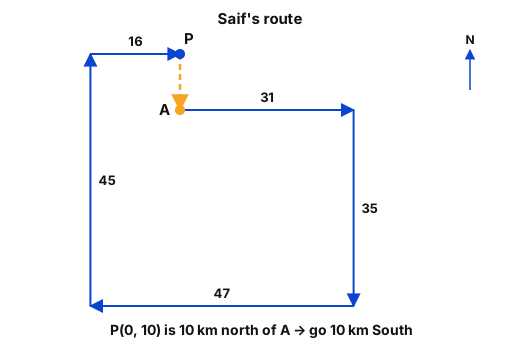
Saif starts from Point A and drives 31 km towards East. He then takes a right turn, drives 35 km, turns right and drives 47 km. He then takes a right turn and drives 45 km. He takes a final right turn, drives 16 km and stops at Point P. How far (shortest distance) and towards which direction should he drive in order to reach Point A again? (All turns are 90° turns only unless specified.)
सैफ बिंदु A से शुरू करता है और पूर्व की ओर 31 km गाड़ी चलाता है। फिर वह दाएँ मुड़ता है, 35 km गाड़ी चलाता है, दाएँ मुड़ता है और 47 km गाड़ी चलाता है। फिर वह दाएँ मुड़ता है और 45 km गाड़ी चलाता है। वह अंतिम बार दाएँ मुड़ता है, 16 km गाड़ी चलाता है और बिंदु P पर रुक जाता है। बिंदु A पर फिर से पहुँचने के लिए उसे कितनी दूरी (न्यूनतम दूरी) तक और किस दिशा में गाड़ी चलानी चाहिए? (जब तक निर्दिष्ट न किया जाए, सभी मोड़ केवल 90° के मोड़ हैं।)
  1. A11 km to the Southदक्षिण की ओर 11 km
  2. B10 km to the Southदक्षिण की ओर 10 km
  3. C10 km to the Eastपूर्व की ओर 10 km
  4. D11 km to the Westपश्चिम की ओर 11 km
Show answer

Concept: Take A as origin; East = +x, North = +y; track the net displacement.

  1. East 31 → (31, 0); right → South 35 → (31, −35).
  2. Right → West 47 → (−16, −35); right → North 45 → (−16, 10).
  3. Right → East 16 → P(0, 10).
  4. P is 10 km north of A → drive 10 km South.

Trick: Net E–W: 31−47+16=0; net N–S: 45−35=10 north → return 10 km South.

Answer: (B) 10 km to the South

अवधारणा: A को मूल बिंदु मानें; पूर्व = +x, उत्तर = +y; कुल विस्थापन देखें।

  1. पूर्व 31 → (31, 0); दाएँ → दक्षिण 35 → (31, −35)।
  2. दाएँ → पश्चिम 47 → (−16, −35); दाएँ → उत्तर 45 → (−16, 10)।
  3. दाएँ → पूर्व 16 → P(0, 10)।
  4. P, A से 10 km उत्तर → 10 km दक्षिण जाना होगा।

ट्रिक: पूर्व-पश्चिम: 31−47+16=0; उत्तर-दक्षिण: 45−35=10 उत्तर → 10 km दक्षिण।

उत्तर: (B) 10 km to the South

RRB NTPC Undergraduate CBT 1General Intelligence and ReasoningDirection and distanceRRB NTPC Undergraduate CBT 1 2024 · 13 Aug Shift 2 →
Q2486.
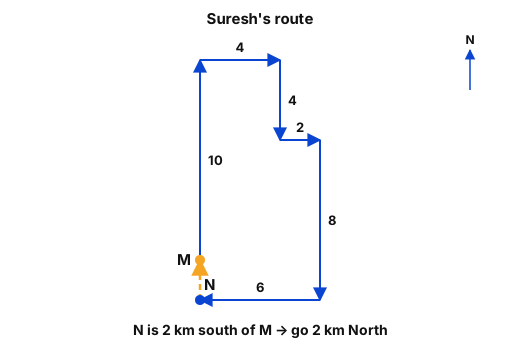
Suresh starts from Point M and drives 10 km towards north. Then, he takes a right turn and drives 4 km; he turns right again and drives 4 km. Then, he takes a left turn and drives 2 km; then, he turns right and drives 8 km. Then, he takes a final right turn, drives 6 km and stops at Point N. How far (shortest distance) and towards which direction should she drive in order to reach Point M again? (All turns are 90-degree turns only, unless specified.)
सुरेश बिंदु M से शुरू करता है और उत्तर की ओर 10 km गाड़ी चलाता है। फिर, वह दाएँ मुड़ता है और 4 km गाड़ी चलाता है; वह फिर से दाएँ मुड़ता है और 4 km गाड़ी चलाता है। फिर, वह बाएँ मुड़ता है और 2 km गाड़ी चलाता है; फिर, वह दाएँ मुड़ता है और 8 km गाड़ी चलाता है। फिर, वह अंतिम बार दाएँ मुड़ता है, 6 km गाड़ी चलाता है और बिंदु N पर रुक जाता है। बिंदु M पर फिर से पहुँचने के लिए उसे कितनी दूरी (न्यूनतम दूरी) तक और किस दिशा में गाड़ी चलानी चाहिए? (जब तक निर्दिष्ट न किया जाए, सभी मोड़ केवल 90 डिग्री के मोड़ हैं।)
  1. A2 km towards northउत्तर की ओर 2 km
  2. B4 km towards northउत्तर की ओर 4 km
  3. C2 km towards southदक्षिण की ओर 2 km
  4. D4 km towards southदक्षिण की ओर 4 km
Show answer

Concept: Take M as origin; East = +x, North = +y.

  1. North 10 → (0, 10); right → East 4 → (4, 10); right → South 4 → (4, 6).
  2. Left → East 2 → (6, 6); right → South 8 → (6, −2).
  3. Right → West 6 → N(0, −2).
  4. N is 2 km south of M → drive 2 km towards north.

Trick: Net E–W: 4+2−6=0; net N–S: 10−4−8=−2 → N is 2 km south, so go north.

Answer: (A) 2 km towards north

अवधारणा: M को मूल बिंदु मानें; पूर्व = +x, उत्तर = +y।

  1. उत्तर 10 → (0, 10); दाएँ → पूर्व 4 → (4, 10); दाएँ → दक्षिण 4 → (4, 6)।
  2. बाएँ → पूर्व 2 → (6, 6); दाएँ → दक्षिण 8 → (6, −2)।
  3. दाएँ → पश्चिम 6 → N(0, −2)।
  4. N, M से 2 km दक्षिण → 2 km उत्तर जाना होगा।

ट्रिक: पूर्व-पश्चिम: 4+2−6=0; उत्तर-दक्षिण: 10−4−8=−2 → उत्तर की ओर 2 km।

उत्तर: (A) 2 km towards north

RRB NTPC Undergraduate CBT 1General Intelligence and ReasoningDirection and distanceRRB NTPC Undergraduate CBT 1 2024 · 13 Aug Shift 2 →
Q2487.
Read the given statements and conclusions carefully. Assuming that the information given in the statements is true, even if it appears to be at variance with commonly known facts, decide which of the given conclusions logically follow(s) from the statements.
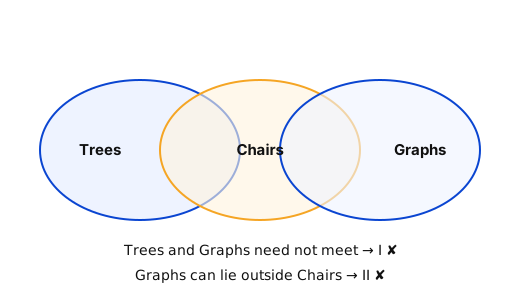
Statements: Some trees are chairs. Some chairs are graphs.
Conclusion (I): Some trees are graphs.
Conclusion (II): All graphs are chairs.
दिए गए कथनों और निष्कर्षों को ध्यानपूर्वक पढ़िए। यह मानते हुए कि कथनों में दी गई जानकारी सत्य है, भले ही वह सामान्यतः ज्ञात तथ्यों से भिन्न प्रतीत होती हो, निर्णय कीजिए कि दिए गए निष्कर्षों में से कौन-सा/से निष्कर्ष कथनों का तार्किक रूप से अनुसरण करता है/करते हैं।
कथन: कुछ पेड़, कुर्सियाँ हैं। कुछ कुर्सियाँ, ग्राफ़ हैं।
निष्कर्ष (I): कुछ पेड़, ग्राफ़ हैं।
निष्कर्ष (II): सभी ग्राफ़, कुर्सियाँ हैं।
  1. AOnly conclusion (II) follows.केवल निष्कर्ष (II) अनुसरण करता है।
  2. BOnly conclusion (I) follows.केवल निष्कर्ष (I) अनुसरण करता है।
  3. CBoth conclusions (I) and (II) follow.निष्कर्ष (I) और (II) दोनों अनुसरण करते हैं।
  4. DNeither conclusion (I) nor (II) follows.न तो निष्कर्ष (I) और न ही (II) अनुसरण करता है।
Show answer

Concept: Two 'Some' statements give no definite link between the end terms.

  1. Some trees are chairs; some chairs are graphs → trees and graphs need not overlap: (I) does not follow.
  2. 'Some chairs are graphs' does not say all graphs are chairs: (II) does not follow.

Yaad rakhein: Some + Some = no conclusion between the outer terms.

Answer: (D) Neither conclusion (I) nor (II) follows.

अवधारणा: दो 'कुछ' कथनों से बाहरी पदों के बीच कोई निश्चित निष्कर्ष नहीं निकलता।

  1. कुछ पेड़ कुर्सियाँ हैं; कुछ कुर्सियाँ ग्राफ हैं → पेड़ और ग्राफ का मिलना ज़रूरी नहीं: (I) नहीं।
  2. 'कुछ कुर्सियाँ ग्राफ हैं' से 'सभी ग्राफ कुर्सियाँ' नहीं निकलता: (II) नहीं।

याद रखें: कुछ + कुछ = कोई निष्कर्ष नहीं।

उत्तर: (D) Neither conclusion (I) nor (II) follows.

RRB NTPC Undergraduate CBT 1General Intelligence and ReasoningSyllogismRRB NTPC Undergraduate CBT 1 2024 · 13 Aug Shift 2 →
Q2488.
Based on the English alphabetical order, three of the following four letter-cluster pairs are alike in a certain way and thus form a group. Which letter-cluster pair DOES NOT belong to that group?
(Note: The odd one out is not based on the number of consonants/vowels or their position in the letter-cluster.)
अंग्रेज़ी वर्णमाला क्रम के आधार पर, निम्नलिखित चार अक्षर-समूह युग्मों में से तीन किसी निश्चित प्रकार से एकसमान हैं और इस प्रकार एक समूह बनाते हैं। कौन-सा अक्षर-समूह युग्म उस समूह से संबंधित नहीं है?
(नोट: असंगत का निर्धारण व्यंजनों/स्वरों की संख्या या अक्षर-समूह में उनके स्थान पर आधारित नहीं है।)
  1. ASJ-NT
  2. BOF-JQ
  3. CMD-HN
  4. DKB-FL
Show answer

Concept: Compare 1st letter → 3rd letter and 2nd letter → 4th letter using positions.

  1. SJ-NT: S(19)→N(14) −5, J(10)→T(20) +10.
  2. MD-HN: −5, +10; KB-FL: −5, +10.
  3. OF-JQ: O(15)→J(10) −5, but F(6)→Q(17) +11 → odd one.

Trick: The first change (−5) is the same everywhere, so check the second change only.

Answer: (B) OF-JQ

अवधारणा: पहले → तीसरे अक्षर और दूसरे → चौथे अक्षर का अंतर देखें।

  1. SJ-NT: S(19)→N(14) −5, J(10)→T(20) +10।
  2. MD-HN: −5, +10; KB-FL: −5, +10।
  3. OF-JQ: O→J −5, पर F(6)→Q(17) +11 → भिन्न।

ट्रिक: पहला अंतर (−5) सभी में समान है, केवल दूसरा अंतर जाँचें।

उत्तर: (B) OF-JQ

RRB NTPC Undergraduate CBT 1General Intelligence and ReasoningOdd one out (letter pairs)RRB NTPC Undergraduate CBT 1 2024 · 13 Aug Shift 2 →
Q2489.
Based on the English alphabetical order, three of the following four letter-cluster pairs are alike in a certain way and thus form a group. Which letter-cluster pair DOES NOT belong to that group?
(Note: The odd one out is not based on the number of consonants/vowels or their position in the letter-cluster.)
अंग्रेज़ी वर्णमाला क्रम के आधार पर, निम्नलिखित चार अक्षर-समूह युग्मों में से तीन किसी निश्चित प्रकार से एकसमान हैं और इस प्रकार एक समूह बनाते हैं। कौन-सा अक्षर-समूह युग्म उस समूह से संबंधित नहीं है?
(नोट: असंगत का निर्धारण व्यंजनों/स्वरों की संख्या या अक्षर-समूह में उनके स्थान पर आधारित नहीं है।)
  1. AFO - YJ
  2. BBX - US
  3. CWA - PV
  4. DTJ - LE
Show answer

Concept: Compare 1st → 3rd letter and 2nd → 4th letter (count backwards, wrapping Z→A).

  1. FO-YJ: F(6)→Y(25) is 7 back; O→J is 5 back.
  2. BX-US: B→U 7 back; X→S 5 back. WA-PV: W→P 7 back; A→V 5 back (wrap).
  3. TJ-LE: T(20)→L(12) is 8 back; J→E 5 back → odd one.

Trick: Wrap-around: going back from A or F continues from Z.

Answer: (D) TJ - LE

अवधारणा: पहले → तीसरे और दूसरे → चौथे अक्षर का अंतर देखें (A से पीछे Z पर घूमें)।

  1. FO-YJ: F→Y 7 पीछे; O→J 5 पीछे।
  2. BX-US: 7 पीछे, 5 पीछे; WA-PV: 7 पीछे, 5 पीछे (घूमकर)।
  3. TJ-LE: T(20)→L(12) 8 पीछे; J→E 5 पीछे → भिन्न।

ट्रिक: A या F से पीछे गिनते समय Z से आगे गिनती जारी रखें।

उत्तर: (D) TJ - LE

RRB NTPC Undergraduate CBT 1General Intelligence and ReasoningOdd one out (letter pairs)RRB NTPC Undergraduate CBT 1 2024 · 13 Aug Shift 2 →
Q2490.
Based on the English alphabetical order, three of the following four letter-clusters are alike in a certain way and thus form a group. Which letter-cluster DOES NOT belong to that group?
(Note: The odd one out is not based on the number of consonants/vowels or their position in the letter-cluster.)
अंग्रेज़ी वर्णमाला क्रम के आधार पर, निम्नलिखित चार अक्षर-समूहों में से तीन किसी निश्चित प्रकार से एकसमान हैं और इस प्रकार एक समूह बनाते हैं। कौन-सा अक्षर-समूह उस समूह से संबंधित नहीं है?
(नोट: असंगत का निर्धारण व्यंजनों/स्वरों की संख्या या अक्षर-समूह में उनके स्थान पर आधारित नहीं है।)
  1. ATXR
  2. BNRM
  3. CJNI
  4. DQUP
Show answer

Concept: Find the gaps between consecutive letters of each cluster.

  1. NRM: 14→18→13: +4, −5. JNI: 10→14→9: +4, −5. QUP: 17→21→16: +4, −5.
  2. TXR: 20→24→18: +4, −6 → odd one.

Trick: In the group the third letter is just before the first (N-M, J-I, Q-P); in TXR it is not (T-R).

Answer: (A) TXR

अवधारणा: हर समूह के क्रमागत अक्षरों का अंतर ज्ञात करें।

  1. NRM: +4, −5; JNI: +4, −5; QUP: +4, −5।
  2. TXR: 20→24→18: +4, −6 → भिन्न।

ट्रिक: समूह में तीसरा अक्षर पहले अक्षर से ठीक पहले वाला है (N-M, J-I, Q-P); TXR में नहीं (T-R)।

उत्तर: (A) TXR

RRB NTPC Undergraduate CBT 1General Intelligence and ReasoningOdd one out (letter clusters)RRB NTPC Undergraduate CBT 1 2024 · 13 Aug Shift 2 →
Q2491.
What should come in place of the question mark (?) in the given series?
3 11 20 30 41 ?
दी गई शृंखला में प्रश्न चिह्न (?) के स्थान पर क्या आना चाहिए?
3 11 20 30 41 ?
  1. A58
  2. B49
  3. C67
  4. D53
Show answer

Concept: Check differences between consecutive terms.

  1. Differences: 8, 9, 10, 11.
  2. Next difference = 12.
  3. Next term =41+12=53.

Trick: Differences increasing by 1 → keep adding the next consecutive number.

Answer: (D) 53

अवधारणा: क्रमागत पदों का अंतर देखें।

  1. अंतर: 8, 9, 10, 11।
  2. अगला अंतर = 12।
  3. अगला पद =41+12=53।

ट्रिक: अंतर 1-1 बढ़ रहा है → अगली क्रमागत संख्या जोड़ें।

उत्तर: (D) 53

RRB NTPC Undergraduate CBT 1General Intelligence and ReasoningNumber seriesRRB NTPC Undergraduate CBT 1 2024 · 13 Aug Shift 2 →
Q2492.
Pritam is ranked 5th from the top and 21st from the bottom in his class. How many students are there in the class?
प्रीतम अपनी कक्षा में ऊपर से 5वें और नीचे से 21वें स्थान पर है। कक्षा में कितने विद्यार्थी हैं?
  1. A25
  2. B29
  3. C24
  4. D26
Show answer

Concept: Total =rank from top+rank from bottom−1.

  1. 5+21−1=25.

Trick: Subtract 1 because Pritam is counted in both ranks.

Answer: (A) 25

अवधारणा: कुल =ऊपर से स्थान+नीचे से स्थान−1।

  1. 5+21−1=25।

ट्रिक: 1 इसलिए घटाते हैं क्योंकि प्रीतम दोनों ओर से गिना गया है।

उत्तर: (A) 25

RRB NTPC Undergraduate CBT 1General Intelligence and ReasoningRankingRRB NTPC Undergraduate CBT 1 2024 · 13 Aug Shift 2 →
Q2493.
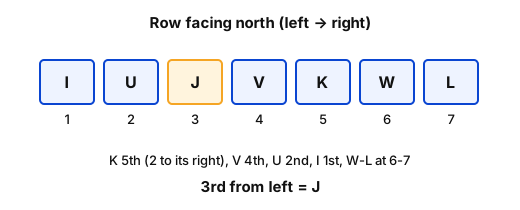
Seven people, I, J, K, L, U, V and W are sitting in a row, facing north.
Only two people sit to the right of K. Only two people sit between K and U. Only two people sit between I and V. V sits to the immediate left of K. L sits to the immediate right of W.
Who sits at third position from the left end of the line?
सात व्यक्ति, I, J, K, L, U, V और W एक पंक्ति में उत्तर की ओर मुख करके बैठे हैं।
K के दाएँ केवल दो व्यक्ति बैठे हैं। K और U के बीच केवल दो व्यक्ति बैठे हैं। I और V के बीच केवल दो व्यक्ति बैठे हैं। V, K के ठीक बाएँ बैठा है। L, W के ठीक दाएँ बैठा है।
पंक्ति के बाएँ छोर से तीसरे स्थान पर कौन बैठा है?
  1. AI
  2. BL
  3. CJ
  4. DW
Show answer

Concept: Fix the person with a definite position first, then place the rest.

  1. Only two to the right of K → K is 5th; V (immediate left of K) is 4th.
  2. Two between K and U → U is 2nd.
  3. Two between I and V → I is 1st or 7th; W-L need two adjacent free seats → only 6th-7th, so I is 1st.
  4. Remaining seat 3rd → J. Row: I U J V K W L.

Trick: Place the 'W immediately left of L' pair last – it needs two adjacent empty seats, which decides I's position.

Answer: (C) J

अवधारणा: जिसका स्थान निश्चित हो उसे पहले बैठाएँ, फिर बाकी।

  1. K के दाएँ केवल दो → K 5वें स्थान पर; V (K के ठीक बाएँ) 4वें।
  2. K और U के बीच दो → U 2रे स्थान पर।
  3. I और V के बीच दो → I 1st या 7th; W-L को दो साथ वाली सीटें चाहिए → केवल 6-7, अतः I 1st।
  4. बची सीट 3 → J। क्रम: I U J V K W L।

ट्रिक: W-L जोड़ी को अंत में रखें – उसे दो लगातार खाली सीटें चाहिए, इसी से I का स्थान तय होता है।

उत्तर: (C) J

RRB NTPC Undergraduate CBT 1General Intelligence and ReasoningLinear seating arrangementRRB NTPC Undergraduate CBT 1 2024 · 13 Aug Shift 2 →
Q2494.
This question is based on the five, three-digit numbers given below.
(Left) 570 787 488 277 102 (Right)
(Example: 697 – First digit = 6, second digit = 9 and third digit = 7)
(NOTE: All operations to be done from left to right.)
In how many numbers is the resultant of the summation of the first and the third digits a prime number?
यह प्रश्न नीचे दी गई पाँच, तीन अंकों वाली संख्याओं पर आधारित है।
(बाएँ) 570 787 488 277 102 (दाएँ)
(उदाहरण: 697 – पहला अंक = 6, दूसरा अंक = 9 और तीसरा अंक = 7)
(नोट: सभी संक्रियाएँ बाएँ से दाएँ की जानी हैं।)
कितनी संख्याओं में पहले और तीसरे अंक के योग का परिणाम एक अभाज्य संख्या है?
  1. AFourचार
  2. BOneएक
  3. CTwoदो
  4. DNoneएक भी नहीं
Show answer

Concept: Add the first and third digits of each number and test for primality.

  1. 570: 5+0=5 (prime). 787: 7+7=14. 488: 4+8=12.
  2. 277: 2+7=9. 102: 1+2=3 (prime).
  3. Prime sums: 5 and 3 → two numbers.

Yaad rakhein: 1 is not prime; 9 is 3×3 – a common trap.

Answer: (C) Two

अवधारणा: प्रत्येक संख्या के पहले और तीसरे अंक का योग करके अभाज्यता जाँचें।

  1. 570: 5+0=5 (अभाज्य)। 787: 7+7=14। 488: 4+8=12।
  2. 277: 2+7=9। 102: 1+2=3 (अभाज्य)।
  3. अभाज्य योग: 5 और 3 → दो संख्याएँ।

याद रखें: 1 अभाज्य नहीं है; 9 =3×3 – आम गलती।

उत्तर: (C) Two

RRB NTPC Undergraduate CBT 1General Intelligence and ReasoningNumber-based operationsRRB NTPC Undergraduate CBT 1 2024 · 13 Aug Shift 2 →
Q2495.
LK 19 is related to GG 2 in a certain way. In the same way, IT 29 is related to DP 12. To which of the following is OV 15 related, following the same logic?
LK 19 एक निश्चित प्रकार से GG 2 से संबंधित है। उसी प्रकार, IT 29, DP 12 से संबंधित है। समान तर्क का अनुसरण करते हुए, OV 15 निम्नलिखित में से किससे संबंधित है?
  1. AJR 2
  2. BIS 4
  3. CJS 4
  4. DIR 2
Show answer

Concept: Find the shift for each letter separately; the letter part decides the option.

  1. L(12)→G(7) and I(9)→D(4): first letter −5.
  2. K(11)→G(7) and T(20)→P(16): second letter −4.
  3. O(15)−5 = J(10); V(22)−4 = R(18) → letters JR.
  4. Number: 19→2 and 29→12 (difference 17); only 'JR 2' carries the letters JR.

Trick: In letter-number analogies, fix the letters first – here only one option starts with JR.

Answer: (A) JR 2

अवधारणा: हर अक्षर का अंतर अलग से निकालें; अक्षर भाग से विकल्प तय होता है।

  1. L(12)→G(7) तथा I(9)→D(4): पहला अक्षर −5।
  2. K(11)→G(7) तथा T(20)→P(16): दूसरा अक्षर −4।
  3. O(15)−5 = J(10); V(22)−4 = R(18) → JR।
  4. संख्या: 19→2, 29→12 (अंतर 17); JR वाला एकमात्र विकल्प 'JR 2' है।

ट्रिक: ऐसे प्रश्नों में पहले अक्षर तय करें – यहाँ केवल एक विकल्प JR से शुरू होता है।

उत्तर: (A) JR 2

RRB NTPC Undergraduate CBT 1General Intelligence and ReasoningAlphanumeric analogyRRB NTPC Undergraduate CBT 1 2024 · 13 Aug Shift 2 →
Q2496.
Each of the digits in the number 8357691 is arranged in the ascending order from left to right. The position(s) of how many digits will remain unchanged as compared to that in the original number?
संख्या 8357691 के प्रत्येक अंक को बाएँ से दाएँ आरोही क्रम में व्यवस्थित किया जाता है। मूल संख्या की तुलना में कितने अंकों का/के स्थान अपरिवर्तित रहेगा/रहेंगे?
  1. ATwoदो
  2. BNoneएक भी नहीं
  3. CThreeतीन
  4. DOneएक
Show answer

Concept: Rearrange digits in ascending order and compare position-wise.

  1. Original: 8 3 5 7 6 9 1.
  2. Ascending: 1 3 5 6 7 8 9.
  3. Same position: 3 (2nd) and 5 (3rd) → two digits.

Trick: Write both rows one below the other and tick matching columns.

Answer: (A) Two

अवधारणा: अंकों को आरोही क्रम में लगाकर स्थान-वार तुलना करें।

  1. मूल: 8 3 5 7 6 9 1।
  2. आरोही: 1 3 5 6 7 8 9।
  3. समान स्थान: 3 (दूसरा) और 5 (तीसरा) → दो अंक।

ट्रिक: दोनों पंक्तियाँ एक के नीचे एक लिखें और मिलते स्तंभ गिनें।

उत्तर: (A) Two

RRB NTPC Undergraduate CBT 1General Intelligence and ReasoningDigit arrangementRRB NTPC Undergraduate CBT 1 2024 · 13 Aug Shift 2 →
Q2497.
What should come in place of the question mark (?) in the given series?
31 20 7 −8 −25 ?
दी गई शृंखला में प्रश्न चिह्न (?) के स्थान पर क्या आना चाहिए?
31 20 7 −8 −25 ?
  1. A−42
  2. B−44
  3. C−43
  4. D−45
Show answer

Concept: Check the differences between consecutive terms.

  1. Differences: −11,−13,−15,−17.
  2. They decrease by 2 → next −19.
  3. Next term =−25−19=−44.

Trick: Differences are consecutive odd numbers (11, 13, 15, 17, 19).

Answer: (B) −44

अवधारणा: क्रमागत पदों का अंतर देखें।

  1. अंतर: −11,−13,−15,−17।
  2. हर बार 2 अधिक घटता है → अगला −19।
  3. अगला पद =−25−19=−44।

ट्रिक: अंतर क्रमागत विषम संख्याएँ हैं (11, 13, 15, 17, 19)।

उत्तर: (B) −44

RRB NTPC Undergraduate CBT 1General Intelligence and ReasoningNumber seriesRRB NTPC Undergraduate CBT 1 2024 · 13 Aug Shift 2 →
Q2498.
CHRX is related to FKXD in a certain way based on the English alphabetical order. In the same way, OTPV is related to RWVB. To which of the given options is XCHN related, following the same logic?
अंग्रेज़ी वर्णमाला क्रम के आधार पर CHRX एक निश्चित प्रकार से FKXD से संबंधित है। उसी प्रकार, OTPV, RWVB से संबंधित है। समान तर्क का अनुसरण करते हुए, XCHN दिए गए विकल्पों में से किससे संबंधित है?
  1. AAFNU
  2. BAFTN
  3. CATFN
  4. DAFNT
Show answer

Concept: Find the shift of each letter position.

  1. C→F (+3), H→K (+3), R→X (+6), X→D (+6, wraps).
  2. O→R (+3), T→W (+3), P→V (+6), V→B (+6) ✓.
  3. X+3 = A, C+3 = F, H+6 = N, N+6 = T → AFNT.

Trick: Pattern +3, +3, +6, +6; after Z, continue from A.

Answer: (D) AFNT

अवधारणा: हर स्थान के अक्षर का अंतर निकालें।

  1. C→F (+3), H→K (+3), R→X (+6), X→D (+6, घूमकर)।
  2. O→R (+3), T→W (+3), P→V (+6), V→B (+6) ✓।
  3. X+3 = A, C+3 = F, H+6 = N, N+6 = T → AFNT।

ट्रिक: क्रम +3, +3, +6, +6; Z के बाद A से गिनें।

उत्तर: (D) AFNT

RRB NTPC Undergraduate CBT 1General Intelligence and ReasoningLetter analogyRRB NTPC Undergraduate CBT 1 2024 · 13 Aug Shift 2 →
Q2499.
In March 2025, which company unveiled Vayu, an overall AI cloud offering for
enterprises?
मार्च 2025 में, किस कंपनी ने उद्यमों (enterprises) के लिए एक समग्र AI क्लाउड पेशकश, Vayu, का अनावरण किया?
  1. AReliance Communicationरिलायंस कम्युनिकेशन
  2. BTata Communicationटाटा कम्युनिकेशन
  3. CAirtel Communicationएयरटेल कम्युनिकेशन
  4. DBajaj Communicationबजाज कम्युनिकेशन
Show answer

Concept: In March 2025 Tata Communications launched Vayu, an AI cloud platform for enterprises.

  1. Vayu combines AI cloud, GPU-as-a-service and platform tools so businesses can build and run AI applications.
  2. It was announced by Tata Communications, the Tata Group's digital-infrastructure company.
  3. Reliance, Airtel and Bajaj are not linked to Vayu.

Yaad rakhein: Vayu = "wind" – Tata's AI cloud blows across enterprises.

Answer: (B) Tata Communication

अवधारणा: मार्च 2025 में Tata Communications ने उद्यमों (enterprises) के लिए AI क्लाउड प्लेटफॉर्म Vayu लॉन्च किया।

  1. Vayu में AI cloud, GPU-as-a-service और प्लेटफॉर्म टूल एक साथ मिलते हैं ताकि कंपनियाँ AI ऐप बना सकें।
  2. इसे Tata Group की डिजिटल इंफ्रास्ट्रक्चर कंपनी Tata Communications ने घोषित किया।
  3. Reliance, Airtel या Bajaj का Vayu से संबंध नहीं है।

याद रखें: Vayu = Tata का AI क्लाउड।

उत्तर: (B) Tata Communication

RRB NTPC Undergraduate CBT 1General AwarenessCurrent Affairs – TechnologyRRB NTPC Undergraduate CBT 1 2024 · 13 Aug Shift 1 →
Q2500.
Which act gave statutory status to the Central Vigilance Commission (CVC)?
किस अधिनियम ने केंद्रीय सतर्कता आयोग (CVC) को सांविधिक दर्जा प्रदान किया?
  1. AThe Central Vigilance Commission Act, 1964केंद्रीय सतर्कता आयोग अधिनियम, 1964
  2. BThe Central Vigilance Commission Act, 2003केंद्रीय सतर्कता आयोग अधिनियम, 2003
  3. CPrevention of Corruption Act, 1988भ्रष्टाचार निवारण अधिनियम, 1988
  4. DLokpal Act, 2013लोकपाल अधिनियम, 2013
Show answer

Concept: The CVC was set up in 1964 by an executive resolution (Santhanam Committee) and became statutory later.

  1. 1964: created by a government resolution – not a statutory body then.
  2. 2003: Central Vigilance Commission Act, 2003 gave it statutory status.
  3. It is a multi-member body: one CVC + up to two Vigilance Commissioners.

Yaad rakhein: CVC: born 1964 (resolution), legal 2003 (Act).

Answer: (B) The Central Vigilance Commission Act, 2003

अवधारणा: CVC 1964 में कार्यकारी संकल्प (संथानम समिति की सिफारिश) से बना और बाद में वैधानिक हुआ।

  1. 1964: सरकारी संकल्प से गठन – तब यह वैधानिक (statutory) नहीं था।
  2. 2003: केंद्रीय सतर्कता आयोग अधिनियम, 2003 से वैधानिक दर्जा मिला।
  3. इसमें एक CVC और अधिकतम दो सतर्कता आयुक्त होते हैं।

याद रखें: CVC: जन्म 1964 (संकल्प), कानूनी दर्जा 2003 (अधिनियम)।

उत्तर: (B) The Central Vigilance Commission Act, 2003

RRB NTPC Undergraduate CBT 1General AwarenessPolity – Statutory BodiesRRB NTPC Undergraduate CBT 1 2024 · 13 Aug Shift 1 →