Question bank

Q&A: practice questions with answers

Search questions on any topic. Filter by exam category, exam, subject and topic, try the question, then open the answer and explanation.

Courses – airGurukul

8,495 questions found.

Q2581.
What will come in the place of the question mark (?) in the following equation, if ‘+’ and ‘−’ are interchanged and ‘×’ and ‘÷’ are interchanged?
7 ÷ 4 + 20 − 72 × 6 = ?
यदि ‘+’ और ‘−’ को आपस में बदल दिया जाए तथा ‘×’ और ‘÷’ को आपस में बदल दिया जाए, तो निम्नलिखित समीकरण में प्रश्न चिह्न (?) के स्थान पर क्या आएगा?
7 ÷ 4 + 20 − 72 × 6 = ?
  1. A33
  2. B26
  3. C13
  4. D20
Show answer

Concept: Swap the signs as instructed, then apply BODMAS.

  1. 7÷4+20−72×6 becomes 7×4−20+72÷6
  2. =28−20+12
  3. =20

Trick: Rewrite the whole expression first; swapping mentally while calculating causes errors.

Answer: (D) 20

अवधारणा: निर्देश के अनुसार चिह्न बदलें, फिर BODMAS लगाएँ।

  1. 7÷4+20−72×6 बनता है 7×4−20+72÷6
  2. =28−20+12
  3. =20

ट्रिक: पहले पूरा व्यंजक दोबारा लिखें, फिर हल करें।

उत्तर: (D) 20
RRB NTPC Undergraduate CBT 1General Intelligence and ReasoningInterchanging signsRRB NTPC Undergraduate CBT 1 2024 · 13 Aug Shift 1 →
Q2582.
Which of the following letter-number clusters will replace the question mark (?) in the given series to make it logically complete?
Z122Y V101U R82Q N65M ?
निम्नलिखित में से कौन-सा अक्षर-संख्या समूह दी गई श्रृंखला को तार्किक रूप से पूर्ण करने के लिए प्रश्न चिह्न (?) का स्थान लेगा?
Z122Y V101U R82Q N65M ?
  1. AJ49I
  2. BK50L
  3. CJ50I
  4. DK49L
Show answer

Concept: Treat the letters and the numbers as separate series.

  1. First letters: Z, V, R, N (−4 each) → J; last letters Y, U, Q, M (−4) → I
  2. Numbers: 122=112+1, 101=102+1, 82=92+1, 65=82+1
  3. Next number =72+1=50 → J50I

Trick: The last letter is always the letter just before the first one (Z-Y, V-U …), so J…I.

Answer: (C) J50I

अवधारणा: अक्षरों और संख्याओं को अलग श्रृंखला मानें।

  1. पहले अक्षर: Z, V, R, N (−4) → J; अंतिम अक्षर Y, U, Q, M (−4) → I
  2. संख्याएँ: 122=112+1, 101=102+1, 82=92+1, 65=82+1
  3. अगली संख्या =72+1=50 → J50I

ट्रिक: अंतिम अक्षर हमेशा पहले अक्षर से ठीक पहले वाला (Z-Y, V-U …), अतः J…I।

उत्तर: (C) J50I

RRB NTPC Undergraduate CBT 1General Intelligence and ReasoningLetter-number seriesRRB NTPC Undergraduate CBT 1 2024 · 13 Aug Shift 1 →
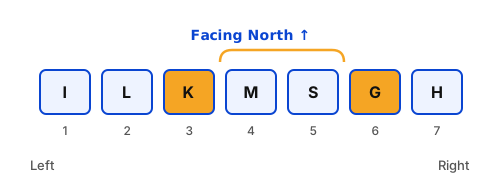
Q2583.
Seven people G, H, I, K, L, M and S are sitting in a row, facing north. Only three people sit between I and S. M sits to the immediate left of S. No one sits to the right of H. Only two people sit between H and M. K sits to the immediate right of L. How many people sit between G and K?
सात व्यक्ति G, H, I, K, L, M और S उत्तर की ओर मुख करके एक पंक्ति में बैठे हैं। I और S के बीच केवल तीन व्यक्ति बैठे हैं। M, S के ठीक बाएँ बैठा है। H के दाएँ कोई नहीं बैठा है। H और M के बीच केवल दो व्यक्ति बैठे हैं। K, L के ठीक दाएँ बैठा है। G और K के बीच कितने व्यक्ति बैठे हैं?
  1. AOneएक
  2. BThreeतीन
  3. CFourचार
  4. DTwoदो
Show answer

Concept: Facing north, left and right are the viewer's left and right; number the seats 1–7 from the left.

  1. No one right of H ⇒ H = 7; two between H and M ⇒ M = 4
  2. M immediately left of S ⇒ S = 5; three between I and S ⇒ I = 1
  3. L, K together (K right of L) in seats 2, 3 ⇒ L = 2, K = 3; G = 6
  4. Between G (6) and K (3): M, S

Trick: Anchor the end person (H) first; the chain H → M → S → I then fills almost the whole row.

Answer: (D) Two

अवधारणा: उत्तर की ओर मुख: बायाँ-दायाँ हमारे बायाँ-दायाँ; सीटें बाएँ से 1–7।

  1. H के दाएँ कोई नहीं ⇒ H = 7; H और M के बीच दो ⇒ M = 4
  2. M, S के ठीक बाएँ ⇒ S = 5; I और S के बीच तीन ⇒ I = 1
  3. L, K साथ (K, L के दाएँ) सीट 2, 3 में; G = 6
  4. G (6) और K (3) के बीच: M, S

ट्रिक: पहले छोर वाला व्यक्ति (H) तय करें; फिर H → M → S → I से पंक्ति भर जाती है।

उत्तर: (D) दो (Two)

RRB NTPC Undergraduate CBT 1General Intelligence and ReasoningLinear seating arrangementRRB NTPC Undergraduate CBT 1 2024 · 13 Aug Shift 1 →
Q2584.
Based on the English alphabetical order, three of the following four letter-clusters are alike in a certain way and thus form a group. Which letter-cluster DOES NOT belong to that group? (Note: The odd one out is not based on the number of consonants/vowels or their position in the letter-cluster.)
अंग्रेज़ी वर्णमाला क्रम के आधार पर, निम्नलिखित चार अक्षर-समूहों में से तीन किसी निश्चित प्रकार से एकसमान हैं और इस प्रकार एक समूह बनाते हैं। कौन-सा अक्षर-समूह उस समूह से संबंधित नहीं है? (ध्यान दें: असंगत का निर्धारण व्यंजनों/स्वरों की संख्या या अक्षर-समूह में उनके स्थान के आधार पर नहीं किया गया है।)
  1. AMHN
  2. BSNU
  3. CPKQ
  4. DIDJ
Show answer

Concept: Compare 2nd and 3rd letters with the 1st letter's position.

  1. MHN: M13, H8 (−5), N14 (+1)
  2. PKQ: P16, K11 (−5), Q17 (+1); IDJ: I9, D4 (−5), J10 (+1)
  3. SNU: S19, N14 (−5), U21 (+2) – odd

Trick: In the group, the 3rd letter is just the next letter after the 1st (M-N, P-Q, I-J); S-U breaks it.

Answer: (B) SNU

अवधारणा: दूसरे और तीसरे अक्षर की पहले अक्षर से तुलना करें।

  1. MHN: M13, H8 (−5), N14 (+1)
  2. PKQ: P16, K11 (−5), Q17 (+1); IDJ: I9, D4 (−5), J10 (+1)
  3. SNU: S19, N14 (−5), U21 (+2) – विषम

ट्रिक: समूह में तीसरा अक्षर पहले का अगला अक्षर है (M-N, P-Q, I-J); S-U नहीं।

उत्तर: (B) SNU

RRB NTPC Undergraduate CBT 1General Intelligence and ReasoningOdd one out (letter clusters)RRB NTPC Undergraduate CBT 1 2024 · 13 Aug Shift 1 →
Q2585.
CHRX is related to HMXD in a certain way based on the English alphabetical order. In the same way, WBPV is related to BGVB. To which of the given options is LQHN related, following the same logic?
अंग्रेज़ी वर्णमाला क्रम के आधार पर CHRX एक निश्चित प्रकार से HMXD से संबंधित है। उसी प्रकार, WBPV, BGVB से संबंधित है। समान तर्क का अनुसरण करते हुए, LQHN दिए गए विकल्पों में से किससे संबंधित है?
  1. AQTNV
  2. BQVTN
  3. CQTYU
  4. DQVNT
Show answer

Concept: Find the shift of each letter in the example pairs.

  1. CHRX → HMXD: +5,+5,+6,+6
  2. WBPV → BGVB: W +5 = B, B +5 = G, P +6 = V, V +6 = B ✔
  3. LQHN: L +5 = Q, Q +5 = V, H +6 = N, N +6 = T → QVNT

Trick: Option elimination: 2nd letter must be Q +5 = V, leaving QVTN and QVNT; 3rd letter H +6 = N decides.

Answer: (D) QVNT

अवधारणा: उदाहरण युग्मों में हर अक्षर का खिसकाव ज्ञात करें।

  1. CHRX → HMXD: +5,+5,+6,+6
  2. WBPV → BGVB: +5,+5,+6,+6 ✔
  3. LQHN: L +5 = Q, Q +5 = V, H +6 = N, N +6 = T → QVNT

ट्रिक: दूसरा अक्षर V होना चाहिए, तो QVTN या QVNT; तीसरा अक्षर H +6 = N से उत्तर तय।

उत्तर: (D) QVNT

RRB NTPC Undergraduate CBT 1General Intelligence and ReasoningLetter analogyRRB NTPC Undergraduate CBT 1 2024 · 13 Aug Shift 1 →
Q2586.
What should come in place of the question mark (?) in the given series?
18 23 17 24 16 ?
दी गई श्रृंखला में प्रश्न चिह्न (?) के स्थान पर क्या आना चाहिए?
18 23 17 24 16 ?
  1. A20
  2. B34
  3. C25
  4. D28
Show answer

Concept: Check the differences with alternating signs.

  1. 18→+523→−617→+724→−816
  2. Next: 16+9=25

Trick: Alternate terms also work: 18, 17, 16 (down by 1) and 23, 24, 25 (up by 1).

Answer: (C) 25

अवधारणा: बारी-बारी चिह्न वाले अंतर देखें।

  1. 18→+523→−617→+724→−816
  2. अगला: 16+9=25

ट्रिक: एकांतर पद: 18, 17, 16 (1 घटते) और 23, 24, 25 (1 बढ़ते)।

उत्तर: (C) 25

RRB NTPC Undergraduate CBT 1General Intelligence and ReasoningNumber seriesRRB NTPC Undergraduate CBT 1 2024 · 13 Aug Shift 1 →
Q2587.
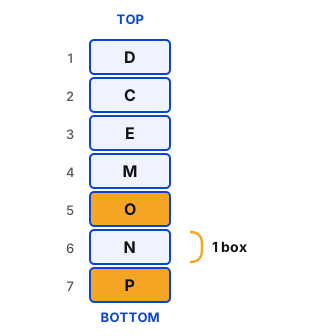
Seven boxes C, D, E, M, N, O and P are kept one over the other but not necessarily in the same order.
Only D is kept above C. Only E is kept between C and M. Only P is kept below N. How many boxes are kept between O and P?
सात बॉक्स C, D, E, M, N, O और P एक के ऊपर एक रखे गए हैं, लेकिन ज़रूरी नहीं कि इसी क्रम में हों।
C के ऊपर केवल D रखा गया है। C और M के बीच केवल E रखा गया है। N के नीचे केवल P रखा गया है। O और P के बीच कितने बॉक्स रखे गए हैं?
  1. ATwoदो
  2. BFourचार
  3. CThreeतीन
  4. DOneएक
Show answer

Concept: Fix the top and bottom boxes using the 'only' clues.

  1. Only D above C ⇒ D = 1st, C = 2nd (from top)
  2. Only E between C and M ⇒ E = 3rd, M = 4th
  3. Only P below N ⇒ P = 7th, N = 6th; O = 5th
  4. Between O (5th) and P (7th): N only

Trick: Once both ends are fixed, the single leftover box (O) drops into the only empty slot.

Answer: (D) One

अवधारणा: 'केवल' वाले संकेतों से ऊपर और नीचे के बॉक्स तय करें।

  1. केवल D, C के ऊपर ⇒ D = 1, C = 2 (ऊपर से)
  2. C और M के बीच केवल E ⇒ E = 3, M = 4
  3. केवल P, N के नीचे ⇒ P = 7, N = 6; O = 5
  4. O (5) और P (7) के बीच: केवल N

ट्रिक: दोनों छोर तय होते ही बचा बॉक्स (O) खाली स्थान में आ जाता है।

उत्तर: (D) एक (One)

RRB NTPC Undergraduate CBT 1General Intelligence and ReasoningBox arrangementRRB NTPC Undergraduate CBT 1 2024 · 13 Aug Shift 1 →
Q2588.
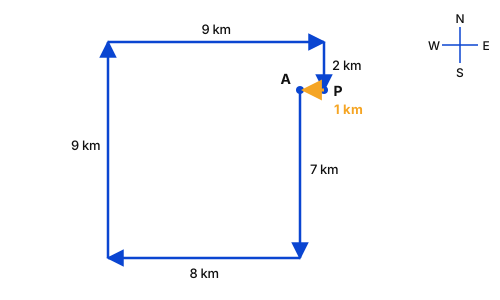
Laxman starts from Point A and drives 7 km towards south. He then takes a right turn, drives 8 km, turns right and drives 9 km. He then takes a right turn and drives 9 km. He takes a final right turn, drives 2 km and stops at Point P. How far (shortest distance) and towards which direction should he drive in order to reach Point A again? (All turns are 90° turns only unless specified.)
लक्ष्मण बिंदु A से चलना शुरू करता है और दक्षिण की ओर 7 km गाड़ी चलाता है। फिर वह दाएँ मुड़ता है, 8 km गाड़ी चलाता है, दाएँ मुड़ता है और 9 km गाड़ी चलाता है। फिर वह दाएँ मुड़ता है और 9 km गाड़ी चलाता है। वह अंतिम बार दाएँ मुड़ता है, 2 km गाड़ी चलाता है और बिंदु P पर रुक जाता है। बिंदु A पर पुनः पहुँचने के लिए उसे कितनी दूरी (न्यूनतम दूरी) तक और किस दिशा में गाड़ी चलानी चाहिए? (जब तक निर्दिष्ट न किया जाए, सभी मोड़ केवल 90° के हैं।)
  1. A2 km to westपश्चिम की ओर 2 km
  2. B3 km to westपश्चिम की ओर 3 km
  3. C1 km to westपश्चिम की ओर 1 km
  4. D4 km to westपश्चिम की ओर 4 km
Show answer

Concept: Plot the path on axes, taking A as the origin; each right turn rotates the direction clockwise.

  1. 7 km south: (0,−7); right → west 8 km: (−8,−7)
  2. Right → north 9 km: (−8,2); right → east 9 km: (1,2)
  3. Right → south 2 km: P =(1,0)
  4. A (0,0) is 1 km to the west of P

Trick: Net N–S: −7+9−2=0; net E–W: −8+9=+1 (east). So go back 1 km west.

Answer: (C) 1 km to west

अवधारणा: A को मूलबिंदु मानकर रास्ता बनाएँ; हर दायाँ मोड़ दिशा को दक्षिणावर्त घुमाता है।

  1. 7 km दक्षिण: (0,−7); दाएँ → पश्चिम 8 km: (−8,−7)
  2. दाएँ → उत्तर 9 km: (−8,2); दाएँ → पूर्व 9 km: (1,2)
  3. दाएँ → दक्षिण 2 km: P =(1,0)
  4. A (0,0), P से 1 km पश्चिम में है

ट्रिक: शुद्ध उत्तर–दक्षिण: −7+9−2=0; पूर्व–पश्चिम: −8+9=+1 (पूर्व)। अतः 1 km पश्चिम जाएँ।

उत्तर: (C) 1 km पश्चिम (west)

RRB NTPC Undergraduate CBT 1General Intelligence and ReasoningDirection and distanceRRB NTPC Undergraduate CBT 1 2024 · 13 Aug Shift 1 →
Q2589.
FI 11 is related to KN 8 in a certain way. In the same way, NQ 25 is related to SV 22. To which of the following is OR 17 related, following the same logic?
FI 11 एक निश्चित प्रकार से KN 8 से संबंधित है। उसी प्रकार, NQ 25, SV 22 से संबंधित है। समान तर्क का अनुसरण करते हुए, OR 17 निम्नलिखित में से किससे संबंधित है?
  1. ATW 15
  2. BUW 14
  3. CJM 11
  4. DTW 14
Show answer

Concept: Find what happens to the letters and to the number separately.

  1. FI 11 → KN 8: F +5 = K, I +5 = N, 11−3=8
  2. NQ 25 → SV 22: +5, +5, −3 ✔
  3. OR 17 → O +5 = T, R +5 = W, 17−3=14 → TW 14

Trick: Number part alone (17−3=14) leaves UW 14 and TW 14; O +5 = T settles it.

Answer: (D) TW 14

अवधारणा: अक्षरों और संख्या के बदलाव अलग-अलग देखें।

  1. FI 11 → KN 8: F +5 = K, I +5 = N, 11−3=8
  2. NQ 25 → SV 22: +5, +5, −3 ✔
  3. OR 17 → T, W, 17−3=14 → TW 14

ट्रिक: केवल संख्या (14) से UW 14 और TW 14 बचते हैं; O +5 = T से उत्तर तय।

उत्तर: (D) TW 14

RRB NTPC Undergraduate CBT 1General Intelligence and ReasoningLetter-number analogyRRB NTPC Undergraduate CBT 1 2024 · 13 Aug Shift 1 →
Q2590.
Read the given statements and conclusions carefully. Assuming that the information given in the statements is true, even if it appears to be at variance with commonly known facts, decide which of the given conclusions logically follow(s) from the statements.
Statements: All bricks are spoons. No brick is a cricket.
Conclusion (I): Some crickets are spoons.
Conclusion (II): All spoons are crickets.
दिए गए कथनों और निष्कर्षों को ध्यानपूर्वक पढ़िए। यह मानते हुए कि कथनों में दी गई जानकारी सत्य है, भले ही वह सामान्य रूप से ज्ञात तथ्यों से भिन्न प्रतीत होती हो, निर्णय लीजिए कि दिए गए निष्कर्षों में से कौन-सा/कौन-से निष्कर्ष कथनों का तार्किक रूप से अनुसरण करता है/करते हैं।
कथन: सभी ईंटें, चम्मच हैं। कोई ईंट, झींगुर नहीं है।
निष्कर्ष (I): कुछ झींगुर, चम्मच हैं।
निष्कर्ष (II): सभी चम्मच, झींगुर हैं।
  1. AOnly conclusion (I) follows.केवल निष्कर्ष (I) अनुसरण करता है।
  2. BOnly conclusion (II) follows.केवल निष्कर्ष (II) अनुसरण करता है।
  3. CNeither conclusion (I) nor (II) follows.न तो निष्कर्ष (I) और न ही (II) अनुसरण करता है।
  4. DBoth conclusions (I) and (II) follow.निष्कर्ष (I) और (II) दोनों अनुसरण करते हैं।
Show answer

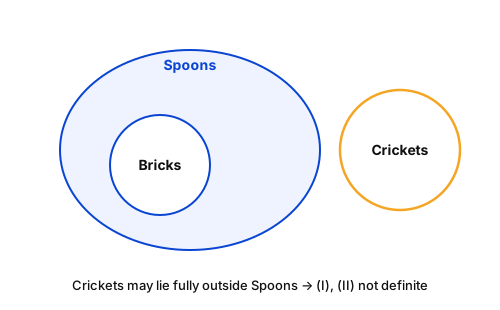
Concept: Draw the least-overlap Venn diagram; a conclusion follows only if it is true in every possible diagram.

  1. All bricks are spoons: Bricks circle inside Spoons
  2. No brick is a cricket: Crickets lie outside Bricks, but may or may not touch Spoons
  3. (I) Some crickets are spoons – not certain (Crickets can be fully outside Spoons)
  4. (II) All spoons are crickets – false (bricks are spoons but not crickets)

Trick: A 'No' statement never guarantees a 'Some' link with a third set.

Answer: (C) Neither conclusion (I) nor (II) follows.

अवधारणा: न्यूनतम मेल वाला वेन आरेख बनाएँ; निष्कर्ष तभी सही जब हर संभावित आरेख में सत्य हो।

  1. सभी ईंटें चम्मच हैं: Bricks, Spoons के अंदर
  2. कोई ईंट क्रिकेट नहीं: Crickets, Bricks से बाहर, Spoons से मिले या न मिले
  3. (I) कुछ क्रिकेट चम्मच हैं – निश्चित नहीं
  4. (II) सभी चम्मच क्रिकेट हैं – असत्य (ईंटें चम्मच हैं पर क्रिकेट नहीं)

ट्रिक: 'कोई नहीं' वाला कथन तीसरे समूह से 'कुछ' संबंध पक्का नहीं करता।

उत्तर: (C) न तो निष्कर्ष (I) और न ही (II) अनुसरण करता है।

RRB NTPC Undergraduate CBT 1General Intelligence and ReasoningSyllogismRRB NTPC Undergraduate CBT 1 2024 · 13 Aug Shift 1 →
Q2591.
Read the given statement(s) and conclusions carefully. Assuming that the information given in the statements is true, even if it appears to be at variance with commonly known facts, decide which of the given conclusions logically follow(s) from the statement(s).
Statements:
Some homestays are resorts.
Some resorts are palaces.
Conclusions:
(I) Some homestays are palaces.
(II) All palaces are resorts.
दिए गए कथन/कथनों और निष्कर्षों को ध्यानपूर्वक पढ़िए। यह मानते हुए कि कथनों में दी गई जानकारी सत्य है, भले ही वह सामान्य रूप से ज्ञात तथ्यों से भिन्न प्रतीत होती हो, निर्णय लीजिए कि दिए गए निष्कर्षों में से कौन-सा/कौन-से निष्कर्ष कथन/कथनों का तार्किक रूप से अनुसरण करता है/करते हैं।
कथन:
कुछ होमस्टे, रिसॉर्ट हैं।
कुछ रिसॉर्ट, महल हैं।
निष्कर्ष:
(I) कुछ होमस्टे, महल हैं।
(II) सभी महल, रिसॉर्ट हैं।
  1. AOnly conclusion (II) follows.केवल निष्कर्ष (II) अनुसरण करता है।
  2. BNeither conclusion (I) nor (II) follows.न तो निष्कर्ष (I) और न ही (II) अनुसरण करता है।
  3. COnly conclusion (I) follows.केवल निष्कर्ष (I) अनुसरण करता है।
  4. DBoth conclusions (I) and (II) follow.निष्कर्ष (I) और (II) दोनों अनुसरण करते हैं।
Show answer

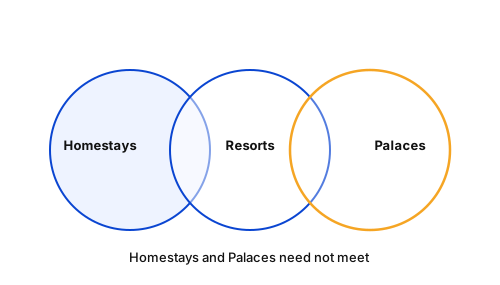
Concept: With two 'Some' statements through a middle term, the end terms have no definite relation.

  1. Homestays overlap Resorts; Resorts overlap Palaces
  2. Homestays and Palaces may not meet at all → (I) not certain
  3. Palaces may lie partly outside Resorts → (II) not certain

Yaad rakhein: Some + Some = no conclusion between the two end terms.

Answer: (B) Neither conclusion (I) nor (II) follows.

अवधारणा: मध्य पद से जुड़े दो 'कुछ' कथनों से सिरों के पदों में कोई निश्चित संबंध नहीं बनता।

  1. Homestays, Resorts से मिलते हैं; Resorts, Palaces से मिलते हैं
  2. Homestays और Palaces का मिलना ज़रूरी नहीं → (I) निश्चित नहीं
  3. Palaces का कुछ भाग Resorts से बाहर हो सकता है → (II) निश्चित नहीं

याद रखें: कुछ + कुछ = सिरों के पदों में कोई निष्कर्ष नहीं।

उत्तर: (B) न तो निष्कर्ष (I) और न ही (II) अनुसरण करता है।

RRB NTPC Undergraduate CBT 1General Intelligence and ReasoningSyllogismRRB NTPC Undergraduate CBT 1 2024 · 13 Aug Shift 1 →
Q2592.
What will come in the place of the question mark (?) in the following equation, if ‘+’ and ‘−’ are interchanged and ‘×’ and ‘÷’ are interchanged?
32 + 8 × 2 − 12 ÷ 5 = ?
यदि ‘+’ और ‘−’ को आपस में बदल दिया जाए तथा ‘×’ और ‘÷’ को आपस में बदल दिया जाए, तो निम्नलिखित समीकरण में प्रश्न चिह्न (?) के स्थान पर क्या आएगा?
32 + 8 × 2 − 12 ÷ 5 = ?
  1. A85
  2. B88
  3. C89
  4. D87
Show answer

Concept: Swap the signs as instructed, then apply BODMAS.

  1. 32+8×2−12÷5 becomes 32−8÷2+12×5
  2. =32−4+60
  3. =88

Trick: Write the new expression completely before solving.

Answer: (B) 88

अवधारणा: निर्देश के अनुसार चिह्न बदलें, फिर BODMAS लगाएँ।

  1. 32+8×2−12÷5 बनता है 32−8÷2+12×5
  2. =32−4+60
  3. =88

ट्रिक: हल करने से पहले नया व्यंजक पूरा लिखें।

उत्तर: (B) 88

RRB NTPC Undergraduate CBT 1General Intelligence and ReasoningInterchanging signsRRB NTPC Undergraduate CBT 1 2024 · 13 Aug Shift 1 →
Q2593.
Based on the English alphabetical order, three of the following four letter-clusters are alike in a certain way and thus form a group. Which letter-cluster DOES NOT belong to that group?
(Note: The odd one out is not based on the number of consonants/vowels or their position in the letter-cluster.)
अंग्रेज़ी वर्णमाला क्रम के आधार पर, निम्नलिखित चार अक्षर-समूहों में से तीन किसी निश्चित प्रकार से एकसमान हैं और इस प्रकार एक समूह बनाते हैं। कौन-सा अक्षर-समूह उस समूह से संबंधित नहीं है?
(ध्यान दें: असंगत का निर्धारण व्यंजनों/स्वरों की संख्या या अक्षर-समूह में उनके स्थान के आधार पर नहीं किया गया है।)
  1. AYEI
  2. BBIL
  3. CPWZ
  4. DOVY
Show answer

Concept: Find the gaps between consecutive letters using their positions.

  1. BIL: B2 → I9 (+7) → L12 (+3)
  2. PWZ: P16 → W23 (+7) → Z26 (+3); OVY: O15 → V22 (+7) → Y25 (+3)
  3. YEI: Y25 → E5 (+6, wrapping) → I9 (+4) – odd

Trick: Pattern +7,+3 in three clusters; YEI gives +6,+4.

Answer: (A) YEI

अवधारणा: अक्षर स्थानों से क्रमागत अक्षरों का अंतर निकालें।

  1. BIL: B2 → I9 (+7) → L12 (+3)
  2. PWZ: P16 → W23 (+7) → Z26 (+3); OVY: O15 → V22 (+7) → Y25 (+3)
  3. YEI: Y25 → E5 (+6) → I9 (+4) – विषम

ट्रिक: तीन समूहों में +7,+3; YEI में +6,+4।

उत्तर: (A) YEI

RRB NTPC Undergraduate CBT 1General Intelligence and ReasoningOdd one out (letter clusters)RRB NTPC Undergraduate CBT 1 2024 · 13 Aug Shift 1 →
Q2594.
This question is based on the five, three-digit numbers given below.
(Left) 475 648 857 591 362 (Right)
(Example- 697 – First digit = 6, second digit = 9 and third digit = 7)
(NOTE: All operations to be done from left to right.)
If 1 is added to the third digit of every number, then how many numbers will become even?
यह प्रश्न नीचे दी गई पाँच, तीन-अंकीय संख्याओं पर आधारित है।
(बाएँ) 475 648 857 591 362 (दाएँ)
(उदाहरण- 697 – पहला अंक = 6, दूसरा अंक = 9 और तीसरा अंक = 7)
(ध्यान दें: सभी संक्रियाएँ बाएँ से दाएँ की जानी हैं।)
यदि प्रत्येक संख्या के तीसरे अंक में 1 जोड़ दिया जाए, तो कितनी संख्याएँ सम हो जाएँगी?
  1. ANoneकोई नहीं
  2. BTwoदो
  3. CThreeतीन
  4. DOneएक
Show answer

Concept: A number is even when its last (third) digit is even.

  1. Third digits: 5, 8, 7, 1, 2
  2. After adding 1: 6, 9, 8, 2, 3
  3. Even: 476, 858, 592 → three numbers

Trick: Adding 1 flips parity: the numbers that were odd (475, 857, 591) become even.

Answer: (C) Three

अवधारणा: किसी संख्या का अंतिम (तीसरा) अंक सम हो तो वह सम होती है।

  1. तीसरे अंक: 5, 8, 7, 1, 2
  2. 1 जोड़ने पर: 6, 9, 8, 2, 3
  3. सम: 476, 858, 592 → तीन संख्याएँ

ट्रिक: 1 जोड़ने से सम-विषम बदल जाता है: जो विषम थीं (475, 857, 591) वे सम बनती हैं।

उत्तर: (C) तीन (Three)

RRB NTPC Undergraduate CBT 1General Intelligence and ReasoningNumber operationsRRB NTPC Undergraduate CBT 1 2024 · 13 Aug Shift 1 →
Q2595.
What should come in place of the question mark (?) in the given series?
6 6 7 11 20 ?
दी गई श्रृंखला में प्रश्न चिह्न (?) के स्थान पर क्या आना चाहिए?
6 6 7 11 20 ?
  1. A38
  2. B35
  3. C36
  4. D37
Show answer

Concept: Differences are perfect squares.

  1. 6→+06→+17→+411→+920
  2. Differences 02,12,22,32; next 42=16
  3. 20+16=36

Trick: Differences 0, 1, 4, 9 are squares of 0, 1, 2, 3.

Answer: (C) 36

अवधारणा: अंतर पूर्ण वर्ग हैं।

  1. 6→+06→+17→+411→+920
  2. अंतर 02,12,22,32; अगला 42=16
  3. 20+16=36

ट्रिक: अंतर 0, 1, 4, 9 = 0, 1, 2, 3 के वर्ग।

उत्तर: (C) 36

RRB NTPC Undergraduate CBT 1General Intelligence and ReasoningNumber seriesRRB NTPC Undergraduate CBT 1 2024 · 13 Aug Shift 1 →
Q2596.
Refer to the following number and symbol series and answer the question. Counting to be done from left to right only.
(Left) @ 3 5 1 7 % @ 2 © 1 © © 4 4 9 & © 1 © £ 5 5 (Right)
How many such numbers are there, each of which is immediately preceded by a number and also immediately followed by a symbol?
निम्नलिखित संख्या और प्रतीक श्रृंखला को देखिए और प्रश्न का उत्तर दीजिए। गिनती केवल बाएँ से दाएँ की जानी है।
(बाएँ) @ 3 5 1 7 % @ 2 © 1 © © 4 4 9 & © 1 © £ 5 5 (दाएँ)
ऐसी कितनी संख्याएँ हैं, जिनमें से प्रत्येक के ठीक पहले एक संख्या है और ठीक बाद एक प्रतीक भी है?
  1. A4
  2. B1
  3. C3
  4. D2
Show answer

Concept: Check each number: the term just before must be a number and the term just after must be a symbol (pattern number–NUMBER–symbol).

  1. 1 7 %: 7 is preceded by 1 and followed by % ✔
  2. 4 9 &: 9 is preceded by 4 and followed by & ✔
  3. Others fail, e.g. @ 2 ©, © 1 ©, 4 4 9, 5 5 (end)

Trick: Scan only for symbols; look at the two terms just before each symbol.

Answer: (D) 2

अवधारणा: हर संख्या जाँचें: ठीक पहले संख्या और ठीक बाद प्रतीक होना चाहिए (संख्या–संख्या–प्रतीक)।

  1. 1 7 %: 7 से पहले 1 और बाद में % ✔
  2. 4 9 &: 9 से पहले 4 और बाद में & ✔
  3. बाकी असफल, जैसे @ 2 ©, © 1 ©, 4 4 9, 5 5 (अंत)

ट्रिक: केवल प्रतीकों को खोजें और उनके ठीक पहले के दो पद देखें।

उत्तर: (D) 2

RRB NTPC Undergraduate CBT 1General Intelligence and ReasoningSymbol-number seriesRRB NTPC Undergraduate CBT 1 2024 · 13 Aug Shift 1 →
Q2597.
In the following number-pairs, the second number is obtained by applying certain mathematical operations to the first number. Select the set in which the numbers are related in the same way as are the numbers of the following sets.
(NOTE: Operations should be performed on the whole numbers, without breaking down the numbers into their constituent digits. E.g. 13 – Operations on 13 such as
adding/subtracting/multiplying to 13 can be performed. Breaking down 13 into 1 and 3 and then performing mathematical operations on 1 and 3 is not allowed.)
24, 66
18, 48
निम्नलिखित संख्या-युग्मों में, पहली संख्या पर कुछ गणितीय संक्रियाएँ करके दूसरी संख्या प्राप्त की जाती है। उस समुच्चय का चयन कीजिए जिसमें संख्याएँ उसी प्रकार संबंधित हैं जिस प्रकार निम्नलिखित समुच्चयों की संख्याएँ संबंधित हैं।
(ध्यान दें: संख्याओं को उनके घटक अंकों में विभाजित किए बिना, संक्रियाएँ पूर्ण संख्याओं पर की जानी चाहिए। उदाहरण: 13 – 13 पर संक्रियाएँ जैसे 13 में
जोड़ना/घटाना/गुणा करना आदि किया जा सकता है। 13 को 1 और 3 में विभाजित करना और फिर 1 और 3 पर गणितीय संक्रियाएँ करना वर्जित है।)
24, 66
18, 48
  1. A22, 58
  2. B30, 84
  3. C20, 56
  4. D28, 74
Show answer

Concept: Find one rule that fits both given pairs.

  1. 24×3−6=66; 18×3−6=48 ✔
  2. (B) 30×3−6=84 ✔
  3. (A) 22→60, (C) 20→54, (D) 28→78 – do not match

Trick: Second number =3× first −6, i.e. 3(first−2): 3×28=84 for 30.

Answer: (B) 30, 84

अवधारणा: दोनों युग्मों पर लागू होने वाला एक नियम खोजें।

  1. 24×3−6=66; 18×3−6=48 ✔
  2. (B) 30×3−6=84 ✔
  3. (A) 22→60, (C) 20→54, (D) 28→78 – मेल नहीं

ट्रिक: दूसरी संख्या =3× पहली −6, यानी 3(पहली−2)।

उत्तर: (B) 30, 84

RRB NTPC Undergraduate CBT 1General Intelligence and ReasoningNumber pair analogyRRB NTPC Undergraduate CBT 1 2024 · 13 Aug Shift 1 →
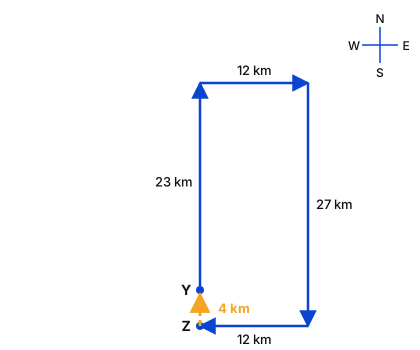
Q2598.
Tirtha starts from Point Y and drives 23 km towards north. He then takes a right turn, drives 12 km. He then turns right and drives 27 km. He takes a final right turn, drives 12 km and stops at Point Z. How far (shortest distance) and towards which direction should he drive in order to reach Point Y again? (All turns are 90° turns only unless specified.)
तीर्थ बिंदु Y से चलना शुरू करता है और उत्तर की ओर 23 km गाड़ी चलाता है। फिर वह दाएँ मुड़ता है, 12 km गाड़ी चलाता है। फिर वह दाएँ मुड़ता है और 27 km गाड़ी चलाता है। वह अंतिम बार दाएँ मुड़ता है, 12 km गाड़ी चलाता है और बिंदु Z पर रुक जाता है। बिंदु Y पर पुनः पहुँचने के लिए उसे कितनी दूरी (न्यूनतम दूरी) तक और किस दिशा में गाड़ी चलानी चाहिए? (जब तक निर्दिष्ट न किया जाए, सभी मोड़ केवल 90° के हैं।)
  1. A9 km towards westपश्चिम की ओर 9 km
  2. B5 km towards eastपूर्व की ओर 5 km
  3. C4 km towards northउत्तर की ओर 4 km
  4. D5 km towards southदक्षिण की ओर 5 km
Show answer

Concept: Plot the path with Y at the origin; net displacement gives the answer.

  1. 23 km north: (0,23); right → east 12 km: (12,23)
  2. Right → south 27 km: (12,−4); right → west 12 km: Z =(0,−4)
  3. Z is 4 km south of Y, so drive 4 km north

Trick: East 12 and west 12 cancel; net N–S =23−27=−4 (south). Return 4 km north.

Answer: (C) 4 km towards north

अवधारणा: Y को मूलबिंदु मानकर रास्ता बनाएँ; शुद्ध विस्थापन से उत्तर मिलता है।

  1. 23 km उत्तर: (0,23); दाएँ → पूर्व 12 km: (12,23)
  2. दाएँ → दक्षिण 27 km: (12,−4); दाएँ → पश्चिम 12 km: Z =(0,−4)
  3. Z, Y से 4 km दक्षिण में है, अतः 4 km उत्तर जाएँ

ट्रिक: पूर्व 12 और पश्चिम 12 कट जाते हैं; उत्तर–दक्षिण =23−27=−4 (दक्षिण)। वापस 4 km उत्तर।

उत्तर: (C) 4 km उत्तर (north)

RRB NTPC Undergraduate CBT 1General Intelligence and ReasoningDirection and distanceRRB NTPC Undergraduate CBT 1 2024 · 13 Aug Shift 1 →
Q2599.
As of July 2025, how many Indian States have a bicameral legislature (i.e. both, a Legislative Assembly and a Legislative Council)?
जुलाई 2025 तक की स्थिति के अनुसार, कितने भारतीय राज्यों में द्विसदनीय विधायिका (अर्थात् विधान सभा और विधान परिषद, दोनों) है?
  1. AEightआठ
  2. BSixछह
  3. CSevenसात
  4. DFiveपाँच
Show answer

Concept: A bicameral state legislature has a Legislative Assembly (Vidhan Sabha) and a Legislative Council (Vidhan Parishad); Article 169 lets Parliament create or abolish a Council.

  1. Six states have a Legislative Council: Andhra Pradesh, Bihar, Karnataka, Maharashtra, Telangana and Uttar Pradesh.
  2. Jammu & Kashmir lost its Council in 2019 when it became a Union Territory, so the count is six, not seven.

Yaad rakhein: Remember "UP-BiMaK-AT": UP, Bihar, Maharashtra, Karnataka, Andhra, Telangana.

Answer: (B) Six

अवधारणा: द्विसदनीय राज्य विधानमंडल में विधान सभा और विधान परिषद दोनों होते हैं; अनुच्छेद 169 के तहत संसद परिषद बना या समाप्त कर सकती है।

  1. छह राज्यों में विधान परिषद है: आंध्र प्रदेश, बिहार, कर्नाटक, महाराष्ट्र, तेलंगाना और उत्तर प्रदेश।
  2. जम्मू-कश्मीर 2019 में केंद्र शासित प्रदेश बना और उसकी परिषद समाप्त हो गई, इसलिए संख्या सात नहीं, छह है।

याद रखें: "UP-BiMaK-AT": UP, बिहार, महाराष्ट्र, कर्नाटक, आंध्र, तेलंगाना।

उत्तर: (B) छह (Six)

RRB NTPC Undergraduate CBT 1General AwarenessState LegislatureRRB NTPC Undergraduate CBT 1 2024 · 12 Aug Shift 3 →
Q2600.
In Indian State governments, to whom is the State Council of Ministers collectively responsible?
भारतीय राज्य सरकारों में, राज्य मंत्रिपरिषद सामूहिक रूप से किसके प्रति उत्तरदायी होती है?
  1. AThe Governor of the Stateराज्य के राज्यपाल
  2. BCouncil of Statesराज्य सभा
  3. CState Legislative Assemblyराज्य विधान सभा
  4. DChief Justice of the concerned Stateसंबंधित राज्य के मुख्य न्यायाधीश
Show answer

Concept: Under Article 164(2), the State Council of Ministers is collectively responsible to the Legislative Assembly of the State.

  1. The ministry stays in office only while it enjoys the confidence of the Vidhan Sabha; a no-confidence motion there removes it.
  2. Ministers hold office during the pleasure of the Governor (individual responsibility), but collective responsibility is to the Assembly, not the Governor.
  3. The Council of States is the Rajya Sabha, unrelated to state ministries.

Yaad rakhein: Union: Art. 75(3) → Lok Sabha; State: Art. 164(2) → Vidhan Sabha.

Answer: (C) State Legislative Assembly

अवधारणा: अनुच्छेद 164(2) के अनुसार राज्य मंत्रिपरिषद सामूहिक रूप से राज्य की विधान सभा के प्रति उत्तरदायी होती है।

  1. मंत्रिपरिषद तभी तक पद पर रहती है जब तक उसे विधान सभा का विश्वास प्राप्त है; अविश्वास प्रस्ताव पारित होने पर उसे हटना पड़ता है।
  2. मंत्री राज्यपाल के प्रसादपर्यंत पद धारण करते हैं (व्यक्तिगत उत्तरदायित्व), पर सामूहिक उत्तरदायित्व विधान सभा के प्रति है।
  3. Council of States यानी राज्य सभा का इससे कोई संबंध नहीं।

याद रखें: संघ: अनु. 75(3) → लोक सभा; राज्य: अनु. 164(2) → विधान सभा।

उत्तर: (C) राज्य विधान सभा (State Legislative Assembly)

RRB NTPC Undergraduate CBT 1General AwarenessState ExecutiveRRB NTPC Undergraduate CBT 1 2024 · 12 Aug Shift 3 →