Question bank

Q&A: practice questions with answers

Search questions on any topic. Filter by exam category, exam, subject and topic, try the question, then open the answer and explanation.

Courses – airGurukul

8,500 questions found.

Q3941.
The sum of two numbers is 57 and their L.C.M. is 812. What are the two numbers?
दो संख्याओं का योग 57 है और उनका L.C.M. 812 है। वे दो संख्याएँ कौन-सी हैं?
  1. A21, 36
  2. B26, 31
  3. C28, 29
  4. D33, 24
Show answer

Concept: For two numbers, test the options: sum must be 57 and LCM must be 812.

  1. 812=22×7×29=28×29.
  2. 28 and 29 are consecutive, so co-prime: LCM(28,29)=28×29=812.
  3. Sum =28+29=57 ✓. Check others: 21+36=57 but LCM=252; 33+24=57 but LCM=264; 26+31=57 but LCM=806.

Trick: Consecutive numbers are co-prime, so LCM = product; 812≈28.5 points straight to 28 and 29.

Answer: (C) 28, 29

अवधारणा: दो संख्याओं के लिए विकल्प जाँचें: योग 57 और LCM 812 होना चाहिए।

  1. 812=22×7×29=28×29।
  2. 28 और 29 क्रमागत हैं, अतः सह-अभाज्य: LCM(28,29)=28×29=812।
  3. योग =28+29=57 ✓। अन्य: 21+36=57 पर LCM=252; 33+24=57 पर LCM=264; 26+31=57 पर LCM=806।

ट्रिक: क्रमागत संख्याएँ सह-अभाज्य होती हैं, LCM = गुणनफल; 812≈28.5 से सीधे 28 और 29।

उत्तर: (C) 28, 29
RRB NTPC Undergraduate CBT 1MathematicsHCF and LCMRRB NTPC Undergraduate CBT 1 2024 · 8 Aug Shift 2 →
Q3942.
The greatest number that divides 131, 91, and 215, leaving remainders 8, 9, and 10 respectively, is:
वह बड़ी से बड़ी संख्या, जिससे 131, 91 और 215 को भाग देने पर क्रमशः 8, 9 और 10 शेषफल प्राप्त होते हैं, कौन-सी है?
  1. A37
  2. B61
  3. C57
  4. D41
Show answer

Concept: Greatest number dividing a,b,c leaving remainders r1,r2,r3 = HCF of (a−r1),(b−r2),(c−r3).

  1. 131−8=123,91−9=82,215−10=205.
  2. 123=3×41,82=2×41,205=5×41.
  3. HCF=41.

Trick: Subtract remainders, then check options: only 41 divides 123, 82 and 205.

Answer: (D) 41

अवधारणा: a,b,c को भाग देकर क्रमशः r1,r2,r3 शेष छोड़ने वाली सबसे बड़ी संख्या = (a−r1),(b−r2),(c−r3) का HCF।

  1. 131−8=123,91−9=82,215−10=205।
  2. 123=3×41,82=2×41,205=5×41।
  3. HCF=41।

ट्रिक: शेष घटाएँ, फिर विकल्प जाँचें: केवल 41 ही 123, 82 और 205 तीनों को विभाजित करता है।

उत्तर: (D) 41

RRB NTPC Undergraduate CBT 1MathematicsHCF with RemaindersRRB NTPC Undergraduate CBT 1 2024 · 8 Aug Shift 2 →
Q3943.
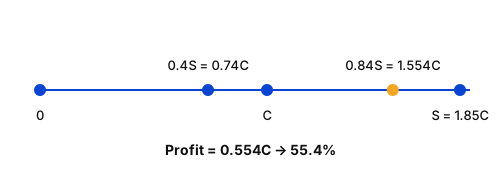
By selling an article at 25 of its actual selling price, Nirbhay incurs a loss of 26%.
If he sells it at 84% of its actual selling price, then the profit percentage is:
किसी वस्तु को उसके वास्तविक विक्रय मूल्य के 25 पर बेचने पर, निर्भय को 26% की हानि होती है।
यदि वह इसे इसके वास्तविक विक्रय मूल्य के 84% पर बेचता है, तो लाभ प्रतिशत कितना होगा?
  1. A56.7%
  2. B57.8%
  3. C55.4%
  4. D55.6%
Show answer

Concept: Let cost price =C and actual selling price =S. Write each condition as an equation in C.

  1. 25S=C(1−0.26)=0.74C.
  2. S=5×0.742C=1.85C.
  3. New SP =0.84S=0.84×1.85C=1.554C.
  4. Profit%=(1.554−1)×100=55.4%.

Trick: Take C=100: 25S=74⇒S=185; 84% of 185=155.4 → profit 55.4%.

Answer: (C) 55.4%

अवधारणा: मान लीजिए क्रय मूल्य =C और वास्तविक विक्रय मूल्य =S। दोनों शर्तों को C में लिखें।

  1. 25S=C(1−0.26)=0.74C।
  2. S=5×0.742C=1.85C।
  3. नया SP =0.84S=0.84×1.85C=1.554C।
  4. लाभ%=(1.554−1)×100=55.4%।

ट्रिक: C=100 लें: 25S=74⇒S=185; 185 का 84%=155.4 → लाभ 55.4%।

उत्तर: (C) 55.4%

RRB NTPC Undergraduate CBT 1MathematicsProfit and LossRRB NTPC Undergraduate CBT 1 2024 · 8 Aug Shift 2 →
Q3944.
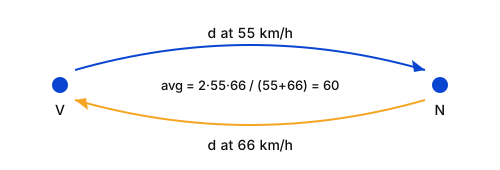
A man goes to Nagpur from Visakhapatnam at a speed of 55 km/hr and returns to Visakhapatnam at speed of 66 km/hr, through the same route. What is his average speed (in km/hr) of the entire journey?
एक व्यक्ति विशाखापत्तनम से नागपुर 55 km/hr की चाल से जाता है और उसी मार्ग से 66 km/hr की चाल से विशाखापत्तनम लौटता है। पूरी यात्रा में उसकी औसत चाल (km/hr में) कितनी है?
  1. A58
  2. B60
  3. C63
  4. D55
Show answer

Concept: For equal distances covered at speeds x and y, average speed =2xyx+y.

  1. Here x=55, y=66km/h.
  2. Average =2×55×6655+66=7260121.
  3. =60km/h.

Trick: 55:66=5:6 → average =2×5×611×11=60.

Answer: (B) 60

अवधारणा: समान दूरी x और y चाल से तय करने पर औसत चाल =2xyx+y।

  1. यहाँ x=55, y=66km/h।
  2. औसत =2×55×6655+66=7260121।
  3. =60km/h।

ट्रिक: 55:66=5:6 → औसत =2×5×611×11=60।

उत्तर: (B) 60

RRB NTPC Undergraduate CBT 1MathematicsAverage SpeedRRB NTPC Undergraduate CBT 1 2024 · 8 Aug Shift 2 →
Q3945.
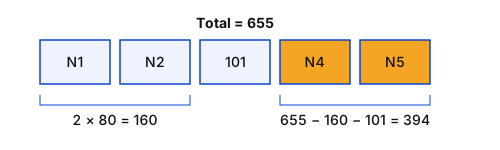
The sum of five numbers is 655. The average of the first two numbers is 80 and the third number is 101. Find the average of the remaining two numbers.
पाँच संख्याओं का योग 655 है। पहली दो संख्याओं का औसत 80 है और तीसरी संख्या 101 है। शेष दो संख्याओं का औसत ज्ञात कीजिए।
  1. A198
  2. B182
  3. C181
  4. D197
Show answer

Concept: Sum = average × number of terms.

  1. Sum of first two =2×80=160; third =101.
  2. Sum of last two =655−160−101=394.
  3. Average of last two =3942=197.

Trick: Subtract known parts from total, then divide by count left.

Answer: (D) 197

अवधारणा: योग = औसत × पदों की संख्या।

  1. पहली दो संख्याओं का योग =2×80=160; तीसरी =101।
  2. अंतिम दो का योग =655−160−101=394।
  3. अंतिम दो का औसत =3942=197।

ट्रिक: कुल में से ज्ञात भाग घटाएँ, फिर बची संख्या से भाग दें।

उत्तर: (D) 197

RRB NTPC Undergraduate CBT 1MathematicsAveragesRRB NTPC Undergraduate CBT 1 2024 · 8 Aug Shift 2 →
Q3946.
Given that 580.5 = x, 580.79= y and xz = y10, then the value of z is close to:
यदि 580.5 = x, 580.79= y और xz = y10 है, तो z का मान लगभग कितना है?
  1. A15.54
  2. B18.48
  3. C16.7
  4. D15.8
Show answer

Concept: If am=an (with a>0,a≠1), then m=n; also (am)n=amn.

  1. xz=(580.5)z=580.5z.
  2. y10=(580.79)10=587.9.
  3. 0.5z=7.9⇒z=15.8.

Trick: Just compare powers: z=0.79×100.5=15.8.

Answer: (D) 15.8

अवधारणा: यदि am=an (a>0,a≠1), तो m=n; तथा (am)n=amn।

  1. xz=(580.5)z=580.5z।
  2. y10=(580.79)10=587.9।
  3. 0.5z=7.9⇒z=15.8।

ट्रिक: केवल घातों की तुलना: z=0.79×100.5=15.8।

उत्तर: (D) 15.8

RRB NTPC Undergraduate CBT 1MathematicsIndicesRRB NTPC Undergraduate CBT 1 2024 · 8 Aug Shift 2 →
Q3947.
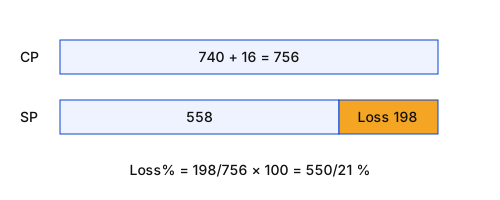
Pallavi bought a toy for ₹740, decorated it at a cost of ₹16 and sold the toy for ₹558. Find the loss or profit percentage.
पल्लवी ने ₹740 में एक खिलौना खरीदा, ₹16 की लागत से उसे सजाया और खिलौने को ₹558 में बेच दिया। हानि या लाभ प्रतिशत ज्ञात कीजिए।
  1. A550% loss550% हानि
  2. B56021% profit56021% लाभ
  3. C55021% profit55021% लाभ
  4. D55021% loss55021% हानि
Show answer

Concept: Overhead (decoration) cost is added to the cost price. Loss%=LossCP×100.

  1. CP =740+16= ₹756; SP = ₹558 → loss.
  2. Loss =756−558= ₹198.
  3. Loss%=198756×100=1142×100=55021%≈26.19%.

Trick: SP below CP → only “loss” options; 198756 simplifies by 18 to 1142.

Answer: (D) 55021% loss

अवधारणा: सजावट का खर्च क्रय मूल्य में जुड़ता है। हानि%=हानिक्रय मूल्य×100।

  1. क्रय मूल्य =740+16= ₹756; विक्रय मूल्य = ₹558 → हानि।
  2. हानि =756−558= ₹198।
  3. हानि%=198756×100=1142×100=55021%≈26.19%।

ट्रिक: SP, CP से कम → केवल “हानि” वाले विकल्प; 198756 को 18 से सरल करें = 1142।

उत्तर: (D) 55021% हानि

RRB NTPC Undergraduate CBT 1MathematicsProfit and LossRRB NTPC Undergraduate CBT 1 2024 · 8 Aug Shift 2 →
Q3948.
A number when increased by 80% gives 2790. The number is:
किसी संख्या में 80% की वृद्धि करने पर 2790 प्राप्त होता है। वह संख्या कौन-सी है?
  1. A3100
  2. B775
  3. C1550
  4. D4650
Show answer

Concept: Increasing a number by 80% multiplies it by 1.8.

  1. 1.8N=2790.
  2. N=27901.8=1550.

Trick: Check: 1550+80% of 1550=1550+1240=2790 ✓.

Answer: (C) 1550

अवधारणा: किसी संख्या को 80% बढ़ाने पर वह 1.8 गुना हो जाती है।

  1. 1.8N=2790।
  2. N=27901.8=1550।

ट्रिक: जाँच: 1550+1550 का 80%=1550+1240=2790 ✓।

उत्तर: (C) 1550

RRB NTPC Undergraduate CBT 1MathematicsPercentageRRB NTPC Undergraduate CBT 1 2024 · 8 Aug Shift 2 →
Q3949.
Rahul buys a box of pens (listed price of ₹900) with a trade discount of 30%. What is the net price?
राहुल 30% की व्यापारिक छूट पर पेनों का एक डिब्बा (सूचीबद्ध मूल्य ₹900) खरीदता है। शुद्ध मूल्य कितना है?
  1. A₹600
  2. B₹700
  3. C₹750
  4. D₹630
Show answer

Concept: Trade discount is deducted from the list price: Net price =LP×100−d100.

  1. Discount =30% of 900= ₹270.
  2. Net price =900−270= ₹630.

Trick: 30% off → pay 70%: 0.7×900=630.

Answer: (D) ₹630

अवधारणा: व्यापारिक छूट सूची मूल्य से घटाई जाती है: शुद्ध मूल्य =LP×100−d100।

  1. छूट =900 का 30%= ₹270।
  2. शुद्ध मूल्य =900−270= ₹630।

ट्रिक: 30% छूट → 70% चुकाएँ: 0.7×900=630।

उत्तर: (D) ₹630

RRB NTPC Undergraduate CBT 1MathematicsDiscountRRB NTPC Undergraduate CBT 1 2024 · 8 Aug Shift 2 →
Q3950.
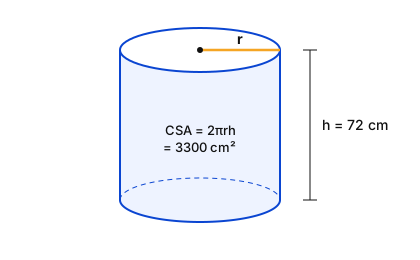
A cylindrical rod has an outer curved surface area of 3300 cm2. If the length of the rod is 72 cm, then the outer radius (in cm) of the rod, correct to two places of decimal, is: Take π=227.
एक बेलनाकार छड़ का बाहरी वक्र पृष्ठीय क्षेत्रफल 3300 cm2 है। यदि छड़ की लंबाई 72 cm है, तो दशमलव के दो स्थानों तक सही, छड़ की बाहरी त्रिज्या (cm में) कितनी है? π=227 लीजिए।
  1. A7.36
  2. B7.29
  3. C6.37
  4. D8.31
Show answer

Concept: Curved surface area of a cylinder =2πrh.

  1. 2×227×r×72=3300.
  2. r=3300×72×22×72=231003168.
  3. r=7.2916…≈7.29cm.

Trick: 330044=75, so r=75×772=52572=7.29.

Answer: (B) 7.29

अवधारणा: बेलन का वक्र पृष्ठीय क्षेत्रफल =2πrh।

  1. 2×227×r×72=3300।
  2. r=3300×72×22×72=231003168।
  3. r=7.2916…≈7.29cm।

ट्रिक: 330044=75, अतः r=75×772=52572=7.29।

उत्तर: (B) 7.29

RRB NTPC Undergraduate CBT 1MathematicsMensuration – CylinderRRB NTPC Undergraduate CBT 1 2024 · 8 Aug Shift 2 →
Q3951.
Which of the following numbers divides 4,81,355?
निम्नलिखित में से कौन-सी संख्या 4,81,355 को विभाजित करती है?
  1. A3
  2. B15
  3. C5
  4. D6
Show answer

Concept: A number is divisible by 5 if its last digit is 0 or 5; by 3 if its digit sum is divisible by 3.

  1. Last digit of 4,81,355 is 5 → divisible by 5.
  2. Digit sum =4+8+1+3+5+5=26, not divisible by 3 → not by 3, 6 or 15.
  3. Odd number → not divisible by 6 either.

Trick: Check the last digit first – it settles 5 and 2 instantly.

Answer: (C) 5

अवधारणा: कोई संख्या 5 से विभाज्य है यदि अंतिम अंक 0 या 5 हो; 3 से विभाज्य है यदि अंकों का योग 3 से विभाज्य हो।

  1. 4,81,355 का अंतिम अंक 5 है → 5 से विभाज्य।
  2. अंकों का योग =4+8+1+3+5+5=26, 3 से विभाज्य नहीं → 3, 6, 15 से भी नहीं।
  3. संख्या विषम है → 6 से भी नहीं।

ट्रिक: पहले अंतिम अंक देखें – 5 और 2 की जाँच तुरंत हो जाती है।

उत्तर: (C) 5

RRB NTPC Undergraduate CBT 1MathematicsDivisibility rulesRRB NTPC Undergraduate CBT 1 2024 · 8 Aug Shift 2 →
Q3952.
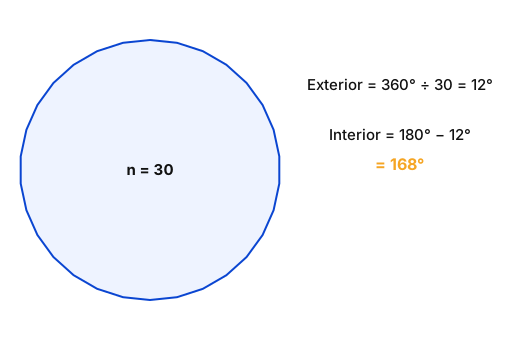
A regular polygon has 30 sides. Find the measure of one interior angle.
एक सम बहुभुज की 30 भुजाएँ हैं। एक अंतःकोण की माप ज्ञात कीजिए।
  1. A168∘
  2. B128∘
  3. C48∘
  4. D12∘
Show answer

Concept: Each exterior angle of a regular n-gon =360∘n; interior angle =180∘− exterior angle.

  1. n=30, exterior angle =360∘30=12∘.
  2. Interior angle =180∘−12∘=168∘.
  3. Check: (n−2)×180∘n=28×180∘30=168∘.

Yaad rakhein: 12∘ is the exterior angle – a trap option; always subtract from 180∘.

Answer: (A) 168∘

अवधारणा: सम n-भुज का प्रत्येक बाह्य कोण =360∘n; अंतः कोण =180∘− बाह्य कोण।

  1. n=30, बाह्य कोण =360∘30=12∘।
  2. अंतः कोण =180∘−12∘=168∘।
  3. जाँच: (n−2)×180∘n=28×180∘30=168∘।

याद रखें: 12∘ बाह्य कोण है – जाल वाला विकल्प; हमेशा 180∘ में से घटाएँ।

उत्तर: (A) 168∘

RRB NTPC Undergraduate CBT 1MathematicsInterior angle of regular polygonRRB NTPC Undergraduate CBT 1 2024 · 8 Aug Shift 2 →
Q3953.
A shopkeeper marked the price of a table as ₹1,400 and offered two successive discounts, one of which is 12%. If a customer pays ₹1,133.44 for the table, then what was the second discount percentage offered?
एक दुकानदार ने एक मेज़ का अंकित मूल्य ₹1,400 रखा और दो क्रमागत छूटें दीं, जिनमें से एक 12% है। यदि एक ग्राहक मेज़ के लिए ₹1,133.44 का भुगतान करता है, तो दी गई दूसरी छूट का प्रतिशत कितना था?
  1. A10%
  2. B8%
  3. C15 %
  4. D5%
Show answer

Concept: Price after successive discounts =MP×(1−d1100)(1−d2100).

  1. After 12% discount: ₹1400×0.88=1232.
  2. Second factor =1133.441232=0.92.
  3. So second discount =1−0.92=0.08=8%.

Trick: Divide final price by price after first discount; 0.92 means 8% off.

Answer: (B) 8%

अवधारणा: क्रमिक छूट के बाद मूल्य =MP×(1−d1100)(1−d2100)।

  1. 12% छूट के बाद: ₹1400×0.88=1232।
  2. दूसरा गुणक =1133.441232=0.92।
  3. अतः दूसरी छूट =1−0.92=0.08=8%।

ट्रिक: अंतिम मूल्य को पहली छूट के बाद के मूल्य से भाग दें; 0.92 यानी 8% छूट।

उत्तर: (B) 8%

RRB NTPC Undergraduate CBT 1MathematicsSuccessive discountsRRB NTPC Undergraduate CBT 1 2024 · 8 Aug Shift 2 →
Q3954.
Find the value of sin (90 − x) cos (180 − (x − y)) + cos (90 − x) sin (180 − (y − x)).
sin (90 − x) cos (180 − (x − y)) + cos (90 − x) sin (180 − (y − x)) का मान ज्ञात कीजिए।
  1. Asin y
  2. Bcos y
  3. C−cos y
  4. D−sin y
Show answer

Concept: Use sin(90∘−x)=cosx, cos(90∘−x)=sinx, cos(180∘−A)=−cosA, sin(180∘−A)=sinA and cos(A−B)=cosAcosB+sinAsinB.

  1. Expression =cosx(−cos(x−y))+sinxsin(y−x).
  2. sin(y−x)=−sin(x−y), so it becomes −[cosxcos(x−y)+sinxsin(x−y)].
  3. =−cos(x−(x−y))=−cosy.

Trick: Put x=y=0: value =1×(−1)+0=−1=−cos0. Only −cosy fits.

Answer: (C) −cosy

अवधारणा: sin(90∘−x)=cosx, cos(90∘−x)=sinx, cos(180∘−A)=−cosA, sin(180∘−A)=sinA तथा cos(A−B)=cosAcosB+sinAsinB का प्रयोग करें।

  1. व्यंजक =cosx(−cos(x−y))+sinxsin(y−x)।
  2. sin(y−x)=−sin(x−y), अतः −[cosxcos(x−y)+sinxsin(x−y)]।
  3. =−cos(x−(x−y))=−cosy।

ट्रिक: x=y=0 रखें: मान =1×(−1)+0=−1=−cos0। केवल −cosy सही बैठता है।

उत्तर: (C) −cosy

RRB NTPC Undergraduate CBT 1MathematicsTrigonometric identitiesRRB NTPC Undergraduate CBT 1 2024 · 8 Aug Shift 2 →
Q3955.
If the third proportional of 81 and 27 is x, then what is the value of x?
यदि 81 और 27 का तृतीयानुपाती x है, तो x का मान क्या है?
  1. A6
  2. B9
  3. C11
  4. D7
Show answer

Concept: Third proportional of a and b is x where a:b=b:x, i.e. x=b2a.

  1. x=27281=72981.
  2. x=9.

Yaad rakhein: Check: 81:27=3:1 and 27:9=3:1 ✓.

Answer: (B) 9

अवधारणा: a और b का तृतीयानुपाती x हो तो a:b=b:x, अर्थात् x=b2a।

  1. x=27281=72981।
  2. x=9।

याद रखें: जाँच: 81:27=3:1 तथा 27:9=3:1 ✓।

उत्तर: (B) 9

RRB NTPC Undergraduate CBT 1MathematicsThird proportionalRRB NTPC Undergraduate CBT 1 2024 · 8 Aug Shift 2 →
Q3956.
The current population of a town is 12,014. It increases by 25% and 60% in two successive years but decreases by 50% in the third year. What is the population of the town at the end of the third year?
एक कस्बे की वर्तमान जनसंख्या 12,014 है। यह दो क्रमागत वर्षों में 25% और 60% बढ़ती है, परंतु तीसरे वर्ष में 50% घट जाती है। तीसरे वर्ष के अंत में कस्बे की जनसंख्या कितनी है?
  1. A12,014
  2. B12,015
  3. C12,019
  4. D12,013
Show answer

Concept: Successive % changes multiply: P3=P×(1+r1100)(1+r2100)(1−r3100).

  1. Factors: 1.25×1.6×0.5.
  2. 1.25×1.6=2, and 2×0.5=1.
  3. So population =12014×1=12,014.

Trick: In fractions: 54×85×12=1 – no change at all.

Answer: (A) 12,014

अवधारणा: क्रमिक प्रतिशत परिवर्तन गुणा होते हैं: P3=P×(1+r1100)(1+r2100)(1−r3100)।

  1. गुणक: 1.25×1.6×0.5।
  2. 1.25×1.6=2, और 2×0.5=1।
  3. अतः जनसंख्या =12014×1=12,014।

ट्रिक: भिन्न में: 54×85×12=1 – कोई बदलाव नहीं।

उत्तर: (A) 12,014

RRB NTPC Undergraduate CBT 1MathematicsPopulation changeRRB NTPC Undergraduate CBT 1 2024 · 8 Aug Shift 2 →
Q3957.
Evaluate: (-9) - (-60) ÷ (-10) + (-3) × 6
मान ज्ञात कीजिए: (-9) - (-60) ÷ (-10) + (-3) × 6
  1. A-36
  2. B-33
  3. C-35
  4. D-32
Show answer

Concept: BODMAS: division and multiplication before addition/subtraction; mind the signs.

  1. (−60)÷(−10)=6.
  2. (−3)×6=−18.
  3. −9−6+(−18)=−33.

Yaad rakhein: Negative ÷ negative = positive; negative × positive = negative.

Answer: (B) −33

अवधारणा: BODMAS: पहले भाग व गुणा, फिर जोड़/घटाव; चिह्नों का ध्यान रखें।

  1. (−60)÷(−10)=6।
  2. (−3)×6=−18।
  3. −9−6+(−18)=−33।

याद रखें: ऋण ÷ ऋण = धन; ऋण × धन = ऋण।

उत्तर: (B) −33

RRB NTPC Undergraduate CBT 1MathematicsBODMAS with integersRRB NTPC Undergraduate CBT 1 2024 · 8 Aug Shift 2 →
Q3958.
Ritik and Sanjay together invested ₹79,200 in a business. At the end of the year, out of a total profit of ₹16,500, Sanjay's share was ₹3,600. What was the difference between their investments?
रितिक और संजय ने मिलकर एक व्यवसाय में ₹79,200 का निवेश किया। वर्ष के अंत में, ₹16,500 के कुल लाभ में से संजय का हिस्सा ₹3,600 था। उनके निवेशों के बीच का अंतर कितना था?
  1. A₹42,824
  2. B₹44,640
  3. C₹46,400
  4. D₹42,889
Show answer

Concept: For the same time period, profit is shared in the ratio of investments.

  1. Ritik's profit =16500−3600=12900, ratio =12900:3600=43:12.
  2. Sanjay's investment =79200×1255=17280; Ritik's =79200−17280=61920.
  3. Difference =61920−17280=44640.

Trick: Difference =79200×43−1255=1440×31=44640.

Answer: (B) ₹44,640

अवधारणा: समान समय के लिए लाभ निवेश के अनुपात में बँटता है।

  1. रितिक का लाभ =16500−3600=12900, अनुपात =12900:3600=43:12।
  2. संजय का निवेश =79200×1255=17280; रितिक का =79200−17280=61920।
  3. अंतर =61920−17280=44640।

ट्रिक: अंतर =79200×43−1255=1440×31=44640।

उत्तर: (B) ₹44,640

RRB NTPC Undergraduate CBT 1MathematicsPartnershipRRB NTPC Undergraduate CBT 1 2024 · 8 Aug Shift 2 →
Q3959.
The average weight of Vipul, Mohan and Mohammad is 45 kg. If the average weight of Vipul and Mohan is 43 kg and that of Mohan and Mohammad is 50 kg, then the weight of Mohan (in kg) is:
विपुल, मोहन और मोहम्मद का औसत भार 45 kg है। यदि विपुल और मोहन का औसत भार 43 kg है तथा मोहन और मोहम्मद का औसत भार 50 kg है, तो मोहन का भार (kg में) कितना है?
  1. A66
  2. B61
  3. C51
  4. D71
Show answer

Concept: Total = average × number of items; a common member appears in both pair sums.

  1. V+M+H=3×45=135 (H = Mohammad).
  2. V+M=86, M+H=100; adding: V+2M+H=186.
  3. M=186−135=51kg.

Trick: Mohan = (sum of both pair totals) − (three-person total).

Answer: (C) 51

अवधारणा: कुल योग = औसत × संख्या; साझा सदस्य दोनों जोड़ियों में आता है।

  1. V+M+H=3×45=135 (H = मोहम्मद)।
  2. V+M=86, M+H=100; जोड़ने पर V+2M+H=186।
  3. M=186−135=51kg।

ट्रिक: मोहन = (दोनों जोड़ियों का योग) − (तीनों का योग)।

उत्तर: (C) 51

RRB NTPC Undergraduate CBT 1MathematicsAverageRRB NTPC Undergraduate CBT 1 2024 · 8 Aug Shift 2 →
Q3960.
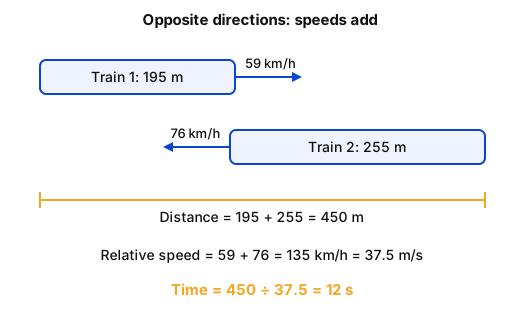
A train with a length of 195 m overtakes a man moving at a speed of 5 km/hr (in the same direction) in 13 seconds. How much time (in seconds) will it take this train to completely cross another train that is 255 m long, moving in the opposite direction at a speed of 76 km/hr?
195 m लंबी एक रेलगाड़ी 5 km/hr की चाल से (उसी दिशा में) चल रहे एक व्यक्ति को 13 सेकंड में पार करती है। यह रेलगाड़ी विपरीत दिशा में 76 km/hr की चाल से चल रही 255 m लंबी दूसरी रेलगाड़ी को पूरी तरह से पार करने में कितना समय (सेकंड में) लेगी?
  1. A13
  2. B31
  3. C32
  4. D12
Show answer

Concept: Same direction: relative speed = difference; opposite: sum. Crossing distance = sum of lengths.

  1. Overtaking man: relative speed =19513=15m/s=54km/h, so train speed =54+5=59km/h.
  2. Opposite train: 59+76=135km/h=135×518=37.5m/s.
  3. Time =195+25537.5=45037.5=12s.

Yaad rakhein: m/s→km/h: multiply by 185.

Answer: (D) 12

अवधारणा: समान दिशा: सापेक्ष चाल = अंतर; विपरीत दिशा: योग। पार करने की दूरी = दोनों लंबाइयों का योग।

  1. व्यक्ति को पार करना: सापेक्ष चाल =19513=15m/s=54km/h, अतः ट्रेन की चाल =54+5=59km/h।
  2. विपरीत ट्रेन: 59+76=135km/h=135×518=37.5m/s।
  3. समय =195+25537.5=45037.5=12s।

याद रखें: m/s→km/h: 185 से गुणा करें।

उत्तर: (D) 12

RRB NTPC Undergraduate CBT 1MathematicsTrains – relative speedRRB NTPC Undergraduate CBT 1 2024 · 8 Aug Shift 2 →