Question bank

Q&A: practice questions with answers

Search questions on any topic. Filter by exam category, exam, subject and topic, try the question, then open the answer and explanation.

Courses – airGurukul

8,495 questions found.

Q5081.
Select the number from among the given options that can replace the question mark (?) in the following series.
32 40 50 62 76 ?
दिए गए विकल्पों में से उस संख्या का चयन कीजिए जो निम्नलिखित श्रृंखला में प्रश्नवाचक चिह्न (?) का स्थान ले सकती है।
32 40 50 62 76 ?
  1. A86
  2. B98
  3. C95
  4. D92
Show answer

Concept: Look at the differences between consecutive terms.

  1. Differences: 8,10,12,14 (increase by 2)
  2. Next difference =16 ⇒ 76+16=92

Trick: Second differences constant (2) ⇒ add the next even number.

Answer: (D) 92

अवधारणा: क्रमागत पदों का अंतर देखें।

  1. अंतर: 8,10,12,14 (हर बार 2 अधिक)
  2. अगला अंतर =16 ⇒ 76+16=92

ट्रिक: दूसरा अंतर स्थिर (2) ⇒ अगली सम संख्या जोड़ें।

उत्तर: (D) 92
RRB NTPC Undergraduate CBT 1General Intelligence and ReasoningNumber seriesRRB NTPC Undergraduate CBT 1 2024 · 2 Sep Shift 3 →
Q5082.
Each of the digits in the number 2786431 is arranged in the ascending order from left to right. The position(s) of how many digits will remain unchanged as compared to that in the original number?
संख्या 2786431 के प्रत्येक अंक को बाएँ से दाएँ आरोही क्रम में व्यवस्थित किया जाता है। मूल संख्या की तुलना में कितने अंकों का/के स्थान अपरिवर्तित रहेगा/रहेंगे?
  1. ATwoदो
  2. BOneएक
  3. CNoneकोई नहीं
  4. DThreeतीन
Show answer

Concept: Write the new arrangement under the original and compare place by place.

  1. Original: 2 7 8 6 4 3 1
  2. Ascending: 1 2 3 4 6 7 8
  3. No position has the same digit ⇒ none

Trick: Here every digit shifts; compare column-wise, don’t guess.

Answer: (C) None

अवधारणा: नई व्यवस्था को मूल संख्या के नीचे लिखकर स्थानवार तुलना करें।

  1. मूल: 2 7 8 6 4 3 1
  2. आरोही: 1 2 3 4 6 7 8
  3. किसी भी स्थान पर अंक समान नहीं ⇒ कोई नहीं

ट्रिक: स्तंभ-वार तुलना करें, अनुमान न लगाएँ।

उत्तर: (C) कोई नहीं

RRB NTPC Undergraduate CBT 1General Intelligence and ReasoningDigit arrangementRRB NTPC Undergraduate CBT 1 2024 · 2 Sep Shift 3 →
Q5083.
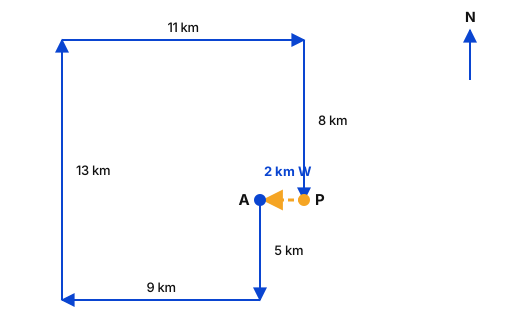
Paula starts from Point A and drives 5 km towards South. He then takes a right turn, drives 9 km, turns right and drives 13 km. He then takes a right turn and drives 11 km. He takes a final right turn, drives 8 km and stops at Point P. How far (shortest distance) and towards which direction should he drive in order to reach Point A again? (All turns are 90° turns only unless specified.)
पाउला बिंदु A से शुरू करके दक्षिण की ओर 5 km गाड़ी चलाता है। फिर वह दाएँ मुड़ता है, 9 km गाड़ी चलाता है, दाएँ मुड़ता है और 13 km गाड़ी चलाता है। फिर वह दाएँ मुड़ता है और 11 km गाड़ी चलाता है। वह अंतिम बार दाएँ मुड़ता है, 8 km गाड़ी चलाता है और बिंदु P पर रुक जाता है। बिंदु A पर फिर से पहुँचने के लिए उसे कितनी दूरी (न्यूनतम दूरी) तक और किस दिशा में गाड़ी चलानी चाहिए? (जब तक निर्दिष्ट न हो, सभी मोड़ केवल 90° के मोड़ हैं।)
  1. A2 km to the Westपश्चिम की ओर 2 km
  2. B5 km to the Westपश्चिम की ओर 5 km
  3. C6 km to the Northउत्तर की ओर 6 km
  4. D4 km to the Eastपूर्व की ओर 4 km
Show answer

Concept: Track coordinates (East +x, North +y); every right turn from South goes West, then North, East, South.

  1. A(0,0) → South 5: (0,−5) → West 9: (−9,−5)
  2. → North 13: (−9,8) → East 11: (2,8) → South 8: (2,0)= P
  3. P is 2 km east of A ⇒ drive 2 km to the West

Trick: Net E–W: 11−9=2 east; net N–S: 13−5−8=0.

Answer: (A) 2 km to the West

अवधारणा: निर्देशांक लें (पूर्व +x, उत्तर +y); दक्षिण से हर दायाँ मोड़: पश्चिम, उत्तर, पूर्व, दक्षिण।

  1. A(0,0) → दक्षिण 5: (0,−5) → पश्चिम 9: (−9,−5)
  2. → उत्तर 13: (−9,8) → पूर्व 11: (2,8) → दक्षिण 8: (2,0)= P
  3. P, A से 2 km पूर्व ⇒ 2 km पश्चिम जाना होगा

ट्रिक: शुद्ध पूर्व–पश्चिम: 11−9=2 पूर्व; उत्तर–दक्षिण: 13−5−8=0।

उत्तर: (A) 2 km पश्चिम

RRB NTPC Undergraduate CBT 1General Intelligence and ReasoningDirection and distanceRRB NTPC Undergraduate CBT 1 2024 · 2 Sep Shift 3 →
Q5084.
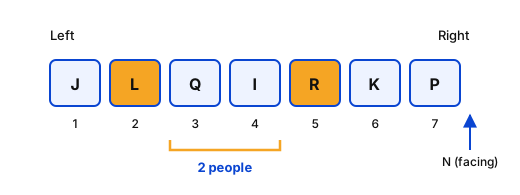
Seven people, I, J, K, L, P, Q and R are sitting in a row, facing north. Only two people sit between J and I. Only P sits to the right of K. Only one person sits between I and K. Q sits at some place to the right of L but at some place to the left of R.
How many people sit between R and L?
सात व्यक्ति, I, J, K, L, P, Q और R उत्तर की ओर मुख करके एक पंक्ति में बैठे हैं। J और I के बीच केवल दो व्यक्ति बैठे हैं। K के दाईं ओर केवल P बैठा है। I और K के बीच केवल एक व्यक्ति बैठा है। Q, L के दाईं ओर कहीं बैठा है लेकिन R के बाईं ओर कहीं बैठा है।
R और L के बीच कितने व्यक्ति बैठे हैं?
  1. AThreeतीन
  2. BOneएक
  3. CFourचार
  4. DTwoदो
Show answer

Concept: Facing north, left–right are as seen; fix the definite clues first.

  1. Only P to the right of K ⇒ K 6th, P 7th
  2. One person between I and K ⇒ I 4th
  3. Two between J and I ⇒ J 1st (7th is taken)
  4. L < Q < R in seats 2,3,5 ⇒ L 2, Q 3, R 5
  5. Between R and L: Q, I ⇒ 2

Trick: Start with the “only” clue – it fixes the end seats.

Answer: (D) Two

अवधारणा: उत्तर की ओर मुख होने पर बायाँ–दायाँ हमारे जैसा; पहले निश्चित सूचनाएँ लगाएँ।

  1. केवल P, K के दाएँ ⇒ K 6वें, P 7वें
  2. I और K के बीच एक ⇒ I 4थे
  3. J और I के बीच दो ⇒ J 1ले (7वाँ भरा है)
  4. L < Q < R, स्थान 2,3,5 ⇒ L 2, Q 3, R 5
  5. R और L के बीच: Q, I ⇒ 2

ट्रिक: “केवल” वाले संकेत से शुरू करें – यह छोर तय कर देता है।

उत्तर: (D) दो

RRB NTPC Undergraduate CBT 1General Intelligence and ReasoningLinear seatingRRB NTPC Undergraduate CBT 1 2024 · 2 Sep Shift 3 →
Q5085.
In the following triads, each group of letters is related to the subsequent one following a certain logic. Select from the given options, the one which follows the same logic. SACK - CSAK - KCAS
LEAP - ALEP - PAEL
निम्नलिखित त्रिकों में, अक्षरों का प्रत्येक समूह एक निश्चित तर्क का अनुसरण करते हुए अगले समूह से संबंधित है। दिए गए विकल्पों में से उसका चयन कीजिए जो समान तर्क का अनुसरण करता है। SACK - CSAK - KCAS
LEAP - ALEP - PAEL
  1. APLAY - APLY - LAYP
  2. BEMIT - MEIT - TMIE
  3. CGOLD - LGOD - DLOG
  4. DTEMP - TMEP - PMET
Show answer

Concept: Number the letters of the first word 1234 and find the position pattern of each step.

  1. SACK → CSAK: 3,1,2,4; CSAK → KCAS: 4,1,3,2 of the new word
  2. LEAP → ALEP → PAEL follows the same ✓
  3. GOLD → LGOD (3,1,2,4) → DLOG (4,1,3,2) ✓

Trick: Test option B: EMIT → MEIT is 2,1,3,4 ✗ – reject at the first step.

Answer: (C) GOLD - LGOD - DLOG

अवधारणा: पहले शब्द के अक्षरों को 1234 मानकर हर चरण का स्थान-पैटर्न खोजें।

  1. SACK → CSAK: 3,1,2,4; CSAK → KCAS: नए शब्द का 4,1,3,2
  2. LEAP → ALEP → PAEL में भी यही ✓
  3. GOLD → LGOD (3,1,2,4) → DLOG (4,1,3,2) ✓

ट्रिक: विकल्प B: EMIT → MEIT 2,1,3,4 है ✗ – पहले ही चरण में बाहर।

उत्तर: (C) GOLD - LGOD - DLOG

RRB NTPC Undergraduate CBT 1General Intelligence and ReasoningLetter triadsRRB NTPC Undergraduate CBT 1 2024 · 2 Sep Shift 3 →
Q5086.
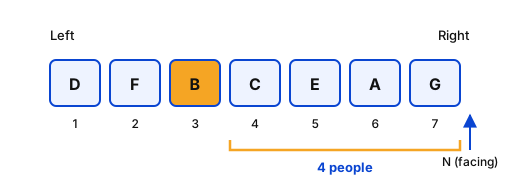
Seven people A, B, C, D, E, F and G are sitting in a row, facing the north. F sits sixth from the right end of the row. Only two people sit between E and F. A sits to the right of E but left of G. D sits third to the left of C. How many people sit to the right of B?
सात व्यक्ति A, B, C, D, E, F और G उत्तर की ओर मुख करके एक पंक्ति में बैठे हैं। F पंक्ति के दाएँ छोर से छठे स्थान पर बैठा है। E और F के बीच केवल दो व्यक्ति बैठे हैं। A, E के दाईं ओर लेकिन G के बाईं ओर बैठा है। D, C के बाईं ओर तीसरे स्थान पर बैठा है। B के दाईं ओर कितने व्यक्ति बैठे हैं?
  1. AThreeतीन
  2. BFourचार
  3. CTwoदो
  4. DFiveपाँच
Show answer

Concept: Seven seats numbered 1–7 from the left (all face north).

  1. F 6th from right ⇒ seat 2; two between E and F ⇒ E seat 5
  2. A right of E, left of G ⇒ A 6, G 7
  3. D third to the left of C, seats 1,3,4 free ⇒ D 1, C 4, B 3
  4. Right of B: C, E, A, G ⇒ 4

Trick: With 7 seats, “6th from right” =2nd from left.

Answer: (B) Four

अवधारणा: सात सीटें, बाएँ से 1–7 (सभी उत्तरमुखी)।

  1. F दाएँ से 6वाँ ⇒ सीट 2; E और F के बीच दो ⇒ E सीट 5
  2. A, E के दाएँ और G के बाएँ ⇒ A 6, G 7
  3. D, C के तीसरे बाएँ; खाली सीट 1,3,4 ⇒ D 1, C 4, B 3
  4. B के दाएँ: C, E, A, G ⇒ 4

ट्रिक: 7 सीटों में “दाएँ से 6वाँ” = बाएँ से 2रा।

उत्तर: (B) चार

RRB NTPC Undergraduate CBT 1General Intelligence and ReasoningLinear seatingRRB NTPC Undergraduate CBT 1 2024 · 2 Sep Shift 3 →
Q5087.
In the following triads, each group of letters is related to the subsequent one following a certain logic. Select from the given options, the one which follows the same logic. SAVE - EASV - AVSE
CROW - WRCO - ROCW
निम्नलिखित त्रिकों में, अक्षरों का प्रत्येक समूह एक निश्चित तर्क का अनुसरण करते हुए अगले समूह से संबंधित है। दिए गए विकल्पों में से उसका चयन कीजिए जो समान तर्क का अनुसरण करता है। SAVE - EASV - AVSE
CROW - WRCO - ROCW
  1. AGROW - GORW - WORG
  2. BTERM - METR - RETM
  3. CDEWS - EDWS - SEWD
  4. DJUST - TUJS - USJT
Show answer

Concept: Number the letters 1234 and find the rearrangement in each step.

  1. SAVE → EASV: 4,2,1,3; EASV → AVSE: 2,4,3,1 of the new word
  2. CROW → WRCO → ROCW fits ✓
  3. JUST → TUJS (4,2,1,3) → USJT (2,4,3,1) ✓

Trick: Check the first step for all options: only JUST → TUJS keeps “U” in 2nd place with last letter first.

Answer: (D) JUST - TUJS - USJT

अवधारणा: अक्षरों को 1234 मानकर हर चरण की पुनर्व्यवस्था खोजें।

  1. SAVE → EASV: 4,2,1,3; EASV → AVSE: नए शब्द का 2,4,3,1
  2. CROW → WRCO → ROCW में भी यही ✓
  3. JUST → TUJS (4,2,1,3) → USJT (2,4,3,1) ✓

ट्रिक: पहले चरण से ही जाँचें: केवल JUST → TUJS में अंतिम अक्षर पहले और दूसरा अक्षर वहीं।

उत्तर: (D) JUST - TUJS - USJT

RRB NTPC Undergraduate CBT 1General Intelligence and ReasoningLetter triadsRRB NTPC Undergraduate CBT 1 2024 · 2 Sep Shift 3 →
Q5088.
Seven boxes, A, B, C, D, E, F and G, are kept one over the other but not necessarily in the same order.
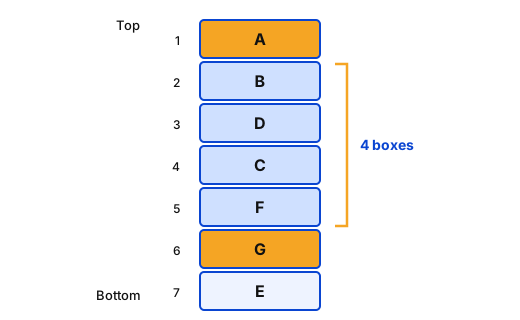
Only two boxes are kept between C and E. Only A is kept above B. No box is kept below E. F is kept at some place below D but at some place above G.
How many boxes are kept between A and G?
सात बॉक्स, A, B, C, D, E, F और G, एक के ऊपर एक रखे गए हैं, लेकिन आवश्यक नहीं कि इसी क्रम में हों।
C और E के बीच केवल दो बॉक्स रखे गए हैं। B के ऊपर केवल A रखा गया है। E के नीचे कोई बॉक्स नहीं रखा गया है। F, D के नीचे कहीं रखा गया है लेकिन G के ऊपर कहीं रखा गया है।
A और G के बीच कितने बॉक्स रखे गए हैं?
  1. A4
  2. B3
  3. C1
  4. D2
Show answer

Concept: Number positions 1 (top) to 7 (bottom) and place definite boxes first.

  1. No box below E ⇒ E at 7; two between C and E ⇒ C at 4
  2. Only A above B ⇒ A 1, B 2
  3. D above F above G in 3,5,6 ⇒ D 3, F 5, G 6
  4. Between A (1) and G (6): B, D, C, F ⇒ 4

Trick: “Only A above B” fixes the top two at once.

Answer: (A) 4

अवधारणा: स्थान 1 (ऊपर) से 7 (नीचे) मानें, पहले निश्चित बॉक्स रखें।

  1. E के नीचे कोई नहीं ⇒ E 7 पर; C और E के बीच दो ⇒ C 4 पर
  2. केवल A, B के ऊपर ⇒ A 1, B 2
  3. D, F के ऊपर; F, G के ऊपर; खाली 3,5,6 ⇒ D 3, F 5, G 6
  4. A (1) और G (6) के बीच: B, D, C, F ⇒ 4

ट्रिक: “केवल A, B के ऊपर” से ऊपर के दो स्थान तुरंत तय।

उत्तर: (A) 4

RRB NTPC Undergraduate CBT 1General Intelligence and ReasoningBox arrangementRRB NTPC Undergraduate CBT 1 2024 · 2 Sep Shift 3 →
Q5089.
In a certain code language, ‘MEAT’ is coded as ‘4257’ and ‘TURN’ is coded as ‘1365’. What is the code for ‘T’ in the given code language?
एक निश्चित कूट भाषा में, ‘MEAT’ को ‘4257’ के रूप में कूटबद्ध किया जाता है और ‘TURN’ को ‘1365’ के रूप में कूटबद्ध किया जाता है। दी गई कूट भाषा में ‘T’ के लिए कूट क्या है?
  1. A6
  2. B5
  3. C7
  4. D1
Show answer

Concept: The letter common to both words takes the code common to both codes.

  1. MEAT → 4, 2, 5, 7; TURN → 1, 3, 6, 5
  2. Common letter: T; common digit: 5 ⇒ T = 5

Trick: One common letter ↔ one common digit.

Answer: (B) 5

अवधारणा: दोनों शब्दों में सामान्य अक्षर का कोड दोनों कोडों में सामान्य अंक होता है।

  1. MEAT → 4, 2, 5, 7; TURN → 1, 3, 6, 5
  2. सामान्य अक्षर: T; सामान्य अंक: 5 ⇒ T = 5

ट्रिक: एक सामान्य अक्षर ↔ एक सामान्य अंक।

उत्तर: (B) 5

RRB NTPC Undergraduate CBT 1General Intelligence and ReasoningCoding–decodingRRB NTPC Undergraduate CBT 1 2024 · 2 Sep Shift 3 →
Q5090.
This question is based on five, four-digit numbers given below.
(Left) 4138 2345 6367 5353 1276 (Right)
(Example: 6975 – First digit = 6, second digit = 9, third digit = 7 and fourth digit = 5) (NOTE: All operations to be done from left to right.)
What will be the resultant if the first digit of the largest number is multiplied to the second digit of the smallest number?
यह प्रश्न नीचे दी गई पाँच, चार अंकों वाली संख्याओं पर आधारित है।
(बाएँ) 4138 2345 6367 5353 1276 (दाएँ)
(उदाहरण: 6975 – पहला अंक = 6, दूसरा अंक = 9, तीसरा अंक = 7 और चौथा अंक = 5) (नोट: सभी संक्रियाएँ बाएँ से दाएँ की जानी हैं।)
यदि सबसे बड़ी संख्या के पहले अंक को सबसे छोटी संख्या के दूसरे अंक से गुणा किया जाए, तो परिणाम क्या होगा?
  1. A12
  2. B17
  3. C14
  4. D15
Show answer

Concept: Identify the largest and smallest numbers, then pick the required digits.

  1. Largest =6367 ⇒ first digit 6
  2. Smallest =1276 ⇒ second digit 2
  3. 6×2=12

Trick: Compare first digits only: 6 is largest, 1 is smallest.

Answer: (A) 12

अवधारणा: सबसे बड़ी और सबसे छोटी संख्या पहचानें, फिर अंक चुनें।

  1. सबसे बड़ी =6367 ⇒ पहला अंक 6
  2. सबसे छोटी =1276 ⇒ दूसरा अंक 2
  3. 6×2=12

ट्रिक: केवल पहले अंक देखें: 6 सबसे बड़ा, 1 सबसे छोटा।

उत्तर: (A) 12

RRB NTPC Undergraduate CBT 1General Intelligence and ReasoningNumber puzzleRRB NTPC Undergraduate CBT 1 2024 · 2 Sep Shift 3 →
Q5091.
What will come in the place of the question mark (?) in the following equation, if ‘+’ and ‘×’ are interchanged, and ‘−’ and ‘÷’ are interchanged?
46 − 2 ÷ 10 + 3 × 24 = ?
यदि ‘+’ और ‘×’ को आपस में बदल दिया जाए, तथा ‘−’ और ‘÷’ को आपस में बदल दिया जाए, तो निम्नलिखित समीकरण में प्रश्नवाचक चिह्न (?) के स्थान पर क्या आएगा?
46 − 2 ÷ 10 + 3 × 24 = ?
  1. A12
  2. B17
  3. C22
  4. D28
Show answer

Concept: Swap the signs first, then apply BODMAS.

  1. Swap +↔× and −↔÷: 46÷2−10×3+24
  2. =23−30+24=17

Trick: Rewrite the full expression before calculating.

Answer: (B) 17

अवधारणा: पहले चिह्न बदलें, फिर BODMAS लगाएँ।

  1. +↔× और −↔÷: 46÷2−10×3+24
  2. =23−30+24=17

ट्रिक: गणना से पहले पूरा व्यंजक दोबारा लिखें।

उत्तर: (B) 17

RRB NTPC Undergraduate CBT 1General Intelligence and ReasoningSymbol interchangeRRB NTPC Undergraduate CBT 1 2024 · 2 Sep Shift 3 →
Q5092.
What should come in place of the question mark (?) in the given series?
288 233 183 138 98 ?
दी गई श्रृंखला में प्रश्नवाचक चिह्न (?) के स्थान पर क्या आना चाहिए?
288 233 183 138 98 ?
  1. A53
  2. B73
  3. C63
  4. D43
Show answer

Concept: Look at the differences between consecutive terms.

  1. Differences: 55,50,45,40 (decreasing by 5)
  2. Next difference =35 ⇒ 98−35=63

Trick: Subtract multiples of 5 going down: 55,50,45,40,35.

Answer: (C) 63

अवधारणा: क्रमागत पदों का अंतर देखें।

  1. अंतर: 55,50,45,40 (हर बार 5 कम)
  2. अगला अंतर =35 ⇒ 98−35=63

ट्रिक: 5 के गुणज घटते क्रम में: 55,50,45,40,35।

उत्तर: (C) 63

RRB NTPC Undergraduate CBT 1General Intelligence and ReasoningNumber seriesRRB NTPC Undergraduate CBT 1 2024 · 2 Sep Shift 3 →
Q5093.
Read the given statements and conclusions carefully. Assuming that the information given in the statements is true, even if it appears to be at variance with commonly known facts, decide which of the given conclusions logically follow(s) from the statements.
Statements:
All oranges are melons.
All grapes are oranges.
Conclusions:
(I) Some melons are oranges.
(II) All grapes are melons.
दिए गए कथनों और निष्कर्षों को ध्यानपूर्वक पढ़िए। यह मानते हुए कि कथनों में दी गई जानकारी सत्य है, भले ही वह सामान्यतः ज्ञात तथ्यों से भिन्न प्रतीत होती हो, निर्णय कीजिए कि दिए गए निष्कर्षों में से कौन-सा/से निष्कर्ष कथनों का तार्किक रूप से अनुसरण करता है/करते हैं।
कथन:
सभी संतरे, खरबूजे हैं।
सभी अंगूर, संतरे हैं।
निष्कर्ष:
(I) कुछ खरबूजे, संतरे हैं।
(II) सभी अंगूर, खरबूजे हैं।
  1. ABoth conclusions (I) and (II) follow.निष्कर्ष (I) और (II) दोनों अनुसरण करते हैं।
  2. BNeither conclusion (I) nor (II) follows.न तो निष्कर्ष (I) और न ही (II) अनुसरण करता है।
  3. COnly conclusion (II) follows.केवल निष्कर्ष (II) अनुसरण करता है।
  4. DOnly conclusion (I) follows.केवल निष्कर्ष (I) अनुसरण करता है।
Show answer

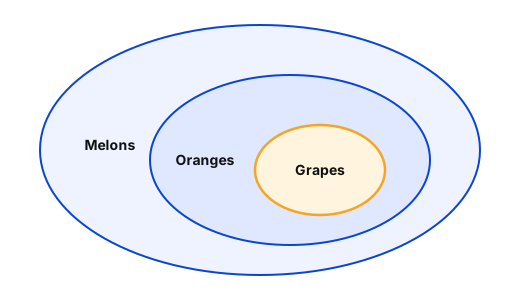
Concept: “All X are Y” puts circle X fully inside circle Y.

  1. Grapes ⊂ Oranges ⊂ Melons
  2. I: Oranges are inside Melons, so some melons are oranges ✓
  3. II: Grapes inside Oranges inside Melons ⇒ all grapes are melons ✓

Trick: All + All ⇒ All (chain), and “All A are B” always gives “Some B are A”.

Answer: (A) Both conclusions (I) and (II) follow

अवधारणा: “सभी X, Y हैं” का अर्थ X वृत्त पूरी तरह Y के भीतर।

  1. अंगूर ⊂ संतरे ⊂ खरबूजे
  2. I: संतरे, खरबूजों के भीतर ⇒ कुछ खरबूजे संतरे हैं ✓
  3. II: अंगूर ⊂ संतरे ⊂ खरबूजे ⇒ सभी अंगूर खरबूजे हैं ✓

ट्रिक: सभी + सभी ⇒ सभी (श्रृंखला); “सभी A, B हैं” से “कुछ B, A हैं” हमेशा।

उत्तर: (A) दोनों निष्कर्ष (I) और (II) अनुसरण करते हैं

RRB NTPC Undergraduate CBT 1General Intelligence and ReasoningSyllogismRRB NTPC Undergraduate CBT 1 2024 · 2 Sep Shift 3 →
Q5094.
1 is subtracted from each even digit of the number 95423671. Find the product of the digits that are third from the left and third from the right in the new number formed.
संख्या 95423671 के प्रत्येक सम अंक में से 1 घटाया जाता है। इस प्रकार बनी नई संख्या में बाएँ से तीसरे और दाएँ से तीसरे अंकों का गुणनफल ज्ञात कीजिए।
  1. A10
  2. B8
  3. C0
  4. D15
Show answer

Concept: Change only the even digits, then read positions from each end.

  1. 95423671: even digits 4,2,6 become 3,1,5 ⇒ 95313571
  2. Third from left =3; third from right =5
  3. Product =3×5=15

Trick: Odd digits stay the same; only 2,4,6,8,0 change.

Answer: (D) 15

अवधारणा: केवल सम अंक बदलें, फिर दोनों छोर से स्थान पढ़ें।

  1. 95423671: सम अंक 4,2,6 बनते हैं 3,1,5 ⇒ 95313571
  2. बाएँ से तीसरा =3; दाएँ से तीसरा =5
  3. गुणनफल =3×5=15

ट्रिक: विषम अंक वही रहते हैं; केवल 2,4,6,8,0 बदलते हैं।

उत्तर: (D) 15

RRB NTPC Undergraduate CBT 1General Intelligence and ReasoningDigit operationsRRB NTPC Undergraduate CBT 1 2024 · 2 Sep Shift 3 →
Q5095.
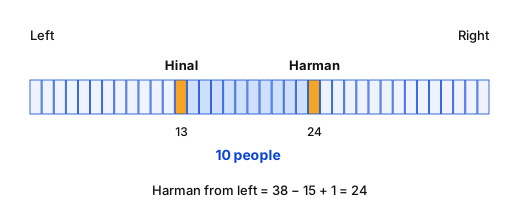
38 people are standing in a row facing North. Harman is 15th from the right end while Hinal is 13th from the left end. How many people are there between Harman and Hinal?
38 व्यक्ति उत्तर की ओर मुख करके एक पंक्ति में खड़े हैं। हरमन दाएँ छोर से 15वें स्थान पर है जबकि हिनल बाएँ छोर से 13वें स्थान पर है। हरमन और हिनल के बीच कितने व्यक्ति हैं?
  1. A8
  2. B9
  3. C10
  4. D7
Show answer

Concept: Convert both positions to the same end: from left =N−(from right)+1.

  1. Harman from left =38−15+1=24
  2. Hinal =13 from left
  3. Between =24−13−1=10

Trick: Between two positions = difference −1.

Answer: (C) 10

अवधारणा: दोनों स्थितियों को एक ही छोर से बदलें: बाएँ से =N−(दाएँ से)+1।

  1. हरमन बाएँ से =38−15+1=24
  2. हिनल बाएँ से =13
  3. बीच में =24−13−1=10

ट्रिक: दो स्थानों के बीच = अंतर −1।

उत्तर: (C) 10

RRB NTPC Undergraduate CBT 1General Intelligence and ReasoningRanking in a rowRRB NTPC Undergraduate CBT 1 2024 · 2 Sep Shift 3 →
Q5096.
Which of the following is NOT a part of chemical weathering?
निम्नलिखित में से कौन-सा रासायनिक अपक्षय (chemical weathering) का भाग नहीं है?
  1. AFrost Actionतुषार क्रिया (Frost Action)
  2. BHydrationजलयोजन (Hydration)
  3. COxidationऑक्सीकरण (Oxidation)
  4. DCarbonationकार्बोनेशन (Carbonation)
Show answer

Concept: Chemical weathering changes the chemical composition of rocks; physical (mechanical) weathering only breaks them without changing composition.

  1. Hydration (water added to minerals), Oxidation (reaction with oxygen, e.g. rusting of iron minerals) and Carbonation (reaction with carbonic acid, e.g. limestone dissolving) are chemical processes.
  2. Frost action (frost wedging) – water freezes in cracks, expands about 9% and splits the rock – a purely physical process.

Yaad rakhein: Temperature/ice/salt crystals → physical; water, oxygen, CO₂ reactions → chemical.

Answer: (A) Frost Action

अवधारणा: रासायनिक अपक्षय चट्टान की रासायनिक संरचना बदल देता है; भौतिक (यांत्रिक) अपक्षय केवल चट्टान को तोड़ता है।

  1. Hydration (जलयोजन), Oxidation (ऑक्सीकरण – जैसे लौह खनिजों पर जंग) और Carbonation (कार्बोनेशन – कार्बोनिक अम्ल से चूना पत्थर का घुलना) रासायनिक प्रक्रियाएँ हैं।
  2. Frost action (तुषार क्रिया) – दरारों में पानी जमकर फैलता है और चट्टान तोड़ देता है – यह भौतिक प्रक्रिया है।

याद रखें: तापमान/बर्फ/लवण क्रिस्टल → भौतिक; पानी, ऑक्सीजन, CO₂ की अभिक्रिया → रासायनिक।

उत्तर: (A) Frost Action

RRB NTPC Undergraduate CBT 1General AwarenessWeatheringRRB NTPC Undergraduate CBT 1 2024 · 2 Sep Shift 2 →
Q5097.
In which of the following years was the Aajeevika - Deendayal Antyodaya Yojna- National Rural Livelihoods Mission (DAY-NRLM) launched by the Ministry of Rural Development (MoRD), Government of India?
ग्रामीण विकास मंत्रालय (MoRD), भारत सरकार द्वारा आजीविका - दीनदयाल अंत्योदय योजना - राष्ट्रीय ग्रामीण आजीविका मिशन (DAY-NRLM) निम्नलिखित में से किस वर्ष शुरू किया गया था?
  1. A2011
  2. B2016
  3. C2007
  4. D2014
Show answer

Concept: DAY-NRLM (Aajeevika) is the Ministry of Rural Development's flagship programme for rural poverty reduction through women's Self-Help Groups (SHGs).

  1. It was launched in June 2011 as the National Rural Livelihoods Mission, restructuring the older Swarnjayanti Gram Swarozgar Yojana (SGSY).
  2. In 2015 it was renamed Deendayal Antyodaya Yojana – NRLM; the renaming year is not the launch year.

Yaad rakhein: NRLM → 2011 (rural, MoRD); NULM → 2013 (urban).

Answer: (A) 2011

अवधारणा: DAY-NRLM (आजीविका) ग्रामीण विकास मंत्रालय की प्रमुख योजना है जो महिला स्वयं सहायता समूहों (SHGs) के माध्यम से ग्रामीण गरीबी कम करती है।

  1. इसे जून 2011 में National Rural Livelihoods Mission के रूप में शुरू किया गया; इसने पुरानी स्वर्णजयंती ग्राम स्वरोजगार योजना (SGSY) का स्थान लिया।
  2. 2015 में इसका नाम दीनदयाल अंत्योदय योजना – NRLM रखा गया; यह नामकरण का वर्ष है, शुरुआत का नहीं।

याद रखें: NRLM → 2011 (ग्रामीण); NULM → 2013 (शहरी)।

उत्तर: (A) 2011

RRB NTPC Undergraduate CBT 1General AwarenessGovernment SchemesRRB NTPC Undergraduate CBT 1 2024 · 2 Sep Shift 2 →
Q5098.
What was the ultimate promise made by Bhagirath Majhi to the Santhals if they followed his teachings?
भागीरथ मांझी ने संथालों से, यदि वे उनकी शिक्षाओं का पालन करें, तो अंततः क्या वचन दिया था?
  1. ARestoration of tribal kingdomsजनजातीय राज्यों की पुनर्स्थापना
  2. BAccess to modern education and jobsआधुनिक शिक्षा और नौकरियों तक पहुँच
  3. CComplete independence from British ruleब्रिटिश शासन से पूर्ण स्वतंत्रता
  4. DLand restoration and divine protectionभूमि की पुनर्प्राप्ति और दैवीय सुरक्षा
Show answer

Concept: Bhagirath Majhi (Manjhi) led the Kharwar (Sapha Har) movement among the Santhals in the 1870s.

  1. He called himself the 'Raja' (king) of the Santhals, asked them to stop paying rent to zamindars and to give up impure practices.
  2. His promise was that, if they followed him, the old tribal (Santhal) raj – their own kingdom with their lost rule – would be restored.

Yaad rakhein: Bhagirath Majhi = self-proclaimed Santhal king → promise of restored tribal kingdom.

Answer: (A) Restoration of tribal kingdoms

अवधारणा: भागीरथ माझी ने 1870 के दशक में संथालों के बीच खरवार (सफा हड़) आंदोलन चलाया।

  1. उन्होंने स्वयं को संथालों का 'राजा' घोषित किया और जमींदारों को लगान न देने तथा अशुद्ध प्रथाएँ छोड़ने को कहा।
  2. उनका वादा था कि यदि संथाल उनका अनुसरण करें तो उनका पुराना जनजातीय राज्य (tribal kingdom) फिर से स्थापित होगा।

याद रखें: भागीरथ माझी = स्वघोषित संथाल राजा → जनजातीय राज्य की पुनर्स्थापना।

उत्तर: (A) Restoration of tribal kingdoms

RRB NTPC Undergraduate CBT 1General AwarenessTribal MovementsRRB NTPC Undergraduate CBT 1 2024 · 2 Sep Shift 2 →
Q5099.
What is the purpose of the High Endurance Autonomous Underwater Vehicle (HEAUV) developed by DRDO’s Naval Science and Technological Laboratory (NSTL)?
DRDO की नौसेना विज्ञान एवं प्रौद्योगिकी प्रयोगशाला (NSTL) द्वारा विकसित हाई एंड्योरेंस ऑटोनॉमस अंडरवाटर व्हीकल (HEAUV) का उद्देश्य क्या है?
  1. AUnderwater surveillanceजलगत निगरानी
  2. BSurface-to-air missile deploymentसतह से हवा में मार करने वाली मिसाइल की तैनाती
  3. CSubmarine crew trainingपनडुब्बी चालक दल का प्रशिक्षण
  4. DDeep-sea oil explorationगहरे समुद्र में तेल की खोज
Show answer

Concept: An Autonomous Underwater Vehicle (AUV) is an unmanned, self-guided submarine robot used for long underwater missions.

  1. DRDO's NSTL, Visakhapatnam, developed the High Endurance AUV (HEAUV) for the Navy for underwater surveillance – mine detection and anti-submarine/ocean monitoring over long durations.
  2. It is not a missile platform, crew-training device or oil-exploration tool.

Yaad rakhein: NSTL = naval underwater systems (torpedoes, AUVs) → surveillance.

Answer: (A) Underwater surveillance

अवधारणा: Autonomous Underwater Vehicle (AUV) एक मानवरहित, स्वचालित जलगत रोबोट है जो लंबे मिशन कर सकता है।

  1. DRDO की NSTL, विशाखापत्तनम ने नौसेना के लिए High Endurance AUV (HEAUV) विकसित किया जिसका उपयोग जलगत निगरानी (underwater surveillance) – बारूदी सुरंग पहचान व पनडुब्बी-रोधी निगरानी – के लिए है।
  2. यह मिसाइल, चालक दल प्रशिक्षण या तेल खोज के लिए नहीं है।

याद रखें: NSTL = नौसेना के जलगत सिस्टम (टॉरपीडो, AUV) → निगरानी।

उत्तर: (A) Underwater surveillance

RRB NTPC Undergraduate CBT 1General AwarenessDefence TechnologyRRB NTPC Undergraduate CBT 1 2024 · 2 Sep Shift 2 →
Q5100.
Colonial economic policies created a skewed distribution of income and wealth in Indian society. Which of the following is a key indicator of income inequality in colonial India?
औपनिवेशिक आर्थिक नीतियों ने भारतीय समाज में आय और संपत्ति का असमान वितरण उत्पन्न किया। निम्नलिखित में से कौन-सा औपनिवेशिक भारत में आय असमानता का एक प्रमुख संकेतक है?
  1. AUnequal land ownership patternsअसमान भू-स्वामित्व प्रतिरूप
  2. BHigh literacy rate among workersश्रमिकों में उच्च साक्षरता दर
  3. CUniform wages across sectorsसभी क्षेत्रों में एकसमान मज़दूरी
  4. DEquitable distribution of irrigationसिंचाई का न्यायसंगत वितरण
Show answer

Concept: In an agrarian economy like colonial India, land was the main source of wealth, so who owned land showed how income was distributed.

  1. Permanent Settlement and zamindari created a small class of big landlords while most cultivators were tenants or landless labourers.
  2. Literacy was very low, wages were not uniform and irrigation was not equitable – options B, C, D describe equality, the opposite of inequality.

Trick: Inequality indicator must show something unequal – only option A does.

Answer: (A) Unequal land ownership patterns

अवधारणा: औपनिवेशिक भारत जैसी कृषि अर्थव्यवस्था में भूमि ही धन का मुख्य स्रोत थी, इसलिए भूमि-स्वामित्व से आय का वितरण दिखता था।

  1. स्थायी बंदोबस्त और जमींदारी से कुछ बड़े जमींदार बने, जबकि अधिकांश किसान काश्तकार या भूमिहीन मजदूर रहे।
  2. साक्षरता बहुत कम थी, मजदूरी समान नहीं थी और सिंचाई का वितरण न्यायपूर्ण नहीं था – B, C, D समानता बताते हैं, असमानता नहीं।

ट्रिक: असमानता का सूचक कुछ 'असमान' दिखाए – केवल विकल्प A।

उत्तर: (A) Unequal land ownership patterns

RRB NTPC Undergraduate CBT 1General AwarenessColonial EconomyRRB NTPC Undergraduate CBT 1 2024 · 2 Sep Shift 2 →