Question bank

Q&A: practice questions with answers

Search questions on any topic. Filter by exam category, exam, subject and topic, try the question, then open the answer and explanation.

Courses – airGurukul

8,495 questions found.

Q5161.
A can lay railway track between two given stations in 20 days and B can do the same job in 16 days. With the help of C, they did the job in 3 days only. Then, C alone can do the job in
A दो दिए गए स्टेशनों के बीच रेल पटरी 20 दिनों में बिछा सकता है और B वही कार्य 16 दिनों में कर सकता है। C की सहायता से, उन्होंने वह कार्य केवल 3 दिनों में पूरा कर लिया। तो, C अकेले वह कार्य कितने दिनों में कर सकता है?
  1. A42853 days42853 दिन
  2. B112853 days112853 दिन
  3. C122853 days122853 दिन
  4. D142853 days142853 दिन
Show answer

Concept: One-day work adds up: C\'s rate = total rate − A\'s rate − B\'s rate.

  1. 13−120−116=80−12−15240=53240.
  2. C alone =24053=42853 days.

Trick: Total work = LCM(20, 16, 3) = 240 units: A 12, B 15, all 80 → C = 53 units/day.

Answer: (A) 42853 days

अवधारणा: एक दिन का कार्य जुड़ता है: C की दर = कुल दर − A की दर − B की दर।

  1. 13−120−116=53240।
  2. C अकेले =24053=42853 दिन।

ट्रिक: कुल कार्य = 240 इकाई: A 12, B 15, सभी 80 → C = 53 इकाई/दिन।

उत्तर: (A) 42853 दिन

RRB NTPC Undergraduate CBT 1MathematicsTime and workRRB NTPC Undergraduate CBT 1 2024 · 2 Sep Shift 2 →
Q5162.
Sapna invested ₹22,500 on simple interest, partly at 7% per annum and partly at 5% per annum. If she earns equal interests from the two investments after 3 years, then find the sum invested at 7% per annum (in ₹).
सपना ने ₹22,500 साधारण ब्याज पर निवेश किए, जिसका एक भाग 7% वार्षिक दर पर और शेष भाग 5% वार्षिक दर पर था। यदि 3 वर्ष बाद उसे दोनों निवेशों से समान ब्याज प्राप्त होता है, तो 7% वार्षिक दर पर निवेश की गई राशि (₹ में) ज्ञात कीजिए।
  1. A9,373
  2. B9,374
  3. C9,376
  4. D9,375
Show answer

Concept: Equal SI for the same time ⇒ principal × rate is equal for both parts.

  1. Let sum at 7% =x: x×7×3=(22500−x)×5×3.
  2. 7x=112500−5x⇒12x=112500.
  3. x=9375.

Trick: Principals are in inverse ratio of rates: 5:7 → 512×22500=9375.

Answer: (D) 9,375

अवधारणा: समान समय में समान ब्याज ⇒ दोनों भागों में मूलधन × दर बराबर।

  1. 7% पर राशि =x: 7x=5(22500−x)।
  2. 12x=112500।
  3. x=9375।

ट्रिक: मूलधन दरों के व्युत्क्रम अनुपात में: 5:7 → 512×22500=9375।

उत्तर: (D) 9,375

RRB NTPC Undergraduate CBT 1MathematicsSimple interest – equal interestRRB NTPC Undergraduate CBT 1 2024 · 2 Sep Shift 2 →
Q5163.
Ravi started a business by investing ₹50,000. After six months, Raju joined him and invested an amount of ₹1,00,000. In one year since Ravi invested, they earned a profit of ₹63,000. What is Raju’s share of the profit?
रवि ने ₹50,000 का निवेश करके एक व्यवसाय शुरू किया। छह महीने बाद, राजू उसके साथ शामिल हुआ और ₹1,00,000 की राशि निवेश की। रवि के निवेश के एक वर्ष में, उन्होंने ₹63,000 का लाभ अर्जित किया। लाभ में राजू का हिस्सा कितना है?
  1. A₹32,500
  2. B₹31,000
  3. C₹31,500
  4. D₹32,000
Show answer

Concept: Profit is shared in the ratio of (capital × time).

  1. Ravi: 50000×12=600000.
  2. Raju: 100000×6=600000.
  3. Ratio 1:1 → Raju gets 630002=31500.

Trick: Double the money for half the time = equal share.

Answer: (C) ₹31,500

अवधारणा: लाभ (पूँजी × समय) के अनुपात में बँटता है।

  1. रवि: 50000×12=600000।
  2. राजू: 100000×6=600000।
  3. अनुपात 1:1 → राजू =31500।

ट्रिक: दोगुनी पूँजी, आधा समय = बराबर हिस्सा।

उत्तर: (C) ₹31,500

RRB NTPC Undergraduate CBT 1MathematicsPartnershipRRB NTPC Undergraduate CBT 1 2024 · 2 Sep Shift 2 →
Q5164.
Find the value of sec4A−sec2Acot2A+cot4A×csc4A−csc2Atan2A+tan4A+cot2A.
sec4A−sec2Acot2A+cot4A×csc4A−csc2Atan2A+tan4A+cot2A का मान ज्ञात कीजिए।
  1. Acot2A
  2. B0
  3. C1
  4. Dcsc2A
Show answer

Concept: sec2A−1=tan2A, 1+cot2A=csc2A.

  1. sec4A−sec2A=sec2Atan2A; cot2A+cot4A=cot2Acsc2A.
  2. csc4A−csc2A=csc2Acot2A; tan2A+tan4A=tan2Asec2A.
  3. Product =sec2Atan2Acot2Acsc2A×csc2Acot2Atan2Asec2A=1.
  4. Value =1+cot2A=csc2A.

Trick: Put A=45∘: 4−22×4−22+1=2=csc245∘.

Answer: (D) csc2A

अवधारणा: sec2A−1=tan2A, 1+cot2A=csc2A।

  1. sec4A−sec2A=sec2Atan2A; cot2A+cot4A=cot2Acsc2A।
  2. csc4A−csc2A=csc2Acot2A; tan2A+tan4A=tan2Asec2A।
  3. गुणनफल =1 (सब कट जाते हैं)।
  4. मान =1+cot2A=csc2A।

ट्रिक: A=45∘ रखें: 1×1+1=2=csc245∘।

उत्तर: (D) csc2A

RRB NTPC Undergraduate CBT 1MathematicsTrigonometric identitiesRRB NTPC Undergraduate CBT 1 2024 · 2 Sep Shift 2 →
Q5165.
Find the value of 24−10÷ 2416× 24−7.
24−10÷ 2416× 24−7 का मान ज्ञात कीजिए।
  1. A24 −43
  2. B24−33
  3. C24−38
  4. D24−31
Show answer

Concept: am÷an=am−n, am×an=am+n.

  1. 24−10÷2416=24−26.
  2. 24−26×24−7=24−33.

Trick: Just add/subtract powers: −10−16−7=−33.

Answer: (B) 24−33

अवधारणा: am÷an=am−n, am×an=am+n।

  1. 24−10÷2416=24−26।
  2. 24−26×24−7=24−33।

ट्रिक: घातें जोड़ें/घटाएँ: −10−16−7=−33।

उत्तर: (B) 24−33

RRB NTPC Undergraduate CBT 1MathematicsLaws of exponentsRRB NTPC Undergraduate CBT 1 2024 · 2 Sep Shift 2 →
Q5166.
In a certain code language, ‘SAID’ is coded as ‘3517’ and ‘AERO’ is coded as ‘2146’. What is the code for ‘A’ in the given code language?
एक निश्चित कूट भाषा में, ‘SAID’ को ‘3517’ के रूप में कूटबद्ध किया जाता है और ‘AERO’ को ‘2146’ के रूप में कूटबद्ध किया जाता है। दी गई कूट भाषा में ‘A’ के लिए कूट क्या है?
  1. A5
  2. B2
  3. C1
  4. D6
Show answer

Concept: A letter common to two words gets the digit common to both codes.

  1. SAID → 3517, AERO → 2146.
  2. Common letter: A; common digit: 1.

Trick: Match common letters with common digits.

Answer: (C) 1

अवधारणा: दो शब्दों में साझा अक्षर का कोड दोनों कोडों में साझा अंक होता है।

  1. SAID → 3517, AERO → 2146।
  2. साझा अक्षर A; साझा अंक 1।

ट्रिक: साझा अक्षर ↔ साझा अंक।

उत्तर: (C) 1

RRB NTPC Undergraduate CBT 1General Intelligence and ReasoningCoding-decoding – common letterRRB NTPC Undergraduate CBT 1 2024 · 2 Sep Shift 2 →
Q5167.
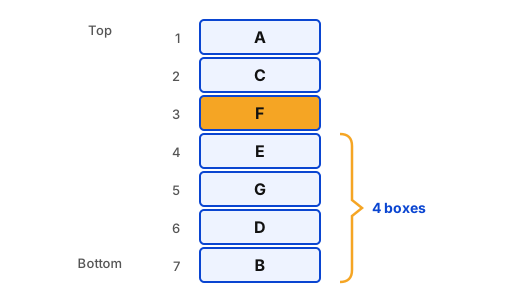
Seven boxes A, B, C, D, E, F and G are kept one over the other but not necessarily in the same order. Only two boxes are kept between E and B. Only A is kept above C. No box is kept below B. G is kept at some place below F but at some place above D. How many boxes are kept below F?
सात बक्से A, B, C, D, E, F और G एक के ऊपर एक रखे गए हैं, लेकिन यह आवश्यक नहीं है कि वे इसी क्रम में हों। E और B के बीच केवल दो बक्से रखे गए हैं। C के ऊपर केवल A रखा गया है। B के नीचे कोई बक्सा नहीं रखा गया है। G को F के नीचे किसी स्थान पर, लेकिन D के ऊपर किसी स्थान पर रखा गया है। F के नीचे कितने बक्से रखे गए हैं?
  1. A2
  2. B4
  3. C3
  4. D1
Show answer

Concept: Fix the certain positions first (top/bottom), then the relative clues.

  1. No box below B → B at 7 (bottom). Two boxes between E and B → E at 4.
  2. Only A above C → A at 1, C at 2.
  3. F above G above D in places 3, 5, 6 → F 3, G 5, D 6.
  4. Below F: E, G, D, B → 4 boxes.

Trick: Start with words "only" and "no box below" – they fix exact positions.

Answer: (B) 4

अवधारणा: पहले निश्चित स्थान (ऊपर/नीचे) तय करें, फिर सापेक्ष संकेत।

  1. B के नीचे कोई नहीं → B स्थान 7 पर; E और B के बीच दो → E स्थान 4।
  2. केवल A, C के ऊपर → A 1, C 2।
  3. F, G के ऊपर, G, D के ऊपर → F 3, G 5, D 6।
  4. F के नीचे: E, G, D, B → 4 बॉक्स।

ट्रिक: "केवल" और "नीचे कोई नहीं" वाले संकेत पहले लगाएँ।

उत्तर: (B) 4

RRB NTPC Undergraduate CBT 1General Intelligence and ReasoningBox stacking puzzleRRB NTPC Undergraduate CBT 1 2024 · 2 Sep Shift 2 →
Q5168.
Based on the English alphabetical order, three of the following four letter-clusters are alike in a certain way and thus form a group. Which letter-cluster DOES NOT belong to that group?
(Note: The odd one out is not based on the number of consonants/vowels or their position in the letter-cluster.)
अंग्रेज़ी वर्णमाला क्रम के आधार पर, निम्नलिखित चार अक्षर-समूहों में से तीन किसी निश्चित प्रकार से एकसमान हैं और इस प्रकार एक समूह बनाते हैं। कौन-सा अक्षर-समूह उस समूह से संबंधित नहीं है?
(ध्यान दें: असंगत का निर्धारण व्यंजनों/स्वरों की संख्या या अक्षर-समूह में उनके स्थान के आधार पर नहीं है।)
  1. AKMH
  2. BIKE
  3. CGIC
  4. DMOI
Show answer

Concept: Check the gaps between letters using positions (A = 1 … Z = 26).

  1. IKE: I+2 = K, K−6 = E. GIC: G+2 = I, I−6 = C. MOI: M+2 = O, O−6 = I.
  2. KMH: K+2 = M, but M−5 = H (not −6).

Trick: Write the pattern of the first cluster and test the rest.

Answer: (A) KMH

अवधारणा: अक्षरों की स्थिति (A = 1 … Z = 26) से अंतर देखें।

  1. IKE, GIC, MOI: पहला +2, फिर −6।
  2. KMH: K+2 = M, पर M−5 = H (−6 नहीं)।

ट्रिक: एक समूह का पैटर्न लिखकर बाकी जाँचें।

उत्तर: (A) KMH

RRB NTPC Undergraduate CBT 1General Intelligence and ReasoningOdd one out – letter clustersRRB NTPC Undergraduate CBT 1 2024 · 2 Sep Shift 2 →
Q5169.
Read the given statement(s) and conclusions carefully. Assuming that the information given in the statements is true, even if it appears to be at variance with commonly known facts, decide which of the given conclusions logically follow(s) from the statement(s).
Statements:
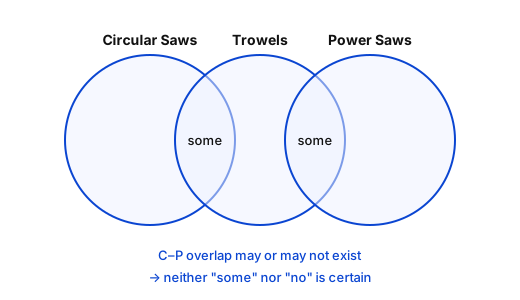
Some Circular Saws are Trowels.
Some Trowels are Power Saws.
Conclusions:
I: Some Circular Saws are Power Saws.
II: No Circular Saws are Power Saws.
दिए गए कथनों और निष्कर्षों को ध्यानपूर्वक पढ़िए। यह मानते हुए कि कथनों में दी गई जानकारी सत्य है, भले ही वह सामान्यतः ज्ञात तथ्यों से भिन्न प्रतीत होती हो, निर्णय लीजिए कि दिए गए निष्कर्षों में से कौन-सा/से निष्कर्ष कथनों का तार्किक रूप से अनुसरण करता है/करते हैं।
कथन:
कुछ सर्कुलर सॉ (Circular Saws), ट्रॉवेल (Trowels) हैं।
कुछ ट्रॉवेल, पावर सॉ (Power Saws) हैं।
निष्कर्ष:
I: कुछ सर्कुलर सॉ, पावर सॉ हैं।
II: कोई सर्कुलर सॉ, पावर सॉ नहीं है।
  1. AOnly conclusion (I) follows.केवल निष्कर्ष (I) अनुसरण करता है।
  2. BNeither conclusion (I) nor (II) follows.न तो निष्कर्ष (I) और न ही (II) अनुसरण करता है।
  3. CBoth conclusions (I) and (II) follow.निष्कर्ष (I) और (II) दोनों अनुसरण करते हैं।
  4. DOnly conclusion (II) follows.केवल निष्कर्ष (II) अनुसरण करता है।
Show answer

Concept: Two "some" statements through a middle term give no definite link between the end terms.

  1. Some Circular Saws are Trowels; some Trowels are Power Saws.
  2. Circular Saws and Power Saws may or may not overlap.
  3. So neither I ("some are") nor II ("none are") is certain.

Trick: Some + Some → no conclusion. I and II form an either-or pair, but "either-or" is not among the options, so neither follows definitely.

Answer: (B) Neither conclusion (I) nor (II) follows.

अवधारणा: मध्य पद से जुड़े दो "कुछ" कथनों से अंतिम पदों में कोई निश्चित संबंध नहीं बनता।

  1. कुछ Circular Saws, Trowels हैं; कुछ Trowels, Power Saws हैं।
  2. Circular Saws और Power Saws का मेल हो भी सकता है, नहीं भी।
  3. अतः I और II में से कोई भी निश्चित नहीं।

ट्रिक: कुछ + कुछ → कोई निष्कर्ष नहीं।

उत्तर: (B) न तो (I) और न ही (II) अनुसरण करता है।

RRB NTPC Undergraduate CBT 1General Intelligence and ReasoningSyllogismRRB NTPC Undergraduate CBT 1 2024 · 2 Sep Shift 2 →
Q5170.
Read the given statements and conclusions carefully. Assuming that the information given in the statements is true, even if it appears to be at variance with commonly known facts, decide which of the given conclusion(s) logically follow(s) from the statements.
Statements:
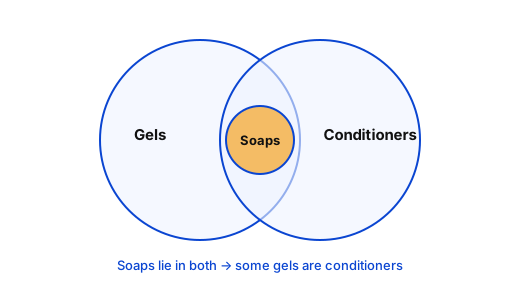
All soaps are gels.
All soaps are conditioners.
Conclusions:
(I) Some gels are conditioners.
(II) All conditioners are soaps.
दिए गए कथनों और निष्कर्षों को ध्यानपूर्वक पढ़िए। यह मानते हुए कि कथनों में दी गई जानकारी सत्य है, भले ही वह सामान्यतः ज्ञात तथ्यों से भिन्न प्रतीत होती हो, निर्णय लीजिए कि दिए गए निष्कर्षों में से कौन-सा/से निष्कर्ष कथनों का तार्किक रूप से अनुसरण करता है/करते हैं।
कथन:
सभी साबुन, जेल हैं।
सभी साबुन, कंडीशनर हैं।
निष्कर्ष:
(I) कुछ जेल, कंडीशनर हैं।
(II) सभी कंडीशनर, साबुन हैं।
  1. ABoth conclusions (I) and (II) follow.निष्कर्ष (I) और (II) दोनों अनुसरण करते हैं।
  2. BNeither conclusion (I) nor (II) follows.न तो निष्कर्ष (I) और न ही (II) अनुसरण करता है।
  3. COnly conclusion (II) follows.केवल निष्कर्ष (II) अनुसरण करता है।
  4. DOnly conclusion (I) follows.केवल निष्कर्ष (I) अनुसरण करता है।
Show answer

Concept: If all X are Y and all X are Z, then some Y are Z.

  1. Soaps lie inside Gels and inside Conditioners.
  2. So the soap region is common → Some gels are conditioners (I follows).
  3. Conditioners may contain more than soaps → II does not follow.

Trick: All + All with the same subject → "Some" conclusion between the two predicates.

Answer: (D) Only conclusion (I) follows.

अवधारणा: यदि सभी X, Y हैं और सभी X, Z हैं, तो कुछ Y, Z हैं।

  1. Soaps, Gels और Conditioners दोनों के अंदर।
  2. अतः कुछ Gels, Conditioners हैं (I सही)।
  3. सभी Conditioners, Soaps हों – आवश्यक नहीं (II गलत)।

ट्रिक: समान विषय वाले दो "सभी" → विधेयों में "कुछ" संबंध।

उत्तर: (D) केवल निष्कर्ष (I) अनुसरण करता है।

RRB NTPC Undergraduate CBT 1General Intelligence and ReasoningSyllogismRRB NTPC Undergraduate CBT 1 2024 · 2 Sep Shift 2 →
Q5171.
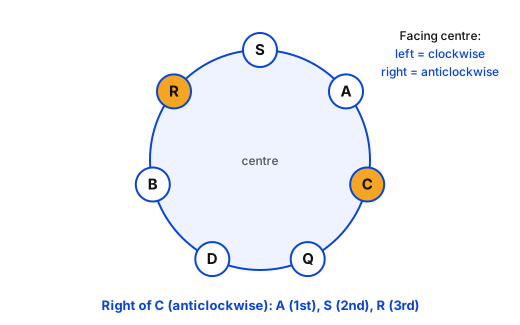
A, B, C, D, Q, R and S are sitting around a circular table, facing the centre of the table. Only two people sit between D and A, when counted from the left of A. Q sits third to the left of S. R sits to the immediate right of S. R sits second to the left of D. B is not an immediate neighbour of Q. Who sits third to the right of C?
A, B, C, D, Q, R और S एक वृत्ताकार मेज़ के चारों ओर मेज़ के केंद्र की ओर मुख करके बैठे हैं। A के बाएँ से गिनने पर, D और A के बीच केवल दो व्यक्ति बैठे हैं। Q, S के बाएँ से तीसरे स्थान पर बैठा है। R, S के ठीक दाएँ बैठा है। R, D के बाएँ से दूसरे स्थान पर बैठा है। B, Q का निकटतम पड़ोसी नहीं है। C के दाएँ से तीसरे स्थान पर कौन बैठा है?
  1. AD
  2. BS
  3. CR
  4. DA
Show answer

Concept: Facing the centre: left = clockwise, right = anticlockwise.

  1. Place S. R is immediate right of S; Q is 3rd to the left of S.
  2. R is 2nd to the left of D → D is 2nd to the right of R. A is 3rd to the left of D (two people between).
  3. Order clockwise: S, A, C/B, Q, D, B/C, R. B is not next to Q → B beside R, C beside A.
  4. Third to the right of C: A, S, R → R.

Trick: Fix a person who appears in most clues (S) and build around it.

Answer: (C) R

अवधारणा: केंद्र की ओर मुख: बायाँ = दक्षिणावर्त, दायाँ = वामावर्त।

  1. S रखें; R, S के ठीक दाएँ; Q, S के बाएँ तीसरा।
  2. R, D के बाएँ दूसरा → D, R के दाएँ दूसरा; A, D के बाएँ तीसरा।
  3. B, Q का पड़ोसी नहीं → B, R के पास; C, A के पास।
  4. C के दाएँ तीसरा: A, S, R → R।

ट्रिक: सबसे अधिक संकेतों वाले व्यक्ति (S) से शुरू करें।

उत्तर: (C) R

RRB NTPC Undergraduate CBT 1General Intelligence and ReasoningCircular seating arrangementRRB NTPC Undergraduate CBT 1 2024 · 2 Sep Shift 2 →
Q5172.
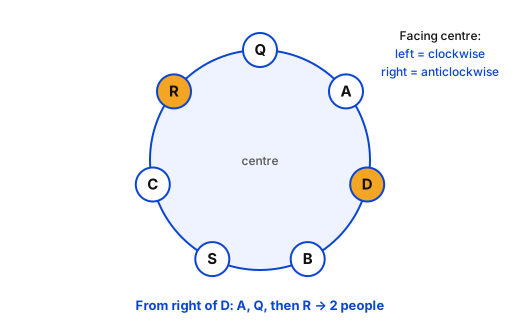
A, B, C, D, Q, R and S are sitting around a circular table, facing the centre of the table. B sits third to the left of Q. R sits second to the left of S. Q is an immediate neighbour of both A and R. C is not an immediate neighbour of B. How many people sit between D and R, when counted from the right of D?
A, B, C, D, Q, R और S एक वृत्ताकार मेज़ के चारों ओर मेज़ के केंद्र की ओर मुख करके बैठे हैं। B, Q के बाएँ से तीसरे स्थान पर बैठा है। R, S के बाएँ से दूसरे स्थान पर बैठा है। Q, A और R दोनों का निकटतम पड़ोसी है। C, B का निकटतम पड़ोसी नहीं है। D के दाएँ से गिनने पर, D और R के बीच कितने व्यक्ति बैठे हैं?
  1. AThreeतीन
  2. BOneएक
  3. CTwoदो
  4. DFourचार
Show answer

Concept: Facing the centre: left = clockwise, right = anticlockwise.

  1. Place Q; B is 3rd to the left of Q.
  2. Q sits between A and R. R is 2nd to the left of S: if R were on Q\'s left, S would clash with A, so R is on Q\'s right and A on Q\'s left.
  3. S is 2nd to the right of R. C, D fill the last two seats; C not next to B → D next to A.
  4. From the right of D: A, Q, then R → 2 people.

Trick: Test both sides for R; the wrong one causes a seat clash.

Answer: (C) Two

अवधारणा: केंद्र की ओर मुख: बायाँ = दक्षिणावर्त, दायाँ = वामावर्त।

  1. Q रखें; B, Q के बाएँ तीसरा।
  2. Q के दोनों ओर A और R; R को बाएँ रखने पर S व A टकराते हैं, अतः R दाएँ।
  3. S, R के दाएँ दूसरा; C, B का पड़ोसी नहीं → D, A के पास।
  4. D के दाएँ से: A, Q, फिर R → 2 व्यक्ति।

ट्रिक: R के दोनों विकल्प जाँचें; गलत वाले में टकराव होगा।

उत्तर: (C) दो

RRB NTPC Undergraduate CBT 1General Intelligence and ReasoningCircular seating arrangementRRB NTPC Undergraduate CBT 1 2024 · 2 Sep Shift 2 →
Q5173.
DREAM is related to IWJFR in a certain way based on the English alphabetical order. In the same way, FILED is related to KNQJI. To which of the given options is BLOWN related, following the same logic?
अंग्रेज़ी वर्णमाला क्रम के आधार पर, DREAM एक निश्चित प्रकार से IWJFR से संबंधित है। उसी प्रकार, FILED, KNQJI से संबंधित है। समान तर्क का अनुसरण करते हुए, BLOWN दिए गए विकल्पों में से किससे संबंधित है?
  1. AGQTBS
  2. BFPSAR
  3. CHRUCT
  4. DGRSCS
Show answer

Concept: Find the shift applied to each letter.

  1. DREAM → IWJFR: every letter +5 (D→I, R→W, E→J, A→F, M→R).
  2. FILED → KNQJI: again +5.
  3. BLOWN +5 → G, Q, T, B (W+5 wraps), S → GQTBS.

Trick: After Z, continue from A: W→X, Y, Z, A, B.

Answer: (A) GQTBS

अवधारणा: हर अक्षर पर लगाया गया अंतर खोजें।

  1. DREAM → IWJFR: हर अक्षर +5।
  2. FILED → KNQJI: +5।
  3. BLOWN +5 → GQTBS (W+5 = B)।

ट्रिक: Z के बाद फिर A से गिनें।

उत्तर: (A) GQTBS

RRB NTPC Undergraduate CBT 1General Intelligence and ReasoningLetter analogy – codingRRB NTPC Undergraduate CBT 1 2024 · 2 Sep Shift 2 →
Q5174.
Which of the following letter-number clusters will replace the question mark (?) in the given series to make it logically complete?
LOH19 MPI27 NQJ35 ORK43 ?
दी गई शृंखला को तार्किक रूप से पूर्ण करने के लिए निम्नलिखित में से कौन-सा अक्षर-संख्या समूह प्रश्न चिह्न (?) के स्थान पर आएगा?
LOH19 MPI27 NQJ35 ORK43 ?
  1. APSK50
  2. BPSL50
  3. CPSL51
  4. DPSK51
Show answer

Concept: Track each position separately.

  1. 1st letters: L, M, N, O → P. 2nd: O, P, Q, R → S. 3rd: H, I, J, K → L.
  2. Numbers: 19, 27, 35, 43 (+8) → 51.

Trick: Each letter +1, number +8.

Answer: (C) PSL51

अवधारणा: हर स्थान को अलग से देखें।

  1. पहला अक्षर L, M, N, O → P; दूसरा O, P, Q, R → S; तीसरा H, I, J, K → L।
  2. संख्या: +8 → 51।

ट्रिक: हर अक्षर +1, संख्या +8।

उत्तर: (C) PSL51

RRB NTPC Undergraduate CBT 1General Intelligence and ReasoningLetter-number seriesRRB NTPC Undergraduate CBT 1 2024 · 2 Sep Shift 2 →
Q5175.
Based on the English alphabetical order, three of the following four letter-clusters are alike in a certain way and thus form a group. Which letter-cluster DOES NOT belong to that group? (Note: The odd one out is not based on the number of consonants/vowels or their position in the letter-cluster.)
अंग्रेज़ी वर्णमाला क्रम के आधार पर, निम्नलिखित चार अक्षर-समूहों में से तीन किसी निश्चित प्रकार से एकसमान हैं और इस प्रकार एक समूह बनाते हैं। कौन-सा अक्षर-समूह उस समूह से संबंधित नहीं है? (ध्यान दें: असंगत का निर्धारण व्यंजनों/स्वरों की संख्या या अक्षर-समूह में उनके स्थान के आधार पर नहीं है।)
  1. AERM
  2. BBFJ
  3. CSWA
  4. DUYC
Show answer

Concept: Check the gaps between letters (A = 1 … Z = 26, wrapping after Z).

  1. BFJ: +4, +4. SWA: S+4 = W, W+4 = A. UYC: U+4 = Y, Y+4 = C.
  2. ERM: E+13 = R, R−5 = M → different.

Trick: Remember the wrap-around: W, X, Y, Z, A.

Answer: (A) ERM

अवधारणा: अक्षरों का अंतर देखें (Z के बाद A से)।

  1. BFJ, SWA, UYC: +4, +4।
  2. ERM: +13, −5 → अलग।

ट्रिक: Z के बाद A से गिनना न भूलें।

उत्तर: (A) ERM

RRB NTPC Undergraduate CBT 1General Intelligence and ReasoningOdd one out – letter clustersRRB NTPC Undergraduate CBT 1 2024 · 2 Sep Shift 2 →
Q5176.
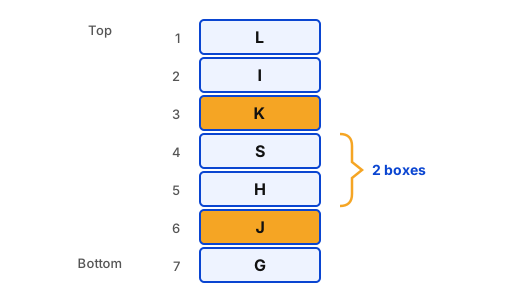
Seven boxes G, H, I, J, K, L and S are kept one over the other but not necessarily in the same order. Only three boxes are kept below S. Only two boxes are kept between S and L. Only G is kept below J. H is kept at some place below K and at some place above J. I is kept above K. How many boxes are kept between K and J?
सात बक्से G, H, I, J, K, L और S एक के ऊपर एक रखे गए हैं, लेकिन यह आवश्यक नहीं है कि वे इसी क्रम में हों। S के नीचे केवल तीन बक्से रखे गए हैं। S और L के बीच केवल दो बक्से रखे गए हैं। J के नीचे केवल G रखा गया है। H को K के नीचे किसी स्थान पर और J के ऊपर किसी स्थान पर रखा गया है। I को K के ऊपर रखा गया है। K और J के बीच कितने बक्से रखे गए हैं?
  1. AFourचार
  2. BOneएक
  3. CTwoदो
  4. DThreeतीन
Show answer

Concept: Fix certain positions first, then relative clues.

  1. Three boxes below S → S at 4. Only G below J → J 6, G 7.
  2. Two between S and L → L at 1 (7 is taken).
  3. I above K above H in places 2, 3, 5 → I 2, K 3, H 5.
  4. Between K (3) and J (6): S, H → two.

Trick: "Only G below J" fixes the bottom two boxes at once.

Answer: (C) Two

अवधारणा: पहले निश्चित स्थान, फिर सापेक्ष संकेत।

  1. S के नीचे तीन → S स्थान 4; केवल G, J के नीचे → J 6, G 7।
  2. S और L के बीच दो → L स्थान 1।
  3. I, K के ऊपर, K, H के ऊपर → I 2, K 3, H 5।
  4. K (3) और J (6) के बीच: S, H → दो।

ट्रिक: "केवल G, J के नीचे" से नीचे के दो स्थान तय।

उत्तर: (C) दो

RRB NTPC Undergraduate CBT 1General Intelligence and ReasoningBox stacking puzzleRRB NTPC Undergraduate CBT 1 2024 · 2 Sep Shift 2 →
Q5177.
If 1 is added to each even digit and 2 is subtracted from each odd digit in the number 5237648, how many digits will appear more than once in the new number thus formed?
यदि संख्या 5237648 में प्रत्येक सम अंक में 1 जोड़ दिया जाए और प्रत्येक विषम अंक में से 2 घटा दिया जाए, तो इस प्रकार बनी नई संख्या में कितने अंक एक से अधिक बार आएँगे?
  1. ANoneएक भी नहीं
  2. BTwoदो
  3. CThreeतीन
  4. DOneएक
Show answer

Concept: Apply the rule to each digit separately.

  1. 5237648: 5→3, 2→3, 3→1, 7→5, 6→7, 4→5, 8→9.
  2. New number 3315759.
  3. Repeated digits: 3 (twice) and 5 (twice) → 2.

Trick: Write the new digit under each old digit to avoid slips.

Answer: (B) Two

अवधारणा: हर अंक पर नियम अलग से लगाएँ।

  1. 5237648: 5→3, 2→3, 3→1, 7→5, 6→7, 4→5, 8→9।
  2. नई संख्या 3315759।
  3. दोहराए अंक: 3 और 5 → 2।

ट्रिक: हर पुराने अंक के नीचे नया अंक लिखें।

उत्तर: (B) दो

RRB NTPC Undergraduate CBT 1General Intelligence and ReasoningDigit operationsRRB NTPC Undergraduate CBT 1 2024 · 2 Sep Shift 2 →
Q5178.
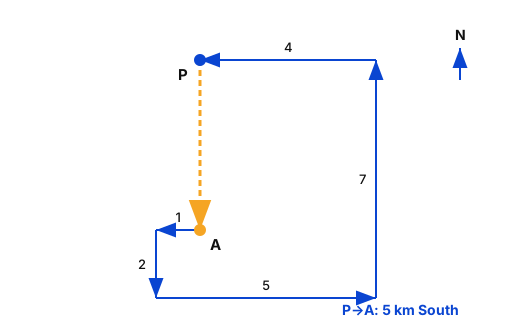
Mr. Bravo starts from Point A and drives 1 km towards the west. He then takes a left turn, drives 2 km, turns left and drives 5 km. He then takes a left turn and drives 7 km. He takes a final left turn, drives 4 km and stops at Point P. How far (shortest distance) and in which direction should he drive in order to reach Point A again? (All turns are 90- degree turns only unless specified.)
श्री ब्रावो बिंदु A से चलना शुरू करते हैं और पश्चिम की ओर 1 km गाड़ी चलाते हैं। फिर वे बाएँ मुड़ते हैं, 2 km गाड़ी चलाते हैं, बाएँ मुड़ते हैं और 5 km गाड़ी चलाते हैं। फिर वे बाएँ मुड़ते हैं और 7 km गाड़ी चलाते हैं। वे अंतिम बार बाएँ मुड़ते हैं, 4 km गाड़ी चलाते हैं और बिंदु P पर रुक जाते हैं। बिंदु A पर फिर से पहुँचने के लिए उन्हें कितनी दूर (न्यूनतम दूरी) और किस दिशा में गाड़ी चलानी चाहिए? (जब तक निर्दिष्ट न किया जाए, सभी मोड़ केवल 90 डिग्री के मोड़ हैं।)
  1. A4 km to the westपश्चिम की ओर 4 km
  2. B5 km to the southदक्षिण की ओर 5 km
  3. C2 km to the northउत्तर की ओर 2 km
  4. D6 km to the eastपूर्व की ओर 6 km
Show answer

Concept: Track coordinates: east/north +, west/south −. Each left turn rotates the facing 90° anticlockwise.

  1. A(0, 0) → 1 km W → (−1, 0).
  2. Left (S) 2 → (−1, −2); left (E) 5 → (4, −2).
  3. Left (N) 7 → (4, 5); left (W) 4 → P(0, 5).
  4. P is 5 km north of A, so he must drive 5 km south.

Trick: Net: E−W =5−1−4=0, N−S =7−2=5 north.

Answer: (B) 5 km to the south

अवधारणा: निर्देशांक लें: पूर्व/उत्तर +, पश्चिम/दक्षिण −; हर बायाँ मोड़ 90° वामावर्त।

  1. A(0, 0) → 1 km पश्चिम → (−1, 0)।
  2. बाएँ (दक्षिण) 2 → (−1, −2); बाएँ (पूर्व) 5 → (4, −2)।
  3. बाएँ (उत्तर) 7 → (4, 5); बाएँ (पश्चिम) 4 → P(0, 5)।
  4. P, A से 5 km उत्तर → 5 km दक्षिण जाना होगा।

ट्रिक: पूर्व−पश्चिम =5−1−4=0, उत्तर−दक्षिण =7−2=5।

उत्तर: (B) 5 km दक्षिण

RRB NTPC Undergraduate CBT 1General Intelligence and ReasoningDirection and distanceRRB NTPC Undergraduate CBT 1 2024 · 2 Sep Shift 2 →
Q5179.
In a certain code language,
'A = B' means ‘A is the mother of B’,
'A $ B' means ‘A is the brother of B’,
'A @ B' means ‘A is the wife of B’ and
'A * B' means ‘A is the father of B’.
How is W related to R if W $ A @ C * D = R?
एक निश्चित कूट भाषा में,
'A = B' का अर्थ है ‘A, B की माता है’,
'A $ B' का अर्थ है ‘A, B का भाई है’,
'A @ B' का अर्थ है ‘A, B की पत्नी है’ और
'A * B' का अर्थ है ‘A, B का पिता है’।
यदि W $ A @ C * D = R है, तो W, R से किस प्रकार संबंधित है?
  1. ABrotherभाई
  2. BFatherपिता
  3. CMother's fatherमाता के पिता
  4. DMother's mother's brotherमाता की माता के भाई
Show answer

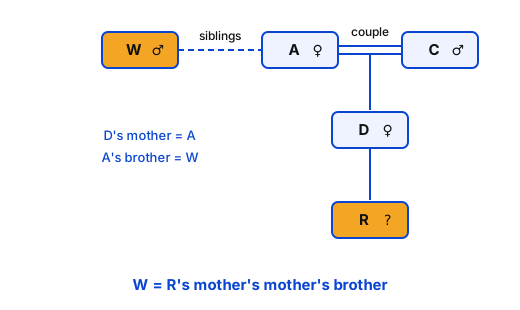
Concept: Decode each symbol and draw a family tree.

  1. W $ A: W is the brother of A. A @ C: A is the wife of C.
  2. C * D: C is the father of D, so A is D\'s mother.
  3. D = R: D is the mother of R.
  4. W = brother of A = R\'s mother\'s mother\'s brother.

Trick: Read the chain left to right: brother → wife → father → mother.

Answer: (D) Mother's mother's brother

अवधारणा: हर चिह्न को समझकर वंश-वृक्ष बनाएँ।

  1. W $ A: W, A का भाई। A @ C: A, C की पत्नी।
  2. C * D: C, D का पिता → A, D की माँ।
  3. D = R: D, R की माँ।
  4. W = R की माँ की माँ का भाई।

ट्रिक: शृंखला बाएँ से दाएँ पढ़ें।

उत्तर: (D) माँ की माँ का भाई

RRB NTPC Undergraduate CBT 1General Intelligence and ReasoningCoded blood relationsRRB NTPC Undergraduate CBT 1 2024 · 2 Sep Shift 2 →
Q5180.
What will come in place of the question mark (?) in the following equation, if ‘+’ and ‘×’ are interchanged and ‘−’ and ‘÷’ are interchanged?
42 ÷ 11 + 3 × 18 − 2 = ?
यदि ‘+’ और ‘×’ को आपस में बदल दिया जाए तथा ‘−’ और ‘÷’ को आपस में बदल दिया जाए, तो निम्नलिखित समीकरण में प्रश्न चिह्न (?) के स्थान पर क्या आएगा?
42 ÷ 11 + 3 × 18 − 2 = ?
  1. A36
  2. B24
  3. C30
  4. D18
Show answer

Concept: Swap the signs, then use BODMAS.

  1. 42÷11+3×18−2 becomes 42−11×3+18÷2.
  2. =42−33+9=18.

Trick: Do the swap on paper first; most mistakes come from swapping only one pair.

Answer: (D) 18

अवधारणा: चिह्न बदलें, फिर BODMAS लगाएँ।

  1. 42−11×3+18÷2।
  2. =42−33+9=18।

ट्रिक: पहले पूरा व्यंजक बदलकर लिखें।

उत्तर: (D) 18

RRB NTPC Undergraduate CBT 1General Intelligence and ReasoningMathematical operations – interchangeRRB NTPC Undergraduate CBT 1 2024 · 2 Sep Shift 2 →