Question bank

Q&A: practice questions with answers

Search questions on any topic. Filter by exam category, exam, subject and topic, try the question, then open the answer and explanation.

Courses – airGurukul

8,495 questions found.

Q5181.
If 1 is added to each odd digit and 4 is subtracted from each even digit in the number 6854376, what will be difference between the highest and lowest digits in the new number thus formed?
यदि संख्या 6854376 में प्रत्येक विषम अंक में 1 जोड़ दिया जाए और प्रत्येक सम अंक में से 4 घटा दिया जाए, तो इस प्रकार बनी नई संख्या में सबसे बड़े और सबसे छोटे अंकों के बीच का अंतर क्या होगा?
  1. A6
  2. B7
  3. C8
  4. D4
Show answer

Concept: Apply the rule to each digit separately.

  1. 6854376: 6→2, 8→4, 5→6, 4→0, 3→4, 7→8, 6→2.
  2. New number 2460482.
  3. Highest 8, lowest 0 → difference 8.

Trick: Odd digits +1 become even; even digits −4.

Answer: (C) 8

अवधारणा: हर अंक पर नियम अलग से लगाएँ।

  1. 6854376: 6→2, 8→4, 5→6, 4→0, 3→4, 7→8, 6→2।
  2. नई संख्या 2460482।
  3. सबसे बड़ा 8, सबसे छोटा 0 → अंतर 8।

ट्रिक: विषम +1, सम −4।

उत्तर: (C) 8
RRB NTPC Undergraduate CBT 1General Intelligence and ReasoningDigit operationsRRB NTPC Undergraduate CBT 1 2024 · 2 Sep Shift 2 →
Q5182.
Each of the digits in the number 5368794 is arranged in the ascending order from left to right. What will be the sum of the digits that are first from the left and first from the right in the new number thus formed?
संख्या 5368794 के प्रत्येक अंक को बाएँ से दाएँ आरोही क्रम में व्यवस्थित किया जाता है। इस प्रकार बनी नई संख्या में बाएँ से पहले और दाएँ से पहले अंकों का योगफल क्या होगा?
  1. A10
  2. B9
  3. C12
  4. D7
Show answer

Concept: Ascending order puts the smallest digit first and the largest last.

  1. 5368794 → 3456789.
  2. First 3, last 9 → 3+9=12.

Trick: Smallest + largest digit, no need to write the whole number.

Answer: (C) 12

अवधारणा: आरोही क्रम में सबसे छोटा अंक पहले, सबसे बड़ा अंत में।

  1. 5368794 → 3456789।
  2. 3+9=12।

ट्रिक: सबसे छोटा + सबसे बड़ा अंक।

उत्तर: (C) 12

RRB NTPC Undergraduate CBT 1General Intelligence and ReasoningDigit arrangementRRB NTPC Undergraduate CBT 1 2024 · 2 Sep Shift 2 →
Q5183.
Which of the following letter-number clusters will replace the question mark (?) in the given series to make it logically complete?
IGE 16, LJH 21, OMK 26, RPN 31, ?
दी गई शृंखला को तार्किक रूप से पूर्ण करने के लिए निम्नलिखित में से कौन-सा अक्षर-संख्या समूह प्रश्न चिह्न (?) के स्थान पर आएगा?
IGE 16, LJH 21, OMK 26, RPN 31, ?
  1. AUYX 36
  2. BUSQ 36
  3. CVXY 28
  4. DVYW 36
Show answer

Concept: Track each position separately.

  1. 1st letters I, L, O, R (+3) → U; 2nd G, J, M, P → S; 3rd E, H, K, N → Q.
  2. Numbers 16, 21, 26, 31 (+5) → 36.

Trick: Only one option starts with U and has S, Q: USQ 36.

Answer: (B) USQ 36

अवधारणा: हर स्थान को अलग से देखें।

  1. अक्षर +3: I→L→O→R→U, G→…→S, E→…→Q।
  2. संख्या +5 → 36।

ट्रिक: U, S, Q वाला विकल्प: USQ 36।

उत्तर: (B) USQ 36

RRB NTPC Undergraduate CBT 1General Intelligence and ReasoningLetter-number seriesRRB NTPC Undergraduate CBT 1 2024 · 2 Sep Shift 2 →
Q5184.
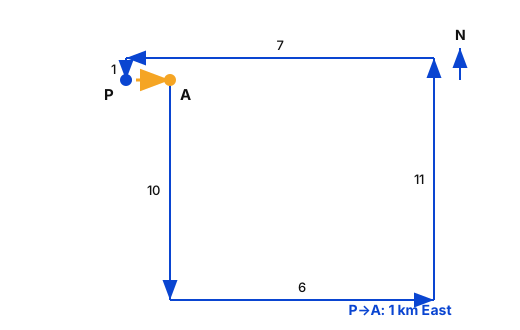
Kasish starts from Point A and drives 10 km towards south. She then takes a left turn, drives 6 km, turns left and drives 11 km. She then takes a left turn and drives 7 km. She takes a final left turn, drives 1 km and stops at Point P. How far (shortest distance) and towards which direction should she drive in order to reach Point A again? (All turns are 90° turns only unless specified.)
कशिश बिंदु A से चलना शुरू करती है और दक्षिण की ओर 10 km गाड़ी चलाती है। फिर वह बाएँ मुड़ती है, 6 km गाड़ी चलाती है, बाएँ मुड़ती है और 11 km गाड़ी चलाती है। फिर वह बाएँ मुड़ती है और 7 km गाड़ी चलाती है। वह अंतिम बार बाएँ मुड़ती है, 1 km गाड़ी चलाती है और बिंदु P पर रुक जाती है। बिंदु A पर फिर से पहुँचने के लिए उसे कितनी दूर (न्यूनतम दूरी) और किस दिशा की ओर गाड़ी चलानी चाहिए? (जब तक निर्दिष्ट न किया जाए, सभी मोड़ केवल 90° के मोड़ हैं।)
  1. A1 km to eastपूर्व की ओर 1 km
  2. B2 km to eastपूर्व की ओर 2 km
  3. C1 km to westपश्चिम की ओर 1 km
  4. D​2 km to westपश्चिम की ओर 2 km
Show answer

Concept: Track coordinates: east/north +, west/south −.

  1. A(0, 0) → 10 km S → (0, −10).
  2. Left (E) 6 → (6, −10); left (N) 11 → (6, 1).
  3. Left (W) 7 → (−1, 1); left (S) 1 → P(−1, 0).
  4. P is 1 km west of A → drive 1 km east.

Trick: N−S: 11−10−1=0; E−W: 6−7=−1 (west).

Answer: (A) 1 km to east

अवधारणा: निर्देशांक लें: पूर्व/उत्तर +, पश्चिम/दक्षिण −।

  1. A(0, 0) → 10 km दक्षिण → (0, −10)।
  2. बाएँ (पूर्व) 6 → (6, −10); बाएँ (उत्तर) 11 → (6, 1)।
  3. बाएँ (पश्चिम) 7 → (−1, 1); बाएँ (दक्षिण) 1 → P(−1, 0)।
  4. P, A से 1 km पश्चिम → 1 km पूर्व जाना होगा।

ट्रिक: उत्तर−दक्षिण: 11−10−1=0; पूर्व−पश्चिम: 6−7=−1।

उत्तर: (A) 1 km पूर्व

RRB NTPC Undergraduate CBT 1General Intelligence and ReasoningDirection and distanceRRB NTPC Undergraduate CBT 1 2024 · 2 Sep Shift 2 →
Q5185.
What should come in place of the question mark (?) in the given series?
13 29 55 113 223 ?
दी गई शृंखला में प्रश्न चिह्न (?) के स्थान पर क्या आना चाहिए?
13 29 55 113 223 ?
  1. A494
  2. B449
  3. C498
  4. D489
Show answer

Concept: Look for a "×2 ± constant" pattern.

  1. 13×2+3=29, 29×2−3=55, 55×2+3=113, 113×2−3=223.
  2. Next: 223×2+3=449.

Trick: Terms roughly double → test ×2 and see the alternating +3,−3.

Answer: (B) 449

अवधारणा: "×2 ± स्थिरांक" पैटर्न देखें।

  1. 13×2+3=29, 29×2−3=55, 55×2+3=113, 113×2−3=223।
  2. अगला: 223×2+3=449।

ट्रिक: पद लगभग दोगुने → ×2 के साथ +3,−3।

उत्तर: (B) 449

RRB NTPC Undergraduate CBT 1General Intelligence and ReasoningNumber seriesRRB NTPC Undergraduate CBT 1 2024 · 2 Sep Shift 2 →
Q5186.
Piyush is ranked 11th from the top and 29th from the bottom in his class. How many students are there in the class?
पीयूष अपनी कक्षा में ऊपर से 11वें और नीचे से 29वें स्थान पर है। कक्षा में कितने विद्यार्थी हैं?
  1. A38
  2. B40
  3. C37
  4. D39
Show answer

Concept: Total = rank from top + rank from bottom − 1.

  1. 10 students above Piyush and 28 below him.
  2. Total =10+1+28=11+29−1=39.

Trick: Subtract 1 because Piyush is counted in both ranks.

Answer: (D) 39

अवधारणा: कुल = ऊपर से रैंक + नीचे से रैंक − 1।

  1. पीयूष के ऊपर 10, नीचे 28 छात्र।
  2. कुल =11+29−1=39।

ट्रिक: पीयूष दोनों रैंकों में गिना गया, इसलिए −1।

उत्तर: (D) 39

RRB NTPC Undergraduate CBT 1General Intelligence and ReasoningRankingRRB NTPC Undergraduate CBT 1 2024 · 2 Sep Shift 2 →
Q5187.
In the following number-pairs, the second number is obtained by applying certain mathematical operations to the first number. Select the pair in which the numbers are related in the same way as are the numbers of the following pairs.
(Note: Operations should be performed on the whole numbers, without breaking down the numbers into its constituent digits. E.g., 13 – Operations on 13 such as
adding/subtracting/multiplying etc. to 13 can be performed. Breaking down 13 into 1 and 3 and then performing mathematical operations on 1 and 3 is not allowed.) 12, 146
8, 66
निम्नलिखित संख्या-युग्मों में, पहली संख्या पर कुछ गणितीय संक्रियाएँ करके दूसरी संख्या प्राप्त की जाती है। वह युग्म चुनिए जिसमें संख्याएँ उसी प्रकार संबंधित हैं जिस प्रकार निम्नलिखित युग्मों की संख्याएँ संबंधित हैं।
(ध्यान दें: संक्रियाएँ संख्याओं को उनके घटक अंकों में विभाजित किए बिना, पूर्ण संख्याओं पर की जानी चाहिए। उदाहरण के लिए, 13 – 13 पर संक्रियाएँ जैसे
13 में जोड़ना/घटाना/गुणा करना आदि किया जा सकता है। 13 को 1 और 3 में विभाजित करना और फिर 1 और 3 पर गणितीय संक्रियाएँ करना वर्जित है।) 12, 146
8, 66
  1. A6, 34
  2. B11, 123
  3. C7, 49
  4. D4, 66
Show answer

Concept: Find one rule that fits both given pairs.

  1. 122+2=146 and 82+2=66 → rule: n2+2.
  2. Check options: 62+2=38≠34; 112+2=123 ✓; 72+2=51≠49; 42+2=18≠66.

Trick: Second number just above a perfect square → think n2+k.

Answer: (B) 11, 123

अवधारणा: ऐसा नियम खोजें जो दोनों युग्मों पर लागू हो।

  1. 122+2=146, 82+2=66 → नियम n2+2।
  2. विकल्प: 112+2=123 ✓; बाकी नहीं मिलते।

ट्रिक: दूसरी संख्या पूर्ण वर्ग से थोड़ी अधिक → n2+k सोचें।

उत्तर: (B) 11, 123

RRB NTPC Undergraduate CBT 1General Intelligence and ReasoningNumber pair analogyRRB NTPC Undergraduate CBT 1 2024 · 2 Sep Shift 2 →
Q5188.
In the following triad, each group of letters is related to the subsequent one following a certain logic. Select from the given options, the one which follows the same logic. BLOW - WLBO - LOBW
LEAF - FELA - EALF
निम्नलिखित त्रय में, अक्षरों का प्रत्येक समूह एक निश्चित तर्क का अनुसरण करते हुए अगले समूह से संबंधित है। दिए गए विकल्पों में से वह विकल्प चुनिए जो समान तर्क का अनुसरण करता है। BLOW - WLBO - LOBW
LEAF - FELA - EALF
  1. AMOVE - EOMV - VOME
  2. BTOUR - OTUR - ROUT
  3. CCLAW - CALW - WALC
  4. DFANG - GAFN - ANFG
Show answer

Concept: Write letter positions 1 2 3 4 and track where each goes.

  1. BLOW → WLBO: order 4-2-1-3. WLBO → LOBW: order 2-4-3-1 of the 2nd word.
  2. LEAF → FELA → EALF follows the same.
  3. FANG → GAFN (4-2-1-3) → ANFG (2-4-3-1) ✓.

Trick: Test only the first step on each option; one match usually decides.

Answer: (D) FANG - GAFN - ANFG

अवधारणा: अक्षरों की स्थिति 1 2 3 4 लिखकर बदलाव देखें।

  1. BLOW → WLBO: क्रम 4-2-1-3; WLBO → LOBW: क्रम 2-4-3-1।
  2. LEAF → FELA → EALF भी यही।
  3. FANG → GAFN → ANFG ✓।

ट्रिक: हर विकल्प में पहला चरण जाँचें।

उत्तर: (D) FANG - GAFN - ANFG

RRB NTPC Undergraduate CBT 1General Intelligence and ReasoningLetter rearrangement patternRRB NTPC Undergraduate CBT 1 2024 · 2 Sep Shift 2 →
Q5189.
Refer to the following number and symbol series and answer the question that follows. Counting to be done from left to right only.
(Left) % 9 % 2 7 5 & $ * 5 © 6 1 1 * € 4 # 1 7 3 @ (Right)
How many such symbols are there each of which is immediately preceded by a number and also immediately followed by a symbol?
निम्नलिखित संख्या और प्रतीक शृंखला को देखिए और उसके बाद दिए गए प्रश्न का उत्तर दीजिए। गिनती केवल बाएँ से दाएँ की जानी है।
(बाएँ) % 9 % 2 7 5 & $ * 5 © 6 1 1 * € 4 # 1 7 3 @ (दाएँ)
ऐसे कितने प्रतीक हैं जिनमें से प्रत्येक के ठीक पहले एक संख्या है और ठीक बाद भी एक प्रतीक है?
  1. A3
  2. B4
  3. C1
  4. D2
Show answer

Concept: Look for the pattern: number – symbol – symbol.

  1. Check every symbol: % (after 9, before 2) ✗; & (after 5, before $) ✓.
  2. $ and the first * are preceded by symbols ✗; © is followed by 6 ✗.
  3. * after 1, before € ✓; € and # ✗; @ is last ✗.
  4. Total = 2.

Trick: Scan only the numbers and look two places ahead: number, symbol, symbol.

Answer: (D) 2

अवधारणा: पैटर्न खोजें: संख्या – प्रतीक – प्रतीक।

  1. % (9 के बाद, 2 से पहले) ✗; & (5 के बाद, $ से पहले) ✓।
  2. $ व पहला * प्रतीक के बाद ✗; © के बाद 6 ✗।
  3. * (1 के बाद, € से पहले) ✓; € व # ✗; @ अंतिम ✗।
  4. कुल = 2।

ट्रिक: हर संख्या से आगे दो स्थान देखें।

उत्तर: (D) 2

RRB NTPC Undergraduate CBT 1General Intelligence and ReasoningSymbol-number seriesRRB NTPC Undergraduate CBT 1 2024 · 2 Sep Shift 2 →
Q5190.
In the following triads, each group of letters is related to the subsequent one following a certain logic. Select from the given options, the one which follows the same logic. TOES - SETO - TEOS
CLAP - PACL - CALP
निम्नलिखित त्रयों में, अक्षरों का प्रत्येक समूह एक निश्चित तर्क का अनुसरण करते हुए अगले समूह से संबंधित है। दिए गए विकल्पों में से वह विकल्प चुनिए जो समान तर्क का अनुसरण करता है। TOES - SETO - TEOS
CLAP - PACL - CALP
  1. ACALF - FLCA - ALCF
  2. BRUST - RSUT - TSUR
  3. CTUNE - UNTE - UNET
  4. DMICK - KCMI - MCIK
Show answer

Concept: Write letter positions 1 2 3 4 and track where each goes.

  1. TOES → SETO: order 4-3-1-2. SETO → TEOS: order 3-2-4-1 of the 2nd word.
  2. CLAP → PACL → CALP follows the same.
  3. MICK → KCMI (4-3-1-2) → MCIK (3-2-4-1) ✓.

Trick: Step 1 is the word reversed with the last two letters swapped back – spot it quickly.

Answer: (D) MICK - KCMI - MCIK

अवधारणा: अक्षरों की स्थिति 1 2 3 4 लिखकर बदलाव देखें।

  1. TOES → SETO: क्रम 4-3-1-2; SETO → TEOS: क्रम 3-2-4-1।
  2. CLAP → PACL → CALP भी यही।
  3. MICK → KCMI → MCIK ✓।

ट्रिक: हर विकल्प में पहला चरण जाँचें।

उत्तर: (D) MICK - KCMI - MCIK

RRB NTPC Undergraduate CBT 1General Intelligence and ReasoningLetter rearrangement patternRRB NTPC Undergraduate CBT 1 2024 · 2 Sep Shift 2 →
Q5191.
What should come in place of the question mark (?) in the given series?
789 799 800 810 811 821 822 ?
दी गई शृंखला में प्रश्न चिह्न (?) के स्थान पर क्या आना चाहिए?
789 799 800 810 811 821 822 ?
  1. A832
  2. B833
  3. C831
  4. D823
Show answer

Concept: Find the differences between consecutive terms.

  1. Differences: +10, +1, +10, +1, +10, +1.
  2. Next: 822+10=832.

Trick: Alternating differences → continue the cycle.

Answer: (A) 832

अवधारणा: क्रमागत पदों का अंतर देखें।

  1. अंतर: +10, +1 बारी-बारी से।
  2. अगला: 822+10=832।

ट्रिक: बारी-बारी वाले अंतर का चक्र जारी रखें।

उत्तर: (A) 832

RRB NTPC Undergraduate CBT 1General Intelligence and ReasoningNumber seriesRRB NTPC Undergraduate CBT 1 2024 · 2 Sep Shift 2 →
Q5192.
In a certain code language, ‘MUGS’ is coded as ‘4627’ and ‘UNIT’ is coded as ‘1375’. What is the code for ‘U’ in the given code language?
एक निश्चित कूट भाषा में, ‘MUGS’ को ‘4627’ के रूप में कूटबद्ध किया जाता है और ‘UNIT’ को ‘1375’ के रूप में कूटबद्ध किया जाता है। दी गई कूट भाषा में ‘U’ के लिए कूट क्या है?
  1. A5
  2. B6
  3. C1
  4. D7
Show answer

Concept: A letter common to two words gets the digit common to both codes.

  1. MUGS → 4627, UNIT → 1375.
  2. Common letter: U; common digit: 7.

Trick: Match common letters with common digits.

Answer: (D) 7

अवधारणा: दो शब्दों में साझा अक्षर का कोड साझा अंक होता है।

  1. MUGS → 4627, UNIT → 1375।
  2. साझा अक्षर U; साझा अंक 7।

ट्रिक: साझा अक्षर ↔ साझा अंक।

उत्तर: (D) 7

RRB NTPC Undergraduate CBT 1General Intelligence and ReasoningCoding-decoding – common letterRRB NTPC Undergraduate CBT 1 2024 · 2 Sep Shift 2 →
Q5193.
What should come in place of the question mark (?) in the given series?
31 32 34 38 46 ?
दी गई शृंखला में प्रश्न चिह्न (?) के स्थान पर क्या आना चाहिए?
31 32 34 38 46 ?
  1. A63
  2. B64
  3. C61
  4. D62
Show answer

Concept: Find the differences between consecutive terms.

  1. Differences: 1, 2, 4, 8 (doubling).
  2. Next difference 16: 46+16=62.

Trick: Doubling differences are a common RRB pattern.

Answer: (D) 62

अवधारणा: क्रमागत पदों का अंतर देखें।

  1. अंतर: 1, 2, 4, 8 (दोगुने)।
  2. अगला अंतर 16: 46+16=62।

ट्रिक: दोगुने होते अंतर – सामान्य पैटर्न।

उत्तर: (D) 62

RRB NTPC Undergraduate CBT 1General Intelligence and ReasoningNumber seriesRRB NTPC Undergraduate CBT 1 2024 · 2 Sep Shift 2 →
Q5194.
Based on the English alphabetical order, three of the following four letter-cluster pairs are alike in a certain way and thus form a group. Which letter-cluster pair DOES NOT belong to that group?
(Note: The odd one out is not based on the number of consonants/vowels or their position in the letter-cluster pair.)
अंग्रेज़ी वर्णमाला क्रम के आधार पर, निम्नलिखित चार अक्षर-समूह युग्मों में से तीन किसी निश्चित प्रकार से एकसमान हैं और इस प्रकार एक समूह बनाते हैं। कौन-सा अक्षर-समूह युग्म उस समूह से संबंधित नहीं है?
(ध्यान दें: असंगत का निर्धारण व्यंजनों/स्वरों की संख्या या अक्षर-समूह युग्म में उनके स्थान के आधार पर नहीं है।)
  1. AFH-HJ
  2. BIK-KM
  3. CMO-OQ
  4. DRT-TB
Show answer

Concept: Check the gaps between letters (A = 1 … Z = 26).

  1. FH-HJ, IK-KM, MO-OQ: each step +2 (F, H, J …).
  2. RT-TB: R+2 = T, but T+2 = V, not B.

Trick: Pattern: first letter +2, then +2 again.

Answer: (D) RT-TB

अवधारणा: अक्षरों का अंतर देखें।

  1. FH-HJ, IK-KM, MO-OQ: हर बार +2।
  2. RT-TB: T+2 = V होना चाहिए, B नहीं।

ट्रिक: पैटर्न: +2, +2।

उत्तर: (D) RT-TB

RRB NTPC Undergraduate CBT 1General Intelligence and ReasoningOdd one out – letter pairsRRB NTPC Undergraduate CBT 1 2024 · 2 Sep Shift 2 →
Q5195.
Refer to the following number and symbol series and answer the question that follows. All numbers are single-digit. Counting to be done from left to right.
(Left) & 3 Ω 9 # 1 * 2 + % 4 6 @ 8 $ 7 £ 5 (Right)
How many such symbols are there each of which is immediately preceded by a number and also immediately followed by another number?
निम्नलिखित संख्या और प्रतीक शृंखला को देखिए और उसके बाद दिए गए प्रश्न का उत्तर दीजिए। सभी संख्याएँ एक-अंकीय हैं। गिनती बाएँ से दाएँ की जानी है।
(बाएँ) & 3 Ω 9 # 1 * 2 + % 4 6 @ 8 $ 7 £ 5 (दाएँ)
ऐसे कितने प्रतीक हैं जिनमें से प्रत्येक के ठीक पहले एक संख्या है और ठीक बाद भी एक अन्य संख्या है?
  1. A4
  2. B7
  3. C6
  4. D5
Show answer

Concept: Look for the pattern: number – symbol – number.

  1. Ω (3, 9) ✓; # (9, 1) ✓; * (1, 2) ✓.
  2. + (2, %) ✗; % (+, 4) ✗; & is first ✗.
  3. @ (6, 8) ✓; $ (8, 7) ✓; £ (7, 5) ✓.
  4. Total = 6.

Trick: Mark each symbol sitting between two numbers.

Answer: (C) 6

अवधारणा: पैटर्न खोजें: संख्या – प्रतीक – संख्या।

  1. Ω (3, 9) ✓; # (9, 1) ✓; * (1, 2) ✓।
  2. + (2, %) ✗; % (+, 4) ✗; & पहला ✗।
  3. @ (6, 8) ✓; $ (8, 7) ✓; £ (7, 5) ✓।
  4. कुल = 6।

ट्रिक: दो संख्याओं के बीच वाले प्रतीक गिनें।

उत्तर: (C) 6

RRB NTPC Undergraduate CBT 1General Intelligence and ReasoningSymbol-number seriesRRB NTPC Undergraduate CBT 1 2024 · 2 Sep Shift 2 →
Q5196.
Which of the following sectors was the primary focus of India's First Five-Year Plan (1951–56)?
निम्नलिखित में से कौन-सा क्षेत्र भारत की प्रथम पंचवर्षीय योजना (1951–56) का प्राथमिक केंद्र बिंदु था?
  1. AIndustry and Infrastructureउद्योग और अवसंरचना
  2. BDefence and Securityरक्षा और सुरक्षा
  3. CServices and Educationसेवाएँ और शिक्षा
  4. DAgriculture and Irrigationकृषि और सिंचाई
Show answer

Concept: The First Five-Year Plan (1951–56) was based on the Harrod–Domar model and aimed to solve the post-Partition food crisis.

  1. It gave top priority to agriculture, irrigation and power projects (e.g. Bhakra-Nangal, Damodar Valley).
  2. India faced food shortage and refugee problems after 1947, so farm output came first.
  3. Heavy industry focus (Mahalanobis model) started only with the Second Plan (1956–61).

Yaad rakhein: 1st Plan = Agriculture; 2nd Plan = Industry.

Answer: (D) Agriculture and Irrigation

अवधारणा: प्रथम पंचवर्षीय योजना (1951–56) हैरोड–डोमर मॉडल पर आधारित थी और विभाजन के बाद के खाद्य संकट को हल करना इसका लक्ष्य था।

  1. इसमें कृषि, सिंचाई और बिजली परियोजनाओं (जैसे भाखड़ा-नांगल, दामोदर घाटी) को सर्वोच्च प्राथमिकता दी गई।
  2. 1947 के बाद खाद्यान्न की कमी थी, इसलिए कृषि उत्पादन पहले रखा गया।
  3. भारी उद्योग पर ज़ोर (महालनोबिस मॉडल) दूसरी योजना (1956–61) से शुरू हुआ।

याद रखें: पहली योजना = कृषि; दूसरी योजना = उद्योग।

उत्तर: (D) Agriculture and Irrigation (कृषि और सिंचाई)

RRB NTPC Undergraduate CBT 1General AwarenessFive-Year PlansRRB NTPC Undergraduate CBT 1 2024 · 2 Sep Shift 1 →
Q5197.
Which year was the Pradhan Mantri Jan Dhan Yojana launched?
प्रधानमंत्री जन धन योजना किस वर्ष शुरू की गई थी?
  1. A2014
  2. B2013
  3. C2016
  4. D2015
Show answer

Concept: Pradhan Mantri Jan Dhan Yojana (PMJDY) is the National Mission for Financial Inclusion.

  1. It was announced on 15 August 2014 and launched on 28 August 2014.
  2. It provides zero-balance bank accounts with RuPay debit card and accident insurance cover.
  3. It entered the Guinness World Records for most bank accounts opened in one week.

Yaad rakhein: Jan Dhan = 28 August 2014, the first big scheme of the Modi government.

Answer: (A) 2014

अवधारणा: प्रधानमंत्री जन धन योजना (PMJDY) वित्तीय समावेशन (Financial Inclusion) का राष्ट्रीय मिशन है।

  1. इसकी घोषणा 15 अगस्त 2014 को हुई और शुरुआत 28 अगस्त 2014 को हुई।
  2. इसमें शून्य-बैलेंस खाता, RuPay डेबिट कार्ड और दुर्घटना बीमा मिलता है।
  3. एक सप्ताह में सर्वाधिक बैंक खाते खोलने का गिनीज़ विश्व रिकॉर्ड इसके नाम है।

याद रखें: जन धन = 28 अगस्त 2014।

उत्तर: (A) 2014

RRB NTPC Undergraduate CBT 1General AwarenessGovernment schemesRRB NTPC Undergraduate CBT 1 2024 · 2 Sep Shift 1 →
Q5198.
Which Indian university showcased India's first fully automated vegetable sapling transplanter at the Ente Keralam exhibition, held in May 2025 at Marine Drive, Kochi, as part of the Kerala government's fourth-anniversary celebrations?
केरल सरकार की चौथी वर्षगांठ समारोह के अंतर्गत मई 2025 में मरीन ड्राइव, कोच्चि में आयोजित एंटे केरलम प्रदर्शनी में किस भारतीय विश्वविद्यालय ने भारत के पहले पूर्णतः स्वचालित सब्ज़ी पौध रोपाई यंत्र (vegetable sapling transplanter) का प्रदर्शन किया?
  1. AIndian Institute of Science (IISc), Bengaluruभारतीय विज्ञान संस्थान (IISc), बेंगलुरु
  2. BCochin University of Science and Technology (Cusat)कोचीन विज्ञान एवं प्रौद्योगिकी विश्वविद्यालय (Cusat)
  3. CIndian Institute of Technology Madras (IIT-M)भारतीय प्रौद्योगिकी संस्थान मद्रास (IIT-M)
  4. DKerala Agricultural Universityकेरल कृषि विश्वविद्यालय
Show answer

Concept: Current affairs, May 2025: Ente Keralam exhibition at Marine Drive, Kochi.

  1. Cochin University of Science and Technology (CUSAT) displayed India’s first fully automated vegetable sapling transplanter at the expo.
  2. The machine picks seedlings from trays and plants them automatically, cutting labour cost for farmers.
  3. Ente Keralam marked the fourth anniversary of the second Pinarayi Vijayan government.

Yaad rakhein: Kochi expo + Kochi-based university = CUSAT.

Answer: (B) Cochin University of Science and Technology (Cusat)

अवधारणा: समसामयिकी, मई 2025: मरीन ड्राइव, कोच्चि में ‘एन्टे केरलम’ प्रदर्शनी।

  1. कोचीन विज्ञान एवं प्रौद्योगिकी विश्वविद्यालय (CUSAT) ने भारत का पहला पूर्णतः स्वचालित सब्ज़ी पौध रोपण यंत्र (sapling transplanter) प्रदर्शित किया।
  2. यह मशीन ट्रे से पौध उठाकर अपने-आप रोपती है, जिससे किसानों की मज़दूरी लागत घटती है।
  3. यह प्रदर्शनी केरल सरकार की चौथी वर्षगांठ पर आयोजित हुई।

याद रखें: कोच्चि की प्रदर्शनी + कोच्चि का विश्वविद्यालय = CUSAT।

उत्तर: (B) Cochin University of Science and Technology (Cusat)

RRB NTPC Undergraduate CBT 1General AwarenessCurrent affairs – Science & TechnologyRRB NTPC Undergraduate CBT 1 2024 · 2 Sep Shift 1 →
Q5199.
Which of the following local winds is known to bring rain to Tamil Nadu during winter?
निम्नलिखित में से कौन-सी स्थानीय पवन शीत ऋतु के दौरान तमिलनाडु में वर्षा लाने के लिए जानी जाती है?
  1. ANortheast monsoonउत्तर-पूर्वी मानसून
  2. BJet streamजेट स्ट्रीम
  3. CSouthwest monsoonदक्षिण-पश्चिमी मानसून
  4. DNor'westerनॉर'वेस्टर
Show answer

Concept: Tamil Nadu (Coromandel coast) gets most of its rain in winter (October–December) from the retreating / Northeast monsoon.

  1. In winter, winds blow from the northeast over land, pick up moisture over the Bay of Bengal and shed it on the Tamil Nadu coast.
  2. The Southwest monsoon (June–Sept) gives little rain to Tamil Nadu as it lies in the rain-shadow of the Western Ghats.
  3. Nor’westers (Kalbaisakhi) are pre-monsoon storms of West Bengal/Assam.

Yaad rakhein: Tamil Nadu = winter rain = NE monsoon (via Bay of Bengal).

Answer: (A) Northeast monsoon

अवधारणा: तमिलनाडु (कोरोमंडल तट) में अधिकांश वर्षा शीत ऋतु (अक्टूबर–दिसंबर) में लौटते हुए / उत्तर-पूर्वी मानसून से होती है।

  1. शीतकाल में हवाएँ उत्तर-पूर्व से चलती हैं, बंगाल की खाड़ी से नमी लेकर तमिलनाडु तट पर बरसती हैं।
  2. दक्षिण-पश्चिम मानसून (जून–सितंबर) में तमिलनाडु पश्चिमी घाट की वृष्टि-छाया (rain-shadow) में रहता है।
  3. नॉर्वेस्टर (कालबैसाखी) पश्चिम बंगाल/असम के मानसून-पूर्व तूफ़ान हैं।

याद रखें: तमिलनाडु = सर्दियों की वर्षा = उत्तर-पूर्वी मानसून।

उत्तर: (A) Northeast monsoon (उत्तर-पूर्वी मानसून)

RRB NTPC Undergraduate CBT 1General AwarenessIndian climate – monsoonRRB NTPC Undergraduate CBT 1 2024 · 2 Sep Shift 1 →
Q5200.
Which fault in the Peninsular Plateau is known for recurrent seismic activity?
प्रायद्वीपीय पठार का कौन-सा भ्रंश (fault) बार-बार होने वाली भूकंपीय गतिविधि के लिए जाना जाता है?
  1. AVindhya Faultविंध्य भ्रंश
  2. BMalda Faultमालदा भ्रंश
  3. CBhima Faultभीमा भ्रंश
  4. DNarmada Faultनर्मदा भ्रंश
Show answer

Concept: The Peninsular Plateau is old and stable, but some fault zones still show repeated earthquakes.

  1. The Bhima Fault (Bhima river basin, Maharashtra–Karnataka) is known for recurrent seismic activity in the Deccan region.
  2. The Koyna and Latur areas of Maharashtra lie in the same seismically active belt of the plateau.
  3. The Narmada–Son lineament is a rift structure, but the question refers to the Bhima fault zone noted for repeated tremors.

Yaad rakhein: Deccan quake belt: Koyna – Latur – Bhima.

Answer: (C) Bhima Fault

अवधारणा: प्रायद्वीपीय पठार पुराना और स्थिर है, फिर भी कुछ भ्रंश (fault) क्षेत्रों में बार-बार भूकंप आते हैं।

  1. भीमा भ्रंश (भीमा नदी बेसिन, महाराष्ट्र–कर्नाटक) दक्कन क्षेत्र में बार-बार भूकंपीय गतिविधि के लिए जाना जाता है।
  2. महाराष्ट्र के कोयना और लातूर भी पठार की इसी सक्रिय पट्टी में हैं।
  3. नर्मदा–सोन रेखा एक भ्रंश घाटी (rift) है, पर बार-बार झटकों के लिए भीमा भ्रंश प्रसिद्ध है।

याद रखें: दक्कन भूकंप पट्टी: कोयना – लातूर – भीमा।

उत्तर: (C) Bhima Fault (भीमा भ्रंश)

RRB NTPC Undergraduate CBT 1General AwarenessEarthquakes – fault zonesRRB NTPC Undergraduate CBT 1 2024 · 2 Sep Shift 1 →