Question bank

Q&A: practice questions with answers

Search questions on any topic. Filter by exam category, exam, subject and topic, try the question, then open the answer and explanation.

Courses – airGurukul

2,900 questions found.

Q41.
A person walks 40 km at a speed of 5 km/hr, then runs 30 km at a speed of 10 km/hr. What is the ratio of walking time to running time?
एक व्यक्ति 5 km/hr की चाल से 40 km पैदल चलता है, फिर 10 km/hr की चाल से 30 km दौड़ता है। पैदल चलने के समय और दौड़ने के समय का अनुपात क्या है?
  1. A3 : 8
  2. B3 : 5
  3. C5 : 3
  4. D8 : 3
Show answer

Concept: Time=DistanceSpeed.

  1. Walking time =405=8 h.
  2. Running time =3010=3 h.
  3. Ratio =8:3.

Trick: Find each time separately, then compare – never compare speeds directly.

Answer: (D) 8:3

अवधारणा: समय=दूरीचाल.

  1. चलने का समय =405=8 घंटे।
  2. दौड़ने का समय =3010=3 घंटे।
  3. अनुपात =8:3।

ट्रिक: पहले दोनों समय अलग-अलग निकालें, फिर अनुपात लें।

उत्तर: (D) 8:3
RRB NTPC Undergraduate CBT 1MathematicsTime, Speed and DistanceRRB NTPC Undergraduate CBT 1 2025 · 20 Jun Shift 3 →
Q42.
Suppose the ratio of income to expenditure is 8 : 5. If income rises by 40% and expenditure falls by 10%, and the initial expenditure is ₹10,000, what is the amount (in ₹) of saving after these changes?
मान लीजिए आय और व्यय का अनुपात 8 : 5 है। यदि आय में 40% की वृद्धि होती है और व्यय में 10% की कमी होती है, तथा प्रारंभिक व्यय ₹10,000 है, तो इन परिवर्तनों के बाद बचत की राशि (₹ में) कितनी है?
  1. A13,400
  2. B13,500
  3. C13,300
  4. D13,200
Show answer

Concept: Saving=Income−Expenditure.

  1. Expenditure =10000 ⇒ 5 parts =10000, so income =8×2000=16000.
  2. New income =16000×1.4=22400; new expenditure =10000×0.9=9000.
  3. New saving =22400−9000=13400.

Trick: 1 part =100005=2000 – convert the ratio to rupees first.

Answer: (A) ₹13,400

अवधारणा: बचत=आय−व्यय.

  1. व्यय =10000 ⇒ 5 भाग =10000, अतः आय =8×2000=16000।
  2. नई आय =16000×1.4=22400; नया व्यय =10000×0.9=9000।
  3. नई बचत =22400−9000=13400।

ट्रिक: 1 भाग =100005=2000 – पहले अनुपात को रुपयों में बदलें।

उत्तर: (A) ₹13,400

RRB NTPC Undergraduate CBT 1MathematicsIncome, Expenditure and SavingsRRB NTPC Undergraduate CBT 1 2025 · 20 Jun Shift 3 →
Q43.
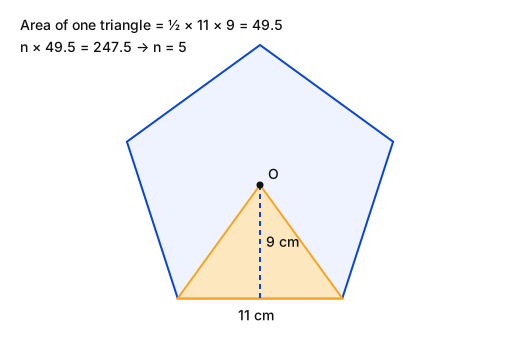
The area of a regular polygon with a side of 11 cm is 247.5 cm². If the perpendicular distance from the centre to the side of the polygon is 9 cm, what is the number of sides of the polygon?
11 cm भुजा वाले एक सम बहुभुज का क्षेत्रफल 247.5 cm² है। यदि केंद्र से बहुभुज की भुजा की लंबवत दूरी 9 cm है, तो बहुभुज की भुजाओं की संख्या कितनी है?
  1. A8
  2. B5
  3. C7
  4. D6
Show answer

Concept: A regular n-gon splits into n equal triangles: Area=n×12×a×r (r = distance from centre to side).

  1. One triangle =12×11×9=49.5cm2.
  2. n×49.5=247.5.
  3. n=247.549.5=5.

Trick: Area=12×Perimeter×r ⇒ perimeter =55, so n=5511=5.

Answer: (B) 5

अवधारणा: सम n-भुज n बराबर त्रिभुजों में बँटता है: क्षेत्रफल=n×12×a×r (r = केंद्र से भुजा की लंबवत दूरी)।

  1. एक त्रिभुज =12×11×9=49.5cm2।
  2. n×49.5=247.5।
  3. n=247.549.5=5।

ट्रिक: क्षेत्रफल=12×परिमाप×r ⇒ परिमाप =55, अतः n=5511=5।

उत्तर: (B) 5

RRB NTPC Undergraduate CBT 1MathematicsMensuration – Regular PolygonRRB NTPC Undergraduate CBT 1 2025 · 20 Jun Shift 3 →
Q44.
The largest four-digit number which when divided by 6, 10 and 14 leaves remainder 3 in each case is:
चार अंकों की वह सबसे बड़ी संख्या, जिसे 6, 10 और 14 से विभाजित करने पर प्रत्येक स्थिति में शेषफल 3 प्राप्त होता है, कौन-सी है?
  1. A9873
  2. B9716
  3. C9889
  4. D9932
Show answer

Concept: Number =k×LCM+3.

  1. LCM(6,10,14)=210.
  2. 9999÷210 gives quotient 47, so largest multiple =47×210=9870.
  3. Add remainder: 9870+3=9873.

Trick: Check: 9873−3=9870 is divisible by 6, 10 and 14.

Answer: (A) 9873

अवधारणा: संख्या =k×LCM+3।

  1. LCM(6,10,14)=210।
  2. 9999÷210 का भागफल 47, अतः सबसे बड़ा गुणज =47×210=9870।
  3. शेष जोड़ें: 9870+3=9873।

ट्रिक: जाँच: 9873−3=9870 जो 6, 10 और 14 से विभाज्य है।

उत्तर: (A) 9873

RRB NTPC Undergraduate CBT 1MathematicsLCM – RemainderRRB NTPC Undergraduate CBT 1 2025 · 20 Jun Shift 3 →
Q45.
If 6x−6x−1=180, then the value of 2x−12x+3 is:
यदि 6x−6x−1=180 है, तो 2x−12x+3 का मान क्या है?
  1. A514
  2. B59
  3. C56
  4. D512
Show answer

Concept: Take the lower power common: 6x−6x−1=6x−1(6−1).

  1. 5×6x−1=180 ⇒ 6x−1=36=62.
  2. So x−1=2, x=3.
  3. 2x−12x+3=59.

Trick: ax−ax−1=ax−1(a−1) – always factor out the smaller power.

Answer: (B) 59

अवधारणा: छोटी घात उभयनिष्ठ लें: 6x−6x−1=6x−1(6−1)।

  1. 5×6x−1=180 ⇒ 6x−1=36=62।
  2. अतः x−1=2, x=3।
  3. 2x−12x+3=59।

ट्रिक: ax−ax−1=ax−1(a−1) – हमेशा छोटी घात बाहर निकालें।

उत्तर: (B) 59

RRB NTPC Undergraduate CBT 1MathematicsIndices – Exponential EquationRRB NTPC Undergraduate CBT 1 2025 · 20 Jun Shift 3 →
Q46.
S's expenditure is double the difference between his savings and expenditure. What percentage of his salary is his expenditure?
S का व्यय उसकी बचत और व्यय के अंतर का दोगुना है। उसका व्यय उसके वेतन का कितना प्रतिशत है?
  1. A40%
  2. B42%
  3. C46%
  4. D44%
Show answer

Concept: Salary =Expenditure(E)+Savings(S).

  1. Given E=2(S−E) ⇒ 3E=2S ⇒ E:S=2:3.
  2. Salary =2+3=5 parts.
  3. E%=25×100=40%.

Trick: Convert the condition to a ratio, then parttotal×100.

Answer: (A) 40%

अवधारणा: वेतन =व्यय(E)+बचत(S)।

  1. दिया है E=2(S−E) ⇒ 3E=2S ⇒ E:S=2:3।
  2. वेतन =2+3=5 भाग।
  3. E%=25×100=40%।

ट्रिक: शर्त को अनुपात में बदलें, फिर भागकुल×100।

उत्तर: (A) 40%

RRB NTPC Undergraduate CBT 1MathematicsPercentage – Savings and ExpenditureRRB NTPC Undergraduate CBT 1 2025 · 20 Jun Shift 3 →
Q47.
A customer is given two options for purchasing a product priced at ₹8,000:
Option 1: A single discount of 30%.
Option 2: Successive discounts of 20% and 15%.
Which option provides a greater discount, and by how much?
एक ग्राहक को ₹8,000 मूल्य का एक उत्पाद खरीदने के लिए दो विकल्प दिए जाते हैं:
विकल्प 1: 30% की एकल छूट।
विकल्प 2: 20% और 15% की क्रमिक छूट।
कौन-सा विकल्प अधिक छूट देता है, और कितनी अधिक?
  1. AOption 2 and by ₹160विकल्प 2 और ₹160 अधिक
  2. BOption 1 and by ₹160विकल्प 1 और ₹160 अधिक
  3. COption 1 and by ₹150विकल्प 1 और ₹150 अधिक
  4. DOption 2 and by ₹150विकल्प 2 और ₹150 अधिक
Show answer

Concept: Successive discounts a%,b% = single (a+b−ab100)%.

  1. Option 1: 30% of 8000 =2400.
  2. Option 2: 20+15−300100=32% ⇒ 32% of 8000 =2560.
  3. Difference =2560−2400=160, Option 2 is better.

Trick: Difference =(32−30)% of 8000=2%×8000=160.

Answer: (A) Option 2 and by ₹160

अवधारणा: क्रमिक छूट a%,b% = एकल (a+b−ab100)%।

  1. विकल्प 1: 8000 का 30%=2400।
  2. विकल्प 2: 20+15−300100=32% ⇒ 8000 का 32%=2560।
  3. अंतर =2560−2400=160, विकल्प 2 अधिक छूट देता है।

ट्रिक: अंतर =(32−30)% × 8000 =160।

उत्तर: (A) Option 2 and by ₹160

RRB NTPC Undergraduate CBT 1MathematicsDiscount – Successive DiscountsRRB NTPC Undergraduate CBT 1 2025 · 20 Jun Shift 3 →
Q48.
Pipe A can fill a cistern in 10 hours, pipe B in 15 hours, and pipe C can empty it in 30 hours. All three pipes are opened together. After 6 hours, pipe A is closed, but B and C continue working. How much total time will it take to completely fill the cistern?
पाइप A एक टंकी को 10 घंटे में, पाइप B 15 घंटे में भर सकता है, और पाइप C उसे 30 घंटे में खाली कर सकता है। तीनों पाइप एक साथ खोले जाते हैं। 6 घंटे बाद पाइप A बंद कर दिया जाता है, लेकिन B और C कार्य करते रहते हैं। टंकी को पूरी तरह भरने में कुल कितना समय लगेगा?
  1. A20 hours20 घंटे
  2. B10 hours10 घंटे
  3. C12 hours12 घंटे
  4. D15 hours15 घंटे
Show answer

Concept: Use LCM as tank capacity; emptying pipe has negative efficiency.

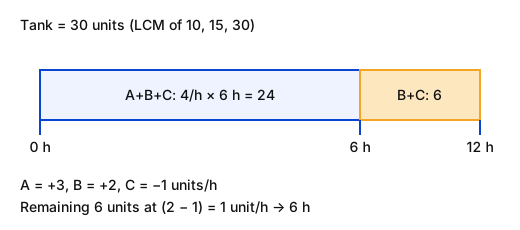
  1. Tank =LCM(10,15,30)=30 units; A =+3, B =+2, C =−1 per hour.
  2. First 6 h (all three): 4×6=24 units.
  3. Remaining 6 units by B + C at 1 unit/h ⇒ 6 h.
  4. Total time =6+6=12 h.

Trick: Efficiency method avoids fractions: units ÷ net rate = time.

Answer: (C) 12 hours

अवधारणा: LCM को टंकी की क्षमता मानें; खाली करने वाले पाइप की दक्षता ऋणात्मक।

  1. टंकी =LCM(10,15,30)=30 इकाई; A =+3, B =+2, C =−1 प्रति घंटा।
  2. पहले 6 घंटे (तीनों): 4×6=24 इकाई।
  3. शेष 6 इकाई B + C से 1 इकाई/घंटा ⇒ 6 घंटे।
  4. कुल समय =6+6=12 घंटे।

ट्रिक: दक्षता विधि: इकाई ÷ शुद्ध दर = समय।

उत्तर: (C) 12 hours

RRB NTPC Undergraduate CBT 1MathematicsPipes and CisternsRRB NTPC Undergraduate CBT 1 2025 · 20 Jun Shift 3 →
Q49.
ABCD is a quadrilateral in which AB ∥ DC, and E and F are the mid points of the diagonals AC and BD, respectively. If AB = 14 cm, BC = 64 cm, DC = 72 cm, and AD = 47 cm, then what is the length (in cm) of EF?
ABCD एक चतुर्भुज है जिसमें AB ∥ DC है, और E तथा F क्रमशः विकर्णों AC और BD के मध्य-बिंदु हैं। यदि AB = 14 cm, BC = 64 cm, DC = 72 cm, और AD = 47 cm है, तो EF की लंबाई (cm में) कितनी है?
  1. A27
  2. B28
  3. C29
  4. D31
Show answer

Concept: In a trapezium, the segment joining the midpoints of the diagonals is parallel to the bases and equals half their difference.

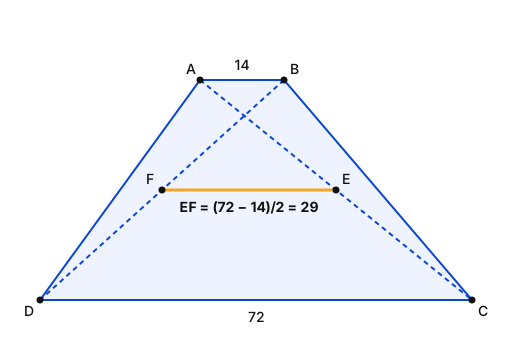
  1. Here AB ∥ DC, so EF=DC−AB2.
  2. EF=72−142=582=29 cm.
  3. BC and AD are extra data (not needed).

Yaad rakhein: Midpoints of sides → half the sum; midpoints of diagonals → half the difference.

Answer: (C) 29

अवधारणा: समलंब में विकर्णों के मध्य-बिंदुओं को मिलाने वाला रेखाखंड आधारों के समांतर और उनके अंतर का आधा होता है।

  1. यहाँ AB ∥ DC, अतः EF=DC−AB2।
  2. EF=72−142=582=29 cm।
  3. BC और AD अतिरिक्त आँकड़े हैं।

याद रखें: भुजाओं के मध्य-बिंदु → योग का आधा; विकर्णों के मध्य-बिंदु → अंतर का आधा।

उत्तर: (C) 29

RRB NTPC Undergraduate CBT 1MathematicsGeometry – TrapeziumRRB NTPC Undergraduate CBT 1 2025 · 20 Jun Shift 3 →
Q50.
If the median of the data x5,x,x3,2x3,x4,2x5 and 3x4, where x>0 is 8.4, then find the value of x.
यदि आँकड़ों x5,x,x3,2x3,x4,2x5 और 3x4, जहाँ x>0, की माध्यिका 8.4 है, तो x का मान ज्ञात कीजिए।
  1. A12
  2. B16
  3. C24
  4. D21
Show answer

Concept: Median of an odd number of terms = middle term after arranging in order.

  1. Since x>0: x5<x4<x3<2x5<2x3<3x4<x.
  2. 7 terms ⇒ median = 4th term =2x5.
  3. 2x5=8.4 ⇒ x=21.

Trick: Compare as decimals: 0.2,0.25,0.33,0.4,0.67,0.75,1.

Answer: (D) 21

अवधारणा: विषम संख्या के पदों की माध्यिका = क्रम में लगाने पर बीच का पद।

  1. x>0 होने से: x5<x4<x3<2x5<2x3<3x4<x।
  2. 7 पद ⇒ माध्यिका = चौथा पद =2x5।
  3. 2x5=8.4 ⇒ x=21।

ट्रिक: दशमलव में तुलना करें: 0.2,0.25,0.33,0.4,0.67,0.75,1।

उत्तर: (D) 21

RRB NTPC Undergraduate CBT 1MathematicsStatistics – MedianRRB NTPC Undergraduate CBT 1 2025 · 20 Jun Shift 3 →
Q51.
An article is sold at a profit of 32%. If the cost price is increased by ₹20 and the selling price is reduced by ₹42, then the profit would be 27.5%. What is the original cost price (in ₹) of the article?
एक वस्तु 32% के लाभ पर बेची जाती है। यदि क्रय मूल्य में ₹20 की वृद्धि कर दी जाए और विक्रय मूल्य में ₹42 की कमी कर दी जाए, तो लाभ 27.5% होगा। वस्तु का मूल क्रय मूल्य (₹ में) क्या है?
  1. A1,500
  2. B1,800
  3. C1,200
  4. D1,700
Show answer

Concept: Write both situations in terms of the cost price x.

  1. Original SP =1.32x.
  2. New CP =x+20, new SP =1.32x−42, profit 27.5%.
  3. 1.32x−42=1.275(x+20)=1.275x+25.5 ⇒ 0.045x=67.5.
  4. x=1500.

Trick: Option check: CP 1500 ⇒ SP 1980; 1938=1.275×1520 ✓.

Answer: (A) ₹1,500

अवधारणा: दोनों स्थितियों को क्रय मूल्य x में लिखें।

  1. मूल SP =1.32x।
  2. नया CP =x+20, नया SP =1.32x−42, लाभ 27.5%।
  3. 1.32x−42=1.275(x+20)=1.275x+25.5 ⇒ 0.045x=67.5।
  4. x=1500।

ट्रिक: विकल्प जाँच: CP 1500 ⇒ SP 1980; 1938=1.275×1520 ✓।

उत्तर: (A) ₹1,500

RRB NTPC Undergraduate CBT 1MathematicsProfit and LossRRB NTPC Undergraduate CBT 1 2025 · 20 Jun Shift 3 →
Q52.
Two taps can fill a cistern in 4 hours and 20 hours, respectively. A third tap can empty it in 20 hours. How long (in hours) will it take to fill one-fourth of the empty cistern if all the taps are opened together?
दो नल एक टंकी को क्रमशः 4 घंटे और 20 घंटे में भर सकते हैं। एक तीसरा नल उसे 20 घंटे में खाली कर सकता है। यदि सभी नल एक साथ खोल दिए जाएँ, तो खाली टंकी का एक-चौथाई भाग भरने में कितना समय (घंटों में) लगेगा?
  1. A3
  2. B4
  3. C2
  4. D1
Show answer

Concept: Net part filled per hour = sum of filling rates − emptying rate.

  1. Net rate =14+120−120=14 per hour.
  2. The 20-h filler and 20-h emptier cancel out.
  3. Time for 14 tank =1/41/4=1 hour.

Trick: Equal fill and empty times cancel – only the 4-h tap matters.

Answer: (D) 1

अवधारणा: प्रति घंटा शुद्ध भरा भाग = भरने की दरों का योग − खाली करने की दर।

  1. शुद्ध दर =14+120−120=14 प्रति घंटा।
  2. 20 घंटे वाला भरने और 20 घंटे वाला खाली करने वाला नल एक-दूसरे को निरस्त करते हैं।
  3. 14 टंकी का समय =1 घंटा।

ट्रिक: बराबर भरने-खाली करने के समय वाले नल निरस्त – केवल 4 घंटे वाला नल बचता है।

उत्तर: (D) 1

RRB NTPC Undergraduate CBT 1MathematicsPipes and CisternsRRB NTPC Undergraduate CBT 1 2025 · 20 Jun Shift 3 →
Q53.
Simplify: 30 + [{-9 × (26 - 11 + 3)}]
सरल कीजिए: 30 + [{-9 × (26 - 11 + 3)}]
  1. A-132
  2. B-134
  3. C-135
  4. D-133
Show answer

Concept: Solve innermost bracket first (BODMAS).

  1. 26−11+3=18.
  2. −9×18=−162.
  3. 30+(−162)=−132.

Trick: Sign rule: 30−162 ⇒ answer negative, magnitude 132.

Answer: (A) −132

अवधारणा: सबसे भीतरी कोष्ठक पहले (BODMAS)।

  1. 26−11+3=18।
  2. −9×18=−162।
  3. 30+(−162)=−132।

ट्रिक: चिह्न नियम: 30−162 ⇒ उत्तर ऋणात्मक, मान 132।

उत्तर: (A) −132

RRB NTPC Undergraduate CBT 1MathematicsSimplification – BODMASRRB NTPC Undergraduate CBT 1 2025 · 20 Jun Shift 3 →
Q54.
The 7-digit number 12A916B is divisible by 24. What is the maximum value of (A + B)?
7 अंकों की संख्या 12A916B, 24 से विभाज्य है। (A + B) का अधिकतम मान क्या है?
  1. A16
  2. B17
  3. C13
  4. D12
Show answer

Concept: 24=8×3 (coprime) ⇒ number must be divisible by both 8 and 3.

  1. By 8: last three digits 16B ⇒ 160 or 168, so B=0 or 8.
  2. By 3: digit sum =19+A+B must be a multiple of 3.
  3. For max, take B=8: 27+A ⇒ A=9 is allowed.
  4. Max A+B=9+8=17.

Trick: For a maximum, try the largest B first, then the largest valid A.

Answer: (B) 17

अवधारणा: 24=8×3 (सह-अभाज्य) ⇒ संख्या 8 और 3 दोनों से विभाज्य हो।

  1. 8 से: अंतिम तीन अंक 16B ⇒ 160 या 168, अतः B=0 या 8।
  2. 3 से: अंकों का योग =19+A+B, 3 का गुणज हो।
  3. अधिकतम के लिए B=8: 27+A ⇒ A=9 संभव।
  4. अधिकतम A+B=9+8=17।

ट्रिक: अधिकतम के लिए पहले सबसे बड़ा B, फिर सबसे बड़ा मान्य A लें।

उत्तर: (B) 17

RRB NTPC Undergraduate CBT 1MathematicsDivisibility RulesRRB NTPC Undergraduate CBT 1 2025 · 20 Jun Shift 3 →
Q55.
The sum of two positive numbers is 88 and their product is 1927. The positive difference between them is:
दो धनात्मक संख्याओं का योग 88 है और उनका गुणनफल 1927 है। उनके बीच का धनात्मक अंतर कितना है?
  1. A17
  2. B26
  3. C6
  4. D21
Show answer

Concept: (a−b)2=(a+b)2−4ab.

  1. (a+b)2=882=7744.
  2. 4ab=4×1927=7708.
  3. (a−b)2=36 ⇒ a−b=6.

Trick: Numbers are 47 and 41: 47×41=1927 ✓.

Answer: (C) 6

अवधारणा: (a−b)2=(a+b)2−4ab।

  1. (a+b)2=882=7744।
  2. 4ab=4×1927=7708।
  3. (a−b)2=36 ⇒ a−b=6।

ट्रिक: संख्याएँ 47 और 41: 47×41=1927 ✓।

उत्तर: (C) 6

RRB NTPC Undergraduate CBT 1MathematicsAlgebraic IdentitiesRRB NTPC Undergraduate CBT 1 2025 · 20 Jun Shift 3 →
Q56.
If a and b are two coprime numbers such that a + b = 41, then what is the maximum possible value of a × b?
यदि a और b दो सहअभाज्य संख्याएँ इस प्रकार हैं कि a + b = 41 है, तो a × b का अधिकतम संभव मान क्या है?
  1. A360
  2. B540
  3. C420
  4. D210
Show answer

Concept: For a fixed sum, the product is maximum when the two numbers are as close as possible.

  1. 41 is odd, so the closest pair is 20 and 21.
  2. HCF(20,21)=1 ⇒ they are co-prime.
  3. Product =20×21=420.

Yaad rakhein: Consecutive numbers are always co-prime.

Answer: (C) 420

अवधारणा: योग स्थिर हो तो दोनों संख्याएँ जितनी पास हों, गुणनफल उतना अधिक।

  1. 41 विषम है, अतः सबसे निकट युग्म 20 और 21।
  2. HCF(20,21)=1 ⇒ सह-अभाज्य।
  3. गुणनफल =20×21=420।

याद रखें: क्रमागत संख्याएँ हमेशा सह-अभाज्य होती हैं।

उत्तर: (C) 420

RRB NTPC Undergraduate CBT 1MathematicsNumber System – Co-prime NumbersRRB NTPC Undergraduate CBT 1 2025 · 20 Jun Shift 3 →
Q57.
A trader fixes the marked price of an article at ₹10,630. He sells it to customers for ₹9248.10 after giving certain discount. Find the discount percentage.
एक व्यापारी किसी वस्तु का अंकित मूल्य ₹10,630 निर्धारित करता है। वह कुछ छूट देने के बाद उसे ग्राहकों को ₹9248.10 में बेचता है। छूट प्रतिशत ज्ञात कीजिए।
  1. A13%
  2. B14%
  3. C12%
  4. D9%
Show answer

Concept: Discount%=MP−SPMP×100.

  1. Discount =10630−9248.10=1381.90.
  2. 1381.9010630×100=13%.

Trick: 10% of 10630 =1063; 3%=318.9; total 1381.9 ✓.

Answer: (A) 13%

अवधारणा: बट्टा%=MP−SPMP×100।

  1. बट्टा =10630−9248.10=1381.90।
  2. 1381.9010630×100=13%।

ट्रिक: 10630 का 10%=1063; 3%=318.9; कुल 1381.9 ✓।

उत्तर: (A) 13%

RRB NTPC Undergraduate CBT 1MathematicsDiscountRRB NTPC Undergraduate CBT 1 2025 · 20 Jun Shift 3 →
Q58.
A solid cylinder of radius R and height H, is melted and recast into three identical cylinders, each having the same height as the original cylinder but half the radius of the original cylinder. What fraction of the original cylinder’s volume remains unused?
त्रिज्या R और ऊँचाई H वाले एक ठोस बेलन को पिघलाकर तीन सर्वसम बेलन बनाए जाते हैं, जिनमें से प्रत्येक की ऊँचाई मूल बेलन के समान है, लेकिन त्रिज्या मूल बेलन की त्रिज्या की आधी है। मूल बेलन के आयतन का कितना भाग अप्रयुक्त रह जाता है?
  1. A34
  2. B14
  3. C23
  4. D12
Show answer

Concept: V=πr2h; halving the radius makes volume 14.

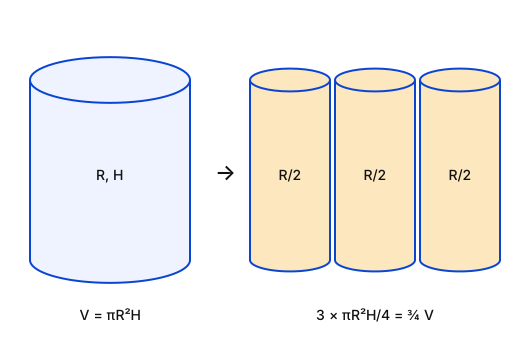
  1. Original volume V=πR2H.
  2. Each small cylinder =π(R2)2H=V4.
  3. Three of them use 3V4.
  4. Unused =V−3V4=14 of V.

Trick: Volume ∝ r2 (same height): 12 radius ⇒ 14 volume.

Answer: (B) 14

अवधारणा: V=πr2h; त्रिज्या आधी करने पर आयतन 14।

  1. मूल आयतन V=πR2H।
  2. प्रत्येक छोटा बेलन =π(R2)2H=V4।
  3. तीनों का आयतन 3V4।
  4. अप्रयुक्त =V−3V4=14 भाग।

ट्रिक: समान ऊँचाई पर आयतन ∝ r2: 12 त्रिज्या ⇒ 14 आयतन।

उत्तर: (B) 14

RRB NTPC Undergraduate CBT 1MathematicsMensuration – CylinderRRB NTPC Undergraduate CBT 1 2025 · 20 Jun Shift 3 →
Q59.
Saumya has ₹ 24,800 in denominations of ₹500 and ₹100 notes. The number of ₹500 notes is 4 more than the number of ₹100 notes. Find the number of ₹100 notes.
सौम्या के पास ₹500 और ₹100 के नोटों के मूल्यवर्ग में ₹ 24,800 हैं। ₹500 के नोटों की संख्या ₹100 के नोटों की संख्या से 4 अधिक है। ₹100 के नोटों की संख्या ज्ञात कीजिए।
  1. A40
  2. B38
  3. C42
  4. D36
Show answer

Concept: Total value = sum of (denomination × number of notes).

  1. Let ₹100 notes =x, ₹500 notes =x+4.
  2. 500(x+4)+100x=24800 ⇒ 600x=22800.
  3. x=38.

Trick: Check: 42×500+38×100=21000+3800=24800 ✓.

Answer: (B) 38

अवधारणा: कुल मूल्य = (नोट का मूल्य × नोटों की संख्या) का योग।

  1. ₹100 के नोट =x, ₹500 के नोट =x+4।
  2. 500(x+4)+100x=24800 ⇒ 600x=22800।
  3. x=38।

ट्रिक: जाँच: 42×500+38×100=21000+3800=24800 ✓।

उत्तर: (B) 38

RRB NTPC Undergraduate CBT 1MathematicsLinear Equations – NotesRRB NTPC Undergraduate CBT 1 2025 · 20 Jun Shift 3 →
Q60.
Three bags A, B, and C contain only red and blue marbles.
In Bag A, the ratio of red to blue marbles is 2 : 3.
In Bag B, the ratio of red to blue marbles is 4 : 1.
In Bag C, the ratio of red to blue marbles is 3 : 2.
Which bag has the highest proportion of red marbles?
तीन थैलों A, B और C में केवल लाल और नीले कंचे हैं।
थैला A में, लाल और नीले कंचों का अनुपात 2 : 3 है।
थैला B में, लाल और नीले कंचों का अनुपात 4 : 1 है।
थैला C में, लाल और नीले कंचों का अनुपात 3 : 2 है।
किस थैले में लाल कंचों का अनुपात सबसे अधिक है?
  1. ABag Aथैला A
  2. BBag Cथैला C
  3. CBag Bथैला B
  4. DAll bags have the same proportion.सभी थैलों में अनुपात समान है।
Show answer

Concept: Proportion of red =redred+blue.

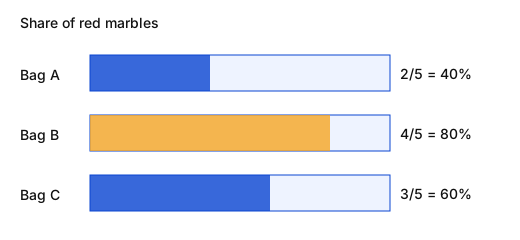
  1. Bag A: 25=40%.
  2. Bag B: 45=80%.
  3. Bag C: 35=60% ⇒ Bag B is highest.

Trick: All totals are 5 parts, so just compare the red parts: 2, 4, 3.

Answer: (C) Bag B

अवधारणा: लाल का अनुपात =लाललाल+नीला।

  1. बैग A: 25=40%।
  2. बैग B: 45=80%।
  3. बैग C: 35=60% ⇒ बैग B सबसे अधिक।

ट्रिक: सभी का कुल 5 भाग है, केवल लाल भाग 2, 4, 3 की तुलना करें।

उत्तर: (C) Bag B

RRB NTPC Undergraduate CBT 1MathematicsRatio and ProportionRRB NTPC Undergraduate CBT 1 2025 · 20 Jun Shift 3 →