Question bank

Q&A: practice questions with answers

Search questions on any topic. Filter by exam category, exam, subject and topic, try the question, then open the answer and explanation.

Courses – airGurukul

8,495 questions found.

Q7581.
R, E, A, D, I, N and G are sitting around a circular table, facing the centre of the table. D sits third to the left of R. A sits second to the left of G. Only R sits between I and A. E is not an immediate neighbor of D.
How many people sit between N and A when counted from the right of N?
R, E, A, D, I, N और G एक वृत्ताकार मेज़ के चारों ओर मेज़ के केंद्र की ओर मुख करके बैठे हैं। D, R के बाईं ओर तीसरे स्थान पर बैठा है। A, G के बाईं ओर दूसरे स्थान पर बैठा है। I और A के बीच केवल R बैठा है। E, D का निकटतम पड़ोसी नहीं है।
N के दाईं ओर से गिनने पर N और A के बीच कितने व्यक्ति बैठे हैं?
  1. ATwoदो
  2. BFourचार
  3. COneएक
  4. DThreeतीन
Show answer

Concept: When people face the centre, "left" means clockwise and "right" means anticlockwise. Number the seats 1–7 clockwise with R at 1.
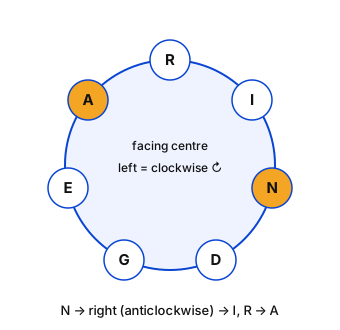
  1. D is third to the left of R → D at 4. Only R sits between I and A → I and A occupy seats 7 and 2 in some order.
  2. A is second to the left of G → G is two seats anticlockwise of A. If A = 2 then G = 7, but 7 is I's seat – impossible. So A = 7, I = 2, G = 5.
  3. Seats 3 and 6 remain for E and N; E is not next to D (4) → E = 6, N = 3.
  4. From N (3) counting to the right (anticlockwise): I (2), R (1), then A (7) → two people between.

Trick: Facing centre: left = clockwise, right = anticlockwise. Test the two cases of the "only R between I and A" clue – one collapses immediately.

Answer: (A) Two

अवधारणा: केंद्र की ओर मुख होने पर "बाएँ" = दक्षिणावर्त (clockwise) और "दाएँ" = वामावर्त (anticlockwise)। सीटों को R से शुरू कर दक्षिणावर्त 1–7 क्रमांक दें।

  1. D, R के बाएँ तीसरा → D सीट 4। I और A के बीच केवल R → I और A सीट 7 व 2 पर (किसी क्रम में)।
  2. A, G के बाएँ दूसरा → G, A से दो सीट वामावर्त। यदि A = 2 तो G = 7, पर 7 पर I है – असंभव। अतः A = 7, I = 2, G = 5।
  3. सीट 3 व 6 पर E और N; E, D (4) का पड़ोसी नहीं → E = 6, N = 3।
  4. N (3) से दाएँ (वामावर्त) गिनें: I (2), R (1), फिर A (7) → बीच में दो व्यक्ति।

ट्रिक: केंद्र की ओर मुख: बाएँ = clockwise, दाएँ = anticlockwise। "I और A के बीच केवल R" के दोनों विकल्प जाँचें – एक तुरंत गलत साबित होता है।

उत्तर: (A) Two
RRB NTPC Undergraduate CBT 1General Intelligence and ReasoningCircular seating arrangementRRB NTPC Undergraduate CBT 1 2025 · 14 Jun Shift 1 →
Q7582.
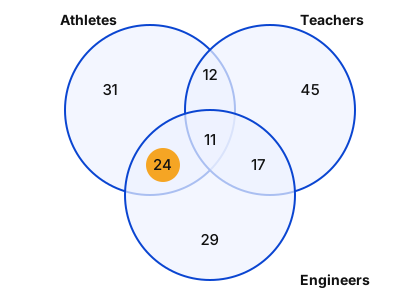
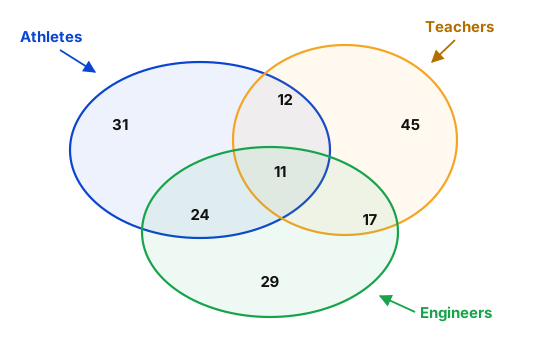
Study the given diagram carefully and answer the question. The numbers in different sections indicate the number of persons in a room. (NOTE: You have to take the given data to be true even if it seems to be at variance from commonly known facts.)

How many such engineers are there who are also athletes but not teachers?
दिए गए आरेख का ध्यानपूर्वक अध्ययन कीजिए और प्रश्न का उत्तर दीजिए। विभिन्न खंडों में दी गई संख्याएँ एक कमरे में व्यक्तियों की संख्या दर्शाती हैं। (नोट: आपको दिए गए आँकड़ों को सत्य मानना है, भले ही वे सामान्यतः ज्ञात तथ्यों से भिन्न प्रतीत होते हों।)

ऐसे कितने इंजीनियर हैं जो एथलीट भी हैं लेकिन शिक्षक नहीं हैं?
  1. A24
  2. B35
  3. C23
  4. D28
Show answer

Concept: "Engineers who are also athletes but not teachers" = the region common to the Engineers and Athletes circles only, outside the Teachers circle.

  1. The Athletes–Engineers overlap has two parts: 24 (outside Teachers) and 11 (inside all three).
  2. Excluding teachers leaves the single region with 24.
  3. So the required number is 24 (not 24+11=35, which includes teachers).

Trick: "Also X but not Y" → the two-circle overlap minus the central three-way region.

Answer: (A) 24

अवधारणा: "इंजीनियर जो एथलीट भी हैं पर शिक्षक नहीं" = केवल Engineers और Athletes वृत्तों का उभयनिष्ठ भाग, Teachers वृत्त के बाहर।

  1. Athletes–Engineers के ओवरलैप के दो हिस्से हैं: 24 (Teachers के बाहर) और 11 (तीनों के अंदर)।
  2. शिक्षकों को हटाने पर केवल 24 वाला क्षेत्र बचता है।
  3. अतः अभीष्ट संख्या 24 है (24+11=35 नहीं, जिसमें शिक्षक भी शामिल हैं)।

ट्रिक: "X भी पर Y नहीं" → दो वृत्तों का ओवरलैप घटा बीच का तीन-वृत्त क्षेत्र।

उत्तर: (A) 24

RRB NTPC Undergraduate CBT 1General Intelligence and ReasoningVenn diagram – data interpretationRRB NTPC Undergraduate CBT 1 2025 · 14 Jun Shift 1 →
Q7583.
What should come in place of the question mark (?) in the given series?
17 40 61 80 97 112 ?
दी गई शृंखला में प्रश्न चिह्न (?) के स्थान पर क्या आना चाहिए?
17 40 61 80 97 112 ?
  1. A125
  2. B130
  3. C127
  4. D122
Show answer

Concept: Successive differences that shrink by a constant.

  1. 40−17=23, 61−40=21, 80−61=19, 97−80=17, 112−97=15.
  2. Differences fall by 2 each time → next difference 13.
  3. 112+13=125.

Trick: Odd-number differences 23, 21, 19, 17, 15, 13 – just continue the odd sequence downward.

Answer: (A) 125

अवधारणा: क्रमागत अंतर जो समान मात्रा से घटते हैं।

  1. 40−17=23, 61−40=21, 80−61=19, 97−80=17, 112−97=15।
  2. अंतर हर बार 2 घटता है → अगला अंतर 13।
  3. 112+13=125।

ट्रिक: विषम अंतर 23, 21, 19, 17, 15, 13 – बस विषम क्रम को नीचे की ओर बढ़ाएँ।

उत्तर: (A) 125

RRB NTPC Undergraduate CBT 1General Intelligence and ReasoningNumber seriesRRB NTPC Undergraduate CBT 1 2025 · 14 Jun Shift 1 →
Q7584.
In a certain code language,
A @ B means ‘A is the mother of B’,
A × B means ‘A is the wife of B’,
A + B means ‘A is the brother of B’ and
A ÷ B means ‘A is the father of B’.
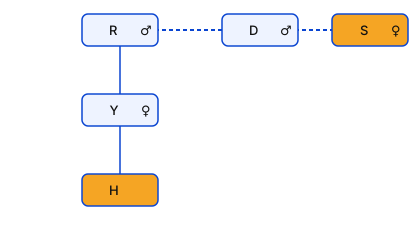
How is S related to H if ‘S × D + R ÷ Y @ H’?
एक निश्चित कूट भाषा में,
A @ B का अर्थ है ‘A, B की माँ है’,
A × B का अर्थ है ‘A, B की पत्नी है’,
A + B का अर्थ है ‘A, B का भाई है’ और
A ÷ B का अर्थ है ‘A, B का पिता है’।
यदि ‘S × D + R ÷ Y @ H’ है, तो S, H से किस प्रकार संबंधित है?
  1. AMother's father's brother's wifeमाँ के पिता के भाई की पत्नी
  2. BFather's brother's wifeपिता के भाई की पत्नी
  3. CBrother's wifeभाई की पत्नी
  4. DMother's father's brother's daughterमाँ के पिता के भाई की पुत्री
Show answer

Concept: Decode each symbol in order and build the tree: S × D + R ÷ Y @ H.

  1. S × D: S is the wife of D. D + R: D is the brother of R.
  2. R ÷ Y: R is the father of Y. Y @ H: Y is the mother of H.
  3. From H: mother Y → her father R → his brother D → his wife S. So S is H's mother's father's brother's wife.

Trick: Read the chain from H backwards; each symbol adds one step – mother → father → brother → wife.

Answer: (A) Mother's father's brother's wife

अवधारणा: प्रत्येक प्रतीक को क्रम से डिकोड कर वृक्ष बनाएँ: S × D + R ÷ Y @ H।

  1. S × D: S, D की पत्नी। D + R: D, R का भाई।
  2. R ÷ Y: R, Y का पिता। Y @ H: Y, H की माँ।
  3. H से: माँ Y → उसका पिता R → उसका भाई D → उसकी पत्नी S। अतः S, H की माँ के पिता के भाई की पत्नी है।

ट्रिक: श्रृंखला को H से पीछे की ओर पढ़ें; हर प्रतीक एक कदम जोड़ता है – माँ → पिता → भाई → पत्नी।

उत्तर: (A) Mother's father's brother's wife

RRB NTPC Undergraduate CBT 1General Intelligence and ReasoningCoded blood relationsRRB NTPC Undergraduate CBT 1 2025 · 14 Jun Shift 1 →
Q7585.
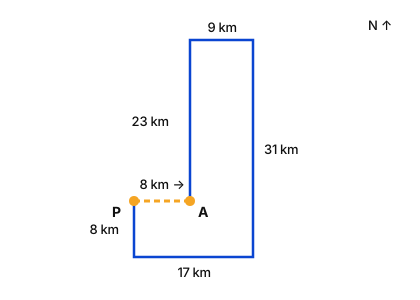
Kiran starts from Point A and drives 23 km towards the north. She then takes a right turn, drives 9 km, turns right and drives 31 km. She then takes a right turn and drives 17 km. She takes a final right turn, drives 8 km and stops at Point P. How far (shortest distance) and towards which direction should she drive in order to reach Point A again? (All turns are 90-degree turns only unless specified.)
किरण बिंदु A से चलना शुरू करती है और उत्तर की ओर 23 km गाड़ी चलाती है। फिर वह दाएँ मुड़ती है, 9 km गाड़ी चलाती है, दाएँ मुड़ती है और 31 km गाड़ी चलाती है। फिर वह दाएँ मुड़ती है और 17 km गाड़ी चलाती है। वह अंतिम बार दाएँ मुड़ती है, 8 km गाड़ी चलाती है और बिंदु P पर रुक जाती है। पुनः बिंदु A तक पहुँचने के लिए उसे कितनी दूरी (न्यूनतम दूरी) और किस दिशा में गाड़ी चलानी चाहिए? (जब तक निर्दिष्ट न हो, सभी मोड़ केवल 90 डिग्री के हैं।)
  1. A9 km to the westपश्चिम की ओर 9 km
  2. B8 km to the westपश्चिम की ओर 8 km
  3. C8 km to the eastपूर्व की ओर 8 km
  4. D9 km to the eastपूर्व की ओर 9 km
Show answer

Concept: Use coordinates with A at the origin; north = +y, east = +x. A right turn rotates the heading N → E → S → W → N.

  1. North 23: (0,23). Right (east) 9: (9,23). Right (south) 31: (9,−8).
  2. Right (west) 17: (−8,−8). Right (north) 8: (−8,0) = P.
  3. P is at (−8,0), A at (0,0) → A is 8 km to the east of P.

Trick: Net east–west: +9−17=−8 (8 km west of A); net north–south: 23−31+8=0. So go 8 km east.

Answer: (C) 8 km to the east

अवधारणा: A को मूल बिंदु मानकर निर्देशांक लें; उत्तर = +y, पूर्व = +x। दायाँ मोड़ दिशा को N → E → S → W → N घुमाता है।

  1. उत्तर 23: (0,23)। दाएँ (पूर्व) 9: (9,23)। दाएँ (दक्षिण) 31: (9,−8)।
  2. दाएँ (पश्चिम) 17: (−8,−8)। दाएँ (उत्तर) 8: (−8,0) = P।
  3. P (−8,0) पर, A (0,0) पर → A, P से 8 km पूर्व में है।

ट्रिक: शुद्ध पूर्व–पश्चिम: +9−17=−8 (A से 8 km पश्चिम); शुद्ध उत्तर–दक्षिण: 23−31+8=0। अतः 8 km पूर्व चलें।

उत्तर: (C) 8 km to the east

RRB NTPC Undergraduate CBT 1General Intelligence and ReasoningDirection and distanceRRB NTPC Undergraduate CBT 1 2025 · 14 Jun Shift 1 →
Q7586.
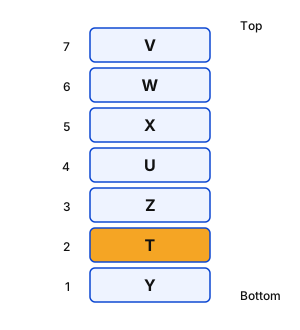
Seven boxes X, Y, Z, W, V, U and T are kept one over the other but not necessarily in the same order. Y is placed at the bottommost position. Exactly three boxes are kept between T and W. W is kept on one of the positions above T. Box U is kept immediately above Z. Box X is kept immediately below W. Box V is kept immediately above W. Which box is second from the bottom?
सात बक्से X, Y, Z, W, V, U और T एक के ऊपर एक रखे गए हैं, लेकिन ज़रूरी नहीं कि इसी क्रम में हों। Y सबसे नीचे के स्थान पर रखा गया है। T और W के बीच ठीक तीन बक्से रखे गए हैं। W, T के ऊपर के स्थानों में से किसी एक पर रखा गया है। बक्सा U, Z के ठीक ऊपर रखा गया है। बक्सा X, W के ठीक नीचे रखा गया है। बक्सा V, W के ठीक ऊपर रखा गया है। नीचे से दूसरे स्थान पर कौन-सा बक्सा है?
  1. AU
  2. BT
  3. CV
  4. DW
Show answer

Concept: Number positions 1 (bottom) to 7 (top). Build the rigid block around T and W first.

  1. Y at 1. W is above T with three boxes between; X is immediately below W and V immediately above W → block: T, _, _, X, W, V (six consecutive positions).
  2. This block needs positions 2–7 (position 1 is Y) → T at 2, X at 5, W at 6, V at 7.
  3. Positions 3 and 4 remain for U and Z; U is immediately above Z → Z at 3, U at 4.
  4. Second from the bottom = T.

Trick: Combine all clues about one box (W) into a single block – its length then fixes its place.

Answer: (B) T

अवधारणा: स्थान 1 (नीचे) से 7 (ऊपर) क्रमांकित करें। पहले T और W के चारों ओर का कठोर ब्लॉक बनाएँ।

  1. Y स्थान 1 पर। W, T के ऊपर है और बीच में तीन बॉक्स; X, W के ठीक नीचे और V, W के ठीक ऊपर → ब्लॉक: T, _, _, X, W, V (लगातार छह स्थान)।
  2. यह ब्लॉक स्थान 2–7 पर ही आ सकता है (स्थान 1 पर Y) → T स्थान 2, X स्थान 5, W स्थान 6, V स्थान 7।
  3. स्थान 3 व 4 पर U और Z; U, Z के ठीक ऊपर → Z स्थान 3, U स्थान 4।
  4. नीचे से दूसरा = T।

ट्रिक: एक बॉक्स (W) से जुड़े सभी संकेतों को एक ब्लॉक में जोड़ें – उसकी लंबाई ही उसका स्थान तय कर देती है।

उत्तर: (B) T

RRB NTPC Undergraduate CBT 1General Intelligence and ReasoningBox arrangementRRB NTPC Undergraduate CBT 1 2025 · 14 Jun Shift 1 →
Q7587.
JS 12 is related to MO -3 in a certain way. In the same way, LW 9 is related to OS -6. To which of the following is BT 6 related, following the same logic?
JS 12 एक निश्चित प्रकार से MO -3 से संबंधित है। उसी प्रकार, LW 9, OS -6 से संबंधित है। उसी तर्क का अनुसरण करते हुए, BT 6 निम्नलिखित में से किससे संबंधित है?
  1. AEP -9
  2. BTR 10
  3. CPT -11
  4. DYT 8
Show answer

Concept: Work out the change in each letter and the number from the first pair, then apply it.

  1. JS 12 → MO −3: J+3=M, S−4=O, 12−15=−3.
  2. LW 9 → OS −6: L+3=O, W−4=S, 9−15=−6 ✓.
  3. BT 6 → B+3=E, T−4=P, 6−15=−9 → EP −9.

Trick: Rule (+3,−4,−15); the number 6−15=−9 alone picks option A.

Answer: (A) EP -9

अवधारणा: पहली जोड़ी से प्रत्येक अक्षर और संख्या का परिवर्तन निकालें, फिर वही लगाएँ।

  1. JS 12 → MO −3: J+3=M, S−4=O, 12−15=−3।
  2. LW 9 → OS −6: L+3=O, W−4=S, 9−15=−6 ✓।
  3. BT 6 → B+3=E, T−4=P, 6−15=−9 → EP −9।

ट्रिक: नियम (+3,−4,−15); केवल संख्या 6−15=−9 से ही विकल्प A चुन लिया जाता है।

उत्तर: (A) EP -9

RRB NTPC Undergraduate CBT 1General Intelligence and ReasoningLetter-number analogyRRB NTPC Undergraduate CBT 1 2025 · 14 Jun Shift 1 →
Q7588.
Which of the following letter-number clusters will replace the question mark (?) in the given series to make it logically complete?
EV21 IS33 MP45 QM57 ?
निम्नलिखित में से कौन-सा अक्षर-संख्या समूह दी गई शृंखला में प्रश्न चिह्न (?) के स्थान पर आकर इसे तार्किक रूप से पूर्ण करेगा?
EV21 IS33 MP45 QM57 ?
  1. AUJ69
  2. BVK71
  3. CUK71
  4. DVJ69
Show answer

Concept: Separate the three strands – first letter, second letter, number.

  1. E → I → M → Q: +4; next Q+4=U.
  2. V → S → P → M: −3; next M−3=J.
  3. 21 → 33 → 45 → 57: +12; next 69. So UJ69.

Trick: Numbers are 12n+9; 57+12=69 eliminates two options, then Q+4=U decides.

Answer: (A) UJ69

अवधारणा: तीन धाराएँ अलग करें – पहला अक्षर, दूसरा अक्षर, संख्या।

  1. E → I → M → Q: +4; अगला Q+4=U।
  2. V → S → P → M: −3; अगला M−3=J।
  3. 21 → 33 → 45 → 57: +12; अगली 69। अतः UJ69।

ट्रिक: संख्याएँ 12n+9 हैं; 57+12=69 से दो विकल्प कटते हैं, फिर Q+4=U निर्णय करता है।

उत्तर: (A) UJ69

RRB NTPC Undergraduate CBT 1General Intelligence and ReasoningLetter-number seriesRRB NTPC Undergraduate CBT 1 2025 · 14 Jun Shift 1 →
Q7589.
In a certain code language, "VINP" is coded as "61" and "FSKA" is coded as "85". What is the code for "TOYG" in the given language?
एक निश्चित कूट भाषा में, "VINP" को "61" के रूप में कूटबद्ध किया जाता है और "FSKA" को "85" के रूप में कूटबद्ध किया जाता है। उसी भाषा में "TOYG" के लिए कूट क्या है?
  1. A63
  2. B61
  3. C55
  4. D69
Show answer

Concept: Try the sum of alphabet positions; if one word fails, test the opposite letters (A↔Z, position 27−n).

  1. VINP: 22+9+14+16=61 ✓, but FSKA: 6+19+11+1=37≠85 – so plain sum is not the rule.
  2. Opposite letters: V→E(5), I→R(18), N→M(13), P→K(11): sum 47; 47+14=61 ✓. FSKA → U(21) H(8) P(16) Z(26): 71+14=85 ✓.
  3. TOYG → G(7) L(12) B(2) T(20): 41+14=55.

Trick: Equivalent shortcut: code =122−(sum of positions); TOYG sum =67 → 122−67=55.

Answer: (C) 55

अवधारणा: पहले अक्षर-स्थानों का योग आज़माएँ; यदि एक शब्द पर न चले तो विपरीत अक्षर (A↔Z, स्थान 27−n) जाँचें।

  1. VINP: 22+9+14+16=61 ✓, पर FSKA: 6+19+11+1=37≠85 – अतः सीधा योग नियम नहीं।
  2. विपरीत अक्षर: V→E(5), I→R(18), N→M(13), P→K(11): योग 47; 47+14=61 ✓। FSKA → U(21) H(8) P(16) Z(26): 71+14=85 ✓।
  3. TOYG → G(7) L(12) B(2) T(20): 41+14=55।

ट्रिक: समतुल्य शॉर्टकट: कोड =122−(स्थानों का योग); TOYG का योग =67 → 122−67=55।

उत्तर: (C) 55

RRB NTPC Undergraduate CBT 1General Intelligence and ReasoningCoding–decodingRRB NTPC Undergraduate CBT 1 2025 · 14 Jun Shift 1 →
Q7590.
Refer to the following letter series and answer the question. (Counting to be done from left to right only.)
(Left) E S I C X Z O W G U K A Q D F T B Y M R H (Right)
How many such consonants are there, each of which is immediately preceded by a vowel and also immediately followed by a vowel?
निम्नलिखित अक्षर शृंखला को देखिए और प्रश्न का उत्तर दीजिए। (गिनती केवल बाएँ से दाएँ की जानी है।)
(बाएँ) E S I C X Z O W G U K A Q D F T B Y M R H (दाएँ)
ऐसे कितने व्यंजन हैं, जिनमें से प्रत्येक के ठीक पहले एक स्वर है और ठीक बाद भी एक स्वर है?
  1. A3
  2. B2
  3. C1
  4. D4
Show answer

Concept: Find consonants that sit between two vowels (vowel–consonant–vowel).

  1. Series: E S I C X Z O W G U K A Q D F T B Y M R H.
  2. E-S-I ✓; I-C-X ✗; Z-O-W: W followed by G ✗; U-K-A ✓; A-Q-D ✗.
  3. Qualifying consonants: S and K → 2.

Trick: Mark the vowels (E, I, O, U, A) first; only letters with a vowel on both sides count.

Answer: (B) 2

अवधारणा: ऐसे व्यंजन खोजें जो दो स्वरों के बीच हों (स्वर–व्यंजन–स्वर)।

  1. श्रृंखला: E S I C X Z O W G U K A Q D F T B Y M R H।
  2. E-S-I ✓; I-C-X ✗; Z-O-W: W के बाद G ✗; U-K-A ✓; A-Q-D ✗।
  3. शर्त पूरी करने वाले व्यंजन: S और K → 2।

ट्रिक: पहले स्वर (E, I, O, U, A) चिह्नित करें; केवल वही अक्षर गिनें जिनके दोनों ओर स्वर हों।

उत्तर: (B) 2

RRB NTPC Undergraduate CBT 1General Intelligence and ReasoningLetter series countingRRB NTPC Undergraduate CBT 1 2025 · 14 Jun Shift 1 →
Q7591.
Based on the English alphabetical order, three of the following four letter clusters are alike in a certain way and thus form a group. Which is the one that does not belong to that group?
(Note: The odd man out is not based on the number of consonants/vowels or their position in the letter cluster.)
अंग्रेज़ी वर्णमाला क्रम के आधार पर, निम्नलिखित चार अक्षर-समूहों में से तीन किसी निश्चित प्रकार से एकसमान हैं और इस प्रकार एक समूह बनाते हैं। कौन-सा अक्षर-समूह उस समूह से संबंधित नहीं है?
(नोट: असंगत अक्षर-समूह, व्यंजनों/स्वरों की संख्या या अक्षर-समूह में उनके स्थान पर आधारित नहीं है।)
  1. AHKO
  2. BZCG
  3. CBEI
  4. DVZC
Show answer

Concept: Compute the gaps between consecutive letters (wrapping after Z).

  1. HKO: H+3=K, K+4=O → (+3,+4).
  2. ZCG: Z+3=C, C+4=G; BEI: B+3=E, E+4=I → same (+3,+4).
  3. VZC: V+4=Z, Z+3=C → (+4,+3) – the gaps are swapped, so it is the odd one.

Trick: When all clusters move forward, compare the order of the gaps – a reversed order marks the odd cluster.

Answer: (D) VZC

अवधारणा: क्रमागत अक्षरों के बीच अंतर निकालें (Z के बाद फिर A से)।

  1. HKO: H+3=K, K+4=O → (+3,+4)।
  2. ZCG: Z+3=C, C+4=G; BEI: B+3=E, E+4=I → वही (+3,+4)।
  3. VZC: V+4=Z, Z+3=C → (+4,+3) – अंतर उलटे क्रम में, अतः यही अलग है।

ट्रिक: जब सभी समूह आगे बढ़ें, तो अंतरों के क्रम की तुलना करें – उल्टा क्रम ही अलग समूह बताता है।

उत्तर: (D) VZC

RRB NTPC Undergraduate CBT 1General Intelligence and ReasoningLetter-cluster classificationRRB NTPC Undergraduate CBT 1 2025 · 14 Jun Shift 1 →
Q7592.
Select the set in which the numbers are related in the same way as are the numbers of the following sets.
(NOTE: Operations should be performed on the whole numbers, without breaking down the numbers into their constituent digits. E.g. 13 – Operations on 13 such as
adding/subtracting/multiplying etc. to 13 can be performed. Breaking down 13 into 1 and 3 and then performing mathematical operations on 1 and 3 is not allowed.) (99, 103, 111)
(157, 161, 169)
उस समुच्चय का चयन कीजिए जिसमें संख्याएँ उसी प्रकार संबंधित हैं जिस प्रकार निम्नलिखित समुच्चयों की संख्याएँ संबंधित हैं।
(नोट: संक्रियाएँ संख्याओं को उनके घटक अंकों में विभाजित किए बिना, पूर्ण संख्याओं पर की जानी चाहिए। उदाहरण के लिए 13 – 13 पर संक्रियाएँ जैसे
13 में जोड़ना/घटाना/गुणा करना आदि किया जा सकता है। 13 को 1 और 3 में विभाजित करके फिर 1 और 3 पर गणितीय संक्रियाएँ करने की अनुमति नहीं है।) (99, 103, 111)
(157, 161, 169)
  1. A(208, 212, 220)
  2. B(323, 328, 336)
  3. C(112, 117, 125)
  4. D(196, 198, 206)
Show answer

Concept: Find the relation between consecutive numbers of the given sets and test each option on the whole numbers.

  1. (99,103,111): 99+4=103, 103+8=111. (157,161,169): 157+4=161, 161+8=169 → pattern (+4,+8).
  2. (208,212,220): 208+4=212, 212+8=220 ✓.
  3. (323,328,…) adds 5, (112,117,…) adds 5, (196,198,…) adds 2 – all fail at the first step.

Trick: Check only the first gap (+4) – three options are eliminated instantly.

Answer: (A) (208, 212, 220)

अवधारणा: दिए गए समुच्चयों की क्रमागत संख्याओं का संबंध निकालें और पूर्ण संख्याओं पर हर विकल्प जाँचें।

  1. (99,103,111): 99+4=103, 103+8=111। (157,161,169): 157+4=161, 161+8=169 → पैटर्न (+4,+8)।
  2. (208,212,220): 208+4=212, 212+8=220 ✓।
  3. (323,328,…) में 5, (112,117,…) में 5, (196,198,…) में 2 जुड़ता है – सब पहले चरण पर ही असफल।

ट्रिक: केवल पहला अंतर (+4) जाँचें – तीन विकल्प तुरंत कट जाते हैं।

उत्तर: (A) (208, 212, 220)

RRB NTPC Undergraduate CBT 1General Intelligence and ReasoningNumber analogyRRB NTPC Undergraduate CBT 1 2025 · 14 Jun Shift 1 →
Q7593.
In a certain code language, 'MAKI' is coded as '2468' and 'MASK’ is coded as '2496‘. What is the code for 'S‘ in the given code language?
एक निश्चित कूट भाषा में, 'MAKI' को '2468' के रूप में कूटबद्ध किया जाता है और 'MASK’ को '2496‘ के रूप में कूटबद्ध किया जाता है। दी गई कूट भाषा में 'S‘ के लिए कूट क्या है?
  1. A8
  2. B9
  3. C4
  4. D2
Show answer

Concept: Compare the two words: letters common to both must share the common digits, so the remaining letter takes the remaining digit.

  1. MAKI = 2 4 6 8 and MASK = 2 4 9 6 share the letters M, A, K and the digits 2, 4, 6.
  2. Hence I ↔ 8 (left over in MAKI) and S ↔ 9 (left over in MASK).
  3. Code for S = 9.

Trick: Common letters ↔ common digits; the odd letter in each word ↔ the odd digit.

Answer: (B) 9

अवधारणा: दोनों शब्दों की तुलना करें: दोनों में उभयनिष्ठ अक्षरों के कोड उभयनिष्ठ अंक होंगे, अतः बचा हुआ अक्षर बचा हुआ अंक लेगा।

  1. MAKI = 2 4 6 8 और MASK = 2 4 9 6 में अक्षर M, A, K और अंक 2, 4, 6 उभयनिष्ठ हैं।
  2. अतः I ↔ 8 (MAKI में बचा) और S ↔ 9 (MASK में बचा)।
  3. S का कोड = 9।

ट्रिक: उभयनिष्ठ अक्षर ↔ उभयनिष्ठ अंक; हर शब्द का अलग अक्षर ↔ अलग अंक।

उत्तर: (B) 9

RRB NTPC Undergraduate CBT 1General Intelligence and ReasoningCoding–decodingRRB NTPC Undergraduate CBT 1 2025 · 14 Jun Shift 1 →
Q7594.
RS 4 is related to UR −11 in a certain way. In the same way, IJ 8 is related to LI −7. To which of the following is MN 12 related, following the same logic?
RS 4 एक निश्चित प्रकार से UR −11 से संबंधित है। उसी प्रकार, IJ 8, LI −7 से संबंधित है। उसी तर्क का अनुसरण करते हुए, MN 12 निम्नलिखित में से किससे संबंधित है?
  1. AHY −7
  2. BMK −4
  3. CIO −5
  4. DPM −3
Show answer

Concept: Find the shift applied to each letter and the number in the given pairs.

  1. RS 4 → UR −11: R+3=U, S−1=R, 4−15=−11.
  2. IJ 8 → LI −7: I+3=L, J−1=I, 8−15=−7 ✓.
  3. MN 12 → M+3=P, N−1=M, 12−15=−3 → PM −3.

Trick: Rule (+3,−1,−15); the number 12−15=−3 appears only in option D.

Answer: (D) PM −3

अवधारणा: दी गई जोड़ियों में प्रत्येक अक्षर और संख्या पर लगी बढ़त/घटत निकालें।

  1. RS 4 → UR −11: R+3=U, S−1=R, 4−15=−11।
  2. IJ 8 → LI −7: I+3=L, J−1=I, 8−15=−7 ✓।
  3. MN 12 → M+3=P, N−1=M, 12−15=−3 → PM −3।

ट्रिक: नियम (+3,−1,−15); संख्या 12−15=−3 केवल विकल्प D में है।

उत्तर: (D) PM −3

RRB NTPC Undergraduate CBT 1General Intelligence and ReasoningLetter-number analogyRRB NTPC Undergraduate CBT 1 2025 · 14 Jun Shift 1 →
Q7595.
Refer to the following letter series and answer the question that follows.
(Left) X P S A D U G L O E J F K I M C R T Q (Right)
How many vowels are there in the English alphabetical series between the letter which is third from the right end and fifth from the left end of the series?
निम्नलिखित अक्षर शृंखला को देखिए और उसके बाद आने वाले प्रश्न का उत्तर दीजिए।
(बाएँ) X P S A D U G L O E J F K I M C R T Q (दाएँ)
शृंखला में दाएँ छोर से तीसरे और बाएँ छोर से पाँचवें अक्षर के बीच अंग्रेज़ी वर्णमाला क्रम में कितने स्वर हैं?
  1. ATwoदो
  2. BMore than oneएक से अधिक
  3. CThreeतीन
  4. DOneएक
Show answer

Concept: First locate the two letters in the given series, then count vowels between them in the normal A–Z alphabet.

  1. Series: X P S A D U G L O E J F K I M C R T Q (19 letters). Third from the right end = R; fifth from the left end = D.
  2. Alphabet between D and R: E F G H I J K L M N O P Q.
  3. Vowels in it: E, I, O → three.

Trick: The question says "in the English alphabetical series" – count in A–Z, not in the given jumbled series.

Answer: (C) Three

अवधारणा: पहले दी गई श्रृंखला में दोनों अक्षर खोजें, फिर सामान्य A–Z वर्णमाला में उनके बीच के स्वर गिनें।

  1. श्रृंखला: X P S A D U G L O E J F K I M C R T Q (19 अक्षर)। दाएँ छोर से तीसरा = R; बाएँ छोर से पाँचवाँ = D।
  2. वर्णमाला में D और R के बीच: E F G H I J K L M N O P Q।
  3. इनमें स्वर: E, I, O → तीन।

ट्रिक: प्रश्न में "English alphabetical series में" कहा है – गिनती A–Z में करें, दी गई उलझी श्रृंखला में नहीं।

उत्तर: (C) Three

RRB NTPC Undergraduate CBT 1General Intelligence and ReasoningLetter series – alphabet positionsRRB NTPC Undergraduate CBT 1 2025 · 14 Jun Shift 1 →
Q7596.
What was one important reason behind the popularity of Tamil Bhakti hymns during Chola rule?
चोल शासन के दौरान तमिल भक्ति स्तोत्रों की लोकप्रियता के पीछे एक महत्त्वपूर्ण कारण क्या था?
  1. ATheir opposition to Vedic practicesवैदिक प्रथाओं के प्रति उनका विरोध
  2. BTheir rejection of temple ritualsमंदिर की विधियों का उनके द्वारा अस्वीकार
  3. CThe support they received from Vellala peasants and rulersवेल्लाल किसानों और शासकों से उन्हें प्राप्त समर्थन
  4. DTheir emphasis on the worship of local tribal deitiesस्थानीय आदिवासी देवी-देवताओं की पूजा पर उनका बल
Show answer

Concept: Tamil bhakti (Nayanar and Alvar hymns) flourished under royal and landed patronage in the Chola period.

  1. Chola kings built great Shiva temples (Thanjavur, Gangaikondacholapuram) and had the Tamil hymns (Tevaram, Divya Prabandham) compiled and sung in temples.
  2. The prosperous Vellala peasant class and the rulers backed the saints and their temple-centred worship, which spread the hymns widely.
  3. Options A, B, D are wrong: the saints did not reject temple rituals or Vedic practice outright, nor focus on tribal deities.

Yaad rakhein: Chola temples = royal patronage + Vellala support = popular Tamil bhakti.

Answer: (C) Support from Vellala peasants and rulers

अवधारणा: चोल काल में तमिल भक्ति (नयनार और अलवार भजन) राजकीय और भू-स्वामी वर्ग के संरक्षण में फली-फूली।

  1. चोल राजाओं ने विशाल शिव मंदिर (तंजावुर, गंगैकोंडचोलपुरम) बनवाए और तमिल भजनों (तेवारम, दिव्य प्रबंधम) का संकलन करवाकर मंदिरों में गवाया।
  2. समृद्ध वेल्लाल किसान वर्ग और शासकों के समर्थन से संतों की मंदिर-केंद्रित भक्ति दूर-दूर तक फैली।
  3. विकल्प A, B, D गलत: संतों ने मंदिर अनुष्ठान या वैदिक परंपरा को पूरी तरह नकारा नहीं, न ही आदिवासी देवताओं पर ज़ोर दिया।

याद रखें: चोल मंदिर = राजकीय संरक्षण + वेल्लाल समर्थन = लोकप्रिय तमिल भक्ति।

उत्तर: (C) वेल्लाल किसानों और शासकों से मिला समर्थन

RRB NTPC Undergraduate CBT 1General AwarenessBhakti movement – CholasRRB NTPC Undergraduate CBT 1 2025 · 9 May Shift 3 →
Q7597.
Why are lipids important in the structure of the cell membrane in living organisms?
जीवित जीवों में कोशिका झिल्ली (cell membrane) की संरचना में लिपिड क्यों महत्त्वपूर्ण हैं?
  1. AThey provide instructions for protein synthesis.वे प्रोटीन संश्लेषण के लिए निर्देश प्रदान करते हैं।
  2. BThey form a barrier that controls what enters and what leaves the cell.वे एक ऐसा अवरोध बनाते हैं जो यह नियंत्रित करता है कि कोशिका में क्या प्रवेश करता है और क्या बाहर निकलता है।
  3. CThey act as catalysts in biochemical reactions.वे जैव-रासायनिक अभिक्रियाओं में उत्प्रेरक के रूप में कार्य करते हैं।
  4. DThey store genetic information.वे आनुवंशिक जानकारी का संग्रह करते हैं।
Show answer

Concept: The cell membrane is a phospholipid bilayer that is selectively permeable.

  1. Phospholipids have a water-loving head and water-repelling tails; arranged in a bilayer they form a barrier that controls what enters and leaves the cell.
  2. Instructions for protein synthesis and storage of genetic information are roles of DNA/RNA (A, D); catalysis is the job of enzymes (proteins) (C).

Yaad rakhein: Lipids = barrier, proteins = enzymes, nucleic acids = information.

Answer: (B) They form a barrier that controls what enters and leaves the cell

अवधारणा: कोशिका झिल्ली फॉस्फोलिपिड की द्विपरत (bilayer) है जो चयनात्मक रूप से पारगम्य होती है।

  1. फॉस्फोलिपिड का सिर जल-स्नेही और पूँछ जल-विरोधी होती है; द्विपरत में व्यवस्थित होकर ये अवरोध बनाते हैं जो कोशिका में आने-जाने वाले पदार्थों को नियंत्रित करता है।
  2. प्रोटीन संश्लेषण के निर्देश और आनुवंशिक जानकारी का भंडारण DNA/RNA का काम है (A, D); उत्प्रेरण एंज़ाइम (प्रोटीन) करते हैं (C)।

याद रखें: लिपिड = अवरोध, प्रोटीन = एंज़ाइम, न्यूक्लिक अम्ल = सूचना।

उत्तर: (B) वे एक अवरोध बनाते हैं जो कोशिका में प्रवेश और निकास को नियंत्रित करता है

RRB NTPC Undergraduate CBT 1General AwarenessCell membrane – lipidsRRB NTPC Undergraduate CBT 1 2025 · 9 May Shift 3 →
Q7598.
Which of the following Buddhist texts describes the rules (code of conduct) for monks in monasteries?
निम्नलिखित में से किस बौद्ध ग्रंथ में मठ में भिक्षुओं के लिए नियमों (आचार संहिता) का वर्णन किया गया है?
  1. AAnguttara Nikayaअंगुत्तर निकाय (Anguttara Nikaya)
  2. BSutta Pitakaसुत्त पिटक (Sutta Pitaka)
  3. CAbhidhamma Pitakaअभिधम्म पिटक (Abhidhamma Pitaka)
  4. DVinaya Pitakaविनय पिटक (Vinaya Pitaka)
Show answer

Concept: The Pali Tripitaka has three "baskets": Vinaya (monastic rules), Sutta (Buddha's discourses) and Abhidhamma (philosophy).

  1. The Vinaya Pitaka lays down the code of conduct for monks and nuns living in the Sangha.
  2. Anguttara Nikaya is only one collection inside the Sutta Pitaka, so A and B are not about monastic rules.

Yaad rakhein: Vinaya = viniyam (discipline) → rules for the Sangha.

Answer: (D) Vinaya Pitaka

अवधारणा: पालि त्रिपिटक की तीन "पिटारियाँ": विनय (संघ के नियम), सुत्त (बुद्ध के उपदेश), अभिधम्म (दर्शन)।

  1. विनय पिटक में भिक्षुओं-भिक्षुणियों के लिए संघ की आचार संहिता दी गई है।
  2. अंगुत्तर निकाय सुत्त पिटक का ही एक संग्रह है, अतः A और B मठ के नियमों से संबंधित नहीं।

याद रखें: विनय = अनुशासन → संघ के नियम।

उत्तर: (D) विनय पिटक (Vinaya Pitaka)

RRB NTPC Undergraduate CBT 1General AwarenessBuddhist texts – TripitakaRRB NTPC Undergraduate CBT 1 2025 · 9 May Shift 3 →
Q7599.
In the architecture of the Windows operating system, which important component acts as a bridge between application programs and the core hardware, managing process scheduling, memory allocation and interrupt handling while operating in protected mode?
Windows ऑपरेटिंग सिस्टम की आर्किटेक्चर में, कौन-सा महत्त्वपूर्ण घटक एप्लिकेशन प्रोग्रामों और मुख्य हार्डवेयर के बीच सेतु के रूप में कार्य करता है, जो प्रोटेक्टेड मोड में रहते हुए प्रोसेस शेड्यूलिंग, मेमोरी आवंटन और इंटरप्ट हैंडलिंग का प्रबंधन करता है?
  1. AWindows Shell (Explorer), which manages the desktop, taskbar and file system user interface.Windows शेल (एक्सप्लोरर), जो डेस्कटॉप, टास्कबार और फ़ाइल सिस्टम यूज़र इंटरफ़ेस का प्रबंधन करता है।
  2. BHardware Abstraction Layer (HAL), which isolates the kernel from platform-specific hardware variations.हार्डवेयर एब्स्ट्रैक्शन लेयर (HAL), जो कर्नेल को प्लेटफ़ॉर्म-विशिष्ट हार्डवेयर की विविधताओं से अलग रखती है।
  3. CWin32 subsystem, which translates instructions for 32-bit applications and manages display output.Win32 सबसिस्टम, जो 32-bit एप्लिकेशनों के लिए निर्देशों का अनुवाद करता है और डिस्प्ले आउटपुट का प्रबंधन करता है।
  4. DKernel, which includes executive services, process manager and security reference monitor.Kernel, जिसमें एक्ज़ीक्यूटिव सेवाएँ, प्रोसेस मैनेजर और सिक्योरिटी रेफ़रेंस मॉनिटर शामिल हैं।
Show answer

Concept: The kernel is the core of an operating system, running in protected (kernel) mode.

  1. The Windows kernel/executive handles process scheduling, memory allocation and interrupt handling, acting as the bridge between applications and hardware.
  2. The Shell (A) is just the user interface; HAL (B) only hides hardware differences from the kernel; Win32 subsystem (C) serves application APIs — none of them schedule processes.

Yaad rakhein: Scheduling + memory + interrupts = kernel's job, always.

Answer: (D) Kernel, including executive services, process manager and security reference monitor

अवधारणा: कर्नेल ऑपरेटिंग सिस्टम का मूल (core) है जो प्रोटेक्टेड (कर्नेल) मोड में चलता है।

  1. Windows कर्नेल/एक्ज़िक्यूटिव प्रोसेस शेड्यूलिंग, मेमोरी आवंटन और इंटरप्ट हैंडलिंग करता है और एप्लिकेशन व हार्डवेयर के बीच सेतु है।
  2. शेल (A) केवल यूज़र इंटरफ़ेस है; HAL (B) हार्डवेयर के अंतर को कर्नेल से छिपाता है; Win32 सबसिस्टम (C) एप्लिकेशन API देता है — इनमें से कोई प्रोसेस शेड्यूल नहीं करता।

याद रखें: शेड्यूलिंग + मेमोरी + इंटरप्ट = हमेशा कर्नेल का काम।

उत्तर: (D) Kernel, जिसमें एक्ज़िक्यूटिव सेवाएँ, प्रोसेस मैनेजर और सिक्योरिटी रेफ़रेंस मॉनिटर शामिल हैं

RRB NTPC Undergraduate CBT 1General AwarenessWindows architecture – kernelRRB NTPC Undergraduate CBT 1 2025 · 9 May Shift 3 →
Q7600.
Under which Article of the Indian Constitution is the constitutional provision made for the constitution of a Finance Commission every five years?
भारतीय संविधान के किस अनुच्छेद के अंतर्गत प्रत्येक पाँच वर्ष में वित्त आयोग की स्थापना का संवैधानिक प्रावधान किया गया है?
  1. AArticle 280अनुच्छेद 280
  2. BArticle 291अनुच्छेद 291
  3. CArticle 270अनुच्छेद 270
  4. DArticle 299अनुच्छेद 299
Show answer

Concept: Article 280 directs the President to constitute a Finance Commission every five years.

  1. It recommends the distribution of tax proceeds between the Union and States and grants-in-aid to States.
  2. Article 270 deals with taxes levied and distributed between Union and States; 291 (privy purse) stands repealed; 299 concerns government contracts.

Yaad rakhein: 280 – Finance Commission; 324 – Election Commission; 315 – UPSC.

Answer: (A) Article 280

अवधारणा: अनुच्छेद 280 के अनुसार राष्ट्रपति हर पाँच वर्ष में वित्त आयोग का गठन करते हैं।

  1. यह संघ और राज्यों के बीच करों के बँटवारे और राज्यों को सहायता अनुदान की सिफ़ारिश करता है।
  2. अनुच्छेद 270 कर वितरण से संबंधित है; 291 (प्रिवी पर्स) निरस्त है; 299 सरकारी संविदाओं से संबंधित है।

याद रखें: 280 – वित्त आयोग; 324 – निर्वाचन आयोग; 315 – UPSC।

उत्तर: (A) अनुच्छेद 280

RRB NTPC Undergraduate CBT 1General AwarenessFinance Commission – Article 280RRB NTPC Undergraduate CBT 1 2025 · 9 May Shift 3 →