RRB NTPC Undergraduate CBT 1 2025 · Shift 3

RRB NTPC Undergraduate CBT 1 9 May 2026 Shift 3 – Question Paper

100 questions · 100 marks · 90 minutes · +1 for a correct answer, −1/3 for a wrong one. With answer key and detailed solutions in Hindi and English.

Test Series – airGurukul

Paper pattern

SectionQuestionsMarks
General Awareness4040
Mathematics3030
General Intelligence and Reasoning3030

Sample questions from this paper

Q1.
What was one important reason behind the popularity of Tamil Bhakti hymns during Chola rule?
चोल शासन के दौरान तमिल भक्ति स्तोत्रों की लोकप्रियता के पीछे एक महत्त्वपूर्ण कारण क्या था?
  1. ATheir opposition to Vedic practicesवैदिक प्रथाओं के प्रति उनका विरोध
  2. BTheir rejection of temple ritualsमंदिर की विधियों का उनके द्वारा अस्वीकार
  3. CThe support they received from Vellala peasants and rulersवेल्लाल किसानों और शासकों से उन्हें प्राप्त समर्थन
  4. DTheir emphasis on the worship of local tribal deitiesस्थानीय आदिवासी देवी-देवताओं की पूजा पर उनका बल
Show answer

Concept: Tamil bhakti (Nayanar and Alvar hymns) flourished under royal and landed patronage in the Chola period.

  1. Chola kings built great Shiva temples (Thanjavur, Gangaikondacholapuram) and had the Tamil hymns (Tevaram, Divya Prabandham) compiled and sung in temples.
  2. The prosperous Vellala peasant class and the rulers backed the saints and their temple-centred worship, which spread the hymns widely.
  3. Options A, B, D are wrong: the saints did not reject temple rituals or Vedic practice outright, nor focus on tribal deities.

Yaad rakhein: Chola temples = royal patronage + Vellala support = popular Tamil bhakti.

Answer: (C) Support from Vellala peasants and rulers

अवधारणा: चोल काल में तमिल भक्ति (नयनार और अलवार भजन) राजकीय और भू-स्वामी वर्ग के संरक्षण में फली-फूली।

  1. चोल राजाओं ने विशाल शिव मंदिर (तंजावुर, गंगैकोंडचोलपुरम) बनवाए और तमिल भजनों (तेवारम, दिव्य प्रबंधम) का संकलन करवाकर मंदिरों में गवाया।
  2. समृद्ध वेल्लाल किसान वर्ग और शासकों के समर्थन से संतों की मंदिर-केंद्रित भक्ति दूर-दूर तक फैली।
  3. विकल्प A, B, D गलत: संतों ने मंदिर अनुष्ठान या वैदिक परंपरा को पूरी तरह नकारा नहीं, न ही आदिवासी देवताओं पर ज़ोर दिया।

याद रखें: चोल मंदिर = राजकीय संरक्षण + वेल्लाल समर्थन = लोकप्रिय तमिल भक्ति।

उत्तर: (C) वेल्लाल किसानों और शासकों से मिला समर्थन
RRB NTPC Undergraduate CBT 1General AwarenessBhakti movement – Cholas
Q41.
An amount of ₹120 is paid using coins of ₹10, ₹5 and ₹2. If the numbers of ₹10 and ₹2 coins are interchanged, the amount will become ₹304. If the numbers of ₹5 and ₹2 coins are interchanged, the amount will become ₹165. How many ₹2 coins must have been used in the payment of ₹120?
₹10, ₹5 और ₹2 के सिक्कों का उपयोग करके ₹120 की राशि का भुगतान किया जाता है। यदि ₹10 और ₹2 के सिक्कों की संख्या आपस में बदल दी जाए, तो राशि ₹304 हो जाएगी। यदि ₹5 और ₹2 के सिक्कों की संख्या आपस में बदल दी जाए, तो राशि ₹165 हो जाएगी। तो ₹120 के भुगतान में ₹2 के कितने सिक्कों का उपयोग किया गया होगा?
  1. A20
  2. B10
  3. C25
  4. D15
Show answer

Concept: Form equations from the three situations and subtract them pairwise.

  1. Let the numbers of ₹10, ₹5, ₹2 coins be x,y,z: 10x+5y+2z=120 …(1)
  2. Swapping ₹10 and ₹2 counts: 2x+5y+10z=304 …(2); swapping ₹5 and ₹2: 10x+2y+5z=165 …(3)
  3. (2)−(1): 8z−8x=184⇒z−x=23. (1)−(3): 3y−3z=−45⇒z−y=15.
  4. Put x=z−23, y=z−15 in (1): 10(z−23)+5(z−15)+2z=120⇒17z=425⇒z=25.

Trick: When counts are swapped, subtracting the equations removes the unchanged coin at once — the difference depends only on the two swapped counts.

Answer: (C) 25

अवधारणा: तीनों स्थितियों से समीकरण बनाकर उन्हें जोड़े में घटाएँ।

  1. ₹10, ₹5, ₹2 के सिक्कों की संख्या x,y,z मानें: 10x+5y+2z=120 …(1)
  2. ₹10 और ₹2 की संख्या बदलने पर: 2x+5y+10z=304 …(2); ₹5 और ₹2 बदलने पर: 10x+2y+5z=165 …(3)
  3. (2)−(1): 8z−8x=184⇒z−x=23। (1)−(3): 3y−3z=−45⇒z−y=15।
  4. x=z−23, y=z−15 को (1) में रखें: 17z−305=120⇒z=25।

ट्रिक: संख्याएँ अदला-बदली होने पर समीकरण घटाने से बिना बदला सिक्का तुरंत कट जाता है — अंतर केवल बदले गए दो सिक्कों पर निर्भर करता है।

उत्तर: (C) 25

RRB NTPC Undergraduate CBT 1MathematicsLinear equations (coins)
Q71.
Read the given statements and conclusions carefully. Assuming that the information given in the statements is true, even if it appears to be at variance with commonly known facts, decide which of the given conclusion(s) logically follow(s) from the statements.
Statements:
All shackets are hats.
Some shackets are caps.
Conclusions:
(I) Some hats are caps.
(II) All caps are shackets.
दिए गए कथनों और निष्कर्षों को ध्यानपूर्वक पढ़िए। यह मानते हुए कि कथनों में दी गई जानकारी सत्य है, भले ही वह सामान्यतः ज्ञात तथ्यों से भिन्न प्रतीत होती हो, निर्णय कीजिए कि दिए गए निष्कर्षों में से कौन-सा/कौन-से निष्कर्ष कथनों का तार्किक रूप से अनुसरण करता है/करते हैं।
कथन:
सभी शॉकेट, हैट हैं।
कुछ शॉकेट, कैप हैं।
निष्कर्ष:
(I) कुछ हैट, कैप हैं।
(II) सभी कैप, शॉकेट हैं।
  1. AOnly conclusion (I) followsकेवल निष्कर्ष (I) अनुसरण करता है
  2. BNeither conclusion (I) nor conclusion (II) followsन तो निष्कर्ष (I) और न ही निष्कर्ष (II) अनुसरण करता है
  3. COnly conclusion (II) followsकेवल निष्कर्ष (II) अनुसरण करता है
  4. DBoth conclusion (I) and conclusion (II) followनिष्कर्ष (I) और निष्कर्ष (II) दोनों अनुसरण करते हैं
Show answer

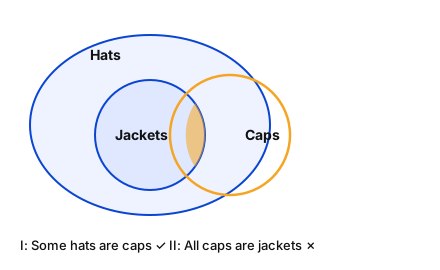
Concept: Draw the Venn diagram: "All jackets are hats" puts the Jacket circle inside Hats; "Some jackets are caps" makes Caps overlap Jackets.

  1. The overlap of Caps and Jackets lies inside Hats, so some hats are definitely caps → Conclusion I follows.
  2. Caps may extend outside Jackets; "all caps are jackets" is not certain → Conclusion II does not follow.

Trick: All A are B + Some A are C ⇒ Some B are C (always true); the reverse "All C are A" is never guaranteed.

Answer: (A) A

अवधारणा: ('Only conclusion I follows', 'केवल निष्कर्ष (I) अनुसरण करता है')

  1. व
  2. े
  3. न
  4. आ
  5. र
  6. े
  7. ख
  8. ब
  9. न
  10. ा
  11. ए
  12. ँ
  13. :
  14. "
  15. स
  16. भ
  17. ी
  18. ज
  19. ै
  20. क
  21. े
  22. ट
  23. ह
  24. ै
  25. ट
  26. ह
  27. ै
  28. ं
  29. "
  30. स
  31. े
  32. ज
  33. ै
  34. क
  35. े
  36. ट
  37. व
  38. ृ
  39. त
  40. ्
  41. त
  42. ह
  43. ै
  44. ट
  45. क
  46. े
  47. अ
  48. ं
  49. द
  50. र
  51. ;
  52. "
  53. क
  54. ु
  55. छ
  56. ज
  57. ै
  58. क
  59. े
  60. ट
  61. क
  62. ै
  63. प
  64. ह
  65. ै
  66. ं
  67. "
  68. स
  69. े
  70. क
  71. ै
  72. प
  73. व
  74. ृ
  75. त
  76. ्
  77. त
  78. ज
  79. ै
  80. क
  81. े
  82. ट
  83. क
  84. ो
  85. क
  86. ा
  87. ट
  88. त
  89. ा
  90. ह
  91. ै
  92. ।

ट्रिक: ['कैप और जैकेट का उभयनिष्ठ भाग हैट के अंदर है, अतः कुछ हैट निश्चित रूप से कैप हैं → निष्कर्ष I अनुसरण करता है।', 'कैप जैकेट के बाहर भी हो सकते हैं; "सभी कैप जैकेट हैं" निश्चित नहीं → निष्कर्ष II अनुसरण नहीं करता।']

उत्तर: (A) l

RRB NTPC Undergraduate CBT 1General Intelligence and ReasoningSyllogism

See all 100 solutions

More RRB NTPC Undergraduate CBT 1 papers

Download our app

Study smarter with the airGurukul App

Your complete exam-prep companion - classes, practice, and progress tracking.

Learn anytime, anywhere - live classes, tests, notes, and updates in one place.

GET IT ONGoogle Play

Have a query? We’re here to help

Fill out the form and our team will get back to you as soon as possible.

  • Ask your questions related to admission, courses, fees, or facilities
  • Share your details so our team can contact you easily
  • Get accurate information from our support team
  • Quick and simple form submission process

All fields marked * are required.