Question bank

Q&A: practice questions with answers

Search questions on any topic. Filter by exam category, exam, subject and topic, try the question, then open the answer and explanation.

Courses – airGurukul

8,495 questions found.

Q7661.
A motorist makes a certain journey in two stages. In the first stage, he travels at a speed of 30 km/hr for one-third of the total time. In the second stage, he travels at a speed of 60 km/hr for the remaining time. He returns to the starting point at a uniform speed of 75 km/hr. Find the average speed of the motorist during the entire onward and return journey.
एक मोटर चालक एक निश्चित यात्रा दो चरणों में करता है। पहले चरण में, वह कुल समय के एक-तिहाई समय में 30 km/hr की चाल से यात्रा करता है। दूसरे चरण में, वह शेष समय में 60 km/hr की चाल से यात्रा करता है। वह 75 km/hr की एकसमान चाल से प्रारंभिक स्थान पर वापस लौटता है। तो आने-जाने की संपूर्ण यात्रा के दौरान मोटर चालक की औसत चाल ज्ञात कीजिए।
  1. A58 km/hr
  2. B55 km/hr
  3. C60 km/hr
  4. D62 km/hr
Show answer

Concept: Average speed =total distancetotal time.

  1. Let onward time =3t. Distance =30t+60(2t)=150t.
  2. Return time =150t75=2t.
  3. Average =300t3t+2t=60km/h.

Trick: Onward average is 150t3t=50; for equal distances at 50 and 75, average =2×50×75125=60.

Answer: (C) 60 km/hr

अवधारणा: औसत चाल =कुल दूरीकुल समय।

  1. जाने का समय =3t। दूरी =30t+60(2t)=150t।
  2. लौटने का समय =150t75=2t।
  3. औसत =300t5t=60km/h।

ट्रिक: जाने की औसत चाल =50; समान दूरी 50 और 75 पर, औसत =2×50×75125=60।

उत्तर: (C) 60 km/hr

RRB NTPC Undergraduate CBT 1MathematicsAverage speedRRB NTPC Undergraduate CBT 1 2025 · 9 May Shift 3 →
Q7662.
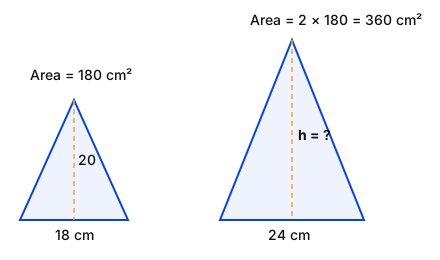
The base of a triangle is 18 cm and its height is 20 cm. Find the height of another triangle having twice its area and a base of 24 cm.
एक त्रिभुज का आधार 18 cm और ऊँचाई 20 cm है। उससे दोगुना क्षेत्रफल वाले और 24 cm आधार वाले दूसरे त्रिभुज की ऊँचाई ज्ञात कीजिए।
  1. A22 cm
  2. B20 cm
  3. C30 cm
  4. D24 cm
Show answer

Concept: Area =12×base×height.

  1. First area =12×18×20=180cm2; required area =360cm2.
  2. 12×24×h=360⇒h=30 cm.

Trick: b×h must double: 18×20=360→720; 72024=30.

Answer: (C) 30 cm

अवधारणा: क्षेत्रफल =12×आधार×ऊँचाई।

  1. पहला क्षेत्रफल =12×18×20=180cm2; अभीष्ट =360cm2।
  2. 12×24×h=360⇒h=30 cm।

ट्रिक: b×h दोगुना होना चाहिए: 18×20=360→720; 72024=30।

उत्तर: (C) 30 cm

RRB NTPC Undergraduate CBT 1MathematicsArea of triangleRRB NTPC Undergraduate CBT 1 2025 · 9 May Shift 3 →
Q7663.
The price of a shirt decreases from ₹200 to ₹180. What is the percentage decrease?
एक शर्ट का मूल्य ₹200 से घटकर ₹180 हो जाता है, तो कितने प्रतिशत की कमी होती है?
  1. A10%
  2. B20%
  3. C5%
  4. D15%
Show answer

Concept: % decrease=decreaseoriginal×100.

  1. Decrease =200−180=20.
  2. 20200×100=10%.

Trick: Always divide by the original (₹200), not the new price.

Answer: (A) 10%

अवधारणा: % कमी=कमीमूल×100।

  1. कमी =200−180=20।
  2. 20200×100=10%।

ट्रिक: हमेशा मूल मूल्य (₹200) से भाग दें, नए मूल्य से नहीं।

उत्तर: (A) 10%

RRB NTPC Undergraduate CBT 1MathematicsPercentage decreaseRRB NTPC Undergraduate CBT 1 2025 · 9 May Shift 3 →
Q7664.
Add 1116 and 0.4375. What will this sum be in decimal form?
1116 और 0.4375 का योग कीजिए। दशमलव रूप में यह योग कितना होगा?
  1. A0.958
  2. B0.975
  3. C1.125
  4. D1.208
Show answer

Concept: Convert the fraction to a decimal (denominator 16 terminates) and add.

  1. 1116=0.6875.
  2. 0.6875+0.4375=1.125.

Trick: 0.4375=716, so the sum is 1816=98=1.125.

Answer: (C) 1.125

अवधारणा: भिन्न को दशमलव में बदलें (हर 16 सांत दशमलव देता है) और जोड़ें।

  1. 1116=0.6875।
  2. 0.6875+0.4375=1.125।

ट्रिक: 0.4375=716, अतः योग =1816=98=1.125।

उत्तर: (C) 1.125

RRB NTPC Undergraduate CBT 1MathematicsFractions and decimalsRRB NTPC Undergraduate CBT 1 2025 · 9 May Shift 3 →
Q7665.
Simplify 30 + [{-9 × (26 - 13 + 5)}].
30 + [{-9 × (26 - 13 + 5)}] को सरल कीजिए।
  1. A-133
  2. B-132
  3. C-134
  4. D-135
Show answer

Concept: Solve the innermost bracket first.

  1. 26−13+5=18.
  2. −9×18=−162.
  3. 30+(−162)=−132.

Trick: Keep the sign of −9 with the product; only one sign change is needed.

Answer: (B) −132

अवधारणा: सबसे भीतरी कोष्ठक पहले हल करें।

  1. 26−13+5=18।
  2. −9×18=−162।
  3. 30+(−162)=−132।

ट्रिक: −9 का चिह्न गुणनफल के साथ रखें; केवल एक बार चिह्न बदलना है।

उत्तर: (B) −132

RRB NTPC Undergraduate CBT 1MathematicsSimplification (brackets)RRB NTPC Undergraduate CBT 1 2025 · 9 May Shift 3 →
Q7666.
Read the given statements and conclusions carefully. Assuming that the information given in the statements is true, even if it appears to be at variance with commonly known facts, decide which of the given conclusion(s) logically follow(s) from the statements.
Statements:
All shackets are hats.
Some shackets are caps.
Conclusions:
(I) Some hats are caps.
(II) All caps are shackets.
दिए गए कथनों और निष्कर्षों को ध्यानपूर्वक पढ़िए। यह मानते हुए कि कथनों में दी गई जानकारी सत्य है, भले ही वह सामान्यतः ज्ञात तथ्यों से भिन्न प्रतीत होती हो, निर्णय कीजिए कि दिए गए निष्कर्षों में से कौन-सा/कौन-से निष्कर्ष कथनों का तार्किक रूप से अनुसरण करता है/करते हैं।
कथन:
सभी शॉकेट, हैट हैं।
कुछ शॉकेट, कैप हैं।
निष्कर्ष:
(I) कुछ हैट, कैप हैं।
(II) सभी कैप, शॉकेट हैं।
  1. AOnly conclusion (I) followsकेवल निष्कर्ष (I) अनुसरण करता है
  2. BNeither conclusion (I) nor conclusion (II) followsन तो निष्कर्ष (I) और न ही निष्कर्ष (II) अनुसरण करता है
  3. COnly conclusion (II) followsकेवल निष्कर्ष (II) अनुसरण करता है
  4. DBoth conclusion (I) and conclusion (II) followनिष्कर्ष (I) और निष्कर्ष (II) दोनों अनुसरण करते हैं
Show answer

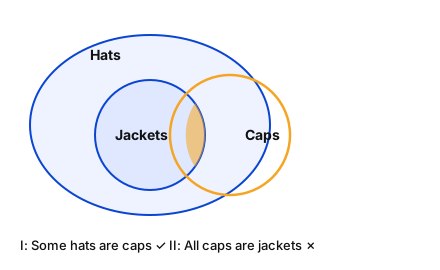
Concept: Draw the Venn diagram: "All jackets are hats" puts the Jacket circle inside Hats; "Some jackets are caps" makes Caps overlap Jackets.

  1. The overlap of Caps and Jackets lies inside Hats, so some hats are definitely caps → Conclusion I follows.
  2. Caps may extend outside Jackets; "all caps are jackets" is not certain → Conclusion II does not follow.

Trick: All A are B + Some A are C ⇒ Some B are C (always true); the reverse "All C are A" is never guaranteed.

Answer: (A) A

अवधारणा: ('Only conclusion I follows', 'केवल निष्कर्ष (I) अनुसरण करता है')

  1. व
  2. े
  3. न
  4. आ
  5. र
  6. े
  7. ख
  8. ब
  9. न
  10. ा
  11. ए
  12. ँ
  13. :
  14. "
  15. स
  16. भ
  17. ी
  18. ज
  19. ै
  20. क
  21. े
  22. ट
  23. ह
  24. ै
  25. ट
  26. ह
  27. ै
  28. ं
  29. "
  30. स
  31. े
  32. ज
  33. ै
  34. क
  35. े
  36. ट
  37. व
  38. ृ
  39. त
  40. ्
  41. त
  42. ह
  43. ै
  44. ट
  45. क
  46. े
  47. अ
  48. ं
  49. द
  50. र
  51. ;
  52. "
  53. क
  54. ु
  55. छ
  56. ज
  57. ै
  58. क
  59. े
  60. ट
  61. क
  62. ै
  63. प
  64. ह
  65. ै
  66. ं
  67. "
  68. स
  69. े
  70. क
  71. ै
  72. प
  73. व
  74. ृ
  75. त
  76. ्
  77. त
  78. ज
  79. ै
  80. क
  81. े
  82. ट
  83. क
  84. ो
  85. क
  86. ा
  87. ट
  88. त
  89. ा
  90. ह
  91. ै
  92. ।

ट्रिक: ['कैप और जैकेट का उभयनिष्ठ भाग हैट के अंदर है, अतः कुछ हैट निश्चित रूप से कैप हैं → निष्कर्ष I अनुसरण करता है।', 'कैप जैकेट के बाहर भी हो सकते हैं; "सभी कैप जैकेट हैं" निश्चित नहीं → निष्कर्ष II अनुसरण नहीं करता।']

उत्तर: (A) l

RRB NTPC Undergraduate CBT 1General Intelligence and ReasoningSyllogismRRB NTPC Undergraduate CBT 1 2025 · 9 May Shift 3 →
Q7667.
What should come in place of the question mark (?) in the given series based on the English alphabetical order? YKQ QCI IUA AMS ?
अंग्रेज़ी वर्णमाला क्रम के आधार पर दी गई शृंखला में प्रश्नचिह्न (?) के स्थान पर क्या आना चाहिए? YKQ QCI IUA AMS ?
  1. ASEK
  2. BPEG
  3. CKFY
  4. DRAD
Show answer

Concept: Check each position of the three-letter groups separately, with wrap-around in the alphabet.

  1. 1st letters: Y(25) → Q(17) → I(9) → A(1) → ? : each time −8; 1−8=−7→26−7=19 = S.
  2. 2nd letters: K(11) → C(3) → U(21) → M(13) → E(5): again −8 with wrap-around.
  3. 3rd letters: Q(17) → I(9) → A(1) → S(19) → K(11): −8.
  4. So the next group is SEK.

Trick: When −8 goes below 1, add 26: −7+26=19 (S).

Answer: (A) ज

अवधारणा: ('SEK', 'SEK')

  1. त
  2. ी
  3. न
  4. -
  5. अ
  6. क
  7. ्
  8. ष
  9. र
  10. ी
  11. स
  12. म
  13. ू
  14. ह
  15. ो
  16. ं
  17. क
  18. े
  19. ह
  20. र
  21. स
  22. ्
  23. थ
  24. ा
  25. न
  26. क
  27. ो
  28. अ
  29. ल
  30. ग
  31. -
  32. अ
  33. ल
  34. ग
  35. ज
  36. ा
  37. ँ
  38. च
  39. े
  40. ं
  41. ,
  42. व
  43. र
  44. ्
  45. ण
  46. म
  47. ा
  48. ल
  49. ा
  50. म
  51. े
  52. ं
  53. w
  54. r
  55. a
  56. p
  57. -
  58. a
  59. r
  60. o
  61. u
  62. n
  63. d
  64. क
  65. े
  66. स
  67. ा
  68. थ
  69. ।

ट्रिक: ['पहले अक्षर: Y(25) → Q(17) → I(9) → A(1) → ? : हर बार −8; 1−8=−7to26−7=19 = S।', 'दूसरे अक्षर: K(11) → C(3) → U(21) → M(13) → E(5): फिर −8 (wrap-around सहित)।', 'तीसरे अक्षर: Q(17) → I(9) → A(1) → S(19) → K(11): −8।', 'अतः अगला समूह SEK।']

उत्तर: (A) ब

RRB NTPC Undergraduate CBT 1General Intelligence and ReasoningLetter seriesRRB NTPC Undergraduate CBT 1 2025 · 9 May Shift 3 →
Q7668.
G is the father of Y. Y is the son of J. M is the brother of W. W is the son of J. How is G related to W?
G, Y का पिता है। Y, J का पुत्र है। M, W का भाई है। W, J का पुत्र है। तो G का W से क्या संबंध है?
  1. ABrotherभाई
  2. BFatherपिता
  3. CHusbandपति
  4. DSonपुत्र
Show answer

Concept: Build the family tree from each statement.

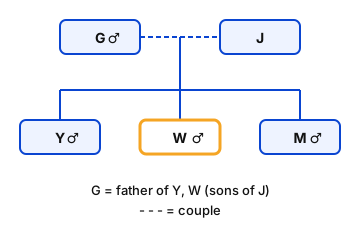
  1. G is the father of Y, and Y is the son of J → G and J are the parents (a couple).
  2. W is the son of J and M is the brother of W → W and M are also children of G and J.
  3. Therefore G is the father of W.

Trick: Same mother (J) ⇒ same father (G): once a couple is fixed, every child of one is a child of the other.

Answer: (B) ए

अवधारणा: ('Father', 'पिता')

  1. ह
  2. र
  3. क
  4. थ
  5. न
  6. स
  7. े
  8. व
  9. ं
  10. श
  11. -
  12. व
  13. ृ
  14. क
  15. ्
  16. ष
  17. ब
  18. न
  19. ा
  20. ए
  21. ँ
  22. ।

ट्रिक: ['G, Y का पिता है और Y, J का पुत्र है → G और J माता-पिता (दंपति) हैं।', 'W, J का पुत्र है और M, W का भाई है → W और M भी G और J की संतानें हैं।', 'अतः G, W का पिता है।']

उत्तर: (B) क

RRB NTPC Undergraduate CBT 1General Intelligence and ReasoningBlood relationsRRB NTPC Undergraduate CBT 1 2025 · 9 May Shift 3 →
Q7669.
In the following triad, each letter-cluster is related to the next (letter-cluster) by following a certain logic. Select the option that follows the same logic from among the given options.
DENY - DYNE - YNED
HUGE - HEGU - EGUH
निम्नलिखित त्रिक में, प्रत्येक अक्षर-समूह एक निश्चित तर्क का अनुसरण करते हुए अपने अगले (अक्षर-समूह) से संबंधित है। दिए गए विकल्पों में से वह विकल्प चुनिए जो समान तर्क का अनुसरण करता है।
DENY - DYNE - YNED
HUGE - HEGU - EGUH
  1. ALOST - LTSO - TSOL
  2. BGROW - GRWO - ROWG
  3. CTURN - TRUN - NRUT
  4. DCLOT - LCOT - TLOC
Show answer

Concept: Find the position rule for both steps and apply it to each option.

  1. DENY → DYNE: positions 1-2-3-4 become 1-4-3-2 (2nd and 4th letters swap). HUGE → HEGU follows the same.
  2. DYNE → YNED: positions become 2-3-4-1 (first letter goes to the end). HEGU → EGUH ✓.
  3. LOST → LTSO (swap 2nd & 4th ✓) → TSOL (first letter to end ✓).
  4. GROW → GRWO swaps 3rd/4th, TURN → TRUN swaps 2nd/3rd, CLOT → LCOT swaps 1st/2nd – all wrong.

Trick: Step 1: swap the 2nd and 4th letters; Step 2: move the first letter to the end.

Answer: (A) च

अवधारणा: ('LOST - LTSO - TSOL', 'LOST - LTSO - TSOL')

  1. द
  2. ो
  3. न
  4. ो
  5. ं
  6. च
  7. र
  8. ण
  9. ो
  10. ं
  11. क
  12. ा
  13. स
  14. ्
  15. थ
  16. ा
  17. न
  18. -
  19. न
  20. ि
  21. य
  22. म
  23. ख
  24. ो
  25. ज
  26. े
  27. ं
  28. औ
  29. र
  30. ह
  31. र
  32. व
  33. ि
  34. क
  35. ल
  36. ्
  37. प
  38. प
  39. र
  40. ल
  41. ा
  42. ग
  43. ू
  44. क
  45. र
  46. े
  47. ं
  48. ।

ट्रिक: ['DENY → DYNE: स्थान 1-2-3-4 → 1-4-3-2 (दूसरा और चौथा अक्षर आपस में बदलते हैं)। HUGE → HEGU भी यही।', 'DYNE → YNED: स्थान 2-3-4-1 (पहला अक्षर अंत में चला जाता है)। HEGU → EGUH ✓।', 'LOST → LTSO (दूसरा-चौथा बदलें ✓) → TSOL (पहला अक्षर अंत में ✓)।', 'GROW → GRWO में 3रा/4था, TURN → TRUN में 2रा/3रा, CLOT → LCOT में 1ला/2रा बदला है – सब गलत।']

उत्तर: (A) र

RRB NTPC Undergraduate CBT 1General Intelligence and ReasoningLetter analogyRRB NTPC Undergraduate CBT 1 2025 · 9 May Shift 3 →
Q7670.
What should come in place of the question mark (?) in the given series based on the English alphabetical order? MNO PQR STU VWX ?
अंग्रेज़ी वर्णमाला क्रम पर आधारित दी गई शृंखला में प्रश्नचिह्न (?) के स्थान पर क्या आना चाहिए? MNO PQR STU VWX ?
  1. AYZA
  2. BYZB
  3. CYYZ
  4. DYAZ
Show answer

Concept: Consecutive letters of the alphabet are grouped in threes, continuing cyclically after Z.

  1. MNO, PQR, STU, VWX – each group is the next three letters.
  2. After X come Y, Z and then the alphabet restarts with A → YZA.

Trick: Z is followed by A when a series wraps around.

Answer: (A) श

अवधारणा: ('YZA', 'YZA')

  1. व
  2. र
  3. ्
  4. ण
  5. म
  6. ा
  7. ल
  8. ा
  9. क
  10. े
  11. क
  12. ्
  13. र
  14. म
  15. ा
  16. ग
  17. त
  18. अ
  19. क
  20. ्
  21. ष
  22. र
  23. त
  24. ी
  25. न
  26. -
  27. त
  28. ी
  29. न
  30. क
  31. े
  32. स
  33. म
  34. ू
  35. ह
  36. म
  37. े
  38. ं
  39. ह
  40. ै
  41. ं
  42. ,
  43. Z
  44. क
  45. े
  46. ब
  47. ा
  48. द
  49. च
  50. क
  51. ्
  52. र
  53. फ
  54. ि
  55. र
  56. A
  57. स
  58. े
  59. ।

ट्रिक: ['MNO, PQR, STU, VWX – हर समूह अगले तीन अक्षर हैं।', 'X के बाद Y, Z और फिर वर्णमाला A से शुरू → YZA।']

उत्तर: (A) ्

RRB NTPC Undergraduate CBT 1General Intelligence and ReasoningLetter seriesRRB NTPC Undergraduate CBT 1 2025 · 9 May Shift 3 →
Q7671.
Seven boxes, A, B, C, D, E, F and G, are kept one over the other, but not necessarily in the same order. Only one box is kept above C. A is not the topmost box. Only two boxes are kept below D. G is below D but above F. E is kept below A. How many boxes are kept between A and E?
सात बक्से, A, B, C, D, E, F और G, एक-दूसरे के ऊपर रखे गए हैं, परंतु आवश्यक नहीं कि इसी क्रम में हों। C के ऊपर केवल एक बक्सा रखा गया है। A सबसे ऊपर का बक्सा नहीं है। D के नीचे केवल दो बक्से रखे गए हैं। G, D के नीचे है परंतु F के ऊपर है। E को A के नीचे रखा गया है। A और E के बीच कितने बक्से रखे गए हैं?
  1. AThreeतीन
  2. BNoneकोई नहीं
  3. COneएक
  4. DTwoदो
Show answer

Concept: Number the positions 1 (bottom) to 7 (top) and place the fixed boxes first.

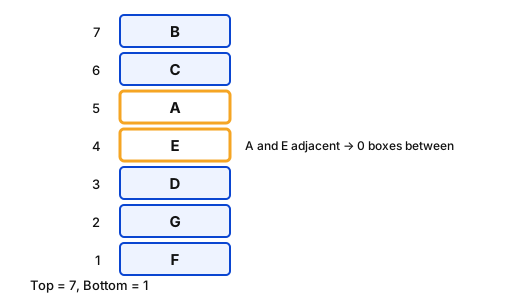
  1. Only one box above C → C at 6. Only two boxes below D → D at 3.
  2. G is below D but above F → G at 2, F at 1.
  3. Remaining positions 4, 5, 7. A is not the top box and E is below A → A at 5, E at 4; so B at 7.
  4. Stack (top→bottom): B, C, A, E, D, G, F. A and E are adjacent → no box between them.

Trick: Fill "only n above/below" clues first – they fix exact positions.

Answer: (B) "

अवधारणा: ('None', 'एक भी नहीं')

  1. स
  2. ्
  3. थ
  4. ा
  5. न
  6. ो
  7. ं
  8. क
  9. ो
  10. 1
  11. (
  12. न
  13. ी
  14. च
  15. े
  16. )
  17. स
  18. े
  19. 7
  20. (
  21. ऊ
  22. प
  23. र
  24. )
  25. त
  26. क
  27. क
  28. ्
  29. र
  30. म
  31. ा
  32. ं
  33. क
  34. ि
  35. त
  36. क
  37. र
  38. े
  39. ं
  40. औ
  41. र
  42. प
  43. ह
  44. ल
  45. े
  46. न
  47. ि
  48. श
  49. ्
  50. च
  51. ि
  52. त
  53. ब
  54. ॉ
  55. क
  56. ्
  57. स
  58. र
  59. ख
  60. े
  61. ं
  62. ।

ट्रिक: ['C के ऊपर केवल एक बॉक्स → C स्थान 6 पर। D के नीचे केवल दो बॉक्स → D स्थान 3 पर।', 'G, D के नीचे पर F के ऊपर → G स्थान 2, F स्थान 1।', 'शेष स्थान 4, 5, 7। A सबसे ऊपर नहीं और E, A के नीचे → A स्थान 5, E स्थान 4; अतः B स्थान 7।', 'ढेर (ऊपर→नीचे): B, C, A, E, D, G, F। A और E सटे हुए हैं → बीच में कोई बॉक्स नहीं।']

उत्तर: (B) क

RRB NTPC Undergraduate CBT 1General Intelligence and ReasoningBox arrangementRRB NTPC Undergraduate CBT 1 2025 · 9 May Shift 3 →
Q7672.
Select the set from the options in which the numbers are related in the same way as the numbers of the following sets.
(NOTE: Operations should be performed on the whole numbers, without breaking down the numbers into their constituent digits. E.g. 13 – Operations on 13 such as adding/subtracting/multiplying etc. to 13 can be performed. Breaking down 13 into 1 and 3 and then performing mathematical operations on 1 and 3 is not allowed.)
(12, 36, 3)
(15, 75, 5)
विकल्पों में से वह समुच्चय चुनिए जिसमें संख्याएँ उसी प्रकार संबंधित हों, जिस प्रकार नीचे दिए गए समुच्चयों की संख्याएँ संबंधित हैं।
(नोट: संख्याओं को उनके घटक अंकों में विभाजित किए बिना, पूर्ण संख्याओं पर संक्रियाएँ की जानी चाहिए। उदाहरण के लिए 13 लें। 13 पर संक्रियाएँ जैसे 13 में जोड़ना/घटाना/गुणा करना आदि पूर्ण 13 पर की जा सकती हैं। 13 को 1 और 3 में विभाजित करके फिर 1 और 3 पर गणितीय संक्रियाएँ करने की अनुमति नहीं है।)
(12, 36, 3)
(15, 75, 5)
  1. A(7, 72, 12)
  2. B(8, 56, 9)
  3. C(13, 188, 6)
  4. D(14, 56, 4)
Show answer

Concept: Find the relation among the three numbers of each given set.

  1. (12, 36, 3): 12×3=36. (15, 75, 5): 15×5=75. Rule: first × third = middle.
  2. Check options: 7×12=84≠72; 8×9=72≠56; 13×6=78≠188; 14×4=56 ✓.

Trick: Middle number = product of the two outer numbers.

Answer: (D) ब

अवधारणा: ('(14, 56, 4)', '(14, 56, 4)')

  1. द
  2. ि
  3. ए
  4. ग
  5. ए
  6. ह
  7. र
  8. स
  9. म
  10. ू
  11. ह
  12. क
  13. ी
  14. त
  15. ी
  16. न
  17. स
  18. ं
  19. ख
  20. ्
  21. य
  22. ा
  23. ओ
  24. ं
  25. क
  26. े
  27. ब
  28. ी
  29. च
  30. स
  31. ं
  32. ब
  33. ं
  34. ध
  35. ख
  36. ो
  37. ज
  38. े
  39. ं
  40. ।

ट्रिक: ['(12, 36, 3): 12times3=36। (15, 75, 5): 15times5=75। नियम: पहली × तीसरी = बीच वाली।', 'विकल्प जाँचें: 7times12=84ne72; 8times9=72ne56; 13times6=78ne188; 14times4=56 ✓।']

उत्तर: (D) ी

RRB NTPC Undergraduate CBT 1General Intelligence and ReasoningNumber analogyRRB NTPC Undergraduate CBT 1 2025 · 9 May Shift 3 →
Q7673.
Based on the English alphabetical order, three of the following four letter-clusters are alike in a certain way and thus form a group. Which letter-cluster does not belong to that group?
(NOTE: The odd letter-cluster is not based on the number of consonants/vowels or their position/place in the letter-cluster.)
अंग्रेज़ी वर्णमाला क्रम के आधार पर, नीचे दिए गए चार अक्षर-समूहों में से तीन किसी निश्चित प्रकार से समान हैं और इस प्रकार एक समूह बनाते हैं। कौन-सा अक्षर-समूह उस समूह से संबंधित नहीं है?
(नोट: भिन्न अक्षर-समूह व्यंजनों/स्वरों की संख्या अथवा अक्षर-समूह में उनकी स्थिति/स्थान पर आधारित नहीं है।)
  1. AEWO
  2. BMEO
  3. CASK
  4. DXPH
Show answer

Concept: Write the alphabetical positions and compare the gaps (with wrap-around).

  1. EWO: 5 → 23 → 15 : +18,−8. ASK: 1 → 19 → 11 : +18,−8. XPH: 24 → 16 → 8 : 24+18=42−26=16 (+18), then −8.
  2. MEO: 13 → 5 → 15 : −8,+10 – a different pattern.
  3. So MEO is the odd one out.

Trick: Pattern of the group: 1st +18 = 2nd, 2nd −8 = 3rd (equivalently 1st +10 = 3rd).

Answer: (B) स

अवधारणा: ('MEO', 'MEO')

  1. व
  2. र
  3. ्
  4. ण
  5. म
  6. ा
  7. ल
  8. ा
  9. स
  10. ्
  11. थ
  12. ा
  13. न
  14. ल
  15. ि
  16. ख
  17. क
  18. र
  19. अ
  20. ं
  21. त
  22. र
  23. (
  24. w
  25. r
  26. a
  27. p
  28. -
  29. a
  30. r
  31. o
  32. u
  33. n
  34. d
  35. स
  36. ह
  37. ि
  38. त
  39. )
  40. क
  41. ी
  42. त
  43. ु
  44. ल
  45. न
  46. ा
  47. क
  48. र
  49. े
  50. ं
  51. ।

ट्रिक: ['EWO: 5 → 23 → 15 : +18,−8। ASK: 1 → 19 → 11 : +18,−8। XPH: 24 → 16 → 8 : 24+18=42−26=16 (+18), फिर −8।', 'MEO: 13 → 5 → 15 : −8,+10 – अलग पैटर्न।', 'अतः MEO विषम है।']

उत्तर: (B) म

RRB NTPC Undergraduate CBT 1General Intelligence and ReasoningLetter-cluster classificationRRB NTPC Undergraduate CBT 1 2025 · 9 May Shift 3 →
Q7674.
Each letter of the word KNIFERS is arranged in English alphabetical order. In the new letter-cluster thus formed, how many letters in total are there in the English alphabetical order between the letter at the third place from the left and the letter at the third place from the right?
KNIFERS शब्द के प्रत्येक अक्षर को अंग्रेज़ी वर्णमाला क्रम में व्यवस्थित किया जाता है। इस प्रकार बने नए अक्षर-समूह में, अंग्रेज़ी वर्णमाला क्रम के अनुसार, बाईं ओर से तीसरे स्थान पर आने वाले अक्षर और दाईं ओर से तीसरे स्थान पर आने वाले अक्षर के बीच कुल कितने अक्षर आते हैं?
  1. A7
  2. B5
  3. C3
  4. D4
Show answer

Concept: Arrange the letters of the word alphabetically, then count letters between the required positions in the alphabet.

  1. KNIFERS → alphabetical order: E, F, I, K, N, R, S.
  2. 3rd from the left = I (9); 3rd from the right = N (14).
  3. Letters between I and N in the alphabet: J, K, L, M = 14−9−1=4.

Trick: Letters between two letters = difference of positions −1.

Answer: (D) द

अवधारणा: ('4', '4')

  1. श
  2. ब
  3. ्
  4. द
  5. क
  6. े
  7. अ
  8. क
  9. ्
  10. ष
  11. र
  12. ो
  13. ं
  14. क
  15. ो
  16. व
  17. र
  18. ्
  19. ण
  20. ा
  21. न
  22. ु
  23. क
  24. ्
  25. र
  26. म
  27. म
  28. े
  29. ं
  30. ल
  31. ग
  32. ा
  33. ए
  34. ँ
  35. ,
  36. फ
  37. ि
  38. र
  39. अ
  40. भ
  41. ी
  42. ष
  43. ्
  44. ट
  45. स
  46. ्
  47. थ
  48. ा
  49. न
  50. ो
  51. ं
  52. क
  53. े
  54. अ
  55. क
  56. ्
  57. ष
  58. र
  59. ो
  60. ं
  61. क
  62. े
  63. ब
  64. ी
  65. च
  66. व
  67. र
  68. ्
  69. ण
  70. म
  71. ा
  72. ल
  73. ा
  74. म
  75. े
  76. ं
  77. अ
  78. क
  79. ्
  80. ष
  81. र
  82. ग
  83. ि
  84. न
  85. े
  86. ं
  87. ।

ट्रिक: ['KNIFERS → वर्णानुक्रम: E, F, I, K, N, R, S।', 'बाएँ से तीसरा = I (9); दाएँ से तीसरा = N (14)।', 'वर्णमाला में I और N के बीच अक्षर: J, K, L, M = 14−9−1=4।']

उत्तर: (D) ो

RRB NTPC Undergraduate CBT 1General Intelligence and ReasoningAlphabetical arrangementRRB NTPC Undergraduate CBT 1 2025 · 9 May Shift 3 →
Q7675.
Based on the English alphabetical order, three of the following four letter-clusters are alike in a certain way and thus form a group. Which letter-cluster does not belong to that group?
(NOTE: The odd letter-cluster is not based on the number of consonants/vowels or their position/place in the letter-cluster)
अंग्रेज़ी वर्णमाला क्रम के आधार पर, नीचे दिए गए चार अक्षर-समूहों में से तीन किसी निश्चित प्रकार से समान हैं और इस प्रकार एक समूह बनाते हैं। कौन-सा अक्षर-समूह उस समूह से संबंधित नहीं है?
(नोट: भिन्न अक्षर-समूह व्यंजनों/स्वरों की संख्या अथवा अक्षर-समूह में उनकी स्थिति/स्थान पर आधारित नहीं है)
  1. AKHN
  2. BNKP
  3. CVSX
  4. DROT
Show answer

Concept: Compare the differences between consecutive letters in each cluster.

  1. NKP: 14 → 11 → 16 : −3,+5. VSX: 22 → 19 → 24 : −3,+5. ROT: 18 → 15 → 20 : −3,+5.
  2. KHN: 11 → 8 → 14 : −3,+6 – the second gap differs.
  3. Hence KHN does not belong to the group.

Trick: Write positions, then gaps; the cluster whose gaps differ is the odd one.

Answer: (A) स

अवधारणा: ('KHN', 'KHN')

  1. ह
  2. र
  3. स
  4. म
  5. ू
  6. ह
  7. म
  8. े
  9. ं
  10. क
  11. ्
  12. र
  13. म
  14. ा
  15. ग
  16. त
  17. अ
  18. क
  19. ्
  20. ष
  21. र
  22. ो
  23. ं
  24. क
  25. े
  26. अ
  27. ं
  28. त
  29. र
  30. क
  31. ी
  32. त
  33. ु
  34. ल
  35. न
  36. ा
  37. क
  38. र
  39. े
  40. ं
  41. ।

ट्रिक: ['NKP: 14 → 11 → 16 : −3,+5। VSX: 22 → 19 → 24 : −3,+5। ROT: 18 → 15 → 20 : −3,+5।', 'KHN: 11 → 8 → 14 : −3,+6 – दूसरा अंतर अलग है।', 'अतः KHN समूह में नहीं आता।']

उत्तर: (A) ्

RRB NTPC Undergraduate CBT 1General Intelligence and ReasoningLetter-cluster classificationRRB NTPC Undergraduate CBT 1 2025 · 9 May Shift 3 →
Q7676.
In the word WONDERLANDS, each vowel is changed to the letter immediately following it in the English alphabetical order and each consonant is changed to the letter immediately preceding it in the English alphabetical order. Which of the following letters will appear exactly twice in the new letter-cluster thus formed?
WONDERLANDS शब्द के प्रत्येक स्वर को अंग्रेज़ी वर्णमाला क्रम में उसके ठीक बाद वाले अक्षर से बदल दिया जाता है और प्रत्येक व्यंजन को अंग्रेज़ी वर्णमाला क्रम में उसके ठीक पहले वाले अक्षर से बदल दिया जाता है। इस प्रकार बने नए अक्षर-समूह में निम्नलिखित में से कौन-सा अक्षर ठीक दो बार आएगा?
  1. AF
  2. BM
  3. CQ
  4. DR
Show answer

Concept: Vowels (A, E, I, O, U) move one step forward, consonants one step backward.

  1. WONDERLANDS → W→V, O→P, N→M, D→C, E→F, R→Q, L→K, A→B, N→M, D→C, S→R.
  2. New cluster: V P M C F Q K B M C R.
  3. M appears twice (from the two N's); C also appears twice, but among the options only M qualifies. F, Q and R appear once.

Trick: Repeated source letters give repeated coded letters – WONDERLANDS has N twice and D twice.

Answer: (B) म

अवधारणा: ('M', 'M')

  1. स
  2. ्
  3. व
  4. र
  5. (
  6. A
  7. ,
  8. E
  9. ,
  10. I
  11. ,
  12. O
  13. ,
  14. U
  15. )
  16. ए
  17. क
  18. क
  19. द
  20. म
  21. आ
  22. ग
  23. े
  24. ,
  25. व
  26. ्
  27. य
  28. ं
  29. ज
  30. न
  31. ए
  32. क
  33. क
  34. द
  35. म
  36. प
  37. ी
  38. छ
  39. े
  40. ।

ट्रिक: ['WONDERLANDS → W→V, O→P, N→M, D→C, E→F, R→Q, L→K, A→B, N→M, D→C, S→R।', 'नया समूह: V P M C F Q K B M C R।', 'M दो बार आता है (दोनों N से); C भी दो बार, पर विकल्पों में केवल M है। F, Q और R एक-एक बार।']

उत्तर: (B) ू

RRB NTPC Undergraduate CBT 1General Intelligence and ReasoningLetter operationsRRB NTPC Undergraduate CBT 1 2025 · 9 May Shift 3 →
Q7677.
Read the given statements and conclusions carefully. Assuming that the information given in the statements is true, even if it appears to be at variance with commonly known facts, decide which of the given conclusion(s) logically follow(s) from the statements.
Statements:
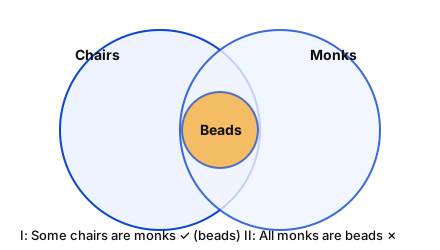
All beads are chairs.
All beads are monks.
Conclusions:
(I) Some chairs are monks.
(II) All monks are beads.
दिए गए कथनों और निष्कर्षों को ध्यानपूर्वक पढ़िए। यह मानते हुए कि कथनों में दी गई जानकारी सत्य है, भले ही वह सामान्यतः ज्ञात तथ्यों से भिन्न प्रतीत होती हो, निर्णय कीजिए कि दिए गए निष्कर्षों में से कौन-सा/कौन-से निष्कर्ष कथनों का तार्किक रूप से अनुसरण करता है/करते हैं।
कथन:
सभी मनके कुर्सियाँ हैं।
सभी मनके साधु हैं।
निष्कर्ष:
(I) कुछ कुर्सियाँ साधु हैं।
(II) सभी साधु मनके हैं।
  1. AOnly conclusion (II) follows.केवल निष्कर्ष (II) अनुसरण करता है।
  2. BNeither conclusion (I) nor conclusion (II) follows.न तो निष्कर्ष (I) और न ही निष्कर्ष (II) अनुसरण करता है।
  3. COnly conclusion (I) follows.केवल निष्कर्ष (I) अनुसरण करता है।
  4. DBoth conclusions (I) and (II) follow.निष्कर्ष (I) और (II) दोनों अनुसरण करते हैं।
Show answer

Concept: Both statements are universal with the same subject "beads", so Beads lies inside both Chairs and Monks.

  1. Beads are common to Chairs and Monks, so some chairs are monks → Conclusion I follows.
  2. "All monks are beads" reverses the second statement; monks may exist outside beads → Conclusion II does not follow.

Trick: All A are B, All A are C ⇒ Some B are C; a universal statement never reverses to another universal.

Answer: (C) A

अवधारणा: ('Only conclusion I follows', 'केवल निष्कर्ष (I) अनुसरण करता है')

  1. द
  2. ो
  3. न
  4. ो
  5. ं
  6. क
  7. थ
  8. न
  9. स
  10. ा
  11. र
  12. ्
  13. व
  14. भ
  15. ौ
  16. म
  17. ि
  18. क
  19. ह
  20. ै
  21. ं
  22. औ
  23. र
  24. उ
  25. द
  26. ्
  27. द
  28. े
  29. श
  30. ्
  31. य
  32. "
  33. म
  34. न
  35. क
  36. े
  37. "
  38. स
  39. म
  40. ा
  41. न
  42. ह
  43. ै
  44. ,
  45. अ
  46. त
  47. ः
  48. म
  49. न
  50. क
  51. े
  52. ,
  53. क
  54. ु
  55. र
  56. ्
  57. स
  58. ि
  59. य
  60. ो
  61. ं
  62. औ
  63. र
  64. स
  65. ा
  66. ध
  67. ु
  68. ओ
  69. ं
  70. द
  71. ो
  72. न
  73. ो
  74. ं
  75. क
  76. े
  77. अ
  78. ं
  79. द
  80. र
  81. ह
  82. ै
  83. ं
  84. ।

ट्रिक: ['मनके, कुर्सी और साधु दोनों में उभयनिष्ठ हैं, अतः कुछ कुर्सियाँ साधु हैं → निष्कर्ष I अनुसरण करता है।', '"सभी साधु मनके हैं" दूसरे कथन का उल्टा है; साधु मनकों के बाहर भी हो सकते हैं → निष्कर्ष II अनुसरण नहीं करता।']

उत्तर: (C) l

RRB NTPC Undergraduate CBT 1General Intelligence and ReasoningSyllogismRRB NTPC Undergraduate CBT 1 2025 · 9 May Shift 3 →
Q7678.
Following a certain logic, KR 19 is related to NM 6. Following the same logic, MV 11 is related to PQ -2. Following the same logic, to which of the following is CS 7 related?
एक निश्चित तर्क का अनुसरण करते हुए, KR 19, NM 6 से संबंधित है। उसी तर्क का अनुसरण करते हुए, MV 11, PQ -2 से संबंधित है। समान तर्क का अनुसरण करते हुए, CS 7 निम्नलिखित में से किससे संबंधित है?
  1. AFN -6
  2. BKL 7
  3. CGH 7
  4. DHJ -9
Show answer

Concept: Find how each letter and the number change from the first term to the second.

  1. KR 19 → NM 6: K +3 = N, R −5 = M, 19−13=6.
  2. MV 11 → PQ −2: M +3 = P, V −5 = Q, 11−13=−2 ✓ same rule.
  3. CS 7 → C +3 = F, S −5 = N, 7−13=−6 → FN −6.

Trick: Rule: (1st letter +3), (2nd letter −5), (number −13).

Answer: (A) न

अवधारणा: ('FN −6', 'FN −6')

  1. प
  2. ह
  3. ल
  4. े
  5. प
  6. द
  7. स
  8. े
  9. द
  10. ू
  11. स
  12. र
  13. े
  14. प
  15. द
  16. त
  17. क
  18. ह
  19. र
  20. अ
  21. क
  22. ्
  23. ष
  24. र
  25. औ
  26. र
  27. स
  28. ं
  29. ख
  30. ्
  31. य
  32. ा
  33. क
  34. ा
  35. प
  36. र
  37. ि
  38. व
  39. र
  40. ्
  41. त
  42. न
  43. ख
  44. ो
  45. ज
  46. े
  47. ं
  48. ।

ट्रिक: ['KR 19 → NM 6: K +3 = N, R −5 = M, 19−13=6।', 'MV 11 → PQ −2: M +3 = P, V −5 = Q, 11−13=−2 ✓ वही नियम।', 'CS 7 → C +3 = F, S −5 = N, 7−13=−6 → FN −6।']

उत्तर: (A) ि

RRB NTPC Undergraduate CBT 1General Intelligence and ReasoningLetter–number analogyRRB NTPC Undergraduate CBT 1 2025 · 9 May Shift 3 →
Q7679.
In a certain code language, "ZCKU" is coded as "94" and "SAPI" is coded as "126". What is the code for "GXRB" in this code language?
एक निश्चित कूट भाषा में, "ZCKU" को "94" के रूप में कूटबद्ध किया जाता है और "SAPI" को "126" के रूप में कूटबद्ध किया जाता है। तो इस कूट भाषा में "GXRB" के लिए कूट क्या है?
  1. A127
  2. B120
  3. C114
  4. D119
Show answer

Concept: Try the reverse alphabetical positions (A = 26 … Z = 1) when normal positions do not fit.

  1. ZCKU: reverse positions Z = 1, C = 24, K = 16, U = 6; sum =47; 47×2=94 ✓.
  2. SAPI: S = 8, A = 26, P = 11, I = 18; sum =63; 63×2=126 ✓.
  3. GXRB: G = 20, X = 3, R = 9, B = 25; sum =57; 57×2=114.

Trick: Reverse position =27−normal position. Code = 2 × (sum of reverse positions).

Answer: (C) उ

अवधारणा: ('114', '114')

  1. ज
  2. ब
  3. स
  4. ा
  5. म
  6. ा
  7. न
  8. ्
  9. य
  10. स
  11. ्
  12. थ
  13. ा
  14. न
  15. न
  16. म
  17. ि
  18. ल
  19. े
  20. ं
  21. त
  22. ो
  23. उ
  24. ल
  25. ्
  26. ट
  27. े
  28. व
  29. र
  30. ्
  31. ण
  32. म
  33. ा
  34. ल
  35. ा
  36. स
  37. ्
  38. थ
  39. ा
  40. न
  41. (
  42. A
  43. =
  44. 2
  45. 6
  46. …
  47. Z
  48. =
  49. 1
  50. )
  51. आ
  52. ज
  53. ़
  54. म
  55. ा
  56. ए
  57. ँ
  58. ।

ट्रिक: ['ZCKU: उल्टे स्थान Z = 1, C = 24, K = 16, U = 6; योग =47; 47times2=94 ✓।', 'SAPI: S = 8, A = 26, P = 11, I = 18; योग =63; 63times2=126 ✓।', 'GXRB: G = 20, X = 3, R = 9, B = 25; योग =57; 57times2=114।']

उत्तर: (C) ल

RRB NTPC Undergraduate CBT 1General Intelligence and ReasoningCoding–decodingRRB NTPC Undergraduate CBT 1 2025 · 9 May Shift 3 →
Q7680.
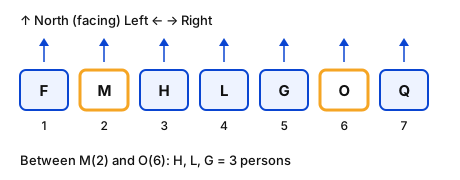
Seven people F, G, H, L, M, O and Q are sitting in a row facing north. No one is sitting to the right of Q. O is sitting immediately to the left of Q. Only three people are sitting between Q and H. F is sitting third to the left of L. G is sitting immediately to the right of L. How many people are sitting between M and O?
सात व्यक्ति F, G, H, L, M, O और Q उत्तर की ओर मुख करके एक पंक्ति में बैठे हैं। Q के दाईं ओर कोई नहीं बैठा है। O, Q के ठीक बाईं ओर बैठा है। Q और H के बीच केवल तीन व्यक्ति बैठे हैं। F, L के बाईं ओर तीसरे स्थान पर बैठा है। G, L के ठीक दाईं ओर बैठा है। तो M और O के बीच कितने व्यक्ति बैठे हैं?
  1. ATwoदो
  2. BOneएक
  3. CThreeतीन
  4. DFourचार
Show answer

Concept: Number the seats 1 to 7 from left to right (all face north, so left/right are as we see).

  1. No one is to the right of Q → Q at 7; O immediately left of Q → O at 6.
  2. Exactly three people between Q and H → H at 3.
  3. F is 3rd to the left of L and G is immediately right of L: free seats 1, 2, 4, 5 → L at 4, G at 5, F at 1; M takes seat 2.
  4. Row: F, M, H, L, G, O, Q. Between M (2) and O (6) sit H, L, G = three.

Trick: Start with the "end-seat" clue (nobody to the right) – it anchors the whole row.

Answer: (C) "

अवधारणा: ('Three', 'तीन')

  1. स
  2. ी
  3. ट
  4. ो
  5. ं
  6. क
  7. ो
  8. ब
  9. ा
  10. ए
  11. ँ
  12. स
  13. े
  14. द
  15. ा
  16. ए
  17. ँ
  18. 1
  19. स
  20. े
  21. 7
  22. त
  23. क
  24. क
  25. ्
  26. र
  27. म
  28. ा
  29. ं
  30. क
  31. ि
  32. त
  33. क
  34. र
  35. े
  36. ं
  37. (
  38. स
  39. भ
  40. ी
  41. उ
  42. त
  43. ्
  44. त
  45. र
  46. क
  47. ी
  48. ओ
  49. र
  50. ,
  51. अ
  52. त
  53. ः
  54. ब
  55. ा
  56. य
  57. ा
  58. ँ
  59. /
  60. द
  61. ा
  62. य
  63. ा
  64. ँ
  65. ह
  66. म
  67. ा
  68. र
  69. े
  70. ज
  71. ै
  72. स
  73. ा
  74. )
  75. ।

ट्रिक: ['Q के दाएँ कोई नहीं → Q सीट 7 पर; O, Q के तुरंत बाएँ → O सीट 6।', 'Q और H के बीच ठीक तीन व्यक्ति → H सीट 3।', 'F, L के बाएँ तीसरा और G, L के तुरंत दाएँ: खाली सीटें 1, 2, 4, 5 → L सीट 4, G सीट 5, F सीट 1; M सीट 2।', 'पंक्ति: F, M, H, L, G, O, Q। M (2) और O (6) के बीच H, L, G = तीन।']

उत्तर: (C) क

RRB NTPC Undergraduate CBT 1General Intelligence and ReasoningLinear seating arrangementRRB NTPC Undergraduate CBT 1 2025 · 9 May Shift 3 →