Question bank

Q&A: practice questions with answers

Search questions on any topic. Filter by exam category, exam, subject and topic, try the question, then open the answer and explanation.

Courses – airGurukul

8,495 questions found.

Q7681.
In the following triad, each letter-cluster is related to the next letter-cluster by following a certain logic. From the given options, select the option that follows the same logic.
LIES - ILSE - LSIE
FROG - RFGO - FGRO
निम्नलिखित त्रिक में, प्रत्येक अक्षर-समूह एक निश्चित तर्क का अनुसरण करते हुए अपने अगले अक्षर-समूह से संबंधित है। दिए गए विकल्पों में से, वह विकल्प चुनिए जो समान तर्क का अनुसरण करता है।
LIES - ILSE - LSIE
FROG - RFGO - FGRO
  1. APALE - ALEP - LEPA
  2. BSCAM - MSCA - AMSC
  3. CLUCK - UCLK - CLUK
  4. DCUPS - UCSP - CSUP
Show answer

Concept: Track the positions in both steps.

  1. LIES → ILSE: positions 1-2-3-4 become 2-1-4-3 (swap letters in pairs). FROG → RFGO ✓.
  2. ILSE → LSIE: positions become 2-3-1-4 (1st letter moves to 3rd place). RFGO → FGRO ✓.
  3. CUPS → UCSP (pairs swapped ✓) → CSUP (U-C-S-P → C-S-U-P: 2-3-1-4 ✓).
  4. PALE → ALEP, SCAM → MSCA, LUCK → UCLK do not follow the pair-swap in step 1.

Trick: Step 1: swap 1↔2 and 3↔4; Step 2: order 2-3-1-4.

Answer: (D) च

अवधारणा: ('CUPS - UCSP - CSUP', 'CUPS - UCSP - CSUP')

  1. द
  2. ो
  3. न
  4. ो
  5. ं
  6. च
  7. र
  8. ण
  9. ो
  10. ं
  11. म
  12. े
  13. ं
  14. स
  15. ्
  16. थ
  17. ा
  18. न
  19. ो
  20. ं
  21. क
  22. ो
  23. ट
  24. ्
  25. र
  26. ै
  27. क
  28. क
  29. र
  30. े
  31. ं
  32. ।

ट्रिक: ['LIES → ILSE: स्थान 1-2-3-4 → 2-1-4-3 (जोड़ों में अक्षर बदलें)। FROG → RFGO ✓।', 'ILSE → LSIE: स्थान 2-3-1-4 (पहला अक्षर तीसरे स्थान पर)। RFGO → FGRO ✓।', 'CUPS → UCSP (जोड़े बदले ✓) → CSUP (U-C-S-P → C-S-U-P: 2-3-1-4 ✓)।', 'PALE → ALEP, SCAM → MSCA, LUCK → UCLK पहले चरण के जोड़ा-बदल नियम पर खरे नहीं उतरते।']

उत्तर: (D) र
RRB NTPC Undergraduate CBT 1General Intelligence and ReasoningLetter analogyRRB NTPC Undergraduate CBT 1 2025 · 9 May Shift 3 →
Q7682.
In a certain code language,
A x B means 'A is the father of B',
A ≠ B means 'A is the son of B',
A ÷ B means 'A is the daughter of B' and
A ₹ B means 'A is the sister of B'
Based on the above, if 'C ÷ D ₹ E ≠ L x M', then how is C related to M?
एक निश्चित कूट भाषा में,
A x B का अर्थ है कि 'A, B का पिता है',
A ≠ B का अर्थ है कि 'A, B का पुत्र है',
A ÷ B का अर्थ है कि 'A, B की पुत्री है' और
A ₹ B का अर्थ है कि 'A, B की बहन है'
उपर्युक्त के आधार पर, यदि 'C ÷ D ₹ E ≠ L x M' हो, तो C का M से क्या संबंध है?
  1. AMother's motherमाता की माता
  2. BSisterबहन
  3. CSister's daughterबहन की पुत्री
  4. DDaughterपुत्री
Show answer

Concept: Decode each symbol and build the tree from the right end.

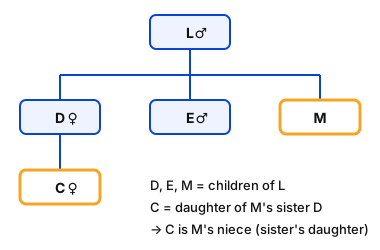
  1. L x M: L is the father of M. E ≠ L: E is the son of L → E and M are siblings.
  2. D ₹ E: D is the sister of E → D is also a sister of M.
  3. C ÷ D: C is the daughter of D → C is the daughter of M's sister, i.e. M's niece.

Trick: Children of the same father are siblings; a sibling's daughter = niece ("sister's daughter").

Answer: (C) ए

अवधारणा: ("Sister's daughter", 'बहन की पुत्री')

  1. ह
  2. र
  3. प
  4. ्
  5. र
  6. त
  7. ी
  8. क
  9. क
  10. ो
  11. ड
  12. ि
  13. क
  14. ो
  15. ड
  16. क
  17. र
  18. े
  19. ं
  20. औ
  21. र
  22. द
  23. ा
  24. ए
  25. ँ
  26. स
  27. ि
  28. र
  29. े
  30. स
  31. े
  32. व
  33. ृ
  34. क
  35. ्
  36. ष
  37. ब
  38. न
  39. ा
  40. ए
  41. ँ
  42. ।

ट्रिक: ['L x M: L, M का पिता है। E ≠ L: E, L का पुत्र है → E और M भाई-बहन हैं।', 'D ₹ E: D, E की बहन है → D, M की भी बहन है।', 'C ÷ D: C, D की पुत्री है → C, M की बहन की पुत्री अर्थात M की भांजी है।']

उत्तर: (C) क

RRB NTPC Undergraduate CBT 1General Intelligence and ReasoningCoded blood relationsRRB NTPC Undergraduate CBT 1 2025 · 9 May Shift 3 →
Q7683.
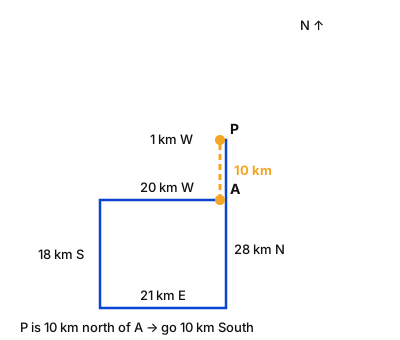
Dinesh starts from point A and drives 20 km towards the west. Then he takes a left turn and drives 18 km, takes a left turn and drives 21 km. Then he takes a left turn and drives 28 km, and finally he takes a left turn, drives 1 km and stops at point P. How far (shortest distance) and in which direction should he drive to reach point A again? (All turns are 90° turns only unless specified.)
दिनेश बिंदु A से शुरू करके पश्चिम की ओर 20 km गाड़ी चलाता है। फिर वह बाएँ मुड़ता है और 18 km गाड़ी चलाता है, बाएँ मुड़कर 21 km गाड़ी चलाता है। फिर वह बाएँ मुड़ता है और 28 km गाड़ी चलाता है, अंत में वह बाएँ मुड़कर 1 km गाड़ी चलाता है और बिंदु P पर रुकता है। तो बिंदु A पर वापस पहुँचने के लिए उसे कितनी दूर (न्यूनतम दूरी) और किस दिशा में गाड़ी चलानी होगी? (जब तक अन्यथा निर्दिष्ट न हो, सभी मोड़ केवल 90° के मोड़ हैं।)
  1. A11 km towards North11 km उत्तर की ओर
  2. B10 km towards North10 km उत्तर की ओर
  3. C10 km towards South10 km दक्षिण की ओर
  4. D11 km towards South11 km दक्षिण की ओर
Show answer

Concept: Take A as origin; a left turn rotates the direction anticlockwise: W → S → E → N → W.

  1. West 20 km: (−20,0). Left (South) 18 km: (−20,−18). Left (East) 21 km: (1,−18).
  2. Left (North) 28 km: (1,10). Left (West) 1 km: P =(0,10).
  3. P is directly 10 km north of A, so to return he must drive 10 km towards the South.

Trick: Net east–west: −20+21−1=0; net north–south: −18+28=+10 (north).

Answer: (C) क

अवधारणा: ('10 km towards South', '10 km दक्षिण की ओर')

  1. A
  2. क
  3. ो
  4. म
  5. ू
  6. ल
  7. ब
  8. ि
  9. ं
  10. द
  11. ु
  12. म
  13. ा
  14. न
  15. े
  16. ं
  17. ;
  18. ब
  19. ा
  20. य
  21. ा
  22. ँ
  23. म
  24. ो
  25. ड
  26. ़
  27. द
  28. ि
  29. श
  30. ा
  31. क
  32. ो
  33. व
  34. ा
  35. म
  36. ा
  37. व
  38. र
  39. ्
  40. त
  41. घ
  42. ु
  43. म
  44. ा
  45. त
  46. ा
  47. ह
  48. ै
  49. :
  50. W
  51. →
  52. S
  53. →
  54. E
  55. →
  56. N
  57. →
  58. W
  59. ।

ट्रिक: ['पश्चिम 20 km: (−20,0)। बाएँ (दक्षिण) 18 km: (−20,−18)। बाएँ (पूर्व) 21 km: (1,−18)।', 'बाएँ (उत्तर) 28 km: (1,10)। बाएँ (पश्चिम) 1 km: P =(0,10)।', 'P, A के ठीक 10 km उत्तर में है, अतः लौटने के लिए उसे 10 km दक्षिण की ओर चलना होगा।']

उत्तर: (C) ु

RRB NTPC Undergraduate CBT 1General Intelligence and ReasoningDirection and distanceRRB NTPC Undergraduate CBT 1 2025 · 9 May Shift 3 →
Q7684.
If ‘+’ means ‘−’, ‘−’ means ‘×’, ‘×’ means ‘÷’ and ‘÷’ means ‘+’, then what will come in place of the question mark (?) in the following equation?
21 − 4 ÷ 10 + 36 × 4 = ?
यदि ‘+’ का अर्थ ‘−’, ‘−’ का अर्थ ‘×’, ‘×’ का अर्थ ‘÷’ और ‘÷’ का अर्थ ‘+’ हो, तो नीचे दिए गए समीकरण में प्रश्नचिह्न (?) के स्थान पर क्या आएगा?
21 − 4 ÷ 10 + 36 × 4 = ?
  1. A90
  2. B85
  3. C84
  4. D89
Show answer

Concept: Replace each symbol by its meaning, then apply BODMAS.

  1. Given: + → −, − → ×, × → ÷, ÷ → +.
  2. 21−4÷10+36×4 becomes 21×4+10−36÷4.
  3. =84+10−9=85.

Trick: Do ÷ and × before + and − even after substitution.

Answer: (B) प

अवधारणा: ('85', '85')

  1. ह
  2. र
  3. प
  4. ्
  5. र
  6. त
  7. ी
  8. क
  9. क
  10. ो
  11. उ
  12. स
  13. क
  14. े
  15. अ
  16. र
  17. ्
  18. थ
  19. स
  20. े
  21. ब
  22. द
  23. ल
  24. े
  25. ं
  26. ,
  27. फ
  28. ि
  29. र
  30. B
  31. O
  32. D
  33. M
  34. A
  35. S
  36. ल
  37. ग
  38. ा
  39. ए
  40. ँ
  41. ।

ट्रिक: ['दिया है: + → −, − → ×, × → ÷, ÷ → +।', '21−4div10+36times4 बन जाता है 21times4+10−36div4।', '=84+10−9=85।']

उत्तर: (B) ्

RRB NTPC Undergraduate CBT 1General Intelligence and ReasoningMathematical operationsRRB NTPC Undergraduate CBT 1 2025 · 9 May Shift 3 →
Q7685.
Seven persons F, G, H, L, M, O and Q are sitting in a row facing north. No one is sitting to the right of M. Only three persons are sitting between O and M. Only one person is sitting between M and L. H is sitting immediately to the left of G. Q is not sitting immediately next to M. How many people are sitting between F and H?
सात व्यक्ति F, G, H, L, M, O और Q एक पंक्ति में उत्तर की ओर मुख करके बैठे हैं। M के दाईं ओर कोई नहीं बैठा है। O और M के बीच केवल तीन व्यक्ति बैठे हैं। M और L के बीच केवल एक व्यक्ति बैठा है। H, G के ठीक बाईं ओर बैठा है। Q, M के ठीक बगल में नहीं बैठा है। तो F और H के बीच कितने व्यक्ति बैठे हैं?
  1. AThreeतीन
  2. BOneएक
  3. CTwoदो
  4. DFourचार
Show answer

Concept: Number the seats 1 to 7 from left to right; all face north.

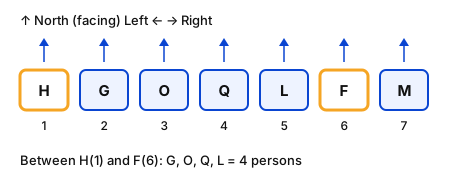
  1. No one is to the right of M → M at 7. Exactly three between O and M → O at 3. Exactly one between M and L → L at 5.
  2. H is immediately left of G: of the free seats 1, 2, 4, 6 only 1–2 are adjacent → H at 1, G at 2.
  3. Q is not next to M → Q not at 6 → Q at 4, F at 6.
  4. Row: H, G, O, Q, L, F, M. Between F (6) and H (1): G, O, Q, L = four.

Trick: Use the "immediately left/right" pair to fill the only adjacent free seats.

Answer: (D) "

अवधारणा: ('Four', 'चार')

  1. स
  2. ी
  3. ट
  4. ो
  5. ं
  6. क
  7. ो
  8. ब
  9. ा
  10. ए
  11. ँ
  12. स
  13. े
  14. द
  15. ा
  16. ए
  17. ँ
  18. 1
  19. स
  20. े
  21. 7
  22. त
  23. क
  24. क
  25. ्
  26. र
  27. म
  28. ा
  29. ं
  30. क
  31. ि
  32. त
  33. क
  34. र
  35. े
  36. ं
  37. ;
  38. स
  39. भ
  40. ी
  41. उ
  42. त
  43. ्
  44. त
  45. र
  46. क
  47. ी
  48. ओ
  49. र
  50. ।

ट्रिक: ['M के दाएँ कोई नहीं → M सीट 7। O और M के बीच ठीक तीन → O सीट 3। M और L के बीच ठीक एक → L सीट 5।', 'H, G के तुरंत बाएँ: खाली सीटों 1, 2, 4, 6 में केवल 1–2 सटी हैं → H सीट 1, G सीट 2।', 'Q, M के बगल में नहीं → Q सीट 6 पर नहीं → Q सीट 4, F सीट 6।', 'पंक्ति: H, G, O, Q, L, F, M। F (6) और H (1) के बीच: G, O, Q, L = चार।']

उत्तर: (D) त

RRB NTPC Undergraduate CBT 1General Intelligence and ReasoningLinear seating arrangementRRB NTPC Undergraduate CBT 1 2025 · 9 May Shift 3 →
Q7686.
Each of the seven boxes A, B, R, U, P, T and S is placed one over the other, but not necessarily in the same order. Only four boxes are placed above U. Only one box is placed above R. Only one box is placed between R and A. S is placed immediately above T. P is placed somewhere below B. How many boxes are placed between B and S?
सात बक्से A, B, R, U, P, T और S में से प्रत्येक को एक-दूसरे के ऊपर रखा गया है, परंतु आवश्यक नहीं कि इसी क्रम में हों। U के ऊपर केवल चार बक्से रखे गए हैं। R के ऊपर केवल एक बक्सा रखा गया है। R और A के बीच केवल एक बक्सा रखा गया है। S को T के ठीक ऊपर रखा गया है। P को B के नीचे किसी स्थान पर रखा गया है। तो B और S के बीच कितने बक्से रखे गए हैं?
  1. ATwoदो
  2. BOneएक
  3. CFourचार
  4. DThreeतीन
Show answer

Concept: Positions 1 (bottom) to 7 (top).

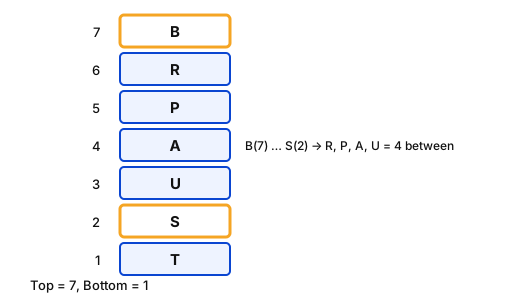
  1. Only four boxes above U → U at 3. Only one above R → R at 6.
  2. Exactly one box between R and A → A at 4 (position 8 does not exist).
  3. S immediately above T: free positions 1, 2, 5, 7 → T at 1, S at 2.
  4. P is below B → P at 5, B at 7. Stack: B, R, P, A, U, S, T. Between B (7) and S (2): R, P, A, U = four.

Trick: "Only n boxes above" ⇒ position =7−n.

Answer: (C) "

अवधारणा: ('Four', 'चार')

  1. स
  2. ्
  3. थ
  4. ा
  5. न
  6. 1
  7. (
  8. न
  9. ी
  10. च
  11. े
  12. )
  13. स
  14. े
  15. 7
  16. (
  17. ऊ
  18. प
  19. र
  20. )
  21. ।

ट्रिक: ['U के ऊपर केवल चार बॉक्स → U स्थान 3। R के ऊपर केवल एक → R स्थान 6।', 'R और A के बीच ठीक एक बॉक्स → A स्थान 4 (स्थान 8 नहीं है)।', 'S, T के तुरंत ऊपर: खाली स्थान 1, 2, 5, 7 → T स्थान 1, S स्थान 2।', 'P, B के नीचे → P स्थान 5, B स्थान 7। ढेर: B, R, P, A, U, S, T। B (7) और S (2) के बीच: R, P, A, U = चार।']

उत्तर: (C) ऊ

RRB NTPC Undergraduate CBT 1General Intelligence and ReasoningBox arrangementRRB NTPC Undergraduate CBT 1 2025 · 9 May Shift 3 →
Q7687.
Study the given letter series and answer the question that follows. (Counting is to be done from left to right only.)
(Left) K D A Z Z X L E L A R A E P E Y U Z F U Q P (Right)
How many such vowels are there, each of which is immediately preceded by a consonant and also immediately followed by a consonant?
दी गई अक्षर शृंखला का अध्ययन कीजिए और उसके नीचे दिए गए प्रश्न का उत्तर दीजिए। (गिनती केवल बाईं ओर से दाईं ओर की जानी है।)
(बाईं ओर) K D A Z Z X L E L A R A E P E Y U Z F U Q P (दाईं ओर)
ऐसे कितने स्वर हैं जिनमें से प्रत्येक के ठीक पहले एक व्यंजन आता है और ठीक बाद में भी एक व्यंजन आता है?
  1. A5
  2. B8
  3. C7
  4. D6
Show answer

Concept: Mark each vowel and check its immediate neighbours.

  1. Series: K D A Z Z X L E L A R A E P E Y U Z F U Q P.
  2. A(3): D–Z ✓; E(8): L–L ✓; A(10): L–R ✓; A(12): R–E ✗ (vowel after); E(13): A before ✗; E(15): P–Y ✓; U(17): Y–Z ✓; U(20): F–Q ✓.
  3. Count = 6.

Trick: Y is a consonant here; two adjacent vowels (A E) disqualify each other.

Answer: (D) Y

अवधारणा: ('6', '6')

  1. ह
  2. र
  3. स
  4. ्
  5. व
  6. र
  7. क
  8. ो
  9. च
  10. ि
  11. ह
  12. ्
  13. न
  14. ि
  15. त
  16. क
  17. र
  18. े
  19. ं
  20. औ
  21. र
  22. उ
  23. स
  24. क
  25. े
  26. द
  27. ो
  28. न
  29. ो
  30. ं
  31. प
  32. ड
  33. ़
  34. ो
  35. स
  36. ी
  37. ज
  38. ा
  39. ँ
  40. च
  41. े
  42. ं
  43. ।

ट्रिक: ['श्रृंखला: K D A Z Z X L E L A R A E P E Y U Z F U Q P।', 'A(3): D–Z ✓; E(8): L–L ✓; A(10): L–R ✓; A(12): R–E ✗ (बाद में स्वर); E(13): पहले A ✗; E(15): P–Y ✓; U(17): Y–Z ✓; U(20): F–Q ✓।', 'गिनती = 6।']

उत्तर: (D)

RRB NTPC Undergraduate CBT 1General Intelligence and ReasoningLetter series countingRRB NTPC Undergraduate CBT 1 2025 · 9 May Shift 3 →
Q7688.
What should come in place of the question mark ('?') in the following series?
45 ? 63 81 105 135
नीचे दी गई शृंखला में प्रश्नचिह्न ('?') के स्थान पर क्या आना चाहिए?
45 ? 63 81 105 135
  1. A54
  2. B51
  3. C53
  4. D52
Show answer

Concept: Look at the differences between known consecutive terms.

  1. 81−63=18, 105−81=24, 135−105=30 → differences increase by 6.
  2. Working backwards the differences are 6, 12, 18, 24, 30: 45+6=51 and 51+12=63 ✓.

Trick: Differences in A.P. (6, 12, 18, …) → fill the gap from the known pairs.

Answer: (B) अ

अवधारणा: ('51', '51')

  1. ज
  2. ्
  3. ञ
  4. ा
  5. त
  6. क
  7. ्
  8. र
  9. म
  10. ा
  11. ग
  12. त
  13. प
  14. द
  15. ो
  16. ं
  17. क
  18. े
  19. अ
  20. ं
  21. त
  22. र
  23. द
  24. े
  25. ख
  26. े
  27. ं
  28. ।

ट्रिक: ['81−63=18, 105−81=24, 135−105=30 → अंतर 6 से बढ़ते हैं।', 'पीछे चलने पर अंतर 6, 12, 18, 24, 30: 45+6=51 और 51+12=63 ✓।']

उत्तर: (B) ं

RRB NTPC Undergraduate CBT 1General Intelligence and ReasoningNumber seriesRRB NTPC Undergraduate CBT 1 2025 · 9 May Shift 3 →
Q7689.
If 2 is added to each odd digit and 1 is subtracted from each even digit in the number 7281654, which digit will be third from the left in the new number thus formed?
यदि संख्या 7281654 के प्रत्येक विषम अंक में 2 जोड़ा जाए और प्रत्येक सम अंक में से 1 घटाया जाए, तो इस प्रकार बनी नई संख्या में बाईं ओर से तीसरा अंक कौन-सा होगा?
  1. A3
  2. B9
  3. C7
  4. D1
Show answer

Concept: Apply the rule digit by digit, keeping the order.

  1. 7281654: 7 (odd) → 9, 2 (even) → 1, 8 → 7, 1 → 3, 6 → 5, 5 → 7, 4 → 3.
  2. New number: 9173573. Third digit from the left = 7.

Trick: Only the third digit matters: 8 is even → 8−1=7.

Answer: (C) क

अवधारणा: ('7', '7')

  1. क
  2. ्
  3. र
  4. म
  5. ब
  6. न
  7. ा
  8. ए
  9. र
  10. ख
  11. त
  12. े
  13. ह
  14. ु
  15. ए
  16. न
  17. ि
  18. य
  19. म
  20. ह
  21. र
  22. अ
  23. ं
  24. क
  25. प
  26. र
  27. ल
  28. ग
  29. ा
  30. ए
  31. ँ
  32. ।

ट्रिक: ['7281654: 7 (विषम) → 9, 2 (सम) → 1, 8 → 7, 1 → 3, 6 → 5, 5 → 7, 4 → 3।', 'नई संख्या: 9173573। बाएँ से तीसरा अंक = 7।']

उत्तर: (C) े

RRB NTPC Undergraduate CBT 1General Intelligence and ReasoningDigit operationsRRB NTPC Undergraduate CBT 1 2025 · 9 May Shift 3 →
Q7690.
Based on the English alphabetical order, three of the following four letter-clusters are alike in a certain way and thus form a group. Which option does not belong to that group?
(NOTE: The odd one out is not based on the number of consonants/vowels or their position in the letter cluster.)
अंग्रेज़ी वर्णमाला क्रम के आधार पर, नीचे दिए गए चार अक्षर-समूहों में से तीन किसी निश्चित प्रकार से समान हैं और इस प्रकार एक समूह बनाते हैं। कौन-सा विकल्प उस समूह में नहीं आता है?
(नोट: भिन्न विकल्प व्यंजनों/स्वरों की संख्या अथवा अक्षर-समूह में उनके स्थान पर आधारित नहीं है।)
  1. AHL-ZS
  2. BQU – IB
  3. CWA-OH
  4. DGK - YP
Show answer

Concept: Compare the gap inside each pair and between the two pairs.

  1. HL–ZS: H→L +4, Z→S −7. QU–IB: Q→U +4, I→B −7. WA–OH: W→A +4 (wrap), O→H −7.
  2. GK–YP: G→K +4 but Y→P =16−25=−9, not −7.
  3. Hence GK–YP is the odd one out.

Trick: First letter +18 gives the third letter in every option; only the last gap (−7 vs −9) breaks in D.

Answer: (D) ह

अवधारणा: ('GK - YP', 'GK - YP')

  1. ह
  2. र
  3. ज
  4. ो
  5. ड
  6. ़
  7. े
  8. क
  9. े
  10. अ
  11. ं
  12. द
  13. र
  14. औ
  15. र
  16. द
  17. ो
  18. न
  19. ो
  20. ं
  21. ज
  22. ो
  23. ड
  24. ़
  25. ो
  26. ं
  27. क
  28. े
  29. ब
  30. ी
  31. च
  32. क
  33. े
  34. अ
  35. ं
  36. त
  37. र
  38. क
  39. ी
  40. त
  41. ु
  42. ल
  43. न
  44. ा
  45. क
  46. र
  47. े
  48. ं
  49. ।

ट्रिक: ['HL–ZS: H→L +4, Z→S −7। QU–IB: Q→U +4, I→B −7। WA–OH: W→A +4 (wrap), O→H −7।', 'GK–YP: G→K +4 पर Y→P =16−25=−9, −7 नहीं।', 'अतः GK–YP विषम है।']

उत्तर: (D) र

RRB NTPC Undergraduate CBT 1General Intelligence and ReasoningLetter-pair classificationRRB NTPC Undergraduate CBT 1 2025 · 9 May Shift 3 →
Q7691.
If 'P' means ‘÷’, ‘Q’ means ‘×’, ‘R’ means ‘+’ and 'S' means ‘−’, then what will come in place of the question mark (?) in the following equation?
40 R 16 P 4 S 3 Q 5 = ?
यदि 'P' का अर्थ ‘÷’, ‘Q’ का अर्थ ‘×’, ‘R’ का अर्थ ‘+’ और 'S' का अर्थ ‘−’ हो, तो नीचे दिए गए समीकरण में प्रश्नचिह्न (?) के स्थान पर क्या आएगा?
40 R 16 P 4 S 3 Q 5 = ?
  1. A29
  2. B25
  3. C30
  4. D32
Show answer

Concept: Substitute the letters by operators and use BODMAS.

  1. P = ÷, Q = ×, R = +, S = −.
  2. 40 R 16 P 4 S 3 Q 5 =40+16÷4−3×5.
  3. =40+4−15=29.

Trick: Division and multiplication first: 16÷4=4, 3×5=15.

Answer: (A) प

अवधारणा: ('29', '29')

  1. अ
  2. क
  3. ्
  4. ष
  5. र
  6. ो
  7. ं
  8. क
  9. ी
  10. ज
  11. ग
  12. ह
  13. स
  14. ं
  15. क
  16. ्
  17. र
  18. ि
  19. य
  20. ा
  21. ए
  22. ँ
  23. र
  24. ख
  25. े
  26. ं
  27. औ
  28. र
  29. B
  30. O
  31. D
  32. M
  33. A
  34. S
  35. ल
  36. ग
  37. ा
  38. ए
  39. ँ
  40. ।

ट्रिक: ['P = ÷, Q = ×, R = +, S = −।', '40 R 16 P 4 S 3 Q 5 =40+16div4−3times5।', '=40+4−15=29।']

उत्तर: (A) ह

RRB NTPC Undergraduate CBT 1General Intelligence and ReasoningMathematical operationsRRB NTPC Undergraduate CBT 1 2025 · 9 May Shift 3 →
Q7692.
What should come in place of the question mark (?) in the given series?
92 109 143 194 262 ?
दी गई शृंखला में प्रश्नचिह्न (?) के स्थान पर क्या आना चाहिए?
92 109 143 194 262 ?
  1. A349
  2. B351
  3. C347
  4. D345
Show answer

Concept: Find the differences between consecutive terms.

  1. 109−92=17, 143−109=34, 194−143=51, 262−194=68.
  2. Differences are multiples of 17: 17, 34, 51, 68 → next 85.
  3. 262+85=347.

Trick: Differences =17×1,2,3,4,5.

Answer: (C) अ

अवधारणा: ('347', '347')

  1. क
  2. ्
  3. र
  4. म
  5. ा
  6. ग
  7. त
  8. प
  9. द
  10. ो
  11. ं
  12. क
  13. े
  14. अ
  15. ं
  16. त
  17. र
  18. न
  19. ि
  20. क
  21. ा
  22. ल
  23. े
  24. ं
  25. ।

ट्रिक: ['109−92=17, 143−109=34, 194−143=51, 262−194=68।', 'अंतर 17 के गुणज हैं: 17, 34, 51, 68 → अगला 85।', '262+85=347।']

उत्तर: (C) ं

RRB NTPC Undergraduate CBT 1General Intelligence and ReasoningNumber seriesRRB NTPC Undergraduate CBT 1 2025 · 9 May Shift 3 →
Q7693.
What should come in place of the question mark (?) in the given series based on the English alphabetical order? RNT KGM DZF WSY ?
अंग्रेज़ी वर्णमाला क्रम के आधार पर दी गई शृंखला में प्रश्नचिह्न (?) के स्थान पर क्या आना चाहिए? RNT KGM DZF WSY ?
  1. AFPR
  2. BYFT
  3. CWKF
  4. DPLR
Show answer

Concept: Each letter of the group moves by the same step with wrap-around.

  1. 1st letters: R(18) → K(11) → D(4) → W(23) → P(16): −7 each time (4−7=−3→23).
  2. 2nd letters: N(14) → G(7) → Z(26) → S(19) → L(12): −7.
  3. 3rd letters: T(20) → M(13) → F(6) → Y(25) → R(18): −7.
  4. Next group: PLR.

Trick: Every letter −7; below 1 add 26.

Answer: (D) ह

अवधारणा: ('PLR', 'PLR')

  1. स
  2. म
  3. ू
  4. ह
  5. क
  6. ा
  7. ह
  8. र
  9. अ
  10. क
  11. ्
  12. ष
  13. र
  14. स
  15. म
  16. ा
  17. न
  18. क
  19. द
  20. म
  21. स
  22. े
  23. w
  24. r
  25. a
  26. p
  27. -
  28. a
  29. r
  30. o
  31. u
  32. n
  33. d
  34. स
  35. ह
  36. ि
  37. त
  38. ब
  39. ढ
  40. ़
  41. त
  42. ा
  43. ह
  44. ै
  45. ।

ट्रिक: ['पहले अक्षर: R(18) → K(11) → D(4) → W(23) → P(16): हर बार −7 (4−7=−3to23)।', 'दूसरे अक्षर: N(14) → G(7) → Z(26) → S(19) → L(12): −7।', 'तीसरे अक्षर: T(20) → M(13) → F(6) → Y(25) → R(18): −7।', 'अगला समूह: PLR।']

उत्तर: (D) र

RRB NTPC Undergraduate CBT 1General Intelligence and ReasoningLetter seriesRRB NTPC Undergraduate CBT 1 2025 · 9 May Shift 3 →
Q7694.
Each of the seven boxes, E, F, G, H, I, J and R, is kept one over the other, but not necessarily in the same order. Only two boxes are kept below E. Only one box is kept above R. Only one box is kept between R and H. G is kept immediately above J. F is kept at some position below I. How many boxes are kept between I and F?
सात बक्से, E, F, G, H, I, J और R में से प्रत्येक को एक-दूसरे के ऊपर रखा गया है, परंतु आवश्यक नहीं कि इसी क्रम में हों। E के नीचे केवल दो बक्से रखे गए हैं। R के ऊपर केवल एक बक्सा रखा गया है। R और H के बीच केवल एक बक्सा रखा गया है। G को J के ठीक ऊपर रखा गया है। F को I के नीचे किसी एक स्थान पर रखा गया है। I और F के बीच कितने बक्से रखे गए हैं?
  1. ATwoदो
  2. BOneएक
  3. CZeroशून्य
  4. DThreeतीन
Show answer

Concept: Positions 1 (bottom) to 7 (top).

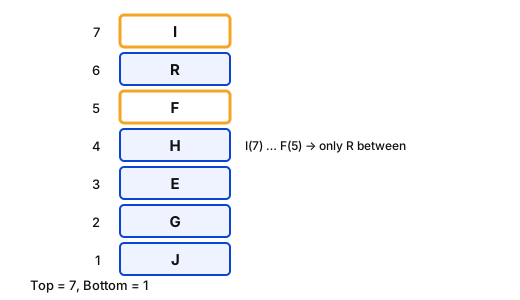
  1. Only two boxes below E → E at 3. Only one above R → R at 6.
  2. Exactly one box between R and H → H at 4.
  3. G immediately above J: free positions 1, 2, 5, 7 → J at 1, G at 2.
  4. F is below I → F at 5, I at 7. Stack: I, R, F, H, E, G, J. Between I (7) and F (5): only R = one.

Trick: Fix the exact-position clues, then place the "immediately above" pair in the only adjacent gap.

Answer: (B) प

अवधारणा: ('One', 'एक')

  1. स
  2. ्
  3. थ
  4. ा
  5. न
  6. 1
  7. (
  8. न
  9. ी
  10. च
  11. े
  12. )
  13. स
  14. े
  15. 7
  16. (
  17. ऊ
  18. प
  19. र
  20. )
  21. ।

ट्रिक: ['E के नीचे केवल दो बॉक्स → E स्थान 3। R के ऊपर केवल एक → R स्थान 6।', 'R और H के बीच ठीक एक बॉक्स → H स्थान 4।', 'G, J के तुरंत ऊपर: खाली स्थान 1, 2, 5, 7 → J स्थान 1, G स्थान 2।', 'F, I के नीचे → F स्थान 5, I स्थान 7। ढेर: I, R, F, H, E, G, J। I (7) और F (5) के बीच: केवल R = एक।']

उत्तर: (B) ह

RRB NTPC Undergraduate CBT 1General Intelligence and ReasoningBox arrangementRRB NTPC Undergraduate CBT 1 2025 · 9 May Shift 3 →
Q7695.
In a certain code language, 'NHJCR' is coded as '77' and 'QETLO' is coded as '61'. What is the code for 'PHASJ' in the given code language?
एक निश्चित कूट भाषा में, 'NHJCR' को '77' के रूप में कूटबद्ध किया जाता है और 'QETLO' को '61' के रूप में कूटबद्ध किया जाता है। तो दी गई कूट भाषा में 'PHASJ' के लिए कूट क्या है?
  1. A70
  2. B52
  3. C76
  4. D55
Show answer

Concept: Try reverse alphabetical positions (A = 26 … Z = 1) when the normal sum does not match.

  1. NHJCR: reverse positions 13 + 19 + 17 + 24 + 9 =82; code 77 =82−5.
  2. QETLO: 10 + 22 + 7 + 15 + 12 =66; code 61 =66−5 ✓.
  3. PHASJ: 11 + 19 + 26 + 8 + 17 =81; code =81−5=76.

Trick: Code = (sum of reverse positions) − 5; reverse position =27− normal position.

Answer: (C) क

अवधारणा: ('76', '76')

  1. ज
  2. ब
  3. स
  4. ा
  5. म
  6. ा
  7. न
  8. ्
  9. य
  10. य
  11. ो
  12. ग
  13. न
  14. म
  15. ि
  16. ल
  17. े
  18. त
  19. ो
  20. उ
  21. ल
  22. ्
  23. ट
  24. े
  25. व
  26. र
  27. ्
  28. ण
  29. म
  30. ा
  31. ल
  32. ा
  33. स
  34. ्
  35. थ
  36. ा
  37. न
  38. (
  39. A
  40. =
  41. 2
  42. 6
  43. …
  44. Z
  45. =
  46. 1
  47. )
  48. आ
  49. ज
  50. ़
  51. म
  52. ा
  53. ए
  54. ँ
  55. ।

ट्रिक: ['NHJCR: उल्टे स्थान 13 + 19 + 17 + 24 + 9 =82; कोड 77 =82−5।', 'QETLO: 10 + 22 + 7 + 15 + 12 =66; कोड 61 =66−5 ✓।', 'PHASJ: 11 + 19 + 26 + 8 + 17 =81; कोड =81−5=76।']

उत्तर: (C) ो

RRB NTPC Undergraduate CBT 1General Intelligence and ReasoningCoding–decodingRRB NTPC Undergraduate CBT 1 2025 · 9 May Shift 3 →
Q7696.
The CPU retrieves the upcoming instruction for execution from which system component?
CPU निष्पादन के लिए अगला निर्देश (instruction) किस सिस्टम घटक से प्राप्त करता है?
  1. ASystem output registerसिस्टम आउटपुट रजिस्टर
  2. BSystem secondary memoryसिस्टम द्वितीयक मेमोरी (secondary memory)
  3. CSystem program counterसिस्टम प्रोग्राम काउंटर
  4. DSystem input buffer unitसिस्टम इनपुट बफर यूनिट
Show answer

Concept: The program counter (PC) is a CPU register that holds the memory address of the next instruction to be executed.

  1. During the fetch cycle the CPU reads the address from the PC, fetches that instruction and increments the PC.
  2. Secondary memory (hard disk) is too slow and is not accessed directly for instruction fetch; output registers and input buffers hold data, not addresses.

Yaad rakhein: PC = "pointer to the next instruction"; IR (instruction register) = holds the current instruction.

Answer: (C) System program counter

अवधारणा: प्रोग्राम काउंटर (PC) CPU का वह रजिस्टर है जिसमें अगले निष्पादित होने वाले निर्देश का मेमोरी पता रहता है।

  1. फ़ेच चक्र में CPU, PC से पता पढ़कर वह निर्देश लाता है और PC को बढ़ा देता है।
  2. द्वितीयक मेमोरी (हार्ड डिस्क) धीमी है, निर्देश सीधे वहाँ से नहीं लिए जाते; आउटपुट रजिस्टर/इनपुट बफ़र डेटा रखते हैं, पता नहीं।

याद रखें: PC = "अगले निर्देश का पॉइंटर"; IR (instruction register) = वर्तमान निर्देश रखता है।

उत्तर: (C) System program counter

RRB NTPC Undergraduate CBT 1General AwarenessComputer – CPU registersRRB NTPC Undergraduate CBT 1 2025 · 9 May Shift 2 →
Q7697.
Who among the following succeeded Raja Ram Mohan Roy as the leader of the Brahmo Samaj?
निम्नलिखित में से कौन ब्रह्म समाज के नेता के रूप में राजा राम मोहन राय का उत्तराधिकारी बना?
  1. ADebendra Nath Tagoreदेवेन्द्र नाथ टैगोर
  2. BSwami Vivekanandaस्वामी विवेकानंद
  3. CKeshub Chandra Senकेशव चंद्र सेन
  4. DDwarkanath Tagoreद्वारकानाथ टैगोर
Show answer

Concept: After Raja Ram Mohan Roy died in 1833, Debendranath Tagore (father of Rabindranath) revived and led the Brahmo Samaj; he had founded the Tattvabodhini Sabha in 1839 and joined the Samaj in 1843.

  1. Keshub Chandra Sen joined later (1857) and split away in 1866 to form the Brahmo Samaj of India.
  2. Dwarkanath Tagore was a business associate of Roy, not the Samaj's leader; Vivekananda belonged to the Ramakrishna movement.

Yaad rakhein: Brahmo leaders in order: Ram Mohan Roy → Debendranath Tagore → Keshub Chandra Sen.

Answer: (A) Debendra Nath Tagore

अवधारणा: 1833 में राजा राममोहन राय की मृत्यु के बाद देवेंद्रनाथ टैगोर (रवींद्रनाथ के पिता) ने ब्रह्म समाज को पुनर्जीवित कर उसका नेतृत्व किया; उन्होंने 1839 में तत्त्वबोधिनी सभा बनाई और 1843 में समाज से जुड़े।

  1. केशवचंद्र सेन बाद में (1857) जुड़े और 1866 में अलग होकर "भारतीय ब्रह्म समाज" बनाया।
  2. द्वारकानाथ टैगोर राय के व्यापारिक सहयोगी थे, समाज के नेता नहीं; विवेकानंद रामकृष्ण मिशन से जुड़े थे।

याद रखें: ब्रह्म समाज के नेता क्रम से: राममोहन राय → देवेंद्रनाथ टैगोर → केशवचंद्र सेन।

उत्तर: (A) देवेंद्रनाथ टैगोर

RRB NTPC Undergraduate CBT 1General AwarenessSocio-religious reforms – Brahmo SamajRRB NTPC Undergraduate CBT 1 2025 · 9 May Shift 2 →
Q7698.
The sports event Bastar Olympics 2025 was launched in October 2025 in which Indian state?
खेल आयोजन बस्तर ओलंपिक 2025 का शुभारंभ अक्टूबर 2025 में किस भारतीय राज्य में किया गया?
  1. AChhattisgarhछत्तीसगढ़
  2. BJharkhandझारखंड
  3. CMadhya Pradeshमध्य प्रदेश
  4. DOdishaओडिशा
Show answer

Concept: The Bastar Olympics is a mass sports event of the Bastar division of Chhattisgarh, started in 2024 to connect youth of the Maoist-affected region with the mainstream; its second edition was launched in October 2025.

  1. Bastar (Jagdalpur) is in southern Chhattisgarh; the games cover village, block, district and divisional levels.
  2. Jharkhand, Madhya Pradesh and Odisha have no "Bastar" region.

Yaad rakhein: Bastar = Chhattisgarh (Dussehra of Bastar, Chitrakote falls, Bastar Olympics).

Answer: (A) Chhattisgarh

अवधारणा: बस्तर ओलंपिक छत्तीसगढ़ के बस्तर संभाग का जन-खेल आयोजन है, जो 2024 में माओवाद-प्रभावित क्षेत्र के युवाओं को मुख्यधारा से जोड़ने के लिए शुरू हुआ; इसका दूसरा संस्करण अक्टूबर 2025 में लॉन्च हुआ।

  1. बस्तर (जगदलपुर) दक्षिणी छत्तीसगढ़ में है; खेल गाँव, ब्लॉक, ज़िला और संभाग स्तर पर होते हैं।
  2. झारखंड, मध्य प्रदेश और ओडिशा में कोई "बस्तर" क्षेत्र नहीं है।

याद रखें: बस्तर = छत्तीसगढ़ (बस्तर दशहरा, चित्रकोट जलप्रपात, बस्तर ओलंपिक)।

उत्तर: (A) छत्तीसगढ़

RRB NTPC Undergraduate CBT 1General AwarenessCurrent affairs – SportsRRB NTPC Undergraduate CBT 1 2025 · 9 May Shift 2 →
Q7699.
What happens to the speed of sound as the temperature of the air increases?
वायु का तापमान बढ़ने पर ध्वनि की चाल पर क्या प्रभाव पड़ता है?
  1. AIt remains the same, as the speed is constant in a given mediumयह समान रहती है, क्योंकि किसी दिए गए माध्यम में चाल नियत होती है
  2. BIt decreases rapidly because the air molecules move extremely slowerयह तेज़ी से घटती है, क्योंकि वायु के अणु अत्यधिक धीमी गति से चलते हैं
  3. CIt decreases, because the air becomes less denseयह घटती है, क्योंकि वायु कम सघन हो जाती है
  4. DIt increases, because the air molecules move fasterयह बढ़ती है, क्योंकि वायु के अणु तेज़ गति से चलते हैं
Show answer

Concept: Speed of sound in a gas v∝T (absolute temperature).

  1. At higher temperature molecules move faster and pass on the vibration more quickly, so sound travels faster – roughly 0.6m/s more per ∘C rise in air.
  2. Density falls with heating, but pressure falls in the same proportion, so density alone does not slow sound; option (C) is wrong.

Yaad rakhein: Sound in air: ≈331m/s at 0∘C, ≈343m/s at 20∘C.

Answer: (D) It increases, because the air molecules move faster

अवधारणा: गैस में ध्वनि की चाल v∝T (परम ताप)।

  1. अधिक ताप पर अणु तेज़ चलते हैं और कंपन जल्दी आगे बढ़ाते हैं, अतः ध्वनि तेज़ चलती है – वायु में प्रति ∘C लगभग 0.6m/s की वृद्धि।
  2. गर्म होने पर घनत्व घटता है पर दाब भी उसी अनुपात में घटता है, इसलिए केवल घनत्व से ध्वनि धीमी नहीं होती; विकल्प (C) गलत है।

याद रखें: वायु में ध्वनि: 0∘C पर ≈331m/s, 20∘C पर ≈343m/s।

उत्तर: (D) बढ़ती है, क्योंकि वायु के अणु तेज़ गति करते हैं

RRB NTPC Undergraduate CBT 1General AwarenessPhysics – SoundRRB NTPC Undergraduate CBT 1 2025 · 9 May Shift 2 →
Q7700.
The Hornbill Festival, celebrated to showcase tribal culture, music, dance, and sports, is associated with which Indian state?
जनजातीय संस्कृति, संगीत, नृत्य और खेलों को प्रदर्शित करने के लिए मनाया जाने वाला हॉर्नबिल महोत्सव किस भारतीय राज्य से संबंधित है?
  1. AAssamअसम
  2. BManipurमणिपुर
  3. CMeghalayaमेघालय
  4. DNagalandनागालैंड
Show answer

Concept: The Hornbill Festival, the "Festival of Festivals", is held every year from 1 to 10 December at Kisama Heritage Village near Kohima, Nagaland.

  1. It brings together all the Naga tribes with traditional dance, music, indigenous games and food; named after the hornbill bird revered in Naga folklore.
  2. Assam has Bihu, Manipur has Sangai Festival, Meghalaya has Wangala/Cherry Blossom festivals.

Yaad rakhein: Hornbill – Nagaland; Sangai – Manipur; Wangala – Meghalaya; Bihu – Assam.

Answer: (D) Nagaland

अवधारणा: हॉर्नबिल महोत्सव, "त्योहारों का त्योहार", हर वर्ष 1–10 दिसंबर को कोहिमा (नागालैंड) के पास किसामा हेरिटेज गाँव में मनाया जाता है।

  1. इसमें सभी नागा जनजातियाँ पारंपरिक नृत्य, संगीत, देशी खेल और भोजन के साथ जुटती हैं; नाम नागा लोककथाओं में पूज्य हॉर्नबिल पक्षी पर है।
  2. असम – बिहू, मणिपुर – संगाई महोत्सव, मेघालय – वांगला/चेरी ब्लॉसम।

याद रखें: हॉर्नबिल – नागालैंड; संगाई – मणिपुर; वांगला – मेघालय; बिहू – असम।

उत्तर: (D) नागालैंड

RRB NTPC Undergraduate CBT 1General AwarenessFestivals of IndiaRRB NTPC Undergraduate CBT 1 2025 · 9 May Shift 2 →