Question bank

Q&A: practice questions with answers

Search questions on any topic. Filter by exam category, exam, subject and topic, try the question, then open the answer and explanation.

Courses – airGurukul

8,495 questions found.

Q8021.
What is the function of the keyboard shortcut Alt + F10?
कीबोर्ड शॉर्टकट Alt + F10 का क्या कार्य है?
  1. ACloses the documentदस्तावेज़ को बंद करता है
  2. BMaximizes the current windowवर्तमान विंडो को अधिकतम (maximize) करता है
  3. COpens the Help menuHelp मेनू खोलता है
  4. DSelects the active tab on the Ribbon and shows access keysरिबन (Ribbon) पर सक्रिय टैब का चयन करता है और एक्सेस कुंजियाँ (access keys) दिखाता है
Show answer

Concept: In Microsoft Office (Word/Excel), Alt (or F10 / Alt+F10) activates the Ribbon: it selects the active tab and displays Key Tips (access keys).

  1. Pressing Alt or F10 shows letters/numbers over the Ribbon tabs; typing them opens that tab or command without the mouse.
  2. Close document → Ctrl+W / Ctrl+F4; Help → F1; Maximize/restore window → Alt+Space then X (or Win+↑).

Trick: 'F10 family' = Ribbon: F10 / Alt+F10 show Key Tips, Shift+F10 opens the right-click menu, Ctrl+F10 maximises the document window.

Answer: (D) Selects the active tab on the Ribbon and shows access keys

अवधारणा: Microsoft Office (Word/Excel) में Alt (या F10 / Alt+F10) रिबन को सक्रिय करता है: सक्रिय टैब चुनकर Key Tips (access keys) दिखाता है।

  1. Alt या F10 दबाने पर रिबन टैब पर अक्षर/अंक दिखते हैं; उन्हें टाइप करके बिना माउस उस टैब/कमांड को खोला जा सकता है।
  2. डॉक्यूमेंट बंद → Ctrl+W / Ctrl+F4; Help → F1; विंडो Maximize → Alt+Space फिर X (या Win+↑)।

ट्रिक: 'F10 परिवार' = रिबन: F10 / Alt+F10 Key Tips दिखाते हैं, Shift+F10 राइट-क्लिक मेनू, Ctrl+F10 डॉक्यूमेंट विंडो को maximise करता है।

उत्तर: (D) रिबन का सक्रिय टैब चुनकर access keys दिखाता है
RRB NTPC Undergraduate CBT 1General AwarenessComputer – Keyboard ShortcutsRRB NTPC Undergraduate CBT 1 2025 · 8 May Shift 2 →
Q8022.
Which Article of the Indian Constitution empowers the Parliament to make grants to the States which are in need of financial assistance?
भारतीय संविधान का कौन-सा अनुच्छेद संसद को उन राज्यों को अनुदान देने का अधिकार देता है जिन्हें वित्तीय सहायता की आवश्यकता है?
  1. AArticle 285अनुच्छेद 285
  2. BArticle 275अनुच्छेद 275
  3. CArticle 265अनुच्छेद 265
  4. DArticle 255अनुच्छेद 255
Show answer

Concept: Article 275 provides statutory grants-in-aid from the Consolidated Fund of India to States in need of assistance.

  1. Article 275: Parliament may make grants to such States as it determines to be in need; includes special grants for tribal welfare and Scheduled Areas (e.g. Assam).
  2. Article 285 – Union property exempt from State taxation; Article 265 – no tax without authority of law; Article 255 – requirements of recommendations/previous sanction are matters of procedure only.

Remember: '275 = Statutory grants (Finance Commission), 282 = Discretionary grants'.

Answer: (B) Article 275

अवधारणा: अनुच्छेद 275 भारत की संचित निधि से जरूरतमंद राज्यों को सांविधिक सहायता-अनुदान (grants-in-aid) का प्रावधान करता है।

  1. अनुच्छेद 275: संसद उन राज्यों को अनुदान दे सकती है जिन्हें वह सहायता की आवश्यकता वाला माने; इसमें जनजातीय कल्याण व अनुसूचित क्षेत्रों (जैसे असम) के विशेष अनुदान शामिल हैं।
  2. अनुच्छेद 285 – संघ की संपत्ति राज्य कर से मुक्त; 265 – विधि के प्राधिकार के बिना कर नहीं; 255 – सिफारिश/पूर्व मंजूरी केवल प्रक्रिया का विषय।

याद रखें: '275 = सांविधिक अनुदान (वित्त आयोग), 282 = विवेकाधीन अनुदान'।

उत्तर: (B) Article 275 (अनुच्छेद 275)

RRB NTPC Undergraduate CBT 1General AwarenessCentre–State Financial RelationsRRB NTPC Undergraduate CBT 1 2025 · 8 May Shift 2 →
Q8023.
What is the primary goal of the Energy Conservation Act (EC Act) of 2001, enacted by the Government of India?
भारत सरकार द्वारा अधिनियमित ऊर्जा संरक्षण अधिनियम (EC Act), 2001 का प्राथमिक लक्ष्य क्या है?
  1. ATo reduce energy intensity in the Indian economyभारतीय अर्थव्यवस्था में ऊर्जा तीव्रता (energy intensity) को कम करना
  2. BTo increase CO2 emissionsCO2 उत्सर्जन को बढ़ाना
  3. CTo promote renewable energy sourcesनवीकरणीय ऊर्जा स्रोतों को बढ़ावा देना
  4. DTo encourage the use of hydrocarbonsहाइड्रोकार्बन के उपयोग को प्रोत्साहित करना
Show answer

Concept: The Energy Conservation Act, 2001 aims to promote efficient use of energy and reduce the energy intensity of the Indian economy.

  1. It created the Bureau of Energy Efficiency (BEE, 2002) under the Ministry of Power to set standards, labelling (star rating), energy audits and building codes (ECBC).
  2. Promotion of renewables (C) is under separate MNRE policies/Electricity Act; options B and D are the opposite of conservation.
  3. The 2022 amendment added carbon-credit trading and non-fossil energy obligations.

Remember: EC Act 2001 → BEE → 'energy efficiency = lower energy intensity'.

Answer: (A) To reduce energy intensity in the Indian economy

अवधारणा: ऊर्जा संरक्षण अधिनियम, 2001 का उद्देश्य ऊर्जा का कुशल उपयोग बढ़ाकर भारतीय अर्थव्यवस्था की ऊर्जा-तीव्रता (energy intensity) घटाना है।

  1. इसके तहत विद्युत मंत्रालय में ऊर्जा दक्षता ब्यूरो (BEE, 2002) बना – मानक, स्टार लेबलिंग, ऊर्जा ऑडिट और भवन संहिता (ECBC)।
  2. नवीकरणीय ऊर्जा (C) MNRE की अलग नीतियों/विद्युत अधिनियम का विषय है; B और D संरक्षण के विपरीत हैं।
  3. 2022 संशोधन से कार्बन क्रेडिट ट्रेडिंग व गैर-जीवाश्म ऊर्जा दायित्व जुड़े।

याद रखें: EC Act 2001 → BEE → 'ऊर्जा दक्षता = कम ऊर्जा-तीव्रता'।

उत्तर: (A) भारतीय अर्थव्यवस्था में ऊर्जा-तीव्रता घटाना

RRB NTPC Undergraduate CBT 1General AwarenessEnergy Conservation Act 2001RRB NTPC Undergraduate CBT 1 2025 · 8 May Shift 2 →
Q8024.
Which of the following economic models formed the basis of the Second Five-Year Plan?
निम्नलिखित में से कौन-सा आर्थिक मॉडल द्वितीय पंचवर्षीय योजना का आधार बना?
  1. AMarket-led export modelबाज़ार-प्रेरित निर्यात मॉडल
  2. BNeo-classical minimal-state modelनव-शास्त्रीय न्यूनतम-राज्य मॉडल
  3. CAgrarian cooperative modelकृषि सहकारी मॉडल
  4. DMahalanobis heavy-industry modelमहालनोबिस भारी-उद्योग मॉडल
Show answer

Concept: The Second Five-Year Plan (1956–61) was based on the P.C. Mahalanobis model emphasising heavy and basic industries.

  1. The model argued that investment in capital goods (steel, machinery) would raise long-run growth; steel plants at Bhilai, Rourkela and Durgapur were set up.
  2. The First Plan (Harrod–Domar model) focused on agriculture; the Second shifted to rapid industrialisation under the 1956 Industrial Policy.

Remember: 2nd Plan = 'Mahalanobis Plan' = heavy industry (1st = Harrod–Domar, agriculture).

Answer: (D) Mahalanobis heavy-industry model

अवधारणा: द्वितीय पंचवर्षीय योजना (1956–61) पी.सी. महालनोबिस मॉडल पर आधारित थी जिसमें भारी व आधारभूत उद्योगों पर बल था।

  1. मॉडल के अनुसार पूंजीगत वस्तुओं (इस्पात, मशीनरी) में निवेश से दीर्घकालिक वृद्धि बढ़ेगी; भिलाई, राउरकेला, दुर्गापुर इस्पात संयंत्र लगे।
  2. प्रथम योजना (हैरोड–डोमर मॉडल) कृषि पर केंद्रित थी; द्वितीय योजना 1956 की औद्योगिक नीति के तहत तीव्र औद्योगीकरण की ओर मुड़ी।

याद रखें: 2nd योजना = 'महालनोबिस योजना' = भारी उद्योग (1st = हैरोड–डोमर, कृषि)।

उत्तर: (D) Mahalanobis heavy-industry model (महालनोबिस भारी-उद्योग मॉडल)

RRB NTPC Undergraduate CBT 1General AwarenessFive-Year PlansRRB NTPC Undergraduate CBT 1 2025 · 8 May Shift 2 →
Q8025.
During which of the following revolutions in India did planned investment in horticulture become highly productive, leading to the emergence of the sector as a sustainable livelihood option?
भारत में निम्नलिखित में से किस क्रांति के दौरान बागवानी में नियोजित निवेश अत्यधिक उत्पादक हुआ, जिससे यह क्षेत्र एक सतत आजीविका विकल्प के रूप में उभरा?
  1. AWhite revolutionश्वेत क्रांति
  2. BGolden revolutionस्वर्णिम क्रांति
  3. CGreen revolutionहरित क्रांति
  4. DBlue revolutionनीली क्रांति
Show answer

Concept: The Golden Revolution (1991–2003) refers to the rapid growth of horticulture – fruits, vegetables, flowers and honey.

  1. Planned investment in horticulture made the sector highly productive and a sustainable livelihood; Nirpakh Tutej is called its father.
  2. White = milk (Verghese Kurien), Green = food grains (M.S. Swaminathan), Blue = fish.

Remember: Colour code: Green–grain, White–milk, Blue–fish, Golden–fruits/honey, Yellow–oilseeds, Pink–onion/prawn.

Answer: (B) Golden revolution

अवधारणा: स्वर्ण क्रांति (1991–2003) बागवानी – फल, सब्जी, फूल और शहद – के तीव्र विकास को कहते हैं।

  1. बागवानी में नियोजित निवेश से यह क्षेत्र अत्यधिक उत्पादक और टिकाऊ आजीविका बना; निरपख तुतेज इसके जनक कहलाते हैं।
  2. श्वेत = दूध (वर्गीज कुरियन), हरित = खाद्यान्न (एम.एस. स्वामीनाथन), नीली = मछली।

याद रखें: रंग-कोड: हरित–अनाज, श्वेत–दूध, नीली–मछली, स्वर्ण–फल/शहद, पीली–तिलहन, गुलाबी–प्याज/झींगा।

उत्तर: (B) Golden revolution (स्वर्ण क्रांति)

RRB NTPC Undergraduate CBT 1General AwarenessAgricultural RevolutionsRRB NTPC Undergraduate CBT 1 2025 · 8 May Shift 2 →
Q8026.
In the process of ecological succession, the entire sequence of communities that successively change in a given area are called _________.
पारिस्थितिक अनुक्रमण (ecological succession) की प्रक्रिया में, किसी दिए गए क्षेत्र में क्रमिक रूप से परिवर्तित होने वाले समुदायों के संपूर्ण अनुक्रम को _________ कहा जाता है।
  1. AInvasionआक्रमण (Invasion)
  2. BSereक्रमक (Sere)
  3. CClimaxचरम (Climax)
  4. DEcesisस्थापन (Ecesis)
Show answer

Concept: In ecological succession the whole sequence of communities that replace one another in an area is called a sere; each transitional community is a seral stage.

  1. Steps of succession: nudation → invasion (migration, ecesis, aggregation) → competition → reaction → stabilisation (climax).
  2. Ecesis = successful establishment of a species; Climax = the final stable community – so B is the correct term for the entire sequence.

Remember: Sere = Series of communities; Climax = Closing stage.

Answer: (B) Sere

अवधारणा: पारिस्थितिक अनुक्रमण में किसी क्षेत्र में एक-दूसरे का स्थान लेने वाले समुदायों के पूरे क्रम को सीयर (sere) कहते हैं; हर मध्यवर्ती समुदाय सीरल अवस्था है।

  1. अनुक्रमण के चरण: नग्नीकरण → आक्रमण (प्रवास, स्थापन/ecesis, समूहन) → प्रतिस्पर्धा → प्रतिक्रिया → स्थिरीकरण (चरम/climax)।
  2. Ecesis = किसी जाति का सफल स्थापन; Climax = अंतिम स्थिर समुदाय – अतः पूरे क्रम के लिए सही शब्द B है।

याद रखें: Sere = समुदायों की Series; Climax = अंतिम अवस्था।

उत्तर: (B) Sere (सीयर)

RRB NTPC Undergraduate CBT 1General AwarenessEcology – SuccessionRRB NTPC Undergraduate CBT 1 2025 · 8 May Shift 2 →
Q8027.
Gopal Krishan Gokhale went to England in 1897 to give evidence before which commission?
गोपाल कृष्ण गोखले 1897 में किस आयोग के समक्ष साक्ष्य देने के लिए इंग्लैंड गए थे?
  1. AHunter Commissionहंटर आयोग
  2. BRaleigh Commissionरैले आयोग
  3. CWelby Commissionवेल्बी आयोग
  4. DFraser Commissionफ्रेज़र आयोग
Show answer

Concept: Gokhale went to England in 1897 to testify before the Welby Commission (Royal Commission on Indian Expenditure).

  1. Along with Dadabhai Naoroji, D.E. Wacha and Surendranath Banerjee, he presented evidence on the burden of military and administrative expenditure on India and the 'drain of wealth'.
  2. Hunter Commission (1882) – education; Raleigh Commission (1902) – universities; Fraser Commission (1902) – police.

Remember: 'Gokhale–Welby–1897' – Expenditure; Hunter–Education; Raleigh–University; Fraser–Police.

Answer: (C) Welby Commission

अवधारणा: गोखले 1897 में वेल्बी आयोग (भारतीय व्यय पर रॉयल आयोग) के समक्ष साक्ष्य देने इंग्लैंड गए।

  1. दादाभाई नौरोजी, डी.ई. वाचा और सुरेंद्रनाथ बनर्जी के साथ उन्होंने भारत पर सैन्य व प्रशासनिक व्यय के बोझ और 'धन के निष्कासन' पर साक्ष्य दिए।
  2. हंटर आयोग (1882) – शिक्षा; रैले आयोग (1902) – विश्वविद्यालय; फ्रेजर आयोग (1902) – पुलिस।

याद रखें: 'गोखले–वेल्बी–1897' – व्यय; हंटर–शिक्षा; रैले–विश्वविद्यालय; फ्रेजर–पुलिस।

उत्तर: (C) Welby Commission (वेल्बी आयोग)

RRB NTPC Undergraduate CBT 1General AwarenessModerate LeadersRRB NTPC Undergraduate CBT 1 2025 · 8 May Shift 2 →
Q8028.
Which of the following was NOT recommended by the 73rd Indian Constitutional Amendment Act?
निम्नलिखित में से किसकी अनुशंसा 73वें भारतीय संविधान संशोधन अधिनियम द्वारा नहीं की गई थी?
  1. AEstablishment of a three-tier structureत्रि-स्तरीय संरचना की स्थापना
  2. BEstablishment of State Finance Commissionsराज्य वित्त आयोगों की स्थापना
  3. CEstablishment of Zila panchayat at district levelज़िला स्तर पर ज़िला पंचायत की स्थापना
  4. DEstablishment of Finance Commission of Indiaभारत के वित्त आयोग की स्थापना
Show answer

Concept: The 73rd Amendment Act, 1992 (Part IX, Articles 243–243O) constitutionalised Panchayati Raj; the Finance Commission of India (Article 280) already existed since 1951.

  1. Provisions: three-tier structure (village, intermediate, district/Zila), Gram Sabha, reservation for SC/ST and women, 5-year term, State Election Commission and State Finance Commission (Art. 243-I).
  2. The Finance Commission of India is a 1950 constitutional body under Article 280 – not a creation of the 73rd Amendment.

Remember: 73rd → 'State' bodies (State Finance Commission, State Election Commission); 'Finance Commission of India' → Art. 280 original Constitution.

Answer: (D) Establishment of Finance Commission of India

अवधारणा: 73वें संशोधन अधिनियम, 1992 (भाग IX, अनुच्छेद 243–243O) ने पंचायती राज को संवैधानिक दर्जा दिया; भारत का वित्त आयोग (अनुच्छेद 280) 1951 से पहले ही अस्तित्व में था।

  1. प्रावधान: त्रिस्तरीय ढाँचा (ग्राम, मध्यवर्ती, जिला/जिला पंचायत), ग्राम सभा, SC/ST व महिलाओं को आरक्षण, 5 वर्ष कार्यकाल, राज्य निर्वाचन आयोग और राज्य वित्त आयोग (अनु. 243-I)।
  2. भारत का वित्त आयोग मूल संविधान के अनुच्छेद 280 के तहत 1950 का निकाय है – 73वें संशोधन की देन नहीं।

याद रखें: 73वाँ → 'राज्य' निकाय (राज्य वित्त आयोग, राज्य निर्वाचन आयोग); 'भारत का वित्त आयोग' → अनु. 280 मूल संविधान।

उत्तर: (D) भारत के वित्त आयोग की स्थापना

RRB NTPC Undergraduate CBT 1General Awareness73rd Amendment – Panchayati RajRRB NTPC Undergraduate CBT 1 2025 · 8 May Shift 2 →
Q8029.
Which of the following countries has one of the highest population densities?
निम्नलिखित में से किस देश का जनसंख्या घनत्व सबसे अधिक घनत्वों में से एक है?
  1. ARussiaरूस
  2. BCanadaकनाडा
  3. CAustraliaऑस्ट्रेलिया
  4. DIndiaभारत
Show answer

Concept: Population density = population ÷ area. India has a very high density; Russia, Canada and Australia have among the lowest.

  1. India: about 1.4 billion people on 3.29 million km² → density ≈ 480 per km² (Census 2011: 382).
  2. Russia ≈ 9, Canada ≈ 4, Australia ≈ 3 persons per km² – huge areas with sparse population.

Remember: Big + cold/desert countries (Russia, Canada, Australia) = lowest density; India, Bangladesh = highest among large countries.

Answer: (D) India

अवधारणा: जनसंख्या घनत्व = जनसंख्या ÷ क्षेत्रफल। भारत का घनत्व बहुत अधिक है; रूस, कनाडा और ऑस्ट्रेलिया का सबसे कम में से है।

  1. भारत: लगभग 1.4 अरब लोग 3.29 मिलियन km² पर → घनत्व ≈ 480 प्रति km² (जनगणना 2011: 382)।
  2. रूस ≈ 9, कनाडा ≈ 4, ऑस्ट्रेलिया ≈ 3 व्यक्ति प्रति km² – विशाल क्षेत्र, विरल जनसंख्या।

याद रखें: विशाल + ठंडे/रेगिस्तानी देश (रूस, कनाडा, ऑस्ट्रेलिया) = न्यूनतम घनत्व; भारत, बांग्लादेश = बड़े देशों में सर्वाधिक।

उत्तर: (D) India (भारत)

RRB NTPC Undergraduate CBT 1General AwarenessPopulation DensityRRB NTPC Undergraduate CBT 1 2025 · 8 May Shift 2 →
Q8030.
Who among the following was a prominent Moderate leader of the Indian National Congress?
निम्नलिखित में से कौन भारतीय राष्ट्रीय कांग्रेस के एक प्रमुख नरमपंथी (Moderate) नेता थे?
  1. APherozeshah Mehtaफ़िरोज़शाह मेहता
  2. BBhagat Singhभगत सिंह
  3. CSubhas Chandra Boseसुभाष चंद्र बोस
  4. DBal Gangadhar Tilakबाल गंगाधर तिलक
Show answer

Concept: Pherozeshah Mehta was a leading Moderate (1885–1905 phase) of the Indian National Congress.

  1. Mehta – 'Lion of Bombay' – founded the Bombay Presidency Association and presided over the 1890 Calcutta Congress; he believed in constitutional methods, petitions and prayers.
  2. Bal Gangadhar Tilak was an Extremist leader; Bhagat Singh was a revolutionary; Subhas Chandra Bose led the INA – none were Moderates.

Remember: Moderates = Naoroji, Gokhale, Mehta, W.C. Bonnerjee, S.N. Banerjee; Extremists = Lal–Bal–Pal + Aurobindo.

Answer: (A) Pherozeshah Mehta

अवधारणा: फिरोजशाह मेहता भारतीय राष्ट्रीय कांग्रेस के प्रमुख नरमपंथी (1885–1905 चरण) नेता थे।

  1. मेहता – 'बॉम्बे के शेर' – ने बॉम्बे प्रेसीडेंसी एसोसिएशन की स्थापना की और 1890 के कलकत्ता अधिवेशन की अध्यक्षता की; वे संवैधानिक तरीकों, याचिका व प्रार्थना में विश्वास रखते थे।
  2. बाल गंगाधर तिलक उग्रवादी नेता थे; भगत सिंह क्रांतिकारी; सुभाष चंद्र बोस ने INA का नेतृत्व किया – कोई नरमपंथी नहीं।

याद रखें: नरमपंथी = नौरोजी, गोखले, मेहता, डब्ल्यू.सी. बनर्जी, एस.एन. बनर्जी; उग्रवादी = लाल–बाल–पाल + अरविंद।

उत्तर: (A) Pherozeshah Mehta (फिरोजशाह मेहता)

RRB NTPC Undergraduate CBT 1General AwarenessModerate LeadersRRB NTPC Undergraduate CBT 1 2025 · 8 May Shift 2 →
Q8031.
As per RTI Rules 2012, a person below poverty line is liable to pay what amount as application fee to file an RTI?
RTI नियम 2012 के अनुसार, गरीबी रेखा से नीचे का व्यक्ति RTI दाखिल करने के लिए आवेदन शुल्क के रूप में कितनी राशि देने के लिए उत्तरदायी है?
  1. ANo paymentकोई भुगतान नहीं
  2. B₹2
  3. C₹10
  4. D₹5
Show answer

Concept: Under the RTI Rules 2012, the application fee is ₹10, but persons below the poverty line (BPL) are fully exempt from any fee.

  1. Rule 3: fee ₹10 by cash/DD/IPO/e-payment; Rule 4: ₹2 per page for copies; Rule 5 read with Section 7(5) of the RTI Act 2005: no fee from BPL applicants (proof of BPL status needed).
  2. Information must be given within 30 days (48 hours if life/liberty is involved).

Remember: RTI: ₹10 to apply, ₹2 per page, ₹0 for BPL.

Answer: (A) No payment

अवधारणा: RTI नियम 2012 के तहत आवेदन शुल्क ₹10 है, पर गरीबी रेखा से नीचे (BPL) के व्यक्ति किसी भी शुल्क से पूर्णतः मुक्त हैं।

  1. नियम 3: ₹10 नकद/DD/IPO/ई-भुगतान; नियम 4: प्रतिलिपि ₹2 प्रति पृष्ठ; नियम 5 व RTI अधिनियम 2005 की धारा 7(5): BPL आवेदक से कोई शुल्क नहीं (BPL प्रमाण जरूरी)।
  2. सूचना 30 दिन में देनी होती है (जीवन/स्वतंत्रता का मामला हो तो 48 घंटे)।

याद रखें: RTI: आवेदन ₹10, प्रति पृष्ठ ₹2, BPL के लिए ₹0।

उत्तर: (A) No payment (कोई शुल्क नहीं)

RRB NTPC Undergraduate CBT 1General AwarenessRTI ActRRB NTPC Undergraduate CBT 1 2025 · 8 May Shift 2 →
Q8032.
What was the impact of the 1990s' reforms on India's economic growth?
भारत की आर्थिक वृद्धि पर 1990 के दशक के सुधारों का क्या प्रभाव पड़ा?
  1. AThey had no significant impact.उनका कोई महत्वपूर्ण प्रभाव नहीं पड़ा।
  2. BThey resulted in economic stagnation.उनके परिणामस्वरूप आर्थिक गतिरोध हुआ।
  3. CThey caused economic instability.उन्होंने आर्थिक अस्थिरता उत्पन्न की।
  4. DThey led to more sustainable growth.उन्होंने अधिक सतत वृद्धि की ओर अग्रसर किया।
Show answer

Concept: The 1991 LPG reforms (Liberalisation, Privatisation, Globalisation) moved India to a higher and more sustainable growth path.

  1. GDP growth rose from about 3.5% ('Hindu rate') before the 1980s to 6–7% average after the reforms, with forex reserves and exports rising sharply.
  2. Options A–C contradict the record: the reforms ended the 1991 crisis and reduced instability rather than causing stagnation.

Remember: 1991 reforms = Manmohan Singh (FM) + Narasimha Rao → 'crisis to sustained growth'.

Answer: (D) They led to more sustainable growth.

अवधारणा: 1991 के LPG सुधार (उदारीकरण, निजीकरण, वैश्वीकरण) ने भारत को उच्च और अधिक टिकाऊ विकास पथ पर डाला।

  1. GDP वृद्धि 1980 से पहले की लगभग 3.5% ('हिंदू वृद्धि दर') से बढ़कर सुधारों के बाद औसतन 6–7% हुई; विदेशी मुद्रा भंडार व निर्यात तेजी से बढ़े।
  2. विकल्प A–C तथ्यों के विपरीत हैं: सुधारों ने 1991 के संकट को समाप्त कर अस्थिरता घटाई, ठहराव नहीं लाया।

याद रखें: 1991 सुधार = मनमोहन सिंह (वित्त मंत्री) + नरसिम्हा राव → 'संकट से सतत वृद्धि'।

उत्तर: (D) They led to more sustainable growth (अधिक टिकाऊ वृद्धि)

RRB NTPC Undergraduate CBT 1General AwarenessEconomic Reforms 1991RRB NTPC Undergraduate CBT 1 2025 · 8 May Shift 2 →
Q8033.
Which international health day was celebrated on November 14, 2025?
14 नवंबर 2025 को कौन-सा अंतरराष्ट्रीय स्वास्थ्य दिवस मनाया गया?
  1. AWorld Malaria Dayविश्व मलेरिया दिवस
  2. BWorld Hypertension Dayविश्व उच्च रक्तचाप दिवस
  3. CWorld Diabetes Dayविश्व मधुमेह दिवस
  4. DWorld Health Dayविश्व स्वास्थ्य दिवस
Show answer

Concept: World Diabetes Day is observed every year on 14 November, the birthday of Sir Frederick Banting, co-discoverer of insulin.

  1. Created by IDF and WHO in 1991; 2024–26 theme: 'Diabetes and Well-being'. In India 14 November is also Children's Day (Nehru's birthday).
  2. World Malaria Day – 25 April; World Hypertension Day – 17 May; World Health Day – 7 April.

Remember: 14 Nov = Banting's birthday = Diabetes Day (blue circle logo).

Answer: (C) World Diabetes Day

अवधारणा: विश्व मधुमेह दिवस हर वर्ष 14 नवंबर को मनाया जाता है – इंसुलिन के सह-खोजकर्ता सर फ्रेडरिक बैंटिंग का जन्मदिन।

  1. IDF और WHO ने 1991 में शुरू किया; 2024–26 थीम: 'Diabetes and Well-being'। भारत में 14 नवंबर बाल दिवस (नेहरू जयंती) भी है।
  2. विश्व मलेरिया दिवस – 25 अप्रैल; विश्व उच्च रक्तचाप दिवस – 17 मई; विश्व स्वास्थ्य दिवस – 7 अप्रैल।

याद रखें: 14 नवंबर = बैंटिंग का जन्मदिन = मधुमेह दिवस (नीला वृत्त लोगो)।

उत्तर: (C) World Diabetes Day (विश्व मधुमेह दिवस)

RRB NTPC Undergraduate CBT 1General AwarenessImportant DaysRRB NTPC Undergraduate CBT 1 2025 · 8 May Shift 2 →
Q8034.
Which of the following dance forms originated in the temples of Odisha and often depicts the divine love of Radha and Krishna?
निम्नलिखित में से कौन-सा नृत्य रूप ओडिशा के मंदिरों में उत्पन्न हुआ और प्रायः राधा और कृष्ण के दिव्य प्रेम को दर्शाता है?
  1. AOdissiओडिसी
  2. BKaramकरम
  3. CGhumura danceघुमुरा नृत्य
  4. DDalkhaiडालखाई
Show answer

Concept: Odissi is the classical dance of Odisha that grew out of temple worship (Maharis/Devadasis in the Jagannath temple).

  1. Its themes are drawn from Jayadeva's Gita Govinda – the divine love of Radha and Krishna; postures Tribhangi and Chauka are characteristic.
  2. Karam, Ghumura and Dalkhai are folk/tribal dances of Odisha, not temple-origin classical forms.

Remember: Odissi = 'mobile sculpture' of Konark/Jagannath temples; exponents – Kelucharan Mohapatra, Sonal Mansingh.

Answer: (A) Odissi

अवधारणा: ओडिसी ओडिशा का शास्त्रीय नृत्य है जो मंदिर-उपासना (जगन्नाथ मंदिर की महारी/देवदासी परंपरा) से विकसित हुआ।

  1. इसके विषय जयदेव के गीत गोविंद – राधा-कृष्ण के दिव्य प्रेम – से लिए जाते हैं; त्रिभंगी और चौक मुद्राएँ विशेषता हैं।
  2. करम, घुमुरा और दलखाई ओडिशा के लोक/जनजातीय नृत्य हैं, मंदिर-मूल के शास्त्रीय रूप नहीं।

याद रखें: ओडिसी = कोणार्क/जगन्नाथ मंदिरों की 'चलती मूर्तिकला'; कलाकार – केलुचरण महापात्र, सोनल मानसिंह।

उत्तर: (A) Odissi (ओडिसी)

RRB NTPC Undergraduate CBT 1General AwarenessClassical DancesRRB NTPC Undergraduate CBT 1 2025 · 8 May Shift 2 →
Q8035.
Which community lost its constitutional provision of nominated representation in legislatures through the 104th Amendment Act?
104वें संशोधन अधिनियम के माध्यम से किस समुदाय ने विधानमंडलों में नामित प्रतिनिधित्व का अपना संवैधानिक प्रावधान खो दिया?
  1. AJainsजैन
  2. BScheduled Castesअनुसूचित जातियाँ
  3. CScheduled Tribesअनुसूचित जनजातियाँ
  4. DAnglo-Indiansएंग्लो-इंडियन
Show answer

Concept: The 104th Amendment Act, 2019 (effective 25 Jan 2020) extended SC/ST reservation in Lok Sabha and State Assemblies for 10 years but ended the nomination of Anglo-Indians.

  1. Articles 331 and 333 had allowed the President (2 members) and Governors (1 member) to nominate Anglo-Indians; this provision was not renewed beyond 2020.
  2. SC/ST reservation (Art. 334) continues till 2030; Jains were never given nominated seats.

Remember: 104th = 'SC/ST +10 years, Anglo-Indians out'.

Answer: (D) Anglo-Indians

अवधारणा: 104वाँ संशोधन अधिनियम, 2019 (प्रभावी 25 जनवरी 2020) ने लोकसभा व विधानसभाओं में SC/ST आरक्षण 10 वर्ष बढ़ाया पर एंग्लो-इंडियन नामांकन समाप्त किया।

  1. अनुच्छेद 331 व 333 के तहत राष्ट्रपति (2 सदस्य) और राज्यपाल (1 सदस्य) एंग्लो-इंडियन नामित करते थे; यह प्रावधान 2020 के बाद नहीं बढ़ाया गया।
  2. SC/ST आरक्षण (अनु. 334) 2030 तक जारी; जैनों को कभी नामित सीटें नहीं थीं।

याद रखें: 104वाँ = 'SC/ST +10 वर्ष, एंग्लो-इंडियन बाहर'।

उत्तर: (D) Anglo-Indians (एंग्लो-इंडियन)

RRB NTPC Undergraduate CBT 1General AwarenessConstitutional AmendmentsRRB NTPC Undergraduate CBT 1 2025 · 8 May Shift 2 →
Q8036.
If x=225+484, what is the value of x2−[(225)2+(32)2]?
यदि x=225+484 है, तो x2−[(225)2+(32)2] का मान क्या है?
  1. A0
  2. B484
  3. C120
  4. D100
Show answer

Concept: Simplify the surds first, then substitute. (225)2=225.

  1. x=225+484=15+22=37, so x2=1369.
  2. Bracket: (225)2+(32)2=225+1024=1249.
  3. x2−1249=1369−1249=120.

Trick: Squaring a square root just removes the root sign – no need to compute 225 for that term.

Answer: (C) 120

अवधारणा: पहले करणियों (surds) को सरल करें, फिर मान रखें। (225)2=225.

  1. x=225+484=15+22=37, अतः x2=1369.
  2. कोष्ठक: (225)2+(32)2=225+1024=1249.
  3. x2−1249=1369−1249=120.

ट्रिक: वर्गमूल का वर्ग करने पर केवल मूल चिह्न हट जाता है – उस पद के लिए 225 निकालने की ज़रूरत नहीं।

उत्तर: (C) 120

RRB NTPC Undergraduate CBT 1MathematicsSurds and simplificationRRB NTPC Undergraduate CBT 1 2025 · 8 May Shift 2 →
Q8037.
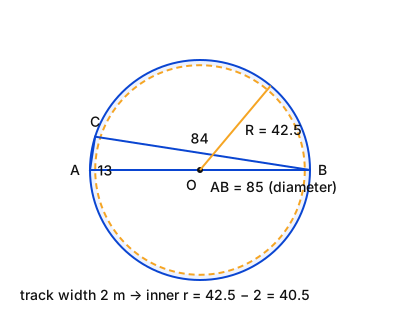
A park is designed in the shape of a right-angled triangle, where the two shorter sides measure 13 m and 84 m. A circular track with a uniform width of 2 m is constructed such that its outer boundary coincides with the circumcircle of the triangular park. Determine the perimeter of the inner boundary of this circular track.
एक पार्क समकोण त्रिभुज के आकार में डिज़ाइन किया गया है, जिसकी दो छोटी भुजाएँ 13 m और 84 m हैं। 2 m की एकसमान चौड़ाई वाला एक वृत्ताकार ट्रैक इस प्रकार बनाया गया है कि उसकी बाहरी सीमा त्रिभुजाकार पार्क के परिवृत्त (circumcircle) के संपाती है। इस वृत्ताकार ट्रैक की आंतरिक सीमा का परिमाप ज्ञात कीजिए।
  1. A82πm
  2. B85πm
  3. C81πm
  4. D89πm
Show answer

Concept: In a right-angled triangle the hypotenuse is the diameter of the circumcircle, so R=hypotenuse2.

  1. Hypotenuse =132+842=169+7056=7225=85m.
  2. Outer radius R=852=42.5m.
  3. Track width 2 m ⇒ inner radius =42.5−2=40.5m.
  4. Inner perimeter =2π×40.5=81πm.

Yaad rakhein: 13–84–85 is a Pythagorean triplet. Inner perimeter =2π(R−w)=π(85−4).

Answer: (C) 81πm

अवधारणा: समकोण त्रिभुज में कर्ण परिवृत्त (circumcircle) का व्यास होता है, अतः R=कर्ण2.

  1. कर्ण =132+842=169+7056=7225=85m.
  2. बाहरी त्रिज्या R=852=42.5m.
  3. ट्रैक की चौड़ाई 2 m ⇒ भीतरी त्रिज्या =42.5−2=40.5m.
  4. भीतरी परिधि =2π×40.5=81πm.

याद रखें: 13–84–85 पाइथागोरस त्रिक है। भीतरी परिधि =2π(R−w)=π(85−4).

उत्तर: (C) 81πm

RRB NTPC Undergraduate CBT 1MathematicsCircumcircle of right triangleRRB NTPC Undergraduate CBT 1 2025 · 8 May Shift 2 →
Q8038.
Ram has ₹1000 in the denomination of ₹10, ₹20 and ₹5 notes. If the number of ₹10 notes is 16 more than that of ₹20 notes and the number of ₹5 notes is twice the number of ₹20 notes, find the total number of notes that Ram has.
राम के पास ₹10, ₹20 और ₹5 के नोटों के रूप में ₹1000 हैं। यदि ₹10 के नोटों की संख्या ₹20 के नोटों की संख्या से 16 अधिक है और ₹5 के नोटों की संख्या ₹20 के नोटों की संख्या की दोगुनी है, तो राम के पास कुल नोटों की संख्या ज्ञात कीजिए।
  1. A120
  2. B90
  3. C100
  4. D80
Show answer

Concept: Take the number of ₹20 notes as x and express every count in x; total value gives one equation.

  1. ₹20 notes =x, ₹10 notes =x+16, ₹5 notes =2x.
  2. Value: 20x+10(x+16)+5(2x)=1000⇒40x+160=1000⇒x=21.
  3. Total notes =21+37+42=100.

Trick: Check: 21×20+37×10+42×5=420+370+210=1000 ✓.

Answer: (C) 100

अवधारणा: ₹20 के नोटों की संख्या x मानकर हर संख्या x में लिखें; कुल राशि से समीकरण बनता है।

  1. ₹20 नोट =x, ₹10 नोट =x+16, ₹5 नोट =2x.
  2. राशि: 20x+10(x+16)+5(2x)=1000⇒40x+160=1000⇒x=21.
  3. कुल नोट =21+37+42=100.

ट्रिक: जाँच: 21×20+37×10+42×5=420+370+210=1000 ✓.

उत्तर: (C) 100

RRB NTPC Undergraduate CBT 1MathematicsLinear equations (notes problem)RRB NTPC Undergraduate CBT 1 2025 · 8 May Shift 2 →
Q8039.
Pooja gets a discount of 17% on a dryer whose marked price is ₹2,000. Since she pays by credit card, she gets an additional 10% discount. How much does she pay (in ₹)?
पूजा को एक ड्रायर पर 17% की छूट मिलती है, जिसका अंकित मूल्य ₹2,000 है। चूँकि वह क्रेडिट कार्ड से भुगतान करती है, उसे 10% की अतिरिक्त छूट मिलती है। वह कितना भुगतान करती है (₹ में)?
  1. A1,494
  2. B1,495
  3. C1,491
  4. D1,493
Show answer

Concept: Successive discounts multiply: price paid =MP×(1−d1)(1−d2).

  1. After 17%: 2000×0.83=1660.
  2. After further 10%: 1660×0.9=1494.

Trick: Single equivalent discount =17+10−17×10100=25.3%; 2000×0.747=1494.

Answer: (A) ₹1,494

अवधारणा: क्रमिक छूटें गुणा होती हैं: भुगतान =MP×(1−d1)(1−d2).

  1. 17% के बाद: 2000×0.83=1660.
  2. फिर 10% के बाद: 1660×0.9=1494.

ट्रिक: एकल समतुल्य छूट =17+10−17×10100=25.3%; 2000×0.747=1494.

उत्तर: (A) ₹1,494

RRB NTPC Undergraduate CBT 1MathematicsSuccessive discountsRRB NTPC Undergraduate CBT 1 2025 · 8 May Shift 2 →
Q8040.
At present, a father is 30 years older than his son. In 12 years, the father will be three times as old as his son. What is the present age of the son?
वर्तमान में, एक पिता अपने पुत्र से 30 वर्ष बड़ा है। 12 वर्ष बाद, पिता की आयु अपने पुत्र की आयु की तीन गुनी होगी। पुत्र की वर्तमान आयु क्या है?
  1. A5 years5 वर्ष
  2. B3 years3 वर्ष
  3. C4 years4 वर्ष
  4. D6 years6 वर्ष
Show answer

Concept: Form an equation for the future ages; the age difference never changes.

  1. Son =s, father =s+30.
  2. After 12 years: s+42=3(s+12)⇒s+42=3s+36⇒2s=6.
  3. s=3 years.

Trick: When father is 3 times the son, the difference (30) equals 2 times son's age ⇒ son then is 15, so now 15−12=3.

Answer: (B) 3 years

अवधारणा: भविष्य की आयु का समीकरण बनाएँ; आयु का अंतर कभी नहीं बदलता।

  1. पुत्र =s, पिता =s+30.
  2. 12 वर्ष बाद: s+42=3(s+12)⇒s+42=3s+36⇒2s=6.
  3. s=3 वर्ष।

ट्रिक: जब पिता पुत्र का 3 गुना हो, तो अंतर (30) पुत्र की आयु का 2 गुना होता है ⇒ तब पुत्र 15 का, अतः अभी 15−12=3.

उत्तर: (B) 3 वर्ष

RRB NTPC Undergraduate CBT 1MathematicsAgesRRB NTPC Undergraduate CBT 1 2025 · 8 May Shift 2 →