Question bank

Q&A: practice questions with answers

Search questions on any topic. Filter by exam category, exam, subject and topic, try the question, then open the answer and explanation.

Courses – airGurukul

8,495 questions found.

Q8081.
HLJN is related to JNLP in a certain way based on the English alphabetical order. In the same way, EIGK is related to GKIM. To which of the following is FJHL related, following the same logic?
अंग्रेज़ी वर्णमाला क्रम के आधार पर HLJN, JNLP से एक निश्चित प्रकार से संबंधित है। उसी प्रकार, EIGK, GKIM से संबंधित है। उसी तर्क का पालन करते हुए, FJHL निम्नलिखित में से किससे संबंधित है?
  1. AHMIN
  2. BHLIN
  3. CHLJN
  4. DHKIN
Show answer

Concept: Find the uniform shift from the first cluster to the second.

  1. HLJN → JNLP: H→J, L→N, J→L, N→P – every letter +2.
  2. EIGK → GKIM: also +2 each.
  3. FJHL: F→H, J→L, H→J, L→N → HLJN.

Trick: Check the first letter in each option: only options starting with H survive, then L (J+2) fixes option C.

Answer: (C) HLJN

अवधारणा: पहले समूह से दूसरे तक एक समान शिफ्ट खोजें।

  1. HLJN → JNLP: H→J, L→N, J→L, N→P – हर अक्षर +2।
  2. EIGK → GKIM: भी हर अक्षर +2।
  3. FJHL: F→H, J→L, H→J, L→N → HLJN।

ट्रिक: विकल्पों का पहला अक्षर देखें: H वाले बचते हैं, फिर L (J+2) से विकल्प C तय।

उत्तर: (C) HLJN
RRB NTPC Undergraduate CBT 1General Intelligence and ReasoningLetter AnalogyRRB NTPC Undergraduate CBT 1 2025 · 8 May Shift 2 →
Q8082.
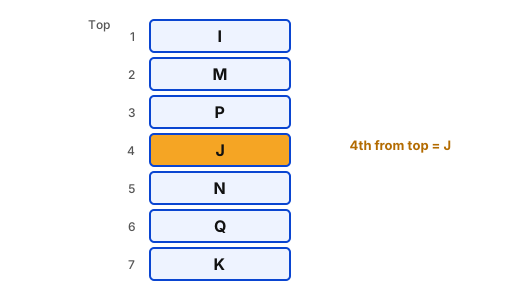
Seven boxes I, J, K, M, N, P and Q are kept one over the other but not necessarily in the same order. Only three boxes are kept between box K and box P. Only one box is kept between box I and box P, where box I is kept at the topmost position. Box N is kept immediately above box Q. Only two boxes are kept between box N and box M. Which box is kept fourth from the top?
सात बक्से I, J, K, M, N, P और Q एक के ऊपर एक रखे हैं, परंतु आवश्यक नहीं कि इसी क्रम में हों। बक्सा K और बक्सा P के बीच केवल तीन बक्से रखे हैं। बक्सा I और बक्सा P के बीच केवल एक बक्सा रखा है, जहाँ बक्सा I सबसे ऊपर रखा है। बक्सा N, बक्सा Q के ठीक ऊपर रखा है। बक्सा N और बक्सा M के बीच केवल दो बक्से रखे हैं। ऊपर से चौथा कौन-सा बक्सा रखा है?
  1. AN
  2. BJ
  3. CP
  4. DQ
Show answer

Concept: Number positions 1 (top) to 7 (bottom) and fix the anchored box first.

  1. I is at 1; only one box between I and P → P at 3.
  2. Three boxes between K and P → K at 7.
  3. N immediately above Q with two boxes between N and M: N=5, Q=6, M=2 (N=4, Q=5 would need M at 7 or 1 – occupied).
  4. J fills the last gap, position 4. Stack: I, M, P, J, N, Q, K → 4th from top is J.

Trick: Place the pair clue (N over Q) last; test each free slot pair and reject those that force M onto an occupied place.

Answer: (B) J

अवधारणा: स्थान 1 (ऊपर) से 7 (नीचे) तक गिनें और पहले स्थिर बॉक्स रखें।

  1. I स्थान 1 पर; I और P के बीच एक बॉक्स → P स्थान 3 पर।
  2. K और P के बीच तीन बॉक्स → K स्थान 7 पर।
  3. N ठीक Q के ऊपर, N और M के बीच दो बॉक्स: N=5, Q=6, M=2 (N=4, Q=5 से M को 7 या 1 चाहिए – भरे हैं)।
  4. J बचे स्थान 4 पर। ढेर: I, M, P, J, N, Q, K → ऊपर से चौथा J।

ट्रिक: जोड़ी सुराग (N, Q के ऊपर) अंत में रखें; हर खाली जोड़ी जाँचें, जो M को भरे स्थान पर भेजे उसे हटाएँ।

उत्तर: (B) J

RRB NTPC Undergraduate CBT 1General Intelligence and ReasoningBox ArrangementRRB NTPC Undergraduate CBT 1 2025 · 8 May Shift 2 →
Q8083.
Based on the English alphabetical order, three of the following four are alike in a certain way and thus form a group. Which is the one that does not belong to that group?
(Note: The odd man out is not based on the number of consonants/vowels or their position in the letter cluster.)
अंग्रेज़ी वर्णमाला क्रम के आधार पर, निम्नलिखित चार में से तीन एक निश्चित प्रकार से समान हैं और इस प्रकार एक समूह बनाते हैं। वह कौन-सा है जो उस समूह से संबंधित नहीं है?
(नोट: असंगत अक्षर-समूह व्यंजनों/स्वरों की संख्या या अक्षर-समूह में उनकी स्थिति पर आधारित नहीं है।)
  1. ALMN
  2. BJKL
  3. CBDD
  4. DFGH
Show answer

Concept: Compare consecutive gaps in each cluster.

  1. LMN: 12, 13, 14; JKL: 10, 11, 12; FGH: 6, 7, 8 – three consecutive letters (+1,+1).
  2. BDD: 2, 4, 4 → +2, 0 – not consecutive.
  3. So BDD is the odd one.

Trick: Repeated letter inside a cluster (DD) is an instant giveaway when the others are consecutive triplets.

Answer: (C) BDD

अवधारणा: हर समूह में क्रमागत अंतर तुलना करें।

  1. LMN: 12, 13, 14; JKL: 10, 11, 12; FGH: 6, 7, 8 – तीन क्रमागत अक्षर (+1,+1)।
  2. BDD: 2, 4, 4 → +2, 0 – क्रमागत नहीं।
  3. अतः BDD विषम है।

ट्रिक: समूह में दोहराया अक्षर (DD) तुरंत संकेत है, जब बाकी क्रमागत त्रिक हों।

उत्तर: (C) BDD

RRB NTPC Undergraduate CBT 1General Intelligence and ReasoningOdd One Out (Letters)RRB NTPC Undergraduate CBT 1 2025 · 8 May Shift 2 →
Q8084.
Read the given statement(s) and conclusions carefully. Assuming that the information given in the statements is true, even if it appears to be at variance with commonly known facts, decide which of the given conclusions logically follow(s) from the statement(s).
Statements:
All chairs are bats.
No bat is a hat.
Conclusions:
(I) No chair is a hat.
(II) Some hats are bats.
दिए गए कथन(नों) और निष्कर्षों को ध्यानपूर्वक पढ़िए। यह मानते हुए कि कथनों में दी गई जानकारी सत्य है, भले ही वह सामान्यतः ज्ञात तथ्यों से भिन्न प्रतीत होती हो, निर्णय कीजिए कि दिए गए निष्कर्षों में से कौन-सा/से निष्कर्ष कथन(नों) का तार्किक रूप से अनुसरण करता/करते है/हैं।
कथन:
सभी कुर्सियाँ बल्ले हैं।
कोई बल्ला टोपी नहीं है।
निष्कर्ष:
(I) कोई कुर्सी टोपी नहीं है।
(II) कुछ टोपियाँ बल्ले हैं।
  1. ABoth conclusions (I) and (II) followनिष्कर्ष (I) और (II) दोनों अनुसरण करते हैं
  2. BOnly conclusion (I) followsकेवल निष्कर्ष (I) अनुसरण करता है
  3. COnly conclusion (II) followsकेवल निष्कर्ष (II) अनुसरण करता है
  4. DNeither conclusion (I) nor (II) followsन तो निष्कर्ष (I) और न ही (II) अनुसरण करता है
Show answer

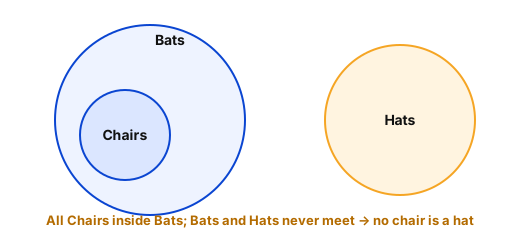
Concept: Draw the Venn diagram: 'All chairs are bats' puts Chairs inside Bats; 'No bat is a hat' keeps Bats and Hats apart.

  1. Since every chair lies inside Bats and Bats never overlaps Hats, no chair can be a hat → (I) follows.
  2. 'Some hats are bats' contradicts 'No bat is a hat' → (II) does not follow.
  3. Only conclusion (I) follows.

Trick: All A are B + No B is C ⇒ No A is C (always valid).

Answer: (B) Only conclusion (I) follows

अवधारणा: वेन आरेख बनाएँ: 'All chairs are bats' से Chairs, Bats के अंदर; 'No bat is a hat' से Bats और Hats अलग।

  1. हर chair, Bats के अंदर है और Bats, Hats से कभी नहीं मिलता, अतः कोई chair, hat नहीं → (I) अनुसरण करता है।
  2. 'Some hats are bats', 'No bat is a hat' के विपरीत है → (II) अनुसरण नहीं करता।
  3. केवल निष्कर्ष (I) सही।

ट्रिक: All A are B + No B is C ⇒ No A is C (हमेशा मान्य)।

उत्तर: (B) केवल निष्कर्ष (I) अनुसरण करता है

RRB NTPC Undergraduate CBT 1General Intelligence and ReasoningSyllogismRRB NTPC Undergraduate CBT 1 2025 · 8 May Shift 2 →
Q8085.
Jay ranked 12th from the bottom and 9th from the top in his class. How many students are there in his class?
जय अपनी कक्षा में नीचे से 12वें और ऊपर से 9वें स्थान पर है। उसकी कक्षा में कितने विद्यार्थी हैं?
  1. A19
  2. B20
  3. C17
  4. D18
Show answer

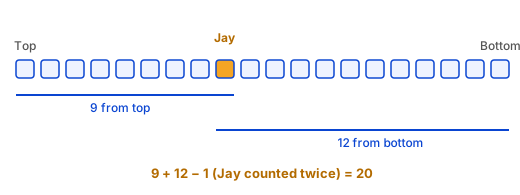
Concept: Total = rank from top + rank from bottom −1 (the person is counted in both).

  1. Jay: 9th from top, 12th from bottom.
  2. Total students =9+12−1=20.

Trick: Formula: Total=T+B−1; if two different people are given, use the overlap/gap rules instead.

Answer: (B) 20

अवधारणा: कुल = ऊपर से स्थान + नीचे से स्थान −1 (व्यक्ति दोनों में गिना जाता है)।

  1. जय: ऊपर से 9वाँ, नीचे से 12वाँ।
  2. कुल छात्र =9+12−1=20।

ट्रिक: सूत्र: कुल=T+B−1; दो अलग व्यक्ति दिए हों तो ओवरलैप/गैप नियम लगाएँ।

उत्तर: (B) 20

RRB NTPC Undergraduate CBT 1General Intelligence and ReasoningRankingRRB NTPC Undergraduate CBT 1 2025 · 8 May Shift 2 →
Q8086.
What should come in place of the ‘?’ in the given series?
28 12 10 13 24 ?
दी गई शृंखला में '?' के स्थान पर क्या आना चाहिए?
28 12 10 13 24 ?
  1. A70
  2. B60
  3. C65
  4. D58
Show answer

Concept: The multiplier increases by 0.5 each step and 2 is subtracted every time.

  1. 28×0.5−2=12; 12×1−2=10; 10×1.5−2=13; 13×2−2=24.
  2. Next: 24×2.5−2=60−2=58.

Trick: A series that first falls then rises sharply usually has a growing multiplier (×0.5,×1,×1.5…).

Answer: (D) 58

अवधारणा: गुणक हर चरण में 0.5 बढ़ता है और हर बार 2 घटाया जाता है।

  1. 28×0.5−2=12; 12×1−2=10; 10×1.5−2=13; 13×2−2=24।
  2. अगला: 24×2.5−2=60−2=58।

ट्रिक: जो श्रृंखला पहले घटे फिर तेजी से बढ़े, उसमें प्रायः बढ़ता गुणक होता है (×0.5,×1,×1.5…)।

उत्तर: (D) 58

RRB NTPC Undergraduate CBT 1General Intelligence and ReasoningNumber SeriesRRB NTPC Undergraduate CBT 1 2025 · 8 May Shift 2 →
Q8087.
Read the given statements and conclusions carefully. Assuming that the information given in the statements is true, even if it appears to be at variance with commonly known facts, decide which of the given conclusions logically follow(s) from the statements.
Statements: All clouds are water. Some water is vapor.
Conclusions:
(I) Some clouds are vapor.
(II) Some vapor is water.
दिए गए कथनों और निष्कर्षों को ध्यानपूर्वक पढ़िए। यह मानते हुए कि कथनों में दी गई जानकारी सत्य है, भले ही वह सामान्यतः ज्ञात तथ्यों से भिन्न प्रतीत होती हो, निर्णय कीजिए कि दिए गए निष्कर्षों में से कौन-सा/से निष्कर्ष कथनों का तार्किक रूप से अनुसरण करता/करते है/हैं।
कथन: सभी बादल पानी हैं। कुछ पानी वाष्प है।
निष्कर्ष:
(I) कुछ बादल वाष्प हैं।
(II) कुछ वाष्प पानी है।
  1. AOnly conclusion (II) followsकेवल निष्कर्ष (II) अनुसरण करता है
  2. BBoth conclusions (I) and (II) followनिष्कर्ष (I) और (II) दोनों अनुसरण करते हैं
  3. CNeither conclusion (I) nor (II) followsन तो निष्कर्ष (I) और न ही (II) अनुसरण करता है
  4. DOnly conclusion (I) followsकेवल निष्कर्ष (I) अनुसरण करता है
Show answer

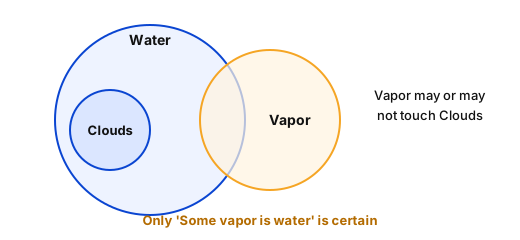
Concept: Draw Clouds inside Water; Vapor overlaps Water somewhere – it may or may not touch Clouds.

  1. (I) 'Some clouds are vapor' is possible but not certain (Vapor may overlap only the non-cloud part of Water) → does not follow.
  2. (II) 'Some vapor is water' is just the converse of 'Some water is vapor' → always true → follows.
  3. Only conclusion (II) follows.

Trick: 'Some A are B' ⇔ 'Some B are A' (I-type converts); 'All' + 'Some' never gives a definite 'Some' about the first term.

Answer: (A) Only conclusion (II) follows

अवधारणा: Clouds को Water के अंदर बनाएँ; Vapor, Water से कहीं मिलता है – Clouds को छुए या न छुए।

  1. (I) 'Some clouds are vapor' संभव है पर निश्चित नहीं (Vapor केवल Water के गैर-cloud भाग से मिल सकता है) → अनुसरण नहीं।
  2. (II) 'Some vapor is water', 'Some water is vapor' का ही विलोम (converse) है → हमेशा सत्य → अनुसरण करता है।
  3. केवल निष्कर्ष (II) सही।

ट्रिक: 'Some A are B' ⇔ 'Some B are A'; 'All' + 'Some' से पहले पद के बारे में निश्चित 'Some' नहीं निकलता।

उत्तर: (A) केवल निष्कर्ष (II) अनुसरण करता है

RRB NTPC Undergraduate CBT 1General Intelligence and ReasoningSyllogismRRB NTPC Undergraduate CBT 1 2025 · 8 May Shift 2 →
Q8088.
Akshay starts from Point A and drives 12 km towards the north. He then takes a right turn, drives 15 km, turns right and drives 17 km. He then takes a right turn and drives 18 km. He takes a final right turn, drives 5 km and stops at Point P. How far (shortest distance) and towards which direction should he drive in order to reach Point A again? (All turns are 90-degree turns only unless specified.)
अक्षय बिंदु A से चलना शुरू करता है और उत्तर की ओर 12 km गाड़ी चलाता है। फिर वह दाएँ मुड़ता है, 15 km गाड़ी चलाता है, दाएँ मुड़ता है और 17 km गाड़ी चलाता है। फिर वह दाएँ मुड़ता है और 18 km गाड़ी चलाता है। वह अंतिम बार दाएँ मुड़ता है, 5 km गाड़ी चलाता है और बिंदु P पर रुकता है। बिंदु A पर पुनः पहुँचने के लिए उसे कितनी दूर (न्यूनतम दूरी) और किस दिशा में गाड़ी चलानी चाहिए? (जब तक निर्दिष्ट न हो, सभी मोड़ केवल 90-डिग्री के मोड़ हैं।)
  1. A2 km to the eastपूर्व की ओर 2 km
  2. B5 km to the westपश्चिम की ओर 5 km
  3. C4 km to the westपश्चिम की ओर 4 km
  4. D3 km to the eastपूर्व की ओर 3 km
Show answer

Concept: Track the position with coordinates: east = +x, north = +y; every right turn rotates N→E→S→W→N.

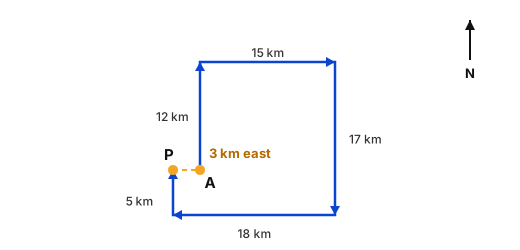
  1. A(0, 0) → north 12 → (0, 12) → right (east) 15 → (15, 12).
  2. Right (south) 17 → (15, −5) → right (west) 18 → (−3, −5).
  3. Right (north) 5 → P(−3, 0).
  4. P is 3 km west of A, on the same line → he must drive 3 km east.

Trick: Net E–W: 15−18=−3 (3 km west); net N–S: 12−17+5=0. The answer is just the net displacement reversed.

Answer: (D) 3 km to the east

अवधारणा: स्थिति निर्देशांक से ट्रैक करें: पूर्व = +x, उत्तर = +y; हर दायाँ मोड़ N→E→S→W→N घुमाता है।

  1. A(0, 0) → उत्तर 12 → (0, 12) → दाएँ (पूर्व) 15 → (15, 12)।
  2. दाएँ (दक्षिण) 17 → (15, −5) → दाएँ (पश्चिम) 18 → (−3, −5)।
  3. दाएँ (उत्तर) 5 → P(−3, 0)।
  4. P, A से 3 km पश्चिम में उसी रेखा पर है → उसे 3 km पूर्व चलना होगा।

ट्रिक: शुद्ध पूर्व–पश्चिम: 15−18=−3 (3 km पश्चिम); शुद्ध उत्तर–दक्षिण: 12−17+5=0। उत्तर = शुद्ध विस्थापन का उल्टा।

उत्तर: (D) 3 km to the east (3 km पूर्व)

RRB NTPC Undergraduate CBT 1General Intelligence and ReasoningDirection SenseRRB NTPC Undergraduate CBT 1 2025 · 8 May Shift 2 →
Q8089.
What will come in place of the question mark (?) in the following equation if ‘+’ and ‘−’ are interchanged and ‘×’ and ‘÷’ are interchanged?
805 ÷ 2 + 26 − 1203 × 3 = ?
यदि '+' और '−' को आपस में बदल दिया जाए तथा '×' और '÷' को आपस में बदल दिया जाए, तो निम्नलिखित समीकरण में प्रश्नचिह्न (?) के स्थान पर क्या आएगा?
805 ÷ 2 + 26 − 1203 × 3 = ?
  1. A1598
  2. B1985
  3. C1895
  4. D1588
Show answer

Concept: Swap the signs as told, then apply BODMAS.

  1. 805÷2+26−1203×3 becomes 805×2−26+1203÷3.
  2. 805×2=1610; 1203÷3=401.
  3. 1610−26+401=1985.

Trick: Do ÷ and × first, then + and − from left to right; 1203÷3 is exact (1+2+0+3=6), a hint the swap is right.

Answer: (B) 1985

अवधारणा: बताए अनुसार चिह्न बदलें, फिर BODMAS लगाएँ।

  1. 805÷2+26−1203×3 बनता है 805×2−26+1203÷3।
  2. 805×2=1610; 1203÷3=401।
  3. 1610−26+401=1985।

ट्रिक: पहले ÷ और ×, फिर + और − बाएँ से दाएँ; 1203÷3 पूर्ण भाग (1+2+0+3=6) – संकेत कि अदला-बदली सही है।

उत्तर: (B) 1985

RRB NTPC Undergraduate CBT 1General Intelligence and ReasoningMathematical OperationsRRB NTPC Undergraduate CBT 1 2025 · 8 May Shift 2 →
Q8090.
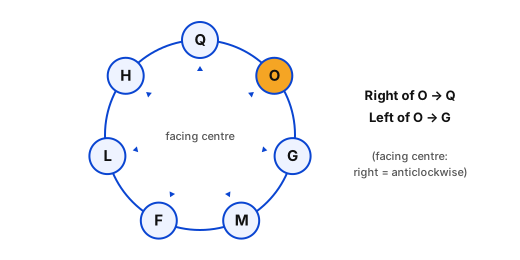
Seven people F, G, H, L, M, O and Q are sitting around a circular table, facing the centre of the table. Only one person sits between Q and L when counted from the right of Q. Only one person sits between L and M when counted from the left of M. Only one person sits between Q and G when counted from the right of G. Only two people sit between H and M when counted from the left of M. Only one person sits between F and G when counted from the right of F. Who sits to the immediate right and left of O, respectively?
सात व्यक्ति F, G, H, L, M, O और Q एक वृत्ताकार मेज़ के चारों ओर मेज़ के केंद्र की ओर मुख करके बैठे हैं। Q के दाईं ओर से गिनने पर Q और L के बीच केवल एक व्यक्ति बैठा है। M के बाईं ओर से गिनने पर L और M के बीच केवल एक व्यक्ति बैठा है। G के दाईं ओर से गिनने पर Q और G के बीच केवल एक व्यक्ति बैठा है। M के बाईं ओर से गिनने पर H और M के बीच केवल दो व्यक्ति बैठे हैं। F के दाईं ओर से गिनने पर F और G के बीच केवल एक व्यक्ति बैठा है। O के ठीक दाएँ और बाएँ क्रमशः कौन बैठे हैं?
  1. AQ and GQ और G
  2. BG and FG और F
  3. CQ and LQ और L
  4. DF and LF और L
Show answer

Concept: Facing the centre, a person's right is anticlockwise and left is clockwise. Number seats 1–7 clockwise.

  1. Put Q at 1. One person between Q and L from Q's right (anticlockwise) → L at 6.
  2. One between L and M from M's left (clockwise from M) → M at 4. One between Q and G from G's right → G at 3.
  3. Two between H and M from M's left → H at 7. One between F and G from F's right → F at 5. O takes seat 2.
  4. O's immediate right (seat 1) = Q; immediate left (seat 3) = G.

Trick: Draw the circle with arrows pointing inward; 'from the right of X' means move anticlockwise from X.

Answer: (A) Q and G

अवधारणा: केंद्र की ओर मुख होने पर व्यक्ति का दायाँ = वामावर्त (anticlockwise), बायाँ = दक्षिणावर्त। सीटें 1–7 दक्षिणावर्त गिनें।

  1. Q को 1 पर रखें। Q के दाएँ से Q और L के बीच एक व्यक्ति → L सीट 6 पर।
  2. M के बाएँ से L और M के बीच एक → M सीट 4 पर। G के दाएँ से Q और G के बीच एक → G सीट 3 पर।
  3. M के बाएँ से H और M के बीच दो → H सीट 7 पर। F के दाएँ से F और G के बीच एक → F सीट 5 पर। O सीट 2 पर।
  4. O के ठीक दाएँ (सीट 1) = Q; ठीक बाएँ (सीट 3) = G।

ट्रिक: वृत्त में अंदर की ओर तीर बनाएँ; 'X के दाएँ से' का अर्थ X से वामावर्त चलना।

उत्तर: (A) Q and G

RRB NTPC Undergraduate CBT 1General Intelligence and ReasoningCircular Seating ArrangementRRB NTPC Undergraduate CBT 1 2025 · 8 May Shift 2 →
Q8091.
If ‘+’ means ‘−’, ‘−’ means ‘×’, ‘×’ means ‘÷’, ‘÷’ means ‘+’, then what will come in place of the question mark (?) in the following equation?
18 − 3 ÷ 9 + 15 × 3 = ?
यदि '+' का अर्थ '−' है, '−' का अर्थ '×' है, '×' का अर्थ '÷' है, '÷' का अर्थ '+' है, तो निम्नलिखित समीकरण में प्रश्नचिह्न (?) के स्थान पर क्या आएगा?
18 − 3 ÷ 9 + 15 × 3 = ?
  1. A49
  2. B50
  3. C58
  4. D57
Show answer

Concept: Replace each symbol by its meaning, then solve with BODMAS.

  1. 18−3÷9+15×3 → 18×3+9−15÷3.
  2. 18×3=54; 15÷3=5.
  3. 54+9−5=58.

Trick: Write the converted expression fully before calculating – most errors come from converting and computing in the same step.

Answer: (C) 58

अवधारणा: हर प्रतीक को उसके अर्थ से बदलें, फिर BODMAS से हल करें।

  1. 18−3÷9+15×3 → 18×3+9−15÷3।
  2. 18×3=54; 15÷3=5।
  3. 54+9−5=58।

ट्रिक: गणना से पहले बदला हुआ व्यंजक पूरा लिखें – अधिकांश गलतियाँ बदलने और गणना एक साथ करने से होती हैं।

उत्तर: (C) 58

RRB NTPC Undergraduate CBT 1General Intelligence and ReasoningMathematical OperationsRRB NTPC Undergraduate CBT 1 2025 · 8 May Shift 2 →
Q8092.
In a certain code language,
'A @ B' means ‘A is the mother of B’,
'A & B' means ‘A is the husband of B’,
'A # B' means ‘A is the father of B’,
'A % B' means ‘A is the son of B’ and
'A * B' means ‘A is the daughter of B’.
If G @ K & V * P # W % J, then how is J related to K?
एक निश्चित कूट भाषा में,
'A @ B' का अर्थ है 'A, B की माता है',
'A & B' का अर्थ है 'A, B का पति है',
'A # B' का अर्थ है 'A, B का पिता है',
'A % B' का अर्थ है 'A, B का पुत्र है' और
'A * B' का अर्थ है 'A, B की पुत्री है'।
यदि G @ K & V * P # W % J है, तो J, K से किस प्रकार संबंधित है?
  1. AWife's motherपत्नी की माता
  2. BDaughterपुत्री
  3. CMotherमाता
  4. DWife’s sisterपत्नी की बहन
Show answer

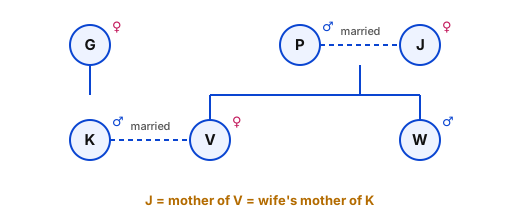
Concept: Decode pairwise and build the tree around the couple P–J.

  1. K & V → K is husband of V. V * P → V is daughter of P.
  2. P # W → P is father of W; W % J → W is son of J → J is W's mother, i.e. P's wife.
  3. So J is the mother of V, and V is K's wife.
  4. J is K's wife's mother (mother-in-law). (G @ K – G is K's mother – is extra information.)

Trick: Find the chain that links the two asked persons (K → V → J) and ignore the rest.

Answer: (A) Wife's mother

अवधारणा: जोड़ी-दर-जोड़ी डिकोड कर P–J दंपति के चारों ओर वृक्ष बनाएँ।

  1. K & V → K, V का पति। V * P → V, P की बेटी।
  2. P # W → P, W का पिता; W % J → W, J का बेटा → J, W की माँ यानी P की पत्नी।
  3. अतः J, V की माँ है और V, K की पत्नी।
  4. J, K की पत्नी की माँ (सास) है। (G @ K – G, K की माँ – अतिरिक्त सूचना है।)

ट्रिक: पूछे गए दो व्यक्तियों को जोड़ने वाली कड़ी (K → V → J) खोजें, बाकी छोड़ दें।

उत्तर: (A) Wife's mother (सास)

RRB NTPC Undergraduate CBT 1General Intelligence and ReasoningBlood Relations (Coded)RRB NTPC Undergraduate CBT 1 2025 · 8 May Shift 2 →
Q8093.
Select the triad which follows the same pattern as that followed by the two triads given below. Both triads follow the same pattern.
RN-TP-VY
PL-RN-TW
उस त्रिक का चयन कीजिए जो नीचे दिए गए दो त्रिकों द्वारा अनुसरण किए गए पैटर्न का ही अनुसरण करता है। दोनों त्रिक समान पैटर्न का अनुसरण करते हैं।
RN-TP-VY
PL-RN-TW
  1. ANJ-PL-RU
  2. BMJ-PK-RV
  3. CMJ-PL-RV
  4. DNJ-PL-RV
Show answer

Concept: Compare the first letters across the triad, and the second letters across the triad.

  1. RN-TP-VY: first letters R→T→V (+2,+2); second letters N→P (+2), P→Y (+9).
  2. PL-RN-TW: P→R→T (+2,+2); L→N (+2), N→W (+9). Same pattern.
  3. NJ-PL-RU: N→P→R (+2,+2); J→L (+2), L→U (12+9=21) ✓.
  4. Option D ends in V (22), option B/C break the +2 at the second letter.

Trick: Options A and D differ only in the last letter – compute just L+9 to decide.

Answer: (A) NJ-PL-RU

अवधारणा: त्रिक में पहले अक्षरों की और दूसरे अक्षरों की अलग-अलग तुलना करें।

  1. RN-TP-VY: पहले अक्षर R→T→V (+2,+2); दूसरे N→P (+2), P→Y (+9)।
  2. PL-RN-TW: P→R→T (+2,+2); L→N (+2), N→W (+9)। वही पैटर्न।
  3. NJ-PL-RU: N→P→R (+2,+2); J→L (+2), L→U (12+9=21) ✓।
  4. विकल्प D में अंत V (22) है; B/C दूसरे अक्षर पर +2 तोड़ते हैं।

ट्रिक: विकल्प A और D केवल अंतिम अक्षर में भिन्न हैं – बस L+9 निकालें।

उत्तर: (A) NJ-PL-RU

RRB NTPC Undergraduate CBT 1General Intelligence and ReasoningLetter TriadsRRB NTPC Undergraduate CBT 1 2025 · 8 May Shift 2 →
Q8094.
What should come in place of ? in the given series based on the English alphabetical order?
WAX BFC GKH LPM ?
अंग्रेज़ी वर्णमाला क्रम के आधार पर दी गई शृंखला में ? के स्थान पर क्या आना चाहिए?
WAX BFC GKH LPM ?
  1. AQVQ
  2. BQRT
  3. CQUR
  4. DQTQ
Show answer

Concept: Each position of the cluster forms its own series.

  1. 1st letters W, B, G, L → +5 each (W→B wraps past Z) → Q.
  2. 2nd letters A, F, K, P → +5 → U.
  3. 3rd letters X, C, H, M → +5 → R. Term = QUR.

Trick: All three series share the same jump (+5); after finding the 1st letter Q, the 2nd letter U eliminates every other option.

Answer: (C) QUR

अवधारणा: समूह की हर स्थिति अपनी अलग श्रृंखला बनाती है।

  1. पहले अक्षर W, B, G, L → हर बार +5 (W→B, Z पार करके) → Q।
  2. दूसरे अक्षर A, F, K, P → +5 → U।
  3. तीसरे अक्षर X, C, H, M → +5 → R। पद = QUR।

ट्रिक: तीनों श्रृंखलाओं में समान छलांग (+5); पहला अक्षर Q के बाद दूसरा अक्षर U बाकी विकल्प हटा देता है।

उत्तर: (C) QUR

RRB NTPC Undergraduate CBT 1General Intelligence and ReasoningLetter SeriesRRB NTPC Undergraduate CBT 1 2025 · 8 May Shift 2 →
Q8095.
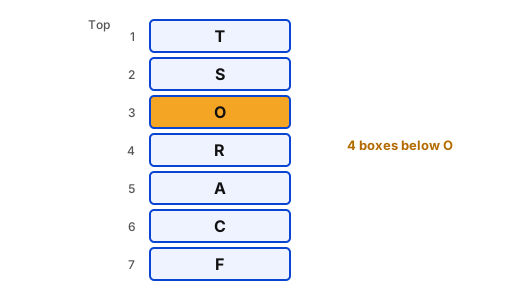
Seven boxes F, A, C, T, O, R and S are kept one over the other but not necessarily in the same order. Only two boxes are kept below A. Only three boxes are kept between T and A. Only one box is kept between S and R. R is kept immediately above A. Only four boxes are kept between S and F. O is kept at someplace above C. How many boxes are kept below O?
सात बक्से F, A, C, T, O, R और S एक के ऊपर एक रखे हैं, परंतु आवश्यक नहीं कि इसी क्रम में हों। A के नीचे केवल दो बक्से रखे हैं। T और A के बीच केवल तीन बक्से रखे हैं। S और R के बीच केवल एक बक्सा रखा है। R, A के ठीक ऊपर रखा है। S और F के बीच केवल चार बक्से रखे हैं। O, C के ऊपर किसी स्थान पर रखा है। O के नीचे कितने बक्से रखे हैं?
  1. ATwoदो
  2. BOneएक
  3. CFourचार
  4. DThreeतीन
Show answer

Concept: Number positions 1 (top) to 7 (bottom); start from the box whose position is fixed by a count.

  1. Two boxes below A → A at 5; R immediately above A → R at 4.
  2. Three boxes between T and A → T at 1. One box between S and R → S at 2 or 6.
  3. Four boxes between S and F: S=2 → F=7 ✓ (S=6 would need F at 1 = T). So S=2, F=7.
  4. O above C in the free slots 3 and 6 → O=3, C=6. Stack: T S O R A C F → boxes below O = 4.

Trick: 'Only n boxes below X' fixes X at position 7−n immediately; build everything from there.

Answer: (C) Four

अवधारणा: स्थान 1 (ऊपर) से 7 (नीचे) गिनें; उस बॉक्स से शुरू करें जिसका स्थान गिनती से तय है।

  1. A के नीचे दो बॉक्स → A स्थान 5 पर; R ठीक A के ऊपर → R स्थान 4 पर।
  2. T और A के बीच तीन बॉक्स → T स्थान 1 पर। S और R के बीच एक बॉक्स → S 2 या 6 पर।
  3. S और F के बीच चार बॉक्स: S=2 → F=7 ✓ (S=6 से F को 1 = T चाहिए)। अतः S=2, F=7।
  4. खाली स्थान 3 व 6 में O, C के ऊपर → O=3, C=6। ढेर: T S O R A C F → O के नीचे 4 बॉक्स।

ट्रिक: 'X के नीचे केवल n बॉक्स' से X तुरंत स्थान 7−n पर; वहीं से सब बनाएँ।

उत्तर: (C) Four (चार)

RRB NTPC Undergraduate CBT 1General Intelligence and ReasoningBox ArrangementRRB NTPC Undergraduate CBT 1 2025 · 8 May Shift 2 →
Q8096.
Which type of Centre-State relation is covered under Articles 245 to 255 of Part XI of the Indian Constitution?
भारतीय संविधान के भाग XI के अनुच्छेद 245 से 255 के अंतर्गत केंद्र-राज्य संबंधों का कौन-सा प्रकार आता है?
  1. AFinancial relationsवित्तीय संबंध
  2. BJudicial relationsन्यायिक संबंध
  3. CLegislative relationsविधायी संबंध
  4. DAdministrative relationsप्रशासनिक संबंध
Show answer

Concept: Part XI (Articles 245–263) deals with Centre–State relations in two chapters.

  1. Articles 245–255 (Chapter I) – Legislative relations: territorial extent, the three Lists, residuary powers.
  2. Articles 256–263 (Chapter II) – Administrative relations.
  3. Financial relations are in Part XII (Articles 268–293).

Yaad rakhein: "245 – Legislate, 256 – Administer, 268 – Finance."

Answer: (C) Legislative relations

अवधारणा: भाग XI (अनुच्छेद 245–263) केंद्र–राज्य संबंधों को दो अध्यायों में बताता है।

  1. अनुच्छेद 245–255 (अध्याय I) – विधायी संबंध: क्षेत्रीय विस्तार, तीन सूचियाँ, अवशिष्ट शक्तियाँ।
  2. अनुच्छेद 256–263 (अध्याय II) – प्रशासनिक संबंध।
  3. वित्तीय संबंध भाग XII (अनुच्छेद 268–293) में हैं।

याद रखें: "245 – विधायी, 256 – प्रशासनिक, 268 – वित्तीय।"

उत्तर: (C) विधायी संबंध (Legislative relations)

RRB NTPC Undergraduate CBT 1General AwarenessCentre–State relationsRRB NTPC Undergraduate CBT 1 2025 · 8 May Shift 1 →
Q8097.
According to the World Bank's Travel and Tourism Economic Impact Research (EIR) of 2025, what was the contribution of the global tourism industry to the total Global Gross Domestic Product (GDP) in 2024?
विश्व बैंक के ट्रैवल एंड टूरिज़्म इकोनॉमिक इम्पैक्ट रिसर्च (EIR) 2025 के अनुसार, 2024 में कुल वैश्विक सकल घरेलू उत्पाद (GDP) में वैश्विक पर्यटन उद्योग का योगदान कितना था?
  1. A20%
  2. B15%
  3. C12%
  4. D10%
Show answer

Concept: The 2025 Economic Impact Research on travel and tourism measured the sector's share of world GDP for 2024.

  1. Travel and tourism contributed about US$10.9 trillion, roughly 10% of global GDP in 2024.
  2. The sector supported around 357 million jobs worldwide (about 1 in 10 jobs).

Yaad rakhein: Tourism ≈ "1 in 10" – 10% of GDP and 1 in 10 jobs.

Answer: (D) 10%

अवधारणा: यात्रा एवं पर्यटन पर 2025 की Economic Impact Research ने 2024 में इस क्षेत्र का विश्व GDP में हिस्सा मापा।

  1. 2024 में यात्रा और पर्यटन का योगदान लगभग US$10.9 ट्रिलियन, यानी वैश्विक GDP का लगभग 10% रहा।
  2. इस क्षेत्र ने विश्व में लगभग 357 मिलियन रोज़गार (हर 10 में 1) दिए।

याद रखें: पर्यटन ≈ "10 में 1" – GDP का 10% और हर 10वीं नौकरी।

उत्तर: (D) 10%

RRB NTPC Undergraduate CBT 1General AwarenessTourism economy (current affairs)RRB NTPC Undergraduate CBT 1 2025 · 8 May Shift 1 →
Q8098.
Which of the following sites is known for its paintings and sculptures, considered masterpieces of Buddhist art?
निम्नलिखित में से कौन-सा स्थल अपने चित्रों और मूर्तियों के लिए जाना जाता है, जिन्हें बौद्ध कला की उत्कृष्ट कृतियाँ माना जाता है?
  1. AElephanta Cavesएलीफेंटा की गुफाएँ
  2. BAjanta Cavesअजंता की गुफाएँ
  3. CBhimbetka Cavesभीमबेटका की गुफाएँ
  4. DMawsmai Caveमावस्माई गुफा
Show answer

Concept: Ajanta (Aurangabad, Maharashtra) is famous for Buddhist murals and sculptures (2nd century BCE – 6th century CE).

  1. Its 30 rock-cut caves contain Jataka paintings such as Padmapani and Vajrapani – a UNESCO World Heritage Site (1983).
  2. Elephanta is known for Shaivite sculpture (Trimurti); Bhimbetka for prehistoric rock shelters; Mawsmai is a natural limestone cave in Meghalaya.

Yaad rakhein: Ajanta – paintings (Buddhist); Ellora – sculptures of three faiths; Elephanta – Shiva.

Answer: (B) Ajanta Caves

अवधारणा: अजंता (औरंगाबाद, महाराष्ट्र) बौद्ध भित्तिचित्रों और मूर्तियों (दूसरी शताब्दी ई.पू. – छठी शताब्दी ई.) के लिए प्रसिद्ध है।

  1. इसकी 30 शैलकृत गुफाओं में पद्मपाणि, वज्रपाणि जैसे जातक चित्र हैं – UNESCO विश्व धरोहर स्थल (1983)।
  2. एलिफेंटा शैव मूर्तिकला (त्रिमूर्ति) के लिए, भीमबेटका प्रागैतिहासिक शैलाश्रयों के लिए, मावस्माई मेघालय की प्राकृतिक चूना-पत्थर गुफा है।

याद रखें: अजंता – चित्र (बौद्ध); एलोरा – तीन धर्मों की मूर्तियाँ; एलिफेंटा – शिव।

उत्तर: (B) अजंता की गुफाएँ

RRB NTPC Undergraduate CBT 1General AwarenessBuddhist art – AjantaRRB NTPC Undergraduate CBT 1 2025 · 8 May Shift 1 →
Q8099.
Which of the following Schedules of the Indian Constitution contains provisions for administration of tribal areas in northeastern India?
भारतीय संविधान की निम्नलिखित में से किस अनुसूची में पूर्वोत्तर भारत के जनजातीय क्षेत्रों के प्रशासन के प्रावधान हैं?
  1. AThird Scheduleतीसरी अनुसूची
  2. BEleventh Scheduleग्यारहवीं अनुसूची
  3. CSixth Scheduleछठी अनुसूची
  4. DEighth Scheduleआठवीं अनुसूची
Show answer

Concept: The Sixth Schedule (Article 244(2)) provides for administration of tribal areas in Assam, Meghalaya, Tripura and Mizoram through Autonomous District Councils.

  1. Fifth Schedule covers Scheduled Areas in other states.
  2. Third – oaths; Eighth – 22 languages; Eleventh – Panchayat subjects.

Yaad rakhein: Sixth Schedule = "ATMM" states (Assam, Tripura, Meghalaya, Mizoram).

Answer: (C) Sixth Schedule

अवधारणा: छठी अनुसूची (अनुच्छेद 244(2)) असम, मेघालय, त्रिपुरा और मिज़ोरम के जनजातीय क्षेत्रों का प्रशासन स्वायत्त ज़िला परिषदों द्वारा करवाती है।

  1. पाँचवीं अनुसूची अन्य राज्यों के अनुसूचित क्षेत्रों के लिए है।
  2. तीसरी – शपथ; आठवीं – 22 भाषाएँ; ग्यारहवीं – पंचायत के विषय।

याद रखें: छठी अनुसूची = "ATMM" राज्य (Assam, Tripura, Meghalaya, Mizoram)।

उत्तर: (C) छठी अनुसूची

RRB NTPC Undergraduate CBT 1General AwarenessSchedules of the ConstitutionRRB NTPC Undergraduate CBT 1 2025 · 8 May Shift 1 →
Q8100.
The Anti-Defection Law was introduced through which Constitutional Amendment?
दल-बदल विरोधी कानून किस संविधान संशोधन के माध्यम से लाया गया था?
  1. A73rd Amendment73वाँ संशोधन
  2. B44th Amendment44वाँ संशोधन
  3. C61st Amendment61वाँ संशोधन
  4. D52nd Amendment52वाँ संशोधन
Show answer

Concept: The 52nd Constitutional Amendment Act, 1985 (Rajiv Gandhi government) added the Tenth Schedule – the Anti-Defection Law.

  1. The 91st Amendment (2003) later tightened it by removing the "split" exception.
  2. 44th (1978) undid Emergency-era changes; 61st (1989) lowered voting age to 18; 73rd (1992) – Panchayati Raj.

Yaad rakhein: "52 – Tenth Schedule – Defection."

Answer: (D) 52nd Amendment

अवधारणा: 52वें संविधान संशोधन अधिनियम, 1985 (राजीव गांधी सरकार) ने दसवीं अनुसूची – दल-बदल विरोधी कानून – जोड़ी।

  1. 91वें संशोधन (2003) ने बाद में "विभाजन" की छूट हटाकर इसे कड़ा किया।
  2. 44वाँ (1978) आपातकाल के बदलाव पलटे; 61वाँ (1989) मतदान आयु 18; 73वाँ (1992) – पंचायती राज।

याद रखें: "52 – दसवीं अनुसूची – दल-बदल।"

उत्तर: (D) 52वाँ संशोधन

RRB NTPC Undergraduate CBT 1General AwarenessAnti-Defection LawRRB NTPC Undergraduate CBT 1 2025 · 8 May Shift 1 →