

Q801.
What is the condition for total internal reflection to occur?
पूर्ण आंतरिक परावर्तन (total internal reflection) होने की शर्त क्या है?
- ALight must travel from a rarer medium to a denser medium at an angle of 90°.प्रकाश को 90° के कोण पर विरल माध्यम से सघन माध्यम में जाना चाहिए।
- BLight must travel from a denser to a rarer medium at an angle greater than the critical angle.प्रकाश को क्रांतिक कोण (critical angle) से अधिक कोण पर सघन माध्यम से विरल माध्यम में जाना चाहिए।
- CLight must strike the boundary at 90° to the normal separating any two mediums of different refractive indices.प्रकाश को भिन्न अपवर्तनांक वाले किन्हीं दो माध्यमों को अलग करने वाले अभिलंब से 90° पर सीमा से टकराना चाहिए।
- DThe refractive indices of both media must be equal.दोनों माध्यमों के अपवर्तनांक (refractive indices) बराबर होने चाहिए।
Show answer
Concept: Total internal reflection (TIR) happens when light, going from an optically denser to a rarer medium, meets the boundary at an angle of incidence larger than the critical angle , where .
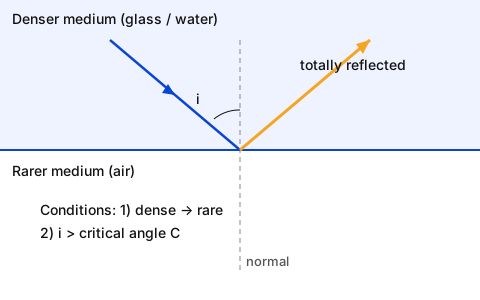
- Light must travel from denser (glass, water) to rarer (air) medium; from rarer to denser it always bends towards the normal, so no TIR.
- Angle of incidence ; then no refracted ray exists and all light reflects back.
- At (along the normal) light passes straight; equal refractive indices mean no bending at all.
Yaad rakhein: Two conditions: Dense → Rare and . Examples: optical fibre, sparkling diamond, mirage.
Answer: (B) Light must travel from a denser to a rarer medium at an angle greater than the critical angle.
अवधारणा: पूर्ण आंतरिक परावर्तन (TIR) तब होता है जब प्रकाश सघन माध्यम से विरल माध्यम में जाते समय सीमा पर क्रांतिक कोण (critical angle) से बड़े कोण पर पड़ता है, जहाँ ।
- प्रकाश सघन (कांच, पानी) से विरल (हवा) माध्यम में जाना चाहिए; विरल से सघन में जाने पर किरण अभिलंब की ओर मुड़ती है, TIR नहीं होता।
- आपतन कोण होना चाहिए; तब कोई अपवर्तित किरण नहीं बनती, पूरा प्रकाश वापस परावर्तित होता है।
- अभिलंब के अनुदिश () प्रकाश सीधा निकल जाता है; समान अपवर्तनांक पर मुड़ना ही नहीं होता।
याद रखें: दो शर्तें: सघन → विरल और । उदाहरण: ऑप्टिकल फाइबर, हीरे की चमक, मरीचिका।
उत्तर: (B) प्रकाश सघन से विरल माध्यम में क्रांतिक कोण से अधिक कोण पर जाए।