Question bank

Q&A: practice questions with answers

Search questions on any topic. Filter by exam category, exam, subject and topic, try the question, then open the answer and explanation.

Courses – airGurukul

8,495 questions found.

Q8381.
In a certain code language,
J ÷ Q means ‘J is the brother of Q’,
J x Q means ‘J is the mother of Q’,
J – Q means ‘J is the husband of Q’ and
J + Q means ‘J is the father of Q’.
Based on the above, how is A related to F if ‘A + B ÷ C – D x E ÷ F’?
एक निश्चित कूट भाषा में,
J ÷ Q का अर्थ है 'J, Q का भाई है',
J x Q का अर्थ है 'J, Q की माता है',
J – Q का अर्थ है 'J, Q का पति है' और
J + Q का अर्थ है 'J, Q का पिता है'।
उपरोक्त के आधार पर, यदि 'A + B ÷ C – D x E ÷ F' है, तो A, F से किस प्रकार संबंधित है?
  1. AMother's fatherमाता का पिता
  2. BFather's fatherपिता का पिता
  3. CMother's brotherमाता का भाई
  4. DWife's fatherपत्नी का पिता
Show answer

Concept: Decode the chain symbol by symbol and draw the generations.
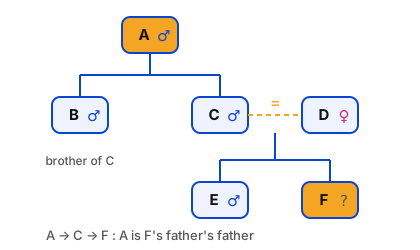
  1. A + B: A is the father of B. B ÷ C: B is the brother of C → A is also the father of C.
  2. C – D: C is the husband of D. D × E: D is the mother of E → C is the father of E.
  3. E ÷ F: E is the brother of F → C and D are also F's parents.
  4. A is the father of C, and C is the father of F → A is F's father's father (paternal grandfather).

Trick: Count generations: A (gen 1) → C (gen 2) → F (gen 3); the link passes through a male (C) each time, so "father's father".

Answer: (B) Father's father

अवधारणा: श्रृंखला को चिह्न-दर-चिह्न डिकोड करें और पीढ़ियाँ बनाएँ।

  1. A + B: A, B का पिता है। B ÷ C: B, C का भाई है → A, C का भी पिता है।
  2. C – D: C, D का पति है। D × E: D, E की माता है → C, E का पिता है।
  3. E ÷ F: E, F का भाई है → C और D, F के भी माता-पिता हैं।
  4. A, C का पिता और C, F का पिता → A, F के पिता का पिता (दादा) है।

ट्रिक: पीढ़ियाँ गिनें: A (पीढ़ी 1) → C (पीढ़ी 2) → F (पीढ़ी 3); हर कड़ी पुरुष (C) से होकर जाती है, इसलिए "पिता का पिता"।

उत्तर: (B) पिता का पिता (Father's father)
RRB NTPC Undergraduate CBT 1General Intelligence and ReasoningBlood relations – codedRRB NTPC Undergraduate CBT 1 2025 · 7 May Shift 2 →
Q8382.
What should come in place of ‘?’ in the given series?
5 ? 10 19 35 60
दी गई शृंखला में '?' के स्थान पर क्या आना चाहिए?
5 ? 10 19 35 60
  1. A9
  2. B8
  3. C7
  4. D6
Show answer

Concept: Look at the differences between consecutive terms.

  1. 19−10=9, 35−19=16, 60−35=25 → differences are 32,42,52.
  2. Going backwards the differences must be 22=4 and 12=1: ? =10−4=6, and 6−5=1 ✓.
  3. Series: 5, 6, 10, 19, 35, 60 with differences 1, 4, 9, 16, 25.

Trick: Differences 9, 16, 25 scream "perfect squares" – fill the earlier ones with 4 and 1.

Answer: (D) 6

अवधारणा: लगातार पदों के बीच के अंतर देखें।

  1. 19−10=9, 35−19=16, 60−35=25 → अंतर 32,42,52 हैं।
  2. पीछे जाने पर अंतर 22=4 और 12=1 होने चाहिए: ? =10−4=6, और 6−5=1 ✓।
  3. श्रृंखला: 5, 6, 10, 19, 35, 60; अंतर 1, 4, 9, 16, 25।

ट्रिक: अंतर 9, 16, 25 दिखें तो "पूर्ण वर्ग" समझें – पिछले अंतर 4 और 1 भरें।

उत्तर: (D) 6

RRB NTPC Undergraduate CBT 1General Intelligence and ReasoningNumber series – square differencesRRB NTPC Undergraduate CBT 1 2025 · 7 May Shift 2 →
Q8383.
Which of the following options should come in place of the ‘?’ in the given series based on the English alphabetical order?
R 45, A 40, J 35, S 30, ?
अंग्रेज़ी वर्णमाला क्रम के आधार पर दी गई शृंखला में '?' के स्थान पर निम्नलिखित में से कौन-सा विकल्प आना चाहिए?
R 45, A 40, J 35, S 30, ?
  1. AB 25
  2. BV 25
  3. CX 25
  4. DT 25
Show answer

Concept: Treat the letters and the numbers as two separate series.

  1. Numbers: 45, 40, 35, 30 → each −5, so next = 25.
  2. Letters: R(18) → A(1): 18+9=27→27−26=1; A(1)+9 = J(10); J(10)+9 = S(19). Rule: +9 (cyclic).
  3. S(19)+9 = 28 → 28−26=2 = B. So the next term is B 25.

Trick: All options end in 25, so only the letter matters; going 9 steps past Z wraps around to the start (S → B).

Answer: (A) B 25

अवधारणा: अक्षरों और संख्याओं को दो अलग श्रृंखलाएँ मानें।

  1. संख्याएँ: 45, 40, 35, 30 → हर बार −5, अतः अगली 25।
  2. अक्षर: R(18) → A(1): 18+9=27→27−26=1; A(1)+9 = J(10); J(10)+9 = S(19)। नियम: +9 (चक्रीय)।
  3. S(19)+9 = 28 → 28−26=2 = B। अतः अगला पद B 25।

ट्रिक: सभी विकल्पों में 25 है, अतः केवल अक्षर देखें; Z के आगे 9 कदम जाने पर शुरू से गिनती चलती है (S → B)।

उत्तर: (A) B 25

RRB NTPC Undergraduate CBT 1General Intelligence and ReasoningLetter–number seriesRRB NTPC Undergraduate CBT 1 2025 · 7 May Shift 2 →
Q8384.
Based on the English alphabetical order, three of the following four are alike in a certain way and thus form a group. Which is the one that does not belong to that group? (Note: The odd man out is not based on the number of consonants/vowels or their position in the letter cluster.)
अंग्रेज़ी वर्णमाला क्रम के आधार पर, निम्नलिखित चार में से तीन एक निश्चित प्रकार से समान हैं और इस प्रकार एक समूह बनाते हैं। वह कौन-सा है जो उस समूह से संबंधित नहीं है? (नोट: असंगत विकल्प व्यंजनों/स्वरों की संख्या या अक्षर-समूह में उनके स्थान पर आधारित नहीं है।)
  1. ATTP
  2. BQPM
  3. CBAX
  4. DSRO
Show answer

Concept: Check the gap between consecutive letters of each cluster.

  1. QPM: Q−1 = P, P−3 = M. BAX: B−1 = A, A−3 = X (cyclic). SRO: S−1 = R, R−3 = O. Pattern: (−1, −3).
  2. TTP: T−0 = T, T−4 = P → pattern (0, −4), different.

Trick: A repeated letter (TT) in a cluster is usually the give-away for the odd one when all others have distinct, descending letters.

Answer: (A) TTP

अवधारणा: हर समूह में लगातार अक्षरों के बीच का अंतर जाँचें।

  1. QPM: Q−1 = P, P−3 = M। BAX: B−1 = A, A−3 = X (चक्रीय)। SRO: S−1 = R, R−3 = O। पैटर्न: (−1, −3)।
  2. TTP: T−0 = T, T−4 = P → पैटर्न (0, −4), अलग।

ट्रिक: जब बाकी समूहों में अलग-अलग घटते अक्षर हों, तो दोहराया अक्षर (TT) वाला समूह प्रायः विषम होता है।

उत्तर: (A) TTP

RRB NTPC Undergraduate CBT 1General Intelligence and ReasoningOdd one out – letter clustersRRB NTPC Undergraduate CBT 1 2025 · 7 May Shift 2 →
Q8385.
QX 18 is related to SS 4 in a certain way. In the same way, EL 10 is related to GG -4. To which of the following is IJ 5 related, following the same logic?
QX 18 एक निश्चित प्रकार से SS 4 से संबंधित है। उसी प्रकार, EL 10, GG -4 से संबंधित है। समान तर्क का अनुसरण करते हुए IJ 5 निम्नलिखित में से किससे संबंधित है?
  1. AHF -8
  2. BTR -5
  3. CKE -9
  4. DKL -11
Show answer

Concept: Work out the rule for each letter and for the number separately from the two given pairs.

  1. QX 18 → SS 4: Q+2 = S, X−5 = S, 18−14=4.
  2. EL 10 → GG −4: E+2 = G, L−5 = G, 10−14=−4 ✓ (same rule).
  3. IJ 5 → I+2 = K, J−5 = E, 5−14=−9 → KE −9.

Trick: First letter +2 fixes the option's first letter as K; two options start with K, so compute the number (−9) to decide.

Answer: (C) KE −9

अवधारणा: दिए गए दो युग्मों से हर अक्षर और संख्या का नियम अलग-अलग निकालें।

  1. QX 18 → SS 4: Q+2 = S, X−5 = S, 18−14=4।
  2. EL 10 → GG −4: E+2 = G, L−5 = G, 10−14=−4 ✓ (वही नियम)।
  3. IJ 5 → I+2 = K, J−5 = E, 5−14=−9 → KE −9।

ट्रिक: पहला अक्षर +2 से K तय होता है; दो विकल्प K से शुरू होते हैं, अतः संख्या (−9) निकालकर निर्णय लें।

उत्तर: (C) KE −9

RRB NTPC Undergraduate CBT 1General Intelligence and ReasoningLetter–number analogyRRB NTPC Undergraduate CBT 1 2025 · 7 May Shift 2 →
Q8386.
Seven people, N, V, C, Y, E, F and G, are sitting in a row, facing north.
Only two people sit to the left of V. F sits fourth from the right end. Only two people sit between N and V. E is the immediate neighbour of G and V. Y does not sit to the right of C.
How many people sit between Y and E?
सात व्यक्ति, N, V, C, Y, E, F और G, उत्तर की ओर मुख करके एक पंक्ति में बैठे हैं।
V के बाईं ओर केवल दो व्यक्ति बैठे हैं। F दाएँ छोर से चौथे स्थान पर बैठा है। N और V के बीच केवल दो व्यक्ति बैठे हैं। E, G और V का निकटतम पड़ोसी है। Y, C के दाईं ओर नहीं बैठा है।
Y और E के बीच कितने व्यक्ति बैठे हैं?
  1. ATwoदो
  2. BFourचार
  3. CFiveपाँच
  4. DThreeतीन
Show answer

Concept: Number the seats 1–7 from the left (all face north) and place people using the definite clues first.

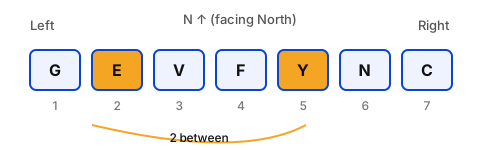
  1. Only two people sit to the left of V → V is at seat 3. F is 4th from the right → seat 4.
  2. Only two people between N and V → N at seat 6 (seat 0 does not exist).
  3. E is the neighbour of both V and G → E at seat 2 (seat 4 is F), so G at seat 1.
  4. Y and C take seats 5 and 7; Y is not to the right of C → Y at 5, C at 7. Row: G E V F Y N C.
  5. Between Y (5) and E (2) sit V and F → two people.

Trick: Clues with "only two to the left" or "4th from the right" give exact seats – always place those first.

Answer: (A) Two

अवधारणा: बाएँ से सीटें 1–7 नंबर करें (सब उत्तर की ओर) और पहले निश्चित सुरागों से लोगों को बैठाएँ।

  1. V के बाएँ केवल दो लोग → V सीट 3 पर। F दाएँ से चौथा → सीट 4।
  2. N और V के बीच केवल दो लोग → N सीट 6 पर (सीट 0 नहीं है)।
  3. E, V और G दोनों का पड़ोसी → E सीट 2 पर (सीट 4 पर F है), अतः G सीट 1 पर।
  4. Y और C सीट 5 और 7 लेंगे; Y, C के दाएँ नहीं → Y 5 पर, C 7 पर। पंक्ति: G E V F Y N C।
  5. Y (5) और E (2) के बीच V और F → दो लोग।

ट्रिक: "बाएँ केवल दो" या "दाएँ से चौथा" जैसे सुराग सटीक सीट देते हैं – इन्हें हमेशा पहले रखें।

उत्तर: (A) दो (Two)

RRB NTPC Undergraduate CBT 1General Intelligence and ReasoningLinear seating arrangementRRB NTPC Undergraduate CBT 1 2025 · 7 May Shift 2 →
Q8387.
Seven boxes, M, N, O, P, Q, R and S, are kept one over the other, but not necessarily in the same order.
No box is kept above O. Only three boxes are kept between O and S. Only one box is kept between Q and M. M is kept immediately above S. Only four boxes are kept between Q and P. R is kept at some place above N.
Which box is kept second below R?
सात बक्से, M, N, O, P, Q, R और S, एक के ऊपर एक रखे गए हैं, परंतु आवश्यक नहीं कि इसी क्रम में हों।
O के ऊपर कोई बक्सा नहीं रखा है। O और S के बीच केवल तीन बक्से रखे हैं। Q और M के बीच केवल एक बक्सा रखा है। M, S के ठीक ऊपर रखा है। Q और P के बीच केवल चार बक्से रखे हैं। R, N के ऊपर किसी स्थान पर रखा है।
R के नीचे दूसरे स्थान पर कौन-सा बक्सा रखा है?
  1. AS
  2. BN
  3. CO
  4. DQ
Show answer

Concept: Number the positions 1 (top) to 7 (bottom) and fill in using the fixed clues first.

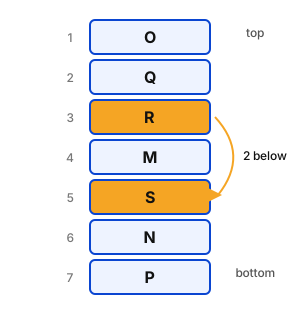
  1. No box above O → O at 1. Three boxes between O and S → S at 5. M immediately above S → M at 4.
  2. One box between Q and M → Q at 2 or 6. Four boxes between Q and P → Q at 2 and P at 7 (Q at 6 would need P at 1, which is O).
  3. Remaining positions 3 and 6 for R and N; R is above N → R at 3, N at 6.
  4. Stack: O, Q, R, M, S, N, P. Second below R (3) is position 5 = S.

Trick: "Immediately above/below" and "no box above" clues lock positions; test the two possibilities of a "between" clue against the other clues.

Answer: (A) S

अवधारणा: स्थान 1 (सबसे ऊपर) से 7 (सबसे नीचे) नंबर करें और पहले निश्चित सुरागों से भरें।

  1. O के ऊपर कोई बॉक्स नहीं → O स्थान 1 पर। O और S के बीच तीन बॉक्स → S 5 पर। M ठीक S के ऊपर → M 4 पर।
  2. Q और M के बीच एक बॉक्स → Q 2 या 6 पर। Q और P के बीच चार बॉक्स → Q 2 और P 7 पर (Q 6 पर हो तो P 1 पर चाहिए, जहाँ O है)।
  3. बचे स्थान 3 और 6 में R और N; R, N के ऊपर → R 3 पर, N 6 पर।
  4. ढेर: O, Q, R, M, S, N, P। R (3) से दूसरा नीचे = स्थान 5 = S।

ट्रिक: "ठीक ऊपर/नीचे" और "ऊपर कोई नहीं" वाले सुराग स्थान पक्का करते हैं; "बीच में" वाले सुराग की दोनों संभावनाएँ बाकी सुरागों से जाँचें।

उत्तर: (A) S

RRB NTPC Undergraduate CBT 1General Intelligence and ReasoningBox arrangement (stacking)RRB NTPC Undergraduate CBT 1 2025 · 7 May Shift 2 →
Q8388.
In a certain code language, ‘DONE’ is coded as ‘5432’ and ‘CODE’ is coded as ‘2835’. What is the code for ‘C’ in the given code language?
एक निश्चित कूट भाषा में, 'DONE' को '5432' और 'CODE' को '2835' के रूप में कूटबद्ध किया जाता है। दी गई कूट भाषा में 'C' का कूट क्या है?
  1. A5
  2. B3
  3. C2
  4. D8
Show answer

Concept: Compare the two coded words: letters common to both must get the digits common to both codes.

  1. DONE → 5432, CODE → 2835. Common letters: D, O, E. Common digits: 5, 3, 2.
  2. The only letter not common in DONE is N → its digit must be the one not common, 4.
  3. Likewise the odd letter in CODE is C → its digit is the one not common in 2835, i.e. 8.

Trick: Strike out the common letters and the common digits; whatever remains on each side pairs up.

Answer: (D) 8

अवधारणा: दोनों कोडित शब्दों की तुलना करें: दोनों में उभयनिष्ठ अक्षरों को दोनों कोड के उभयनिष्ठ अंक मिलेंगे।

  1. DONE → 5432, CODE → 2835। उभयनिष्ठ अक्षर: D, O, E। उभयनिष्ठ अंक: 5, 3, 2।
  2. DONE में अकेला गैर-उभयनिष्ठ अक्षर N → उसका अंक गैर-उभयनिष्ठ 4।
  3. इसी तरह CODE में अलग अक्षर C → उसका अंक 2835 का बचा हुआ अंक 8।

ट्रिक: उभयनिष्ठ अक्षर और उभयनिष्ठ अंक काट दें; दोनों ओर जो बचे, वही जोड़ी है।

उत्तर: (D) 8

RRB NTPC Undergraduate CBT 1General Intelligence and ReasoningCoding–decoding (word to number)RRB NTPC Undergraduate CBT 1 2025 · 7 May Shift 2 →
Q8389.
Read the given statements and conclusions carefully. Assuming that the information given in the statements is true, even if it appears to be at variance with commonly known facts, decide which of the given conclusions logically follow(s) from the statements.
Statements: All vehicles are machines. Some machines are tools.
Conclusions:
(I) Some vehicles are tools. (II) All tools are machines.
दिए गए कथनों और निष्कर्षों को ध्यानपूर्वक पढ़िए। यह मानते हुए कि कथनों में दी गई जानकारी सत्य है, भले ही वह सामान्यतः ज्ञात तथ्यों से भिन्न प्रतीत होती हो, निर्णय कीजिए कि दिए गए निष्कर्षों में से कौन-सा/से कथनों का तार्किक रूप से अनुसरण करता/करते है/हैं।
कथन: सभी वाहन मशीनें हैं। कुछ मशीनें औज़ार हैं।
निष्कर्ष:
(I) कुछ वाहन औज़ार हैं। (II) सभी औज़ार मशीनें हैं।
  1. AOnly conclusion (I) followsकेवल निष्कर्ष (I) अनुसरण करता है
  2. BOnly conclusion (II) followsकेवल निष्कर्ष (II) अनुसरण करता है
  3. CBoth conclusions (I) and (II) followनिष्कर्ष (I) और (II) दोनों अनुसरण करते हैं
  4. DNeither conclusion (I) nor (II) followsन तो निष्कर्ष (I) और न ही (II) अनुसरण करता है
Show answer

Concept: Draw the Venn diagram for the statements and accept a conclusion only if it is true in every possible diagram.

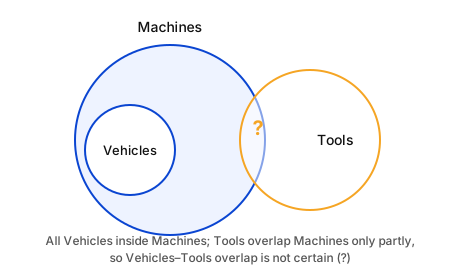
  1. "All vehicles are machines" → Vehicles circle inside Machines. "Some machines are tools" → Tools overlaps Machines partly.
  2. (I) Some vehicles are tools: the Tools overlap may lie entirely outside the Vehicles circle → not definite, does not follow.
  3. (II) All tools are machines: "some" never guarantees "all" → does not follow.

Trick: All + Some (with the middle term "machines" not distributed in either) → no definite conclusion.

Answer: (D) Neither conclusion (I) nor (II) follows

अवधारणा: कथनों का वेन आरेख बनाएँ और निष्कर्ष तभी मानें जब वह हर संभव आरेख में सत्य हो।

  1. "सभी vehicles, machines हैं" → Vehicles वृत्त Machines के अंदर। "कुछ machines, tools हैं" → Tools, Machines को आंशिक रूप से काटता है।
  2. (I) कुछ vehicles, tools हैं: Tools का ओवरलैप पूरी तरह Vehicles के बाहर हो सकता है → निश्चित नहीं, अनुसरण नहीं करता।
  3. (II) सभी tools, machines हैं: "कुछ" से "सभी" कभी सिद्ध नहीं होता → अनुसरण नहीं करता।

ट्रिक: सभी + कुछ (मध्य पद "machines" किसी में वितरित नहीं) → कोई निश्चित निष्कर्ष नहीं।

उत्तर: (D) न निष्कर्ष (I) न (II) अनुसरण करता है

RRB NTPC Undergraduate CBT 1General Intelligence and ReasoningSyllogismRRB NTPC Undergraduate CBT 1 2025 · 7 May Shift 2 →
Q8390.
Based on the alphabetical order, three of the following four are alike in a certain way and thus form a group. Which is the one that does not belong to that group?
(Note: The odd man out is not based on the number of consonants/vowels or their position in the letter cluster.)
वर्णमाला क्रम के आधार पर, निम्नलिखित चार में से तीन एक निश्चित प्रकार से समान हैं और इस प्रकार एक समूह बनाते हैं। वह कौन-सा है जो उस समूह से संबंधित नहीं है?
(नोट: असंगत विकल्प व्यंजनों/स्वरों की संख्या या अक्षर-समूह में उनके स्थान पर आधारित नहीं है।)
  1. APRT
  2. BSUW
  3. CHJL
  4. DCEH
Show answer

Concept: Check the gaps between consecutive letters in each cluster.

  1. PRT: P+2 = R, R+2 = T. SUW: S+2 = U, U+2 = W. HJL: H+2 = J, J+2 = L. Pattern: (+2, +2).
  2. CEH: C+2 = E, but E+3 = H → pattern (+2, +3), different.

Trick: Alternate letters of the alphabet (P R T, S U W, H J L) skip exactly one letter each time; C E H skips two between E and H.

Answer: (D) CEH

अवधारणा: हर समूह में लगातार अक्षरों के बीच का अंतर जाँचें।

  1. PRT: P+2 = R, R+2 = T। SUW: S+2 = U, U+2 = W। HJL: H+2 = J, J+2 = L। पैटर्न: (+2, +2)।
  2. CEH: C+2 = E, पर E+3 = H → पैटर्न (+2, +3), अलग।

ट्रिक: P R T, S U W, H J L में हर बार ठीक एक अक्षर छूटता है; C E H में E और H के बीच दो अक्षर छूटते हैं।

उत्तर: (D) CEH

RRB NTPC Undergraduate CBT 1General Intelligence and ReasoningOdd one out – letter clustersRRB NTPC Undergraduate CBT 1 2025 · 7 May Shift 2 →
Q8391.
In a certain code language, ‘BRAK’ is coded as ‘4938’ and ‘ARCK’ is coded as ‘2849’. What is the code for ‘C’ in the given code language?
एक निश्चित कूट भाषा में, 'BRAK' को '4938' और 'ARCK' को '2849' के रूप में कूटबद्ध किया जाता है। दी गई कूट भाषा में 'C' का कूट क्या है?
  1. A8
  2. B9
  3. C2
  4. D4
Show answer

Concept: Letters common to both words share the digits common to both codes; the leftover letter takes the leftover digit.

  1. BRAK → 4938, ARCK → 2849. Common letters: A, R, K. Common digits: 4, 9, 8.
  2. Leftover in BRAK: B ↔ 3. Leftover in ARCK: C ↔ 2.
  3. So the code for C is 2.

Trick: The digit that appears in only one code belongs to the letter that appears in only that word.

Answer: (C) 2

अवधारणा: दोनों शब्दों के उभयनिष्ठ अक्षरों को दोनों कोड के उभयनिष्ठ अंक मिलते हैं; बचा अक्षर बचा अंक लेता है।

  1. BRAK → 4938, ARCK → 2849। उभयनिष्ठ अक्षर: A, R, K। उभयनिष्ठ अंक: 4, 9, 8।
  2. BRAK में बचा: B ↔ 3। ARCK में बचा: C ↔ 2।
  3. अतः C का कोड 2।

ट्रिक: जो अंक केवल एक कोड में है, वह उसी अक्षर का है जो केवल उसी शब्द में है।

उत्तर: (C) 2

RRB NTPC Undergraduate CBT 1General Intelligence and ReasoningCoding–decoding (word to number)RRB NTPC Undergraduate CBT 1 2025 · 7 May Shift 2 →
Q8392.
Which of the following letter-number clusters will replace the question mark (?) in the given series to make it logically complete?
GDH 66 FCG 61 EBF 56 DAE 51 ?
निम्नलिखित में से कौन-सा अक्षर-संख्या समूह दी गई शृंखला में प्रश्नवाचक चिह्न (?) के स्थान पर आकर उसे तार्किक रूप से पूर्ण करेगा?
GDH 66 FCG 61 EBF 56 DAE 51 ?
  1. ACYC 45
  2. BCAC 46
  3. CCZD 46
  4. DCKT 45
Show answer

Concept: Handle the letters and the number as separate series.

  1. Letters: GDH → FCG → EBF → DAE: every letter moves back by 1. Next: D−1 = C, A−1 = Z (cyclic), E−1 = D → CZD.
  2. Numbers: 66 → 61 → 56 → 51: each −5. Next =51−5=46.
  3. Required term: CZD 46.

Trick: Going one step before A wraps to Z – that is why CZD (not CAC) is correct.

Answer: (C) CZD 46

अवधारणा: अक्षरों और संख्या को अलग-अलग श्रृंखला मानें।

  1. अक्षर: GDH → FCG → EBF → DAE: हर अक्षर 1 पीछे। अगला: D−1 = C, A−1 = Z (चक्रीय), E−1 = D → CZD।
  2. संख्याएँ: 66 → 61 → 56 → 51: हर बार −5। अगली =51−5=46।
  3. अभीष्ट पद: CZD 46।

ट्रिक: A से एक कदम पीछे Z आता है – इसीलिए CZD सही है, CAC नहीं।

उत्तर: (C) CZD 46

RRB NTPC Undergraduate CBT 1General Intelligence and ReasoningLetter–number cluster seriesRRB NTPC Undergraduate CBT 1 2025 · 7 May Shift 2 →
Q8393.
Mr. Yorly starts from Point A and drives 16 km towards South. He then takes a right turn, drives 14 km, turns right and drives 44 km. He then takes a right turn and drives 2 km, turns right drives 15 km. He then takes a left turn drives 21 km. He takes a final right turn, drives 13 km and stops at Point P. How far (shortest distance) and towards which direction should he drive in order to reach Point A again?
(All turns are 90 degrees turns only unless specified.)
श्री योर्ली बिंदु A से चलना शुरू करते हैं और दक्षिण की ओर 16 km गाड़ी चलाते हैं। फिर वे दाएँ मुड़ते हैं, 14 km गाड़ी चलाते हैं, दाएँ मुड़ते हैं और 44 km गाड़ी चलाते हैं। फिर वे दाएँ मुड़ते हैं और 2 km गाड़ी चलाते हैं, दाएँ मुड़कर 15 km गाड़ी चलाते हैं। फिर वे बाएँ मुड़कर 21 km गाड़ी चलाते हैं। अंत में वे दाएँ मुड़ते हैं, 13 km गाड़ी चलाते हैं और बिंदु P पर रुक जाते हैं। बिंदु A पर पुनः पहुँचने के लिए उन्हें कितनी दूर (न्यूनतम दूरी) और किस दिशा में गाड़ी चलानी चाहिए?
(जब तक अन्यथा निर्दिष्ट न हो, सभी मोड़ केवल 90 डिग्री के मोड़ हैं।)
  1. A9 km to the West9 km पश्चिम की ओर
  2. B11 km to the South11 km दक्षिण की ओर
  3. C10 km to the East10 km पूर्व की ओर
  4. D16 km to the North16 km उत्तर की ओर
Show answer

Concept: Track the position on a grid: take A as origin, East = +x, North = +y. A right turn rotates the heading clockwise (S → W → N → E → S).

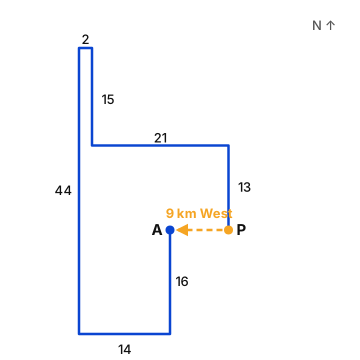
  1. South 16: (0, −16). Right → West 14: (−14, −16). Right → North 44: (−14, 28).
  2. Right → East 2: (−12, 28). Right → South 15: (−12, 13). Left → East 21: (9, 13). Right → South 13: (9, 0) = P.
  3. P is at (9, 0) and A at (0, 0): P lies 9 km east of A, so he must drive 9 km towards the West.

Trick: Add vertical moves (−16 + 44 − 15 − 13 = 0) and horizontal moves (−14 + 2 + 21 = +9) separately – no drawing to scale needed.

Answer: (A) 9 km to the West

अवधारणा: ग्रिड पर स्थिति रखें: A मूल बिंदु, पूर्व = +x, उत्तर = +y। दायाँ मोड़ दिशा को घड़ी की दिशा में घुमाता है (S → W → N → E → S)।

  1. दक्षिण 16: (0, −16)। दायाँ → पश्चिम 14: (−14, −16)। दायाँ → उत्तर 44: (−14, 28)।
  2. दायाँ → पूर्व 2: (−12, 28)। दायाँ → दक्षिण 15: (−12, 13)। बायाँ → पूर्व 21: (9, 13)। दायाँ → दक्षिण 13: (9, 0) = P।
  3. P (9, 0) पर और A (0, 0) पर: P, A से 9 km पूर्व में है, अतः उसे 9 km पश्चिम की ओर चलना होगा।

ट्रिक: ऊर्ध्व चालें (−16 + 44 − 15 − 13 = 0) और क्षैतिज चालें (−14 + 2 + 21 = +9) अलग-अलग जोड़ें – पैमाने पर चित्र ज़रूरी नहीं।

उत्तर: (A) 9 km पश्चिम की ओर

RRB NTPC Undergraduate CBT 1General Intelligence and ReasoningDirection and distanceRRB NTPC Undergraduate CBT 1 2025 · 7 May Shift 2 →
Q8394.
Each of the digits in the number 1358274 is arranged in the ascending order from left to right. The position(s) of how many digits will remain unchanged as compared to that in the original number?
संख्या 1358274 के प्रत्येक अंक को बाएँ से दाएँ आरोही क्रम में व्यवस्थित किया जाता है। मूल संख्या की तुलना में कितने अंकों का स्थान अपरिवर्तित रहेगा?
  1. AThreeतीन
  2. BOneएक
  3. CZeroशून्य
  4. DTwoदो
Show answer

Concept: Write the original and the sorted number one below the other and compare position by position.

  1. Original: 1 3 5 8 2 7 4. Ascending: 1 2 3 4 5 7 8.
  2. Position 1: 1 = 1 ✓; position 6: 7 = 7 ✓; all other positions change (3→2, 5→3, 8→4, 2→5, 4→8).
  3. Unchanged positions = 2.

Trick: Stack the two numbers vertically and tick matching columns – quicker than reasoning about each digit.

Answer: (D) Two

अवधारणा: मूल और छाँटी हुई संख्या एक के नीचे एक लिखकर स्थान-दर-स्थान मिलाएँ।

  1. मूल: 1 3 5 8 2 7 4। आरोही: 1 2 3 4 5 7 8।
  2. स्थान 1: 1 = 1 ✓; स्थान 6: 7 = 7 ✓; बाकी सभी स्थान बदलते हैं (3→2, 5→3, 8→4, 2→5, 4→8)।
  3. अपरिवर्तित स्थान = 2।

ट्रिक: दोनों संख्याएँ ऊपर-नीचे लिखकर मिलते कॉलम पर टिक लगाएँ – हर अंक पर सोचने से तेज़।

उत्तर: (D) दो (Two)

RRB NTPC Undergraduate CBT 1General Intelligence and ReasoningDigit arrangement – unchanged positionsRRB NTPC Undergraduate CBT 1 2025 · 7 May Shift 2 →
Q8395.
A, B, D, J, O, T and Z are sitting around a circular table facing the center. Only two people sit between O and D when counted from the left of D. J sits third to the left of B. A sits to the immediate right of B. A sits second to the left of O. Z is an immediate neighbor of J. How many people sit between O and Z when counted from the right of O?
A, B, D, J, O, T और Z एक वृत्ताकार मेज़ के चारों ओर केंद्र की ओर मुख करके बैठे हैं। D के बाईं ओर से गिनने पर O और D के बीच केवल दो व्यक्ति बैठे हैं। J, B के बाईं ओर तीसरे स्थान पर बैठा है। A, B के ठीक दाईं ओर बैठा है। A, O के बाईं ओर दूसरे स्थान पर बैठा है। Z, J का निकटतम पड़ोसी है। O के दाईं ओर से गिनने पर O और Z के बीच कितने व्यक्ति बैठे हैं?
  1. ATwoदो
  2. BOneएक
  3. CFourचार
  4. DThreeतीन
Show answer

Concept: For people facing the centre, "left" means clockwise and "right" means anticlockwise. Number the seats 1–7 clockwise.

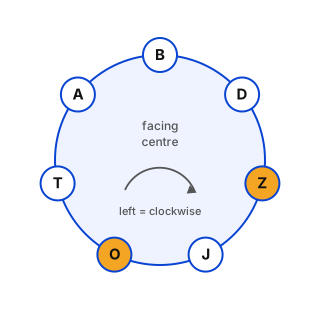
  1. Put B at seat 1. A is immediately right of B → A at seat 7 (anticlockwise). J is third to the left of B → J at seat 4.
  2. A is second to the left of O → O is two seats anticlockwise of A → O at seat 5. Z is a neighbour of J (seats 3 or 5) → Z at seat 3.
  3. Two people between O and D counted from the left of D → D at seat 2 (Z, J between). T takes seat 6. Clockwise: B, D, Z, J, O, T, A.
  4. From the right of O (anticlockwise): J, then Z → only one person (J) between O and Z.

Trick: Fix one person first, mark left = clockwise once on the paper, and never re-decide the direction mid-way.

Answer: (B) One

अवधारणा: केंद्र की ओर मुख होने पर "बायाँ" = घड़ी की दिशा (clockwise) और "दायाँ" = घड़ी की विपरीत दिशा। सीटें 1–7 घड़ी की दिशा में नंबर करें।

  1. B को सीट 1 पर रखें। A, B के ठीक दाएँ → A सीट 7 पर (anticlockwise)। J, B के बाएँ तीसरा → J सीट 4 पर।
  2. A, O के बाएँ दूसरा → O, A से दो सीट anticlockwise → O सीट 5 पर। Z, J का पड़ोसी (सीट 3 या 5) → Z सीट 3 पर।
  3. D के बाएँ से गिनने पर O और D के बीच दो लोग → D सीट 2 पर (बीच में Z, J)। T सीट 6 पर। घड़ी की दिशा में: B, D, Z, J, O, T, A।
  4. O के दाएँ से (anticlockwise): J, फिर Z → O और Z के बीच केवल एक व्यक्ति (J)।

ट्रिक: पहले एक व्यक्ति को स्थिर करें, कागज़ पर एक बार "बायाँ = clockwise" लिख लें और बीच में दिशा दोबारा न सोचें।

उत्तर: (B) एक (One)

RRB NTPC Undergraduate CBT 1General Intelligence and ReasoningCircular seating arrangementRRB NTPC Undergraduate CBT 1 2025 · 7 May Shift 2 →
Q8396.
By which Amendment Act were the words ‘socialist’, ‘secular’, and ‘integrity’ added to the Preamble of the Indian Constitution?
किस संशोधन अधिनियम द्वारा भारतीय संविधान की प्रस्तावना में ‘समाजवादी’, ‘पंथनिरपेक्ष’ और ‘अखंडता’ शब्द जोड़े गए?
  1. A42nd Amendment Act42वाँ संशोधन अधिनियम
  2. B52nd Amendment Act52वाँ संशोधन अधिनियम
  3. C32nd Amendment Act32वाँ संशोधन अधिनियम
  4. D62nd Amendment Act62वाँ संशोधन अधिनियम
Show answer

Concept: The Preamble has been amended only once.

  1. The 42nd Constitutional Amendment Act, 1976 (Indira Gandhi government, during the Emergency) inserted "Socialist", "Secular" and "Integrity" into the Preamble.
  2. The 52nd Amendment (1985) is the Anti-Defection Law – a common distractor.

Yaad rakhein: 42nd = "Mini Constitution" = S-S-I (Socialist, Secular, Integrity).

Answer: (A) 42nd Amendment Act

अवधारणा: प्रस्तावना में केवल एक बार संशोधन हुआ है।

  1. 42वें संविधान संशोधन अधिनियम, 1976 (इंदिरा गांधी सरकार, आपातकाल के दौरान) ने "समाजवादी", "पंथनिरपेक्ष" और "अखंडता" शब्द प्रस्तावना में जोड़े।
  2. 52वाँ संशोधन (1985) दल-बदल विरोधी कानून है – भ्रमित करने वाला विकल्प।

याद रखें: 42वाँ = "लघु संविधान" = S-S-I (Socialist, Secular, Integrity)।

उत्तर: (A) 42वाँ संशोधन अधिनियम

RRB NTPC Undergraduate CBT 1General AwarenessIndian Polity – PreambleRRB NTPC Undergraduate CBT 1 2025 · 7 May Shift 1 →
Q8397.
Who presided over the National Level Conclave of Ministers of States/UTs for Minority Welfare held on 13 September 2025, at Vanijya Bhawan, New Delhi?
13 सितंबर 2025 को वाणिज्य भवन, नई दिल्ली में आयोजित अल्पसंख्यक कल्याण हेतु राज्यों/केंद्र शासित प्रदेशों के मंत्रियों के राष्ट्रीय स्तर के सम्मेलन की अध्यक्षता किसने की?
  1. AGeorge Kurianजॉर्ज कुरियन
  2. BMd. Zama Khanमो. ज़मा खान
  3. CKiren Rijijuकिरेन रिजिजू
  4. DOm Prakash Rajbharओम प्रकाश राजभर
Show answer

Concept: Conclaves of state ministers for a sector are chaired by the Union Cabinet Minister of that ministry.

  1. Kiren Rijiju, Union Minister of Minority Affairs (and Parliamentary Affairs), presided over the National Level Conclave of Ministers of States/UTs for Minority Welfare at Vanijya Bhawan, New Delhi on 13 September 2025.
  2. George Kurian is the Minister of State in the same ministry; Om Prakash Rajbhar and Md. Zama Khan are state ministers (UP and Bihar).

Yaad rakhein: Minority Affairs Ministry (2024–) = Kiren Rijiju.

Answer: (C) Kiren Rijiju

अवधारणा: किसी क्षेत्र के राज्य मंत्रियों के सम्मेलन की अध्यक्षता उस मंत्रालय के केंद्रीय कैबिनेट मंत्री करते हैं।

  1. केंद्रीय अल्पसंख्यक कार्य (और संसदीय कार्य) मंत्री किरेन रिजिजू ने 13 सितंबर 2025 को वाणिज्य भवन, नई दिल्ली में राज्यों/UT के अल्पसंख्यक कल्याण मंत्रियों के राष्ट्रीय सम्मेलन की अध्यक्षता की।
  2. जॉर्ज कुरियन इसी मंत्रालय में राज्य मंत्री हैं; ओम प्रकाश राजभर और मो. ज़मा खान राज्य-स्तरीय मंत्री (UP व बिहार) हैं।

याद रखें: अल्पसंख्यक कार्य मंत्रालय (2024–) = किरेन रिजिजू।

उत्तर: (C) किरेन रिजिजू

RRB NTPC Undergraduate CBT 1General AwarenessCurrent Affairs – ConclavesRRB NTPC Undergraduate CBT 1 2025 · 7 May Shift 1 →
Q8398.
Where does the Indian Prime Minister hoist the national flag on the occasion of Independence Day?
स्वतंत्रता दिवस के अवसर पर भारत के प्रधानमंत्री राष्ट्रीय ध्वज कहाँ फहराते हैं?
  1. AQutb Minarक़ुतुब मीनार
  2. BRed Fortलाल किला
  3. CJantar Mantarजंतर मंतर
  4. DIndia Gateइंडिया गेट
Show answer

Concept: Independence Day (15 August) and Republic Day (26 January) have different venues.

  1. On Independence Day the Prime Minister hoists the flag at the Red Fort (Lal Qila), Delhi, and addresses the nation – a tradition since 1947.
  2. On Republic Day the President unfurls the flag at Kartavya Path.

Yaad rakhein: 15 Aug → PM → Red Fort; 26 Jan → President → Kartavya Path.

Answer: (B) Red Fort

अवधारणा: स्वतंत्रता दिवस (15 अगस्त) और गणतंत्र दिवस (26 जनवरी) के स्थल अलग हैं।

  1. स्वतंत्रता दिवस पर प्रधानमंत्री लाल किले, दिल्ली पर झंडा फहराते हैं और राष्ट्र को संबोधित करते हैं – 1947 से चली परंपरा।
  2. गणतंत्र दिवस पर राष्ट्रपति कर्तव्य पथ पर ध्वज फहराते हैं।

याद रखें: 15 अगस्त → PM → लाल किला; 26 जनवरी → राष्ट्रपति → कर्तव्य पथ।

उत्तर: (B) लाल किला

RRB NTPC Undergraduate CBT 1General AwarenessNational DaysRRB NTPC Undergraduate CBT 1 2025 · 7 May Shift 1 →
Q8399.
In which state of India did Pattachitra paintings originate?
पट्टचित्र चित्रकला की उत्पत्ति भारत के किस राज्य में हुई?
  1. AOdishaओडिशा
  2. BBiharबिहार
  3. CPunjabपंजाब
  4. DRajasthanराजस्थान
Show answer

Concept: Pattachitra = "patta" (cloth) + "chitra" (picture).

  1. Pattachitra is a traditional cloth-scroll painting of Odisha, centred at Raghurajpur near Puri, with themes of Lord Jagannath and Krishna.
  2. A related style exists in West Bengal, but its origin is linked to Odisha (Bihar → Madhubani, Rajasthan → Phad/Miniature).

Yaad rakhein: Pattachitra – Puri – Odisha (all with P/O).

Answer: (A) Odisha

अवधारणा: पट्टचित्र = "पट्ट" (वस्त्र) + "चित्र"।

  1. पट्टचित्र ओडिशा की पारंपरिक वस्त्र-पट चित्रकला है, जिसका केंद्र पुरी के पास रघुराजपुर है; विषय भगवान जगन्नाथ और कृष्ण।
  2. पश्चिम बंगाल में भी समान शैली है, पर उद्गम ओडिशा से जुड़ा है (बिहार → मधुबनी, राजस्थान → फड़/लघुचित्र)।

याद रखें: पट्टचित्र – पुरी – ओडिशा।

उत्तर: (A) ओडिशा

RRB NTPC Undergraduate CBT 1General AwarenessArt and Culture – PaintingsRRB NTPC Undergraduate CBT 1 2025 · 7 May Shift 1 →
Q8400.
Which factor most directly contributed to the emergence of the Sanyasi–Fakir rebellion in Bengal?
बंगाल में संन्यासी–फ़कीर विद्रोह के उभरने में किस कारक का सबसे प्रत्यक्ष योगदान था?
  1. AIncreased protection from British officials improved rural living conditions.ब्रिटिश अधिकारियों से बढ़े हुए संरक्षण ने ग्रामीण जीवन-स्थितियों में सुधार किया।
  2. BExpansion of irrigated farming reduced dependence on religious leaders.सिंचित खेती के विस्तार ने धार्मिक नेताओं पर निर्भरता कम कर दी।
  3. CStable land rights allowed peasants to negotiate with revenue contractors.स्थिर भूमि अधिकारों ने किसानों को राजस्व ठेकेदारों से मोल-भाव करने की सुविधा दी।
  4. DForced taxation and famine pushed dispossessed peasants into rebel groups.जबरन कराधान और अकाल ने बेदखल किसानों को विद्रोही समूहों में शामिल होने पर विवश कर दिया।
Show answer

Concept: The Sanyasi–Fakir rebellion (c. 1763–1800) in Bengal followed the famine of 1770 and the Company's harsh revenue policies.

  1. Heavy taxation, famine and restrictions on pilgrimage/alms pushed ruined peasants, dispossessed zamindars and disbanded soldiers to join sanyasi and fakir bands (leaders: Majnu Shah, Bhawani Pathak).
  2. Options A–C describe stability and better conditions – the opposite of what caused the revolt. Bankim Chandra's Anandamath is based on it.

Yaad rakhein: Famine of 1770 + Company revenue oppression → Sanyasi–Fakir revolt.

Answer: (D) Forced taxation and famine pushed dispossessed peasants into rebel groups.

अवधारणा: बंगाल का संन्यासी–फकीर विद्रोह (लगभग 1763–1800) 1770 के अकाल और कंपनी की कठोर राजस्व नीतियों के बाद हुआ।

  1. भारी कर, अकाल और तीर्थ/भिक्षा पर रोक ने बर्बाद किसानों, बेदखल ज़मींदारों और बर्खास्त सैनिकों को संन्यासी-फकीर दलों में शामिल कर दिया (नेता: मजनू शाह, भवानी पाठक)।
  2. विकल्प A–C स्थिरता और बेहतर स्थिति बताते हैं – विद्रोह के कारण के ठीक विपरीत। बंकिम चंद्र का आनंदमठ इसी पर आधारित है।

याद रखें: 1770 का अकाल + कंपनी का राजस्व दमन → संन्यासी–फकीर विद्रोह।

उत्तर: (D) जबरन कराधान और अकाल ने बेदखल किसानों को विद्रोही समूहों में धकेला।

RRB NTPC Undergraduate CBT 1General AwarenessModern History – Peasant RevoltsRRB NTPC Undergraduate CBT 1 2025 · 7 May Shift 1 →