Question bank

Q&A: practice questions with answers

Search questions on any topic. Filter by exam category, exam, subject and topic, try the question, then open the answer and explanation.

Courses – airGurukul

8,495 questions found.

Q8461.
Simplify: {1233÷122}÷(37×149+311)+28÷3125 of 258
सरल कीजिए: {1233÷122}÷(37×149+311)+28÷3125 of 258
  1. A431
  2. B536
  3. C738
  4. D524
Show answer

Concept: Solve brackets first; "of" means multiplication and is done before ÷.

  1. 1233÷122=1233×212=233.
  2. 37×149+311=23+311=3133; so 233÷3133=231.
  3. 3125 of 258=318; 28÷318=231.
  4. Total =231+231=431.

Trick: Both halves reduce to 231 – the 33s and 8s cancel neatly.

Answer: (A) 431

अवधारणा: पहले कोष्ठक हल करें; "of" का अर्थ गुणा है और यह ÷ से पहले होता है।

  1. 1233÷122=1233×212=233।
  2. 37×149+311=23+311=3133; अतः 233÷3133=231।
  3. 3125 of 258=318; 28÷318=231।
  4. कुल =231+231=431।

ट्रिक: दोनों भाग 231 पर आते हैं – 33 और 8 आपस में कट जाते हैं।

उत्तर: (A) 431

RRB NTPC Undergraduate CBT 1MathematicsSimplification – BODMASRRB NTPC Undergraduate CBT 1 2025 · 7 May Shift 1 →
Q8462.
Sunil purchased a microwave oven for ₹7,000. He spent ₹400 on its transportation and ₹600 on repairs. He sold the oven for ₹9,800. What is his percentage profit on total investment?
सुनील ने ₹7,000 में एक माइक्रोवेव ओवन खरीदा। उसने इसके परिवहन पर ₹400 और मरम्मत पर ₹600 खर्च किए। उसने ओवन को ₹9,800 में बेच दिया। कुल निवेश पर उसका प्रतिशत लाभ क्या है?
  1. A22.5%
  2. B23.5%
  3. C20.5%
  4. D21.5%
Show answer

Concept: Total cost includes overheads (transport, repair).

  1. Total CP =7000+400+600=8000.
  2. Profit =9800−8000=1800.
  3. Profit% =18008000×100=22.5%.

Trick: 18008000=940=22.5%.

Answer: (A) 22.5%

अवधारणा: कुल लागत में ऊपरी खर्च (परिवहन, मरम्मत) शामिल होते हैं।

  1. कुल CP =7000+400+600=8000।
  2. लाभ =9800−8000=1800।
  3. लाभ% =18008000×100=22.5%।

ट्रिक: 18008000=940=22.5%।

उत्तर: (A) 22.5%

RRB NTPC Undergraduate CBT 1MathematicsProfit and LossRRB NTPC Undergraduate CBT 1 2025 · 7 May Shift 1 →
Q8463.
A and B invest in a business in the ratio 5 : 7. After 4 months, C joins the business with an investment equal to the amount invested by A. At the end of one year, the total profit is ₹92,000. Find the sum (in ₹) of the shares of partners B and C.
A और B एक व्यवसाय में 5 : 7 के अनुपात में निवेश करते हैं। 4 महीने बाद, C, A द्वारा निवेशित राशि के बराबर निवेश के साथ व्यवसाय में शामिल हो जाता है। एक वर्ष के अंत में कुल लाभ ₹92,000 है। साझेदार B और C के हिस्सों का योग (₹ में) ज्ञात कीजिए।
  1. A₹66,800
  2. B₹49,600
  3. C₹62,000
  4. D₹64,400
Show answer

Concept: Profit is shared in the ratio of (investment × time).

  1. A : B : C =5×12:7×12:5×8=60:84:40=15:21:10.
  2. Total parts =46; B + C =31 parts.
  3. Share =3146×92000=31×2000=62000.

Trick: 92000÷46=2000 exactly – a clean sign the ratio is right.

Answer: (C) ₹62,000

अवधारणा: लाभ (निवेश × समय) के अनुपात में बँटता है।

  1. A : B : C =5×12:7×12:5×8=60:84:40=15:21:10।
  2. कुल भाग =46; B + C =31 भाग।
  3. हिस्सा =3146×92000=31×2000=62000।

ट्रिक: 92000÷46=2000 पूरा-पूरा – अनुपात सही होने का संकेत।

उत्तर: (C) ₹62,000

RRB NTPC Undergraduate CBT 1MathematicsPartnershipRRB NTPC Undergraduate CBT 1 2025 · 7 May Shift 1 →
Q8464.
Which of the following numbers is completely divisible by 6?
निम्नलिखित में से कौन-सी संख्या 6 से पूर्णतः विभाज्य है?
  1. A5,47,821
  2. B7,53,216
  3. C8,91,452
  4. D6,42,538
Show answer

Concept: Divisible by 6 ⟺ even (by 2) and digit sum divisible by 3.

  1. Only 7,53,216 and 8,91,452 are even.
  2. 7+5+3+2+1+6=24 ✓ (multiple of 3); 8+9+1+4+5+2=29 ✗.

Trick: Eliminate odd numbers first, then check digit sums only for the rest.

Answer: (B) 7,53,216

अवधारणा: 6 से विभाज्य ⟺ सम (2 से) और अंकों का योग 3 से विभाज्य।

  1. केवल 7,53,216 और 8,91,452 सम हैं।
  2. 7+5+3+2+1+6=24 ✓ (3 का गुणज); 8+9+1+4+5+2=29 ✗।

ट्रिक: पहले विषम संख्याएँ हटाएँ, फिर शेष के अंक-योग देखें।

उत्तर: (B) 7,53,216

RRB NTPC Undergraduate CBT 1MathematicsDivisibilityRRB NTPC Undergraduate CBT 1 2025 · 7 May Shift 1 →
Q8465.
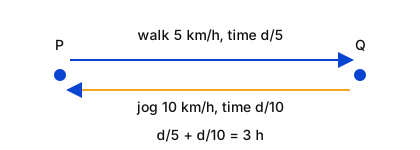
A person walks from point P to Q at 5 km/hr and returns from Q to P along the same route jogging at 10 km/hr. If the total time taken is 3 hours, what is the distance between P and Q?
एक व्यक्ति बिंदु P से Q तक 5 km/hr की चाल से पैदल जाता है और उसी मार्ग से Q से P तक 10 km/hr की चाल से जॉगिंग करते हुए लौटता है। यदि कुल लिया गया समय 3 घंटे है, तो P और Q के बीच की दूरी क्या है?
  1. A10 km
  2. B5 km
  3. C15 km
  4. D20 km
Show answer

Concept: Same distance both ways; total time =d5+d10.

  1. d5+d10=3d10=3.
  2. d=10 km.

Trick: Average speed =2×5×1015=203 km/h; round trip =203×3=20 km ⟹ one way 10 km.

Answer: (A) 10 km

अवधारणा: दोनों ओर समान दूरी; कुल समय =d5+d10।

  1. d5+d10=3d10=3।
  2. d=10 km।

ट्रिक: औसत चाल =2×5×1015=203 km/h; आना-जाना =203×3=20 km ⟹ एक ओर 10 km।

उत्तर: (A) 10 km

RRB NTPC Undergraduate CBT 1MathematicsSpeed, Time and DistanceRRB NTPC Undergraduate CBT 1 2025 · 7 May Shift 1 →
Q8466.
Refer to the following series and answer the question. (Counting to be done from left to right only.) (all numbers are single digit numbers only.)
(Left) 9 2 3 1 4 5 6 8 5 4 3 2 1 9 3 4 5 6 7 8 1 2 9 8 3 4 5 2 6 8 2 (Right)
How many such even digits are there, each of which is immediately preceded by a perfect square and immediately followed by an odd digit? (NOTE: 1 is also a perfect square.)
निम्नलिखित श्रृंखला को देखिए और प्रश्न का उत्तर दीजिए। (गिनती केवल बाएँ से दाएँ की ओर की जानी है।) (सभी संख्याएँ केवल एक अंक की संख्याएँ हैं।)
(बायाँ) 9 2 3 1 4 5 6 8 5 4 3 2 1 9 3 4 5 6 7 8 1 2 9 8 3 4 5 2 6 8 2 (दायाँ)
ऐसे कितने सम अंक हैं, जिनमें से प्रत्येक के ठीक पहले एक पूर्ण वर्ग और ठीक बाद एक विषम अंक है? (नोट: 1 भी एक पूर्ण वर्ग है।)
  1. AThreeतीन
  2. BMore than threeतीन से अधिक
  3. CTwoदो
  4. DOneएक
Show answer

Concept: Check every even digit: the digit just before it must be a perfect square (1, 4, 9) and the digit just after it must be odd.

  1. Series: 9 2 3 1 4 5 6 8 5 4 3 2 1 9 3 4 5 6 7 8 1 2 9 8 3 4 5 2 6 8 2.
  2. 9–2–3 ✓, 1–4–5 ✓, 1–2–9 ✓, 9–8–3 ✓.
  3. Other even digits are preceded by 5, 6, 3, 7, 2 or 8 (not squares), so they fail.
  4. Total = 4, i.e. more than three.

Trick: Scan only the evens and look one step left for 1, 4 or 9 – this cuts the checking to a few digits.

Answer: (B) More than three

अवधारणा: हर सम अंक जाँचें: उसके ठीक पहले पूर्ण वर्ग (1, 4, 9) और ठीक बाद विषम अंक होना चाहिए।

  1. श्रृंखला: 9 2 3 1 4 5 6 8 5 4 3 2 1 9 3 4 5 6 7 8 1 2 9 8 3 4 5 2 6 8 2।
  2. 9–2–3 ✓, 1–4–5 ✓, 1–2–9 ✓, 9–8–3 ✓।
  3. बाकी सम अंकों से पहले 5, 6, 3, 7, 2 या 8 हैं (वर्ग नहीं), अतः वे नहीं गिने जाते।
  4. कुल = 4, यानी तीन से अधिक।

ट्रिक: केवल सम अंकों को देखें और एक कदम बाएँ 1, 4 या 9 खोजें – जाँच कुछ ही अंकों तक सिमट जाती है।

उत्तर: (B) More than three (तीन से अधिक)

RRB NTPC Undergraduate CBT 1General Intelligence and ReasoningNumber Series CountingRRB NTPC Undergraduate CBT 1 2025 · 7 May Shift 1 →
Q8467.
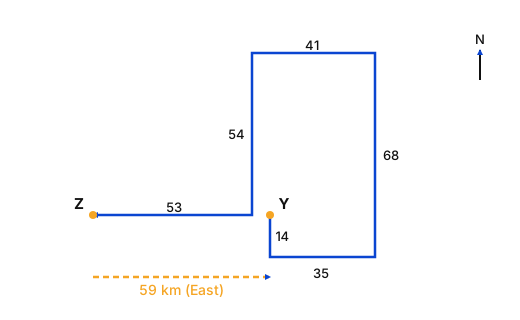
Amit starts from Point Y and drives 14 km towards South. He then turns left and drives 35 km, takes a left and drives 68 km. He then takes a left turn and drives 41 km. He takes a left turn, drives 54 km, turns right and drives 53 km to stop at Point Z. How far (shortest distance) and towards which direction should he drive in order to reach Point Y again? (All turns are 90° turns only unless specified.)
अमित बिंदु Y से चलना शुरू करता है और दक्षिण की ओर 14 km गाड़ी चलाता है। फिर वह बाएँ मुड़ता है और 35 km गाड़ी चलाता है, फिर बाएँ मुड़कर 68 km गाड़ी चलाता है। इसके बाद वह बाएँ मुड़ता है और 41 km गाड़ी चलाता है। वह बाएँ मुड़ता है, 54 km गाड़ी चलाता है, दाएँ मुड़ता है और 53 km गाड़ी चलाकर बिंदु Z पर रुक जाता है। बिंदु Y पर पुनः पहुँचने के लिए उसे कितनी दूर (न्यूनतम दूरी) और किस दिशा में गाड़ी चलानी चाहिए? (जब तक अन्यथा न कहा जाए, सभी मोड़ केवल 90° के हैं।)
  1. A57 km towards east57 km पूर्व की ओर
  2. B56 km towards west56 km पश्चिम की ओर
  3. C61 km towards west61 km पश्चिम की ओर
  4. D59 km towards east59 km पूर्व की ओर
Show answer

Concept: Plot the path on coordinates (East = +x, North = +y) and read the final position relative to the start.

  1. Y(0,0) → South 14 → (0,−14) → left (East) 35 → (35,−14) → left (North) 68 → (35,54).
  2. Left (West) 41 → (−6,54) → left (South) 54 → (−6,0) → right (West) 53 → Z(−59,0).
  3. Z is 59 km due west of Y, so Amit must drive 59 km towards East to reach Y.

Trick: Net N–S: −14+68−54=0; net E–W: +35−41−53=−59. Zero in one axis means the answer is a straight line along the other.

Answer: (D) 59 km towards east

अवधारणा: पथ को निर्देशांकों पर बनाएँ (पूर्व = +x, उत्तर = +y) और अंतिम स्थिति को प्रारंभ के सापेक्ष पढ़ें।

  1. Y(0,0) → दक्षिण 14 → (0,−14) → बाएँ (पूर्व) 35 → (35,−14) → बाएँ (उत्तर) 68 → (35,54)।
  2. बाएँ (पश्चिम) 41 → (−6,54) → बाएँ (दक्षिण) 54 → (−6,0) → दाएँ (पश्चिम) 53 → Z(−59,0)।
  3. Z, Y से ठीक 59 km पश्चिम में है, अतः Y पहुँचने के लिए अमित को 59 km पूर्व की ओर चलना होगा।

ट्रिक: शुद्ध उ–द: −14+68−54=0; शुद्ध पू–प: +35−41−53=−59। एक अक्ष में शून्य हो तो उत्तर दूसरी अक्ष पर सीधी रेखा है।

उत्तर: (D) 59 km पूर्व की ओर

RRB NTPC Undergraduate CBT 1General Intelligence and ReasoningDirection and DistanceRRB NTPC Undergraduate CBT 1 2025 · 7 May Shift 1 →
Q8468.
What should come in place of ? in the given series based on the English alphabetical order?
SQU TRV USW VTX ?
अंग्रेज़ी वर्णमाला क्रम के आधार पर दी गई श्रृंखला में ? के स्थान पर क्या आना चाहिए?
SQU TRV USW VTX ?
  1. AWVX
  2. BWUY
  3. CWXZ
  4. DWTX
Show answer

Concept: Compare the same position of consecutive clusters to find the shift.

  1. 1st letters: S → T → U → V → W (+1 each).
  2. 2nd letters: Q → R → S → T → U (+1 each).
  3. 3rd letters: U → V → W → X → Y (+1 each).
  4. Next cluster = WUY.

Trick: Each cluster is simply the previous one with every letter moved one step ahead.

Answer: (B) WUY

अवधारणा: क्रमागत समूहों के समान स्थान के अक्षरों की तुलना कर पैटर्न पहचानें।

  1. पहले अक्षर: S → T → U → V → W (हर बार +1)।
  2. दूसरे अक्षर: Q → R → S → T → U (+1)।
  3. तीसरे अक्षर: U → V → W → X → Y (+1)।
  4. अगला समूह = WUY।

ट्रिक: हर समूह पिछले समूह का हर अक्षर एक कदम आगे बढ़ाने से बनता है।

उत्तर: (B) WUY

RRB NTPC Undergraduate CBT 1General Intelligence and ReasoningLetter SeriesRRB NTPC Undergraduate CBT 1 2025 · 7 May Shift 1 →
Q8469.
If 2 is added to each even digit and 2 is subtracted from each odd digit in the number 5973642, then what will be the sum of all the even digits in the new number thus formed?
यदि संख्या 5973642 के प्रत्येक सम अंक में 2 जोड़ा जाए और प्रत्येक विषम अंक में से 2 घटाया जाए, तो इस प्रकार बनी नई संख्या के सभी सम अंकों का योग क्या होगा?
  1. A24
  2. B20
  3. C16
  4. D18
Show answer

Concept: Apply the rule to each digit separately, then pick the even digits of the new number.

  1. 5973642: odd digits −2 → 5→3, 9→7, 7→5, 3→1; even digits +2 → 6→8, 4→6, 2→4.
  2. New number = 3751864.
  3. Even digits: 8, 6, 4 → sum =8+6+4=18.

Trick: Odd −2 stays odd and even +2 stays even, so only the original even digits (6, 4, 2) matter: (6+4+2)+2×3=18.

Answer: (D) 18

अवधारणा: नियम हर अंक पर अलग-अलग लगाएँ, फिर नई संख्या के सम अंक चुनें।

  1. 5973642: विषम अंक −2 → 5→3, 9→7, 7→5, 3→1; सम अंक +2 → 6→8, 4→6, 2→4।
  2. नई संख्या = 3751864।
  3. सम अंक: 8, 6, 4 → योग =8+6+4=18।

ट्रिक: विषम −2 विषम ही रहता है और सम +2 सम ही, अतः केवल मूल सम अंक (6, 4, 2) देखें: (6+4+2)+2×3=18।

उत्तर: (D) 18

RRB NTPC Undergraduate CBT 1General Intelligence and ReasoningDigit OperationsRRB NTPC Undergraduate CBT 1 2025 · 7 May Shift 1 →
Q8470.
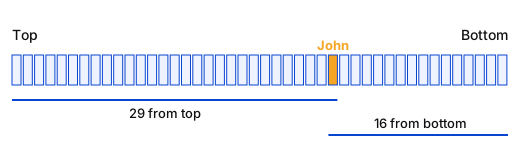
John ranked 16th from the bottom and 29th from the top in his class. How many students are there in his class?
जॉन का अपनी कक्षा में नीचे से 16वाँ और ऊपर से 29वाँ स्थान है। उसकी कक्षा में कितने विद्यार्थी हैं?
  1. A43
  2. B41
  3. C44
  4. D42
Show answer

Concept: Total = rank from top + rank from bottom −1 (the person is counted twice).

  1. Rank from top =29, from bottom =16.
  2. Total students =29+16−1=44.

Trick: Add the two ranks and subtract 1 – never forget the −1.

Answer: (C) 44

अवधारणा: कुल = ऊपर से क्रम + नीचे से क्रम −1 (व्यक्ति दो बार गिना जाता है)।

  1. ऊपर से क्रम =29, नीचे से =16।
  2. कुल छात्र =29+16−1=44।

ट्रिक: दोनों क्रम जोड़कर 1 घटाएँ – −1 कभी न भूलें।

उत्तर: (C) 44

RRB NTPC Undergraduate CBT 1General Intelligence and ReasoningRankingRRB NTPC Undergraduate CBT 1 2025 · 7 May Shift 1 →
Q8471.
What will come in place of the question mark (?) in the following equation if ‘+’ and ‘÷’ are interchanged and ‘−’ and ‘×’ are interchanged?
603 + 9 × 18 − 6 ÷ 56 = ?
यदि ‘+’ और ‘÷’ को आपस में बदल दिया जाए तथा ‘−’ और ‘×’ को आपस में बदल दिया जाए, तो निम्नलिखित समीकरण में प्रश्नवाचक चिह्न (?) के स्थान पर क्या आएगा?
603 + 9 × 18 − 6 ÷ 56 = ?
  1. A11
  2. B20
  3. C16
  4. D15
Show answer

Concept: Interchange the signs as instructed, then apply BODMAS.

  1. 603 + 9 × 18 − 6 ÷ 56 becomes 603÷9−18×6+56.
  2. 603÷9=67 and 18×6=108.
  3. 67−108+56=15.

Trick: Rewrite the whole expression with new signs first; only then calculate – mixing the two steps causes errors.

Answer: (D) 15

अवधारणा: निर्देशानुसार चिह्न बदलें, फिर BODMAS लगाएँ।

  1. 603 + 9 × 18 − 6 ÷ 56 बनता है 603÷9−18×6+56।
  2. 603÷9=67 और 18×6=108।
  3. 67−108+56=15।

ट्रिक: पहले पूरा व्यंजक नए चिह्नों से लिखें, फिर हल करें – दोनों चरण मिलाने से गलती होती है।

उत्तर: (D) 15

RRB NTPC Undergraduate CBT 1General Intelligence and ReasoningMathematical OperationsRRB NTPC Undergraduate CBT 1 2025 · 7 May Shift 1 →
Q8472.
In a certain code language, ‘NORM’ is coded as ‘7341’ and ‘ROME’ is coded as ‘3748’. What is the code for ‘E’ in the given code language?
एक निश्चित कूट भाषा में, ‘NORM’ को ‘7341’ और ‘ROME’ को ‘3748’ के रूप में कूटबद्ध किया जाता है। दी गई कूट भाषा में ‘E’ का कूट क्या है?
  1. A4
  2. B7
  3. C3
  4. D8
Show answer

Concept: Letters common to both words get the common digits; the leftover letter gets the leftover digit.

  1. NORM → 7341 and ROME → 3748 share the letters R, O, M and the digits 7, 3, 4.
  2. In NORM the extra letter N ↔ extra digit 1; in ROME the extra letter E ↔ extra digit 8.

Trick: Cancel the common letters and common digits – whatever remains pairs up directly.

Answer: (D) 8

अवधारणा: दोनों शब्दों में समान अक्षरों को समान अंक मिलते हैं; बचा हुआ अक्षर बचे हुए अंक से जुड़ता है।

  1. NORM → 7341 और ROME → 3748 में अक्षर R, O, M और अंक 7, 3, 4 समान हैं।
  2. NORM में अतिरिक्त अक्षर N ↔ अतिरिक्त अंक 1; ROME में अतिरिक्त अक्षर E ↔ अतिरिक्त अंक 8।

ट्रिक: समान अक्षर और समान अंक काट दें – जो बचे वे सीधे जोड़ी बनाते हैं।

उत्तर: (D) 8

RRB NTPC Undergraduate CBT 1General Intelligence and ReasoningCoding–DecodingRRB NTPC Undergraduate CBT 1 2025 · 7 May Shift 1 →
Q8473.
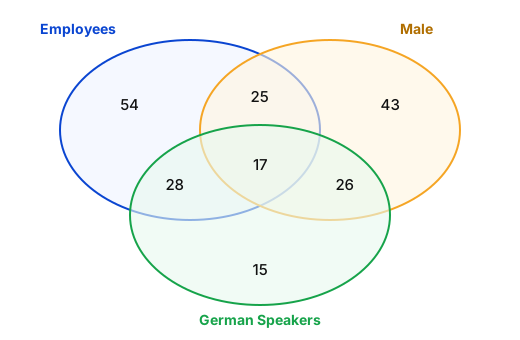
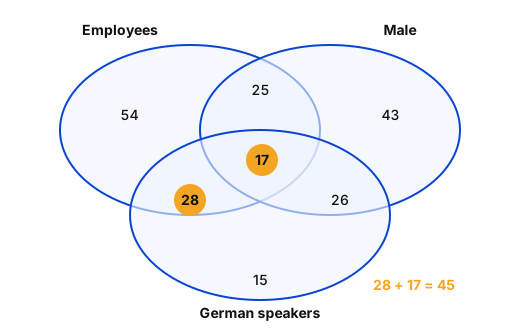
Study the given diagram carefully and answer the question. The numbers in different sections indicate the number of persons working in an organization. (NOTE: You have to take the given data to be true even if it seems to be at variance from commonly known facts.)

How many such employees are there who also speak German?
दिए गए आरेख का ध्यानपूर्वक अध्ययन कीजिए और प्रश्न का उत्तर दीजिए। विभिन्न खंडों में दी गई संख्याएँ एक संगठन में कार्यरत व्यक्तियों की संख्या दर्शाती हैं। (नोट: आपको दिए गए आँकड़ों को सत्य मानना है, भले ही वे सामान्यतः ज्ञात तथ्यों से भिन्न प्रतीत होते हों।)

ऐसे कितने कर्मचारी हैं जो जर्मन भी बोलते हैं?
  1. A43
  2. B45
  3. C41
  4. D28
Show answer

Concept: "Employees who also speak German" = the regions common to the Employees circle and the German-speakers circle (whether male or not).

  1. Employees ∩ German only (not male) =28.
  2. Employees ∩ German ∩ Male =17.
  3. Required =28+17=45.

Trick: The overlap of two circles is always made of two pieces – the part inside the third circle and the part outside it. Add both.

Answer: (B) 45

अवधारणा: "जर्मन बोलने वाले कर्मचारी" = Employees वृत्त और German speakers वृत्त के साझा भाग (पुरुष हों या न हों)।

  1. Employees ∩ German केवल (पुरुष नहीं) =28।
  2. Employees ∩ German ∩ Male =17।
  3. अभीष्ट =28+17=45।

ट्रिक: दो वृत्तों का उभयनिष्ठ भाग हमेशा दो टुकड़ों से बनता है – तीसरे वृत्त के अंदर वाला और बाहर वाला। दोनों जोड़ें।

उत्तर: (B) 45

RRB NTPC Undergraduate CBT 1General Intelligence and ReasoningVenn DiagramRRB NTPC Undergraduate CBT 1 2025 · 7 May Shift 1 →
Q8474.
Each letter in the word LANGUID is arranged in the English alphabetical order. How many letters are there in the English alphabetical order between the letter which is second from the left and the one which is fourth from the right in the new letter cluster thus formed?
शब्द LANGUID के प्रत्येक अक्षर को अंग्रेज़ी वर्णमाला क्रम में व्यवस्थित किया जाता है। इस प्रकार बने नए अक्षर-समूह में बाएँ से दूसरे अक्षर और दाएँ से चौथे अक्षर के बीच अंग्रेज़ी वर्णमाला क्रम में कितने अक्षर हैं?
  1. A7
  2. B5
  3. C4
  4. D3
Show answer

Concept: Arrange the letters alphabetically, locate the two positions, then count letters strictly between them in the alphabet.

  1. LANGUID → A, D, G, I, L, N, U.
  2. Second from left = D; fourth from right (of 7) = 4th from left = I.
  3. Between D(4) and I(9): E, F, G, H =9−4−1=4 letters.

Trick: Letters between two positions = difference of their place values −1.

Answer: (C) 4

अवधारणा: अक्षरों को वर्णक्रम में लगाएँ, दोनों स्थान पहचानें, फिर वर्णमाला में उनके बीच के अक्षर गिनें।

  1. LANGUID → A, D, G, I, L, N, U।
  2. बाएँ से दूसरा = D; दाएँ से चौथा (7 में) = बाएँ से चौथा = I।
  3. D(4) और I(9) के बीच: E, F, G, H =9−4−1=4 अक्षर।

ट्रिक: दो अक्षरों के बीच के अक्षर = उनके स्थान-मानों का अंतर −1।

उत्तर: (C) 4

RRB NTPC Undergraduate CBT 1General Intelligence and ReasoningAlphabet TestRRB NTPC Undergraduate CBT 1 2025 · 7 May Shift 1 →
Q8475.
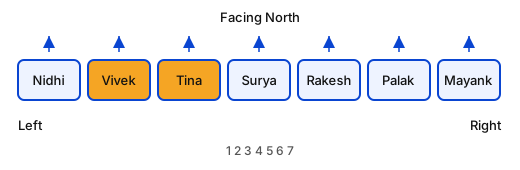
Seven people, Mayank, Nidhi, Palak, Rakesh, Surya, Tina and Vivek, are sitting in a row, facing north. Only two people sit to the right of Rakesh. Nidhi sits to the immediate left of Vivek and Vivek sits third to the left of Rakesh. Palak sits third to the right of Tina, but Palak does not sit at any extreme ends. Rakesh is not an immediate neighbour of Mayank. How many people sit between Tina and Vivek?
सात व्यक्ति, मयंक, निधि, पलक, राकेश, सूर्या, टीना और विवेक, एक पंक्ति में उत्तर की ओर मुख करके बैठे हैं। राकेश के दाएँ केवल दो व्यक्ति बैठे हैं। निधि, विवेक के ठीक बाएँ बैठी है और विवेक, राकेश के बाएँ तीसरे स्थान पर बैठा है। पलक, टीना के दाएँ तीसरे स्थान पर बैठी है, लेकिन पलक किसी भी अंतिम छोर पर नहीं बैठी है। राकेश, मयंक का निकटतम पड़ोसी नहीं है। टीना और विवेक के बीच कितने व्यक्ति बैठे हैं?
  1. AThreeतीन
  2. BOneएक
  3. CNoneकोई नहीं
  4. DTwoदो
Show answer

Concept: Number the seats 1–7 from left to right (all face north, so right = higher number) and place people from the most definite clue.

  1. Only two to the right of Rakesh → Rakesh at 5. Vivek third to the left of Rakesh → Vivek at 2; Nidhi immediately left → Nidhi at 1.
  2. Palak is third to the right of Tina and not at an end → Tina 3, Palak 6 (Tina 4 would put Palak at 7, an end).
  3. Mayank is not next to Rakesh → Mayank 7, Surya 4.
  4. Order: Nidhi, Vivek, Tina, Surya, Rakesh, Palak, Mayank. Tina (3) and Vivek (2) are adjacent → none between.

Trick: Start with "only two to the right of" – it fixes a seat instantly and the rest falls in place.

Answer: (C) None

अवधारणा: सीटें बाएँ से दाएँ 1–7 क्रमांकित करें (सभी उत्तर मुख, अतः दाएँ = बड़ी संख्या) और सबसे निश्चित संकेत से शुरू करें।

  1. राकेश के दाएँ केवल दो → राकेश 5 पर। विवेक राकेश के बाएँ तीसरा → विवेक 2; निधि ठीक बाएँ → निधि 1।
  2. पलक टीना के दाएँ तीसरी और छोर पर नहीं → टीना 3, पलक 6 (टीना 4 होने पर पलक 7 यानी छोर पर आती)।
  3. मयंक राकेश का पड़ोसी नहीं → मयंक 7, सूर्या 4।
  4. क्रम: निधि, विवेक, टीना, सूर्या, राकेश, पलक, मयंक। टीना (3) और विवेक (2) सटे हैं → बीच में कोई नहीं।

ट्रिक: "दाएँ केवल दो लोग" जैसे संकेत से शुरू करें – यह सीट तुरंत तय कर देता है और बाकी अपने आप बैठ जाते हैं।

उत्तर: (C) None (कोई नहीं)

RRB NTPC Undergraduate CBT 1General Intelligence and ReasoningLinear Seating ArrangementRRB NTPC Undergraduate CBT 1 2025 · 7 May Shift 1 →
Q8476.
AEHB is related to FJMG in a certain way based on the English alphabetical order. In the same way, DHKE is related to IMPJ. To which of the following is GKNH related, following the same logic?
अंग्रेज़ी वर्णमाला क्रम के आधार पर AEHB, FJMG से एक निश्चित प्रकार से संबंधित है। उसी प्रकार, DHKE, IMPJ से संबंधित है। समान तर्क का अनुसरण करते हुए, GKNH निम्नलिखित में से किससे संबंधित है?
  1. ALPSM
  2. BPLMS
  3. CPLSM
  4. DLPMS
Show answer

Concept: Find the position shift applied to each letter of the first cluster.

  1. AEHB → FJMG: A(1)→F(6), E(5)→J(10), H(8)→M(13), B(2)→G(7): each +5.
  2. Check DHKE → IMPJ: D→I, H→M, K→P, E→J: +5 ✓.
  3. GKNH: G(7)→L(12), K(11)→P(16), N(14)→S(19), H(8)→M(13) → LPSM.

Trick: When all letters move by the same amount, just add it to each place value – no need to compare option by option.

Answer: (A) LPSM

अवधारणा: पहले समूह के हर अक्षर पर लगाया गया स्थान-परिवर्तन खोजें।

  1. AEHB → FJMG: A(1)→F(6), E(5)→J(10), H(8)→M(13), B(2)→G(7): हर एक +5।
  2. जाँच DHKE → IMPJ: D→I, H→M, K→P, E→J: +5 ✓।
  3. GKNH: G(7)→L(12), K(11)→P(16), N(14)→S(19), H(8)→M(13) → LPSM।

ट्रिक: जब सभी अक्षर समान कदम चलें, हर स्थान-मान में वही जोड़ दें – विकल्प-दर-विकल्प मिलाने की ज़रूरत नहीं।

उत्तर: (A) LPSM

RRB NTPC Undergraduate CBT 1General Intelligence and ReasoningLetter AnalogyRRB NTPC Undergraduate CBT 1 2025 · 7 May Shift 1 →
Q8477.
Based on the English alphabetical order, three of the following four letter-cluster pairs are alike in a certain way and thus form a group. Which is the one that does not belong to that group? (Note: The odd one out is not based on the number of
consonants/vowels or their position in the letter cluster.)
अंग्रेज़ी वर्णमाला क्रम के आधार पर, निम्नलिखित चार अक्षर-समूह युग्मों में से तीन एक निश्चित प्रकार से समान हैं और इस प्रकार एक समूह बनाते हैं। वह कौन-सा है जो उस समूह से संबंधित नहीं है? (नोट: असंगत युग्म अक्षर-समूह में
व्यंजनों/स्वरों की संख्या या उनकी स्थिति पर आधारित नहीं है।)
  1. ARO-VT
  2. BLI-PN
  3. CPM-TR
  4. DNK-RO
Show answer

Concept: Compare corresponding letters of each pair using place values.

  1. RO–VT: R(18)→V(22) +4, O(15)→T(20) +5.
  2. LI–PN: L→P +4, I→N +5. PM–TR: P→T +4, M→R +5.
  3. NK–RO: N(14)→R(18) +4, K(11)→O(15) +4 – pattern breaks (+4,+4 instead of +4,+5).

Trick: Write the two differences for every option; the one with a different pair of numbers is the odd one.

Answer: (D) NK-RO

अवधारणा: स्थान-मानों से हर युग्म के संगत अक्षरों की तुलना करें।

  1. RO–VT: R(18)→V(22) +4, O(15)→T(20) +5।
  2. LI–PN: L→P +4, I→N +5। PM–TR: P→T +4, M→R +5।
  3. NK–RO: N(14)→R(18) +4, K(11)→O(15) +4 – पैटर्न टूटता है (+4,+5 की जगह +4,+4)।

ट्रिक: हर विकल्प के दोनों अंतर लिखें; जिसकी संख्या-जोड़ी अलग हो वही विषम है।

उत्तर: (D) NK-RO

RRB NTPC Undergraduate CBT 1General Intelligence and ReasoningOdd One Out (Letter Pairs)RRB NTPC Undergraduate CBT 1 2025 · 7 May Shift 1 →
Q8478.
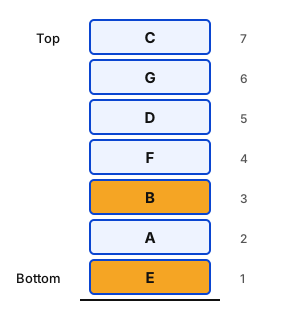
Seven boxes A, B, C, D, E, F and G are kept one over the other but not necessarily in the same order. A is kept second from the bottom. Only three boxes are kept between A and G. E is kept at one of the positions below A. Only D is kept between G and F. C is kept at one of the positions above G. How many boxes are kept between B and E?
सात बक्से A, B, C, D, E, F और G एक के ऊपर एक रखे गए हैं, लेकिन आवश्यक नहीं कि इसी क्रम में हों। A नीचे से दूसरे स्थान पर रखा है। A और G के बीच केवल तीन बक्से रखे हैं। E, A से नीचे किसी एक स्थान पर रखा है। G और F के बीच केवल D रखा है। C, G से ऊपर किसी एक स्थान पर रखा है। B और E के बीच कितने बक्से रखे हैं?
  1. A1
  2. B2
  3. C4
  4. D3
Show answer

Concept: Number positions 1 (bottom) to 7 (top) and fix boxes from the definite clues.

  1. A is second from bottom → A at 2. Three boxes between A and G → G at 6.
  2. E is below A → E at 1. C is above G → C at 7.
  3. Only D between G and F → F at 4, D at 5. The last box B takes 3.
  4. Bottom to top: E, A, B, F, D, G, C. Between B(3) and E(1) there is exactly 1 box (A).

Trick: "Second from bottom" plus "three between" pins two boxes at once – always start with such numeric clues.

Answer: (A) 1

अवधारणा: स्थान 1 (नीचे) से 7 (ऊपर) क्रमांकित करें और निश्चित संकेतों से बॉक्स तय करें।

  1. A नीचे से दूसरा → A स्थान 2 पर। A और G के बीच तीन बॉक्स → G स्थान 6।
  2. E, A से नीचे → E स्थान 1। C, G से ऊपर → C स्थान 7।
  3. G और F के बीच केवल D → F स्थान 4, D स्थान 5। बचा B स्थान 3 पर।
  4. नीचे से ऊपर: E, A, B, F, D, G, C। B(3) और E(1) के बीच ठीक 1 बॉक्स (A)।

ट्रिक: "नीचे से दूसरा" और "बीच में तीन" एक साथ दो बॉक्स तय कर देते हैं – ऐसे संख्यात्मक संकेतों से शुरुआत करें।

उत्तर: (A) 1

RRB NTPC Undergraduate CBT 1General Intelligence and ReasoningBox ArrangementRRB NTPC Undergraduate CBT 1 2025 · 7 May Shift 1 →
Q8479.
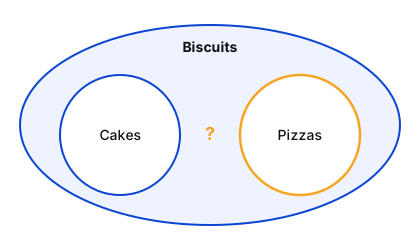
Read the given statements and conclusions carefully. You have to take the given statements to be true even if they seem to be at variance from commonly known facts. You have to decide which conclusions logically follow/s from the given statements. Statements: All cakes are biscuits. All pizzas are biscuits.
Conclusion (I) : Some cakes are pizzas
Conclusion (II) : Some biscuits are pizzas
दिए गए कथनों और निष्कर्षों को ध्यानपूर्वक पढ़िए। आपको दिए गए कथनों को सत्य मानना है, भले ही वे सामान्यतः ज्ञात तथ्यों से भिन्न प्रतीत होते हों। आपको यह निर्णय करना है कि कौन-सा/से निष्कर्ष दिए गए कथनों का तार्किक रूप से अनुसरण करता/करते है/हैं। कथन: सभी केक, बिस्कुट हैं। सभी पिज़्ज़ा, बिस्कुट हैं।
निष्कर्ष (I) : कुछ केक, पिज़्ज़ा हैं
निष्कर्ष (II) : कुछ बिस्कुट, पिज़्ज़ा हैं
  1. ABoth conclusions (I) and (II) followनिष्कर्ष (I) और (II) दोनों अनुसरण करते हैं
  2. BOnly conclusion (I) followsकेवल निष्कर्ष (I) अनुसरण करता है
  3. COnly conclusion (II) followsकेवल निष्कर्ष (II) अनुसरण करता है
  4. DNeither conclusion (I) nor (II) followsन तो निष्कर्ष (I) और न ही (II) अनुसरण करता है
Show answer

Concept: Draw the Venn diagram of the statements; a conclusion follows only if it is true in every possible diagram.

  1. Cakes and pizzas are both inside Biscuits, but nothing links cakes to pizzas – they may or may not overlap. So (I) "Some cakes are pizzas" does not follow.
  2. All pizzas are biscuits ⇒ at least those pizzas are biscuits ⇒ "Some biscuits are pizzas" definitely follows (II ✓).

Trick: "All A are B" always gives "Some B are A" (conversion), but two "All … are B" statements never connect A with the other subset.

Answer: (C) Only conclusion (II) follows

अवधारणा: कथनों का वेन आरेख बनाएँ; निष्कर्ष तभी सही है जब वह हर संभव आरेख में सत्य हो।

  1. Cakes और pizzas दोनों Biscuits के अंदर हैं, पर cakes और pizzas को जोड़ने वाला कुछ नहीं – वे मिल भी सकते हैं, नहीं भी। अतः (I) "Some cakes are pizzas" नहीं निकलता।
  2. All pizzas are biscuits ⇒ कम से कम वे pizzas तो biscuits हैं ⇒ "Some biscuits are pizzas" निश्चित रूप से सही (II ✓)।

ट्रिक: "All A are B" से हमेशा "Some B are A" निकलता है (रूपांतरण), पर दो "All … are B" कथन A को दूसरे उपसमूह से कभी नहीं जोड़ते।

उत्तर: (C) केवल निष्कर्ष (II) सही है

RRB NTPC Undergraduate CBT 1General Intelligence and ReasoningSyllogismRRB NTPC Undergraduate CBT 1 2025 · 7 May Shift 1 →
Q8480.
Uvx ranked 14th from the top and 79th from the bottom in his class. How many students are there in his class?
Uvx का अपनी कक्षा में ऊपर से 14वाँ और नीचे से 79वाँ स्थान है। उसकी कक्षा में कितने विद्यार्थी हैं?
  1. A93
  2. B92
  3. C90
  4. D91
Show answer

Concept: Total = rank from top + rank from bottom −1.

  1. Rank from top =14, rank from bottom =79.
  2. Total students =14+79−1=92.

Trick: Both ranks count the same person, so subtract 1 once.

Answer: (B) 92

अवधारणा: कुल = ऊपर से क्रम + नीचे से क्रम −1।

  1. ऊपर से क्रम =14, नीचे से क्रम =79।
  2. कुल छात्र =14+79−1=92।

ट्रिक: दोनों क्रमों में वही व्यक्ति गिना गया है, इसलिए एक बार 1 घटाएँ।

उत्तर: (B) 92

RRB NTPC Undergraduate CBT 1General Intelligence and ReasoningRankingRRB NTPC Undergraduate CBT 1 2025 · 7 May Shift 1 →