Question bank

Q&A: practice questions with answers

Search questions on any topic. Filter by exam category, exam, subject and topic, try the question, then open the answer and explanation.

Courses – airGurukul

120 questions found.

Q41.
An organization connects computers within a single office building to share files, printers, and other resources through a privately managed network. Which type of network is most appropriate for this setup?
एक संगठन फ़ाइलें, प्रिंटर और अन्य संसाधन साझा करने के लिए एक ही कार्यालय भवन के भीतर कंप्यूटरों को एक निजी रूप से प्रबंधित नेटवर्क के माध्यम से जोड़ता है। इस व्यवस्था के लिए किस प्रकार का नेटवर्क सबसे उपयुक्त है?
  1. APersonal Area Network (PAN)पर्सनल एरिया नेटवर्क (PAN)
  2. BWide Area Network (WAN)वाइड एरिया नेटवर्क (WAN)
  3. CMetropolitan Area Network (MAN)मेट्रोपॉलिटन एरिया नेटवर्क (MAN)
  4. DLocal Area Network (LAN)लोकल एरिया नेटवर्क (LAN)
Show answer

Concept: Networks are classified by geographical spread: PAN (a few metres, personal devices), LAN (one building/campus), MAN (a city), WAN (country/world, e.g. the Internet).

  1. Computers in a single office building sharing files and printers over a privately owned network = Local Area Network, usually built with Ethernet/Wi-Fi switches.
  2. LAN is privately managed, high-speed and low-cost; WAN/MAN use leased public telecom lines; PAN (Bluetooth) is too small for an office.

Yaad rakhein: PAN < LAN < MAN < WAN (person → building → city → world).

Answer: (D) Local Area Network (LAN)

अवधारणा: नेटवर्क भौगोलिक फैलाव से वर्गीकृत होते हैं: PAN (कुछ मीटर, व्यक्तिगत उपकरण), LAN (एक भवन/परिसर), MAN (एक शहर), WAN (देश/विश्व, जैसे इंटरनेट)।

  1. एक कार्यालय भवन के कंप्यूटर निजी स्वामित्व वाले नेटवर्क पर फ़ाइलें व प्रिंटर साझा करें = Local Area Network, जो प्रायः Ethernet/Wi-Fi स्विच से बनता है।
  2. LAN निजी प्रबंधित, तेज़ और सस्ता है; WAN/MAN सार्वजनिक टेलीकॉम लाइनें किराये पर लेते हैं; PAN (Bluetooth) कार्यालय के लिए बहुत छोटा है।

याद रखें: PAN < LAN < MAN < WAN (व्यक्ति → भवन → शहर → विश्व)।

उत्तर: (D) Local Area Network (LAN)
RRB NTPC Undergraduate CBT 2General AwarenessComputer NetworksRRB NTPC Undergraduate CBT 2 2025 · 17 Sep Shift 1 →
Q42.
What was India's global rank in Renewable Energy Installed Capacity, according to the Renewable Energy Statistics 2026?
नवीकरणीय ऊर्जा सांख्यिकी (Renewable Energy Statistics) 2026 के अनुसार, नवीकरणीय ऊर्जा स्थापित क्षमता में भारत की वैश्विक रैंक क्या थी?
  1. AFifthपाँचवीं
  2. BSecondदूसरी
  3. CThirdतीसरी
  4. DFourthचौथी
Show answer

Concept: IRENA's Renewable Energy Statistics 2026 ranks countries by total installed renewable capacity (including large hydro).

  1. According to it, India stands third in the world, behind only China and the USA, having moved ahead of Brazil on the strength of record solar additions.
  2. India had crossed 50% non-fossil installed capacity in 2025 and holds high ranks in solar (3rd) and wind (4th) as well.

Yaad rakhein: RE capacity 2026: China → USA → India (3rd); target 500 GW non-fossil by 2030.

Answer: (C) Third

अवधारणा: IRENA की Renewable Energy Statistics 2026 देशों को कुल स्थापित नवीकरणीय क्षमता (बड़ी जलविद्युत सहित) के आधार पर रैंक करती है।

  1. इसके अनुसार भारत विश्व में तीसरे स्थान पर है, केवल चीन और USA के पीछे; रिकॉर्ड सौर क्षमता वृद्धि के बल पर भारत ब्राज़ील से आगे निकला।
  2. भारत ने 2025 में 50% गैर-जीवाश्म स्थापित क्षमता पार की और सौर (3रा) व पवन (4था) में भी ऊँचे स्थान पर है।

याद रखें: RE क्षमता 2026: चीन → USA → भारत (3रा); लक्ष्य 2030 तक 500 GW गैर-जीवाश्म।

उत्तर: (C) Third

RRB NTPC Undergraduate CBT 2General AwarenessEnergy – Renewable RankingsRRB NTPC Undergraduate CBT 2 2025 · 17 Sep Shift 1 →
Q43.
Which Article of the Indian Constitution protects a person from being punished more than once for the same offence?
भारतीय संविधान का कौन-सा अनुच्छेद किसी व्यक्ति को एक ही अपराध के लिए एक से अधिक बार दंडित किए जाने से संरक्षण प्रदान करता है?
  1. AArticle 20अनुच्छेद 20
  2. BArticle 18अनुच्छेद 18
  3. CArticle 19अनुच्छेद 19
  4. DArticle 21अनुच्छेद 21
Show answer

Concept: Article 20 gives protection in respect of conviction for offences: (1) no ex-post-facto law, (2) no double jeopardy – no one shall be prosecuted and punished for the same offence more than once, (3) no self-incrimination.

  1. Article 20(2) is the double-jeopardy clause asked here.
  2. Article 18 = abolition of titles; 19 = six freedoms; 21 = life and personal liberty. Articles 20 and 21 cannot be suspended even during Emergency (44th Amendment).

Yaad rakhein: Art 20 = 3 protections: Ex-post-facto, Double jeopardy, Self-incrimination (E-D-S).

Answer: (A) Article 20

अवधारणा: अनुच्छेद 20 अपराधों की दोषसिद्धि के संबंध में संरक्षण देता है: (1) कोई कार्योत्तर कानून नहीं, (2) दोहरे दंड से संरक्षण – एक ही अपराध के लिए एक से अधिक बार अभियोजन व दंड नहीं, (3) आत्म-अभिशंसन से संरक्षण।

  1. यहाँ पूछा गया प्रावधान अनुच्छेद 20(2) – double jeopardy – है।
  2. अनुच्छेद 18 = उपाधियों का अंत; 19 = छह स्वतंत्रताएँ; 21 = जीवन व दैहिक स्वतंत्रता। अनुच्छेद 20 और 21 आपातकाल में भी निलंबित नहीं होते (44वाँ संशोधन)।

याद रखें: अनु. 20 = 3 संरक्षण: कार्योत्तर, दोहरा दंड, आत्म-अभिशंसन।

उत्तर: (A) Article 20

RRB NTPC Undergraduate CBT 2General AwarenessFundamental RightsRRB NTPC Undergraduate CBT 2 2025 · 17 Sep Shift 1 →
Q44.
Which of the following is NOT a ground for removal of the UPSC Chairman or member?
निम्नलिखित में से कौन-सा UPSC के अध्यक्ष या सदस्य को हटाने का आधार नहीं है?
  1. AInsolvencyदिवालियापन
  2. BAcceptance of foreign awardविदेशी पुरस्कार स्वीकार करना
  3. CPaid employment outside official dutiesआधिकारिक कर्तव्यों के बाहर सवेतन रोज़गार
  4. DInfirmity of mind or bodyमन या शरीर की दुर्बलता
Show answer

Concept: Under Article 317, the President may remove the UPSC Chairman/member for (a) insolvency, (b) engaging in paid employment outside the duties of office, or (c) infirmity of mind or body; for "misbehaviour" the matter must be referred to the Supreme Court.

  1. Accepting a foreign award is not a ground of removal; it is not mentioned anywhere in Article 317.
  2. Also, if a member is interested in a Government contract, it is deemed misbehaviour.

Yaad rakhein: UPSC removal = I-P-I (Insolvency, Paid employment, Infirmity) + misbehaviour via SC.

Answer: (B) Acceptance of foreign award

अवधारणा: अनुच्छेद 317 के तहत राष्ट्रपति UPSC अध्यक्ष/सदस्य को (a) दिवालियापन, (b) पद के कर्तव्यों से बाहर सवैतनिक रोज़गार, या (c) मानसिक/शारीरिक अशक्तता के आधार पर हटा सकते हैं; "कदाचार" के लिए मामला सर्वोच्च न्यायालय को भेजना होता है।

  1. विदेशी पुरस्कार स्वीकार करना हटाने का आधार नहीं है; अनुच्छेद 317 में इसका कहीं उल्लेख नहीं।
  2. साथ ही, किसी सरकारी ठेके में हित रखना कदाचार माना जाता है।

याद रखें: UPSC से हटाना = दिवालिया, सवैतनिक रोज़गार, अशक्तता + कदाचार (SC के माध्यम से)।

उत्तर: (B) Acceptance of foreign award

RRB NTPC Undergraduate CBT 2General AwarenessConstitutional Bodies – UPSCRRB NTPC Undergraduate CBT 2 2025 · 17 Sep Shift 1 →
Q45.
Which abbreviation stands for a character encoding standard used in computers?
कौन-सा संक्षिप्त नाम कंप्यूटरों में प्रयुक्त एक कैरेक्टर एन्कोडिंग मानक को दर्शाता है?
  1. ALAN
  2. BASCII
  3. CRAM
  4. DCD
Show answer

Concept: ASCII = American Standard Code for Information Interchange – a 7-bit character-encoding standard that assigns numbers 0–127 to letters, digits and symbols (e.g. 'A' = 65).

  1. Extended ASCII uses 8 bits (256 characters); Unicode (UTF-8) later extended encoding to all world scripts, including Devanagari.
  2. LAN = network type, RAM = memory, CD = storage medium – none is an encoding standard.

Yaad rakhein: ASCII & Unicode = character codes; 'A' = 65, 'a' = 97, '0' = 48.

Answer: (B) ASCII

अवधारणा: ASCII = American Standard Code for Information Interchange – 7-बिट कैरेक्टर एन्कोडिंग मानक जो अक्षरों, अंकों और प्रतीकों को 0–127 संख्याएँ देता है (जैसे 'A' = 65)।

  1. Extended ASCII 8 बिट (256 कैरेक्टर) का है; बाद में Unicode (UTF-8) ने एन्कोडिंग को देवनागरी सहित विश्व की सभी लिपियों तक बढ़ाया।
  2. LAN = नेटवर्क प्रकार, RAM = मेमोरी, CD = भंडारण माध्यम – कोई एन्कोडिंग मानक नहीं।

याद रखें: ASCII व Unicode = कैरेक्टर कोड; 'A' = 65, 'a' = 97, '0' = 48।

उत्तर: (B) ASCII

RRB NTPC Undergraduate CBT 2General AwarenessComputer FundamentalsRRB NTPC Undergraduate CBT 2 2025 · 17 Sep Shift 1 →
Q46.
Which of the following best explains why the Kosi River frequently changes its course across the plains of Bihar despite being a perennial Himalayan river?
निम्नलिखित में से कौन-सा इस बात की सबसे अच्छी व्याख्या करता है कि कोसी नदी एक बारहमासी हिमालयी नदी होने के बावजूद बिहार के मैदानों में बार-बार अपना मार्ग क्यों बदलती है?
  1. AIt originates from the Western Ghats regionयह पश्चिमी घाट क्षेत्र से निकलती है
  2. BIt deposits heavy sediments, blocking its channelयह भारी मात्रा में अवसाद जमा करती है, जिससे इसका प्रवाह मार्ग अवरुद्ध हो जाता है
  3. CIt receives limited rainfall in its basinइसके बेसिन में सीमित वर्षा होती है
  4. DIt flows through hard rocks, reducing erosionयह कठोर चट्टानों से होकर बहती है, जिससे अपरदन कम हो जाता है
Show answer

Concept: The Kosi, called the "Sorrow of Bihar", is a braided Himalayan river that carries an enormous silt load from Nepal's steep catchment.

  1. On entering the flat Bihar plain its velocity drops, so it deposits heavy sediment that raises and blocks its own channel; the river then shifts to a new lower course (avulsion) – it has moved about 120 km westward in 200 years.
  2. It rises in the Himalayas (not Western Ghats), gets heavy monsoon rainfall and flows over soft alluvium – so the other options are false.

Yaad rakhein: Kosi = Sorrow of Bihar (silt → channel shift); Damodar = Sorrow of Bengal.

Answer: (B) It deposits heavy sediments, blocking its channel

अवधारणा: कोसी, जिसे "बिहार का शोक" कहते हैं, एक गुंफित (braided) हिमालयी नदी है जो नेपाल के तीव्र ढाल वाले जलग्रहण क्षेत्र से भारी गाद लाती है।

  1. बिहार के समतल मैदान में प्रवेश करते ही इसका वेग घटता है, इसलिए यह भारी अवसाद जमा कर अपना ही मार्ग ऊँचा और अवरुद्ध कर लेती है; फिर नदी नया निचला मार्ग पकड़ती है – 200 वर्षों में यह लगभग 120 km पश्चिम खिसकी है।
  2. यह हिमालय से निकलती है (पश्चिमी घाट से नहीं), भारी मानसूनी वर्षा पाती है और नरम जलोढ़ पर बहती है – इसलिए अन्य विकल्प गलत हैं।

याद रखें: कोसी = बिहार का शोक (गाद → मार्ग परिवर्तन); दामोदर = बंगाल का शोक।

उत्तर: (B) It deposits heavy sediments, blocking its channel

RRB NTPC Undergraduate CBT 2General AwarenessRivers of IndiaRRB NTPC Undergraduate CBT 2 2025 · 17 Sep Shift 1 →
Q47.
Which Constitutional Amendment reduced the voting age for elections to the Lok Sabha and State Legislative Assemblies?
किस संविधान संशोधन ने लोकसभा और राज्य विधानसभाओं के चुनावों के लिए मतदान की आयु कम की?
  1. A44th Constitutional Amendment Act44वाँ संविधान संशोधन अधिनियम
  2. B52nd Constitutional Amendment Act52वाँ संविधान संशोधन अधिनियम
  3. C61st Constitutional Amendment Act61वाँ संविधान संशोधन अधिनियम
  4. D74th Constitutional Amendment Act74वाँ संविधान संशोधन अधिनियम
Show answer

Concept: The 61st Constitutional Amendment Act, 1988 (in force from 28 March 1989) amended Article 326 to reduce the voting age from 21 to 18 years for Lok Sabha and State Assembly elections.

  1. It was passed during Rajiv Gandhi's tenure to give youth a greater say in politics.
  2. 44th (1978) = removed Right to Property from Fundamental Rights; 52nd (1985) = Anti-defection (10th Schedule); 74th (1992) = Municipalities.

Yaad rakhein: 61 → 18 (voting age); 52 → defection; 42 → mini-Constitution.

Answer: (C) 61st Constitutional Amendment Act

अवधारणा: 61वें संविधान संशोधन अधिनियम, 1988 (28 मार्च 1989 से लागू) ने अनुच्छेद 326 में संशोधन कर लोकसभा व राज्य विधानसभा चुनावों के लिए मतदान आयु 21 से घटाकर 18 वर्ष की।

  1. यह राजीव गांधी के कार्यकाल में युवाओं को राजनीति में अधिक भागीदारी देने के लिए पारित हुआ।
  2. 44वाँ (1978) = संपत्ति का अधिकार मौलिक अधिकारों से हटा; 52वाँ (1985) = दल-बदल विरोधी (10वीं अनुसूची); 74वाँ (1992) = नगरपालिकाएँ।

याद रखें: 61 → 18 (मतदान आयु); 52 → दल-बदल; 42 → लघु-संविधान।

उत्तर: (C) 61st Constitutional Amendment Act

RRB NTPC Undergraduate CBT 2General AwarenessConstitutional AmendmentsRRB NTPC Undergraduate CBT 2 2025 · 17 Sep Shift 1 →
Q48.
Which significant change related to women’s safety did the new Labour Codes bring when implemented in November 2025?
नवंबर 2025 में लागू किए गए नए श्रम संहिताओं (Labour Codes) ने महिलाओं की सुरक्षा से संबंधित कौन-सा महत्वपूर्ण परिवर्तन किया?
  1. AWomen prohibited from industrial employmentमहिलाओं को औद्योगिक रोज़गार से प्रतिबंधित किया गया
  2. BNight-shift permission with safeguardsसुरक्षा उपायों के साथ रात्रि पाली की अनुमति
  3. CWomen exempted from maternity benefitsमहिलाओं को मातृत्व लाभ से छूट दी गई
  4. DWomen required to retire earlierमहिलाओं के लिए पहले सेवानिवृत्त होना आवश्यक किया गया
Show answer

Concept: The four Labour Codes (Wages 2019; Industrial Relations, Social Security, and Occupational Safety, Health & Working Conditions 2020) were brought into force from 21 November 2025.

  1. The OSH Code allows women to work in night shifts (7 pm to 6 am) and in all types of establishments, with their consent and with safeguards – transport, security, lighting, grievance redressal.
  2. The Codes do not bar women from industry, remove maternity benefits (26 weeks continue) or change retirement age.

Yaad rakhein: Labour Codes 2025 → women: night shift allowed with consent + safeguards; equal pay; gig-worker social security.

Answer: (B) Night-shift permission with safeguards

अवधारणा: चारों श्रम संहिताएँ (मज़दूरी 2019; औद्योगिक संबंध, सामाजिक सुरक्षा, और व्यावसायिक सुरक्षा, स्वास्थ्य व कार्य-दशा 2020) 21 नवंबर 2025 से लागू हुईं।

  1. OSH संहिता महिलाओं को उनकी सहमति और सुरक्षा उपायों – परिवहन, सुरक्षा, प्रकाश, शिकायत निवारण – के साथ रात्रि पाली (शाम 7 से सुबह 6) और सभी प्रकार के प्रतिष्ठानों में काम की अनुमति देती है।
  2. संहिताएँ महिलाओं को उद्योग से नहीं रोकतीं, मातृत्व लाभ (26 सप्ताह जारी) नहीं हटातीं और सेवानिवृत्ति आयु नहीं बदलतीं।

याद रखें: श्रम संहिताएँ 2025 → महिलाएँ: सहमति + सुरक्षा के साथ रात्रि पाली; समान वेतन; गिग-वर्कर सामाजिक सुरक्षा।

उत्तर: (B) Night-shift permission with safeguards

RRB NTPC Undergraduate CBT 2General AwarenessLabour CodesRRB NTPC Undergraduate CBT 2 2025 · 17 Sep Shift 1 →
Q49.
The Tribal Sub-Plan (TSP), formulated as a strategy for the socio-economic development of Scheduled Tribes, primarily seeks to achieve which of the following objectives?
अनुसूचित जनजातियों के सामाजिक-आर्थिक विकास की रणनीति के रूप में तैयार की गई जनजातीय उप-योजना (TSP) मुख्य रूप से निम्नलिखित में से किस उद्देश्य को प्राप्त करना चाहती है?
  1. APromote private investment and increase commercial activities in tribal-dominated regionsजनजातीय-बहुल क्षेत्रों में निजी निवेश को बढ़ावा देना और वाणिज्यिक गतिविधियाँ बढ़ाना
  2. BStrengthen urban infrastructure and expand municipal services in identified tribal settlements and increase commercial activities in tribal regionsचिह्नित जनजातीय बस्तियों में शहरी अवसंरचना को सुदृढ़ करना और नगरपालिका सेवाओं का विस्तार करना तथा जनजातीय क्षेत्रों में वाणिज्यिक गतिविधियाँ बढ़ाना
  3. CImprove industrial growth and expand transport infrastructure across notified tribal areasअधिसूचित जनजातीय क्षेत्रों में औद्योगिक विकास में सुधार करना और परिवहन अवसंरचना का विस्तार करना
  4. DBridge the developmental gap between Scheduled Tribes and the rest of the population through inclusive developmentसमावेशी विकास के माध्यम से अनुसूचित जनजातियों और शेष जनसंख्या के बीच विकास के अंतर को पाटना
Show answer

Concept: The Tribal Sub-Plan (TSP), introduced in the Fifth Five-Year Plan (1974–79), earmarks funds from Central and State budgets in proportion to the ST population for their development.

  1. Its core objective is to bridge the gap between Scheduled Tribes and the rest of society in socio-economic indicators – education, health, income, infrastructure – through inclusive development and protection from exploitation.
  2. It is a welfare-and-development strategy, not a scheme for private investment, urban infrastructure or industrial growth; since 2017-18 it is called Development Action Plan for STs (DAPST).

Yaad rakhein: TSP (1974) for STs & SCSP (1979) for SCs – both aim at closing the development gap.

Answer: (D) Bridge the developmental gap between Scheduled Tribes and the rest of the population through inclusive development

अवधारणा: जनजातीय उप-योजना (TSP), पाँचवीं पंचवर्षीय योजना (1974–79) में शुरू, केंद्र व राज्य बजट से ST जनसंख्या के अनुपात में उनके विकास हेतु धन निर्धारित करती है।

  1. इसका मूल उद्देश्य अनुसूचित जनजातियों और शेष समाज के बीच शिक्षा, स्वास्थ्य, आय, अवसंरचना जैसे सामाजिक-आर्थिक संकेतकों के अंतर को पाटना है – समावेशी विकास और शोषण से सुरक्षा द्वारा।
  2. यह कल्याण-विकास रणनीति है, निजी निवेश, शहरी अवसंरचना या औद्योगिक वृद्धि की योजना नहीं; 2017-18 से इसे DAPST कहा जाता है।

याद रखें: TSP (1974) ST के लिए व SCSP (1979) SC के लिए – दोनों का लक्ष्य विकास अंतर मिटाना।

उत्तर: (D) Bridge the developmental gap between Scheduled Tribes and the rest of the population through inclusive development

RRB NTPC Undergraduate CBT 2General AwarenessTribal WelfareRRB NTPC Undergraduate CBT 2 2025 · 17 Sep Shift 1 →
Q50.
In Sangam literature, which of the following themes is primarily associated with the concept of ‘Puram’?
संगम साहित्य में निम्नलिखित में से कौन-सा विषय मुख्य रूप से ‘पुरम’ (Puram) की अवधारणा से जुड़ा है?
  1. AWar, valor, and public lifeयुद्ध, वीरता और सार्वजनिक जीवन
  2. BLove and personal emotionsप्रेम और व्यक्तिगत भावनाएँ
  3. CTrade and commerceव्यापार और वाणिज्य
  4. DReligious rituals and sacrificesधार्मिक अनुष्ठान और बलि
Show answer

Concept: Sangam poems (Tamil, c. 300 BCE–300 CE) are classified into two genres – Akam (interior: love, personal emotions) and Puram (exterior: war, heroism, kings and public life).

  1. Puram poems praise chieftains' valour, battles, generosity and ethics; e.g. Purananuru is a Puram anthology, while Kuruntokai is Akam.
  2. The five landscapes (tinai) – kurinji, mullai, marutam, neytal, palai – structure Akam poetry.

Yaad rakhein: Akam = andar (inner, love); Puram = bahar (outer, war & public).

Answer: (A) War, valor, and public life

अवधारणा: संगम कविताएँ (तमिल, लगभग 300 ई.पू.–300 ई.) दो विधाओं में बँटी हैं – अकम (आंतरिक: प्रेम, व्यक्तिगत भाव) और पुरम (बाह्य: युद्ध, वीरता, राजा व सार्वजनिक जीवन)।

  1. पुरम कविताएँ सरदारों की वीरता, युद्ध, उदारता व नीति की प्रशंसा करती हैं; जैसे पुरनानूरु पुरम संकलन है, जबकि कुरुन्तोकै अकम।
  2. पाँच भू-दृश्य (तिणै) – कुरिंजी, मुल्लै, मरुतम, नेय्तल, पालै – अकम कविता की संरचना बनाते हैं।

याद रखें: अकम = अंदर (आंतरिक, प्रेम); पुरम = बाहर (बाह्य, युद्ध व सार्वजनिक)।

उत्तर: (A) War, valor, and public life

RRB NTPC Undergraduate CBT 2General AwarenessSangam LiteratureRRB NTPC Undergraduate CBT 2 2025 · 17 Sep Shift 1 →
Q51.
A shopkeeper purchases 20 identical items for ₹400. To make a profit of 25%, how many items should he sell for ₹400, if the selling price is uniform for all items?
एक दुकानदार 20 एक जैसी वस्तुएँ ₹400 में खरीदता है। 25% का लाभ कमाने के लिए उसे ₹400 में कितनी वस्तुएँ बेचनी चाहिए, यदि सभी वस्तुओं का विक्रय मूल्य समान हो?
  1. A20
  2. B16
  3. C15
  4. D18
Show answer

Concept: SP=CP×(1+Profit%100); find the SP of one item, then see how many fit into ₹400.

  1. CP of 1 item =40020= ₹20.
  2. SP of 1 item at 25% profit =20×125100= ₹25.
  3. Number of items sold for ₹400 =40025=16.

Trick: Same money both sides → Items sold=Items bought×100100+P=20×100125=16.

Answer: (B) 16

अवधारणा: SP=CP×(1+लाभ%100); एक वस्तु का SP निकालें, फिर देखें ₹400 में कितनी आएँगी।

  1. 1 वस्तु का CP =40020= ₹20।
  2. 25% लाभ पर 1 वस्तु का SP =20×125100= ₹25।
  3. ₹400 में बेची गई वस्तुएँ =40025=16।

ट्रिक: दोनों ओर समान राशि → बेची गई=खरीदी गई×100100+P=20×100125=16।

उत्तर: (B) 16

RRB NTPC Undergraduate CBT 2MathematicsProfit and LossRRB NTPC Undergraduate CBT 2 2025 · 17 Sep Shift 1 →
Q52.
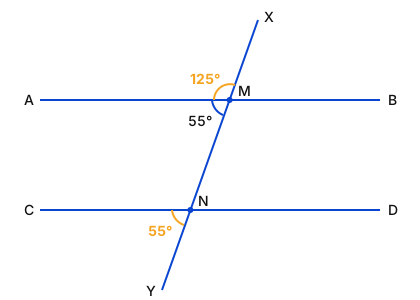
Lines AB and CD are parallel, with A and C to the left of the transversal XY, and B and D to the right. The transversal intersects AB at M and CD at N, where X, M, N, and Y are collinear in that order. If measure of ∠XMA=125°, then the measure of ∠CNY is:
रेखाएँ AB और CD समांतर हैं, जिनमें A और C तिर्यक रेखा XY के बाईं ओर तथा B और D दाईं ओर हैं। तिर्यक रेखा AB को M पर और CD को N पर काटती है, जहाँ X, M, N और Y इसी क्रम में संरेख हैं। यदि ∠XMA की माप = 125° है, तो ∠CNY की माप है:
  1. A52°
  2. B58°
  3. C55°
  4. D50°
Show answer

Concept: When a transversal cuts two parallel lines, corresponding angles are equal, and angles on a straight line add up to 180∘.

  1. At M, ∠XMA and ∠AMN form a linear pair on line XY: ∠AMN=180∘−125∘=55∘.
  2. ∠AMN (at M, between MA and MN) and ∠CNY (at N, between NC and NY) are corresponding angles for AB∥CD.
  3. So ∠CNY=∠AMN=55∘.

Trick: With parallel lines every angle at the two crossings is either x or 180∘−x; here x=125∘, so the answer must be 55∘.

Answer: (C) 55∘

अवधारणा: जब तिर्यक रेखा दो समांतर रेखाओं को काटती है तो संगत कोण (corresponding angles) बराबर होते हैं, और एक सरल रेखा पर बने कोणों का योग 180∘ होता है।

  1. M पर ∠XMA और ∠AMN रेखा XY पर रैखिक युग्म हैं: ∠AMN=180∘−125∘=55∘।
  2. ∠AMN (M पर, MA व MN के बीच) और ∠CNY (N पर, NC व NY के बीच) AB∥CD के लिए संगत कोण हैं।
  3. अतः ∠CNY=∠AMN=55∘।

ट्रिक: समांतर रेखाओं में दोनों कटान बिंदुओं पर हर कोण या तो x या 180∘−x होता है; यहाँ x=125∘, इसलिए उत्तर 55∘ ही होगा।

उत्तर: (C) 55∘

RRB NTPC Undergraduate CBT 2MathematicsLines and AnglesRRB NTPC Undergraduate CBT 2 2025 · 17 Sep Shift 1 →
Q53.
The LCM of the numbers 3, 77 and 33 is:
संख्याओं 3, 77 और 33 का LCM है:
  1. A242
  2. B231
  3. C77
  4. D462
Show answer

Concept: LCM = product of the highest powers of all prime factors present in the numbers.

  1. 3=3, 77=7×11, 33=3×11.
  2. Primes involved: 3, 7, 11 (each to power 1).
  3. LCM =3×7×11=231.

Trick: 3 already divides 33, so LCM(3, 77, 33) = LCM(77, 33) =77×3311=231.

Answer: (B) 231

अवधारणा: LCM = संख्याओं में उपस्थित सभी अभाज्य गुणनखंडों की उच्चतम घातों का गुणनफल।

  1. 3=3, 77=7×11, 33=3×11।
  2. अभाज्य: 3, 7, 11 (प्रत्येक घात 1)।
  3. LCM =3×7×11=231।

ट्रिक: 3 पहले से 33 को विभाजित करता है, इसलिए LCM(3, 77, 33) = LCM(77, 33) =77×3311=231।

उत्तर: (B) 231

RRB NTPC Undergraduate CBT 2MathematicsLCM and HCFRRB NTPC Undergraduate CBT 2 2025 · 17 Sep Shift 1 →
Q54.
₹620 amounts to ₹910 at a certain rate of simple interest in 2 years. Find the interest (in ₹) for the given 2 years.
₹620 साधारण ब्याज की एक निश्चित दर से 2 वर्षों में ₹910 हो जाता है। दिए गए 2 वर्षों का ब्याज (₹ में) ज्ञात कीजिए।
  1. A290
  2. B300
  3. C285
  4. D305
Show answer

Concept: Amount = Principal + Simple Interest, so SI=Amount−Principal – the rate is not needed.

  1. Principal = ₹620, Amount after 2 years = ₹910.
  2. SI =910−620= ₹290.
  3. (If asked, rate =290×100620×2≈23.4% p.a.)

Trick: Do not get distracted by "certain rate" – interest for the whole period is just A−P.

Answer: (A) 290

अवधारणा: मिश्रधन = मूलधन + साधारण ब्याज, अतः SI=मिश्रधन−मूलधन – दर की ज़रूरत ही नहीं।

  1. मूलधन = ₹620, 2 वर्ष बाद मिश्रधन = ₹910।
  2. SI =910−620= ₹290।
  3. (यदि पूछा जाए तो दर =290×100620×2≈23.4% वार्षिक।)

ट्रिक: "निश्चित दर" से भ्रमित न हों – पूरी अवधि का ब्याज बस A−P है।

उत्तर: (A) 290

RRB NTPC Undergraduate CBT 2MathematicsSimple InterestRRB NTPC Undergraduate CBT 2 2025 · 17 Sep Shift 1 →
Q55.
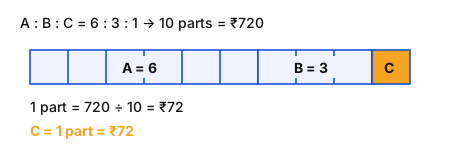
A sum of money is divided among A, B, and C so that A gets twice as much as B and B gets three times as much as C. If the total sum is ₹720, how much does C get?
एक धनराशि को A, B और C के बीच इस प्रकार बाँटा जाता है कि A को B से दोगुना और B को C से तीन गुना मिलता है। यदि कुल राशि ₹720 है, तो C को कितना मिलता है?
  1. A₹60
  2. B₹96
  3. C₹72
  4. D₹84
Show answer

Concept: Express all shares in terms of the smallest share, add the parts and divide the total.

  1. Let C =x. Then B =3x and A =2×3x=6x.
  2. Total =6x+3x+x=10x=720⇒x=72.
  3. So C gets ₹72 (B = ₹216, A = ₹432).

Trick: A : B = 2 : 1 and B : C = 3 : 1 → A : B : C = 6 : 3 : 1; C's share =110×720=72.

Answer: (C) ₹72

अवधारणा: सभी हिस्सों को सबसे छोटे हिस्से के रूप में लिखें, भागों को जोड़ें और कुल को बाँटें।

  1. माना C =x। तब B =3x और A =2×3x=6x।
  2. कुल =6x+3x+x=10x=720⇒x=72।
  3. अतः C को ₹72 मिलते हैं (B = ₹216, A = ₹432)।

ट्रिक: A : B = 2 : 1 और B : C = 3 : 1 → A : B : C = 6 : 3 : 1; C का हिस्सा =110×720=72।

उत्तर: (C) ₹72

RRB NTPC Undergraduate CBT 2MathematicsRatio and ProportionRRB NTPC Undergraduate CBT 2 2025 · 17 Sep Shift 1 →
Q56.
In a division sum, the divisor is 3 times the quotient and 8 times the remainder. If the remainder is 12, what is the dividend?
एक भाग के प्रश्न में भाजक, भागफल का 3 गुना और शेषफल का 8 गुना है। यदि शेषफल 12 है, तो भाज्य क्या है?
  1. A3048
  2. B3084
  3. C3072
  4. D3066
Show answer

Concept: Dividend =Divisor×Quotient+Remainder.

  1. Remainder =12; divisor =8×12=96.
  2. Divisor =3× quotient ⇒ quotient =963=32.
  3. Dividend =96×32+12=3072+12=3084.

Trick: 96×32=96×30+96×2=2880+192=3072; add the remainder 12 → 3084 (ends in 4, so options A/C/D are out).

Answer: (B) 3084

अवधारणा: भाज्य =भाजक×भागफल+शेषफल।

  1. शेषफल =12; भाजक =8×12=96।
  2. भाजक =3× भागफल ⇒ भागफल =963=32।
  3. भाज्य =96×32+12=3072+12=3084।

ट्रिक: 96×32=96×30+96×2=2880+192=3072; शेषफल 12 जोड़ें → 3084 (अंत में 4, अतः विकल्प A/C/D बाहर)।

उत्तर: (B) 3084

RRB NTPC Undergraduate CBT 2MathematicsNumber System – Division AlgorithmRRB NTPC Undergraduate CBT 2 2025 · 17 Sep Shift 1 →
Q57.
Consider the data set: 4, 8, 6, 5, 3, 9. Find the variance.
आँकड़ों के समुच्चय 4, 8, 6, 5, 3, 9 पर विचार कीजिए। प्रसरण (variance) ज्ञात कीजिए।
  1. A15136
  2. B16135
  3. C16136
  4. D15135
Show answer

Concept: Variance σ2=∑xi2n−x¯2 (population variance, n=6).

  1. ∑x=4+8+6+5+3+9=35, so x¯=356.
  2. ∑x2=16+64+36+25+9+81=231.
  3. σ2=2316−(356)2=231×6−122536=1386−122536=16136.

Trick: Keep the mean as a fraction (356) instead of a decimal; the denominator 36 appears directly, which eliminates options B and D.

Answer: (C) 16136

अवधारणा: प्रसरण σ2=∑xi2n−x¯2 (समष्टि प्रसरण, n=6)।

  1. ∑x=4+8+6+5+3+9=35, अतः x¯=356।
  2. ∑x2=16+64+36+25+9+81=231।
  3. σ2=2316−(356)2=231×6−122536=1386−122536=16136।

ट्रिक: माध्य को दशमलव की बजाय भिन्न (356) में रखें; हर 36 सीधे आता है, जिससे विकल्प B और D हट जाते हैं।

उत्तर: (C) 16136

RRB NTPC Undergraduate CBT 2MathematicsStatistics – VarianceRRB NTPC Undergraduate CBT 2 2025 · 17 Sep Shift 1 →
Q58.
A shopkeeper expects a gain of 40% on his cost price. If in a week, his sale proceeds were ₹3,955, what was his profit (in ₹)?
एक दुकानदार अपने क्रय मूल्य पर 40% लाभ की अपेक्षा करता है। यदि एक सप्ताह में उसकी बिक्री से प्राप्त राशि ₹3,955 थी, तो उसका लाभ (₹ में) क्या था?
  1. A1,130
  2. B1,133
  3. C1,129
  4. D1,132
Show answer

Concept: If gain is 40% on CP, then SP=140100×CP, so Profit=40140×SP=27×SP.

  1. Sale proceeds (SP) = ₹3,955.
  2. CP =3955×100140=39551.4= ₹2,825.
  3. Profit =3955−2825= ₹1,130.

Trick: Profit =27×3955=2×565=1130 (since 3955÷7=565).

Answer: (A) 1,130

अवधारणा: यदि CP पर 40% लाभ है तो SP=140100×CP, अतः लाभ=40140×SP=27×SP।

  1. बिक्री राशि (SP) = ₹3,955।
  2. CP =3955×100140=39551.4= ₹2,825।
  3. लाभ =3955−2825= ₹1,130।

ट्रिक: लाभ =27×3955=2×565=1130 (क्योंकि 3955÷7=565)।

उत्तर: (A) 1,130

RRB NTPC Undergraduate CBT 2MathematicsProfit and LossRRB NTPC Undergraduate CBT 2 2025 · 17 Sep Shift 1 →
Q59.
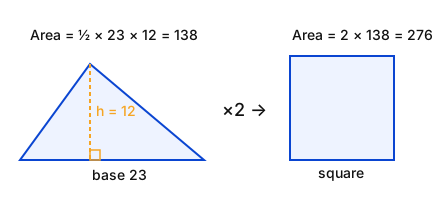
Find the area of a square, which has twice the area of a triangle whose base length is 23 cm and corresponding height is 12 cm.
एक ऐसे वर्ग का क्षेत्रफल ज्ञात कीजिए जिसका क्षेत्रफल उस त्रिभुज के क्षेत्रफल का दोगुना है, जिसके आधार की लंबाई 23 cm और संगत ऊँचाई 12 cm है।
  1. A256 cm2
  2. B204 cm2
  3. C218 cm2
  4. D276 cm2
Show answer

Concept: Area of triangle =12×base×height; the square's area is twice this.

  1. Triangle area =12×23×12=138cm2.
  2. Square area =2×138=276cm2.
  3. (Its side would be 276≈16.6 cm, but only the area is asked.)

Trick: Twice the triangle's area is simply base×height=23×12=276 – no halving needed.

Answer: (D) 276cm2

अवधारणा: त्रिभुज का क्षेत्रफल =12×आधार×ऊँचाई; वर्ग का क्षेत्रफल इसका दोगुना है।

  1. त्रिभुज का क्षेत्रफल =12×23×12=138cm2।
  2. वर्ग का क्षेत्रफल =2×138=276cm2।
  3. (इसकी भुजा 276≈16.6 cm होगी, पर केवल क्षेत्रफल पूछा है।)

ट्रिक: त्रिभुज के क्षेत्रफल का दोगुना = आधार×ऊँचाई=23×12=276 – आधा करने की ज़रूरत ही नहीं।

उत्तर: (D) 276cm2

RRB NTPC Undergraduate CBT 2MathematicsMensuration – AreaRRB NTPC Undergraduate CBT 2 2025 · 17 Sep Shift 1 →
Q60.
If 5siny+cosy=13siny, find the value of tany.
यदि 5siny+cosy=13siny है, तो tany का मान ज्ञात कीजिए।
  1. A−6−1312
  2. B−5−1317
  3. C−5−1312
  4. D−5−1322
Show answer

Concept: Divide the whole equation by siny to get coty, then invert and rationalise.

  1. 5siny+cosy=13siny⇒cosy=(13−5)siny.
  2. tany=sinycosy=113−5.
  3. Rationalise: 113−5×13+513+5=13+513−25=13+5−12=−5−1312.

Trick: Since 13<5, cosy and siny have opposite signs, so tany must be negative with denominator 25−13=12 – only option C matches.

Answer: (C) −5−1312

अवधारणा: पूरे समीकरण को siny से भाग देकर coty निकालें, फिर उलटकर परिमेयकरण (rationalise) करें।

  1. 5siny+cosy=13siny⇒cosy=(13−5)siny।
  2. tany=sinycosy=113−5।
  3. परिमेयकरण: 113−5×13+513+5=13+513−25=13+5−12=−5−1312।

ट्रिक: चूँकि 13<5, cosy और siny के चिह्न विपरीत हैं, अतः tany ऋणात्मक होगा और हर 25−13=12 – केवल विकल्प C मेल खाता है।

उत्तर: (C) −5−1312

RRB NTPC Undergraduate CBT 2MathematicsTrigonometry – IdentitiesRRB NTPC Undergraduate CBT 2 2025 · 17 Sep Shift 1 →