Question bank

Q&A: practice questions with answers

Search questions on any topic. Filter by exam category, exam, subject and topic, try the question, then open the answer and explanation.

Courses – airGurukul

120 questions found.

Q101.
What should come in place of ? in the given series based on the English alphabetical order?
EKP GMR IOT KQV ?
अंग्रेज़ी वर्णमाला क्रम के आधार पर दी गई श्रृंखला में ? के स्थान पर क्या आना चाहिए?
EKP GMR IOT KQV ?
  1. AMSX
  2. BMRX
  3. CMRY
  4. DMSY
Show answer

Concept: Every letter of each term moves +2 to form the next term.

  1. EKP → GMR → IOT → KQV: each letter +2
  2. K+2 = M, Q+2 = S, V+2 = X ⇒ MSX

Trick: Within each term the letters are at gaps of 6 (E–K–P): a quick check that MSX fits (M–S–X).

Answer: (A) MSX

अवधारणा: हर पद का हर अक्षर +2 बढ़कर अगला पद बनाता है।

  1. EKP → GMR → IOT → KQV: हर अक्षर +2
  2. K+2 = M, Q+2 = S, V+2 = X ⇒ MSX

ट्रिक: हर पद के भीतर अक्षर 6 के अंतर पर हैं (E–K–P): MSX (M–S–X) की त्वरित जाँच।

उत्तर: (A) MSX
RRB NTPC Undergraduate CBT 2General Intelligence and ReasoningLetter SeriesRRB NTPC Undergraduate CBT 2 2025 · 17 Sep Shift 1 →
Q102.
In this question, a question is followed by two statements numbered (I) and (II). You have to decide whether the data provided in the statements are sufficient to answer the question. Read both the statements and decide the appropriate answer. Question:
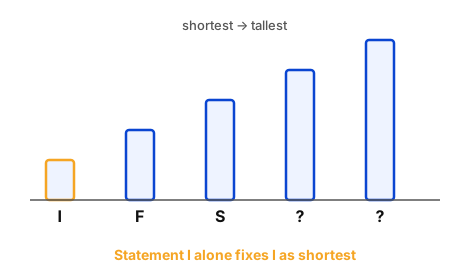
Among 5 poles, F, I, S, C and L each having a different height, which pole is the shortest?
Statements:
(I) S is taller than only two poles. F is shorter than S and I is shorter than F. (II) C is taller than L.
इस प्रश्न में, एक प्रश्न के बाद दो कथन (I) और (II) दिए गए हैं। आपको यह तय करना है कि कथनों में दिए गए आँकड़े प्रश्न का उत्तर देने के लिए पर्याप्त हैं या नहीं। दोनों कथनों को पढ़िए और उपयुक्त उत्तर का चयन कीजिए। प्रश्न:
5 खंभों F, I, S, C और L में, जिनमें से प्रत्येक की ऊँचाई अलग-अलग है, कौन-सा खंभा सबसे छोटा है?
कथन:
(I) S केवल दो खंभों से ऊँचा है। F, S से छोटा है और I, F से छोटा है। (II) C, L से ऊँचा है।
  1. AData in Statement II alone is sufficient to answer the question while data in statement I is notकथन II के आँकड़े अकेले प्रश्न का उत्तर देने के लिए पर्याप्त हैं, जबकि कथन I के आँकड़े पर्याप्त नहीं हैं
  2. BData in Statement I alone is sufficient to answer the question while data in statement II is notकथन I के आँकड़े अकेले प्रश्न का उत्तर देने के लिए पर्याप्त हैं, जबकि कथन II के आँकड़े पर्याप्त नहीं हैं
  3. CBoth statements I and II together (and not statement I alone or statement II alone) are sufficient to answer the question.कथन I और II दोनों मिलकर (न कि केवल कथन I या केवल कथन II) प्रश्न का उत्तर देने के लिए पर्याप्त हैं।
  4. DBoth statements I and II together are NOT sufficient to answer the questionकथन I और II दोनों मिलकर भी प्रश्न का उत्तर देने के लिए पर्याप्त नहीं हैं
Show answer

Concept: Test whether each statement alone fixes the shortest pole.

  1. Statement I: S is taller than only two ⇒ S is 3rd from bottom; F < S and I < F ⇒ I < F < S ⇒ I is the shortest. Sufficient.
  2. Statement II: C > L says nothing about the others. Not sufficient.

Trick: For 'shortest/tallest' questions, a statement is sufficient as soon as one element is pinned to the bottom (or top).

Answer: (B) Data in Statement I alone is sufficient to answer the question while data in statement II is not

अवधारणा: जाँचें कि क्या हर कथन अकेले सबसे छोटे खंभे को तय करता है।

  1. कथन I: S केवल दो से लंबा ⇒ S नीचे से तीसरा; F < S और I < F ⇒ I < F < S ⇒ I सबसे छोटा। पर्याप्त।
  2. कथन II: C > L बाकियों के बारे में कुछ नहीं कहता। अपर्याप्त।

ट्रिक: 'सबसे छोटा/लंबा' प्रश्नों में कथन तभी पर्याप्त है जब कोई एक तत्व सबसे नीचे (या ऊपर) तय हो जाए।

उत्तर: (B) कथन I के आँकड़े अकेले पर्याप्त हैं, कथन II के नहीं

RRB NTPC Undergraduate CBT 2General Intelligence and ReasoningData Sufficiency – OrderingRRB NTPC Undergraduate CBT 2 2025 · 17 Sep Shift 1 →
Q103.
Each vowel in the word IGNITION is changed to the letter immediately preceding it in the English alphabetical order AND each consonant is changed to the letter immediately following it in the English alphabetical order. Which of the following letters will appear more than twice in the group of letters thus formed?
शब्द IGNITION के प्रत्येक स्वर को अंग्रेज़ी वर्णमाला क्रम में उसके ठीक पहले वाले अक्षर से बदल दिया जाता है और प्रत्येक व्यंजन को अंग्रेज़ी वर्णमाला क्रम में उसके ठीक बाद वाले अक्षर से बदल दिया जाता है। इस प्रकार बने अक्षर-समूह में निम्नलिखित में से कौन-सा अक्षर दो बार से अधिक आएगा?
  1. AZ
  2. BH
  3. CU
  4. DO
Show answer

Concept: Vowels → previous letter, consonants → next letter; then count repeats.

  1. I G N I T I O N → H H O H U H N O
  2. H appears 4 times (more than twice); O appears twice

Trick: Three I's all become H and G also becomes H — that is why H dominates.

Answer: (B) H

अवधारणा: स्वर → पिछला अक्षर, व्यंजन → अगला अक्षर; फिर पुनरावृत्ति गिनें।

  1. I G N I T I O N → H H O H U H N O
  2. H 4 बार आता है (दो से अधिक); O दो बार

ट्रिक: तीनों I, H बन जाते हैं और G भी H — इसलिए H सबसे अधिक है।

उत्तर: (B) H

RRB NTPC Undergraduate CBT 2General Intelligence and ReasoningLetter ManipulationRRB NTPC Undergraduate CBT 2 2025 · 17 Sep Shift 1 →
Q104.
Each vowel in the word FANTAIL is changed to the letter immediately following it in the English alphabetical order and each consonant is changed to the letter immediately preceding it in the English alphabetical order. How many letters will appear exactly twice in the group of letters thus formed?
शब्द FANTAIL के प्रत्येक स्वर को अंग्रेज़ी वर्णमाला क्रम में उसके ठीक बाद वाले अक्षर से बदल दिया जाता है और प्रत्येक व्यंजन को अंग्रेज़ी वर्णमाला क्रम में उसके ठीक पहले वाले अक्षर से बदल दिया जाता है। इस प्रकार बने अक्षर-समूह में कितने अक्षर ठीक दो बार आएँगे?
  1. AThreeतीन
  2. BOneएक
  3. CZeroशून्य
  4. DTwoदो
Show answer

Concept: Vowels → next letter, consonants → previous letter; then count letters appearing exactly twice.

  1. F A N T A I L → E B M S B J K
  2. Only B (from the two A's) appears twice ⇒ one letter

Trick: Repeated source letters (A, A) give the only repeat; all other letters are distinct.

Answer: (B) One

अवधारणा: स्वर → अगला अक्षर, व्यंजन → पिछला अक्षर; फिर ठीक दो बार आने वाले अक्षर गिनें।

  1. F A N T A I L → E B M S B J K
  2. केवल B (दो A से) दो बार आता है ⇒ एक अक्षर

ट्रिक: दोहराए गए मूल अक्षर (A, A) ही एकमात्र पुनरावृत्ति देते हैं; बाकी सभी अक्षर अलग हैं।

उत्तर: (B) एक

RRB NTPC Undergraduate CBT 2General Intelligence and ReasoningLetter ManipulationRRB NTPC Undergraduate CBT 2 2025 · 17 Sep Shift 1 →
Q105.
A × Y means “A is the Mother of Y”.
A – Y means “A is the Daughter of Y”.
A $ Y means “A is the Father of Y”.
A @ Y means “A is the Husband of Y”.
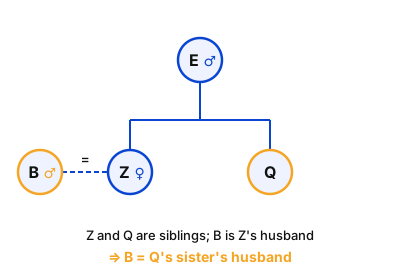
If 'B @ Z – E $ Q', how is B related to Q?
A × Y का अर्थ है “A, Y की माता है”।
A – Y का अर्थ है “A, Y की पुत्री है”।
A $ Y का अर्थ है “A, Y का पिता है”।
A @ Y का अर्थ है “A, Y का पति है”।
यदि 'B @ Z – E $ Q' है, तो B, Q से किस प्रकार संबंधित है?
  1. ABrother's wifeभाई की पत्नी
  2. BSon's wifeपुत्र की पत्नी
  3. CSister’s husbandबहन का पति
  4. DFather's sisterपिता की बहन
Show answer

Concept: Decode: B @ Z (B is husband of Z), Z − E (Z is daughter of E), E $ Q (E is father of Q).

  1. Z is E's daughter and Q is E's child ⇒ Z is Q's sister
  2. B is Z's husband ⇒ B is Q's sister's husband (brother-in-law)

Trick: Q's gender is unknown, so options naming Q's role ('Brother's wife', 'Son's wife') cannot be fixed; only the relation through Z works.

Answer: (C) Sister’s husband

अवधारणा: डिकोड: B @ Z (B, Z का पति), Z − E (Z, E की बेटी), E $ Q (E, Q का पिता)।

  1. Z, E की बेटी और Q, E की संतान ⇒ Z, Q की बहन
  2. B, Z का पति ⇒ B, Q की बहन का पति (जीजा/बहनोई)

ट्रिक: Q का लिंग अज्ञात है, इसलिए Q की भूमिका बताने वाले विकल्प ('Brother's wife', 'Son's wife') तय नहीं हो सकते; केवल Z के माध्यम से संबंध बनता है।

उत्तर: (C) Sister’s husband

RRB NTPC Undergraduate CBT 2General Intelligence and ReasoningBlood RelationsRRB NTPC Undergraduate CBT 2 2025 · 17 Sep Shift 1 →
Q106.
In a certain code language, ‘AIDS’ is coded as ‘7192’ and ‘DASH’ is coded as ‘9215’. What is the code for ‘H’ in the given code language?
एक निश्चित कूट भाषा में, ‘AIDS’ को ‘7192’ के रूप में कूटबद्ध किया जाता है और ‘DASH’ को ‘9215’ के रूप में कूटबद्ध किया जाता है। दी गई कूट भाषा में ‘H’ का कूट क्या है?
  1. A9
  2. B1
  3. C2
  4. D5
Show answer

Concept: Common letters get common digits; the unique letter gets the unique digit.

  1. AIDS → 7192, DASH → 9215; common letters A, D, S ⇒ common digits 9, 1, 2
  2. I = 7 (only in AIDS); H = 5 (only in DASH)

Trick: Find the digit present in DASH's code but absent from AIDS's code: 5.

Answer: (D) 5

अवधारणा: उभयनिष्ठ अक्षरों को उभयनिष्ठ अंक; अद्वितीय अक्षर को अद्वितीय अंक।

  1. AIDS → 7192, DASH → 9215; उभयनिष्ठ अक्षर A, D, S ⇒ उभयनिष्ठ अंक 9, 1, 2
  2. I = 7 (केवल AIDS में); H = 5 (केवल DASH में)

ट्रिक: वह अंक ढूँढें जो DASH के कोड में है पर AIDS के कोड में नहीं: 5।

उत्तर: (D) 5

RRB NTPC Undergraduate CBT 2General Intelligence and ReasoningCoding–DecodingRRB NTPC Undergraduate CBT 2 2025 · 17 Sep Shift 1 →
Q107.
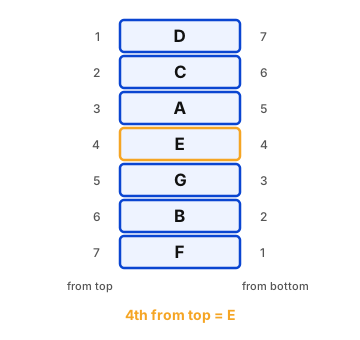
Seven boxes, A, B, C, D, E, F and G, are kept one over the other, but not necessarily in the same order. G is kept third from the bottom. Only two boxes are kept between G and C. Only F is kept below B. E is kept immediately below A. Which box is fourth from the top?
सात बक्से A, B, C, D, E, F और G एक के ऊपर एक रखे गए हैं, लेकिन आवश्यक नहीं कि इसी क्रम में हों। G नीचे से तीसरे स्थान पर रखा गया है। G और C के बीच केवल दो बक्से रखे गए हैं। B के नीचे केवल F रखा गया है। E, A के ठीक नीचे रखा गया है। ऊपर से चौथे स्थान पर कौन-सा बक्सा है?
  1. AB
  2. BE
  3. CA
  4. DF
Show answer

Concept: Number positions 1 (bottom) to 7 (top) and place boxes from the most definite clue.

  1. G = 3; two boxes between G and C ⇒ C = 6
  2. Only F below B ⇒ F = 1, B = 2
  3. E immediately below A in the remaining 4, 5, 7 ⇒ E = 4, A = 5, D = 7
  4. Top to bottom: D, C, A, E, G, B, F ⇒ 4th from top = E

Trick: 'Only F is below B' pins two boxes at once (F bottom, B second) — use such clues first.

Answer: (B) E

अवधारणा: स्थान 1 (नीचे) से 7 (ऊपर) क्रमांकित करें और सबसे निश्चित सुराग से बॉक्स रखें।

  1. G = 3; G और C के बीच दो ⇒ C = 6
  2. B के नीचे केवल F ⇒ F = 1, B = 2
  3. शेष 4, 5, 7 में E ठीक A के नीचे ⇒ E = 4, A = 5, D = 7
  4. ऊपर से नीचे: D, C, A, E, G, B, F ⇒ ऊपर से चौथा = E

ट्रिक: 'B के नीचे केवल F' एक साथ दो बॉक्स तय करता है (F सबसे नीचे, B दूसरा) — ऐसे सुराग पहले प्रयोग करें।

उत्तर: (B) E

RRB NTPC Undergraduate CBT 2General Intelligence and ReasoningBox ArrangementRRB NTPC Undergraduate CBT 2 2025 · 17 Sep Shift 1 →
Q108.
VZNT is related to UYMS in a certain way based on the English alphabetical order. In the same way, RJKS is related to QIJR. To which of the given options is AFLM related, following the same logic?
अंग्रेज़ी वर्णमाला क्रम के आधार पर VZNT, UYMS से एक निश्चित प्रकार से संबंधित है। उसी प्रकार, RJKS, QIJR से संबंधित है। समान तर्क का अनुसरण करते हुए, AFLM दिए गए विकल्पों में से किससे संबंधित है?
  1. ABGMN
  2. BZGML
  3. CZEKL
  4. DYDJK
Show answer

Concept: Each letter moves one step back (−1).

  1. VZNT → UYMS: V−1=U, Z−1=Y, N−1=M, T−1=S; RJKS → QIJR likewise
  2. AFLM: A−1=Z (wrap), F−1=E, L−1=K, M−1=L ⇒ ZEKL

Trick: A−1 wraps to Z. Option B (ZGML) tempts with Z but G is F+1, not F−1.

Answer: (C) ZEKL

अवधारणा: हर अक्षर एक कदम पीछे (−1) जाता है।

  1. VZNT → UYMS: V−1=U, Z−1=Y, N−1=M, T−1=S; RJKS → QIJR भी ऐसे ही
  2. AFLM: A−1=Z (चक्रीय), F−1=E, L−1=K, M−1=L ⇒ ZEKL

ट्रिक: A−1 घूमकर Z बनता है। विकल्प B (ZGML) Z से ललचाता है पर G, F+1 है, F−1 नहीं।

उत्तर: (C) ZEKL

RRB NTPC Undergraduate CBT 2General Intelligence and ReasoningLetter AnalogyRRB NTPC Undergraduate CBT 2 2025 · 17 Sep Shift 1 →
Q109.
In a certain code language, ‘CADS’ is coded as ‘4689’ and ‘DASH’ is coded as ‘6985’. What is the code for ‘H’ in the given code language?
एक निश्चित कूट भाषा में, ‘CADS’ को ‘4689’ के रूप में कूटबद्ध किया जाता है और ‘DASH’ को ‘6985’ के रूप में कूटबद्ध किया जाता है। दी गई कूट भाषा में ‘H’ का कूट क्या है?
  1. A9
  2. B8
  3. C5
  4. D6
Show answer

Concept: Common letters ↔ common digits.

  1. CADS → 4689, DASH → 6985; common letters A, D, S ⇒ common digits 6, 8, 9
  2. C = 4; H = 5

Trick: The digit that appears only in DASH's code (5) is H's code.

Answer: (C) 5

अवधारणा: उभयनिष्ठ अक्षर ↔ उभयनिष्ठ अंक।

  1. CADS → 4689, DASH → 6985; उभयनिष्ठ अक्षर A, D, S ⇒ उभयनिष्ठ अंक 6, 8, 9
  2. C = 4; H = 5

ट्रिक: जो अंक केवल DASH के कोड में है (5) वही H का कोड है।

उत्तर: (C) 5

RRB NTPC Undergraduate CBT 2General Intelligence and ReasoningCoding–DecodingRRB NTPC Undergraduate CBT 2 2025 · 17 Sep Shift 1 →
Q110.
Refer to the following number, symbol series and answer the question. (Counting to be done from left to right only. All numbers are single digit number only.). (Left) ? / & @ 9 # @ % * / \ $ % * < & 5 5 2 > 3 (Right)
How many such numbers are there each of which is immediately preceded by a symbol and also immediately followed by a symbol?
निम्नलिखित संख्या-प्रतीक श्रृंखला को देखिए और प्रश्न का उत्तर दीजिए। (गिनती केवल बाएँ से दाएँ की जानी है। सभी संख्याएँ केवल एक-अंकीय संख्याएँ हैं।) (बाएँ) ? / & @ 9 # @ % * / \ $ % * < & 5 5 2 > 3 (दाएँ)
ऐसी कितनी संख्याएँ हैं, जिनमें से प्रत्येक के ठीक पहले एक प्रतीक है और ठीक बाद भी एक प्रतीक है?
  1. AThreeतीन
  2. BOneएक
  3. CNoneकोई नहीं
  4. DTwoदो
Show answer

Concept: Check each number: symbol on its left AND symbol on its right?

  1. Numbers in the series: 9, 5, 5, 2, 3
  2. @ 9 # ✓; & 5 5 ✗ (5 follows); 5 5 2 ✗; 5 2 > ✗ (5 precedes); > 3 (end) ✗
  3. Count = 1

Trick: Adjacent numbers (5 5 2) kill each other's chances; only an isolated number between symbols counts.

Answer: (B) One

अवधारणा: हर संख्या जाँचें: बाईं ओर प्रतीक और दाईं ओर भी प्रतीक?

  1. श्रृंखला में संख्याएँ: 9, 5, 5, 2, 3
  2. @ 9 # ✓; & 5 5 ✗ (आगे 5); 5 5 2 ✗; 5 2 > ✗ (पीछे 5); > 3 (अंत) ✗
  3. गिनती = 1

ट्रिक: सटी हुई संख्याएँ (5 5 2) एक-दूसरे को अयोग्य कर देती हैं; केवल प्रतीकों के बीच अकेली संख्या गिनी जाती है।

उत्तर: (B) एक

RRB NTPC Undergraduate CBT 2General Intelligence and ReasoningSymbol–Number SeriesRRB NTPC Undergraduate CBT 2 2025 · 17 Sep Shift 1 →
Q111.
If ‘I’ stands for ‘+’, ‘J’ stands for ‘×’, ‘K’ stands for ‘÷’, and ‘L’ stands for ‘−’, what will come in place of the question mark ‘?’ in the following equation?
198 L 89 I (72 K 2) L 3 J 4 = ?
यदि ‘I’ का अर्थ ‘+’, ‘J’ का अर्थ ‘×’, ‘K’ का अर्थ ‘÷’ और ‘L’ का अर्थ ‘−’ है, तो निम्नलिखित समीकरण में प्रश्नवाचक चिह्न ‘?’ के स्थान पर क्या आएगा?
198 L 89 I (72 K 2) L 3 J 4 = ?
  1. A133
  2. B130
  3. C142
  4. D129
Show answer

Concept: Replace letters by operators and apply BODMAS.

  1. 198−89+(72÷2)−3×4
  2. =198−89+36−12=133

Trick: Compute 72÷2=36 and 3×4=12 first; then 198−89=109, 109+36=145, 145−12=133.

Answer: (A) 133

अवधारणा: अक्षरों की जगह संकारक रखें और BODMAS लागू करें।

  1. 198−89+(72÷2)−3×4
  2. =198−89+36−12=133

ट्रिक: पहले 72÷2=36 और 3×4=12; फिर 198−89=109, 109+36=145, 145−12=133।

उत्तर: (A) 133

RRB NTPC Undergraduate CBT 2General Intelligence and ReasoningMathematical OperationsRRB NTPC Undergraduate CBT 2 2025 · 17 Sep Shift 1 →
Q112.
What should come in place of the question mark (?) in the given series?
12 13 15 19 27 ?
दी गई श्रृंखला में प्रश्नवाचक चिह्न (?) के स्थान पर क्या आना चाहिए?
12 13 15 19 27 ?
  1. A44
  2. B45
  3. C43
  4. D42
Show answer

Concept: Differences double each time.

  1. 12→13 (+1), 13→15 (+2), 15→19 (+4), 19→27 (+8)
  2. Next: 27+16=43

Trick: Differences 1,2,4,8,16 are powers of 2 — a very common CBT series.

Answer: (C) 43

अवधारणा: अंतर हर बार दोगुना होता है।

  1. 12→13 (+1), 13→15 (+2), 15→19 (+4), 19→27 (+8)
  2. अगला: 27+16=43

ट्रिक: अंतर 1,2,4,8,16 — 2 की घातें, CBT में बहुत आम श्रृंखला।

उत्तर: (C) 43

RRB NTPC Undergraduate CBT 2General Intelligence and ReasoningNumber SeriesRRB NTPC Undergraduate CBT 2 2025 · 17 Sep Shift 1 →
Q113.
What should come in place of the question mark (?) in the given series?
25 44 39 58 53 ?
दी गई श्रृंखला में प्रश्नवाचक चिह्न (?) के स्थान पर क्या आना चाहिए?
25 44 39 58 53 ?
  1. A72
  2. B58
  3. C82
  4. D77
Show answer

Concept: Alternating differences: +19, −5, +19, −5, …

  1. 25+19=44, 44−5=39, 39+19=58, 58−5=53
  2. Next: 53+19=72

Trick: Up-down-up-down pattern ⇒ alternate terms form their own series: 25,39,53,67 and 44,58,72 (each +14).

Answer: (A) 72

अवधारणा: एकांतर अंतर: +19, −5, +19, −5, …

  1. 25+19=44, 44−5=39, 39+19=58, 58−5=53
  2. अगला: 53+19=72

ट्रिक: ऊपर-नीचे पैटर्न ⇒ एकांतर पद अपनी श्रृंखला बनाते हैं: 25,39,53,67 और 44,58,72 (हर बार +14)।

उत्तर: (A) 72

RRB NTPC Undergraduate CBT 2General Intelligence and ReasoningNumber SeriesRRB NTPC Undergraduate CBT 2 2025 · 17 Sep Shift 1 →
Q114.
In a certain code language, ‘CROW’ is coded as ‘7513’ and ‘WORM’ is coded as ‘7613’. What is the code for ‘M’ in the given code language?
एक निश्चित कूट भाषा में, ‘CROW’ को ‘7513’ के रूप में कूटबद्ध किया जाता है और ‘WORM’ को ‘7613’ के रूप में कूटबद्ध किया जाता है। दी गई कूट भाषा में ‘M’ का कूट क्या है?
  1. A6
  2. B1
  3. C3
  4. D7
Show answer

Concept: Common letters ↔ common digits.

  1. CROW → 7513, WORM → 7613; common letters R, O, W ⇒ common digits 7, 1, 3
  2. C = 5; M = 6

Trick: 6 appears only in WORM's code, so it is M's code.

Answer: (A) 6

अवधारणा: उभयनिष्ठ अक्षर ↔ उभयनिष्ठ अंक।

  1. CROW → 7513, WORM → 7613; उभयनिष्ठ अक्षर R, O, W ⇒ उभयनिष्ठ अंक 7, 1, 3
  2. C = 5; M = 6

ट्रिक: 6 केवल WORM के कोड में है, अतः वही M का कोड है।

उत्तर: (A) 6

RRB NTPC Undergraduate CBT 2General Intelligence and ReasoningCoding–DecodingRRB NTPC Undergraduate CBT 2 2025 · 17 Sep Shift 1 →
Q115.
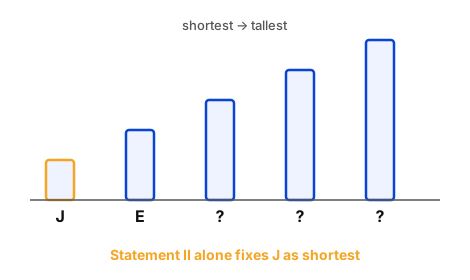
In this question, a question is followed by two statements numbered (I) and (II). You have to decide whether the data provided in the statements are sufficient to answer the question. Read both the statements and decide the appropriate answer. Q. Among 5 sticks, E, J, N, C and K, each having a different height, which stick is the shortest?
Statement: (I) K is taller than C.
Statement: (II) Only one stick is shorter than E. E is shorter than C but taller than J.
इस प्रश्न में, एक प्रश्न के बाद दो कथन (I) और (II) दिए गए हैं। आपको यह तय करना है कि कथनों में दिए गए आँकड़े प्रश्न का उत्तर देने के लिए पर्याप्त हैं या नहीं। दोनों कथनों को पढ़िए और उपयुक्त उत्तर का चयन कीजिए। प्रश्न: 5 छड़ियों E, J, N, C और K में, जिनमें से प्रत्येक की ऊँचाई अलग-अलग है, कौन-सी छड़ी सबसे छोटी है?
कथन: (I) K, C से ऊँची है।
कथन: (II) केवल एक छड़ी E से छोटी है। E, C से छोटी है लेकिन J से ऊँची है।
  1. AData in statement II alone is sufficient to answer the question while data in statement I is notकथन II के आँकड़े अकेले प्रश्न का उत्तर देने के लिए पर्याप्त हैं, जबकि कथन I के आँकड़े पर्याप्त नहीं हैं
  2. BBoth statements I and II together are NOT sufficient to answer the questionकथन I और II दोनों मिलकर भी प्रश्न का उत्तर देने के लिए पर्याप्त नहीं हैं
  3. CData in statement I alone is sufficient to answer the question while data in statement II is notकथन I के आँकड़े अकेले प्रश्न का उत्तर देने के लिए पर्याप्त हैं, जबकि कथन II के आँकड़े पर्याप्त नहीं हैं
  4. DBoth statements I and II together (and not statement 1 alone or statement II alone) are sufficient to answer the questionकथन I और II दोनों मिलकर (न कि केवल कथन I या केवल कथन II) प्रश्न का उत्तर देने के लिए पर्याप्त हैं
Show answer

Concept: Check whether each statement alone identifies the shortest stick.

  1. Statement II: only one stick shorter than E ⇒ E is 2nd from bottom; J < E ⇒ J is the shortest. Sufficient.
  2. Statement I: K > C alone fixes nothing about the shortest. Not sufficient.

Trick: 'Only one is shorter than E' plus 'J is shorter than E' names that one ⇒ J. Statement I is a distractor.

Answer: (A) Data in statement II alone is sufficient to answer the question while data in statement I is not

अवधारणा: जाँचें कि क्या हर कथन अकेले सबसे छोटी छड़ी बताता है।

  1. कथन II: E से केवल एक छड़ी छोटी ⇒ E नीचे से दूसरी; J < E ⇒ J सबसे छोटी। पर्याप्त।
  2. कथन I: K > C अकेले सबसे छोटी के बारे में कुछ तय नहीं करता। अपर्याप्त।

ट्रिक: 'E से केवल एक छोटी' और 'J, E से छोटी' मिलकर उसी एक का नाम बताते हैं ⇒ J। कथन I भटकाने वाला है।

उत्तर: (A) कथन II के आँकड़े अकेले पर्याप्त हैं, कथन I के नहीं

RRB NTPC Undergraduate CBT 2General Intelligence and ReasoningData Sufficiency – OrderingRRB NTPC Undergraduate CBT 2 2025 · 17 Sep Shift 1 →
Q116.
Based on the English alphabetical order, three of the following four letter-cluster pairs are alike in a certain way and thus form a group. Which is the one that does not belong to that group?
(Note: The odd man out is not based on the number of consonants/vowels or their position in the letter-cluster.)
अंग्रेज़ी वर्णमाला क्रम के आधार पर, निम्नलिखित चार अक्षर-समूह युग्मों में से तीन एक निश्चित प्रकार से समान हैं और इस प्रकार एक समूह बनाते हैं। वह कौन-सा है जो उस समूह से संबंधित नहीं है?
(नोट: विषम युग्म व्यंजनों/स्वरों की संख्या या अक्षर-समूह में उनकी स्थिति पर आधारित नहीं है।)
  1. AGJ – FI
  2. BJK – IJ
  3. CKD – HB
  4. DCA – BZ
Show answer

Concept: Find the shift from the first cluster to the second in each pair.

  1. GJ–FI: −1, −1; JK–IJ: −1, −1; CA–BZ: C−1=B, A−1=Z (wrap) — all (−1, −1)
  2. KD–HB: K−3=H, D−2=B — different

Trick: Don't be fooled by the wrap-around in CA–BZ; it still follows −1. The pair with uneven shifts (−3, −2) is the odd one.

Answer: (C) KD – HB

अवधारणा: हर जोड़े में पहले समूह से दूसरे तक शिफ्ट निकालें।

  1. GJ–FI: −1, −1; JK–IJ: −1, −1; CA–BZ: C−1=B, A−1=Z (चक्रीय) — सभी (−1, −1)
  2. KD–HB: K−3=H, D−2=B — अलग

ट्रिक: CA–BZ के चक्रीय घुमाव से भ्रमित न हों; वह भी −1 ही है। असमान शिफ्ट (−3, −2) वाला जोड़ा विषम है।

उत्तर: (C) KD – HB

RRB NTPC Undergraduate CBT 2General Intelligence and ReasoningLetter Analogy – Odd One OutRRB NTPC Undergraduate CBT 2 2025 · 17 Sep Shift 1 →
Q117.
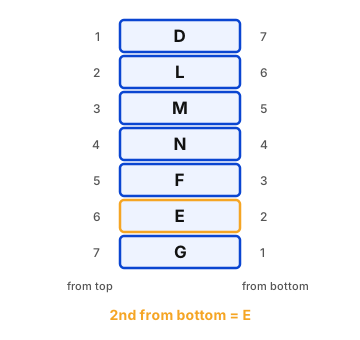
Seven boxes, L, M, N, D, E, F and G, are kept one over the other but not necessarily in the same order. Only two boxes are kept below F. M is kept third from the top. D is kept immediately above L. E is kept at some place below N but at some place above G. L is kept immediately above M. Which box is kept second from the bottom?
सात बक्से L, M, N, D, E, F और G एक के ऊपर एक रखे गए हैं, लेकिन आवश्यक नहीं कि इसी क्रम में हों। F के नीचे केवल दो बक्से रखे गए हैं। M ऊपर से तीसरे स्थान पर रखा गया है। D, L के ठीक ऊपर रखा गया है। E, N के नीचे किसी स्थान पर लेकिन G के ऊपर किसी स्थान पर रखा गया है। L, M के ठीक ऊपर रखा गया है। नीचे से दूसरे स्थान पर कौन-सा बक्सा रखा गया है?
  1. AG
  2. BD
  3. CN
  4. DE
Show answer

Concept: Number positions 1 (bottom) to 7 (top).

  1. Two boxes below F ⇒ F = 3; M third from top ⇒ M = 5
  2. L immediately above M ⇒ L = 6; D immediately above L ⇒ D = 7
  3. N above E above G in the remaining 1, 2, 4 ⇒ N = 4, E = 2, G = 1
  4. Top to bottom: D, L, M, N, F, E, G ⇒ second from bottom = E

Trick: Chain clues (D above L above M) lock three consecutive positions at once — place the chain, then fill the gaps.

Answer: (D) E

अवधारणा: स्थान 1 (नीचे) से 7 (ऊपर) क्रमांकित करें।

  1. F के नीचे दो ⇒ F = 3; M ऊपर से तीसरा ⇒ M = 5
  2. L ठीक M के ऊपर ⇒ L = 6; D ठीक L के ऊपर ⇒ D = 7
  3. शेष 1, 2, 4 में N ऊपर, फिर E, फिर G ⇒ N = 4, E = 2, G = 1
  4. ऊपर से नीचे: D, L, M, N, F, E, G ⇒ नीचे से दूसरा = E

ट्रिक: श्रृंखला सुराग (D, L के ऊपर, L, M के ऊपर) एक साथ तीन लगातार स्थान तय कर देते हैं — पहले श्रृंखला रखें, फिर खाली जगह भरें।

उत्तर: (D) E

RRB NTPC Undergraduate CBT 2General Intelligence and ReasoningBox ArrangementRRB NTPC Undergraduate CBT 2 2025 · 17 Sep Shift 1 →
Q118.
6 is related to 32 following a certain logic. Following the same logic, 2 is related to 12. To which of the following is 9 related, following the same logic?
(NOTE : Operations should be performed on the whole numbers, without breaking down the numbers into its constituent digits. E.g. 13 – Operations on 13 such as adding /subtracting /multiplying etc. to 13 can be performed. Breaking down 13 into 1 and 3 and then performing mathematical operations on 1 and 3 is not allowed.)
एक निश्चित तर्क के अनुसार 6, 32 से संबंधित है। उसी तर्क के अनुसार 2, 12 से संबंधित है। समान तर्क का अनुसरण करते हुए 9 निम्नलिखित में से किससे संबंधित है?
(नोट: संक्रियाएँ पूर्ण संख्याओं पर की जानी चाहिए, संख्याओं को उनके घटक अंकों में तोड़े बिना। उदाहरण के लिए 13 – 13 पर संक्रियाएँ जैसे 13 में जोड़ना/घटाना/गुणा करना आदि की जा सकती हैं। 13 को 1 और 3 में तोड़कर फिर 1 और 3 पर गणितीय संक्रियाएँ करने की अनुमति नहीं है।)
  1. A49
  2. B52
  3. C45
  4. D47
Show answer

Concept: Find one rule that maps both given pairs, treating numbers as wholes.

  1. 6×5+2=32 ✓ and 2×5+2=12 ✓
  2. 9×5+2=47

Trick: Try n×k+c first: (32−12)÷(6−2)=5 gives the multiplier, then c=2.

Answer: (D) 47

अवधारणा: दोनों जोड़ों पर लागू होने वाला एक नियम खोजें, संख्याओं को पूर्ण मानकर।

  1. 6×5+2=32 ✓ और 2×5+2=12 ✓
  2. 9×5+2=47

ट्रिक: पहले n×k+c आज़माएँ: (32−12)÷(6−2)=5 गुणक देता है, फिर c=2।

उत्तर: (D) 47

RRB NTPC Undergraduate CBT 2General Intelligence and ReasoningNumber AnalogyRRB NTPC Undergraduate CBT 2 2025 · 17 Sep Shift 1 →
Q119.
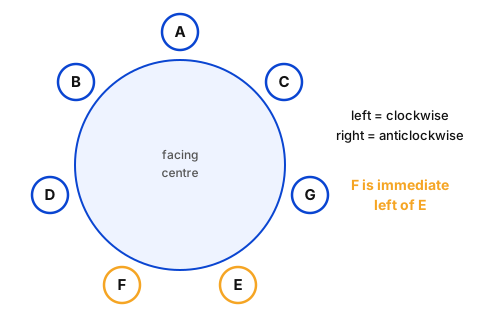
A, B, C, D, E, F and G are sitting around a circular table facing the Center. G is sitting second to the left of A. A is sitting third to the left of F. G is sitting to the immediate right of E. B is sitting to the immediate left of D. What is the position of F with respect to E?
A, B, C, D, E, F और G एक वृत्ताकार मेज़ के चारों ओर केंद्र की ओर मुख करके बैठे हैं। G, A के बाईं ओर दूसरे स्थान पर बैठा है। A, F के बाईं ओर तीसरे स्थान पर बैठा है। G, E के ठीक दाईं ओर बैठा है। B, D के ठीक बाईं ओर बैठा है। E के सापेक्ष F का स्थान क्या है?
  1. ASecond to the rightदाईं ओर दूसरा
  2. BImmediate rightठीक दाईं ओर
  3. CImmediate leftठीक बाईं ओर
  4. DSecond to the leftबाईं ओर दूसरा
Show answer

Concept: Facing the centre: 'left' is clockwise, 'right' is anticlockwise. Fix A and place others.

  1. G is 2nd to the left of A ⇒ G is 2 places clockwise from A; A is 3rd to the left of F ⇒ A is 3 places clockwise from F, i.e. F is 3 places anticlockwise from A. Clockwise so far: A, _, G, _, F, _, _
  2. G is immediate right of E ⇒ E is just clockwise after G: A, _, G, E, F, _, _
  3. B immediate left of D ⇒ D then B clockwise in the last two: A, C, G, E, F, D, B
  4. F is immediately clockwise after E ⇒ F is to the immediate left of E

Trick: Draw a circle of 7 dots and mark 'L = clockwise' once; then every clue is a simple count.

Answer: (C) Immediate left

अवधारणा: केंद्र की ओर मुख: 'बायाँ' दक्षिणावर्त, 'दायाँ' वामावर्त। A को स्थिर रखकर बाकी रखें।

  1. G, A के बाएँ दूसरा ⇒ G, A से 2 स्थान दक्षिणावर्त; A, F के बाएँ तीसरा ⇒ A, F से 3 स्थान दक्षिणावर्त, यानी F, A से 3 स्थान वामावर्त। अब तक दक्षिणावर्त क्रम: A, _, G, _, F, _, _
  2. G, E के ठीक दाएँ ⇒ E, G के ठीक बाद दक्षिणावर्त: A, _, G, E, F, _, _
  3. B, D के ठीक बाएँ ⇒ अंतिम दो में D फिर B: A, C, G, E, F, D, B
  4. F, E के ठीक बाद दक्षिणावर्त ⇒ F, E के ठीक बाएँ

ट्रिक: 7 बिंदुओं का वृत्त बनाकर एक बार 'L = दक्षिणावर्त' लिख लें; फिर हर सुराग सिर्फ गिनती है।

उत्तर: (C) ठीक बाएँ (Immediate left)

RRB NTPC Undergraduate CBT 2General Intelligence and ReasoningCircular Seating ArrangementRRB NTPC Undergraduate CBT 2 2025 · 17 Sep Shift 1 →
Q120.
In a certain code language, ‘PACE’ is coded as ‘8471’ and ‘CAMP’ is coded as ‘7412’. What is the code for ‘M’ in the given code language?
एक निश्चित कूट भाषा में, ‘PACE’ को ‘8471’ के रूप में कूटबद्ध किया जाता है और ‘CAMP’ को ‘7412’ के रूप में कूटबद्ध किया जाता है। दी गई कूट भाषा में ‘M’ का कूट क्या है?
  1. A1
  2. B2
  3. C7
  4. D4
Show answer

Concept: Common letters ↔ common digits.

  1. PACE → 8471, CAMP → 7412; common letters P, A, C ⇒ common digits 7, 4, 1
  2. E = 8 (only in PACE); M = 2 (only in CAMP)

Trick: The digit unique to CAMP's code (2) is M's code.

Answer: (B) 2

अवधारणा: उभयनिष्ठ अक्षर ↔ उभयनिष्ठ अंक।

  1. PACE → 8471, CAMP → 7412; उभयनिष्ठ अक्षर P, A, C ⇒ उभयनिष्ठ अंक 7, 4, 1
  2. E = 8 (केवल PACE में); M = 2 (केवल CAMP में)

ट्रिक: CAMP के कोड का अद्वितीय अंक (2) ही M का कोड है।

उत्तर: (B) 2

RRB NTPC Undergraduate CBT 2General Intelligence and ReasoningCoding–DecodingRRB NTPC Undergraduate CBT 2 2025 · 17 Sep Shift 1 →