Question bank

Q&A: practice questions with answers

Search questions on any topic. Filter by exam category, exam, subject and topic, try the question, then open the answer and explanation.

Courses – airGurukul

3,200 questions found.

Q2541.
In a certain code language, ‘TYRE’ is coded as ‘8526’ and ‘BYTE’ is coded as ‘5986’. What is the code for ‘B’ in that language?
एक निश्चित कूट भाषा में, ‘TYRE’ को ‘8526’ लिखा जाता है और ‘BYTE’ को ‘5986’ लिखा जाता है। उस भाषा में ‘B’ के लिए कूट क्या है?
  1. A9
  2. B2
  3. C6
  4. D8
Show answer

Concept: Common letters match common digits; leftover matches leftover.

  1. TYRE = 8526, BYTE = 5986
  2. Common T, Y, E ↔ 5, 8, 6
  3. Leftover: R = 2, B = 9

Trick: Strike out common digits 5, 8, 6 from 5986 → 9 left for B.

Answer: (A) 9

अवधारणा: सामान्य अक्षर ↔ सामान्य अंक; बचा अक्षर ↔ बचा अंक।

  1. TYRE = 8526, BYTE = 5986
  2. सामान्य T, Y, E ↔ 5, 8, 6
  3. बचे: R = 2, B = 9

ट्रिक: 5986 में से 5, 8, 6 हटाएँ → B = 9।

उत्तर: (A) 9
RRB Technician Grade IIIGeneral Intelligence and ReasoningCoding – common letter methodRRB Technician Grade III 2025 · 10 Mar Shift 1 →
Q2542.
Seven boxes A, B, C, D, E, F and G are kept one over the other but not necessarily in the same order. B is kept third from the top. Only three boxes are kept between D and B. C is kept immediately below G but above F. A is kept below E but above B. How many boxes are kept between C and A?
सात बक्से A, B, C, D, E, F और G एक के ऊपर एक रखे गए हैं, परंतु आवश्यक नहीं कि इसी क्रम में हों। B ऊपर से तीसरे स्थान पर रखा गया है। D और B के बीच केवल तीन बक्से रखे गए हैं। C, G के ठीक नीचे परंतु F के ऊपर रखा गया है। A, E के नीचे परंतु B के ऊपर रखा गया है। C और A के बीच कितने बक्से रखे गए हैं?
  1. ATwoदो
  2. BOneएक
  3. CThreeतीन
  4. DFourचार
Show answer

Concept: Number positions 1 (top) to 7 (bottom).

  1. B = 3; three between D and B → D = 7
  2. A below E but above B → E = 1, A = 2
  3. G, C (just below G), F fill 4, 5, 6
  4. Between C (5) and A (2): positions 3, 4 → two boxes

Trick: Place the fixed boxes first; blocks then fit only one way.

Answer: (A) Two

अवधारणा: स्थान 1 (ऊपर) से 7 (नीचे) तक मानें।

  1. B = 3; D और B के बीच तीन → D = 7
  2. A, E के नीचे और B के ऊपर → E = 1, A = 2
  3. G, C (G के ठीक नीचे), F → 4, 5, 6
  4. C (5) और A (2) के बीच 3, 4 → दो बक्से

ट्रिक: पहले निश्चित बक्से रखें; बाकी एक ही तरीके से बैठते हैं।

उत्तर: (A) दो

RRB Technician Grade IIIGeneral Intelligence and ReasoningBox arrangement (vertical)RRB Technician Grade III 2025 · 10 Mar Shift 1 →
Q2543.
If ‘A’ stands for ‘÷’, ‘B’ stands for ‘×’, ‘C’ stands for ‘+’ and ‘D’ stands for ‘−‘, what will come in place of the question mark ‘?’ in the following equation?
147 A 3 C 51 D 16 B 3 = ?
यदि ‘A’ का अर्थ ‘÷’ है, ‘B’ का अर्थ ‘×’ है, ‘C’ का अर्थ ‘+’ है और ‘D’ का अर्थ ‘−‘ है, तो निम्नलिखित समीकरण में प्रश्न चिह्न ‘?’ के स्थान पर क्या आएगा?
147 A 3 C 51 D 16 B 3 = ?
  1. A52
  2. B59
  3. C50
  4. D54​
Show answer

Concept: Replace letters by signs, then apply BODMAS.

  1. 147÷3+51−16×3
  2. =49+51−48
  3. =52

Yaad rakhein: Always do ÷ and × before + and −.

Answer: (A) 52

अवधारणा: अक्षरों के स्थान पर चिह्न रखें, फिर BODMAS।

  1. 147÷3+51−16×3
  2. =49+51−48
  3. =52

याद रखें: + और − से पहले ÷ और × करें।

उत्तर: (A) 52

RRB Technician Grade IIIGeneral Intelligence and ReasoningMathematical operations – symbol substitutionRRB Technician Grade III 2025 · 10 Mar Shift 1 →
Q2544.
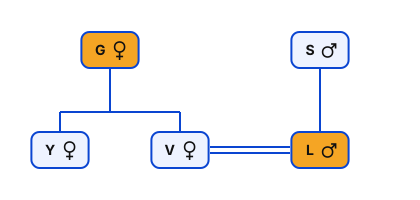
G is the mother of Y. Y is the sister of V. S is the father of L. L is the husband of V. How is G related to L?
G, Y की माता है। Y, V की बहन है। S, L का पिता है। L, V का पति है। G का L से क्या संबंध है?
  1. AMotherमाता
  2. BWife's sisterपत्नी की बहन
  3. CWife's motherपत्नी की माता
  4. DSisterबहन
Show answer

Concept: Link G to L through V.

  1. G is mother of Y; Y is sister of V → G is mother of V
  2. L is husband of V → V is L's wife
  3. G = L's wife's mother (mother-in-law)

Trick: S (L's father) is extra information – ignore it.

Answer: (C) Wife's mother

अवधारणा: G को V के माध्यम से L से जोड़ें।

  1. G, Y की माँ; Y, V की बहन → G, V की माँ
  2. L, V का पति → V, L की पत्नी
  3. G = L की पत्नी की माँ (सास)

ट्रिक: S (L का पिता) अतिरिक्त जानकारी है – छोड़ दें।

उत्तर: (C) पत्नी की माता

RRB Technician Grade IIIGeneral Intelligence and ReasoningBlood relationsRRB Technician Grade III 2025 · 10 Mar Shift 1 →
Q2545.
In a certain code language,
P + Q means ‘P is the father of Q’
P – Q means ‘P is the wife of Q’
P x Q means ‘P is the brother of Q’
P ÷ Q means ‘P is the son of Q’
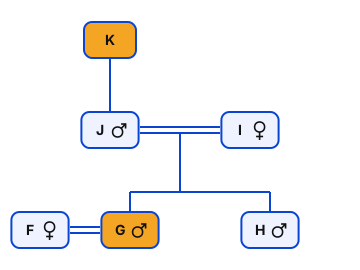
Based on the above, how is G related to K if ‘F – G x H ÷ I – J ÷ K’?
एक निश्चित कूट भाषा में,
P + Q का अर्थ है ‘P, Q का पिता है’
P – Q का अर्थ है ‘P, Q की पत्नी है’
P x Q का अर्थ है ‘P, Q का भाई है’
P ÷ Q का अर्थ है ‘P, Q का पुत्र है’
उपर्युक्त के आधार पर, यदि ‘F – G x H ÷ I – J ÷ K’ है, तो G का K से क्या संबंध है?
  1. ASon’s Sonपुत्र का पुत्र
  2. BMother’s brotherमाता का भाई
  3. CFather’s brotherपिता का भाई
  4. DMother’s fatherमाता का पिता
Show answer

Concept: Decode each symbol and move from G to K.

  1. G × H: G is brother of H; H ÷ I: H is son of I → G is son of I
  2. I − J: I is wife of J → G is son of J
  3. J ÷ K: J is son of K
  4. So G is K's son's son

Trick: G is male (he is a 'brother'), so 'son's son' fits; 'Mother's …' options are out.

Answer: (A) Son’s Son

अवधारणा: हर चिह्न डिकोड करें और G से K तक चलें।

  1. G × H: G, H का भाई; H ÷ I: H, I का पुत्र → G, I का पुत्र
  2. I − J: I, J की पत्नी → G, J का पुत्र
  3. J ÷ K: J, K का पुत्र
  4. G = K के पुत्र का पुत्र (पोता)

ट्रिक: G पुरुष है ('भाई'), इसलिए 'पुत्र का पुत्र' सही।

उत्तर: (A) पुत्र का पुत्र

RRB Technician Grade IIIGeneral Intelligence and ReasoningCoded blood relationsRRB Technician Grade III 2025 · 10 Mar Shift 1 →
Q2546.
Refer to the following letter series and answer the question that follows. Counting to be done from left to right.
(Left) D J L O E A H O A F A G E B G A N R S H X (Right)
How many such consonants are there, each of which is immediately preceded by a consonant and also immediately followed by a vowel?
निम्नलिखित अक्षर श्रृंखला को देखिए और उसके बाद दिए गए प्रश्न का उत्तर दीजिए। गिनती बाएँ से दाएँ की जानी है।
(बाएँ) D J L O E A H O A F A G E B G A N R S H X (दाएँ)
ऐसे कितने व्यंजन हैं, जिनमें से प्रत्येक के ठीक पहले एक व्यंजन है और ठीक बाद एक स्वर भी है?
  1. AThreeतीन
  2. BOneएक
  3. CTwoदो
  4. DNoneएक भी नहीं
Show answer

Concept: Find consonant–consonant–vowel triplets.

  1. J L O ✓
  2. B G A ✓
  3. Others fail (e.g. J in D J L is followed by a consonant; R in N R S is followed by S, not a vowel)
  4. Total = 2

Trick: Look for vowels first, then check the two letters before each.

Answer: (C) Two

अवधारणा: व्यंजन–व्यंजन–स्वर वाले त्रिक खोजें।

  1. J L O ✓
  2. B G A ✓
  3. बाकी कोई शर्त पूरी नहीं करता
  4. कुल = 2

ट्रिक: पहले स्वर ढूँढें, फिर उनसे पहले के दो अक्षर जाँचें।

उत्तर: (C) दो

RRB Technician Grade IIIGeneral Intelligence and ReasoningLetter series – conditionsRRB Technician Grade III 2025 · 10 Mar Shift 1 →
Q2547.
Based on the English alphabetical order, three of the following four letter-clusters are alike in a certain way and thus form a group. Which letter-cluster DOES NOT belong to that group?
(Note: The odd one out is not based on the number of consonants/vowels or their position in the letter-cluster.)
अंग्रेज़ी वर्णमाला क्रम के आधार पर, निम्नलिखित चार अक्षर-समूहों में से तीन किसी निश्चित प्रकार से एकसमान हैं और इस प्रकार एक समूह बनाते हैं। कौन-सा अक्षर-समूह उस समूह से संबंधित नहीं है?
(ध्यान दें: असंगत अक्षर-समूह, उस अक्षर-समूह में व्यंजनों/स्वरों की संख्या या उनके स्थान पर आधारित नहीं है।)
  1. ANPM
  2. BKHG
  3. CGIF
  4. DMOL
Show answer

Concept: Check gaps between consecutive letters.

  1. NPM: +2, −3
  2. GIF: +2, −3; MOL: +2, −3
  3. KHG: −3, −1 → odd

Trick: Three clusters move forward first; KHG moves backward at once.

Answer: (B) KHG

अवधारणा: क्रमागत अक्षरों के अंतर जाँचें।

  1. NPM: +2, −3
  2. GIF, MOL: +2, −3
  3. KHG: −3, −1 → विषम

ट्रिक: बाकी तीन पहले आगे जाते हैं; KHG सीधे पीछे जाता है।

उत्तर: (B) KHG

RRB Technician Grade IIIGeneral Intelligence and ReasoningLetter clusters – odd one outRRB Technician Grade III 2025 · 10 Mar Shift 1 →
Q2548.
Select the pair that follows the same pattern as the one followed by the two pairs given below. Both pairs follow the same pattern.
KNG : MLF
GRN : IPM
उस युग्म का चयन कीजिए जो उसी पैटर्न का अनुसरण करता है जिसका अनुसरण नीचे दिए गए दो युग्म करते हैं। दोनों युग्म एक ही पैटर्न का अनुसरण करते हैं।
KNG : MLF
GRN : IPM
  1. AJSN : LQM
  2. BIGH : KDG
  3. CBGM : DEK
  4. DKHR : MFP
Show answer

Concept: Find the letter-wise shift: +2, −2, −1.

  1. KNG → MLF: +2, −2, −1
  2. GRN → IPM: +2, −2, −1
  3. JSN → LQM: J +2 L, S −2 Q, N −1 M ✓

Trick: Check the last letter (−1) first: BGM : DEK (M → K) and KHR : MFP (R → P) fail; then the middle (−2): IGH : KDG (G → D) fails.

Answer: (A) JSN : LQM

अवधारणा: अक्षरवार खिसकाव: +2, −2, −1।

  1. KNG → MLF: +2, −2, −1
  2. GRN → IPM: +2, −2, −1
  3. JSN → LQM: +2, −2, −1 ✓

ट्रिक: पहले अंतिम अक्षर (−1) जाँचें: BGM : DEK और KHR : MFP हटें; फिर बीच (−2): IGH : KDG (G → D) हटे।

उत्तर: (A) JSN : LQM

RRB Technician Grade IIIGeneral Intelligence and ReasoningLetter pair analogyRRB Technician Grade III 2025 · 10 Mar Shift 1 →
Q2549.
EHLF is related to NQUO in a certain way based on the English alphabetical order. In the same way, HKOI is related to QTXR. To which of the following is JMQK related, following the same logic?
अंग्रेज़ी वर्णमाला क्रम के आधार पर EHLF एक निश्चित प्रकार से NQUO से संबंधित है। उसी प्रकार, HKOI, QTXR से संबंधित है। समान तर्क का अनुसरण करते हुए, JMQK निम्नलिखित में से किससे संबंधित है?
  1. AVSTZ
  2. BVSZT
  3. CSVTZ
  4. DSVZT
Show answer

Concept: Every letter moves forward by 9.

  1. EHLF → NQUO: E(5)→N(14), +9 each
  2. JMQK: J→S, M→V, Q→Z, K→T
  3. Answer: SVZT

Trick: J + 9 = S removes options starting with V; Q + 9 = Z picks SVZT.

Answer: (D) SVZT

अवधारणा: हर अक्षर 9 आगे जाता है।

  1. EHLF → NQUO: E(5)→N(14), हर अक्षर +9
  2. JMQK: J→S, M→V, Q→Z, K→T
  3. उत्तर: SVZT

ट्रिक: J + 9 = S से V वाले विकल्प हटें; Q + 9 = Z से SVZT।

उत्तर: (D) SVZT

RRB Technician Grade IIIGeneral Intelligence and ReasoningLetter analogy – +9 shiftRRB Technician Grade III 2025 · 10 Mar Shift 1 →
Q2550.
Each vowel in the word PANDEMIC is changed to the letter immediately following it in the English alphabetical order and each consonant is changed to the letter immediately preceding it in the English alphabetical order. Which of the following letters will appear exactly twice in the new group of letters thus formed?
शब्द PANDEMIC के प्रत्येक स्वर को अंग्रेज़ी वर्णमाला क्रम में उसके ठीक अगले अक्षर से बदल दिया जाता है और प्रत्येक व्यंजन को अंग्रेज़ी वर्णमाला क्रम में उसके ठीक पिछले अक्षर से बदल दिया जाता है। इस प्रकार बने अक्षरों के नए समूह में निम्नलिखित में से कौन-सा अक्षर ठीक दो बार आएगा?
  1. AM
  2. BB
  3. CC
  4. DO
Show answer

Concept: Vowels → next letter; consonants → previous letter.

  1. P→O, A→B, N→M, D→C, E→F, M→L, I→J, C→B
  2. New group: O B M C F L J B
  3. B appears twice

Trick: A (vowel) → B and C (consonant) → B both land on B.

Answer: (B) B

अवधारणा: स्वर → अगला अक्षर; व्यंजन → पिछला अक्षर।

  1. P→O, A→B, N→M, D→C, E→F, M→L, I→J, C→B
  2. नया समूह: O B M C F L J B
  3. B दो बार आता है

ट्रिक: A (स्वर) → B और C (व्यंजन) → B, दोनों B बनते हैं।

उत्तर: (B) B

RRB Technician Grade IIIGeneral Intelligence and ReasoningLetter shifting – vowels and consonantsRRB Technician Grade III 2025 · 10 Mar Shift 1 →
Q2551.
Which of the following methods is commonly used to extract metals low in the activity series, such as mercury and copper, from their ores?
सक्रियता श्रेणी में निचले स्थान पर स्थित धातुओं, जैसे पारा और ताँबा, को उनके अयस्कों से निष्कर्षित करने के लिए सामान्यतः निम्नलिखित में से कौन-सी विधि उपयोग की जाती है?
  1. ADisplacement by carbon monoxide gasकार्बन मोनोऑक्साइड गैस द्वारा विस्थापन
  2. BReduction with aluminium powderऐलुमिनियम चूर्ण द्वारा अपचयन
  3. CRoastingभर्जन (Roasting)
  4. DElectrolysis of molten oreगलित अयस्क का विद्युत-अपघटन
Show answer

Concept: Metals low in the activity series are obtained just by heating (roasting) their sulphide ores in air.

  1. Cinnabar: 2HgS + 3O₂ → 2HgO + 2SO₂ (roasting); 2HgO → 2Hg + O₂ on further heating
  2. Copper: 2Cu₂S + 3O₂ → 2Cu₂O + 2SO₂; then Cu₂S + 2Cu₂O → 6Cu + SO₂
  3. Electrolysis is needed only for highly reactive metals like Na, Al

Yaad rakhein: Low reactivity → heat alone; middle (Zn, Fe) → reduction with C; top (Na, K, Al) → electrolysis.

Answer: (C) Roasting

अवधारणा: कम सक्रिय धातुएँ उनके सल्फाइड अयस्क को हवा में गर्म (भर्जन) करने से ही मिल जाती हैं।

  1. सिनेबार: 2HgS + 3O₂ → 2HgO + 2SO₂; गर्म करने पर 2HgO → 2Hg + O₂
  2. कॉपर: Cu₂S का भर्जन → Cu₂O; फिर Cu₂S + 2Cu₂O → 6Cu + SO₂
  3. विद्युत-अपघटन केवल Na, Al जैसी अधिक सक्रिय धातुओं के लिए

याद रखें: कम सक्रिय → केवल ताप; मध्यम (Zn, Fe) → कार्बन से अपचयन; अधिक सक्रिय → विद्युत-अपघटन।

उत्तर: (C) भर्जन (Roasting)

RRB Technician Grade IIIGeneral ScienceExtraction of metals low in reactivity seriesRRB Technician Grade III 2025 · 10 Mar Shift 1 →
Q2552.
Which characteristic best describes parenchyma?
मृदूतक (parenchyma) का सबसे उपयुक्त वर्णन कौन-सा लक्षण करता है?
  1. ACells arranged in a single layer with guarding function.रक्षात्मक कार्य वाली एकल परत में व्यवस्थित कोशिकाएँ।
  2. BLiving cells with thin walls, capable of division in young tissues.पतली भित्ति वाली सजीव कोशिकाएँ, जो नए ऊतकों में विभाजन में सक्षम होती हैं।
  3. CRigid cells that withstand bending.दृढ़ कोशिकाएँ जो मुड़ने का प्रतिरोध करती हैं।
  4. DDead at maturity with thick secondary walls.परिपक्व होने पर मृत, मोटी द्वितीयक भित्ति वाली कोशिकाएँ।
Show answer

Concept: Parenchyma is the simple permanent tissue made of living, thin-walled cells.

  1. Cells are living, thin-walled, loosely packed with intercellular spaces
  2. Young parenchyma cells can divide; they store food and help in repair
  3. Rigid bending-resistant cells = collenchyma; dead thick-walled = sclerenchyma; single protective layer = epidermis

Yaad rakhein: P-C-S: Parenchyma (thin, living) → Collenchyma (corner thickening, flexible) → Sclerenchyma (dead, lignified).

Answer: (B) Living cells with thin walls, capable of division in young tissues.

अवधारणा: मृदूतक जीवित, पतली भित्ति वाली कोशिकाओं से बना सरल स्थायी ऊतक है।

  1. कोशिकाएँ जीवित, पतली भित्ति, ढीली व्यवस्था, अंतरकोशिकीय स्थान
  2. नई कोशिकाएँ विभाजन कर सकती हैं; भोजन संग्रह करती हैं
  3. लचीलापन = स्थूलकोण ऊतक; मृत मोटी भित्ति = दृढ़ ऊतक; एक परत सुरक्षा = एपिडर्मिस

याद रखें: P-C-S: पैरेनकाइमा (पतली, जीवित) → कॉलेनकाइमा (कोनों पर मोटी) → स्क्लेरेनकाइमा (मृत)।

उत्तर: (B) पतली भित्ति वाली सजीव कोशिकाएँ, जो नए ऊतकों में विभाजन में सक्षम होती हैं।

RRB Technician Grade IIIGeneral SciencePlant tissues – parenchymaRRB Technician Grade III 2025 · 10 Mar Shift 1 →
Q2553.
Which of the following is NOT a factor responsible for grain storage losses?
निम्नलिखित में से कौन-सा, अनाज भंडारण में होने वाली हानि के लिए उत्तरदायी कारक नहीं है?
  1. AHigh-quality packagingउच्च-गुणवत्ता वाली पैकेजिंग
  2. BInadequate moisture and temperatureअनुपयुक्त नमी और तापमान
  3. CFungi and bacteriaकवक और जीवाणु
  4. DRodentsकृंतक (Rodents)
Show answer

Concept: Storage losses come from biotic (pests, rodents, microbes) and abiotic (moisture, temperature) factors.

  1. Rodents, insects, fungi and bacteria spoil stored grain
  2. Wrong moisture and temperature encourage these pests
  3. High-quality packaging actually prevents loss – so it is NOT a cause

Trick: In 'NOT a cause' questions, pick the option that sounds like a solution.

Answer: (A) High-quality packaging

अवधारणा: भंडारण हानि जैविक (कीट, चूहे, सूक्ष्मजीव) और अजैविक (नमी, तापमान) कारकों से होती है।

  1. चूहे, कीट, कवक, जीवाणु अनाज खराब करते हैं
  2. अनुचित नमी और तापमान इन्हें बढ़ाते हैं
  3. अच्छी पैकेजिंग हानि रोकती है – यह कारण नहीं है

ट्रिक: 'कारण नहीं' वाले प्रश्न में जो विकल्प समाधान जैसा लगे वही उत्तर।

उत्तर: (A) उच्च-गुणवत्ता वाली पैकेजिंग

RRB Technician Grade IIIGeneral ScienceStorage of grains – causes of lossRRB Technician Grade III 2025 · 10 Mar Shift 1 →
Q2554.
A farmer walks along the boundary of a square field with side 11 m, completing one round in 20 seconds. After walking for 3 minutes and 20 seconds, what is the magnitude of the displacement from his starting point?
एक किसान 11 m भुजा वाले एक वर्गाकार खेत की सीमा के अनुदिश चलता है और 20 सेकंड में एक चक्कर पूरा करता है। 3 मिनट 20 सेकंड तक चलने के बाद, उसके आरंभिक बिंदु से विस्थापन का परिमाण कितना है?
  1. A11 m
  2. B15.56 m
  3. C22 m
  4. D0 m
Show answer

Concept: Displacement after complete rounds of a closed path is zero.

  1. Time = 3 min 20 s = 200 s
  2. Rounds = 200÷20=10 complete rounds
  3. He is back at the start → displacement = 0 m

Trick: If time ÷ time-per-round is a whole number, displacement is 0 – no need to use the side length.

Answer: (D) 0 m

अवधारणा: बंद पथ के पूरे चक्कर लगाने पर विस्थापन शून्य होता है।

  1. समय = 3 मिनट 20 s = 200 s
  2. चक्कर = 200÷20=10 पूरे चक्कर
  3. किसान प्रारंभिक बिंदु पर → विस्थापन = 0 m

ट्रिक: समय ÷ एक चक्कर का समय पूर्ण संख्या हो तो विस्थापन 0 – भुजा की ज़रूरत नहीं।

उत्तर: (D) 0 m

RRB Technician Grade IIIGeneral ScienceDistance vs displacement – closed pathRRB Technician Grade III 2025 · 10 Mar Shift 1 →
Q2555.
Why is regular and controlled irrigation important for crop production?
फसल उत्पादन के लिए नियमित और नियंत्रित सिंचाई क्यों महत्वपूर्ण है?
  1. AIt makes plants dependent on artificial watering.यह पौधों को कृत्रिम सिंचाई पर निर्भर बना देती है।
  2. BIt reduces fertilizer use by supplying nutrients through water.यह जल के माध्यम से पोषक तत्व प्रदान करके उर्वरक के उपयोग को कम करती है।
  3. CIt ensures optimal water supply at critical growth stages.यह वृद्धि की महत्वपूर्ण अवस्थाओं में जल की इष्टतम आपूर्ति सुनिश्चित करती है।
  4. DIt increases soil salinity and prevents root growth.यह मृदा की लवणता बढ़ाती है और जड़ों की वृद्धि को रोकती है।
Show answer

Concept: Irrigation is supplying water to crops at proper intervals.

  1. Crops need water most at critical stages like germination, flowering and grain filling
  2. Timely, controlled irrigation gives optimum moisture and better yield
  3. Excess irrigation causes salinity and waterlogging – the opposite of the goal

Yaad rakhein: Drip and sprinkler irrigation save water and supply it right at the roots.

Answer: (C) It ensures optimal water supply at critical growth stages.

अवधारणा: सिंचाई = फसलों को उचित अंतराल पर पानी देना।

  1. अंकुरण, फूल आने और दाना भरने जैसी अवस्थाओं में पानी सबसे ज़रूरी
  2. नियंत्रित सिंचाई से उचित नमी और अधिक उपज
  3. अधिक सिंचाई से लवणता और जलभराव होता है

याद रखें: ड्रिप और स्प्रिंकलर सिंचाई पानी बचाती हैं।

उत्तर: (C) यह वृद्धि की महत्वपूर्ण अवस्थाओं में जल की इष्टतम आपूर्ति सुनिश्चित करती है।

RRB Technician Grade IIIGeneral ScienceIrrigation in crop productionRRB Technician Grade III 2025 · 10 Mar Shift 1 →
Q2556.
An object with a mass of 15 kg is placed 8 m above the ground. How much potential energy does the object have? (Using g = 9.8 m/s2)
15 kg द्रव्यमान की एक वस्तु भूमि से 8 m ऊपर रखी गई है। वस्तु में कितनी स्थितिज ऊर्जा है? (g = 9.8 m/s2 का उपयोग करें)
  1. A1500 J
  2. B784 J
  3. C1176 J
  4. D980 J
Show answer

Concept: PE=mgh.

  1. PE=15×9.8×8
  2. =15×78.4=1176 J

Trick: 15×8=120; 120×9.8=1200−24=1176.

Answer: (C) 1176 J

अवधारणा: स्थितिज ऊर्जा = mgh।

  1. PE=15×9.8×8
  2. =1176 J

ट्रिक: 15×8=120; 120×9.8=1200−24=1176।

उत्तर: (C) 1176 J

RRB Technician Grade IIIGeneral ScienceGravitational potential energyRRB Technician Grade III 2025 · 10 Mar Shift 1 →
Q2557.
A scientist observed that an iron railing near the sea corroded faster than the same type of railing in a dry city. What could the main reason be?
एक वैज्ञानिक ने देखा कि समुद्र के पास लगी लोहे की रेलिंग, किसी शुष्क शहर में लगी उसी प्रकार की रेलिंग की तुलना में अधिक तेज़ी से संक्षारित हुई। इसका मुख्य कारण क्या हो सकता है?
  1. ASea air contains salt and moisture, which accelerates rusting.समुद्री वायु में लवण और नमी होती है, जो जंग लगने की प्रक्रिया को तीव्र करती है।
  2. BThe sea air is more humid, diluting the rusting process.समुद्री वायु अधिक आर्द्र होती है, जो जंग लगने की प्रक्रिया को तनु कर देती है।
  3. CThe iron near the sea is exposed to more sunlight.समुद्र के पास का लोहा अधिक सूर्य के प्रकाश के संपर्क में रहता है।
  4. DThe city air has less oxygen, preventing rust.शहर की वायु में ऑक्सीजन कम होती है, जिससे जंग नहीं लगता।
Show answer

Concept: Rusting needs both oxygen and water; dissolved salts speed it up.

  1. Sea air has high moisture and salt (NaCl)
  2. Salt water is a good electrolyte → faster electrochemical rusting
  3. Dry city air has little moisture, so rusting is slow

Yaad rakhein: Rust = hydrated iron(III) oxide, Fe₂O₃·xH₂O.

Answer: (A) Sea air contains salt and moisture, which accelerates rusting.

अवधारणा: जंग लगने के लिए ऑक्सीजन और जल दोनों चाहिए; घुले लवण इसे तेज़ करते हैं।

  1. समुद्री हवा में अधिक नमी और नमक (NaCl)
  2. खारा पानी अच्छा विद्युत-अपघट्य → जंग तेज़
  3. शुष्क शहर में नमी कम, जंग धीमी

याद रखें: जंग = जलयोजित आयरन(III) ऑक्साइड, Fe₂O₃·xH₂O।

उत्तर: (A) समुद्री वायु में लवण और नमी होती है, जो जंग लगने की प्रक्रिया को तीव्र करती है।

RRB Technician Grade IIIGeneral ScienceCorrosion (rusting) of ironRRB Technician Grade III 2025 · 10 Mar Shift 1 →
Q2558.
After fertilisation in humans, where does the growth and development of the embryo mainly occur?
मनुष्यों में निषेचन के बाद, भ्रूण की वृद्धि और विकास मुख्य रूप से कहाँ होता है?
  1. AFallopian tubeअंडवाहिनी (Fallopian tube)
  2. BVaginaयोनि
  3. CUterusगर्भाशय
  4. DOvaryअंडाशय
Show answer

Concept: Fertilisation occurs in the fallopian tube; the embryo grows in the uterus.

  1. Zygote divides and moves down to the uterus
  2. It implants in the uterine wall; placenta supplies nutrition
  3. The foetus develops there for about 9 months

Trick: Fertilisation = fallopian tube (oviduct); development = uterus (womb).

Answer: (C) Uterus

अवधारणा: निषेचन अंडवाहिनी (फैलोपियन ट्यूब) में होता है; भ्रूण का विकास गर्भाशय में।

  1. युग्मनज विभाजित होकर गर्भाशय में पहुँचता है
  2. गर्भाशय की भित्ति में आरोपित; प्लेसेंटा से पोषण
  3. लगभग 9 माह तक वहीं विकास

ट्रिक: निषेचन = अंडवाहिनी; विकास = गर्भाशय।

उत्तर: (C) गर्भाशय

RRB Technician Grade IIIGeneral ScienceHuman reproduction – implantationRRB Technician Grade III 2025 · 10 Mar Shift 1 →
Q2559.
A wire has a resistance of 10 Ω. If it is stretched to three times its original length (volume remaining constant), its new resistance will be _______.
एक तार का प्रतिरोध (resistance) 10 Ω है। यदि इसे खींचकर इसकी मूल लंबाई का तीन गुना कर दिया जाए (आयतन स्थिर रहता है), तो इसका नया प्रतिरोध _______ होगा।
  1. A90 Ω
  2. B3.33 Ω
  3. C10 Ω
  4. D30 Ω
Show answer

Concept: R=ρLA; with volume constant, stretching n times makes R′=n2R.

  1. Length ×3 → area ÷3 (volume constant)
  2. R′=ρ(3L)A/3=9R
  3. R′=9×10=90Ω

Trick: Stretch n times → resistance n2 times.

Answer: (A) 90 Ω

अवधारणा: R=ρLA; आयतन स्थिर रहने पर n गुना खींचने से R′=n2R।

  1. लंबाई ×3 → क्षेत्रफल ÷3
  2. R′=ρ(3L)A/3=9R
  3. R′=9×10=90Ω

ट्रिक: n गुना खींचें → प्रतिरोध n2 गुना।

उत्तर: (A) 90 Ω

RRB Technician Grade IIIGeneral ScienceResistance of a stretched wireRRB Technician Grade III 2025 · 10 Mar Shift 1 →
Q2560.
Which of the following tissues is responsible for limb and body movement?
निम्नलिखित में से कौन-सा ऊतक अंगों और शरीर की गति के लिए उत्तरदायी है?
  1. AEpithelial tissueउपकला ऊतक
  2. BCardiac muscleहृदय पेशी
  3. CSmooth muscleचिकनी पेशी
  4. DSkeletal muscleकंकाल पेशी
Show answer

Concept: Skeletal (striated, voluntary) muscles are attached to bones and move limbs.

  1. Skeletal muscle: striated, voluntary, multinucleate
  2. Smooth muscle: involuntary (gut, blood vessels)
  3. Cardiac muscle: only in heart

Yaad rakhein: Voluntary movement = skeletal muscle; it is also called striated muscle.

Answer: (D) Skeletal muscle

अवधारणा: कंकाल (रेखित, ऐच्छिक) पेशियाँ हड्डियों से जुड़ी होती हैं और अंगों को गति देती हैं।

  1. कंकाल पेशी: रेखित, ऐच्छिक, बहुकेंद्रकीय
  2. चिकनी पेशी: अनैच्छिक (आहारनाल, रक्त वाहिकाएँ)
  3. हृदय पेशी: केवल हृदय में

याद रखें: ऐच्छिक गति = कंकाल पेशी (रेखित पेशी)।

उत्तर: (D) कंकाल पेशी

RRB Technician Grade IIIGeneral ScienceMuscle tissue – skeletal muscleRRB Technician Grade III 2025 · 10 Mar Shift 1 →