Question bank

Q&A: practice questions with answers

Search questions on any topic. Filter by exam category, exam, subject and topic, try the question, then open the answer and explanation.

Courses – airGurukul

3,200 questions found.

Q2861.
Which of the following is a characteristic feature of skeletal muscle?
निम्नलिखित में से कौन-सी कंकाल पेशी (skeletal muscle) की एक अभिलाक्षणिक विशेषता है?
  1. AInvoluntary controlअनैच्छिक नियंत्रण
  2. BNon-striated appearanceअरेखित स्वरूप
  3. CStriated appearanceरेखित स्वरूप
  4. DSingle, central nucleusएकल, केंद्रीय केंद्रक
Show answer

Concept: Skeletal (striated/voluntary) muscle.

  1. Cells are long, cylindrical, unbranched, multinucleate.
  2. They show light and dark bands → striated.
  3. They are voluntary; involuntary, non-striated, single-nucleus describes smooth muscle.

Yaad rakhein: Skeletal: striated + voluntary; Smooth: non-striated + involuntary; Cardiac: striated + involuntary.

Answer: (C) Striated appearance

अवधारणा: कंकाल (रेखित/ऐच्छिक) पेशी।

हल:

  1. कोशिकाएँ लंबी, बेलनाकार, अशाखित, बहुकेंद्रकी।
  2. हल्की-गहरी पट्टियाँ → रेखित।
  3. ऐच्छिक; अनैच्छिक, अरेखित, एक केंद्रक = चिकनी पेशी।

याद रखें: कंकाल: रेखित + ऐच्छिक; चिकनी: अरेखित + अनैच्छिक; हृदय: रेखित + अनैच्छिक।

उत्तर: (C) रेखित स्वरूप
RRB Technician Grade IIIGeneral ScienceAnimal tissues – skeletal muscleRRB Technician Grade III 2025 · 9 Mar Shift 1 →
Q2862.
Which structural characteristic allows epithelial tissue to function as a protective layer?
कौन-सी संरचनात्मक विशेषता उपकला ऊतक (epithelial tissue) को एक सुरक्षात्मक परत के रूप में कार्य करने में सक्षम बनाती है?
  1. ACells are connected exclusively by desmosomes.कोशिकाएँ केवल डेस्मोसोम (desmosomes) द्वारा जुड़ी होती हैं।
  2. BCells are long and multinucleated.कोशिकाएँ लंबी और बहुकेंद्रकीय होती हैं।
  3. CCells are tightly packed with minimal intercellular space.कोशिकाएँ न्यूनतम अंतरकोशिकीय स्थान के साथ सघन रूप से व्यवस्थित होती हैं।
  4. DCells are loosely arranged with abundant extracellular matrix.कोशिकाएँ प्रचुर बाह्यकोशिकीय आधात्री (matrix) के साथ शिथिल रूप से व्यवस्थित होती हैं।
Show answer

Concept: Epithelium forms a continuous covering sheet.

  1. Its cells are tightly packed with very little intercellular space.
  2. This forms a barrier against injury, germs and water loss (e.g. skin).
  3. Loose cells with abundant matrix describe connective tissue.

Yaad rakhein: Epithelium = no gaps, no blood vessels; connective tissue = cells in matrix.

Answer: (C) Cells are tightly packed with minimal intercellular space.

अवधारणा: उपकला एक सतत आवरण बनाती है।

हल:

  1. कोशिकाएँ सटी हुई, अंतरकोशिकीय स्थान बहुत कम।
  2. यह चोट, कीटाणु व जल-हानि से अवरोध बनाती है (जैसे त्वचा)।
  3. ढीली कोशिकाएँ व अधिक आधात्री = संयोजी ऊतक।

याद रखें: उपकला = बिना खाली स्थान; संयोजी ऊतक = आधात्री में कोशिकाएँ।

उत्तर: (C) कोशिकाएँ न्यूनतम अंतरकोशिकीय स्थान के साथ सघन रूप से व्यवस्थित होती हैं।

RRB Technician Grade IIIGeneral ScienceAnimal tissues – epitheliumRRB Technician Grade III 2025 · 9 Mar Shift 1 →
Q2863.
Read the following three statements and choose the correct option:
Statement I: Formula unit mass is applicable only to ionic compounds, not covalent ones.
Statement II: Formula unit mass is the sum of the atomic masses of all atoms in the empirical formula of an ionic compound.
Statement III: The formula unit mass of sodium chloride (NaCl) is 58.5 u.
निम्नलिखित तीन कथनों को पढ़िए और सही विकल्प चुनिए:
कथन I: सूत्र इकाई द्रव्यमान (formula unit mass) केवल आयनिक यौगिकों पर लागू होता है, सहसंयोजक यौगिकों पर नहीं।
कथन II: सूत्र इकाई द्रव्यमान किसी आयनिक यौगिक के मूलानुपाती सूत्र में उपस्थित सभी परमाणुओं के परमाणु द्रव्यमानों का योग है।
कथन III: सोडियम क्लोराइड (NaCl) का सूत्र इकाई द्रव्यमान 58.5 u है।
  1. AOnly I and II are correct.केवल I और II सही हैं।
  2. BAll I, II and III are correct.I, II और III सभी सही हैं।
  3. COnly I and III are correct.केवल I और III सही हैं।
  4. DOnly II and III are correct.केवल II और III सही हैं।
Show answer

Concept: Formula unit mass is used for ionic compounds (made of ions).

  1. I: The term is used for substances whose particles are ions – ✓.
  2. II: It is the sum of atomic masses of all atoms in the formula unit – ✓.
  3. III: NaCl = 23 + 35.5 = 58.5 u – ✓.

Yaad rakhein: Covalent molecules → 'molecular mass'; ionic compounds → 'formula unit mass'.

Answer: (B) All I, II and III are correct.

अवधारणा: सूत्र इकाई द्रव्यमान आयनिक यौगिकों के लिए प्रयुक्त होता है।

हल:

  1. I: यह शब्द आयनों से बने पदार्थों के लिए – ✓
  2. II: सूत्र इकाई के सभी परमाणुओं के परमाणु द्रव्यमानों का योग – ✓
  3. III: NaCl = 23 + 35.5 = 58.5 u – ✓

याद रखें: सहसंयोजक अणु → 'आण्विक द्रव्यमान'; आयनिक यौगिक → 'सूत्र इकाई द्रव्यमान'।

उत्तर: (B) I, II और III सभी सही हैं।

RRB Technician Grade IIIGeneral ScienceFormula unit massRRB Technician Grade III 2025 · 9 Mar Shift 1 →
Q2864.
Which of the following is a characteristic feature of all organic compounds?
निम्नलिखित में से कौन-सी सभी कार्बनिक यौगिकों की एक अभिलाक्षणिक विशेषता है?
  1. AThey always form ionic bondsवे सदैव आयनिक आबंध बनाते हैं
  2. BThey always contain carbonउनमें सदैव कार्बन होता है
  3. CThey always contain oxygenउनमें सदैव ऑक्सीजन होती है
  4. DThey always contain nitrogenउनमें सदैव नाइट्रोजन होती है
Show answer

Concept: Organic compounds are compounds of carbon.

  1. Every organic compound contains carbon (usually with hydrogen).
  2. Oxygen/nitrogen are present only in some (e.g. methane CH₄ has neither).
  3. They mostly form covalent, not ionic, bonds.

Trick: Methane CH₄ alone disproves 'always oxygen/nitrogen'.

Answer: (B) They always contain carbon

अवधारणा: कार्बनिक यौगिक कार्बन के यौगिक हैं।

हल:

  1. हर कार्बनिक यौगिक में कार्बन (प्रायः हाइड्रोजन के साथ) होता है।
  2. ऑक्सीजन/नाइट्रोजन केवल कुछ में (मीथेन CH₄ में दोनों नहीं)।
  3. ये प्रायः सहसंयोजक बंध बनाते हैं, आयनिक नहीं।

ट्रिक: केवल मीथेन CH₄ से 'हमेशा O/N' वाले विकल्प कट जाते हैं।

उत्तर: (B) उनमें सदैव कार्बन होता है

RRB Technician Grade IIIGeneral ScienceOrganic compoundsRRB Technician Grade III 2025 · 9 Mar Shift 1 →
Q2865.
Ethanoic acid reacts with sodium carbonate to produce:
एथेनॉइक अम्ल सोडियम कार्बोनेट के साथ अभिक्रिया करके क्या बनाता है?
  1. ASodium hydroxide and CO₂सोडियम हाइड्रॉक्साइड और CO₂
  2. BSodium acetate, hydrogen, and waterसोडियम ऐसीटेट, हाइड्रोजन और जल
  3. CSodium acetate and carbon monoxideसोडियम ऐसीटेट और कार्बन मोनोऑक्साइड
  4. DSodium acetate, carbon dioxide, and waterसोडियम ऐसीटेट, कार्बन डाइऑक्साइड और जल
Show answer

Concept: Acid + carbonate → salt + water + CO₂.

  1. 2CH₃COOH + Na₂CO₃ → 2CH₃COONa + H₂O + CO₂
  2. Products: sodium acetate (ethanoate), water, carbon dioxide.

Yaad rakhein: Any acid + carbonate/hydrogencarbonate gives brisk effervescence of CO₂ (turns lime water milky).

Answer: (D) Sodium acetate, carbon dioxide, and water

अवधारणा: अम्ल + कार्बोनेट → लवण + जल + CO₂

हल:

  1. 2CH₃COOH + Na₂CO₃ → 2CH₃COONa + H₂O + CO₂
  2. उत्पाद: सोडियम एसीटेट, जल, कार्बन डाइऑक्साइड

याद रखें: अम्ल + कार्बोनेट से CO₂ की बुदबुदाहट (चूने का पानी दूधिया)।

उत्तर: (D) सोडियम ऐसीटेट, कार्बन डाइऑक्साइड और जल

RRB Technician Grade IIIGeneral ScienceCarboxylic acids – reaction with carbonateRRB Technician Grade III 2025 · 9 Mar Shift 1 →
Q2866.
The quality and taste of honey mainly depends on which of the following factors?
शहद की गुणवत्ता और स्वाद मुख्य रूप से निम्नलिखित में से किस कारक पर निर्भर करता है?
  1. AAge of the beesमधुमक्खियों की आयु
  2. BType of beehiveमधुमक्खी के छत्ते का प्रकार
  3. CType and availability of flowersफूलों का प्रकार और उपलब्धता
  4. DNumber of worker bees in the colonyकॉलोनी में श्रमिक मधुमक्खियों की संख्या
Show answer

Concept: Honey is made from nectar collected from flowers (pasturage).

  1. The value/taste of honey depends on the pasturage – the flowers available to bees.
  2. Kind and amount of flowers decide taste and quantity.

Yaad rakhein: Pasturage = flowers available for nectar and pollen collection.

Answer: (C) Type and availability of flowers

अवधारणा: शहद फूलों के मकरंद से बनता है (चरागाह / pasturage)।

हल:

  1. शहद का स्वाद व गुणवत्ता मधुमक्खियों को उपलब्ध फूलों पर निर्भर।
  2. फूलों का प्रकार व मात्रा स्वाद और उत्पादन तय करते हैं।

याद रखें: Pasturage = मकरंद व पराग के लिए उपलब्ध फूल।

उत्तर: (C) फूलों का प्रकार और उपलब्धता

RRB Technician Grade IIIGeneral ScienceApiculture – honey qualityRRB Technician Grade III 2025 · 9 Mar Shift 1 →
Q2867.
In some plants, a meristematic tissue is found at the base of leaves or near the nodes, separating regions of a mature tissue. Which tissue is this?
कुछ पौधों में, एक विभज्योतक ऊतक पत्तियों के आधार पर या पर्वों (nodes) के निकट पाया जाता है, जो परिपक्व ऊतक के क्षेत्रों को अलग करता है। यह कौन-सा ऊतक है?
  1. AIntercalary meristemअंतर्वेशी विभज्योतक (Intercalary meristem)
  2. BDifferentiated tissueविभेदित ऊतक
  3. CApical meristemशीर्षस्थ विभज्योतक (Apical meristem)
  4. DLateral meristemपार्श्व विभज्योतक (Lateral meristem)
Show answer

Concept: Meristems are named by position.

  1. Intercalary meristem: at the base of leaves or internodes (near nodes) – e.g. grasses.
  2. Apical: at root/shoot tips (length). Lateral: cambium (girth).

Trick: Inter-calary = in between mature tissues.

Answer: (A) Intercalary meristem

अवधारणा: विभज्योतक का नाम उसकी स्थिति से।

हल:

  1. अंतर्विष्ट विभज्योतक: पत्तियों के आधार या पर्वसंधि के पास – जैसे घास।
  2. शीर्षस्थ: जड़/तने के सिरे (लंबाई); पार्श्व: कैम्बियम (मोटाई)।

ट्रिक: अंतर्विष्ट = परिपक्व ऊतकों के बीच में।

उत्तर: (A) अंतर्वेशी विभज्योतक (Intercalary meristem)

RRB Technician Grade IIIGeneral ScienceMeristematic tissue – intercalaryRRB Technician Grade III 2025 · 9 Mar Shift 1 →
Q2868.
Which of the following statements is/are INCORRECT about the loudness and softness of a sound wave?
(i) A loud sound has more amplitude as compared to a soft sound.
(ii) A loud sound has lesser energy associated with it as compared to a soft sound. (iii) Loudness of sound wave is the measure of the response of our heart to the sound.
ध्वनि तरंग की प्रबलता और मृदुता के संबंध में निम्नलिखित में से कौन-सा/से कथन गलत है/हैं?
(i) प्रबल ध्वनि का आयाम मृदु ध्वनि की तुलना में अधिक होता है।
(ii) प्रबल ध्वनि से संबद्ध ऊर्जा मृदु ध्वनि की तुलना में कम होती है। (iii) ध्वनि तरंग की प्रबलता, ध्वनि के प्रति हमारे हृदय की अनुक्रिया की माप है।
  1. ABoth (ii) and (iii)(ii) और (iii) दोनों
  2. BOnly (i)केवल (i)
  3. CBoth (i) and (iii)(i) और (iii) दोनों
  4. DOnly (ii)केवल (ii)
Show answer

Concept: Loudness depends on amplitude; it is the ear's response.

  1. (i) Loud sound has larger amplitude – correct.
  2. (ii) Loud sound has MORE energy, not less – incorrect.
  3. (iii) Loudness is the response of our EAR, not heart – incorrect.

Yaad rakhein: Amplitude ↑ → energy ↑ → loudness ↑.

Answer: (A) Both (ii) and (iii)

अवधारणा: प्रबलता आयाम पर निर्भर; यह कान की अनुक्रिया है।

हल:

  1. (i) तेज ध्वनि का आयाम अधिक – सही
  2. (ii) तेज ध्वनि में ऊर्जा अधिक होती है, कम नहीं – गलत
  3. (iii) प्रबलता कान की अनुक्रिया है, हृदय की नहीं – गलत

याद रखें: आयाम ↑ → ऊर्जा ↑ → प्रबलता ↑

उत्तर: (A) (ii) और (iii) दोनों

RRB Technician Grade IIIGeneral ScienceSound – loudnessRRB Technician Grade III 2025 · 9 Mar Shift 1 →
Q2869.
Vibration, which produces sound, is defined as a kind of rapid _____________.
कंपन, जो ध्वनि उत्पन्न करता है, को एक प्रकार की तीव्र _____________ के रूप में परिभाषित किया जाता है।
  1. ASingle directional displacementएकदिशीय विस्थापन
  2. BLinear forward motionरैखिक अग्र गति
  3. CTo and fro motion of an objectकिसी वस्तु की आगे-पीछे की गति
  4. DSlow lateral motionधीमी पार्श्व गति
Show answer

Concept: Sound is produced by vibrating objects.

  1. Vibration = rapid to-and-fro (back-and-forth) motion of an object about its mean position.
  2. E.g. a struck tuning fork or a plucked string.

Yaad rakhein: Sound needs a medium; it cannot travel in vacuum.

Answer: (C) To and fro motion of an object

अवधारणा: ध्वनि कंपन करती वस्तुओं से उत्पन्न होती है।

हल:

  1. कंपन = वस्तु की माध्य स्थिति के इधर-उधर तेज गति।
  2. जैसे स्वरित्र या खींचा गया तार।

याद रखें: ध्वनि को माध्यम चाहिए; निर्वात में नहीं चलती।

उत्तर: (C) किसी वस्तु की आगे-पीछे की गति

RRB Technician Grade IIIGeneral ScienceSound – vibrationRRB Technician Grade III 2025 · 9 Mar Shift 1 →
Q2870.
For a body moving with uniform acceleration, average velocity equals ______.
एकसमान त्वरण से गतिमान किसी वस्तु के लिए, औसत वेग ______ के बराबर होता है।
  1. AZeroशून्य
  2. B(Initial velocity + Final velocity)/2(प्रारंभिक वेग + अंतिम वेग)/2
  3. CInitial velocityप्रारंभिक वेग
  4. DFinal velocityअंतिम वेग
Show answer

Concept: For uniform acceleration, velocity changes linearly with time.

  1. Average velocity = u+v2.
  2. Then s = average velocity ×t=(u+v)t2.

Yaad rakhein: Valid only for uniform acceleration; otherwise use total displacement ÷ total time.

Answer: (B) (Initial velocity + Final velocity)/2

अवधारणा: एकसमान त्वरण में वेग समय के साथ रैखिक बदलता है।

हल:

  1. औसत वेग = u+v2
  2. तब s = औसत वेग ×t=(u+v)t2

याद रखें: यह केवल एकसमान त्वरण पर; अन्यथा कुल विस्थापन ÷ कुल समय।

उत्तर: (B) (प्रारंभिक वेग + अंतिम वेग)/2

RRB Technician Grade IIIGeneral ScienceMotion – average velocityRRB Technician Grade III 2025 · 9 Mar Shift 1 →
Q2871.
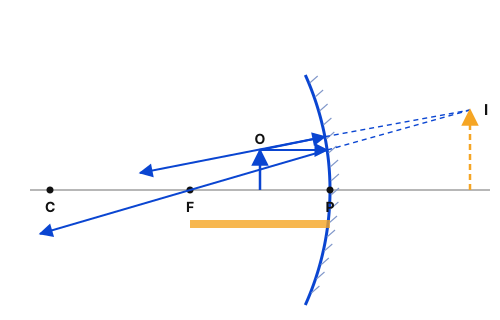
A concave mirror produces a virtual, erect and magnified image when the object is positioned _________.
एक अवतल दर्पण आभासी, सीधा और आवर्धित प्रतिबिंब तब बनाता है जब वस्तु _________ रखी जाती है।
  1. ABetween the centre of curvature and the focusवक्रता केंद्र और फोकस के बीच
  2. BBeyond the centre of curvatureवक्रता केंद्र से परे
  3. CBetween the focus and the poleफोकस और ध्रुव के बीच
  4. DAt the principal focusमुख्य फोकस पर
Show answer

Concept: A concave mirror gives a virtual, erect image only for an object between P and F.

  1. Object between F and P → image behind the mirror, virtual, erect, enlarged.
  2. At F → image at infinity; between C and F → real, inverted, enlarged.

Yaad rakhein: This is why concave mirrors are used as shaving/makeup mirrors.

Answer: (C) Between the focus and the pole

अवधारणा: अवतल दर्पण केवल P और F के बीच वस्तु पर आभासी, सीधा प्रतिबिंब देता है।

हल:

  1. F और P के बीच → दर्पण के पीछे, आभासी, सीधा, बड़ा।
  2. F पर → अनंत पर; C और F के बीच → वास्तविक, उल्टा, बड़ा।

याद रखें: इसीलिए दाढ़ी बनाने/मेकअप दर्पण में अवतल दर्पण।

उत्तर: (C) फोकस और ध्रुव के बीच

RRB Technician Grade IIIGeneral ScienceConcave mirror – image formationRRB Technician Grade III 2025 · 9 Mar Shift 1 →
Q2872.
Which of the following can happen when non-biodegradable waste is dumped into water bodies?
जब अजैव निम्नीकरणीय (non-biodegradable) अपशिष्ट को जलाशयों में फेंका जाता है, तो निम्नलिखित में से क्या हो सकता है?
  1. AIt pollutes the water and harms aquatic life.यह जल को प्रदूषित करता है और जलीय जीवों को हानि पहुँचाता है।
  2. BIt helps aquatic plants grow.यह जलीय पौधों की वृद्धि में सहायता करता है।
  3. CIt cleans the water.यह जल को स्वच्छ करता है।
  4. DIt quickly dissolves in water.यह जल में शीघ्रता से घुल जाता है।
Show answer

Concept: Non-biodegradable waste is not broken down by microbes.

  1. Plastics etc. persist for years, pollute water and harm aquatic animals (choking, toxins).
  2. They do not dissolve, clean water or help plants grow.

Yaad rakhein: Such substances can also enter food chains and accumulate (biomagnification).

Answer: (A) It pollutes the water and harms aquatic life.

अवधारणा: अजैव निम्नीकरणीय अपशिष्ट सूक्ष्मजीवों से नहीं टूटता।

हल:

  1. प्लास्टिक आदि वर्षों तक रहते हैं, जल प्रदूषित कर जलीय जीवों को हानि पहुँचाते हैं।
  2. ये न घुलते हैं, न जल साफ करते हैं, न पौधों की वृद्धि करते हैं।

याद रखें: ऐसे पदार्थ खाद्य श्रृंखला में जमा होते हैं (जैव आवर्धन)।

उत्तर: (A) यह जल को प्रदूषित करता है और जलीय जीवों को हानि पहुँचाता है।

RRB Technician Grade IIIGeneral ScienceEnvironment – non-biodegradable wasteRRB Technician Grade III 2025 · 9 Mar Shift 1 →
Q2873.
Sexual maturation in humans results in:
मनुष्यों में लैंगिक परिपक्वता का परिणाम होता है:
  1. ALoss of reproductive capacity and growthजनन क्षमता और वृद्धि की हानि
  2. BDevelopment of reproductive organs and secondary sexual characteristicsजनन अंगों और द्वितीयक लैंगिक लक्षणों का विकास
  3. CDecrease in hormone levels and loss of reproductive organsहार्मोन स्तरों में कमी और जनन अंगों की हानि
  4. DOnly physical growthकेवल शारीरिक वृद्धि
Show answer

Concept: At puberty the body becomes sexually mature.

  1. Reproductive organs mature and start producing gametes and hormones.
  2. Secondary sexual characters appear (e.g. facial hair, voice change in boys; breast development in girls).

Yaad rakhein: Hormones: testosterone in males, oestrogen in females.

Answer: (B) Development of reproductive organs and secondary sexual characteristics

अवधारणा: यौवनारंभ में शरीर लैंगिक रूप से परिपक्व होता है।

हल:

  1. जनन अंग परिपक्व होकर युग्मक व हार्मोन बनाने लगते हैं।
  2. द्वितीयक लैंगिक लक्षण (लड़कों में दाढ़ी, आवाज़ भारी; लड़कियों में स्तन विकास)।

याद रखें: हार्मोन: पुरुष – टेस्टोस्टेरोन, महिला – एस्ट्रोजन।

उत्तर: (B) जनन अंगों और द्वितीयक लैंगिक लक्षणों का विकास

RRB Technician Grade IIIGeneral ScienceHuman reproduction – pubertyRRB Technician Grade III 2025 · 9 Mar Shift 1 →
Q2874.
Plastids, which are found only in plant cells, help in:
लवक (plastids), जो केवल पादप कोशिकाओं में पाए जाते हैं, किसमें सहायता करते हैं?
  1. Aphotosynthesis and storageप्रकाश संश्लेषण और भंडारण
  2. Bexcretionउत्सर्जन
  3. Ctransportपरिवहन
  4. Drespirationश्वसन
Show answer

Concept: Plastids are of two main types.

  1. Chloroplasts (with chlorophyll) carry out photosynthesis.
  2. Leucoplasts (colourless) store starch, oil and protein.

Yaad rakhein: Plastids, like mitochondria, have their own DNA and ribosomes.

Answer: (A) photosynthesis and storage

अवधारणा: लवक मुख्यतः दो प्रकार के।

हल:

  1. हरितलवक (क्लोरोफिल युक्त) – प्रकाश संश्लेषण।
  2. अवर्णीलवक (रंगहीन) – स्टार्च, तेल, प्रोटीन का संचय।

याद रखें: लवक और माइटोकॉन्ड्रिया दोनों में अपना DNA व राइबोसोम होते हैं।

उत्तर: (A) प्रकाश संश्लेषण और भंडारण

RRB Technician Grade IIIGeneral ScienceCell organelles – plastidsRRB Technician Grade III 2025 · 9 Mar Shift 1 →
Q2875.
What is the audible frequency range for human beings?
मनुष्यों के लिए श्रव्य आवृत्ति परिसर क्या है?
  1. A200 Hz to 200,000 Hz200 Hz से 200,000 Hz
  2. B20 kHz to 200 kHz20 kHz से 200 kHz
  3. C2 Hz to 200 Hz2 Hz से 200 Hz
  4. D20 Hz to 20,000 Hz20 Hz से 20,000 Hz
Show answer

Concept: Human ear hears 20 Hz to 20 kHz.

  1. Below 20 Hz = infrasound (e.g. earthquakes, whales).
  2. Above 20,000 Hz = ultrasound (dogs, bats; used in sonar, scans).

Yaad rakhein: 20 Hz to 20 kHz = 20 Hz to 20,000 Hz.

Answer: (D) 20 Hz to 20,000 Hz

अवधारणा: मानव कान 20 Hz से 20 kHz तक सुनता है।

हल:

  1. 20 Hz से कम = अवश्रव्य (भूकंप, व्हेल)।
  2. 20,000 Hz से अधिक = पराश्रव्य (कुत्ते, चमगादड़; सोनार, स्कैन)।

याद रखें: 20 Hz से 20 kHz = 20 Hz से 20,000 Hz

उत्तर: (D) 20 Hz से 20,000 Hz

RRB Technician Grade IIIGeneral ScienceSound – audible rangeRRB Technician Grade III 2025 · 9 Mar Shift 1 →
Q2876.
A device has a resistance of 75 Ω and carries a current of 4 A. The power dissipated is _______.
एक युक्ति का प्रतिरोध (resistance) 75 Ω है और उसमें 4 A की धारा प्रवाहित होती है। क्षयित शक्ति _______ है।
  1. A1400 W
  2. B1200 W
  3. C300 W
  4. D18.75 W
Show answer

Concept: P=I2R.

  1. P=42×75
  2. =16×75=1200 W

Trick: Also V=IR=300 V, P=VI=300×4=1200 W. Option 300 is V, not P.

Answer: (B) 1200 W

अवधारणा: P=I2R

हल:

  1. P=42×75
  2. =16×75=1200 W

ट्रिक: V=IR=300 V; P=VI=1200 W – 300 विकल्प वोल्टेज है, शक्ति नहीं।

उत्तर: (B) 1200 W

RRB Technician Grade IIIGeneral ScienceElectric powerRRB Technician Grade III 2025 · 9 Mar Shift 1 →
Q2877.
Which of the following are produced when a metal oxide reacts with an acid?
जब कोई धातु ऑक्साइड किसी अम्ल के साथ अभिक्रिया करता है, तो निम्नलिखित में से क्या उत्पन्न होते हैं?
  1. ASalt and carbon dioxideलवण और कार्बन डाइऑक्साइड
  2. BSalt and hydrogen gasलवण और हाइड्रोजन गैस
  3. CSalt and waterलवण और जल
  4. DSalt and oxygen gasलवण और ऑक्सीजन गैस
Show answer

Concept: Metal oxides are basic, so they neutralise acids.

  1. Metal oxide + acid → salt + water.
  2. CuO + 2HCl → CuCl₂ + H₂O.

Yaad rakhein: Metal + acid → salt + H₂; carbonate + acid → salt + H₂O + CO₂; oxide + acid → salt + H₂O.

Answer: (C) Salt and water

अवधारणा: धातु ऑक्साइड क्षारकीय हैं, अतः अम्ल को उदासीन करते हैं।

हल:

  1. धातु ऑक्साइड + अम्ल → लवण + जल
  2. CuO + 2HCl → CuCl₂ + H₂O

याद रखें: धातु + अम्ल → लवण + H₂; कार्बोनेट + अम्ल → लवण + जल + CO₂; ऑक्साइड + अम्ल → लवण + जल।

उत्तर: (C) लवण और जल

RRB Technician Grade IIIGeneral ScienceAcids – reaction with metal oxidesRRB Technician Grade III 2025 · 9 Mar Shift 1 →
Q2878.
The gravitational force between two masses increases when ________.
दो द्रव्यमानों के बीच गुरुत्वाकर्षण बल तब बढ़ता है जब ________।
  1. AThe product of their masses increasesउनके द्रव्यमानों का गुणनफल बढ़ता है
  2. BThey are kept in waterउन्हें जल में रखा जाता है
  3. CTheir masses decreaseउनके द्रव्यमान घटते हैं
  4. DThe distance between them increasesउनके बीच की दूरी बढ़ती है
Show answer

Concept: F=Gm1m2d2.

  1. F∝m1m2 → larger product of masses gives larger force.
  2. F∝1d2 → increasing distance decreases force.
  3. The medium (water) has no effect on gravitation.

Yaad rakhein: Doubling distance makes force 14.

Answer: (A) The product of their masses increases

अवधारणा: F=Gm1m2d2

हल:

  1. F∝m1m2 → द्रव्यमानों का गुणनफल बढ़े तो बल बढ़े।
  2. F∝1d2 → दूरी बढ़े तो बल घटे।
  3. माध्यम (जल) का गुरुत्व पर प्रभाव नहीं।

याद रखें: दूरी दोगुनी करने पर बल 14 हो जाता है।

उत्तर: (A) उनके द्रव्यमानों का गुणनफल बढ़ता है

RRB Technician Grade IIIGeneral ScienceUniversal law of gravitationRRB Technician Grade III 2025 · 9 Mar Shift 1 →
Q2879.
A student notices that Hydra creates new organisms by developing small protrusions on its body, which eventually detach. What kind of reproduction is this?
एक छात्र देखता है कि हाइड्रा अपने शरीर पर छोटे उभार विकसित करके नए जीवों का निर्माण करता है, जो अंततः अलग हो जाते हैं। यह किस प्रकार का जनन है?
  1. AParthenogenesisअनिषेकजनन (Parthenogenesis)
  2. BRegenerationपुनर्जनन (Regeneration)
  3. CBuddingमुकुलन (Budding)
  4. DSexual reproductionलैंगिक जनन
Show answer

Concept: Budding: a bud grows on the parent and detaches as a new individual.

  1. Hydra forms buds by repeated cell division at one spot.
  2. The bud becomes a tiny Hydra and separates. Yeast also buds.

Yaad rakhein: Hydra shows both budding and regeneration; the outgrowth clue means budding.

Answer: (C) Budding

अवधारणा: मुकुलन: जनक पर कलिका बनकर अलग होकर नया जीव बनती है।

हल:

  1. हाइड्रा में एक स्थान पर बार-बार कोशिका विभाजन से कलिका बनती है।
  2. कलिका छोटा हाइड्रा बनकर अलग हो जाती है। यीस्ट में भी मुकुलन।

याद रखें: हाइड्रा में मुकुलन व पुनरुद्भवन दोनों; 'उभार' का संकेत = मुकुलन।

उत्तर: (C) मुकुलन (Budding)

RRB Technician Grade IIIGeneral ScienceAsexual reproduction – buddingRRB Technician Grade III 2025 · 9 Mar Shift 1 →
Q2880.
Which of the following distinguishes the Rough Endoplasmic Reticulum from the Smooth Endoplasmic Reticulum?
निम्नलिखित में से कौन-सा खुरदरी अंतर्द्रव्यी जालिका (Rough Endoplasmic Reticulum) को चिकनी अंतर्द्रव्यी जालिका (Smooth Endoplasmic Reticulum) से अलग करता है?
  1. ARER stores lipids.RER लिपिडों का भंडारण करती है।
  2. BRER has ribosomes.RER में राइबोसोम होते हैं।
  3. CSER synthesizes proteins only.SER केवल प्रोटीनों का संश्लेषण करती है।
  4. DSER is rich in ribosomes.SER राइबोसोम से समृद्ध होती है।
Show answer

Concept: RER vs SER differ by ribosomes.

  1. RER has ribosomes on its surface → protein synthesis.
  2. SER has no ribosomes → makes lipids (fats) and detoxifies.

Trick: Rough = ribosomes; Smooth = no ribosomes, lipids.

Answer: (B) RER has ribosomes.

अवधारणा: RER और SER में अंतर राइबोसोम का है।

हल:

  1. RER की सतह पर राइबोसोम → प्रोटीन संश्लेषण।
  2. SER में राइबोसोम नहीं → लिपिड बनाता है, विषहरण।

ट्रिक: Rough = राइबोसोम; Smooth = राइबोसोम नहीं, लिपिड।

उत्तर: (B) RER में राइबोसोम होते हैं।

RRB Technician Grade IIIGeneral ScienceCell organelles – endoplasmic reticulumRRB Technician Grade III 2025 · 9 Mar Shift 1 →