- A
- B
- C
- D
Show answer
Concept: Area of four walls ; total surface area .
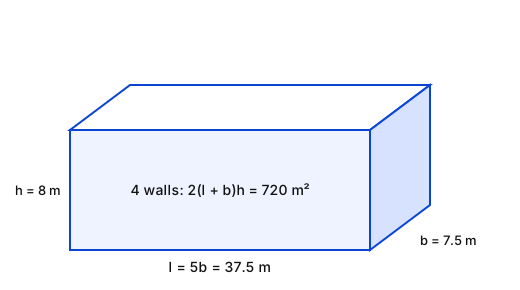
- : , .
- , , .
- TSA .
Trick: TSA = four walls + .
Answer: (D)
अवधारणा: चार दीवारों का क्षेत्रफल ; कुल पृष्ठ क्षेत्रफल
- : ,
- , ,
- TSA
ट्रिक: TSA = चार दीवारें +
उत्तर: (D)
Question bank
Search questions on any topic. Filter by exam category, exam, subject and topic, try the question, then open the answer and explanation.
Concept: Area of four walls ; total surface area .
Trick: TSA = four walls + .
Answer: (D)
अवधारणा: चार दीवारों का क्षेत्रफल ; कुल पृष्ठ क्षेत्रफल
ट्रिक: TSA = चार दीवारें +
उत्तर: (D)
Concept: For equal distances, average speed .
Trick: The 30 hours given is extra data – not needed.
Answer: (D)
अवधारणा: समान दूरी के लिए औसत चाल
ट्रिक: 30 घंटे का आँकड़ा अतिरिक्त है।
उत्तर: (D)
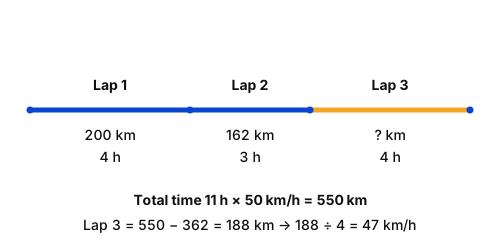
Concept: Average speed ; convert to km/h by .
Trick: Find total time first – then total distance follows from the average.
Answer: (A)
अवधारणा: औसत चाल ; को से km/h में बदलें।
ट्रिक: पहले कुल समय निकालें, फिर औसत से कुल दूरी।
उत्तर: (A)
Concept: They meet at the starting point after the LCM of the times each takes for one round.
Trick: Starting-point meeting → LCM of round times (not of speeds).
Answer: (B) 36 hours
अवधारणा: प्रारंभ बिंदु पर मिलने का समय = एक चक्कर के समयों का LCM
ट्रिक: प्रारंभ बिंदु → चक्कर के समयों का LCM (चालों का नहीं)।
उत्तर: (B) 36 hours
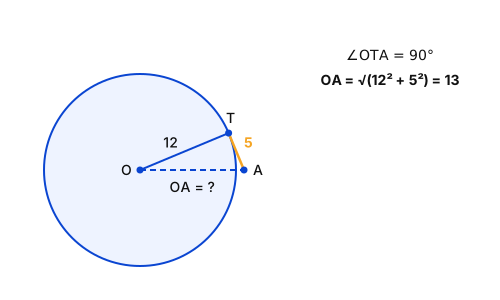
Concept: The radius is perpendicular to the tangent at the point of contact, so OA is the hypotenuse.
Trick: (5, 12, 13) Pythagorean triplet.
Answer: (D)
अवधारणा: स्पर्श बिंदु पर त्रिज्या स्पर्श रेखा पर लंब होती है, अतः OA कर्ण है।
ट्रिक: (5, 12, 13) पाइथागोरस त्रिक
उत्तर: (D)
Concept: Difference of ratio parts corresponds to the difference in prices.
Trick: Difference in parts ↔ difference in values.
Answer: (C) Rs.
अवधारणा: अनुपात के भागों का अंतर, कीमतों के अंतर के बराबर होता है।
ट्रिक: भागों का अंतर ↔ मानों का अंतर
उत्तर: (C) Rs.
Concept: The required number is the largest 5-digit multiple of LCM(13, 15, 18, 21).
Trick: Largest -digit multiple = ; remainder here is 1719.
Answer: (B)
अवधारणा: अभीष्ट संख्या LCM(13, 15, 18, 21) का सबसे बड़ा 5-अंकीय गुणज है।
ट्रिक: सबसे बड़ा गुणज ; यहाँ शेषफल 1719
उत्तर: (B)
Concept: Follow BODMAS: brackets, then 'of', then division, then addition/subtraction.
Yaad rakhein: 'of' is done before division.
Answer: (A)
अवधारणा: BODMAS: कोष्ठक, फिर 'of', फिर भाग, फिर जोड़/घटाव।
याद रखें: 'of' भाग से पहले हल होता है।
उत्तर: (A)
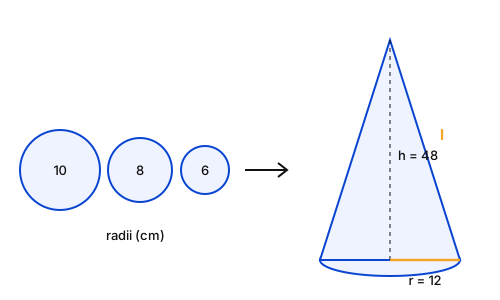
Concept: Volume is conserved: ; then CSA .
Trick: – the three spheres equal one sphere of radius 12.
Answer: (D)
अवधारणा: आयतन समान रहता है: ; फिर वक्र पृष्ठ
ट्रिक:
उत्तर: (D)
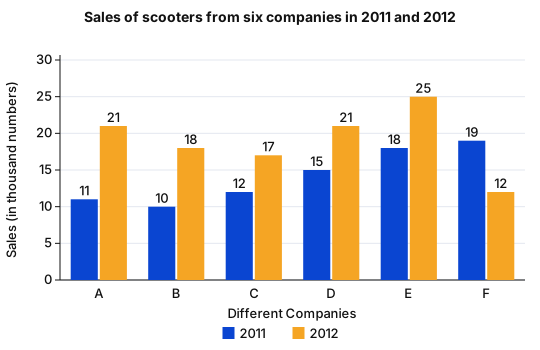
Concept: . Read the values (in thousands) from the graph carefully by year.
Trick: "X is what % of Y" → X on top. Bigger on top ⇒ answer above . The value appears only if the ratio is reversed: , which answers the opposite question.
Answer: As printed, the required value is , which is not among the options, so no option fits the question as asked.
अवधारणा: । ग्राफ से वर्ष के अनुसार मान (हज़ार में) ध्यान से पढ़ें।
ट्रिक: "X, Y का कितना % है" → X ऊपर। बड़ा मान ऊपर ⇒ उत्तर से अधिक। तभी आता है जब अनुपात उल्टा लें: , जो उल्टे प्रश्न का उत्तर है।
उत्तर: छपे हुए प्रश्न के अनुसार मान है, जो किसी विकल्प में नहीं है, इसलिए कोई भी विकल्प सही नहीं बैठता।
Concept: 'A' is used before a word beginning with a consonant sound and 'an' before a vowel sound; 'a lot of' is a fixed phrase.
Trick: Choose the article by the first sound, not the letter: a + consonant sound, an + vowel sound.
Answer: (C) In a big city like Mumbai, we see a lot of rubbish being thrown from households and factories.
अवधारणा: 'A' का प्रयोग consonant sound से शुरू होने वाले शब्द से पहले और 'an' का vowel sound से पहले होता है; 'a lot of' एक fixed phrase है।
ट्रिक: Article पहले अक्षर की ध्वनि (sound) से तय करें, अक्षर से नहीं।
उत्तर: (C) In a big city like Mumbai, we see a lot of rubbish being thrown from households and factories.
Concept: Vigorous means strong, healthy and full of energy. Its opposite describes weakness.
Trick: Vigorous ↔ Frail is like Strong ↔ Weak.
Answer: (C) Frail
अवधारणा: Vigorous का अर्थ है ताकतवर, ऊर्जावान। इसका विलोम कमज़ोरी दर्शाएगा।
ट्रिक: Vigorous ↔ Frail = ताकतवर ↔ कमज़ोर।
उत्तर: (C) Frail
Concept: A slap on the wrist means a very light or mild punishment, much less than the offence deserves.
Trick: Wrist pe halki si thapki = halki saza.
Answer: (C) A very mild punishment.
अवधारणा: A slap on the wrist का अर्थ है बहुत हल्की सज़ा, जो अपराध की तुलना में बहुत कम हो।
ट्रिक: कलाई पर हल्की थपकी = हल्की सज़ा।
उत्तर: (C) A very mild punishment.
Concept: The phrasal verb is let oneself go = to stop caring about one's appearance or behaviour. After 'let', the bare infinitive (base form) is used.
Trick: let / make / help + object + V1 (no 'to', no -ing).
Answer: (A) let herself go
अवधारणा: Phrasal verb let oneself go = अपनी देखभाल / रूप-रंग की परवाह छोड़ देना। 'let' के बाद bare infinitive (V1) आता है।
ट्रिक: let / make / help + object + V1 (न 'to', न -ing)।
उत्तर: (A) let herself go
Concept: Resilient describes a person who recovers quickly and becomes strong in spite of difficulties.
Trick: Resilience = rubber ball – hit it hard and it bounces back.
Answer: (D) Resilient
अवधारणा: Resilient वह व्यक्ति है जो कठिनाइयों के बावजूद जल्दी संभलकर मज़बूत बन जाता है।
ट्रिक: Resilience = रबर की गेंद – जितना दबाओ, उतना उछलकर वापस आए।
उत्तर: (D) Resilient
Concept: Penchant means a strong liking or fondness for something.
Trick: Penchant ≈ 'pen-chant' – something you love so much you keep chanting it.
Answer: (B) Liking
अवधारणा: Penchant का अर्थ है किसी चीज़ के प्रति गहरी रुचि या पसंद।
ट्रिक: Penchant = शौक / पसंद।
उत्तर: (B) Liking
Concept: The noun meaning 'the process of food going bad' is spelt spoilage (spoil + age).
Trick: Think of the root verb: spoil → spoilage, just like pack → package.
Answer: (B) spoliage
अवधारणा: 'खाना खराब होने' के अर्थ वाले noun की सही वर्तनी spoilage है (spoil + age)।
ट्रिक: मूल verb याद रखें: spoil → spoilage (जैसे pack → package)।
उत्तर: (B) spoliage
Concept: A lot on one's plate means having a lot of work or many responsibilities to deal with.
Trick: Plate full = hands full = too much to do.
Answer: (B) A lot to do
अवधारणा: A lot on one's plate का अर्थ है बहुत सारा काम या ज़िम्मेदारियाँ होना।
ट्रिक: थाली भरी = हाथ भरे = बहुत काम।
उत्तर: (B) A lot to do
Concept: Intense means very strong, extreme or powerful (intense heat, intense pain).
Trick: Intense light ↔ faint light.
Answer: (D) Faint
अवधारणा: Intense का अर्थ है बहुत तीव्र, प्रबल (intense heat, intense pain)।
ट्रिक: Intense light ↔ faint light (तेज़ ↔ धीमा)।
उत्तर: (D) Faint
Concept: To be on thin ice means to be in a risky or dangerous situation where one wrong move can cause trouble.
Trick: Thin ice = it may crack anytime = risky.
Answer: (C) To be in a risky situation
अवधारणा: To be on thin ice का अर्थ है जोखिम भरी स्थिति में होना, जहाँ एक गलती भारी पड़ सकती है।
ट्रिक: पतली बर्फ = कभी भी टूटे = खतरा।
उत्तर: (C) To be in a risky situation