Question bank

Q&A: practice questions with answers

Search questions on any topic. Filter by exam category, exam, subject and topic, try the question, then open the answer and explanation.

Courses – airGurukul

4,200 questions found.

Q2501.
A dice has its faces marked by letters I, S, H, N, A and T. Two positions of the same dice are given below. Which face is opposite to face ' I '?
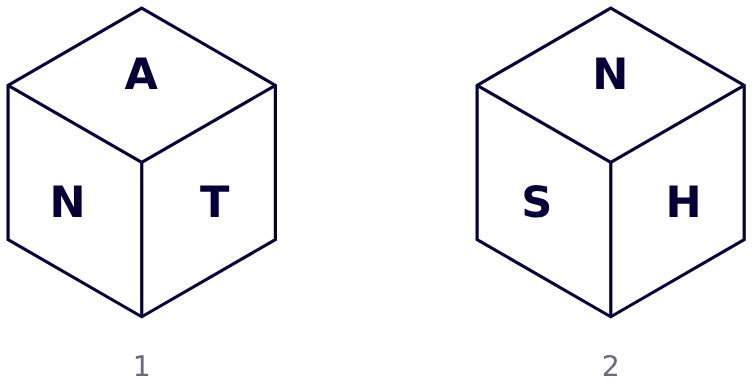
figure
एक पासे के फलकों पर I, S, H, N, A और T अक्षर अंकित हैं। उसी पासे की दो स्थितियाँ नीचे दी गई हैं। फलक ' I ' के विपरीत कौन-सा फलक है?
figure
  1. AS
  2. BT
  3. CN
  4. DA
Show answer

Concept: Faces seen together in any view are adjacent, so they can never be opposite.
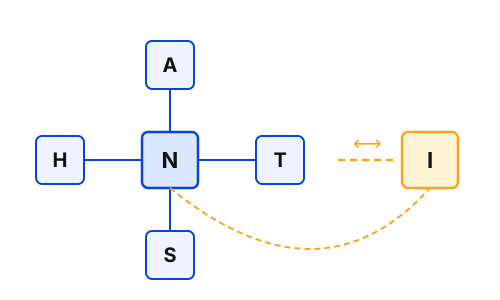
  1. In the first view N appears beside A and T.
  2. In the second view N appears beside S and H.
  3. So N is adjacent to A, T, S, H — the only face left for N's opposite is I.

Trick: Find the letter common to both views; whichever single letter never appears with it is its opposite.

Answer: (C) N

अवधारणा: एक ही स्थिति में दिखने वाले फलक आपस में सटे होते हैं, वे विपरीत नहीं हो सकते।

हल:

  1. पहली स्थिति में N के साथ A और T दिख रहे हैं।
  2. दूसरी स्थिति में N के साथ S और H दिख रहे हैं।
  3. N चार अक्षरों (A, T, S, H) से सटा है, अतः N के सामने बचा अक्षर I ही है।

ट्रिक: दोनों स्थितियों में जो अक्षर साझा है, उसके साथ कभी न दिखने वाला अक्षर ही उसका विपरीत फलक है।

उत्तर: (C) N

SSC GDGeneral Intelligence & ReasoningDice – opposite face from two viewsSSC GD 2025 · 11 Feb Shift 2 →
Q2502.
What should come in place of the question mark (?) in the given series based on the English alphabetical order? ZXV, PNL, FDB, VTR, ?
अंग्रेजी वर्णमाला क्रम पर आधारित दी गई शृंखला में प्रश्नवाचक चिह्न (?) के स्थान पर क्या आना चाहिए? ZXV, PNL, FDB, VTR, ?
  1. ARQP
  2. BLJH
  3. CJIG
  4. DXVW
Show answer

Concept: Each cluster moves back by 2 letters; first letters of clusters jump back by 10.

  1. Inside every term: Z→X→V, P→N→L, F→D→B (−2 each).
  2. First letters: Z(26) → P(16) → F(6) → V(22) → ? : each is −10 (6 − 10 = −4 → 26 − 4 = 22).
  3. Next first letter = 22 − 10 = 12 = L.
  4. L, then −2, −2 → L J H.

Trick: Once the first letter is known, only option (B) has the −2, −2 internal gap starting from L.

Answer: (B) LJH

अवधारणा: हर पद के अंदर अक्षर 2-2 पीछे जाते हैं और पदों के पहले अक्षर 10-10 पीछे जाते हैं।

हल:

  1. पद के अंदर: Z→X→V, P→N→L, F→D→B (हर बार −2)।
  2. पहले अक्षर: Z(26), P(16), F(6), V(22) — हर बार −10 (6 − 10 को 26 से घटाकर 22)।
  3. अगला पहला अक्षर = 22 − 10 = 12 = L।
  4. L से −2, −2 करने पर L J H मिलता है।

ट्रिक: पहला अक्षर L निकालते ही केवल (B) में L से शुरू होकर −2 का अंतर है।

उत्तर: (B) LJH

SSC GDGeneral Intelligence & ReasoningLetter series – cluster patternSSC GD 2025 · 11 Feb Shift 2 →
Q2503.
In a certain code language, 'SOUL' is coded as '6415' and 'LOST' is coded as '6548'. How is 'U' coded in the given language?
एक निश्चित कूट भाषा में 'SOUL' को '6415' तथा 'LOST' को '6548' के रूप में कूटबद्ध किया जाता है। दी गई कूट भाषा में 'U' को किस प्रकार कूटबद्ध किया जाएगा?
  1. A5
  2. B1
  3. C4
  4. D8
Show answer

Concept: When codes are jumbled, letters common to two words share the digits common to their codes.

  1. SOUL and LOST share S, O, L; codes 6415 and 6548 share 6, 4, 5.
  2. In SOUL the extra letter is U; in 6415 the extra digit is 1.
  3. Hence U = 1.

Trick: Strike out common letters and common digits — the leftovers pair up directly.

Answer: (B) 1

अवधारणा: कोड क्रम में न हों तो दोनों शब्दों के समान अक्षरों के कोड भी दोनों कोडों के समान अंक होते हैं।

हल:

  1. SOUL और LOST में S, O, L समान हैं; 6415 और 6548 में 6, 4, 5 समान हैं।
  2. SOUL में बचा अक्षर U है और 6415 में बचा अंक 1 है।
  3. अतः U का कोड 1 है।

ट्रिक: समान अक्षर और समान अंक काट दें — जो बचे वही जोड़ी है।

उत्तर: (B) 1

SSC GDGeneral Intelligence & ReasoningCoding – common letters methodSSC GD 2025 · 11 Feb Shift 2 →
Q2504.
What will come in the place of the question mark '(?)' in the following equation, if '×' and '+' are interchanged and '−' and '÷' are interchanged? 51 ÷ 30 × 36 − 6 + 6 = ?
यदि '×' और '+' को आपस में बदल दिया जाए तथा '−' और '÷' को आपस में बदल दिया जाए, तो निम्नलिखित समीकरण में प्रश्नवाचक चिह्न '(?)' के स्थान पर क्या आएगा? 51 ÷ 30 × 36 − 6 + 6 = ?
  1. A55
  2. B57
  3. C56
  4. D58
Show answer

Concept: Swap the signs first, then solve using BODMAS.

  1. After swapping (× ↔ +, − ↔ ÷): 51−30+36÷6×6
  2. Division: 36÷6=6; multiplication: 6×6=36
  3. 51−30+36=57

Trick: Rewrite the whole expression with new signs before calculating — most errors come from swapping only some signs.

Answer: (B) 57

अवधारणा: पहले चिह्न बदलें, फिर BODMAS से हल करें।

हल:

  1. चिह्न बदलने पर: 51−30+36÷6×6
  2. भाग: 36÷6=6; गुणा: 6×6=36
  3. 51−30+36=57

ट्रिक: गणना से पहले पूरा व्यंजक नए चिह्नों के साथ दोबारा लिख लें।

उत्तर: (B) 57

SSC GDGeneral Intelligence & ReasoningMathematical operations – sign interchangeSSC GD 2025 · 11 Feb Shift 2 →
Q2505.
Based on the English alphabetical order, three of the following four letter-clusters are alike in a certain way and thus form a group. Which letter-cluster DOES NOT belong to that group?
(Note: The odd one out is not based on the number of consonants/vowels or their position in the letter-cluster.)
अंग्रेजी वर्णमाला क्रम के आधार पर, निम्नलिखित चार अक्षर-समूहों में से तीन एक निश्चित प्रकार से समान हैं और इस प्रकार एक समूह बनाते हैं। कौन-सा अक्षर-समूह उस समूह से संबंधित नहीं है?
(नोट: विषम अक्षर-समूह, अक्षर-समूह में व्यंजनों/स्वरों की संख्या या उनकी स्थिति पर आधारित नहीं है।)
  1. AJOD
  2. BRWD
  3. CFKR
  4. DDIP
Show answer

Concept: Compare the forward gaps between consecutive letters of each cluster.

  1. RWD: R→W +5, W→D +7 (wrapping after Z).
  2. FKR: +5, +7; DIP: +5, +7.
  3. JOD: J→O +5 but O→D is +15 — pattern breaks.

Trick: Write letter positions (J=10, O=15, D=4) and check the second gap; the one that differs is odd.

Answer: (A) JOD

अवधारणा: हर समूह में क्रमागत अक्षरों के बीच आगे का अंतर देखें।

हल:

  1. RWD: R→W +5, W→D +7 (Z के बाद फिर A से)।
  2. FKR: +5, +7; DIP: +5, +7।
  3. JOD: J→O +5 पर O→D +15 है — पैटर्न टूटता है।

ट्रिक: अक्षरों के स्थानांक लिखकर केवल दूसरा अंतर जाँचें; अलग वाला ही विषम है।

उत्तर: (A) JOD

SSC GDGeneral Intelligence & ReasoningOdd one out – letter gapsSSC GD 2025 · 11 Feb Shift 2 →
Q2506.
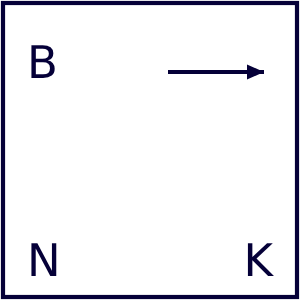
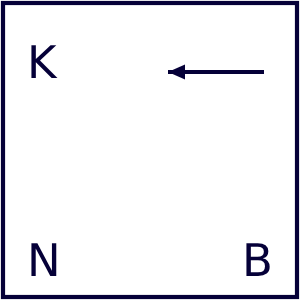
Select the figure from among the given options that can replace the question mark (?) in the following series.
figure
उस आकृति का चयन कीजिए जो दिए गए विकल्पों में से निम्नलिखित शृंखला में प्रश्नवाचक चिह्न (?) के स्थान पर आ सकती है।
figure
  1. Afigure
  2. Bfigure
  3. Cfigure
  4. Dfigure
Show answer

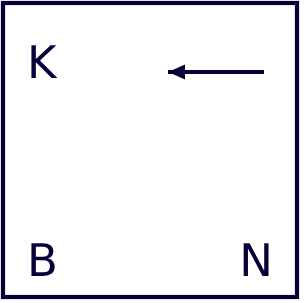
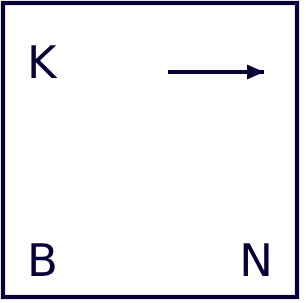
Concept: Two things change in every step — the positions of the letters B, N, K and the direction of the arrow; track them separately.

  1. The letters B, N, K shift one corner in a fixed cycle; the 4th figure repeats the 1st, so the 5th repeats the 2nd arrangement (K, B, N).
  2. The arrow turns 45° anticlockwise each step: east → north-east → north → north-west → next is west (pointing left).
  3. Only option (C) shows K, B, N with a horizontal arrow pointing left.

Trick: When a figure repeats after a fixed number of steps, copy the matching earlier figure for the letters and only work out the arrow.

Answer: (C)

अवधारणा: बदलने वाले हर भाग को अलग देखें: कोनों के तीन अक्षर और तीर।

हल:

  1. B, N, K हर चरण में एक कोना खिसकते हैं; चौथी आकृति पहली जैसी है, इसलिए पाँचवीं दूसरी जैसी (K, B, N) होगी।
  2. हर चरण में तीर घड़ी की उल्टी दिशा में 45° मुड़ता है: पूर्व → उत्तर-पूर्व → उत्तर → उत्तर-पश्चिम → अगला पश्चिम (बाईं ओर)।
  3. केवल विकल्प (C) में K, B, N और बाईं ओर क्षैतिज तीर है।

ट्रिक: आकृति कुछ चरणों बाद दोहराए तो अक्षरों के लिए पुरानी आकृति देखें, केवल तीर की दिशा निकालें।

उत्तर: (C)

SSC GDGeneral Intelligence & ReasoningFigure series – rotation of letters and arrowSSC GD 2025 · 11 Feb Shift 2 →
Q2507.
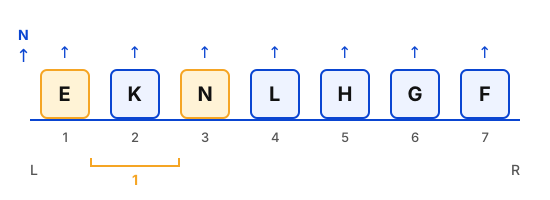
Seven people, E, F, G, H, K, L and N, are sitting in a row facing north (but not necessarily in the same order). Only three people sit to the left of L. Only F sits to the right of G. Only three people sit between G and K. N sits at some place to the left of H but at some place to the right of E. How many people sit between E and N?
सात व्यक्ति E, F, G, H, K, L और N उत्तर की ओर मुख करके एक पंक्ति में बैठे हैं (आवश्यक नहीं कि इसी क्रम में हों)। L के बाईं ओर केवल तीन व्यक्ति बैठे हैं। G के दाईं ओर केवल F बैठा है। G और K के बीच केवल तीन व्यक्ति बैठे हैं। N, H के बाईं ओर किसी स्थान पर बैठा है, परंतु E के दाईं ओर किसी स्थान पर बैठा है। E और N के बीच कितने व्यक्ति बैठे हैं?
  1. AThreeतीन
  2. BOneएक
  3. CTwoदो
  4. DFourचार
Show answer

Concept: Fix definite positions first (seat numbers 1–7 from the left, all facing north).

  1. Three people left of L → L = seat 4.
  2. Only F right of G → G = 6, F = 7.
  3. Three between G and K → K = 2.
  4. E < N < H in remaining seats 1, 3, 5 → E = 1, N = 3, H = 5.
  5. Between E(1) and N(3): only K → one person.

Trick: Persons between = difference of seat numbers − 1 = 3 − 1 − 1 = 1.

Answer: (B) One

अवधारणा: पहले निश्चित स्थान तय करें (बाएँ से सीट 1–7, सभी उत्तरमुखी)।

हल:

  1. L के बाएँ तीन लोग → L = सीट 4।
  2. G के दाएँ केवल F → G = 6, F = 7।
  3. G और K के बीच तीन लोग → K = 2।
  4. बची सीटें 1, 3, 5 में E, N, H क्रम से → E = 1, N = 3, H = 5।
  5. E(1) और N(3) के बीच केवल K है।

ट्रिक: बीच में व्यक्ति = सीट संख्याओं का अंतर − 1 = 2 − 1 = 1।

उत्तर: (B) एक

SSC GDGeneral Intelligence & ReasoningLinear seating arrangementSSC GD 2025 · 11 Feb Shift 2 →
Q2508.
What should come in place of the question mark (?) in the given series? 450, 460, 471, 483, 496, ?
दी गई शृंखला में प्रश्नवाचक चिह्न (?) के स्थान पर क्या आना चाहिए? 450, 460, 471, 483, 496, ?
  1. A504
  2. B508
  3. C510
  4. D500
Show answer

Concept: Differences rise by 1 at each step.

  1. Differences: +10, +11, +12, +13
  2. Next difference = +14
  3. 496 + 14 = 510

Trick: Last digits 0, 0, 1, 3, 6 grow by 0, 1, 2, 3 → next grows by 4 → ends in 0; only 510 and 500 qualify, and 500 is too small.

Answer: (C) 510

अवधारणा: क्रमागत अंतर हर बार 1 बढ़ता है।

हल:

  1. अंतर: +10, +11, +12, +13
  2. अगला अंतर = +14
  3. 496 + 14 = 510

ट्रिक: अंतर बढ़ता क्रम दिखते ही अगला अंतर जोड़ दें — 5 सेकंड का प्रश्न।

उत्तर: (C) 510

SSC GDGeneral Intelligence & ReasoningNumber series – increasing differenceSSC GD 2025 · 11 Feb Shift 2 →
Q2509.
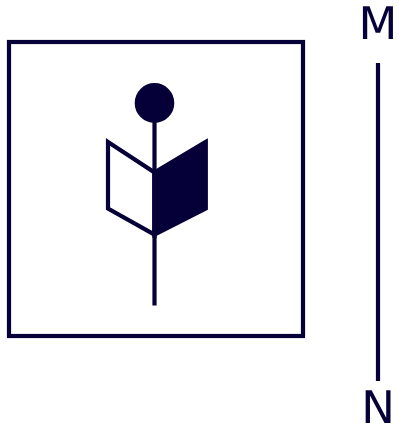
Select the correct mirror image of the given figure when the mirror is placed at MN as shown below.
figure
उस सही दर्पण प्रतिबिंब का चयन कीजिए, जो दर्पण को नीचे दर्शाए अनुसार MN पर रखने पर दी गई आकृति का बनेगा।
figure
  1. Afigure
  2. Bfigure
  3. Cfigure
  4. Dfigure
Show answer

Concept: A vertical mirror swaps left and right; top and bottom stay unchanged.

  1. The ball on top and the stem below lie on the central line — they do not change.
  2. The wings differ: hollow on the left, solid on the right in the figure.
  3. In the image they swap: solid wing on the left, hollow on the right — this is option (A).
  4. (B) is the original figure itself; (C) and (D) make both wings alike.

Trick: Focus only on the one asymmetric part of the figure and flip it sideways.

Answer: (A)

अवधारणा: ऊर्ध्वाधर दर्पण में बायाँ-दायाँ बदलता है, ऊपर-नीचे वही रहता है।

हल:

  1. ऊपर की गेंद और नीचे का डंडा बीच की रेखा पर हैं — ये नहीं बदलते।
  2. केवल पंख अलग हैं: आकृति में बायाँ खोखला, दायाँ भरा हुआ।
  3. प्रतिबिंब में भरा पंख बाएँ और खोखला दाएँ होगा — यह विकल्प (A) है।
  4. (B) मूल आकृति ही है; (C) और (D) में पंखों का अंतर ही मिट गया है।

ट्रिक: आकृति के केवल असममित भाग को देखकर उसे बाएँ-दाएँ पलटें।

उत्तर: (A)

SSC GDGeneral Intelligence & ReasoningMirror image – vertical mirrorSSC GD 2025 · 11 Feb Shift 2 →
Q2510.
Read the given statements and conclusions carefully. Assuming that the information given in the statements is true, even if it appears to be at variance with commonly known facts, decide which of the given conclusions logically follow(s) from the statements.
Statements:
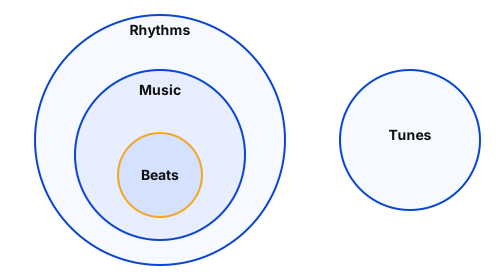
All beats are music.
All music are rhythms.
No rhythm is a tune.
Conclusions:
(I): No beat is a tune.
(II): Some rhythms are beats.
दिए गए कथनों और निष्कर्षों को ध्यानपूर्वक पढ़िए। यह मानते हुए कि कथनों में दी गई जानकारी सत्य है, चाहे वह सर्वज्ञात तथ्यों से भिन्न प्रतीत होती हो, निर्णय कीजिए कि दिए गए निष्कर्षों में से कौन-सा/से निष्कर्ष कथनों का तार्किक रूप से अनुसरण करता है/करते हैं।
कथन:
सभी ताल संगीत हैं।
सभी संगीत लय हैं।
कोई लय धुन नहीं है।
निष्कर्ष:
(I): कोई ताल धुन नहीं है।
(II): कुछ लय ताल हैं।
  1. ABoth conclusions (I) and (II) follow.दोनों निष्कर्ष (I) और (II) अनुसरण करते हैं।
  2. BNeither conclusion (I) nor (II) follows.न तो निष्कर्ष (I) और न ही निष्कर्ष (II) अनुसरण करता है।
  3. COnly conclusion (I) follows.केवल निष्कर्ष (I) अनुसरण करता है।
  4. DOnly conclusion (II) follows.केवल निष्कर्ष (II) अनुसरण करता है।
Show answer

Concept: Chain the 'All' statements and check against the 'No' statement.

  1. Beats ⊂ Music ⊂ Rhythms, and Rhythms have nothing common with Tunes.
  2. I: Beats are inside Rhythms, so no beat can be a tune — follows.
  3. II: All beats are rhythms ⇒ Some rhythms are beats (conversion) — follows.

Trick: 'All A are B' always gives 'Some B are A' — a quick definite conclusion.

Answer: (A) Both conclusions (I) and (II) follow.

अवधारणा: 'सभी' वाले कथनों को जोड़ें और 'कोई नहीं' वाले कथन से मिलाएँ।

हल:

  1. बीट ⊂ संगीत ⊂ लय, और लय का धुन से कोई संबंध नहीं।
  2. I: सभी बीट लय के अंदर हैं, अतः कोई बीट धुन नहीं — अनुसरण करता है।
  3. II: सभी बीट लय हैं ⇒ कुछ लय बीट हैं — अनुसरण करता है।

ट्रिक: 'सभी A, B हैं' से 'कुछ B, A हैं' हमेशा निश्चित निकलता है।

उत्तर: (A) दोनों निष्कर्ष (I) और (II) अनुसरण करते हैं।

SSC GDGeneral Intelligence & ReasoningSyllogismSSC GD 2025 · 11 Feb Shift 2 →
Q2511.
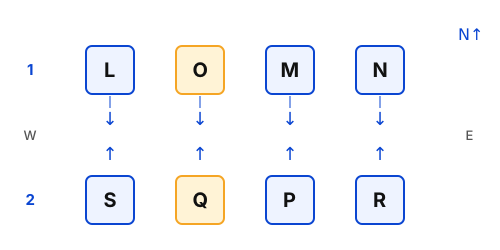
Eight people are sitting in two parallel rows containing 4 people each in such a way that there is equal distance between adjacent persons. In row 1, L, M, N and O are seated and all of them are facing south. In row 2, P, Q, R and S are seated and all of them are facing north. Thus, each person faces another person from the other row. S sits third to the left of R. The one facing M is an immediate neighbour of R. O sits at some place to the right of M and is not facing P. L sits third to the right of N.
Who among the following faces Q?
आठ व्यक्ति दो समानांतर पंक्तियों में इस प्रकार बैठे हैं कि प्रत्येक पंक्ति में 4 व्यक्ति हैं तथा निकटवर्ती व्यक्तियों के बीच समान दूरी है। पंक्ति 1 में L, M, N और O बैठे हैं तथा इन सभी का मुख दक्षिण की ओर है। पंक्ति 2 में P, Q, R और S बैठे हैं तथा इन सभी का मुख उत्तर की ओर है। इस प्रकार, प्रत्येक व्यक्ति दूसरी पंक्ति के किसी एक व्यक्ति के सम्मुख है। S, R के बाईं ओर तीसरे स्थान पर बैठा है। M के सम्मुख बैठा व्यक्ति R का निकटतम पड़ोसी है। O, M के दाईं ओर किसी स्थान पर बैठा है तथा P के सम्मुख नहीं है। L, N के दाईं ओर तीसरे स्थान पर बैठा है।
निम्नलिखित में से कौन Q के सम्मुख है?
  1. AM
  2. BN
  3. CO
  4. DL
Show answer

Concept: Row 2 faces north (its left = page left); row 1 faces south (its left = page right). Number places 1–4 from page left.

  1. S third to the left of R → S = 1, R = 4 in row 2.
  2. R's neighbour (place 3) faces M → M = 3 in row 1.
  3. L third to the right of N (south-facing) → L = 1, N = 4; so O = 2 (right of M ✓).
  4. O not facing P → P = 3, Q = 2 in row 2. Q faces place 2 of row 1 = O.

Trick: For south-facing people, 'right' means towards the page's left — reverse directions once and keep them reversed.

Answer: (C) O

अवधारणा: उत्तरमुखी पंक्ति 2 की दिशाएँ सामान्य हैं; दक्षिणमुखी पंक्ति 1 की दिशाएँ उलटी होती हैं। दोनों पंक्तियों में बाएँ छोर से स्थान 1, 2, 3, 4 मानें।

हल:

  1. S, R के बाएँ तीसरा → पंक्ति 2 में S = 1, R = 4।
  2. R का पड़ोसी (स्थान 3) M के सामने → पंक्ति 1 में M = 3।
  3. L, N के दाएँ तीसरा (दक्षिणमुखी) → L = 1, N = 4; अतः O = 2।
  4. O के सामने P नहीं बैठ सकता, इसलिए P तीसरे और Q दूसरे स्थान पर। दूसरे स्थान वाले Q के ठीक सामने O है।

ट्रिक: दक्षिणमुखी व्यक्तियों के लिए दिशाएँ उलट दें — दायाँ यानी पृष्ठ का बायाँ।

उत्तर: (C) O

SSC GDGeneral Intelligence & ReasoningParallel-row seating arrangementSSC GD 2025 · 11 Feb Shift 2 →
Q2512.
UMCP is related to ZOEU in a certain way based on the English alphabetical order. In the same way,
QBXK is related to VDZP. To which of the given options is EJAH related, following the same logic ?
अंग्रेजी वर्णमाला क्रम के आधार पर UMCP एक निश्चित प्रकार से ZOEU से संबंधित है। उसी प्रकार,
QBXK, VDZP से संबंधित है। इसी तर्क का अनुसरण करते हुए EJAH दिए गए विकल्पों में से किससे संबंधित है?
  1. AHMDN
  2. BINBK
  3. CJLCM
  4. DHNCL
Show answer

Concept: Find the shift for each letter position and apply it.

  1. UMCP → ZOEU: shifts +5, +2, +2, +5 (QBXK → VDZP confirms).
  2. Apply to EJAH: E→J (+5), J→L (+2), A→C (+2), H→M (+5).
  3. So EJAH → JLCM.

Trick: Check just the first letter: E→J (+5); only option (C) begins with J.

Answer: (C) JLCM

अवधारणा: हर स्थान के अक्षर का अंतर निकालकर लागू करें।

हल:

  1. UMCP → ZOEU में अंतर +5, +2, +2, +5 (QBXK → VDZP से पुष्टि)।
  2. EJAH पर लगाएँ: E→J (+5), J→L (+2), A→C (+2), H→M (+5)।
  3. अतः EJAH → JLCM।

ट्रिक: केवल पहला अक्षर देखें: E→J (+5); J से केवल (C) शुरू होता है।

उत्तर: (C) JLCM

SSC GDGeneral Intelligence & ReasoningLetter analogy – position shiftsSSC GD 2025 · 11 Feb Shift 2 →
Q2513.
BYVT is related to PMJH in a certain way based on the English alphabetical order. In the same way, QNKI is related to EBYW. To which of the given options is NKHF related, following the same logic ?
अंग्रेजी वर्णमाला क्रम के आधार पर BYVT एक निश्चित प्रकार से PMJH से संबंधित है। उसी प्रकार, QNKI, EBYW से संबंधित है। इसी तर्क का अनुसरण करते हुए NKHF दिए गए विकल्पों में से किससे संबंधित है?
  1. ABXUT
  2. BBZUY
  3. CBYVT
  4. DBYUT
Show answer

Concept: Every letter moves forward by the same number (+14), wrapping after Z.

  1. B(2) → P(16) = +14; Y(25) + 14 = 39 − 26 = 13 = M ✓.
  2. N(14) + 14 = 28 → 2 = B; K(11) + 14 = 25 = Y.
  3. H(8) + 14 = 22 = V; F(6) + 14 = 20 = T → BYVT.

Trick: +14 is the same as −12; e.g. T − 12 = H, so reverse checks are quick.

Answer: (C) BYVT

अवधारणा: हर अक्षर बराबर (+14) आगे बढ़ता है, Z के बाद फिर A से।

हल:

  1. B(2) → P(16) = +14; Y(25) + 14 = 39 − 26 = 13 = M।
  2. N(14) + 14 = 28 → 2 = B; K(11) + 14 = 25 = Y।
  3. H(8) + 14 = 22 = V; F(6) + 14 = 20 = T → BYVT।

ट्रिक: +14 और −12 एक ही बात है — उल्टी जाँच जल्दी होती है।

उत्तर: (C) BYVT

SSC GDGeneral Intelligence & ReasoningLetter analogy – constant shiftSSC GD 2025 · 11 Feb Shift 2 →
Q2514.
In a certain code language, 'BASH' is coded as '5431' and 'HASE' is coded as '1234'. What is the code for ' E ' in the given code language ?
एक निश्चित कूट भाषा में 'BASH' को '5431' तथा 'HASE' को '1234' के रूप में कूटबद्ध किया जाता है। दी गई कूट भाषा में ' E ' का कूट क्या है?
  1. A3
  2. B1
  3. C2
  4. D4
Show answer

Concept: With jumbled codes, match the uncommon letter to the uncommon digit.

  1. BASH = 5431, HASE = 1234.
  2. Common letters A, S, H ↔ common digits 1, 3, 4.
  3. HASE has extra E; 1234 has extra 2 → E = 2.

Trick: Cancel what is common in both words and both codes — the leftovers give the answer instantly.

Answer: (C) 2

अवधारणा: कोड क्रम में न हों तो असमान अक्षर का कोड असमान अंक होता है।

हल:

  1. BASH = 5431, HASE = 1234।
  2. समान अक्षर A, S, H ↔ समान अंक 1, 3, 4।
  3. HASE में बचा E, 1234 में बचा 2 → E = 2।

ट्रिक: दोनों ओर से समान को काटें — बचा हुआ ही उत्तर।

उत्तर: (C) 2

SSC GDGeneral Intelligence & ReasoningCoding – common letters methodSSC GD 2025 · 11 Feb Shift 2 →
Q2515.
Select the option that represents the letters that, when sequentially placed from left to right in the blanks below, will complete the letter series.
s t o l b _ _ _ _ o l b r i s t _ _ _ r i
उस विकल्प का चयन कीजिए, जो उन अक्षरों को दर्शाता है जिन्हें नीचे दिए गए रिक्त स्थानों में बाएँ से दाएँ क्रमिक रूप से रखने पर अक्षर-शृंखला पूर्ण हो जाएगी।
s t o l b _ _ _ _ o l b r i s t _ _ _ r i
  1. Atolrisb
  2. Bristolb
  3. Cbristol
  4. Dsirbtol
Show answer

Concept: A 7-letter unit 'stolbri' repeats; the full series is that unit three times over.

  1. Block 1: s t o l b r i + block 2 starts s t → blanks r, i, s, t.
  2. Given o l b r i completes block 2; block 3 begins s t then blanks o, l, b; given r i ends it.
  3. Blanks in order: r i s t o l b.

Trick: Spot a repeating word in the series ('stolbri'); fill blanks by copying it.

Answer: (B) ristolb

अवधारणा: पूरी श्रृंखला में सात अक्षरों की इकाई 'stolbri' बार-बार दोहराई गई है।

हल:

  1. शुरुआत के stolb के बाद ri आएगा और फिर दूसरी इकाई st से — अतः रिक्त r, i, s, t।
  2. दिए गए o l b r i से दूसरा खंड पूरा; तीसरा s t के बाद रिक्त o, l, b; अंत में r i।
  3. क्रम से रिक्त अक्षर: r i s t o l b।

ट्रिक: दोहराते खंड को पहचानें और उसी से रिक्त भरें।

उत्तर: (B) ristolb

SSC GDGeneral Intelligence & ReasoningLetter series – repeating blockSSC GD 2025 · 11 Feb Shift 2 →
Q2516.
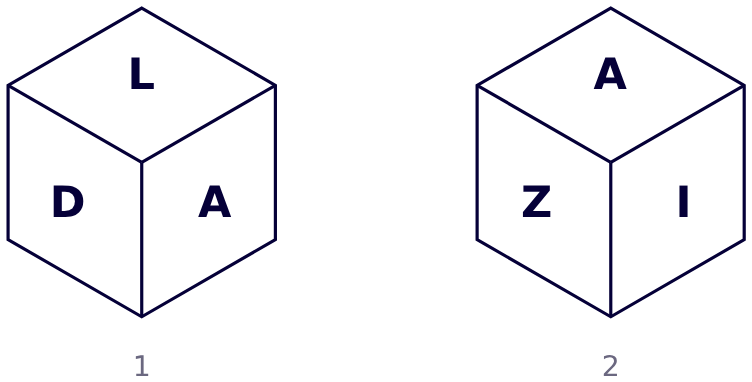
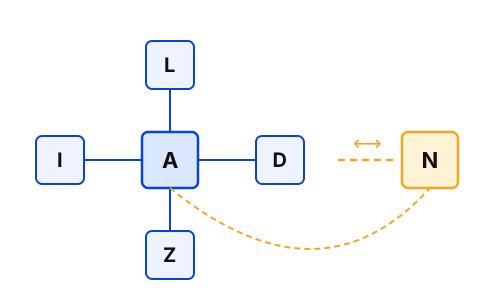
A dice has its faces marked by letters L, Z, I, D, N and A. Two positions of the same dice are given below. Which face is opposite to face N ?
figure
एक पासे के फलकों पर L, Z, I, D, N और A अक्षर अंकित हैं। उसी पासे की दो स्थितियाँ नीचे दी गई हैं। फलक N के विपरीत कौन-सा फलक है?
figure
  1. AL
  2. BZ
  3. CA
  4. DD
Show answer

Concept: Letters seen together are neighbours; the letter never seen with a face is its opposite.

  1. A appears in both views: with L, D in one and with Z, I in the other.
  2. So A touches L, D, Z, I.
  3. The only letter not seen with A is N → N is opposite A.

Trick: Common letter in both views + the one letter missing from its company = opposite pair.

Answer: (C) A

अवधारणा: साथ दिखने वाले अक्षर पड़ोसी हैं; जो अक्षर कभी साथ न दिखे वही विपरीत है।

हल:

  1. A दोनों स्थितियों में है: एक में L, D के साथ, दूसरी में Z, I के साथ।
  2. A चार अक्षरों L, D, Z, I से सटा है।
  3. A के साथ कभी न दिखने वाला अक्षर N है → N के सामने A।

ट्रिक: दोनों स्थितियों का साझा अक्षर और उसके साथ कभी न दिखा अक्षर — विपरीत जोड़ी।

उत्तर: (C) A

SSC GDGeneral Intelligence & ReasoningDice – opposite face from two viewsSSC GD 2025 · 11 Feb Shift 2 →
Q2517.
What should come in place of the question mark (?) in the given series? 7, 17, 25, 53, 61, ?
दी गई शृंखला में प्रश्नवाचक चिह्न (?) के स्थान पर क्या आना चाहिए? 7, 17, 25, 53, 61, ?
  1. A152
  2. B148
  3. C184
  4. D125
Show answer

Concept: When simple differences fail, split into odd-place and even-place terms.

  1. Odd places: 7, 25, 61 — gaps 18, 36 (doubling).
  2. Even places: 17, 53, ? — first gap 36, next gap 72.
  3. 53 + 72 = 125.

Trick: Differences 10, 8, 28, 8 alternate oddly → always try alternate terms next.

Answer: (D) 125

अवधारणा: सीधे अंतर से पैटर्न न मिले तो विषम और सम स्थान के पद अलग करें।

हल:

  1. विषम स्थान: 7, 25, 61 — अंतर 18, 36 (दोगुना)।
  2. सम स्थान: 17, 53, ? — पहला अंतर 36, अगला 72।
  3. 53 + 72 = 125।

ट्रिक: अंतर 10, 8, 28, 8 जैसे उछलें तो एकांतर पद देखें।

उत्तर: (D) 125

SSC GDGeneral Intelligence & ReasoningNumber series – alternate termsSSC GD 2025 · 11 Feb Shift 2 →
Q2518.
The position(s) of how many letters will remain unchanged if each of the letters in the word LIGHTER is arranged in the English alphabetical order ?
यदि शब्द LIGHTER के प्रत्येक अक्षर को अंग्रेजी वर्णमाला क्रम में व्यवस्थित किया जाए, तो कितने अक्षरों की स्थिति अपरिवर्तित रहेगी?
  1. AOneएक
  2. BZeroशून्य
  3. CTwoदो
  4. DThreeतीन
Show answer

Concept: Sort the word's letters alphabetically and compare position-wise.

  1. LIGHTER: L I G H T E R
  2. Sorted: E G H I L R T
  3. No position has the same letter in both rows → zero.

Trick: Check only plausible matches: the first letter must be the smallest (E) and last the largest (T) — L and R fail, and the middle ones all shift.

Answer: (B) Zero

अवधारणा: शब्द के अक्षरों को वर्णक्रम में लगाकर स्थान-वार मिलाएँ।

हल:

  1. LIGHTER: L I G H T E R
  2. क्रम में: E G H I L R T
  3. किसी भी स्थान पर अक्षर समान नहीं → शून्य।

ट्रिक: दोनों पंक्तियाँ एक के नीचे एक लिखें — मिलान तुरंत दिखता है।

उत्तर: (B) शून्य

SSC GDGeneral Intelligence & ReasoningLetter arrangement – unchanged positionsSSC GD 2025 · 11 Feb Shift 2 →
Q2519.
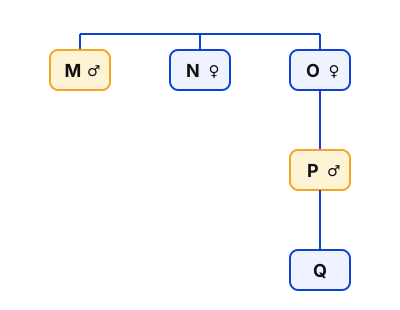
In a certain code language, 'A + B' means 'A is the brother of B', 'A − B' means 'A is the sister of B', 'A × B' means 'A is the mother of B' and 'A ÷ B' means 'A is the father of B'. How is M related to P if 'M + N − O × P ÷ Q'?
एक निश्चित कूट भाषा में 'A + B' का अर्थ है 'A, B का भाई है', 'A − B' का अर्थ है 'A, B की बहन है', 'A × B' का अर्थ है 'A, B की माता है' तथा 'A ÷ B' का अर्थ है 'A, B का पिता है'। यदि 'M + N − O × P ÷ Q' है, तो M, P से किस प्रकार संबंधित है?
  1. ABrother's daughterभाई की पुत्री
  2. BFather's motherपिता की माता
  3. CSister's daughterबहन की पुत्री
  4. DMother's brotherमाता का भाई
Show answer

Concept: Decode each symbol pair from left to right.

  1. M + N: M is N's brother (M male).
  2. N − O: N is O's sister → M, N, O are siblings.
  3. O × P: O is P's mother.
  4. So M is the brother of P's mother.

Trick: Only the link from M to P matters; ignore 'P ÷ Q'.

Answer: (D) Mother's brother

अवधारणा: बाएँ से दाएँ हर चिह्न को खोलें।

हल:

  1. M + N: M, N का भाई (M पुरुष)।
  2. N − O: N, O की बहन → M, N, O भाई-बहन।
  3. O × P: O, P की माता।
  4. अतः M, P की माता का भाई (मामा) है।

ट्रिक: केवल M से P तक की कड़ी देखें; 'P ÷ Q' अनावश्यक है।

उत्तर: (D) माता का भाई

SSC GDGeneral Intelligence & ReasoningCoded blood relationsSSC GD 2025 · 11 Feb Shift 2 →
Q2520.
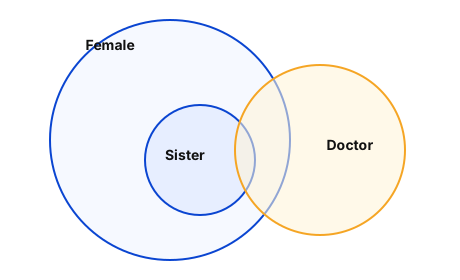
Select the Venn diagram that best illustrates the relationship between the following classes.
Female, Doctor, Sister
उस वेन आरेख का चयन कीजिए जो निम्नलिखित वर्गों के बीच के संबंध को सर्वोत्तम रूप से दर्शाता है।
महिला, डॉक्टर, बहन
  1. Afigure
  2. Bfigure
  3. Cfigure
  4. Dfigure
Show answer

Concept: Decide pair-wise: subset, overlap or separate.

  1. Every sister is a female → Sister inside Female.
  2. Some doctors are female, some are not → Doctor partly overlaps Female.
  3. A sister can be a doctor → Doctor also cuts the Sister circle.
  4. Diagram: small circle in big circle, third circle crossing both.

Trick: Professions (doctor, teacher) usually overlap gender/relation classes.

Answer: (C)

अवधारणा: हर दो वर्गों का संबंध देखें: अंदर, आंशिक या अलग।

हल:

  1. हर बहन महिला है → बहन, महिला के अंदर।
  2. कुछ डॉक्टर महिला हैं, कुछ नहीं → डॉक्टर, महिला को आंशिक काटता है।
  3. बहन भी डॉक्टर हो सकती है → डॉक्टर, बहन वाले वृत्त को भी काटे।

ट्रिक: पेशे (डॉक्टर, शिक्षक) सामान्यतः लिंग/संबंध वाले वर्गों को आंशिक काटते हैं।

उत्तर: (C)

SSC GDGeneral Intelligence & ReasoningVenn diagram – classesSSC GD 2025 · 11 Feb Shift 2 →