Question bank

Q&A: practice questions with answers

Search questions on any topic. Filter by exam category, exam, subject and topic, try the question, then open the answer and explanation.

Courses – airGurukul

4,200 questions found.

Q801.
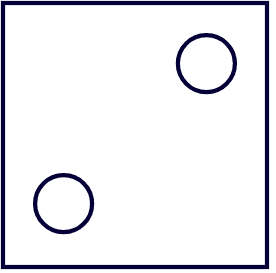
A square sheet of paper is folded along the dotted line successively along the directions shown and is then punched after the last fold. How would the paper look when unfolded ?

figure
कागज की एक वर्गाकार शीट को बिंदुदार रेखा के अनुदिश दर्शाई गई दिशाओं में क्रमशः मोड़ा जाता है और अंतिम मोड़ के बाद उसमें छेद किया जाता है। खोलने पर कागज कैसा दिखाई देगा?
figure
  1. Afigure
  2. Bfigure
  3. Cfigure
  4. Dfigure
Show answer

Concept: Every fold works like a mirror: unfolding copies each hole to the opposite side of the fold line.

  1. The sheet is folded once along the vertical line, left half over the right half.
  2. One hole is punched in the folded (right) part, at mid-height.
  3. Opening the fold reflects that hole into the left half at the same height and the same distance from the centre line.
  4. So the open sheet shows 2 holes in one horizontal line, symmetric about the vertical centre.

Trick: Count holes first: 1 fold × 1 punch = 2 holes. Reject any option with a different count or holes at different heights.

Answer: (B)

अवधारणा: हर मोड़ दर्पण की तरह काम करता है – खोलने पर छेद मोड़-रेखा के दूसरी ओर उल्टा बन जाता है।

हल:

  1. कागज़ ऊर्ध्वाधर रेखा पर एक बार मोड़ा गया (बायाँ भाग दाएँ पर)।
  2. मुड़े भाग में बीच की ऊँचाई पर एक छेद किया गया।
  3. खोलने पर वही छेद बाएँ भाग में उसी ऊँचाई पर, केंद्र-रेखा से समान दूरी पर बनता है।
  4. अतः दो छेद एक ही क्षैतिज पंक्ति में, केंद्र के दोनों ओर।

ट्रिक: पहले छेद गिनें: 1 मोड़ × 1 छेद = 2 छेद। अलग ऊँचाई वाले विकल्प हटा दें।

उत्तर: (B)

SSC GDGeneral Intelligence & ReasoningPaper folding – single punchSSC GD 2025 · 20 Feb Shift 1 →
Q802.
Identify the figure given in the options which when put in place of the question mark (?) will logically complete the series.
figure
विकल्पों में दी गई उस आकृति की पहचान करें, जिसे प्रश्नवाचक चिह्न (?) के स्थान पर रखने पर शृंखला तार्किक रूप से पूर्ण हो जाएगी।
figure
  1. Afigure
  2. Bfigure
  3. Cfigure
  4. Dfigure
Show answer

Concept: Two features change independently: number of lines and direction of the corner bracket.

  1. Lines in the left part: 2, 4, 7, 11 → gaps +2, +3, +4, so next gap +5 → 16 lines.
  2. Bracket turns alternately 90° and 180°; last turn was 90°, so next is 180°.
  3. Bracket opening right turns to open left.
  4. Only option (B) has 16 lines with a left-opening bracket.

Trick: Fix one feature (count) to cut options, then check the second feature only on the survivors.

Answer: (B)

अवधारणा: दो चीज़ें अलग-अलग बदल रही हैं: रेखाओं की संख्या और कोने के ब्रैकेट की दिशा।

हल:

  1. बाएँ भाग की रेखाएँ: 2, 4, 7, 11 → अंतर +2, +3, +4; अगला +5 → 16 रेखाएँ।
  2. ब्रैकेट बारी-बारी 90° और 180° घूमता है; पिछला 90° था, अब 180°।
  3. दाईं ओर खुला ब्रैकेट अब बाईं ओर खुलेगा।
  4. यह केवल विकल्प (B) में है।

ट्रिक: पहले एक गुण (गिनती) से विकल्प घटाएँ, फिर बचे विकल्पों में दूसरा गुण देखें।

उत्तर: (B)

SSC GDGeneral Intelligence & ReasoningFigure series – count and rotationSSC GD 2025 · 20 Feb Shift 1 →
Q803.
Select the combination of letters that when sequentially placed in the blanks of the given series, will logically complete the series.
_JDIF_EJGL_KHMG_INH_
उन अक्षरों के संयोजन का चयन करें, जिन्हें दी गई शृंखला के रिक्त स्थानों में क्रमानुसार रखने पर शृंखला तार्किक रूप से पूर्ण हो जाएगी।
_JDIF_EJGL_KHMG_INH_
  1. ACKELO
  2. BCIEKO
  3. CEKFLM
  4. DEIFKM
Show answer

Concept: A 20-letter blank series usually splits into equal blocks whose positions follow alphabetical order.

  1. Split into 5 blocks of 4: _JDI | F_EJ | GL_K | HMG_ | INH_.
  2. Column-wise: 1st letters E,F,G,H,I; 2nd J,K,L,M,N; 3rd D,E,F,G,H; 4th I,J,K,L,M.
  3. Blanks = E, K, F, L, M.

Trick: Total letters ÷ 5 blanks = block length (20÷5=4). Then read each column downward.

Answer: (C) EKFLM

अवधारणा: 20 स्थानों वाली श्रृंखला को बराबर खंडों में बाँटें; हर स्थान वर्णमाला क्रम में चलता है।

हल:

  1. 4-4 के 5 खंड: _JDI | F_EJ | GL_K | HMG_ | INH_।
  2. हर खंड का स्थान-1 क्रम से E से I, स्थान-2 J से N, स्थान-3 D से H, स्थान-4 I से M तक चलता है।
  3. रिक्त स्थान = E, K, F, L, M।

ट्रिक: कुल अक्षर ÷ रिक्त स्थान = खंड की लंबाई (20÷5=4)।

उत्तर: (C) EKFLM

SSC GDGeneral Intelligence & ReasoningLetter series – fill in blanksSSC GD 2025 · 20 Feb Shift 1 →
Q804.
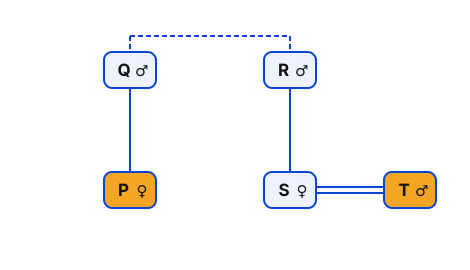
In a certain code language, 'A + B' means 'A is the daughter of B', 'A − B' means 'A is the brother of B', 'A × B' means 'A is the wife of B' and 'A ÷ B' means 'A is the father of B'. Based on the above, how is P related to T if 'P + Q − R ÷ S × T'?
एक निश्चित कूट भाषा में, 'A + B' का अर्थ है 'A, B की पुत्री है', 'A − B' का अर्थ है 'A, B का भाई है', 'A × B' का अर्थ है 'A, B की पत्नी है' और 'A ÷ B' का अर्थ है 'A, B का पिता है'। उपर्युक्त के आधार पर, यदि 'P + Q − R ÷ S × T' है, तो P, T से किस प्रकार संबंधित है?
  1. AFather's brother's wifeपिता के भाई की पत्नी
  2. BWife's father's brother's wifeपत्नी के पिता के भाई की पत्नी
  3. CWife's father's brother's daughterपत्नी के पिता के भाई की पुत्री
  4. DFather's brother's daughterपिता के भाई की पुत्री
Show answer

Concept: Decode each symbol pair, then trace the chain from the person asked about (T) back to P.

  1. P + Q → P is Q's daughter.
  2. Q − R → Q is R's brother.
  3. R ÷ S → R is S's father; S × T → S is T's wife.
  4. From T: wife (S) → her father (R) → his brother (Q) → his daughter (P).

Trick: Read the chain backwards from T and just write the relation words in order: wife's → father's → brother's → daughter.

Answer: (C) Wife's father's brother's daughter

अवधारणा: हर चिह्न का अर्थ लिखें, फिर T से उल्टा चलते हुए P तक पहुँचें।

हल:

  1. P + Q → P, Q की बेटी है।
  2. Q − R: भाई का संबंध (Q पुरुष)।
  3. R ÷ S: R पिता है S का; S × T: S पत्नी है T की।
  4. T से चलें: S (पत्नी) → R (ससुर) → Q (ससुर का भाई) → P (उनकी बेटी)।

ट्रिक: T से पीछे की ओर पढ़ें और संबंध-शब्द क्रम में जोड़ते जाएँ।

उत्तर: (C) पत्नी के पिता के भाई की पुत्री

SSC GDGeneral Intelligence & ReasoningCoded blood relationsSSC GD 2025 · 20 Feb Shift 1 →
Q805.
In a certain code language, 'RUST' is coded as '8264' and 'TURN' is coded as '2843'. How is ' S ' coded in the given language ?
एक निश्चित कूट भाषा में, 'RUST' को '8264' और 'TURN' को '2843' के रूप में कूटबद्ध किया जाता है। उसी कूट भाषा में ' S ' को किस प्रकार कूटबद्ध किया जाएगा?
  1. A8
  2. B4
  3. C2
  4. D6
Show answer

Concept: Letters common to both words take the digits common to both codes; the leftover letter gets the leftover digit.

  1. RUST ↔ 8264; TURN ↔ 2843.
  2. Common letters R, U, T ↔ common digits 8, 2, 4.
  3. Left in RUST: S; left in 8264: 6. So S = 6.

Trick: Strike out common letters and common digits – what remains pairs up directly.

Answer: (D) 6

अवधारणा: दोनों शब्दों के समान अक्षर, दोनों कोड के समान अंकों से मेल खाते हैं; बचा अक्षर बचे अंक से।

हल:

  1. RUST ↔ 8264; TURN ↔ 2843।
  2. समान अक्षर R, U, T ↔ समान अंक 8, 2, 4।
  3. RUST में बचा S, 8264 में बचा 6। अतः S = 6।

ट्रिक: समान अक्षर व समान अंक काट दें – बचे हुए आपस में जुड़ जाते हैं।

उत्तर: (D) 6

SSC GDGeneral Intelligence & ReasoningCoding – common lettersSSC GD 2025 · 20 Feb Shift 1 →
Q806.
MRCS is related to PUFV in a certain way based on the English alphabetical order. In the same way, VOLG is related to YROJ. To which of the given options is SHIM related, following the same logic ?
अंग्रेजी वर्णमाला क्रम के आधार पर MRCS एक निश्चित प्रकार से PUFV से संबंधित है। उसी प्रकार, VOLG, YROJ से संबंधित है। उसी तर्क का अनुसरण करते हुए, SHIM दिए गए विकल्पों में से किससे संबंधित है?
  1. AVLEJ
  2. BVELJ
  3. CVKLP
  4. DVLKP
Show answer

Concept: Find the constant alphabet shift between pair letters and apply it to the new word.

  1. MRCS shifted by +3 letter-wise gives PUFV.
  2. Check: VOLG + 3 → YROJ, same rule.
  3. SHIM + 3: S=V, H=K, I=L, M=P → VKLP.

Trick: Check only the first letter: S+3 = V leaves all four options; second letter H+3 = K leaves only (C).

Answer: (C) VKLP

अवधारणा: जोड़े के अक्षरों में एक-सा अंतर खोजें और नए शब्द पर लगाएँ।

हल:

  1. MRCS के हर अक्षर में +3 जोड़ने पर PUFV मिलता है।
  2. जाँच: VOLG + 3 = YROJ, नियम वही।
  3. SHIM में S+3=V, H+3=K, I+3=L, M+3=P → VKLP।

ट्रिक: दूसरा अक्षर H+3 = K देखते ही केवल (C) बचता है।

उत्तर: (C) VKLP

SSC GDGeneral Intelligence & ReasoningLetter analogy – +3 shiftSSC GD 2025 · 20 Feb Shift 1 →
Q807.
The position(s) of how many letters will remain unchanged if each letter in the word DELIGHT is arranged in the English alphabetical order ?
यदि शब्द DELIGHT के प्रत्येक अक्षर को अंग्रेजी वर्णमाला क्रम में व्यवस्थित किया जाए, तो कितने अक्षरों के स्थान अपरिवर्तित रहेंगे?
  1. AThreeतीन
  2. BTwoदो
  3. CFourचार
  4. DOneएक
Show answer

Concept: Write the word and its alphabetical arrangement one below the other and match position by position.

  1. DELIGHT: D E L I G H T
  2. Sorted: D E G H I L T
  3. Same place: D (1st), E (2nd), T (7th) → 3 letters.

Trick: First and last letters are often already in order – check them first, then only the middle.

Answer: (A) Three

अवधारणा: शब्द और उसका वर्णमाला क्रम एक के नीचे एक लिखकर स्थान मिलाएँ।

हल:

  1. DELIGHT: D E L I G H T
  2. क्रम में: D E G H I L T
  3. एक ही स्थान पर: D (1), E (2), T (7) → 3 अक्षर।

ट्रिक: पहले शुरू और अंत के अक्षर जाँचें, फिर बीच के।

उत्तर: (A) तीन

SSC GDGeneral Intelligence & ReasoningLetter positions after sortingSSC GD 2025 · 20 Feb Shift 1 →
Q808.
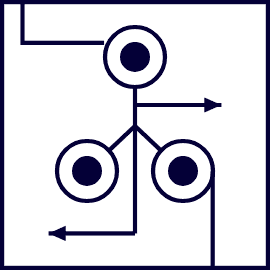
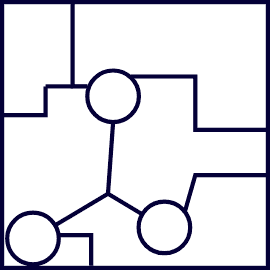
Select the option in which the given figure (X) is embedded (rotation is NOT allowed).
figure
(X)
उस विकल्प का चयन करें जिसमें दी गई आकृति (X) सन्निहित है (घुमाने की अनुमति नहीं है)।
figure
(X)
  1. Afigure
  2. Bfigure
  3. Cfigure
  4. Dfigure
Show answer

Concept: The exact shape of (X), with the same orientation and inner details, must appear inside the option.

  1. (X) is a Y-shape: three rings, each with a solid centre dot, joined by a vertical stem and two slanting arms.
  2. Options (B) and (D) have rings without dots; (C) uses squares – rejected.
  3. Option (A) contains the full Y with dotted rings in the same orientation.

Trick: Look for the smallest unique detail of (X) (here the centre dot) – it eliminates options fastest.

Answer: (A)

अवधारणा: (X) की पूरी आकृति, उसी दिशा और भीतरी विवरण के साथ, विकल्प में दिखनी चाहिए।

हल:

  1. (X) एक Y आकृति है: तीन वृत्त, हर एक के बीच में ठोस बिंदु, एक खड़ी रेखा और दो तिरछी भुजाएँ।
  2. (B) और (D) में वृत्त खाली हैं; (C) में वर्ग हैं – अस्वीकार।
  3. (A) में पूरी Y आकृति बिंदु वाले वृत्तों के साथ उसी दिशा में है।

ट्रिक: (X) का सबसे छोटा खास विवरण (यहाँ बीच का बिंदु) सबसे जल्दी विकल्प हटाता है।

उत्तर: (A)

SSC GDGeneral Intelligence & ReasoningEmbedded figureSSC GD 2025 · 20 Feb Shift 1 →
Q809.
RFTQ is related to VKXV in a certain way based on the English alphabetical order. In the same way, DNPJ is related to HSTO. To which of the given options is HLXB related, following the same logic?
अंग्रेजी वर्णमाला क्रम के आधार पर RFTQ एक निश्चित प्रकार से VKXV से संबंधित है। उसी प्रकार, DNPJ, HSTO से संबंधित है। उसी तर्क का अनुसरण करते हुए, HLXB दिए गए विकल्पों में से किससे संबंधित है?
  1. AEOLA
  2. BNOQX
  3. CLEPV
  4. DLQBG
Show answer

Concept: Shifts can alternate; find the shift of each position and wrap around after Z.

  1. RFTQ → VKXV: +4, +5, +4, +5 (same for DNPJ → HSTO).
  2. Apply to HLXB: first letter 8+4 = 12 (L), second 12+5 = 17 (Q).
  3. third 24+4 = 28 → 2 (B), fourth 2+5 = 7 (G) → LQBG.

Trick: For wrap-around, add and subtract 26: X(24)+4 = 28 − 26 = 2 = B.

Answer: (D) LQBG

अवधारणा: अंतर बारी-बारी बदल सकता है; Z के बाद फिर A से गिनें।

हल:

  1. RFTQ → VKXV: +4, +5, +4, +5 (DNPJ → HSTO में भी)।
  2. HLXB पर: पहला 8+4 = 12 (L), दूसरा 12+5 = 17 (Q)।
  3. तीसरा 24+4 = 28 → 2 (B), चौथा 2+5 = 7 (G) → LQBG।

ट्रिक: 26 से ऊपर जाए तो 26 घटाएँ: X(24)+4 = 28 − 26 = 2 = B।

उत्तर: (D) LQBG

SSC GDGeneral Intelligence & ReasoningLetter analogy – alternating +4, +5SSC GD 2025 · 20 Feb Shift 1 →
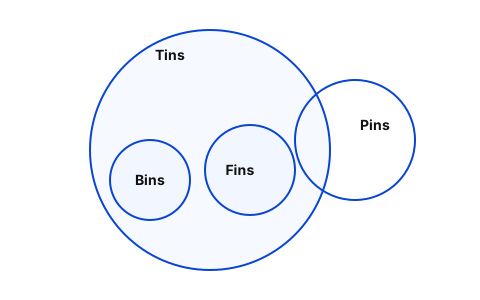
Q810.
Read the given statements and conclusions carefully. Assuming that the information given in the statements is true, even if it appears to be at variance with commonly known facts, decide which of the given conclusions logically follow(s) from the statements.
Statements:
All bins are tins.
Some pins are fins.
All fins are tins.
Conclusions:
(I): All pins are tins.
(II): Some bins are fins.
दिए गए कथनों और निष्कर्षों को ध्यानपूर्वक पढ़ें। यह मानते हुए कि कथनों में दी गई जानकारी सत्य है, चाहे वह सर्वज्ञात तथ्यों से भिन्न प्रतीत होती हो, निर्णय लें कि दिए गए निष्कर्षों में से कौन-सा/से निष्कर्ष कथनों का तार्किक रूप से अनुसरण करता है/करते हैं।
कथन:
सभी bins, tins हैं।
कुछ pins, fins हैं।
सभी fins, tins हैं।
निष्कर्ष:
(I): सभी pins, tins हैं।
(II): कुछ bins, fins हैं।
  1. ABoth conclusions (I) and (II) follow.निष्कर्ष (I) और (II) दोनों अनुसरण करते हैं।
  2. BOnly conclusion (I) follows.केवल निष्कर्ष (I) अनुसरण करता है।
  3. COnly conclusion (II) follows.केवल निष्कर्ष (II) अनुसरण करता है।
  4. DNeither conclusion (I) nor (II) follows.न तो निष्कर्ष (I) और न ही निष्कर्ष (II) अनुसरण करता है।
Show answer

Concept: A conclusion follows only if it is true in every possible diagram.

  1. Bins ⊂ Tins and Fins ⊂ Tins; Pins overlap Fins.
  2. (I) Only the pins that are fins must be tins; other pins can lie outside tins → does not follow.
  3. (II) Bins and fins are both inside tins but need not meet → does not follow.

Trick: Two classes inside the same big circle have no definite relation with each other.

Answer: (D) Neither conclusion (I) nor (II) follows.

अवधारणा: निष्कर्ष तभी सही है जब वह हर संभव चित्र में सत्य हो।

हल:

  1. Bins ⊂ Tins और Fins ⊂ Tins; Pins का Fins से कुछ भाग मिलता है।
  2. (I) केवल वे pins जो fins हैं, tins होंगे; बाकी बाहर हो सकते हैं → अनुसरण नहीं।
  3. (II) Bins और fins दोनों tins में हैं पर आपस में मिलना ज़रूरी नहीं → अनुसरण नहीं।

ट्रिक: एक ही बड़े वृत्त के अंदर के दो वर्गों में कोई निश्चित संबंध नहीं होता।

उत्तर: (D) न तो निष्कर्ष (I) और न ही निष्कर्ष (II) अनुसरण करता है।

SSC GDGeneral Intelligence & ReasoningSyllogism – some/allSSC GD 2025 · 20 Feb Shift 1 →
Q811.
What should come in place of the question mark (?) in the given series? 21, 75, 120, 156, 183, ?
दी गई शृंखला में प्रश्नवाचक चिह्न (?) के स्थान पर क्या आना चाहिए? 21, 75, 120, 156, 183, ?
  1. A201
  2. B213
  3. C226
  4. D219
Show answer

Concept: When gaps change steadily, look at the differences of the differences.

  1. Differences: 54, 45, 36, 27 – falling by 9.
  2. Next difference = 27−9=18.
  3. Next term = 183+18=201.

Trick: All differences are multiples of 9 (6×9,5×9,4×9,3×9) → next is 2×9=18.

Answer: (A) 201

अवधारणा: अंतर नियमित रूप से बदलें तो अंतरों का अंतर देखें।

हल:

  1. अंतर: 54, 45, 36, 27 – हर बार 9 कम।
  2. अगला अंतर = 27−9=18।
  3. अगला पद = 183+18=201।

ट्रिक: अंतर 9 के गुणज हैं (6×9,5×9,4×9,3×9) → अगला 2×9=18।

उत्तर: (A) 201

SSC GDGeneral Intelligence & ReasoningNumber series – differencesSSC GD 2025 · 20 Feb Shift 1 →
Q812.
What should come in place of the question mark (?) in the given series ? 120, 361, 1084, 3253, 9760, ?
दी गई शृंखला में प्रश्नवाचक चिह्न (?) के स्थान पर क्या आना चाहिए? 120, 361, 1084, 3253, 9760, ?
  1. A27281
  2. B28281
  3. C26281
  4. D29281
Show answer

Concept: Terms growing about 3 times suggest a ×3 rule with a small correction.

  1. 120×3+1=361; 361×3+1=1084.
  2. 1084×3+1=3253; 3253×3+1=9760.
  3. Next = 9760×3+1=29281.

Trick: Unit digit check: 0×3+1=1 → answer ends in 1 and is about 29,000 → only 29281 fits.

Answer: (D) 29281

अवधारणा: पद लगभग 3 गुना बढ़ें तो ×3 के साथ छोटा सुधार देखें।

हल:

  1. 120×3+1=361; 361×3+1=1084।
  2. 1084×3+1=3253; 3253×3+1=9760।
  3. अगला = 9760×3+1=29281।

ट्रिक: उत्तर लगभग 29,000 और अंत में 1 → केवल 29281।

उत्तर: (D) 29281

SSC GDGeneral Intelligence & ReasoningNumber series – ×3 + 1SSC GD 2025 · 20 Feb Shift 1 →
Q813.
What will come in the place of the question mark '(?)' in the following equation, if ' − ' and ' ÷ ' are interchanged and ' × ' and ' + ' are interchanged? 9 + 56 − 8 × 4 ÷ 9 = ?
निम्नलिखित समीकरण में प्रश्नवाचक चिह्न '(?)' के स्थान पर क्या आएगा, यदि ' − ' और ' ÷ ' को आपस में बदल दिया जाए तथा ' × ' और ' + ' को आपस में बदल दिया जाए? 9 + 56 − 8 × 4 ÷ 9 = ?
  1. A56
  2. B57
  3. C58
  4. D59
Show answer

Concept: Swap the signs first, then solve using BODMAS.

  1. Swap − ↔ ÷ and × ↔ +: 9×56÷8+4−9.
  2. 9×56÷8=504÷8=63.
  3. 63+4−9=58.

Trick: Cancel early: 56÷8=7, so 9×7=63 without big numbers.

Answer: (C) 58

अवधारणा: पहले चिह्न बदलें, फिर BODMAS से हल करें।

हल:

  1. − ↔ ÷ और × ↔ + बदलने पर: 9×56÷8+4−9।
  2. 9×56÷8=504÷8=63।
  3. 63+4−9=58।

ट्रिक: 56÷8=7 पहले कर लें, फिर 9×7=63।

उत्तर: (C) 58

SSC GDGeneral Intelligence & ReasoningInterchange of signs – BODMASSSC GD 2025 · 20 Feb Shift 1 →
Q814.
What should come in place of the question mark (?) in the given series based on the English alphabetical order ? ICD MGH QKL UOP ?
अंग्रेजी वर्णमाला क्रम के आधार पर दी गई शृंखला में प्रश्नवाचक चिह्न (?) के स्थान पर क्या आना चाहिए? ICD MGH QKL UOP ?
  1. AVRQ
  2. BYST
  3. CNOP
  4. DNPO
Show answer

Concept: Track the 1st, 2nd and 3rd letters of the clusters separately.

  1. 1st: I, M, Q, U → +4 → Y.
  2. 2nd: C, G, K, O → +4 → S.
  3. 3rd: D, H, L, P → +4 → T. Answer YST.

Trick: In each cluster the 2nd and 3rd letters are consecutive (C-D, G-H…), so the answer must end in a consecutive pair (S-T).

Answer: (B) YST

अवधारणा: समूहों के पहले, दूसरे और तीसरे अक्षर अलग-अलग देखें।

हल:

  1. पहला: I, M, Q, U → +4 → Y।
  2. दूसरा: C, G, K, O → +4 → S।
  3. तीसरा: D, H, L, P → +4 → T। उत्तर YST।

ट्रिक: हर समूह के दूसरे-तीसरे अक्षर लगातार हैं (C-D, G-H), अतः उत्तर में भी S-T।

उत्तर: (B) YST

SSC GDGeneral Intelligence & ReasoningLetter cluster series – +4SSC GD 2025 · 20 Feb Shift 1 →
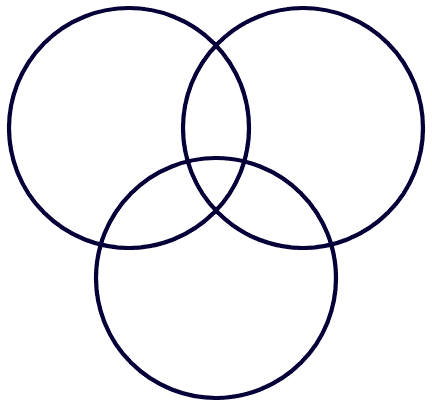
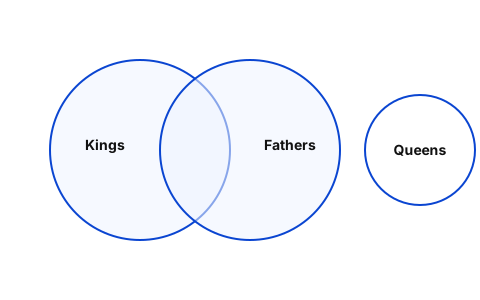
Q815.
Select the Venn diagram that best illustrates the relationship between the following classes.
Kings, Queens, Fathers
उस वेन आरेख का चयन करें जो निम्नलिखित वर्गों के बीच के संबंध को सर्वोत्तम रूप से दर्शाता है।
राजा, रानियाँ, पिता
  1. Afigure
  2. Bfigure
  3. Cfigure
  4. Dfigure
Show answer

Concept: Decide the relation of every pair: inside, overlapping or separate.

  1. Kings and Fathers: some kings are fathers, not all → two intersecting circles.
  2. Queens are women, so no queen is a king or a father → a separate circle.
  3. Required: two overlapping circles + one independent circle.

Trick: Look for gender words – a female class can never overlap a male class.

Answer: (C)

अवधारणा: हर जोड़े का संबंध तय करें: अंदर, आंशिक मिलन या अलग।

हल:

  1. राजा और पिता: कुछ राजा पिता होते हैं → दो मिलते हुए वृत्त।
  2. रानी स्त्री है, वह न राजा है न पिता → अलग वृत्त।
  3. चाहिए: दो प्रतिच्छेदी वृत्त + एक अलग वृत्त।

ट्रिक: स्त्री वर्ग कभी भी पुरुष वर्ग से नहीं मिलता।

उत्तर: (C)

SSC GDGeneral Intelligence & ReasoningVenn diagram – classesSSC GD 2025 · 20 Feb Shift 1 →
Q816.
Based on the English alphabetical order, three of the following four letter-clusters are alike in a certain way and thus form a group. Which letter-cluster DOES NOT belong to that group?
(Note: The odd man out is not based on the number of consonants/vowels or their position in the letter-cluster.)
अंग्रेजी वर्णमाला क्रम के आधार पर, निम्नलिखित चार अक्षर-समूहों में से तीन एक निश्चित प्रकार से समान हैं और इस प्रकार एक समूह बनाते हैं। कौन-सा अक्षर-समूह उस समूह से संबंधित नहीं है?
(नोट: विषम अक्षर-समूह का आधार व्यंजनों/स्वरों की संख्या या अक्षर-समूह में उनका स्थान नहीं है।)
  1. ANVD
  2. BIOY
  3. CJRZ
  4. DPXF
Show answer

Concept: Convert letters to positions and compare the gaps inside each cluster.

  1. NVD: 14 → 22 → 4 (30 − 26): gaps +8, +8.
  2. JRZ: 10 → 18 → 26: +8, +8. PXF: 16 → 24 → 6: +8, +8.
  3. IOY: 9 → 15 → 25: +6, +10 → odd.

Trick: Check the first gap only: N→V, J→R, P→X are +8 but I→O is +6.

Answer: (B) IOY

अवधारणा: अक्षरों को स्थान संख्या में बदलकर भीतरी अंतर देखें।

हल:

  1. NVD: 14 → 22 → 4: +8, +8।
  2. JRZ: 10 → 18 → 26: +8, +8। PXF: 16 → 24 → 6: +8, +8।
  3. IOY: 9 → 15 → 25: +6, +10 → अलग।

ट्रिक: केवल पहला अंतर देखें: I→O = +6, बाकी सब +8।

उत्तर: (B) IOY

SSC GDGeneral Intelligence & ReasoningOdd one out – letter gapsSSC GD 2025 · 20 Feb Shift 1 →
Q817.
In a certain code language, 'KIXCUP' is coded as '10' and 'DZYM' is coded as '8'. What is the code for 'RSAWYQI' in the given code language ?
एक निश्चित कूट भाषा में, 'KIXCUP' को '10' और 'DZYM' को '8' के रूप में कूटबद्ध किया जाता है। उसी कूट भाषा में 'RSAWYQI' का कूट क्या है?
  1. A9
  2. B11
  3. C13
  4. D6
Show answer

Concept: If letters don't match any shift, test the word length.

  1. KIXCUP: 6 letters → 10 = 6 + 4.
  2. DZYM: 4 letters → 8 = 4 + 4.
  3. RSAWYQI: 7 letters → 7 + 4 = 11.

Trick: Code − letters is the same (4) for both examples → constant addition rule.

Answer: (B) 11

अवधारणा: अक्षरों में कोई खिसकाव न दिखे तो शब्द की लंबाई जाँचें।

हल:

  1. KIXCUP: 6 अक्षर → 10 = 6 + 4।
  2. DZYM: 4 अक्षर → 8 = 4 + 4।
  3. RSAWYQI: 7 अक्षर → 7 + 4 = 11।

ट्रिक: कोड − अक्षर = 4 दोनों में समान → नियम: +4।

उत्तर: (B) 11

SSC GDGeneral Intelligence & ReasoningCoding – letter countSSC GD 2025 · 20 Feb Shift 1 →
Q818.
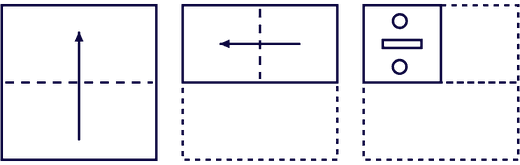
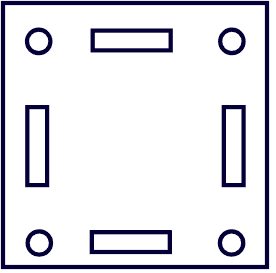
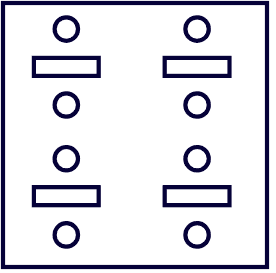
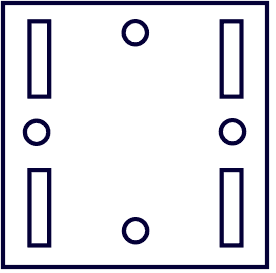
A paper is folded and cut as shown below. How will it appear when unfolded?
figure
एक कागज को नीचे दर्शाए अनुसार मोड़ा और काटा जाता है। खोलने पर वह कैसा दिखाई देगा?
figure
  1. Afigure
  2. Bfigure
  3. Cfigure
  4. Dfigure
Show answer

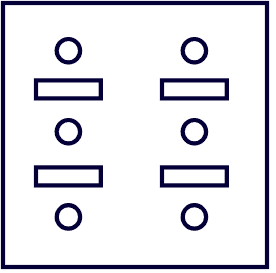
Concept: Two folds give four layers, so every cut appears four times, mirrored about both centre lines.

  1. Fold 1: bottom half up; fold 2: right half to the left → top-left quarter remains.
  2. Cuts on it: circle, bar, circle in one column.
  3. Unfold vertical fold → mirrored column on the right; unfold horizontal fold → both columns copied below.
  4. The design repeats symmetrically in all four quarters.

Trick: 2 folds = 4 copies of each cut; pick the option that is symmetric about both the horizontal and vertical centre lines.

Answer: (C)

अवधारणा: दो मोड़ = चार परतें; हर कट चार बार, दोनों केंद्र रेखाओं के सापेक्ष उल्टा बनता है।

हल:

  1. पहला मोड़: नीचे का भाग ऊपर; दूसरा: दायाँ भाग बाईं ओर → ऊपरी-बायाँ चौथाई बचा।
  2. उस पर कट: वृत्त, पट्टी, वृत्त एक स्तंभ में।
  3. खोलने पर दाईं ओर उसका प्रतिबिंब, फिर नीचे दोनों स्तंभों का प्रतिबिंब।
  4. चारों चौथाई में समान डिज़ाइन।

ट्रिक: 2 मोड़ = हर कट के 4 रूप; दोनों केंद्र रेखाओं पर सममित विकल्प चुनें।

उत्तर: (C)

SSC GDGeneral Intelligence & ReasoningPaper folding and cuttingSSC GD 2025 · 20 Feb Shift 1 →
Q819.
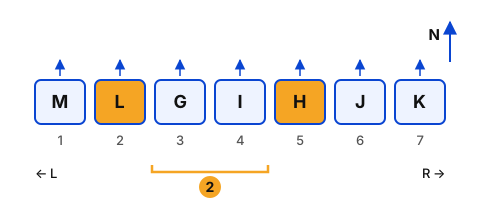
Seven people, G, H, I, J, K, L and M, are sitting in a row, facing north(but not necessarily in the same order). Only two people sit between M and I. Only K sits to the right of J. Only one person sits between I and J. G sits at some place to the right of L but at some place to the left of H . How many people sit between H and L ?
सात व्यक्ति G, H, I, J, K, L और M एक पंक्ति में उत्तर की ओर मुख करके बैठे हैं (आवश्यक नहीं कि इसी क्रम में)। M और I के बीच केवल दो व्यक्ति बैठे हैं। J के दाईं ओर केवल K बैठा है। I और J के बीच केवल एक व्यक्ति बैठा है। G, L के दाईं ओर किसी स्थान पर बैठा है, परंतु H के बाईं ओर किसी स्थान पर बैठा है। H और L के बीच कितने व्यक्ति बैठे हैं?
  1. ATwoदो
  2. BFourचार
  3. CThreeतीन
  4. DOneएक
Show answer

Concept: Fix the most definite clue first; facing north, right = higher seat number (1–7, left to right).

  1. Only K is right of J → J = 6, K = 7.
  2. One person between I and J → I = 4; two between M and I → M = 1.
  3. G is right of L and left of H → L = 2, G = 3, H = 5.
  4. Between H (5) and L (2): G, I → 2 people.

Trick: People between seats a and b = |a − b| − 1 = 5 − 2 − 1 = 2.

Answer: (A) Two

अवधारणा: सबसे पक्का संकेत पहले लगाएँ; उत्तर की ओर मुख हो तो दायाँ = बड़ी सीट संख्या।

हल:

  1. J के दाएँ केवल K → J = 6, K = 7।
  2. I और J के बीच एक → I = 4; M और I के बीच दो → M = 1।
  3. G, L के दाएँ व H के बाएँ → L = 2, G = 3, H = 5।
  4. H (5) और L (2) के बीच: G, I → 2 व्यक्ति।

ट्रिक: बीच के व्यक्ति = |a − b| − 1 = 5 − 2 − 1 = 2।

उत्तर: (A) दो

SSC GDGeneral Intelligence & ReasoningLinear seating – row facing northSSC GD 2025 · 20 Feb Shift 1 →
Q820.
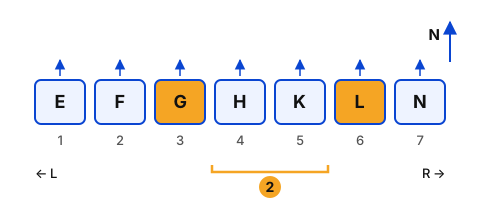
Seven people, E, F, G, H, K, L and N, are sitting in a row facing north (but not necessarily in the same order). Only two people sit to the right of K. Only two people sit between K and F. Only two people sit between E and H. H sits to the immediate left of K. N sits to the immediate right of L. How many people sit between G and L ?
सात व्यक्ति E, F, G, H, K, L और N एक पंक्ति में उत्तर की ओर मुख करके बैठे हैं (आवश्यक नहीं कि इसी क्रम में)। K के दाईं ओर केवल दो व्यक्ति बैठे हैं। K और F के बीच केवल दो व्यक्ति बैठे हैं। E और H के बीच केवल दो व्यक्ति बैठे हैं। H, K के ठीक बाईं ओर बैठा है। N, L के ठीक दाईं ओर बैठा है। G और L के बीच कितने व्यक्ति बैठे हैं?
  1. AOneएक
  2. BThreeतीन
  3. CTwoदो
  4. DFourचार
Show answer

Concept: Number seats 1–7 from the left; place fixed people first.

  1. Two people right of K → K = 5; H immediately left → H = 4.
  2. Two between K and F → F = 2.
  3. L–N adjacent pair: only seats 6–7 free → L = 6, N = 7; then E (two from H) = 1.
  4. G = 3. Between G (3) and L (6): H, K → 2.

Trick: Count with |a − b| − 1: 6 − 3 − 1 = 2.

Answer: (C) Two

अवधारणा: सीटें बाएँ से 1–7 मानें; पक्के लोगों को पहले बैठाएँ।

हल:

  1. K के दाएँ दो → K = 5; H ठीक बाएँ → H = 4।
  2. K और F के बीच दो → F = 2।
  3. L–N साथ-साथ: केवल 6–7 खाली → L = 6, N = 7; E (H से दो बीच) = 1।
  4. G = 3। G (3) और L (6) के बीच: H, K → 2।

ट्रिक: |a − b| − 1 = 6 − 3 − 1 = 2।

उत्तर: (C) दो

SSC GDGeneral Intelligence & ReasoningLinear seating – row facing northSSC GD 2025 · 20 Feb Shift 1 →