Question bank

Q&A: practice questions with answers

Search questions on any topic. Filter by exam category, exam, subject and topic, try the question, then open the answer and explanation.

Courses – airGurukul

4,200 questions found.

Q1601.
Read the given statements and conclusions carefully. Assuming that the information given in the statements is true, even if it appears to be at variance with commonly known facts, decide which of the given conclusions logically follow(s) from the statements.
Statements:
All cubs are foals.
All cubs are puppies.
All kittens are puppies.
Conclusions:
(I): All kittens are foals.
(II): Some puppies are foals.
दिए गए कथनों और निष्कर्षों को ध्यानपूर्वक पढ़ें। यह मानते हुए कि कथनों में दी गई जानकारी सत्य है, चाहे वह सर्वज्ञात तथ्यों से भिन्न प्रतीत होती हो, निर्णय कीजिए कि दिए गए निष्कर्षों में से कौन-सा/से कथनों का तार्किक रूप से अनुसरण करता है/करते हैं।
कथन:
सभी शावक बछेड़े हैं।
सभी शावक पिल्ले हैं।
सभी बिल्ली-बच्चे पिल्ले हैं।
निष्कर्ष:
(I): सभी बिल्ली-बच्चे बछेड़े हैं।
(II): कुछ पिल्ले बछेड़े हैं।
  1. AOnly conclusion (I) follows.केवल निष्कर्ष (I) अनुसरण करता है।
  2. BBoth conclusions (I) and (II) follow.निष्कर्ष (I) और (II) दोनों अनुसरण करते हैं।
  3. COnly conclusion (II) follows.केवल निष्कर्ष (II) अनुसरण करता है।
  4. DNeither conclusion (I) nor (II) follows.न तो निष्कर्ष (I) और न ही निष्कर्ष (II) अनुसरण करता है।
Show answer

Concept: A conclusion is valid only if it holds in every possible diagram of the statements.
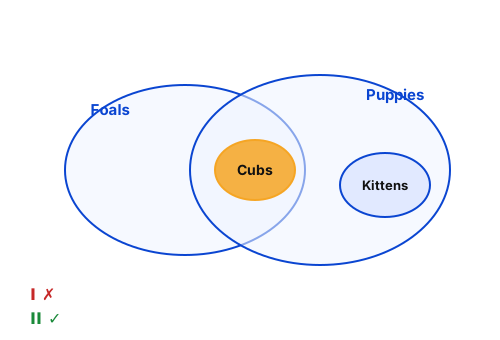
  1. Cubs sit inside both Foals and Puppies, so Foals and Puppies definitely overlap (at least through cubs).
  2. Kittens are inside Puppies, but nothing links Kittens to Foals – they can stay outside Foals. So I is not certain.
  3. Every cub is a puppy as well as a foal ⇒ some puppies are foals. II is certain.

Trick: When one class lies inside two others (A ⊂ B and A ⊂ C), 'Some B are C' is always true.

Answer: (C) Only conclusion (II) follows.

अवधारणा: निष्कर्ष तभी सही है जब वह हर संभव वेन आरेख में सत्य हो।

हल:

  1. Cubs, Foals और Puppies दोनों के अंदर हैं, इसलिए Foals और Puppies में common हिस्सा पक्का है।
  2. Kittens केवल Puppies के अंदर हैं; Foals से उनका कोई संबंध नहीं दिया – इसलिए I निश्चित नहीं।
  3. हर cub, puppy भी है और foal भी ⇒ कुछ puppies, foals हैं। II सही।

ट्रिक: यदि A, B और C दोनों के अंदर है, तो 'कुछ B, C हैं' हमेशा सत्य होता है।

उत्तर: (C) केवल निष्कर्ष (II) अनुसरण करता है।

SSC GDGeneral Intelligence & ReasoningSyllogism – two conclusionsSSC GD 2025 · 17 Feb Shift 2 →
Q1602.
Identify the figure given in the options which when put in place of the question mark (?) will logically complete the series.
figure
उन विकल्पों में से उस आकृति की पहचान कीजिए, जिसे प्रश्नवाचक चिह्न (?) के स्थान पर रखने पर शृंखला तार्किक रूप से पूर्ण हो जाएगी।
figure
  1. Afigure
  2. Bfigure
  3. Cfigure
  4. Dfigure
Show answer

Concept: Find what changes from one box to the next and continue it.

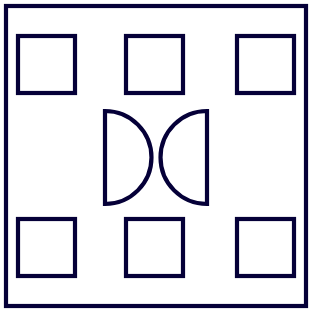
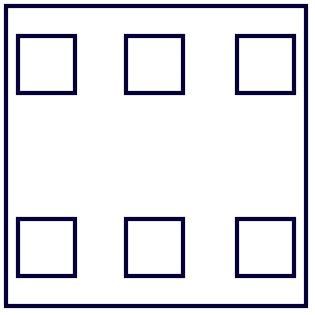
  1. Count the letters in the four boxes: 2 → 3 → 4 → 5.
  2. So one letter is added each time; the missing box needs 6 letters.
  3. A column holds at most five letters, so the 6th letter begins a new column next to the lowest letter. Only option (b) has exactly 6 letters arranged this way; the others have 7 or 8.

Trick: In figure series, first count elements (dots, lines, letters) – a +1 pattern removes most options at once.

Answer: (B)

अवधारणा: एक बॉक्स से अगले बॉक्स में क्या बदल रहा है, वह पहचानकर आगे बढ़ाएँ।

हल:

  1. चारों बॉक्स में अक्षर गिनें: 2 → 3 → 4 → 5।
  2. हर बार एक अक्षर बढ़ता है, अतः ? वाले बॉक्स में 6 अक्षर होंगे।
  3. एक कॉलम में अधिकतम 5 अक्षर हैं, इसलिए छठा अक्षर नीचे वाले अक्षर के बगल में नया कॉलम शुरू करेगा। केवल विकल्प (b) में ठीक 6 अक्षर इसी तरह हैं; बाकी में 7 या 8।

ट्रिक: आकृति श्रृंखला में सबसे पहले तत्वों (बिंदु, रेखा, अक्षर) की गिनती करें – +1 पैटर्न से ज़्यादातर विकल्प तुरंत कट जाते हैं।

उत्तर: (B)

SSC GDGeneral Intelligence & ReasoningFigure series – increasing lettersSSC GD 2025 · 17 Feb Shift 2 →
Q1603.
Based on the English alphabetical order, three of the following four letter-clusters are alike in a certain way and thus form a group. Which letter-cluster DOES NOT belong to that group?
(Note: The odd one out is not based on the number of consonants/vowels or their position in the letter-cluster.)
अंग्रेजी वर्णमाला क्रम के आधार पर, निम्नलिखित चार अक्षर-समूहों में से तीन एक निश्चित प्रकार से समान हैं और इस प्रकार एक समूह बनाते हैं। कौन-सा अक्षर-समूह उस समूह से संबंधित नहीं है?
(नोट: असंगत अक्षर-समूह, अक्षर-समूह में व्यंजनों/स्वरों की संख्या या उनकी स्थिति पर आधारित नहीं है।)
  1. AAEC
  2. BCHE
  3. CLPN
  4. DTXV
Show answer

Concept: Compare alphabet positions of the letters in each cluster.

  1. AEC: A(1), E(5), C(3) → +4, +2 from the first letter.
  2. LPN: 12, 16, 14 → +4, +2. TXV: 20, 24, 22 → +4, +2.
  3. CHE: 3, 8, 5 → +5, +2. The middle gap breaks the rule.

Trick: Pattern 'first, +4, +2' means the 3rd letter sits exactly midway between the 1st and 2nd: A_C_E, L_N_P, T_V_X – but C, E, H is not evenly spaced.

Answer: (B) CHE

अवधारणा: हर समूह में अक्षरों के वर्णमाला क्रमांक की तुलना करें।

हल:

  1. AEC: A(1), E(5), C(3) → पहले अक्षर से +4, +2।
  2. LPN: 12, 16, 14 → +4, +2; TXV: 20, 24, 22 → +4, +2।
  3. CHE: 3, 8, 5 → +5, +2 – यहाँ बीच का अंतर अलग है।

ट्रिक: तीसरा अक्षर पहले और दूसरे के ठीक बीच में होना चाहिए: A-C-E, L-N-P, T-V-X; पर C-E-H बराबर दूरी पर नहीं।

उत्तर: (B) CHE

SSC GDGeneral Intelligence & ReasoningOdd one out – letter gapsSSC GD 2025 · 17 Feb Shift 2 →
Q1604.
VF 19 is related to YB-2 in a certain way. In the same way, TX 11 is related to WT-10. To which of the following is PL 6 related following the same logic ?
VF 19 एक निश्चित प्रकार से YB-2 से संबंधित है। उसी प्रकार, TX 11, WT-10 से संबंधित है। इसी तर्क का अनुसरण करते हुए PL 6 निम्नलिखित में से किससे संबंधित है?
  1. ARH-16
  2. BHT-14
  3. CSH-15
  4. DHR-13
Show answer

Concept: Treat each letter and the number as separate parts with their own rule.

  1. 1st letter +3: V→Y, T→W. 2nd letter −4: F→B, X→T.
  2. Number: 19 − 21 = −2 and 11 − 21 = −10, i.e., subtract 21.
  3. PL 6: P+3 = S, L−4 = H, 6 − 21 = −15 ⇒ SH-15.

Trick: Check only the first letter (P+3 = S) – just option (c) starts with S.

Answer: (C) SH-15

अवधारणा: दोनों अक्षरों और संख्या पर अलग-अलग नियम लगाएँ।

हल:

  1. पहला अक्षर +3: V→Y, T→W; दूसरा अक्षर −4: F→B, X→T।
  2. संख्या: 19 − 21 = −2, 11 − 21 = −10 (21 घटाना)।
  3. PL 6: P+3 = S, L−4 = H, 6 − 21 = −15 ⇒ SH-15।

ट्रिक: सिर्फ पहला अक्षर देखें: P+3 = S – केवल विकल्प (c) S से शुरू होता है।

उत्तर: (C) SH-15

SSC GDGeneral Intelligence & ReasoningAnalogy – letters and numberSSC GD 2025 · 17 Feb Shift 2 →
Q1605.
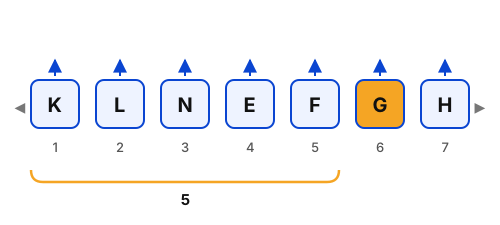
Seven people, E, F, G, H, K, L and N, are sitting in a row facing north (but not necessarily in the same order). Only two people sit to the left of N. Only three people sit between N and H. Only one person sits between H and F. K sits to the immediate left of L. E is not an immediate neighbour of H. How many people sit to the left of G?
सात व्यक्ति E, F, G, H, K, L और N उत्तर की ओर मुख करके एक पंक्ति में बैठे हैं (आवश्यक नहीं कि इसी क्रम में)। N के बाईं ओर केवल दो व्यक्ति बैठे हैं। N और H के बीच केवल तीन व्यक्ति बैठे हैं। H और F के बीच केवल एक व्यक्ति बैठा है। K, L के ठीक बाईं ओर बैठा है। E, H का निकटतम पड़ोसी नहीं है। G के बाईं ओर कितने व्यक्ति बैठे हैं?
  1. ATwoदो
  2. BOneएक
  3. CFiveपाँच
  4. DFourचार
Show answer

Concept: Fix the person with an exact position first, then place the rest.

  1. Two people left of N ⇒ N at seat 3 (from left). Three between N and H ⇒ H at seat 7.
  2. One person between H and F ⇒ F at seat 5. Free seats: 1, 2, 4, 6.
  3. K immediately left of L needs two adjacent free seats ⇒ K = 1, L = 2.
  4. E is not next to H, so E ≠ 6 ⇒ E = 4, G = 6. People to the left of G = 5.

Trick: Order: K L N E F G H – count left of G directly.

Answer: (C) Five

अवधारणा: जिसकी स्थिति निश्चित हो, उसे पहले बैठाएँ, फिर बाकी।

हल:

  1. N के बाएँ 2 लोग ⇒ N सीट 3 पर; N और H के बीच 3 ⇒ H सीट 7 पर।
  2. H और F के बीच 1 ⇒ F सीट 5 पर। खाली सीटें: 1, 2, 4, 6।
  3. K, L के ठीक बाएँ – लगातार खाली सीटें केवल 1-2 ⇒ K = 1, L = 2।
  4. E, H का पड़ोसी नहीं ⇒ E = 4, G = 6। G के बाएँ 5 लोग।

ट्रिक: अंतिम क्रम: K L N E F G H।

उत्तर: (C) पाँच

SSC GDGeneral Intelligence & ReasoningLinear seating – row facing northSSC GD 2025 · 17 Feb Shift 2 →
Q1606.
What should come in place of the question mark (?) in the given series? 623 625 629 635 643 ?
दी गई शृंखला में प्रश्नवाचक चिह्न (?) के स्थान पर क्या आना चाहिए? 623 625 629 635 643 ?
  1. A656
  2. B655
  3. C653
  4. D651
Show answer

Concept: Look at the gap between consecutive terms.

  1. Gaps: 625−623=2,629−625=4,635−629=6,643−635=8.
  2. Next gap = 10.
  3. ?=643+10=653.

Trick: Gaps 2, 4, 6, 8 ⇒ terms are 623+n(n+1):623+5×6=653.

Answer: (C) 653

अवधारणा: क्रमागत पदों का अंतर देखें।

हल:

  1. अंतर: 2, 4, 6, 8।
  2. अगला अंतर = 10।
  3. ?=643+10=653।

ट्रिक: अंतर 2, 4, 6, 8 ⇒ पद = 623+n(n+1); n=5 पर 623+30=653।

उत्तर: (C) 653

SSC GDGeneral Intelligence & ReasoningNumber series – even differencesSSC GD 2025 · 17 Feb Shift 2 →
Q1607.
Select the correct alternative that when filled in the blanks in the same sequence will make the series logically complete.
_OLPM_NROS_TQUR_SWT_
उस सही विकल्प का चयन कीजिए, जिसे उसी क्रम में रिक्त स्थानों में भरने पर शृंखला तार्किक रूप से पूर्ण हो जाएगी।
_OLPM_NROS_TQUR_SWT_
  1. AJQNVZ
  2. BKOPUX
  3. CJONUZ
  4. DKQPVX
Show answer

Concept: Break the 20-place series into 5 blocks of 4 and read each column.

  1. Blocks: _OLP | M_NR | OS_T | QUR_ | SWT_.
  2. Column 1: _, M, O, Q, S (steps of +2) ⇒ K. Column 2: O, _, S, U, W ⇒ Q.
  3. Column 3: L, N, _, R, T ⇒ P. Column 4: P, R, T, _, _ ⇒ V, X.
  4. Blanks = K, Q, P, V, X.

Trick: Only options (b) and (d) start with K; column 2 needs Q (not O) ⇒ (d).

Answer: (D) KQPVX

अवधारणा: 20 अक्षरों को 4-4 के 5 समूहों में बाँटकर हर कॉलम पढ़ें।

हल:

  1. समूह: _OLP | M_NR | OS_T | QUR_ | SWT_।
  2. कॉलम 1: _, M, O, Q, S (+2 का क्रम) ⇒ K; कॉलम 2: O, _, S, U, W ⇒ Q।
  3. कॉलम 3: L, N, _, R, T ⇒ P; कॉलम 4: P, R, T, _, _ ⇒ V, X।
  4. रिक्त अक्षर = K, Q, P, V, X।

ट्रिक: पहला अक्षर K केवल (b) और (d) में; दूसरा Q होना चाहिए ⇒ (d)।

उत्तर: (D) KQPVX

SSC GDGeneral Intelligence & ReasoningLetter series – fill the blanksSSC GD 2025 · 17 Feb Shift 2 →
Q1608.
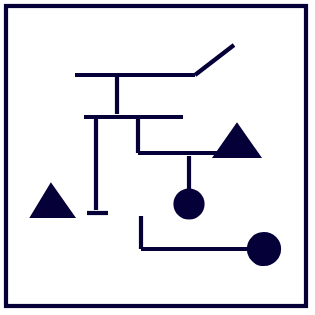
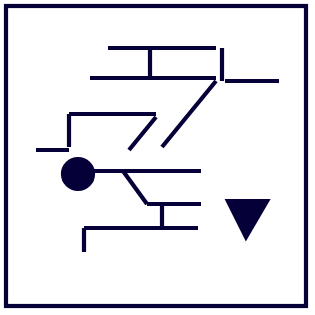
Select the option figure in which the given figure is embedded as its part (rotation is NOT allowed).
figure
उस विकल्प आकृति का चयन कीजिए जिसमें दी गई आकृति उसके एक भाग के रूप में अंतर्निहित है (घुमाने की अनुमति नहीं है)।
figure
  1. Afigure
  2. Bfigure
  3. Cfigure
  4. Dfigure
Show answer

Concept: The exact shape, with the same orientation, must appear inside the answer figure.

  1. Given part: a solid dot, a horizontal line from it to the right, and an upward-pointing solid triangle sitting on that line.
  2. Option (a) contains this dot–line–upward triangle unit as it is.
  3. In (c) and (d) the triangle on the line points down; in (b) no dot is joined to an upward triangle.

Trick: Since rotation is not allowed, first check the direction of the triangle – it eliminates options fast.

Answer: (A)

अवधारणा: दी गई आकृति उसी दिशा में उत्तर-आकृति के अंदर दिखनी चाहिए।

हल:

  1. दी गई आकृति: एक ठोस बिंदु, उससे दाईं ओर क्षैतिज रेखा, और रेखा पर ऊपर की ओर नोक वाला ठोस त्रिभुज।
  2. विकल्प (a) में यही बिंदु–रेखा–ऊपरमुखी त्रिभुज ज्यों-का-त्यों है।
  3. (c) व (d) में रेखा से जुड़ा त्रिभुज नीचे की ओर है; (b) में बिंदु ऊपरमुखी त्रिभुज से नहीं जुड़ा।

ट्रिक: घुमाना मना है – इसलिए पहले त्रिभुज की दिशा जाँचें, विकल्प जल्दी कटेंगे।

उत्तर: (A)

SSC GDGeneral Intelligence & ReasoningEmbedded figureSSC GD 2025 · 17 Feb Shift 2 →
Q1609.
What should come in place of the question mark (?) in the given series based on the English alphabetical order ? ZZZ CCC FFF III ?
अंग्रेजी वर्णमाला क्रम के आधार पर दी गई शृंखला में प्रश्नवाचक चिह्न (?) के स्थान पर क्या आना चाहिए? ZZZ CCC FFF III ?
  1. AGGG
  2. BKKK
  3. CHHH
  4. DLLL
Show answer

Concept: Each term repeats one letter; track that letter's position.

  1. Letters: Z, C, F, I.
  2. Z → C (via A, B) = +3, C → F = +3, F → I = +3.
  3. I(9) + 3 = 12 = L ⇒ LLL.

Trick: Positions 26, 3, 6, 9 ⇒ multiples of 3 (26 ≡ 0 after wrapping); next is 12 = L.

Answer: (D) LLL

अवधारणा: प्रत्येक पद में एक अक्षर 3 बार लिखा है; उस अक्षर का क्रमांक देखें।

हल:

  1. अक्षर: Z, C, F, I।
  2. Z → C (A, B होते हुए) = +3, C → F = +3, F → I = +3।
  3. I(9) + 3 = 12 = L ⇒ LLL।

ट्रिक: C, F, I के क्रमांक 3, 6, 9 – अगला 12 = L।

उत्तर: (D) LLL

SSC GDGeneral Intelligence & ReasoningLetter series – repeating lettersSSC GD 2025 · 17 Feb Shift 2 →
Q1610.
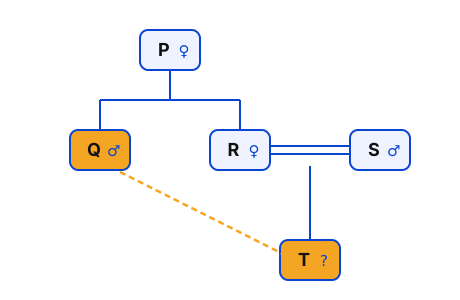
In a certain code language, 'A + B' means 'A is the mother of B', 'A − B' means 'A is the brother of B', 'A × B' means 'A is the wife of B' and 'A ÷ B' means 'A is the father of B'.
Based on the above, how is Q related to T if 'P + Q − R × S ÷ T'?
एक निश्चित कूट भाषा में, 'A + B' का अर्थ है 'A, B की माता है', 'A − B' का अर्थ है 'A, B का भाई है', 'A × B' का अर्थ है 'A, B की पत्नी है' तथा 'A ÷ B' का अर्थ है 'A, B का पिता है'।
उपर्युक्त के आधार पर, यदि 'P + Q − R × S ÷ T' है, तो Q, T से किस प्रकार संबंधित है?
  1. ADaughterपुत्री
  2. BMother's brotherमाता का भाई
  3. CBrother's wifeभाई की पत्नी
  4. DWife's fatherपत्नी का पिता
Show answer

Concept: Decode each symbol pair one by one and join the chain.

  1. P + Q: P is Q's mother. Q − R: Q is R's brother.
  2. R × S: R is S's wife. S ÷ T: S is T's father.
  3. So R (S's wife) is T's mother, and Q is R's brother.

Trick: Brother of mother = maternal uncle (mama).

Answer: (B) Mother's brother

अवधारणा: हर चिह्न को क्रम से डिकोड करके कड़ी जोड़ें।

हल:

  1. P + Q: P, Q की माँ; Q − R: Q, R का भाई।
  2. R × S: R, S की पत्नी; S ÷ T: S, T का पिता।
  3. अतः R, T की माँ है और Q उसका भाई।

ट्रिक: माँ का भाई = मामा।

उत्तर: (B) माता का भाई

SSC GDGeneral Intelligence & ReasoningCoded blood relationSSC GD 2025 · 17 Feb Shift 2 →
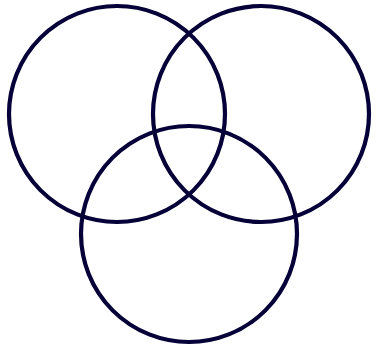
Q1611.
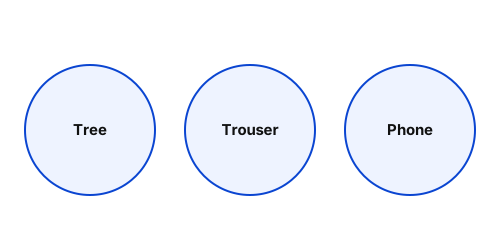
Select the Venn diagram that best illustrates the relationship between the following classes.
Tree, Trouser, Phone
उस वेन आरेख का चयन कीजिए जो निम्नलिखित वर्गों के बीच संबंध को सर्वोत्तम रूप से दर्शाता है।
पेड़, पतलून, फ़ोन
  1. Afigure
  2. Bfigure
  3. Cfigure
  4. Dfigure
Show answer

Concept: If no member is common to any two classes, draw three separate circles.

  1. Tree is a plant, Trouser is clothing, Phone is a device.
  2. No tree is a trouser or a phone; no trouser is a phone.
  3. So three disjoint circles – option (d).

Trick: Three unrelated nouns (e.g., Pen, Dog, River) always give three non-touching circles.

Answer: (D)

अवधारणा: यदि किन्हीं दो वर्गों में कुछ भी साझा नहीं, तो तीन अलग वृत्त बनते हैं।

हल:

  1. पेड़ – पौधा, पतलून – वस्त्र, फ़ोन – उपकरण।
  2. इनमें कोई सदस्य साझा नहीं।
  3. अतः तीन अलग-अलग वृत्त – विकल्प (d)।

ट्रिक: तीन पूरी तरह असंबंधित वस्तुएँ = तीन अलग वृत्त।

उत्तर: (D)

SSC GDGeneral Intelligence & ReasoningVenn diagram – unrelated classesSSC GD 2025 · 17 Feb Shift 2 →
Q1612.
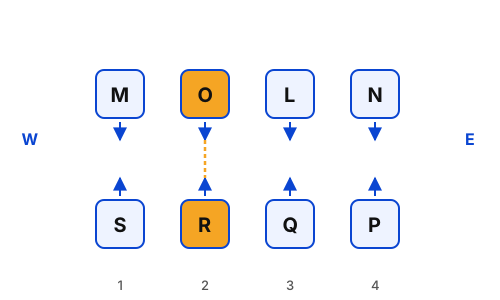
Eight people are sitting in two parallel rows containing 4 people each in such a way that there is equal distance between adjacent persons.
In row 1 - L, M, N and O are seated and all of them are facing south.
In row 2 - P, Q, R and S are seated and all of them are facing north.
Thus, each person faces another person from the other row. M sits third to the right of N. The one facing Q is an immediate neighbour of N. The one facing O is an immediate neighbour of Q. The one facing M is an immediate neighbour of R. S sits at some place to the left of P.
Who among the following faces R?
आठ व्यक्ति दो समानांतर पंक्तियों में इस प्रकार बैठे हैं कि प्रत्येक पंक्ति में 4 व्यक्ति हैं और आसन्न व्यक्तियों के बीच समान दूरी है।
पंक्ति 1 में - L, M, N और O बैठे हैं तथा इन सभी का मुख दक्षिण की ओर है।
पंक्ति 2 में - P, Q, R और S बैठे हैं तथा इन सभी का मुख उत्तर की ओर है।
इस प्रकार, प्रत्येक व्यक्ति दूसरी पंक्ति के किसी एक व्यक्ति के सम्मुख है। M, N के दाईं ओर तीसरे स्थान पर बैठा है। Q के सम्मुख बैठा व्यक्ति N का निकटतम पड़ोसी है। O के सम्मुख बैठा व्यक्ति Q का निकटतम पड़ोसी है। M के सम्मुख बैठा व्यक्ति R का निकटतम पड़ोसी है। S, P के बाईं ओर किसी स्थान पर बैठा है।
निम्नलिखित में से कौन R के सम्मुख है?
  1. AM
  2. BL
  3. CN
  4. DO
Show answer

Concept: Row 1 faces south, so its 'right' is towards the west; row 2 faces north, so its 'left' is towards the west.

  1. Seats 1–4 from west. M third to right of N ⇒ N at 4, M at 1 (row 1).
  2. Person facing Q is next to N ⇒ seat 3 ⇒ Q at seat 3 (row 2).
  3. Person facing O is next to Q (seat 2 or 4); seat 4 is N ⇒ O at 2, L at 3.
  4. Person facing M (seat 1) is next to R ⇒ R at 2; S left of P ⇒ S = 1, P = 4. Seat 2 faces seat 2 ⇒ O faces R.

Trick: For south-facing people, left/right are reversed compared with your view – mark arrows before placing.

Answer: (D) O

अवधारणा: पंक्ति 1 दक्षिणमुखी है – उसका दायाँ पश्चिम की ओर; पंक्ति 2 उत्तरमुखी – उसका बायाँ पश्चिम की ओर।

हल:

  1. सीट 1–4 पश्चिम से। M, N के तीसरे दाएँ ⇒ N सीट 4, M सीट 1।
  2. Q के सामने वाला N का पड़ोसी ⇒ सीट 3 ⇒ Q सीट 3 पर।
  3. O के सामने वाला Q का पड़ोसी (सीट 2 या 4); 4 पर N ⇒ O सीट 2, L सीट 3।
  4. M के सामने वाला R का पड़ोसी ⇒ R सीट 2; S, P के बाएँ ⇒ S = 1, P = 4। सीट 2 आमने-सामने ⇒ O, R के सामने।

ट्रिक: दक्षिणमुखी व्यक्तियों के लिए बाएँ-दाएँ आपके दृष्टिकोण से उलटे होते हैं।

उत्तर: (D) O

SSC GDGeneral Intelligence & ReasoningTwo-row seating – facing each otherSSC GD 2025 · 17 Feb Shift 2 →
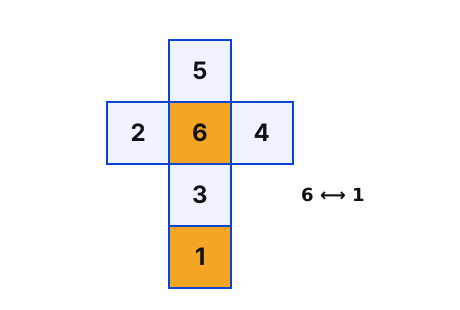
Q1613.
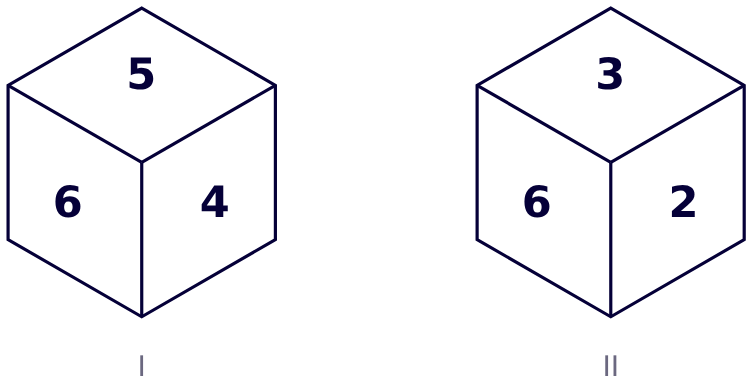
Two different positions of the same dice are given below. Which is the number on the face opposite to the face containing 1 ?
figure
एक ही पासे की दो भिन्न स्थितियाँ नीचे दी गई हैं। 1 वाले फलक के विपरीत फलक पर कौन-सी संख्या है?
figure
  1. A3
  2. B6
  3. C4
  4. D5
Show answer

Concept: A face is adjacent to four faces; the one never seen next to it is opposite.

  1. 6 appears in both positions.
  2. Position 1: 6 is next to 5 and 4. Position 2: 6 is next to 3 and 2.
  3. Neighbours of 6 = 2, 3, 4, 5 ⇒ the remaining face 1 is opposite 6.

Trick: Common face in both views → list its 4 neighbours → the missing number is its opposite.

Answer: (B) 6

अवधारणा: एक फलक के चार पड़ोसी होते हैं; जो उसके साथ कभी न दिखे वही विपरीत है।

हल:

  1. 6 दोनों स्थितियों में है।
  2. स्थिति 1: 6 के साथ 5 और 4; स्थिति 2: 6 के साथ 3 और 2।
  3. 6 के पड़ोसी 2, 3, 4, 5 ⇒ बचा हुआ 1, 6 के विपरीत।

ट्रिक: दोनों स्थितियों में common फलक के चार पड़ोसी लिखें – जो संख्या छूटे वही उसके विपरीत।

उत्तर: (B) 6

SSC GDGeneral Intelligence & ReasoningDice – opposite faceSSC GD 2025 · 17 Feb Shift 2 →
Q1614.
The position(s) of how many letters will remain unchanged if each of the letters in the word ICEBOATS is arranged in the English alphabetical order?
यदि शब्द ICEBOATS के प्रत्येक अक्षर को अंग्रेजी वर्णमाला क्रम में व्यवस्थित किया जाए, तो कितने अक्षरों की स्थिति अपरिवर्तित रहेगी?
  1. ATwoदो
  2. BOneएक
  3. CThreeतीन
  4. DZeroशून्य
Show answer

Concept: Sort the letters and compare position by position.

  1. Original: ICEBOATS. Arranged: ABCEIOST.
  2. 1st place I→A, 2nd C→B, 3rd E→C, 4th B→E, 5th O→I, 6th A→O, 7th T→S, 8th S→T.
  3. Every place has a different letter now ⇒ no letter stays.

Trick: If the first and last sorted letters (A, T) are not already at the ends, check only the middle letters quickly.

Answer: (D) Zero

अवधारणा: अक्षर A से Z क्रम में सजाकर पुराने और नए स्थान मिलाएँ।

हल:

  1. मूल शब्द ICEBOATS; व्यवस्थित रूप ABCEIOST।
  2. पहला स्थान I→A, दूसरा C→B, तीसरा E→C, चौथा B→E, पाँचवाँ O→I, छठा A→O, सातवाँ T→S, आठवाँ S→T।
  3. हर स्थान पर अक्षर बदल गया ⇒ एक भी नहीं बचा।

ट्रिक: दोनों पंक्तियाँ ऊपर-नीचे लिखकर मिलान करें – गलती नहीं होगी।

उत्तर: (D) शून्य

SSC GDGeneral Intelligence & ReasoningAlphabetical rearrangementSSC GD 2025 · 17 Feb Shift 2 →
Q1615.
What will come in the place of the question mark '(?)' in the following equation, if ' ÷ ' and ' × ' are interchanged and ' + ' and ' - ' are interchanged ?
47−5÷2+72×6= ?
दिए गए समीकरण में प्रश्नवाचक चिह्न '(?)' के स्थान पर क्या आएगा, यदि ' ÷ ' और ' × ' को आपस में बदल दिया जाए तथा ' + ' और ' - ' को आपस में बदल दिया जाए?
47−5÷2+72×6= ?
  1. A48
  2. B46
  3. C45
  4. D47
Show answer

Concept: Swap the signs first, then solve using BODMAS.

  1. After swapping: 47+5×2−72÷6.
  2. 5×2=10,72÷6=12.
  3. 47+10−12=45.

Trick: The unit digit check: 7+0−2=5 ⇒ answer ends in 5 ⇒ 45.

Answer: (C) 45

अवधारणा: पहले चिह्न बदलें, फिर BODMAS से हल करें।

हल:

  1. चिह्न बदलने पर: 47+5×2−72÷6।
  2. 5×2=10,72÷6=12।
  3. 47+10−12=45।

ट्रिक: इकाई अंक: 7+0−2=5 ⇒ उत्तर 5 पर खत्म – केवल 45।

उत्तर: (C) 45

SSC GDGeneral Intelligence & ReasoningSign interchange – BODMASSSC GD 2025 · 17 Feb Shift 2 →
Q1616.
In a coded language 'CARE' is coded as '5132' and 'RATE' is coded as '2154'. What is the code for T in the same code language ?
एक कूट भाषा में 'CARE' को '5132' के रूप में तथा 'RATE' को '2154' के रूप में कूटबद्ध किया जाता है। उसी कूट भाषा में T का कूट क्या है?
  1. A1
  2. B2
  3. C3
  4. D4
Show answer

Concept: Common letters take common digits; the leftover letter takes the leftover digit.

  1. CARE → 5132 and RATE → 2154.
  2. Common letters A, R, E ↔ common digits 1, 2, 5.
  3. Extra letter in RATE is T; extra digit in 2154 is 4 ⇒ T = 4.

Trick: Strike out matching digits in both codes – what remains belongs to the unique letter.

Answer: (D) 4

अवधारणा: साझा अक्षरों का कोड साझा अंक होते हैं; बचे अक्षर का कोड बचा अंक।

हल:

  1. CARE → 5132, RATE → 2154।
  2. साझा अक्षर A, R, E ↔ साझा अंक 1, 2, 5।
  3. RATE का अलग अक्षर T, 2154 का अलग अंक 4 ⇒ T = 4।

ट्रिक: दोनों कोड में common अंक काट दें – जो बचे वह अलग अक्षर का है।

उत्तर: (D) 4

SSC GDGeneral Intelligence & ReasoningCoding – letter to digitSSC GD 2025 · 17 Feb Shift 2 →
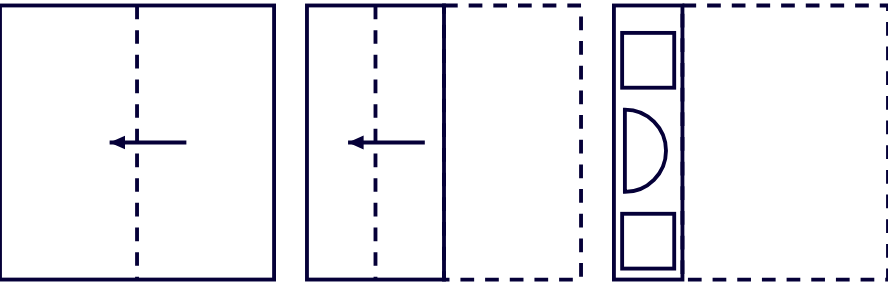
Q1617.
A paper is folded and cut as shown below. How will it appear when unfolded?
figure
एक कागज को नीचे दर्शाए अनुसार मोड़ा और काटा जाता है। खोलने पर वह कैसा दिखाई देगा?
figure
  1. Afigure
  2. Bfigure
  3. Cfigure
  4. Dfigure
Show answer

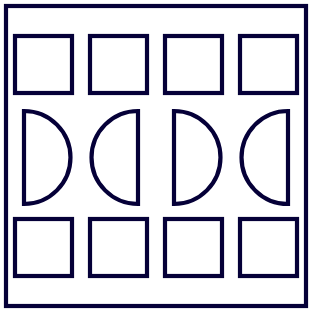
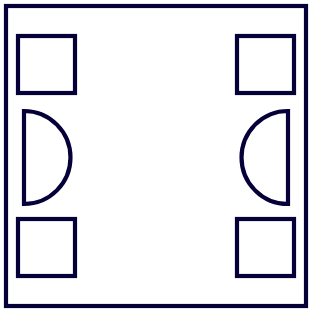
Concept: Each fold doubles the layers; unfolding mirrors each cut across the fold line.

  1. Two vertical folds ⇒ 4 layers, so each cut appears 4 times.
  2. Strip has a square at top, a half-circle in the middle, a square at bottom ⇒ 4 squares at top, 4 half-circles in middle, 4 squares at bottom.
  3. Mirror images across folds make adjacent half-circles face opposite directions – matches option (a).

Trick: Number of holes = cuts × 2number of folds – here 3×4=12 shapes.

Answer: (A)

अवधारणा: हर मोड़ परतें दोगुनी करता है; खोलने पर कट मोड़-रेखा पर दर्पण-प्रतिबिंब बनते हैं।

हल:

  1. दो ऊर्ध्वाधर मोड़ ⇒ 4 परतें, इसलिए हर कट 4 बार दिखेगा।
  2. ऊपर वर्ग, बीच में अर्धवृत्त, नीचे वर्ग ⇒ खुलने पर ऊपर 4 वर्ग, बीच में 4 अर्धवृत्त, नीचे 4 वर्ग।
  3. दर्पण प्रभाव से पास-पास के अर्धवृत्त उलटी दिशा में – विकल्प (a)।

ट्रिक: कुल आकृतियाँ = कट × 2मोड़ों की संख्या = 3×4=12।

उत्तर: (A)

SSC GDGeneral Intelligence & ReasoningPaper folding and cuttingSSC GD 2025 · 17 Feb Shift 2 →
Q1618.
QIWC is related to OGTZ in a certain way based on the English alphabetical order. In the same way, GONY is related to EMKV. To which of the given options is FPJA related, following the same logic?
अंग्रेजी वर्णमाला क्रम के आधार पर QIWC एक निश्चित प्रकार से OGTZ से संबंधित है। उसी प्रकार, GONY, EMKV से संबंधित है। इसी तर्क का अनुसरण करते हुए FPJA दिए गए विकल्पों में से किससे संबंधित है?
  1. ADNIY
  2. BCLHZ
  3. CEMHY
  4. DDNGX
Show answer

Concept: Find the shift for each position and apply it to the new word.

  1. QIWC → OGTZ: −2, −2, −3, −3. GONY → EMKV: −2, −2, −3, −3 (same).
  2. For FPJA: F→D and P→N (−2 each); J→G and A→X (−3 each, A→Z→Y→X).
  3. So the answer word is DNGX.

Trick: Last letter A−3 = X – only option (d) ends in X.

Answer: (D) DNGX

अवधारणा: हर स्थान का खिसकाव पता कर नए शब्द पर लगाएँ।

हल:

  1. QIWC → OGTZ: −2, −2, −3, −3; GONY → EMKV: वही नियम।
  2. FPJA पर: F→D और P→N (दोनों −2); J→G और A→X (दोनों −3, A→Z→Y→X)।
  3. अतः शब्द DNGX।

ट्रिक: अंतिम अक्षर A−3 = X – केवल विकल्प (d) X पर खत्म।

उत्तर: (D) DNGX

SSC GDGeneral Intelligence & ReasoningLetter analogy – backward shiftsSSC GD 2025 · 17 Feb Shift 2 →
Q1619.
In a certain code language, 'help your friends' is coded as 'ap hg nk' and 'he needs help' is coded as 'sr ml ap'. How is 'help' coded in the given language?
एक निश्चित कूट भाषा में, 'help your friends' को 'ap hg nk' के रूप में तथा 'he needs help' को 'sr ml ap' के रूप में कूटबद्ध किया जाता है। उसी भाषा में 'help' को किस प्रकार कूटबद्ध किया जाएगा?
  1. Ank
  2. Bhg
  3. Csr
  4. Dap
Show answer

Concept: A word present in both sentences has the code present in both codes.

  1. 'help your friends' → ap hg nk.
  2. 'he needs help' → sr ml ap.
  3. Common word = help, common code = ap.

Trick: One common word + one common code = direct match, no further work needed.

Answer: (D) ap

अवधारणा: दोनों वाक्यों में आने वाले शब्द का कोड दोनों कोड-समूहों में होगा।

हल:

  1. 'help your friends' → ap hg nk।
  2. 'he needs help' → sr ml ap।
  3. साझा शब्द help, साझा कोड ap।

ट्रिक: एक साझा शब्द + एक साझा कोड = सीधा मिलान।

उत्तर: (D) ap

SSC GDGeneral Intelligence & ReasoningCoding – common wordSSC GD 2025 · 17 Feb Shift 2 →
Q1620.
What should come in place of the question mark (?) in the given series? 809 810 812 815 819 ?
दी गई शृंखला में प्रश्नवाचक चिह्न (?) के स्थान पर क्या आना चाहिए? 809 810 812 815 819 ?
  1. A822
  2. B821
  3. C823
  4. D824
Show answer

Concept: Check successive differences.

  1. Gaps: 1, 2, 3, 4.
  2. Next gap = 5.
  3. ? = 819 + 5 = 824.

Trick: Differences in natural-number order: just add the next counting number.

Answer: (D) 824

अवधारणा: क्रमागत अंतर देखें।

हल:

  1. अंतर: 1, 2, 3, 4।
  2. अगला अंतर = 5।
  3. ? = 819 + 5 = 824।

ट्रिक: अंतर 1, 2, 3, 4 के क्रम में – अगली गिनती जोड़ दें।

उत्तर: (D) 824

SSC GDGeneral Intelligence & ReasoningNumber series – increasing differencesSSC GD 2025 · 17 Feb Shift 2 →