Question bank

Q&A: practice questions with answers

Search questions on any topic. Filter by exam category, exam, subject and topic, try the question, then open the answer and explanation.

Courses – airGurukul

53,050 questions in the question bank.

Q2061.
A particle is executing simple harmonic motion with time period 2 s and amplitude 1 cm. If D and d are the total distance and displacement covered by the particle in 12.5 s, then Dd is
एक कण 2 s आवर्तकाल तथा 1 cm आयाम से सरल आवर्त गति कर रहा है। यदि कण द्वारा 12.5 s में तय की गई कुल दूरी D तथा विस्थापन d है, तो Dd है
  1. A165
  2. B10
  3. C154
  4. D25
Show answer

Concept: In one full period the particle covers distance 4A with zero displacement; in a quarter period starting from the mean position it covers distance A with displacement A.

  1. 12.5 s=6T+T4 (as T=2 s).
  2. Distance: D=6(4A)+A=25A=25 cm.
  3. Displacement: after 6T the particle is back at the start; in the next T4 it moves from mean to extreme, so d=A=1 cm.
  4. Dd=25

Answer: (D) 25

अवधारणा: एक पूर्ण आवर्तकाल में कण 4A दूरी तय करता है और विस्थापन शून्य होता है; माध्य स्थिति से प्रारंभ कर चौथाई आवर्तकाल में दूरी A तथा विस्थापन A होता है।

  1. 12.5 s=6T+T4 (क्योंकि T=2 s)।
  2. दूरी: D=6(4A)+A=25A=25 cm।
  3. विस्थापन: 6T के बाद कण प्रारंभिक बिंदु पर लौट आता है; अगले T4 में वह माध्य से चरम स्थिति तक जाता है, अतः d=A=1 cm।
  4. Dd=25

उत्तर: (D) 25

JEE Main 2025 (January) – Paper 1 (B.E./B.Tech)PhysicsOscillations – distance and displacement in SHMJEE Main 2025 (January) – Paper 1 (B.E./B.Tech) 2025 · 24 Jan Shift 1 →
Q2062.
The amount of work done to break a big water drop of radius 'R' into 27 small drops of equal radius is 10 J. The work done required to break the same big drop into 64 small drops of equal radius will be
'R' त्रिज्या की एक बड़ी जल की बूँद को समान त्रिज्या की 27 छोटी बूँदों में तोड़ने में किया गया कार्य 10 J है। उसी बड़ी बूँद को समान त्रिज्या की 64 छोटी बूँदों में तोड़ने के लिए आवश्यक कार्य होगा
  1. A15 J
  2. B5 J
  3. C20 J
  4. D10 J
Show answer

Concept: Work done = surface tension × increase in surface area. Breaking into n equal drops: W=4πR2T(n1/3−1).

  1. For n=27: W1=4πR2T(3−1)=8πR2T=10 J, so 4πR2T=5 J.
  2. For n=64: W2=4πR2T(4−1)=3×5=15 J.

Short trick: W2W1=641/3−1271/3−1=32⇒W2=15 J.

Answer: (A) 15 J

अवधारणा: किया गया कार्य = पृष्ठ तनाव × पृष्ठीय क्षेत्रफल में वृद्धि। n समान बूँदों में तोड़ने पर: W=4πR2T(n1/3−1)।

  1. n=27 के लिए: W1=4πR2T(3−1)=8πR2T=10 J, अतः 4πR2T=5 J।
  2. n=64 के लिए: W2=4πR2T(4−1)=3×5=15 J।

शॉर्ट ट्रिक: W2W1=641/3−1271/3−1=32⇒W2=15 J।

उत्तर: (A) 15 J

JEE Main 2025 (January) – Paper 1 (B.E./B.Tech)PhysicsMechanical Properties of Fluids – surface energyJEE Main 2025 (January) – Paper 1 (B.E./B.Tech) 2025 · 24 Jan Shift 1 →
Q2063.
A plano-convex lens having radius of curvature of first surface 2 cm exhibits focal length of f1 in air. Another plano-convex lens with first surface radius of curvature 3 cm has focal length of f2 when it is immersed in a liquid of refractive index 1.2. If both the lenses are made of same glass of refractive index 1.5, the ratio of f1 and f2 will be
प्रथम पृष्ठ की वक्रता त्रिज्या 2 cm वाले एक समतल-उत्तल लेंस की वायु में फोकस दूरी f1 है। प्रथम पृष्ठ की वक्रता त्रिज्या 3 cm वाले एक अन्य समतल-उत्तल लेंस की, 1.2 अपवर्तनांक के द्रव में डुबोने पर, फोकस दूरी f2 है। यदि दोनों लेंस 1.5 अपवर्तनांक के एक ही काँच के बने हों, तो f1 तथा f2 का अनुपात होगा
  1. A1 : 2
  2. B1 : 3
  3. C3 : 5
  4. D2 : 3
Show answer

Concept: Lens maker's formula: 1f=(μlensμmedium−1)(1R1−1R2); for a plano-convex lens 1R1−1R2=1R.

  1. In air: 1f1=(1.5−1)12=14⇒f1=4 cm.
  2. In liquid: 1f2=(1.51.2−1)13=0.253=112⇒f2=12 cm.
  3. f1:f2=4:12=1:3

Answer: (B) 1 : 3

अवधारणा: लेंस-मेकर सूत्र: 1f=(μlensμmedium−1)(1R1−1R2); समतल-उत्तल लेंस के लिए 1R1−1R2=1R।

  1. वायु में: 1f1=(1.5−1)12=14⇒f1=4 cm।
  2. द्रव में: 1f2=(1.51.2−1)13=0.253=112⇒f2=12 cm।
  3. f1:f2=4:12=1:3

उत्तर: (B) 1 : 3

JEE Main 2025 (January) – Paper 1 (B.E./B.Tech)PhysicsRay Optics – lens maker's formulaJEE Main 2025 (January) – Paper 1 (B.E./B.Tech) 2025 · 24 Jan Shift 1 →
Q2064.
An air bubble of radius 0.1 cm lies at a depth of 20 cm below the free surface of a liquid of density 1000 kg/m3. If the pressure inside the bubble is 2100 N/m2 greater than the atmospheric pressure, then the surface tension of the liquid in SI unit is (use g=10 m/s2)
1000 kg/m3 घनत्व के द्रव के मुक्त पृष्ठ से 20 cm गहराई पर 0.1 cm त्रिज्या का एक वायु का बुलबुला स्थित है। यदि बुलबुले के भीतर का दाब, वायुमंडलीय दाब से 2100 N/m2 अधिक है, तो SI मात्रक में द्रव का पृष्ठ तनाव है (g=10 m/s2 लीजिए)
  1. A0.1
  2. B0.05
  3. C0.02
  4. D0.25
Show answer

Concept: For an air bubble inside a liquid (one surface): Pin=P0+ρgh+2Tr.

  1. Pin−P0=2100 N/m2, ρgh=1000×10×0.20=2000 N/m2.
  2. 2Tr=2100−2000=100 N/m2
  3. T=100×0.0012=0.05 N/m

Answer: (B) 0.05

अवधारणा: द्रव के भीतर वायु के बुलबुले (एक ही पृष्ठ) के लिए: Pin=P0+ρgh+2Tr।

  1. Pin−P0=2100 N/m2, ρgh=1000×10×0.20=2000 N/m2।
  2. 2Tr=2100−2000=100 N/m2
  3. T=100×0.0012=0.05 N/m

उत्तर: (B) 0.05

JEE Main 2025 (January) – Paper 1 (B.E./B.Tech)PhysicsMechanical Properties of Fluids – excess pressure in a bubbleJEE Main 2025 (January) – Paper 1 (B.E./B.Tech) 2025 · 24 Jan Shift 1 →
Q2065.
A uniform solid cylinder of mass 'm' and radius 'r' rolls along an inclined rough plane of inclination 45∘. If it starts to roll from rest from the top of the plane then the linear acceleration of the cylinder's axis will be
'm' द्रव्यमान तथा 'r' त्रिज्या का एक समरूप ठोस बेलन 45∘ झुकाव वाले खुरदरे नत तल पर लुढ़कता है। यदि यह तल के शीर्ष से विरामावस्था से लुढ़कना प्रारंभ करता है, तो बेलन की अक्ष का रैखिक त्वरण होगा
  1. A12g
  2. B132g
  3. C2g3
  4. D2g
Show answer

Concept: For rolling without slipping down an incline: a=gsin⁡θ1+Imr2; for a solid cylinder I=12mr2.

  1. a=gsin⁡45∘1+12=g/23/2
  2. a=2g32=2g3

Answer: (C) 2g3

अवधारणा: नत तल पर बिना फिसले लुढ़कने के लिए: a=gsin⁡θ1+Imr2; ठोस बेलन के लिए I=12mr2।

  1. a=gsin⁡45∘1+12=g/23/2
  2. a=2g32=2g3

उत्तर: (C) 2g3

JEE Main 2025 (January) – Paper 1 (B.E./B.Tech)PhysicsRotational Motion – rolling on an inclineJEE Main 2025 (January) – Paper 1 (B.E./B.Tech) 2025 · 24 Jan Shift 1 →
Q2066.
The Young's double slit interference experiment is performed using light consisting of 480 nm and 600 nm wavelengths to form interference patterns. The least number of the bright fringes of 480 nm light that are required for the first coincidence with the bright fringes formed by 600 nm light is
यंग के द्विझिरी व्यतिकरण प्रयोग में व्यतिकरण पैटर्न बनाने के लिए 480 nm तथा 600 nm तरंगदैर्घ्यों वाले प्रकाश का उपयोग किया जाता है। 600 nm के प्रकाश द्वारा बनी दीप्त फ्रिंजों के साथ प्रथम संपाती होने के लिए 480 nm के प्रकाश की दीप्त फ्रिंजों की आवश्यक न्यूनतम संख्या है
  1. A5
  2. B4
  3. C6
  4. D8
Show answer

Concept: Bright fringes coincide where n1λ1=n2λ2.

  1. n1n2=λ2λ1=600480=54
  2. The first coincidence occurs at n1=5 (480 nm) and n2=4 (600 nm), since 5×480=4×600=2400 nm.

Answer: (A) 5

अवधारणा: दीप्त फ्रिंजें वहाँ संपाती होती हैं जहाँ n1λ1=n2λ2।

  1. n1n2=λ2λ1=600480=54
  2. प्रथम संपात n1=5 (480 nm) तथा n2=4 (600 nm) पर होता है, क्योंकि 5×480=4×600=2400 nm।

उत्तर: (A) 5

JEE Main 2025 (January) – Paper 1 (B.E./B.Tech)PhysicsWave Optics – Young's double slit experimentJEE Main 2025 (January) – Paper 1 (B.E./B.Tech) 2025 · 24 Jan Shift 1 →
Q2067.
A parallel plate capacitor was made with two rectangular plates, each with a length of l=3 cm and breath of b=1 cm. The distance between the plates is 3 μm. Out of the following, which are the ways to increase the capacitance by a factor of 10?
A. l=30 cm, b=1 cm, d=1μm
B. l=3 cm, b=1 cm, d=30μm
C. l=6 cm, b=5 cm, d=3μm
D. l=1 cm, b=1 cm, d=10μm
E. l=5 cm, b=2 cm, d=1μm
Choose the correct answer from the options given below:
दो आयताकार पट्टिकाओं, प्रत्येक की लंबाई l=3 cm तथा चौड़ाई b=1 cm, से एक समांतर पट्टिका संधारित्र बनाया गया। पट्टिकाओं के बीच की दूरी 3 μm है। निम्नलिखित में से धारिता को 10 गुना बढ़ाने के तरीके कौन-से हैं?
A. l=30 cm, b=1 cm, d=1μm
B. l=3 cm, b=1 cm, d=30μm
C. l=6 cm, b=5 cm, d=3μm
D. l=1 cm, b=1 cm, d=10μm
E. l=5 cm, b=2 cm, d=1μm
नीचे दिए गए विकल्पों में से सही उत्तर चुनिए:
  1. AA onlyकेवल A
  2. BC onlyकेवल C
  3. CB and D onlyकेवल B और D
  4. DC and E onlyकेवल C और E
Show answer

Concept: C=ε0lbd, so C∝lbd. Original value of lbd=3×13=1 (cm2/μm); we need 10.

  1. A: 30×11=30 – capacitance becomes 30 times, not 10. Wrong.
  2. B: 3×130=0.1 – capacitance decreases. Wrong.
  3. C: 6×53=10 – exactly 10 times. Correct.
  4. D: 1×110=0.1 – decreases. Wrong.
  5. E: 5×21=10 – exactly 10 times. Correct.

Answer: (D) C and E only

अवधारणा: C=ε0lbd, अतः C∝lbd। मूल मान lbd=3×13=1 (cm2/μm); हमें 10 चाहिए।

  1. A: 30×11=30 – धारिता 30 गुना हो जाती है, 10 नहीं। गलत।
  2. B: 3×130=0.1 – धारिता घट जाती है। गलत।
  3. C: 6×53=10 – ठीक 10 गुना। सही।
  4. D: 1×110=0.1 – घट जाती है। गलत।
  5. E: 5×21=10 – ठीक 10 गुना। सही।

उत्तर: (D) केवल C और E

JEE Main 2025 (January) – Paper 1 (B.E./B.Tech)PhysicsElectrostatic Potential and Capacitance – parallel plate capacitorJEE Main 2025 (January) – Paper 1 (B.E./B.Tech) 2025 · 24 Jan Shift 1 →
Q2068.
Consider a parallel plate capacitor of area A (of each plate) and separation 'd' between the plates. If E is the electric field and ε0 is the permittivity of free space between the plates, then potential energy stored in the capacitor is
A क्षेत्रफल (प्रत्येक पट्टिका का) तथा पट्टिकाओं के बीच 'd' पृथकन वाले एक समांतर पट्टिका संधारित्र पर विचार कीजिए। यदि पट्टिकाओं के बीच विद्युत क्षेत्र E तथा मुक्त आकाश की विद्युतशीलता ε0 हो, तो संधारित्र में संचित स्थितिज ऊर्जा है
  1. Aε0E2Ad
  2. B12ε0E2Ad
  3. C14ε0E2Ad
  4. D34ε0E2Ad
Show answer

Concept: Energy density of the electric field: u=12ε0E2; total energy = energy density × volume between the plates.

  1. Volume between plates =Ad.
  2. U=12ε0E2×Ad=12ε0E2Ad

Answer: (B) 12ε0E2Ad

अवधारणा: विद्युत क्षेत्र का ऊर्जा घनत्व: u=12ε0E2; कुल ऊर्जा = ऊर्जा घनत्व × पट्टिकाओं के बीच का आयतन।

  1. पट्टिकाओं के बीच का आयतन =Ad।
  2. U=12ε0E2×Ad=12ε0E2Ad

उत्तर: (B) 12ε0E2Ad

JEE Main 2025 (January) – Paper 1 (B.E./B.Tech)PhysicsElectrostatic Potential and Capacitance – energy storedJEE Main 2025 (January) – Paper 1 (B.E./B.Tech) 2025 · 24 Jan Shift 1 →
Q2069.
An object of mass 'm' is projected from origin in a vertical xy plane at an angle 45∘ with the x axis with an initial velocity v0. The magnitude and direction of the angular momentum of the object with respect to origin, when it reaches at the maximum height, will be [g is acceleration due to gravity]
'm' द्रव्यमान की एक वस्तु मूलबिंदु से ऊर्ध्वाधर xy तल में x अक्ष से 45∘ कोण पर प्रारंभिक वेग v0 से प्रक्षेपित की जाती है। अधिकतम ऊँचाई पर पहुँचने पर, मूलबिंदु के सापेक्ष वस्तु के कोणीय संवेग का परिमाण तथा दिशा होगी [g गुरुत्वीय त्वरण है]
  1. Amv0322g along negative z-axismv0322g ऋणात्मक z-अक्ष के अनुदिश
  2. Bmv0342g along positive z-axismv0342g धनात्मक z-अक्ष के अनुदिश
  3. Cmv0342g along negative z-axismv0342g ऋणात्मक z-अक्ष के अनुदिश
  4. Dmv0322g along positive z-axismv0322g धनात्मक z-अक्ष के अनुदिश
Show answer

Concept: L→=r→×mv→. At the top of the trajectory the velocity is horizontal: vx=v0cos⁡45∘, and the height is h=v02sin2⁡45∘2g.

  1. vx=v02, h=v024g.
  2. |L|=mvxh=m⋅v02⋅v024g=mv0342g
  3. Direction: Lz=xpy−ypx=0−h(mvx)<0, i.e. along the negative z-axis.

Answer: (C) mv0342g along negative z-axis

अवधारणा: L→=r→×mv→। प्रक्षेप-पथ के शीर्ष पर वेग क्षैतिज होता है: vx=v0cos⁡45∘, तथा ऊँचाई h=v02sin2⁡45∘2g।

  1. vx=v02, h=v024g।
  2. |L|=mvxh=m⋅v02⋅v024g=mv0342g
  3. दिशा: Lz=xpy−ypx=0−h(mvx)<0, अर्थात् ऋणात्मक z-अक्ष के अनुदिश।

उत्तर: (C) mv0342g ऋणात्मक z-अक्ष के अनुदिश

JEE Main 2025 (January) – Paper 1 (B.E./B.Tech)PhysicsRotational Motion – angular momentum of a projectileJEE Main 2025 (January) – Paper 1 (B.E./B.Tech) 2025 · 24 Jan Shift 1 →
Q2070.
For an experimental expression y=32.3×112527.4, where all the digits are significant. Then to report the value of y we should write
एक प्रायोगिक व्यंजक y=32.3×112527.4 के लिए, जहाँ सभी अंक सार्थक हैं। तब y का मान रिपोर्ट करने के लिए हमें लिखना चाहिए
  1. Ay=1326.19
  2. By=1330
  3. Cy=1326.186
  4. Dy=1326.2
Show answer

Concept: In multiplication and division the result must be reported with as many significant figures as the quantity having the least significant figures.

  1. 32.3 has 3 significant figures, 1125 has 4, 27.4 has 3 → result must have 3 significant figures.
  2. y=32.3×112527.4=1326.186…
  3. Rounded to 3 significant figures: y=1330.

Answer: (B) y=1330

अवधारणा: गुणा और भाग में परिणाम उतने ही सार्थक अंकों में रिपोर्ट किया जाता है जितने सबसे कम सार्थक अंकों वाली राशि में होते हैं।

  1. 32.3 में 3 सार्थक अंक, 1125 में 4, 27.4 में 3 → परिणाम में 3 सार्थक अंक होने चाहिए।
  2. y=32.3×112527.4=1326.186…
  3. 3 सार्थक अंकों तक पूर्णांकित: y=1330।

उत्तर: (B) y=1330

JEE Main 2025 (January) – Paper 1 (B.E./B.Tech)PhysicsUnits and Measurements – significant figuresJEE Main 2025 (January) – Paper 1 (B.E./B.Tech) 2025 · 24 Jan Shift 1 →
Q2071.
A current of 5 A exists in a square loop of side 12 m. Then the magnitude of the magnetic field B at the centre of the square loop will be p×10−6 T. where, value of p is _____. [Take μ0=4π×10−7 TmA−1]
12 m भुजा के एक वर्गाकार लूप में 5 A की धारा प्रवाहित है। तब वर्गाकार लूप के केंद्र पर चुंबकीय क्षेत्र B का परिमाण p×10−6 T होगा, जहाँ p का मान _____ है। [μ0=4π×10−7 TmA−1 लीजिए]
Show answer

Concept: Field at the centre of a square loop of side L: each side contributes B=μ0I4π(L/2)(sin⁡45∘+sin⁡45∘), and the four contributions add.

  1. B=4×μ0I4π(L/2)×2=22μ0IπL
  2. With I=5 A, L=12 m: B=22×4π×10−7×5π×12=22×2×20×10−7
  3. B=80×10−7=8×10⁻⁶ T, so p=8.

Answer: 8

अवधारणा: L भुजा के वर्गाकार लूप के केंद्र पर क्षेत्र: प्रत्येक भुजा का योगदान B=μ0I4π(L/2)(sin⁡45∘+sin⁡45∘) है, और चारों योगदान जुड़ते हैं।

  1. B=4×μ0I4π(L/2)×2=22μ0IπL
  2. I=5 A, L=12 m रखने पर: B=22×4π×10−7×5π×12=22×2×20×10−7
  3. B=80×10−7=8×10⁻⁶ T, अतः p=8।

उत्तर: 8

JEE Main 2025 (January) – Paper 1 (B.E./B.Tech)PhysicsMoving Charges and Magnetism – field of a square loopJEE Main 2025 (January) – Paper 1 (B.E./B.Tech) 2025 · 24 Jan Shift 1 →
Q2072.
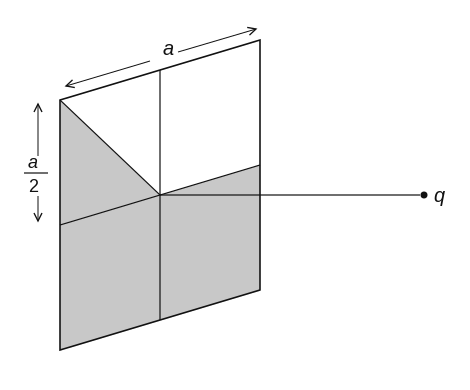
A square loop of sides a=1 m is held normally in front of a point charge q=1 C. The flux of the electric field through the shaded region is 5p×1ε0 Nm2C, where the value of p is _____.
a=1 m भुजाओं वाला एक वर्गाकार लूप, बिंदु आवेश q=1 C के सम्मुख अभिलंबवत रखा गया है। छायांकित क्षेत्र से विद्युत क्षेत्र का फ्लक्स 5p×1ε0 Nm2C है, जहाँ p का मान _____ है।
Show answer

Concept: The charge sits on the axis at a distance a2 from the centre of the square, so the square is one face of a cube of side a with q at its centre; by Gauss's law each face carries flux q6ε0.

  1. Flux through the whole square face: ϕface=q6ε0=848⋅qε0.
  2. The two midlines and the diagonal divide the face symmetrically: each quadrant carries q24ε0=248⋅qε0, and the diagonal through the corner splits a quadrant into two equal-flux triangles of q48ε0 each (the plane containing the diagonal and the axis is a symmetry plane).
  3. Shaded region = two full quadrants + one half-quadrant triangle =(248+248+148)qε0=548⋅1ε0 (with q=1 C).
  4. Comparing with 5p×1ε0: p=48.

Answer: 48

अवधारणा: आवेश, वर्ग के केंद्र से a2 दूरी पर अक्ष पर स्थित है, अतः वर्ग, a भुजा वाले उस घन का एक फलक है जिसके केंद्र पर q है; गाउस के नियम से प्रत्येक फलक से फ्लक्स q6ε0 होता है।

  1. पूरे वर्गाकार फलक से फ्लक्स: ϕface=q6ε0=848⋅qε0।
  2. दोनों मध्य-रेखाएँ तथा विकर्ण फलक को सममित भागों में बाँटते हैं: प्रत्येक चौथाई भाग से q24ε0=248⋅qε0, और कोने से जाने वाला विकर्ण एक चौथाई भाग को q48ε0 वाले दो समान-फ्लक्स त्रिभुजों में बाँटता है (विकर्ण और अक्ष वाला तल सममिति तल है)।
  3. छायांकित क्षेत्र = दो पूर्ण चौथाई भाग + एक अर्ध-चौथाई त्रिभुज =(248+248+148)qε0=548⋅1ε0 (q=1 C के साथ)।
  4. 5p×1ε0 से तुलना करने पर: p=48।

उत्तर: 48

JEE Main 2025 (January) – Paper 1 (B.E./B.Tech)PhysicsElectric Charges and Fields – Gauss's lawJEE Main 2025 (January) – Paper 1 (B.E./B.Tech) 2025 · 24 Jan Shift 1 →
Q2073.
The temperature of 1 mole of an ideal monoatomic gas is increased by 50∘C at constant pressure. The total heat added and change in internal energy are E1 and E2, respectively. If E1E2=x9 then the value of x is _____
1 मोल आदर्श एकपरमाणुक गैस का ताप, नियत दाब पर 50∘C बढ़ाया जाता है। दी गई कुल ऊष्मा तथा आंतरिक ऊर्जा में परिवर्तन क्रमशः E1 तथा E2 हैं। यदि E1E2=x9 हो, तो x का मान _____ है
Show answer

Concept: At constant pressure Q=nCPΔT; the internal energy change is always ΔU=nCVΔT. For a monoatomic gas CP=52R, CV=32R.

  1. E1E2=nCPΔTnCVΔT=CPCV=γ=53
  2. 53=x9⇒x=15

Answer: 15

अवधारणा: नियत दाब पर Q=nCPΔT; आंतरिक ऊर्जा में परिवर्तन सदैव ΔU=nCVΔT होता है। एकपरमाणुक गैस के लिए CP=52R, CV=32R।

  1. E1E2=nCPΔTnCVΔT=CPCV=γ=53
  2. 53=x9⇒x=15

उत्तर: 15

JEE Main 2025 (January) – Paper 1 (B.E./B.Tech)PhysicsThermodynamics – specific heats of gasesJEE Main 2025 (January) – Paper 1 (B.E./B.Tech) 2025 · 24 Jan Shift 1 →
Q2074.
The least count of a screw guage is 0.01 mm. If the pitch is increased by 75% and number of divisions on the circular scale is reduced by 50%, the new least count will be _____ ×10−3 mm
एक स्क्रू गेज का अल्पतमांक 0.01 mm है। यदि चूड़ी अंतराल (pitch) 75% बढ़ा दिया जाए और वृत्ताकार पैमाने पर भागों की संख्या 50% घटा दी जाए, तो नया अल्पतमांक _____ ×10−3 mm होगा
Show answer

Concept: Least count of a screw gauge =pitchnumber of circular scale divisions.

  1. New pitch =1.75p; new number of divisions =0.5N.
  2. New least count =1.75p0.5N=3.5×pN=3.5×0.01 mm
  3. =0.035 mm =35×10−3 mm

Answer: 35

अवधारणा: स्क्रू गेज का अल्पतमांक =चूड़ी अंतरालवृत्ताकार पैमाने के भागों की संख्या।

  1. नया चूड़ी अंतराल =1.75p; भागों की नई संख्या =0.5N।
  2. नया अल्पतमांक =1.75p0.5N=3.5×pN=3.5×0.01 mm
  3. =0.035 mm =35×10−3 mm

उत्तर: 35

JEE Main 2025 (January) – Paper 1 (B.E./B.Tech)PhysicsUnits and Measurements – screw gaugeJEE Main 2025 (January) – Paper 1 (B.E./B.Tech) 2025 · 24 Jan Shift 1 →
Q2075.
A wire of resistance 9 Ω is bent to form an equilateral triangle. Then the equivalent resistance across any two vertices will be _____ ohm.
9 Ω प्रतिरोध के एक तार को मोड़कर समबाहु त्रिभुज बनाया जाता है। तब किन्हीं दो शीर्षों के बीच तुल्य प्रतिरोध _____ ओम होगा।
Show answer

Concept: Each side of the triangle has resistance 93=3 Ω; across two vertices, one side is in parallel with the other two sides in series.

  1. Between two vertices: 3 Ω parallel to (3+3) Ω=6 Ω.
  2. Req=3×63+6=189=2 Ω

Answer: 2

अवधारणा: त्रिभुज की प्रत्येक भुजा का प्रतिरोध 93=3 Ω है; दो शीर्षों के बीच एक भुजा, शेष दो श्रेणीबद्ध भुजाओं के समांतर होती है।

  1. दो शीर्षों के बीच: 3 Ω समांतर (3+3) Ω=6 Ω।
  2. Req=3×63+6=189=2 Ω

उत्तर: 2

JEE Main 2025 (January) – Paper 1 (B.E./B.Tech)PhysicsCurrent Electricity – equivalent resistanceJEE Main 2025 (January) – Paper 1 (B.E./B.Tech) 2025 · 24 Jan Shift 1 →
Q2076.
The carbohydrate "Ribose" present in DNA, is
A. A pentose sugar
B. present in pyranose form
C. in "D" configuration
D. a reducing sugar, when free
E. in α-anomeric form
Choose the correct answer from the options given below:
DNA में उपस्थित कार्बोहाइड्रेट "राइबोस" है
A. एक पेन्टोस शर्करा
B. पाइरैनोस रूप में उपस्थित
C. "D" विन्यास में
D. मुक्त अवस्था में एक अपचायक शर्करा (reducing sugar)
E. α-ऐनोमेरिक रूप में
नीचे दिए गए विकल्पों में से सही उत्तर चुनिए:
  1. AA, D and E Onlyकेवल A, D और E
  2. BA, C and D Onlyकेवल A, C और D
  3. CA, B and E Onlyकेवल A, B और E
  4. DB, D and E Onlyकेवल B, D और E
Show answer

Concept: Ribose is an aldopentose; in nucleic acids it is present as β-D-ribofuranose (a five-membered ring).

  1. A – true: ribose has five carbon atoms, so it is a pentose sugar.
  2. B – false: in DNA/RNA the sugar exists in the five-membered furanose ring, not the six-membered pyranose ring.
  3. C – true: natural ribose has the D-configuration.
  4. D – true: free ribose has a free anomeric –OH (potential –CHO group), so it reduces Tollens'/Fehling's reagents.
  5. E – false: in nucleic acids the sugar is in the β-anomeric form, not α.
  6. Hence A, C and D are correct.

Answer: (B)

अवधारणा: राइबोस एक ऐल्डोपेन्टोस है; न्यूक्लिक अम्लों में यह β-D-राइबोफ्यूरैनोस (पाँच-सदस्यीय वलय) के रूप में उपस्थित रहता है।

  1. A – सत्य: राइबोस में पाँच कार्बन परमाणु हैं, अतः यह पेन्टोस शर्करा है।
  2. B – असत्य: DNA/RNA में शर्करा पाँच-सदस्यीय फ्यूरैनोस वलय में होती है, छह-सदस्यीय पाइरैनोस में नहीं।
  3. C – सत्य: प्राकृतिक राइबोस D-विन्यास में होता है।
  4. D – सत्य: मुक्त राइबोस में मुक्त ऐनोमेरिक –OH (संभावित –CHO समूह) होता है, अतः यह टॉलेन/फेहलिंग अभिकर्मकों को अपचयित करता है।
  5. E – असत्य: न्यूक्लिक अम्लों में शर्करा β-ऐनोमेरिक रूप में होती है, α में नहीं।
  6. अतः A, C और D सही हैं।

उत्तर: (B)

JEE Main 2025 (January) – Paper 1 (B.E./B.Tech)ChemistryBiomolecules – carbohydratesJEE Main 2025 (January) – Paper 1 (B.E./B.Tech) 2025 · 24 Jan Shift 1 →
Q2077.
Given below are two statements:
Statement I: The conversion proceeds well in the less polar medium.
CH3−CH2−CH2−CH2−Cl →HO− CH3−CH2−CH2−CH2−OH + Cl(−)
Statement II: The conversion proceeds well in the more polar medium.
CH3−CH2−CH2−CH2−Cl →R3N¨ CH3−CH2−CH2−CH2−(+)NR3 Cl(−)
In the light of the above statements, choose the correct answer from the options given below
नीचे दो कथन दिए गए हैं:
कथन I: यह परिवर्तन कम ध्रुवीय माध्यम में अच्छी तरह सम्पन्न होता है।
CH3−CH2−CH2−CH2−Cl →HO− CH3−CH2−CH2−CH2−OH + Cl(−)
कथन II: यह परिवर्तन अधिक ध्रुवीय माध्यम में अच्छी तरह सम्पन्न होता है।
CH3−CH2−CH2−CH2−Cl →R3N¨ CH3−CH2−CH2−CH2−(+)NR3 Cl(−)
उपर्युक्त कथनों के आलोक में, नीचे दिए गए विकल्पों में से सही उत्तर चुनिए
  1. ABoth Statement I and Statement II are trueकथन I और कथन II दोनों सत्य हैं
  2. BStatement I is true but Statement II is falseकथन I सत्य है परन्तु कथन II असत्य है
  3. CStatement I is false but Statement II is trueकथन I असत्य है परन्तु कथन II सत्य है
  4. DBoth Statement I and Statement II are falseकथन I और कथन II दोनों असत्य हैं
Show answer

Concept: Solvent effect on SN2 (Hughes–Ingold rules): if charge is dispersed in the transition state, a more polar solvent slows the reaction; if charge is created in the transition state, a more polar solvent speeds it up.

  1. Statement I: the nucleophile HO− is an anion. In the transition state [HOδ−⋯C⋯Clδ−] the full negative charge gets dispersed, so a polar solvent stabilises the reactant (HO−) more than the TS. Hence the reaction goes better in a less polar medium – true.
  2. Statement II: the nucleophile R3N is neutral and the product is an ion pair R3N+–C⋯Cl−. Charge separation develops in the TS, which a more polar medium stabilises, so the reaction speeds up – true.

Short trick: Anion + neutral substrate → polar solvent slows; neutral + neutral → polar solvent helps.

Answer: (A)

अवधारणा: SN2 पर विलायक प्रभाव (ह्यूज–इंगोल्ड नियम): यदि संक्रमण अवस्था में आवेश फैल जाता है तो अधिक ध्रुवीय विलायक अभिक्रिया धीमी करता है; यदि संक्रमण अवस्था में आवेश उत्पन्न होता है तो अधिक ध्रुवीय विलायक उसे तीव्र करता है।

  1. कथन I: नाभिकरागी HO− ऋणायन है। संक्रमण अवस्था [HOδ−⋯C⋯Clδ−] में पूर्ण ऋणावेश फैल जाता है, अतः ध्रुवीय विलायक अभिकारक (HO−) को TS से अधिक स्थायी करता है। इसलिए अभिक्रिया कम ध्रुवीय माध्यम में बेहतर चलती है – सत्य।
  2. कथन II: नाभिकरागी R3N उदासीन है और उत्पाद आयन-युग्म R3N+–C⋯Cl− है। TS में आवेश पृथक्करण उत्पन्न होता है जिसे अधिक ध्रुवीय माध्यम स्थायी करता है, अतः अभिक्रिया तीव्र होती है – सत्य।

शॉर्ट ट्रिक: ऋणायन + उदासीन क्रियाधार → ध्रुवीय विलायक धीमा करे; उदासीन + उदासीन → ध्रुवीय विलायक सहायक।

उत्तर: (A)

JEE Main 2025 (January) – Paper 1 (B.E./B.Tech)ChemistryHaloalkanes – substitution & solvent effectJEE Main 2025 (January) – Paper 1 (B.E./B.Tech) 2025 · 24 Jan Shift 1 →
Q2078.
The product (A) formed in the following reaction sequence is
CH3−C≡CH →iii) H2/Nii) Hg2+, H2SO4ii) HCN (A) Product
निम्नलिखित अभिक्रिया अनुक्रम में बनने वाला उत्पाद (A) है
CH3−C≡CH →iii) H2/Nii) Hg2+, H2SO4ii) HCN (A) उत्पाद
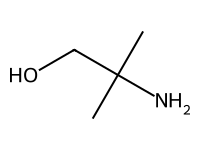
  1. A
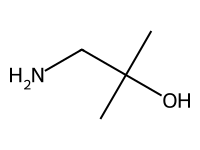
  2. B
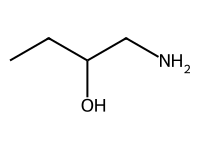
  3. C
  4. D
Show answer

Concept: Kucherov (Markovnikov) hydration of an alkyne gives a ketone; HCN adds to the carbonyl to give a cyanohydrin; H2/Ni reduces −C≡N to −CH2NH2.

  1. CH3−C≡CH + H2O (Hg2+/H2SO4) → Markovnikov addition → enol → tautomerises to acetone, CH3COCH3.
  2. Acetone + HCN → acetone cyanohydrin, (CH3)2C(OH)CN.
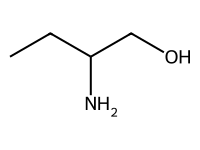
  3. H2/Ni reduces the nitrile: (CH3)2C(OH)−CH2NH2 (1-amino-2-methylpropan-2-ol) – the structure in (B).
  4. (A) has the NH2 and OH positions interchanged; (C) and (D) have a straight-chain C4 skeleton, which would need butanal/butanone – not formed from propyne by Markovnikov hydration.

Answer: (B)

अवधारणा: ऐल्काइन का कुचेरोव (मार्कोनिकोव) जलयोजन कीटोन देता है; HCN कार्बोनिल पर जुड़कर सायनोहाइड्रिन बनाता है; H2/Ni, −C≡N को −CH2NH2 में अपचयित करता है।

  1. CH3−C≡CH + H2O (Hg2+/H2SO4) → मार्कोनिकोव योग → ईनॉल → चलावयवता से ऐसीटोन, CH3COCH3।
  2. ऐसीटोन + HCN → ऐसीटोन सायनोहाइड्रिन, (CH3)2C(OH)CN।
  3. H2/Ni नाइट्राइल को अपचयित करता है: (CH3)2C(OH)−CH2NH2 (1-ऐमीनो-2-मेथिलप्रोपेन-2-ऑल) – विकल्प (B) की संरचना।
  4. (A) में NH2 और OH के स्थान बदले हुए हैं; (C) तथा (D) में सीधी C4 शृंखला है, जिसके लिए ब्यूटेनैल/ब्यूटेनोन चाहिए – जो प्रोपाइन के मार्कोनिकोव जलयोजन से नहीं बनते।

उत्तर: (B)

JEE Main 2025 (January) – Paper 1 (B.E./B.Tech)ChemistryAlkynes & carbonyls – reaction sequenceJEE Main 2025 (January) – Paper 1 (B.E./B.Tech) 2025 · 24 Jan Shift 1 →
Q2079.

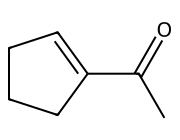
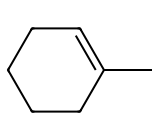
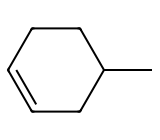
Aman has been asked to synthesise the molecule (x). He thought of preparing the molecule using an aldol condensation reaction. He found a few cyclic alkenes in his laboratory. He thought of performing ozonolysis reaction on alkene to produce a dicarbonyl compound followed by aldol reaction to prepare "x". Predict the suitable alkene that can lead to the formation of "x".

अमन को अणु (x) का संश्लेषण करने को कहा गया है। उसने ऐल्डोल संघनन अभिक्रिया द्वारा यह अणु बनाने का विचार किया। उसे अपनी प्रयोगशाला में कुछ चक्रीय ऐल्कीन मिलीं। उसने सोचा कि ऐल्कीन का ओज़ोनी अपघटन (ozonolysis) करके डाइकार्बोनिल यौगिक बनाया जाए और फिर ऐल्डोल अभिक्रिया से "x" तैयार किया जाए। वह उपयुक्त ऐल्कीन बताइए जिससे "x" का निर्माण हो सकता है।
  1. A
  2. B
  3. C
  4. D
Show answer

Concept: Retro-analysis: an α,β-unsaturated cyclic ketone made by intramolecular aldol condensation comes from a 1,6- (or 1,5-) dicarbonyl compound, which in turn comes from ozonolysis of a cycloalkene.

  1. x = 1-acetylcyclopent-1-ene. Breaking the C=C formed in the aldol step and adding back H2O (retro-aldol) gives the keto–aldehyde CH3CO−(CH2)4−CHO (6-oxoheptanal).
  2. This 1,6-dicarbonyl comes from reductive ozonolysis of 1-methylcyclohexene: the ring C=C bearing the CH3 cleaves to give the methyl ketone end and the aldehyde end – structure (C).
  3. Intramolecular aldol: the enolate α to the ketone attacks the aldehyde to form the five-membered ring; dehydration gives x.
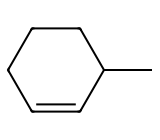
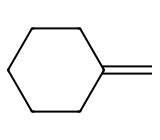
  4. (A) 3-methylcyclohexene and (D) 4-methylcyclohexene give dialdehydes (no methyl ketone), and (B) methylenecyclohexane gives cyclohexanone + HCHO, none of which can cyclise to x.

Answer: (C)

अवधारणा: प्रतिगामी विश्लेषण: अन्तः-आण्विक ऐल्डोल संघनन से बना α,β-असंतृप्त चक्रीय कीटोन किसी 1,6- (या 1,5-) डाइकार्बोनिल यौगिक से बनता है, जो चक्रीय ऐल्कीन के ओज़ोनी अपघटन से प्राप्त होता है।

  1. x = 1-ऐसीटिलसाइक्लोपेन्ट-1-ईन। ऐल्डोल चरण में बने C=C को तोड़कर (रेट्रो-ऐल्डोल) कीटो–ऐल्डिहाइड CH3CO−(CH2)4−CHO (6-ऑक्सोहेप्टेनैल) प्राप्त होता है।
  2. यह 1,6-डाइकार्बोनिल 1-मेथिलसाइक्लोहेक्सीन के अपचयी ओज़ोनी अपघटन से बनता है: CH3 वाला वलय C=C टूटकर एक सिरे पर मेथिल कीटोन और दूसरे सिरे पर ऐल्डिहाइड देता है – संरचना (C)।
  3. अन्तः-आण्विक ऐल्डोल: कीटोन के α-कार्बन का ईनोलेट ऐल्डिहाइड पर आक्रमण कर पाँच-सदस्यीय वलय बनाता है; निर्जलीकरण से x प्राप्त होता है।
  4. (A) 3-मेथिलसाइक्लोहेक्सीन और (D) 4-मेथिलसाइक्लोहेक्सीन डाइऐल्डिहाइड देते हैं (मेथिल कीटोन नहीं), तथा (B) मेथिलीनसाइक्लोहेक्सेन से साइक्लोहेक्सेनोन + HCHO बनते हैं – इनमें से कोई x में चक्रित नहीं हो सकता।

उत्तर: (C)

JEE Main 2025 (January) – Paper 1 (B.E./B.Tech)ChemistryOzonolysis & aldol condensationJEE Main 2025 (January) – Paper 1 (B.E./B.Tech) 2025 · 24 Jan Shift 1 →
Q2080.
Which of the following arrangements with respect to their reactivity in nucleophilic addition reaction is correct?
नाभिकरागी योगज अभिक्रिया (nucleophilic addition) में क्रियाशीलता के सन्दर्भ में निम्नलिखित में से कौन-सा क्रम सही है?
  1. Aacetophenone < benzaldehyde < p-tolualdehyde < p-nitrobenzaldehydeऐसीटोफीनोन < बेन्ज़ैल्डिहाइड < p-टॉलूऐल्डिहाइड < p-नाइट्रोबेन्ज़ैल्डिहाइड
  2. Bbenzaldehyde < acetophenone < p-nitrobenzaldehyde < p-tolualdehydeबेन्ज़ैल्डिहाइड < ऐसीटोफीनोन < p-नाइट्रोबेन्ज़ैल्डिहाइड < p-टॉलूऐल्डिहाइड
  3. Cp-nitrobenzaldehyde < benzaldehyde < p-tolualdehyde < acetophenonep-नाइट्रोबेन्ज़ैल्डिहाइड < बेन्ज़ैल्डिहाइड < p-टॉलूऐल्डिहाइड < ऐसीटोफीनोन
  4. Dacetophenone < p-tolualdehyde < benzaldehyde < p-nitrobenzaldehydeऐसीटोफीनोन < p-टॉलूऐल्डिहाइड < बेन्ज़ैल्डिहाइड < p-नाइट्रोबेन्ज़ैल्डिहाइड
Show answer

Concept: Nucleophilic addition is faster the more electrophilic the carbonyl carbon: ketones < aldehydes (extra +I and steric bulk of the second alkyl group); electron-donating groups (−CH3) lower reactivity, electron-withdrawing groups (−NO2) raise it.

  1. Acetophenone is a ketone – least reactive of the four.
  2. Among the aldehydes: p-CH3 donates electrons → p-tolualdehyde < benzaldehyde.
  3. p-NO2 withdraws electrons strongly → p-nitrobenzaldehyde is the most reactive.
  4. Order: acetophenone < p-tolualdehyde < benzaldehyde < p-nitrobenzaldehyde.

Short trick: Ketone last; then arrange aldehydes by EDG < H < EWG.

Answer: (D)

अवधारणा: कार्बोनिल कार्बन जितना अधिक इलेक्ट्रॉनरागी हो, नाभिकरागी योग उतना तीव्र: कीटोन < ऐल्डिहाइड (दूसरे ऐल्किल समूह का +I तथा त्रिविम प्रभाव); इलेक्ट्रॉनदाता समूह (−CH3) क्रियाशीलता घटाते हैं, इलेक्ट्रॉन-आकर्षी समूह (−NO2) बढ़ाते हैं।

  1. ऐसीटोफीनोन कीटोन है – चारों में सबसे कम क्रियाशील।
  2. ऐल्डिहाइडों में: p-CH3 इलेक्ट्रॉन देता है → p-टॉलूऐल्डिहाइड < बेन्ज़ैल्डिहाइड।
  3. p-NO2 प्रबल इलेक्ट्रॉन-आकर्षी है → p-नाइट्रोबेन्ज़ैल्डिहाइड सर्वाधिक क्रियाशील।
  4. क्रम: ऐसीटोफीनोन < p-टॉलूऐल्डिहाइड < बेन्ज़ैल्डिहाइड < p-नाइट्रोबेन्ज़ैल्डिहाइड।

शॉर्ट ट्रिक: कीटोन सबसे पीछे; फिर ऐल्डिहाइड EDG < H < EWG क्रम में।

उत्तर: (D)

JEE Main 2025 (January) – Paper 1 (B.E./B.Tech)ChemistryAldehydes & ketones – nucleophilic additionJEE Main 2025 (January) – Paper 1 (B.E./B.Tech) 2025 · 24 Jan Shift 1 →