Question bank

Q&A: practice questions with answers

Search questions on any topic. Filter by exam category, exam, subject and topic, try the question, then open the answer and explanation.

Courses – airGurukul

53,050 questions in the question bank.

Q2081.
Let us consider an endothermic reaction which is non-spontaneous at the freezing point of water. However, the reaction is spontaneous at boiling point of water. Choose the correct option.
मान लीजिए एक ऊष्माशोषी अभिक्रिया जल के हिमांक पर स्वतः प्रवर्तित (spontaneous) नहीं है, परन्तु जल के क्वथनांक पर स्वतः प्रवर्तित है। सही विकल्प चुनिए।
  1. ABoth ΔH and ΔS are (-ve)ΔH तथा ΔS दोनों (-ve) हैं
  2. BΔH is (-ve) but ΔS is (+ve)ΔH (-ve) है परन्तु ΔS (+ve) है
  3. CΔH is (+ve) but ΔS is (−ve)ΔH (+ve) है परन्तु ΔS (−ve) है
  4. DBoth ΔH and ΔS are (+ve)ΔH तथा ΔS दोनों (+ve) हैं
Show answer

Concept: ΔG = ΔH − TΔS; a reaction is spontaneous when ΔG < 0.

  1. Endothermic ⇒ ΔH > 0.
  2. At 273 K (freezing point) ΔG > 0 (non-spontaneous); at 373 K (boiling point) ΔG < 0 (spontaneous).
  3. ΔG becomes negative on raising T only if the −TΔS term grows more negative, i.e. ΔS > 0.
  4. With ΔH > 0 and ΔS > 0 the reaction is spontaneous above T = ΔH/ΔS, which here lies between 273 K and 373 K.
  5. (A) and (C) would never become spontaneous at high T; (B) would be spontaneous at all temperatures.

Answer: (D)

अवधारणा: ΔG = ΔH − TΔS; अभिक्रिया तब स्वतः प्रवर्तित होती है जब ΔG < 0।

  1. ऊष्माशोषी ⇒ ΔH > 0।
  2. 273 K (हिमांक) पर ΔG > 0 (स्वतः प्रवर्तित नहीं); 373 K (क्वथनांक) पर ΔG < 0 (स्वतः प्रवर्तित)।
  3. तापमान बढ़ाने पर ΔG तभी ऋणात्मक होगा जब −TΔS पद और ऋणात्मक हो, अर्थात् ΔS > 0।
  4. ΔH > 0 तथा ΔS > 0 होने पर अभिक्रिया T = ΔH/ΔS से ऊपर स्वतः प्रवर्तित होती है, जो यहाँ 273 K और 373 K के बीच है।
  5. (A) तथा (C) उच्च ताप पर कभी स्वतः प्रवर्तित नहीं होते; (B) प्रत्येक ताप पर स्वतः प्रवर्तित होता।

उत्तर: (D)
JEE Main 2025 (January) – Paper 1 (B.E./B.Tech)ChemistryThermodynamics – spontaneityJEE Main 2025 (January) – Paper 1 (B.E./B.Tech) 2025 · 24 Jan Shift 1 →
Q2082.
Preparation of potassium permanganate from MnO2 involves two step process in which the 1st step is a reaction with KOH and KNO3 to produce
MnO2 से पोटैशियम परमैंगनेट के विरचन में दो-चरणीय प्रक्रम होता है जिसमें पहला चरण KOH तथा KNO3 के साथ अभिक्रिया द्वारा निम्न उत्पाद बनाता है
  1. AK3MnO4
  2. BK4[Mn(OH)6]
  3. CKMnO4
  4. DK2MnO4
Show answer

Concept: Commercial preparation of KMnO4: alkaline oxidative fusion of MnO2 gives potassium manganate, which is then oxidised to permanganate.

  1. Step 1: 2MnO2 + 4KOH + O2 (or KNO3 as the oxidant) → 2K2MnO4 (dark green manganate, Mn in +6) + 2H2O.
  2. Step 2: electrolytic (or disproportionation) oxidation of MnO42− to MnO4−, i.e. KMnO4.
  3. (A) K3MnO4 (Mn +5) is not formed in this fusion; (C) KMnO4 is the product of the 2nd step, not the 1st; (B) K4[Mn(OH)6] is not involved at all.

Answer: (D)

अवधारणा: KMnO4 का व्यावसायिक विरचन: MnO2 का क्षारीय ऑक्सीकारक संगलन पोटैशियम मैंगनेट देता है, जिसे फिर परमैंगनेट में ऑक्सीकृत किया जाता है।

  1. चरण 1: 2MnO2 + 4KOH + O2 (या ऑक्सीकारक के रूप में KNO3) → 2K2MnO4 (गहरा हरा मैंगनेट, Mn की +6 अवस्था) + 2H2O।
  2. चरण 2: MnO42− का विद्युत्-अपघटनी (या विषमीकरण) ऑक्सीकरण MnO4− अर्थात् KMnO4 में।
  3. (A) K3MnO4 (Mn +5) इस संगलन में नहीं बनता; (C) KMnO4 दूसरे चरण का उत्पाद है, पहले का नहीं; (B) K4[Mn(OH)6] की कोई भूमिका नहीं है।

उत्तर: (D)

JEE Main 2025 (January) – Paper 1 (B.E./B.Tech)Chemistryd-block – preparation of KMnO4JEE Main 2025 (January) – Paper 1 (B.E./B.Tech) 2025 · 24 Jan Shift 1 →
Q2083.
For a reaction, N2O5(g)→2NO2(g)+12O2(g) in a constant volume container, no products were present initially. The final pressure of the system when 50% of reaction gets completed is
स्थिर आयतन के पात्र में अभिक्रिया N2O5(g)→2NO2(g)+12O2(g) के लिए प्रारम्भ में कोई उत्पाद उपस्थित नहीं था। अभिक्रिया के 50% पूर्ण होने पर निकाय का अन्तिम दाब होगा
  1. A5 times of initial pressureप्रारम्भिक दाब का 5 गुना
  2. B5/2 times of initial pressureप्रारम्भिक दाब का 5/2 गुना
  3. C7/2 times of initial pressureप्रारम्भिक दाब का 7/2 गुना
  4. D7/4 times of initial pressureप्रारम्भिक दाब का 7/4 गुना
Show answer

Concept: At constant V and T, pressure ∝ moles; track partial pressures with the stoichiometry.

  1. Let the initial pressure of N2O5 be P0. When pressure p of N2O5 reacts: N2O5 = P0−p, NO2 = 2p, O2 = p/2.
  2. 50% completion ⇒ p=P0/2.
  3. Total pressure =(P0−P02)+2⋅P02+12⋅P02=P02+P0+P04=74P0.

Short trick: Δn per mole reacted = 2+12−1=32; total =P0+32⋅P02=74P0.

Answer: (D)

अवधारणा: स्थिर V व T पर दाब ∝ मोल; रससमीकरणमिति से आंशिक दाब लिखिए।

  1. माना N2O5 का प्रारम्भिक दाब P0 है। जब N2O5 का p दाब अभिकृत होता है: N2O5 = P0−p, NO2 = 2p, O2 = p/2।
  2. 50% पूर्णता ⇒ p=P0/2।
  3. कुल दाब =(P0−P02)+2⋅P02+12⋅P02=P02+P0+P04=74P0।

शॉर्ट ट्रिक: प्रति मोल अभिकृत Δn =2+12−1=32; कुल =P0+32⋅P02=74P0।

उत्तर: (D)

JEE Main 2025 (January) – Paper 1 (B.E./B.Tech)ChemistryGaseous reactions – pressure stoichiometryJEE Main 2025 (January) – Paper 1 (B.E./B.Tech) 2025 · 24 Jan Shift 1 →
Q2084.
One mole of the octahedral complex compound Co(NH3)5Cl3 gives 3 moles of ions on dissolution in water. One mole of the same complex reacts with excess of AgNO3 solution to yield two moles of AgCl(s). The structure of the complex is:
अष्टफलकीय संकुल यौगिक Co(NH3)5Cl3 का एक मोल जल में घुलने पर 3 मोल आयन देता है। इसी संकुल का एक मोल AgNO3 विलयन के आधिक्य से अभिक्रिया कर दो मोल AgCl(s) देता है। संकुल की संरचना है:
  1. A[Co(NH3)4Cl2] · Cl · NH3
  2. B[Co(NH3)3Cl3] · 2NH3
  3. C[Co(NH3)5Cl]Cl2
  4. D[Co(NH3)4Cl] · Cl2 · NH3
Show answer

Concept: Only counter ions outside the coordination sphere ionise in water and are precipitated by AgNO3; ligands inside the sphere are not.

  1. 3 ions per formula unit ⇒ the complex cation must carry charge +2 with 2 Cl− outside: [complex]2+ + 2Cl−.
  2. 2 mol AgCl ⇒ exactly 2 ionisable Cl− – consistent with [Co(NH3)5Cl]Cl2, where one Cl is coordinated (C.N. = 5 NH3 + 1 Cl = 6, octahedral).
  3. (A) gives only 2 ions and 1 AgCl; (B) is a non-electrolyte (no ions, no AgCl); (D) has a 5-coordinate complex [Co(NH3)4Cl]2+, which cannot be octahedral.

Answer: (C)

अवधारणा: केवल उपसहसंयोजन मंडल के बाहर के प्रति-आयन जल में आयनित होते हैं और AgNO3 द्वारा अवक्षेपित होते हैं; मंडल के भीतर के लिगन्ड नहीं।

  1. प्रति सूत्र-इकाई 3 आयन ⇒ संकुल धनायन पर +2 आवेश तथा 2 Cl− बाहर: [संकुल]2+ + 2Cl−।
  2. 2 मोल AgCl ⇒ ठीक 2 आयननीय Cl− – यह [Co(NH3)5Cl]Cl2 के अनुरूप है, जिसमें एक Cl उपसहसंयोजित है (उपसहसंयोजन संख्या = 5 NH3 + 1 Cl = 6, अष्टफलकीय)।
  3. (A) केवल 2 आयन व 1 AgCl देता; (B) अन-अपघट्य है (न आयन, न AgCl); (D) में [Co(NH3)4Cl]2+ की उपसहसंयोजन संख्या 5 है, जो अष्टफलकीय नहीं हो सकता।

उत्तर: (C)

JEE Main 2025 (January) – Paper 1 (B.E./B.Tech)ChemistryCoordination compounds – ionisation & structureJEE Main 2025 (January) – Paper 1 (B.E./B.Tech) 2025 · 24 Jan Shift 1 →
Q2085.
Which of the following ions is the strongest oxidizing agent? (Atomic Number of Ce = 58, Eu = 63, Tb = 65, Lu = 71)
निम्नलिखित में से कौन-सा आयन प्रबलतम ऑक्सीकारक है? (परमाणु क्रमांक: Ce = 58, Eu = 63, Tb = 65, Lu = 71)
  1. AEu2+
  2. BTb4+
  3. CLu3+
  4. DCe3+
Show answer

Concept: The most stable oxidation state of lanthanoids is +3. An ion in an unusually high state (+4) tends to gain an electron and return to +3, so it acts as a strong oxidising agent; an ion in +2 tends to lose an electron (reducing agent).

  1. Tb4+ (+4 state) readily takes an electron to give the stable Tb3+ → strongest oxidant among the given ions.
  2. Eu2+ (4f7) tends to go to Eu3+ by losing an electron → it is a reducing agent, not an oxidant.
  3. Lu3+ (4f14) and Ce3+ are in the stable +3 state → practically no oxidising tendency.

Short trick: Ln4+ = oxidant, Ln2+ = reductant, Ln3+ = stable.

Answer: (B)

अवधारणा: लैन्थेनॉयडों की सर्वाधिक स्थायी ऑक्सीकरण अवस्था +3 है। असामान्य उच्च अवस्था (+4) वाला आयन इलेक्ट्रॉन ग्रहण कर +3 में लौटना चाहता है, अतः प्रबल ऑक्सीकारक होता है; +2 अवस्था वाला आयन इलेक्ट्रॉन त्याग कर अपचायक बनता है।

  1. Tb4+ (+4 अवस्था) सरलता से इलेक्ट्रॉन लेकर स्थायी Tb3+ बनाता है → दिए गए आयनों में प्रबलतम ऑक्सीकारक।
  2. Eu2+ (4f7) इलेक्ट्रॉन त्याग कर Eu3+ बनना चाहता है → यह अपचायक है, ऑक्सीकारक नहीं।
  3. Lu3+ (4f14) तथा Ce3+ स्थायी +3 अवस्था में हैं → ऑक्सीकरण की प्रवृत्ति नगण्य।

शॉर्ट ट्रिक: Ln4+ = ऑक्सीकारक, Ln2+ = अपचायक, Ln3+ = स्थायी।

उत्तर: (B)

JEE Main 2025 (January) – Paper 1 (B.E./B.Tech)Chemistryf-block – lanthanoid oxidation statesJEE Main 2025 (January) – Paper 1 (B.E./B.Tech) 2025 · 24 Jan Shift 1 →
Q2086.
Ksp for Cr(OH)3 is 1.6×10⁻³⁰. What is the molar solubility of this salt in water?
Cr(OH)3 के लिए Ksp का मान 1.6×10⁻³⁰ है। जल में इस लवण की मोलर विलेयता क्या होगी?
  1. A1.8×10−3027
  2. B1.8×10−305
  3. C1.6×10−30274
  4. D1.6×10−302
Show answer

Concept: For a salt AB3 of solubility s: Ksp =s(3s)3=27s4.

  1. Cr(OH)3 ⇌ Cr3+ + 3OH−; [Cr3+] = s, [OH−] = 3s.
  2. Ksp =s⋅(3s)3=27s4=1.6×10⁻³⁰.
  3. s=(1.6×10−3027)1/4=1.6×10−30274 – option (C).

Short trick: For AB3-type salts, s=(Ksp/27)1/4.

Answer: (C)

अवधारणा: विलेयता s वाले AB3 प्रकार के लवण के लिए: Ksp =s(3s)3=27s4।

  1. Cr(OH)3 ⇌ Cr3+ + 3OH−; [Cr3+] = s, [OH−] = 3s।
  2. Ksp =s⋅(3s)3=27s4=1.6×10⁻³⁰।
  3. s=(1.6×10−3027)1/4=1.6×10−30274 – विकल्प (C)।

शॉर्ट ट्रिक: AB3 प्रकार के लवण के लिए s=(Ksp/27)1/4।

उत्तर: (C)

JEE Main 2025 (January) – Paper 1 (B.E./B.Tech)ChemistryIonic equilibrium – solubility productJEE Main 2025 (January) – Paper 1 (B.E./B.Tech) 2025 · 24 Jan Shift 1 →
Q2087.
Which of the following statements are NOT true about the periodic table?
A. The properties of elements are function of atomic weights.
B. The properties of elements are function of atomic numbers.
C. Elements having similar outer electronic configurations are arranged in same period.
D. An element's location reflects the quantum numbers of the last filled orbital.
E. The number of elements in a period is same as the number of atomic orbitals available in energy level that is being filled.
Choose the correct answer from the options given below:
आवर्त सारणी के विषय में निम्नलिखित में से कौन-से कथन सत्य नहीं हैं?
A. तत्वों के गुणधर्म परमाणु भारों के फलन हैं।
B. तत्वों के गुणधर्म परमाणु क्रमांकों के फलन हैं।
C. समान बाह्य इलेक्ट्रॉनिक विन्यास वाले तत्व एक ही आवर्त में व्यवस्थित हैं।
D. किसी तत्व की स्थिति अन्तिम भरे गए कक्षक की क्वान्टम संख्याओं को दर्शाती है।
E. किसी आवर्त में तत्वों की संख्या, भरे जा रहे ऊर्जा स्तर में उपलब्ध परमाणु कक्षकों की संख्या के बराबर होती है।
नीचे दिए गए विकल्पों में से सही उत्तर चुनिए:
  1. AA, C and E Onlyकेवल A, C और E
  2. BA and E Onlyकेवल A और E
  3. CB, C and E Onlyकेवल B, C और E
  4. DD and E Onlyकेवल D और E
Show answer

Concept: Modern periodic law: properties of elements are a periodic function of their atomic numbers; the table is built on electronic configuration.

  1. A – NOT true: 'function of atomic weights' was Mendeleev's (old) law; the modern basis is atomic number.
  2. B – true: modern periodic law.
  3. C – NOT true: elements with similar outer electronic configurations fall in the same group, not the same period.
  4. D – true: the period gives n and the block (s, p, d, f) gives l of the last filled orbital.
  5. E – NOT true: the number of elements in a period equals twice the number of orbitals being filled (e.g. period 2 has 8 elements but only 4 orbitals: one 2s + three 2p).
  6. Hence A, C and E are not true.

Answer: (A)

अवधारणा: आधुनिक आवर्त नियम: तत्वों के गुणधर्म उनके परमाणु क्रमांकों के आवर्ती फलन होते हैं; सारणी इलेक्ट्रॉनिक विन्यास पर आधारित है।

  1. A – असत्य: 'परमाणु भारों का फलन' मेन्डेलीव का (पुराना) नियम था; आधुनिक आधार परमाणु क्रमांक है।
  2. B – सत्य: आधुनिक आवर्त नियम।
  3. C – असत्य: समान बाह्य इलेक्ट्रॉनिक विन्यास वाले तत्व एक ही वर्ग में आते हैं, एक ही आवर्त में नहीं।
  4. D – सत्य: आवर्त से n तथा ब्लॉक (s, p, d, f) से अन्तिम भरे कक्षक का l ज्ञात होता है।
  5. E – असत्य: किसी आवर्त में तत्वों की संख्या भरे जा रहे कक्षकों की संख्या की दुगुनी होती है (जैसे आवर्त 2 में 8 तत्व हैं, पर कक्षक केवल 4: एक 2s + तीन 2p)।
  6. अतः A, C और E सत्य नहीं हैं।

उत्तर: (A)

JEE Main 2025 (January) – Paper 1 (B.E./B.Tech)ChemistryPeriodic table – classification of elementsJEE Main 2025 (January) – Paper 1 (B.E./B.Tech) 2025 · 24 Jan Shift 1 →
Q2088.
Given below are two statements I and II.
Statement I: Dumas method is used for estimation of "Nitrogen" in an organic compound.
Statement II: Dumas method involves the formation of ammonium sulphate by heating the organic compound with conc H2SO4.
In the light of the above statements, choose the correct answer from the options given below
नीचे दो कथन I तथा II दिए गए हैं।
कथन I: कार्बनिक यौगिक में "नाइट्रोजन" के आकलन के लिए ड्यूमा विधि प्रयुक्त होती है।
कथन II: ड्यूमा विधि में कार्बनिक यौगिक को सान्द्र H2SO4 के साथ गर्म करके अमोनियम सल्फेट बनाया जाता है।
उपर्युक्त कथनों के आलोक में, नीचे दिए गए विकल्पों में से सही उत्तर चुनिए
  1. AStatement I is true but Statement II is falseकथन I सत्य है परन्तु कथन II असत्य है
  2. BBoth Statement I and Statement II are falseकथन I और कथन II दोनों असत्य हैं
  3. CStatement I is false but Statement II is trueकथन I असत्य है परन्तु कथन II सत्य है
  4. DBoth Statement I and Statement II are trueकथन I और कथन II दोनों सत्य हैं
Show answer

Concept: Dumas method: the organic compound is heated with CuO in a CO2 atmosphere; its nitrogen is converted to N2 gas, collected over KOH solution and its volume measured.

  1. Statement I – true: Dumas method estimates nitrogen in an organic compound.
  2. Statement II – false: heating with conc. H2SO4 to form ammonium sulphate is the Kjeldahl method, not Dumas.

Short trick: Dumas → N2 gas; Kjeldahl → (NH4)2SO4 → NH3.

Answer: (A)

अवधारणा: ड्यूमा विधि: कार्बनिक यौगिक को CO2 वातावरण में CuO के साथ गर्म करते हैं; उसका नाइट्रोजन N2 गैस में परिवर्तित होकर KOH विलयन के ऊपर एकत्र किया जाता है और उसका आयतन मापा जाता है।

  1. कथन I – सत्य: ड्यूमा विधि से कार्बनिक यौगिक में नाइट्रोजन का आकलन होता है।
  2. कथन II – असत्य: सान्द्र H2SO4 के साथ गर्म कर अमोनियम सल्फेट बनाना कैल्डाल (Kjeldahl) विधि है, ड्यूमा विधि नहीं।

शॉर्ट ट्रिक: ड्यूमा → N2 गैस; कैल्डाल → (NH4)2SO4 → NH3।

उत्तर: (A)

JEE Main 2025 (January) – Paper 1 (B.E./B.Tech)ChemistryOrganic analysis – estimation of nitrogenJEE Main 2025 (January) – Paper 1 (B.E./B.Tech) 2025 · 24 Jan Shift 1 →
Q2089.
Which of the following statement is true with respect to H2O, NH3 and CH4?
A. The central atoms of all the molecules are sp3 hybridized.
B. The H−O−H, H−N−H and H−C−H angles in the above molecules are 104.5°, 107.5° and 109.5°, respectively.
C. The increasing order of dipole moment is CH4 < NH3 < H2O.
D. Both H2O and NH3 are Lewis acids and CH4 is a Lewis base.
E. A solution of NH3 in H2O is basic. In this solution NH3 and H2O act as Lowry-Bronsted acid and base respectively.
Choose the correct answer from the options given below:
H2O, NH3 तथा CH4 के सन्दर्भ में निम्नलिखित में से कौन-सा कथन सत्य है?
A. सभी अणुओं के केन्द्रीय परमाणु sp3 संकरित हैं।
B. उपर्युक्त अणुओं में H−O−H, H−N−H तथा H−C−H कोण क्रमशः 104.5°, 107.5° तथा 109.5° हैं।
C. द्विध्रुव आघूर्ण का बढ़ता क्रम CH4 < NH3 < H2O है।
D. H2O तथा NH3 दोनों लुईस अम्ल हैं और CH4 लुईस क्षारक है।
E. H2O में NH3 का विलयन क्षारकीय होता है। इस विलयन में NH3 तथा H2O क्रमशः लॉरी-ब्रॉन्स्टेड अम्ल और क्षारक का कार्य करते हैं।
नीचे दिए गए विकल्पों में से सही उत्तर चुनिए:
  1. AA, B and C Onlyकेवल A, B और C
  2. BA, D and E Onlyकेवल A, D और E
  3. CC, D and E Onlyकेवल C, D और E
  4. DA, B, C and E Onlyकेवल A, B, C और E
Show answer

Concept: All three molecules have sp3 central atoms; lone pairs compress bond angles and create dipole moment; species with lone pairs are Lewis bases.

  1. A – true: O, N and C are all sp3 hybridised (4 electron domains each).
  2. B – true: lone-pair repulsion gives 104.5° (two lone pairs), 107.5° (one lone pair) and 109.5° (none).
  3. C – true: μ(CH4) = 0 (symmetric) < μ(NH3) ≈ 1.47 D < μ(H2O) ≈ 1.85 D.
  4. D – false: H2O and NH3 have lone pairs, so they are Lewis bases; CH4 is neither a Lewis acid nor a base.
  5. E – false: the solution is indeed basic, but the roles are reversed – NH3 accepts H+ (Brønsted base) and H2O donates H+ (Brønsted acid).
  6. Hence only A, B and C are true.

Answer: (A)

अवधारणा: तीनों अणुओं के केन्द्रीय परमाणु sp3 हैं; एकाकी युग्म आबन्ध कोण घटाते हैं और द्विध्रुव आघूर्ण उत्पन्न करते हैं; एकाकी युग्म वाली स्पीशीज़ लुईस क्षारक होती हैं।

  1. A – सत्य: O, N तथा C तीनों sp3 संकरित हैं (प्रत्येक पर 4 इलेक्ट्रॉन क्षेत्र)।
  2. B – सत्य: एकाकी-युग्म प्रतिकर्षण से कोण 104.5° (दो एकाकी युग्म), 107.5° (एक एकाकी युग्म) तथा 109.5° (कोई नहीं) होते हैं।
  3. C – सत्य: μ(CH4) = 0 (सममित) < μ(NH3) ≈ 1.47 D < μ(H2O) ≈ 1.85 D।
  4. D – असत्य: H2O तथा NH3 में एकाकी युग्म हैं, अतः वे लुईस क्षारक हैं; CH4 न लुईस अम्ल है न क्षारक।
  5. E – असत्य: विलयन वास्तव में क्षारकीय है, परन्तु भूमिकाएँ उलटी हैं – NH3 H+ ग्रहण करता है (ब्रॉन्स्टेड क्षारक) और H2O H+ देता है (ब्रॉन्स्टेड अम्ल)।
  6. अतः केवल A, B और C सत्य हैं।

उत्तर: (A)

JEE Main 2025 (January) – Paper 1 (B.E./B.Tech)ChemistryChemical bonding – hybridisation & dipole momentJEE Main 2025 (January) – Paper 1 (B.E./B.Tech) 2025 · 24 Jan Shift 1 →
Q2090.
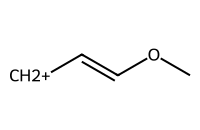
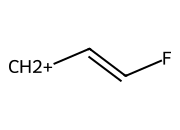
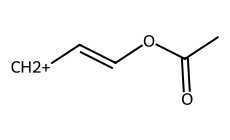
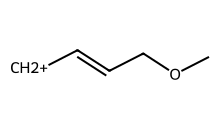
Which one of the carbocations from the following is most stable?
निम्नलिखित में से कौन-सा कार्बधनायन (carbocation) सर्वाधिक स्थायी है?
  1. A
  2. B
  3. C
  4. D
Show answer

Concept: An allylic cation is greatly stabilised when a lone-pair donor (+M group) sits on the far end of the conjugated system; the resonance structure with every atom having an octet (oxocarbenium ion) is especially stable.

  1. (B) +CH2−CH=CH−OCH3: the OCH3 lone pair conjugates through the allylic system, giving CH2=CH−CH=O+CH3 in which all atoms have complete octets – strongest stabilisation.
  2. (A): the OCH3 is insulated by an sp3 CH2, so there is no conjugation; only the (destabilising) −I effect of oxygen operates.
  3. (C): F also donates a lone pair, but its +M donation is much weaker and its −I effect strong, so stabilisation is less than with OCH3.
  4. (D): in the acetoxy group the oxygen lone pair is already delocalised into the ester C=O, so it donates far less into the allyl system.

Answer: (B)

अवधारणा: ऐलिलिक धनायन तब अत्यधिक स्थायी होता है जब संयुग्मित तंत्र के दूरस्थ सिरे पर एकाकी-युग्म दाता (+M समूह) हो; वह अनुनाद संरचना जिसमें प्रत्येक परमाणु का अष्टक पूर्ण हो (ऑक्सोकार्बेनियम आयन) विशेष रूप से स्थायी होती है।

  1. (B) +CH2−CH=CH−OCH3: OCH3 का एकाकी युग्म ऐलिलिक तंत्र से संयुग्मित होकर CH2=CH−CH=O+CH3 देता है जिसमें सभी परमाणुओं के अष्टक पूर्ण हैं – प्रबलतम स्थायीकरण।
  2. (A): OCH3 एक sp3 CH2 द्वारा पृथक है, अतः संयुग्मन नहीं; केवल ऑक्सीजन का (अस्थायीकारी) −I प्रभाव कार्य करता है।
  3. (C): F भी एकाकी युग्म देता है, परन्तु उसका +M दान बहुत दुर्बल और −I प्रभाव प्रबल है, अतः स्थायीकरण OCH3 से कम।
  4. (D): ऐसीटॉक्सी समूह में ऑक्सीजन का एकाकी युग्म पहले से एस्टर C=O में विस्थानीकृत है, अतः वह ऐलिल तंत्र को बहुत कम दान करता है।

उत्तर: (B)

JEE Main 2025 (January) – Paper 1 (B.E./B.Tech)ChemistryCarbocations – resonance stabilityJEE Main 2025 (January) – Paper 1 (B.E./B.Tech) 2025 · 24 Jan Shift 1 →
Q2091.
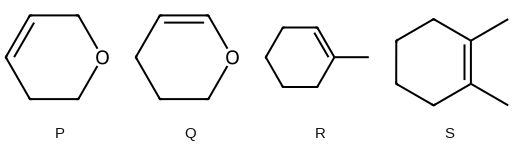
Following are the four molecules "P", "Q", "R" and "S". Which one among the four molecules will react with

H−Br(aq) at the fastest rate?
निम्नलिखित चार अणु "P", "Q", "R" तथा "S" हैं। इन चारों में से कौन-सा अणु

H−Br(aq) से सबसे तीव्र गति से अभिक्रिया करेगा?
  1. AR
  2. BP
  3. CQ
  4. DS
Show answer

Concept: The rate of HBr addition is decided by the stability of the carbocation formed on protonation; a vinyl ether gives an oxocarbenium ion (C=O+ resonance), which is far more stable than ordinary 3° carbocations.

  1. Q is an enol (vinyl) ether – the C=C is directly attached to the ring oxygen. Protonation at the β-carbon gives a cation in which the oxygen lone pair delocalises: every atom gets an octet (oxocarbenium) – most stable intermediate, hence fastest reaction.
  2. P also contains oxygen, but its C=C is not conjugated with O; oxygen then acts only by its electron-withdrawing −I effect and slows the addition.
  3. R (1-methylcyclohexene) and S (1,2-dimethylcyclohexene) form ordinary 3° alkyl carbocations – stabilised only by hyperconjugation/+I, much less than the oxocarbenium of Q.

Short trick: C=C−O−R (vinyl ether) + H+ → oxocarbenium → fastest Markovnikov addition.

Answer: (C)

अवधारणा: HBr योग की दर प्रोटॉनन से बनने वाले कार्बधनायन के स्थायित्व से तय होती है; वाइनिल ईथर ऑक्सोकार्बेनियम आयन (C=O+ अनुनाद) देता है, जो साधारण 3° कार्बधनायनों से कहीं अधिक स्थायी है।

  1. Q एक ईनॉल (वाइनिल) ईथर है – C=C सीधे वलय के ऑक्सीजन से जुड़ा है। β-कार्बन पर प्रोटॉनन से ऐसा धनायन बनता है जिसमें ऑक्सीजन का एकाकी युग्म विस्थानीकृत होता है: प्रत्येक परमाणु का अष्टक पूर्ण (ऑक्सोकार्बेनियम) – सर्वाधिक स्थायी मध्यवर्ती, अतः अभिक्रिया सबसे तीव्र।
  2. P में भी ऑक्सीजन है, परन्तु उसका C=C ऑक्सीजन से संयुग्मित नहीं; तब ऑक्सीजन केवल इलेक्ट्रॉन-आकर्षी −I प्रभाव से योग को धीमा करता है।
  3. R (1-मेथिलसाइक्लोहेक्सीन) तथा S (1,2-डाइमेथिलसाइक्लोहेक्सीन) साधारण 3° ऐल्किल कार्बधनायन बनाते हैं – केवल अतिसंयुग्मन/+I से स्थायी, जो Q के ऑक्सोकार्बेनियम से बहुत कम है।

शॉर्ट ट्रिक: C=C−O−R (वाइनिल ईथर) + H+ → ऑक्सोकार्बेनियम → सबसे तीव्र मार्कोनिकोव योग।

उत्तर: (C)

JEE Main 2025 (January) – Paper 1 (B.E./B.Tech)ChemistryAlkenes – electrophilic addition of HBrJEE Main 2025 (January) – Paper 1 (B.E./B.Tech) 2025 · 24 Jan Shift 1 →
Q2092.
For the given cell Fe(aq)2++Ag(aq)+→Fe(aq)3++Ag(s) The standard cell potential of the above reaction is
Given: Ag++e−→Ag  Eθ=xV
Fe2++2e−→Fe  Eθ=yV
Fe3++3e−→Fe  Eθ=zV
दिए गए सेल Fe(aq)2++Ag(aq)+→Fe(aq)3++Ag(s) के लिए उपर्युक्त अभिक्रिया का मानक सेल विभव है
दिया है: Ag++e−→Ag  Eθ=xV
Fe2++2e−→Fe  Eθ=yV
Fe3++3e−→Fe  Eθ=zV
  1. Ax+y−z
  2. Bx+2y
  3. Cx+2y−3z
  4. Dy−2x
Show answer

Concept: Electrode potentials are not additive, but ΔG° (= −nFE°) is. Combine half-reactions through their ΔG° values.

  1. Required anode half-reaction: Fe2+ → Fe3+ + e−. First find Eθ(Fe3+/Fe2+).
  2. Fe3+ + 3e− → Fe: ΔG° = −3Fz. Fe2+ + 2e− → Fe: ΔG° = −2Fy.
  3. Subtracting: Fe3+ + e− → Fe2+: ΔG° = −3Fz + 2Fy = −F(3z − 2y) ⇒ Eθ(Fe3+/Fe2+)=3z−2y.
  4. Ecellθ=Ecathodeθ−Eanodeθ=x−(3z−2y)=x+2y−3z.

Answer: (C)

अवधारणा: इलेक्ट्रोड विभव योगशील नहीं होते, परन्तु ΔG° (= −nFE°) योगशील है। अर्ध-अभिक्रियाओं को उनके ΔG° से जोड़िए।

  1. अपेक्षित ऐनोड अर्ध-अभिक्रिया: Fe2+ → Fe3+ + e−। पहले Eθ(Fe3+/Fe2+) ज्ञात करें।
  2. Fe3+ + 3e− → Fe: ΔG° = −3Fz। Fe2+ + 2e− → Fe: ΔG° = −2Fy।
  3. घटाने पर: Fe3+ + e− → Fe2+: ΔG° = −3Fz + 2Fy = −F(3z − 2y) ⇒ Eθ(Fe3+/Fe2+)=3z−2y।
  4. Ecellθ=Eकैथोडθ−Eऐनोडθ=x−(3z−2y)=x+2y−3z।

उत्तर: (C)

JEE Main 2025 (January) – Paper 1 (B.E./B.Tech)ChemistryElectrochemistry – combining electrode potentialsJEE Main 2025 (January) – Paper 1 (B.E./B.Tech) 2025 · 24 Jan Shift 1 →
Q2093.
The large difference between the melting and boiling points of oxygen and sulphur may be explained on the basis of
ऑक्सीजन तथा सल्फर के गलनांक एवं क्वथनांक में बड़े अन्तर की व्याख्या किस आधार पर की जा सकती है?
  1. AAtomicityपरमाणुकता (Atomicity)
  2. BElectron gain enthalpyइलेक्ट्रॉन लब्धि एन्थैल्पी
  3. CElectronegativityविद्युत् ऋणात्मकता
  4. DAtomic sizeपरमाणु आकार
Show answer

Concept: Melting/boiling points of molecular solids depend on the size of the molecule and hence on the strength of London dispersion forces.

  1. Oxygen exists as small diatomic O2 molecules – very weak dispersion forces – gas at room temperature (m.p. ≈ 55 K).
  2. Sulphur exists as large puckered S8 rings – much stronger dispersion forces – solid (m.p. ≈ 393 K).
  3. This difference in the number of atoms per molecule, i.e. atomicity (O2 vs S8), explains the large gap.
  4. Electron gain enthalpy, electronegativity and atomic size differences cannot account for such a huge difference in physical state of the elements.

Answer: (A)

अवधारणा: आण्विक ठोसों के गलनांक/क्वथनांक अणु के आकार और इसलिए लन्दन परिक्षेपण बलों की प्रबलता पर निर्भर करते हैं।

  1. ऑक्सीजन छोटे द्विपरमाणुक O2 अणुओं के रूप में रहती है – अत्यन्त दुर्बल परिक्षेपण बल – कमरे के ताप पर गैस (गलनांक ≈ 55 K)।
  2. सल्फर बड़े वलित S8 वलयों के रूप में रहता है – कहीं अधिक प्रबल परिक्षेपण बल – ठोस (गलनांक ≈ 393 K)।
  3. प्रति अणु परमाणुओं की संख्या का यह अन्तर, अर्थात् परमाणुकता (O2 बनाम S8), इस बड़े अन्तर की व्याख्या करता है।
  4. इलेक्ट्रॉन लब्धि एन्थैल्पी, विद्युत् ऋणात्मकता या परमाणु आकार के अन्तर से तत्वों की भौतिक अवस्था का इतना बड़ा अन्तर नहीं समझाया जा सकता।

उत्तर: (A)

JEE Main 2025 (January) – Paper 1 (B.E./B.Tech)Chemistryp-block – oxygen vs sulphurJEE Main 2025 (January) – Paper 1 (B.E./B.Tech) 2025 · 24 Jan Shift 1 →
Q2094.
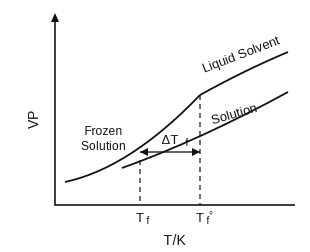
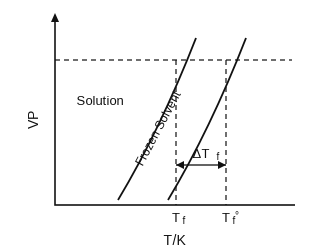
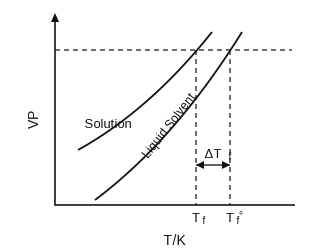
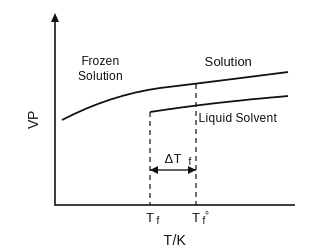
Consider the given plots of vapour pressure (VP) vs temperature (T/K). Which amongst the following options is correct graphical representation showing ΔTf, depression in the freezing point of a solvent in a solution?
वाष्प दाब (VP) बनाम ताप (T/K) के दिए गए आलेखों पर विचार कीजिए। निम्नलिखित विकल्पों में से कौन-सा, विलयन में विलायक के हिमांक के अवनमन ΔTf को दर्शाने वाला सही आलेखीय निरूपण है?
  1. A
  2. B
  3. C
  4. D
Show answer

Concept: By Raoult's law the vapour pressure of a solution is lower than that of the pure liquid solvent at every temperature. The freezing point is the temperature at which the vapour-pressure curve of the solid (frozen) solvent crosses the liquid/solution curve.

  1. The solid-phase curve crosses the pure-liquid-solvent curve at Tf° and the (lower) solution curve at Tf, with Tf < Tf°; ΔTf = Tf° − Tf is read along the temperature axis. This is exactly what option (A) shows: solution curve below the liquid-solvent curve and both freezing points located at intersections with the solid curve.
  2. (B) and (C) wrongly locate Tf and Tf° on a horizontal constant-VP line instead of at intersections with the solid-solvent curve.
  3. (C) and (D) also draw the solution curve above the solvent curve, which violates Raoult's law for a non-volatile solute.

Answer: (A)

अवधारणा: राउल्ट के नियम से विलयन का वाष्प दाब प्रत्येक ताप पर शुद्ध द्रव विलायक से कम होता है। हिमांक वह ताप है जिस पर ठोस (जमे) विलायक का वाष्प-दाब वक्र द्रव/विलयन वक्र को काटता है।

  1. ठोस-प्रावस्था वक्र शुद्ध द्रव विलायक वक्र को Tf° पर तथा (नीचे वाले) विलयन वक्र को Tf पर काटता है, जहाँ Tf < Tf°; ΔTf = Tf° − Tf ताप अक्ष पर पढ़ा जाता है। विकल्प (A) ठीक यही दर्शाता है: विलयन वक्र द्रव विलायक वक्र के नीचे तथा दोनों हिमांक ठोस वक्र के प्रतिच्छेदों पर।
  2. (B) तथा (C) में Tf और Tf° को ठोस-विलायक वक्र के प्रतिच्छेदों के बजाय किसी क्षैतिज स्थिर-VP रेखा पर गलत ढंग से दिखाया गया है।
  3. (C) तथा (D) में विलयन वक्र विलायक वक्र के ऊपर खींचा गया है, जो अवाष्पशील विलेय के लिए राउल्ट के नियम का उल्लंघन है।

उत्तर: (A)

JEE Main 2025 (January) – Paper 1 (B.E./B.Tech)ChemistrySolutions – depression in freezing pointJEE Main 2025 (January) – Paper 1 (B.E./B.Tech) 2025 · 24 Jan Shift 1 →
Q2095.
Which of the following linear combination of atomic orbitals will lead to formation of molecular orbitals in homonuclear diatomic molecules [internuclear axis in z-direction]?
A. 2pz and 2px
B. 2s and 2px
C. 3dxy and 3dx²−y²
D. 2s and 2pz
E. 2pz and 3dx²−y²
Choose the correct answer from the options given below:
समनाभिकीय द्विपरमाणुक अणुओं में [अंतरानाभिकीय अक्ष z-दिशा में] परमाणु कक्षकों का निम्नलिखित में से कौन-सा रैखिक संयोजन आण्विक कक्षकों के निर्माण की ओर ले जाएगा?
A. 2pz तथा 2px
B. 2s तथा 2px
C. 3dxy तथा 3dx²−y²
D. 2s तथा 2pz
E. 2pz तथा 3dx²−y²
नीचे दिए गए विकल्पों में से सही उत्तर चुनिए:
  1. AA and B Onlyकेवल A और B
  2. BD Onlyकेवल D
  3. CE Onlyकेवल E
  4. DC and D Onlyकेवल C और D
Show answer

Concept: Two atomic orbitals combine into molecular orbitals only if they have the same symmetry about the internuclear (z) axis and give non-zero net overlap: σ-type (s, pz, dz²) mixes with σ-type, π with π, δ with δ.

  1. A. 2pz (σ) with 2px (π): different symmetry → net overlap cancels → no MO.
  2. B. 2s (σ) with 2px (π): bonding and antibonding overlaps cancel → no MO.
  3. C. 3dxy and 3dx²−y²: both δ-type but of mutually orthogonal components (sin 2φ vs cos 2φ) → zero overlap → no MO.
  4. D. 2s and 2pz: both σ-symmetric about z-axis → non-zero overlap → MOs form. ✓
  5. E. 2pz (σ) with 3dx²−y² (δ): different symmetry → no MO.
  6. Hence only D leads to MO formation.

Answer: (B)

अवधारणा: दो परमाणु कक्षक आण्विक कक्षक तभी बनाते हैं जब उनकी अंतरानाभिकीय (z) अक्ष के परितः सममिति समान हो और नेट अतिव्यापन शून्य न हो: σ-प्रकार (s, pz, dz²) σ-प्रकार से, π π से, δ δ से मिलते हैं।

  1. A. 2pz (σ) और 2px (π): भिन्न सममिति → नेट अतिव्यापन निरस्त → MO नहीं।
  2. B. 2s (σ) और 2px (π): बन्धक व प्रतिबन्धक अतिव्यापन निरस्त → MO नहीं।
  3. C. 3dxy और 3dx²−y²: दोनों δ-प्रकार, परन्तु परस्पर लम्बकोणीय घटक (sin 2φ बनाम cos 2φ) → शून्य अतिव्यापन → MO नहीं।
  4. D. 2s और 2pz: दोनों z-अक्ष के परितः σ-सममित → अशून्य अतिव्यापन → MO बनते हैं। ✓
  5. E. 2pz (σ) और 3dx²−y² (δ): भिन्न सममिति → MO नहीं।
  6. अतः केवल D से MO बनते हैं।

उत्तर: (B)

JEE Main 2025 (January) – Paper 1 (B.E./B.Tech)ChemistryMolecular orbital theory – LCAOJEE Main 2025 (January) – Paper 1 (B.E./B.Tech) 2025 · 24 Jan Shift 1 →
Q2096.
Xg of benzoic acid on reaction with aq NaHCO3 released CO2 that occupied 11.2 L volume at STP. X is _____ g.
X ग्राम बेन्ज़ोइक अम्ल, जलीय NaHCO3 से अभिक्रिया करने पर इतनी CO2 मुक्त करता है जो STP पर 11.2 L आयतन घेरती है। X का मान _____ ग्राम है।
Show answer

Concept: C6H5COOH + NaHCO3 → C6H5COONa + H2O + CO2; 1 mol acid releases 1 mol CO2; at STP 1 mol gas = 22.4 L.

  1. Moles of CO2 = 11.2 L ÷ 22.4 L mol−1 = 0.5 mol.
  2. 1 : 1 stoichiometry ⇒ moles of benzoic acid = 0.5 mol.
  3. Molar mass of C6H5COOH = 7(12) + 6(1) + 2(16) = 122 g mol−1.
  4. X = 0.5 × 122 = 61 g.

Answer: 61

अवधारणा: C6H5COOH + NaHCO3 → C6H5COONa + H2O + CO2; 1 मोल अम्ल 1 मोल CO2 मुक्त करता है; STP पर 1 मोल गैस = 22.4 L।

  1. CO2 के मोल = 11.2 L ÷ 22.4 L mol−1 = 0.5 मोल।
  2. 1 : 1 रससमीकरणमिति ⇒ बेन्ज़ोइक अम्ल के मोल = 0.5 मोल।
  3. C6H5COOH का मोलर द्रव्यमान = 7(12) + 6(1) + 2(16) = 122 g mol−1।
  4. X = 0.5 × 122 = 61 ग्राम।

उत्तर: 61

JEE Main 2025 (January) – Paper 1 (B.E./B.Tech)ChemistryStoichiometry – mole conceptJEE Main 2025 (January) – Paper 1 (B.E./B.Tech) 2025 · 24 Jan Shift 1 →
Q2097.
Consider the following reaction occurring in the blast furnace: Fe3O4(s)+4CO(g)→3Fe(l)+4CO2(g) 'x' kg of iron is produced when 2.32×10³ kg Fe3O4 and 2.8×10² kg CO are brought together in the furnace. The value of 'x' is _____. (nearest integer) Given: molar mass of Fe3O4 = 232 g mol−1, molar mass of CO = 28 g mol−1, molar mass of Fe = 56 g mol−1
वात्या भट्ठी (blast furnace) में होने वाली निम्न अभिक्रिया पर विचार कीजिए: Fe3O4(s)+4CO(g)→3Fe(l)+4CO2(g) भट्ठी में 2.32×10³ kg Fe3O4 तथा 2.8×10² kg CO को एक साथ लाने पर 'x' kg लोहा उत्पन्न होता है। 'x' का मान _____ है। (निकटतम पूर्णांक) दिया है: Fe3O4 का मोलर द्रव्यमान = 232 g mol−1, CO का मोलर द्रव्यमान = 28 g mol−1, Fe का मोलर द्रव्यमान = 56 g mol−1
Show answer

Concept: Identify the limiting reagent, then use mole ratios.

  1. Moles of Fe3O4 = 2.32×10⁶ g232 g mol−1=104 mol; moles of CO = 2.8×10⁵ g28 g mol−1=104 mol.
  2. Each mole of Fe3O4 needs 4 mol CO, so 104 mol CO can reduce only 1044=2.5×10³ mol Fe3O4 ⇒ CO is the limiting reagent.
  3. Moles of Fe formed = 3×2.5×103=7.5×10³ mol.
  4. Mass of Fe = 7.5×103×56=4.2×10⁵ g = 420 kg.

Answer: 420

अवधारणा: सीमान्त अभिकर्मक पहचानिए, फिर मोल अनुपात का प्रयोग कीजिए।

  1. Fe3O4 के मोल = 2.32×10⁶ g232 g mol−1=104 मोल; CO के मोल = 2.8×10⁵ g28 g mol−1=104 मोल।
  2. प्रत्येक मोल Fe3O4 को 4 मोल CO चाहिए, अतः 104 मोल CO केवल 1044=2.5×10³ मोल Fe3O4 को अपचयित कर सकती है ⇒ CO सीमान्त अभिकर्मक है।
  3. बने Fe के मोल = 3×2.5×103=7.5×10³ मोल।
  4. Fe का द्रव्यमान = 7.5×103×56=4.2×10⁵ g = 420 kg।

उत्तर: 420

JEE Main 2025 (January) – Paper 1 (B.E./B.Tech)ChemistryStoichiometry – limiting reagentJEE Main 2025 (January) – Paper 1 (B.E./B.Tech) 2025 · 24 Jan Shift 1 →
Q2098.
37.8 g N2O5 was taken in a 1 L reaction vessel and allowed to undergo the following reaction at 500 K: 2N2O5(g)⇌2N2O4(g)+O2(g) The total pressure at equilibrium was found to be 18.65 bar. Then, Kp = ______ ×10−2 [nearest integer] Assume N2O5 to behave ideally under these conditions. Given: R = 0.082 bar L mol−1 K−1
एक 1 L अभिक्रिया पात्र में 37.8 g N2O5 लेकर 500 K पर निम्न अभिक्रिया होने दी गई: 2N2O5(g)⇌2N2O4(g)+O2(g) साम्य पर कुल दाब 18.65 bar पाया गया। तब Kp = ______ ×10−2 [निकटतम पूर्णांक] मानिए कि इन परिस्थितियों में N2O5 आदर्श व्यवहार करता है। दिया है: R = 0.082 bar L mol−1 K−1
Show answer

Concept: Find the initial pressure from PV = nRT, use the pressure change to get equilibrium partial pressures, then Kp =PN2O42PO2PN2O52.

  1. Moles of N2O5 = 37.8 ÷ 108 = 0.35 mol; initial pressure P0=nRTV=0.35×0.082×5001=14.35 bar.
  2. Let O2 formed have pressure p: N2O5 = 14.35−2p, N2O4 = 2p, O2 = p; total = 14.35+p=18.65 ⇒ p=4.3 bar.
  3. So PN2O5=14.35−8.6=5.75 bar, PN2O4=8.6 bar, PO2=4.3 bar.
  4. Kp =(8.6)2(4.3)(5.75)2=318.0333.06=9.62 bar =962×10−2.

Answer: 962

अवधारणा: PV = nRT से प्रारम्भिक दाब निकालिए, दाब परिवर्तन से साम्य आंशिक दाब ज्ञात कीजिए, फिर Kp =PN2O42PO2PN2O52।

  1. N2O5 के मोल = 37.8 ÷ 108 = 0.35 मोल; प्रारम्भिक दाब P0=nRTV=0.35×0.082×5001=14.35 bar।
  2. माना बनी O2 का दाब p है: N2O5 = 14.35−2p, N2O4 = 2p, O2 = p; कुल = 14.35+p=18.65 ⇒ p=4.3 bar।
  3. अतः PN2O5=14.35−8.6=5.75 bar, PN2O4=8.6 bar, PO2=4.3 bar।
  4. Kp =(8.6)2(4.3)(5.75)2=318.0333.06=9.62 bar =962×10−2।

उत्तर: 962

JEE Main 2025 (January) – Paper 1 (B.E./B.Tech)ChemistryChemical equilibrium – KpJEE Main 2025 (January) – Paper 1 (B.E./B.Tech) 2025 · 24 Jan Shift 1 →
Q2099.
Among the following cations, the number of cations which will give characteristic precipitate in their identification tests with K4[Fe(CN)6] is _____.
Cu2+, Fe3+, Ba2+, Ca2+, NH4+, Mg2+, Zn2+
निम्नलिखित धनायनों में से उन धनायनों की संख्या _____ है जो अपने अभिज्ञान परीक्षणों में K4[Fe(CN)6] के साथ अभिलाक्षणिक अवक्षेप देते हैं।
Cu2+, Fe3+, Ba2+, Ca2+, NH4+, Mg2+, Zn2+
Show answer

Concept: In qualitative salt analysis, potassium ferrocyanide gives characteristic coloured precipitates with Cu2+, Fe3+ and Zn2+.

  1. Cu2+: chocolate-brown precipitate of Cu2[Fe(CN)6] – confirmatory test for copper.
  2. Fe3+: Prussian-blue precipitate of Fe4[Fe(CN)6]3 – confirmatory test for ferric ion.
  3. Zn2+: white (bluish-white) precipitate of Zn2[Fe(CN)6] – confirmatory test for zinc.
  4. Ba2+ and Ca2+ are identified by flame test/(NH4)2CO3–oxalate tests, NH4+ by Nessler's reagent and Mg2+ by Na2HPO4 – none of these uses K4[Fe(CN)6].
  5. Hence 3 cations.

Answer: 3

अवधारणा: गुणात्मक लवण विश्लेषण में पोटैशियम फेरोसायनाइड Cu2+, Fe3+ तथा Zn2+ के साथ अभिलाक्षणिक रंगीन अवक्षेप देता है।

  1. Cu2+: Cu2[Fe(CN)6] का चॉकलेटी-भूरा अवक्षेप – ताँबे का पुष्टिकारक परीक्षण।
  2. Fe3+: Fe4[Fe(CN)6]3 का प्रशियन-नीला अवक्षेप – फेरिक आयन का पुष्टिकारक परीक्षण।
  3. Zn2+: Zn2[Fe(CN)6] का श्वेत (नीलाभ-श्वेत) अवक्षेप – जिंक का पुष्टिकारक परीक्षण।
  4. Ba2+ तथा Ca2+ की पहचान ज्वाला परीक्षण/(NH4)2CO3–ऑक्सैलेट परीक्षणों से, NH4+ की नेस्लर अभिकर्मक से तथा Mg2+ की Na2HPO4 से होती है – इनमें K4[Fe(CN)6] प्रयुक्त नहीं होता।
  5. अतः 3 धनायन।

उत्तर: 3

JEE Main 2025 (January) – Paper 1 (B.E./B.Tech)ChemistryQualitative analysis – tests of cationsJEE Main 2025 (January) – Paper 1 (B.E./B.Tech) 2025 · 24 Jan Shift 1 →
Q2100.
Standard entropies of X2, Y2 and XY5 are 70, 50 and 110 J K−1 mol−1 respectively. The temperature in Kelvin at which the reaction 12X2+52Y2⇌XY5, ΔHΘ=−35 kJ mol−1 will be at equilibrium is _______. (Nearest integer)
X2, Y2 तथा XY5 की मानक एन्ट्रॉपियाँ क्रमशः 70, 50 तथा 110 J K−1 mol−1 हैं। वह ताप (केल्विन में) _______ है जिस पर अभिक्रिया 12X2+52Y2⇌XY5, ΔHΘ=−35 kJ mol−1 साम्य में होगी। (निकटतम पूर्णांक)
Show answer

Concept: At equilibrium ΔG° = 0, so T = ΔH°/ΔS°.

  1. ΔSΘ=SΘ(XY5)−[12SΘ(X2)+52SΘ(Y2)]
  2. =110−[12(70)+52(50)]=110−(35+125)=−50 J K−1mol−1.
  3. T=ΔHΘΔSΘ=−35000 J mol−1−50 J K−1mol−1=700 K.

Answer: 700

अवधारणा: साम्य पर ΔG° = 0, अतः T = ΔH°/ΔS°।

  1. ΔSΘ=SΘ(XY5)−[12SΘ(X2)+52SΘ(Y2)]
  2. =110−[12(70)+52(50)]=110−(35+125)=−50 J K−1mol−1।
  3. T=ΔHΘΔSΘ=−35000 J mol−1−50 J K−1mol−1=700 K।

उत्तर: 700

JEE Main 2025 (January) – Paper 1 (B.E./B.Tech)ChemistryThermodynamics – equilibrium temperatureJEE Main 2025 (January) – Paper 1 (B.E./B.Tech) 2025 · 24 Jan Shift 1 →