Question bank

Q&A: practice questions with answers

Search questions on any topic. Filter by exam category, exam, subject and topic, try the question, then open the answer and explanation.

Courses – airGurukul

53,050 questions in the question bank.

Q2401.
The given compound
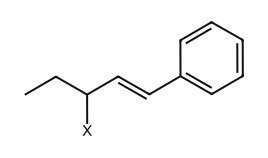
is an example of ______.
दिया गया यौगिक

______ का एक उदाहरण है।
  1. ABenzylic halideबेन्ज़िलिक हैलाइड
  2. BAryl halideऐरिल हैलाइड
  3. CAllylic halideऐलिलिक हैलाइड
  4. DVinylic halideवाइनिलिक हैलाइड
Show answer

Concept: Classify by the carbon carrying X: sp3 C next to C=C → allylic; sp3 C next to a benzene ring → benzylic; X on sp2 C=C → vinylic; X on ring → aryl.

  1. Compound: C6H5–CH=CH–CH(X)–CH2CH3.
  2. The C–X carbon is sp3 and is bonded to CH=CH (an sp2 carbon of a C=C) → allylic halide.
  3. It is not attached to the ring directly (not benzylic), X is not on an sp2 carbon (not vinylic/aryl).

Short trick: Count from X: X–C–C=C = allylic; X–C–Ar = benzylic; X–C=C = vinylic.

Answer: (C) Allylic halide

अवधारणा: X वाले कार्बन के आधार पर वर्गीकरण: C=C के पास sp3 C → ऐलिलिक; बेंज़ीन वलय के पास sp3 C → बेन्ज़िलिक; sp2 C=C पर X → वाइनिलिक; वलय पर X → ऐरिल।

  1. यौगिक: C6H5–CH=CH–CH(X)–CH2CH3।
  2. C–X कार्बन sp3 है और CH=CH (C=C का sp2 कार्बन) से जुड़ा है → ऐलिलिक हैलाइड।
  3. यह सीधे वलय से नहीं जुड़ा (बेन्ज़िलिक नहीं), X, sp2 कार्बन पर नहीं है (वाइनिलिक/ऐरिल नहीं)।

शॉर्ट ट्रिक: X से गिनिए: X–C–C=C = ऐलिलिक; X–C–Ar = बेन्ज़िलिक; X–C=C = वाइनिलिक।

उत्तर: (C) ऐलिलिक हैलाइड
NEET UGChemistryHaloalkanes – classificationNEET UG 2023 · 7 May Shift 1 →
Q2402.
Given below are two statements :
Statement I: A unit formed by the attachment of a base to 1' position of sugar is known as nucleoside.
Statement II: When nucleoside is linked to phosphorous acid at 5' -position of sugar moiety, we get nucleotide.
In the light of the above statements, choose the correct answer from the options given below :
नीचे दो कथन दिए गए हैं:
कथन I: शर्करा की 1' स्थिति पर क्षारक के जुड़ने से बनी इकाई न्यूक्लियोसाइड कहलाती है।
कथन II: जब न्यूक्लियोसाइड, शर्करा भाग की 5'-स्थिति पर फॉस्फोरस अम्ल (phosphorous acid) से जुड़ता है, तो न्यूक्लियोटाइड प्राप्त होता है।
उपर्युक्त कथनों के आलोक में, नीचे दिए गए विकल्पों में से सही उत्तर चुनिए:
  1. ABoth Statement I and Statement II are trueकथन I और कथन II दोनों सत्य हैं
  2. BBoth Statement I and Statement II are falseकथन I और कथन II दोनों असत्य हैं
  3. CStatement I is true but Statement II is falseकथन I सत्य है परन्तु कथन II असत्य है
  4. DStatement I is false but Statement II is trueकथन I असत्य है परन्तु कथन II सत्य है
Show answer

Concept: NCERT: base + sugar (at 1′) = nucleoside; nucleoside + phosphoric acid (H3PO4) at 5′ = nucleotide.

  1. Statement I – true, exactly the NCERT definition of a nucleoside.
  2. Statement II – false: the nucleotide forms with phosphoric acid (H3PO4), not phosphorous acid (H3PO3).

Short trick: Nucleo-Side = Sugar + base; Nucleo-Tide = + phosphoric acid (P–O–T bond at 5′).

Answer: (C) Statement I is true but Statement II is false

अवधारणा: NCERT: क्षारक + शर्करा (1′ पर) = न्यूक्लियोसाइड; न्यूक्लियोसाइड + 5′ पर फॉस्फोरिक अम्ल (H3PO4) = न्यूक्लियोटाइड।

  1. कथन I – सत्य, यह न्यूक्लियोसाइड की NCERT परिभाषा है।
  2. कथन II – असत्य: न्यूक्लियोटाइड फॉस्फोरिक अम्ल (H3PO4) से बनता है, फॉस्फोरस अम्ल (H3PO3) से नहीं।

शॉर्ट ट्रिक: न्यूक्लियो-साइड = शर्करा + क्षारक; न्यूक्लियो-टाइड = + फॉस्फोरिक अम्ल (5′ पर)।

उत्तर: (C) कथन I सत्य है परन्तु कथन II असत्य है

NEET UGChemistryBiomolecules – nucleosides and nucleotidesNEET UG 2023 · 7 May Shift 1 →
Q2403.
Intermolecular forces are forces of attraction and repulsion between interacting particles that will include
A. dipole - dipole forces
B. dipole - induced dipole forces
C. hydrogen bonding
D. covalent bonding
E. dispersion forces
Choose the most appropriate answer from the options given below :
अंतराअणुक बल परस्पर क्रिया करने वाले कणों के बीच आकर्षण और प्रतिकर्षण के बल हैं, जिनमें सम्मिलित होंगे
A. द्विध्रुव - द्विध्रुव बल
B. द्विध्रुव - प्रेरित द्विध्रुव बल
C. हाइड्रोजन आबंधन
D. सहसंयोजी आबंधन
E. परिक्षेपण बल (dispersion forces)
नीचे दिए गए विकल्पों में से सबसे उपयुक्त उत्तर चुनिए:
  1. AB, C, D, E are correctB, C, D, E सही हैं
  2. BA, B, C, D are correctA, B, C, D सही हैं
  3. CA, B, C, E are correctA, B, C, E सही हैं
  4. DA, C, D, E are correctA, C, D, E सही हैं
Show answer

Concept: Intermolecular forces act between molecules; covalent bonds hold atoms together within a molecule.

  1. A, B, E – van der Waals forces (dipole–dipole, dipole–induced dipole, London dispersion) → intermolecular.
  2. C – hydrogen bonding is a special strong dipole–dipole interaction → intermolecular.
  3. D – covalent bonding is an intramolecular (chemical) bond → not included.
  4. Correct set: A, B, C, E.

Short trick: Only one option leaves out D – pick it.

Answer: (C) A, B, C, E are correct

अवधारणा: अंतराअणुक बल अणुओं के बीच कार्य करते हैं; सहसंयोजी आबंध अणु के भीतर परमाणुओं को जोड़े रखते हैं।

  1. A, B, E – वान्डरवाल्स बल (द्विध्रुव–द्विध्रुव, द्विध्रुव–प्रेरित द्विध्रुव, लंडन परिक्षेपण) → अंतराअणुक।
  2. C – हाइड्रोजन आबंधन एक विशेष प्रबल द्विध्रुव–द्विध्रुव अन्योन्यक्रिया है → अंतराअणुक।
  3. D – सहसंयोजी आबंधन अंतःआणविक (रासायनिक) आबंध है → सम्मिलित नहीं।
  4. सही समूह: A, B, C, E।

शॉर्ट ट्रिक: केवल एक विकल्प में D नहीं है – वही चुनिए।

उत्तर: (C) A, B, C, E सही हैं

NEET UGChemistryStates of matter – intermolecular forcesNEET UG 2023 · 7 May Shift 1 →
Q2404.
Which of the following statements are NOT correct?
A. Hydrogen is used to reduce heavy metal oxides to metals.
B. Heavy water is used to study reaction mechanism.
C. Hydrogen is used to make saturated fats from oils.
D. The H-H bond dissociation enthalpy is lowest as compared to a single bond between two atoms of any elements.
E. Hydrogen reduces oxides of metals that are more active than iron.
Choose the most appropriate answer from the options given below:
निम्नलिखित में से कौन-से कथन सही नहीं हैं?
A. भारी धातुओं के ऑक्साइडों को धातुओं में अपचयित करने के लिए हाइड्रोजन का उपयोग होता है।
B. अभिक्रिया की क्रियाविधि के अध्ययन में भारी जल का उपयोग होता है।
C. तेलों से संतृप्त वसा बनाने में हाइड्रोजन का उपयोग होता है।
D. किसी भी तत्व के दो परमाणुओं के बीच एकल आबंध की तुलना में H-H आबंध वियोजन एन्थैल्पी न्यूनतम है।
E. हाइड्रोजन उन धातुओं के ऑक्साइडों को अपचयित करता है जो आयरन से अधिक सक्रिय हैं।
नीचे दिए गए विकल्पों में से सबसे उपयुक्त उत्तर चुनिए:
  1. AB, D onlyकेवल B, D
  2. BD, E onlyकेवल D, E
  3. CA, B, C onlyकेवल A, B, C
  4. DB, C, D, E onlyकेवल B, C, D, E
Show answer

Concept: NCERT facts on dihydrogen: very high H–H bond enthalpy (435.88 kJ mol–1); reduces oxides of metals less active than iron.

  1. A – correct: H2 reduces heavy-metal oxides (e.g. CuO, PbO) to metals.
  2. B – correct: D2O is used as a tracer to study reaction mechanisms.
  3. C – correct: hydrogenation of vegetable oils gives saturated fats (vanaspati).
  4. D – NOT correct: H–H bond dissociation enthalpy is the highest for a single bond between two atoms of any element.
  5. E – NOT correct: H2 reduces oxides of metals less active than iron, not more active ones.
  6. Incorrect = D, E.

Short trick: H–H is the strongest homonuclear single bond (small atoms, no lone pairs) – 'lowest' is a trap.

Answer: (B) D, E only

अवधारणा: डाइहाइड्रोजन के NCERT तथ्य: H–H आबंध एन्थैल्पी बहुत उच्च (435.88 kJ mol–1); आयरन से कम सक्रिय धातुओं के ऑक्साइडों को अपचयित करता है।

  1. A – सही: H2 भारी धातु ऑक्साइडों (जैसे CuO, PbO) को धातुओं में अपचयित करता है।
  2. B – सही: D2O का उपयोग अभिक्रिया क्रियाविधि के अध्ययन में अनुरेखक (tracer) के रूप में होता है।
  3. C – सही: वनस्पति तेलों के हाइड्रोजनीकरण से संतृप्त वसा (वनस्पति घी) बनती है।
  4. D – सही नहीं: किसी भी तत्व के दो परमाणुओं के बीच एकल आबंध में H–H आबंध वियोजन एन्थैल्पी उच्चतम है।
  5. E – सही नहीं: H2 आयरन से कम सक्रिय धातुओं के ऑक्साइडों को अपचयित करता है, अधिक सक्रिय वालों को नहीं।
  6. गलत कथन = D, E।

शॉर्ट ट्रिक: H–H सबसे प्रबल समनाभिकीय एकल आबंध है (छोटे परमाणु, कोई एकाकी युग्म नहीं) – 'न्यूनतम' एक जाल है।

उत्तर: (B) केवल D, E

NEET UGChemistryHydrogen – properties and usesNEET UG 2023 · 7 May Shift 1 →
Q2405.
Which one of the following statements is correct?
निम्नलिखित में से कौन-सा कथन सही है?
  1. AThe bone in human body is an inert and unchanging substance.मानव शरीर में अस्थि एक अक्रिय और अपरिवर्तनशील पदार्थ है।
  2. BMg plays roles in neuromuscular function and interneuronal transmissionMg तंत्रिका-पेशीय कार्य तथा अंतर-तंत्रिकीय संचरण में भूमिका निभाता है
  3. CThe daily requirement of Mg and Ca in the human body is estimated to be 0.2-0.3 g.मानव शरीर में Mg और Ca की दैनिक आवश्यकता 0.2-0.3 g आँकी गई है।
  4. DAll enzymes that utilise ATP in phosphate transfer require Ca as the cofactorATP का उपयोग करके फॉस्फेट स्थानान्तरण करने वाले सभी एन्ज़ाइमों को सहकारक के रूप में Ca की आवश्यकता होती है
Show answer

Concept: NCERT: daily requirement of Mg and Ca in the human body is estimated at 200–300 mg.

  1. (C) 200–300 mg = 0.2–0.3 g → correct.
  2. (A) wrong – bone is not inert; it is constantly solubilised and redeposited (~400 mg Ca per day in adults).
  3. (B) wrong – neuromuscular function and interneuronal transmission are roles of Ca, not Mg.
  4. (D) wrong – ATP-utilising phosphate-transfer enzymes require Mg as cofactor, not Ca.

Short trick: Swap trick: NCERT lines for Ca and Mg are swapped in (B) and (D) – 'Mg ↔ ATP enzymes, chlorophyll'; 'Ca ↔ bones, muscle, nerve, blood clotting'.

Answer: (C) 0.2–0.3 g daily requirement

अवधारणा: NCERT: मानव शरीर में Mg और Ca की दैनिक आवश्यकता 200–300 mg आँकी गई है।

  1. (C) 200–300 mg = 0.2–0.3 g → सही।
  2. (A) गलत – अस्थि अक्रिय नहीं है; यह निरन्तर घुलती और पुनः जमा होती रहती है (वयस्क में प्रतिदिन ~400 mg Ca)।
  3. (B) गलत – तंत्रिका-पेशीय कार्य और अंतर-तंत्रिकीय संचरण Ca की भूमिकाएँ हैं, Mg की नहीं।
  4. (D) गलत – ATP उपयोग करने वाले फॉस्फेट-स्थानान्तरण एन्ज़ाइमों को सहकारक के रूप में Mg चाहिए, Ca नहीं।

शॉर्ट ट्रिक: अदला-बदली ट्रिक: (B) और (D) में Ca और Mg की NCERT पंक्तियाँ आपस में बदल दी गई हैं – 'Mg ↔ ATP एन्ज़ाइम, क्लोरोफिल'; 'Ca ↔ अस्थि, पेशी, तंत्रिका, रक्त का थक्का'।

उत्तर: (C) 0.2–0.3 g दैनिक आवश्यकता

NEET UGChemistrys-Block – biological importance of Mg and CaNEET UG 2023 · 7 May Shift 1 →
Q2406.
Match List-I with List-II.
List-IList-II
A. CokeI. Carbon atoms are sp3 hybridised
B. DiamondII. Used as a dry lubricant
C. FullereneIII. Used as a reducing agent
D. GraphiteIV. Cage like molecules
Choose the correct answer from the options given below :
सूची-I का सूची-II से मिलान कीजिए।
सूची-Iसूची-II
A. कोकI. कार्बन परमाणु sp3 संकरित हैं
B. हीराII. शुष्क स्नेहक (dry lubricant) के रूप में प्रयुक्त
C. फुलरीनIII. अपचायक के रूप में प्रयुक्त
D. ग्रेफाइटIV. पिंजरे जैसे अणु
नीचे दिए गए विकल्पों में से सही उत्तर चुनिए:
  1. AA-II, B-IV, C-I, D-III
  2. BA-IV, B-I, C-II, D-III
  3. CA-III, B-I, C-IV, D-II
  4. DA-III, B-IV, C-I, D-II
Show answer

Concept: Each allotrope's key property (NCERT, group 14).

  1. A Coke – used as a reducing agent in metallurgy (e.g. ZnO + C → Zn + CO) → III.
  2. B Diamond – every C is sp3, tetrahedral 3-D network → I.
  3. C Fullerene (C60) – cage-like, soccer-ball molecules → IV.
  4. D Graphite – layered, layers slide → dry lubricant → II.

Short trick: Diamond = sp3 is fixed → only (B) and (C) have B-I; coke can only be a reducing agent → (C).

Answer: (C) A-III, B-I, C-IV, D-II

अवधारणा: प्रत्येक अपररूप का मुख्य गुण (NCERT, वर्ग 14)।

  1. A कोक – धातुकर्म में अपचायक के रूप में (जैसे ZnO + C → Zn + CO) → III।
  2. B हीरा – प्रत्येक C, sp3, चतुष्फलकीय 3-D जालक → I।
  3. C फुलरीन (C60) – पिंजरे जैसे, फुटबॉल आकार के अणु → IV।
  4. D ग्रेफाइट – परतदार, परतें फिसलती हैं → शुष्क स्नेहक → II।

शॉर्ट ट्रिक: हीरा = sp3 निश्चित है → केवल (B) और (C) में B-I है; कोक केवल अपचायक हो सकता है → (C)।

उत्तर: (C) A-III, B-I, C-IV, D-II

NEET UGChemistryp-Block (group 14) – allotropes of carbonNEET UG 2023 · 7 May Shift 1 →
Q2407.
The right option for the mass of CO2 produced by heating 20 g of 20% pure limestone is (Atomic mass of Ca = 40) [CaCO3 1200K​ CaO + CO2]
20% शुद्ध चूना-पत्थर के 20 g को गर्म करने पर उत्पन्न CO2 के द्रव्यमान के लिए सही विकल्प है (Ca का परमाणु द्रव्यमान = 40) [CaCO3 1200K​ CaO + CO2]
  1. A1.76 g
  2. B2.64 g
  3. C1.32 g
  4. D1.12 g
Show answer

Concept: Only the pure part reacts; 1 mol CaCO3 (100 g) gives 1 mol CO2 (44 g).

  1. Pure CaCO3 = 20 × 20/100 = 4 g.
  2. M(CaCO3) = 40 + 12 + 48 = 100 g mol–1 → moles = 4/100 = 0.04 mol.
  3. CO2 formed = 0.04 mol × 44 g mol–1 = 1.76 g.

Short trick: CO2 mass = 44% of pure CaCO3: 0.44 × 4 = 1.76 g.

Answer: (A) 1.76 g

अवधारणा: केवल शुद्ध भाग अभिक्रिया करता है; 1 mol CaCO3 (100 g) से 1 mol CO2 (44 g) बनता है।

  1. शुद्ध CaCO3 = 20 × 20/100 = 4 g।
  2. M(CaCO3) = 40 + 12 + 48 = 100 g mol–1 → मोल = 4/100 = 0.04 mol।
  3. बनी CO2 = 0.04 mol × 44 g mol–1 = 1.76 g।

शॉर्ट ट्रिक: CO2 का द्रव्यमान = शुद्ध CaCO3 का 44%: 0.44 × 4 = 1.76 g।

उत्तर: (A) 1.76 g

NEET UGChemistrySome basic concepts – stoichiometry with purityNEET UG 2023 · 7 May Shift 1 →
Q2408.
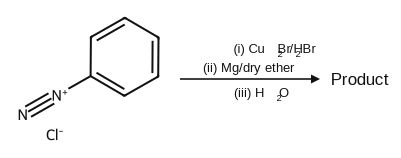
Identify the product in the following reaction:
निम्नलिखित अभिक्रिया में उत्पाद को पहचानिए:
  1. A
  2. B
  3. C
  4. D
Show answer

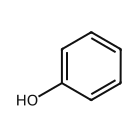
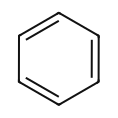
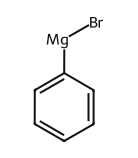
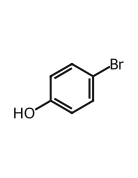
Concept: Sandmeyer reaction → aryl bromide; Mg/dry ether → Grignard reagent; water protonates the Grignard (R–MgX + H2O → R–H).

  1. (i) C6H5N2+Cl– + Cu2Br2/HBr → C6H5Br + N2.
  2. (ii) C6H5Br + Mg (dry ether) → C6H5MgBr.
  3. (iii) C6H5MgBr + H2O → C6H6 + Mg(OH)Br → benzene.
  4. Phenol (A) would need warm water on the diazonium salt directly; (C) is only the intermediate; (D) is not formed.

Short trick: Grignard + any proton source (H2O, ROH, NH3) = the hydrocarbon R–H.

Answer: (B) Benzene

अवधारणा: सैन्डमायर अभिक्रिया → ऐरिल ब्रोमाइड; Mg/शुष्क ईथर → ग्रीन्यार अभिकर्मक; जल ग्रीन्यार को प्रोटॉनित करता है (R–MgX + H2O → R–H)।

  1. (i) C6H5N2+Cl– + Cu2Br2/HBr → C6H5Br + N2।
  2. (ii) C6H5Br + Mg (शुष्क ईथर) → C6H5MgBr।
  3. (iii) C6H5MgBr + H2O → C6H6 + Mg(OH)Br → बेंज़ीन।
  4. फ़ीनॉल (A) के लिए डाइऐज़ोनियम लवण को सीधे गर्म जल से क्रिया करानी पड़ती; (C) केवल मध्यवर्ती है; (D) बनता ही नहीं।

शॉर्ट ट्रिक: ग्रीन्यार + कोई भी प्रोटॉन स्रोत (H2O, ROH, NH3) = हाइड्रोकार्बन R–H।

उत्तर: (B) बेंज़ीन

NEET UGChemistryAmines – diazonium salts and Grignard reagentNEET UG 2023 · 7 May Shift 1 →
Q2409.
Given below are two statements: one is labelled as Assertion A and the other is labelled as Reason R
Assertion A: In equation ΔrG = –nFEcell, value of ΔrG depends on n.
Reasons R: Ecell is an intensive property and ΔrG is an extensive property.
In the light of the above statements, choose the correct answer from the options given below
नीचे दो कथन दिए गए हैं: एक को अभिकथन A और दूसरे को कारण R के रूप में लिखा गया है:
अभिकथन A: समीकरण ΔrG = –nFEcell में ΔrG का मान n पर निर्भर करता है।
कारण R: Ecell एक गहन (intensive) गुण है तथा ΔrG एक विस्तीर्ण (extensive) गुण है।
उपर्युक्त कथनों के आलोक में, नीचे दिए गए विकल्पों में से सही उत्तर चुनिए
  1. ABoth A and R are true and R is the correct explanation of AA और R दोनों सत्य हैं तथा R, A की सही व्याख्या है
  2. BBoth A and R are true and R is NOT the correct explanation of AA और R दोनों सत्य हैं परन्तु R, A की सही व्याख्या नहीं है
  3. CA is true but R is falseA सत्य है परन्तु R असत्य है
  4. DA is false but R is trueA असत्य है परन्तु R सत्य है
Show answer

Concept: NCERT: Ecell is an intensive parameter but ΔrG is an extensive thermodynamic property, and its value depends on n.

  1. A – true: ΔrG = –nFEcell; doubling the balanced equation doubles n and doubles ΔrG.
  2. R – true: Ecell does not depend on amount (intensive); ΔrG does (extensive).
  3. Why does ΔrG depend on n? Because it is extensive while Ecell is intensive – the amount-dependence must enter through n. So R explains A.
  4. e.g. Zn + Cu2+: n = 2, ΔrG = –2F(1.1 V) = –212.3 kJ; for 2Zn + 2Cu2+, n = 4, ΔrG = –424.6 kJ, same Ecell.

Short trick: Extensive = scales with amount; in ΔG = –nFE the only 'amount' term is n.

Answer: (A) Both A and R are true and R is the correct explanation of A

अवधारणा: NCERT: Ecell एक गहन प्राचल है परन्तु ΔrG एक विस्तीर्ण ऊष्मागतिक गुण है, और इसका मान n पर निर्भर करता है।

  1. A – सत्य: ΔrG = –nFEcell; संतुलित समीकरण को दुगुना करने पर n दुगुना और ΔrG दुगुना हो जाता है।
  2. R – सत्य: Ecell मात्रा पर निर्भर नहीं (गहन); ΔrG निर्भर है (विस्तीर्ण)।
  3. ΔrG, n पर क्यों निर्भर है? क्योंकि यह विस्तीर्ण है जबकि Ecell गहन है – मात्रा-निर्भरता n के द्वारा ही आती है। अतः R, A की व्याख्या करता है।
  4. जैसे Zn + Cu2+: n = 2, ΔrG = –2F(1.1 V) = –212.3 kJ; 2Zn + 2Cu2+ के लिए n = 4, ΔrG = –424.6 kJ, Ecell वही।

शॉर्ट ट्रिक: विस्तीर्ण = मात्रा के साथ बदलता है; ΔG = –nFE में 'मात्रा' वाला एकमात्र पद n है।

उत्तर: (A) A और R दोनों सत्य हैं तथा R, A की सही व्याख्या है

NEET UGChemistryElectrochemistry – ΔG and cell EMFNEET UG 2023 · 7 May Shift 1 →
Q2410.
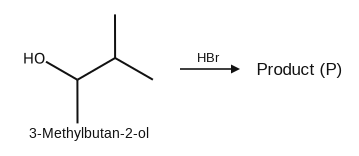
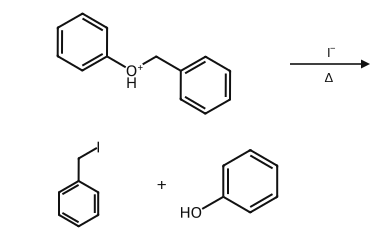
Consider the following reaction and identify the product (P).
निम्नलिखित अभिक्रिया पर विचार कीजिए और उत्पाद (P) को पहचानिए।
  1. A
  2. BCH3CH = CH – CH3
  3. C
  4. D
Show answer

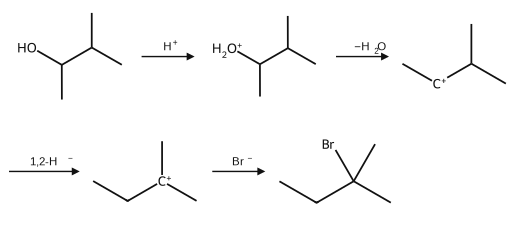
Concept: 2° alcohols react with HBr by SN1; the 2° carbocation rearranges (1,2-hydride shift) to a more stable 3° carbocation before Br– attacks.

  1. Protonation of –OH and loss of H2O gives the 2° carbocation CH3–CH(CH3)–C+H–CH3.
  2. 1,2-H– shift from the adjacent CH gives the 3° carbocation (CH3)2C+–CH2CH3.
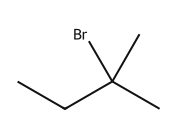
  3. Br– attacks → 2-bromo-2-methylbutane (A).
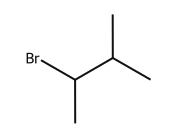
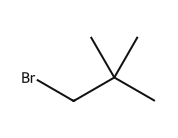
  4. (C) is the unrearranged product (minor); (B) has only 4 C; (D) needs a methyl shift giving a 1° halide – not formed.

Short trick: Whenever a 2° carbocation sits next to a 3° C–H, expect a hydride shift → Br ends on the 3° carbon.

Answer: (A) 2-bromo-2-methylbutane

अवधारणा: 2° ऐल्कोहॉल HBr से SN1 द्वारा अभिक्रिया करते हैं; Br– के आक्रमण से पहले 2° कार्बधनायन पुनर्विन्यासित (1,2-हाइड्राइड विस्थापन) होकर अधिक स्थायी 3° कार्बधनायन बनाता है।

  1. –OH के प्रोटॉनन और H2O के निकलने से 2° कार्बधनायन CH3–CH(CH3)–C+H–CH3 बनता है।
  2. पास के CH से 1,2-H– विस्थापन से 3° कार्बधनायन (CH3)2C+–CH2CH3 बनता है।
  3. Br– का आक्रमण → 2-ब्रोमो-2-मेथिलब्यूटेन (A)।
  4. (C) अपुनर्विन्यासित उत्पाद है (गौण); (B) में केवल 4 C हैं; (D) के लिए मेथिल विस्थापन से 1° हैलाइड बनेगा – नहीं बनता।

शॉर्ट ट्रिक: जब भी 2° कार्बधनायन के पास 3° C–H हो, हाइड्राइड विस्थापन की अपेक्षा कीजिए → Br, 3° कार्बन पर जाता है।

उत्तर: (A) 2-ब्रोमो-2-मेथिलब्यूटेन

NEET UGChemistryAlcohols – reaction with HBr and rearrangementNEET UG 2023 · 7 May Shift 1 →
Q2411.
Consider the following compounds/species:

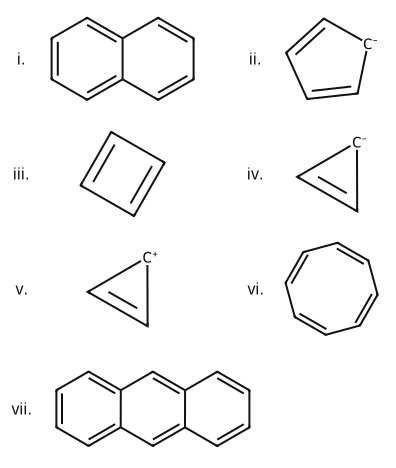
The number of compounds/species which obey Huckel's rule is ______.
निम्नलिखित यौगिकों/स्पीशीज़ पर विचार कीजिए:

ह्यूकेल नियम (Hückel's rule) का पालन करने वाले यौगिकों/स्पीशीज़ की संख्या ______ है।
  1. A4
  2. B6
  3. C2
  4. D5
Show answer

Concept: Aromatic (Hückel): cyclic, planar, fully conjugated and (4n + 2) π electrons, n = 0, 1, 2, 3 …

  1. i. Naphthalene – 10 π e– (n = 2) ✔
  2. ii. Cyclopentadienyl anion – 4 + 2 (lone pair) = 6 π e– (n = 1) ✔
  3. iii. Cyclobutadiene – 4 π e– (4n) ✘ antiaromatic
  4. iv. Cyclopropenyl anion – 2 + 2 = 4 π e– ✘ antiaromatic
  5. v. Cyclopropenyl cation – 2 π e– (n = 0) ✔
  6. vi. Cyclooctatetraene – 8 π e–, tub-shaped (non-planar) ✘
  7. vii. Anthracene – 14 π e– (n = 3) ✔
  8. Total obeying Hückel's rule = 4.

Short trick: π-count magic numbers: 2, 6, 10, 14 ✔; 4, 8 ✘. Anion lone pair adds 2, cation adds 0.

Answer: (A) 4

अवधारणा: ऐरोमैटिक (ह्यूकेल): चक्रीय, समतलीय, पूर्णतः संयुग्मित और (4n + 2) π इलेक्ट्रॉन, n = 0, 1, 2, 3 …

  1. i. नैफ्थेलीन – 10 π e– (n = 2) ✔
  2. ii. साइक्लोपेन्टाडाइईनिल ऋणायन – 4 + 2 (एकाकी युग्म) = 6 π e– (n = 1) ✔
  3. iii. साइक्लोब्यूटाडाईन – 4 π e– (4n) ✘ प्रति-ऐरोमैटिक
  4. iv. साइक्लोप्रोपीनिल ऋणायन – 2 + 2 = 4 π e– ✘ प्रति-ऐरोमैटिक
  5. v. साइक्लोप्रोपीनिल धनायन – 2 π e– (n = 0) ✔
  6. vi. साइक्लोऑक्टाटेट्राईन – 8 π e–, टब-आकार (असमतलीय) ✘
  7. vii. ऐन्थ्रासीन – 14 π e– (n = 3) ✔
  8. ह्यूकेल नियम का पालन करने वाले कुल = 4।

शॉर्ट ट्रिक: π-गणना की जादुई संख्याएँ: 2, 6, 10, 14 ✔; 4, 8 ✘। ऋणायन का एकाकी युग्म 2 जोड़ता है, धनायन 0।

उत्तर: (A) 4

NEET UGChemistryHydrocarbons – aromaticity (Hückel's rule)NEET UG 2023 · 7 May Shift 1 →
Q2412.
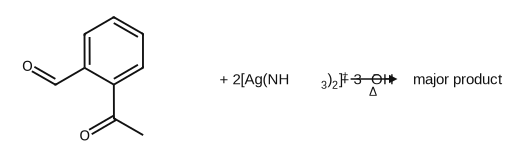
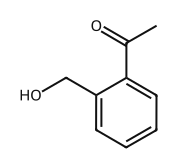
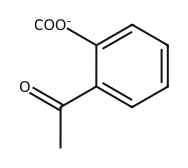
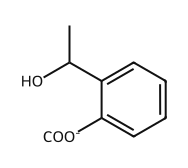
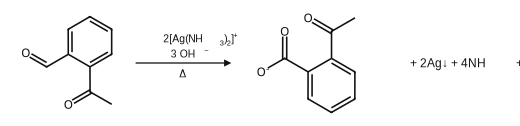
Identify the major product obtained in the following reaction
निम्नलिखित अभिक्रिया में प्राप्त मुख्य उत्पाद को पहचानिए
  1. A
  2. B
  3. C
  4. D
Show answer

Concept: Tollens' reagent [Ag(NH3)2]+/OH– is a mild oxidant: it oxidises –CHO to –COO– but leaves ketones untouched.

  1. RCHO + 2[Ag(NH3)2]+ + 3OH– → RCOO– + 2Ag↓ + 4NH3 + 2H2O (exactly the stoichiometry given).
  2. The –CHO becomes –COO–; the acetyl C=O stays → (C).
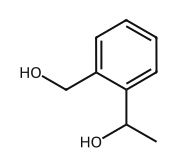
  3. (A), (B), (D) show reduction of C=O to alcohol – Tollens' reagent is an oxidant, it never reduces.

Short trick: 2 Ag+ + 3 OH– = one –CHO oxidised to carboxylate (silver mirror); ketone = spectator.

Answer: (C) 2-acetylbenzoate

अवधारणा: टॉलेन अभिकर्मक [Ag(NH3)2]+/OH– एक मृदु ऑक्सीकारक है: यह –CHO को –COO– में ऑक्सीकृत करता है परन्तु कीटोन को अपरिवर्तित छोड़ देता है।

  1. RCHO + 2[Ag(NH3)2]+ + 3OH– → RCOO– + 2Ag↓ + 4NH3 + 2H2O (ठीक दी गई रससमीकरणमिति)।
  2. –CHO, –COO– बन जाता है; ऐसीटिल C=O वैसा ही रहता है → (C)।
  3. (A), (B), (D) में C=O का ऐल्कोहॉल में अपचयन दिखाया है – टॉलेन अभिकर्मक ऑक्सीकारक है, कभी अपचयन नहीं करता।

शॉर्ट ट्रिक: 2 Ag+ + 3 OH– = एक –CHO का कार्बोक्सिलेट में ऑक्सीकरण (रजत दर्पण); कीटोन = दर्शक।

उत्तर: (C) 2-ऐसीटिलबेन्ज़ोएट

NEET UGChemistryAldehydes & ketones – Tollens' reagentNEET UG 2023 · 7 May Shift 1 →
Q2413.
Which of the following statements are INCORRECT?
A. All the transition metals except scandium form MO oxides which are ionic.
B. The highest oxidation number corresponding to the group number in transition metal oxides is attained in Sc2O3 to Mn2O7.
C. Basic character increases from V2O3 to V2O4 to V2O5.
D. V2O4 dissolves in acids to give VO43– salts.
E. CrO is basic but Cr2O3 is amphoteric.
Choose the correct answer from the options given below:
निम्नलिखित में से कौन-से कथन गलत हैं?
A. स्कैन्डियम को छोड़कर सभी संक्रमण धातुएँ MO ऑक्साइड बनाती हैं जो आयनिक होते हैं।
B. संक्रमण धातु ऑक्साइडों में वर्ग संख्या के संगत उच्चतम ऑक्सीकरण संख्या Sc2O3 से Mn2O7 तक प्राप्त होती है।
C. V2O3 से V2O4 से V2O5 की ओर क्षारकीय गुण बढ़ता है।
D. V2O4 अम्लों में घुलकर VO43– लवण देता है।
E. CrO क्षारकीय है परन्तु Cr2O3 उभयधर्मी है।
नीचे दिए गए विकल्पों में से सही उत्तर चुनिए:
  1. AA and E onlyकेवल A और E
  2. BB and D onlyकेवल B और D
  3. CC and D onlyकेवल C और D
  4. DB and C onlyकेवल B और C
Show answer

Concept: NCERT (d-block oxides): as oxidation number rises, ionic character and basicity fall and acidity rises.

  1. A – correct (NCERT line: all metals except Sc form ionic MO oxides).
  2. B – correct: group-number oxidation states are reached from Sc2O3 (+3) to Mn2O7 (+7).
  3. C – INCORRECT: basic character decreases V2O3 > V2O4 > V2O5 (acidity increases).
  4. D – INCORRECT: V2O4 dissolves in acids to give VO2+ salts; VO43– comes from V2O5 in alkali.
  5. E – correct: CrO basic, Cr2O3 amphoteric (CrO3 acidic).

Short trick: Higher O.N. → more acidic oxide: (+2 basic, +3/+4 amphoteric, +5 and above acidic).

Answer: (C) C and D only

अवधारणा: NCERT (d-ब्लॉक ऑक्साइड): ऑक्सीकरण संख्या बढ़ने पर आयनिक गुण तथा क्षारकता घटती है और अम्लता बढ़ती है।

  1. A – सही (NCERT पंक्ति: Sc को छोड़कर सभी धातुएँ आयनिक MO ऑक्साइड बनाती हैं)।
  2. B – सही: वर्ग-संख्या वाली ऑक्सीकरण अवस्थाएँ Sc2O3 (+3) से Mn2O7 (+7) तक मिलती हैं।
  3. C – गलत: क्षारकीय गुण घटता है V2O3 > V2O4 > V2O5 (अम्लता बढ़ती है)।
  4. D – गलत: V2O4 अम्लों में घुलकर VO2+ लवण देता है; VO43–, क्षार में V2O5 से बनता है।
  5. E – सही: CrO क्षारकीय, Cr2O3 उभयधर्मी (CrO3 अम्लीय)।

शॉर्ट ट्रिक: अधिक ऑक्सीकरण संख्या → अधिक अम्लीय ऑक्साइड: (+2 क्षारकीय, +3/+4 उभयधर्मी, +5 व अधिक अम्लीय)।

उत्तर: (C) केवल C और D

NEET UGChemistryd-Block – oxides of transition metalsNEET UG 2023 · 7 May Shift 1 →
Q2414.
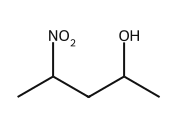
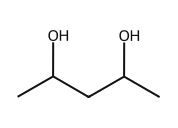
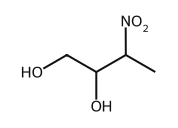
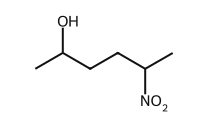
Which amongst the following be most readily dehydrated under acidic conditions?
निम्नलिखित में से कौन-सा अम्लीय परिस्थितियों में सबसे सरलता से निर्जलीकृत होगा?
  1. A
  2. B
  3. C
  4. D
Show answer

Concept: Acid-catalysed dehydration goes through a carbocation (E1); the more stable the carbocation, the faster the dehydration. Electron-withdrawing (–I) groups destabilise it, and their effect fades with distance.

  1. All four give a 2° carbocation at the carbon that carried –OH.
  2. (C) –NO2 and –OH are on the carbon next to the cation centre (β) – strongest –I → least stable.
  3. (A) –NO2 two carbons away (γ) – still strong –I.
  4. (B) a second –OH at the γ-carbon – –I effect present.
  5. (D) –NO2 is three carbons away (δ) – weakest –I → least destabilised, i.e. most stable carbocation → dehydrates most readily.

Short trick: –I effect dies off rapidly with distance: the alcohol whose –NO2/–OH is farthest from the C–OH wins.

Answer: (D)

अवधारणा: अम्ल-उत्प्रेरित निर्जलीकरण कार्बधनायन (E1) से होकर होता है; कार्बधनायन जितना स्थायी, निर्जलीकरण उतना तीव्र। इलेक्ट्रॉन-अपनयी (–I) समूह इसे अस्थायी करते हैं, और दूरी के साथ इनका प्रभाव घटता है।

  1. चारों में –OH वाले कार्बन पर 2° कार्बधनायन बनता है।
  2. (C) –NO2 और –OH धनायन केन्द्र के पास वाले कार्बन (β) पर हैं – सबसे प्रबल –I → सबसे कम स्थायी।
  3. (A) –NO2 दो कार्बन दूर (γ) – –I अब भी प्रबल।
  4. (B) γ-कार्बन पर दूसरा –OH – –I प्रभाव उपस्थित।
  5. (D) –NO2 तीन कार्बन दूर (δ) है – सबसे दुर्बल –I → सबसे कम अस्थायीकरण, अर्थात सबसे स्थायी कार्बधनायन → सबसे सरलता से निर्जलीकृत।

शॉर्ट ट्रिक: –I प्रभाव दूरी के साथ तेज़ी से घटता है: जिस ऐल्कोहॉल में –NO2/–OH, C–OH से सबसे दूर हो, वही जीतता है।

उत्तर: (D)

NEET UGChemistryAlcohols – acid-catalysed dehydrationNEET UG 2023 · 7 May Shift 1 →
Q2415.
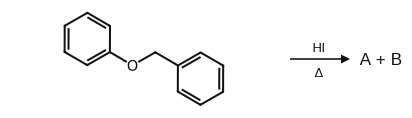
Consider the following reaction :
निम्नलिखित अभिक्रिया पर विचार कीजिए:
  1. A
  2. B
  3. C
  4. D
Show answer

Concept: HI cleaves ethers: the O–alkyl bond breaks (I– attacks the alkyl/benzyl carbon); the O–aryl bond never breaks because it has partial double-bond character and sp2 carbon resists SN attack.

  1. Protonation of ether oxygen: C6H5CH2–O+(H)–C6H5.
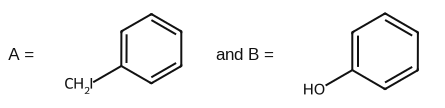
  2. I– attacks the benzylic CH2 (stable benzyl cation / easy SN2) → C6H5CH2I (A).
  3. Leaving group = phenol C6H5OH (B).
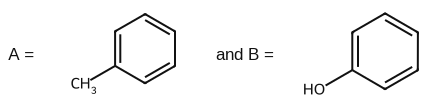
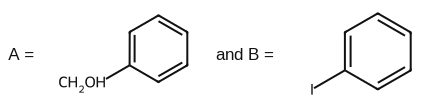
  4. Phenol is never converted to iodobenzene by HI → (B), (D) wrong; toluene (A, D) would need reduction – not possible.

Short trick: Aryl–O bond = untouchable: aryl alkyl ethers always give phenol + alkyl iodide.

Answer: (C) A = benzyl iodide, B = phenol

अवधारणा: HI ईथरों का विदलन करता है: O–ऐल्किल आबंध टूटता है (I–, ऐल्किल/बेन्ज़िल कार्बन पर आक्रमण करता है); O–ऐरिल आबंध कभी नहीं टूटता क्योंकि उसमें आंशिक द्वि-आबंध गुण है और sp2 कार्बन SN आक्रमण का प्रतिरोध करता है।

  1. ईथर ऑक्सीजन का प्रोटॉनन: C6H5CH2–O+(H)–C6H5।
  2. I–, बेन्ज़िलिक CH2 पर आक्रमण करता है (स्थायी बेन्ज़िल धनायन / सरल SN2) → C6H5CH2I (A)।
  3. निकलने वाला समूह = फ़ीनॉल C6H5OH (B)।
  4. HI से फ़ीनॉल कभी आयडोबेंज़ीन नहीं बनता → (B), (D) गलत; टॉलूईन (A, D) के लिए अपचयन चाहिए – सम्भव नहीं।

शॉर्ट ट्रिक: ऐरिल–O आबंध = अटूट: ऐरिल ऐल्किल ईथर सदैव फ़ीनॉल + ऐल्किल आयोडाइड देते हैं।

उत्तर: (C) A = बेन्ज़िल आयोडाइड, B = फ़ीनॉल

NEET UGChemistryEthers – cleavage by HINEET UG 2023 · 7 May Shift 1 →
Q2416.
The reaction that does NOT take place in a blast furnace between 900 K to 1500 K temperature range during extraction of iron is :
आयरन के निष्कर्षण के दौरान वात्या भट्टी (blast furnace) में 900 K से 1500 K ताप परास के बीच कौन-सी अभिक्रिया नहीं होती है?
  1. AFe2O3 + CO → 2FeO + CO2
  2. BFeO + CO → Fe + CO2
  3. CC + CO2 → 2CO
  4. DCaO + SiO2 → CaSiO3
Show answer

Concept: NCERT zones of the blast furnace: 500–800 K (upper, cooler) – reduction of Fe2O3/Fe3O4 by CO; 900–1500 K (hotter) – C + CO2 → 2CO, FeO + CO → Fe + CO2, limestone → CaO, slag formation.

  1. (A) Fe2O3 + CO → 2FeO + CO2 occurs in the 500–800 K zone, not 900–1500 K ✔ (this is the answer).
  2. (B) FeO + CO → Fe + CO2 – 900–1500 K zone.
  3. (C) C + CO2 → 2CO – 900–1500 K zone.
  4. (D) CaO + SiO2 → CaSiO3 (slag) – in the hotter lower region.

Short trick: Fe2O3/Fe3O4 are reduced up top (cool, 500–800 K); FeO is finished off lower down (900–1500 K).

Answer: (A) Fe2O3 + CO → 2FeO + CO2

अवधारणा: NCERT के अनुसार वात्या भट्टी के क्षेत्र: 500–800 K (ऊपरी, ठंडा) – CO द्वारा Fe2O3/Fe3O4 का अपचयन; 900–1500 K (गर्म) – C + CO2 → 2CO, FeO + CO → Fe + CO2, चूना-पत्थर → CaO, धातुमल (slag) निर्माण।

  1. (A) Fe2O3 + CO → 2FeO + CO2, 500–800 K क्षेत्र में होती है, 900–1500 K में नहीं ✔ (यही उत्तर है)।
  2. (B) FeO + CO → Fe + CO2 – 900–1500 K क्षेत्र।
  3. (C) C + CO2 → 2CO – 900–1500 K क्षेत्र।
  4. (D) CaO + SiO2 → CaSiO3 (धातुमल) – गर्म निचले क्षेत्र में।

शॉर्ट ट्रिक: Fe2O3/Fe3O4 ऊपर (ठंडे, 500–800 K) अपचयित होते हैं; FeO नीचे (900–1500 K) पूर्ण अपचयित होता है।

उत्तर: (A) Fe2O3 + CO → 2FeO + CO2

NEET UGChemistryMetallurgy – blast furnace reactionsNEET UG 2023 · 7 May Shift 1 →
Q2417.
Which amongst the following options is the correct relation between change in enthalpy and change in internal energy?
निम्नलिखित विकल्पों में से कौन-सा एन्थैल्पी परिवर्तन और आन्तरिक ऊर्जा परिवर्तन के बीच सही सम्बन्ध है?
  1. AΔH = ΔU – ΔngRT
  2. BΔH = ΔU + ΔngRT
  3. CΔH – ΔU = –ΔnRT
  4. DΔH + ΔU = ΔnR
Show answer

Concept: H = U + pV; for ideal gases at constant T and p, Δ(pV) = ΔngRT.

  1. ΔH = ΔU + pΔV
  2. pΔV = ΔngRT (Δng = moles of gaseous products – moles of gaseous reactants)
  3. ∴ ΔH = ΔU + ΔngRT → (B).
  4. (A) and (C) have the wrong sign; (D) is dimensionally wrong (no T).

Short trick: H is 'U plus work term' – always a plus: ΔH = ΔU + ΔngRT.

Answer: (B) ΔH = ΔU + ΔngRT

अवधारणा: H = U + pV; आदर्श गैसों के लिए स्थिर T और p पर Δ(pV) = ΔngRT।

  1. ΔH = ΔU + pΔV
  2. pΔV = ΔngRT (Δng = गैसीय उत्पादों के मोल – गैसीय अभिकारकों के मोल)
  3. ∴ ΔH = ΔU + ΔngRT → (B)।
  4. (A) और (C) में चिह्न गलत है; (D) विमीय रूप से गलत है (T नहीं है)।

शॉर्ट ट्रिक: H = 'U और कार्य पद' – सदैव धन: ΔH = ΔU + ΔngRT।

उत्तर: (B) ΔH = ΔU + ΔngRT

NEET UGChemistryThermodynamics – ΔH and ΔUNEET UG 2023 · 7 May Shift 1 →
Q2418.
On balancing the given redox reaction,
aCr2O72−+bSO32−(aq)+cH+(aq)→2aCr3+(aq)+bSO42−(aq)+c2H2O(l)
the coefficients a, b and c are found to be, respectively-
दी गई अपचयोपचय अभिक्रिया को संतुलित करने पर,
aCr2O72−+bSO32−(aq)+cH+(aq)→2aCr3+(aq)+bSO42−(aq)+c2H2O(l)
गुणांक a, b और c क्रमशः प्राप्त होते हैं-
  1. A1, 3, 8
  2. B3, 8, 1
  3. C1, 8, 3
  4. D8, 1, 3
Show answer

Concept: Balance electrons first (oxidation-number method), then charge with H+, then O/H with H2O.

  1. Cr: +6 → +3, gain 3 e– per Cr → 6 e– per Cr2O72–.
  2. S: +4 → +6, loss 2 e– per SO32– → need 3 SO32–. So a = 1, b = 3.
  3. Charge: left = –2 – 6 + c, right = +6 – 6 = 0 → c = 8.
  4. Check O: 7 + 9 = 16 = 12 (SO42–) + 4 (H2O = c/2 = 4) ✔
  5. Cr2O72– + 3SO32– + 8H+ → 2Cr3+ + 3SO42– + 4H2O

Short trick: Dichromate in acid always takes 6 e–, so b = 6/2 = 3; then balance the charge to get c.

Answer: (A) 1, 3, 8

अवधारणा: पहले इलेक्ट्रॉन संतुलित कीजिए (ऑक्सीकरण-संख्या विधि), फिर H+ से आवेश, फिर H2O से O/H।

  1. Cr: +6 → +3, प्रति Cr 3 e– ग्रहण → प्रति Cr2O72– 6 e–।
  2. S: +4 → +6, प्रति SO32– 2 e– त्याग → 3 SO32– चाहिए। अतः a = 1, b = 3।
  3. आवेश: बायाँ = –2 – 6 + c, दायाँ = +6 – 6 = 0 → c = 8।
  4. O की जाँच: 7 + 9 = 16 = 12 (SO42–) + 4 (H2O = c/2 = 4) ✔
  5. Cr2O72– + 3SO32– + 8H+ → 2Cr3+ + 3SO42– + 4H2O

शॉर्ट ट्रिक: अम्ल में डाइक्रोमेट सदैव 6 e– लेता है, अतः b = 6/2 = 3; फिर आवेश मिलाकर c ज्ञात कीजिए।

उत्तर: (A) 1, 3, 8

NEET UGChemistryRedox reactions – balancingNEET UG 2023 · 7 May Shift 1 →
Q2419.
What fraction of one edge centred octahedral void lies in one unit cell of fcc?
fcc की एक एकक कोष्ठिका में, एक कोर-केन्द्रित (edge centred) अष्टफलकीय रिक्ति का कितना भाग स्थित होता है?
  1. A12
  2. B13
  3. C14
  4. D112
Show answer

Concept: In fcc, octahedral voids are at the body centre (1, wholly inside) and at the 12 edge centres; each edge is shared by 4 unit cells.

  1. An edge-centre void is shared by 4 cells → fraction in one cell = 1/4.
  2. Check: total octahedral voids = 1 + 12 × 1/4 = 4 = number of atoms in fcc ✔

Short trick: Sharing rule: corner 1/8, edge 1/4, face 1/2, body 1.

Answer: (C) 14

अवधारणा: fcc में अष्टफलकीय रिक्तियाँ काय-केन्द्र (1, पूर्णतः भीतर) तथा 12 कोर-केन्द्रों पर होती हैं; प्रत्येक कोर 4 एकक कोष्ठिकाओं द्वारा साझा होती है।

  1. कोर-केन्द्र रिक्ति 4 कोष्ठिकाओं में साझा → एक कोष्ठिका में भाग = 1/4।
  2. जाँच: कुल अष्टफलकीय रिक्तियाँ = 1 + 12 × 1/4 = 4 = fcc में परमाणुओं की संख्या ✔

शॉर्ट ट्रिक: साझेदारी नियम: कोना 1/8, कोर 1/4, फलक 1/2, काय 1।

उत्तर: (C) 14

NEET UGChemistrySolid state – octahedral voids in fccNEET UG 2023 · 7 May Shift 1 →
Q2420.
Given below are two statements :
Statement I: The nutrient deficient water bodies lead to eutrophication
Statement II: Eutrophication leads to decrease in the level of oxygen in the water bodies.
In the light of the above statements, choose the correct answer from the options given below:
नीचे दो कथन दिए गए हैं:
कथन I: पोषक-न्यून जलाशय सुपोषण (eutrophication) की ओर ले जाते हैं
कथन II: सुपोषण से जलाशयों में ऑक्सीजन का स्तर घट जाता है।
उपर्युक्त कथनों के आलोक में, नीचे दिए गए विकल्पों में से सही उत्तर चुनिए:
  1. ABoth Statement I and Statement II are trueकथन I और कथन II दोनों सत्य हैं
  2. BBoth Statement I and Statement II are falseकथन I और कथन II दोनों असत्य हैं
  3. CStatement I is correct but Statement II is falseकथन I सत्य है परन्तु कथन II असत्य है
  4. DStatement I is incorrect but Statement II is trueकथन I असत्य है परन्तु कथन II सत्य है
Show answer

Concept: Eutrophication: nutrient-enriched (phosphate, nitrate) water supports dense plant/algal growth, which depletes O2 and kills aquatic animals.

  1. Statement I – incorrect: it is nutrient-rich, not nutrient-deficient, water that becomes eutrophic.
  2. Statement II – true: decay of the algal bloom consumes dissolved oxygen (BOD rises), so O2 level falls.

Short trick: Eu-trophic = 'well-fed' – too many nutrients, not too few.

Answer: (D) Statement I is incorrect but Statement II is true

अवधारणा: सुपोषण: पोषक-समृद्ध (फॉस्फेट, नाइट्रेट) जल घने पादप/शैवाल वृद्धि को सहारा देता है, जिससे O2 घटती है और जलीय जन्तु मरते हैं।

  1. कथन I – गलत: पोषक-समृद्ध जल सुपोषित होता है, पोषक-न्यून नहीं।
  2. कथन II – सत्य: शैवाल प्रस्फुटन के अपघटन में घुलित ऑक्सीजन खर्च होती है (BOD बढ़ता है), अतः O2 स्तर घटता है।

शॉर्ट ट्रिक: यू-ट्रॉफिक = 'भरपूर पोषित' – पोषक बहुत अधिक, कम नहीं।

उत्तर: (D) कथन I असत्य है परन्तु कथन II सत्य है

NEET UGChemistryEnvironmental chemistry – eutrophicationNEET UG 2023 · 7 May Shift 1 →