Question bank

Q&A: practice questions with answers

Search questions on any topic. Filter by exam category, exam, subject and topic, try the question, then open the answer and explanation.

Courses – airGurukul

53,050 questions in the question bank.

Q2561.
What is the pH of the resulting solution when equal volumes of 0.1 m NaOH and 0.01 M HCl are mixed?
0.1 m NaOH तथा 0.01 M HCl के समान आयतनों को मिलाने पर परिणामी विलयन का pH क्या है?
  1. A7.0
  2. B1.04
  3. C12.65
  4. D2.0
Show answer

Concept: Strong acid + strong base: find the excess, divide by the total volume.

  1. Take V L each: OH− = 0.1V mol, H+ = 0.01V mol → excess OH− = 0.09V mol.
  2. Total volume = 2V → [OH−] = 0.09/2 = 0.045 M.
  3. pOH = −log(0.045) = 1.35 → pH = 14 − 1.35 = 12.65.

Short trick: Base is in excess, so the answer must be > 7 – only 12.65 qualifies; no calculation needed for elimination.

Answer: (C) 12.65

अवधारणा: प्रबल अम्ल + प्रबल क्षार: आधिक्य ज्ञात करें, फिर कुल आयतन से भाग दें।

  1. प्रत्येक V L लें: OH− = 0.1V mol, H+ = 0.01V mol → आधिक्य OH− = 0.09V mol।
  2. कुल आयतन = 2V → [OH−] = 0.09/2 = 0.045 M।
  3. pOH = −log(0.045) = 1.35 → pH = 14 − 1.35 = 12.65।

शॉर्ट ट्रिक: क्षार आधिक्य में है, अतः उत्तर > 7 होना चाहिए – केवल 12.65 उपयुक्त है; विलोपन के लिए गणना आवश्यक नहीं।

उत्तर: (C) 12.65
NEET UGChemistryIonic equilibrium – pH of mixtureNEET UG 2015 · 25 Jul Shift 1 →
Q2562.
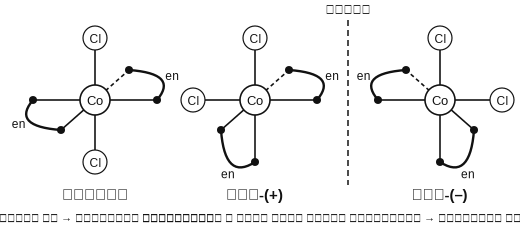
Number of possible isomers for the complex [Co(en)2Cl2]Cl will be: (en = ethylene diamine)
संकुल [Co(en)2Cl2]Cl के संभावित समावयवों की संख्या होगी: (en = एथिलीन डाइऐमीन)
  1. A3
  2. B4
  3. C2
  4. D1
Show answer

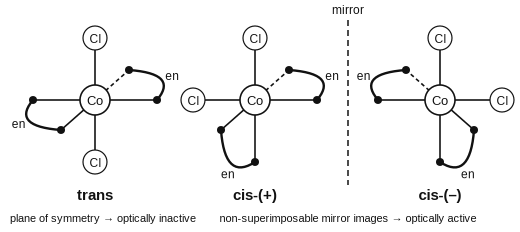
Concept: [M(AA)2B2] octahedral complexes show geometrical isomerism, and the cis form is chiral.

  1. Geometrical: trans (Cl’s opposite) and cis (Cl’s adjacent).
  2. trans has a plane of symmetry → optically inactive (1 isomer).
  3. cis has no plane of symmetry → a pair of enantiomers, d and l (2 isomers).
  4. Total = 1 + 2 = 3 stereoisomers.

Short trick: [M(AA)2B2] → 3 (trans + d-cis + l-cis); classic NCERT example is [CoCl2(en)2]+.

Answer: (A) 3

अवधारणा: [M(AA)2B2] अष्टफलकीय संकुल ज्यामितीय समावयवता दर्शाते हैं, तथा सिस रूप काइरल होता है।

  1. ज्यामितीय: ट्रांस (Cl आमने-सामने) तथा सिस (Cl समीपवर्ती)।
  2. ट्रांस में सममिति तल है → प्रकाशिक निष्क्रिय (1 समावयव)।
  3. सिस में सममिति तल नहीं है → प्रतिबिंबरूपी युग्म, d तथा l (2 समावयव)।
  4. कुल = 1 + 2 = 3 त्रिविम समावयव।

शॉर्ट ट्रिक: [M(AA)2B2] → 3 (ट्रांस + d-सिस + l-सिस); NCERT का मानक उदाहरण [CoCl2(en)2]+ है।

उत्तर: (A) 3

NEET UGChemistryCoordination compounds – isomerismNEET UG 2015 · 25 Jul Shift 1 →
Q2563.
The variation of the boiling points of the hydrogen halides is in the order HF > HI > HBr > HCl. What explains the higher boiling point of hydrogen fluoride?
हाइड्रोजन हैलाइडों के क्वथनांकों में परिवर्तन का क्रम HF > HI > HBr > HCl है। हाइड्रोजन फ्लुओराइड के उच्च क्वथनांक की व्याख्या क्या है?
  1. AThe bond energy of HF molecules is greater than in other hydrogen halides.HF अणुओं की आबंध ऊर्जा अन्य हाइड्रोजन हैलाइडों से अधिक है।
  2. BThe effect of nuclear shielding is much reduced in fluorine which polarizes the HF molecule.फ्लुओरीन में नाभिकीय परिरक्षण का प्रभाव बहुत कम है जो HF अणु को ध्रुवित करता है।
  3. CThe electronegativity of fluorine is much higher than for other elements in the group.फ्लुओरीन की विद्युत्ऋणात्मकता वर्ग के अन्य तत्वों से बहुत अधिक है।
  4. DThere is strong hydrogen bonding between HF molecules.HF अणुओं के बीच प्रबल हाइड्रोजन आबंधन है।
Show answer

Concept: Boiling involves breaking intermolecular forces, not covalent bonds.

  1. HF molecules are linked by strong intermolecular H-bonds (F–H···F), which need extra energy to separate → anomalously high b.p.
  2. HCl → HBr → HI rise is due to increasing van der Waals forces with size.
  3. (A) Bond energy concerns the intramolecular H–F bond, not broken on boiling. (B), (C) only explain why H-bonding is possible; the direct reason is H-bonding itself.

Short trick: Same anomaly as H2O (group 16) and NH3 (group 15): first member + H-bonding = highest/anomalous b.p.

Answer: (D) There is strong hydrogen bonding between HF molecules.

अवधारणा: क्वथन में अंतराआण्विक बल टूटते हैं, सहसंयोजी आबंध नहीं।

  1. HF अणु प्रबल अंतराआण्विक H-आबंधों (F–H···F) से जुड़े होते हैं, जिन्हें अलग करने में अतिरिक्त ऊर्जा लगती है → असामान्य रूप से उच्च क्वथनांक।
  2. HCl → HBr → HI में वृद्धि आकार के साथ बढ़ते वान्डर वाल्स बलों के कारण है।
  3. (A) आबंध ऊर्जा अंतःआण्विक H–F आबंध की है, जो क्वथन में नहीं टूटता। (B), (C) केवल बताते हैं कि H-आबंधन क्यों संभव है; प्रत्यक्ष कारण स्वयं H-आबंधन है।

शॉर्ट ट्रिक: H2O (वर्ग 16) तथा NH3 (वर्ग 15) में भी यही असामान्यता: पहला सदस्य + H-आबंधन = सर्वाधिक/असामान्य क्वथनांक।

उत्तर: (D) HF अणुओं के बीच प्रबल हाइड्रोजन आबंधन है।

NEET UGChemistryHydrogen bonding – boiling points of HXNEET UG 2015 · 25 Jul Shift 1 →
Q2564.
What is the mass of the precipitate formed when 50 mL of 16.9% solution of AgNO3 is mixed with 50 mL of 5.8% NaCl solution?
जब AgNO3 के 16.9% विलयन के 50 mL को 5.8% NaCl विलयन के 50 mL के साथ मिलाया जाता है, तो बने अवक्षेप का द्रव्यमान क्या है?
  1. A7 g
  2. B14 g
  3. C28 g
  4. D3.5 g
Show answer

Concept: AgNO3 + NaCl → AgCl↓ + NaNO3 (1 : 1); % here is w/V (g per 100 mL).

  1. AgNO3 in 50 mL = 16.9/2 = 8.45 g → 8.45/170 = 0.0497 mol.
  2. NaCl in 50 mL = 5.8/2 = 2.9 g → 2.9/58.5 = 0.0496 mol.
  3. Both ≈ 0.0497 mol (NaCl just limiting) → AgCl = 0.0496 × 143.5 = 7.1 ≈ 7 g.

Short trick: Amounts are chosen to be equimolar (≈ 0.05 mol each) – 0.05 × 143.5 ≈ 7 g directly.

Answer: (A) 7 g

अवधारणा: AgNO3 + NaCl → AgCl↓ + NaNO3 (1 : 1); यहाँ % भार/आयतन (g प्रति 100 mL) है।

  1. 50 mL में AgNO3 = 16.9/2 = 8.45 g → 8.45/170 = 0.0497 mol।
  2. 50 mL में NaCl = 5.8/2 = 2.9 g → 2.9/58.5 = 0.0496 mol।
  3. दोनों ≈ 0.0497 mol (NaCl थोड़ा सीमांत) → AgCl = 0.0496 × 143.5 = 7.1 ≈ 7 g।

शॉर्ट ट्रिक: मात्राएँ लगभग समान मोल (≈ 0.05 mol प्रत्येक) रखी गई हैं – सीधे 0.05 × 143.5 ≈ 7 g।

उत्तर: (A) 7 g

NEET UGChemistryStoichiometry – limiting reagentNEET UG 2015 · 25 Jul Shift 1 →
Q2565.
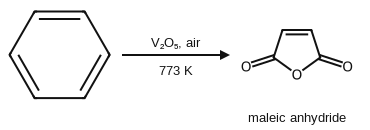
The oxidation of benzene by V2O5 in the presence of air produces:
वायु की उपस्थिति में V2O5 द्वारा बेन्ज़ीन का ऑक्सीकरण उत्पन्न करता है:
  1. ABenzoic acidबेन्ज़ोइक अम्ल
  2. BBenzaldehydeबेन्ज़ैल्डिहाइड
  3. CBenzoic anhydrideबेन्ज़ोइक ऐनहाइड्राइड
  4. DMaleic anhydrideमैलेइक ऐनहाइड्राइड
Show answer

Concept: Catalytic air oxidation of benzene over V2O5 at ≈ 773 K breaks the aromatic ring.

  1. 2C6H6 + 9O2 → 2C4H2O3 (maleic anhydride) + 4CO2 + 4H2O.
  2. Benzoic acid, benzaldehyde and benzoic anhydride all keep a C6H5– group; benzene has no side chain to oxidise to them.

Short trick: Benzene + V2O5/air → maleic anhydride; naphthalene + V2O5/air → phthalic anhydride.

Answer: (D) Maleic anhydride

अवधारणा: लगभग 773 K पर V2O5 पर वायु द्वारा बेन्ज़ीन का उत्प्रेरकी ऑक्सीकरण ऐरोमैटिक वलय को तोड़ देता है।

  1. 2C6H6 + 9O2 → 2C4H2O3 (मैलेइक ऐनहाइड्राइड) + 4CO2 + 4H2O।
  2. बेन्ज़ोइक अम्ल, बेन्ज़ैल्डिहाइड तथा बेन्ज़ोइक ऐनहाइड्राइड सभी में C6H5– समूह बना रहता है; बेन्ज़ीन में कोई पार्श्व शृंखला नहीं है जिसका इनमें ऑक्सीकरण हो।

शॉर्ट ट्रिक: बेन्ज़ीन + V2O5/वायु → मैलेइक ऐनहाइड्राइड; नैफ्थलीन + V2O5/वायु → थैलिक ऐनहाइड्राइड।

उत्तर: (D) मैलेइक ऐनहाइड्राइड

NEET UGChemistryHydrocarbons – oxidation of benzeneNEET UG 2015 · 25 Jul Shift 1 →
Q2566.
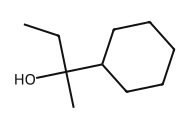
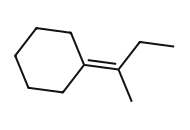
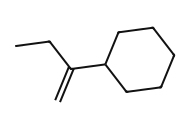
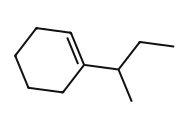
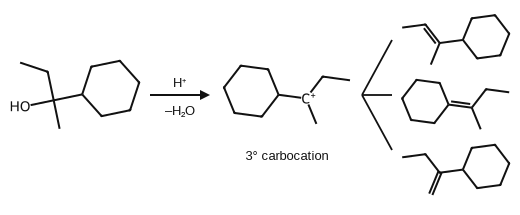
Which of the following is not the product of dehydration of ?
निम्नलिखित में से कौन के निर्जलीकरण का उत्पाद नहीं है?
  1. A
  2. B
  3. C
  4. D
Show answer

Concept: Dehydration of a 3° alcohol is E1: loss of water gives a 3° carbocation, then H+ is lost from any adjacent carbon.

  1. The alcohol (2-cyclohexylbutan-2-ol) gives a 3° cation on the side-chain carbon; it is already 3°, so no rearrangement occurs.
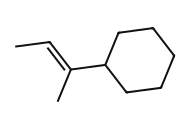
  2. H+ lost from CH2 of ethyl → (A) 2-cyclohexylbut-2-ene; from ring CH → (B) (butan-2-ylidene)cyclohexane; from CH3 → (C) 2-cyclohexylbut-1-ene.
  3. (D) has the C=C inside the ring and the side-chain carbon as CH – the double bond is not adjacent to the cation centre, so it cannot form without a rearrangement.

Short trick: In E1, the new C=C must touch the carbon that carried OH. (D) is the only option where it does not.

Answer: (D) 1-(butan-2-yl)cyclohexene – C=C inside the ring

अवधारणा: 3° ऐल्कोहॉल का निर्जलीकरण E1 है: जल निकलने से 3° कार्बधनायन बनता है, फिर किसी भी समीपवर्ती कार्बन से H+ निकलता है।

  1. ऐल्कोहॉल (2-साइक्लोहेक्सिलब्यूटेन-2-ऑल) पार्श्व-शृंखला के कार्बन पर 3° धनायन देता है; यह पहले से 3° है, अतः कोई पुनर्विन्यास नहीं होता।
  2. एथिल के CH2 से H+ निकलने पर → (A) 2-साइक्लोहेक्सिलब्यूट-2-ईन; वलय के CH से → (B) (ब्यूटेन-2-इलिडीन)साइक्लोहेक्सेन; CH3 से → (C) 2-साइक्लोहेक्सिलब्यूट-1-ईन।
  3. (D) में C=C वलय के भीतर है तथा पार्श्व-शृंखला का कार्बन CH है – द्विआबंध धनायन केंद्र के समीप नहीं है, अतः यह पुनर्विन्यास के बिना नहीं बन सकता।

शॉर्ट ट्रिक: E1 में नया C=C उसी कार्बन को छूना चाहिए जिस पर OH था। (D) ही एकमात्र विकल्प है जहाँ ऐसा नहीं है।

उत्तर: (D) 1-(ब्यूटेन-2-इल)साइक्लोहेक्सीन – वलय के भीतर C=C

NEET UGChemistryAlcohols – acid-catalysed dehydrationNEET UG 2015 · 25 Jul Shift 1 →
Q2567.
Method by which Aniline cannot be prepared is:
वह विधि जिससे ऐनिलीन नहीं बनाया जा सकता, है:
  1. AReduction of nitrobenzene with H2/Pd in ethanol.एथेनॉल में H2/Pd द्वारा नाइट्रोबेन्ज़ीन का अपचयन।
  2. BPotassium salt of phthalimide treated with chlorobenzene followed by hydrolysis with aqueous NaOH solution.थैलिमाइड के पोटैशियम लवण की क्लोरोबेन्ज़ीन से अभिक्रिया, तत्पश्चात् जलीय NaOH विलयन द्वारा जल-अपघटन।
  3. CHydrolysis of phenylisocyanide with acidic solutionअम्लीय विलयन द्वारा फेनिलआइसोसायनाइड का जल-अपघटन
  4. DDegradation of benzamide with bromine in alkaline solutionक्षारीय विलयन में ब्रोमीन द्वारा बेन्ज़ैमाइड का निम्नीकरण
Show answer

Concept: Gabriel phthalimide synthesis needs an SN2 attack of phthalimide anion on an alkyl halide; aryl halides do not undergo this substitution.

  1. In chlorobenzene the C–Cl bond has partial double-bond character (resonance of Cl lone pair with the ring) and the sp2 carbon resists back-side attack → no reaction → aniline cannot be made (B).
  2. (A) C6H5NO2 + 3H2 (Pd) → C6H5NH2.
  3. (C) C6H5NC + 2H2O (H+) → C6H5NH2 + HCOOH.
  4. (D) Hofmann bromamide: C6H5CONH2 + Br2 + 4NaOH → C6H5NH2 + Na2CO3 + 2NaBr + 2H2O.

Short trick: Gabriel synthesis gives only aliphatic 1° amines – never aromatic amines (NCERT line).

Answer: (B) Phthalimide salt + chlorobenzene route

अवधारणा: गैब्रिएल थैलिमाइड संश्लेषण में थैलिमाइड ऋणायन का ऐल्किल हैलाइड पर SN2 आक्रमण आवश्यक है; ऐरिल हैलाइड यह प्रतिस्थापन नहीं करते।

  1. क्लोरोबेन्ज़ीन में C–Cl आबंध में आंशिक द्विआबंध लक्षण होता है (Cl के एकाकी युग्म का वलय से अनुनाद) तथा sp2 कार्बन पीछे से आक्रमण का प्रतिरोध करता है → अभिक्रिया नहीं → ऐनिलीन नहीं बनता (B)।
  2. (A) C6H5NO2 + 3H2 (Pd) → C6H5NH2।
  3. (C) C6H5NC + 2H2O (H+) → C6H5NH2 + HCOOH।
  4. (D) हॉफमान ब्रोमैमाइड: C6H5CONH2 + Br2 + 4NaOH → C6H5NH2 + Na2CO3 + 2NaBr + 2H2O।

शॉर्ट ट्रिक: गैब्रिएल संश्लेषण केवल ऐलिफैटिक 1° ऐमीन देता है – ऐरोमैटिक ऐमीन कभी नहीं (NCERT पंक्ति)।

उत्तर: (B) थैलिमाइड लवण + क्लोरोबेन्ज़ीन विधि

NEET UGChemistryAmines – preparation of anilineNEET UG 2015 · 25 Jul Shift 1 →
Q2568.
Which of the following reaction(s) can be used for the preparation of alkyl halides?
i. CH3CH2OH + HCl Anhyd.ZnCl2​
ii. CH3CH2OH + HCl ⟶
iii. (CH3)3COH + HCl ⟶
iv. (CH3)2CHOH + HCl Anhyd.ZnCl2​
निम्नलिखित में से कौन-सी अभिक्रिया/अभिक्रियाएँ ऐल्किल हैलाइडों के विरचन में प्रयुक्त की जा सकती हैं?
i. CH3CH2OH + HCl Anhyd.ZnCl2​
ii. CH3CH2OH + HCl ⟶
iii. (CH3)3COH + HCl ⟶
iv. (CH3)2CHOH + HCl Anhyd.ZnCl2​
  1. AIV onlyकेवल IV
  2. BIII and IV onlyकेवल III तथा IV
  3. CI, III and IV onlyकेवल I, III तथा IV
  4. DI and II onlyकेवल I तथा II
Show answer

Concept: Reactivity of alcohols with HCl: 3° > 2° > 1°. 1° and 2° alcohols need anhydrous ZnCl2 (Lucas/Groove’s process); 3° alcohols react with conc. HCl alone.

  1. I: 1° alcohol + HCl with anhyd. ZnCl2 → C2H5Cl ✔.
  2. II: 1° alcohol + HCl without ZnCl2 → practically no reaction ✘.
  3. III: 3° alcohol + HCl → (CH3)3CCl readily (stable 3° carbocation) ✔.
  4. IV: 2° alcohol + HCl with anhyd. ZnCl2 → (CH3)2CHCl ✔.
  5. So I, III and IV.

Short trick: Lucas test logic: 3° alcohol gives turbidity at once even without heating; 1° needs ZnCl2 + heat – so "1° alcohol + HCl alone" is the odd one out.

Answer: (C) I, III and IV only

अवधारणा: HCl के साथ ऐल्कोहॉलों की अभिक्रियाशीलता: 3° > 2° > 1°। 1° तथा 2° ऐल्कोहॉलों को निर्जल ZnCl2 चाहिए (ल्यूकास/ग्रूव विधि); 3° ऐल्कोहॉल केवल सांद्र HCl से अभिक्रिया करते हैं।

  1. I: 1° ऐल्कोहॉल + HCl, निर्जल ZnCl2 सहित → C2H5Cl ✔।
  2. II: 1° ऐल्कोहॉल + HCl, ZnCl2 के बिना → व्यावहारिक रूप से अभिक्रिया नहीं ✘।
  3. III: 3° ऐल्कोहॉल + HCl → (CH3)3CCl आसानी से (स्थायी 3° कार्बधनायन) ✔।
  4. IV: 2° ऐल्कोहॉल + HCl, निर्जल ZnCl2 सहित → (CH3)2CHCl ✔।
  5. अतः I, III तथा IV।

शॉर्ट ट्रिक: ल्यूकास परीक्षण का तर्क: 3° ऐल्कोहॉल बिना गर्म किए तुरंत आविलता देता है; 1° को ZnCl2 + ताप चाहिए – अतः "1° ऐल्कोहॉल + केवल HCl" अलग है।

उत्तर: (C) केवल I, III तथा IV

NEET UGChemistryHaloalkanes – preparation from alcoholsNEET UG 2015 · 25 Jul Shift 1 →
Q2569.
Which is the correct order of increasing energy of the listed orbitals in the atom of titanium?
(At. No. Z = 22)
टाइटेनियम के परमाणु में सूचीबद्ध कक्षकों की बढ़ती ऊर्जा का सही क्रम कौन-सा है?
(परमाणु क्रमांक Z = 22)
  1. A3s 3p 3d 4s
  2. B3s 3p 4s 3d
  3. C3s 4s 3p 3d
  4. D4s 3s 3p 3d
Show answer

Concept: By the (n + l) rule, lower n + l → lower energy; for equal n + l, lower n first.

  1. 3s: 3 + 0 = 3; 3p: 3 + 1 = 4; 4s: 4 + 0 = 4; 3d: 3 + 2 = 5.
  2. 3p and 4s both have 4 → 3p (lower n) comes first.
  3. Order: 3s < 3p < 4s < 3d, matching Ti = [Ar]4s23d2 filling.

Short trick: Aufbau sequence 1s 2s 2p 3s 3p 4s 3d 4p … – just read the listed orbitals in that order.

Answer: (B) 3s 3p 4s 3d

अवधारणा: (n + l) नियम के अनुसार कम n + l → कम ऊर्जा; n + l समान होने पर कम n वाला पहले।

  1. 3s: 3 + 0 = 3; 3p: 3 + 1 = 4; 4s: 4 + 0 = 4; 3d: 3 + 2 = 5।
  2. 3p तथा 4s दोनों के लिए 4 → 3p (कम n) पहले।
  3. क्रम: 3s < 3p < 4s < 3d, जो Ti = [Ar]4s23d2 के भरने के क्रम से मेल खाता है।

शॉर्ट ट्रिक: ऑफबाउ क्रम 1s 2s 2p 3s 3p 4s 3d 4p … – सूचीबद्ध कक्षकों को इसी क्रम में पढ़ें।

उत्तर: (B) 3s 3p 4s 3d

NEET UGChemistryAtomic structure – energy of orbitalsNEET UG 2015 · 25 Jul Shift 1 →
Q2570.
In the extraction of copper from its sulphide ore, the metal is finally obtained by the reduction of cuprous oxide with:
कॉपर के सल्फाइड अयस्क से उसके निष्कर्षण में धातु अंततः क्यूप्रस ऑक्साइड के किसके द्वारा अपचयन से प्राप्त होती है?
  1. ACopper (I) sulphideकॉपर (I) सल्फाइड
  2. BSulphur dioxideसल्फर डाइऑक्साइड
  3. CIron (II) sulphideआयरन (II) सल्फाइड
  4. DCarbon monoxideकार्बन मोनोऑक्साइड
Show answer

Concept: In the Bessemer converter copper is obtained by "self-reduction": part of Cu2S is oxidised to Cu2O, which then reacts with the remaining Cu2S.

  1. 2Cu2S + 3O2 → 2Cu2O + 2SO2.
  2. 2Cu2O + Cu2S → 6Cu + SO2↑ – here S2− of Cu2S (−2 → +4) is the reducing agent, so Cu2O is reduced by copper(I) sulphide.
  3. (B) SO2 is the by-product of this step, not the reductant. (C) FeS is removed earlier as FeSiO3 slag. (D) CO is used for iron, not for copper from sulphide ore.

Short trick: Self-reduction metals (Cu, Pb, Hg): the sulphide reduces its own oxide – the reductant is always the metal sulphide.

Answer: (A) Copper (I) sulphide

अवधारणा: बेसेमर परिवर्तक में कॉपर "स्व-अपचयन" द्वारा प्राप्त होता है: Cu2S का कुछ भाग Cu2O में ऑक्सीकृत होता है, जो फिर शेष Cu2S से अभिक्रिया करता है।

  1. 2Cu2S + 3O2 → 2Cu2O + 2SO2।
  2. 2Cu2O + Cu2S → 6Cu + SO2↑ – यहाँ Cu2S का S2− (−2 → +4) अपचायक है, अतः Cu2O का अपचयन कॉपर(I) सल्फाइड द्वारा होता है।
  3. (B) SO2 इस चरण का उपोत्पाद है, अपचायक नहीं। (C) FeS पहले ही FeSiO3 धातुमल के रूप में हटा दिया जाता है। (D) CO आयरन के लिए प्रयुक्त होता है, सल्फाइड अयस्क से कॉपर के लिए नहीं।

शॉर्ट ट्रिक: स्व-अपचयन धातुएँ (Cu, Pb, Hg): सल्फाइड स्वयं अपने ऑक्साइड का अपचयन करता है – अपचायक सदैव धातु सल्फाइड होता है।

उत्तर: (A) कॉपर (I) सल्फाइड

NEET UGChemistryMetallurgy – extraction of copperNEET UG 2015 · 25 Jul Shift 1 →
Q2571.
Root pressure develops due to :
मूल दाब (root pressure) किसके कारण उत्पन्न होता है?
  1. AIncrease in transpirationवाष्पोत्सर्जन में वृद्धि
  2. BActive absorptionसक्रिय अवशोषण
  3. CLow osmotic potential in soilमृदा में निम्न परासरण विभव
  4. DPassive absorptionनिष्क्रिय अवशोषण
Show answer

Concept: Root pressure is a positive pressure in the xylem created by active uptake of mineral ions into the root xylem; water then follows osmotically.

  1. Root cells use ATP to pump ions (K+, NO3− …) into the xylem → water potential of xylem sap falls.
  2. Water enters the xylem by osmosis and pushes the sap up → root pressure (seen as guttation and as sap oozing from a cut stem).
  3. (A) Transpiration creates a pull (negative pressure), not root pressure; (C) low osmotic potential in soil would draw water out of roots; (D) passive absorption is driven by transpiration pull, not by roots.

Short trick: Root pressure = Push from below by active absorption; transpiration = Pull from above by passive absorption.

Answer: (B) Active absorption

अवधारणा: मूल दाब जाइलम में धनात्मक दाब है, जो मूल के जाइलम में खनिज आयनों के सक्रिय अवशोषण से बनता है; इसके बाद जल परासरण द्वारा प्रवेश करता है।

  1. मूल कोशिकाएँ ATP खर्च कर आयनों (K+, NO3− …) को जाइलम में पंप करती हैं → जाइलम रस का जल विभव घटता है।
  2. जल परासरण द्वारा जाइलम में आता है और रस को ऊपर धकेलता है → मूल दाब (बिन्दुस्रावण तथा कटे तने से रस निकलने के रूप में दिखता है)।
  3. (A) वाष्पोत्सर्जन खिंचाव (ऋणात्मक दाब) बनाता है, मूल दाब नहीं; (C) मृदा में निम्न परासरण विभव जल को मूल से बाहर खींचेगा; (D) निष्क्रिय अवशोषण वाष्पोत्सर्जन खिंचाव से होता है, मूल द्वारा नहीं।

शॉर्ट ट्रिक: मूल दाब = सक्रिय अवशोषण से नीचे से धक्का; वाष्पोत्सर्जन = निष्क्रिय अवशोषण द्वारा ऊपर से खिंचाव।

उत्तर: (B) सक्रिय अवशोषण

NEET UGBiologyTransport in plants – root pressureNEET UG 2015 · 25 Jul Shift 1 →
Q2572.
Which one is a wrong statement?
निम्नलिखित में से कौन-सा कथन गलत है?
  1. ABrown algae have chlorophyll a and c, and fucoxanthinभूरे शैवालों में क्लोरोफिल a तथा c, और फ्यूकोज़ैन्थिन होते हैं
  2. BArchegonia are found in Bryophyta, Pteridophyta and Gymnospermsस्त्रीधानी (आर्कीगोनिया) ब्रायोफाइटा, टेरिडोफाइटा तथा अनावृतबीजियों में पाई जाती है
  3. CMucor has biflagellate zoosporesMucor में द्विकशाभिकी चल-बीजाणु (zoospores) होते हैं
  4. DHaploid endosperm is typical feature of Gymnospermsअगुणित भ्रूणपोष अनावृतबीजियों का विशिष्ट लक्षण है
Show answer

Concept: Mucor is a terrestrial phycomycete (zygomycete) fungus; its asexual spores are non-motile sporangiospores, not zoospores.

  1. (A) Correct – Phaeophyceae: chl a, c + fucoxanthin (brown colour).
  2. (B) Correct – archegonium is the female sex organ of bryophytes, pteridophytes and gymnosperms.
  3. (C) Wrong – Mucor produces non-motile aplanospores (sporangiospores) in sporangia; flagellate zoospores occur in aquatic forms like Albugo/Chlamydomonas.
  4. (D) Correct – gymnosperm endosperm is the female gametophyte tissue, formed before fertilisation, so it is haploid (n).

Short trick: Bread-mould Mucor lives on land → no need to swim → no flagella.

Answer: (C) Mucor has biflagellate zoospores

अवधारणा: Mucor एक स्थलीय फाइकोमाइसिटीज़ (ज़ाइगोमाइसिटीज़) कवक है; इसके अलैंगिक बीजाणु अचल बीजाणुधानी-बीजाणु (sporangiospores) होते हैं, चल-बीजाणु नहीं।

  1. (A) सही – फियोफाइसी: क्लोरोफिल a, c + फ्यूकोज़ैन्थिन (भूरा रंग)।
  2. (B) सही – स्त्रीधानी ब्रायोफाइट, टेरिडोफाइट और अनावृतबीजियों का मादा लैंगिक अंग है।
  3. (C) गलत – Mucor बीजाणुधानी में अचल बीजाणुधानी-बीजाणु (sporangiospores) बनाता है; कशाभिकी चल-बीजाणु Albugo/Chlamydomonas जैसे जलीय रूपों में होते हैं।
  4. (D) सही – अनावृतबीजियों का भ्रूणपोष मादा युग्मकोद्भिद् ऊतक है, जो निषेचन से पहले बनता है, अतः अगुणित (n) होता है।

शॉर्ट ट्रिक: ब्रेड-मोल्ड Mucor स्थल पर रहता है → तैरने की आवश्यकता नहीं → कशाभिका नहीं।

उत्तर: (C) Mucor में द्विकशाभिकी चल-बीजाणु (zoospores) होते हैं

NEET UGBiologyPlant kingdom & fungi – features of groupsNEET UG 2015 · 25 Jul Shift 1 →
Q2573.
Which of the following structures is not found in prokaryotic cells?
निम्नलिखित में से कौन-सी संरचना प्रोकैरियोटी कोशिकाओं में नहीं पाई जाती?
  1. APlasma membraneप्लाज़्मा झिल्ली
  2. BNuclear envelopeकेन्द्रक आवरण
  3. CRibosomeराइबोसोम
  4. DMesosomeमीसोसोम
Show answer

Concept: Prokaryotes have no membrane-bound organelles; their DNA lies naked in the cytoplasm as a nucleoid – there is no nuclear envelope.

  1. (A) Plasma membrane – present in every cell.
  2. (B) Nuclear envelope – absent; the genetic material forms a nucleoid without a membrane.
  3. (C) Ribosomes – present (70S type).
  4. (D) Mesosome – infolding of plasma membrane, characteristic of bacteria.

Short trick: Pro = before, karyon = nucleus → "before a true nucleus" → no nuclear envelope.

Answer: (B) Nuclear envelope

अवधारणा: प्रोकैरियोटों में झिल्ली-युक्त अंगक नहीं होते; उनका DNA कोशिकाद्रव्य में नग्न रूप से केन्द्रकाभ (nucleoid) के रूप में रहता है – केन्द्रक आवरण नहीं होता।

  1. (A) प्लाज़्मा झिल्ली – प्रत्येक कोशिका में उपस्थित।
  2. (B) केन्द्रक आवरण – अनुपस्थित; आनुवंशिक पदार्थ बिना झिल्ली के केन्द्रकाभ बनाता है।
  3. (C) राइबोसोम – उपस्थित (70S प्रकार)।
  4. (D) मीसोसोम – प्लाज़्मा झिल्ली का अंतर्वलन, जीवाणुओं का विशिष्ट लक्षण।

शॉर्ट ट्रिक: Pro = पहले, karyon = केन्द्रक → "वास्तविक केन्द्रक से पहले" → केन्द्रक आवरण नहीं।

उत्तर: (B) केन्द्रक आवरण

NEET UGBiologyCell – prokaryotic cellNEET UG 2015 · 25 Jul Shift 1 →
Q2574.
Which one of the following animals has two separate circulatory pathways?
निम्नलिखित में से किस जंतु में दो पृथक परिसंचरण पथ होते हैं?
  1. ASharkशार्क
  2. BFrogमेंढक
  3. CLizardछिपकली
  4. DWhaleव्हेल
Show answer

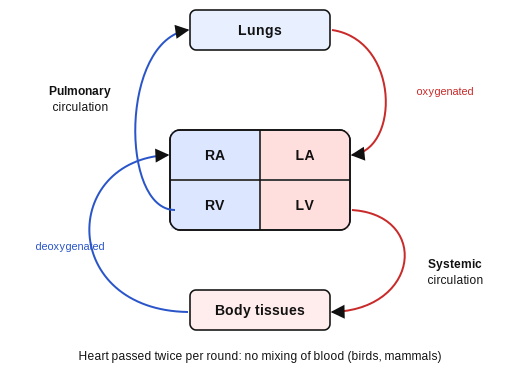
Concept: Complete double circulation (separate pulmonary and systemic pathways) needs a 4-chambered heart with complete ventricular separation – found in birds and mammals.

  1. Whale is a mammal → 4-chambered heart → oxygenated and deoxygenated blood never mix → two separate pathways.
  2. (A) Shark (fish): 2-chambered heart, single circulation.
  3. (B) Frog (amphibian): 3-chambered heart, mixed blood – incomplete double circulation.
  4. (C) Lizard (reptile): 3-chambered heart with incompletely divided ventricle – mixing still occurs.

Short trick: Two separate pathways = "Birds & Mammals only" – a whale is a mammal, not a fish.

Answer: (D) Whale

अवधारणा: पूर्ण दोहरा परिसंचरण (पृथक फुप्फुसीय और दैहिक पथ) के लिए पूर्णतः विभाजित निलय वाला 4-कक्षीय हृदय चाहिए – यह पक्षियों और स्तनियों में होता है।

  1. व्हेल एक स्तनी है → 4-कक्षीय हृदय → ऑक्सीजनित और विऑक्सीजनित रुधिर कभी नहीं मिलते → दो पृथक पथ।
  2. (A) शार्क (मछली): 2-कक्षीय हृदय, एकल परिसंचरण।
  3. (B) मेंढक (उभयचर): 3-कक्षीय हृदय, मिश्रित रुधिर – अपूर्ण दोहरा परिसंचरण।
  4. (C) छिपकली (सरीसृप): अपूर्ण विभाजित निलय वाला 3-कक्षीय हृदय – रुधिर का मिश्रण होता है।

शॉर्ट ट्रिक: दो पृथक पथ = "केवल पक्षी व स्तनी" – व्हेल स्तनी है, मछली नहीं।

उत्तर: (D) व्हेल

NEET UGBiologyBody fluids & circulation – double circulationNEET UG 2015 · 25 Jul Shift 1 →
Q2575.
Most animals that live in deep oceanic waters are :
गहरे महासागरीय जल में रहने वाले अधिकांश जंतु होते हैं :
  1. ADetritivoresअपरदाहारी (detritivores)
  2. BPrimary consumersप्राथमिक उपभोक्ता
  3. CSecondary consumersद्वितीयक उपभोक्ता
  4. DTertiary consumersतृतीयक उपभोक्ता
Show answer

Concept: No sunlight reaches the deep ocean, so there are no photosynthetic producers there; the food base is detritus (dead organic matter) sinking from the upper layers.

  1. Without producers there is hardly any grazing food chain → primary, secondary and tertiary consumers of a grazing chain cannot be the majority.
  2. Most deep-sea animals (sea cucumbers, brittle stars, many crustaceans, some fishes) feed on the "marine snow" of detritus → they are detritivores.
  3. Therefore the detritus food chain dominates in the deep ocean → (A).

Short trick: Dark ocean floor = no plants = live on the dead "rain" from above → detritivores.

Answer: (A) Detritivores

अवधारणा: गहरे समुद्र तक सूर्य का प्रकाश नहीं पहुँचता, इसलिए वहाँ प्रकाश-संश्लेषी उत्पादक नहीं होते; भोजन का आधार ऊपरी परतों से नीचे गिरने वाला अपरद (मृत कार्बनिक पदार्थ) होता है।

  1. उत्पादकों के बिना चारण खाद्य शृंखला लगभग नहीं होती → चारण शृंखला के प्राथमिक, द्वितीयक, तृतीयक उपभोक्ता बहुसंख्यक नहीं हो सकते।
  2. अधिकांश गहरे समुद्री जंतु (समुद्री ककड़ी, भंगुरतारा, अनेक क्रस्टेशियन, कुछ मछलियाँ) अपरद की "समुद्री हिम" पर पलते हैं → वे अपरदाहारी हैं।
  3. अतः गहरे समुद्र में अपरद खाद्य शृंखला प्रमुख है → (A)।

शॉर्ट ट्रिक: अंधेरा समुद्र तल = पौधे नहीं = ऊपर से गिरने वाली मृत "वर्षा" पर जीवन → अपरदाहारी।

उत्तर: (A) अपरदाहारी (detritivores)

NEET UGBiologyEcosystem – food chains in deep oceanNEET UG 2015 · 25 Jul Shift 1 →
Q2576.
An association of individuals of different species living in the same habitat and having functional interactions is :
एक ही आवास में रहने वाले तथा परस्पर क्रियात्मक अन्योन्यक्रिया रखने वाले विभिन्न जातियों के जीवों का समूह कहलाता है :
  1. APopulationसमष्टि
  2. BEcological nicheपारिस्थितिक निकेत
  3. CBiotic communityजैविक समुदाय
  4. DEcosystemपारितंत्र
Show answer

Concept: Populations of different species living together in an area and interacting form a biotic community.

  1. (A) Population – individuals of the same species only.
  2. (B) Niche – the functional role/range of conditions of one species, not a group.
  3. (C) Biotic community – many species, same habitat, interacting ✔.
  4. (D) Ecosystem – community plus the abiotic environment; the question mentions only living individuals.

Short trick: Same species → population; different species → community; community + non-living → ecosystem.

Answer: (C) Biotic community

अवधारणा: एक क्षेत्र में साथ रहने वाली और परस्पर क्रिया करने वाली विभिन्न जातियों की समष्टियाँ मिलकर जैविक समुदाय बनाती हैं।

  1. (A) समष्टि – केवल एक ही जाति के जीव।
  2. (B) निकेत – एक जाति की क्रियात्मक भूमिका/परिस्थितियों का परास, कोई समूह नहीं।
  3. (C) जैविक समुदाय – अनेक जातियाँ, एक आवास, परस्पर क्रिया ✔।
  4. (D) पारितंत्र – समुदाय और अजैव पर्यावरण; प्रश्न में केवल सजीवों का उल्लेख है।

शॉर्ट ट्रिक: एक जाति → समष्टि; विभिन्न जातियाँ → समुदाय; समुदाय + अजैव → पारितंत्र।

उत्तर: (C) जैविक समुदाय

NEET UGBiologyOrganisms & populations – levels of organisationNEET UG 2015 · 25 Jul Shift 1 →
Q2577.
The oxygen evolved during photosynthesis comes from water molecules. Which one of the following pairs of elements is involved in this reaction?
प्रकाश-संश्लेषण में निकलने वाली ऑक्सीजन जल के अणुओं से आती है। निम्नलिखित में से तत्वों का कौन-सा युग्म इस अभिक्रिया में सम्मिलित है?
  1. AMagnesium and Chlorineमैग्नीशियम और क्लोरीन
  2. BManganese and Chlorineमैंगनीज़ और क्लोरीन
  3. CManganese and Potassiumमैंगनीज़ और पोटैशियम
  4. DMagnesium and Molybdenumमैग्नीशियम और मॉलिब्डेनम
Show answer

Concept: Water splitting (photolysis) at PS II is catalysed by the oxygen-evolving complex containing Mn, with Ca2+ and Cl− as essential cofactors.

  1. 2H2O → 4H+ + 4e− + O2 occurs on the inner (lumen) side of the thylakoid at PS II.
  2. NCERT: "the splitting of water is associated with PS II; Mn2+ and Cl− play a prominent role in photolysis".
  3. Mg is part of chlorophyll (not water splitting); K regulates stomata; Mo is for nitrogenase/nitrate reductase → (B).

Short trick: "Many Clouds give water" – Mn + Cl (+Ca) split water.

Answer: (B) Manganese and Chlorine

अवधारणा: PS II पर जल का विघटन (प्रकाश-अपघटन) Mn युक्त ऑक्सीजन-मुक्तकारी संकुल द्वारा उत्प्रेरित होता है, जिसमें Ca2+ और Cl− आवश्यक सहकारक हैं।

  1. 2H2O → 4H+ + 4e− + O2, थाइलेकॉइड की भीतरी (ल्यूमेन) ओर PS II पर होता है।
  2. NCERT: "जल का विघटन PS II से संबद्ध है; प्रकाश-अपघटन में Mn2+ और Cl− की प्रमुख भूमिका है"।
  3. Mg क्लोरोफिल का भाग है (जल-विघटन नहीं); K रंध्रों का नियमन करता है; Mo नाइट्रोजिनेज़/नाइट्रेट रिडक्टेज़ के लिए है → (B)।

शॉर्ट ट्रिक: "Many Clouds give water" – Mn + Cl (+Ca) जल को तोड़ते हैं।

उत्तर: (B) मैंगनीज़ और क्लोरीन

NEET UGBiologyPhotosynthesis – photolysis of waterNEET UG 2015 · 25 Jul Shift 1 →
Q2578.
Axile placentation is present in :
स्तंभीय (axile) बीजाण्डन्यास किसमें पाया जाता है?
  1. AArgemone
  2. BDianthus
  3. CLemonनींबू
  4. DPeaमटर
Show answer

Concept: In axile placentation the ovary is multilocular and ovules are attached to a central axis (e.g. china rose, tomato, lemon).

  1. Lemon (Citrus) – multilocular ovary, ovules on the central axis → axile ✔.
  2. Argemone – parietal (ovules on the inner wall).
  3. Dianthus – free central (no septa, ovules on a central column).
  4. Pea – marginal (ovules along one suture of a single carpel).

Short trick: NCERT set: Marginal – pea; Axile – china rose, tomato, lemon; Parietal – mustard, Argemone; Free central – Dianthus, Primrose; Basal – sunflower, marigold.

Answer: (C) Lemon

अवधारणा: स्तंभीय बीजाण्डन्यास में अंडाशय बहुकोष्ठकी होता है और बीजाण्ड केन्द्रीय अक्ष पर लगे होते हैं (जैसे गुड़हल, टमाटर, नींबू)।

  1. नींबू (Citrus) – बहुकोष्ठकी अंडाशय, बीजाण्ड केन्द्रीय अक्ष पर → स्तंभीय ✔।
  2. Argemone – भित्तीय (बीजाण्ड भीतरी भित्ति पर)।
  3. Dianthus – मुक्त स्तंभीय (पट नहीं, बीजाण्ड केन्द्रीय स्तंभ पर)।
  4. मटर – सीमांत (एक अंडप की एक सीवन पर बीजाण्ड)।

शॉर्ट ट्रिक: NCERT समूह: सीमांत – मटर; स्तंभीय – गुड़हल, टमाटर, नींबू; भित्तीय – सरसों, Argemone; मुक्त स्तंभीय – Dianthus, Primrose; आधारी – सूरजमुखी, गेंदा।

उत्तर: (C) नींबू

NEET UGBiologyMorphology of flowering plants – placentationNEET UG 2015 · 25 Jul Shift 1 →
Q2579.
In which of the following both pairs have correct combination?
निम्नलिखित में से किसमें दोनों युग्मों का संयोजन सही है?
  1. AGaseous nutrient cycle: Sulphur and Phosphorus
    Sedimentary nutrient cycle: Carbon and Nitrogen
    गैसीय पोषक चक्र: सल्फर और फॉस्फोरस
    अवसादी पोषक चक्र: कार्बन और नाइट्रोजन
  2. BGaseous nutrient cycle: Carbon and Nitrogen
    Sedimentary nutrient cycle: Sulphur and Phosphorus
    गैसीय पोषक चक्र: कार्बन और नाइट्रोजन
    अवसादी पोषक चक्र: सल्फर और फॉस्फोरस
  3. CGaseous nutrient cycle: Carbon and sulphur
    Sedimentary nutrient cycle: Nitrogen and phosphorus
    गैसीय पोषक चक्र: कार्बन और सल्फर
    अवसादी पोषक चक्र: नाइट्रोजन और फॉस्फोरस
  4. DGaseous nutrient cycle: Nitrogen and sulphur
    Sedimentary nutrient cycle: Carbon and Phosphorus
    गैसीय पोषक चक्र: नाइट्रोजन और सल्फर
    अवसादी पोषक चक्र: कार्बन और फॉस्फोरस
Show answer

Concept: Nutrient cycles are of two types: gaseous (reservoir in atmosphere) and sedimentary (reservoir in Earth's crust/rocks).

  1. Carbon (CO2) and nitrogen (N2) have their main reservoir in the atmosphere → gaseous cycles.
  2. Sulphur and phosphorus are stored mainly in rocks/sediments (sulphates, phosphates) → sedimentary cycles.
  3. Only (B) puts both pairs right; (A) is fully reversed, (C) and (D) mix one wrong element in each pair.

Short trick: NCERT line: "reservoir for gaseous type of nutrient cycle (e.g., nitrogen, carbon cycle) exists in the atmosphere and for the sedimentary cycle (e.g., sulphur and phosphorus cycle) the reservoir is located in Earth's crust".

Answer: (B) Gaseous nutrient cycle: Carbon and Nitrogen
Sedimentary nutrient cycle: Sulphur and Phosphorus

अवधारणा: पोषक चक्र दो प्रकार के होते हैं: गैसीय (भंडार वायुमंडल में) और अवसादी (भंडार भूपर्पटी/चट्टानों में)।

  1. कार्बन (CO2) और नाइट्रोजन (N2) का मुख्य भंडार वायुमंडल है → गैसीय चक्र।
  2. सल्फर और फॉस्फोरस मुख्यतः चट्टानों/अवसादों में (सल्फेट, फॉस्फेट) संचित होते हैं → अवसादी चक्र।
  3. केवल (B) में दोनों युग्म सही हैं; (A) पूरा उलटा है, (C) और (D) में प्रत्येक युग्म में एक तत्व गलत है।

शॉर्ट ट्रिक: NCERT पंक्ति: "गैसीय पोषक चक्र (जैसे नाइट्रोजन, कार्बन चक्र) का भंडार वायुमंडल में तथा अवसादी चक्र (जैसे सल्फर और फॉस्फोरस चक्र) का भंडार भूपर्पटी में होता है"।

उत्तर: (B) गैसीय पोषक चक्र: कार्बन और नाइट्रोजन
अवसादी पोषक चक्र: सल्फर और फॉस्फोरस

NEET UGBiologyEcosystem – nutrient cyclingNEET UG 2015 · 25 Jul Shift 1 →
Q2580.
In mammalian eye, the ‘fovea’ is the center of the visual field, where :
स्तनी नेत्र में ‘फोविया’ (गर्तिका) दृष्टि क्षेत्र का केन्द्र है, जहाँ :
  1. AMore rods than cones are found.शलाकाओं की संख्या शंकुओं से अधिक होती है।
  2. BHigh density of cones occur, but has no rodsशंकुओं का घनत्व अधिक होता है, परंतु शलाकाएँ नहीं होतीं
  3. CThe optic nerve leaves the eyeदृक्-तंत्रिका नेत्र से बाहर निकलती है
  4. DOnly rods are presentकेवल शलाकाएँ उपस्थित होती हैं
Show answer

Concept: The fovea is a thinned-out portion of the macula lutea where only cones are densely packed – the point of greatest visual acuity.

  1. (B) ✔ – densely packed cones, no rods.
  2. (A), (D) wrong – rods dominate the peripheral retina, not the fovea.
  3. (C) wrong – the point where the optic nerve leaves is the blind spot (no rods or cones).

Short trick: Fovea = Fine detail = cones only; Blind spot = nerve exit = no receptors.

Answer: (B) High density of cones occur, but has no rods

अवधारणा: फोविया पीत बिंदु (macula lutea) का पतला भाग है, जहाँ केवल शंकु घने रूप से भरे होते हैं – सर्वाधिक दृष्टि-तीक्ष्णता का स्थान।

  1. (B) ✔ – घने शंकु, कोई शलाका नहीं।
  2. (A), (D) गलत – शलाकाएँ परिधीय दृष्टिपटल में अधिक होती हैं, फोविया में नहीं।
  3. (C) गलत – जहाँ से दृक्-तंत्रिका बाहर निकलती है, वह अंध बिंदु है (न शलाका, न शंकु)।

शॉर्ट ट्रिक: Fovea = Fine detail = केवल शंकु; अंध बिंदु = तंत्रिका का निकास = कोई ग्राही नहीं।

उत्तर: (B) शंकुओं का घनत्व अधिक होता है, परंतु शलाकाएँ नहीं होतीं

NEET UGBiologyNeural control – human eyeNEET UG 2015 · 25 Jul Shift 1 →