Question bank

Q&A: practice questions with answers

Search questions on any topic. Filter by exam category, exam, subject and topic, try the question, then open the answer and explanation.

Courses – airGurukul

53,050 questions in the question bank.

Q2521.
Select the correct statements.
A. Tetrad formation is seen during Leptotene.
B. During Anaphase, the centromeres split and chromatids separate.
C. Terminalization takes place during Pachytene.
D. Nucleolus, Golgi complex and ER are reformed during Telophase.
E. Crossing over takes place between sister chromatids of homologous chromosome.
Choose the correct answer from the options given below:
सही कथन चुनिए।
A. चतुष्क (tetrad) निर्माण लेप्टोटीन के दौरान दिखाई देता है।
B. पश्चावस्था (Anaphase) के दौरान गुणसूत्रबिंदु विभाजित होते हैं और अर्धगुणसूत्र अलग होते हैं।
C. उपांतीभवन (Terminalization) पैकीटीन के दौरान होता है।
D. अंत्यावस्था (Telophase) के दौरान केंद्रिका, गॉल्जी सम्मिश्र और ER पुनः बनते हैं।
E. जीन विनिमय (crossing over) समजात गुणसूत्र के सहोदर अर्धगुणसूत्रों के बीच होता है।
नीचे दिए गए विकल्पों में से सही उत्तर चुनिए:
  1. AA and C onlyकेवल A और C
  2. BB and D onlyकेवल B और D
  3. CA, C and E onlyकेवल A, C और E
  4. DB and E onlyकेवल B और E
Show answer

Concept: Prophase I sequence: leptotene (condensation) → zygotene (synapsis, bivalent) → pachytene (tetrad clearly visible, crossing over between non-sister chromatids) → diplotene (chiasmata) → diakinesis (terminalisation of chiasmata). Mitotic anaphase: centromeres split, chromatids separate; telophase: nucleolus, Golgi and ER reform.
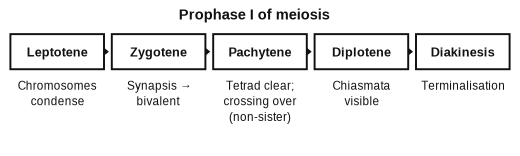
  1. A – false: tetrad/bivalent becomes clear in pachytene (synapsis starts in zygotene), not leptotene.
  2. B – true (mitotic anaphase).
  3. C – false: terminalisation occurs in diakinesis.
  4. D – true (telophase).
  5. E – false: crossing over is between non-sister chromatids of homologous chromosomes.
  6. Correct: B and D.

Short trick: ‘Lazy Zebras Pack Dinner Daily’ – L, Z, P, D, D; T(erminalisation) at the very end = Diakinesis.

Answer: (B) B and D only

अवधारणा: प्रोफेज़ I का क्रम: लेप्टोटीन (संघनन) → जाइगोटीन (सूत्रयुग्मन, युगली) → पैकीटीन (चतुष्क स्पष्ट, असहोदर अर्धगुणसूत्रों के बीच जीन विनिमय) → डिप्लोटीन (काएज्मेटा) → डायाकाइनेसिस (काएज्मेटा का उपांतीभवन)। समसूत्री पश्चावस्था: गुणसूत्रबिंदु विभाजित, अर्धगुणसूत्र अलग; अंत्यावस्था: केंद्रिका, गॉल्जी और ER पुनः बनते हैं।
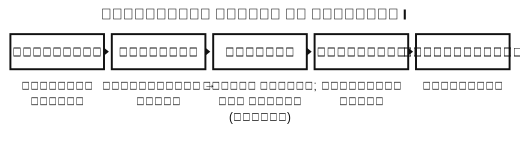
  1. A – असत्य: चतुष्क/युगली पैकीटीन में स्पष्ट होता है (सूत्रयुग्मन जाइगोटीन में आरंभ), लेप्टोटीन में नहीं।
  2. B – सत्य (समसूत्री पश्चावस्था)।
  3. C – असत्य: उपांतीभवन डायाकाइनेसिस में होता है।
  4. D – सत्य (अंत्यावस्था)।
  5. E – असत्य: जीन विनिमय समजात गुणसूत्रों के असहोदर अर्धगुणसूत्रों के बीच होता है।
  6. सही: B और D।

शॉर्ट ट्रिक: ‘Lazy Zebras Pack Dinner Daily’ – L, Z, P, D, D; उपांतीभवन बिल्कुल अंत में = डायाकाइनेसिस।

उत्तर: (B) केवल B और D
NEET UGZoologyCell cycle – meiosis and mitosisNEET UG 2023 · 7 May Shift 1 →
Q2522.
Which one of the following is NOT an advantage of inbreeding?
निम्नलिखित में से कौन-सा अंतःप्रजनन (inbreeding) का लाभ नहीं है?
  1. AIt decreases homozygosity.यह समयुग्मजता (homozygosity) को घटाता है।
  2. BIt exposes harmful recessive genes that are eliminated by selection.यह हानिकारक अप्रभावी जीनों को उजागर करता है जिन्हें वरण द्वारा हटा दिया जाता है।
  3. CElimination of less desirable genes and accumulation of superior genes takes place due to it.इसके कारण कम वांछनीय जीनों का निष्कासन और श्रेष्ठ जीनों का संचय होता है।
  4. DIt decreases the productivity of inbred population, after continuous inbreeding.लगातार अंतःप्रजनन के बाद यह अंतःप्रजात समष्टि की उत्पादकता घटाता है।
Show answer

Concept: NCERT: ‘Inbreeding increases homozygosity… it exposes harmful recessive genes that are eliminated by selection. It also helps in accumulation of superior genes and elimination of less desirable genes. However, continued inbreeding, especially close inbreeding, usually reduces fertility and even productivity (inbreeding depression).’

  1. (A) – the claim itself is false: inbreeding increases homozygosity; so ‘decreasing homozygosity’ cannot be its advantage ✔ (answer).
  2. (B) – NCERT-listed advantage.
  3. (C) – NCERT-listed advantage.
  4. (D) – a factually correct NCERT statement (inbreeding depression after continued close inbreeding). It is a drawback, but it describes inbreeding correctly; (A) is the only option that states something inbreeding does not do at all, so it can never be an advantage.

Short trick: Inbreeding → homozygosity ↑ (pure lines); Outbreeding/out-crossing → heterozygosity ↑ and removes inbreeding depression.

Answer: (A) It decreases homozygosity.

अवधारणा: NCERT: ‘अंतःप्रजनन समयुग्मजता बढ़ाता है… यह हानिकारक अप्रभावी जीनों को उजागर करता है जिन्हें वरण द्वारा हटाया जाता है। यह श्रेष्ठ जीनों के संचय और कम वांछनीय जीनों के निष्कासन में भी सहायक है। परन्तु लगातार, विशेषकर निकट अंतःप्रजनन, प्रायः जनन क्षमता और उत्पादकता भी घटा देता है (अंतःप्रजनन अवसाद)।’

  1. (A) – कथन स्वयं असत्य है: अंतःप्रजनन समयुग्मजता बढ़ाता है; अतः ‘समयुग्मजता घटाना’ इसका लाभ नहीं हो सकता ✔ (उत्तर)।
  2. (B) – NCERT में सूचीबद्ध लाभ।
  3. (C) – NCERT में सूचीबद्ध लाभ।
  4. (D) – तथ्यतः सही NCERT कथन (लगातार निकट अंतःप्रजनन के बाद अंतःप्रजनन अवसाद)। यह एक हानि है, परन्तु अंतःप्रजनन का सही वर्णन करता है; केवल (A) ऐसा प्रभाव बताता है जो अंतःप्रजनन करता ही नहीं, अतः वह कभी लाभ नहीं हो सकता।

शॉर्ट ट्रिक: अंतःप्रजनन → समयुग्मजता ↑ (शुद्ध वंशक्रम); बहिःप्रजनन/बहिःसंकरण → विषमयुग्मजता ↑ और अंतःप्रजनन अवसाद दूर।

उत्तर: (A) यह समयुग्मजता को घटाता है।

NEET UGZoologyAnimal husbandry – inbreedingNEET UG 2023 · 7 May Shift 1 →
Q2523.
Which of the following is characteristic feature of cockroach regarding sexual dimorphism ?
लैंगिक द्विरूपता (sexual dimorphism) के संबंध में कॉकरोच का विशिष्ट लक्षण निम्नलिखित में से कौन-सा है?
  1. ADark brown body colour and anal cerciगहरा भूरा शरीर रंग और गुदा लूम (anal cerci)
  2. BPresence of anal stylesगुदा कंटिकाओं (anal styles) की उपस्थिति
  3. CPresence of scleritesकठक (sclerites) की उपस्थिति
  4. DPresence of anal cerciगुदा लूम की उपस्थिति
Show answer

Concept: Sexual dimorphism = a feature that differs between male and female. NCERT: in males, the 9th sternum bears a pair of short, thread-like anal styles which are absent in females; both sexes have a pair of jointed anal cerci on the 10th segment.

  1. Dark brown colour and anal cerci – present in both sexes ✘.
  2. Anal styles – present only in males ✔.
  3. Sclerites (tergites, sternites, pleurites) – exoskeletal plates in both sexes ✘.
  4. Anal cerci – present in both sexes ✘.

Short trick: ‘Styles’ = ‘Stylish male’ only; ‘Cerci’ = common to both.

Answer: (B) Presence of anal styles

अवधारणा: लैंगिक द्विरूपता = ऐसा लक्षण जो नर और मादा में भिन्न हो। NCERT: नर में 9वें स्टर्नम पर छोटी, धागे जैसी एक जोड़ी गुदा कंटिकाएँ (anal styles) होती हैं जो मादा में अनुपस्थित हैं; दोनों लिंगों में 10वें खंड पर एक जोड़ी संधित गुदा लूम (cerci) होते हैं।

  1. गहरा भूरा रंग और गुदा लूम – दोनों लिंगों में ✘।
  2. गुदा कंटिकाएँ – केवल नर में ✔।
  3. कठक (टर्गाइट, स्टर्नाइट, प्लूराइट) – दोनों लिंगों में बाह्यकंकाली प्लेटें ✘।
  4. गुदा लूम – दोनों लिंगों में ✘।

शॉर्ट ट्रिक: ‘Styles’ = केवल ‘स्टाइलिश नर’ में; ‘Cerci’ = दोनों में।

उत्तर: (B) गुदा कंटिकाओं की उपस्थिति

NEET UGZoologyStructural organisation – cockroach sexual dimorphismNEET UG 2023 · 7 May Shift 1 →
Q2524.
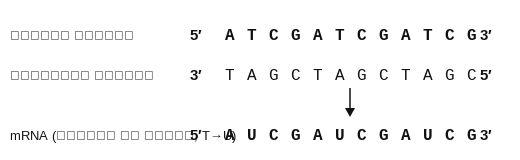
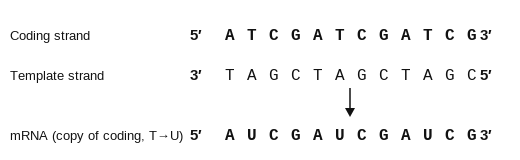
Which one of the following is the sequence on corresponding coding strand, if the sequence on mRNA formed is as follows
5′ AUCGAUCGAUCGAUCGAUCG AUCG AUCG 3′?
यदि बने mRNA का अनुक्रम निम्नानुसार है, तो संगत कोडिंग रज्जुक (coding strand) पर अनुक्रम निम्नलिखित में से कौन-सा होगा?
5′ AUCGAUCGAUCGAUCGAUCG AUCG AUCG 3′
  1. A5′ UAGCUAGCUAGCUAGCUA GCUAGC UAGC 3′
  2. B3′ UAGCUAGCUAGCUAGCUA GCUAGCUAGC 5′
  3. C5′ ATCGATCGATCGATCGATCG ATCGATCG 3′
  4. D3′ ATCGATCGATCGATCGATCG ATCGATCG 5′
Show answer

Concept: The mRNA is complementary to the template strand, so it has the same sequence and the same 5′→3′ polarity as the coding strand – except that T in DNA is replaced by U in RNA.

  1. Coding strand = mRNA sequence with U → T, same polarity.
  2. mRNA 5′ AUCG AUCG … 3′ → coding strand 5′ ATCG ATCG … 3′.
  3. (A), (B) contain U – they are RNA, not DNA ✘; (D) has the right letters but reversed polarity (3′→5′) ✘.

Short trick: Coding strand = ‘photocopy’ of mRNA: same direction, just U → T.

Answer: (C) 5′ ATCGATCGATCGATCGATCG ATCGATCG 3′

अवधारणा: mRNA टेम्पलेट रज्जुक का पूरक होता है, अतः इसका अनुक्रम और 5′→3′ ध्रुवता कोडिंग रज्जुक के समान होती है – केवल DNA का T, RNA में U से प्रतिस्थापित होता है।

  1. कोडिंग रज्जुक = mRNA अनुक्रम में U → T, ध्रुवता समान।
  2. mRNA 5′ AUCG AUCG … 3′ → कोडिंग रज्जुक 5′ ATCG ATCG … 3′।
  3. (A), (B) में U है – वे RNA हैं, DNA नहीं ✘; (D) में अक्षर सही पर ध्रुवता उल्टी (3′→5′) ✘।

शॉर्ट ट्रिक: कोडिंग रज्जुक = mRNA की ‘फोटोकॉपी’: वही दिशा, केवल U → T।

उत्तर: (C) 5′ ATCGATCGATCGATCGATCG ATCGATCG 3′

NEET UGZoologyMolecular basis of inheritance – transcriptionNEET UG 2023 · 7 May Shift 1 →
Q2525.
Which of the following statements are correct regarding skeletal muscle?
A. Muscle bundles are held together by collagenous connective tissue layer called fascicle.
B. Sarcoplasmic reticulum of muscle fibre is a store house of calcium ions.
C. Striated appearance of skeletal muscle fibre is due to distribution pattern of actin and myosin proteins.
D. M line is considered as functional unit of contraction called sarcomere.
Choose the most appropriate answer from the options given below:
कंकाल पेशी के संबंध में निम्नलिखित में से कौन-से कथन सही हैं?
A. पेशी बंडल एक कोलेजनी संयोजी ऊतक परत द्वारा एक साथ बँधे रहते हैं जिसे पूलिका (fascicle) कहते हैं।
B. पेशी तंतु का पेशीद्रव्यी जालिका (sarcoplasmic reticulum) कैल्सियम आयनों का भंडार है।
C. कंकाल पेशी तंतु की रेखित आकृति ऐक्टिन और मायोसिन प्रोटीनों के वितरण प्रतिरूप के कारण है।
D. M रेखा को संकुचन की क्रियात्मक इकाई, सार्कोमियर, माना जाता है।
नीचे दिए गए विकल्पों में से सबसे उपयुक्त उत्तर चुनिए:
  1. AA, B and C onlyकेवल A, B और C
  2. BB and C onlyकेवल B और C
  3. CA, C and D onlyकेवल A, C और D
  4. DC and D onlyकेवल C और D
Show answer

Concept: NCERT: ‘Each organised skeletal muscle is made of a number of muscle bundles or fascicles held together by a common collagenous connective tissue layer called fascia.’ The SR is the store house of Ca2+. Striations are due to the distribution pattern of actin and myosin. The portion of myofibril between two successive Z lines is the sarcomere.

  1. A – false: the bundles themselves are fascicles; the binding collagenous layer is the fascia.
  2. B – true.
  3. C – true.
  4. D – false: sarcomere lies between two Z lines; the M line is the thin fibrous membrane in the middle of the A-band holding thick filaments.
  5. Correct: B and C only → option (B).

Short trick: Fascia = ‘wrapper’, fascicles = ‘bundles inside’. Sarcomere = Z to Z.

Answer: (B) B and C only

अवधारणा: NCERT: ‘प्रत्येक संगठित कंकाल पेशी अनेक पेशी बंडलों या पूलिकाओं (fascicles) से बनी है जो एक उभयनिष्ठ कोलेजनी संयोजी ऊतक परत द्वारा बँधे रहते हैं जिसे संपट्ट (fascia) कहते हैं।’ पेशीद्रव्यी जालिका Ca2+ का भंडार है। रेखन ऐक्टिन और मायोसिन के वितरण प्रतिरूप के कारण है। दो क्रमागत Z रेखाओं के बीच का पेशीतंतुक भाग सार्कोमियर है।

  1. A – असत्य: बंडल स्वयं पूलिकाएँ हैं; उन्हें बाँधने वाली कोलेजनी परत संपट्ट (fascia) है।
  2. B – सत्य।
  3. C – सत्य।
  4. D – असत्य: सार्कोमियर दो Z रेखाओं के बीच है; M रेखा A-पट्ट के मध्य की पतली तंतुमय झिल्ली है जो मोटे तंतुओं को साधे रखती है।
  5. सही: केवल B और C → विकल्प (B)।

शॉर्ट ट्रिक: संपट्ट (fascia) = ‘आवरण’, पूलिकाएँ = ‘अंदर के बंडल’। सार्कोमियर = Z से Z।

उत्तर: (B) केवल B और C

NEET UGZoologyLocomotion – skeletal muscleNEET UG 2023 · 7 May Shift 1 →
Q2526.
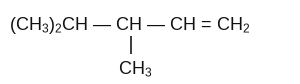
2,3-Dimethyl-2-butene can be prepared by heating which of the following compounds with a strong acid?
2,3-डाइमेथिल-2-ब्यूटीन को निम्नलिखित में से किस यौगिक को प्रबल अम्ल के साथ गर्म करके बनाया जा सकता है?
  1. A(CH3)2C = CH − CH2 − CH3
  2. B(CH3)2CH − CH2 − CH = CH2
  3. C
  4. D(CH3)3C − CH = CH2
Show answer

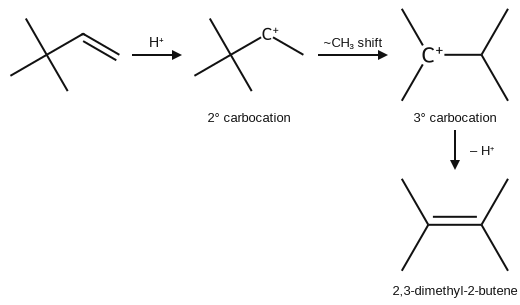
Concept: With a strong acid an alkene is protonated to a carbocation; a less stable cation rearranges (1,2-methyl or hydride shift) to a more stable one, and loss of H⁺ then gives the most substituted alkene.

  1. (CH3)3C–CH=CH2 + H⁺ → (CH3)3C–C⁺H–CH3 (2° carbocation).
  2. 1,2-methyl shift: → (CH3)2C⁺–CH(CH3)–CH3 (3° carbocation, more stable).
  3. Loss of H⁺ from the adjacent C–H gives (CH3)2C=C(CH3)2 = 2,3-dimethyl-2-butene (tetrasubstituted, Saytzeff product).
  4. (A) and (B) have only 5 C on a chain with one branch – any cation from them gives a 2-methylpentene skeleton, not 2,3-dimethylbutene. (C) has 7 C, so it cannot give a C6 alkene.

Short trick: Count carbons first: product is C6H12 with a 2,3-dimethylbutane skeleton – only (CH3)3C–CH=CH2 (3,3-dimethyl-1-butene) has a quaternary C that can donate a methyl to the neighbouring cation.

Answer: (D) (CH3)3C − CH = CH2

अवधारणा: प्रबल अम्ल के साथ ऐल्कीन प्रोटॉनित होकर कार्बधनायन (carbocation) बनाती है; कम स्थायी धनायन 1,2-मेथिल या हाइड्राइड विस्थापन द्वारा अधिक स्थायी धनायन में पुनर्विन्यसित होता है, फिर H⁺ के निष्कासन से सर्वाधिक प्रतिस्थापित ऐल्कीन बनती है।

  1. (CH3)3C–CH=CH2 + H⁺ → (CH3)3C–C⁺H–CH3 (2° कार्बधनायन)।
  2. 1,2-मेथिल विस्थापन: → (CH3)2C⁺–CH(CH3)–CH3 (3° कार्बधनायन, अधिक स्थायी)।
  3. समीपवर्ती C–H से H⁺ निकलने पर (CH3)2C=C(CH3)2 = 2,3-डाइमेथिल-2-ब्यूटीन (चतुःप्रतिस्थापित, सेत्जेफ उत्पाद) बनता है।
  4. (A) तथा (B) में 5 C की शृंखला व एक शाखा है – इनसे बना धनायन 2-मेथिलपेन्टीन ढाँचा देता है, 2,3-डाइमेथिलब्यूटेन नहीं। (C) में 7 C हैं, अतः यह C6 ऐल्कीन नहीं दे सकता।

शॉर्ट ट्रिक: पहले कार्बन गिनें: उत्पाद C6H12 है जिसका ढाँचा 2,3-डाइमेथिलब्यूटेन है – केवल (CH3)3C–CH=CH2 (3,3-डाइमेथिल-1-ब्यूटीन) में चतुष्क C है जो पास के धनायन को मेथिल दे सकता है।

उत्तर: (D) (CH3)3C − CH = CH2

NEET UGChemistryHydrocarbons – carbocation rearrangementNEET UG 2015 · 25 Jul Shift 1 →
Q2527.
Gadolinium belongs of 4f series. Its atomic number is 64. Which of the following is the correct electronic configuration of gadolinium?
गैडोलिनियम 4f श्रेणी से संबंधित है। इसका परमाणु क्रमांक 64 है। गैडोलिनियम का सही इलेक्ट्रॉनिक विन्यास निम्नलिखित में से कौन-सा है?
  1. A[Xe]4f75d16s2
  2. B[Xe]4f65d26s2
  3. C[Xe]4f86d2
  4. D[Xe]4f95s1
Show answer

Concept: Exactly half-filled 4f7 is extra stable, so Gd puts one electron in 5d instead of making 4f8.

  1. Z = 64; [Xe] accounts for 54 electrons, so 10 electrons remain.
  2. 6s takes 2 → 8 left; 4f7 (half-filled, stable) + 5d1 uses the remaining 8.
  3. Gd = [Xe]4f75d16s2. (B) 4f65d2 loses half-filled stability; (C) and (D) use wrong shells (6d, 5s are not being filled after [Xe]).

Short trick: Gd (64) and Cm (96) are the "half-filled f7 + d1" exceptions – same pattern as La/Ce starting the series with 5d1.

Answer: (A) [Xe]4f75d16s2

अवधारणा: पूर्णतः अर्धपूरित 4f7 अतिरिक्त स्थायी होता है, अतः Gd 4f8 बनाने के बजाय एक इलेक्ट्रॉन 5d में रखता है।

  1. Z = 64; [Xe] में 54 इलेक्ट्रॉन हैं, अतः 10 इलेक्ट्रॉन शेष रहते हैं।
  2. 6s में 2 → 8 शेष; 4f7 (अर्धपूरित, स्थायी) + 5d1 में शेष 8 इलेक्ट्रॉन जाते हैं।
  3. Gd = [Xe]4f75d16s2। (B) 4f65d2 में अर्धपूरित स्थायित्व नहीं है; (C) तथा (D) में गलत कोश (6d, 5s) हैं जो [Xe] के बाद नहीं भरते।

शॉर्ट ट्रिक: Gd (64) तथा Cm (96) "अर्धपूरित f7 + d1" अपवाद हैं – ठीक वैसे ही जैसे La/Ce श्रेणी 5d1 से शुरू करते हैं।

उत्तर: (A) [Xe]4f75d16s2

NEET UGChemistryf-block elements – electronic configurationNEET UG 2015 · 25 Jul Shift 1 →
Q2528.
The formation of the oxide ion, O2−(g), from oxygen atom requires first an exothermic and then an endothermic step as shown in below:
O(g) + e− ⟶ O−(g) ; ΔfH⊖ = −141 kJ mol−1
O−(g) + e− ⟶ O2−(g) ; ΔfH⊖ = +780 kJ mol−1
Thus process of formation of O2− in gas phase is unfavourable though O2− is isoelectronic with neon. It is due to the fact that,
ऑक्सीजन परमाणु से ऑक्साइड आयन, O2−(g), के बनने में पहले एक ऊष्माक्षेपी तथा फिर एक ऊष्माशोषी चरण होता है, जैसा नीचे दर्शाया गया है:
O(g) + e− ⟶ O−(g) ; ΔfH⊖ = −141 kJ mol−1
O−(g) + e− ⟶ O2−(g) ; ΔfH⊖ = +780 kJ mol−1
अतः गैस प्रावस्था में O2− का बनना प्रतिकूल है, यद्यपि O2− नियॉन के साथ समइलेक्ट्रॉनिक है। इसका कारण यह है कि,
  1. AOxygen is more electronegative.ऑक्सीजन अधिक विद्युत्ऋणात्मक है।
  2. BAddition of electron in oxygen results in larger size of the ion.ऑक्सीजन में इलेक्ट्रॉन जुड़ने से आयन का आकार बड़ा हो जाता है।
  3. CElectron repulsion outweighs the stability gained by achieving noble gas configuration.इलेक्ट्रॉन प्रतिकर्षण, उत्कृष्ट गैस विन्यास प्राप्त करने से मिलने वाले स्थायित्व से अधिक होता है।
  4. DO− ion has comparatively smaller size than oxygen atom.O− आयन का आकार ऑक्सीजन परमाणु की तुलना में छोटा होता है।
Show answer

Concept: The second electron must be pushed into an already negative ion, so a large energy is needed to overcome electron–electron repulsion.

  1. O → O− releases 141 kJ mol−1, but O− → O2− needs 780 kJ mol−1; net +639 kJ mol−1.
  2. This large positive value comes from repulsion between the incoming electron and the negative O− ion; it is larger than the gain from the neon configuration → (C).
  3. (A) High electronegativity would favour electron gain, not oppose it. (B) Size increase is a consequence, not the reason for the energy cost. (D) is false – O− is larger than O.

Short trick: Any "second electron gain enthalpy" is always positive – the reason is always repulsion of the anion. In solids O2− survives only because lattice energy pays this cost.

Answer: (C) Electron repulsion outweighs the noble-gas stability

अवधारणा: दूसरा इलेक्ट्रॉन पहले से ऋणात्मक आयन में डालना पड़ता है, अतः इलेक्ट्रॉन–इलेक्ट्रॉन प्रतिकर्षण पर विजय पाने के लिए अधिक ऊर्जा चाहिए।

  1. O → O− में 141 kJ mol−1 मुक्त होती है, पर O− → O2− में 780 kJ mol−1 लगती है; कुल +639 kJ mol−1।
  2. यह बड़ा धनात्मक मान आने वाले इलेक्ट्रॉन तथा ऋणात्मक O− आयन के बीच प्रतिकर्षण से है; यह नियॉन विन्यास से मिलने वाले स्थायित्व से अधिक है → (C)।
  3. (A) अधिक विद्युत्ऋणात्मकता इलेक्ट्रॉन ग्रहण के पक्ष में होती, विरोध में नहीं। (B) आकार बढ़ना परिणाम है, ऊर्जा व्यय का कारण नहीं। (D) गलत है – O− का आकार O से बड़ा है।

शॉर्ट ट्रिक: हर "द्वितीय इलेक्ट्रॉन लब्धि एन्थैल्पी" सदैव धनात्मक होती है – कारण सदैव ऋणायन का प्रतिकर्षण है। ठोसों में O2− केवल इसलिए बनता है क्योंकि जालक ऊर्जा यह व्यय पूरा कर देती है।

उत्तर: (C) इलेक्ट्रॉन प्रतिकर्षण उत्कृष्ट गैस स्थायित्व से अधिक है

NEET UGChemistryPeriodic properties – electron gain enthalpyNEET UG 2015 · 25 Jul Shift 1 →
Q2529.
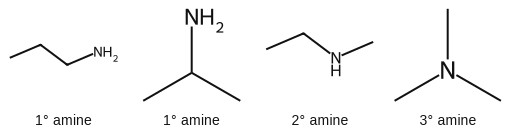
The number of structural isomers possible from the molecular formula C3H9N is:
आण्विक सूत्र C3H9N से संभव संरचनात्मक समावयवों की संख्या है:
  1. A2
  2. B3
  3. C4
  4. D5
Show answer

Concept: C3H9N is a saturated amine; isomers come from chain/position (1°) and from splitting carbons on N (2°, 3°).

  1. 1° amines: CH3CH2CH2NH2 (propan-1-amine) and (CH3)2CHNH2 (propan-2-amine).
  2. 2° amine: CH3CH2NHCH3 (N-methylethanamine).
  3. 3° amine: (CH3)3N (N,N-dimethylmethanamine).
  4. Total = 2 + 1 + 1 = 4.

Short trick: C2H7N → 2, C3H9N → 4, C4H11N → 8 amines (doubling pattern worth remembering).

Answer: (C) 4

अवधारणा: C3H9N एक संतृप्त ऐमीन है; समावयव शृंखला/स्थिति (1°) से तथा N पर कार्बनों को बाँटने (2°, 3°) से बनते हैं।

  1. 1° ऐमीन: CH3CH2CH2NH2 (प्रोपेन-1-ऐमीन) तथा (CH3)2CHNH2 (प्रोपेन-2-ऐमीन)।
  2. 2° ऐमीन: CH3CH2NHCH3 (N-मेथिलएथेनऐमीन)।
  3. 3° ऐमीन: (CH3)3N (N,N-डाइमेथिलमेथेनऐमीन)।
  4. कुल = 2 + 1 + 1 = 4।

शॉर्ट ट्रिक: C2H7N → 2, C3H9N → 4, C4H11N → 8 ऐमीन (दुगुना होने का क्रम याद रखें)।

उत्तर: (C) 4

NEET UGChemistryAmines – structural isomerismNEET UG 2015 · 25 Jul Shift 1 →
Q2530.
If the equilibrium constant for N2(g) + O2(g) ⇌ 2NO(g) is K, the equilibrium constant for 12N2(g) + 12O2(g) ⇌ NO(g) will be:
यदि N2(g) + O2(g) ⇌ 2NO(g) का साम्य स्थिरांक K है, तो 12N2(g) + 12O2(g) ⇌ NO(g) का साम्य स्थिरांक होगा:
  1. AK
  2. BK2
  3. CK12
  4. D12K
Show answer

Concept: If a balanced equation is multiplied by n, the new equilibrium constant is Kn.

  1. K=[NO]2[N2][O2].
  2. The new reaction is the old one × ½, so K′=[NO][N2]1/2[O2]1/2=K1/2=K.

Short trick: Multiply equation → raise K to that power; reverse → 1/K; add equations → multiply K’s. (D) ½K is the common trap.

Answer: (C) K12

अवधारणा: यदि संतुलित समीकरण को n से गुणा किया जाए, तो नया साम्य स्थिरांक Kn होता है।

  1. K=[NO]2[N2][O2]।
  2. नई अभिक्रिया पुरानी × ½ है, अतः K′=[NO][N2]1/2[O2]1/2=K1/2=K।

शॉर्ट ट्रिक: समीकरण को गुणा → K पर उतनी घात; उलटना → 1/K; समीकरण जोड़ना → K का गुणनफल। (D) ½K सामान्य भ्रामक विकल्प है।

उत्तर: (C) K12

NEET UGChemistryEquilibrium – manipulation of KNEET UG 2015 · 25 Jul Shift 1 →
Q2531.
Which one of the following pairs of solution is not an acidic buffer?
निम्नलिखित में से विलयनों का कौन-सा युग्म अम्लीय बफर नहीं है?
  1. AH2CO3 and Na2CO3H2CO3 तथा Na2CO3
  2. BH3PO4 and Na3PO4H3PO4 तथा Na3PO4
  3. CHClO4 and NaClO4HClO4 तथा NaClO4
  4. DCH3COOH and CH3COONaCH3COOH तथा CH3COONa
Show answer

Concept: An acidic buffer = weak acid + its salt with a strong base (conjugate base present in good amount).

  1. HClO4 is a strong acid, fully ionised; ClO4− is a negligible base, so it cannot absorb added H+ → not a buffer.
  2. (A) H2CO3/CO32− and (B) H3PO4/PO43−: weak polyprotic acids with their salts – on mixing they form HCO3− or H2PO4−/HPO42− pairs, which buffer.
  3. (D) CH3COOH/CH3COONa is the textbook acidic buffer.

Short trick: Spot the strong acid (HCl, HNO3, H2SO4, HClO4, HBr, HI) – any pair containing one is never a buffer.

Answer: (C) HClO4 and NaClO4

अवधारणा: अम्लीय बफर = दुर्बल अम्ल + प्रबल क्षार के साथ उसका लवण (संयुग्मी क्षारक पर्याप्त मात्रा में)।

  1. HClO4 प्रबल अम्ल है, पूर्णतः आयनित होता है; ClO4− नगण्य क्षारक है, अतः यह मिलाए गए H+ को अवशोषित नहीं कर सकता → बफर नहीं।
  2. (A) H2CO3/CO32− तथा (B) H3PO4/PO43−: दुर्बल बहुप्रोटिक अम्ल अपने लवणों के साथ – मिलाने पर HCO3− या H2PO4−/HPO42− युग्म बनते हैं, जो बफर का कार्य करते हैं।
  3. (D) CH3COOH/CH3COONa पाठ्यपुस्तक का मानक अम्लीय बफर है।

शॉर्ट ट्रिक: प्रबल अम्ल पहचानें (HCl, HNO3, H2SO4, HClO4, HBr, HI) – इनमें से किसी को रखने वाला युग्म कभी बफर नहीं होता।

उत्तर: (C) HClO4 तथा NaClO4

NEET UGChemistryIonic equilibrium – buffer solutionsNEET UG 2015 · 25 Jul Shift 1 →
Q2532.
Aqueous solution of which of the following compounds is the best conductor of electric current?
निम्नलिखित में से किस यौगिक का जलीय विलयन विद्युत धारा का सर्वश्रेष्ठ चालक है?
  1. AAmmonia, NH3अमोनिया, NH3
  2. BFructose, C6H12O6फ्रक्टोस, C6H12O6
  3. CAcetic acid, C2H4O2ऐसीटिक अम्ल, C2H4O2
  4. DHydrochloric acid, HClहाइड्रोक्लोरिक अम्ल, HCl
Show answer

Concept: Conductance depends on the number (and mobility) of free ions; strong electrolytes ionise completely.

  1. HCl is a strong acid → completely ionised into H+ and Cl−; H+ also has the highest ionic mobility → best conductor.
  2. NH3 (weak base) and acetic acid (weak acid) ionise only slightly → poor conductors.
  3. Fructose is a non-electrolyte → practically no conduction.

Short trick: Strong electrolyte > weak electrolyte > non-electrolyte; among strong ones, acids win because of fast H+.

Answer: (D) Hydrochloric acid, HCl

अवधारणा: चालकता मुक्त आयनों की संख्या (तथा गतिशीलता) पर निर्भर करती है; प्रबल विद्युत-अपघट्य पूर्णतः आयनित होते हैं।

  1. HCl प्रबल अम्ल है → H+ तथा Cl− में पूर्णतः आयनित; H+ की आयनिक गतिशीलता भी सर्वाधिक है → सर्वश्रेष्ठ चालक।
  2. NH3 (दुर्बल क्षारक) तथा ऐसीटिक अम्ल (दुर्बल अम्ल) अल्प मात्रा में आयनित होते हैं → दुर्बल चालक।
  3. फ्रक्टोस अविद्युत-अपघट्य है → व्यावहारिक रूप से कोई चालन नहीं।

शॉर्ट ट्रिक: प्रबल विद्युत-अपघट्य > दुर्बल विद्युत-अपघट्य > अविद्युत-अपघट्य; प्रबलों में अम्ल तीव्र H+ के कारण आगे रहते हैं।

उत्तर: (D) हाइड्रोक्लोरिक अम्ल, HCl

NEET UGChemistryElectrochemistry – electrolytic conductanceNEET UG 2015 · 25 Jul Shift 1 →
Q2533.
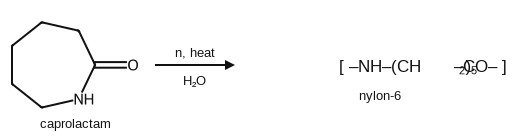
Caprolactum is used for the manufacture of:
कैप्रोलैक्टम का उपयोग किसके निर्माण में किया जाता है?
  1. ATeryleneटेरिलीन
  2. BNylon-6,6नाइलॉन-6,6
  3. CNylon-6नाइलॉन-6
  4. DTeflonटेफ्लॉन
Show answer

Concept: Caprolactam (a cyclic amide with 6 C) undergoes ring-opening polymerisation on heating with a trace of water to give nylon-6.

  1. Repeating unit: –[NH–(CH2)5–CO]–; one monomer with 6 carbons → "nylon-6".
  2. Terylene = ethylene glycol + terephthalic acid; nylon-6,6 = hexamethylenediamine + adipic acid; Teflon = poly(tetrafluoroethene).

Short trick: Number after "nylon" = carbons in each monomer: one number (6) → one monomer (caprolactam); two numbers (6,6) → two monomers.

Answer: (C) Nylon-6

अवधारणा: कैप्रोलैक्टम (6 C वाला चक्रीय ऐमाइड) जल की अल्प मात्रा के साथ गर्म करने पर वलय-विवृत बहुलकन द्वारा नाइलॉन-6 देता है।

  1. पुनरावृत्त इकाई: –[NH–(CH2)5–CO]–; 6 कार्बन वाला एक एकलक → "नाइलॉन-6"।
  2. टेरिलीन = एथिलीन ग्लाइकॉल + टेरेफ्थैलिक अम्ल; नाइलॉन-6,6 = हेक्सामेथिलीनडाइऐमीन + ऐडिपिक अम्ल; टेफ्लॉन = पॉलि(टेट्राफ्लुओरोएथीन)।

शॉर्ट ट्रिक: "नाइलॉन" के बाद की संख्या = प्रत्येक एकलक में कार्बन: एक संख्या (6) → एक एकलक (कैप्रोलैक्टम); दो संख्याएँ (6,6) → दो एकलक।

उत्तर: (C) नाइलॉन-6

NEET UGChemistryPolymers – nylon-6NEET UG 2015 · 25 Jul Shift 1 →
Q2534.
On heating which of the following releases CO2 most easily?
गर्म करने पर निम्नलिखित में से कौन-सा सबसे आसानी से CO2 मुक्त करता है?
  1. AMgCO3
  2. BCaCO3
  3. CK2CO3
  4. DNa2CO3
Show answer

Concept: Small, highly charged cations polarise the large CO32− ion and weaken it, so the carbonate decomposes more easily.

  1. Mg2+ is the smallest cation with +2 charge → highest polarising power.
  2. Thermal stability: K2CO3 > Na2CO3 > CaCO3 > MgCO3.
  3. MgCO3 → MgO + CO2 occurs at the lowest temperature.

Short trick: Stability of carbonates rises down a group and is far higher for alkali metals (Li2CO3 is the alkali exception). Smallest 2+ ion = easiest CO2.

Answer: (A) MgCO3

अवधारणा: छोटे, अधिक आवेश वाले धनायन बड़े CO32− आयन को ध्रुवित करके दुर्बल कर देते हैं, अतः कार्बोनेट आसानी से विघटित होता है।

  1. Mg2+ +2 आवेश वाला सबसे छोटा धनायन है → सर्वाधिक ध्रुवण क्षमता।
  2. तापीय स्थायित्व: K2CO3 > Na2CO3 > CaCO3 > MgCO3।
  3. MgCO3 → MgO + CO2 सबसे कम ताप पर होता है।

शॉर्ट ट्रिक: कार्बोनेटों का स्थायित्व वर्ग में नीचे जाने पर बढ़ता है तथा क्षार धातुओं के लिए बहुत अधिक होता है (Li2CO3 अपवाद)। सबसे छोटा 2+ आयन = सबसे आसानी से CO2।

उत्तर: (A) MgCO3

NEET UGChemistrys-block – thermal stability of carbonatesNEET UG 2015 · 25 Jul Shift 1 →
Q2535.
Strong reducing behaviour of H3PO2 is due to:
H3PO2 का प्रबल अपचायक व्यवहार किसके कारण है?
  1. AHigh oxidation state of phosphorusफॉस्फोरस की उच्च ऑक्सीकरण अवस्था
  2. BPresence of two –OH groups and one p – H bondदो –OH समूहों तथा एक p – H आबंध की उपस्थिति
  3. CPresence of one –OH group and two p – H bondsएक –OH समूह तथा दो p – H आबंधों की उपस्थिति
  4. DHigh electron gain enthalpy of phosphorusफॉस्फोरस की उच्च इलेक्ट्रॉन लब्धि एन्थैल्पी
Show answer

Concept: Oxoacids of phosphorus that contain P–H bonds act as reducing agents; more P–H bonds → stronger reductant.

  1. Structure of H3PO2 (hypophosphorous acid): one P=O, one P–OH and two P–H bonds (monobasic).
  2. Two P–H bonds make it a strong reducing agent, e.g. 4AgNO3 + 2H2O + H3PO2 → 4Ag + 4HNO3 + H3PO4.
  3. (A) P is only +1 here (low, not high). (B) describes H3PO3. (D) electron gain enthalpy is unrelated to reducing power.

Short trick: H3PO2: 1 OH, 2 P–H (monobasic); H3PO3: 2 OH, 1 P–H (dibasic); H3PO4: 3 OH, 0 P–H (not reducing).

Answer: (C) Presence of one –OH group and two P–H bonds

अवधारणा: फॉस्फोरस के वे ऑक्सोअम्ल जिनमें P–H आबंध होते हैं, अपचायक की तरह कार्य करते हैं; जितने अधिक P–H आबंध → उतना प्रबल अपचायक।

  1. H3PO2 (हाइपोफॉस्फोरस अम्ल) की संरचना: एक P=O, एक P–OH तथा दो P–H आबंध (एकक्षारकी)।
  2. दो P–H आबंध इसे प्रबल अपचायक बनाते हैं, जैसे 4AgNO3 + 2H2O + H3PO2 → 4Ag + 4HNO3 + H3PO4।
  3. (A) यहाँ P केवल +1 पर है (निम्न, उच्च नहीं)। (B) H3PO3 का वर्णन है। (D) इलेक्ट्रॉन लब्धि एन्थैल्पी का अपचायक क्षमता से संबंध नहीं है।

शॉर्ट ट्रिक: H3PO2: 1 OH, 2 P–H (एकक्षारकी); H3PO3: 2 OH, 1 P–H (द्विक्षारकी); H3PO4: 3 OH, 0 P–H (अपचायक नहीं)।

उत्तर: (C) एक –OH समूह तथा दो P–H आबंधों की उपस्थिति

NEET UGChemistryp-block – oxoacids of phosphorusNEET UG 2015 · 25 Jul Shift 1 →
Q2536.
Decreasing order of stability of O2, O2−, O2+ and O22− is:
O2, O2−, O2+ तथा O22− के स्थायित्व का घटता क्रम है:
  1. AO2 > O2+ > O22− > O2−
  2. BO2− > O22− > O2+ > O2
  3. CO2+ > O2 > O2− > O22−
  4. DO22− > O2− > O2 > O2+
Show answer

Concept: Higher bond order → stronger bond → greater stability. For O2-type species the extra electrons enter antibonding π* orbitals.

  1. Electrons: O2+ 15, O2 16, O2− 17, O22− 18.
  2. Bond order = ½(Nb − Na): O2+ = ½(10 − 5) = 2.5; O2 = ½(10 − 6) = 2; O2− = ½(10 − 7) = 1.5; O22− = ½(10 − 8) = 1.
  3. Stability: O2+ > O2 > O2− > O22−.

Short trick: For 14–20 electron diatomics: each electron removed from O2 adds 0.5 to bond order, each added subtracts 0.5 – just order by charge (+ first).

Answer: (C) O2+ > O2 > O2− > O22−

अवधारणा: अधिक आबंध कोटि → प्रबल आबंध → अधिक स्थायित्व। O2 प्रकार की स्पीशीज़ में अतिरिक्त इलेक्ट्रॉन प्रतिआबंधी π* कक्षकों में जाते हैं।

  1. इलेक्ट्रॉन: O2+ 15, O2 16, O2− 17, O22− 18।
  2. आबंध कोटि = ½(Nb − Na): O2+ = ½(10 − 5) = 2.5; O2 = ½(10 − 6) = 2; O2− = ½(10 − 7) = 1.5; O22− = ½(10 − 8) = 1।
  3. स्थायित्व: O2+ > O2 > O2− > O22−।

शॉर्ट ट्रिक: 14–20 इलेक्ट्रॉन वाले द्विपरमाणुकों में: O2 से प्रत्येक इलेक्ट्रॉन हटाने पर आबंध कोटि 0.5 बढ़ती है, जोड़ने पर 0.5 घटती है – बस आवेश के क्रम (+ पहले) में रखें।

उत्तर: (C) O2+ > O2 > O2− > O22−

NEET UGChemistryChemical bonding – MO theory, bond orderNEET UG 2015 · 25 Jul Shift 1 →
Q2537.
The number of water molecules is maximum in:
जल के अणुओं की संख्या किसमें अधिकतम है?
  1. A18 gram of water18 ग्राम जल
  2. B18 moles of water18 मोल जल
  3. C18 molecules of waterजल के 18 अणु
  4. D1.8 gram of water1.8 ग्राम जल
Show answer

Concept: Number of molecules = moles × NA; compare everything in moles.

  1. 18 g water = 18/18 = 1 mol → 6.022 × 10²³ molecules.
  2. 18 mol water → 18 × 6.022 × 1023 = 1.08 × 1025 molecules.
  3. 18 molecules = just 18; 1.8 g = 0.1 mol = 6.022 × 10²² molecules.
  4. Maximum: 18 moles.

Short trick: Whenever one option is in moles and others are grams/molecules of a small sample, convert all to moles – the largest mole count wins.

Answer: (B) 18 moles of water

अवधारणा: अणुओं की संख्या = मोल × NA; सबकी तुलना मोल में करें।

  1. 18 g जल = 18/18 = 1 mol → 6.022 × 10²³ अणु।
  2. 18 mol जल → 18 × 6.022 × 1023 = 1.08 × 1025 अणु।
  3. 18 अणु = केवल 18; 1.8 g = 0.1 mol = 6.022 × 10²² अणु।
  4. अधिकतम: 18 मोल।

शॉर्ट ट्रिक: जब एक विकल्प मोल में तथा अन्य ग्राम/अणुओं में हों, तो सबको मोल में बदलें – सबसे अधिक मोल वाला जीतता है।

उत्तर: (B) 18 मोल जल

NEET UGChemistryMole conceptNEET UG 2015 · 25 Jul Shift 1 →
Q2538.
In which of the following pairs, both the species are not isostructural?
निम्नलिखित में से किस युग्म में दोनों स्पीशीज़ समसंरचनात्मक नहीं हैं?
  1. ANH3, PH3
  2. BXeF4, XeO4
  3. CSiCl4, PCl4+
  4. DDiamond, silicon carbideहीरा, सिलिकॉन कार्बाइड
Show answer

Concept: Shape is decided by the number of bond pairs and lone pairs on the central atom (VSEPR).

  1. XeF4: 4 bp + 2 lp → sp3d2, square planar. XeO4: 4 σ bonds, 0 lp → sp3, tetrahedral → not isostructural.
  2. (A) NH3, PH3: 3 bp + 1 lp → both pyramidal.
  3. (C) SiCl4, PCl4+: 4 bp, 0 lp → both tetrahedral.
  4. (D) Diamond and SiC: both 3-D networks of sp3 tetrahedral atoms.

Short trick: Same central atom but different lone pairs → different shape (XeF4 has 2 lp, XeO4 has none).

Answer: (B) XeF4, XeO4

अवधारणा: आकृति केंद्रीय परमाणु पर आबंध युग्मों व एकाकी युग्मों की संख्या से तय होती है (VSEPR)।

  1. XeF4: 4 bp + 2 lp → sp3d2, वर्ग समतलीय। XeO4: 4 σ आबंध, 0 lp → sp3, चतुष्फलकीय → समसंरचनात्मक नहीं।
  2. (A) NH3, PH3: 3 bp + 1 lp → दोनों पिरामिडी।
  3. (C) SiCl4, PCl4+: 4 bp, 0 lp → दोनों चतुष्फलकीय।
  4. (D) हीरा तथा SiC: दोनों sp3 चतुष्फलकीय परमाणुओं के त्रिविम जालक।

शॉर्ट ट्रिक: केंद्रीय परमाणु समान पर एकाकी युग्म भिन्न → आकृति भिन्न (XeF4 में 2 lp, XeO4 में कोई नहीं)।

उत्तर: (B) XeF4, XeO4

NEET UGChemistryChemical bonding – VSEPR shapesNEET UG 2015 · 25 Jul Shift 1 →
Q2539.
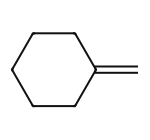
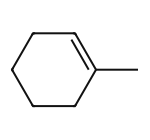
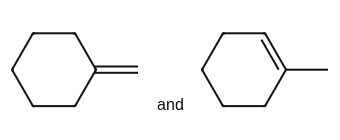
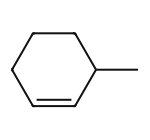
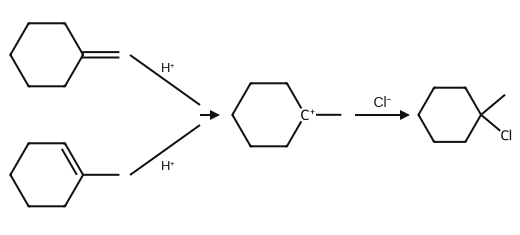
In the reaction with HCl, an alkene reacts in accordance with the Markovnikov’s rule, to give a product 1-chloro-1-methylcyclohexane. The possible reaction alkene is:
HCl के साथ अभिक्रिया में एक ऐल्कीन मार्कोनीकॉफ नियम के अनुसार अभिक्रिया करके उत्पाद 1-क्लोरो-1-मेथिलसाइक्लोहेक्सेन देती है। संभावित अभिकारक ऐल्कीन है:
  1. A
  2. B
  3. C
  4. D
Show answer

Concept: Markovnikov: H+ adds to the double-bond carbon with more H, giving the more stable carbocation, which is then captured by Cl−.

  1. Methylenecyclohexane: H+ adds to =CH2 → 3° cation at ring C-1 bearing CH3 → Cl− gives 1-chloro-1-methylcyclohexane.
  2. 1-Methylcyclohexene: H+ adds to ring C-2 (has H) → the same 3° cation at C-1 → same product.
  3. 3-Methylcyclohexene (D) gives cations at ring C-1/C-2, i.e. chlorine on a carbon not bearing CH3 (1-chloro-2- or 3-methylcyclohexane).
  4. Hence both alkenes shown in (C) are possible.

Short trick: Work backwards: put the C=C between the C–Cl carbon and any neighbour that can take H – both exocyclic and endocyclic positions work.

Answer: (C) Both methylenecyclohexane and 1-methylcyclohexene

अवधारणा: मार्कोनीकॉफ नियम: H+ द्विआबंध के उस कार्बन पर जुड़ता है जिस पर अधिक H हैं, जिससे अधिक स्थायी कार्बधनायन बनता है, जिसे फिर Cl− पकड़ता है।

  1. मेथिलीनसाइक्लोहेक्सेन: H+ =CH2 पर जुड़ता है → CH3 वाले वलय C-1 पर 3° धनायन → Cl− से 1-क्लोरो-1-मेथिलसाइक्लोहेक्सेन।
  2. 1-मेथिलसाइक्लोहेक्सीन: H+ वलय के C-2 (जिस पर H है) पर जुड़ता है → C-1 पर वही 3° धनायन → वही उत्पाद।
  3. 3-मेथिलसाइक्लोहेक्सीन (D) वलय के C-1/C-2 पर धनायन देता है, अर्थात् क्लोरीन उस कार्बन पर जाएगी जिस पर CH3 नहीं है (1-क्लोरो-2- या 3-मेथिलसाइक्लोहेक्सेन)।
  4. अतः (C) में दिखाई गई दोनों ऐल्कीन संभव हैं।

शॉर्ट ट्रिक: पीछे से सोचें: C–Cl वाले कार्बन तथा H ग्रहण कर सकने वाले किसी पड़ोसी के बीच C=C रखें – वलय के बाहर व भीतर दोनों स्थितियाँ काम करती हैं।

उत्तर: (C) मेथिलीनसाइक्लोहेक्सेन तथा 1-मेथिलसाइक्लोहेक्सीन दोनों

NEET UGChemistryHydrocarbons – Markovnikov additionNEET UG 2015 · 25 Jul Shift 1 →
Q2540.
Assuming complete ionization, same moles of which of the following compounds will require the least amount of acidified KMnO4 for complete oxidation?
पूर्ण आयनन मानते हुए, निम्नलिखित में से किस यौगिक के समान मोलों के पूर्ण ऑक्सीकरण के लिए अम्लीकृत KMnO4 की न्यूनतम मात्रा की आवश्यकता होगी?
  1. AFeC2O4
  2. BFe(NO2)2
  3. CFeSO4
  4. DFeSO3
Show answer

Concept: KMnO4 needed ∝ total electrons lost per mole of compound (n-factor of the reductant).

  1. FeC2O4: Fe2+→Fe3+ (1 e−) + C2O42−→2CO2 (2 e−) = 3 e−.
  2. Fe(NO2)2: Fe (1 e−) + 2NO2−→2NO3− (2 × 2 = 4 e−) = 5 e−.
  3. FeSO4: only Fe2+→Fe3+ = 1 e− (SO42− already has S at +6).
  4. FeSO3: Fe (1 e−) + SO32−→SO42− (2 e−) = 3 e−.
  5. Each MnO4− takes 5 e−; fewest electrons (only 1 e−) → FeSO4 needs least KMnO4 (1/5 mol per mol).

Short trick: Pick the compound whose anion is already fully oxidised (sulphate) – only Fe2+ is left to oxidise.

Answer: (C) FeSO4

अवधारणा: आवश्यक KMnO4 ∝ यौगिक के प्रति मोल द्वारा त्यागे गए कुल इलेक्ट्रॉन (अपचायक का n-गुणांक)।

  1. FeC2O4: Fe2+→Fe3+ (1 e−) + C2O42−→2CO2 (2 e−) = 3 e−।
  2. Fe(NO2)2: Fe (1 e−) + 2NO2−→2NO3− (2 × 2 = 4 e−) = 5 e−।
  3. FeSO4: केवल Fe2+→Fe3+ = 1 e− (SO42− में S पहले से +6 पर है)।
  4. FeSO3: Fe (1 e−) + SO32−→SO42− (2 e−) = 3 e−।
  5. प्रत्येक MnO4− 5 e− लेता है; न्यूनतम इलेक्ट्रॉन (केवल 1 e−) → FeSO4 को सबसे कम KMnO4 चाहिए (प्रति mol 1/5 mol)।

शॉर्ट ट्रिक: वह यौगिक चुनें जिसका ऋणायन पहले से पूर्णतः ऑक्सीकृत (सल्फेट) है – केवल Fe2+ का ऑक्सीकरण शेष है।

उत्तर: (C) FeSO4

NEET UGChemistryRedox reactions – n-factorNEET UG 2015 · 25 Jul Shift 1 →