Question bank

Q&A: practice questions with answers

Search questions on any topic. Filter by exam category, exam, subject and topic, try the question, then open the answer and explanation.

Courses – airGurukul

53,050 questions in the question bank.

Q2961.
The addition of a catalyst during a chemical reaction alters which of the following quantities?
रासायनिक अभिक्रिया के दौरान उत्प्रेरक मिलाने से निम्नलिखित में से कौन-सी राशि परिवर्तित होती है?
  1. AEntropyएन्ट्रॉपी
  2. BInternal energyआंतरिक ऊर्जा
  3. CEnthalpyएन्थैल्पी
  4. DActivation energyसक्रियण ऊर्जा
Show answer

Concept: A catalyst provides an alternative pathway (different activated complex) with lower activation energy; it does not change the initial and final states.

  1. ΔH, ΔU, ΔS (and ΔG) are state functions – they depend only on reactants and products, so a catalyst leaves them unchanged.
  2. Only Ea (forward and backward equally) is lowered → rate increases, equilibrium constant unchanged.

Short trick: Catalyst changes the "path" (Ea), never the "destination" (ΔH, ΔG, K).

Answer: (D) Activation energy

अवधारणा: उत्प्रेरक कम सक्रियण ऊर्जा वाला वैकल्पिक मार्ग (भिन्न सक्रियित संकुल) प्रदान करता है; यह प्रारंभिक व अंतिम अवस्थाएँ नहीं बदलता।

  1. ΔH, ΔU, ΔS (तथा ΔG) अवस्था फलन हैं – ये केवल अभिकारकों व उत्पादों पर निर्भर हैं, अतः उत्प्रेरक इन्हें नहीं बदलता।
  2. केवल Ea (अग्र व पश्च दोनों समान रूप से) घटती है → वेग बढ़ता है, साम्य स्थिरांक अपरिवर्तित।

शॉर्ट ट्रिक: उत्प्रेरक "मार्ग" (Ea) बदलता है, "गंतव्य" (ΔH, ΔG, K) कभी नहीं।

उत्तर: (D) सक्रियण ऊर्जा
NEET UGChemistryChemical kinetics – effect of catalystNEET UG 2016 · 1 May Shift 1 →
Q2962.
The ionic radii of A+ and B− ions are 0.98 × 10⁻¹⁰ m and 1.81 × 10⁻¹⁰ m. The coordination number of each ion in AB is
A+ तथा B− आयनों की आयनिक त्रिज्याएँ 0.98 × 10⁻¹⁰ m तथा 1.81 × 10⁻¹⁰ m हैं। AB में प्रत्येक आयन की उपसहसंयोजन संख्या है
  1. A6
  2. B4
  3. C8
  4. D2
Show answer

Concept: Radius ratio r+/r− decides the coordination number: 0.225–0.414 → 4; 0.414–0.732 → 6; 0.732–1 → 8.

  1. r+r−=0.981.81=0.541
  2. 0.414 < 0.541 < 0.732 → octahedral voids → C.N. = 6 (NaCl type).

Short trick: These are the radii of Na+ (0.98 Å) and Cl− (1.81 Å) – rock salt, 6 : 6.

Answer: (A) 6

अवधारणा: त्रिज्या अनुपात r+/r− उपसहसंयोजन संख्या निर्धारित करता है: 0.225–0.414 → 4; 0.414–0.732 → 6; 0.732–1 → 8।

  1. r+r−=0.981.81=0.541
  2. 0.414 < 0.541 < 0.732 → अष्टफलकीय रिक्तियाँ → उपसहसंयोजन संख्या = 6 (NaCl प्रकार)।

शॉर्ट ट्रिक: ये Na+ (0.98 Å) तथा Cl− (1.81 Å) की त्रिज्याएँ हैं – रॉक सॉल्ट, 6 : 6।

उत्तर: (A) 6

NEET UGChemistrySolid state – radius ratio and coordination numberNEET UG 2016 · 1 May Shift 1 →
Q2963.
Which is the correct statement for the given acids?
दिए गए अम्लों के लिए सही कथन कौन-सा है?
  1. APhosphinic acid is a diprotic acid while phosphonic acid is a monoprotic acid.फॉस्फिनिक अम्ल द्विप्रोटिक अम्ल है जबकि फॉस्फोनिक अम्ल एकप्रोटिक अम्ल है।
  2. BPhosphinic acid is a monoprotic acid while phosphonic acid is a diprotic acid.फॉस्फिनिक अम्ल एकप्रोटिक अम्ल है जबकि फॉस्फोनिक अम्ल द्विप्रोटिक अम्ल है।
  3. CBoth are triprotic acidsदोनों त्रिप्रोटिक अम्ल हैं
  4. DBoth are diprotic acidsदोनों द्विप्रोटिक अम्ल हैं
Show answer

Concept: Only H atoms on oxygen (P–OH) are ionisable; P–H hydrogens are not acidic.

  1. Phosphinic (hypophosphorous) acid H3PO2: one P–OH, two P–H → monoprotic.
  2. Phosphonic (phosphorous) acid H3PO3: two P–OH, one P–H → diprotic.
  3. (A) reverses them; (C), (D) are wrong.

Short trick: Basicity = number of –OH on P: H3PO2 → 1, H3PO3 → 2, H3PO4 → 3.

Answer: (B) Phosphinic acid monoprotic, phosphonic acid diprotic

अवधारणा: केवल ऑक्सीजन पर स्थित H परमाणु (P–OH) आयनित होते हैं; P–H हाइड्रोजन अम्लीय नहीं होते।

  1. फॉस्फिनिक (हाइपोफॉस्फोरस) अम्ल H3PO2: एक P–OH, दो P–H → एकप्रोटिक।
  2. फॉस्फोनिक (फॉस्फोरस) अम्ल H3PO3: दो P–OH, एक P–H → द्विप्रोटिक।
  3. (A) इन्हें उलट देता है; (C), (D) गलत हैं।

शॉर्ट ट्रिक: क्षारकता = P पर –OH की संख्या: H3PO2 → 1, H3PO3 → 2, H3PO4 → 3।

उत्तर: (B) फॉस्फिनिक अम्ल एकप्रोटिक, फॉस्फोनिक अम्ल द्विप्रोटिक

NEET UGChemistryp-Block – oxoacids of phosphorus (basicity)NEET UG 2016 · 1 May Shift 1 →
Q2964.
Fog is a colloidal solution of:
कोहरा (fog) किसका कोलॉइडी विलयन है?
  1. ALiquid in gasगैस में द्रव
  2. BGas in liquidद्रव में गैस
  3. CSolid in gasगैस में ठोस
  4. DGas in gasगैस में गैस
Show answer

Concept: Colloids are named "dispersed phase in dispersion medium". Fog = tiny water droplets (liquid) dispersed in air (gas) – an aerosol.

  1. Liquid in gas (aerosol): fog, mist, clouds. ✔
  2. Gas in liquid (foam): whipped cream, soap lather.
  3. Solid in gas (aerosol): smoke, dust.
  4. Gas in gas: not a colloid – gases mix completely to form a true solution.

Short trick: Fog/cloud/mist = liquid-in-gas; smoke/dust = solid-in-gas.

Answer: (A) Liquid in gas

अवधारणा: कोलॉइडों का नाम "परिक्षेपण माध्यम में परिक्षिप्त प्रावस्था" के रूप में होता है। कोहरा = वायु (गैस) में परिक्षिप्त जल की सूक्ष्म बूँदें (द्रव) – एक ऐरोसॉल।

  1. गैस में द्रव (ऐरोसॉल): कोहरा, धुंध, बादल। ✔
  2. द्रव में गैस (फेन): फेंटी हुई क्रीम, साबुन का झाग।
  3. गैस में ठोस (ऐरोसॉल): धुआँ, धूल।
  4. गैस में गैस: कोलॉइड नहीं – गैसें पूर्णतः मिलकर वास्तविक विलयन बनाती हैं।

शॉर्ट ट्रिक: कोहरा/बादल/धुंध = गैस में द्रव; धुआँ/धूल = गैस में ठोस।

उत्तर: (A) गैस में द्रव

NEET UGChemistrySurface chemistry – types of colloidsNEET UG 2016 · 1 May Shift 1 →
Q2965.
Which of the following statements about the composition of the vapour over an ideal 1 : 1 molar mixture of benzene and toluene is correct? Assume that the temperature is constant at 25°C. (Given vapour pressure data at 25°C, benzene = 12.8 kPa, toluene = 3.85 kPa)
बेन्ज़ीन तथा टॉलूईन के आदर्श 1 : 1 मोलर मिश्रण के ऊपर वाष्प के संघटन के बारे में निम्नलिखित में से कौन-सा कथन सही है? मान लीजिए कि ताप 25°C पर स्थिर है। (25°C पर वाष्प दाब आँकड़े: बेन्ज़ीन = 12.8 kPa, टॉलूईन = 3.85 kPa)
  1. AThe vapour will contain a higher percentage of benzene.वाष्प में बेन्ज़ीन का प्रतिशत अधिक होगा।
  2. BThe vapour will contain a higher percentage of toluene.वाष्प में टॉलूईन का प्रतिशत अधिक होगा।
  3. CThe vapour will contain equal amounts of benzene and toluene.वाष्प में बेन्ज़ीन तथा टॉलूईन की समान मात्राएँ होंगी।
  4. DNot enough information is given to make a prediction.भविष्यवाणी करने के लिए पर्याप्त सूचना नहीं दी गई है।
Show answer

Concept: Raoult's law: pi = xipi°; in the vapour, yi = pi/Ptotal. The more volatile component is richer in the vapour.

  1. pbenzene = 0.5 × 12.8 = 6.40 kPa; ptoluene = 0.5 × 3.85 = 1.925 kPa.
  2. Ptotal = 8.325 kPa.
  3. ybenzene = 6.40/8.325 = 0.77; ytoluene = 0.23 → vapour is about 77 % benzene.

Short trick: Equal mole fractions in liquid ⇒ vapour ratio = ratio of p° values (12.8 : 3.85 ≈ 3.3 : 1) – benzene dominates.

Answer: (A) Higher percentage of benzene

अवधारणा: राउल्ट नियम: pi = xipi°; वाष्प में yi = pi/Pकुल। अधिक वाष्पशील घटक वाष्प में अधिक होता है।

  1. pबेन्ज़ीन = 0.5 × 12.8 = 6.40 kPa; pटॉलूईन = 0.5 × 3.85 = 1.925 kPa।
  2. Pकुल = 8.325 kPa।
  3. yबेन्ज़ीन = 6.40/8.325 = 0.77; yटॉलूईन = 0.23 → वाष्प में लगभग 77 % बेन्ज़ीन।

शॉर्ट ट्रिक: द्रव में समान मोल अंश ⇒ वाष्प अनुपात = p° मानों का अनुपात (12.8 : 3.85 ≈ 3.3 : 1) – बेन्ज़ीन प्रधान।

उत्तर: (A) बेन्ज़ीन का प्रतिशत अधिक

NEET UGChemistrySolutions – Raoult's law, vapour compositionNEET UG 2016 · 1 May Shift 1 →
Q2966.
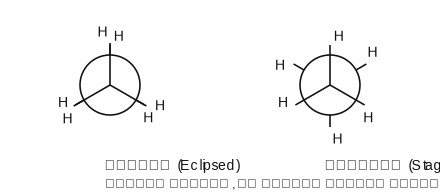
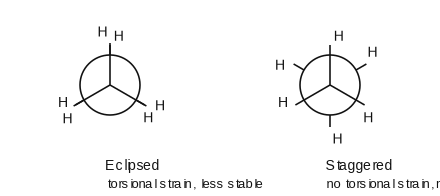
The correct statement regarding the comparison of staggered and eclipsed conformations of ethane, is:
एथेन के सांतरित (staggered) तथा ग्रसित (eclipsed) संरूपणों की तुलना के संबंध में सही कथन है:
  1. AThe staggered conformation of ethane is less stable than eclipsed conformation, because staggered conformation has torsional strain.एथेन का सांतरित संरूपण ग्रसित संरूपण से कम स्थायी है, क्योंकि सांतरित संरूपण में मरोड़ी विकृति (torsional strain) होती है।
  2. BThe eclipsed conformation of ethane is more stable than staggered conformation, because eclipsed conformation has no torsional strain.एथेन का ग्रसित संरूपण सांतरित संरूपण से अधिक स्थायी है, क्योंकि ग्रसित संरूपण में मरोड़ी विकृति नहीं होती।
  3. CThe eclipsed conformation of ethane is more stable than staggered conformation even though the eclipsed conformation has torsional strain.एथेन का ग्रसित संरूपण सांतरित संरूपण से अधिक स्थायी है, यद्यपि ग्रसित संरूपण में मरोड़ी विकृति होती है।
  4. DThe staggered conformation of ethane is more stable than eclipsed conformation, because staggered conformation has no torsional strain.एथेन का सांतरित संरूपण ग्रसित संरूपण से अधिक स्थायी है, क्योंकि सांतरित संरूपण में मरोड़ी विकृति नहीं होती।
Show answer

Concept: Torsional strain is the repulsion between bond pairs of C–H bonds on adjacent carbons; it is maximum when they are eclipsed and minimum when staggered.

  1. Staggered: C–H bonds as far apart as possible (60° dihedral) → no torsional strain → most stable.
  2. Eclipsed: C–H bonds aligned (0°) → maximum torsional strain → least stable (about 12.5 kJ mol−1 higher).
  3. (A), (B), (C) all wrongly make the eclipsed form more stable or give strain to the staggered form.

Short trick: Staggered = "spread out" = stable; eclipsed = "crowded" = strained.

Answer: (D) Staggered is more stable – it has no torsional strain.

अवधारणा: मरोड़ी विकृति, संलग्न कार्बनों के C–H आबंधों के आबंधी युग्मों के बीच प्रतिकर्षण है; ग्रसित होने पर यह अधिकतम और सांतरित होने पर न्यूनतम होती है।

  1. सांतरित: C–H आबंध अधिकतम दूरी पर (60° द्वितल कोण) → मरोड़ी विकृति नहीं → सर्वाधिक स्थायी।
  2. ग्रसित: C–H आबंध एक सीध में (0°) → अधिकतम मरोड़ी विकृति → न्यूनतम स्थायी (लगभग 12.5 kJ mol−1 अधिक ऊर्जा)।
  3. (A), (B), (C) सभी गलत रूप से ग्रसित रूप को अधिक स्थायी बताते हैं या सांतरित रूप में विकृति मानते हैं।

शॉर्ट ट्रिक: सांतरित = "फैला हुआ" = स्थायी; ग्रसित = "भीड़भाड़" = विकृत।

उत्तर: (D) सांतरित अधिक स्थायी है – इसमें मरोड़ी विकृति नहीं होती।

NEET UGChemistryHydrocarbons – conformations of ethaneNEET UG 2016 · 1 May Shift 1 →
Q2967.
The reaction

Can be classified as:
अभिक्रिया

को वर्गीकृत किया जा सकता है:
  1. AWilliamson ether synthesis reactionविलियम्सन ईथर संश्लेषण अभिक्रिया
  2. BAlcohol formation reactionऐल्कोहॉल निर्माण अभिक्रिया
  3. CDehydration reactionनिर्जलन अभिक्रिया
  4. DWilliamson alcohol synthesis reactionविलियम्सन ऐल्कोहॉल संश्लेषण अभिक्रिया
Show answer

Concept: Williamson synthesis: an alkoxide ion (RO−) attacks a primary alkyl halide by SN2 to give an ether R–O–R′.

  1. Cyclopentanol + NaH → sodium cyclopentoxide + H2 (NaH removes the O–H proton).
  2. Cyclopentoxide + CH3I → cyclopentyl methyl ether (methoxycyclopentane) + NaI.
  3. An alcohol is consumed, not formed (B); no water is lost (C); "Williamson alcohol synthesis" does not exist (D).

Short trick: Alkoxide + methyl/1° halide = Williamson ether. Keep the bulky part on the alkoxide side, methyl on the halide side.

Answer: (A) Williamson ether synthesis reaction

अवधारणा: विलियम्सन संश्लेषण: ऐल्कॉक्साइड आयन (RO−) प्राथमिक ऐल्किल हैलाइड पर SN2 आक्रमण कर ईथर R–O–R′ बनाता है।

  1. साइक्लोपेन्टेनॉल + NaH → सोडियम साइक्लोपेन्टॉक्साइड + H2 (NaH, O–H प्रोटॉन हटाता है)।
  2. साइक्लोपेन्टॉक्साइड + CH3I → साइक्लोपेन्टिल मेथिल ईथर (मेथॉक्सीसाइक्लोपेन्टेन) + NaI।
  3. ऐल्कोहॉल उपभुक्त होता है, बनता नहीं (B); जल नहीं निकलता (C); "विलियम्सन ऐल्कोहॉल संश्लेषण" नाम की कोई अभिक्रिया नहीं (D)।

शॉर्ट ट्रिक: ऐल्कॉक्साइड + मेथिल/1° हैलाइड = विलियम्सन ईथर। भारी भाग ऐल्कॉक्साइड की ओर, मेथिल हैलाइड की ओर रखें।

उत्तर: (A) विलियम्सन ईथर संश्लेषण अभिक्रिया

NEET UGChemistryEthers – Williamson synthesisNEET UG 2016 · 1 May Shift 1 →
Q2968.
The product formed by the reaction of an aldehyde with a primary amine is:
ऐल्डिहाइड की प्राथमिक ऐमीन के साथ अभिक्रिया द्वारा बनने वाला उत्पाद है:
  1. ASchiff baseशिफ़ क्षारक (Schiff base)
  2. BKetoneकीटोन
  3. CCarboxylic acidकार्बोक्सिलिक अम्ल
  4. DAromatic acidऐरोमैटिक अम्ल
Show answer

Concept: Ammonia derivatives Z–NH2 add to C=O and then lose water, giving C=N–Z. With a primary amine (Z = R′) the imine formed is called a Schiff base.

  1. RCHO + R′NH2 → RCH=N–R′ + H2O (Schiff base / imine).
  2. No oxidation occurs, so no carboxylic acid; an aldehyde cannot become a ketone here.

Short trick: Aldehyde + 1° amine → Schiff base (C=N–R); + NH2OH → oxime; + NH2NH2 → hydrazone.

Answer: (A) Schiff base

अवधारणा: अमोनिया व्युत्पन्न Z–NH2, C=O पर योग कर फिर जल निकालते हैं और C=N–Z बनाते हैं। प्राथमिक ऐमीन (Z = R′) से बनने वाली इमीन शिफ़ क्षारक कहलाती है।

  1. RCHO + R′NH2 → RCH=N–R′ + H2O (शिफ़ क्षारक / इमीन)।
  2. कोई ऑक्सीकरण नहीं होता, अतः कार्बोक्सिलिक अम्ल नहीं; ऐल्डिहाइड यहाँ कीटोन नहीं बन सकता।

शॉर्ट ट्रिक: ऐल्डिहाइड + 1° ऐमीन → शिफ़ क्षारक (C=N–R); + NH2OH → ऑक्सिम; + NH2NH2 → हाइड्रेज़ोन।

उत्तर: (A) शिफ़ क्षारक

NEET UGChemistryAldehydes – reaction with primary amines (Schiff base)NEET UG 2016 · 1 May Shift 1 →
Q2969.
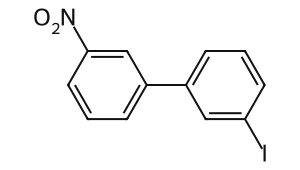
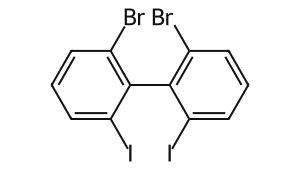
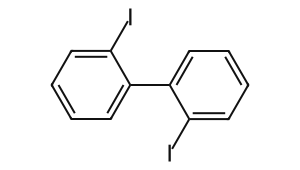
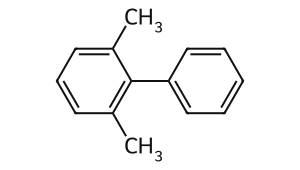
Which of the following biphenyls is optically active?
निम्नलिखित में से कौन-सा बाइफेनिल ध्रुवण घूर्णक (optically active) है?
  1. A
  2. B
  3. C
  4. D
Show answer

Concept: A biphenyl is optically active only if (i) bulky ortho groups stop rotation about the central C–C bond, and (ii) neither ring is symmetric about its own axis (each ring carries two DIFFERENT ortho groups).

  1. (A) Only meta substituents (NO2, I) – no ortho groups, rings rotate freely → inactive.
  2. (B) Each ring has Br and I at the two ortho positions: rotation is blocked and each ring is unsymmetrical → the twisted molecule is chiral (atropisomers) → optically active.
  3. (C) Only one I on each ring – two ortho H atoms are too small to lock rotation well; the molecule interconverts → inactive.
  4. (D) The dimethyl ring has two identical ortho groups (CH3, CH3) and the other ring is plain phenyl → a plane of symmetry exists → inactive.

Short trick: Look for "2 ortho groups on each ring, and different on each ring" – only (B) has Br/I on both rings.

Answer: (B) The 2,2′-dibromo-6,6′-diiodobiphenyl

अवधारणा: बाइफेनिल केवल तभी ध्रुवण घूर्णक होता है जब (i) भारी ऑर्थो समूह केंद्रीय C–C आबंध के परितः घूर्णन रोकें, तथा (ii) कोई भी वलय अपनी अक्ष के सापेक्ष सममित न हो (प्रत्येक वलय पर दो भिन्न ऑर्थो समूह हों)।

  1. (A) केवल मेटा प्रतिस्थापी (NO2, I) – कोई ऑर्थो समूह नहीं, वलय स्वतंत्र रूप से घूमते हैं → अघूर्णक।
  2. (B) प्रत्येक वलय की दोनों ऑर्थो स्थितियों पर Br तथा I हैं: घूर्णन अवरुद्ध है और प्रत्येक वलय असममित है → मुड़ा हुआ अणु किरेल (ऐट्रोपसमावयवी) है → ध्रुवण घूर्णक।
  3. (C) प्रत्येक वलय पर केवल एक I – दो ऑर्थो H परमाणु घूर्णन को रोकने के लिए बहुत छोटे हैं; अणु परस्पर परिवर्तित होता रहता है → अघूर्णक।
  4. (D) डाइमेथिल वलय पर दो समान ऑर्थो समूह (CH3, CH3) हैं और दूसरा वलय साधारण फेनिल है → सममिति तल उपस्थित → अघूर्णक।

शॉर्ट ट्रिक: "प्रत्येक वलय पर 2 ऑर्थो समूह, और वे भिन्न हों" देखिए – केवल (B) में दोनों वलयों पर Br/I है।

उत्तर: (B) 2,2′-डाइब्रोमो-6,6′-डाइआयोडोबाइफेनिल

NEET UGChemistryStereochemistry – optical activity of biphenyls (atropisomerism)NEET UG 2016 · 1 May Shift 1 →
Q2970.
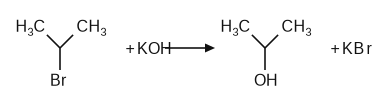
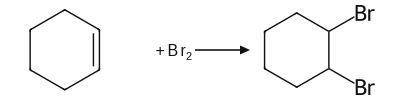
For the following reactions:
a. CH3CH2CH2Br + KOH → CH3CH = CH2 + KBr + H2O
b.
c.
Which of the following statements is correct?
निम्नलिखित अभिक्रियाओं के लिए:
a. CH3CH2CH2Br + KOH → CH3CH = CH2 + KBr + H2O
b.
c.
निम्नलिखित में से कौन-सा कथन सही है?
  1. Aa and b are elimination reactions and c is addition reaction.a तथा b विलोपन अभिक्रियाएँ हैं और c योगज अभिक्रिया है।
  2. Ba is elimination, b is substitution and c is addition reaction.a विलोपन, b प्रतिस्थापन और c योगज अभिक्रिया है।
  3. Ca is elimination, b and c are substitution reactions.a विलोपन है, b तथा c प्रतिस्थापन अभिक्रियाएँ हैं।
  4. Da is substitution, b and c are addition reactions.a प्रतिस्थापन है, b तथा c योगज अभिक्रियाएँ हैं।
Show answer

Concept: Classify by what happens to the substrate: loss of HX to form C=C = elimination; one group replaced by another = substitution; atoms added across C=C = addition.

  1. a: 1-bromopropane loses HBr and gives propene (C=C) → elimination.
  2. b: Br of 2-bromopropane is replaced by OH, giving propan-2-ol → substitution.
  3. c: Br2 adds across the C=C of cyclohexene → 1,2-dibromocyclohexane → addition.
  4. Only (B) matches all three.

Short trick: Product has a new C=C → elimination; same skeleton, X swapped → substitution; C=C disappears → addition.

Answer: (B) a elimination, b substitution, c addition

अवधारणा: क्रियाधार के साथ क्या होता है उसके अनुसार वर्गीकरण: HX निकलकर C=C बनना = विलोपन; एक समूह का दूसरे से प्रतिस्थापित होना = प्रतिस्थापन; C=C पर परमाणुओं का जुड़ना = योगज।

  1. a: 1-ब्रोमोप्रोपेन से HBr निकलकर प्रोपीन (C=C) बनती है → विलोपन।
  2. b: 2-ब्रोमोप्रोपेन का Br, OH द्वारा प्रतिस्थापित होकर प्रोपेन-2-ऑल बनता है → प्रतिस्थापन।
  3. c: साइक्लोहेक्सीन के C=C पर Br2 जुड़ता है → 1,2-डाइब्रोमोसाइक्लोहेक्सेन → योगज।
  4. केवल (B) तीनों से मेल खाता है।

शॉर्ट ट्रिक: उत्पाद में नया C=C → विलोपन; ढाँचा वही, X बदला → प्रतिस्थापन; C=C समाप्त → योगज।

उत्तर: (B) a विलोपन, b प्रतिस्थापन, c योगज

NEET UGChemistryOrganic reactions – substitution, elimination, additionNEET UG 2016 · 1 May Shift 1 →
Q2971.
At 100°C the vapour pressure of a solution of 6.5 g of a solute in 100 g water is 732 mm. If Kb = 0.52, the boiling point of this solution will be:
100°C पर 100 g जल में 6.5 g विलेय के विलयन का वाष्प दाब 732 mm है। यदि Kb = 0.52 है, तो इस विलयन का क्वथनांक होगा:
  1. A101°C
  2. B100°C
  3. C102°C
  4. D103°C
Show answer

Concept: At 100°C pure water has p° = 760 mm. Relative lowering p∘−pp∘≈n2n1 gives the molar mass; then ΔTb = Kbm.

  1. 760−732760=28760=6.5/M100/18 ⇒ M=6.5×18×76028×100≈31.8 g mol−1
  2. Molality m=6.5/31.80.100 kg=2.05 mol kg−1
  3. ΔTb = 0.52 × 2.05 ≈ 1.06 K ≈ 1 K → Tb ≈ 101°C.

Short trick: Shortcut: ΔTb=Kb×100018×Δpp∘=0.52×55.6×28760≈1.06 K – no need to find M.

Answer: (A) 101°C

अवधारणा: 100°C पर शुद्ध जल का p° = 760 mm है। आपेक्षिक अवनमन p∘−pp∘≈n2n1 से मोलर द्रव्यमान मिलता है; फिर ΔTb = Kbm।

  1. 760−732760=28760=6.5/M100/18 ⇒ M=6.5×18×76028×100≈31.8 g mol−1
  2. मोललता m=6.5/31.80.100 kg=2.05 mol kg−1
  3. ΔTb = 0.52 × 2.05 ≈ 1.06 K ≈ 1 K → Tb ≈ 101°C।

शॉर्ट ट्रिक: शॉर्टकट: ΔTb=Kb×100018×Δpp∘=0.52×55.6×28760≈1.06 K – M निकालने की आवश्यकता नहीं।

उत्तर: (A) 101°C

NEET UGChemistrySolutions – relative lowering of vapour pressure and elevation of boiling pointNEET UG 2016 · 1 May Shift 1 →
Q2972.
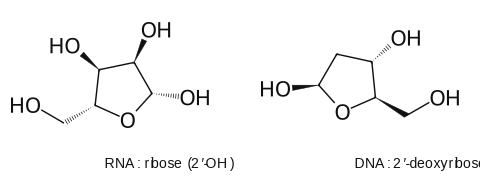
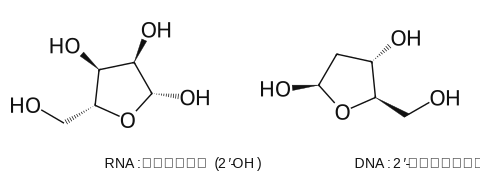
The correct statement regarding RNA and DNA, respectively is:
क्रमशः RNA तथा DNA के संबंध में सही कथन है:
  1. AThe sugar component in RNA is arabinose and the sugar component in DNA is 2’-deoxyribose.RNA में शर्करा घटक ऐरेबिनोस है तथा DNA में शर्करा घटक 2’-डीऑक्सीराइबोस है।
  2. BThe sugar component in RNA is ribose and the sugar component in DNA is 2’-deoxyribose.RNA में शर्करा घटक राइबोस है तथा DNA में शर्करा घटक 2’-डीऑक्सीराइबोस है।
  3. CThe sugar component in RNA is arabinose and the sugar component in DNA is ribose.RNA में शर्करा घटक ऐरेबिनोस है तथा DNA में शर्करा घटक राइबोस है।
  4. DThe sugar component in RNA is 2’-deoxyribose and the sugar component in DNA is arabinose.RNA में शर्करा घटक 2’-डीऑक्सीराइबोस है तथा DNA में शर्करा घटक ऐरेबिनोस है।
Show answer

Concept: Both nucleic acids contain a pentose in the furanose form: β-D-ribose in RNA and β-D-2-deoxyribose (no –OH at C-2′) in DNA – the "D" in DNA means deoxy.

  1. RNA = Ribo-nucleic acid → ribose.
  2. DNA = Deoxyribo-nucleic acid → 2′-deoxyribose.
  3. Arabinose (a C-2 epimer of ribose) is not a sugar of natural nucleic acids → (A), (C), (D) are wrong.

Short trick: The name tells the sugar: Ribo-NA and Deoxyribo-NA.

Answer: (B) RNA – ribose; DNA – 2′-deoxyribose

अवधारणा: दोनों न्यूक्लिक अम्लों में फ्यूरैनोस रूप की पेन्टोस शर्करा होती है: RNA में β-D-राइबोस तथा DNA में β-D-2-डीऑक्सीराइबोस (C-2′ पर –OH नहीं) – DNA में "D" का अर्थ डीऑक्सी है।

  1. RNA = राइबो-न्यूक्लिक अम्ल → राइबोस।
  2. DNA = डीऑक्सीराइबो-न्यूक्लिक अम्ल → 2′-डीऑक्सीराइबोस।
  3. ऐरेबिनोस (राइबोस का C-2 एपिमर) प्राकृतिक न्यूक्लिक अम्लों की शर्करा नहीं है → (A), (C), (D) गलत हैं।

शॉर्ट ट्रिक: नाम ही शर्करा बताता है: राइबो-NA तथा डीऑक्सीराइबो-NA।

उत्तर: (B) RNA – राइबोस; DNA – 2′-डीऑक्सीराइबोस

NEET UGChemistryBiomolecules – sugars in nucleic acidsNEET UG 2016 · 1 May Shift 1 →
Q2973.
The correct statement regarding the basicity of aryl amines is:
ऐरिल ऐमीनों की क्षारकता के संबंध में सही कथन है:
  1. AAryl amines are generally less basic than alkyl amines because the nitrogen lone-pair electrons are delocalized by interaction with the aromatic ring π electron system.ऐरिल ऐमीन सामान्यतः ऐल्किल ऐमीनों से कम क्षारकीय होती हैं क्योंकि नाइट्रोजन के एकाकी युग्म इलेक्ट्रॉन ऐरोमैटिक वलय के π इलेक्ट्रॉन तंत्र के साथ अन्योन्यक्रिया द्वारा विस्थानीकृत हो जाते हैं।
  2. BAryl amines are generally more basic than alkyl amines because the nitrogen lone-pair electrons are not delocalized by interaction with the aromatic ring π electron system.ऐरिल ऐमीन सामान्यतः ऐल्किल ऐमीनों से अधिक क्षारकीय होती हैं क्योंकि नाइट्रोजन के एकाकी युग्म इलेक्ट्रॉन ऐरोमैटिक वलय के π इलेक्ट्रॉन तंत्र के साथ अन्योन्यक्रिया द्वारा विस्थानीकृत नहीं होते।
  3. CAryl amines are generally more basic than alkyl amines because of aryl group.ऐरिल ऐमीन सामान्यतः ऐरिल समूह के कारण ऐल्किल ऐमीनों से अधिक क्षारकीय होती हैं।
  4. DAryl amines are generally more basic than alkyl amines, because the nitrogen atom in aryl amines is sp-hybridized.ऐरिल ऐमीन सामान्यतः ऐल्किल ऐमीनों से अधिक क्षारकीय होती हैं, क्योंकि ऐरिल ऐमीनों में नाइट्रोजन परमाणु sp-संकरित होता है।
Show answer

Concept: Basicity of an amine = availability of the N lone pair to accept a proton.

  1. In aniline the N lone pair is in conjugation with the ring (resonance) → less available → weaker base (pKb 9.4).
  2. In alkyl amines the +I effect of alkyl groups pushes electron density onto N → stronger bases (pKb ≈ 3–4).
  3. (B), (C), (D) all say aryl amines are MORE basic – wrong; also N in aniline is close to sp2, not sp.

Short trick: Lone pair "busy" in resonance → poor base: aniline < NH3 < CH3NH2.

Answer: (A) Aryl amines are less basic due to delocalisation of the N lone pair.

अवधारणा: ऐमीन की क्षारकता = प्रोटॉन ग्रहण करने के लिए N के एकाकी युग्म की उपलब्धता।

  1. ऐनिलीन में N का एकाकी युग्म वलय के साथ संयुग्मन (अनुनाद) में है → कम उपलब्ध → दुर्बल क्षारक (pKb 9.4)।
  2. ऐल्किल ऐमीनों में ऐल्किल समूहों का +I प्रभाव N पर इलेक्ट्रॉन घनत्व बढ़ाता है → प्रबल क्षारक (pKb ≈ 3–4)।
  3. (B), (C), (D) सभी ऐरिल ऐमीनों को अधिक क्षारकीय बताते हैं – गलत; साथ ही ऐनिलीन में N लगभग sp2 है, sp नहीं।

शॉर्ट ट्रिक: एकाकी युग्म अनुनाद में "व्यस्त" → दुर्बल क्षारक: ऐनिलीन < NH3 < CH3NH2।

उत्तर: (A) N एकाकी युग्म के विस्थानीकरण के कारण ऐरिल ऐमीन कम क्षारकीय हैं।

NEET UGChemistryAmines – basicity of aryl aminesNEET UG 2016 · 1 May Shift 1 →
Q2974.
Which one given below is a non-reducing sugar?
नीचे दिए गए में से कौन-सी अनपचायी (non-reducing) शर्करा है?
  1. AMaltoseमाल्टोस
  2. BLactoseलैक्टोस
  3. CGlucoseग्लूकोस
  4. DSucroseसुक्रोस
Show answer

Concept: A sugar is reducing if it has a free hemiacetal/hemiketal (free aldehyde or keto group) that can reduce Tollens'/Fehling's reagent.

  1. Sucrose: glycosidic bond joins C1 of α-D-glucose with C2 of β-D-fructose – both reducing groups are used up → non-reducing.
  2. Maltose (glucose C1–C4 glucose) and lactose (galactose C1–C4 glucose) keep a free C1 → reducing.
  3. Glucose is a free aldose → reducing.

Short trick: Sucrose is the only common disaccharide where the bond is "head-to-head" (C1–C2) → non-reducing.

Answer: (D) Sucrose

अवधारणा: शर्करा अपचायी होती है यदि उसमें मुक्त हेमिऐसीटैल/हेमिकीटैल (मुक्त ऐल्डिहाइड या कीटो समूह) हो जो टॉलेन/फेलिंग अभिकर्मक को अपचयित कर सके।

  1. सुक्रोस: ग्लाइकोसाइडी आबंध α-D-ग्लूकोस के C1 को β-D-फ्रक्टोस के C2 से जोड़ता है – दोनों अपचायी समूह प्रयुक्त हो जाते हैं → अनपचायी।
  2. माल्टोस (ग्लूकोस C1–C4 ग्लूकोस) तथा लैक्टोस (गैलेक्टोस C1–C4 ग्लूकोस) में मुक्त C1 बचा रहता है → अपचायी।
  3. ग्लूकोस एक मुक्त ऐल्डोस है → अपचायी।

शॉर्ट ट्रिक: सुक्रोस ही वह सामान्य डाइसैकेराइड है जिसमें आबंध "शीर्ष-से-शीर्ष" (C1–C2) है → अनपचायी।

उत्तर: (D) सुक्रोस

NEET UGChemistryBiomolecules – reducing and non-reducing sugarsNEET UG 2016 · 1 May Shift 1 →
Q2975.
The pair of electron in the given carbanion, CH3C ≡ C⊖ is present in which of the following orbitals?
दिए गए कार्बऋणायन, CH3C ≡ C⊖ में इलेक्ट्रॉन युग्म निम्नलिखित में से किस कक्षक में उपस्थित है?
  1. A2p
  2. Bsp3
  3. Csp2
  4. Dsp
Show answer

Concept: Hybridisation = number of σ bonds + lone pairs on the atom (2 → sp, 3 → sp2, 4 → sp3).

  1. The terminal carbon in CH3–C≡C:− has 1 σ bond (to C) + 1 lone pair = 2 → sp; its two π bonds use the unhybridised 2p orbitals.
  2. So the lone pair sits in an sp hybrid orbital, pointing along the C≡C axis (50 % s-character – which is why the acetylide ion is relatively stable).
  3. 2p orbitals are busy in π bonding; sp3/sp2 would need 4 or 3 σ-type domains.

Short trick: Triple-bonded carbon is always sp – the lone pair just replaces the H of the terminal alkyne.

Answer: (D) sp

अवधारणा: संकरण = परमाणु पर σ आबंधों + एकाकी युग्मों की संख्या (2 → sp, 3 → sp2, 4 → sp3)।

  1. CH3–C≡C:− के सीमांत कार्बन पर 1 σ आबंध (C से) + 1 एकाकी युग्म = 2 → sp; इसके दो π आबंध असंकरित 2p कक्षकों का उपयोग करते हैं।
  2. अतः एकाकी युग्म sp संकर कक्षक में रहता है, जो C≡C अक्ष के अनुदिश है (50 % s-लक्षण – इसीलिए ऐसीटिलाइड आयन अपेक्षाकृत स्थायी है)।
  3. 2p कक्षक π आबंधन में व्यस्त हैं; sp3/sp2 के लिए 4 या 3 σ-प्रकार के क्षेत्र चाहिए।

शॉर्ट ट्रिक: त्रिआबंधित कार्बन सदैव sp होता है – एकाकी युग्म बस सीमांत ऐल्काइन के H का स्थान ले लेता है।

उत्तर: (D) sp

NEET UGChemistryOrganic chemistry basics – hybridisation in carbanionsNEET UG 2016 · 1 May Shift 1 →
Q2976.
Gause's principle of competitive exclusion states that:
गॉस (Gause) के प्रतिस्पर्धी अपवर्जन सिद्धांत के अनुसार:
  1. AMore abundant species will exclude the less abundant species through competitionअधिक बहुतायत वाली जाति प्रतिस्पर्धा द्वारा कम बहुतायत वाली जाति को बाहर कर देगी
  2. BCompetition for the same resources excludes species having different food preferencesसमान संसाधनों के लिए प्रतिस्पर्धा भिन्न आहार-वरीयता वाली जातियों को बाहर कर देती है
  3. CNo two species can occupy the same niche indefinitely for the same limiting resourcesकोई भी दो जातियाँ समान सीमाकारी संसाधनों के लिए एक ही निकेत (niche) में अनिश्चित काल तक नहीं रह सकतीं
  4. DLarger organisms exclude smaller ones through competitionबड़े जीव प्रतिस्पर्धा द्वारा छोटे जीवों को बाहर कर देते हैं
Show answer

Concept: Gause's competitive exclusion principle (NCERT, Organisms and Populations): two closely related species competing for the same limiting resources cannot co-exist indefinitely – the competitively inferior one is eventually eliminated.

  1. Key words: same niche, same limiting resource, cannot co-exist indefinitely → option (C).
  2. (A) The principle is about competitive superiority, not abundance.
  3. (B) Species with different food preferences do not compete for the same resource – they can co-exist.
  4. (D) Body size is not the criterion; the better competitor (not the larger) wins.

Short trick: “One niche – one species.” Remember the exception: resource partitioning (MacArthur’s warblers) lets competitors co-exist.

Answer: (C) No two species can occupy the same niche indefinitely for the same limiting resources

अवधारणा: गॉस का प्रतिस्पर्धी अपवर्जन सिद्धांत (NCERT, जीव और समष्टियाँ): समान सीमाकारी संसाधनों के लिए प्रतिस्पर्धा करने वाली दो निकट-संबंधी जातियाँ अनिश्चित काल तक साथ नहीं रह सकतीं – प्रतिस्पर्धा में कमजोर जाति अंततः समाप्त हो जाती है।

  1. मुख्य शब्द: एक ही निकेत, समान सीमाकारी संसाधन, अनिश्चित काल तक सह-अस्तित्व नहीं → विकल्प (C)।
  2. (A) सिद्धांत प्रतिस्पर्धी श्रेष्ठता पर आधारित है, बहुतायत पर नहीं।
  3. (B) भिन्न आहार-वरीयता वाली जातियाँ एक ही संसाधन के लिए प्रतिस्पर्धा नहीं करतीं – वे साथ रह सकती हैं।
  4. (D) शरीर का आकार मापदंड नहीं है; बेहतर प्रतिस्पर्धी (न कि बड़ा) जीतता है।

शॉर्ट ट्रिक: “एक निकेत – एक जाति।” अपवाद याद रखें: संसाधन विभाजन (मैकआर्थर की वार्बलर पक्षी) से प्रतिस्पर्धी साथ रह सकते हैं।

उत्तर: (C) कोई भी दो जातियाँ समान सीमाकारी संसाधनों के लिए एक ही निकेत में अनिश्चित काल तक नहीं रह सकतीं

NEET UGBiologyOrganisms and populations – competitionNEET UG 2016 · 1 May Shift 1 →
Q2977.
The two polypeptides of human insulin are linked together by:
मानव इंसुलिन की दो पॉलिपेप्टाइड शृंखलाएँ किसके द्वारा आपस में जुड़ी होती हैं?
  1. AHydrogen bondsहाइड्रोजन आबंध
  2. BPhosphodiester bondफॉस्फोडाइएस्टर आबंध
  3. CCovalent bondसहसंयोजी आबंध
  4. DDisulphide bridgesडाइसल्फाइड सेतु (bridges)
Show answer

Concept: NCERT (Biotechnology and its Applications): mature insulin has two short polypeptide chains, A and B, linked together by disulphide bridges (–S–S– between cysteine residues).

  1. Proinsulin → C-peptide removed → A-chain + B-chain held by disulphide bridges → (D).
  2. (A) Hydrogen bonds stabilise secondary structure, they do not join the A and B chains.
  3. (B) Phosphodiester bonds link nucleotides in DNA/RNA, not amino-acid chains.
  4. (C) A disulphide bond is a kind of covalent bond, but the specific, NCERT answer asked for is “disulphide bridges”.

Short trick: Insulin = A + B chains, S–S bridges; Eli Lilly (1983) made the A and B chains separately in E. coli and joined them by disulphide bonds.

Answer: (D) Disulphide bridges

अवधारणा: NCERT (जैव प्रौद्योगिकी एवं उसके उपयोग): परिपक्व इंसुलिन में दो छोटी पॉलिपेप्टाइड शृंखलाएँ A और B होती हैं, जो डाइसल्फाइड सेतुओं (सिस्टीन अवशेषों के बीच –S–S–) द्वारा जुड़ी रहती हैं।

  1. प्रोइंसुलिन → C-पेप्टाइड हटाया जाता है → A-शृंखला + B-शृंखला डाइसल्फाइड सेतुओं से जुड़ी → (D)।
  2. (A) हाइड्रोजन आबंध द्वितीयक संरचना को स्थिर करते हैं, A और B शृंखलाओं को नहीं जोड़ते।
  3. (B) फॉस्फोडाइएस्टर आबंध DNA/RNA में न्यूक्लियोटाइडों को जोड़ते हैं, अमीनो अम्ल शृंखलाओं को नहीं।
  4. (C) डाइसल्फाइड आबंध एक प्रकार का सहसंयोजी आबंध है, पर पूछा गया विशिष्ट (NCERT) उत्तर “डाइसल्फाइड सेतु” है।

शॉर्ट ट्रिक: इंसुलिन = A + B शृंखला, S–S सेतु; एली लिली (1983) ने A व B शृंखलाएँ E. coli में अलग-अलग बनाकर डाइसल्फाइड आबंधों से जोड़ीं।

उत्तर: (D) डाइसल्फाइड सेतु

NEET UGBiologyBiotechnology – recombinant insulinNEET UG 2016 · 1 May Shift 1 →
Q2978.
The coconut water from tender coconut represents:
कच्चे (कोमल) नारियल का नारियल-पानी किसे निरूपित करता है?
  1. AEndocarpअंतःफलभित्ति (Endocarp)
  2. BFleshy mesocarpगूदेदार मध्यफलभित्ति (Mesocarp)
  3. CFree nuclear proembryoमुक्त केंद्रकी प्राक्भ्रूण (proembryo)
  4. DFree nuclear endospermमुक्त केंद्रकी भ्रूणपोष (endosperm)
Show answer

Concept: NCERT: the coconut water of tender coconut is free-nuclear endosperm (thousands of nuclei without walls); the surrounding white kernel is cellular endosperm.

  1. PEN undergoes repeated free-nuclear divisions → liquid, free-nuclear endosperm = coconut water → (D).
  2. (A) Endocarp is the hard shell.
  3. (B) Mesocarp is the fibrous husk (coir), not fleshy in coconut.
  4. (C) The proembryo is a tiny cellular structure, not the liquid.

Short trick: Coconut: water = free-nuclear, white kernel = cellular endosperm; shell = endocarp, coir = mesocarp.

Answer: (D) Free nuclear endosperm

अवधारणा: NCERT: कच्चे नारियल का पानी मुक्त-केंद्रकी भ्रूणपोष है (हजारों केंद्रक, बिना कोशिका भित्ति के); चारों ओर का सफेद गूदा (गिरी) कोशिकीय भ्रूणपोष है।

  1. PEN में बार-बार मुक्त-केंद्रकी विभाजन → द्रव, मुक्त-केंद्रकी भ्रूणपोष = नारियल-पानी → (D)।
  2. (A) अंतःफलभित्ति कठोर खोल है।
  3. (B) मध्यफलभित्ति रेशेदार छिलका (जटा/coir) है, नारियल में गूदेदार नहीं।
  4. (C) प्राक्भ्रूण एक छोटी कोशिकीय संरचना है, द्रव नहीं।

शॉर्ट ट्रिक: नारियल: पानी = मुक्त-केंद्रकी, सफेद गिरी = कोशिकीय भ्रूणपोष; खोल = अंतःफलभित्ति, जटा = मध्यफलभित्ति।

उत्तर: (D) मुक्त केंद्रकी भ्रूणपोष

NEET UGBiologySexual reproduction in flowering plants – endospermNEET UG 2016 · 1 May Shift 1 →
Q2979.
Which of the following statements is wrong for viroids?
वाइरॉइड के लिए निम्नलिखित में से कौन-सा कथन गलत है?
  1. AThey lack a protein coatइनमें प्रोटीन आवरण नहीं होता
  2. BThey are smaller than virusesये विषाणुओं से छोटे होते हैं
  3. CThey cause infectionsये संक्रमण उत्पन्न करते हैं
  4. DTheir RNA is of high molecular weightइनका RNA उच्च अणुभार का होता है
Show answer

Concept: NCERT: viroids (T.O. Diener, 1971; potato spindle tuber disease) are infectious agents smaller than viruses, consisting of free RNA without a protein coat; the RNA is of low molecular weight.

  1. (A) True – no protein coat (capsid).
  2. (B) True – smaller than viruses.
  3. (C) True – they cause plant diseases such as potato spindle tuber.
  4. (D) Wrong – their RNA is of low molecular weight → answer.

Short trick: Viroid = “naked, small, low-MW RNA”; Prion = protein only (no nucleic acid).

Answer: (D) Their RNA is of high molecular weight

अवधारणा: NCERT: वाइरॉइड (टी.ओ. डाइनर, 1971; आलू का स्पिंडल ट्यूबर रोग) विषाणुओं से छोटे संक्रामक कारक हैं, जिनमें बिना प्रोटीन आवरण का मुक्त RNA होता है; यह RNA निम्न अणुभार का होता है।

  1. (A) सही – प्रोटीन आवरण (कैप्सिड) नहीं होता।
  2. (B) सही – विषाणुओं से छोटे होते हैं।
  3. (C) सही – ये आलू स्पिंडल ट्यूबर जैसे पादप रोग उत्पन्न करते हैं।
  4. (D) गलत – इनका RNA निम्न अणुभार का होता है → उत्तर।

शॉर्ट ट्रिक: वाइरॉइड = “नग्न, छोटा, निम्न-अणुभार RNA”; प्रिऑन = केवल प्रोटीन (न्यूक्लिक अम्ल नहीं)।

उत्तर: (D) इनका RNA उच्च अणुभार का होता है

NEET UGBiologyBiological classification – viroidsNEET UG 2016 · 1 May Shift 1 →
Q2980.
Which of the following features is not present in the Phylum – Arthropoda?
निम्नलिखित में से कौन-सा लक्षण संघ – आर्थ्रोपोडा में नहीं पाया जाता?
  1. AChitinous exoskeletonकाइटिनी बाह्यकंकाल
  2. BMetameric segmentationविखंडीय (मेटामेरिक) खंडीभवन
  3. CParapodiaपैरापोडिया (पार्श्वपाद)
  4. DJointed appendagesसंधियुक्त उपांग
Show answer

Concept: NCERT: Arthropods have a chitinous exoskeleton, jointed appendages and a segmented body. Parapodia are lateral appendages of aquatic annelids (e.g. Nereis) used in swimming.

  1. (A) Present – chitinous cuticle/exoskeleton.
  2. (B) Present – body is metamerically segmented (head, thorax, abdomen).
  3. (C) Absent – parapodia belong to Annelida → answer.
  4. (D) Present – “arthro-poda” literally means jointed feet.

Short trick: Parapodia → Nereis (Annelida); Arthropoda = jointed legs + chitin.

Answer: (C) Parapodia

अवधारणा: NCERT: संधिपादों में काइटिनी बाह्यकंकाल, संधियुक्त उपांग और खंडित शरीर होता है। पैरापोडिया जलीय ऐनेलिडों (जैसे Nereis) के पार्श्व उपांग हैं जो तैरने में सहायक हैं।

  1. (A) उपस्थित – काइटिनी क्यूटिकल/बाह्यकंकाल।
  2. (B) उपस्थित – शरीर विखंडीय रूप से खंडित (सिर, वक्ष, उदर)।
  3. (C) अनुपस्थित – पैरापोडिया ऐनेलिडा का लक्षण है → उत्तर।
  4. (D) उपस्थित – “आर्थ्रो-पोडा” का अर्थ ही है संधियुक्त पाद।

शॉर्ट ट्रिक: पैरापोडिया → नेरीस (ऐनेलिडा); आर्थ्रोपोडा = संधियुक्त पाद + काइटिन।

उत्तर: (C) पैरापोडिया

NEET UGBiologyAnimal kingdom – ArthropodaNEET UG 2016 · 1 May Shift 1 →