Question bank

Q&A: practice questions with answers

Search questions on any topic. Filter by exam category, exam, subject and topic, try the question, then open the answer and explanation.

Courses – airGurukul

53,050 questions in the question bank.

Q3061.
Stems modified into flat green organs performing the functions of leaves are known as:
पत्तियों का कार्य करने वाले चपटे हरे अंगों में रूपान्तरित तने कहलाते हैं:
  1. ACladodesक्लैडोड
  2. BPhyllodesपर्णाभवृन्त (Phyllodes)
  3. CPhyllocladesपर्णाभ स्तम्भ (Phylloclades)
  4. DScalesशल्क
Show answer

Concept: NCERT: "Some plants of arid regions modify their stems into flattened (Opuntia) or fleshy cylindrical (Euphorbia) structures. They contain chlorophyll and carry out photosynthesis" – phylloclades.

  1. (C) Phylloclades – flat green stems of many internodes (Opuntia, Euphorbia). Correct, as per NCERT term.
  2. (A) Cladodes – phylloclades of only one (or two) internode (e.g. Asparagus); a special type, not the general term.
  3. (B) Phyllodes – flattened green petioles (Australian Acacia) – leaf, not stem.
  4. (D) Scales – small, dry, non-green leaves (onion, ginger).

Short trick: Phylloclade = flat stem (klados = branch); Phyllode = flat petiole.

Answer: (C) Phylloclades

अवधारणा: NCERT: "शुष्क क्षेत्रों के कुछ पौधों के तने चपटे (Opuntia) या गूदेदार बेलनाकार (Euphorbia) संरचनाओं में रूपान्तरित हो जाते हैं। इनमें क्लोरोफिल होता है और ये प्रकाश-संश्लेषण करते हैं" – पर्णाभ स्तम्भ।

  1. (C) पर्णाभ स्तम्भ – अनेक पर्वों वाले चपटे हरे तने (Opuntia, Euphorbia)। NCERT शब्द के अनुसार सही।
  2. (A) क्लैडोड – केवल एक (या दो) पर्व वाले पर्णाभ स्तम्भ (जैसे Asparagus); एक विशेष प्रकार, सामान्य शब्द नहीं।
  3. (B) पर्णाभवृन्त – चपटे हरे पर्णवृन्त (ऑस्ट्रेलियाई Acacia) – पत्ती, तना नहीं।
  4. (D) शल्क – छोटी, शुष्क, अहरित पत्तियाँ (प्याज़, अदरक)।

शॉर्ट ट्रिक: Phylloclade = चपटा तना (klados = शाखा); Phyllode = चपटा पर्णवृन्त।

उत्तर: (C) पर्णाभ स्तम्भ
NEET UGBiologyMorphology of flowering plants – phyllocladeNEET UG 2016 · 1 May Shift 1 →
Q3062.
The primitive prokaryotes responsible for the production of biogas from the dung of ruminant animals, include the:
जुगाली करने वाले पशुओं के गोबर से बायोगैस के उत्पादन के लिए उत्तरदायी आदिम प्रोकैरियोट में सम्मिलित हैं:
  1. AHalophilesलवणरागी (Halophiles)
  2. BThermoacidophilesतापअम्लरागी (Thermoacidophiles)
  3. CMethanogensमेथेनोजन (Methanogens)
  4. DEubacteriaसुजीवाणु (Eubacteria)
Show answer

Concept: Methanogens (e.g. Methanobacterium) are archaebacteria living anaerobically in the rumen and in sludge; they produce methane, the main component of biogas.

  1. (C) Methanogens – correct.
  2. (A) Halophiles – archaebacteria of extremely salty areas; no methane.
  3. (B) Thermoacidophiles – archaebacteria of hot acidic springs.
  4. (D) Eubacteria – "true bacteria", not the primitive archaebacteria that make methane.

Short trick: Archaebacteria trio: Halo (salt), Thermo-acido (hot springs), Methano (marshy/rumen → gobar gas).

Answer: (C) Methanogens

अवधारणा: मेथेनोजन (जैसे Methanobacterium) आद्यजीवाणु हैं जो रूमेन और पंक में अवायवीय रूप से रहते हैं; ये मेथेन बनाते हैं, जो बायोगैस का मुख्य घटक है।

  1. (C) मेथेनोजन – सही।
  2. (A) लवणरागी – अत्यधिक लवणीय क्षेत्रों के आद्यजीवाणु; मेथेन नहीं बनाते।
  3. (B) तापअम्लरागी – गर्म अम्लीय झरनों के आद्यजीवाणु।
  4. (D) सुजीवाणु – "वास्तविक जीवाणु", मेथेन बनाने वाले आदिम आद्यजीवाणु नहीं।

शॉर्ट ट्रिक: आद्यजीवाणु त्रयी: हैलो (लवण), थर्मो-एसिडो (गर्म झरने), मेथेनो (दलदल/रूमेन → गोबर गैस)।

उत्तर: (C) मेथेनोजन

NEET UGBiologyBiological classification / microbes – methanogens and biogasNEET UG 2016 · 1 May Shift 1 →
Q3063.
A river with an inflow of domestic sewage rich in organic waste may result in:
कार्बनिक अपशिष्ट से भरपूर घरेलू वाहित मल के अन्तर्वाह वाली नदी का परिणाम हो सकता है:
  1. ADrying of the river very soon due to algal bloom.शैवाल प्रस्फुटन के कारण नदी का बहुत शीघ्र सूख जाना।
  2. BIncreased population of aquatic food web organisms.जलीय खाद्य जाल के जीवों की समष्टि में वृद्धि।
  3. CAn increased production of fish due to biodegradable nutrients.जैवनिम्नीकरणीय पोषकों के कारण मछली उत्पादन में वृद्धि।
  4. DDeath of fish due to lack of oxygen.ऑक्सीजन की कमी से मछलियों की मृत्यु।
Show answer

Concept: Organic sewage raises BOD: microbes decomposing it consume dissolved oxygen (DO) sharply, so fish and other aquatic animals die.

  1. (D) Correct – DO falls → fish mortality.
  2. (A) Algal bloom deteriorates water quality but does not dry a river.
  3. (B) Food-web organisms (other than decomposers) decline, not increase, because of low oxygen.
  4. (C) Fish production falls, not rises.

Short trick: More sewage → more BOD → less DO → fish die. High BOD = high pollution.

Answer: (D) Death of fish due to lack of oxygen.

अवधारणा: कार्बनिक वाहित मल BOD बढ़ाता है: इसका अपघटन करने वाले सूक्ष्मजीव घुली ऑक्सीजन (DO) का तीव्र उपभोग करते हैं, अतः मछलियाँ और अन्य जलीय प्राणी मर जाते हैं।

  1. (D) सही – DO घटती है → मछलियों की मृत्यु।
  2. (A) शैवाल प्रस्फुटन जल गुणवत्ता बिगाड़ता है पर नदी को सुखाता नहीं।
  3. (B) ऑक्सीजन कम होने से खाद्य जाल के जीव (अपघटकों को छोड़कर) घटते हैं, बढ़ते नहीं।
  4. (C) मछली उत्पादन घटता है, बढ़ता नहीं।

शॉर्ट ट्रिक: अधिक वाहित मल → अधिक BOD → कम DO → मछलियाँ मरती हैं। उच्च BOD = उच्च प्रदूषण।

उत्तर: (D) ऑक्सीजन की कमी से मछलियों की मृत्यु।

NEET UGBiologyEnvironmental issues / microbes – sewage and BODNEET UG 2016 · 1 May Shift 1 →
Q3064.
A cell at telophase stage is observed by a student in a plant brought from the field. He tells his teacher that this cell is not like other cells at telophase stage. There is no formation of cell plate and thus the cell is containing more number of chromosomes as compared to other dividing cells. This would result in:
खेत से लाए गए एक पौधे में एक छात्र अन्त्यावस्था (telophase) की एक कोशिका देखता है। वह अपने शिक्षक को बताता है कि यह कोशिका अन्त्यावस्था की अन्य कोशिकाओं जैसी नहीं है। इसमें कोशिका पट्टिका का निर्माण नहीं हुआ है और इस कारण इस कोशिका में अन्य विभाजित कोशिकाओं की तुलना में अधिक गुणसूत्र हैं। इसका परिणाम होगा:
  1. AAneuploidyअसुगुणिता (Aneuploidy)
  2. BPolyploidyबहुगुणिता (Polyploidy)
  3. CSomaclonal variationकायक्लोनी विभिन्नता
  4. DPolytenyबहुपट्टिता (Polyteny)
Show answer

Concept: If chromosomes have separated at anaphase but cytokinesis (cell-plate formation) fails, both complete sets stay in one cell → the whole chromosome set is doubled (2n → 4n) = polyploidy.

  1. (B) Polyploidy – increase in whole sets of chromosomes. Correct.
  2. (A) Aneuploidy – gain/loss of one or a few chromosomes (non-disjunction), not of whole sets.
  3. (C) Somaclonal variation – genetic variation among plants regenerated from tissue culture.
  4. (D) Polyteny – repeated DNA replication without separation of chromatids (giant salivary-gland chromosomes of Drosophila), no change in chromosome number.

Short trick: Failure of cytokinesis = whole-set doubling = polyploidy (colchicine works the same way by blocking spindle).

Answer: (B) Polyploidy

अवधारणा: यदि पश्चावस्था में गुणसूत्र पृथक हो गए हों पर कोशिकाद्रव्य विभाजन (कोशिका पट्टिका निर्माण) विफल हो जाए, तो दोनों पूर्ण समुच्चय एक ही कोशिका में रह जाते हैं → पूरा गुणसूत्र समुच्चय दोगुना (2n → 4n) = बहुगुणिता।

  1. (B) बहुगुणिता – गुणसूत्रों के पूर्ण समुच्चयों में वृद्धि। सही।
  2. (A) असुगुणिता – एक या कुछ गुणसूत्रों की वृद्धि/कमी (अवियोजन), पूर्ण समुच्चय नहीं।
  3. (C) कायक्लोनी विभिन्नता – ऊतक संवर्धन से पुनर्जनित पौधों में आनुवंशिक विभिन्नता।
  4. (D) बहुपट्टिता – अर्धगुणसूत्रों के पृथक हुए बिना बार-बार DNA प्रतिकृतियन (Drosophila की लार-ग्रन्थि के विशाल गुणसूत्र), गुणसूत्र संख्या में परिवर्तन नहीं।

शॉर्ट ट्रिक: कोशिकाद्रव्य विभाजन की विफलता = पूर्ण समुच्चय दोगुना = बहुगुणिता (कॉल्चिसीन भी तर्कु रोककर यही करता है)।

उत्तर: (B) बहुगुणिता

NEET UGBiologyPrinciples of inheritance / cell division – polyploidyNEET UG 2016 · 1 May Shift 1 →
Q3065.
A typical fat molecules is made up of:
एक प्रारूपिक वसा अणु किससे बना होता है?
  1. AThree glycerol molecules and one fatty acid moleculesतीन ग्लिसरॉल अणु और एक वसा अम्ल अणु
  2. BOne glycerol and three fatty acid moleculesएक ग्लिसरॉल और तीन वसा अम्ल अणु
  3. COne glycerol and one fatty acid moleculeएक ग्लिसरॉल और एक वसा अम्ल अणु
  4. DThree glycerol and three fatty acid moleculesतीन ग्लिसरॉल और तीन वसा अम्ल अणु
Show answer

Concept: A fat (neutral fat) is a triglyceride: glycerol (trihydroxy propane) has three –OH groups, each esterified with one fatty acid.

  1. 1 glycerol + 3 fatty acids → triglyceride + 3 H2O. Hence (B).
  2. (C) one glycerol + one fatty acid = monoglyceride, not a typical fat.
  3. (A), (D) – a fat never contains three glycerol molecules.

Short trick: "Tri-glyceride" = TRI fatty acids on one glycerol backbone (an "E" shape).

Answer: (B) One glycerol and three fatty acid molecules

अवधारणा: वसा (उदासीन वसा) एक ट्राइग्लिसराइड है: ग्लिसरॉल (ट्राइहाइड्रॉक्सी प्रोपेन) में तीन –OH समूह होते हैं, प्रत्येक एक वसा अम्ल से एस्टरीकृत।

  1. 1 ग्लिसरॉल + 3 वसा अम्ल → ट्राइग्लिसराइड + 3 H2O। अतः (B)।
  2. (C) एक ग्लिसरॉल + एक वसा अम्ल = मोनोग्लिसराइड, प्रारूपिक वसा नहीं।
  3. (A), (D) – वसा में कभी तीन ग्लिसरॉल अणु नहीं होते।

शॉर्ट ट्रिक: "ट्राइ-ग्लिसराइड" = एक ग्लिसरॉल आधार पर तीन वसा अम्ल ("E" आकार)।

उत्तर: (B) एक ग्लिसरॉल और तीन वसा अम्ल अणु

NEET UGBiologyBiomolecules – lipids (triglycerides)NEET UG 2016 · 1 May Shift 1 →
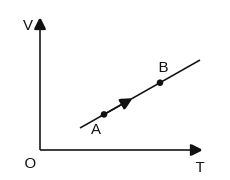
Q3066.
The volume (V) of a monatomic gas varies with its temperature (T), as shown in the graph. The ratio of work done by the gas, to the heat absorbed by it, when it undergoes a change from state A to state B, is
एक एकपरमाणुक गैस का आयतन (V) उसके ताप (T) के साथ ग्राफ में दर्शाए अनुसार परिवर्तित होता है। अवस्था A से अवस्था B में परिवर्तन के दौरान गैस द्वारा किए गए कार्य तथा उसके द्वारा अवशोषित ऊष्मा का अनुपात है
  1. A13
  2. B23
  3. C25
  4. D27
Show answer

Concept: A straight V–T line through the origin means V∝T, i.e. pressure is constant (isobaric). Then W=nRΔT and Q=nCpΔT.

  1. Monatomic gas: Cp=52R.
  2. W=PΔV=nRΔT
  3. Q=n⋅52RΔT
  4. WQ=nRΔT52nRΔT=25

Short trick: For an isobaric process WQ=RCp=1−1γ; for monatomic γ=53 gives 25.

Answer: (C) 25

अवधारणा: मूल बिंदु से गुजरने वाली सीधी V–T रेखा का अर्थ है V∝T, अर्थात दाब नियत है (समदाबी प्रक्रम)। तब W=nRΔT तथा Q=nCpΔT।

  1. एकपरमाणुक गैस के लिए: Cp=52R।
  2. W=PΔV=nRΔT
  3. Q=n⋅52RΔT
  4. WQ=nRΔT52nRΔT=25

शॉर्ट ट्रिक: समदाबी प्रक्रम में WQ=RCp=1−1γ; एकपरमाणुक के लिए γ=53 से 25।

उत्तर: (C) 25

NEET UGPhysicsThermodynamics – isobaric processNEET UG 2018 · 6 May Shift 1 →
Q3067.
The fundamental frequency in an open organ pipe is equal to the third harmonic of a closed organ pipe. If the length of the closed organ pipe is 20 cm, the length of the open organ pipe is
एक खुले ऑर्गन पाइप की मूल आवृत्ति, एक बंद ऑर्गन पाइप के तृतीय हार्मोनिक के बराबर है। यदि बंद ऑर्गन पाइप की लंबाई 20 cm है, तो खुले ऑर्गन पाइप की लंबाई है
  1. A12.5 cm
  2. B8 cm
  3. C13.2 cm
  4. D16 cm
Show answer

Concept: Closed pipe: fn=nv4L (n odd). Open pipe fundamental: f1=v2L′.

  1. Third harmonic of closed pipe =3v4L=3v4×20
  2. Equate: v2L′=3v80
  3. L′=806=13.33 cm ≈ 13.2 cm (nearest option)

Short trick: L′=2L3 directly (open fundamental = closed 3rd harmonic) =403 cm.

Answer: (C) 13.2 cm

अवधारणा: बंद पाइप: fn=nv4L (n विषम)। खुले पाइप की मूल आवृत्ति: f1=v2L′।

  1. बंद पाइप का तृतीय हार्मोनिक =3v4L=3v4×20
  2. बराबर रखने पर: v2L′=3v80
  3. L′=806=13.33 cm ≈ 13.2 cm (निकटतम विकल्प)

शॉर्ट ट्रिक: सीधे L′=2L3 (खुले का मूल = बंद का तृतीय हार्मोनिक) =403 cm।

उत्तर: (C) 13.2 cm

NEET UGPhysicsWaves – organ pipesNEET UG 2018 · 6 May Shift 1 →
Q3068.
At what temperature will the rms speed of oxygen molecules become just sufficient for escaping from the Earth's atmosphere?
(Given :
Mass of oxygen molecule (m) = 2.76×10⁻²⁶ kg
Boltzmann's constant kB=1.38×10⁻²³ J K−1)
किस ताप पर ऑक्सीजन अणुओं की वर्ग-माध्य-मूल (rms) चाल पृथ्वी के वायुमंडल से पलायन करने के लिए ठीक पर्याप्त हो जाएगी?
(दिया है :
ऑक्सीजन अणु का द्रव्यमान (m) = 2.76×10⁻²⁶ kg
बोल्ट्ज़मान नियतांक kB=1.38×10⁻²³ J K−1)
  1. A5.016×104 K
  2. B8.360×104 K
  3. C2.508×104 K
  4. D1.254×104 K
Show answer

Concept: vrms=3kBTm; set it equal to the escape speed of Earth, ve=11.2 km/s.

  1. T=mve23kB
  2. =2.76×10−26×(1.12×104)23×1.38×10−23
  3. =2.76×1.2544×10−184.14×10−23=0.8363×10⁵
  4. T≈8.36×10⁴ K

Short trick: m3kB=2.764.14×10−3=23×10−3, so T=23×10−3×1.2544×108≈8.36×10⁴ K.

Answer: (B) 8.360×10⁴ K

अवधारणा: vrms=3kBTm; इसे पृथ्वी की पलायन चाल ve=11.2 km/s के बराबर रखें।

  1. T=mve23kB
  2. =2.76×10−26×(1.12×104)23×1.38×10−23
  3. =2.76×1.2544×10−184.14×10−23=0.8363×10⁵
  4. T≈8.36×10⁴ K

शॉर्ट ट्रिक: m3kB=2.764.14×10−3=23×10−3, अतः T=23×10−3×1.2544×108≈8.36×10⁴ K।

उत्तर: (B) 8.360×10⁴ K

NEET UGPhysicsKinetic theory – rms speed and escape speedNEET UG 2018 · 6 May Shift 1 →
Q3069.
The efficiency of an ideal heat engine working between the freezing point and boiling point of water, is
जल के हिमांक तथा क्वथनांक के बीच कार्यरत एक आदर्श ऊष्मा इंजन की दक्षता है
  1. A6.25%
  2. B20%
  3. C26.8%
  4. D12.5%
Show answer

Concept: Ideal (Carnot) engine: η=1−T2T1 with temperatures in kelvin.

  1. T1=373 K (source), T2=273 K (sink)
  2. η=1−273373=100373
  3. η=0.268=26.8%

Short trick: η=ΔTThot=100373 – slightly more than 14, so only 26.8% fits.

Answer: (C) 26.8%

अवधारणा: आदर्श (कार्नो) इंजन: η=1−T2T1, ताप केल्विन में।

  1. T1=373 K (स्रोत), T2=273 K (सिंक)
  2. η=1−273373=100373
  3. η=0.268=26.8%

शॉर्ट ट्रिक: η=ΔTThot=100373 – 14 से थोड़ा अधिक, अतः केवल 26.8% सही बैठता है।

उत्तर: (C) 26.8%

NEET UGPhysicsThermodynamics – Carnot engine efficiencyNEET UG 2018 · 6 May Shift 1 →
Q3070.
A carbon resistor of (47 ± 4.7) kΩ is to be marked with rings of different colours for its identification. The colour code sequence will be
(47 ± 4.7) kΩ के एक कार्बन प्रतिरोधक की पहचान के लिए उस पर विभिन्न रंगों के वलय अंकित करने हैं। वर्ण कोड का क्रम होगा
  1. AYellow – Green – Violet – Goldपीला – हरा – बैंगनी – सुनहरा
  2. BYellow – Violet – Orange – Silverपीला – बैंगनी – नारंगी – रजत
  3. CViolet – Yellow – Orange – Silverबैंगनी – पीला – नारंगी – रजत
  4. DGreen – Orange – Violet – Goldहरा – नारंगी – बैंगनी – सुनहरा
Show answer

Concept: Colour code: Black 0, Brown 1, Red 2, Orange 3, Yellow 4, Green 5, Blue 6, Violet 7, Grey 8, White 9; tolerance Gold 5%, Silver 10%.

  1. 47 kΩ =47×103 Ω → digits 4 (Yellow), 7 (Violet), multiplier 103 (Orange).
  2. Tolerance: 4.747=10% → Silver.
  3. Sequence: Yellow – Violet – Orange – Silver.

Short trick: "B B ROY of Great Britain had a Very Good Wife" gives 0–9; first band must be Yellow (4) and second Violet (7) – only (B) matches.

Answer: (B) Yellow – Violet – Orange – Silver

अवधारणा: वर्ण कोड: काला 0, भूरा 1, लाल 2, नारंगी 3, पीला 4, हरा 5, नीला 6, बैंगनी 7, धूसर 8, सफेद 9; सहनशीलता (tolerance) सुनहरा 5%, रजत 10%।

  1. 47 kΩ =47×103 Ω → अंक 4 (पीला), 7 (बैंगनी), गुणक 103 (नारंगी)।
  2. सहनशीलता: 4.747=10% → रजत।
  3. क्रम: पीला – बैंगनी – नारंगी – रजत।

शॉर्ट ट्रिक: "B B ROY of Great Britain had a Very Good Wife" से 0–9; पहला वलय पीला (4) और दूसरा बैंगनी (7) होना चाहिए – केवल (B) मेल खाता है।

उत्तर: (B) पीला – बैंगनी – नारंगी – रजत

NEET UGPhysicsCurrent electricity – colour code of resistorsNEET UG 2018 · 6 May Shift 1 →
Q3071.
A set of 'n' equal resistors, of value 'R' each, are connected in series to a battery of emf 'E' and internal resistance 'R'. The current drawn is I. Now, the 'n' resistors are connected in parallel to the same battery. Then the current drawn from battery becomes 10 I. The value of 'n' is
प्रत्येक 'R' मान के 'n' समान प्रतिरोधकों का एक समूह, विद्युत वाहक बल 'E' तथा आंतरिक प्रतिरोध 'R' वाली एक बैटरी से श्रेणीक्रम में जुड़ा है। ली गई धारा I है। अब इन 'n' प्रतिरोधकों को उसी बैटरी से समांतर क्रम में जोड़ा जाता है। तब बैटरी से ली गई धारा 10 I हो जाती है। 'n' का मान है
  1. A20
  2. B11
  3. C10
  4. D9
Show answer

Concept: Current =ERext+r; series Rext=nR, parallel Rext=Rn.

  1. Series: I=EnR+R
  2. Parallel: 10I=ERn+R
  3. Divide: 10=(n+1)R(1n+1)R=(n+1)nn+1=n
  4. n=10

Short trick: The ratio of currents =n+1n+1n=n exactly when r=R – so n equals the current ratio, 10.

Answer: (C) 10

अवधारणा: धारा =ERext+r; श्रेणी में Rext=nR, समांतर में Rext=Rn।

  1. श्रेणी: I=EnR+R
  2. समांतर: 10I=ERn+R
  3. भाग देने पर: 10=(n+1)R(1n+1)R=(n+1)nn+1=n
  4. n=10

शॉर्ट ट्रिक: जब r=R हो, तो धाराओं का अनुपात =n+1n+1n=n – अतः n धारा-अनुपात 10 के बराबर है।

उत्तर: (C) 10

NEET UGPhysicsCurrent electricity – internal resistance, series and parallelNEET UG 2018 · 6 May Shift 1 →
Q3072.
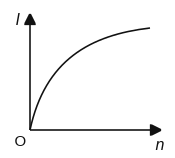
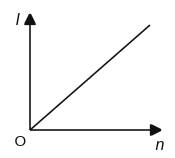
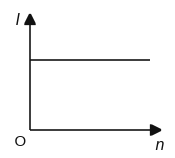
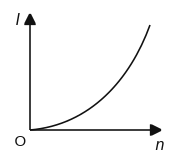
A battery consists of a variable number 'n' of identical cells (having internal resistance 'r' each) which are connected in series. The terminals of the battery are short-circuited and the current I is measured. Which of the graphs shows the correct relationship between I and n?
एक बैटरी में श्रेणीक्रम में जुड़े 'n' (परिवर्ती संख्या) सर्वसम सेल हैं (प्रत्येक का आंतरिक प्रतिरोध 'r' है)। बैटरी के टर्मिनलों को लघुपथित (short-circuit) करके धारा I मापी जाती है। निम्नलिखित में से कौन-सा ग्राफ I तथा n के बीच सही संबंध दर्शाता है?
  1. A
  2. B
  3. C
  4. D
Show answer

Concept: Short-circuit current of a battery =total emftotal internal resistance.

  1. n cells in series: emf =nε, internal resistance =nr.
  2. Short circuit (no external resistance): I=nεnr=εr
  3. I does not depend on n → horizontal straight line.

Short trick: Both emf and resistance scale with n, so n cancels – look for the flat line.

Answer: (C) Horizontal line (I independent of n)

अवधारणा: बैटरी की लघुपथ धारा =कुल वि. वा. बलकुल आंतरिक प्रतिरोध।

  1. श्रेणी में n सेल: वि. वा. बल =nε, आंतरिक प्रतिरोध =nr।
  2. लघुपथ (कोई बाह्य प्रतिरोध नहीं): I=nεnr=εr
  3. I, n पर निर्भर नहीं → क्षैतिज सरल रेखा।

शॉर्ट ट्रिक: वि. वा. बल और प्रतिरोध दोनों n के अनुपात में बढ़ते हैं, अतः n कट जाता है – सपाट रेखा चुनें।

उत्तर: (C) क्षैतिज रेखा (I, n से स्वतंत्र)

NEET UGPhysicsCurrent electricity – cells in seriesNEET UG 2018 · 6 May Shift 1 →
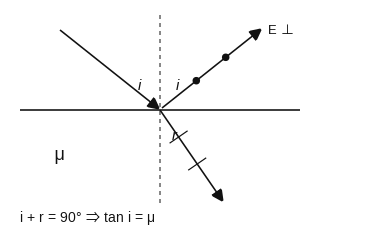
Q3073.
Unpolarised light is incident from air on a plane surface of a material of refractive index 'μ'. At a particular angle of incidence 'i', it is found that the reflected and refracted rays are perpendicular to each other. Which of the following options is correct for this situation?
अध्रुवित प्रकाश वायु से अपवर्तनांक 'μ' वाले पदार्थ के समतल पृष्ठ पर आपतित होता है। एक विशेष आपतन कोण 'i' पर यह पाया जाता है कि परावर्तित तथा अपवर्तित किरणें परस्पर लंबवत हैं। इस स्थिति के लिए निम्नलिखित में से कौन-सा विकल्प सही है?
  1. Ai=sin−1⁡(1μ)
  2. BReflected light is polarised with its electric vector perpendicular to the plane of incidenceपरावर्तित प्रकाश ध्रुवित है और उसका विद्युत सदिश आपतन तल के लंबवत है
  3. CReflected light is polarised with its electric vector parallel to the plane of incidenceपरावर्तित प्रकाश ध्रुवित है और उसका विद्युत सदिश आपतन तल के समांतर है
  4. Di=tan−1⁡(1μ)
Show answer

Concept: When reflected and refracted rays are perpendicular, i is Brewster's angle: tan⁡i=μ, and the reflected light is completely plane-polarised with E→ perpendicular to the plane of incidence.

  1. i+r=90∘ and sin⁡i=μsin⁡r=μcos⁡i ⇒ tan⁡i=μ, so (A) and (D) are wrong.
  2. The component of E→ in the plane of incidence is not reflected at this angle; only the component perpendicular to the plane (dots) survives in the reflected ray ⇒ (B) correct, (C) wrong.

Short trick: "Brewster – reflected is perpendicular (s-polarised)": dots on the reflected ray, tan⁡iB=μ.

Answer: (B) Reflected light is polarised with its electric vector perpendicular to the plane of incidence

अवधारणा: जब परावर्तित और अपवर्तित किरणें लंबवत हों, तो i ब्रूस्टर कोण है: tan⁡i=μ, तथा परावर्तित प्रकाश पूर्णतः समतल-ध्रुवित होता है जिसका E→ आपतन तल के लंबवत होता है।

  1. i+r=90∘ तथा sin⁡i=μsin⁡r=μcos⁡i ⇒ tan⁡i=μ, अतः (A) और (D) गलत हैं।
  2. इस कोण पर आपतन तल में स्थित E→ का घटक परावर्तित नहीं होता; परावर्तित किरण में केवल तल के लंबवत घटक (बिंदु) बचता है ⇒ (B) सही, (C) गलत।

शॉर्ट ट्रिक: "ब्रूस्टर – परावर्तित लंबवत (s-ध्रुवित)": परावर्तित किरण पर बिंदु, tan⁡iB=μ।

उत्तर: (B) परावर्तित प्रकाश ध्रुवित है और उसका विद्युत सदिश आपतन तल के लंबवत है

NEET UGPhysicsWave optics – polarisation by reflection (Brewster)NEET UG 2018 · 6 May Shift 1 →
Q3074.
In Young's double slit experiment the separation d between the slits is 2 mm, the wavelength λ of the light used is 5896 Å and distance D between the screen and slits is 100 cm. It is found that the angular width of the fringes is 0.20∘. To increase the fringe angular width to 0.21∘ (with same λ and D) the separation between the slits needs to be changed to
यंग के द्वि-झिरी प्रयोग में झिरियों के बीच की दूरी d = 2 mm है, प्रयुक्त प्रकाश की तरंगदैर्ध्य λ = 5896 Å है तथा पर्दे और झिरियों के बीच की दूरी D = 100 cm है। फ्रिंजों की कोणीय चौड़ाई 0.20∘ पाई जाती है। फ्रिंज की कोणीय चौड़ाई को 0.21∘ तक बढ़ाने के लिए (समान λ तथा D के साथ) झिरियों के बीच की दूरी को बदलकर करना होगा
  1. A2.1 mm
  2. B1.9 mm
  3. C1.8 mm
  4. D1.7 mm
Show answer

Concept: Angular fringe width θ=λd (independent of D), so θ∝1d.

  1. θ2θ1=d1d2
  2. d2=d1θ1θ2=2×0.200.21
  3. d2=1.905 mm ≈ 1.9 mm

Short trick: Angle up by 5% ⇒ d down by about 5%: 2−0.1=1.9 mm. D and λ are distractors.

Answer: (B) 1.9 mm

अवधारणा: कोणीय फ्रिंज चौड़ाई θ=λd (D पर निर्भर नहीं), अतः θ∝1d।

  1. θ2θ1=d1d2
  2. d2=d1θ1θ2=2×0.200.21
  3. d2=1.905 mm ≈ 1.9 mm

शॉर्ट ट्रिक: कोण 5% बढ़ा ⇒ d लगभग 5% घटेगा: 2−0.1=1.9 mm। D और λ केवल भ्रमित करने के लिए हैं।

उत्तर: (B) 1.9 mm

NEET UGPhysicsWave optics – Young's double slit (angular width)NEET UG 2018 · 6 May Shift 1 →
Q3075.
An astronomical refracting telescope will have large angular magnification and high angular resolution, when it has an objective lens of
एक खगोलीय अपवर्ती दूरदर्शक की कोणीय आवर्धन क्षमता अधिक तथा कोणीय विभेदन (resolution) उच्च होगा, जब उसके अभिदृश्यक लेंस की
  1. ALarge focal length and large diameterफोकस दूरी अधिक तथा व्यास अधिक हो
  2. BLarge focal length and small diameterफोकस दूरी अधिक तथा व्यास कम हो
  3. CSmall focal length and large diameterफोकस दूरी कम तथा व्यास अधिक हो
  4. DSmall focal length and small diameterफोकस दूरी कम तथा व्यास कम हो
Show answer

Concept: Magnifying power m=fofe; resolving power =D1.22λ.

  1. Large m ⇒ large objective focal length fo (rules out (C), (D)).
  2. High resolution ⇒ large aperture (diameter) D of the objective (rules out (B)).
  3. So the objective needs large focal length and large diameter.

Short trick: Telescope objective: "long and wide" – long focus for magnification, wide aperture for resolution and brightness.

Answer: (A) Large focal length and large diameter

अवधारणा: आवर्धन क्षमता m=fofe; विभेदन क्षमता =D1.22λ।

  1. अधिक m ⇒ अभिदृश्यक की फोकस दूरी fo अधिक ((C), (D) गलत)।
  2. उच्च विभेदन ⇒ अभिदृश्यक का द्वारक (व्यास) D अधिक ((B) गलत)।
  3. अतः अभिदृश्यक की फोकस दूरी अधिक तथा व्यास अधिक होना चाहिए।

शॉर्ट ट्रिक: दूरदर्शक का अभिदृश्यक: "लंबा और चौड़ा" – आवर्धन के लिए लंबी फोकस दूरी, विभेदन व चमक के लिए चौड़ा द्वारक।

उत्तर: (A) फोकस दूरी अधिक तथा व्यास अधिक हो

NEET UGPhysicsRay optics – astronomical telescopeNEET UG 2018 · 6 May Shift 1 →
Q3076.
The ratio of kinetic energy to the total energy of an electron in a Bohr orbit of the hydrogen atom, is
हाइड्रोजन परमाणु की बोर कक्षा में एक इलेक्ट्रॉन की गतिज ऊर्जा तथा कुल ऊर्जा का अनुपात है
  1. A2 : –1
  2. B1 : –1
  3. C1 : 1
  4. D1 : –2
Show answer

Concept: In a Bohr orbit (inverse-square attraction): K=ke22r, U=−ke2r, E=K+U=−ke22r.

  1. E=−K
  2. K:E=K:(−K)=1:−1

Short trick: Remember K:U:E=1:−2:−1 for any circular orbit under 1r2 force.

Answer: (B) 1 : –1

अवधारणा: बोर कक्षा में (व्युत्क्रम-वर्ग आकर्षण): K=ke22r, U=−ke2r, E=K+U=−ke22r।

  1. E=−K
  2. K:E=K:(−K)=1:−1

शॉर्ट ट्रिक: 1r2 बल के अधीन किसी भी वृत्तीय कक्षा के लिए याद रखें K:U:E=1:−2:−1।

उत्तर: (B) 1 : –1

NEET UGPhysicsAtoms – energy in Bohr orbitNEET UG 2018 · 6 May Shift 1 →
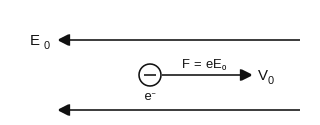
Q3077.
An electron of mass m with an initial velocity V→=V0i^ (V0>0) enters an electric field E→=−E0i^ (E0 = constant > 0) at t = 0. If λ0 is its de-Broglie wavelength initially, then its de-Broglie wavelength at time t is
m द्रव्यमान का एक इलेक्ट्रॉन प्रारंभिक वेग V→=V0i^ (V0>0) के साथ t = 0 पर विद्युत क्षेत्र E→=−E0i^ (E0 = नियतांक > 0) में प्रवेश करता है। यदि प्रारंभ में इसकी दे-ब्रॉग्ली तरंगदैर्ध्य λ0 है, तो समय t पर इसकी दे-ब्रॉग्ली तरंगदैर्ध्य है
  1. Aλ0t
  2. Bλ0(1+eE0mV0t)
  3. Cλ0(1+eE0mV0t)
  4. Dλ0
Show answer

Concept: λ=hmv. Force on an electron is opposite to E→: F→=−eE→=+eE0i^, i.e. along the velocity, so the electron speeds up.

  1. a=eE0m along +i^
  2. v=V0+eE0mt=V0(1+eE0mV0t)
  3. λ=hmv=hmV0(1+eE0mV0t)=λ01+eE0mV0t

Short trick: Speed increases ⇒ λ must decrease with t: only (C) decreases ((A), (B) increase, (D) constant).

Answer: (C) λ0(1+eE0mV0t)

अवधारणा: λ=hmv। इलेक्ट्रॉन पर बल E→ के विपरीत होता है: F→=−eE→=+eE0i^, अर्थात वेग की दिशा में, अतः इलेक्ट्रॉन की चाल बढ़ती है।

  1. a=eE0m, +i^ दिशा में
  2. v=V0+eE0mt=V0(1+eE0mV0t)
  3. λ=hmv=hmV0(1+eE0mV0t)=λ01+eE0mV0t

शॉर्ट ट्रिक: चाल बढ़ती है ⇒ λ समय के साथ घटनी चाहिए: केवल (C) घटती है ((A), (B) बढ़ती हैं, (D) नियत है)।

उत्तर: (C) λ0(1+eE0mV0t)

NEET UGPhysicsDual nature – de Broglie wavelength in electric fieldNEET UG 2018 · 6 May Shift 1 →
Q3078.
For a radioactive material, half-life is 10 minutes. If initially there are 600 number of nuclei, the time taken (in minutes) for the disintegration of 450 nuclei is
एक रेडियोऐक्टिव पदार्थ की अर्ध-आयु 10 मिनट है। यदि प्रारंभ में 600 नाभिक हैं, तो 450 नाभिकों के विघटन में लगा समय (मिनट में) है
  1. A30
  2. B10
  3. C20
  4. D15
Show answer

Concept: N=N0(12)t/T1/2.

  1. Remaining nuclei N=600−450=150
  2. 150600=14=(12)2 ⇒ 2 half-lives
  3. t=2×10=20 min

Short trick: 600 → 300 → 150: two halvings = 2 × 10 min.

Answer: (C) 20

अवधारणा: N=N0(12)t/T1/2।

  1. शेष नाभिक N=600−450=150
  2. 150600=14=(12)2 ⇒ 2 अर्ध-आयु
  3. t=2×10=20 मिनट

शॉर्ट ट्रिक: 600 → 300 → 150: दो बार आधा = 2 × 10 मिनट।

उत्तर: (C) 20

NEET UGPhysicsNuclei – radioactive decay and half-lifeNEET UG 2018 · 6 May Shift 1 →
Q3079.
When the light of frequency 2ν0 (where ν0 is threshold frequency), is incident on a metal plate, the maximum velocity of electrons emitted is v1. When the frequency of the incident radiation is increased to 5ν0, the maximum velocity of electrons emitted from the same plate is v2. The ratio of v1 to v2 is
जब 2ν0 आवृत्ति का प्रकाश (जहाँ ν0 देहली आवृत्ति है) एक धातु प्लेट पर आपतित होता है, तो उत्सर्जित इलेक्ट्रॉनों का अधिकतम वेग v1 है। जब आपतित विकिरण की आवृत्ति बढ़ाकर 5ν0 कर दी जाती है, तो उसी प्लेट से उत्सर्जित इलेक्ट्रॉनों का अधिकतम वेग v2 है। v1 तथा v2 का अनुपात है
  1. A4 : 1
  2. B1 : 4
  3. C1 : 2
  4. D2 : 1
Show answer

Concept: Einstein's equation: 12mvmax2=hν−hν0.

  1. 12mv12=h(2ν0)−hν0=hν0
  2. 12mv22=h(5ν0)−hν0=4hν0
  3. v12v22=14 ⇒ v1v2=12

Short trick: v∝ν−ν0: 1:4=1:2.

Answer: (C) 1 : 2

अवधारणा: आइंस्टीन का समीकरण: 12mvmax2=hν−hν0।

  1. 12mv12=h(2ν0)−hν0=hν0
  2. 12mv22=h(5ν0)−hν0=4hν0
  3. v12v22=14 ⇒ v1v2=12

शॉर्ट ट्रिक: v∝ν−ν0: 1:4=1:2।

उत्तर: (C) 1 : 2

NEET UGPhysicsDual nature – photoelectric effectNEET UG 2018 · 6 May Shift 1 →
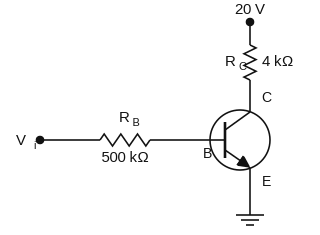
Q3080.
In the circuit shown in the figure, the input voltage Vi is 20 V, VBE=0 and VCE=0. The values of IB, IC and β are given by
चित्र में दर्शाए गए परिपथ में निवेशी वोल्टता Vi = 20 V, VBE=0 तथा VCE=0 है। IB, IC तथा β के मान हैं
  1. AIB=20 μA, IC=5 mA, β=250
  2. BIB=25 μA, IC=5 mA, β=200
  3. CIB=40 μA, IC=10 mA, β=250
  4. DIB=40 μA, IC=5 mA, β=125
Show answer

Concept: Apply KVL to the base loop and the collector loop; β=ICIB.

  1. Base loop: Vi=IBRB+VBE ⇒ IB=20500×103=40 μA
  2. Collector loop: 20=ICRC+VCE ⇒ IC=204×103=5 mA
  3. β=5×10−340×10−6=125

Short trick: IB=40 μA already leaves (C) and (D); IC=5 mA picks (D).

Answer: (D) IB=40 μA, IC=5 mA, β=125

अवधारणा: आधार लूप तथा संग्राहक लूप पर किरखॉफ का वोल्टता नियम (KVL) लगाएँ; β=ICIB।

  1. आधार लूप: Vi=IBRB+VBE ⇒ IB=20500×103=40 μA
  2. संग्राहक लूप: 20=ICRC+VCE ⇒ IC=204×103=5 mA
  3. β=5×10−340×10−6=125

शॉर्ट ट्रिक: IB=40 μA से केवल (C) और (D) बचते हैं; IC=5 mA से (D)।

उत्तर: (D) IB=40 μA, IC=5 mA, β=125

NEET UGPhysicsSemiconductors – transistor biasingNEET UG 2018 · 6 May Shift 1 →