Question bank

Q&A: practice questions with answers

Search questions on any topic. Filter by exam category, exam, subject and topic, try the question, then open the answer and explanation.

Courses – airGurukul

53,050 questions in the question bank.

Q3721.
Which of the following is a commercial blood cholesterol lowering agent?
निम्नलिखित में से कौन-सा एक व्यावसायिक रक्त कोलेस्टेरॉल कम करने वाला कारक है?
  1. ACyclosporin Aसाइक्लोस्पोरिन A
  2. BStatinस्टैटिन
  3. CStreptokinaseस्ट्रेप्टोकाइनेज़
  4. DLipasesलाइपेज़
Show answer

Concept: Statins, produced by the yeast Monascus purpureus, competitively inhibit the enzyme of cholesterol synthesis and are used as blood-cholesterol-lowering agents.

  1. (A) Cyclosporin A (Trichoderma polysporum) – immunosuppressant in organ transplant.
  2. (C) Streptokinase (Streptococcus) – “clot buster”, dissolves blood clots.
  3. (D) Lipases – used in detergents to remove oily stains.

Short trick: Statin = static cholesterol; Monascus → Minus cholesterol.

Answer: (B) Statin

अवधारणा: स्टैटिन यीस्ट Monascus purpureus द्वारा बनाए जाते हैं; ये कोलेस्टेरॉल संश्लेषण के एंजाइम का स्पर्धी संदमन करते हैं और रक्त-कोलेस्टेरॉल घटाने वाले कारक के रूप में प्रयुक्त होते हैं।

  1. (A) साइक्लोस्पोरिन A (Trichoderma polysporum) – अंग प्रत्यारोपण में प्रतिरक्षा-निरोधक।
  2. (C) स्ट्रेप्टोकाइनेज़ (Streptococcus) – “थक्का नाशक”, रक्त के थक्के घोलता है।
  3. (D) लाइपेज़ – अपमार्जकों में तैलीय धब्बे हटाने में प्रयुक्त।

शॉर्ट ट्रिक: स्टैटिन = कोलेस्टेरॉल “स्थिर/कम”; Monascus → Minus कोलेस्टेरॉल।

उत्तर: (B) स्टैटिन
NEET UGBiologyMicrobes in human welfare – bioactive moleculesNEET UG 2019 · 5 May Shift 1 →
Q3722.
Match the following structures with their respective location in organs
StructureLocation
(a) Crypts of Lieberkuhn(i) Pancreas
(b) Glisson's Capsule(ii) Duodenum
(c) Islets of Langerhans(iii) Small intestine
(d) Brunner's Glands(iv) Liver
Select the correct option from the following
निम्नलिखित संरचनाओं का उनके अंगों में संबंधित स्थान से मिलान कीजिए
संरचनास्थान
(a) लीबरकुन की प्रगुहिकाएँ (Crypts of Lieberkuhn)(i) अग्न्याशय
(b) ग्लिसन का संपुट (Glisson's Capsule)(ii) ग्रहणी (Duodenum)
(c) लैंगरहैंस की द्वीपिकाएँ(iii) छोटी आँत
(d) ब्रूनर की ग्रंथियाँ(iv) यकृत
निम्नलिखित में से सही विकल्प चुनिए
  1. A(a)-(iii), (b)-(i), (c)-(ii), (d)-(iv)
  2. B(a)-(ii), (b)-(iv), (c)-(i), (d)-(iii)
  3. C(a)-(iii), (b)-(iv), (c)-(i), (d)-(ii)
  4. D(a)-(iii), (b)-(ii), (c)-(i), (d)-(iv)
Show answer

Concept: Each structure belongs to one specific digestive organ.

  1. (a) Crypts of Lieberkuhn – tubular glands between the villi of the small intestine → (iii).
  2. (b) Glisson's capsule – connective-tissue sheath around each hepatic lobule of the liver → (iv).
  3. (c) Islets of Langerhans – endocrine part of the pancreas → (i).
  4. (d) Brunner's glands – submucosal glands of the duodenum → (ii).
  5. So a-iii, b-iv, c-i, d-ii = option (C).

Short trick: Only (c) = Pancreas is certain → options (B), (C) and (D) remain; Brunner = “B for Beginning of intestine” (duodenum) → only (C).

Answer: (C) (a)-(iii), (b)-(iv), (c)-(i), (d)-(ii)

अवधारणा: प्रत्येक संरचना किसी एक विशिष्ट पाचक अंग में पाई जाती है।

  1. (a) लीबरकुन की प्रगुहिकाएँ – छोटी आँत के रसांकुरों के बीच की नलिकाकार ग्रंथियाँ → (iii)।
  2. (b) ग्लिसन का संपुट – यकृत की प्रत्येक यकृत पालिका को घेरने वाला संयोजी ऊतक आवरण → (iv)।
  3. (c) लैंगरहैंस की द्वीपिकाएँ – अग्न्याशय का अंतःस्रावी भाग → (i)।
  4. (d) ब्रूनर की ग्रंथियाँ – ग्रहणी की अधःश्लेष्मिका ग्रंथियाँ → (ii)।
  5. अतः a-iii, b-iv, c-i, d-ii = विकल्प (C)।

शॉर्ट ट्रिक: केवल (c) = अग्न्याशय निश्चित → (B), (C), (D) बचे; ब्रूनर = “B = आँत की शुरुआत” (ग्रहणी) → केवल (C)।

उत्तर: (C) (a)-(iii), (b)-(iv), (c)-(i), (d)-(ii)

NEET UGBiologyDigestion – structures and their locationNEET UG 2019 · 5 May Shift 1 →
Q3723.
Which of the following is the most important cause for animals and plants being driven to extinction?
निम्नलिखित में से कौन-सा जंतुओं और पादपों के विलुप्ति की ओर धकेले जाने का सबसे महत्वपूर्ण कारण है?
  1. AHabitat loss and fragmentationआवासीय क्षति तथा विखंडन
  2. BDrought and floodsसूखा और बाढ़
  3. CEconomic exploitationआर्थिक शोषण (अति-दोहन)
  4. DAlien species invasionविदेशी जातियों का आक्रमण
Show answer

Concept: NCERT “evil quartet” of biodiversity loss: habitat loss & fragmentation, over-exploitation, alien species invasions, co-extinctions.

  1. NCERT: “Habitat loss and fragmentation – this is the most important cause driving animals and plants to extinction” (e.g. tropical rain forests reduced from 14% to 6% of land surface).
  2. (C) over-exploitation and (D) alien species are also causes of the quartet, but secondary.
  3. (B) Drought and floods are natural events, not listed as the main cause.

Short trick: Evil quartet in order of importance = “H O A C” – Habitat, Over-exploitation, Alien, Co-extinction.

Answer: (A) Habitat loss and fragmentation

अवधारणा: जैव विविधता ह्रास की NCERT “दुष्ट चौकड़ी”: आवासीय क्षति व विखंडन, अति-दोहन, विदेशी जातियों का आक्रमण, सह-विलुप्तता।

  1. NCERT: “आवासीय क्षति तथा विखंडन – जंतुओं और पादपों को विलुप्ति की ओर ले जाने वाला यह सबसे महत्वपूर्ण कारण है” (जैसे उष्णकटिबंधीय वर्षा वन भू-सतह के 14% से घटकर 6% रह गए)।
  2. (C) अति-दोहन और (D) विदेशी जातियाँ भी चौकड़ी के कारण हैं, पर गौण।
  3. (B) सूखा और बाढ़ प्राकृतिक घटनाएँ हैं, मुख्य कारण के रूप में सूचीबद्ध नहीं।

शॉर्ट ट्रिक: महत्व के क्रम में दुष्ट चौकड़ी = “आ-अ-वि-स” – आवास, अति-दोहन, विदेशी, सह-विलुप्तता।

उत्तर: (A) आवासीय क्षति तथा विखंडन

NEET UGBiologyBiodiversity – causes of loss (evil quartet)NEET UG 2019 · 5 May Shift 1 →
Q3724.
Which part of the brain is responsible for thermoregulation?
मस्तिष्क का कौन-सा भाग ताप-नियमन (thermoregulation) के लिए उत्तरदायी है?
  1. ACerebrumप्रमस्तिष्क (Cerebrum)
  2. BHypothalamusअधश्चेतक (Hypothalamus)
  3. CCorpus callosumमहासंयोजिका (Corpus callosum)
  4. DMedulla oblongataमेडुला ऑब्लांगेटा (Medulla oblongata)
Show answer

Concept: The hypothalamus (base of the forebrain/diencephalon) contains centres that control body temperature, hunger and thirst, and it secretes hypothalamic hormones.

  1. (A) Cerebrum – intelligence, memory, voluntary actions, sensory perception.
  2. (C) Corpus callosum – tract of nerve fibres connecting the two cerebral hemispheres.
  3. (D) Medulla – centres for respiration, cardiovascular reflexes and gastric secretion.

Short trick: Hypothalamus = body's “thermostat” + hunger/thirst switch (“HOT” – Hypothalamus Owns Temperature).

Answer: (B) Hypothalamus

अवधारणा: अधश्चेतक (हाइपोथैलेमस) (अग्रमस्तिष्क/डाइएनसेफेलॉन का आधार) में शरीर-ताप, भूख और प्यास नियंत्रित करने वाले केंद्र होते हैं, तथा यह हाइपोथैलेमिक हॉर्मोन स्रावित करता है।

  1. (A) प्रमस्तिष्क – बुद्धि, स्मृति, ऐच्छिक क्रियाएँ, संवेदी अनुभूति।
  2. (C) महासंयोजिका – दोनों प्रमस्तिष्क गोलार्धों को जोड़ने वाला तंत्रिका-तंतु पथ।
  3. (D) मेडुला – श्वसन, हृद्-संवहनी प्रतिवर्तों तथा जठर स्राव के केंद्र।

शॉर्ट ट्रिक: हाइपोथैलेमस = शरीर का “थर्मोस्टैट” + भूख/प्यास का स्विच।

उत्तर: (B) अधश्चेतक (Hypothalamus)

NEET UGBiologyNeural control – parts of brain (hypothalamus)NEET UG 2019 · 5 May Shift 1 →
Q3725.
Consider following features
(a) Organ system level of organisation
(b) Bilateral symmetry
(c) True coelomates with segmentation of body
Select the correct option of animal groups which possess all the above characteristics
निम्नलिखित लक्षणों पर विचार कीजिए
(a) अंग तंत्र स्तर का संगठन
(b) द्विपार्श्व सममिति
(c) शरीर के खंडीभवन सहित वास्तविक प्रगुहीय (true coelomates)
उन प्राणि समूहों का सही विकल्प चुनिए जिनमें उपर्युक्त सभी लक्षण पाए जाते हैं
  1. AAnnelida, Arthropoda and Chordataऐनेलिडा, आर्थ्रोपोडा तथा कॉर्डेटा
  2. BAnnelida, Arthropoda and Molluscaऐनेलिडा, आर्थ्रोपोडा तथा मोलस्का
  3. CArthropoda, Mollusca and Chordataआर्थ्रोपोडा, मोलस्का तथा कॉर्डेटा
  4. DAnnelida, Mollusca and Chordataऐनेलिडा, मोलस्का तथा कॉर्डेटा
Show answer

Concept: All coelomate phyla (Annelida → Chordata) are organ-system level and bilateral (adult echinoderms radial); the deciding feature is metameric segmentation.

  1. Segmented phyla (NCERT): Annelida, Arthropoda and Chordata – all three are true coelomates, bilateral, organ-system level → (A).
  2. Mollusca are coelomate and bilateral but unsegmented → (B), (C), (D) each contain Mollusca, so all are wrong.

Short trick: Segmentation = “A A C” – Annelida, Arthropoda, Chordata; any option with Mollusca is out.

Answer: (A) Annelida, Arthropoda and Chordata

अवधारणा: सभी प्रगुही संघ (ऐनेलिडा → कॉर्डेटा) अंग तंत्र स्तर के तथा द्विपार्श्व सममित हैं (वयस्क एकाइनोडर्म अरीय); निर्णायक लक्षण विखंडीय खंडीभवन (metameric segmentation) है।

  1. खंडित संघ (NCERT): ऐनेलिडा, आर्थ्रोपोडा तथा कॉर्डेटा – तीनों वास्तविक प्रगुही, द्विपार्श्व, अंग तंत्र स्तर के → (A)।
  2. मोलस्का प्रगुही व द्विपार्श्व हैं परंतु अखंडित → (B), (C), (D) प्रत्येक में मोलस्का है, अतः सभी गलत।

शॉर्ट ट्रिक: खंडीभवन = “A A C” – ऐनेलिडा, आर्थ्रोपोडा, कॉर्डेटा; मोलस्का वाला हर विकल्प बाहर।

उत्तर: (A) ऐनेलिडा, आर्थ्रोपोडा तथा कॉर्डेटा

NEET UGBiologyAnimal kingdom – basis of classificationNEET UG 2019 · 5 May Shift 1 →
Q3726.
Select the correct sequence of organs in the alimentary canal of cockroach starting from mouth
मुख से प्रारंभ करते हुए कॉकरोच की आहार नाल में अंगों का सही क्रम चुनिए
  1. APharynx → Oesophagus → Crop → Gizzard → Ileum → Colon → Rectumग्रसनी → ग्रसिका → अन्नपुट (Crop) → पेषणी (Gizzard) → क्षुद्रांत्र (Ileum) → वृहदांत्र (Colon) → मलाशय
  2. BPharynx → Oesophagus → Gizzard → Crop → Ileum → Colon → Rectumग्रसनी → ग्रसिका → पेषणी (Gizzard) → अन्नपुट (Crop) → क्षुद्रांत्र (Ileum) → वृहदांत्र (Colon) → मलाशय
  3. CPharynx → Oesophagus → Gizzard → Ileum → Crop → Colon → Rectumग्रसनी → ग्रसिका → पेषणी (Gizzard) → क्षुद्रांत्र (Ileum) → अन्नपुट (Crop) → वृहदांत्र (Colon) → मलाशय
  4. DPharynx → Oesophagus → Ileum → Crop → Gizzard → Colon → Rectumग्रसनी → ग्रसिका → क्षुद्रांत्र (Ileum) → अन्नपुट (Crop) → पेषणी (Gizzard) → वृहदांत्र (Colon) → मलाशय
Show answer

Concept: Cockroach gut = foregut (pharynx, oesophagus, crop, gizzard) → midgut (mesenteron with hepatic caeca) → hindgut (ileum, colon, rectum).

  1. Mouth → pharynx → narrow oesophagus → sac-like crop (stores food) → gizzard/proventriculus (chitinous teeth grind food).
  2. Midgut → hindgut, which is differentiated into ileum, colon and rectum → anus. This is option (A).
  3. (B) puts gizzard before crop; (C) and (D) place crop after ileum – both crop and gizzard belong to the foregut, so these are wrong.

Short trick: Store before you grind: Crop comes before Gizzard (C before G in the alphabet); hindgut = I-C-R (Ileum, Colon, Rectum).

Answer: (A) Pharynx → Oesophagus → Crop → Gizzard → Ileum → Colon → Rectum

अवधारणा: कॉकरोच की आहार नाल = अग्रांत्र (ग्रसनी, ग्रसिका, अन्नपुट, पेषणी) → मध्यांत्र (यकृत अंधनाल सहित) → पश्चांत्र (क्षुद्रांत्र, वृहदांत्र, मलाशय)।

  1. मुख → ग्रसनी → पतली ग्रसिका → थैलीनुमा अन्नपुट (भोजन संग्रह) → पेषणी/प्रोवेंट्रिकुलस (काइटिनी दाँत भोजन पीसते हैं)।
  2. मध्यांत्र → पश्चांत्र, जो क्षुद्रांत्र, वृहदांत्र और मलाशय में विभेदित है → गुदा। यही विकल्प (A) है।
  3. (B) में पेषणी अन्नपुट से पहले है; (C) व (D) में अन्नपुट क्षुद्रांत्र के बाद है – अन्नपुट व पेषणी दोनों अग्रांत्र के भाग हैं, अतः ये गलत हैं।

शॉर्ट ट्रिक: पहले संग्रह, फिर पिसाई: Crop, Gizzard से पहले (वर्णमाला में C, G से पहले); पश्चांत्र = I-C-R (Ileum, Colon, Rectum)।

उत्तर: (A) ग्रसनी → ग्रसिका → अन्नपुट (Crop) → पेषणी (Gizzard) → क्षुद्रांत्र (Ileum) → वृहदांत्र (Colon) → मलाशय

NEET UGBiologyStructural organisation in animals – cockroach digestive systemNEET UG 2019 · 5 May Shift 1 →
Q3727.
Which of the following pairs of gases is mainly responsible for green house effect?
निम्नलिखित में से गैसों का कौन-सा युग्म मुख्य रूप से हरितगृह प्रभाव (green house effect) के लिए उत्तरदायी है?
  1. AOzone and Ammoniaओज़ोन और अमोनिया
  2. BOxygen and Nitrogenऑक्सीजन और नाइट्रोजन
  3. CNitrogen and Sulphur dioxideनाइट्रोजन और सल्फर डाइऑक्साइड
  4. DCarbon dioxide and Methaneकार्बन डाइऑक्साइड और मेथेन
Show answer

Concept: Greenhouse gases trap long-wave (infra-red) radiation re-emitted by the earth. NCERT share: CO2 60%, CH4 20%, CFCs 14%, N2O 6%.

  1. CO2 and CH4 together contribute ~80% of the greenhouse effect → (D).
  2. (A) Ammonia is not a significant greenhouse gas; (B) O2 and N2 do not absorb infra-red radiation; (C) SO2 causes acid rain, N2 is inert.

Short trick: GHG order “C-M-C-N” = CO2 60 > Methane 20 > CFC 14 > N2O 6.

Answer: (D) Carbon dioxide and Methane

अवधारणा: हरितगृह गैसें पृथ्वी द्वारा पुनः उत्सर्जित दीर्घ तरंग (अवरक्त) विकिरण को रोक लेती हैं। NCERT के अनुसार योगदान: CO2 60%, CH4 20%, CFCs 14%, N2O 6%।

  1. CO2 तथा CH4 मिलकर हरितगृह प्रभाव का ~80% योगदान देती हैं → (D)।
  2. (A) अमोनिया प्रमुख हरितगृह गैस नहीं है; (B) O2 व N2 अवरक्त विकिरण अवशोषित नहीं करतीं; (C) SO2 अम्ल वर्षा करती है, N2 अक्रिय है।

शॉर्ट ट्रिक: हरितगृह गैसों का क्रम “C-M-C-N” = CO2 60 > मेथेन 20 > CFC 14 > N2O 6।

उत्तर: (D) कार्बन डाइऑक्साइड और मेथेन

NEET UGBiologyEnvironmental issues – greenhouse effectNEET UG 2019 · 5 May Shift 1 →
Q3728.
Which of the following muscular disorders is inherited?
निम्नलिखित में से कौन-सा पेशीय विकार वंशागत है?
  1. ATetanyअपतानिका (Tetany)
  2. BMuscular dystrophyपेशीय दुष्पोषण (Muscular dystrophy)
  3. CMyasthenia gravisमाइस्थेनिया ग्रेविस
  4. DBotulismबॉटुलिज़्म
Show answer

Concept: NCERT: Muscular dystrophy – progressive degeneration of skeletal muscle, mostly due to a genetic disorder.

  1. (A) Tetany – rapid spasms due to low Ca2+ in body fluid (often hypoparathyroidism) – not inherited.
  2. (C) Myasthenia gravis – auto-immune disorder affecting the neuromuscular junction.
  3. (D) Botulism – food poisoning by the toxin of Clostridium botulinum (infection/toxin).

Short trick: Dys-trophy runs in the family “tree” (genetic, e.g. Duchenne, X-linked).

Answer: (B) Muscular dystrophy

अवधारणा: NCERT: पेशीय दुष्पोषण – कंकाल पेशियों का क्रमिक अपह्रास, जो प्रायः आनुवंशिक विकार के कारण होता है।

  1. (A) अपतानिका – देह-तरल में Ca2+ की कमी (प्रायः अल्पपैराथायरॉयडिता) से तीव्र ऐंठन – वंशागत नहीं।
  2. (C) माइस्थेनिया ग्रेविस – तंत्रिका-पेशी संधि को प्रभावित करने वाला स्व-प्रतिरक्षा विकार।
  3. (D) बॉटुलिज़्म – Clostridium botulinum के आविष (toxin) से होने वाली खाद्य विषाक्तता।

शॉर्ट ट्रिक: डिस-ट्रॉफी परिवार के “वंश-वृक्ष” में चलती है (आनुवंशिक, जैसे ड्यूशेन, X-सहलग्न)।

उत्तर: (B) पेशीय दुष्पोषण (Muscular dystrophy)

NEET UGBiologyLocomotion and movement – disorders of muscular systemNEET UG 2019 · 5 May Shift 1 →
Q3729.
The ciliated epithelial cells are required to move particles or mucus in a specific direction. In humans, these cells are mainly present in
पक्ष्माभी उपकला कोशिकाएँ कणों या श्लेष्मा को एक विशिष्ट दिशा में ले जाने के लिए आवश्यक हैं। मनुष्यों में ये कोशिकाएँ मुख्य रूप से उपस्थित होती हैं
  1. ABile duct and Bronchiolesपित्त वाहिनी और श्वसनिकाएँ
  2. BFallopian tubes and Pancreatic ductअंडवाहिनियाँ (Fallopian tubes) और अग्न्याशयी वाहिनी
  3. CEustachian tube and Salivary ductयूस्टेकियन नलिका और लार वाहिनी
  4. DBronchioles and Fallopian tubesश्वसनिकाएँ और अंडवाहिनियाँ (Fallopian tubes)
Show answer

Concept: NCERT: ciliated epithelium “is mainly present in the inner surface of hollow organs like bronchioles and fallopian tubes.”

  1. Bronchioles: cilia sweep mucus with trapped dust towards the pharynx.
  2. Fallopian tubes: cilia move the ovum/zygote towards the uterus → (D).
  3. Bile duct, pancreatic duct and salivary duct are lined by cuboidal/columnar (non-ciliated) epithelium, so (A), (B), (C) each contain a wrong organ.

Short trick: Cilia carry “Breath & Baby” – Bronchioles and Fallopian tubes.

Answer: (D) Bronchioles and Fallopian tubes

अवधारणा: NCERT: पक्ष्माभी उपकला “मुख्यतः खोखले अंगों जैसे श्वसनिकाओं और अंडवाहिनियों की भीतरी सतह पर पाई जाती है।”

  1. श्वसनिकाएँ: पक्ष्माभ धूल फँसी श्लेष्मा को ग्रसनी की ओर धकेलते हैं।
  2. अंडवाहिनियाँ: पक्ष्माभ अंडाणु/युग्मनज को गर्भाशय की ओर ले जाते हैं → (D)।
  3. पित्त वाहिनी, अग्न्याशयी वाहिनी तथा लार वाहिनी घनाकार/स्तंभाकार (अपक्ष्माभी) उपकला से आस्तरित हैं, अतः (A), (B), (C) प्रत्येक में एक अंग गलत है।

शॉर्ट ट्रिक: पक्ष्माभ “साँस और शिशु” को ले जाते हैं – श्वसनिकाएँ और अंडवाहिनियाँ।

उत्तर: (D) श्वसनिकाएँ और अंडवाहिनियाँ (Fallopian tubes)

NEET UGBiologyAnimal tissues – ciliated epitheliumNEET UG 2019 · 5 May Shift 1 →
Q3730.
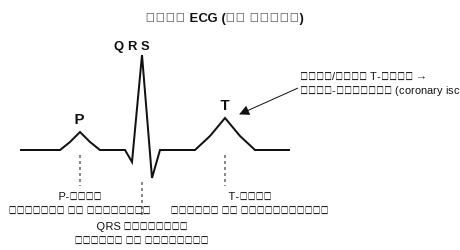
Match the Column-I with Column-II
Column-IColumn-II
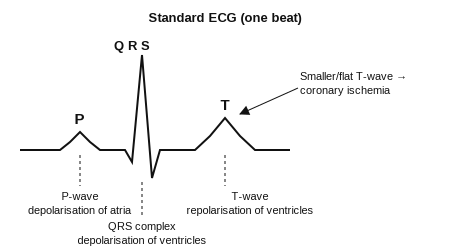
(a) P - wave(i) Depolarisation of ventricles
(b) QRS complex(ii) Repolarisation of ventricles
(c) T - wave(iii) Coronary ischemia
(d) Reduction in the size of T-wave(iv) Depolarisation of atria
(v) Repolarisation of atria
Select the correct option.
स्तंभ-I का स्तंभ-II से मिलान कीजिए
स्तंभ-Iस्तंभ-II
(a) P - तरंग(i) निलयों का विध्रुवण
(b) QRS सम्मिश्र(ii) निलयों का पुनर्ध्रुवण
(c) T - तरंग(iii) हृद्-धमनी अरक्तता (Coronary ischemia)
(d) T-तरंग के आकार में कमी(iv) अलिंदों का विध्रुवण
(v) अलिंदों का पुनर्ध्रुवण
सही विकल्प चुनिए।
  1. A(a)-(iv), (b)-(i), (c)-(ii), (d)-(iii)
  2. B(a)-(iv), (b)-(i), (c)-(ii), (d)-(v)
  3. C(a)-(ii), (b)-(i), (c)-(v), (d)-(iii)
  4. D(a)-(ii), (b)-(iii), (c)-(v), (d)-(iv)
Show answer

Concept: Each ECG wave records one electrical event of the heart; deviations from normal shape indicate disease.

  1. P-wave → excitation (depolarisation of atria) → (iv).
  2. QRS complex → depolarisation of ventricles (initiates ventricular contraction) → (i).
  3. T-wave → return of ventricles to normal (repolarisation of ventricles) → (ii).
  4. Reduced/flat T-wave → coronary ischemia (insufficient O2 supply to heart muscle) → (iii).
  5. (v) atrial repolarisation is hidden in the QRS complex and is not matched. Answer a-iv, b-i, c-ii, d-iii = (A).

Short trick: “P = Primary chambers (atria), QRS = ventricles squeeze, T = Take rest (repolarise)”.

Answer: (A) (a)-(iv), (b)-(i), (c)-(ii), (d)-(iii)

अवधारणा: ECG की प्रत्येक तरंग हृदय की एक विद्युत घटना को दर्शाती है; सामान्य आकार से विचलन रोग का संकेत है।

  1. P-तरंग → उत्तेजन (अलिंदों का विध्रुवण) → (iv)।
  2. QRS सम्मिश्र → निलयों का विध्रुवण (निलय संकुचन आरंभ करता है) → (i)।
  3. T-तरंग → निलयों का सामान्य अवस्था में लौटना (निलयों का पुनर्ध्रुवण) → (ii)।
  4. छोटी/चपटी T-तरंग → हृद्-धमनी अरक्तता (हृद पेशी को O2 की अपर्याप्त आपूर्ति) → (iii)।
  5. (v) अलिंदों का पुनर्ध्रुवण QRS सम्मिश्र में छिप जाता है और मिलान में नहीं आता। उत्तर a-iv, b-i, c-ii, d-iii = (A)।

शॉर्ट ट्रिक: “P = पहले कक्ष (अलिंद), QRS = निलय सिकुड़े, T = थकान उतारो (पुनर्ध्रुवण)”।

उत्तर: (A) (a)-(iv), (b)-(i), (c)-(ii), (d)-(iii)

NEET UGBiologyBody fluids and circulation – ECGNEET UG 2019 · 5 May Shift 1 →
Q3731.
Which one of the following is not a method in situ conservation of biodiversity?
निम्नलिखित में से कौन-सी जैव विविधता के स्वस्थाने (in situ) संरक्षण की विधि नहीं है?
  1. ABiosphere Reserveजीवमंडल आरक्षित क्षेत्र (Biosphere Reserve)
  2. BWildlife Sanctuaryवन्यजीव अभयारण्य
  3. CBotanical Gardenवानस्पतिक उद्यान (Botanical Garden)
  4. DSacred Groveपवित्र उपवन (Sacred Grove)
Show answer

Concept: In situ = protecting organisms in their natural habitat; ex situ = protecting them outside it.

  1. Biosphere reserves, wildlife sanctuaries, national parks and sacred groves protect the whole natural ecosystem – in situ.
  2. Botanical gardens (like zoos, seed banks, cryopreservation) keep plants away from their natural habitat – ex situ → (C).

Short trick: “Garden, Zoo, Bank = off-site”; Park, Sanctuary, Reserve, Grove = on-site.

Answer: (C) Botanical Garden

अवधारणा: स्वस्थाने = जीवों को उनके प्राकृतिक आवास में संरक्षित करना; बहिःस्थाने = उन्हें आवास से बाहर संरक्षित करना।

  1. जीवमंडल आरक्षित क्षेत्र, वन्यजीव अभयारण्य, राष्ट्रीय उद्यान और पवित्र उपवन पूरे प्राकृतिक पारितंत्र की रक्षा करते हैं – स्वस्थाने।
  2. वानस्पतिक उद्यान (चिड़ियाघर, बीज बैंक, निम्नताप परिरक्षण की तरह) पादपों को उनके प्राकृतिक आवास से दूर रखते हैं – बहिःस्थाने → (C)।

शॉर्ट ट्रिक: “उद्यान, चिड़ियाघर, बैंक = बाहर”; पार्क, अभयारण्य, आरक्षित क्षेत्र, उपवन = वहीं।

उत्तर: (C) वानस्पतिक उद्यान (Botanical Garden)

NEET UGBiologyBiodiversity – in situ and ex situ conservationNEET UG 2019 · 5 May Shift 1 →
Q3732.
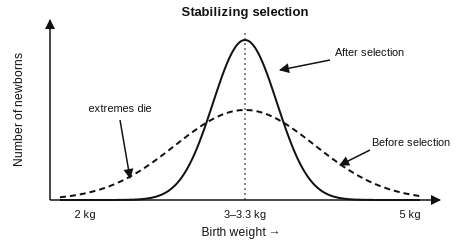
In a species, the weight of newborn ranges from 2 to 5 kg. 97% of the newborn with an average weight between 3 to 3.3 kg survive whereas 99% of the infants born with weight from 2 to 2.5 kg or 4.5 to 5 kg die. Which type of selection process is taking place?
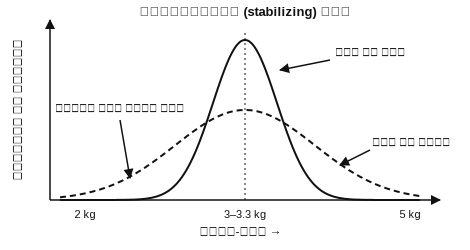
एक जाति में नवजातों का भार 2 से 5 kg के बीच होता है। 3 से 3.3 kg औसत भार वाले 97% नवजात जीवित रहते हैं, जबकि 2 से 2.5 kg या 4.5 से 5 kg भार के साथ जन्मे 99% शिशु मर जाते हैं। कौन-सा वरण प्रक्रम हो रहा है?
  1. ADirectional Selectionदिशात्मक वरण (Directional Selection)
  2. BStabilizing Selectionस्थायीकारी वरण (Stabilizing Selection)
  3. CDisruptive Selectionविदारक वरण (Disruptive Selection)
  4. DCyclical Selectionचक्रीय वरण (Cyclical Selection)
Show answer

Concept: In stabilizing selection individuals with the mean (average) character value are favoured and both extremes are eliminated; the curve becomes narrower and taller around the same mean.

  1. Here average-weight babies (3–3.3 kg) survive, both light (2–2.5 kg) and heavy (4.5–5 kg) babies die → extremes removed, mean retained → stabilizing.
  2. (A) Directional – one extreme favoured, mean shifts.
  3. (C) Disruptive – both extremes favoured, mean removed (two peaks).
  4. (D) Cyclical selection is not one of the NCERT types here.

Short trick: Human birth weight is the textbook example of stabilizing selection: “Middle survives”.

Answer: (B) Stabilizing Selection

अवधारणा: स्थायीकारी वरण में माध्य (औसत) लक्षण वाले जीवों को वरीयता मिलती है और दोनों चरम रूप समाप्त हो जाते हैं; वक्र उसी माध्य के चारों ओर सँकरा और ऊँचा हो जाता है।

  1. यहाँ औसत भार (3–3.3 kg) वाले शिशु जीवित रहते हैं, हल्के (2–2.5 kg) और भारी (4.5–5 kg) दोनों मरते हैं → चरम हटे, माध्य बना रहा → स्थायीकारी।
  2. (A) दिशात्मक – एक चरम को वरीयता, माध्य खिसकता है।
  3. (C) विदारक – दोनों चरमों को वरीयता, माध्य हटता है (दो शिखर)।
  4. (D) चक्रीय वरण यहाँ NCERT के प्रकारों में नहीं है।

शॉर्ट ट्रिक: मानव जन्म-भार स्थायीकारी वरण का पाठ्यपुस्तकीय उदाहरण है: “बीच वाला बचता है”।

उत्तर: (B) स्थायीकारी वरण (Stabilizing Selection)

NEET UGBiologyEvolution – types of natural selectionNEET UG 2019 · 5 May Shift 1 →
Q3733.
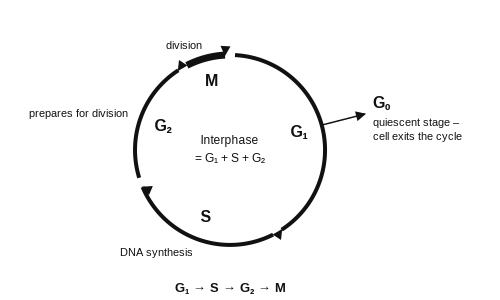
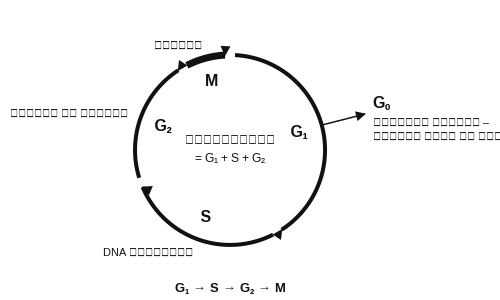
The correct sequence of phases of cell cycle is :
कोशिका चक्र की प्रावस्थाओं का सही क्रम है :
  1. AM → G1 → G2 → S
  2. BG1 → G2 → S → M
  3. CS → G1 → G2 → M
  4. DG1 → S → G2 → M
Show answer

Concept: Interphase = G1 (gap 1, growth) → S (DNA synthesis) → G2 (gap 2, preparation for division); then M phase (mitosis).

  1. G1: cell grows, metabolically active, no DNA replication.
  2. S: DNA content doubles (2C → 4C), centrioles duplicate.
  3. G2: proteins for mitosis synthesised; then M phase → (D).
  4. Every other option puts S out of its place between G1 and G2.

Short trick: S is sandwiched between the two gaps: G1 – S – G2 – M.

Answer: (D) G1 → S → G2 → M

अवधारणा: अंतरावस्था = G1 (अंतराल 1, वृद्धि) → S (DNA संश्लेषण) → G2 (अंतराल 2, विभाजन की तैयारी); फिर M प्रावस्था (समसूत्री विभाजन)।

  1. G1: कोशिका वृद्धि करती है, उपापचयी रूप से सक्रिय, DNA प्रतिकृतियन नहीं।
  2. S: DNA की मात्रा दोगुनी (2C → 4C), तारककेंद्र का द्विगुणन।
  3. G2: समसूत्री विभाजन हेतु प्रोटीन संश्लेषण; फिर M प्रावस्था → (D)।
  4. अन्य प्रत्येक विकल्प में S, G1 और G2 के बीच के अपने स्थान पर नहीं है।

शॉर्ट ट्रिक: S दोनों अंतरालों के बीच सैंडविच है: G1 – S – G2 – M।

उत्तर: (D) G1 → S → G2 → M

NEET UGBiologyCell cycle – phasesNEET UG 2019 · 5 May Shift 1 →
Q3734.
How does steroid hormone influence the cellular activities?
स्टेरॉयड हॉर्मोन कोशिकीय क्रियाओं को किस प्रकार प्रभावित करता है?
  1. AChanging the permeability of the cell membraneकोशिका झिल्ली की पारगम्यता बदलकर
  2. BBinding to DNA and forming a gene-hormone complexDNA से बंधकर तथा जीन-हॉर्मोन सम्मिश्र बनाकर
  3. CActivating cyclic AMP located on the cell membraneकोशिका झिल्ली पर स्थित चक्रीय AMP को सक्रिय करके
  4. DUsing aquaporin channels as second messengerएक्वापोरिन चैनलों को द्वितीयक संदेशवाहक के रूप में प्रयोग करके
Show answer

Concept: Steroid (lipid-soluble) hormones cross the plasma membrane and act through intracellular receptors.

  1. Hormone + intracellular receptor → hormone-receptor complex enters the nucleus → binds the genome/DNA → regulates gene expression (transcription) → new proteins → physiological effect. So (B).
  2. (A), (C): changes in membrane permeability and cAMP second messengers are features of protein/peptide hormones acting on membrane-bound receptors (cAMP is cytoplasmic, not “located on membrane”).
  3. (D) Aquaporins are water channels, not second messengers.

Short trick: Steroid = Slips inside, Speaks to DNA; peptide = stays outside, uses second messenger.

Answer: (B) Binding to DNA and forming a gene-hormone complex

अवधारणा: स्टेरॉयड (वसा-विलेय) हॉर्मोन प्लाज़्मा झिल्ली को पार करके अंतःकोशिकीय ग्राही के माध्यम से कार्य करते हैं।

  1. हॉर्मोन + अंतःकोशिकीय ग्राही → हॉर्मोन-ग्राही सम्मिश्र केंद्रक में → जीनोम/DNA से बंधता है → जीन अभिव्यक्ति (अनुलेखन) का नियमन → नए प्रोटीन → कार्यिकीय प्रभाव। अतः (B)।
  2. (A), (C): झिल्ली पारगम्यता में परिवर्तन तथा cAMP द्वितीयक संदेशवाहक, झिल्ली-ग्राहियों पर कार्य करने वाले प्रोटीन/पेप्टाइड हॉर्मोनों के लक्षण हैं (cAMP कोशिकाद्रव्य में होता है, “झिल्ली पर स्थित” नहीं)।
  3. (D) एक्वापोरिन जल चैनल हैं, द्वितीयक संदेशवाहक नहीं।

शॉर्ट ट्रिक: स्टेरॉयड = अंदर घुसता है, DNA से बात करता है; पेप्टाइड = बाहर रहता है, द्वितीयक संदेशवाहक प्रयोग करता है।

उत्तर: (B) DNA से बंधकर तथा जीन-हॉर्मोन सम्मिश्र बनाकर

NEET UGBiologyChemical coordination – mechanism of hormone actionNEET UG 2019 · 5 May Shift 1 →
Q3735.
Which of the following statements is not correct?
निम्नलिखित में से कौन-सा कथन सही नहीं है?
  1. ALysosomes have numerous hydrolytic enzymesलयनकायों में अनेक जल-अपघटनी एंजाइम होते हैं
  2. BThe hydrolytic enzymes of lysosomes are active under acidic pHलयनकायों के जल-अपघटनी एंजाइम अम्लीय pH पर सक्रिय होते हैं
  3. CLysosomes are membrane bound structuresलयनकाय झिल्ली-परिबद्ध संरचनाएँ हैं
  4. DLysosomes are formed by the process of packaging in the endoplasmic reticulumलयनकाय अंतर्द्रव्यी जालिका (ER) में संवेष्टन (packaging) प्रक्रम द्वारा बनते हैं
Show answer

Concept: NCERT: “Lysosomes are membrane bound vesicular structures formed by the process of packaging in the Golgi apparatus.”

  1. (A) True – rich in hydrolases (lipases, proteases, carbohydrases).
  2. (B) True – these enzymes are optimally active at acidic pH.
  3. (C) True – single-membrane vesicles.
  4. (D) False – packaging occurs in the Golgi apparatus, not the ER → answer (D).

Short trick: ER makes the enzymes, Golgi packs them → lysosome is a “Golgi parcel”.

Answer: (D) Lysosomes are formed by the process of packaging in the endoplasmic reticulum

अवधारणा: NCERT: “लयनकाय झिल्ली-परिबद्ध पुटिकीय संरचनाएँ हैं, जो गॉल्जी उपकरण में संवेष्टन प्रक्रम द्वारा बनती हैं।”

  1. (A) सत्य – जल-अपघटनी एंजाइमों (लाइपेज़, प्रोटिएज़, कार्बोहाइड्रेज़) से भरपूर।
  2. (B) सत्य – ये एंजाइम अम्लीय pH पर सर्वाधिक सक्रिय होते हैं।
  3. (C) सत्य – एकल-झिल्ली पुटिकाएँ।
  4. (D) असत्य – संवेष्टन गॉल्जी उपकरण में होता है, ER में नहीं → उत्तर (D)।

शॉर्ट ट्रिक: ER एंजाइम बनाता है, गॉल्जी उन्हें पैक करता है → लयनकाय = “गॉल्जी का पार्सल”।

उत्तर: (D) लयनकाय अंतर्द्रव्यी जालिका (ER) में संवेष्टन (packaging) प्रक्रम द्वारा बनते हैं

NEET UGBiologyCell – lysosomes (endomembrane system)NEET UG 2019 · 5 May Shift 1 →
Q3736.
Which one of the following statements regarding post-fertilization development in flowering plants is incorrect?
पुष्पी पादपों में निषेचन-पश्च परिवर्धन के संबंध में निम्नलिखित में से कौन-सा कथन गलत है?
  1. AOvary develops into fruitअंडाशय फल में विकसित होता है
  2. BZygote develops into embryoयुग्मनज भ्रूण में विकसित होता है
  3. CCentral cell develops into endospermकेंद्रीय कोशिका भ्रूणपोष में विकसित होती है
  4. DOvules develop into embryo sacबीजांड भ्रूणकोष में विकसित होते हैं
Show answer

Concept: After double fertilisation: zygote → embryo, primary endosperm cell (central cell) → endosperm, ovules → seeds, ovary → fruit.

  1. (A), (B), (C) are correct post-fertilisation changes.
  2. (D) Ovules mature into seeds; the embryo sac (female gametophyte) is formed inside the ovule before fertilisation → (D) is incorrect.

Short trick: “Ovule → Seed, Ovary → Fruit” (the longer word becomes the bigger structure).

Answer: (D) Ovules develop into embryo sac

अवधारणा: द्विनिषेचन के बाद: युग्मनज → भ्रूण, प्राथमिक भ्रूणपोष कोशिका (केंद्रीय कोशिका) → भ्रूणपोष, बीजांड → बीज, अंडाशय → फल।

  1. (A), (B), (C) सही निषेचन-पश्च परिवर्तन हैं।
  2. (D) बीजांड परिपक्व होकर बीज बनते हैं; भ्रूणकोष (मादा युग्मकोद्भिद्) बीजांड के भीतर निषेचन से पहले बनता है → (D) गलत है।

शॉर्ट ट्रिक: “बीजांड → बीज, अंडाशय → फल”।

उत्तर: (D) बीजांड भ्रूणकोष में विकसित होते हैं

NEET UGBiologySexual reproduction in flowering plants – post-fertilisation eventsNEET UG 2019 · 5 May Shift 1 →
Q3737.
Concanavalin A is
कॉन्कैनावेलिन A है
  1. Aan alkaloidएक ऐल्कलॉइड
  2. Ban essential oilएक सगंध तेल (essential oil)
  3. Ca lectinएक लेक्टिन
  4. Da pigmentएक वर्णक
Show answer

Concept: NCERT table of secondary metabolites: Lectins – Concanavalin A.

  1. (A) Alkaloids – morphine, codeine.
  2. (B) Essential oils – lemon grass oil.
  3. (D) Pigments – carotenoids, anthocyanins.
  4. Concanavalin A (from jack bean) is a carbohydrate-binding protein = lectin → (C).

Short trick: “Con-A” sticks to sugars like a Lec-tin (lectin) “lock”.

Answer: (C) a lectin

अवधारणा: NCERT की द्वितीयक उपापचयजों की तालिका: लेक्टिन – कॉन्कैनावेलिन A।

  1. (A) ऐल्कलॉइड – मॉर्फीन, कोडीन।
  2. (B) सगंध तेल – लेमन ग्रास तेल।
  3. (D) वर्णक – कैरोटिनॉइड, एंथोसायनिन।
  4. कॉन्कैनावेलिन A (जैक बीन से) एक कार्बोहाइड्रेट-बंधक प्रोटीन = लेक्टिन → (C)।

शॉर्ट ट्रिक: “Con-A” शर्कराओं से चिपकता है – लेक्टिन।

उत्तर: (C) एक लेक्टिन

NEET UGBiologyBiomolecules – secondary metabolitesNEET UG 2019 · 5 May Shift 1 →
Q3738.
Which one of the following equipments is essentially required for growing microbes on a large scale, for industrial production of enzymes?
एंजाइमों के औद्योगिक उत्पादन हेतु सूक्ष्मजीवों को बड़े पैमाने पर उगाने के लिए निम्नलिखित में से कौन-सा उपकरण अनिवार्य रूप से आवश्यक है?
  1. ABOD incubatorBOD इनक्यूबेटर
  2. BSludge digesterआपंक पाचक (Sludge digester)
  3. CIndustrial ovenऔद्योगिक ओवन
  4. DBioreactorजैव रिएक्टर (Bioreactor)
Show answer

Concept: Large-scale culture of microbes (100–1000 L or more) is done in bioreactors (fermenters), which provide optimum temperature, pH, O2, nutrients and stirring.

  1. (A) BOD incubator – keeps samples at 20 °C to measure biochemical oxygen demand, small-scale.
  2. (B) Sludge digester – anaerobic digestion of sewage sludge to produce biogas.
  3. (C) Industrial oven – for drying/heating, kills microbes.
  4. Hence bioreactor → (D) (e.g. stirred-tank bioreactor).

Short trick: “Large-scale anything with microbes = Bioreactor” (NCERT: stirred-tank & sparged bioreactors).

Answer: (D) Bioreactor

अवधारणा: सूक्ष्मजीवों का बड़े पैमाने (100–1000 L या अधिक) पर संवर्धन जैव रिएक्टरों (किण्वकों) में किया जाता है, जो उचित ताप, pH, O2, पोषक तथा विलोडन प्रदान करते हैं।

  1. (A) BOD इनक्यूबेटर – जैव रासायनिक ऑक्सीजन माँग मापने हेतु नमूनों को 20 °C पर रखता है, छोटे पैमाने पर।
  2. (B) आपंक पाचक – वाहित मल आपंक का अवायवीय पाचन कर बायोगैस बनाता है।
  3. (C) औद्योगिक ओवन – सुखाने/गर्म करने के लिए, सूक्ष्मजीवों को मार देता है।
  4. अतः जैव रिएक्टर → (D) (जैसे विलोडित-टैंक जैव रिएक्टर)।

शॉर्ट ट्रिक: “सूक्ष्मजीवों के साथ कोई भी बड़े पैमाने का कार्य = जैव रिएक्टर”।

उत्तर: (D) जैव रिएक्टर (Bioreactor)

NEET UGBiologyMicrobes in human welfare – industrial products (bioreactor)NEET UG 2019 · 5 May Shift 1 →
Q3739.
Consider the following statement :
(A) Coenzyme or metal ion that is tightly bound to enzyme protein is called prosthetic group.
(B) A complete catalytic active enzyme with its bound prosthetic group is called apoenzyme.
Select the correct option.
निम्नलिखित कथनों पर विचार कीजिए :
(A) एंजाइम प्रोटीन से दृढ़ता से बंधे सहएंजाइम या धातु आयन को प्रोस्थेटिक समूह कहते हैं।
(B) अपने बंधे हुए प्रोस्थेटिक समूह सहित पूर्ण उत्प्रेरकी सक्रिय एंजाइम को एपोएंजाइम कहते हैं।
सही विकल्प चुनिए।
  1. ABoth (A) and (B) are true.(A) और (B) दोनों सत्य हैं।
  2. B(A) is true but (B) is false.(A) सत्य है परंतु (B) असत्य है।
  3. CBoth (A) and (B) are false.(A) और (B) दोनों असत्य हैं।
  4. D(A) is false but (B) is true.(A) असत्य है परंतु (B) सत्य है।
Show answer

Concept: NCERT: cofactors are of three kinds – prosthetic groups (organic compounds tightly bound to the apoenzyme, e.g. haem), co-enzymes (organic, transiently bound, e.g. NAD) and metal ions. Protein part alone = apoenzyme; apoenzyme + cofactor = holoenzyme.

  1. (A) False – a prosthetic group is an organic compound tightly bound to the apoenzyme; a coenzyme is loosely/transiently bound and a metal ion is a separate category of cofactor.
  2. (B) False – the complete catalytically active enzyme with its bound prosthetic group is the holoenzyme; apoenzyme is only the inactive protein part.
  3. Both false → (C).

Short trick: Apo = alone protein (inactive); Holo = whole enzyme (active).

Answer: (C) Both (A) and (B) are false.

अवधारणा: NCERT: सहकारक तीन प्रकार के होते हैं – प्रोस्थेटिक समूह (एपोएंजाइम से दृढ़ता से बंधे कार्बनिक यौगिक, जैसे हीम), सहएंजाइम (कार्बनिक, क्षणिक रूप से बंधे, जैसे NAD) तथा धातु आयन। केवल प्रोटीन भाग = एपोएंजाइम; एपोएंजाइम + सहकारक = होलोएंजाइम।

  1. (A) असत्य – प्रोस्थेटिक समूह एपोएंजाइम से दृढ़ता से बंधा कार्बनिक यौगिक है; सहएंजाइम ढीला/क्षणिक रूप से बंधता है तथा धातु आयन सहकारक की एक अलग श्रेणी है।
  2. (B) असत्य – बंधे प्रोस्थेटिक समूह सहित पूर्ण उत्प्रेरकी सक्रिय एंजाइम होलोएंजाइम है; एपोएंजाइम केवल निष्क्रिय प्रोटीन भाग है।
  3. दोनों असत्य → (C)।

शॉर्ट ट्रिक: एपो = अकेला प्रोटीन (निष्क्रिय); होलो = पूरा (whole) एंजाइम (सक्रिय)।

उत्तर: (C) (A) और (B) दोनों असत्य हैं।

NEET UGBiologyBiomolecules – enzyme cofactorsNEET UG 2019 · 5 May Shift 1 →
Q3740.
Purines found both in DNA and RNA are
DNA और RNA दोनों में पाए जाने वाले प्यूरीन हैं
  1. AAdenine and thymineऐडेनीन और थाइमीन
  2. BAdenine and guanineऐडेनीन और ग्वानीन
  3. CGuanine and cytosineग्वानीन और साइटोसीन
  4. DCytosine and thymineसाइटोसीन और थाइमीन
Show answer

Concept: Purines (double ring): adenine and guanine – present in both DNA and RNA. Pyrimidines (single ring): cytosine (both), thymine (DNA only), uracil (RNA only).

  1. (A) thymine is a pyrimidine (and only in DNA).
  2. (C) cytosine is a pyrimidine.
  3. (D) both are pyrimidines.
  4. So the purines common to DNA and RNA = A and G → (B).

Short trick: “Pure As Gold” – Purines = Adenine, Guanine.

Answer: (B) Adenine and guanine

अवधारणा: प्यूरीन (दोहरी वलय): ऐडेनीन और ग्वानीन – DNA और RNA दोनों में उपस्थित। पिरिमिडीन (एकल वलय): साइटोसीन (दोनों में), थाइमीन (केवल DNA), यूरेसिल (केवल RNA)।

  1. (A) थाइमीन एक पिरिमिडीन है (और केवल DNA में)।
  2. (C) साइटोसीन एक पिरिमिडीन है।
  3. (D) दोनों पिरिमिडीन हैं।
  4. अतः DNA और RNA में उभयनिष्ठ प्यूरीन = A और G → (B)।

शॉर्ट ट्रिक: “Pure As Gold” – प्यूरीन = ऐडेनीन, ग्वानीन।

उत्तर: (B) ऐडेनीन और ग्वानीन

NEET UGBiologyBiomolecules – nitrogen bases (purines)NEET UG 2019 · 5 May Shift 1 →