Question bank

Q&A: practice questions with answers

Search questions on any topic. Filter by exam category, exam, subject and topic, try the question, then open the answer and explanation.

Courses – airGurukul

53,050 questions in the question bank.

Q3741.
Select the correct sequence for transport of sperm cells in male reproductive system.
नर जनन तंत्र में शुक्राणु कोशिकाओं के परिवहन का सही क्रम चुनिए।
  1. ATestis → Epididymis → Vasa efferentia → Rete testis → Inguinal canal → Urethraवृषण → अधिवृषण → शुक्र वाहिकाएँ (Vasa efferentia) → वृषण जालिका (Rete testis) → वंक्षण नाल (Inguinal canal) → मूत्रमार्ग
  2. BSeminiferous tubules → Rete testis → Vasa efferentia → Epididymis → Vas deferens → Ejaculatory duct → Urethra → Urethral meatusशुक्रजनक नलिकाएँ → वृषण जालिका (Rete testis) → शुक्र वाहिकाएँ (Vasa efferentia) → अधिवृषण → शुक्रवाहक (Vas deferens) → स्खलनीय वाहिनी → मूत्रमार्ग → मूत्रमार्ग छिद्र (Urethral meatus)
  3. CSeminiferous tubules → Vasa efferentia → Epididymis → Inguinal canal → Urethraशुक्रजनक नलिकाएँ → शुक्र वाहिकाएँ (Vasa efferentia) → अधिवृषण → वंक्षण नाल (Inguinal canal) → मूत्रमार्ग
  4. DTestis → Epididymis → Vasa efferentia → Vas deferens → Ejaculatory duct → Inguinal canal → Urethra → Urethral meatusवृषण → अधिवृषण → शुक्र वाहिकाएँ (Vasa efferentia) → शुक्रवाहक (Vas deferens) → स्खलनीय वाहिनी → वंक्षण नाल (Inguinal canal) → मूत्रमार्ग → मूत्रमार्ग छिद्र
Show answer

Concept: NCERT: male sex accessory ducts = rete testis, vasa efferentia, epididymis and vas deferens; sperms are made in the seminiferous tubules.
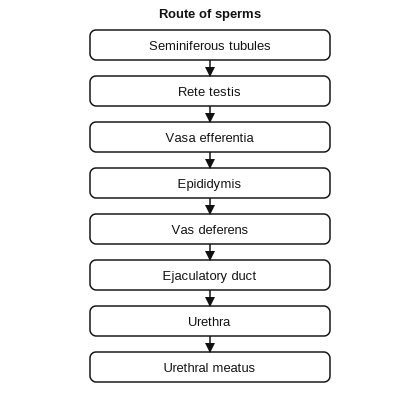
  1. Seminiferous tubules open into the rete testis → vasa efferentia leave the testis → open into the epididymis (on the posterior surface of testis) → vas deferens → joins the seminal vesicle duct to form the ejaculatory duct → urethra → out through the urethral meatus. This is (B).
  2. (A) and (D) put the epididymis before vasa efferentia; (A) and (C) omit vas deferens/ejaculatory duct; the inguinal canal is the passage of the spermatic cord, not a sperm duct.

Short trick: “Super Rich VIPs Enjoy Very Expensive Umbrellas” → Seminiferous, Rete, Vasa eff., Epididymis, Vas def., Ejaculatory, Urethra.

Answer: (B) Seminiferous tubules → Rete testis → Vasa efferentia → Epididymis → Vas deferens → Ejaculatory duct → Urethra → Urethral meatus

अवधारणा: NCERT: नर सहायक नलिकाएँ = वृषण जालिका, शुक्र वाहिकाएँ, अधिवृषण तथा शुक्रवाहक; शुक्राणु शुक्रजनक नलिकाओं में बनते हैं।
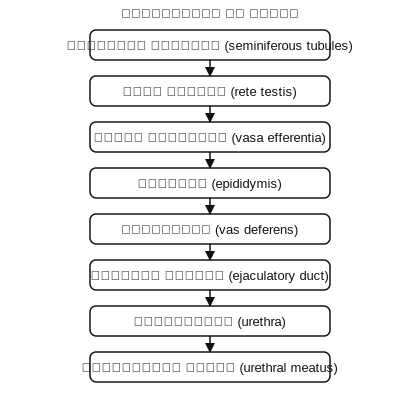
  1. शुक्रजनक नलिकाएँ वृषण जालिका में खुलती हैं → शुक्र वाहिकाएँ वृषण से बाहर निकलती हैं → अधिवृषण (वृषण की पश्च सतह पर) में खुलती हैं → शुक्रवाहक → शुक्राशय की वाहिनी से मिलकर स्खलनीय वाहिनी बनाता है → मूत्रमार्ग → मूत्रमार्ग छिद्र से बाहर। यही (B) है।
  2. (A) और (D) में अधिवृषण शुक्र वाहिकाओं से पहले है; (A) और (C) में शुक्रवाहक/स्खलनीय वाहिनी छूट गई है; वंक्षण नाल शुक्र रज्जु का मार्ग है, शुक्राणु वाहिनी नहीं।

शॉर्ट ट्रिक: “Super Rich VIPs Enjoy Very Expensive Umbrellas” → शुक्रजनक, जालिका, शुक्र वाहिका, अधिवृषण, शुक्रवाहक, स्खलनीय, मूत्रमार्ग।

उत्तर: (B) शुक्रजनक नलिकाएँ → वृषण जालिका (Rete testis) → शुक्र वाहिकाएँ (Vasa efferentia) → अधिवृषण → शुक्रवाहक (Vas deferens) → स्खलनीय वाहिनी → मूत्रमार्ग → मूत्रमार्ग छिद्र (Urethral meatus)
NEET UGBiologyHuman reproduction – male reproductive systemNEET UG 2019 · 5 May Shift 1 →
Q3742.
Match the hominids with their correct brain size :
HominidBrain size
(a) Homo habilis(i) 900 cc
(b) Homo neanderthalensis(ii) 1350 cc
(c) Homo erectus(iii) 650-800 cc
(d) Homo sapiens(iv) 1400 cc
Select the correct option.
होमिनिडों का उनके सही मस्तिष्क आकार से मिलान कीजिए :
होमिनिडमस्तिष्क आकार
(a) Homo habilis(i) 900 cc
(b) Homo neanderthalensis(ii) 1350 cc
(c) Homo erectus(iii) 650-800 cc
(d) Homo sapiens(iv) 1400 cc
सही विकल्प चुनिए।
  1. A(a)-(iii), (b)-(i), (c)-(iv), (d)-(ii)
  2. B(a)-(iii), (b)-(ii), (c)-(i), (d)-(iv)
  3. C(a)-(iii), (b)-(iv), (c)-(i), (d)-(ii)
  4. D(a)-(iv), (b)-(iii), (c)-(i), (d)-(ii)
Show answer

Concept: NCERT brain capacities: Homo habilis 650–800 cc, Homo erectus ~900 cc, Neanderthal man 1400 cc, modern Homo sapiens ~1350 cc (average).

  1. (a) H. habilis → 650-800 cc (iii).
  2. (b) H. neanderthalensis → 1400 cc (iv) – the largest of all.
  3. (c) H. erectus → 900 cc (i).
  4. (d) H. sapiens → 1350 cc (ii).
  5. a-iii, b-iv, c-i, d-ii = (C).

Short trick: Neanderthal's brain was slightly bigger than ours (1400 > 1350); sequence habilis 700 → erectus 900 → us 1350.

Answer: (C) (a)-(iii), (b)-(iv), (c)-(i), (d)-(ii)

अवधारणा: NCERT के अनुसार मस्तिष्क क्षमता: Homo habilis 650–800 cc, Homo erectus ~900 cc, निएंडरथल मानव 1400 cc, आधुनिक Homo sapiens ~1350 cc (औसत)।

  1. (a) H. habilis → 650-800 cc (iii)।
  2. (b) H. neanderthalensis → 1400 cc (iv) – सबसे बड़ा।
  3. (c) H. erectus → 900 cc (i)।
  4. (d) H. sapiens → 1350 cc (ii)।
  5. a-iii, b-iv, c-i, d-ii = (C)।

शॉर्ट ट्रिक: निएंडरथल का मस्तिष्क हमसे थोड़ा बड़ा था (1400 > 1350); क्रम habilis 700 → erectus 900 → हम 1350।

उत्तर: (C) (a)-(iii), (b)-(iv), (c)-(i), (d)-(ii)

NEET UGBiologyEvolution – human evolution (brain size)NEET UG 2019 · 5 May Shift 1 →
Q3743.
Variations caused by mutation, as proposed by Hugo de Vries are
ह्यूगो डी व्रीज़ द्वारा प्रस्तावित, उत्परिवर्तन से उत्पन्न विभिन्नताएँ होती हैं
  1. Arandom and directionalयादृच्छिक और दिशात्मक
  2. Brandom and directionlessयादृच्छिक और दिशाहीन
  3. Csmall and directionalछोटी और दिशात्मक
  4. Dsmall and directionlessछोटी और दिशाहीन
Show answer

Concept: Hugo de Vries (work on Oenothera lamarckiana): mutations are large, sudden, random and directionless; he called single-step large mutation saltation.

  1. Darwin's variations were small and directional (gradual).
  2. De Vries' mutations are random and directionless → (B).
  3. (C), (D) “small” describes Darwinian variations; (A) “directional” is wrong for mutations.

Short trick: De Vries = “Direction-less, Random, Saltation”; Darwin = small & directional.

Answer: (B) random and directionless

अवधारणा: ह्यूगो डी व्रीज़ (Oenothera lamarckiana पर कार्य): उत्परिवर्तन बड़े, अचानक, यादृच्छिक और दिशाहीन होते हैं; एक-चरणीय बड़े उत्परिवर्तन को उन्होंने साल्टेशन (उच्छलन) कहा।

  1. डार्विन की विभिन्नताएँ छोटी और दिशात्मक (क्रमिक) थीं।
  2. डी व्रीज़ के उत्परिवर्तन यादृच्छिक और दिशाहीन हैं → (B)।
  3. (C), (D) “छोटी” डार्विनी विभिन्नताओं का वर्णन है; (A) उत्परिवर्तनों के लिए “दिशात्मक” गलत है।

शॉर्ट ट्रिक: डी व्रीज़ = “दिशाहीन, यादृच्छिक, साल्टेशन”; डार्विन = छोटी व दिशात्मक।

उत्तर: (B) यादृच्छिक और दिशाहीन

NEET UGBiologyEvolution – mutation theory (Hugo de Vries)NEET UG 2019 · 5 May Shift 1 →
Q3744.
Which of the following pair of organelles does not contain DNA?
निम्नलिखित में से कोशिकांगों के किस युग्म में DNA नहीं होता?
  1. AMitochondria and Lysosomesमाइटोकॉन्ड्रिया और लयनकाय
  2. BChloroplast and Vacuolesहरितलवक और रसधानियाँ
  3. CLysosomes and Vacuolesलयनकाय और रसधानियाँ
  4. DNuclear envelope and Mitochondriaकेंद्रक आवरण और माइटोकॉन्ड्रिया
Show answer

Concept: Only the nucleus, mitochondria and chloroplasts (plastids) contain DNA. Lysosomes and vacuoles are single-membrane parts of the endomembrane system without DNA.

  1. (A) Mitochondria have DNA.
  2. (B) Chloroplasts have DNA.
  3. (D) Mitochondria have DNA.
  4. (C) Lysosomes and vacuoles – neither contains DNA → answer.

Short trick: DNA lives in the “N-M-C” trio (Nucleus, Mitochondria, Chloroplast); any pair containing M or C is out.

Answer: (C) Lysosomes and Vacuoles

अवधारणा: केवल केंद्रक, माइटोकॉन्ड्रिया और हरितलवक (लवक) में DNA होता है। लयनकाय और रसधानियाँ अंतःझिल्ली तंत्र के एकल-झिल्ली भाग हैं, जिनमें DNA नहीं होता।

  1. (A) माइटोकॉन्ड्रिया में DNA है।
  2. (B) हरितलवक में DNA है।
  3. (D) माइटोकॉन्ड्रिया में DNA है।
  4. (C) लयनकाय और रसधानियाँ – किसी में DNA नहीं → उत्तर।

शॉर्ट ट्रिक: DNA “N-M-C” तिकड़ी (केंद्रक, माइटोकॉन्ड्रिया, हरितलवक) में रहता है; M या C वाला हर युग्म बाहर।

उत्तर: (C) लयनकाय और रसधानियाँ

NEET UGBiologyCell – organelles containing DNANEET UG 2019 · 5 May Shift 1 →
Q3745.
Due to increasing air-borne allergens and pollutants, many people in urban areas are suffering from respiratory disorder causing wheezing due to
वायुजनित एलर्जनों और प्रदूषकों के बढ़ने के कारण शहरी क्षेत्रों में अनेक लोग घरघराहट (wheezing) उत्पन्न करने वाले श्वसन विकार से पीड़ित हैं, जिसका कारण है
  1. Abenign growth on mucous lining of nasal cavityनासा गुहा के श्लेष्म आस्तर पर सुदम (benign) वृद्धि
  2. Binflammation of bronchi and bronchiolesश्वसनी और श्वसनिकाओं की शोथ (inflammation)
  3. Cproliferation of fibrous tissues and damage of the alveolar wallsतंतुमय ऊतकों का प्रचुरोद्भवन तथा कूपिका भित्तियों की क्षति
  4. Dreduction in the secretion of surfactants by pneumocytes.न्यूमोसाइट्स द्वारा पृष्ठसक्रियकों (surfactants) के स्राव में कमी।
Show answer

Concept: Asthma – difficulty in breathing with wheezing due to inflammation of bronchi and bronchioles; often triggered by allergens and pollutants.

  1. (A) Benign growth in nasal mucosa = nasal polyp – blocks the nose, does not cause wheezing.
  2. (C) Fibrosis/alveolar-wall damage = occupational lung disease / emphysema.
  3. (D) Surfactant deficiency = respiratory distress syndrome of premature babies.
  4. Hence (B).

Short trick: Wheezing = Windpipe branches inflamed = Asthma (allergy-linked).

Answer: (B) inflammation of bronchi and bronchioles

अवधारणा: दमा (Asthma) – श्वसनी और श्वसनिकाओं की शोथ के कारण घरघराहट के साथ साँस लेने में कठिनाई; प्रायः एलर्जनों और प्रदूषकों से उत्प्रेरित।

  1. (A) नासा श्लेष्मा में सुदम वृद्धि = नासा पॉलिप – नाक बंद करता है, घरघराहट नहीं।
  2. (C) तंतुमयता/कूपिका भित्ति क्षति = व्यावसायिक फेफड़ा रोग / वातस्फीति (emphysema)।
  3. (D) पृष्ठसक्रियक की कमी = समय-पूर्व शिशुओं का श्वसन संकट संलक्षण।
  4. अतः (B)।

शॉर्ट ट्रिक: घरघराहट = श्वसनी शाखाओं में शोथ = दमा (एलर्जी से जुड़ा)।

उत्तर: (B) श्वसनी और श्वसनिकाओं की शोथ (inflammation)

NEET UGBiologyBreathing and exchange of gases – respiratory disordersNEET UG 2019 · 5 May Shift 1 →
Q3746.
Select the incorrect statement.
गलत कथन चुनिए।
  1. AMale fruit fly is heterogameticनर फल मक्खी विषमयुग्मकी (heterogametic) होती है
  2. BIn male grasshoppers 50% of sperms have no sex-chromosomeनर टिड्डों में 50% शुक्राणुओं में कोई लिंग-गुणसूत्र नहीं होता
  3. CIn domesticated fowls, sex of progeny depends on the type of sperm rather than eggपालतू मुर्गियों में संतति का लिंग अंडाणु के स्थान पर शुक्राणु के प्रकार पर निर्भर करता है
  4. DHuman males have one of their sex-chromosome much shorter than the otherमानव नरों में उनका एक लिंग-गुणसूत्र दूसरे से बहुत छोटा होता है
Show answer

Concept: Birds (fowl) show ZW–ZZ sex determination: the female (ZW) is heterogametic, so the egg decides the sex of the progeny.

  1. (A) Correct – Drosophila male is XY (heterogametic).
  2. (B) Correct – grasshopper male is XO, so half the sperms carry X and half carry no sex chromosome.
  3. (C) Incorrect – males are ZZ (all sperms carry Z); the egg (Z or W) decides the sex → answer.
  4. (D) Correct – the human Y chromosome is much shorter than X.

Short trick: Birds = “Mother decides” (ZW female); humans/fruit fly = father decides (XY male).

Answer: (C) In domesticated fowls, sex of progeny depends on the type of sperm rather than egg

अवधारणा: पक्षियों (मुर्गी) में ZW–ZZ लिंग निर्धारण होता है: मादा (ZW) विषमयुग्मकी होती है, अतः संतति का लिंग अंडाणु तय करता है।

  1. (A) सही – Drosophila का नर XY (विषमयुग्मकी) है।
  2. (B) सही – टिड्डे का नर XO है, अतः आधे शुक्राणुओं में X और आधों में कोई लिंग गुणसूत्र नहीं होता।
  3. (C) गलत – नर ZZ हैं (सभी शुक्राणुओं में Z); अंडाणु (Z या W) लिंग तय करता है → उत्तर।
  4. (D) सही – मानव Y गुणसूत्र X से बहुत छोटा होता है।

शॉर्ट ट्रिक: पक्षी = “माँ तय करती है” (ZW मादा); मनुष्य/फल मक्खी = पिता तय करता है (XY नर)।

उत्तर: (C) पालतू मुर्गियों में संतति का लिंग अंडाणु के स्थान पर शुक्राणु के प्रकार पर निर्भर करता है

NEET UGBiologyPrinciples of inheritance – sex determinationNEET UG 2019 · 5 May Shift 1 →
Q3747.
DNA precipitation out of a mixture of biomolecules can be achieved by treatment with
जैव अणुओं के मिश्रण से DNA का अवक्षेपण किसके उपचार द्वारा प्राप्त किया जा सकता है?
  1. AIsopropanolआइसोप्रोपेनॉल
  2. BChilled ethanolद्रुतशीतित (chilled) एथेनॉल
  3. CMethanol at room temperatureकमरे के ताप पर मेथेनॉल
  4. DChilled chloroformद्रुतशीतित क्लोरोफॉर्म
Show answer

Concept: NCERT (isolation of DNA): after removing RNA (ribonuclease) and proteins (protease), “purified DNA ultimately precipitates out after the addition of chilled ethanol” – seen as fine threads (spooling).

  1. (A) Isopropanol can also precipitate DNA in labs, but the NCERT/standard answer for this question is chilled ethanol.
  2. (C) Methanol at room temperature is not used.
  3. (D) Chloroform is used to extract proteins/lipids (phenol-chloroform), not to precipitate DNA.

Short trick: “Cold alcohol makes DNA come out” – chilled ethanol → spooling.

Answer: (B) Chilled ethanol

अवधारणा: NCERT (DNA का पृथक्करण): RNA (राइबोन्यूक्लिएज़) व प्रोटीन (प्रोटिएज़) हटाने के बाद “द्रुतशीतित एथेनॉल मिलाने पर शुद्ध DNA अंततः अवक्षेपित हो जाता है” – महीन धागों के रूप में दिखता है (स्पूलिंग)।

  1. (A) प्रयोगशाला में आइसोप्रोपेनॉल से भी DNA अवक्षेपित हो सकता है, किंतु इस प्रश्न का NCERT/मानक उत्तर द्रुतशीतित एथेनॉल है।
  2. (C) कमरे के ताप पर मेथेनॉल प्रयुक्त नहीं होता।
  3. (D) क्लोरोफॉर्म प्रोटीन/लिपिड निष्कर्षण (फीनॉल-क्लोरोफॉर्म) में प्रयुक्त होता है, DNA अवक्षेपण में नहीं।

शॉर्ट ट्रिक: “ठंडा ऐल्कोहॉल DNA को बाहर निकालता है” – द्रुतशीतित एथेनॉल → स्पूलिंग।

उत्तर: (B) द्रुतशीतित (chilled) एथेनॉल

NEET UGBiologyBiotechnology – isolation of DNANEET UG 2019 · 5 May Shift 1 →
Q3748.
Select the correct group of biocontrol agents.
जैव नियंत्रण कारकों का सही समूह चुनिए।
  1. ABacillus thuringiensis, Tobacco mosaic virus, AphidsBacillus thuringiensis, तंबाकू मोज़ेक वायरस, ऐफिड
  2. BTrichoderma, Baculovirus, Bacillus thuringiensis
  3. COscillatoria, Rhizobium, Trichoderma
  4. DNostoc, Azospirillum, NucleopolyhedrovirusNostoc, Azospirillum, न्यूक्लियोपॉलीहेड्रोवायरस
Show answer

Concept: Biocontrol agents (NCERT): Bacillus thuringiensis (Bt – butterfly caterpillars), Trichoderma (fungus against plant pathogens), Baculoviruses of genus Nucleopolyhedrovirus (insects), ladybird, dragonflies.

  1. (B) all three are biocontrol agents → correct.
  2. (A) TMV is a plant pathogen and aphids are pests, not biocontrol agents.
  3. (C) Oscillatoria and Rhizobium are biofertilisers (N2-fixers).
  4. (D) Nostoc and Azospirillum are biofertilisers.

Short trick: Biocontrol “B-T-B”: Bt, Trichoderma, Baculovirus; biofertilisers: Rhizobium, Azospirillum, Nostoc, Anabaena, Oscillatoria.

Answer: (B) Trichoderma, Baculovirus, Bacillus thuringiensis

अवधारणा: जैव नियंत्रण कारक (NCERT): Bacillus thuringiensis (Bt – तितली के इल्लियाँ), Trichoderma (पादप रोगजनकों के विरुद्ध कवक), Nucleopolyhedrovirus वंश के बैक्युलोवायरस (कीट), लेडीबर्ड, ड्रैगनफ्लाई।

  1. (B) तीनों जैव नियंत्रण कारक हैं → सही।
  2. (A) TMV पादप रोगजनक है तथा ऐफिड पीड़क हैं, जैव नियंत्रण कारक नहीं।
  3. (C) Oscillatoria और Rhizobium जैव उर्वरक (N2-स्थिरीकारक) हैं।
  4. (D) Nostoc और Azospirillum जैव उर्वरक हैं।

शॉर्ट ट्रिक: जैव नियंत्रण “B-T-B”: Bt, Trichoderma, बैक्युलोवायरस; जैव उर्वरक: Rhizobium, Azospirillum, Nostoc, Anabaena, Oscillatoria।

उत्तर: (B) Trichoderma, Baculovirus, Bacillus thuringiensis

NEET UGBiologyMicrobes in human welfare – biocontrol agentsNEET UG 2019 · 5 May Shift 1 →
Q3749.
Select the incorrect statement.
गलत कथन चुनिए।
  1. AInbreeding increases homozygosityअंतःप्रजनन समयुग्मजता बढ़ाता है
  2. BInbreeding is essential to evolve purelines in any animal.किसी भी जंतु में शुद्ध वंशक्रम (purelines) विकसित करने के लिए अंतःप्रजनन आवश्यक है।
  3. CInbreeding selects harmful recessive genes that reduce fertility and productivityअंतःप्रजनन उन हानिकारक अप्रभावी जीनों का चयन करता है जो जननक्षमता और उत्पादकता घटाते हैं
  4. DInbreeding helps in accumulation of superior genes and elimination of undesirable genesअंतःप्रजनन श्रेष्ठ जीनों के संचय और अवांछनीय जीनों के निष्कासन में सहायक है
Show answer

Concept: NCERT: inbreeding increases homozygosity, is necessary to evolve a pureline, and “exposes harmful recessive genes that are eliminated by selection”; it helps accumulate superior genes.

  1. (A) True – mating of closely related individuals increases homozygosity.
  2. (B) True – NCERT line.
  3. (C) Incorrect – inbreeding does not select harmful recessive genes; it exposes them so that they can be eliminated by selection. (Continued inbreeding may cause inbreeding depression, but that is not “selection” of such genes.)
  4. (D) True.

Short trick: Inbreeding exposes, selection eliminates – never “selects” the harmful gene.

Answer: (C) Inbreeding selects harmful recessive genes that reduce fertility and productivity

अवधारणा: NCERT: अंतःप्रजनन समयुग्मजता बढ़ाता है, शुद्ध वंशक्रम विकसित करने हेतु आवश्यक है, और “हानिकारक अप्रभावी जीनों को अनावृत करता है जिन्हें चयन द्वारा निष्कासित किया जाता है”; यह श्रेष्ठ जीनों के संचय में सहायक है।

  1. (A) सत्य – निकट संबंधी जीवों के संगम से समयुग्मजता बढ़ती है।
  2. (B) सत्य – NCERT पंक्ति।
  3. (C) गलत – अंतःप्रजनन हानिकारक अप्रभावी जीनों का चयन नहीं करता; यह उन्हें अनावृत करता है ताकि चयन द्वारा उन्हें हटाया जा सके। (लगातार अंतःप्रजनन से अंतःप्रजनन अवसादन हो सकता है, पर वह ऐसे जीनों का “चयन” नहीं है।)
  4. (D) सत्य।

शॉर्ट ट्रिक: अंतःप्रजनन अनावृत करता है, चयन हटाता है – हानिकारक जीन का “चयन” कभी नहीं।

उत्तर: (C) अंतःप्रजनन उन हानिकारक अप्रभावी जीनों का चयन करता है जो जननक्षमता और उत्पादकता घटाते हैं

NEET UGBiologyStrategies for enhancement in food production – inbreedingNEET UG 2019 · 5 May Shift 1 →
Q3750.
Match the following organisms with the products they produce
OrganismProduct
(a) Lactobacillus(i) Cheese
(b) Saccharomyces cerevisiae(ii) Curd
(c) Aspergillus niger(iii) Citric Acid
(d) Acetobacter aceti(iv) Bread
(v) Acetic Acid
Select the correct option.
निम्नलिखित जीवों का उनके द्वारा उत्पन्न उत्पादों से मिलान कीजिए
जीवउत्पाद
(a) Lactobacillus(i) पनीर (Cheese)
(b) Saccharomyces cerevisiae(ii) दही
(c) Aspergillus niger(iii) सिट्रिक अम्ल
(d) Acetobacter aceti(iv) ब्रेड
(v) ऐसीटिक अम्ल
सही विकल्प चुनिए।
  1. A(a)-(ii), (b)-(iv), (c)-(v), (d)-(iii)
  2. B(a)-(ii), (b)-(iv), (c)-(iii), (d)-(v)
  3. C(a)-(iii), (b)-(iv), (c)-(v), (d)-(i)
  4. D(a)-(ii), (b)-(i), (c)-(iii), (d)-(v)
Show answer

Concept: NCERT examples of microbial products.

  1. (a) Lactobacillus (LAB) converts milk into curd → (ii).
  2. (b) Saccharomyces cerevisiae (baker's yeast) – dough fermentation for bread → (iv).
  3. (c) Aspergillus niger (fungus) → citric acid → (iii).
  4. (d) Acetobacter aceti (bacterium) → acetic acid → (v).
  5. a-ii, b-iv, c-iii, d-v = (B). (Cheese (i) is the distractor.)

Short trick: Organic acids: “Aspergillus – citric, Acetobacter – acetic, Clostridium – butyric, Lactobacillus – lactic”.

Answer: (B) (a)-(ii), (b)-(iv), (c)-(iii), (d)-(v)

अवधारणा: सूक्ष्मजीवी उत्पादों के NCERT उदाहरण।

  1. (a) Lactobacillus (LAB) दूध को दही में बदलता है → (ii)।
  2. (b) Saccharomyces cerevisiae (बेकर यीस्ट) – ब्रेड के लिए आटे का किण्वन → (iv)।
  3. (c) Aspergillus niger (कवक) → सिट्रिक अम्ल → (iii)।
  4. (d) Acetobacter aceti (जीवाणु) → ऐसीटिक अम्ल → (v)।
  5. a-ii, b-iv, c-iii, d-v = (B)। (पनीर (i) भ्रामक विकल्प है।)

शॉर्ट ट्रिक: कार्बनिक अम्ल: “Aspergillus – सिट्रिक, Acetobacter – ऐसीटिक, Clostridium – ब्यूटिरिक, Lactobacillus – लैक्टिक”।

उत्तर: (B) (a)-(ii), (b)-(iv), (c)-(iii), (d)-(v)

NEET UGBiologyMicrobes in human welfare – household and industrial productsNEET UG 2019 · 5 May Shift 1 →
Q3751.
What is the direction of movement of sugars in phloem?
फ्लोएम में शर्कराओं की गति की दिशा क्या है?
  1. ANon-multidirectionalअबहुदिशीय (Non-multidirectional)
  2. BUpwardऊपर की ओर
  3. CDownwardनीचे की ओर
  4. DBi-directionalद्विदिशीय (Bi-directional)
Show answer

Concept: Phloem moves sugars from source to sink; since source and sink can be reversed with season (e.g. stored food in roots mobilised in spring), the movement is bi-directional.

  1. Xylem flow is unidirectional (upward); phloem flow can be upward or downward → bi-directional (D).
  2. (B) only upward and (C) only downward are each half the truth; (A) is not a recognised term.

Short trick: Xylem = one-way lift; Phloem = two-way traffic (source ⇄ sink).

Answer: (D) Bi-directional

अवधारणा: फ्लोएम शर्कराओं को स्रोत (source) से कुंड (sink) की ओर ले जाता है; क्योंकि मौसम के अनुसार स्रोत और कुंड उलट सकते हैं (जैसे वसंत में जड़ों में संचित भोजन का उपयोग), गति द्विदिशीय होती है।

  1. जाइलम प्रवाह एकदिशीय (ऊपर की ओर) है; फ्लोएम प्रवाह ऊपर या नीचे दोनों ओर हो सकता है → द्विदिशीय (D)।
  2. (B) केवल ऊपर और (C) केवल नीचे – दोनों आधा सत्य हैं; (A) कोई मान्य शब्द नहीं है।

शॉर्ट ट्रिक: जाइलम = एकतरफ़ा लिफ़्ट; फ्लोएम = दोतरफ़ा यातायात (स्रोत ⇄ कुंड)।

उत्तर: (D) द्विदिशीय (Bi-directional)

NEET UGBiologyTransport in plants – phloem transportNEET UG 2019 · 5 May Shift 1 →
Q3752.
In some plants, the female gamete develops into embryo without fertilization. This phenomenon is known as
कुछ पादपों में मादा युग्मक बिना निषेचन के भ्रूण में विकसित हो जाता है। यह परिघटना कहलाती है
  1. AAutogamyस्वयुग्मन (Autogamy)
  2. BParthenocarpyअनिषेकफलन (Parthenocarpy)
  3. CSyngamyयुग्मक संलयन (Syngamy)
  4. DParthenogenesisअनिषेकजनन (Parthenogenesis)
Show answer

Concept: Parthenogenesis – development of the female gamete (egg) into a new individual/embryo without fertilisation (e.g. rotifers, honeybee drones, some plants).

  1. (A) Autogamy – transfer of pollen to the stigma of the same flower (self-pollination).
  2. (B) Parthenocarpy – formation of fruit without fertilisation (seedless banana).
  3. (C) Syngamy – fusion of male and female gametes (fertilisation itself).
  4. So (D).

Short trick: Partheno = virgin: -genesis → embryo/organism; -carpy → fruit (carpel).

Answer: (D) Parthenogenesis

अवधारणा: अनिषेकजनन – मादा युग्मक (अंडाणु) का बिना निषेचन के नए जीव/भ्रूण में विकसित होना (जैसे रोटिफर, मधुमक्खी के ड्रोन, कुछ पादप)।

  1. (A) स्वयुग्मन – उसी पुष्प के वर्तिकाग्र पर परागकणों का स्थानांतरण (स्व-परागण)।
  2. (B) अनिषेकफलन – बिना निषेचन के फल बनना (बीजरहित केला)।
  3. (C) युग्मक संलयन – नर और मादा युग्मकों का संलयन (स्वयं निषेचन)।
  4. अतः (D)।

शॉर्ट ट्रिक: पार्थेनो = कुमारी: -जेनेसिस → भ्रूण/जीव; -कार्पी → फल (अंडप)।

उत्तर: (D) अनिषेकजनन (Parthenogenesis)

NEET UGBiologyReproduction – parthenogenesisNEET UG 2019 · 5 May Shift 1 →
Q3753.
Persistent nucellus in the seed is known as
बीज में स्थायी बीजांडकाय (nucellus) कहलाता है
  1. AChalazaनिभाग (Chalaza)
  2. BPerispermपरिभ्रूणपोष (Perisperm)
  3. CHilumनाभिका (Hilum)
  4. DTegmenअंतःकवच (Tegmen)
Show answer

Concept: NCERT: “Occasionally, in some seeds such as black pepper and beet, remnants of nucellus are also persistent. This residual, persistent nucellus is the perisperm.”

  1. (A) Chalaza – basal part of the ovule opposite the micropyle where integuments arise.
  2. (C) Hilum – scar on the seed where it was attached to the funicle.
  3. (D) Tegmen – inner seed coat (from inner integument).
  4. So (B).

Short trick: Perisperm = Pepper & beet keep the nucellus (“Nucellus → Perisperm”).

Answer: (B) Perisperm

अवधारणा: NCERT: “कभी-कभी कुछ बीजों जैसे काली मिर्च और चुकंदर में बीजांडकाय के अवशेष भी स्थायी रहते हैं। यह अवशिष्ट, स्थायी बीजांडकाय परिभ्रूणपोष (perisperm) है।”

  1. (A) निभाग – बीजांडद्वार के विपरीत बीजांड का आधारी भाग, जहाँ से अध्यावरण निकलते हैं।
  2. (C) नाभिका – बीज पर वह चिह्न जहाँ वह बीजांडवृंत से जुड़ा था।
  3. (D) अंतःकवच (टेग्मेन) – भीतरी बीजावरण (भीतरी अध्यावरण से)।
  4. अतः (B)।

शॉर्ट ट्रिक: पेरीस्पर्म = काली मिर्च और चुकंदर बीजांडकाय रखते हैं (“बीजांडकाय → परिभ्रूणपोष”)।

उत्तर: (B) परिभ्रूणपोष (Perisperm)

NEET UGBiologySexual reproduction in flowering plants – seed (perisperm)NEET UG 2019 · 5 May Shift 1 →
Q3754.
What map unit (Centimorgan) is adopted in the construction of genetic maps?
आनुवंशिक मानचित्रों के निर्माण में कौन-सी मानचित्र इकाई (सेंटीमॉर्गन) अपनाई जाती है?
  1. AA unit of distance between two expressed genes representing 10% cross over.दो अभिव्यक्त जीनों के बीच की दूरी की इकाई जो 10% जीन विनिमय (cross over) दर्शाती है।
  2. BA unit of distance between two expressed genes representing 100% cross over.दो अभिव्यक्त जीनों के बीच की दूरी की इकाई जो 100% जीन विनिमय दर्शाती है।
  3. CA unit of distance between genes on chromosomes, representing 1% cross over.गुणसूत्रों पर जीनों के बीच की दूरी की इकाई, जो 1% जीन विनिमय दर्शाती है।
  4. DA unit of distance between genes on chromosomes, representing 50% cross over.गुणसूत्रों पर जीनों के बीच की दूरी की इकाई, जो 50% जीन विनिमय दर्शाती है।
Show answer

Concept: Sturtevant used the frequency of recombination (crossing over) between gene pairs on the same chromosome as a measure of the distance between them; 1 map unit = 1 centimorgan (cM) = 1% recombination/crossing over.

  1. Hence a 1 cM distance means 1 recombinant in 100 gametes → (C).
  2. 10% and 100% are wrong values; 50% recombination is the maximum (genes behave as unlinked), not one unit.

Short trick: Centimorgan → centi = 1/100 → 1% crossing over.

Answer: (C) A unit of distance between genes on chromosomes, representing 1% cross over.

अवधारणा: स्टुर्टेवेंट ने एक ही गुणसूत्र पर स्थित जीन-युग्मों के बीच पुनर्योजन (जीन विनिमय) की आवृत्ति को उनकी दूरी का माप माना; 1 मानचित्र इकाई = 1 सेंटीमॉर्गन (cM) = 1% पुनर्योजन/जीन विनिमय।

  1. अतः 1 cM दूरी का अर्थ है 100 युग्मकों में 1 पुनर्योगज → (C)।
  2. 10% और 100% गलत मान हैं; 50% पुनर्योजन अधिकतम है (जीन असहलग्न की भाँति व्यवहार करते हैं), एक इकाई नहीं।

शॉर्ट ट्रिक: सेंटीमॉर्गन → सेंटी = 1/100 → 1% जीन विनिमय।

उत्तर: (C) गुणसूत्रों पर जीनों के बीच की दूरी की इकाई, जो 1% जीन विनिमय दर्शाती है।

NEET UGBiologyPrinciples of inheritance – linkage and genetic mapsNEET UG 2019 · 5 May Shift 1 →
Q3755.
What would be the heart rate of a person if the cardiac output is 5 L, blood volume in the ventricles at the end of diastole is 100 mL and at the end of ventricular systole is 50 mL?
यदि किसी व्यक्ति का हृद् निर्गम (cardiac output) 5 L है, अनुशिथिलन (diastole) के अंत में निलयों में रक्त का आयतन 100 mL तथा निलय प्रकुंचन (systole) के अंत में 50 mL है, तो उसकी हृदय दर क्या होगी?
  1. A50 beats per minute50 स्पंदन प्रति मिनट
  2. B75 beats per minute75 स्पंदन प्रति मिनट
  3. C100 beats per minute100 स्पंदन प्रति मिनट
  4. D125 beats per minute125 स्पंदन प्रति मिनट
Show answer

Concept: Cardiac output = stroke volume × heart rate; stroke volume = end-diastolic volume − end-systolic volume.

  1. Stroke volume = 100 mL − 50 mL = 50 mL per beat.
  2. Cardiac output = 5 L/min = 5000 mL/min.
  3. Heart rate = 5000 ÷ 50 = 100 beats per minute → (C).

Short trick: Normal: 70 mL × 72 ≈ 5 L. Same 5 L with a smaller stroke (50 mL) needs a faster rate: 5000/50 = 100.

Answer: (C) 100 beats per minute

अवधारणा: हृद् निर्गम = प्रवाह आयतन (stroke volume) × हृदय दर; प्रवाह आयतन = अनुशिथिलन-अंत आयतन − प्रकुंचन-अंत आयतन।

  1. प्रवाह आयतन = 100 mL − 50 mL = 50 mL प्रति स्पंदन।
  2. हृद् निर्गम = 5 L/मिनट = 5000 mL/मिनट।
  3. हृदय दर = 5000 ÷ 50 = 100 स्पंदन प्रति मिनट → (C)।

शॉर्ट ट्रिक: सामान्य: 70 mL × 72 ≈ 5 L। छोटे प्रवाह आयतन (50 mL) से वही 5 L पाने के लिए तेज़ दर चाहिए: 5000/50 = 100।

उत्तर: (C) 100 स्पंदन प्रति मिनट

NEET UGBiologyBody fluids and circulation – cardiac outputNEET UG 2019 · 5 May Shift 1 →
Q3756.
Thiobacillus is a group of bacteria helpful in carrying out
Thiobacillus जीवाणुओं का एक समूह है जो किसे संपन्न करने में सहायक है?
  1. ANitrogen fixationनाइट्रोजन स्थिरीकरण
  2. BChemoautotrophic fixationरसायन-स्वपोषी स्थिरीकरण
  3. CNitrificationनाइट्रीकरण
  4. DDenitrificationविनाइट्रीकरण
Show answer

Concept: NCERT (Mineral Nutrition): “Nitrate present in the soil is also reduced to nitrogen by the process of denitrification, carried out by bacteria Pseudomonas and Thiobacillus.”

  1. (A) N2 fixation – Rhizobium, Azotobacter, Anabaena, Nostoc.
  2. (C) Nitrification – Nitrosomonas/Nitrococcus (NH3 → NO2−) and Nitrobacter (NO2− → NO3−).
  3. (B) Although Thiobacillus is chemoautotrophic, “chemoautotrophic fixation” is not the process it is cited for in the nitrogen cycle.
  4. Hence (D).

Short trick: Denitrifiers “P-T” = Pseudomonas, Thiobacillus (they “Put The N2 back”).

Answer: (D) Denitrification

अवधारणा: NCERT (खनिज पोषण): “मृदा में उपस्थित नाइट्रेट का विनाइट्रीकरण द्वारा नाइट्रोजन में अपचयन भी होता है, जिसे Pseudomonas और Thiobacillus जीवाणु संपन्न करते हैं।”

  1. (A) N2 स्थिरीकरण – Rhizobium, Azotobacter, Anabaena, Nostoc।
  2. (C) नाइट्रीकरण – Nitrosomonas/Nitrococcus (NH3 → NO2−) तथा Nitrobacter (NO2− → NO3−)।
  3. (B) यद्यपि Thiobacillus रसायन-स्वपोषी है, नाइट्रोजन चक्र में इसका उल्लेख “रसायन-स्वपोषी स्थिरीकरण” के लिए नहीं होता।
  4. अतः (D)।

शॉर्ट ट्रिक: विनाइट्रीकारक “P-T” = Pseudomonas, Thiobacillus (N2 को वायु में वापस भेजते हैं)।

उत्तर: (D) विनाइट्रीकरण

NEET UGBiologyMineral nutrition – nitrogen cycle (denitrification)NEET UG 2019 · 5 May Shift 1 →
Q3757.
Which of the following factors is responsible for the formation of concentrated urine?
निम्नलिखित में से कौन-सा कारक सांद्र मूत्र के निर्माण के लिए उत्तरदायी है?
  1. ALow levels of antidiuretic hormoneप्रतिमूत्रल हॉर्मोन (ADH) का निम्न स्तर
  2. BMaintaining hyperosmolarity towards inner medullary interstitium in the kidneys.वृक्कों में आंतरिक मध्यांश अंतराकाश (inner medullary interstitium) की ओर अतिपरासरणता बनाए रखना।
  3. CSecretion of erythropoietin by Juxtaglomerular complexजक्स्टा-गुच्छ सम्मिश्र द्वारा एरिथ्रोपोइटिन का स्राव
  4. DHydrostatic pressure during glomerular filtrationगुच्छीय निस्यंदन के दौरान द्रवस्थैतिक दाब
Show answer

Concept: The counter-current mechanism (Henle's loop + vasa recta) maintains an increasing osmolarity in the medullary interstitium – from 300 mOsmol/L in the cortex to about 1200 mOsmol/L in the inner medulla; this gradient draws water out of the collecting duct and concentrates the urine.

  1. (B) is exactly this gradient → correct.
  2. (A) Low ADH → less water reabsorption → dilute (more) urine.
  3. (C) Erythropoietin stimulates RBC formation – unrelated to urine concentration.
  4. (D) Glomerular hydrostatic pressure drives filtration, not concentration.

Short trick: Concentrated urine = “Salty medulla + high ADH”.

Answer: (B) Maintaining hyperosmolarity towards inner medullary interstitium in the kidneys.

अवधारणा: प्रतिधारा क्रियाविधि (हेनले लूप + वासा रेक्टा) मध्यांश अंतराकाश में बढ़ती परासरणता बनाए रखती है – वल्कुट में 300 mOsmol/L से आंतरिक मध्यांश में लगभग 1200 mOsmol/L तक; यह प्रवणता संग्रह नलिका से जल खींचती है और मूत्र को सांद्र करती है।

  1. (B) ठीक यही प्रवणता है → सही।
  2. (A) ADH कम → जल का कम पुनरवशोषण → तनु (अधिक) मूत्र।
  3. (C) एरिथ्रोपोइटिन RBC निर्माण उत्तेजित करता है – मूत्र सांद्रता से संबंध नहीं।
  4. (D) गुच्छीय द्रवस्थैतिक दाब निस्यंदन कराता है, सांद्रण नहीं।

शॉर्ट ट्रिक: सांद्र मूत्र = “नमकीन मध्यांश + उच्च ADH”।

उत्तर: (B) वृक्कों में आंतरिक मध्यांश अंतराकाश (inner medullary interstitium) की ओर अतिपरासरणता बनाए रखना।

NEET UGBiologyExcretory products – counter-current mechanismNEET UG 2019 · 5 May Shift 1 →
Q3758.
Which of the following statements regarding mitochondria is incorrect?
माइटोकॉन्ड्रिया के संबंध में निम्नलिखित में से कौन-सा कथन गलत है?
  1. AOuter membrane is permeable to monomers of carbohydrates, fats and proteins.बाह्य झिल्ली कार्बोहाइड्रेट, वसा और प्रोटीन के एकलकों के लिए पारगम्य है।
  2. BEnzymes of electron transport are embedded in outer membrane.इलेक्ट्रॉन परिवहन के एंजाइम बाह्य झिल्ली में धँसे होते हैं।
  3. CInner membrane is convoluted with infoldings.भीतरी झिल्ली अंतर्वलनों (infoldings) सहित वलित होती है।
  4. DMitochondrial matrix contains single circular DNA molecule and ribosomes.माइटोकॉन्ड्रियल आधात्री (matrix) में एकल वृत्ताकार DNA अणु तथा राइबोसोम होते हैं।
Show answer

Concept: The electron transport system (complexes I–IV) and ATP synthase are located in the inner mitochondrial membrane (cristae).

  1. (A) True – the outer membrane has porins, so it is freely permeable to small monomers.
  2. (B) Incorrect – ETS enzymes are in the inner membrane, not the outer → answer.
  3. (C) True – the inner membrane forms cristae (infoldings) to increase surface area.
  4. (D) True – matrix has a single circular DNA, 70S ribosomes and Krebs cycle enzymes.

Short trick: ETS lives where the folds are – inner membrane/cristae.

Answer: (B) Enzymes of electron transport are embedded in outer membrane.

अवधारणा: इलेक्ट्रॉन परिवहन तंत्र (सम्मिश्र I–IV) और ATP सिंथेज़ माइटोकॉन्ड्रिया की भीतरी झिल्ली (क्रिस्टी) में स्थित होते हैं।

  1. (A) सत्य – बाह्य झिल्ली में पोरिन होते हैं, अतः यह छोटे एकलकों के लिए मुक्त रूप से पारगम्य है।
  2. (B) गलत – ETS एंजाइम भीतरी झिल्ली में होते हैं, बाह्य में नहीं → उत्तर।
  3. (C) सत्य – भीतरी झिल्ली सतह क्षेत्र बढ़ाने हेतु क्रिस्टी (अंतर्वलन) बनाती है।
  4. (D) सत्य – आधात्री में एकल वृत्ताकार DNA, 70S राइबोसोम तथा क्रेब्स चक्र के एंजाइम होते हैं।

शॉर्ट ट्रिक: ETS वहाँ रहता है जहाँ वलन हैं – भीतरी झिल्ली/क्रिस्टी।

उत्तर: (B) इलेक्ट्रॉन परिवहन के एंजाइम बाह्य झिल्ली में धँसे होते हैं।

NEET UGBiologyCell – mitochondriaNEET UG 2019 · 5 May Shift 1 →
Q3759.
Xylem translocates.
जाइलम स्थानांतरित करता है।
  1. AWater onlyकेवल जल
  2. BWater and mineral salts onlyकेवल जल और खनिज लवण
  3. CWater, mineral salts and some organic nitrogen onlyकेवल जल, खनिज लवण और कुछ कार्बनिक नाइट्रोजन
  4. DWater, mineral salts, some organic nitrogen and hormonesजल, खनिज लवण, कुछ कार्बनिक नाइट्रोजन और हॉर्मोन
Show answer

Concept: NCERT (Transport in Plants): “Xylem is associated with translocation of mainly water, mineral salts, some organic nitrogen and hormones, from roots to the aerial parts.”

  1. So xylem carries all four → (D).
  2. (A), (B), (C) each stop short with “only” and leave out items that xylem does carry.

Short trick: In “only” questions, the option with the longest complete NCERT list wins: water + minerals + organic N + hormones.

Answer: (D) Water, mineral salts, some organic nitrogen and hormones

अवधारणा: NCERT (पादपों में परिवहन): “जाइलम मुख्यतः जल, खनिज लवण, कुछ कार्बनिक नाइट्रोजन और हॉर्मोनों का जड़ों से वायवीय भागों तक स्थानांतरण करता है।”

  1. अतः जाइलम चारों का वहन करता है → (D)।
  2. (A), (B), (C) प्रत्येक “केवल” के साथ अधूरा है और उन पदार्थों को छोड़ देता है जिनका जाइलम वहन करता है।

शॉर्ट ट्रिक: “केवल” वाले प्रश्नों में सबसे पूर्ण NCERT सूची वाला विकल्प सही: जल + खनिज + कार्बनिक N + हॉर्मोन।

उत्तर: (D) जल, खनिज लवण, कुछ कार्बनिक नाइट्रोजन और हॉर्मोन

NEET UGBiologyTransport in plants – xylem transportNEET UG 2019 · 5 May Shift 1 →
Q3760.
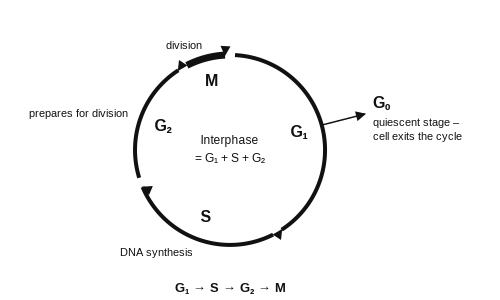
Cell in G0 phase :
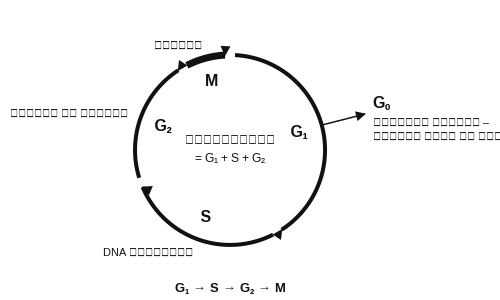
G0 प्रावस्था में कोशिका :
  1. Aexit the cell cycleकोशिका चक्र से बाहर निकल जाती है
  2. Benter the cell cycleकोशिका चक्र में प्रवेश करती है
  3. Csuspend the cell cycleकोशिका चक्र को स्थगित करती है
  4. Dterminate the cell cycleकोशिका चक्र को समाप्त करती है
Show answer

Concept: NCERT: “Some cells in the adult animals do not appear to exhibit division … cells that do not divide further exit G1 phase to enter an inactive stage called quiescent stage (G0) of the cell cycle.” Such cells remain metabolically active but no longer proliferate unless called upon.

  1. G0 cells have exited the cell cycle → (A).
  2. (B) Entering the cycle is the opposite (G0 → G1 happens only on stimulation).
  3. (C) “Suspend” is not the NCERT description; (D) “terminate” implies the cell cycle ends/dies – G0 cells are alive and can re-enter.

Short trick: G0 = “Gone 0ut” of the cycle (e.g. heart muscle cells, neurons).

Answer: (A) exit the cell cycle

अवधारणा: NCERT: “वयस्क जंतुओं की कुछ कोशिकाएँ विभाजित होती प्रतीत नहीं होतीं … जो कोशिकाएँ आगे विभाजित नहीं होतीं वे G1 प्रावस्था से बाहर निकलकर कोशिका चक्र की एक निष्क्रिय अवस्था, प्रशांत अवस्था (G0), में प्रवेश करती हैं।” ऐसी कोशिकाएँ उपापचयी रूप से सक्रिय रहती हैं परंतु आवश्यकता पड़ने तक प्रचुरोद्भवन नहीं करतीं।

  1. G0 कोशिकाएँ कोशिका चक्र से बाहर निकल चुकी हैं → (A)।
  2. (B) चक्र में प्रवेश इसका उलटा है (G0 → G1 केवल उद्दीपन पर होता है)।
  3. (C) “स्थगित” NCERT का वर्णन नहीं है; (D) “समाप्त” का अर्थ है कोशिका चक्र का अंत/मृत्यु – G0 कोशिकाएँ जीवित रहती हैं और पुनः प्रवेश कर सकती हैं।

शॉर्ट ट्रिक: G0 = चक्र से “बाहर” (जैसे हृद पेशी कोशिकाएँ, तंत्रिका कोशिकाएँ)।

उत्तर: (A) कोशिका चक्र से बाहर निकल जाती है

NEET UGBiologyCell cycle – quiescent stage (G₀)NEET UG 2019 · 5 May Shift 1 →