Question bank

Q&A: practice questions with answers

Search questions on any topic. Filter by exam category, exam, subject and topic, try the question, then open the answer and explanation.

Courses – airGurukul

53,050 questions in the question bank.

Q3781.
Which of the following statements is incorrect?
निम्नलिखित में से कौन-सा कथन गलत है?
  1. AViroids lack a protein coat.वाइरॉइड में प्रोटीन आवरण नहीं होता।
  2. BViruses are obligate parasites.वायरस अविकल्पी परजीवी होते हैं।
  3. CInfective constituent in viruses is the protein coat.वायरस में संक्रामक घटक प्रोटीन आवरण होता है।
  4. DPrions consist of abnormally folded proteins.प्रिऑन असामान्य रूप से वलित प्रोटीनों से बने होते हैं।
Show answer

Concept: A virus = nucleoprotein: genetic material (RNA or DNA) + protein coat (capsid). The nucleic acid is infectious; the capsid only protects it.

  1. (A) True – viroids (potato spindle tuber disease) are free RNA without a protein coat.
  2. (B) True – viruses multiply only inside living host cells.
  3. (C) Incorrect – the infective part is the nucleic acid, not the protein coat (Hershey–Chase: only DNA enters the bacterium).
  4. (D) True – prions (BSE, CJD) are abnormally folded proteins.

Short trick: Hershey–Chase: radioactive 32P (DNA) entered the host, 35S (protein) stayed outside → nucleic acid infects.

Answer: (C) Infective constituent in viruses is the protein coat.

अवधारणा: वायरस = न्यूक्लियोप्रोटीन: आनुवंशिक पदार्थ (RNA या DNA) + प्रोटीन आवरण (कैप्सिड)। न्यूक्लिक अम्ल संक्रामक होता है; कैप्सिड केवल उसकी रक्षा करता है।

  1. (A) सत्य – वाइरॉइड (आलू का स्पिंडल ट्यूबर रोग) प्रोटीन आवरण-रहित मुक्त RNA हैं।
  2. (B) सत्य – वायरस केवल जीवित परपोषी कोशिकाओं के भीतर गुणन करते हैं।
  3. (C) गलत – संक्रामक भाग न्यूक्लिक अम्ल है, प्रोटीन आवरण नहीं (हर्शे–चेस: केवल DNA जीवाणु में प्रवेश करता है)।
  4. (D) सत्य – प्रिऑन (BSE, CJD) असामान्य रूप से वलित प्रोटीन हैं।

शॉर्ट ट्रिक: हर्शे–चेस: रेडियोसक्रिय 32P (DNA) परपोषी में गया, 35S (प्रोटीन) बाहर रहा → न्यूक्लिक अम्ल संक्रमित करता है।

उत्तर: (C) वायरस में संक्रामक घटक प्रोटीन आवरण होता है।
NEET UGBiologyBiological classification – viruses, viroids, prionsNEET UG 2019 · 5 May Shift 1 →
Q3782.
Match the following organisms with their respective characteristics :
(a) Pila(i) Flame cells
(b) Bombyx(ii) Comb plates
(c) Pleurobrachia(iii) Radula
(d) Taenia(iv) Malpighian tubules
Select the correct option from the following :
निम्नलिखित जीवों का उनके संबंधित लक्षणों से मिलान कीजिए :
(a) Pila(i) ज्वाला कोशिकाएँ (Flame cells)
(b) Bombyx(ii) कंकत पट्टिकाएँ (Comb plates)
(c) Pleurobrachia(iii) रेतीजिह्वा (Radula)
(d) Taenia(iv) मैलपीगी नलिकाएँ (Malpighian tubules)
नीचे दिए गए विकल्पों में से सही विकल्प चुनिए :
  1. A(a)-(iii), (b)-(ii), (c)-(i), (d)-(iv)
  2. B(a)-(iii), (b)-(iv), (c)-(ii), (d)-(i)
  3. C(a)-(ii), (b)-(iv), (c)-(iii), (d)-(i)
  4. D(a)-(iii), (b)-(ii), (c)-(iv), (d)-(i)
Show answer

Concept: Each organism shows the hallmark of its phylum.

  1. (a) Pila (apple snail, Mollusca) – rasping feeding organ radula → (iii).
  2. (b) Bombyx (silkworm, Arthropoda – insect) – excretion by Malpighian tubules → (iv).
  3. (c) Pleurobrachia (sea walnut, Ctenophora) – eight external rows of ciliated comb plates → (ii).
  4. (d) Taenia (tapeworm, Platyhelminthes) – flame cells for osmoregulation/excretion → (i).
  5. So a-iii, b-iv, c-ii, d-i → option (B).

Short trick: Radula = Mollusca, Comb plates = Ctenophora, Flame cells = flatworms, Malpighian tubules = insects. Once (a)-(iii) and (d)-(i) are fixed, only (B) and (D) remain; (b) cannot be "comb plates".

Answer: (B) (a)-(iii), (b)-(iv), (c)-(ii), (d)-(i)

अवधारणा: प्रत्येक जीव अपने संघ का विशिष्ट लक्षण दिखाता है।

  1. (a) Pila (सेब घोंघा, मोलस्का) – खुरचने वाला भोजन अंग रेतीजिह्वा → (iii)।
  2. (b) Bombyx (रेशम कीट, आर्थ्रोपोडा – कीट) – मैलपीगी नलिकाओं द्वारा उत्सर्जन → (iv)।
  3. (c) Pleurobrachia (समुद्री अखरोट, टीनोफोरा) – पक्ष्माभी कंकत पट्टिकाओं की आठ बाह्य पंक्तियाँ → (ii)।
  4. (d) Taenia (फीताकृमि, प्लैटीहेल्मिंथीज़) – परासरण-नियमन/उत्सर्जन हेतु ज्वाला कोशिकाएँ → (i)।
  5. अतः a-iii, b-iv, c-ii, d-i → विकल्प (B)।

शॉर्ट ट्रिक: रेतीजिह्वा = मोलस्का, कंकत पट्टिका = टीनोफोरा, ज्वाला कोशिका = चपटे कृमि, मैलपीगी नलिका = कीट। (a)-(iii) और (d)-(i) तय होते ही केवल (B) और (D) बचते हैं; (b) "कंकत पट्टिका" नहीं हो सकता।

उत्तर: (B) (a)-(iii), (b)-(iv), (c)-(ii), (d)-(i)

NEET UGBiologyAnimal kingdom – characteristic features of phylaNEET UG 2019 · 5 May Shift 1 →
Q3783.
Expressed Sequence Tags (ESTs) refers to :
व्यक्त अनुक्रम टैग (Expressed Sequence Tags, ESTs) से तात्पर्य है :
  1. AGenes expressed as RNARNA के रूप में व्यक्त होने वाले जीन
  2. BPolypeptide expressionपॉलिपेप्टाइड अभिव्यक्ति
  3. CDNA polymorphismDNA बहुरूपता
  4. DNovel DNA sequencesनए DNA अनुक्रम
Show answer

Concept: In the Human Genome Project, one approach identified all the genes that are expressed as RNA – called Expressed Sequence Tags (ESTs). The other approach was sequence annotation (sequencing the whole genome, coding and non-coding).

  1. (A) Genes expressed as RNA ✔ – NCERT definition.
  2. (B) Polypeptide expression – proteomics, not EST.
  3. (C) DNA polymorphism – basis of DNA fingerprinting (VNTRs, SNPs).
  4. (D) Novel sequences – not the meaning of EST.

Short trick: "Expressed" = transcribed into RNA (mRNA → cDNA tags).

Answer: (A) Genes expressed as RNA

अवधारणा: मानव जीनोम परियोजना में एक विधि में उन सभी जीनों की पहचान की गई जो RNA के रूप में व्यक्त होते हैं – इन्हें व्यक्त अनुक्रम टैग (EST) कहते हैं। दूसरी विधि अनुक्रम एनोटेशन थी (कोडिंग और नॉन-कोडिंग सहित पूरे जीनोम का अनुक्रमण)।

  1. (A) RNA के रूप में व्यक्त जीन ✔ – NCERT परिभाषा।
  2. (B) पॉलिपेप्टाइड अभिव्यक्ति – प्रोटियोमिक्स, EST नहीं।
  3. (C) DNA बहुरूपता – DNA फिंगरप्रिंटिंग का आधार (VNTR, SNP)।
  4. (D) नए अनुक्रम – EST का अर्थ नहीं।

शॉर्ट ट्रिक: "Expressed" = RNA में अनुलेखित (mRNA → cDNA टैग)।

उत्तर: (A) RNA के रूप में व्यक्त होने वाले जीन

NEET UGBiologyMolecular basis of inheritance – Human Genome Project (ESTs)NEET UG 2019 · 5 May Shift 1 →
Q3784.
Which is of the following statements is incorrect?
निम्नलिखित में से कौन-सा कथन गलत है?
  1. AMorels and truffles are edible delicacies.मोरेल और ट्रफल खाद्य स्वादिष्ट व्यंजन हैं।
  2. BClaviceps is a source of many alkaloids and LSD.Claviceps अनेक ऐल्कलॉइडों और LSD का स्रोत है।
  3. CConidia are produced exogenously and ascospores endogenously.कोनिडिया बहिर्जात रूप से और ऐस्कोबीजाणु अंतर्जात रूप से उत्पन्न होते हैं।
  4. DYeasts have filamentous bodies with long thread-like hyphae.यीस्ट के शरीर लंबे धागे-जैसे कवकतंतुओं वाले तंतुमय होते हैं।
Show answer

Concept: Fungi are filamentous (hyphae) except yeasts, which are unicellular.

  1. (A) True – morels and truffles (Ascomycetes) are edible delicacies.
  2. (B) True – Claviceps (ergot) yields alkaloids and LSD.
  3. (C) True – conidia are formed exogenously on conidiophores; ascospores endogenously in asci.
  4. (D) Incorrect – yeasts are unicellular, not filamentous.

Short trick: "Yeast is the lonely fungus" – one cell, no hyphae.

Answer: (D) Yeasts have filamentous bodies with long thread-like hyphae.

अवधारणा: कवक तंतुमय (कवकतंतु) होते हैं, यीस्ट को छोड़कर, जो एककोशिक होता है।

  1. (A) सत्य – मोरेल और ट्रफल (ऐस्कोमाइसीटीज़) खाद्य स्वादिष्ट व्यंजन हैं।
  2. (B) सत्य – Claviceps (अर्गट) से ऐल्कलॉइड और LSD मिलते हैं।
  3. (C) सत्य – कोनिडिया कोनिडियमधरों पर बहिर्जात रूप से; ऐस्कोबीजाणु ऐस्काई में अंतर्जात रूप से बनते हैं।
  4. (D) गलत – यीस्ट एककोशिक होते हैं, तंतुमय नहीं।

शॉर्ट ट्रिक: "यीस्ट अकेला कवक" – एक कोशिका, कोई कवकतंतु नहीं।

उत्तर: (D) यीस्ट के शरीर लंबे धागे-जैसे कवकतंतुओं वाले तंतुमय होते हैं।

NEET UGBiologyBiological classification – Kingdom FungiNEET UG 2019 · 5 May Shift 1 →
Q3785.
Match Column - I Column - II
Column - IColumn - II
(a) Saprophyte(i) Symbiotic association of fungi with plant roots
(b) Parasite(ii) Decomposition of dead organic materials
(c) Lichens(iii) Living on living plants or animals
(d) Mycorrhiza(iv) Symbiotic association of algae and fungi
Choose the correct answer from the option given below
कॉलम - I का कॉलम - II से मिलान कीजिए
कॉलम - Iकॉलम - II
(a) मृतोपजीवी (Saprophyte)(i) पादप जड़ों के साथ कवकों का सहजीवी सहचर्य
(b) परजीवी (Parasite)(ii) मृत कार्बनिक पदार्थों का अपघटन
(c) लाइकेन (Lichens)(iii) जीवित पौधों या जंतुओं पर रहना
(d) कवकमूल (Mycorrhiza)(iv) शैवालों और कवकों का सहजीवी सहचर्य
नीचे दिए गए विकल्पों में से सही उत्तर चुनिए
  1. A(a)-(i), (b)-(ii), (c)-(iii), (d)-(iv)
  2. B(a)-(iii), (b)-(ii), (c)-(i), (d)-(iv)
  3. C(a)-(ii), (b)-(i), (c)-(iii), (d)-(iv)
  4. D(a)-(ii), (b)-(iii), (c)-(iv), (d)-(i)
Show answer

Concept: Fungi show saprophytic, parasitic and symbiotic (lichen, mycorrhiza) modes of life.

  1. (a) Saprophyte – absorbs nutrients by decomposing dead organic matter → (ii).
  2. (b) Parasite – lives on living plants/animals → (iii).
  3. (c) Lichens – alga (phycobiont) + fungus (mycobiont) → (iv).
  4. (d) Mycorrhiza – fungus + roots of higher plants → (i).
  5. a-ii, b-iii, c-iv, d-i → option (D).

Short trick: "Lichen = Li-ALGA + fungus; Myco-RHIZA = fungus + ROOT (rhiza = root)."

Answer: (D) (a)-(ii), (b)-(iii), (c)-(iv), (d)-(i)

अवधारणा: कवकों में मृतोपजीवी, परजीवी और सहजीवी (लाइकेन, कवकमूल) जीवन-विधियाँ पाई जाती हैं।

  1. (a) मृतोपजीवी – मृत कार्बनिक पदार्थ का अपघटन करके पोषक अवशोषित करता है → (ii)।
  2. (b) परजीवी – जीवित पौधों/जंतुओं पर रहता है → (iii)।
  3. (c) लाइकेन – शैवाल (फाइकोबायंट) + कवक (माइकोबायंट) → (iv)।
  4. (d) कवकमूल – कवक + उच्च पादपों की जड़ें → (i)।
  5. a-ii, b-iii, c-iv, d-i → विकल्प (D)।

शॉर्ट ट्रिक: "लाइकेन = शैवाल + कवक; माइको-राइज़ा = कवक + जड़ (rhiza = जड़)।"

उत्तर: (D) (a)-(ii), (b)-(iii), (c)-(iv), (d)-(i)

NEET UGBiologyBiological classification – modes of nutrition in fungiNEET UG 2019 · 5 May Shift 1 →
Q3786.
Which of the following glucose transporters is insulin-dependent?
निम्नलिखित में से कौन-सा ग्लूकोज़ परिवाहक (glucose transporter) इंसुलिन-आश्रित है?
  1. AGLUT I
  2. BGLUT II
  3. CGLUT III
  4. DGLUT IV
Show answer

Concept: Insulin increases cellular glucose uptake in skeletal muscle and adipose tissue by moving GLUT-4 transporters from intracellular vesicles to the plasma membrane.

  1. GLUT-1 – RBCs, brain, basal uptake (insulin-independent).
  2. GLUT-2 – liver, pancreatic β-cells, intestine/kidney (insulin-independent; glucose sensor).
  3. GLUT-3 – neurons (insulin-independent).
  4. GLUT-4 – muscle and fat; insulin-dependent ✔.

Short trick: "Insulin knocks FOUR times" – GLUT-4 is the only insulin-regulated transporter (muscle + fat).

Answer: (D) GLUT IV

अवधारणा: इंसुलिन GLUT-4 परिवाहकों को अंतःकोशिकीय पुटिकाओं से प्लाज़्मा झिल्ली तक लाकर कंकाल पेशी और वसा ऊतक में ग्लूकोज़ का कोशिकीय अवशोषण बढ़ाता है।

  1. GLUT-1 – RBC, मस्तिष्क, आधारी अवशोषण (इंसुलिन-अनाश्रित)।
  2. GLUT-2 – यकृत, अग्न्याशय की β-कोशिकाएँ, आंत/वृक्क (इंसुलिन-अनाश्रित; ग्लूकोज़ संवेदक)।
  3. GLUT-3 – न्यूरॉन (इंसुलिन-अनाश्रित)।
  4. GLUT-4 – पेशी और वसा; इंसुलिन-आश्रित ✔।

शॉर्ट ट्रिक: "इंसुलिन चार बार दस्तक देता है" – GLUT-4 ही एकमात्र इंसुलिन-नियंत्रित परिवाहक है (पेशी + वसा)।

उत्तर: (D) GLUT IV

NEET UGBiologyChemical coordination – insulin and glucose transportNEET UG 2019 · 5 May Shift 1 →
Q3787.
Which of the following immune responses is responsible for rejection of kidney graft?
निम्नलिखित में से कौन-सी प्रतिरक्षा अनुक्रिया वृक्क निरोप (kidney graft) की अस्वीकृति के लिए उत्तरदायी है?
  1. AAuto-immune responseस्व-प्रतिरक्षा अनुक्रिया
  2. BHumoral immune responseतरल (ह्यूमोरल) प्रतिरक्षा अनुक्रिया
  3. CInflammatory immune responseशोथकारी प्रतिरक्षा अनुक्रिया
  4. DCell-mediated immune responseकोशिका-माध्यित प्रतिरक्षा अनुक्रिया
Show answer

Concept: NCERT: the body can differentiate "self" and "nonself", and the cell-mediated immune response (T-lymphocytes) is responsible for graft rejection. Hence tissue/blood-group matching and immunosuppressants are needed.

  1. (A) Auto-immune – body attacks its own cells (e.g. rheumatoid arthritis).
  2. (B) Humoral – antibodies made by B-cells; not the main graft-rejection mechanism per NCERT.
  3. (C) Inflammation – part of innate immunity.
  4. (D) Cell-mediated (T-cells) ✔.

Short trick: Graft = foreign cells → killed by T-cells (CMI). Cyclosporin A (immunosuppressant) works on T-cells.

Answer: (D) Cell-mediated immune response

अवधारणा: NCERT: शरीर "स्व" और "पर" में भेद कर सकता है, और कोशिका-माध्यित प्रतिरक्षा अनुक्रिया (T-लसीकाणु) निरोप-अस्वीकृति के लिए उत्तरदायी है। इसलिए ऊतक/रुधिर वर्ग का मिलान और प्रतिरक्षा-निरोधकों की आवश्यकता होती है।

  1. (A) स्व-प्रतिरक्षा – शरीर अपनी ही कोशिकाओं पर आक्रमण करता है (जैसे रुमेटॉइड संधिशोथ)।
  2. (B) तरल – B-कोशिकाओं द्वारा बने प्रतिरक्षी; NCERT के अनुसार निरोप-अस्वीकृति की मुख्य क्रियाविधि नहीं।
  3. (C) शोथ – सहज प्रतिरक्षा का भाग।
  4. (D) कोशिका-माध्यित (T-कोशिकाएँ) ✔।

शॉर्ट ट्रिक: निरोप = विदेशी कोशिकाएँ → T-कोशिकाओं (CMI) द्वारा नष्ट। साइक्लोस्पोरिन A (प्रतिरक्षा-निरोधक) T-कोशिकाओं पर कार्य करता है।

उत्तर: (D) कोशिका-माध्यित प्रतिरक्षा अनुक्रिया

NEET UGBiologyHuman health and disease – immunity, graft rejectionNEET UG 2019 · 5 May Shift 1 →
Q3788.
Use of an artificial kidney during hemodialysis may result in :
(a) Nitrogenous waste build-up in the body
(b) Non-elimination of excess potassium ions
(c) Reduced absorption of calcium ions from gastro-intestinal tract
(d) Reduced RBC production
Which of the following options is the most appropriate?
रुधिर-अपोहन (hemodialysis) के दौरान कृत्रिम वृक्क के उपयोग का परिणाम हो सकता है :
(a) शरीर में नाइट्रोजनी अपशिष्ट का संचय
(b) अतिरिक्त पोटैशियम आयनों का निष्कासन न होना
(c) जठरांत्र मार्ग से कैल्सियम आयनों का कम अवशोषण
(d) RBC का कम उत्पादन
निम्नलिखित में से कौन-सा विकल्प सबसे उपयुक्त है?
  1. A(a) and (b) are correct(a) और (b) सही हैं
  2. B(b) and (c) are correct(b) और (c) सही हैं
  3. C(c) and (d) are correct(c) और (d) सही हैं
  4. D(a) and (d) are correct(a) और (d) सही हैं
Show answer

Concept: A dialyser only filters blood (removes urea, excess K+ etc. by diffusion across a membrane); it cannot perform the endocrine functions of the kidney.

  1. (a) False – urea and other nitrogenous wastes are removed by dialysis.
  2. (b) False – excess K+ diffuses into the dialysing fluid (which lacks such wastes).
  3. (c) True – the kidney activates vitamin D (calcitriol), needed for Ca2+ absorption from the gut; a dialyser cannot.
  4. (d) True – the kidney secretes erythropoietin (stimulates RBC formation); a dialyser cannot.
  5. So (c) and (d) → option (C).

Short trick: Machine = filter only. Lost kidney hormones: EPO (RBC) and calcitriol (Ca2+) → their effects appear.

Answer: (C) (c) and (d) are correct

अवधारणा: डायलाइज़र केवल रक्त को छानता है (झिल्ली के आर-पार विसरण द्वारा यूरिया, अतिरिक्त K+ आदि हटाता है); यह वृक्क के अंतःस्रावी कार्य नहीं कर सकता।

  1. (a) असत्य – यूरिया और अन्य नाइट्रोजनी अपशिष्ट अपोहन द्वारा हटा दिए जाते हैं।
  2. (b) असत्य – अतिरिक्त K+ अपोहन-द्रव (जिसमें ये अपशिष्ट नहीं होते) में विसरित हो जाते हैं।
  3. (c) सत्य – वृक्क विटामिन D (कैल्सिट्रिऑल) को सक्रिय करता है, जो आंत से Ca2+ अवशोषण हेतु आवश्यक है; डायलाइज़र यह नहीं कर सकता।
  4. (d) सत्य – वृक्क एरिथ्रोपोइटिन (RBC निर्माण का उद्दीपक) स्रावित करता है; डायलाइज़र नहीं कर सकता।
  5. अतः (c) और (d) → विकल्प (C)।

शॉर्ट ट्रिक: मशीन = केवल छन्नी। वृक्क के खोए हॉर्मोन: EPO (RBC) और कैल्सिट्रिऑल (Ca2+) → उनके प्रभाव दिखते हैं।

उत्तर: (C) (c) और (d) सही हैं

NEET UGBiologyExcretory products – kidney functions and haemodialysisNEET UG 2019 · 5 May Shift 1 →
Q3789.
Which of the following statements is correct?
निम्नलिखित में से कौन-सा कथन सही है?
  1. ACornea is an external, transparent and protective proteinacious covering of the eye-ball.कॉर्निया नेत्र-गोलक का बाहरी, पारदर्शी और रक्षात्मक प्रोटीनयुक्त आवरण है।
  2. BCornea consists of dense connective tissue of elastin and can repair itself.कॉर्निया इलास्टिन के सघन संयोजी ऊतक से बना है और स्वयं की मरम्मत कर सकता है।
  3. CCornea is convex, transparent layer which is highly vascularised.कॉर्निया उत्तल, पारदर्शी परत है जो अत्यधिक संवहनीय (रुधिर-वाहिकायुक्त) है।
  4. DCornea consists of dense matrix of collagen and is the most sensitive portion the eye.कॉर्निया कोलैजन के सघन आधात्री से बना है और नेत्र का सबसे संवेदनशील भाग है।
Show answer

Concept: The outer coat of the eyeball is made of dense connective tissue (sclera); its anterior transparent part is the cornea – an external, transparent, protective covering made of proteins (mainly collagen), with no blood vessels.

  1. (A) Correct – external, transparent, protective, proteinaceous covering ✔.
  2. (B) Wrong – cornea is built of collagen (not elastin) fibres.
  3. (C) Wrong – cornea is avascular (it gets O2 from air and nutrients from aqueous humour) – that is why corneal transplants are rarely rejected.
  4. (D) Wrong – the most sensitive portion of the eye (for vision) is the fovea (yellow spot) of the retina, not the cornea; only (A) matches the NCERT description of the cornea.

Short trick: Cornea = "clear, collagen, no capillaries". Any option saying "vascular" or "elastin" for cornea is out.

Answer: (A) Cornea is an external, transparent and protective proteinacious covering of the eye-ball.

अवधारणा: नेत्र-गोलक का बाहरी आवरण सघन संयोजी ऊतक (श्वेतपटल) से बना है; इसका अग्र पारदर्शी भाग कॉर्निया है – प्रोटीनों (मुख्यतः कोलैजन) से बना एक बाहरी, पारदर्शी, रक्षात्मक आवरण, जिसमें रुधिर-वाहिकाएँ नहीं होतीं।

  1. (A) सही – बाहरी, पारदर्शी, रक्षात्मक, प्रोटीनयुक्त आवरण ✔।
  2. (B) गलत – कॉर्निया कोलैजन (इलास्टिन नहीं) तंतुओं से बना है।
  3. (C) गलत – कॉर्निया अवाहिकीय है (O2 वायु से और पोषक जलीय द्रव से लेता है) – इसीलिए कॉर्निया प्रत्यारोपण की अस्वीकृति विरले ही होती है।
  4. (D) गलत – (दृष्टि हेतु) नेत्र का सबसे संवेदनशील भाग रेटिना का फोविया (पीत बिंदु) है, कॉर्निया नहीं; केवल (A) ही NCERT में दिए कॉर्निया के वर्णन से मेल खाता है।

शॉर्ट ट्रिक: कॉर्निया = "पारदर्शी, कोलैजन, कोई केशिका नहीं"। कॉर्निया के लिए "संवहनीय" या "इलास्टिन" कहने वाला विकल्प बाहर।

उत्तर: (A) कॉर्निया नेत्र-गोलक का बाहरी, पारदर्शी और रक्षात्मक प्रोटीनयुक्त आवरण है।

NEET UGBiologyNeural control – structure of the eye (cornea)NEET UG 2019 · 5 May Shift 1 →
Q3790.
The frequency of recombination between gene pairs on the same chromosome as a measure of the distance between genes was explained by :
एक ही गुणसूत्र पर स्थित जीन-युग्मों के बीच पुनर्योजन की आवृत्ति को जीनों के बीच की दूरी के माप के रूप में किसने समझाया :
  1. AT.H. Morganटी.एच. मॉर्गन
  2. BGregor J. Mendelग्रेगर जे. मेंडल
  3. CAlfred Sturtevantअल्फ्रेड स्टर्टेवेंट
  4. DSutton Boveriसटन बोवेरी
Show answer

Concept: NCERT: Morgan's student Alfred Sturtevant used the frequency of recombination between gene pairs on the same chromosome as a measure of the distance between genes and "mapped" their positions on the chromosome (1% recombination = 1 map unit/centiMorgan).

  1. (A) Morgan – discovered linkage and recombination in Drosophila, coined these terms.
  2. (B) Mendel – laws of inheritance.
  3. (C) Sturtevant – first genetic (linkage) map ✔.
  4. (D) Sutton and Boveri – chromosomal theory of inheritance.

Short trick: "Sturtevant = Student who Started maps".

Answer: (C) Alfred Sturtevant

अवधारणा: NCERT: मॉर्गन के शिष्य अल्फ्रेड स्टर्टेवेंट ने एक ही गुणसूत्र के जीन-युग्मों के बीच पुनर्योजन की आवृत्ति को जीनों के बीच की दूरी के माप के रूप में प्रयोग किया और गुणसूत्र पर उनकी स्थितियों का "मानचित्रण" किया (1% पुनर्योजन = 1 मानचित्र इकाई/सेंटीमॉर्गन)।

  1. (A) मॉर्गन – Drosophila में सहलग्नता और पुनर्योजन की खोज, ये शब्द दिए।
  2. (B) मेंडल – वंशागति के नियम।
  3. (C) स्टर्टेवेंट – पहला आनुवंशिक (सहलग्नता) मानचित्र ✔।
  4. (D) सटन और बोवेरी – वंशागति का गुणसूत्रीय सिद्धांत।

शॉर्ट ट्रिक: "Sturtevant = Student who Started maps" – शिष्य ने मानचित्र शुरू किए।

उत्तर: (C) अल्फ्रेड स्टर्टेवेंट

NEET UGBiologyPrinciples of inheritance – linkage and gene mappingNEET UG 2019 · 5 May Shift 1 →
Q3791.
Match the following genes of the Lac operon with their respective products :
(a) i gene(i) β-galactosidase
(b) z gene(ii) Permease
(c) a gene(iii) Repressor
(d) y gene(iv) Transacetylase
Select the correct option.
लैक ओपेरॉन के निम्नलिखित जीनों का उनके संबंधित उत्पादों से मिलान कीजिए :
(a) i जीन(i) β-गैलेक्टोसाइडेज़
(b) z जीन(ii) परमिएज़
(c) a जीन(iii) दमनकारी (Repressor)
(d) y जीन(iv) ट्रांसएसिटाइलेज़
सही विकल्प चुनिए।
  1. A(a)-(i), (b)-(iii), (c)-(ii), (d)-(iv)
  2. B(a)-(iii), (b)-(i), (c)-(ii), (d)-(iv)
  3. C(a)-(iii), (b)-(i), (c)-(iv), (d)-(ii)
  4. D(a)-(iii), (b)-(iv), (c)-(i), (d)-(ii)
Show answer

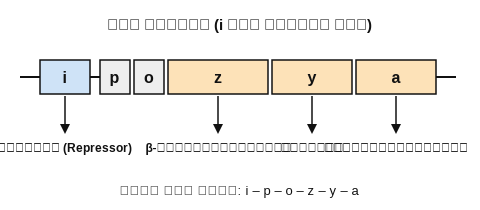
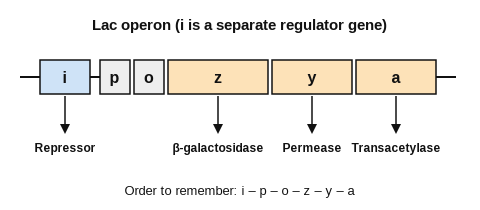
Concept: The lac operon of E. coli has a regulator gene i and three structural genes z, y, a transcribed as one polycistronic mRNA.

  1. (a) i – codes for the repressor (iii).
  2. (b) z – β-galactosidase, hydrolyses lactose into galactose + glucose (i).
  3. (c) a – transacetylase (iv).
  4. (d) y – permease, increases permeability of the cell to β-galactosides (ii).
  5. a-iii, b-i, c-iv, d-ii → option (C).

Short trick: Alphabet trick: z-y-a → β-gal, permease, acetylase follow in the same order as "Gal-Perm-Acet"; "a" = acetylase, "i" = inhibitor (repressor).

Answer: (C) (a)-(iii), (b)-(i), (c)-(iv), (d)-(ii)

अवधारणा: E. coli के लैक ओपेरॉन में एक नियामक जीन i और तीन संरचनात्मक जीन z, y, a होते हैं जो एक बहुसिस्ट्रॉनी mRNA के रूप में अनुलेखित होते हैं।

  1. (a) i – दमनकारी (repressor) का कूट (iii)।
  2. (b) z – β-गैलेक्टोसाइडेज़, लैक्टोज़ को गैलेक्टोज़ + ग्लूकोज़ में जल-अपघटित करता है (i)।
  3. (c) a – ट्रांसएसिटाइलेज़ (iv)।
  4. (d) y – परमिएज़, β-गैलेक्टोसाइडों के लिए कोशिका की पारगम्यता बढ़ाता है (ii)।
  5. a-iii, b-i, c-iv, d-ii → विकल्प (C)।

शॉर्ट ट्रिक: वर्णमाला ट्रिक: z-y-a → β-gal, परमिएज़, एसिटाइलेज़ उसी क्रम में "Gal-Perm-Acet"; "a" = एसिटाइलेज़, "i" = inhibitor (दमनकारी)।

उत्तर: (C) (a)-(iii), (b)-(i), (c)-(iv), (d)-(ii)

NEET UGBiologyMolecular basis of inheritance – lac operonNEET UG 2019 · 5 May Shift 1 →
Q3792.
It takes very long time for pineapple plants to produce flowers. Which combination of hormones can be applied to artificially induce flowering in pineapple plants throughout the year to increase yield?
अनन्नास के पौधों में पुष्प आने में बहुत अधिक समय लगता है। उपज बढ़ाने के लिए अनन्नास के पौधों में पूरे वर्ष कृत्रिम रूप से पुष्पन प्रेरित करने हेतु हॉर्मोनों का कौन-सा संयोजन प्रयोग किया जा सकता है?
  1. AAuxin and Ethyleneऑक्सिन और एथिलीन
  2. BGibberellin and Cytokininजिबरेलिन और साइटोकाइनिन
  3. CGibberellin and Abscisic acidजिबरेलिन और एब्सिसिक अम्ल
  4. DCytokinin and Abscisic acidसाइटोकाइनिन और एब्सिसिक अम्ल
Show answer

Concept: NCERT: auxins induce flowering in pineapple, and ethylene is used to initiate flowering and synchronise fruit-set in pineapples.

  1. Auxin (e.g. NAA) – promotes flowering in pineapple.
  2. Ethylene (applied as ethephon) – initiates and synchronises flowering/fruit-set.
  3. Gibberellins – bolting, elongation; cytokinins – cell division, delay senescence; ABA – dormancy, stomatal closure: none is used for pineapple flowering.

Short trick: Pineapple → "A + E" (Auxin + Ethylene) – the only two hormones NCERT links with pineapple.

Answer: (A) Auxin and Ethylene

अवधारणा: NCERT: ऑक्सिन अनन्नास में पुष्पन प्रेरित करते हैं, और एथिलीन अनन्नास में पुष्पन आरंभ करने तथा फल-लगने को समकालिक करने हेतु प्रयुक्त होता है।

  1. ऑक्सिन (जैसे NAA) – अनन्नास में पुष्पन को बढ़ावा देता है।
  2. एथिलीन (एथेफॉन के रूप में) – पुष्पन/फल-लगना आरंभ एवं समकालिक करता है।
  3. जिबरेलिन – बोल्टिंग, दीर्घीकरण; साइटोकाइनिन – कोशिका विभाजन, जीर्णता में देरी; ABA – प्रसुप्ति, रंध्र बंद होना: इनमें से कोई अनन्नास के पुष्पन हेतु प्रयुक्त नहीं।

शॉर्ट ट्रिक: अनन्नास → "A + E" (ऑक्सिन + एथिलीन) – NCERT में अनन्नास से जुड़े केवल यही दो हॉर्मोन।

उत्तर: (A) ऑक्सिन और एथिलीन

NEET UGBiologyPlant growth regulators – auxin and ethyleneNEET UG 2019 · 5 May Shift 1 →
Q3793.
Identify the cells whose secretion protects the lining of gastro-intestinal tract from various enzymes.
उन कोशिकाओं को पहचानिए जिनका स्राव जठरांत्र मार्ग के अस्तर की विभिन्न एंजाइमों से रक्षा करता है।
  1. AChief Cellsमुख्य कोशिकाएँ (Chief Cells)
  2. BGoblet Cellsचषक कोशिकाएँ (Goblet Cells)
  3. COxyntic Cellsअम्लजन कोशिकाएँ (Oxyntic Cells)
  4. DDuodenal Cellsग्रहणी कोशिकाएँ (Duodenal Cells)
Show answer

Concept: NCERT: mucus secreted by goblet cells (and mucus neck cells), along with bicarbonates, protects the mucosal epithelium from excoriation by highly concentrated HCl and lubricates the lining.

  1. (A) Chief (peptic) cells – secrete pepsinogen; they need protection, they do not give it.
  2. (B) Goblet cells – mucus → protective layer ✔.
  3. (C) Oxyntic (parietal) cells – HCl and intrinsic factor.
  4. (D) Duodenal (Brunner's) glands – alkaline mucus, but the general answer for the whole GI lining is goblet cells.

Short trick: "Goblet = a cup of mucus" – mucus coat protects the gut.

Answer: (B) Goblet Cells

अवधारणा: NCERT: चषक कोशिकाओं (और श्लेष्म ग्रीवा कोशिकाओं) द्वारा स्रावित श्लेष्मा, बाइकार्बोनेटों के साथ, श्लेष्मल उपकला को अत्यधिक सांद्र HCl द्वारा क्षति से बचाती है और अस्तर को स्नेहन प्रदान करती है।

  1. (A) मुख्य (पेप्टिक) कोशिकाएँ – पेप्सिनोजन स्रावित करती हैं; इन्हें सुरक्षा चाहिए, ये सुरक्षा नहीं देतीं।
  2. (B) चषक कोशिकाएँ – श्लेष्मा → सुरक्षात्मक परत ✔।
  3. (C) अम्लजन (भित्तीय) कोशिकाएँ – HCl और नैज कारक।
  4. (D) ग्रहणी (ब्रूनर) ग्रंथियाँ – क्षारीय श्लेष्मा, पर पूरे जठरांत्र अस्तर हेतु सामान्य उत्तर चषक कोशिकाएँ हैं।

शॉर्ट ट्रिक: "चषक = श्लेष्मा का प्याला" – श्लेष्मा की परत आंत की रक्षा करती है।

उत्तर: (B) चषक कोशिकाएँ (Goblet Cells)

NEET UGBiologyDigestion and absorption – gastric and intestinal cellsNEET UG 2019 · 5 May Shift 1 →
Q3794.
Which of the following can be used as a biocontrol agent in the treatment of plant disease?
निम्नलिखित में से किसका उपयोग पादप रोग के उपचार में जैव-नियंत्रण कारक (biocontrol agent) के रूप में किया जा सकता है?
  1. ATrichoderma
  2. BChlorella
  3. CAnabaena
  4. DLactobacillus
Show answer

Concept: NCERT: Trichoderma species are free-living fungi, very common in root ecosystems, and are effective biocontrol agents of several plant pathogens.

  1. (A) Trichoderma ✔ – biocontrol of plant pathogens.
  2. (B) Chlorella – green alga, single-cell protein.
  3. (C) Anabaena – cyanobacterium, biofertiliser (N2 fixation in paddy).
  4. (D) Lactobacillus – curd formation (LAB).

Short trick: Biocontrol list: Trichoderma (plant disease), Bt (insects), Baculovirus/NPV (insects), ladybird & dragonfly (pests).

Answer: (A) Trichoderma

अवधारणा: NCERT: Trichoderma जातियाँ मुक्तजीवी कवक हैं, जो मूल-पारितंत्रों में बहुत सामान्य हैं और अनेक पादप रोगजनकों के प्रभावी जैव-नियंत्रण कारक हैं।

  1. (A) Trichoderma ✔ – पादप रोगजनकों का जैव-नियंत्रण।
  2. (B) Chlorella – हरा शैवाल, एकल कोशिका प्रोटीन।
  3. (C) Anabaena – सायनोबैक्टीरियम, जैव-उर्वरक (धान में N2 स्थिरीकरण)।
  4. (D) Lactobacillus – दही निर्माण (LAB)।

शॉर्ट ट्रिक: जैव-नियंत्रण सूची: Trichoderma (पादप रोग), Bt (कीट), बैकुलोवायरस/NPV (कीट), लेडीबर्ड व ड्रैगनफ्लाई (पीड़क)।

उत्तर: (A) Trichoderma

NEET UGBiologyMicrobes in human welfare – biocontrol agentsNEET UG 2019 · 5 May Shift 1 →
Q3795.
Phloem in gymnosperms lacks :
अनावृतबीजियों में फ्लोएम में किसका अभाव होता है :
  1. AAlbuminous cells and sieve cellsऐल्बुमिनी कोशिकाएँ और चालनी कोशिकाएँ
  2. BSieve tubes onlyकेवल चालनी नलिकाएँ
  3. CCompanion cells onlyकेवल सहकोशिकाएँ
  4. DBoth sieve tubes and companion cellsचालनी नलिकाएँ और सहकोशिकाएँ दोनों
Show answer

Concept: NCERT: Gymnosperms have albuminous cells and sieve cells; they lack sieve tubes and companion cells.

  1. (A) Wrong – these two are exactly what gymnosperm phloem has.
  2. (B), (C) Incomplete – both sieve tubes and companion cells are absent, not just one.
  3. (D) Both absent ✔.

Short trick: Gymnosperm phloem "S-A": Sieve cells + Albuminous cells (mirror of angiosperm Sieve tubes + Companion cells). Similarly gymnosperm xylem lacks vessels.

Answer: (D) Both sieve tubes and companion cells

अवधारणा: NCERT: अनावृतबीजियों में ऐल्बुमिनी कोशिकाएँ और चालनी कोशिकाएँ होती हैं; इनमें चालनी नलिकाओं और सहकोशिकाओं का अभाव होता है।

  1. (A) गलत – अनावृतबीजी फ्लोएम में ठीक यही दोनों होती हैं।
  2. (B), (C) अधूरे – केवल एक नहीं, चालनी नलिकाएँ और सहकोशिकाएँ दोनों अनुपस्थित हैं।
  3. (D) दोनों अनुपस्थित ✔।

शॉर्ट ट्रिक: अनावृतबीजी फ्लोएम "S-A": Sieve cells + Albuminous cells (आवृतबीजी की Sieve tubes + Companion cells का प्रतिबिंब)। इसी प्रकार अनावृतबीजी जाइलम में वाहिकाएँ नहीं होतीं।

उत्तर: (D) चालनी नलिकाएँ और सहकोशिकाएँ दोनों

NEET UGBiologyAnatomy of flowering plants – phloem in gymnospermsNEET UG 2019 · 5 May Shift 1 →
Q3796.
Extrusion of second polar body from egg nucleus occurs :
अंड केंद्रक से द्वितीय ध्रुवीय पिंड का निष्कासन होता है :
  1. Aafter entry of sperm but before fertilizationशुक्राणु के प्रवेश के बाद परंतु निषेचन से पहले
  2. Bafter fertilizationनिषेचन के बाद
  3. Cbefore entry of sperm into ovumअंडाणु में शुक्राणु के प्रवेश से पहले
  4. Dsimultaneously with first cleavageप्रथम विदलन के साथ-साथ
Show answer

Concept: The secondary oocyte is arrested in metaphase-II at ovulation. NCERT: the entry of sperm into the ovum induces completion of meiosis-II, forming a large ootid and the second polar body; only then do the haploid sperm and ovum nuclei fuse (fertilisation = karyogamy).

  1. Sequence: sperm entry → meiosis-II completes → 2nd polar body extruded → pronuclei fuse → zygote.
  2. (B) After fertilisation – wrong, fusion needs a haploid ovum nucleus first.
  3. (C) Before sperm entry – wrong, meiosis-II stays arrested until sperm enters.
  4. (D) With first cleavage – far later.

Short trick: "No sperm, no second polar body" – sperm entry is the key that unlocks meiosis-II.

Answer: (A) after entry of sperm but before fertilization

अवधारणा: अंडोत्सर्ग के समय द्वितीयक अंडक मेटाफ़ेज़-II में रुका रहता है। NCERT: अंडाणु में शुक्राणु का प्रवेश अर्धसूत्री विभाजन-II को पूर्ण करवाता है, जिससे एक बड़ा ऊटिड और द्वितीय ध्रुवीय पिंड बनता है; इसके बाद ही अगुणित शुक्राणु और अंडाणु केंद्रक संलयित होते हैं (निषेचन = केंद्रक-संलयन)।

  1. क्रम: शुक्राणु प्रवेश → अर्धसूत्री-II पूर्ण → द्वितीय ध्रुवीय पिंड निष्कासित → पूर्वकेंद्रक संलयित → युग्मनज।
  2. (B) निषेचन के बाद – गलत, संलयन हेतु पहले अगुणित अंड केंद्रक चाहिए।
  3. (C) शुक्राणु प्रवेश से पहले – गलत, शुक्राणु प्रवेश तक अर्धसूत्री-II रुका रहता है।
  4. (D) प्रथम विदलन के साथ – बहुत बाद में।

शॉर्ट ट्रिक: "शुक्राणु नहीं, तो द्वितीय ध्रुवीय पिंड नहीं" – शुक्राणु प्रवेश अर्धसूत्री-II की चाबी है।

उत्तर: (A) शुक्राणु के प्रवेश के बाद परंतु निषेचन से पहले

NEET UGBiologyHuman reproduction – fertilisation and second polar bodyNEET UG 2019 · 5 May Shift 1 →
Q3797.
Under which of the following conditions will there be no change in the reading frame of following mRNA?
5′AACAGCGGUGCUAUU3′
निम्नलिखित में से किस स्थिति में निम्न mRNA के पठन ढाँचे (reading frame) में कोई परिवर्तन नहीं होगा?
5′AACAGCGGUGCUAUU3′
  1. AInsertion of G at 5th position5वें स्थान पर G का निवेशन
  2. BDeletion of G from 5th position5वें स्थान से G का विलोपन
  3. CInsertion of A and G at 4th and 5th positions respectivelyक्रमशः 4थे और 5वें स्थान पर A और G का निवेशन
  4. DDeletion of GGU from 7th, 8th and 9th positions7वें, 8वें और 9वें स्थान से GGU का विलोपन
Show answer

Concept: The code is read in non-overlapping triplets. Inserting/deleting 1 or 2 bases shifts the frame for every downstream codon (frameshift); inserting/deleting 3 bases (one codon) keeps the frame.

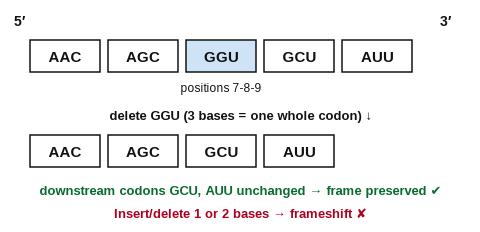
  1. Codons: AAC | AGC | GGU | GCU | AUU (positions 7, 8, 9 = GGU).
  2. (A) +1 base, (B) −1 base, (C) +2 bases → reading frame shifts.
  3. (D) −GGU (exactly the 3rd codon) → AAC | AGC | GCU | AUU: one amino acid lost, rest of the frame unchanged ✔.

Short trick: Count the bases changed: a multiple of 3 = no frameshift.

Answer: (D) Deletion of GGU from 7th, 8th and 9th positions

अवधारणा: कूट अनतिव्यापी त्रिकों में पढ़ा जाता है। 1 या 2 क्षार जोड़ने/हटाने से आगे के प्रत्येक कोडॉन का ढाँचा खिसक जाता है (फ्रेमशिफ्ट); 3 क्षार (एक कोडॉन) जोड़ने/हटाने से ढाँचा बना रहता है।

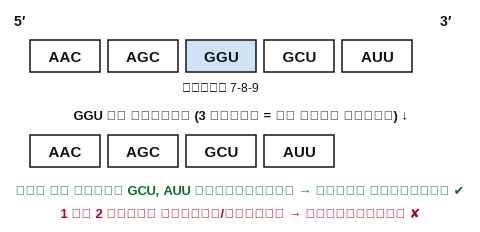
  1. कोडॉन: AAC | AGC | GGU | GCU | AUU (स्थान 7, 8, 9 = GGU)।
  2. (A) +1 क्षार, (B) −1 क्षार, (C) +2 क्षार → पठन ढाँचा खिसकता है।
  3. (D) −GGU (ठीक तीसरा कोडॉन) → AAC | AGC | GCU | AUU: एक ऐमीनो अम्ल कम, शेष ढाँचा अपरिवर्तित ✔।

शॉर्ट ट्रिक: बदले गए क्षार गिनिए: 3 का गुणज = कोई फ्रेमशिफ्ट नहीं।

उत्तर: (D) 7वें, 8वें और 9वें स्थान से GGU का विलोपन

NEET UGBiologyMolecular basis of inheritance – frameshift mutationsNEET UG 2019 · 5 May Shift 1 →
Q3798.
The concept of "Omnis cellula-e cellula" regarding cell division was first proposed by
कोशिका विभाजन के संबंध में "Omnis cellula-e cellula" की अवधारणा सर्वप्रथम किसने प्रस्तावित की
  1. ARudolf Virchowरूडॉल्फ विर्शो
  2. BTheodor Schwannथियोडोर श्वान
  3. CSchleidenश्लाइडेन
  4. DAristotleअरस्तू
Show answer

Concept: Rudolf Virchow (1855) explained that cells divide and new cells are formed from pre-existing cells – Omnis cellula-e cellula – and thus modified the cell theory of Schleiden and Schwann.

  1. (A) Virchow ✔.
  2. (B) Schwann (zoologist) and (C) Schleiden (botanist) – proposed the cell theory (1838–39) but could not explain how new cells form.
  3. (D) Aristotle – early classification of animals; nothing to do with cell theory.

Short trick: "Virchow = Very cell from cell".

Answer: (A) Rudolf Virchow

अवधारणा: रूडॉल्फ विर्शो (1855) ने बताया कि कोशिकाएँ विभाजित होती हैं और नई कोशिकाएँ पूर्व-विद्यमान कोशिकाओं से बनती हैं – Omnis cellula-e cellula – और इस प्रकार श्लाइडेन तथा श्वान के कोशिका सिद्धांत में संशोधन किया।

  1. (A) विर्शो ✔।
  2. (B) श्वान (प्राणि-विज्ञानी) और (C) श्लाइडेन (वनस्पति-विज्ञानी) – कोशिका सिद्धांत (1838–39) दिया, पर नई कोशिकाएँ कैसे बनती हैं, नहीं समझा सके।
  3. (D) अरस्तू – जंतुओं का प्रारंभिक वर्गीकरण; कोशिका सिद्धांत से संबंध नहीं।

शॉर्ट ट्रिक: "Virchow = Very cell from cell" – हर कोशिका, कोशिका से।

उत्तर: (A) रूडॉल्फ विर्शो

NEET UGBiologyCell: the unit of life – cell theoryNEET UG 2019 · 5 May Shift 1 →
Q3799.
What triggers activation of protoxin to active Bt toxin of Bacillus thuringiensis in boll worm?
बॉलवर्म में Bacillus thuringiensis के प्रोटॉक्सिन का सक्रिय Bt विष में सक्रियण किससे प्रेरित होता है?
  1. ABody temperatureशरीर का ताप
  2. BMoist surface of midgutमध्यांत्र की नम सतह
  3. CAlkaline pH of gutआंत का क्षारीय pH
  4. DAcidic pH of stomachआमाशय का अम्लीय pH
Show answer

Concept: Bt toxin exists as an inactive protoxin (crystal protein) in the bacterium. In the insect gut, the alkaline pH solubilises the crystals and converts the protoxin to the active toxin, which binds to midgut epithelial cells, creates pores, causes swelling and lysis, and kills the insect.

  1. (C) Alkaline pH of gut ✔.
  2. (A), (B) – temperature or moisture do not activate it.
  3. (D) Insect gut is alkaline, not acidic; that is also why the toxin is harmless to humans (acidic stomach).

Short trick: "Bt needs a BASE" – alkaline gut of insects → active toxin.

Answer: (C) Alkaline pH of gut

अवधारणा: Bt विष जीवाणु में निष्क्रिय प्रोटॉक्सिन (क्रिस्टल प्रोटीन) के रूप में रहता है। कीट की आंत में क्षारीय pH क्रिस्टलों को घुलनशील बनाकर प्रोटॉक्सिन को सक्रिय विष में बदल देता है, जो मध्यांत्र की उपकला कोशिकाओं से बंधकर छिद्र बनाता है, सूजन और विलयन (lysis) करता है तथा कीट को मार देता है।

  1. (C) आंत का क्षारीय pH ✔।
  2. (A), (B) – ताप या नमी इसे सक्रिय नहीं करते।
  3. (D) कीट की आंत क्षारीय है, अम्लीय नहीं; इसी कारण यह विष मनुष्य (अम्लीय आमाशय) के लिए हानिरहित है।

शॉर्ट ट्रिक: "Bt को चाहिए क्षार" – कीटों की क्षारीय आंत → सक्रिय विष।

उत्तर: (C) आंत का क्षारीय pH

NEET UGBiologyBiotechnology applications – Bt toxinNEET UG 2019 · 5 May Shift 1 →
Q3800.
Identify the correct pair representing the causative agent of typhoid fever and the confirmatory test for typhoid.
टाइफ़ॉइड ज्वर के कारक जीव और टाइफ़ॉइड के पुष्टिकारी परीक्षण को दर्शाने वाला सही युग्म पहचानिए।
  1. APlasmodium vivax / UTI testPlasmodium vivax / UTI परीक्षण
  2. BStreptococcus pneumoniae / Widal testStreptococcus pneumoniae / विडाल परीक्षण
  3. CSalmonella typhi / Anthrone testSalmonella typhi / एन्थ्रोन परीक्षण
  4. DSalmonella typhi / Widal testSalmonella typhi / विडाल परीक्षण
Show answer

Concept: NCERT: typhoid fever is caused by Salmonella typhi (enters via contaminated food/water, multiplies in the small intestine) and is confirmed by the Widal test.

  1. (A) Plasmodium vivax – malaria; UTI is not a typhoid test.
  2. (B) Streptococcus pneumoniae – pneumonia.
  3. (C) Anthrone test – estimation of carbohydrates, not a diagnostic test for typhoid.
  4. (D) Salmonella typhi / Widal ✔.

Short trick: "Typhi → Widal"; Mary Mallon = "Typhoid Mary", a carrier.

Answer: (D) Salmonella typhi / Widal test

अवधारणा: NCERT: टाइफ़ॉइड ज्वर Salmonella typhi से होता है (संदूषित भोजन/जल से प्रवेश, छोटी आंत में गुणन) और इसकी पुष्टि विडाल परीक्षण से होती है।

  1. (A) Plasmodium vivax – मलेरिया; UTI टाइफ़ॉइड परीक्षण नहीं।
  2. (B) Streptococcus pneumoniae – न्यूमोनिया।
  3. (C) एन्थ्रोन परीक्षण – कार्बोहाइड्रेट का आकलन, टाइफ़ॉइड का निदान परीक्षण नहीं।
  4. (D) Salmonella typhi / विडाल ✔।

शॉर्ट ट्रिक: "Typhi → Widal"; मैरी मैलन = "टाइफ़ॉइड मैरी", एक वाहक।

उत्तर: (D) Salmonella typhi / विडाल परीक्षण

NEET UGBiologyHuman health and disease – typhoidNEET UG 2019 · 5 May Shift 1 →